Tag: content strategy

  • Continuity Is Key: 5 Tips for Syncing Up Your Multi-Location Franchise Marketing Plan

    1511-SI-Newsletter-KG-B-02

    To the Small Business/Franchise Owner Interested in Growth:

    You have started a business and are considering an expansion, which will include another location (or several)! In doing so, you’ve been able to achieve what many people only dream of doing. You’re reaping the rewards and ready for more, so what do you do next with this new intent to further grow your business?

    You probably have hundreds of things on your business “to-do list,” but be careful not to lose sight of your online marketing efforts along the way. After all, 97 percent of consumers search online for products and services, according to SCORE, a U.S. Small Business Administration-supported nonprofit association. Although 51 percent of small businesses have websites, many are not built for success. Simply put, the success of a business can depend on the success of its online marketing strategy. Therefore, while you may be concerned with all of the logistics of expanding, you must remember to analyze your current marketing and understand how to evolve your strategy with regards to the changing business environment.

    Small businesses have great potential to benefit from localized advertising and franchise marketing. Several factors are to be considered when expanding your marketing strategy across multiple locations with regards to SEO for small business, Internet franchise opportunities, and more.

    Timing (Is Everything)
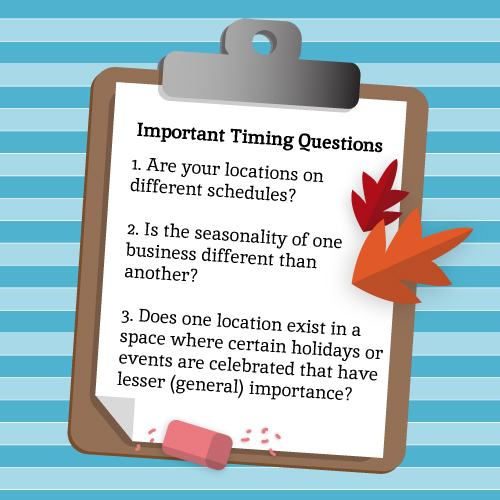
    Important Franchise Marketing Questions Checklist Image - Search InfluenceAs with your decision to open a new franchise location, the timing of your release of marketing initiatives is crucial. If your marketing efforts are out of sync, you can easily confuse potential customers about your brand and the logistics of your new operation. Here are a few questions you should ask yourself about the timing of your Internet marketing efforts:

    •Are your locations on different schedules?

    •Is the seasonality of one business different than another? For example, if you work in retail, will one store have a stronger focus for the holiday season?

    •Does one location exist in a space where certain holidays or events are celebrated that have lesser (general) importance? For example, if you operate a clothing store in Baton Rouge and want to open a new location in New Orleans, you have to consider adding merchandise and respective advertising for events like Red Dress Run, White Linen Night, and of course, Mardi Gras.

    Implement Franchise Social Media at the Local Level
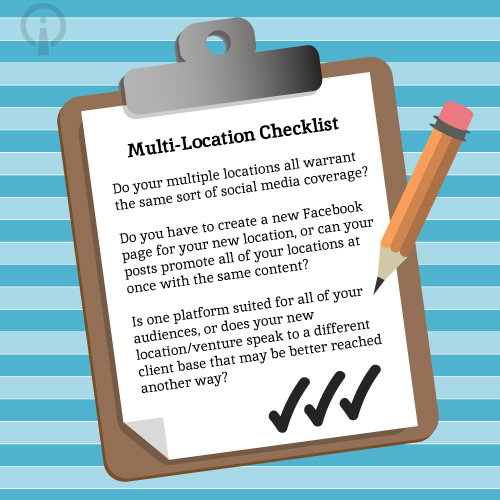
    Checklist Image For Multiple Locations On Social Media - Search Influence

    Whether it was a part of your previous local business Internet marketing efforts or you’re new to promoting your business on social media, it is important to create and maintain a social media strategy as your business grows and you build more locations. From there, you can manage your growing business and make sure the right people are seeing you throughout their daily routine on their platform of choice, and you can investigate the Ads Managers available to your business. Keep these questions in mind while you consider what role social media plays in franchise SEO for your business expansion:

    •Do your multiple locations all warrant the same type of social media coverage?

    •Do you have to create a new Facebook page for your new location, or can your posts promote all of your locations at once with the same content?

    •Is one platform suited for all of your audiences, or does your new location/venture speak to a different client base that may be better reached another way?

    Consistency Across Platforms

    In addition to social media, it is important to make sure you provide marketing coverage for your business across all of your existing channels. Maybe your new location is something you want to push a little harder, so you might decide to purchase an outdoor advertising package or a television ad spot! No matter what marketing channels you use, do not lose sight of your original message. Don’t get so caught up in your expansion that you lose your brand and unique identity. Make sure that, no matter the platform, whether it’s traditional or digital media, you are consistent in your output.

    Content Marketing Strategy

    During this tumultuous time that could possibly make or break your brand, it is crucial to produce fresh, up-to-date content with a consistent message across all of your media channels. More eyes will be on you during the first few weeks (even months) of your new location, so soak up that limelight and wow them with fresh and captivating content! Keep in mind “content relevance.” For example, if your new location attracts a different type of customer, even a slightly different type, think about the sort of content that will spark their interests the most. Research the latest trends in your industry and see what they’re suggesting you write about or how you present yourself. Always remember: the medium is the message!

    Build Solid Relationships

    You’ve done it from the very start of your business, and it continues to be important as your business grows. Networking never goes out of style. As your business grows and you expand your marketing across multiple platforms, remember to keep spreading the word about your brand! Of course, if your brand is well-established already, people may be excited enough that they will come to your additional location without question. But some may require more convincing. Therefore, don’t neglect the relationships and connections you’ve made throughout the life of your business, as they can prove useful in helping to promote your newest venture.

    Want to make sure you attract customers online for your expanding business or franchise? When it comes to online marketing solutions for multi-location businesses and franchises, trust the experts at Search Influence. For example, a Search Influence franchise client with more than 160 locations saw a more than 85 percent increase in total website traffic and an increase of more than 135 percent in total organic (unpaid) website traffic. This website traffic increase resulted from just two years of online marketing efforts. To translate that to dollars, revenue generated from organic website traffic increased by 65 percent. If you would like to see these results across your own business, contact us today to get started with a new, successful strategy to online marketing with Search Influence.


  • Tell Me a Story: Nonprofit Storytelling Tips for Effective Social Conversion

    Nonprofit Storytelling Image - Search Influence

    Effective nonprofit marketing (and fundraising) starts with a story. A good story resonates with the audience, advances the mission of the nonprofit, and calls people to action. Nonprofits are unique from their for-profit counterparts, because even more important than facts are feelings. A good story creates an emotional connection between the supporter and the organization. The Center for Social Impact Communication at Georgetown University recently conducted a survey of 81 nonprofits in the Washington, D.C., area and discovered that 78 percent of them had a goal or purpose for storytelling, but only 64 percent felt their goals were met. So how can your nonprofit leverage compelling, inspirational, emotional stories to get more online engagement, more supporters and more donations?

    Be Authentic.

    True passion is contagious. You can’t expect others to get excited about your cause if they can’t see the passion behind your efforts.

    Make them Feel.

    Don’t tell your audience how they should feel; show them how the characters in your story feel. Choose active players in your organization—those with a passion for the work and those affected by the work—and ask them to share their challenges and triumphs. Rather than simply saying, “This organization changed my life, and it can change yours too …” have them tell their entire story from start to finish. Encourage them to include sensory details as they explain what their life was like before, throughout their experience and now.

    Get Visual.

    A picture says a thousand words. According to a study conducted by SimplyMeasured, videos are shared 12 times more often than links and text posts combined, and photos are liked twice as often as text updates. Though words are an essential part of storytelling, the digital market begs for compelling images to support strong stories. Photos have the power to spark human rights campaigns, change public policy, and more. Visual media fosters awareness and compels people to act.

    Ask your Audience to be a Part of your Story.

    Include a clear call to action. Make sure the call to action is supported by a conflict from the story, which makes people want to act urgently.

    Sharing your organization’s impact from the perspective of those impacted is the most effective way to get others to care and offer their support. So while social media is a great platform for sharing industry updates and tweeting about your latest project, don’t forget to tell the story that connects your organization’s mission to the people you serve.

  • Small Business, Big Difference: Social Media Use on the Rise

    Small Business Social Media Use Image Search Influence

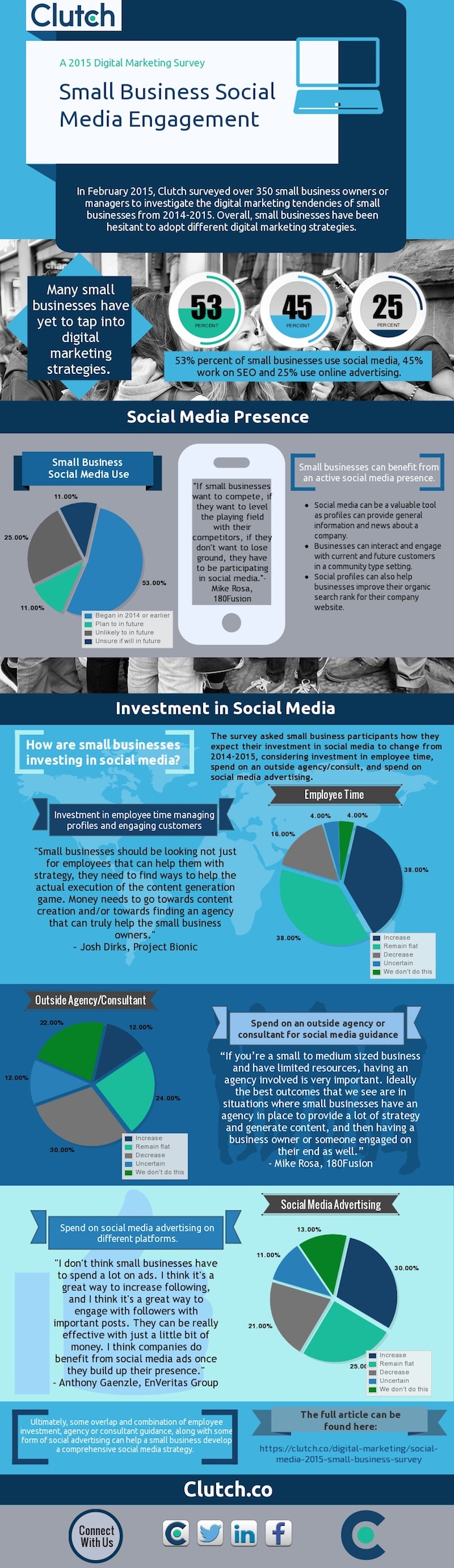
    Clutch, a B2B research firm, has released the results of its 2015 survey on small business practices in social media. The survey, which received more than 350 submissions, asked small business owners or managers to give insight into their social media and Internet marketing practices.

    The Findings

    Here are some highlights of the small businesses surveyed:

    Small business digital marketing strategies

    • 53% of small businesses use social media
    • 45% of small businesses work on SEO
    • 25% of small businesses use online advertising

    Company size

    • 60% of responding businesses have fewer than 10 employees
    • 14% have between 11 to 50 employees
    • 18% have between 51 and 250 employees
    • 8% have over 251 employees

    Investment (employee time, agency spend, ad spend)

    • 38% expect to increase their investment
    • 38% plan on keeping the same investment
    • 16% plan to decrease investment

    Clutch Infographic Small Business Survey Image Search Influence

    What Does This Mean?

    It’s weird to think back to 2006, when Facebook was essentially just for high school and college students to interact with each other through basic status updates. Nine years later, Facebook has around 1.44 billion monthly active users, yet only 53% of businesses surveyed indicated they use social media. In today’s social media age, having an active social presence is one of the easiest and most inexpensive options available to small businesses. It’s free to create a business page on Facebook, Twitter, and the other myriad of social media pages. Additionally, with the abundance of users on these sites, your customer base and target audience is already available to you; you just need to bring them to your page.

    Benefits of Social Media for Small Businesses

    When customers shop at small businesses, they tend to value the qualities of these stores versus their big-box competitors. Having a question answered on a local bike shop’s Facebook page is usually easier than reaching out to a large retailer’s customer service team. Allowing customers to post to your business’ page also gives other viewers the ability to see reviews, photos, and that the business cares about its customers by maintaining an active social presence. Maintaining a strong social presence can work as a way to “warm up” your potential customers and introduce them to your brand for a relatively low initial cost.

    Small Business Investment

    Besides simple statistics, the survey discusses the necessary investment of small businesses to ensure that their social media strategy has the best chance to be successful. While it may seem that just having a profile is enough to effectively market your business, there is additional effort that should be taken if you want to see your desired results. Employees should have a hand in the content strategy and the day-to-day operations. Various opinions can help diversify your strategy and give additional insight into your broader customer base. By spreading the responsibilities of managing the page across a few employees, each individual’s workload should not be greatly affected, while the overall product will be of high quality. Wondering how you can make time for social media and continue to run your small business? Check out these social media tips for time-starved entrepreneurs.

    Content Strategy

    In addition to diversifying where your content is coming from, it helps to vary the content you’re sharing with your followers. If you’re only talking to your current customers about products or direct business promotions, people new to your page may dismiss your content, as it doesn’t apply to them. Try to think outside of the box and delve into your potential customers’ other interests. By using this practice, your pages and posts can be beneficial in more ways than reminding customers of your weekly promotions. Writing about the best local bike trails may bring more people to your page through liking, sharing, and commenting, and it can help to organically get your store’s name into your community.

    Takeaway

    Seventy-six percent of the companies surveyed responded that they would either keep the same investment moving forward or increase it. Facebook and Twitter have shown over the past five to 10 years that the sites are not simply the most visited social media pages, but two of the most visited websites of any kind. When establishing your small business, it is important that your business could be found on Google. But in 2015, it is becoming important that your business be available on social media sites as well. Moving forward, each company should take the necessary time to see what resources can be used to begin a social media campaign. Start off by managing a page yourself, working your way up to reach an ideal social media campaign, and involving an overlap of employee involvement, agency guidance, and some use of social media advertising such as Facebook fan-building campaigns, for example, which have shown to have the best results for success with these small businesses.

    To view the complete report, visit Clutch.

    Image source:

    Clutch infographic

  • 3 Ways to Present Share-Worthy Visual Content

    Content is the reigning king of the marketing world, but the way that content is presented can be instrumental in its success. The most well-written, interesting article won’t do very well if it’s a long block of text. We live in a very visual world, so companies and marketing experts are finding that visual content is actually out-performing its less attractive counterparts. These are three ways you can present your content in a visually stimulating way to appeal to your audience base.

    Infographics

    Studies have shown that infographics can increase traffic to your website or social media accounts by up to 12 percent. These creative tools allow you to convey a lot of information in an attractive, readable way. From charts to illustrated timelines, infographics can be used in a variety of ways in any number of industries. You can present research findings, how-to guides, and even more traditional documents like annual reports in the form of infographics. You’ll find that your audience is far more likely to engage with your content if it’s communicated as visual information, resulting in a broader reach and an easier transfer of data.

    new orleans festivals 2015 infographic

    Annotated Image

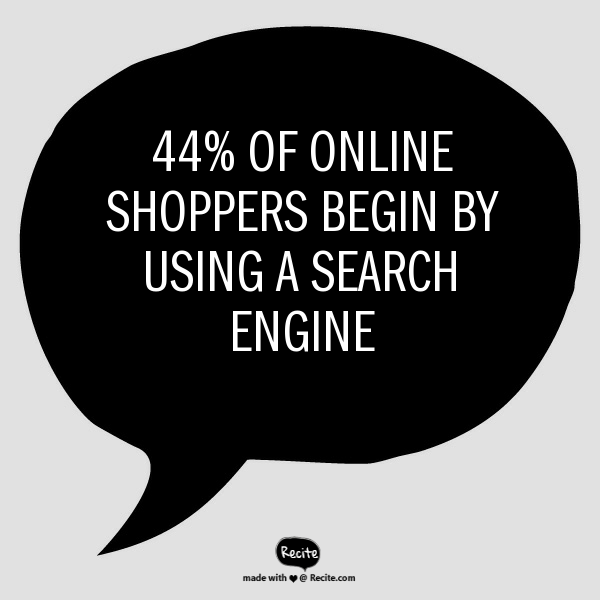
    Annotated images often take the form of inspirational quotes over attractive stock photos, but this media form can actually be used to communicate information. Consider statistics. Statistics are very shareable bits of data, but unfortunately, they’re often presented in a way that isn’t visually appealing. Don’t give your audience a bulleted list—present them with one statistic over a creative, relevant image or background color that matches your branding. These images are easy to digest and share, and they draw attention to your company’s mission without the heavy-handedness of an advertisement. Your annotated images can link to blog posts or internal pages on your website, or they can simply be a part of a series you regularly post to social media.

    Shoppers Searching Image - Search Influence

    Picture-Rich Blog Posts

    The way we blog or post articles has changed at a frighteningly slow pace, and is often counterintuitive to the way readers engage with our content. A tiny picture in the left-hand corner and large blocks of text simply don’t cut it anymore. Redefine the way you think about blogging. Break up your posts with full-sized, sharp images. If you don’t have your own pictures of the subject matter, high-quality stock images can be just as engaging and eye-catching. Shorten your paragraphs to a sentence or two, and use bold text to emphasize numbers and statistics. Simply put, make your blog posts highly visual and easily scan-able.

    By sharing information as an infographic, annotated image, or a photo-heavy blog post or article, you can outplay the average consumer’s waning attention span. If your content is great, present it in a way that will be noticed.

    Image source:

    Premier Allergy

  • Healthy Content: 4 Tips to Drive Conversions in the Medical Industry

    Healthy Content Marketing Image - Search Influence

    In the medical and plastic surgery industries, it can be hard to get past the medical jargon and engage with readers online. But despite these challenges, building up an online presence is vital in this day and age. Everyone online wants to gather information quickly, and they seek immediate gratification when it comes to scheduling appointments and learning about procedures. To keep their interest, you have to present your content in a user-friendly, engaging and attractive way. Let go of the olden days of long-winded explanations and paragraphs upon paragraphs of medical terminology that no one can understand. Step into the 21st Century with these four types of content:

    1. Infographics

    We all want something that is nice to look at and easy to understand. Infographics are not only engaging, but they can also be super informative! The medical terminology that your current and prospective patients need to know can be easily explained in shorter phrases and pictures or guidelines. Infographics help your patients connect with you and your practice.

    Infographics are also more likely to be shared by your customers. People love sharing fun and interesting infographics on their own social media pages, so this will ensure more conversions and potential new clients! Find out more about how infographics can give your content marketing strategy a facelift.

    2. Videos

    Videos are another great visual way to engage your website visitors. You could explain your processes and surgical procedures easily without scaring visitors off with long, complicated paragraphs. This is also a great way to introduce yourself and your practice to potential patients.

    You don’t have to do a stand-up; you could make a slideshow video with voiceover narration, or if your budget allows, an animated video. Make sure you include a call to action at the end so the viewer can take the next step in becoming a patient!

    3. Lists

    Lists are great. You’re reading one now! Putting the number of listed items in the title is especially helpful so people know exactly what they’re getting into. Readers are more likely to click through and take the time to read if there are 10 or fewer items. They’ll think it will only take a couple of minutes, then BAM! They’re hooked. They’re converting, and they’re your next patient!

    Make sure to write lists that are interesting and preferably not common knowledge, such as “10 Things You Didn’t Know about ____” or “5 Ways to Look Younger Without Surgery.” You could even promote your products or services with a list of great products for this, that, or the other thing. Keep it short, sweet, and to the point.

    4. Guides

    Because you specialize in a certain medical field, you have knowledge that is credible, useful, and interesting. Write it down! Guides can be about absolutely anything, and they’re excellent sharing material for those who want to stay informed and keep their social media followers/friends informed. For an example, check out the Search Influence guide on how your online presence can win and lose patients.

    An excellent way to drive up conversions is to make your guide a downloadable file and request information from the reader before they can download. This allows you to add them to your email newsletter list, which will make them more likely to become a patient in the future.

    Deciding how you want to present yourself online can be time-consuming and frustrating, but these four winning types of content are fun, engaging, and can help your conversion rates. Play around with some ideas and be sure to use different content on different pages to keep people wanting more!

    Interested in more content marketing tips for medical marketing? See how natural content can help your practice’s website attract patients.


  • Show Me An Infographic, Mister! New Orleans’ Unique Content Marketing Approach

    There’s definitely a story behind New Orleans—the city of festivals. And it’s an insider story you likely haven’t seen online before. For example, what New Orleans tradition includes 822 floats and is 21,000 riders strong? What celebration features more than 130 pyramids of burning logs? When it comes to content marketing, New Orleans gives tourists and locals alike reasons to share the kind of fun, behind-the-scenes information that makes the Big Easy one of the world’s most fascinating cities. In a city steeped with so much history and culture, infographics are helping to bring some of the key celebrations—such as the recent New Orleans Jazz & Heritage Festival and Mardi Gras—to life through visual storytelling.

    A City of Festivals Comes to Life

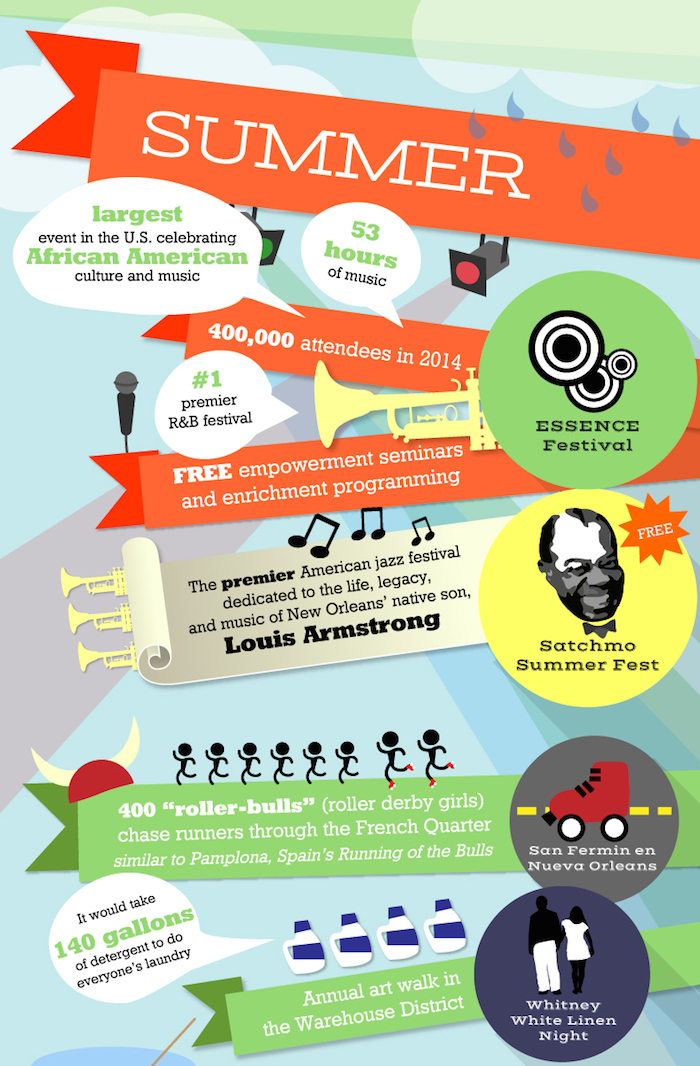
    The New Orleans Tourism Marketing Corporation enlisted the help of Search Influence and its creative infographics team to reinforce the city as a year-round destination where there’s always something happening. Yes, it’s true: there’s virtually always a parade, festival, second line, or other event every week. And along with the big-name festivals like the New Orleans Jazz & Heritage Festival, French Quarter Fest, Essence Music Fest and Voodoo Festival, there are many other celebrations that lend to the city’s reputation for being among the most diverse festival cities in the world.

    In fact, New Orleans is deep in its festival season now, and this infographic gives the story in eye-catching detail—in a way that just plain old written content can’t match. Check out the part that describes summer festivals in New Orleans:

    new orleans festivals 2015 infographic

    See the Magic of Legendary Mardi Gras

    This February, another Search Influence-produced infographic detailing the legendary New Orleans Carnival—a tradition that dates back to the city’s first Mardi Gras parade in 1837—helped bring renewed interest among people that visited the official New Orleans tourism guide website. While visitors to the website typically spend an average of two minutes browsing, visitors to the Mardi Gras infographic page were spending upwards of eight minutes reading the content. On social media, the infographic was shared more than 700 times on Facebook and Twitter. In fact, the infographic received 6,000 views in its first week. Here’s a glimpse of part of the infographic:

    Infographic Content Marketing Image Search Influence

    What Makes a Good Infographic?

    While content marketing is certainly taking off in New Orleans with lots of local flavor mixed in, all businesses—no Jazz Fest or Mardi Gras required—can learn infographic best practices from these New Orleans examples.

    When crafting an infographic, follow these four tips:

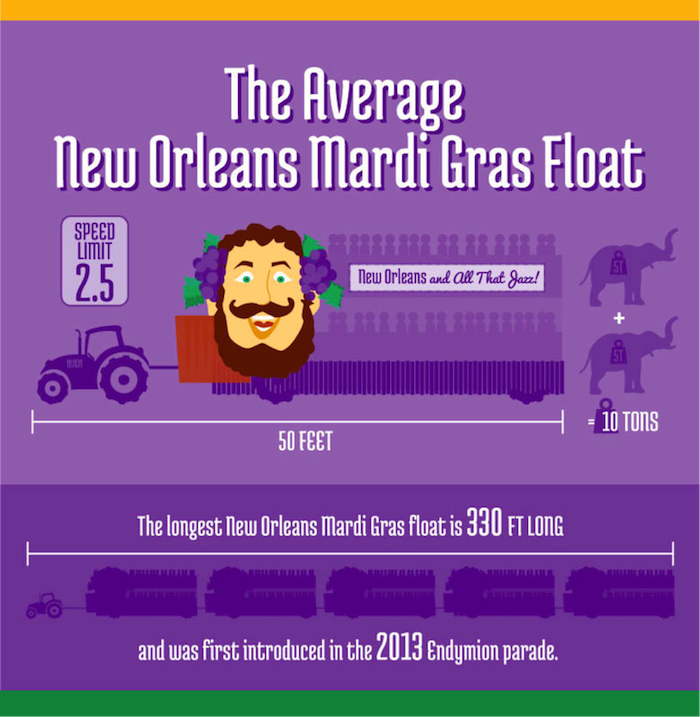
    • Include impressive or interesting statistics that draw readers’ engagement. For example, the average Mardi Gras float in New Orleans is 50 feet long and weighs 10 tons—the weight of two elephants!
    • Make sure the infographic is very graphics heavy. Include images and charts to show your audience the story. That streetcar with “Stellaaaaa” amplified by a megaphone really illustrates the best-loved play that pays tribute to one event: the Tennessee Williams New Orleans Literary Festival.
    • Include an element of usefulness. For example, with more than 70 different parades during the Carnival Season, it can be hard to keep track and determine which ones to attend. For example, the handy “Noteworthy Parades” section of the Mardi Gras infographic doubles as a useful calendar, and the key to the festivals infographic, for example, is to showcase the festival—or multiple festivals!—for every season theme.
    • To finish, craft all of your data and graphics into a visually appealing design. The Mardi Gras infographic, for example, makes use of the vibrant and traditional purple, green, and gold colors as well as a few bold fonts to form an appealing connection between all of the information.

    With these tips on creating the best infographic, keep in mind that the goal with this graphical content is typically to generate website traffic, backlinks, and social shares. And with Facebook and other social media sites putting more and more focus on visual content, it is a safe bet that infographics are not dead. In fact, these Big Easy examples demonstrate further that infographics should be a part of a company’s content marketing strategy.


  • Give Content a Natural Glow: Medical Marketing Makes the Switch to Natural Content

    Content marketing natural glow image - Search Influence

    Back in the early days of search engine optimization, there were a lot of shady practices that were less than ideal for site visitors. Keyword-stuffing, spammy tweets, backlink schemes, and useless content were often the norm, as these tactics helped websites climb the ranks of the search engine results page. With content more focused on algorithms than the audience, many websites scared off potential users. While some of these tactics have been left firmly in the past, many SEO strategies still optimize for Google bots instead of users. This is especially true when it comes to geo-modified keywords in healthcare marketing (think “plastic surgeon new orleans”), which continue to make many pages feel stuffy and awkward.

    Of course, letting go of geo-modified keywords can seem like a hard pill to swallow—especially for those in highly competitive fields such as the plastic surgery industry, where medical practices are constantly battling for the top spots in a Google search. “Going natural” when it comes to content might seem like an overwhelming change at first, but the benefits to your patients and your practice make it a worthwhile strategy in the long run.

    Content is King

    So what do we have when we eliminate all the spam? Natural content. Google rewards sites that provide better user experiences, relevant information, and quality content—those with high click-through rates, low bounce rates, and long time-on-site—with better overall rankings.

    What’s more, all of the updates to Google’s algorithm have made the search giant incredibly advanced, and you might be surprised by some of the astonishing leaps it can make. A search engine results page might pull up one or more high-ranking pages that never actually include the words a user originally entered as a query. For example, a search for “breast implants new orleans” might return pages that never actually use this exact term. Highly relevant pages on “breast augmentation” might rank higher in a Google search than irrelevant, keyword-stuffed pages. What does all this mean? Google’s smarter than you thought.

    Interested in more content marketing strategies for your website? Find out how infographics can give your online strategy a facelift.

    It’s All About the Audience

    As its name suggests, SEO has always focused on search engine optimization—but the best way to earn trust from your patients is to focus on your patients. Forget trying to keep up with algorithm changes: Google’s updates are always centered around providing a better user experience, so why not focus on that as well?

    Spammy, keyword-stuffed content isn’t doing your patients any favors. Visitors to your site can see through the awkward “fluff” content, and they’ll abandon it to find content that actually answers their questions and meets their needs. Sites with overly optimized content tend to see higher bounce rates and less time spent on the site overall.

    Protection Against Algorithm Updates

    Beyond the fact that you’re losing your human visitors by focusing your content on the needs of Google bots, you also hurt yourself with this approach. Overly optimized content is vulnerable to every new update to Google’s algorithm. Well-written natural content, on the other hand, won’t need any of the major edits that spammy content will regularly require. Content that is relevant to the needs of your patients will always be useful—and Google’s algorithm can see that without your help. If you need help determining whether your website content will pass the Google test, fill out the short form on our homepage to sign up for a free website analysis.

    Search Intent Optimization

    At the end of the day, your potential patients are looking for something, and it’s your job to figure out what. Maybe they need help to become informed about a procedure they’re considering, maybe they’re weighing the pros and cons of several medical options, or maybe they know what they need and are searching for a trustworthy practice in the area.

    Whatever the case, you’ll need to do your research. Figure out what they consider useful and decide how you can use unique and creative content to solve their problems. Patients will be able to see the value in content that gives them the answers they need, and they’ll trust the information more if it doesn’t seem awkward or spammy. Go from there to build your relationship with them—rather than building a relationship with an algorithm.

    If you’re ready to take the dive into offering patients more natural content, but you’re not sure where to start, let us know how we can help! Interested in the ins-and-outs of search engine optimization for the medical industry? Check out our tips on the art of “Googleplasty.”

  • Five for Friday: Go Natural, Rock Your SEO, Navigate Apple Maps, and More

    1. How Your Band Can Rock SEO – Moz

    Most people don’t discover new music by Googling “indie rock bands.” Folks are more likely to discover a band through other means and then turn to the Internet to search for tour dates, song lyrics, etc. If you’re a musician, this presents a unique opportunity for optimizing your band for search engines. Learn how to reach a wider online audience with these tips for improving your band’s search engine optimization.

    2. Want to Transfer Your YouTube Account to the Proper Google+ Page? – Search Engine Roundtable

    Does this YouTube predicament ring a bell? Say you’ve been uploading industry-related videos to your YouTube account, which is connected to your personal Google+ page. You’ve finally gotten around to creating a Google My Business account for your company, and you want to transfer your industry-focused YouTube account over to your business page. Now you can! The only catch is that this move can’t be undone, so make sure it’s really what you want to do.

    3. Apple’s Maps App Gets Reviewed – Blumenthals

    Apple’s Maps app, which has heretofore only partnered with Yelp for integrated customer reviews of businesses, has now expanded to incorporate reviews from TripAdvisor and Booking.com. It’s still pending an announcement from Apple, and it’s unknown whether this change is still in its testing stage, but you will likely begin seeing reviews from a wider audience across multiple platforms.

    4. Beat the Competition with Natural Content – Marketing Land

    Google’s algorithm updates are all focused on one thing: improving online content. Search engines have gotten smarter, and so have people. If your business is just providing “common sense” information with keywords stuffed in, you are not likely to convert a lot of searchers to customers or clients. Optimize your content for intent by providing natural, factual, quality information that tells your company’s unique story!

    Act Natural Search Influence Image

    5. Facebook Dominates Ad Spending – Marketing Land

    Where have businesses been focusing their advertising efforts? The numbers are in! In 2014, social media advertising grew 41 percent, and perhaps unsurprisingly, Facebook pulled in 75 percent of total advertising spending on social networks globally, accounting for $11.4 billion of the total $15.3 billion spent.

    Image sources:

    Act natural

  • Five for Friday: Social Media Ad Wars, De-Spam Yourself, Text for Food, & More!

    1. Google Fiber Launches New Product! – Google Fiber

    This week, Google Fiber introduced its newest Web connectivity feature, Fiber Dial-Up, to help us all get back some of the time that’s constantly being consumed by ever-present technology. The folks at Google were able to recognize that many of us can’t seem to find enough time during our busy days to get back to the little things, like “texting your mom, hugging your child, running to the restroom …” This is where the dial-up mode idea started, and now Google has found a way to give us our time back so we can go back to enjoying the little things in life. Check it out here and get ready to meditate to the relaxing and nostalgic sounds of dial-up. What will you do with your time?

    Thanks, Google! (April Fools!)

    2. E-Commerce and Text: Two Sides of the Same Coin – Tech Crunch

    Two important messaging announcements hit the tech world recently:

    1. 600 million users of Facebook Messenger will soon be able to order food, buy products, and text directly with businesses.
    2. Magic messaging company is raising an astonishing $12 million from Sequoia to allow you to order any on-demand service simply by sending a text message.

    In short, this means that mobile messaging is now a commerce platform in which the user can seamlessly go from text messaging to ordering food, products, and direct business communication. This is the beginning of the “conversational commerce” revolution—a term coined by Chris Messina—that will open up much more opportunity for companies to join the texting revolution and ditch their countless applications. This will absolutely simplify companies’ paths to their consumers by eliminating the need for apps and non-compatible services and allowing marketing messages to reach users directly through their texting service. Put more simply: we all text more than ever, so why not expand texting’s potential to sending payments, buying products, ordering on-demand services, paying bills, and more? What do you think about this development—will the ability to text a business or make online purchases via text increase your participation in e-commerce?

    3. Twitter and Facebook vs. Google and Yahoo – Marketing Land

    Last week, online research firm eMarketer released data predicting that Twitter and Facebook are poised to surpass both Yahoo and Google in terms of display advertising revenue in the United States. Additionally, Yahoo and Google are both predicted to see a share decrease in online display ad revenue in 2015.

    The financial success in ad space for both Facebook and Twitter is attributed in large part to marketers allocating more of their budgets to mobile display advertising. This goes to show that advertising on social media outlets is paying off for both marketers and social advertising platforms. How do you think these trends will play out over the course of the year? Will Google and Yahoo hold their own against these competitors, or is social media the wave of the future for online advertising?

    4. Moz Releases New Spam Score Feature – Moz

    Over the past year or so, Moz has been developing a metric that can determine whether or not a site may trigger a negative reaction from Google. Utilizing 17 different factors, the folks at Moz have compiled an algorithm that calculates the “spamminess” of a given website in order to predict any penalties or bans that Google might graciously bestow upon that site. This calculation will assign a site with a “Spam Score” of either “Looks Good,” “On The Borderline,” or “Trouble’s Lurking.” For now, this tool only operates on the subdomain level, but it will soon launch on a larger scale to be able to grade full pages or root domains. Subscribe to Moz.com or start a free trial to learn more about this feature and access your Spam Score now!

    5. Dive Into Your Content With Analytics – Moz

    When such a large part of our business has to do with content marketing, it’s important to stay up to date on the latest creative trends and most successful channels. However, sometimes the best information is in your Google Analytics data. Last week, Jeff Sauer from Moz published a thorough analysis showing how reviewing performance metrics in Google Analytics can inform your content strategy, thereby validating your content marketing efforts and producing greater traffic and revenue results.

    Sauer dives into Google Analytics and provides examples of how we can explore content groupings, specific dimensions, and even coding features to highlight common content topics, adjust our definitions, and monitor the effectiveness of our content. These practices can be extremely helpful for advertisers who are looking to get the most out of their marketing and really optimize their content to its fullest potential. Check out Sauer’s article here for his full analysis, along with some helpful tips!

    Image Sources:

    Gotcha!

    This Means War

    I Don’t Like Spam

  • Social + SEO: Better When They’re Working Together

    SEO Cycle Image - Search Influence

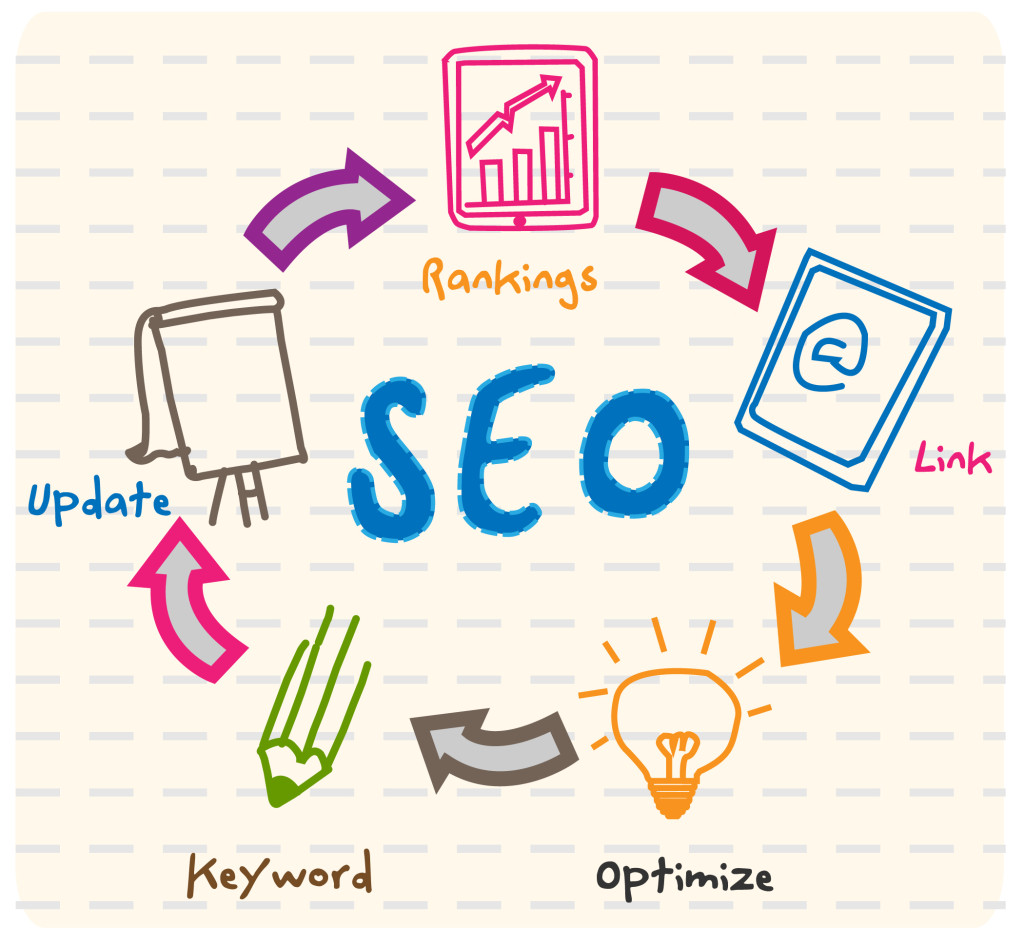
    Modern search engine optimization has become inextricably linked with content marketing. Yet in many companies, social media strategies are developed separately from the SEO and content marketing plan. This can work—but you’ll realize optimal results by aligning social media with SEO for an overall strategy that boosts brand awareness, improves domain authority, and increases your rankings.

    Here are some tips for social media strategies that can fuel your SEO and help you rank higher in all types of user searches.

    Grow your Following

    In the early days of social media, building a massive following was the number one goal for most marketers. Today, the emphasis has shifted from quantity to quality—but the number of followers you have is still an important factor for domain authority.

    Of course, it’s equally important to develop an authentic audience. Google, in particular, can tell when most of your following is made of spam and bot accounts, so “buying” likes or follows doesn’t help—and in fact can harm your online reputation. Instead, grow your following naturally by posting interesting content on a regular basis. Engage your followers with interactive content and by responding to comments or starting discussions.

    Share your Other Content

    Posting links to your content—such as articles, blog posts, and downloads—along with brief commentary on social media, is a great way to repurpose your content and boost your SEO. Of course, sharing on social media will give you more eyes for your content, but the benefits to SEO go beyond that.

    In addition to extra traffic to your website or blog, which is a peripheral SEO benefit, social media sharing encourages others to share your links. The more often your links are posted on other social media accounts and websites, the more domain authority you’ll build. This type of inbound link-building is much faster than traditional or manual methods.

    Optimize Social Media for Search

    It’s important to know that your social media posts can show up directly in search results—if they’re optimized. When you’re composing posts, be sure to apply basic SEO strategies such as including keywords, placing them strategically and naturally, and tagging image, video, and infographic posts with relevant keywords. Even if your posts don’t make it into search engine results, they’ll still increase your brand authority and contribute to a stronger online reputation.

    Increase Social Shares with Viral Content

    The more shares and retweets your posts have, the greater your domain authority—and the higher your search engine rankings. In order to get your content shared more often, you need to create content that people want to talk about.

    Of course, every marketer wants to release the next viral sensation. There is no guaranteed strategy for making something go viral, but you can increase your chances of catching lightning in a bottle by creating content with a strong visual component (either a visual medium or a blog post that’s heavy on images, for example), and make sure it has the following characteristics:

    • Informative
    • Relevant
    • Entertaining
    • Practical
    • Surprising
    • Unique

    Of these characteristics, the last one is the most important. Create content your audience has never seen before, and they’ll be eager to share it with friends.

    Connect with Similar Companies

    In the world of social media, your “competition” can be your friend—and that’s good for your SEO. Engaging with similar businesses, particularly local companies or those in similar industries, can help you grow your audience and your relevance, which in turn increases your search engine ranking.

    Share content with other companies like yours and comment on their posts. Usually, they’ll return the favor by engaging with you, which will attract their audiences to your social profiles. Google will also start associating you with other brands when you engage with them, which improves your overall authority.

    When it comes to online marketing, social media and SEO should go hand-in-hand. How does your social media strategy complement your SEO approach?