Tag: social media marketing

  • 10 Things Your Medical Practice Should Be Doing on Facebook

    A How-To Guide for Growing Your Practice Using Facebook

    We all like to think of ourselves as Facebook experts. This is 2016 after all, and Facebook has been around for over eight years. But the resting state of the online world in our internet age is continual flux, with updates and improvements becoming available quicker than you have the time or energy to research and evaluate. We know you’re busy, so let us give you the tl;dr (too long; didn’t read) version, with some easily employable tips and tricks that you should be using on Facebook.

    1. Engagement, Engagement, Engagement!

    Relationships can’t be one-sided, so make sure your Facebook fans see the benefit in keeping up with your page by responding to their comments, questions, and concerns. Just like your patients, your growing fan base wants to feel like they’re being heard. Taking just a few minutes to reach out to them and address their inquiries will keep your current fans happy and could even help you gain more interested Facebook followers. And, with Facebook providing users with an estimated response time right on your page, it’s more important than ever to quickly and thoroughly respond to your fans.
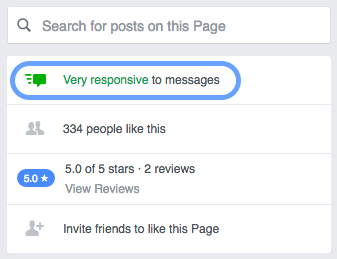
    Facebook screenshot: Very responsive to messages

    There’s a reason it’s called social media! For more tips on posting irresistibly engaging content, check out this post by a fellow influencer.

    2. Create Shareable Content

    The key to great Facebook messaging is shareability. Creating compelling, viral content that your fans can’t help but pass on increases your reach outside of your social network, earning you more fans and more influence. Consider curating a monthly list of debunked medical myths or posting an article detailing easy lifestyle changes that result in major prevention benefits.

    3. Show Me the Money!

    Facebook Y U No Keep Algorithm?

    With subsequent Facebook algorithm updates, overly promotional posts are receiving less and less organic distribution on the platform. Thus, it has become increasingly important to put some spend behind your posts in order to engage specific audiences, especially since gaining fans doesn’t necessarily mean your content will reach those fans. Appealing to your growing fan base and encouraging engagement and familiarity with your products, services, and industry through post promotion is an extremely cost-effective way to combat these updates.

    4. Practice Events

    Facebook events are a great way to get your business and services in front of the community. Create your own events around prevention, fundraisers, and community outreach. Is your practice offering free flu shots? Create an event and allow people to invite their friends. Watch your RSVP list grow!

    5. Community Events

    Events can also be a great way to express your involvement in your community. Do you have a team participating in Relay for Life or a March of Dimes event? Show your solidarity, and encourage your fan base to support your favorite cause by creating your own Facebook event or attending one!

    6. Know Your Audience

    Being familiar with your fan base can help you provide content and services tailored to your fans’ interests. The Audience Insights tool can provide you with an invaluable cache of information. You can analyze the times of day your fans are most active on Facebook, the makeup of the Reactions your posts receive, and even the demographic makeup of Facebook users near your place of business.
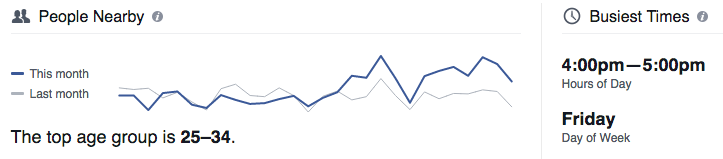
    Facebook screenshot: People nearby

    7. Analyze Your Reactions

    Also available through the Audience Insights tool, or by viewing individual posts on your page, are the myriad of Facebook Reactions users can now express. Taking a look at the various responses like Love, Haha, Yay, Wow, Sad or Angry can give your practice a good feel for the type of content your Facebook fans are interested in seeing more of as well as the content they’re definitely not interested in.
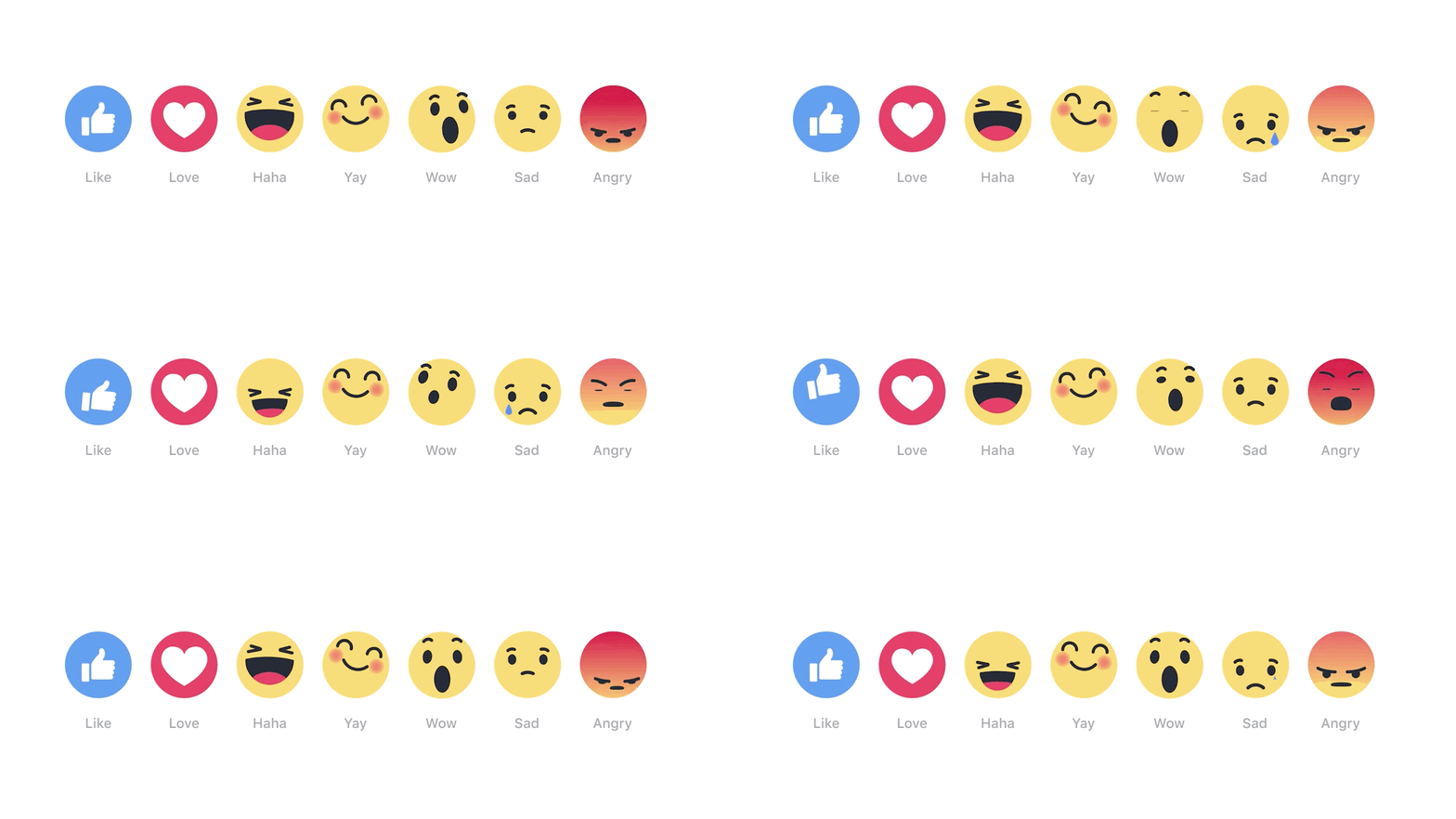
    Facebook Reactions Giphy

    8. Make Posting Easier with Scheduling

    Don’t have a dedicated social media team for your practice? If you rely on a few helpful individuals, and especially if you’re taking on the task of social media management yourself, you will definitely want to familiarize yourself with Facebook’s post scheduling tool. If you want your page and its content to be consistently at the forefront of your fans’ newsfeeds, and trust us, you do, the ability to “set it and forget it” is priceless.
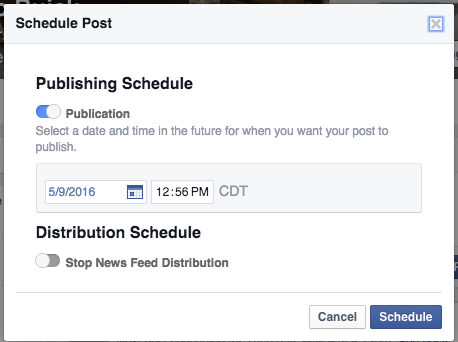
    Facebook Screenshot: Scheduling

    Check out this post for a step by step on how to get started with this feature.

    9. Update Your Page!

    Just as you stay up-to-date on the latest medical innovations and techniques, you must maintain currency in your social media efforts! Keep your contact information current and accurate, and post content with an eye towards the future (i.e. new developments in the field and what this means for the patient). This up-to-date and active approach will help make your practice’s page more likeable.

    10. Consistency Is Key

    In addition to keeping your post content current, maintaining branding consistency across different channels, such as your website, blog, and social media profiles, is a must for any practice wanting to build authority in the community. A user should be able to seamlessly navigate between your multiple online presences without a jarring change in the consistency of color and imagery, helping your brand to project a pervasive, qualified influence.

    Set of flat design concepts for online medical services

    As they say, practice makes perfect. So go, implement these tips and tricks to see what works for you and your practice, and keep checking back with us for the latest updates!
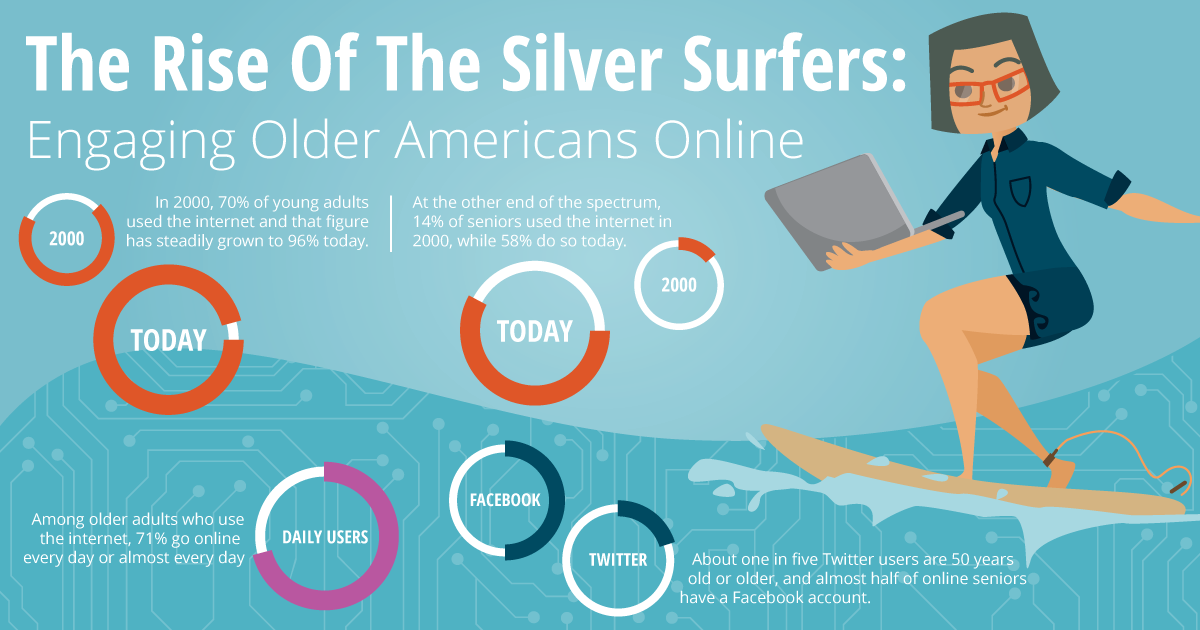
  • The Rise of the Silver Surfers: Engaging Older Americans Online

    Mini Infographic Silver Surfers Older Americans Month - Search Influence

    In honor of Older American’s Month, let’s take a look at the latest trends and talk about engaging this audience!

    “So, who exactly is considered an older American?” you might ask yourself. Well, based on the Older Americans Act of 1965, you could say anyone over 60, basically Baby Boomers and older. These are the people who were working in businesses and actively using technologies like PalmPilots and beepers/pagers during the early stages of the rapid technology growth in the 20th and 21st centuries. You may have also previously heard the term “silver surfer” used to refer to anyone over the age of 50 who is an avid internet user.

    According to 97 surveys conducted by Pew Research over the past 15 years (2000-2015), internet usage gaps between older and younger Americans still persist, though they’re lessening. Now about six in ten seniors go online. While adults 65 and older rank the lowest in internet usage between age groups, the number of older Americans online has grown in the past 15 years and will continue to grow in the coming years.

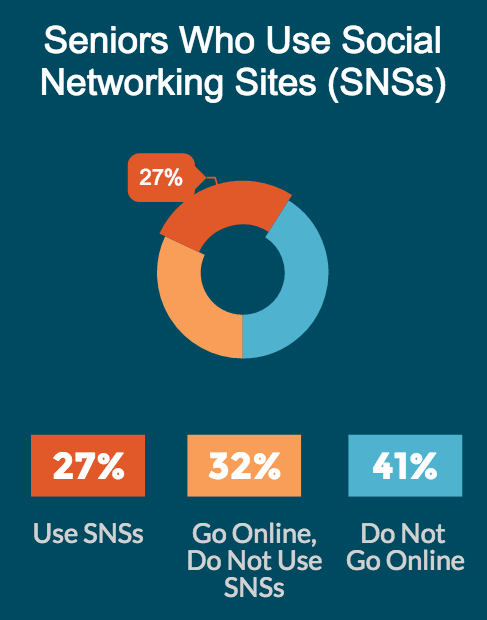
    Another report from Pew Research digs deeper into technology usage trends by analyzing seniors within their age group. Among the older Americans who currently go online, about three-quarters of them go online every day. Just over a quarter of seniors use online social networks.

    The Stat:

    “Older adults have lagged behind younger adults in their adoption, but now a clear majority (58%) of senior citizens use the internet.” — Pew Research Center

    What It Means for Marketers:

    While the previous usage numbers and perceptions would’ve indicated to online marketers that the older age groups aren’t very active online, that is definitely no longer the case. As of 2012, more than half of the senior population is online, and you can bet that number will continue to grow. The silver surfers are now an important and very present audience to consider when marketing online.

    The Stat:

    Seniors have the largest adoption rate change from 2000 to 2015 of any age group (14% to 58% respectively). — Pew Research Center

    What It Means for Marketers:

    This rapid increase in adoption rates shows an increase in technological intelligence among this age group. The previous parallels between chronological age and cognitive age are shifting and advertisers would do well to adjust accordingly. While practicing “ageless” marketing is all well and good, when trying to target this specific audience, be authentic and thoughtful of “the new 65,” a more-tech savvy and a now younger cognitive age group.

    The Stat:

    77% of older adults have a cell phone, but just 18% are smartphone owners. — Pew Research Center

    What It Means for Marketers:

    As many of you reading this know, mobile marketing is quite the focus of today. While a little less than a quarter of older adults have smartphones, over a quarter own tablets or e-book readers. This means that mobile searching and browsing is highly likely for this audience. Consider your potential to reach these seniors when optimizing your website and its content.

    Seniors Older Americans Online Using Social Networking Sites - Search Influence

    The Stat:

    “Today 46% of online seniors (representing 27% of the total older adult population) use social networking sites such as Facebook.” — Pew Research Center

    What It Means for Marketers:

    These silver surfers aren’t just surfing the web; they’re socializing, too! About one in five Twitter users are 50 years old or older, and almost half of online seniors have a Facebook account. Engage with the older American audience to help grow your brand online.

    Biggest Takeaway:

    When you think older Americans, you shouldn’t think, “my grandma who makes me fix her Wi-Fi router and doesn’t understand smartphones.” Instead, think of the generations before you who were in their prime for the technological boom that gave us the first cellphones, computers, and video games. These generations were the first to experience technology and were fortunate enough to grow and adapt with it. So, in reality, they’re part of your market and audience whether or not you realize it. The silver surfers are here and growing, so don’t discount them when you’re planning your marketing campaigns!

    All data and stats came from the following sources:
    http://www.pewinternet.org/2014/04/03/older-adults-and-technology-use/
    http://www.pewinternet.org/2015/06/26/americans-internet-access-2000-2015/
    http://blogs.forrester.com/gina_sverdlov/12-06-08-the_data_digest_digital_seniors

  • Why Social Media Is Critical for the Growth of Your Business

    Why Social Media Is Critical for the Growth of Your Business

    If your business is not already harnessing the power of social media to build and retain its customer base, then you may be missing out. According to Pew Research Center, almost two-thirds of Americans regularly use social media sites for their personal and commercial needs.

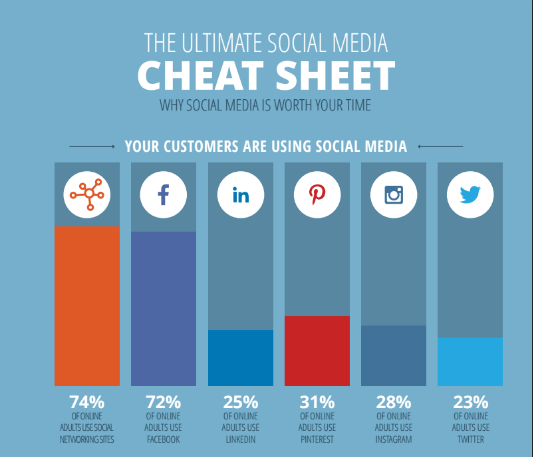
    The Ultimate Social Media Cheat Sheet

    But how exactly do you successfully market your business with social media to find more potential customers?
    The key to leveraging the power of social media, when it comes to your business, is to focus on those attributes that make your business unique and to focus on prospective customers who look like your best customers. When I say “look like,” I mean demographically and psychographically. So if your best customers are poodle-loving, Jaguar-driving, octogenarians than that’s who you should try to target first. By focusing on prospects like the customers who already know and love you, your chances are much better of making a connection.

    Your Customers Are Using Social Media

    1605-TheInfluencer-BlogImage1-EK-A-01When it comes to social media, your customers are already savvy, regular users. Among adults who are online, 76% use social networking sites. You’re likely now wondering exactly which social media sites your customers are using. By an overwhelming amount, it’s probably not a surprise to learn that Facebook is, by and large, the most popular with 72% of online adults as regular users. Following up the lead are LinkedIn with 25%, Pinterest with 31%, Instagram with 28%, and Twitter with 23%. In one of our client’s compelling success stories, a non-profit group wanting to promote its annual fundraising event used Facebook to reach its goal of selling more event and raffle tickets. By using a branded Facebook landing page and targeted Facebook ads focused exclusively on tickets, the group met its goals and generated over $70,000 in online ticket sales.
    The Social Media Tipping Point

    To understand even more clearly how critical social media use can be for businesses, let’s take a look at what your competitors are doing. According to a recent survey on how small businesses are using social media, 53% are active users. In addition, more small businesses are investing in social media strategies with 25% of marketing budgets expected to be channeled to social media over the next five years. Meanwhile, your customers are increasingly influenced by what they see online with 57% saying they judge a business by the positive (or lack thereof) reviews that they see online.

    Where and When You Should Post

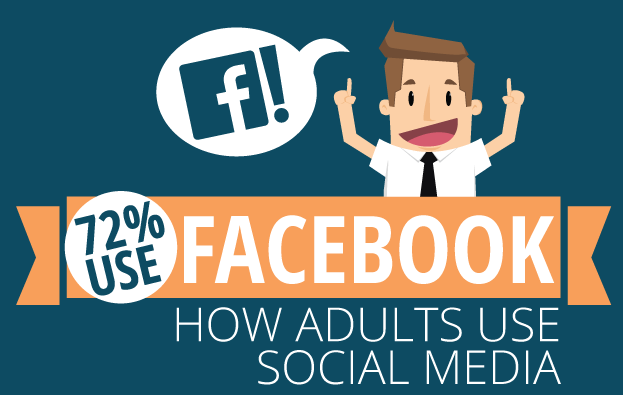
    Now that you understand the changing landscape of social media and how integral it is to a successful marketing strategy, it’s important to know what sites to focus on and when you should post. Facebook remains the clear winner in terms of the number of users. To break it down further and look at the gender and age preferences of that 72% of online adults who use Facebook, 77% of women online use Facebook versus 66% of men. In addition, 87% of 18 to 29-year-olds use Facebook versus 73% of 30 to 49-year-olds. Knowing who to target and when can be useful. It’s important to know that certain days of the week and certain times of the day can make a big difference. Posting on Facebook on Saturdays and Sundays from 12–1 p.m. can result in 32% higher engagement, with Thursdays and Fridays from 1–4 p.m. resulting in 18% higher engagement. The times to avoid posting are weekends before 8 a.m. and after 8 p.m.

    8539503475_9b2e586988_k

    It may seem overwhelming at first glance, but taking the first step and getting your business engaged in social media is not only worth your time; it can also create a ton of new customer opportunities. To help you make the most of this opportunity, and to learn more, check out this handy Social Media “Cheat Sheet.”

    Image Credits:

    Social Media Flowers Image – HTSABO
    Facebook Graduation Image

  • The Diagnosis Is In: Your Medical Practice Needs Reviews

    Reviews
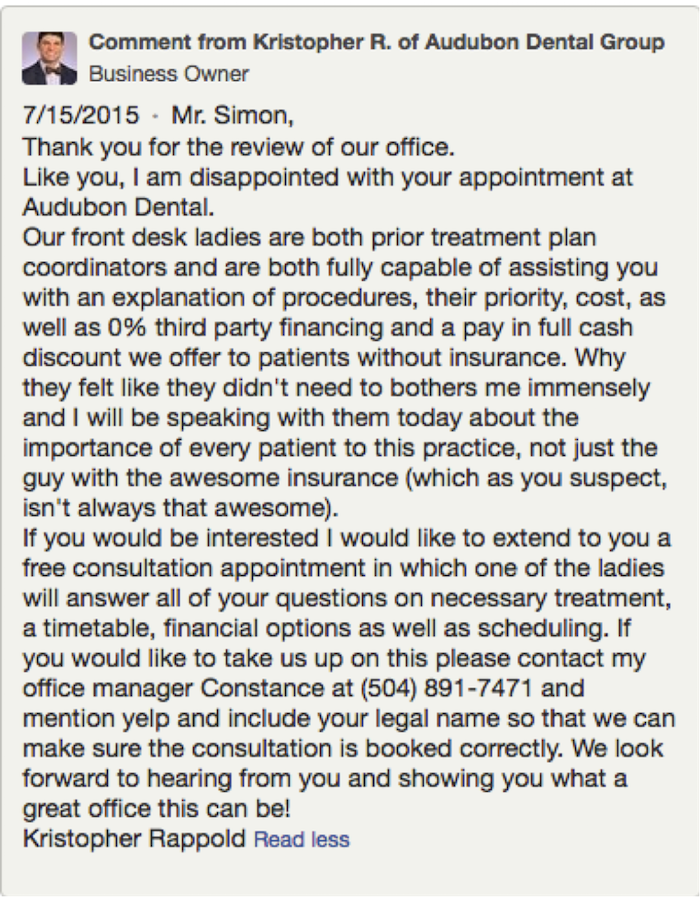
    Yelp, Healthgrades, Google My Business, RateMDs, Vitals—the list goes on and on. More than three quarters of patients are browsing review sites, using the online reviews to decide on a new healthcare practitioner. It is now more important than ever for your practice to have a strong online presence with positive reviews on your own site as well as external review sites. If you need help generating more online reviews, here are five tips to encourage your patients to share.

    1. Use Word-of-Mouth to Ask Patients to Post Reviews

    Your source for positive reviews is from your frequent and satisfied patients. Never resort to review stuffing by asking office staff, friends, or family members to write a positive review. Fake reviews, usually long on descriptions and short on facts, are easy to spot. You need your happy patients to share the truth about their experience, and you should be encouraging them to post reviews. At the check-out desk, have a sign or a handout ready with your website or other review site URLs you use. Include words of appreciation and encouragement, and request—don’t pressure—patients to rate their experience.

    2. Make It User-Friendly With a QR Code

    Do your patients use smartphones? Statistics suggest that they most likely do. Even if you have a “no cellphone” policy in your waiting room, many patients may be checking their emails or Facebook newsfeed while waiting. Why not give your mobile-enabled customers immediate access to your business information with a QR code?

    A QR code is a mobile-friendly barcode that brings users to a specific mobile landing page, such as your Google My Business page or Google Places business listing. You can print a QR code on business cards, mailings, and brochures, and your patients can leave a review with the click of a button. Even if patients choose not to scan the QR code, they may be impressed with how tech-savvy your practice is.

    3. Reach Out on Social Media

    If you already have a Google+, Facebook, or Twitter page, post links to your review sites and encourage patients to post reviews. Not everyone you ask in the office will write reviews, so you need to offer patients constant feedback opportunities. By maximizing review opportunities, you also maximize your feedback and develop a strong online reputation.

    LM 1

    4. Be Open to Negative Feedback

    The more open and welcoming your practice appears to be, the more comfortable patients will be coming to you instead of airing complaints on the internet. Encourage patients to contact your practice directly to voice concerns, and consider creating a paper or email survey to ask for feedback. You should try to hear from complainers before they make their grievances public.

    If negative feedback does show up on a review site, respond to the criticism in a non-defensive manner. This will signal to potential patients that you listen and care about customer service. Remember to never discuss personal medical information, but focus on broader policies. And remember, always ask the patient to contact you to discuss his or her dissatisfaction. This shows others that your practice takes responsibility for patient satisfaction.

    LM 2

    5. Deliver Your Best Service

    The more satisfied your patients are, the more likely they are to write positive online reviews. Patients have high customer service expectations, so train everyone, including receptionists and the billing department, to treat them with kindness and respect. Always look for ways to improve your patient’s experience. Practices with the best service get the best online reviews.

    Screenshot Credits:

    Facebook Screenshot Image
    Yelp Screenshot Image

  • 5 Things Healthcare Professionals Should Never Post on Social Media

    Over the past decade, social media has become a major part of nearly all aspects of life, including the business world. With the ever-growing importance of social media marketing, more and more businesses—including doctors, dentists, and others in the medical field—are using social media sites such as Facebook, Twitter, LinkedIn, etc. to connect with current and potential future customers.

    Thanks to the expansive, direct, and often personal nature of social media, with all those benefits also come numerous pitfalls that must be avoided to ensure that you get the most out of social media. Here are five things to never post on social media if you are a doctor or work in the medical field.

    1. Inaccurate Medical Information

    We have all seen it on social media before. Somebody shares an article claiming a miracle cure or the shocking results of some unbelievable new study. Unfortunately, very few of these attention-grabbing headlines are actually backed up by truthful scientific research in the article itself.

    As a trusted medical professional, it is your responsibility to avoid sharing or liking these bogus news stories about medical treatments unless you have thoroughly read the story and have verified its accuracy. Sharing something like this can reflect very poorly upon you and your practice. Be wary of satirical articles as well, because some people may not be able to distinguish the difference at first glance.

    2. Misleading Information or Images

    An offshoot of the previous category, misleading information or images can be just as detrimental as false info. This can include anything that could be considered deceptive or ambiguous to patients. Photoshopped images, exaggerated guarantees, and more can fall into this category.

    A perfect example of this can be seen with the American Society of Plastic Surgeons’ rules and regulations specifying that any images that are not real patients must be identified with “Model” on the image itself.

    3. Anything Violating Patient Confidentiality

    Similarly, The American College of Physicians cautions doctors to be particularly aware and respectful of patient confidentiality when using social media. This is a slippery slope in today’s over-sharing society—even a faceless image of a skin rash can be a breach of patient confidentiality.

    Remember to always obtain written permission from the patient if you want to use an image of them or any body part. It is best to avoid talking about specific patients at all on social media unless you have clear permission to do so. And be careful when taking pictures around your office to post so that no patients or medical records can be seen in the background.

    4. Opinions on Controversial Issues

    Today, many people use social media to express their opinions and speak their mind without realizing that there are consequences for what you say in the digital world, just like in the real world.

    It is best to avoid any controversial topic or “hot button” issue at all cost. This includes divisive subjects including anything to do with religion, politics, racism, and abortion.

    5. Complaints or Rants

    It is equally as important not to use social media as a platform to blow off steam. Using social media to complain about your day or a patient or to rant about a particular situation will always come across as unprofessional. Everything you write on social media has the potential to come back and haunt you.

    In the end, it is best to remember that when using social media as a physician, only post information that your patients and community will find useful. Be professional and remember that social media posts still have real world outcomes that can negatively affect you and your practice.

    Image Credits:

    The Simpsons
    Scrubs

  • Focus on Brand and Audience to Leverage Your LinkedIn Profile’s Referral Power

    Blog2

    LinkedIn is for lawyers. If the anecdotal evidence—such as an attorney receiving a 10x ROI from a four-hour investment—is not enough to convince you, consider the takeaway from Chester and Del Gobbo in the ABA’s 2012 Law Practice: “Now that the use of social media is… widespread, disengagement is not the answer. The issues are not insurmountable, and being a wallflower lets others gain a competitive advantage.”

    With a little forethought, LinkedIn can become a powerful referral tool.

    The Discovery Process

    Before you can present your online persona to the public, you need to set some objectives to guide your content:

    1. Know your audience. When you know your audience, you not only know which of their needs you can meet; you also know what they are not interested in. Do not invest time on subjects or past experience that are not relevant to your audience, especially on a new profile. Not sure who your audience is? We can help.

    2. Know your brand. Your brand is the value you offer others. To build a successful online presence, you want to become a thought leader, or “influencer,” on all things related to your brand. Thought leaders are not only recognized for how they think, but also for how they lead. Put another way: your audience is as motivated by trust and likability, the “leader” side, as by your perceived knowledge. To create a successful brand, you need to find the intersection of ability and likability.

    When building your profile, every content decision you make should be based on demonstrating your ability to meet your audience’s needs or promoting your brand.

    Opening Arguments

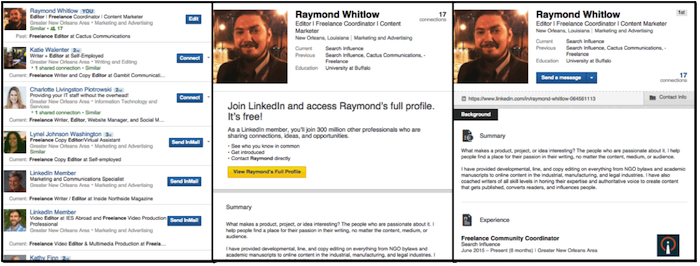
    Two types of viewers will see your profile: the public and your connections. Connections can see all of your information, but public viewers need to click and scroll before they can access everything. You have three opportunities to draw public viewers in: the photo, the professional headline, and the summary.

    LinkedIn Profile For Lawyers Image
    Only your connections (right) will see all of your information at first glance. Use a descriptive professional headline to stand out to searches (left) and public viewers (center).

    3. Use a photo. It should be professional, of course, but more importantly, it should support the brand you are promoting.

    4. The professional headline is not a job title. LinkedIn autocompletes this section with your current job title, but you need to change it immediately. Titles such as “attorney” or “partner” do not tell the public about the services you excel at, the people you can help, or the value propositions you are passionate about. In other words, your job title may not effectively support your brand or target audience. Use a professional header that includes keywords and presents a value statement.

    5. The summary is anything but. Your whole LinkedIn profile is a summary of your professional life—do not lead this section with an even more abbreviated version. Summarize your brand by looking to statements that address:

    • Who do I help?
    • Why do people trust me?
    • Why do people like working with me?
    • What have I accomplished?

    The summary may be the last thing read by a viewer who is interested in you but still on the fence. Use it to encourage the people who are intrigued by your professional headline to become interested in your accomplishments.

    The Evidence

    Now you have drawn your audience into the parts of the LinkedIn profile that address job experience, education, and skills. Use these sections to solidify the claims presented in your professional headline and summary.

    6. List accomplishments, not job descriptions. A list of responsibilities encourages your viewers to skim. Open each job description with a short (1–2 sentence) description of what you do. If you use a list, list your accomplishments, not your responsibilities. You do not need to give an exhaustive account; the purpose of these descriptions is to pique your viewers’ interest so that they contact you or look deeper for information.

    7. Focus on the quality of skills, not the quantity. This is where knowing your audience plays a huge role. Focus on the skills that matter to them. LinkedIn ranks your skills by how many people have endorsed them, which creates a visual hierarchy that emphasizes about ten skills over the rest. By only listing a dozen skills, you create the impression of focused expertise. List too many skills, though, and the ones that are most relevant to your audience may be overshadowed by less important skills.

    (Note: It is recommended you review your bar association’s guidelines on online advertising to determine if skills are considered to be claims of specialization.)

    Closing Remarks

    Very few of the people viewing your profile will read all the way to your volunteer work or organization memberships. That does not mean you should skimp on these sections; they are your opportunity to cement a connection with the people most interested in your brand.

    8. Show your passion. This is another opportunity to bolster the “leader” part of your brand. Stay focused on causes that both you and your audience care about. Show, don’t tell, by listing volunteer experiences and accomplishments, honors and awards, and professional organizations.

    9. Use publications and projects to encourage sustained engagement. Unlike most of the profile sections discussed above, projects and publications enable you to include URLs to outside sources. Direct readers to your legal blog or website to further bolster your online presence.

    10. Do not just build a profile; use it. The lawyer who saw a 10x ROI from LinkedIn spent one hour building his profile and three hours building his network, followed by 30 minutes every week maintaining it. Plan on investing at least as much time sharing your profile as building it:

    • Join and comment in LinkedIn groups.
    • Regularly share updates and engage with other people’s updates.
    • Never stop looking for contacts.

    Over time, a well-curated social media presence will grow into a second profile that shows who you are—the likable and trustworthy part of your brand. When designed with your audience and brand in mind, your LinkedIn profile becomes the cornerstone of a professional network that can drive referrals.

  • 3 Tips to Help Law Firms Generate More Leads on Social Media

    In 2015, 35% of all lawyers obtained clients from their social networks, according to an ABA survey. Tech-savvy attorneys and digital marketing experts alike know that social media sites like LinkedIn, Google+, and Facebook are great business development tools. Engagement is an imperative. In fact, it is the new word-of-mouth for client referrals. Here are three tips to help any firm develop a strong social media strategy.

    1. Start Slow and Develop a Message

    To start, a firm or individual attorney should pick out one or two social media platforms and focus on posting quality, engaging posts. There are only 24 hours in a day, and legal professionals already have a lot on their plate. By focusing efforts on posting good content on a few outlets, a firm can develop its own individual image and message. Once a lawyer becomes comfortable on one or two platforms, they can open various social media accounts and integrate their message across all of them. In 2015, 96% of lawyers and 90% of law firms maintained a presence on LinkedIn, while 33% of lawyers and 52% of law firms maintained a presence on Facebook. As the most popular social media sites in the legal field, these are the best places to start networking. Legal professionals also use Twitter, Google+, blogs, and several other niche social media platforms.

    Lawyer Social Media Engagement Post Image

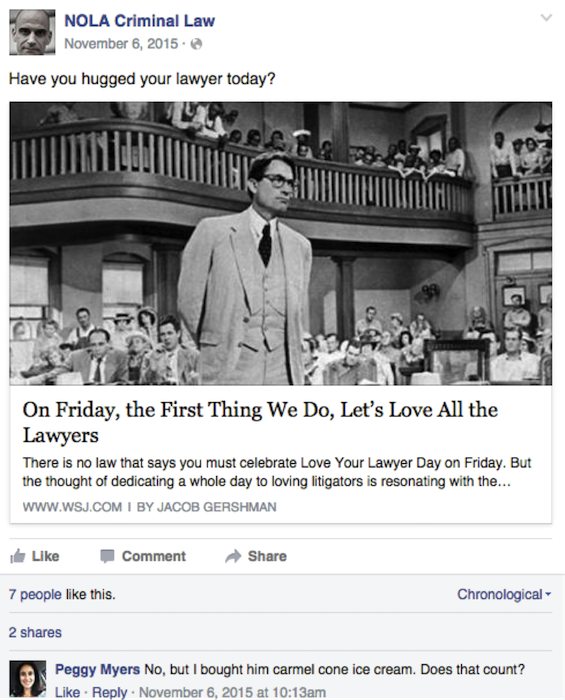
    2. Set a Policy: Reactionary Content

    Who is the target audience, and what will solicit a response from them? Because of the conservative nature of law, many attorneys may shy away from controversial topics. However, as long as the information is within the constraints of what an attorney is allowed to say in public, it can be posted on the Internet. The whole point of social media is to provoke a reaction. Effective legal social media means not only engaging with potential clients on industry-specific topics, but also provoking a share, like, +1, or comment. One tactic involves posting about real world events, changes to state or federal law, landmark rulings, or events the firm is hosting. These posts showcase the attorney as an expert who is aware of the most recent changes shaping the dynamic field. Up-to-date content appeals to potential clients who may respond with their own opinions, creating a conversation and potential leads.

    Lawyer Social Media News Post Image

    3. Build Relationships

    To maximize the reach of a firm’s social media message, make sure every attorney is involved. If one partner writes a blog or is featured in a local news story, make sure everyone in the office does what they can to promote the story. Through re-posts and shares, good news stories can reach a much larger audience. Each and every digital connection is a lead. To build professional relationships, use social media platforms at conferences, local business events, or any other professional event the firm is involved in. By connecting with other attendees or organizers, a lawyer can expand their social media outreach even further.

    As long as a firm approaches social media as part of a modern marketing campaign, it is easy to develop a successful strategy. Social media is not just for the young: the largest-growing demographic for Facebook is ages 30-50. A creative law firm can connect with social media users of all ages to generate leads and gain new clients.

  • A Dentist’s Guide for Choosing Target Audiences on Facebook

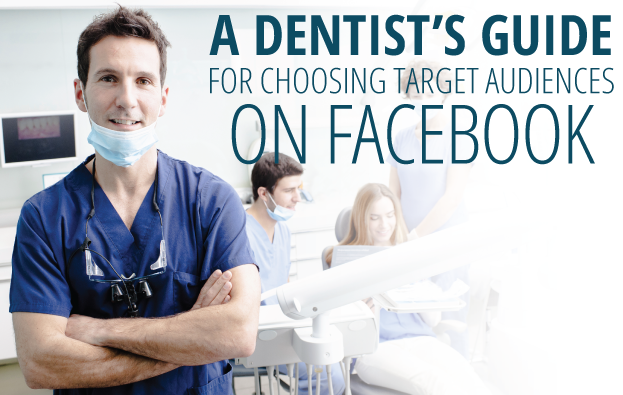
    A Dentist's Guide For Choosing Target Audiences On Facebook Image

    The number one tool in any business’s online advertising arsenal is knowing your audience. In a field as wide-ranging and diverse as dentistry, such knowledge can mean the difference between a stagnant online presence and social media success. So we’ve put together a helpful guide to improving your understanding of Facebook’s targeting tools in the hopes that you can hit that sweet spot of audience-targeting potential!

    We’ve investigated the targeting strategies behind some of our most successful social media campaigns in the dental industry to bring you three distinct targeting groups: family dentistry, young adults and orthodontics, and cosmetic dentistry. We dug deep to provide you with result-generating, relevant targeting parameters that go beyond the typical dental hygiene-related interests of mediocre social media campaigns. For each of these three hypothetical campaigns, we’ve provided some of Facebook’s best options for reaching your intended audience.

    5684115572_55bc83414f_z

    Family Dentistry

    Although your first instinct may be to target users by selecting more obvious interests, such as pediatric dentistry, oral hygiene, or dental care, you can generate much more social engagement through streamlining your strategy and focusing on specific age groups, lifestyle choices, and purchase behavior.

    For a family or pediatric dentist group, we recommend targeting women between the ages of 25 and 55 who have children. This demo group comprises the family decision makers who are most likely to engage with your page. Exploring Facebook’s fantastic targeting tools within the “More Demographics” dropdown will allow you to target parents of children within a specific age range. For instance, you can target new parents all the way through parents with children aged 12. This will ensure that your bid for impressions is going to the right users and not parents with adult children who would be more likely to seek out a dentist on their own.

    Finally, investigating the options available under Facebook’s “Behaviors” section is most helpful in providing you with the best methods for reaching those most likely to engage with your social media presence. Here, you can ensure you are reaching parents who are willing to invest in health and wellness products for themselves and their children. We recommend exploring the “Purchase Behaviors” section and adding behaviors like spa enthusiasts, shoppers, and baby care.

    Young Adult & Orthodontics

    This group can be a little tricky to reach. The sticky situation, if you will, is developing a targeting strategy wide enough to include parents of teenagers as well as young adults and even older adults who require orthodontics. For best results, we recommend targeting both men and women between the ages of 18 and 45. Under “More Demographics,” we have found that the option to target by “Generation,” which includes Baby Boomers, Generation X, and Millennials, is most useful. We’ve discovered that targeting Generation X and Millennials, which encompasses those users born between 1961 and 2004, is quite effective for this subset of the dental field.

    The most useful behaviors for this targeting group are those related to technology. Facebook now allows for targeting by “Mobile Device User,” including tablet and smartphone owners. You can even get more focused by choosing to target only those who prioritize being up to date with their tech gadgets by selecting new smartphone and tablet owners. As common as orthodontics have become and as the stigma of adult orthodontics is reduced through innovations such as invisible braces, more and more of this targeting group’s social media audience will be young adults who are plugged in.

    Cosmetic Dentistry

    Our last targeting group presents the widest range of targeting options based on exactly who your cosmetic dentistry office intends to serve. Here, we have provided you with just a sample of what Facebook’s targeting parameters can allow you to do.

    For this specific targeting group, we recommend focusing on both women and men in the 30 to 65+ age range. Once again, we can look to the “More Demographics” dropdown to provide even more insight into the makeup of our audience. Take a look at Facebook’s “Work” and “Financial” targeting options to get the most out of your marketing budget. You can focus on specific job titles and industries, highlighting those occupations in which a winning smile is most beneficial, such as CEO, lawyer, broadcast journalist, and the entertainment, sports, and media industries. Targeting by financial parameters allows you to engage customers with enough expendable income to prioritize cosmetic procedures.

    Under “Behaviors,” we can select those users who are already investing in health and wellness, especially when it comes to dental care. Facebook provides options for targeting users whose purchase behaviors reflect investments in beauty products and accessories, cosmetics, and oral care. Lastly, Facebook’s “Behaviors” section provides our hypothetical campaign with one of my favorite targeting parameters: photo uploaders. This group includes those Facebook users who posted more than 50 photos in the last month. We all have one of those Facebook friends who is obsessed with selfies, and who wouldn’t want to make sure their perfect pearly whites are on point for all those photos?

    7910370882_39d180fb66_z

    The benefits of social media marketing campaigns are apparent. Every time you flip through your News Feed, you are greeted, hopefully, by well-targeted promotional campaigns that bring you the products and services you’re interested in. With the tips we’ve provided in this helpful guide to understanding your social media audience, you, too, can be on your way to increasing audience engagement and building your online presence!

    Image Sources:

    Facebook Like Button Image
    Smartphone Image

  • Birds of a Feather Tweet Together: How to Shape Your Dental Practice’s Strategy

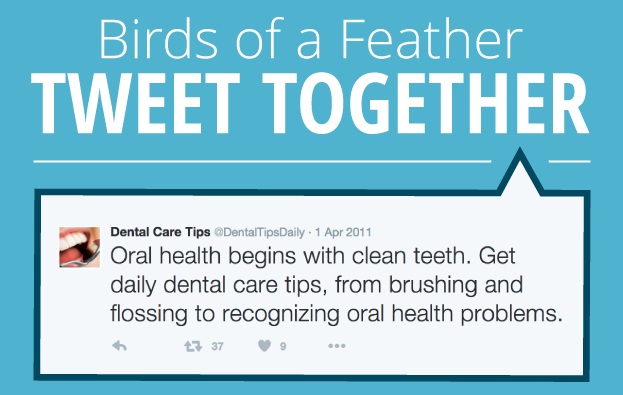
    1601-SI-Newsletter-0112-Big-KG-D-01

    With today being National Bird Day, one saying comes to mind, and it’s one that forever rings true: “Birds of a feather…” Like-minded individuals with similar interests and agendas generally come together and communicate with each other more regularly. This can be beneficial for dentists, periodontists, and orthodontists as they work on growing their audiences online.

    Who’s in Your Flock?

    For those in the family dental industry, consider who will be most inclined to tweet about your services. First to note in the flock is, of course, parents and families. With that in mind, crafting your content with families in mind can benefit both your business as well as your audience, both of which will do wonders for your online presence and, in turn, grow your respective audience as more of that same audience is brought in by their own family and like-minded friends.

    Tweet to Your Birds

    Birds go where other birds go. If you want your Twitter audience to grow, start with those on Twitter who fit your audience to a tee. From there, encourage interaction and engagement with them and their fellow followers who share the same general mindset and lifestyle. For example, if you share a great joke, infographic, or helpful fact about oral health practices and end it with “RT to your friends and fam!,” more will learn of your company’s personality and expertise through shared tweets, and those with whom the messages resonate will join your flock of followers, allowing your audience to continue to grow and prosper.

    Take Flight Today

    The idea of growing your audience online can be daunting to those who aren’t entirely familiar with the method, as the Internet has grown to become a whole new world of its own. Don’t worry, though—that’s what online marketing services are for! Allow a professional company to best serve you in the way that will grow your audience, your company, and your success via online marketing today.

  • Only One Direction for New Twitter Hashflags: Up

    Anyone who has been on Twitter recently has seen the popular custom Twitter emojis known as Hashflags. Hashflag images appear after a #hashtag and are activated on Twitter for specific occasions or events. Artists and events use these to generate trending hashtags, and having the specific Hashflag gives an incentive to tweet it.

    Even though they have been around for some time, the first sighting for me was during the album release of One Direction’s new album, Made in the A.M. Clearly, this sparked my interest.

    One Direction Hashflags

    One Direction used these to promote their new album and pretty much took over Twitter feeds. Every fan girl (including myself) used one of the Hashflags to display their favorite member. I’m sure Harry Styles had the most #1DHarry tweets, but I may be biased.

    1511-SI-Newsletter-KG-C-02

    After a few days of the Hashflags being available, One Direction collaborated with Twitter to set up a worldwide competition to find the biggest fans in the top 10 countries. More than 140 countries battled it out in a Twitter vote to show how devoted they were by using assigned One Direction country hashtags. Sadly, the USA didn’t make the top 10, but we know our loyalty stands strong.

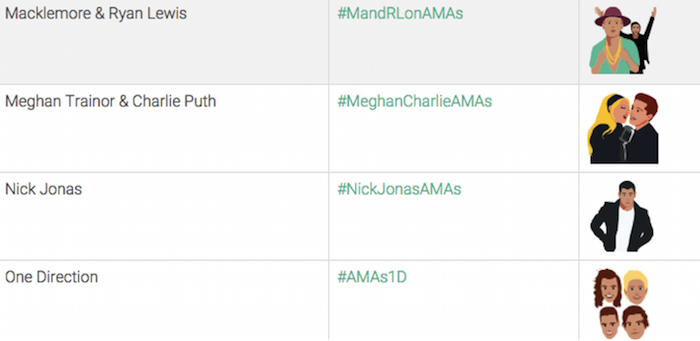
    Because Twitter has released this for events as well, the most recent American Music Awards took part in the new trend. Twenty unique Hashflags were released during the airing of the #AMAs on November 21, 2015.  Each time a performance graced our television screens, a hashtag displayed at the bottom for us to use when live tweeting. Macklemore, Meghan Trainor, Nick Jonas, and One Direction are a few of the artists that had a custom Hashflag.

    Screenshot Image Of Twitter Hashflags

    If you are curious to know what Hashflags and artists generated the most talk on Twitter during the AMAs, you can take one guess. One Direction made a clean sweep of the awards won, and they were also the most discussed artist on Twitter during the show. I’d say they are doing just fine without Zayn…SLAY!

    How to Use Hashflags

    As the rise of Hashflags continues, here is a list of things to keep in mind:

    • They are not permanent. The lifespan of a Hashflag lasts as long as the event/occasion it is associated with.
    • They don’t count as characters. YAY! 🙂
    • Hashflags’ view is currently limited to desktops and the Twitter app.
    • All active Hashflags are visible on hashfla.gs. Check it out to see a list of all the current/available Hashflags you can use in your tweets.

    What has been your favorite Hashflag on Twitter… besides #1DHarry?