Tag: local search

  • A Family Affair: Teaching Mom a Thing or Two About SEO

    Here at Search Influence, I have had the opportunity to work with a diverse group of clients—business owners from all kinds of different industries. But the best thing about coming to work every day? I have the privilege of working with a very special client: my mom.

    Bridget Mothers Day Image - Search Influence

    “So What Is It Exactly That You Do?”

    As the owner of two audiology practices, my mom has always been fascinated with the online marketing work that we do here at Search Influence. She understood well the need to strengthen her website and her practices’ online visibility in order to attract new patients and keep her business thriving. I encouraged her when she was ready to design a new, up-to-date, and well optimized website (something she desperately needed).

    Let’s Make This Official

    Although I was able to provide guidance and support, my individual capabilities were limited. Fortunately, though, I have the privilege of working with an extremely talented group of people with a wide array of skill sets. The next step was clear: it was time to get the Search Influence team involved and make my job as her “marketing consultant” official.

    Bridget Mothers Day 2015 Image Search Influence 2

    Giving Back

    I feel a great sense of satisfaction knowing that I am able to give back to such a hardworking, supportive, and inspiring individual. Through her SEO and online advertising campaigns, I have helped her attract more patients, strengthen brand awareness, and remain relevant in the highly competitive online marketplace.

    Working with her has been overwhelmingly positive. She is inquisitive, trusting, and always willing to help when needed. The only strange part has been adjusting to addressing her in this new professional capacity…for example, beginning a formal business email with “Hi Mom.”

  • This National Small Business Week, Step up Your Online Marketing

    It’s National Small Business Week—time to celebrate the successes and the insane amount of work small business owners put in. The struggle is real.

    You know you’re a small business owner when…

    …Your nightmares are about getting bad Yelp reviews.

    …Your social media “strategy” consists of bribing your college-aged daughter to handle your Facebook and Twitter accounts.

    …Your holiday hours did not quite make it to the Internet, and customers actually showed up only to find your business closed.

    To cure these and other headaches, start with a little TLC for your website and your online marketing strategy—after all, both of these play a huge role in bringing you customers, but they may unfortunately also be keeping you up at night. Follow these top three online marketing tips for small businesses.

    If You Can’t Beat ‘Em, Join ‘Em

    It may sound upsetting that Yelp listings are front and center in a Google search for your business while your own website is far down the list of search results. But savvy small business owners know that Yelp and other large online directories can win over customers with minimal effort. So if you can’t beat the Yelps of the world, join ‘em!

    This strategy is also known as Barnacle SEO. Basically, your business needs to attach itself to large, fixed objects and then wait for customers to float by in the powerful current. Identify the large, high-ranking online directories that matter to you most, such as Yelp, and add your information there in the hopes of “borrowing” some of the page one rankings. There are many trusted online directories like Yelp out there you can barnacle up to: Angie’s List, Foursquare, Google+, Avvo (for lawyers), Healthgrades (for doctors), and even TripAdvisor.

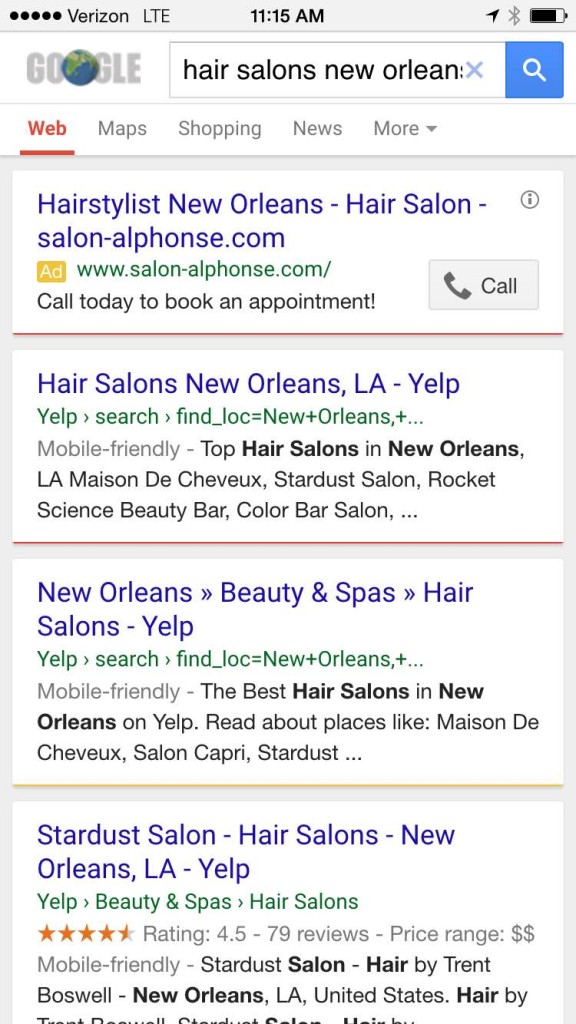
    And this tip comes with a bonus: this strategy also works well for customers searching on smartphones because these websites are optimized for the mobile experience—providing the targeted information that local customers searching on their smartphones really need. When you perform a Google search for “hair stylists New Orleans,” for example, the top results are mostly from Yelp:

    Yelp Mobile Screenshot Image - Search Influence

    Target Your Social Media Efforts

    Another thing that keeps you as a small business owner up at night? Social media—or more specifically, finding the time for it. For starters, why is social media worth your time? The latest statistics from the Pew Research Center paint a pretty compelling picture that customers are on social media: 74 percent of online adults use social networking sites.

    As a time-starved small business owner, you must get the most for your social media time. This requires targeting your social media efforts. Start by channeling your ideal customer. What is your typical customer’s age, marital status, and family status? Where is your customer physically located? Do your customers fall into a certain income bracket?

    Once you know who your target customer is, find the social media channel that appeals to them. For example, Facebook still skews significantly female and is the top-used social network for U.S. teens, making it ideal for fast-moving consumer goods, according to Business Insider. Instagram is also popular among females ages 18 to 44, so clothing, accessories, and those types of brands tend to perform well on this network. While LinkedIn is most popular for adults, Twitter is primarily a news source and attracts mostly male users. YouTube reaches more adults ages 18-34 than any single TV network. Pinterest is the place for food and drink-related information as well as parenting tips.

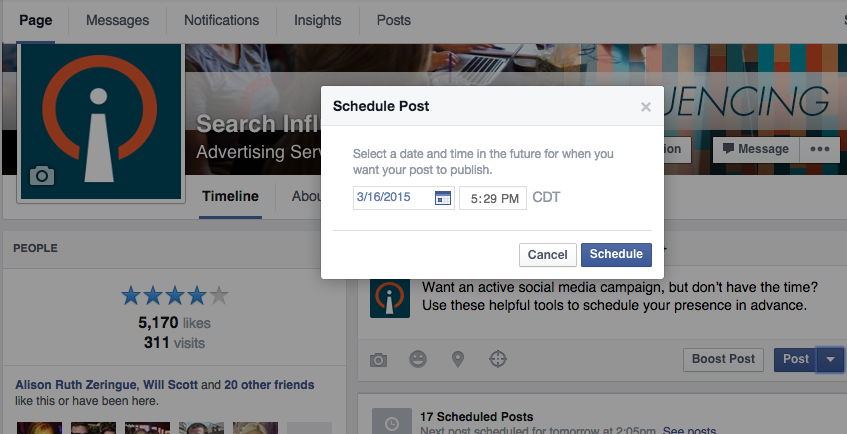
    But remember, whichever social networks you decide to focus on, automate your posts with these quick tips.

    Facebook Scheduled Post Image - Search Influence

    Avoid Customers Crying in Your Parking Lot

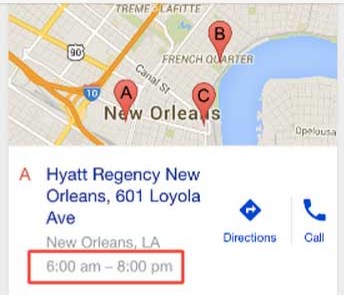
    If you’ve ever done a Google search for your business, you’ve likely seen this kind of result:

    MapsTimeViewImage

    But what happens when you have special holiday hours? Will customers see your normal hours in a Google search and show up in your parking lot over the holidays? Currently, Google My Business has not built out the functionality for saving holiday-specific hours ahead of time. As the profile setup currently stands, you’ll need to manually edit the hours of operation on a given day when your business is open (or closed) outside your standard hours of operation. See Google’s steps on how to update your business’ hours.

    Also, remember to let folks know when you are, in fact, open on the holidays. For instance, let everyone know your restaurant is open on Independence Day and post your holiday-specific menu for the day or highlight any patriotic specials. Is your medical practice open for limited hours on Memorial Day this year? Post a piece to your blog or social media profiles highlighting the top summertime health hazards from boating accidents to severe sunburns.

  • Survive Google’s ‘Mopocalypse’ with these Tips for Your Mobile Strategy

    Survive Google’s ‘Mopocalypse’ with these Tips for Your Mobile Strategy

    Mobile Friendly Image Search Influence

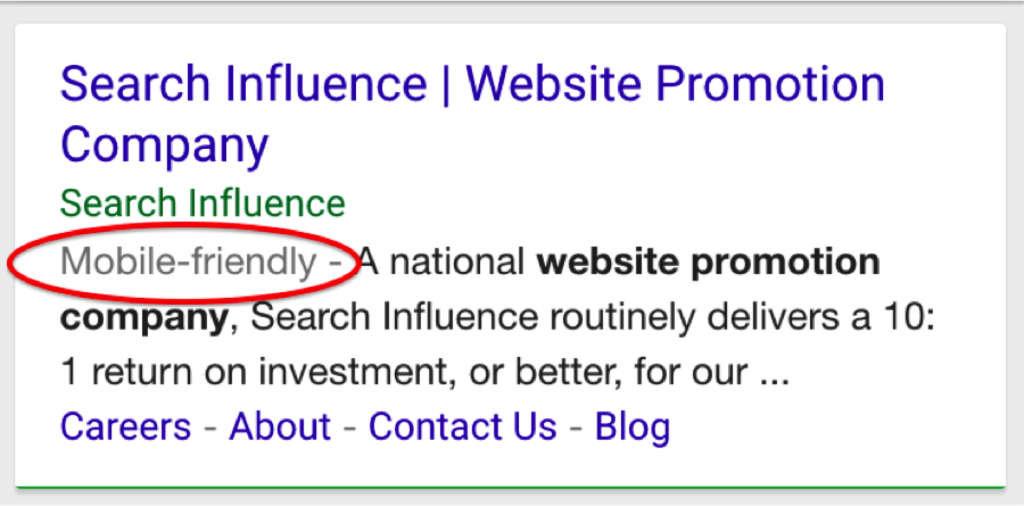
    Google’s new mobile-friendly update, which I originally discussed in my Search Engine Land column, is rolling out this month, and it’s time to put the focus on mobile. But with all this buzz about mobile websites, you may be thinking, “My website looks fine on my smartphone when I pinch and zoom, so what’s the big deal?”

    Well, there’s much more to it than that.

    Step 1: Get a Mobile Website

    Just because your Web developer tells you your site is mobile doesn’t necessarily make it true. Make sure you’ve used Google’s handy mobile-friendly testing tool to check your website. In Google’s eyes, businesses have three main options for becoming mobile-friendly: responsive website design, dynamic serving, and separate URLs.

    So what option is right for your business? The bottom line is this: for businesses with growing mobile traffic that has not yet reached a critical percent of site traffic, a purely mobile version on a separate URL is a viable option. But for businesses with mobile website traffic pushing 50 percent or more of all site traffic, it is time to invest in a responsive website. While a responsive website typically requires a complete overhaul, your customers will probably thank you when your website can display differently based on the screen size.

    Step 2: Use ‘Barnacle SEO’

    Even before your mobile website is in action, your business needs to attach itself to large, fixed objects, and then wait for mobile customers to float by in the powerful current. I like to call this Barnacle SEO, also known as the “If you can’t beat ‘em, join ‘em” strategy. Basically, this means identifying large, high-ranking online directories such as Yelp, for example, and adding your information there in the hopes of “borrowing” some of their page one rankings. And there are many trusted online directories like Yelp out there you can barnacle up to: Angie’s List, Foursquare, Google+, Avvo (for lawyers), HealthGrades (for doctors), even TripAdvisor.

    This strategy works well in mobile because these websites are optimized for the mobile experience—providing the targeted information that local customers searching on their smartphones really need. When you perform a Google search for “hair stylists New Orleans,” for example, the top results are mostly from Yelp:

    Yelp Mobile Screenshot Image - Search Influence

    Step 3: Focus on Location, Location, Location

    Let’s face it: when mobile matters, location matters. Consider this: 50 percent of consumers who performed a local search on a smartphone visited a store within a day, according to a recent study from Google. So that’s good news for brick-and-mortar businesses with a mobile-friendly website. Those businesses will enjoy the additional ranking factors from the upcoming mobile-friendly algorithm, getting these small businesses in front of their target market at the time and place searchers are looking.

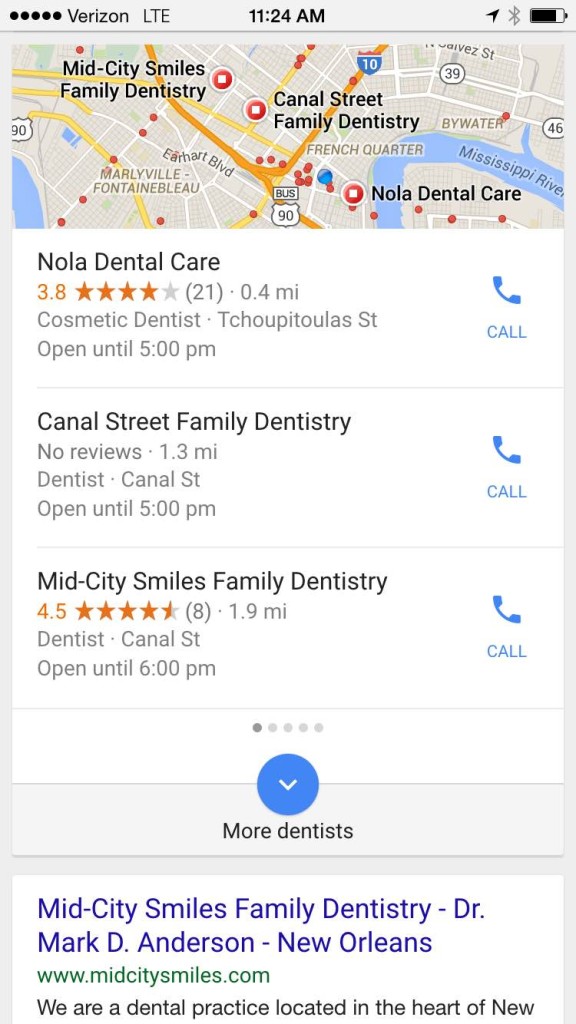
    The challenge? Local businesses must break into the top three local results—the ones typically seen on your smartphone. For example, if I search for “dentists,” Google is going to give me dentists near me … and I see only the first three results:

    Dentists Near Me Search Image - Search Influence

    To wrap it up, these are three steps you can get started on now. But remember, as with all Google algorithm updates, stay calm and give it time. April 21 was not the end-all-be-all date. This rollout will likely be a period of rollouts rather than a single-day launch. We usually recommend giving an update 60 days to see the full impact. And even then, there are revisions and updates and you just don’t know.

    So what’s your next move? Keep an eye on your website traffic to see if the update is impacting your mobile traffic. If you need help, give us a call at 504-208-3900. We’re here to help ease your “Mopocalypse” fears.

  • Googleplasty: How to Reshape Your Search Results (Part 2)

    As more businesses begin to take efforts to improve their online presence, standing out in search results of highly competitive markets and areas becomes even more difficult—and nowhere is this perhaps more true than in the cosmetic medicine industry.

    In order to reshape your search results through the art of “Googleplasty,” you must know what factors make your business rank high in a Google search. Since we now know all about the different types of search results from part one of this two-part blog series, let’s talk about the most important factors that play a role in how high your practice ranks.

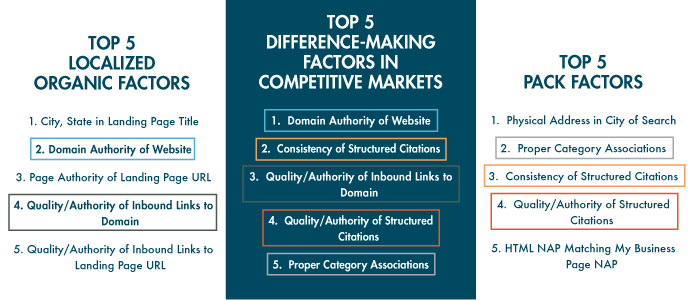
    The following three “Top 5” lists of factors are from from Moz’s 2014 Local Search Ranking Factors survey. The information came as a result of surveying 40 industry experts to determine what had the most influence on ranking in Google search results.
    top 5 search ranking factors

    As you can see, all of the factors that are integral in competitive markets also play a part in either localized organic or maps pack results. Due to their repeat importance, I think they’re the five factors most worthy of discussing in detail.

    1. Domain Authority of Website
    domain authority

    First up on our list as the most important factor in competitive markets is Domain Authority, which isn’t much of a shocker. Domain Authority is a proprietary measurement (created by Moz geniuses) of a domain’s power within a 100-point scale. This score can be used to predict if a site is likely to rank in Google’s search results and can also be used to track a site’s growth and increase in strength.

    It is a metric that combines other metrics such as age, number of links, and quality of links, so it’s not easy to manipulate through singular or direct efforts. As it is directly put on Moz’s site, “The best way to influence this metric is to improve your overall SEO.”

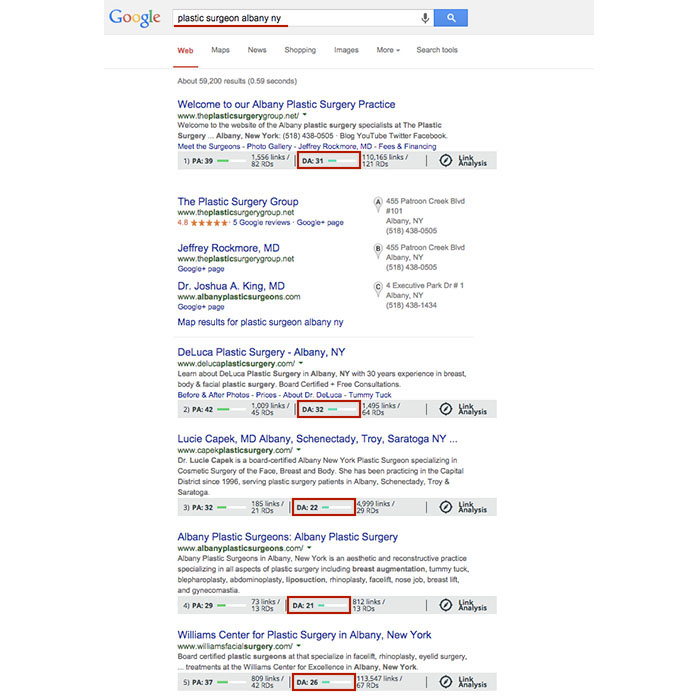
    Using Moz’s MozBar to see domain authority of pages in search results, you’ll see that the top five business sites in the localized organic results for “plastic surgeon albany ny” have Domain Authorities of 31, 32, 22, 21, and 26, respectively. As you can see here, having a score that is higher by a single point won’t guarantee that you rank above your competitor, but in this search example, business sites past the first page of results tended to have Domain Authorities lower than 20.
    Domain Authority Search Results

    2. Consistency of Structured Citations
    structured citation consistency

    While this factor isn’t as high ranking for localized organic results, it is third for the top maps pack factors and second here in the top factors for competitive markets. One reason for this is that in many competitive markets, such as plastic surgery or cosmetic dermatology, you’ll find maps packs in search results.

    To start, a citation is a place on the Web where a business’ name, address, phone number, and often website can be listed (sometimes referred to as the NAP of a business – name, address, phone). Any combination of the NAP, with or without all parts, listed on a site is considered a citation. A structured citation in particular is a listing of business information found on a directory website (e.g. YellowPages.com and Yelp.com). On the other hand, an unstructured citation can be business information on non-directory sites like newspaper sites, press release sites, and blogs, to name a few.

    By increasing the number of matching information sources (and therefore matching signals) to Google, you also increase your chances in having Google match this information to search queries, according to a recent webinar with Google’s Heather Wilburn. So if you want to be matched with potential patients searching for businesses like yours in your area, consistent business information across the Web is one of your best bets, especially in competitive industries like cosmetic surgery.

    3. Quality/Authority of Inbound Links to Domain
    inbound links to domain

    An inbound link to your domain (aka inlink or backlink) is exactly what it sounds like, a link leading to your website. The relevance to your industry or location and the authority of a website linking to yours in and of itself are the two best traits for quality links. Buying links or having links from random, spammy sites will hurt, not help you. Links from local sites and popular sites are a pretty safe bet. You can seek out local sponsorship opportunities as a good link-building effort or help other sites clean up their broken backlinks by using your working ones.

    To differentiate between natural link building versus spammy link building, remember that it’s all about user experience and what makes sense to the user. If your efforts don’t uphold the ideal of providing the best user experience possible, then they’re probably not good.

    4. Quality/Authority of Structured Citations

    structured citation quality

    As mentioned above, a structured citation can be any directory site that lists any variation of your business’ NAP or website. While consistency is most important, you also want to make efforts to build high-quality, authoritative citations in directories.

    Just like there are many factors to improve your own site’s authority, there are also many factors to determine the quality of a directory. You can delve into Whitespark’s blog on how to identify quality citation sources for a detailed breakdown, but basically a good rule of thumb is to look for high domain authority and human moderation in directory sites. Examples of human moderation include how DMOZ requires submission review by its team before a link goes live or how Google Plus, Yelp, and Bing listings all require verification via phone call or a postcard sent to the business.

    Google also considers niche directories highly authoritative. A niche directory is an industry-specific or location-specific directory. Since the Pigeon algorithm update, this kind of citation building has become especially important, and searching for your industry’s keywords will often help you identify these niche directories. If you search for “plastic surgeon columbus oh,” you’ll see that the directories healthgrades.com, vitals.com, and smartplasticsurgery.com appear on the second page of search results. Often, these types of directories require either verification or payment for those seeking to be listed on their site. If you understand the concept of barnacle SEO, you know that being listed on these types of big, authoritative sites is a great way to improve your own visibility to potential customers. Use your discretion to decide if the opportunity cost of getting on a directory isn’t too high to be worth the effort.

    Warning: If a site ever requests a “reciprocal link” to its site on your site in order to be listed, this is NOT A GOOD practice, and they are not worth your time.

    5. Proper Category Associations
    category associations

    Having proper category associations is another important factor for ranking in the maps pack that can set you apart from the rest in a competitive market. It’s a pretty simple concept, and it basically boils down to the part of the guidelines for representing your business on Google that tells businesses to “Choose categories that are as specific as possible, but representative of your main business.” A cosmetic surgeon with the primary category on the Google Plus local listing set to “surgeon” is less likely to rank above one with a primary category set as “plastic surgeon” in the maps pack, for example.

    Though this is a lot to grasp and take action on all at once, having the foundation and understanding of best practices to improve user experience and to better your business online will greatly improve your successes online in the long run.


  • Getting Vocal About Buying Local: How Small Businesses Give the Big Easy its Charm

    Some of Search Influence’s online marketing clients are small, local businesses that serve a neighborhood, town or region. To find out how small, local businesses impact a city as well as more about the trendy “buy local” movement, we talked to Mark Strella of StayLocal!.

    Power to the SMBs

    The real impact of locally owned, independent businesses in New Orleans became known just days after Hurricane Katrina struck the city. While Wal-Mart and Starbucks waited for New Orleans to recover, local bars, venues, and hardware stores reopened without hesitation.

    Ten years later, the predominance of small, local businesses can be seen on nearly every street in the Greater New Orleans area. And the biggest advocate for preserving New Orleans’ cultural singularity is StayLocal!.

    StayLocal! is the Greater New Orleans’ Independent Business Alliance, a non-profit, member-supported organization that connects local New Orleans business to customers, resources, and each other. StayLocal! works to foster the culture of the city by helping local businesses—and subsequently, New Orleans—thrive.

    Project Manager Mark Strella tells us more about StayLocal! and its efforts to support locally owned, independent businesses in New Orleans:

    So what exactly does “locally owned, independent business” mean?

    To us, it means a business in which majority ownership resides within the five-parish New Orleans region. That means the business is owned by New Orleans residents, and decisions about the business are made here, by locals. Or in plain English: not a chain.

    Who are some of the locally owned independent businesses you work with?

    We work with local businesses of all types around the New Orleans area. We work with a lot of retail businesses, from smaller guys who sell around town at markets and pop-up shops, up to bigger local businesses who have numerous locations, and ones in between. We also work with service businesses and folks in the food industry. Our goal is to be these businesses’ ally: we’re here to provide them with the resources they need to thrive and be around for years.

    As a New Orleans resident, how can I benefit from buying locally?

    There are a bunch of reasons, and everyone has a reason that is particularly dear to them. For me, it’s that one of the reasons I love New Orleans is that it looks like nowhere else. And so much of that is because of how strong our local business presence is. Most cities in the country don’t come remotely close to being so heavily populated by businesses that are locally owned, rather than the standard menu of chain stores. So when you buy local, you’re supporting that part of our culture and identity and actively doing your part to ensure it stays a part of what you love about New Orleans.

    It’s also better for our economy when you spend at a local business versus a chain. That local then takes your money and re-spends it locally, whether it’s on supplies, or accountants, graphic designers, marketers, etc. So that money stays here in New Orleans, whereas money spent at a chain or online leaves New Orleans and benefits some other city. Studies show that spending locally has two or three times a local economic benefit than shopping at a non-local business.

    I’ve seen quite a few television shows poke fun at the buy-local movement, specifically Broad City and Unbreakable Kimmy Schmidt, so it must be a pretty big trend. Where does New Orleans stand in the push for staying local?

    Ha, I have too, and that’s a testament to the buy-local movement’s success. It’s cool now. I think its success is a reaction to the rise over the past years and decades of chain businesses and now even online giants. People see these faceless businesses everywhere they go and they start to crave authenticity. They gain a greater appreciation for the local business down the street that’s owned and run night and day by their neighbor.

    I think New Orleans is way out in front. We’ve always had a thriving local business scene. One study a few years ago showed we had one of the best local business to non-local business ratios of any city in the country. And we have such great appreciation for it as a culture. Our entrepreneurship and start-up scene is huge, thanks in large part to a number of great organizations that are fostering entrepreneurship like Idea Village and Propeller. And when we have this buy-local culture deeply imbued in our behavior as residents— that supporting all things local is simply what we do as New Orleanians—those new businesses have a huge audience to serve.

    What events does StayLocal! host or promote throughout the year to encourage New Orleanians to buy local?

    We do a ton of stuff. We recently put out the second of our Neighborhood Guide series, which points residents towards local businesses in a specific neighborhood. The neighborhood we did was Central City. Last year, we did Mid-City. And up next is Algiers Point. We have a constant stream of good information on our social media channels, so we definitely encourage folks to like us on Facebook, follow us on Twitter, yada yada, so that we can turn them on to new local businesses. We also are very active in the fall and holiday season pointing New Orleanians towards local shopping options, through our shop local for the holidays campaign, as well as Small Business Saturday.

    And then in general, we spend the rest of our time working with the businesses in our network, helping them run a better business. We do workshops and run all kinds of initiatives and promotions to help our members better connect with one another and access tools that will boost their biz.

    Last question: what should I tell my co-workers before they buy their next cup of coffee at Starbucks?

    … it’s just important to say “everything in moderation,” and to think of the big picture and what matters to you. If you care about the economic health of the city, think about how local coffee shops re-spend their revenues locally and use local service providers and local firms, creating more jobs and opportunities for New Orleanians. If you care about living in a unique place, think about what New Orleans would be like without its local businesses. If you care about innovation here in New Orleans, we have so many coffee shops doing amazing things with coffee. Mojo. French Truck has its new spot in the Lower Garden District. Spitfire is incredible. So often, local is simply better. But if Starbucks is your thing and that’s not changing, try taking that mindset and applying it to anything else you buy and see what’s out there locally instead.

    For more information and to find your new favorite local business, visit Stay Local! at StayLocal.org. Be sure to also follow them on Twitter and Facebook.

    Image source:

    StayLocal!

    Proudly NOLA Owned

  • Nix the Wix SEO Challenge: Tips & Tricks

    Wix Timeline Image - Search Influence
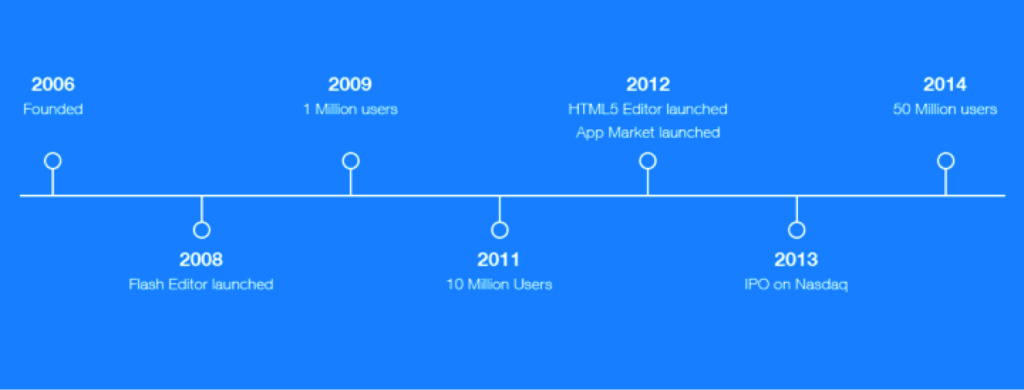
    Wix Company Timeline

    Although Wix sites have been rising in prominence over the past few years, many question whether websites created through the cloud-based Web development platform are ideal for search engine optimization. Wix uses an HTML5 drag n’ drop website-building platform to provide users a simplistic website-building experience. Although Wix prides itself on providing a code-free interface, it assures us that it is SEO-friendly, even providing its very own SEO settings for users. Let’s take a look at how you can get the most SEO usage out of your Wix website.

    Update Meta Tags

    Give some attention to how your site is found online. Meta tags are your best opportunity, as they are the way viewers learn what your page has to offer them and the first interaction they will have with you. The title tag will be what a user sees in Google, Bing, or Yahoo when they search for a particular phrase. The search engine result also includes a small description, usually from the meta description in the HTML of your site. This will require targeted keyword research and attention to copywriting to make sure you are integrating the best SEO practices.

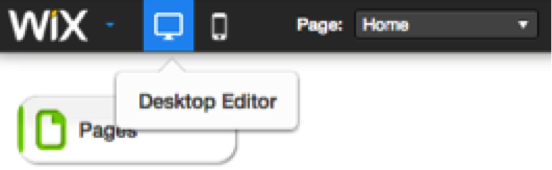
    Wix Desktop Editor Image Search Influence

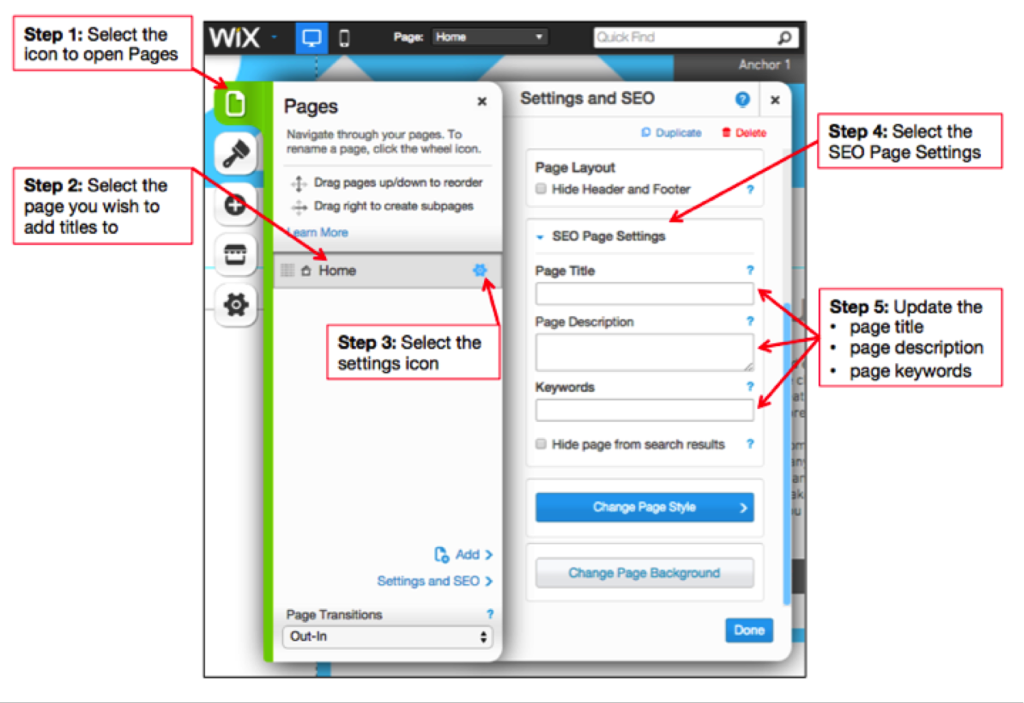
    To add meta titles to your Wix site, access your Wix Editor. The Wix Editor gives you options to edit in either the desktop or mobile version of your site. You will have to use the desktop view in order to make changes. Select the page icon, and when you see the page you wish to add titles to, click the settings icon next to it and then proceed to click the SEO Page Settings. Here, you will be able to update the page title, page descriptions, and page keywords. (See image below for details.)

    Wix Meta Tags Image - Search Influence

    Note: Both desktop and mobile versions of the site contain the same pages, so the title and meta description will translate to your mobile site.

    Add Alt Text to Images

    You might already know that viewers love to be brought in by useful, explanatory images. You might not know that search engines can read these images if they are optimized properly, allowing them to be found in image searches. As such, you can get to work optimizing pictures on your site to enhance your SEO efforts.

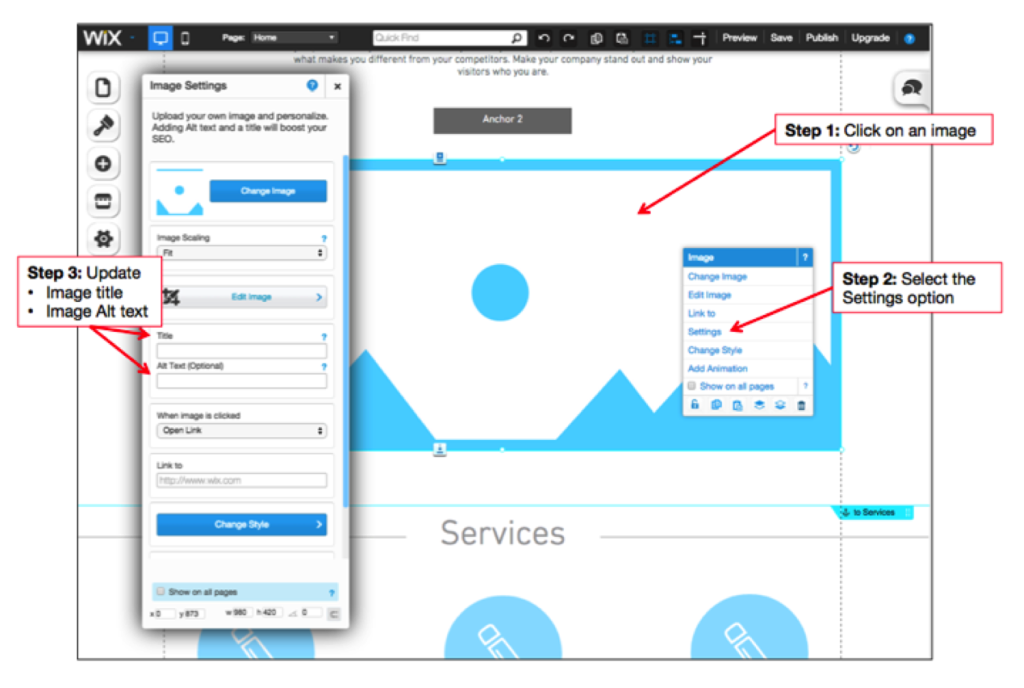
    In order to add alt text to your images, click an image inside the Editor you wish to optimize. From there, select Settings from the pop-up menu. In Image Settings, fill in a title and alt text. Here is a detailed image of how to do this:

    Wix Image Alt Text - Search Influence

    Get Social

    You’ve invested so much hard work into your site, so isn’t it time to share it? Another great way to bring in more traffic is to effectively disseminate your message across social media sites. While you should be regularly posting informative content across your channels with relevant links back to your site, you should also make it possible for viewers to share straight from your site. In order to make this simple for your viewers, enable buttons and easy clicks on your site.

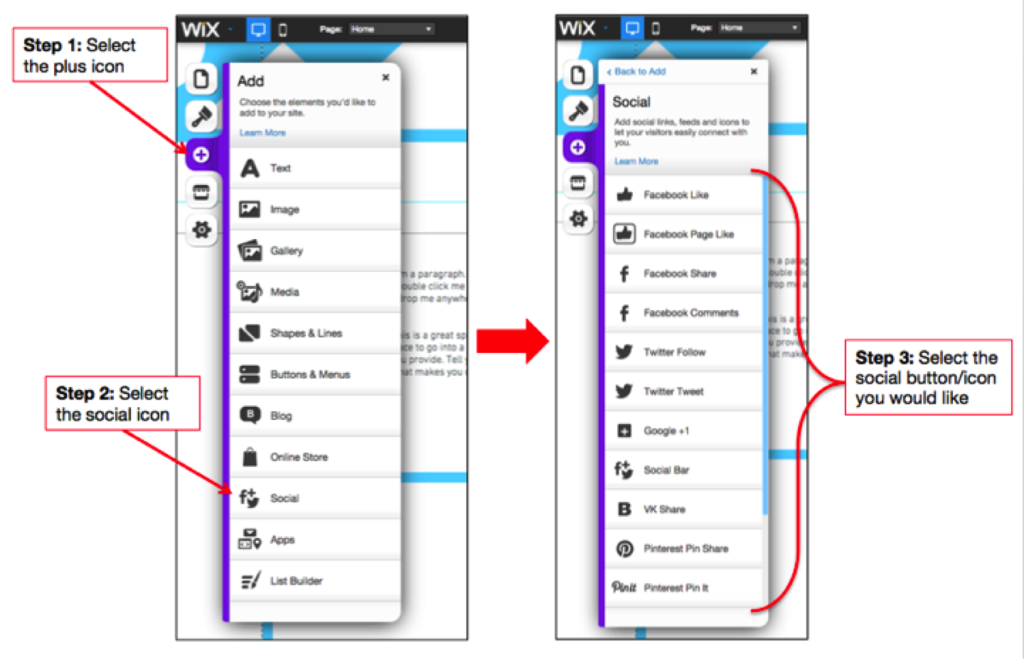
    To add social icons to your site, click the plus sign to open Add in your Editor. From there, click Social. You will have a selection of different networking sites, so select the one you wish to add. Here is a detailed image of how to do this:

    Wix Get Social 1 Image

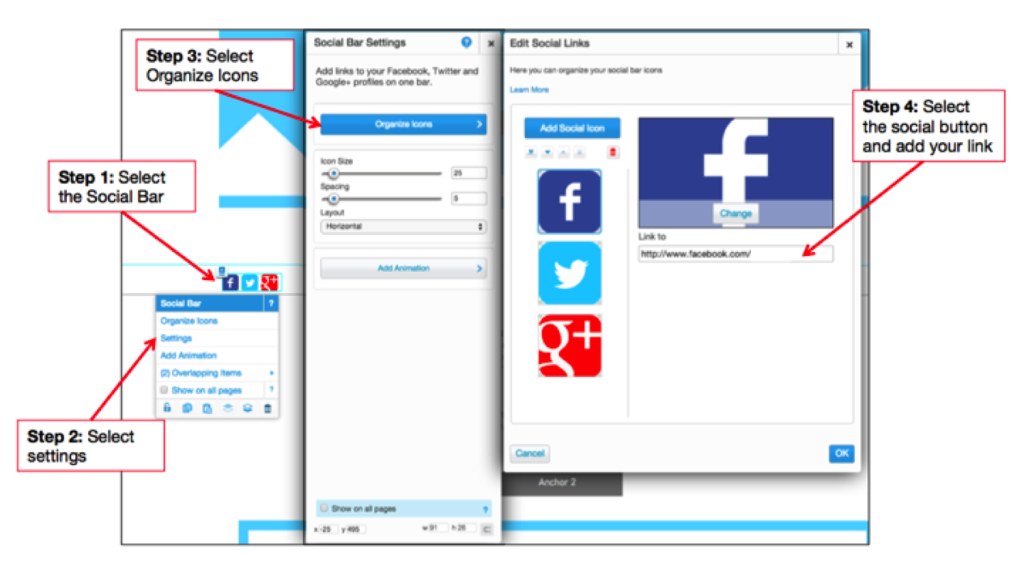
    Once you select the type of button, be sure to include the appropriate URL (your social link for follow buttons). Here is an example using the Social Bar:

    Wix Get Social 2 Image

    Make Your Site Visible

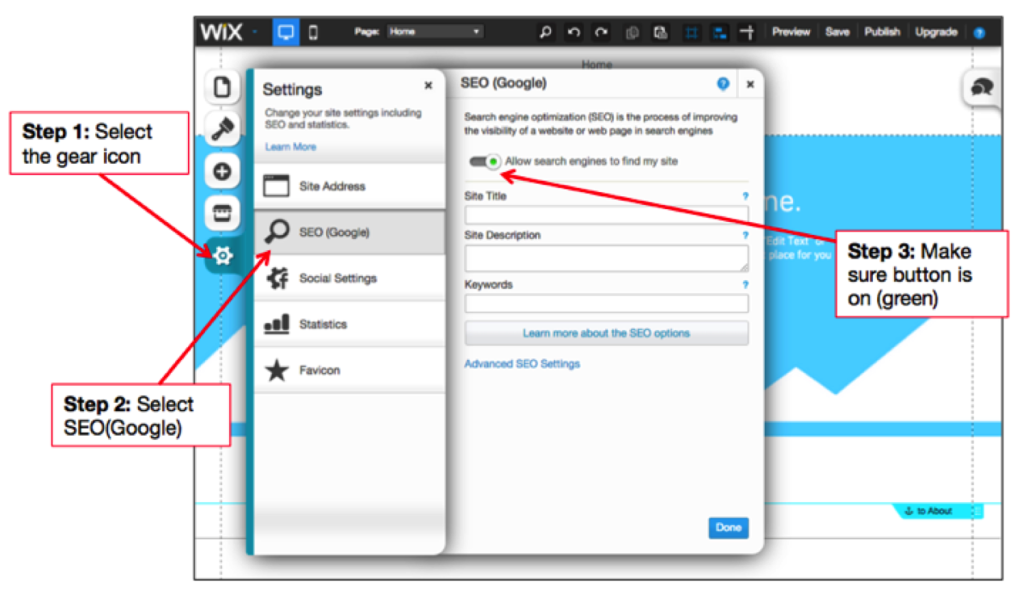
    If you’ve just set up your site, you’ll need to give search engines a little time to find and index your site. The best way to get started is to make sure you’ve selected “Allow Search Engines to find my site” in your site’s SEO settings. Without updating this setting, you will never be found. Don’t risk losing all of your hard work. If you already have a published site, be sure to verify that this is selected.

    Wix Visible Site Image

    Once you’re sure the search engines can see your site, you’ll want to help them find it. Add your web address to your Chamber of Commerce listings, note any industry associations you have, and make sure you get listed in local online directories.

    Also, be sure to submit your sitemap to Webmaster Tools to help Google better crawl and categorize your website. Wix automatically generates a sitemap.xml file, and you can view it by adding sitemap.xml to the end of your domain name. (Note: If you want to use Google Analytics, you will have to upgrade your account to a premium plan.)

    Optimizing on Wix doesn’t seem so bad, does it? Take heed and explore its options for yourself!

  • How Your Online Presence Wins and Loses Cosmetic Patients [Download Free Guide]

    Online Medical Presence Guide Image - Search Influence

    Download the Free Guide

    Want tips, stats, and strategies about how to take charge of your practice’s online presence? Fill out the form below to download the free guide, “Attracting Patients by Proactively Managing Your Online Reputation.”

    Consider this: one person wrote a negative online review for a plastic surgeon. In the next few months, the practice’s online leads and Internet referrals mysteriously plummeted by 28 percent. Coincidence? Don’t bet on it. Even if that single negative online review only contributed to the decrease, that drop in leads translated to the loss of literally hundreds of potential customers.

    If you think your practice’s online presence doesn’t have the power to attract—or repel—patients, think again. For physicians in the cosmetic medicine industry—whether plastic surgery, dermatology, or even cosmetic dentistry—a practice’s online presence is a powerful tool. And if it is left uncultivated, it can be dangerous.

    Search Influence details this pressing issue and its real-world implications for your cosmetic medical practice in a new guide, “Attracting Patients by Proactively Managing Your Online Reputation,” available to download for free by filling out the form below. The guide was produced with input from Richard M. Escoffery, an attorney with the law firm Elarbee, Thompson, Sapp & Wilson, LLP.

    Patient Reviews … Haunting or Rewarding?

    In the digital era of online marketing, even when a cosmetic surgeon is heavily recommended by a friend, coworker, or family member, 94 percent of people still take to the Internet to perform secondary online research before making a commitment, according to our free online guide. What’s even more astounding is that 72 percent of all consumers give an online review the same weight and credibility as a personal recommendation, the guide reports.

    For example, here’s a general view of how customers typically find many plastic surgery practices online by using organic (or free) search methods:

    1. Potential patients research the procedure they want.
    2. They research the cosmetic and plastic surgeons in their area, usually looking through numerous review sites.
    3. They start searching for their surgeon of interest by name, which is often termed a “branded organic search” in the online world.

    Paging Dr. Google

    Yes, this means patients are “googling” the cosmetic procedures you offer and your practice. How high a practice’s site ranks on search engines has a lot to do with the amount of website traffic the practice receives. And the very first search result in a Google search typically receives a third of the traffic share. Having your practice show up as a top search result for targeted keywords ranging from “breast augmentation” to “tummy tuck” takes not only cultivation, but also online marketing expertise.

    In the free “Attracting Patients by Proactively Managing Your Online Reputation” guide, you’ll find more important takeaways. For example, Google and other search engines give higher ranking to such sites as Angie’s List, Yelp, RateMDs, and the like. These sites not only perch atop search engine rankings due to Google’s algorithm updates, but they also often feature regularly updated content, which, in search engine terms, is an important indication of reliability.

    In other words, patient or customer review sites have all the makings of a search-engine friendly site. So, negative online comments and an uncultivated online presence can literally tank a practice’s website traffic.

    Get a FREE guide & take charge of your online presence

  • Googleplasty: How to Reshape Your Search Results (Part 1)

    As businesses grow more in touch with their online presence, it becomes more and more challenging to stand out in the search results of highly competitive markets and areas—and nowhere is this perhaps more true than in the cosmetic medicine industry.

    Search Influence - Plastic Surgeon Local Google Search Results

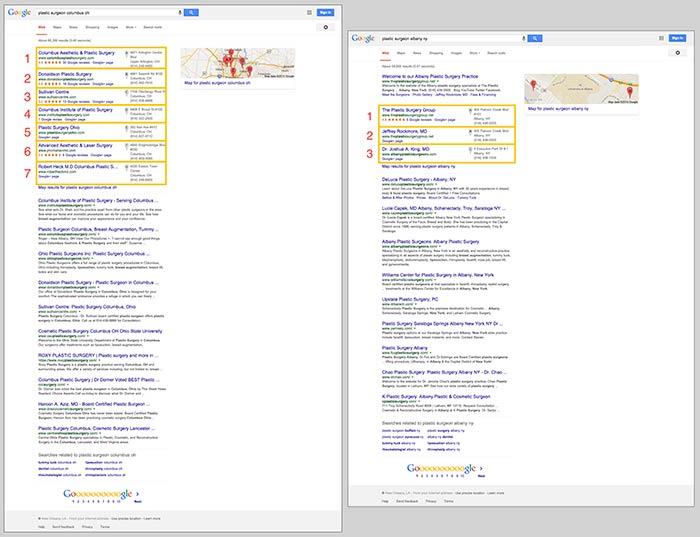
    First things first, let’s make sure we’re on the same page about the two major kinds of results that we see in desktop results for plastic surgeons. “Localized organic” search results and “maps pack” results typically appear together in what is referred to as “combined” search results. The factors that determine what appears in these two areas are not the same, as you can tell by the the difference in results and by the appearance of a site more than once between the two. Maps packs can come in a variety of forms and don’t show up for all search queries, which is also important to note.

    In the screenshot below on the left for the search “plastic surgeon columbus oh,” you’ll see 10 localized organic results below a 7-count maps pack. In the screenshot on the right for “plastic surgeon albany ny,” you’ll see 10 localized organic results, but the 3-count maps pack appears below the first organic result.

    Search Influence - Google Maps Pack Plastic Surgeon

    Stand Out in the Maps Pack

    In the maps pack itself, the most striking features are the review stars and rating display. The data in the maps pack area is pulled directly from Google Plus local listings in Google Maps. So, to make your practice stand out in the maps pack, you should claim and verify your Google Plus listing via Google My Business.

    Once you’ve claimed and verified your listing, you’ll want to get reviews from your patients. It’s important to understand that one or two reviews a month over a few months is better than 15 reviews in one week. As with most online marketing strategies, natural behavior is the best behavior.

    Stand Out in Localized Organic

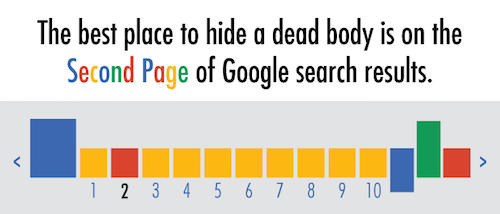
    The most obvious way to stand out in the localized organic results is to be ranking as high as possible and to AT LEAST be in the top 10 so that you’re on the first page. As the age-old SEO joke goes, “The best place to hide a dead body is on the second page of Google search results.” Hardly anyone looks past the first page, and—according to eye-tracking data—not many look past the top half of the search results page.

    Search Influence - dead body Google Search Results meme

    The Google PageRank algorithm that determines these rankings takes into account somewhere around 200 factors, so it’s not as simple as pinpointing one or two efforts to be made.

    Now that we’ve got a better understanding of what we’re looking at in search results, we can start to understand the major factors that affect ranking in each of these sections. Stay tuned for my next blog, where we’ll talk about the top five ranking factors in the maps pack, in the localized organic results, and in competitive markets!

  • Five for Friday: Go Natural, Rock Your SEO, Navigate Apple Maps, and More

    1. How Your Band Can Rock SEO – Moz

    Most people don’t discover new music by Googling “indie rock bands.” Folks are more likely to discover a band through other means and then turn to the Internet to search for tour dates, song lyrics, etc. If you’re a musician, this presents a unique opportunity for optimizing your band for search engines. Learn how to reach a wider online audience with these tips for improving your band’s search engine optimization.

    2. Want to Transfer Your YouTube Account to the Proper Google+ Page? – Search Engine Roundtable

    Does this YouTube predicament ring a bell? Say you’ve been uploading industry-related videos to your YouTube account, which is connected to your personal Google+ page. You’ve finally gotten around to creating a Google My Business account for your company, and you want to transfer your industry-focused YouTube account over to your business page. Now you can! The only catch is that this move can’t be undone, so make sure it’s really what you want to do.

    3. Apple’s Maps App Gets Reviewed – Blumenthals

    Apple’s Maps app, which has heretofore only partnered with Yelp for integrated customer reviews of businesses, has now expanded to incorporate reviews from TripAdvisor and Booking.com. It’s still pending an announcement from Apple, and it’s unknown whether this change is still in its testing stage, but you will likely begin seeing reviews from a wider audience across multiple platforms.

    4. Beat the Competition with Natural Content – Marketing Land

    Google’s algorithm updates are all focused on one thing: improving online content. Search engines have gotten smarter, and so have people. If your business is just providing “common sense” information with keywords stuffed in, you are not likely to convert a lot of searchers to customers or clients. Optimize your content for intent by providing natural, factual, quality information that tells your company’s unique story!

    Act Natural Search Influence Image

    5. Facebook Dominates Ad Spending – Marketing Land

    Where have businesses been focusing their advertising efforts? The numbers are in! In 2014, social media advertising grew 41 percent, and perhaps unsurprisingly, Facebook pulled in 75 percent of total advertising spending on social networks globally, accounting for $11.4 billion of the total $15.3 billion spent.

    Image sources:

    Act natural

  • Search Influence launches Mobile SEO truck helping businesses with mobile-friendly websites

    Internet marketing company launches Web truck, not food truck, in time for ‘Mobile Apocalypse’

    SEARCH INFLUENCE PRESS RELEASE – APRIL 1, 2015

    Search Influence Mobile SEO Truck Image April Fools

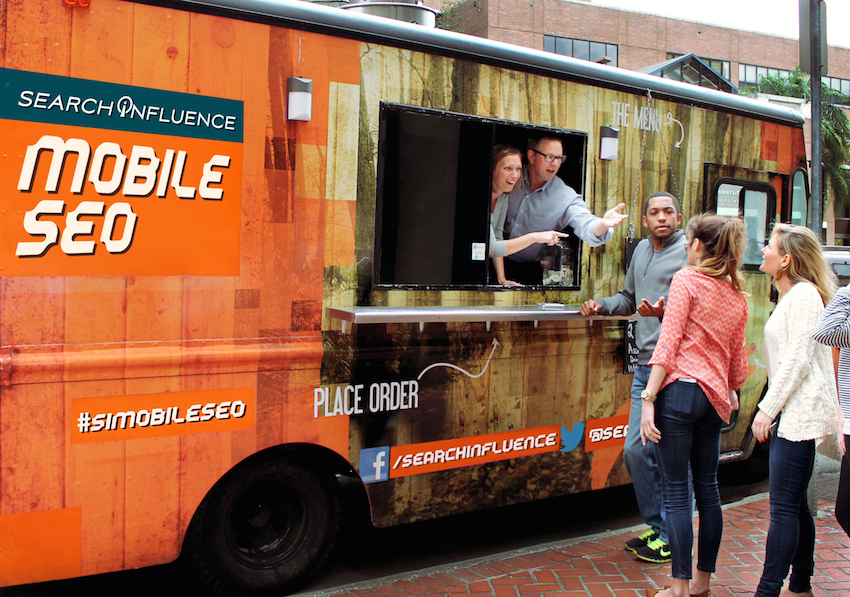
    New Orleans-based online marketing company Search Influence launched a new twist on the food truck—the Mobile SEO truck to help businesses become more mobile friendly in advance of Google’s “Mobile Apocalypse” or “Mobilegeddon” deadline Tuesday, April 21. Google’s new focus means businesses with websites that are not mobile friendly may suffer in mobile search results. The Search Influence Mobile SEO truck offers targeted, hands-on services convenient for America’s small- and medium-sized businesses.

    The Mobile SEO truck functions similar to a food truck, but instead of the latest in trendy food, it offers affordable search engine optimization services designed to kick-start a heightened mobile online presence for businesses. The Mobile SEO truck will begin its tour in New Orleans, La., April 1–4. Other cities in the tour include Birmingham, Ala., April 5–8; Atlanta, Ga., April 9–12; Nashville, Tenn., April 1–16; and Washington, D.C., April 17–20.

    The Mobile SEO truck is staffed with Search Influence SEO experts and website designers, and is also equipped with several hands-on stations, including an interactive Responsive Website Booth, an Automatic Click-to-Call Website Button Generator and Driving Directions Optimizer Portal to help companies attract new business from the near majority of customers who search for products and services via smartphones.

    “A mobile-friendly online presence is no longer optional—no matter the size of your business. Our Mobile SEO truck is the perfect solution for any business struggling with Google’s new mobile-friendly algorithm,” said Search Influence CEO Will Scott. “To reach business owners in their own backyard, we’ve given new life to a defunct New Orleans food truck, so we can take these priority services on the road.”

    Early this year, Search Influence purchased an out-of-commission food truck in New Orleans and retrofitted it with the latest hands-on website technology. What was originally a $6,000 fixer-upper was morphed into a $750,000 state-of-the-art online marketing machine.

    “As a business owner, I appreciate the kind of hands-on online marketing help that literally drives to my office. For the best website strategies, you can’t beat the Mobile SEO truck,” said David Scheuermann of PayrollRx. “If they only served food along with the technology, it would be perfect!”

    Search Influence Spacer

    For media interviews or high-resolution photos, please contact Mikel Pak, PR/marketing manager at Search Influence. Please note, this is an April Fools’ Day joke. We hope you enjoyed the humor. Remember, mobile-friendly websites are key to a successful local business.