Tag: local search

  • Hello Bing, Goodbye Yahoo Local: Moz Local Makes Moves

    Moz Local made some small changes to its reporting dashboard over the past week or so. These small layout differences indicted a large change in the capabilities of the tool.

    Only announced on August 18th (though acknowledging that updates slowly rolled out over the previous week), Moz has added City Grid (City Search), Insider Pages (not fully rolled out yet), and Bing to the growing list of sites that they can submit information directly to. The tool also removed Yahoo from listings that they find and evaluate for you.

    What does this mean for you, a business owner?

    City Search and Bing were already available for Moz Local users to find and address, but they have now made the move over to their “Direct Network.” Since both require verification to edit business information, this change could make it even easier to send out your correct business information out into the wild, wild web for customers and search engines to see.

    Since Moz Local offers an easily navigated and editable interface, when an address, website, or even hours change, you can modify it in just one place and watch it change throughout the high-authority directories and data aggregators.

    What does this mean for you, a marketing professional?

    Moz’s removal of Yahoo Local listings in an strong indication that Yahoo is moving away from being a source for native, unique listing information. As it stands now, native Yahoo listings are being replaced/overpowered with Yelp listings with reviews. By not even caring to show a client’s information on the site, Moz is acknowledging that Yahoo is no longer an independent listing source.

    By adding Bing to their direct network, Moz could change the amount of sites that require client confirmation. With every client, there is a varying amount of difficulty that can happen with verifying listings. Postcards can get lost. Phone calls can get missed. Moz seems now to give a way to circumvent those problems. However, completely dropping the process of claiming Bing would not be wise. Claiming the listing gives you the power to change information immediately and to see how often the listing is seen.

    Moz is showing that it has a great ear to the ground for changes that may be rumbling in the local citation world, and I know that I will be keeping an eye out for any of the new changes that it says should be rolling out soon.

  • Running With The Pack: Competing in Local Search Just Got Harder

    Running With The Pack: Competing in Local Search Just Got Harder

    Overnight on Aug. 6, Google updated search results for mobile and desktop searches from local seven-pack to a three-pack. This is not just in the United States; it seems to be worldwide and rolled out at one time. It’s really early to start dissecting this change, but I’m not seeing much good about it.

    What Does This Mean for Organic Search?

    For organic search, it means it’s even harder for searchers to find you. It looks as if these changes from Google are driving consumers to a business’ My Business page and perhaps encouraging more ad spending.

    Organic—Looking a Little Closer

    On Mobile

    Before Google rolled out this change, when a search on mobile gave local pack results, the user could immediately click on what they needed directly on the search results page, including:

    • Click-to-call
    • Click to get some directions
    • Click on the website

    Now, the mobile local pack only provides a click-to-call button:
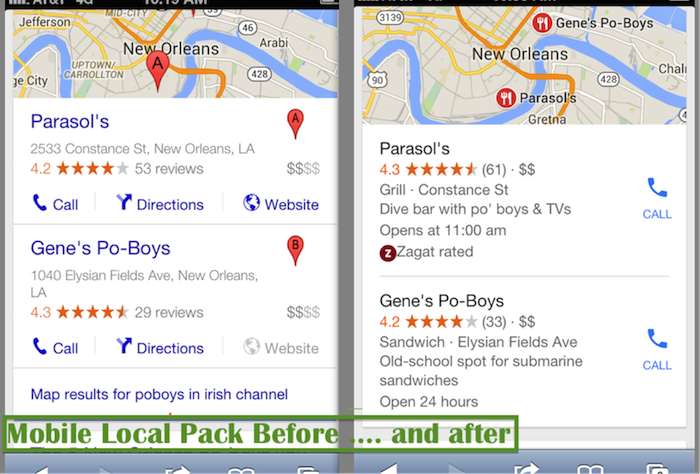
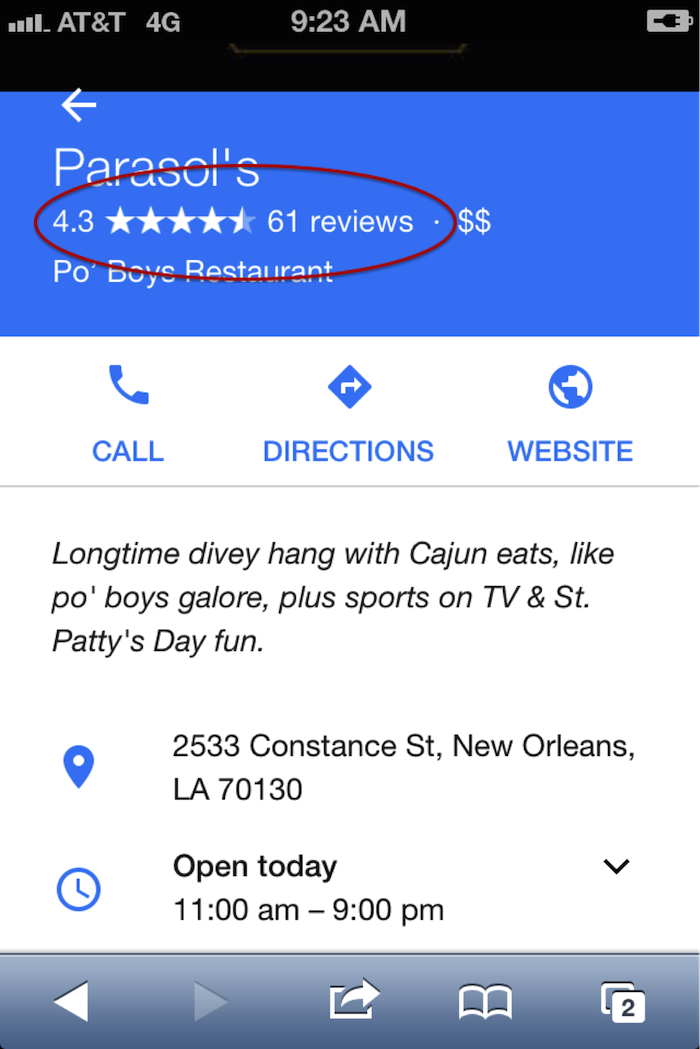
    Mobile Local Pack Click Call Image

    If the searcher wants to visit the website for more info, they have another click in order to navigate to the My Business page:
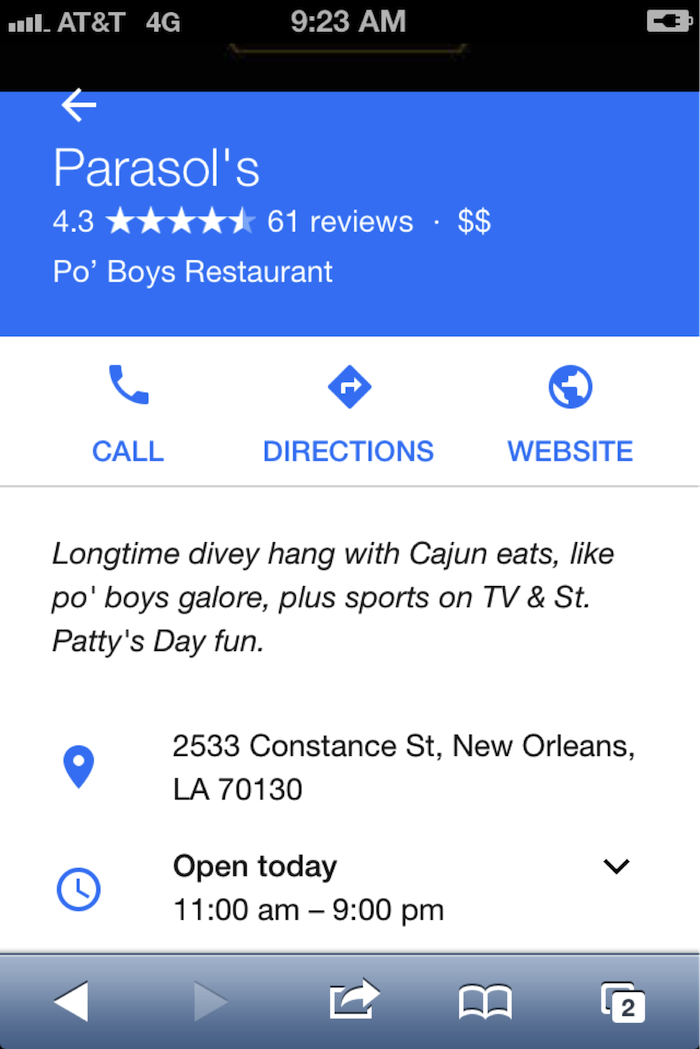
    Navigate Google My Business Page Image

    On Desktop

    With the new update, I get the three-pack with no immediate click opportunities:
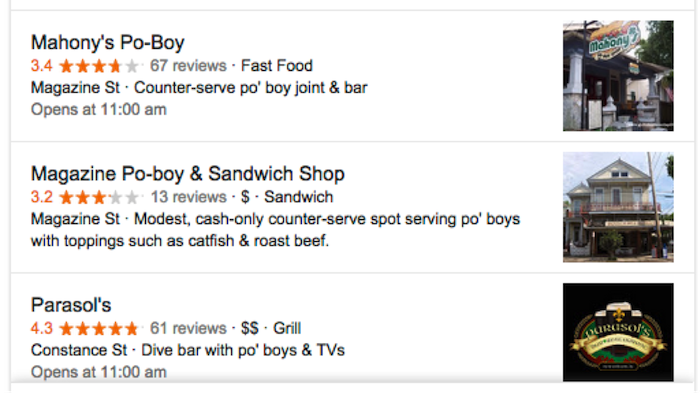
    DesktopThree Pack Google Image - Search Influence

    Update:

    Ryan Schulze, Senior Account Associate, commented, on this published post with an interesting correction. (It takes a village.)  He shows how some searches on desktop are giving the website link in the 3-Pack.  It suggests different search categories have different clicking opportunities.  I would guess this is based on percentage of search performed on mobile vs desktop.
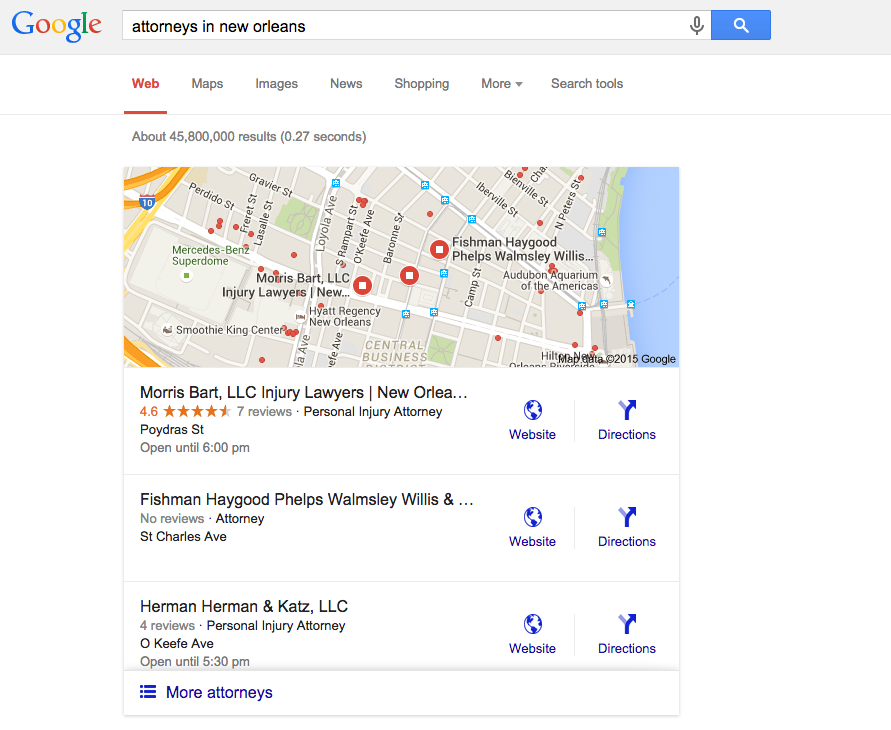
    attorneys in new orleans 3 pack desktop

    Back to the story …

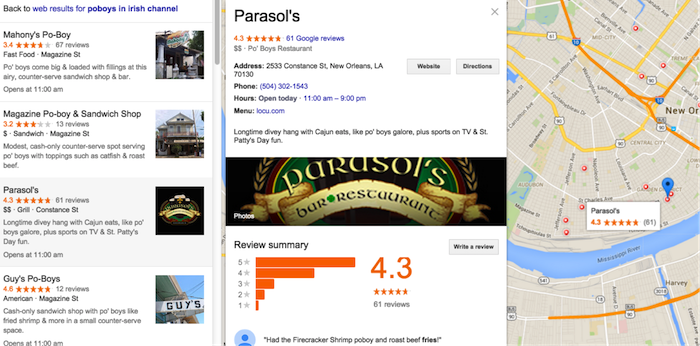
    I click on Parasol’s, thinking I will get its website or the Google My Business listing. Instead, it drives me to the local finder with ALL of the competitors right there!

    • This is not great if you’re in the three-pack because you must fight the competitors again for the searcher’s attention.
    • If you’re not in the three-pack, this levels the playing field. You have a chance to woo the searcher away from their initial choice.
    • If you are a searcher, it’s annoying because you have already indicated your preference with your first click, and Google forces you into an extra click to call the business. In addition, you are forced into viewing more choices after you made your decision.

    Desktop searches are losing ground to mobile, but desktop isn’t dead, and it still dominates search in some industries—usually those that skew to an older population.

    This does show us that it is still incredibly important to claim and optimize a Google My Business listing. Those Google My Business listings can get your business into the desktop local finder list, which is a long list of competition, so images and reviews are still important efforts to woo the searcher over to your business:
    Local Business Maps Pack Image - Search Influence

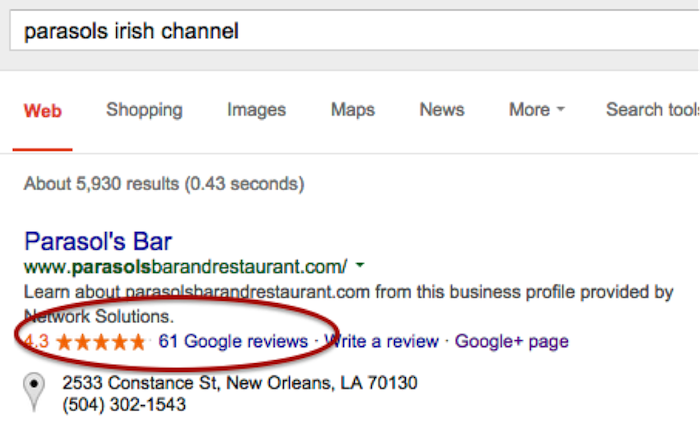
    Reviews on branded search results on desktop and mobile:
    Online Reviews Branded Search Image - Search Influence

    Online Business Reviews Mobile Image - Search Influence

    (FYI: if you’re ever in New Orleans in March, Parasol’s is a great place to be.)

    Early Data on Organic Visits

    I was chatting with Megan Lindsey, senior account manager at Search Influence, about the effect of this change for one client in particular. Lindsey sums it up nicely: “I imagine now since a searcher has to click on the business name and then once more on the ‘website’ button that people aren’t as inclined to keep clicking. I would think that most clients, even if they were in the top three maps results, are losing organic traffic because of it, but especially the ones who aren’t there anymore.”

    The early Google Analytics data supports Lindsey’s hypothesis. I found no great winners: Several clients’ Google organic was static, and several were worrisome. These clients are local businesses that are historically very strong in their markets. Over the weekend dates, there were 20 percent to 35 percent losses in organic website traffic, which seems to have rebounded Monday to Wednesday, so it appears things are still settling down.

    CLIENT A

    google / organic

    Aug. 7, 2015 – Aug. 10, 2015: 179 visits

    July 30, 2015 – Aug. 3, 2015: 285 visits

    % Change -37.19%

    Aug. 7, 2015 – Aug. 12, 2015: 319 visits

    July 31, 2015 – Aug. 5, 2015: 364 visits

    % Change -12.36%


    CLIENT B

    google / organic

    Aug. 7, 2015 – Aug. 10, 2015: 161 visits

    July 30, 2015 – Aug. 3, 2015: 210 visits

    % Change -23.33%

    Aug. 7, 2015 – Aug. 12, 2015: 161 visits

    July 31, 2015 – Aug. 5, 2015: 210 visits

    % Change -6.76%


    CLIENT C

    google / organic

    Aug. 7, 2015 – Aug. 10, 2015: 36 visits

    July 30, 2015 – Aug. 3, 2015: 54 visits

    % Change -33.33%

    Aug. 7, 2015 – Aug. 12, 2015: 58 visits

    July 31, 2015 – Aug. 5, 2015: 67 visits

    % Change -13.43%


    Have Calls Increased?

    The clients above usually do really well in the local pack and in organic website traffic, so let’s see what happened to their call volume. If you are a lucky business falling in the three-pack, consumers might be calling your business more now than visiting your website.

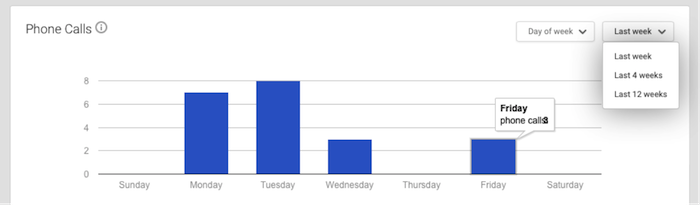
    When you log into the Google My Business page and go to Insights, this is the data you get:
    Phone Call Data 1 Image - Search Influence

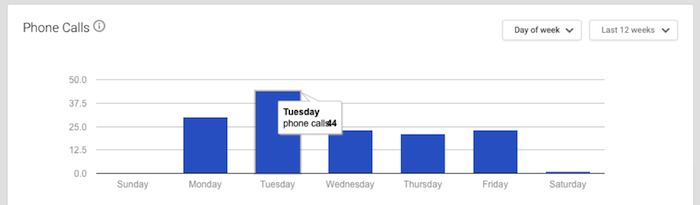
    It’s severely limited and not really insightful. The date ranges are not customizable. There is no data after Aug. 8. I have to wait until next week to get any data on effects of call volume from the three-pack rollout, and I can’t compare to the previous week. I will have to do some elementary math that surely Google could program to ensure a better user experience.

    The data is summarized to the point of being so generalized it is virtually useless. This is 12 weeks of call data. I know Google can do better.
    Phone Call Data 2 Image - Search Influence

    It warns that call volume is “approximate and only significant values may be shown.”

    Also, the call numbers could be calls from three different sources: Google Maps, search and maps for mobile. This is so frustrating for business owners. I would want to know EVERY call I received! And I would want to know where I received the calls! Google has the data, and it just isn’t sharing with business owners.

    And Paid Search?

    On the first day of the this rollout, local search expert Mike Blumenthal made these early comments: “I am not sure what will happen on clicks for AdWords, but those businesses that were lower in the old display may feel compelled to double down on their AdWords activity.”

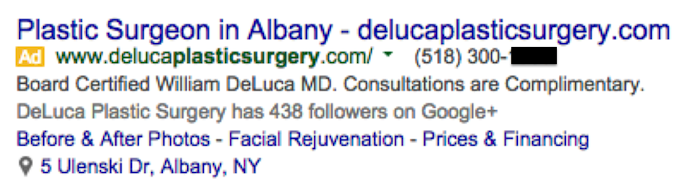
    I asked Jeanne Lobman, senior online advertising manager at Search Influence, to check it out and give us some input. “Those businesses that were previously only ranking in spots four to seven in the local pack (and nowhere organically) are now going to need to spend money on AdWords ads in order to be seen in the search engine results pages. Additionally, since Google has removed the website URL and the phone number from the local pack info, it could be beneficial to run AdWords in order to make sure searchers can easily find your phone number and call you (on desktop). This would be accomplished by using call extensions with your campaigns, which adds your phone number to your ad (as seen in the below example).
    Plastic Surgery Google Ad Phone Image - Search Influence

    On mobile, the local pack results do include the call button, but there’s no link to the website. When you click the local result on mobile, you are taken to the G+ page, which then has a link to the website. To avoid having that extra step, running an AdWords campaign on mobile ensures you can land people directly on your website with one click.”

    Lobman pulled some AdWords reports to see what impact this change may have had on click-through rate. She says it’s really too early to tell any effects, but the data so far suggests there seems to be an increase in clicks and impressions but little to no change in click-through rate, conversions and conversion rate.

    So Now What?

    We need to give it a little more time to settle in before we make any dramatic changes. When we looked at six days of organic visitor data versus four days of data, we see big improvements, so watching the data to make smart moves is the action item.

    Walk through the process that visitors might use to find your website online, and try to improve what you can control, such as adding phone numbers in your desktop AdWords ads or continuing to encourage reviews from your customers.

    Your engagement online is a reflection of how you engage with your customers in real life. Providing for the searcher with easy linking from ads, Google My Business images, reviews and informative website content is a long-term plan, and it’s a good one to win trust and authority.




  • A Tale of Two Google+ Updates: Shutting Down G+ Pages & Disconnecting YouTube From G+

    Shuttered Google Local Pages - Search Influence

    In the past week, two new Google Plus updates have come to light. First, we found out that as of July 28, Google has plans to shut down inactive and unverified Google My Business (aka Google Plus) listings. On Monday, July 27, Google’s Bradley Horowitz posted on Google’s official blog that in the coming months, it will be removing the requirement for users to have Google+ profiles to use various Google products such as YouTube and Google Photos.

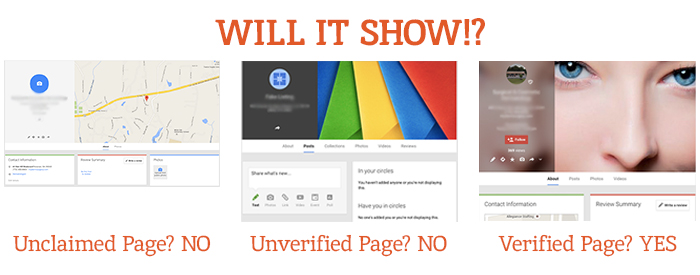
    The Update: Google My Business is Shutting Down Unclaimed, Unverified Listings & Unverifying Inactive Accounts’ Listings

    On July 23, a Local Search Forum user posted an email they received from Google as follows:

    UPDATE – Announcement from Google July 22, 2015

    Dear photographers and agencies,

    In the past few months, you may have seen some changes in the look of Google+ pages that have been associated with Google My Business (GMB) accounts. These changes, including how we treat business pages without owners, are part of Google’s ongoing effort to simplify people’s experience with our tools. We are constantly working to provide only valuable and rich content to our users.

    On July 28, Google will begin shutting down those GMB–associated Google+ pages that have not been associated with user accounts and are also not verified. You may find that some of your Business View tours also sit on such pages, but note that after this removal of unverified Google+ pages, the Business View tours will still remain available on Google Maps and Google Search.

    Here are a few recommendations for informing any business customers that may be impacted by this:

    Encourage your business customers to verify their listings if they wish to retain their Google My Business page …

    If a business owner decides later that they would like to have a Google My Business page, please advise them to create a new page and verify their listing. The Business View virtual tour can be then transferred to the new verified listing. Please log a case to our support teams to request that images for your business customer be forwarded to the new GMB page.

    Please point your business customer to their images in Google Maps.

    Best,

    The Google Maps | Business View team

    This was specifically geared towards photographers so they would know how to handle the effect on Business View tours. What this means for all Google My Business users is that unclaimed local pages will most likely no longer be visible (as Google has always said is the case for unverified Google Plus Local pages).

    Different Google Local Pages - Search Influence

    As always, this update is accompanied by Google’s explanation that all actions are in the best interest of users and geared towards improving the user experience. Thanks, Google!

    On June 4, via the Google Business Help forums, Jade Wang (come visit us in NOLA again soon 😉 ) of the GMB Maps team also announced: “If a user is unresponsive to our attempts to contact him or her and has not logged into Google My Business for a significant length of time, then we may unverify pages in the account.” Here’s the full update from Jade:

    In some cases, we may contact Google My Business users via email to confirm that they are still actively managing a business page. If a user is unresponsive to our attempts to contact him or her and has not logged into Google My Business for a significant length of time, then we may unverify pages in the account. We’re doing this in order to continue to provide users with the best experience when they’re looking for local businesses like yours. If you find that a page in your account has been incorrectly unverified, please contact support to get assistance restoring verification.

    It’s a good idea to keep an eye on the inbox associated with your Google My Business (Locations) account. It’s also a good idea to regularly log into Google My Business (Locations) to confirm that your business information is current and accurate.

    My Take On It

    Both of these updates could mean great news for businesses that have struggled with requesting ownership of listings that were verified in the past by a person or an account they no longer have access to. To fix this issue in the past, you’d have to submit an ownership request form to Google to gain access to these listings. Then, you’d have to wait 10 business days (as per Google’s rules) and reach out to support (they could check to see if the account never responded to the request). After this 10-day period, the support representative could determine that the account that owned the listing was inactive and release the listing to you for claiming and verification.

    Basically this means inactive accounts are no longer roadblocks to getting access to business listings in Google My Business!

    While some issues may be alleviated with the update, what’s harder for search engine optimization work is that now it’ll be more difficult for us to see unverified duplicate G+ pages, old or closed G+ pages, and practitioner G+ pages that could be hurting businesses’ local rankings. Map Maker should allow us to still see the data but not the pages themselves.

    But there are signs this hasn’t rolled out completely yet. I have some unverified, fake listings in my Plus account (shhh, I know) that I use for training purposes that haven’t been touched yet. This is likely a slow rollout that started July 28. I did notice some changes to Maps navigation recently that were probably in preparation for this, though. For example, you used to be able to click “Write a review” from the Maps results to get to the G+ local page for a business, but now that just opens a review dialogue in the Google search results for that business in another window. This makes sense, since unclaimed businesses will no longer have pages.

    The Update: Google+ Is Disconnecting From Unnecessary Services

    On Monday, July 27, Bradley Horowitz posted on Google’s official blog that Google+ would be moving towards a “more focused Google+ experience,” which basically means no longer forcing users of various other Google products to have a G+ profile to use said products.

    Specifically, Google wants to foster the natural sharing environment of G+ by adding new features such as Google+ Collections. This update means that all you need to share content, communicate, and have a YouTube channel (among other things) is a Google account and not necessarily a G+ profile. Also, it will continue to keep Google accounts private and unsearchable. For those who were forced to create G+ profiles to use YouTube and other Google products in the past, Google promises that it will “offer better options for managing and removing those public profiles.”

    My Take On It

    Congrats to everyone who was pissed when they couldn’t use YouTube without a Google+ profile!

    Mad Men Cheers Joan

    At first, it seemed that G+ pages that are already connected to YouTube channels might be disconnected. But, that last comment about offering ways to get rid of unwanted G+ profiles, points to the fact that this update will not actively affect anyone in this way.

    Since this update has not yet rolled out, however, it is important for users to realize that they should not delete their G+ yet! Doing so prior to roll out will force you to delete your entire YouTube presence!

    Let me know your thoughts on all of these new Google updates! I’d love to hear what other users think of these changes.

    Image source:

    Mad Men gif

  • Small Business, Big Difference: Social Media Use on the Rise

    Small Business Social Media Use Image Search Influence

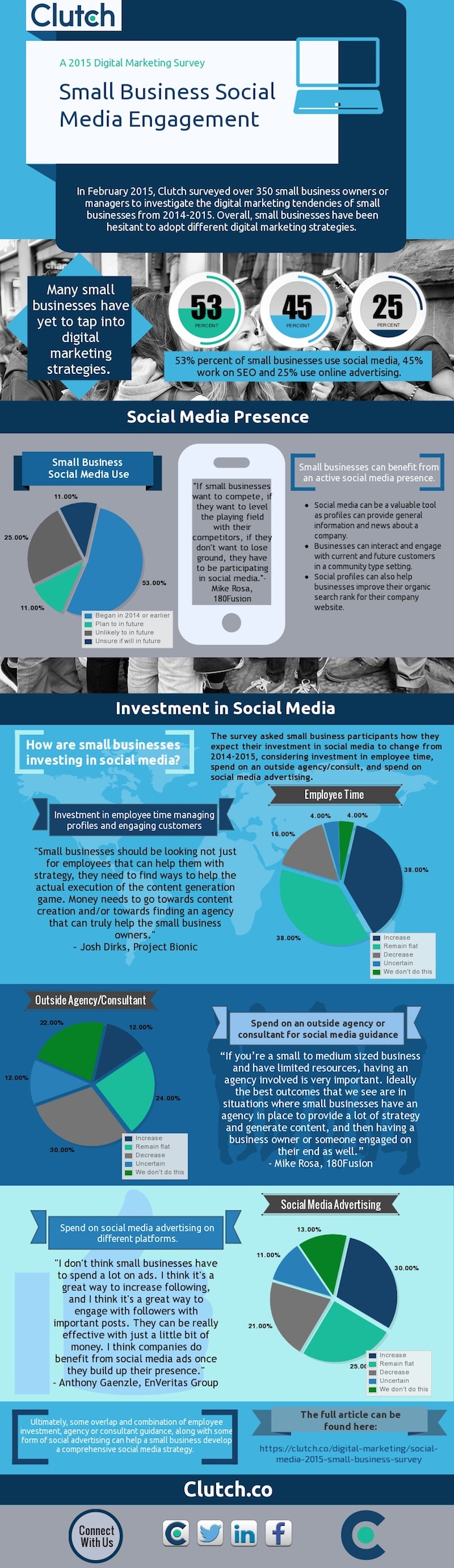
    Clutch, a B2B research firm, has released the results of its 2015 survey on small business practices in social media. The survey, which received more than 350 submissions, asked small business owners or managers to give insight into their social media and Internet marketing practices.

    The Findings

    Here are some highlights of the small businesses surveyed:

    Small business digital marketing strategies

    • 53% of small businesses use social media
    • 45% of small businesses work on SEO
    • 25% of small businesses use online advertising

    Company size

    • 60% of responding businesses have fewer than 10 employees
    • 14% have between 11 to 50 employees
    • 18% have between 51 and 250 employees
    • 8% have over 251 employees

    Investment (employee time, agency spend, ad spend)

    • 38% expect to increase their investment
    • 38% plan on keeping the same investment
    • 16% plan to decrease investment

    Clutch Infographic Small Business Survey Image Search Influence

    What Does This Mean?

    It’s weird to think back to 2006, when Facebook was essentially just for high school and college students to interact with each other through basic status updates. Nine years later, Facebook has around 1.44 billion monthly active users, yet only 53% of businesses surveyed indicated they use social media. In today’s social media age, having an active social presence is one of the easiest and most inexpensive options available to small businesses. It’s free to create a business page on Facebook, Twitter, and the other myriad of social media pages. Additionally, with the abundance of users on these sites, your customer base and target audience is already available to you; you just need to bring them to your page.

    Benefits of Social Media for Small Businesses

    When customers shop at small businesses, they tend to value the qualities of these stores versus their big-box competitors. Having a question answered on a local bike shop’s Facebook page is usually easier than reaching out to a large retailer’s customer service team. Allowing customers to post to your business’ page also gives other viewers the ability to see reviews, photos, and that the business cares about its customers by maintaining an active social presence. Maintaining a strong social presence can work as a way to “warm up” your potential customers and introduce them to your brand for a relatively low initial cost.

    Small Business Investment

    Besides simple statistics, the survey discusses the necessary investment of small businesses to ensure that their social media strategy has the best chance to be successful. While it may seem that just having a profile is enough to effectively market your business, there is additional effort that should be taken if you want to see your desired results. Employees should have a hand in the content strategy and the day-to-day operations. Various opinions can help diversify your strategy and give additional insight into your broader customer base. By spreading the responsibilities of managing the page across a few employees, each individual’s workload should not be greatly affected, while the overall product will be of high quality. Wondering how you can make time for social media and continue to run your small business? Check out these social media tips for time-starved entrepreneurs.

    Content Strategy

    In addition to diversifying where your content is coming from, it helps to vary the content you’re sharing with your followers. If you’re only talking to your current customers about products or direct business promotions, people new to your page may dismiss your content, as it doesn’t apply to them. Try to think outside of the box and delve into your potential customers’ other interests. By using this practice, your pages and posts can be beneficial in more ways than reminding customers of your weekly promotions. Writing about the best local bike trails may bring more people to your page through liking, sharing, and commenting, and it can help to organically get your store’s name into your community.

    Takeaway

    Seventy-six percent of the companies surveyed responded that they would either keep the same investment moving forward or increase it. Facebook and Twitter have shown over the past five to 10 years that the sites are not simply the most visited social media pages, but two of the most visited websites of any kind. When establishing your small business, it is important that your business could be found on Google. But in 2015, it is becoming important that your business be available on social media sites as well. Moving forward, each company should take the necessary time to see what resources can be used to begin a social media campaign. Start off by managing a page yourself, working your way up to reach an ideal social media campaign, and involving an overlap of employee involvement, agency guidance, and some use of social media advertising such as Facebook fan-building campaigns, for example, which have shown to have the best results for success with these small businesses.

    To view the complete report, visit Clutch.

    Image source:

    Clutch infographic

  • Unlike Your Dad, These Guys Know How To Use The Internet

    internet dads father's day image - search influence

    The other day, I was trying to remember why I had posted a curious image on my friend’s Facebook wall in 2010. In a stroke of brilliance, my friend suggested we do a “reverse Google search” to see where the picture originated from, all while we were using Google Chromecast to watch this search unveil on my TV screen.

    In the middle of this (pretty standard) activity, I thought to myself about how incredibly bizarre this whole process would sound to someone just 10 years ago. Facebook walls? Reverse Google search? CHROMECASTING? We’ve all grown so blasé about these daily—yet bewildering—Internet tactics that we’ve lost sight of the magic and brilliance behind them.

    So this Father’s Day, I’m here to remind you about the extraordinary minds behind all this wizardry. The men whose ideas have allowed me (and probably you, too) to stream Game of Thrones while Facetiming friends across oceans and also maybe simultaneously perusing Instagram (because what are we if not all impressive “multitaskers” these days). I present to you the fathers of the Internet:

    Leonard Kleinrock

    Kleinrock Image - Search Influence

    Before the Internet, people had to gain an understanding of how computers could communicate (or network) with each other. That’s where Leonard Kleinrock, an American engineer hailing from Harlem, came into play. Kleinrock pioneered the mathematical theory of packet networks, which, essentially, is the technological backbone of the Internet. By figuring out how to send “packets” of information across networks, Kleinrock was able to develop the ARPANET, which is the bare bones seedling that grew into the Internet we all know and love today. In fact, on a historical day in early September 1969, a team at Kleinrock’s Network Measurement Center connected one of their computers to an “Interface Message Processor,” thereby becoming the very first node on the ARPANET, and, perhaps more importantly, the first computer ever on the Internet.

    Tim Berners-Lee

    Berners-LeeImageSearchInfluence

    These days, it seems like there’s a browser for every kind of taste or personality. Are you over the age of 50? Internet Explorer. Do you enjoy plain bagels and go with the flow? Safari’s got your name all over it. Back in the day, though, there was only one browser, and it was created by Tim Berners-Lee in 1989. The World Wide Web (sound familiar?) was the first web server and also marked the advent of HTML. Through the World Wide Web, Berners-Lee was able to bring together the concept of the Internet and hypertext, which now establishes web pages as you know them. Today, Berners-Lee remains the Director of the World Wide Web Consortium, a Web standards organization he founded in 1994.

    Steve Case

    Case Image - Search Influence

    You may not have heard of Steve Case, but you (and just about anyone living in the 1990s) most likely became acquainted with the Internet thanks to his brainchild: America Online. In February 1991, after a few trial and error test runs, AOL was launched, and with it came online games, chat rooms, AIM, and a whole new way for people everywhere to interact online. Its goal was to focus on making the Internet a part of everyday life. To say he succeeded would probably be a huge understatement.

    Mark Zuckerberg

    Zuckerberg Image - Search Influence

    Perhaps the first name you immediately knew on this list, Mark Zuckerberg is one of the most recognizable Internet names, surpassing even the infamous Tom of Myspace. Just in case you somehow have yet to hear, Zuckerberg and his college friends founded what was then known as The Facebook in June 2004. By the end of the year, the site had 1 million users. Today, the site has more than 1 billion monthly active users. You can thank Zuckerberg for turning social media into the cultural phenomenon and world changer that it is today.

    Larry Page

    Larry Page Image - Search Influence

    You’ve likely learned more from Larry Page’s creation than your own father. This guy revolutionized the way we use the Internet, and even our brains! In 1996, Page and his friend Sergrey Brin began collaborations on a search engine called BackRub. Fortunately, that name didn’t stick, and instead they decided to name their website Google, which they officially launched in 1998. Since then, the company has become the world’s most popular search engine, an everyday verb, and an overall technology powerhouse. In fact, today, Page is the CEO of Google, which now processes more than 40,000 searches every second (!) on average, more than 3.5 billion searches per day, and 1.2 trillion searches per year worldwide. Thanks, Larry Page, for giving us access to more information than we can even fathom.

    So this Father’s Day, take time to thank these men for all the ways they’ve made your life easier. No more flipping through encyclopedias to understand what the plural form of “beef” is, significantly fewer phone conversations, the beauty of Netflix?! Thank you, all you great fatherly geniuses. Without you, I wouldn’t even have a job.

    Image sources:

    Leonard Kleinrock

    Steve Case

    Mark Zuckerberg

    Larry Page


  • Social Giving Success: An Intro to Online Marketing for P2P Fundraisers

    P2P-Fundraising-Search-Influence

    Which do you trust more: an ad or a friend?

    The answer is pretty clear, right? At least that’s what many nonprofits think, and that’s why the face of fundraising has changed significantly over the past decade. Instead of just soliciting direct donations, we’re seeing more and more peer-to-peer, or P2P, fundraising campaigns.

    Peer-to-peer fundraising enlists a nonprofit’s supporters to fundraise on their behalf, rather than or in addition to soliciting direct donations.

    Having your supporters fundraise for you offers that extra level of trust and intimacy that ads can’t provide. P2P engages supporters so they feel more connected to a cause, resulting in greater long-term support. And with today’s technology, it’s easier than ever to connect with huge networks of people and resources.

    So let’s talk about ways to make an online P2P fundraising campaign successful. From search engine optimization and social media to website development, here are some important tips:

    Make Donating Easy

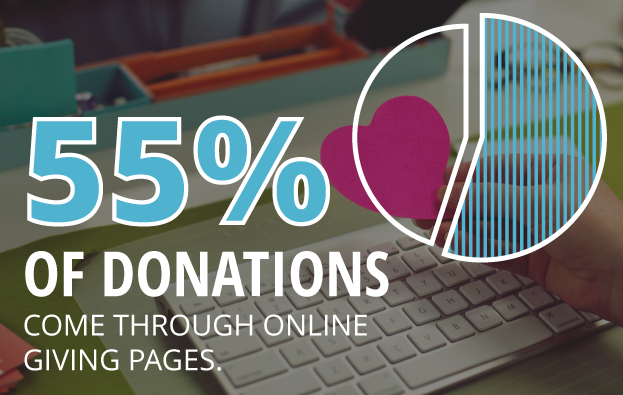
    First things first: You need a way to collect and differentiate donations. According to Network for Good’s annual Digital Giving Index, 55 percent of donations come through nonprofit, online giving pages, especially branded and personalized ones.

    A successful campaign has a user-friendly and effective system for making and processing donations that participants can share through social, mobile, email and every-which-way. This means also investing in either a mobile app or a responsive website. On DonorDrive’s platform, for example, donations have nearly doubled using responsive sites on mobile and tablets.

    The options out there are endless. Make sure your fundraisers have a link to share and trust your platform’s security and usability enough to want to share it.

    1511-SI-Newsletter-KG-D-02

    Engage your Followers

    More than half of those who engage on social media with a nonprofit take further action like donating or participating, according to Waggener-Edstrom’s Digital Persuasion Report.

    Fundraising as a whole is dependent on engaging and recruiting supporters. P2P requires not only engaging current followers to donate, but also inspiring them to fundraise and recruit for you. This means sharable content! Branded images, infographics and participant stories are just a few examples. Followers need to be able to see and share the effects of their donations, along with the whole experience along the way.

    Follow Basic SEO Guidelines

    SEO principles are universally applicable. Do some extra research on optimizing your website without stipulating that you’re a nonprofit or P2P campaign.

    That said, (1) make sure you’ve got relevant and easily accessible content on your website. Search engines are all about good content that naturally bridges the gap between what your organization does and what people are searching for. It’s no longer about stuffing exact-phrase keywords into every page of your site. (2) Submit and maintain consistent information for your organization to location- and industry-specific directories (and calendars if it’s an event). This way, you’re creating more links going to your website as well as solidifying your contact information with Google Maps and other mapping services. And (3) see if you qualify for a Google Ads Grant. Google gives out varying amounts of money each month to use for nonprofit AdWords campaigns, so take advantage of it! An AdWords campaign offers the opportunity to reach those who you might not be reaching with organic rankings alone.

    These are just a few tips to get you started. Even if you don’t have the budget to implement an intensive campaign, it’s important to cover your bases and make sure you’re tailoring your website and social media to work with P2P principles. The Internet is already THE social hub; use it to mobilize your followers for a successful campaign!

  • Return Of The YT Channel: Moving YouTube Channels Between G+ Pages In 2015

    Move YouTube Channels Between Google Plus Pages

    In the early ages of YouTube and Google Plus connections, disconnecting and reconnecting channels to the correct G+ page was not an easy feat. I once wrote a blog about this lengthy workaround for LocalU. Not long after that blog post, Google released a support form that allowed you to have a YouTube support specialist do the reconnection for you. While this support was amazing and usually reconnected channels within 24-48 hours, it required a middleman to get the work done and wasn’t immediate.

    Now, Google has released a way to reconnect your channel to another page within your account in the Advanced Settings section of YouTube! If everything is in one account, then this reconnection takes mere seconds. Often, however, we find ourselves in a situation where the channel is connected to a personal Google Plus page in one Google account, and we want it connected to a business page in another login.

    So I’m here to walk you through how to handle both of the aforementioned situations.

    Reconnecting A Channel Within One Account

    We’ll start with the simple one. You’ve got a YouTube channel connected to one page (probably a person page, maybe a random brand page), and you want it connected to your official business page on Google plus. Whatever shall you do!?

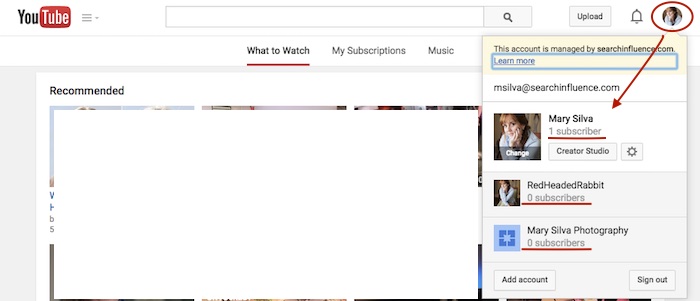
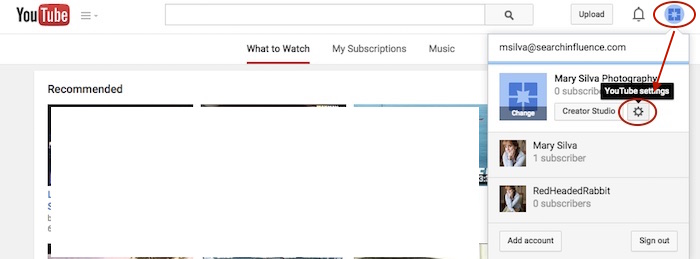
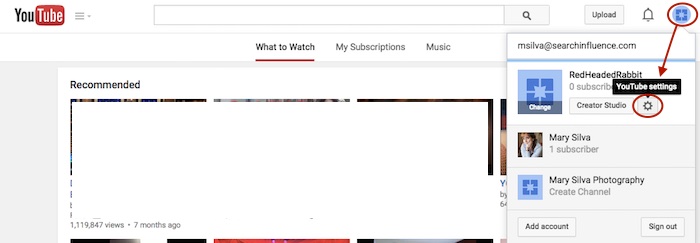
    Step 1: Go to YouTube.com and log in to your Google account. In the top-right corner of the page, click on the circle that shows your page icon to see a list of pages and their channels within this account.

    YouTube Users

    Usually, when you first log in to YouTube, you’re automatically managing or acting as your personal Google Plus page (the profile listed first in the dropdown is the one you’re currently acting as). To manage another page, which is what we’ll need to do to move channels, you’d just click the page you wish to manage from the dropdown.

    Deleting Unnecessary Channels Side Steps:

    Before we can proceed with moving channels, however, note that in the screenshot above, both of the extra pages have “subscribers” listed under their page names. This means that channels have been created for both of these pages already (otherwise we’d see “Create a Channel” below the page names). So if we want to move a channel to the page “Mary Silva Photography” in this account, then we’ll have to free it up for receiving a channel by deleting the unwanted channel that is currently connected to it.

    This can be done fairly easily by clicking the “YouTube Settings” gear from that top-right dropdown while managing the page from which you want to delete the channel.

    Screenshot 2015-05-18 10.36

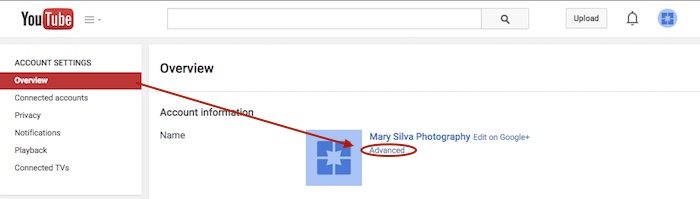
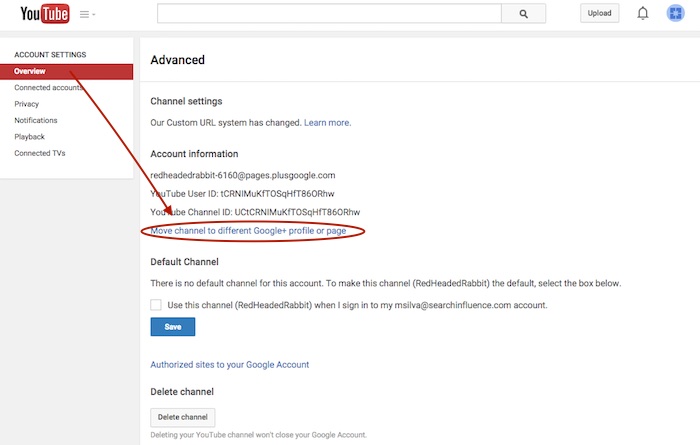
    Then click “Advanced” under the page name in the “Overview” tab.

    Screenshot 2015-05-18 10.37

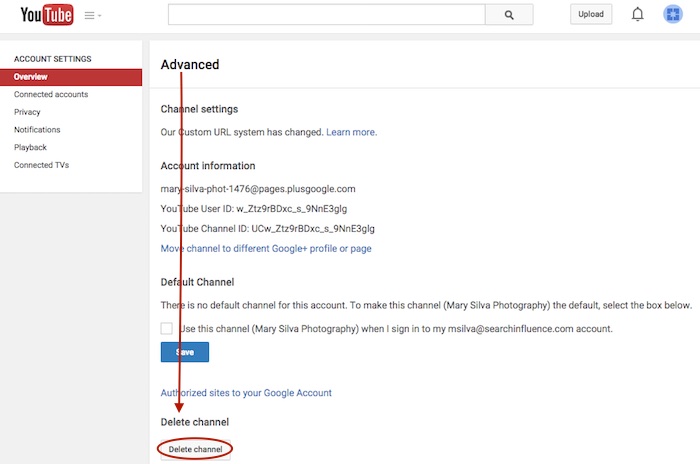
    At the very bottom of the page, you’ll see the “Delete channel” option. Once you click that, you’ll probably have to re-enter your password. Brace yourself.

    Screenshot 2015-05-18 10.38

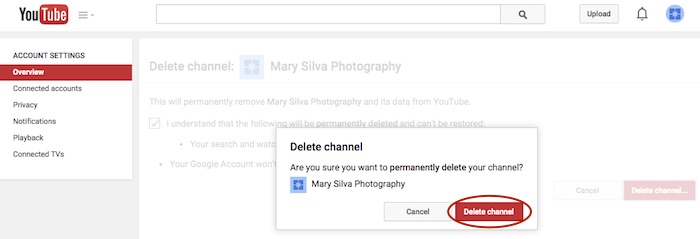
    You’ll see a verification page to confirm what you’re about to do. Check the box and click “Delete channel” to get one more verification dialogue, then click “Delete channel” one last time to complete the process.

    Screenshot 2015-05-18 10.41

    Now we can get back to moving the channel. In this example, we’ll pretend that the channel connected to “RedHeadedRabbit” needs to be moved over to “Mary Silva Photography.” As you can see in the next screenshot in Step 2, “Mary Silva Photography” now shows “Create a Channel” in the dropdown, so it’s free to take on the channel from the “RedHeadedRabbit” page.

    Step 2: Click on the page that has the channel you want to move in the top-right dropdown to manage the page (in this case, “RedHeadedRabbit”), and then the aforementioned “YouTube Settings” gear should appear for that page. Navigate back to the “Advanced” settings page from the “Overview” tab just as you would have to delete the channel.

    Screenshot 2015-05-18 10.47

    Step 3: This time, however, you’ll want to click the “Move channel to different Google+ profile or page” option just above the “Default Channel” header. Google will probably make you enter your password again, so brace yourself.

    Screenshot 2015-05-18 10.48

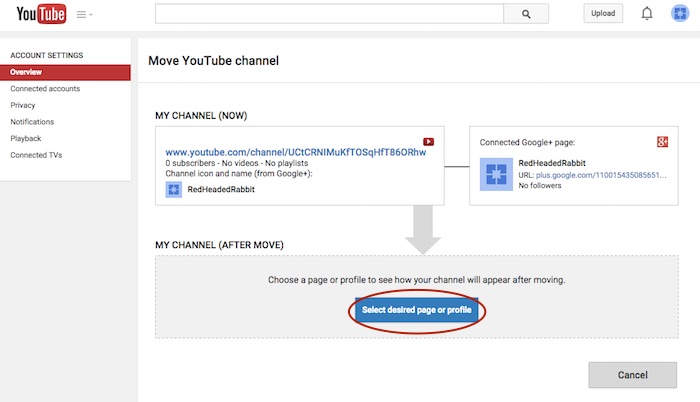
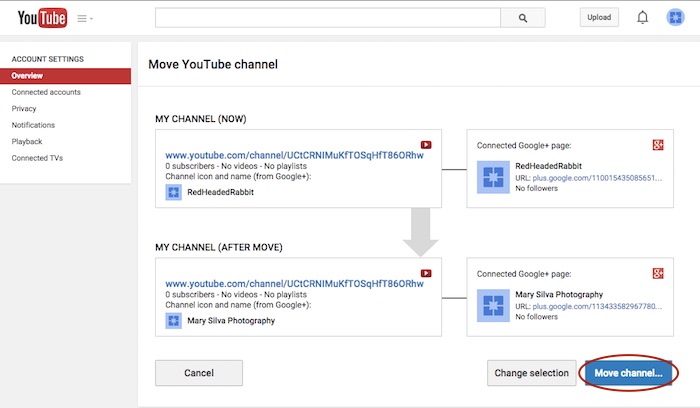
    Step 4: Now you’ll see the “Move YouTube channel” page. Under “MY CHANNEL (AFTER MOVE)” click the “Select desired page or profile” button.

    Screenshot 2015-05-18 10.49

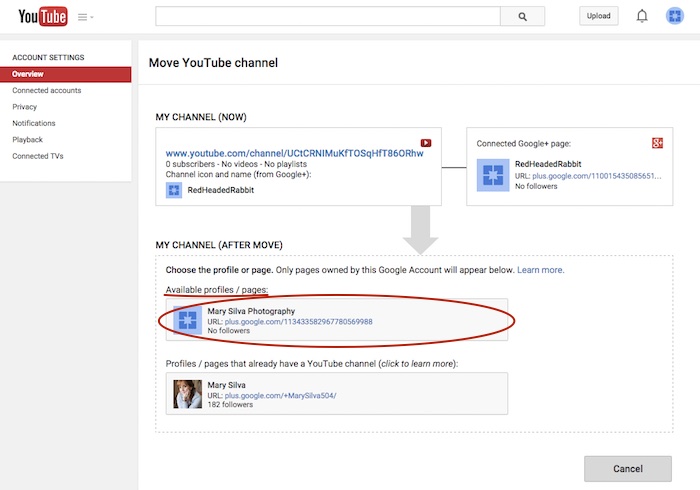
    Step 5: Choose the page you want to move the channel to from the “Available profiles / pages” section.

    Screenshot 2015-05-18 11.05

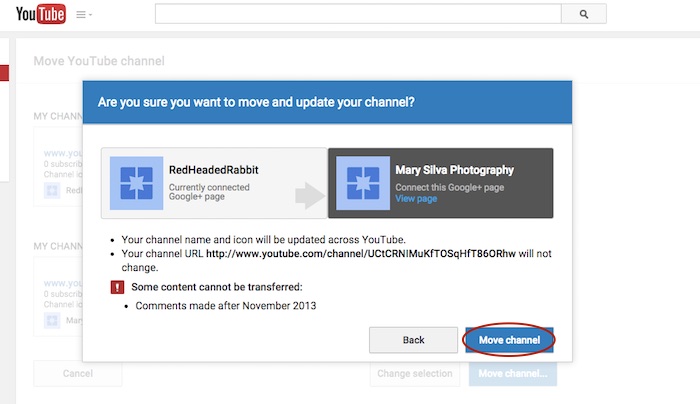
    Step 6: Confirm where you’re moving the channel (you can click links on this page to double-check that you’re moving the right channel to the right Plus pages) and click “Move channel…” to complete the transfer.

    Screenshot 2015-05-18 11.06

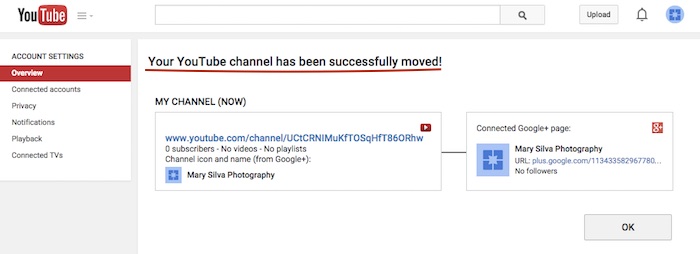
    Step 7: Click “Move channel” in one last confirmation dialogue box, and you’re done! You’ll see one last confirmation screen about the successful channel transfer.

    Screenshot 2015-05-18 11.13

    Screenshot 2015-05-18 11.09

    Reconnecting A Channel With Two Different Accounts

    As previously mentioned, we often find that we have a channel connected to a personal Google Plus page in one Google account, and we want it connected to a business page in another login. The steps for moving the channel will be the same as above, but first, we must get the pages all set up properly within one account.

    The account that has the channel has to be the OWNER of the page that we want to move the channel over to. So we need to go through adding the YouTube channel account as a manager of the business page within the other account first. Then we can go back and transfer ownership of the business page over to the channel account completely.

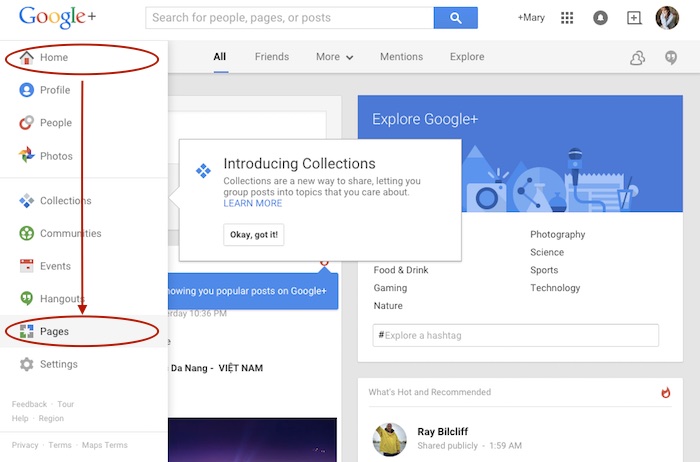
    Step 1: Log in to the account that the main business is claimed in and go into your Pages.

    Screenshot 2015-05-18 11.30

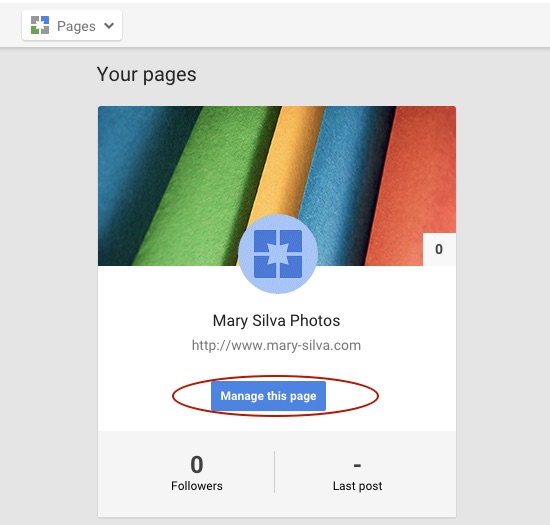
    Step 2: Choose “Manage this page” for the listing that you want to make the YouTube account a manager of.

    Screenshot 2015-05-18 11.31.30

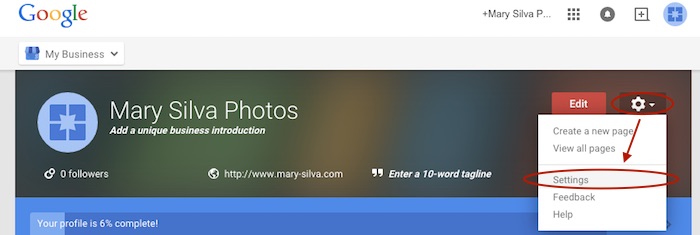
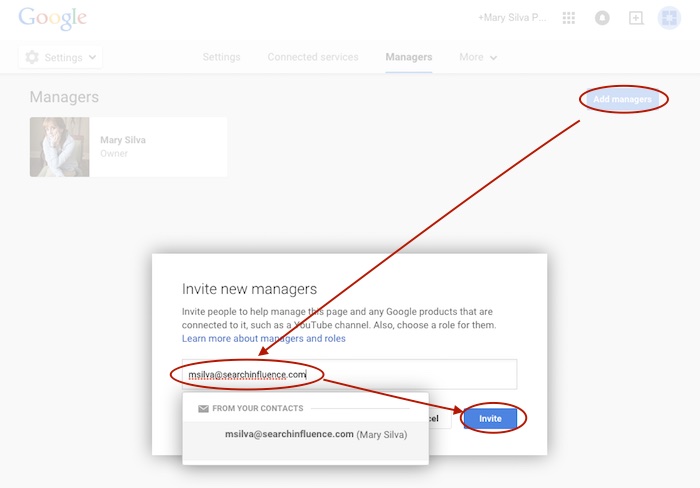
    Step 3: Go to “Settings” in the dropdown. Then, choose “Managers” under the “More” tab and add the email address for the YouTube account as a manager by clicking “Add managers.”

    Screenshot 2015-05-18 11.31.44

    Screenshot 2015-05-20 12.46.32

    Screenshot 2015-05-18 11.32

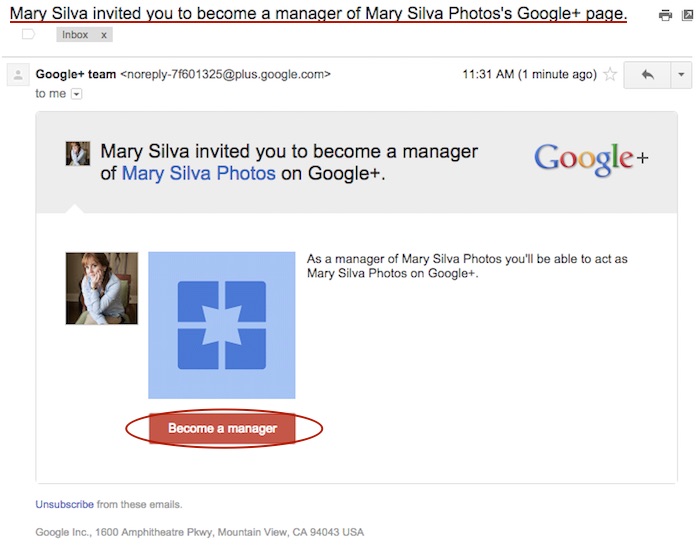
    Step 4: Log in to the email for the account with the YouTube in it. Look for the email that says “Person Name invited you to become a manager of the Business Name’s Google+ page” and click “Become a manager” within that email.

    Screenshot 2015-05-18 11.33.15

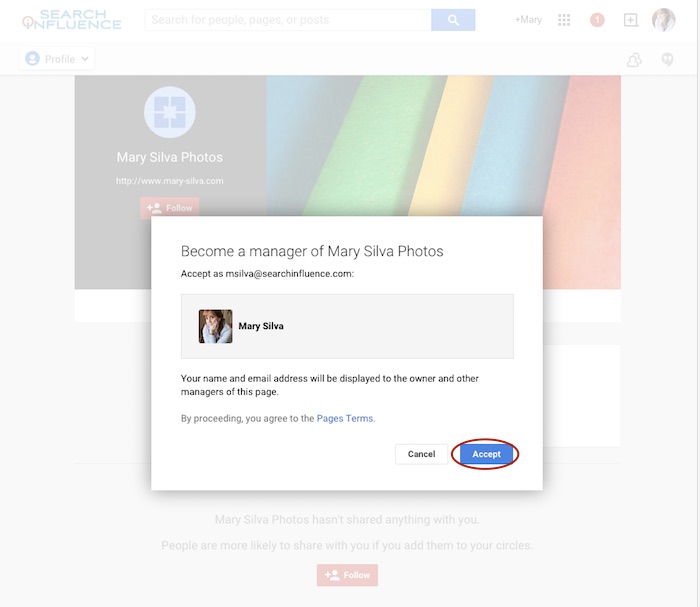
    Step 5: The link from the email will take you to the Google Plus page and automatically open a “Become a manager of Page Name” dialogue where you’ll click “Accept” to complete the managership setup.

    Screenshot 2015-05-18 11.33

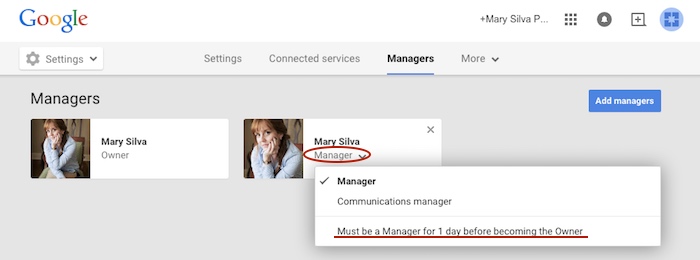
    Here’s where we wait…Unfortunately, for security reasons, Google requires an account to be a manager of a page for at least one day (as seen in screenshot below) before ownership of the page can be transferred over. So wait a day and come back to me when you’re ready to wrap this up. 😉

    Screenshot 2015-05-18 11.38.58

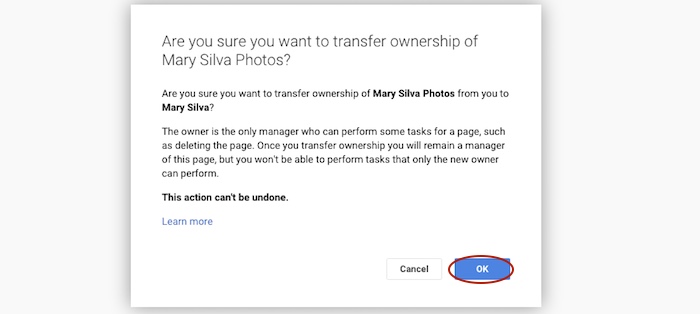
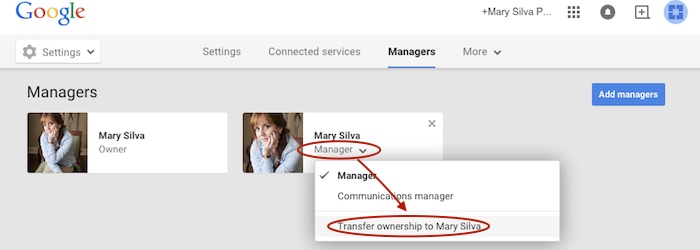
    Step 6 (One Day Later): Now log back in to the account that owns the page and follow steps 1-3 again to get back to your “Managers” settings page of your official business page. When you click “Manager” under the account name, you’ll see a dropdown with the option to “Transfer ownership to Person Name” where you previously saw “Must be a Manager for 1 day before becoming the Owner.” Once you click that, you’ll click “OK” to verify the transfer of ownership, and then the transfer is complete!

    Screenshot 2015-05-19 12.54.22

    Screenshot 2015-05-19 12.54.37

    You’ll get an email in that new owner account saying something like, “Person has made you the owner of the Page Name Google+ page.” Unlike the managership process, you don’t have to click anything in an email, so the ownership has been transferred completely, and you’re done!

    Now that you have everything set up properly, you can proceed with steps two to seven in the “Reconnecting A Channel Within One Account” section above.

    Hopefully this extensive tutorial helps you through all of your YouTube woes. To learn more about the ins and outs of Google Plus pages in Google My Business, you can read more on the blog here.

  • Amazon Has a House Party, and Your Local Business Needs an Invite

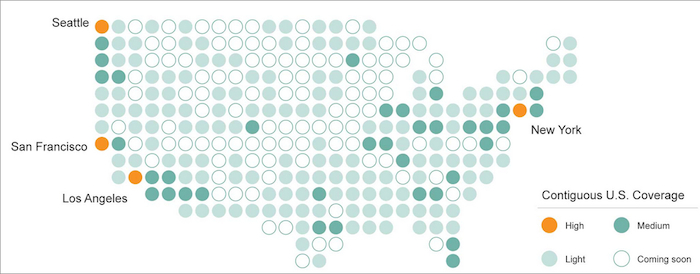
    Amazon Home Services Map Image - Search Influence

    To compete with Angie’s List, Craigslist, Yelp, Home Advisor and other marketplaces, Amazon has recently launched its own marketplace called Amazon Home Services.

    What makes this platform different from the others? How could it help you, as a local business, with an increase in leads and improved Google rankings?

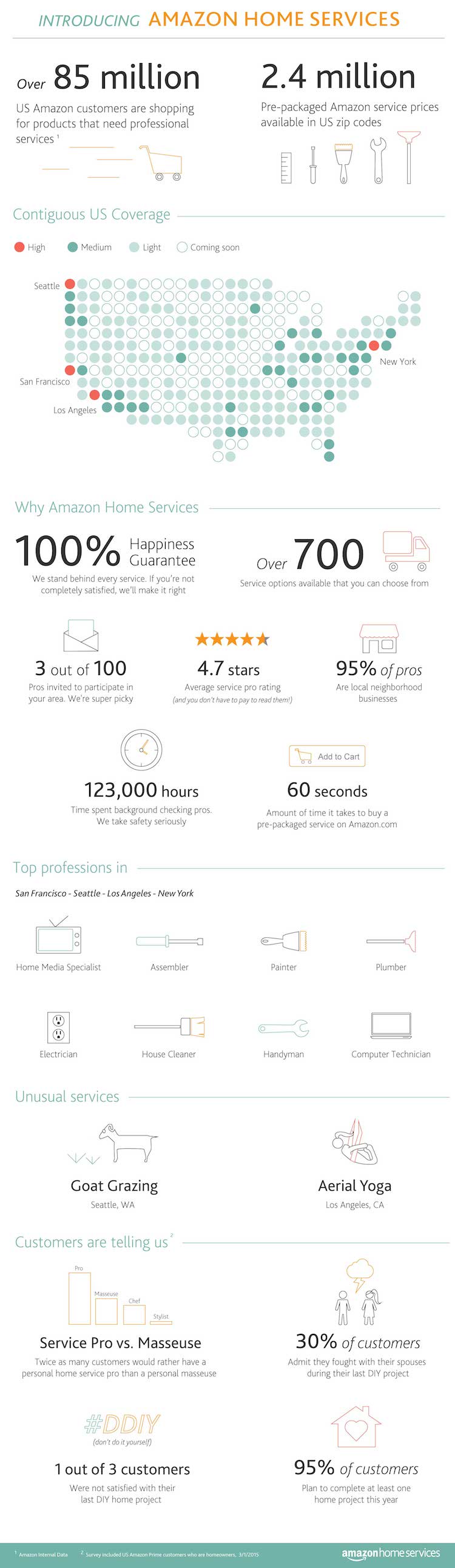
    Amazon has its own ecosystem: loyal customers and Amazon Prime members. Being a part of this ecosystem means being exposed to 85 million potential customers. “In less than 60 seconds, customers can now browse, purchase and schedule hundreds of professional services from wall mounting a new TV to installing a new garbage disposal to house cleaning, directly on Amazon.com,” according to the company’s recent press release. And your business can be a part of it.

    In contrast to Google, which ranks services in terms of the most accurate answer to the searcher’s query, Amazon ranks services in terms of what product the searcher is most likely to buy. This functionality is easier for small businesses. Indeed, Amazon’s algorithm will automatically show the best service to match what the searcher is looking for. In other words, when a searcher is looking for a television on Google, the result will include everything in relation to televisions except a list of local services, while Amazon will include all the repairs/installation services related to a television based on the searcher’s geolocation. That is why it will potentially make it easier for small businesses to rank on Amazon. But there is a catch: to be part of that ecosystem, you need to be invited by Amazon.

    So how can you get invited? First, you need to have a strong Web presence, a good strategy for displaying information about your services, a good reputation and finally, great online reviews from your customers. (But really, you’d want all of these things anyway.) On top of that, you need to be licensed and insured.

    Are you ready to apply? Don’t jump to it too fast! Google just announced it is going to open its own marketplace for local businesses, which means more visibility for you as well as more leads, since most people search on Google.

    Amazon Home Services Image - Search Influence

    Image sources:

    Amazon Home Services infographic

    Amazon Home Services map

  • Web Augmentation: 9 Tips to Get Your Plastic Surgery Practice Trending

    Web Augmentation for Medical Practice Marketing Image - Search Influence

    Every second, there are almost 50,000 unique searches on Google. With that much traffic, it’s crucial to establish your plastic surgery practice as an online authority. By using social media, search engine optimization, and paid search strategies, you’ll be able to climb to the top of Google’s rankings in short order.
    Tips for Social Media

    Utilize “Audience Insight” on Facebook

    As of March 31, 2015, there are 1.44 billion monthly active users on Facebook, making it the platform with the largest audience for your advertisements. With Audience Insight, Facebook helps you sort through your targeted demographics in order to understand the kind of content that is popular among them.

    Use targeted Facebook ads

    If you use targeted Facebook ads, you can choose what kind of Facebook users will see your microdermabrasion advertisements. Not only can you sort your audience by age, location, and gender, but you can also target them according to their relationship status, whether they have children, and their personal interests. Facebook fan-building campaigns are also effective in making patients and customers into fans.

    Tag and post about local events and businesses 

    If you want to maximize your visibility, you’ll have to post outside of your practice. By sharing posts about local events and businesses, you’ll increase your presence in the community. Your potential clients will start to follow and share your content if your page is a reliable source for interesting information. 
    Tips for Search Engine Optimization

    Research Longer Keywords

    A short keyword like “chemical peels” is a competitive keyword, which means a lot of practices will be using it. Try to find a longer keyword that your audience will search for, like “chemical peel for rough skin in NJ.”

    Host Webinars

    Live Internet events boost your SEO rankings because they keep your audience on your website for a long time. Set up some demonstrative or informational webinars that prove your expertise while optimizing your search results.

    Make Your Site Mobile-Friendly

    More and more people use their phones and tablets, rather than a computer, to browse the Internet. A mobile-friendly website will ensure that the information on your website is accessible to everyone. In fact, mobile website traffic for our plastic surgery clients’ websites averaged 48.6 percent. And that doesn’t include tablet traffic; it is purely mobile.

    Another way to pump up your plastic surgery website is to use natural content on your practice’s website. Find out about how medical marketing is making the switch to natural content.

    Tips for Paid Search

    Post Lots of Information on Your Landing Page

    By having a wealth of information on your landing page about topics that are relevant to your practice—such as eyelid surgery—you ensure that your potential client gets the knowledge they desire. When this happens, they’ll stay on your page longer, and their trust in your expertise will grow.

    Invest in High-Quality Video Production

    Potential clients will seek out videos demonstrating a procedure before they schedule an appointment for one. If your practice has a high-quality video demonstration of laser hair removal, 79 percent of the potential clients who watch it will visit your website. In addition to videos, other types of content can help attract patients searching online for your practice. Find out the four ways to drive conversions in the medical industry.
    Have Your Contact Information Readily Available

    The content you make available on your website is meant to inspire more people to come to your practice. Having your contact information readily available increases the chance that potential clients will call your site, visit it, or save it for later.
    Implementing these tips will get your plastic surgery practice trending in no time!


  • More Locations, More Problems? Optimize Your Franchise SEO—Part 2

    Franchise SEO tips image - Search Influence

    In part two of this two-part series about how to successfully optimize your franchise SEO, you will find three more winning strategies and steps for multi-location or franchise SEO.

    It’s All About Location

    The effort to have each location found in its own market is often perceived as the most challenging part of multi-location SEO. In part one of this series, we discussed the importance of building the central brand. Now we will tackle how to deal with individual location information, and the ways your franchisees can help to best optimize your franchise marketing and location SEO.

    1. On-Site Location Pages

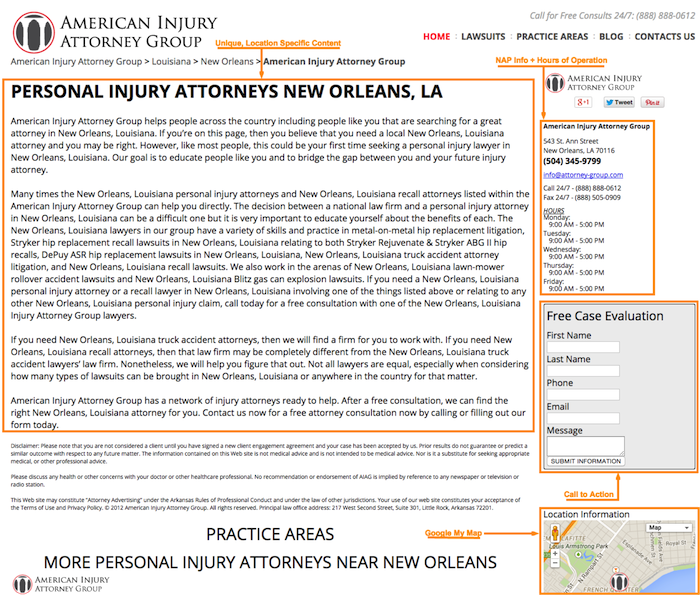
    Now that you have built up your central brand, it is time to focus on your individual franchises. Each franchise location should have its own location landing page on your company’s website. Taking extra care to create separate location pages allows search engines to better understand that you have individual locations in specific geographic areas. It also gives you an opportunity to tell users about the unique products and services offered at each different location.

    Here is a list of the necessary elements for an effective location page for Internet franchise opportunities:

    • My Map to Google+ page
    • Unique content for the specific location
    • Directions to the location from different landmarks, highways, surrounding cities, etc.
    • Photos of the location
    • Reviews of the location (probably best to have a separate page for these)
    • List of products and/or services (should link back to the main products/services pages)
    • Schema MarkUp to the name, address, and phone number
    • Link to the individual location’s social profiles
    • Link to staff member profile pages
    • Strong call to action

    Franchise SEO Tips 1 Image Search Influence

    As with all web pages, it is a best practice to implement unique, compelling content on your location landing pages. Users expect a rich experience when navigating your site, and bland content may turn them away. At the same time, content that is too dense with information or full of keywords may deter users from your web page. To keep site visitors interested, give them valuable information using bullet points in case they are in a hurry. Some multi-location businesses leave a portion of these elements to be completed by the individual franchise owners and managers. In an ideal world, this would be an effective solution, but knowing that these kinds of franchise marketing requests are often put on the backburner, it is best to have a solitary stakeholder in the corporate office responsible for these tasks.

    2. Citation Building

    Citation building is perhaps the most daunting exercise when approaching multi-location SEO. As it is with SEO for single-location businesses, consistency of name, address, and phone number in your online business listings is key. You will often see name formats including the location, such as “Company Name – Lakeview Location.” However, this is not a best practice for SEO purposes. Instead, remove the location information, and keep the business name exactly the same for all of the locations. The different addresses and phone numbers for each location will be enough to differentiate them for both Google and your potential customers.

    Each location should have a unique business description written for its online listings. This task may be best completed by individual franchisees, as it might be difficult for any one individual to write multiple, unique descriptions for essentially the same business.

    On the other hand, you should choose the same categories and logo for every location. Adding unique pictures of each location and its staff would be a nice touch, as well, but it may not be worth the trouble if you have upwards of 10 to 15 locations. Some directories will offer more fields than others. It is in your best interest to provide as much information as possible.

    Rather than taking on the incredibly time-consuming task of doing this for each individual business directory for every single location, consider using Moz Local. This tool makes pushing out each location’s name, address, phone number, categories, business descriptions, etc., to major directories as easy as a simple click of your mouse.

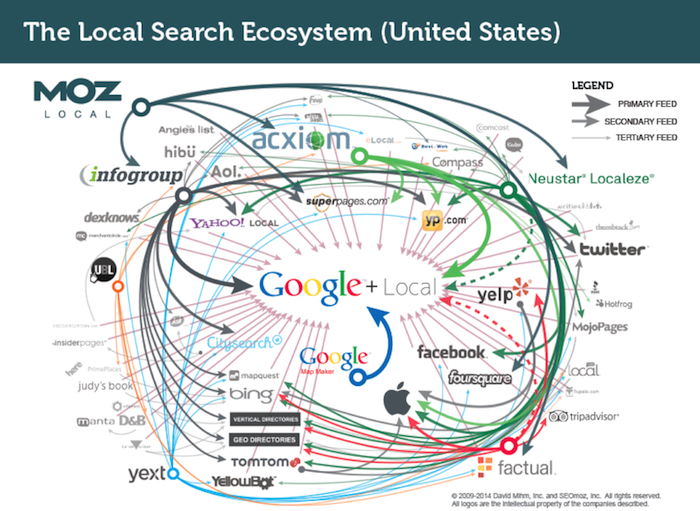
    As you can see below, the major online data feeds and directories share their information with each other, which should allow Moz to take care of most of your citation building and cleanup. Just 90 days after you submit the listings to Moz, go back and see where you stand. Some manual cleanup may be required.

    Local Search Ecosystem Image

    Expanding your search for niche directory opportunities for your company’s industry and each franchisee’s market is also highly recommended. By getting listed in these hyper-specific and hyper-local directories, you are giving search engines that much more information about what you offer and where your business should be found.

    3. Enlist the Help of Your Franchisees

    Enlisting the help of your franchisees may be a time-consuming task for some, which is why everything preceding this recommendation can be taken care of by one single source.

    Allowing each of your locations to manage its own social presence can be both empowering and helpful for your visibility in search engine results. To help manage the challenges that may arise, you should create a clear social media policy outlining what is and what is not acceptable. Make your branding and the content of the posts a top priority when creating this social media manifesto. You will also want to make this a working document just in case someone finds a loophole that needs closing.

    Each location should also be responsible for collecting positive reviews and testimonials from their customers. I would highly recommend incentivizing this effort and coaching your managers on the proper way to approach their customers. Written testimonials on the website serve as phenomenal selling tools. Reviews on Yelp, Google+, and other third-party review sites are even better.

    Getting everyone on the same page with webinars can also be advantageous to the cause. Some topics that you will definitely want to cover include social media branding, social media posting, social media interaction, and how to ask customers for reviews. Break each of these up into bite-sized chunks, and keep your focus on the industry’s top three social media platforms. Side note: record all of your webinars, and make them available to your franchisees at their leisure.

    Get Started!

    As you can see, there is plenty of work to be done in order to achieve success with multi-location SEO. As your franchise grows and brings on new franchisees, use the above recommendations as a checklist for each new location. You can get most of this done within a week’s time for each new franchise location. Doing so will save you a lot of trouble down the road. It may be in your best interest to contact Search Influence for your online marketing needs, especially including the complicated maze of managing multi-location SEO and franchise marketing.

    Image source:

    Local Search Ecosystem image