Tag: content strategy

  • Social Media Marketing and the Super Bowl: It’s All About Preparation

    Thought Bubbles Photo

    If you’re like me and you love sports and social media, there isn’t a better day than Super Bowl Sunday. From the creative commercials to everyone constantly updating their feeds with their own thoughts on the game, it’s the ultimate setting for sports and marketing to collide. Rather than sit back and let this once-a-year event pass by, business owners should seize the opportunity to jump into the frenzy and promote their brand.

    But what do you say and when do you say it? The answers to those questions lie in preparation. Follow these simple tips so that you’ll be prepared to jump on the chance to be one of the social media accounts people are talking about the next day.

    Log In
    When something unexpected happens (like last year’s power outage at the Superdome here in New Orleans), you have to be ready. That doesn’t mean fumbling around trying to log into your Twitter, Facebook, or any other platform your business operates. By being logged in and thinking fast you can comment on a big moment right away.

    Football And Football Helmet Photo

    Know Your Audience (And Who’s Playing)
    Identify what content you want to create that relates to your brand, then follow the conversation surrounding the game and try to work it in at the appropriate times. For instance, are their certain hashtags your customers are using related to the game or big topics that have emerged? If so, try to join the conversation and interact.

    Get Creative With Promotions
    Use a promotion to drive customers to your website or place of business the week leading up to the big game. For example, offer a special that provides a discount if a certain player scores a touchdown or if the opening kickoff is returned. You can also take advantage of the many prop bets associated with the game, such as a discount on one product if the coin flip lands head and a discount on another if it lands tails.

    These are just a few things you can do leading up to kickoff. Just be sure to formulate a strategy early so that you aren’t scrambling once game day arrives. And, as always, try to keep your content tasteful, but colorful and fun at the same time.

  • 3 Ways To Make Your Website More Skim-able

    Bill Gates once said, “If your business is not on the Internet, then your business will be out of business.” I think we can expand on this and say that if your business doesn’t use the Internet to its advantage, it will not compete with those that do. This includes things like good SEO and a smart social media strategy, among other marketing tactics. Since all of these things are aimed at directing people to your website with the goal of converting a user into a customer, that site better be up to the task.

    There’s some bad news, though: most people don’t really want to read your website. They don’t have the time or the interest. But fret not! Your web copy can still be effective if you write it with this in mind. The key here is that you allow your readers to get the info they need quickly and without much effort. Let them skim!

    Mobile Search Content

    1. Visually Appealing Content

    Your copy should never look intimidating. Large chunks of text are out. Small paragraphs labeled with subheadings are the way to go. Bulleted or numbered lists are even better. Remember, a lot of your readers are likely using mobile devices. It doesn’t take much text to fill the screen of a phone, which might turn off someone  looking for a specific answer.

    2. Give Them What They Want

    Think about why someone would visit your site. What info are they looking for? That info should be the star of the site. If you own a tire shop, people are probably visiting your site for a few details: location, hours, services, products. If you own a dental practice, they’ll want to know what types of insurance you take, what services you offer, and your location. You can have more than the basics on your site, but make sure that you at least cover the most important details in a way that is easy to read.

    3. Put It Where It Belongs

    Make sure that your site is easy to navigate and all pages are clearly labeled with a logical title. “What We Do” is ok, but “Services” is better. Don’t put your hours on the “About Us” page. Put them on a page labeled “Hours of Operation.” You want your readers to scan the homepage and be able to quickly find the information they want or quickly figure out how to navigate to that information.

  • Influencer Spotlight – Mary Silva

    Mary Silva has been a part of the Search Influence team for nine months, and in that time she’s gotten a reputation for hard work and dedication. She’s become the go-to person for managing clients’ online presences when it comes to Google, Yahoo and Bing. She is also the person people run to when they need a call made to Google. Additionally, as an Internet Marketing Associate, Mary does basic editorial work for the content team and helps to create monthly reports for clients.

     Mary Arthemise Silva, not be confused with her Aunt Arthemise Mary, carries on the tradition of bearing this family name, which gets flipped with each generation. So Mary has an aunt named Arthemise Mary and a grandmother named Mary Arthemise. As a native New Orleanian, Mary tells me all locals always want to know where you went to high school. So for all you locals out there, Mary graduated from Cabrini High School.

    Outside of Search Influence, Mary works as a freelance photographer and musician. While she usually focuses on synth, guitar, and vocals, she can actually play seven different instruments. Recently, Mary had the crazy opportunity, through a co-worker, to photograph the band Fun. Mary specializes in creative portraiture photography and usually shoots senior portraits, live bands, and headshots. Every year, she photographs NOLA Fashion Week for designer Noël Martin. Fun fact: Mary also shot photos for the Search Influence website! In addition to working at Search Influence and freelancing in her spare time, Mary is also a marketing major at Tulane University and is looking forward to receiving her BSM in May 2014.

    FUN
    One of Mary’s photos from the recent Fun. concert in New Orleans.

    When I asked Mary what the best part of working at Search Influence she said, “My favorite thing about working at SI is the people. I love my coworkers and have literally never had a bad experience with anyone in the office in the nine months that I’ve been here. We also have an awesome team building committee that puts together fun quarterly events for the company. It’s a really great way to interact with fellow Influencers since we spend a lot of our time working behind a computer.”

  • A Quick Guide to Using the Internet to Your Advantage

    Dec13Small businesses have come a long way, thanks to the Internet. Now we all have websites touting our products and services, and we have more ways than ever to connect with our potential and existing clients. But there’s always room for improvement, isn’t there? If you’re not fully using the Internet to gain momentum for your business, you’re missing out on potential sales.

    Be Smart About SEO

    In case you weren’t aware, Google has made a lot of changes in the past year that affect how marketers use keywords and SEO. What that means for you is that you have to use keywords in a natural way (instead of shoving them in every sentence and sounding like a robot).

    Be cautious about how you use anchor text, too. Here are some tips to help you stay in Google’s good graces:

    • Rather than hyperlinking a generic word or phrase, such as “click here” or “page,” focus on specific words or phrases for your anchor text, as we’ve done throughout this post.
    • Experts recommend using your brand name for about 30% of your inbound anchor links.
    • Keep your links relevant to the overall theme of your site. Don’t link to a pet shop if your site is about accounting software or Google might see it as too out of the blue and penalize you.

    Make Your Site Warm and Inviting

    There’s nothing worse than going to a site that’s cluttered or has boxes popping up everywhere. If your website is your welcome mat for potential customers, you want it to be inviting, right? You do that in several ways:

    • Simplify navigation.
    • Make sure all links go where they should.
    • Make the checkout process as simple as possible.
    • Ask for minimal info for email subscribers or customers (just an email address vs. address and phone).

    Be the Go-To Expert

    Right now, the hottest tool for marketing online is content marketing. That comes in the form of blog content, white papers, ebooks, videos, infographics…the list goes on and on. Remember your goal with content marketing: to be helpful to your target audience. Your focus should be on useful content that answers a question or solves a problem for someone. The bonus is that it makes your company look like the leader in your industry.

    Diversify the kinds of content you produce to attract different types of people:

    • How to and advice-based blog posts should be short and scannable.
    • White papers go more in depth on a given subject, and can be used as bait to get people to sign up for your emails.
    • Videos attract people who learn through audio and visual imagery.
    • Infographics draw in potential customers who prefer graphical representations of data, rather than only words.

    Use Different Platforms

    You’re no longer tethered to your desktop; you likely have a laptop, smartphone, and tablet that you also use to access the Internet, so use that to your advantage. Look for software that also offers a mobile option, like accounting software or a CRM web app, so that you can handle your business no matter where you are.

    And here’s another content marketing tip: you can also use a CRM system to track and manage your assets for your content marketing. If you’ve ever missed a day publishing on your blog, you know how important it is to stay organized as far as who’s publishing what, and when.

    Get Your Head in the Clouds

    Another benefit the Internet has brought small businesses is cloud storage. Now you don’t have to worry about what happens if your computer is destroyed in a fire; all your files should be backed up in the cloud. That includes:

    • Contracts and agreements.
    • Client data.
    • Articles, spreadsheets, and presentations.

    It’s exciting that every day, technology brings us more ways to grow our businesses. Be open to what’s out there, and find the tools that work best for your business.

    Susan Payton is the President of Egg Marketing & Communications, an Internet marketing firm specializing in marketing communications, copywriting and blog posts. She’s also the founder of How to Create a Press Release, a free resource for business owners. She’s written three books: DIY Press Releases: Your Guide to Becoming Your Own PR Consultant, 101 Entrepreneur Tips and Internet Marketing Strategies for Entrepreneurs, and contributes to several sites, including ChamberofCommerce.com, The Marketing Eggspert Blog, CorpNet, Small Business Trends, and BizLaunch. Follow her on Twitter @eggmarketing.

    Contact one of our experts to learn how you can enhance your current marketing strategies.

  • 5 Content Marketing Myths You Need to Unlearn

    The popular SEO strategy of content marketing has always been effective. Now, with recent changes to Google with its Hummingbird update and the increasing importance of social media, good content marketing is more important than ever for boosting your online visibility and search engine ranking.

    While content marketing isn’t exactly rocket science, it’s still important to understand the strategies and methods that really work—as opposed to all the myths out there that won’t get you any further ahead. Here are the top five content marketing misconceptions you may believe, and what you need to do to adjust your approach.

    Myth #1: It’s Like Printing Your Own Money (Or: Content Marketing is About Making Sales)

    The myth: The main goal of content marketing is to generate leads and increase sales for your business. If this isn’t happening for you, then you’re wasting your time with content marketing.

    The truth: Content marketing does lead to more leads and more sales—but it’s a gradual process, and it’s hard to measure the impact on sales directly. You’re only wasting time if you’re focused on making your content sell (a point that’s explored further in the next myth).

    The true goal of content marketing is to strengthen your brand. Done effectively, your content will serve to build familiarity through increased visibility, and improve likability and trust for your business through more shares and greater authority in your industry.

    Myth #2: It’s All About Me (Or: Content Marketing Should Focus on Your Business)

    The myth: All of your content should be about your products or services. You need urgent language, lots of promotions, and prominent calls to action in every piece of content you publish.

    The truth: Brochures and billboards are not content marketing—they’re advertising. Keep in mind that your goal is to increase visibility and build your brand. If all your content does is push your products or services, you’re going to be viewed as spamming people, no matter how tastefully worded your advertisements are.

    Your content should provide consumers with value that will benefit them even if they don’t buy from you. That’s how you strengthen your authority and help your content get passed around, so you’re seen by more people.

    Myth #3: If You Write It, They Will Come (Or: Content Marketing is Easy)

    The myth: All you need to do is churn out a lot of content and post it online. The more content you have, the higher you’ll rank in search engines. It doesn’t matter what the content says—just how much there is.

    The truth: Google, the biggest search engine on the planet, has always favored quality over quantity when it comes to content. With the recent changes to their search algorithms and the way keywords and links are weighted, quality content is even more vital. Once again—you need to offer consumers something of value.

    Content marketing does take work, but the returns are worth the time and effort you’ll put in.

    Myth #4: Set It and Forget It (Or: Content Marketing Can Be Automated)

    The myth: You can cheat when it comes to content marketing. Just use some of the many automated tools that are out there to keep content coming, and it will look like you’re active—which in turn will elevate your SEO, because search engines love fresh content.

    The truth: While there is something to the idea that fresh content attracts search engines, it’s more important to satisfy your visitors, subscribers, and customers. And it’s easy to tell when your content feeds are automated.

    The biggest advantage of content marketing is the ability to give your business a “personality” through branding. If your brand is “we only care enough to have this software program talk to you,” no one will engage with your content—and your efforts, such as they are, will be wasted.

    Myth #5: No One Reads This Stuff Anyway (Or: Content Marketing is Just What’s on Your Website)

    The myth: Content marketing is useless. Posting all this stuff to the website doesn’t bring any more visitors, so we might as well concentrate on different strategies to increase traffic, like pay-per-click campaigns.

    The truth: There’s more to the world of content marketing than your website pages. Small business blogs, social media feeds, guest blogs and articles, whitepapers, even commenting on other industry blogs—all of these things are content marketing and all of them feed into your brand and your online footprint.

    What’s your content marketing strategy for 2014?

    Megan Totka is the Chief Editor for ChamberofCommerce.com. She specializes on the topic of small business tips and resources. ChamberofCommerce.com helps small businesses grow their business on the web and facilitates connectivity between local businesses and more than 7,000 Chambers of Commerce worldwide.


  • Search Influence Goes to Digital Agency Conference

    Search Influence had the opportunity to send our VP of Sales & Marketing Kelly Benish to Local Media Association (LMA) and BIA Kelsey’s Digital Agency Summit, which was held in Chicago on November 6th and 7th. The Digital Agency Summit is described as “two days dedicated to the best case studies and practices being employed by digital agencies owned or partnering with local media companies.” SI is a member of both the LMA and BIA Kelsey, and we are always strategizing ways to better serve our clients and partners by speaking at, sponsoring and attending these Association conferences.

    (L-R) Jed Williams, BIA/Kelsey; Aswini Anburajan, BuzzFeed; Peter Newton, GateHouse Media; Lindsay Jacaman, Dallas Morning News/Speakeasy; Kelly Benish, Search Influence
    (L-R) Jed Williams, BIA/Kelsey; Aswini Anburajan, BuzzFeed; Peter Newton, GateHouse Media; Lindsay Jacaman, Dallas Morning News/Speakeasy; Kelly Benish, Search Influence

    Kelly was selected to be a conference panelist on a session entitled, “Native Advertising/Sponsored Content – A New Revenue Opportunity” and was honored to share the stage with some very well known representatives in the digital space including Aswini Anburajan, Director of Partner Development, BuzzFeed; Lindsey Jacaman, GM, Digital Services, Dallas Morning News/Speakeasy; and Peter Newtown, President, GateHouse Ventures/GateHouse Media.

    The session was moderated by Jed Williams, VP Consulting and Senior Analyst, BIA Kelsey, and panelists shared with attendees how native advertising has been a valuable revenue opportunity that media companies and online marketers have adopted.

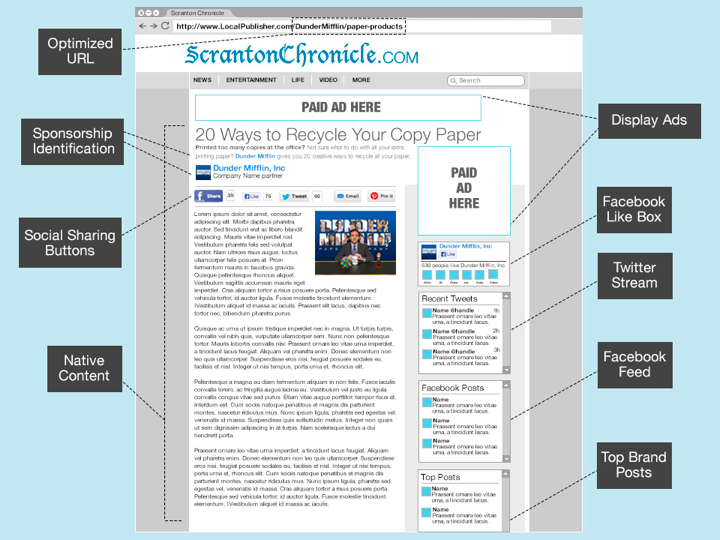
    Anatomy of Native Advertising Placement
    Anatomy of Native Advertising Placement

    Kelly highlighted the differences between advertorial, native ads and content marketing, as well as ways to implement native advertising into digital agencies’ product menu through sponsored blog posts, sponsored Facebook stories, infographics and white papers. With 20% of all web traffic coming from shared content, Search Influence offers these online strategies for both our direct clients and partners.  Many publishers do not have the dedicated content teams to create native advertising pieces and properly market them to targeted audiences.

    Search Influence has a process in which we work on behalf of the publisher with their advertisers to make the dream of offering native content pieces a reality. This cutting edge new revenue stream was the main initiative presented in the session.

    Contact us to learn how native advertising can help your newspaper property or business!

  • 4 Tips to Writing Attention-Grabbing Social Media Posts

    CONTENT CONTENT CONTENT

    We are bombarded by content and information everyday. The average person reads a couple thousand words and sees about 247 images each day. Something interesting from a marketing standpoint: we see anywhere from 3,000-20,000 marketing messages every day! All of these words and images are pieces of informative content that we have to internally process.

    I mean seriously think about it…

    TEXTS                                                      PHONE CALLS
    EMAILS                                                   RADIO
    WEBSITES                                             TELEVISION
    TWEETS                                                  MENUS
    FACEBOOK POSTS                          BLOGS
    SEARCH RESULTS                              STREET SIGNS
    INFOGRAPHICS                                  BOOKS
    GOOGLE+ POSTS                              MAGAZINES
    PINS ON PINTEREST                         NEWSPAPERS
    PRESENTATIONS                                FOOD LABELS
    BILLBOARDS                                         MAIL

    Whew—it’s exhausting just thinking about it! And I guarantee there is more than what I listed! Most of it probably goes in one ear and out the other, so, as marketers, we only have a split second to catch the attention of someone who is already being bombarded by information. Here’s a list of 4 types of social media posts that are guaranteed to catch the eye of your clients’ audience.

    1. Anything that drives interaction
    Any post that encourages a user to interact with a page usually works well with social media marketing. By interact I mean liking a post, sharing it, commenting, retweeting, +1, pinning on Pinterest, etc. If you can do this organically (without forcing it), then it’s even better!

    Tri County Equipment Facebook Post

    2. Anything with eye-appeal
    We are a very visual culture (why do you think the iPhone took off like it did?)! If you can integrate words into a visual image that presents the information is a well-designed way, then you’re golden! I’m talking about the infographic, people. There are good and bad infographics out there. But a good rule of thumb is don’t over load it with information, and make sure what you are presenting is relevant to your client’s industry. This example below was pinned 508 times and liked 76 times on Pinterest.

    Infographic About Zimbabwe

    3. Anything That Links the Brand to Current Events
    If you can find a way to tie the brand into something that is relevant to current events in the news and/or pop-culture world, you need to post about it! People often try too hard with this one, so please don’t force it! The brand needs to truly be relevant for this to happen organically.

    Volkswagen Google+ Post for Shark Week 2013

    4. Anything That Stirs An Emotional Connection
    We are an emotional species, and significant life events can really change our lives. If you can stir an emotional feeling in someone, they are likely to be more drawn to the brand. Note: This doesn’t always have to be the warm and fuzzy feelings! If you want to touch on the controversial subjects, there is an audience for that as well!

    Susan G Komen Facebook Post

     Now get out there and create some engaging content!

  • The BIG PROJECT To Get Your B2B Content Marketing Strategy Going In A BIG Way

    Content Marketing Strategy - ebook image
    Don’t worry. Unless you’re selling whaling vessels, you don’t need to write like Melville.

    Are you an expert in your field? Do you want potential customers to know that? Give them proof by literally writing the book. Now, don’t go anywhere just yet. Yes, I did just say that you should write a book, but we’re not talking about the next Great American Novel or even the next Mildly Interesting American Novel. We’re talking about writing an ebook.

    Here’s what you need to do: write 20-50 pages. Actually, write however much you can. Only got 15 pages in you? Fine. Want to crank out 100? Go for it. As long as it’s high quality, relevant information with supported claims and research aimed at providing readers with solutions, you’re good. One of the easiest ways to do this is to start with your FAQs and expand from there because: 1) You know all these answers. 2) You know that your customers are asking these questions.

    Alternatively, you could start by publishing a series of blog posts that you then put together in a collection with an introduction to pull it all together. Boom! You’ve got an ebook. Have you written articles for industry insiders? Bam! Ebook!

    Here’s why you need to do this: people like to get information before they spend money. It’s that simple.

    1) Give the People What They Want to Establish Your Company as a Leader

    Decision makers want all the information they can get from the best, most credible source it can come from. Make that source is you. Before you can start selling your products or services, you need to sell your brand and your business as a leader in the industry—and not just as a leader in terms of size or profit. You need your potential customers to view you as a thought leader in your industry, an authority, an innovator. You’ll look like you know what you’re doing, and that builds confidence in your customers.

    2) Get Many Miles Out of the Info

    One of the greatest benefits of writing an ebook is that once it’s done, you’ve got all the research and content that you’ll need to power your content marketing for months. You’ll publish your ebook, release a mobile version, get a few blogs out of it, stick it on SlideShare, put it on YouTube, publish a press release about it, post about it on all the social media sites, promote those posts, turn it into an infographic (bonus points for a series of infographics), do some guest blogging on the topic, and on and on forever and ever… or at least until your audience has already consumed it in those various forms. Except isn’t your audience always growing and changing (if you are doing it right)? Update everything in a year or two and do it all again. Repurpose that content so that your audience is getting relevant information in just about any form they want it and you are getting backlinks, social signals, and other valuable SEO stuff.

    3) Get There Before Your Competitors

    The Content Marketing Institute and MarketingProfs found that 16% of B2B marketers used ebooks as part of their content marketing strategies in 2012, up from 9% in 2011. Utilizing this tactic while it is still relatively rare will make you stand out among your competitors and establish yourself as an authority in the field (see number 1 above).

  • Easy Ways to Improve Your Pinterest Descriptions

    Pinterest 2

    By now, we should all know that Pinterest is a great tool for businesses. But, since Pinterest is so visually centered, what you may not have thought about is the importance of your written content.

    After you have your About section properly filled out and you’ve established your boards, it’s time to direct your attention to your pin descriptions. Some of the biggest mistakes that you can make are not spending enough time writing descriptions and not editing repins.

    Whatever industry you may be in, it’s never a good idea to repin content that has a description written in the first person. Since there’s no need for a stranger to be essentially speaking on behalf of you or your organization, take advantage of the description, and use it as an opportunity to appeal to the reader.

    Instead of keeping an existing description like, “Everyone in my family loved this recipe,” it would be more effective to draw your reader in with descriptive language. Your audience is more likely to click on a pin with a description like, “This unique DIY skirt is both casual and comfy. All you need is a yard of fabric, elastic, thread, and 30 minutes to spare, and you’ve got a new addition to your wardrobe!”

    You can also keep it short and sweet. If your descriptions aren’t complete sentences, pick a format and stick to it to keep your pins looking neat and uniform. If, for example, you choose to use title case, make sure that you apply that format to your other descriptions. As pin descriptions, “Sweet Southern Iced Tea” and “Quick and Easy Garlic Dinner Rolls” look better than, “Sweet southern iced tea.” and “Quick & Easy garlic dinner rolls.”

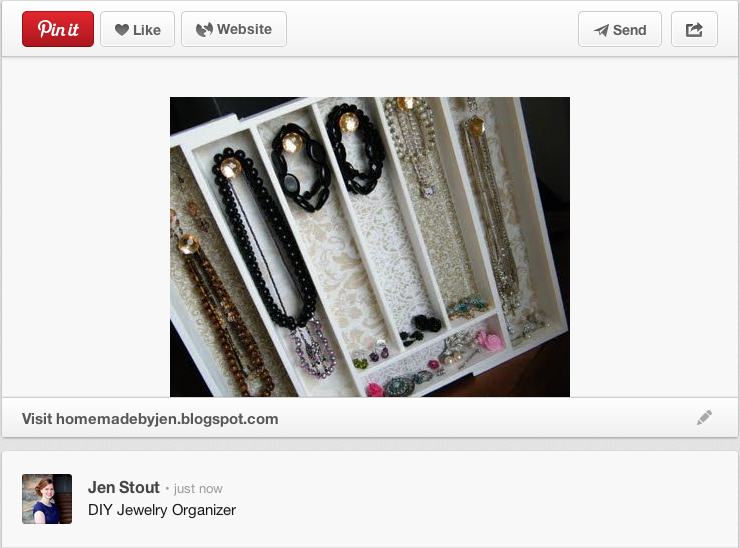
    pinterest

    In short…

    Take time to make sure that your pin descriptions are saying what you want them to say and not what someone 5 pins ago might have said.

    Use descriptive language that will make your reader want to come back to you or your organization for quality pins.

    Clean up your text so that it is aesthetically pleasing to the reader and they can quickly scan for the information that they want.

  • Turn Quiet Customers into Brand Ambassadors with the Right Social Media Content Strategy

    Thanks to Panda and social signals becoming more prevalent than ever in Search Engine algorithms, content both on and off-site is moving to the forefront of most SEO and online marketing strategies. Truly exceptional content not only ranks well, but is shared virally and provides a real value to the reader.

    Something I really began believing at PubCon NOLA this year is that social signals for search go beyond just whether someone likes or shares your content. The social signals Google is looking for have more to do with whether your customers are talking online about their experience with you after their purchase.

    Source: mvellandi Flickr http://bit.ly/8vqROG
    Source: mvellandi Flickr http://bit.ly/8vqROG

    The problem here is the ratio between people who want to shout it from the rooftops when they have a bad experience to those who openly share when they are excited or had a positive experience. In today’s social age, everyone is a journalist, food critic, secret shopper and referral source. The average Facebook user has 229 friends on the social network, meaning that if they so choose, they can instantly alert at least 229 friends to stay far away from the new Italian restaurant in the neighborhood after finding a hair on the pizza.

    That’s pretty powerful. There aren’t many other platforms that allow one individual to communicate with so many others so quickly, and to be so expressive while doing it.

    As a business, you’ve probably been told that you need to be marketing on social media to protect your reputation online and grow your business by generating leads or driving more customers into your store. I would challenge you to think beyond that.

    When is the last time you had a great experience at a local restaurant? Did you tell anyone about it? If so, how many people? Now think about the reverse. Chances are, you told a few more people about the negative experience than you did the positive one.

    Source: LetoLab.comIt is time to change our thinking when it comes to social messaging, beyond the traditional “lead gen” mindset. Rather than trying to push your product on someone who’s never used it or heard of it, why not look for opportunities to engage your existing happy but quiet customers and get them talking? Social media gives marketers and businesses the opportunity to turn a customer into a brand ambassador.

    Yes, we have to make sure we watch out for Panda and keep an eye on that pesky Google and their algo updates when it comes to on-site content strategy. I don’t mean for my focus on social to suggest that you should move your entire content strategy off your own website and onto social platforms. But, if we think about using our online content strategies to lift up our happy customers, get them sharing and engaging with us, just imagine the viral potential to reach their friends and family–new business you haven’t yet tapped into.

    You’re probably like, “Ok, I get your point, but how do I DO that?” Funny you should ask! Social media content strategies will vary by business and industry, but here are some tips for converting your social media following into brand ambassadors:

    1. Tone down the sales messages and pushy language. No more than about 20% of your social messaging should be self-referential or portray a sales message. Within this 20%, remember that the goal of these posts should be to provide a real value proposition to the audience. This could include specials, deals or contests.

      Content Strategy for Social Media - Provide a Value
      While this is basically a self-promotional post for Shutterfly, an online photo service, they are providing a value to their customers with a create-your-own cover photo featuring dad for Father’s Day.
    1. Reward your loyal customers and followers with exclusive information. Whether is a sneak peak into an upcoming in-store special or just a “Did You Know” fact, people love to feel like they have the inside scoop, so give it to them!

      Social Media Content - Give Fans Exclusive Info
      Online retailer HauteLook hosts designer pop-up sales for a limited time until inventory is sold. They effectively use social media to make their audience feel like they’re getting the inside scoop while also promoting the upcoming sale.
    2. Feature your fans. Everyone loves to be recognized, so give your fans a moment to shine by choosing to feature them every once in awhile. They’re more likely to share the content with their friends and family (increasing the potential reach of your future posts).
      Content Strategy - Fan Features

    3. A little subtlety goes a long way. I’m a big proponent of including a call to action in your post, but it’s best not to take it to the extreme. Providing a share-worthy piece of content to your pre-qualified audience with a slight nudge can never hurt.

      Social Media Strategy - Calls to Action Increase Engagement
      Disneyland provides a great piece of content with a direct call to action: share. And share they did! The piece resonates well with their audience and was timely for the Mother’s Day holiday.
    1. Post well and post often. At PubCon New Orleans this year, Alison Zarella (another AZ girl!) said it best: “the newsfeed is crowded.” As a business or brand, your competition on Facebook is not limited only to the business across the street that sells the same product. You’re also competing for your audience’s attention with the likes of their moms, distant cousins, besties and frenemies. If you don’t post great content and do it consistently, you’ll never be seen.

    2. Reply, reply, reply! Make sure to reply to your customers who comment or post with questions! Facebook and social networks are where people spend a lot of their time these days, so getting a quick reply and notification of that reply is what they expect.
      Social Media Content - Reply to Your Customers' Questions

    3. Be flexible and test for yourself. Above all else, try new things and test multiple approaches with your fans. There’s lots of information and data out there about what works, when to post and how to do it, but the truth is that every industry is different. You’ll never know what is the most effective for your brand until you try new things, compare results and adjust your approach.