Blog

  • Search Influence Presents Virtual Training in Partnership with the Louisiana Hospital Association

    Louisiana Hospital Association logo image

    Search Influence presents “How to Gain CEO/Admin Trust & Buy-in on New Marketing Strategies” in partnership with the Louisiana Hospital Association (LHA) on Thursday, June 24, 2021. This is Search Influence’s second time this year partnering with the LHA for a virtual training just for the organization’s members.

    Established in 1926, the LHA is a not-for-profit association representing all types of hospitals and healthcare systems throughout the state. The LHA carries out its mission by providing services and resources to members through advocacy, education, research, representation and communication.

    About the Virtual Training:

    As a medical marketer, it’s your job to help hospital CEOs and administrators understand how new marketing strategies will fuel patient growth.

    Join Search Influence for a virtual training that demonstrates how to build a case for new marketing efforts, including tips on how to showcase how they’ll help you reach your audience and impact your hospital.

    Learning objectives for this event:

    • How to use qualitative & quantitative goals to plan and pitch marketing strategies
    • Tactics to demonstrate how a given strategy will help you reach a specific target audience
    • Guidance to tailor your discussion based on personality styles and role
    • Opportunities to leverage data in your decision making and discussions
  • Google Maps: Ongoing List of COVID-19 Updates (June 2021 Update)

    Note: this post was updated on June 9th, 2021.

    Many of the changes that Google made to Google My Business for COVID-19 will likely stick around after the pandemic. Consumer behavior changed and Google adapted to help businesses meet those needs.

    On the other hand, a lot of functionality was limited in the immediate aftermath of COVID-19. Currently, listings more or less have the same functionality as they did prior to the pandemic. A lot of these limitations, such as removing the reviews option, were to prevent overreactions on things like hospital listings in the immediate aftermath of the pandemic. As things settled down, these features returned.

    COVID-19 Google Maps Updates

    • Google removed the option to leave reviews and ask questions in the Q&A section. They now have returned the ability to leave reviews for all business categories besides drug rehab and narrow sets of medical categories like hospitals.
      • UPDATE: Both reviews and questions and answers are back to the pre-pandemic functionality, regardless of category. The changes Google made resulted from uncertainty and potential harm done to certain listings, but as “normalcy” returns, so have these sections.

    Screenshot of Google My Business reviews live on SERP

    • As of today, Google does not permit video uploads to the channel. Previously, businesses could include videos in the overall Photos section. Google has not said when they will update this feature.
      • UPDATE: Videos are now viable and usable on all listings.
    • The company has slowly rolled back out the Q&A section, with service industries seemingly being the first to get these back. There is no clear timetable for the full rollout.
    • Google removed the ability to use their previously supported Chat feature for help. This is likely due to staffing issues related to COVID-19, so the only method to reach Google is through this form.
      • UPDATE: This form remains functional, but the response times vary depending on numerous factors.
    • Google rolled out the ability for chains to use Google Posts.
    • Google is working on features that will help users in the post-COVID-19 world. According to Ramesh Nagarajan, Product Management Director of Google Maps,

    “When you look up public transit directions for a trip that is likely to be affected by COVID-19 restrictions, we’ll show relevant alerts from local transit agencies. These alerts can help you prepare accordingly if government mandates impact transit services or require you to wear a mask on public transportation.

    When navigating to medical facilities or COVID-19 testing centers, we’ll display an alert reminding you to verify eligibility and facility guidelines to avoid being turned away or causing additional strain on the local healthcare system.”

    • It is unclear how this impacts businesses, but it is a sign that businesses should communicate their status around these issues on their profile using the numerous features Google introduced.
    • The “Temporarily Closed” option for listings will remain for as long as needed. It is important to note that Google insists marking business locations as temporarily closed will not impact your ranking.

    Ongoing COVID-19 Google Maps Updates

    • Temporarily Closed option added for listings.
      • UPDATE: This option remains available for businesses.
    • Google added Takeout, Delivery, and Dine-In badges for restaurants and bars to show which options they currently offer.
      • UPDATE: These options remain available and will likely stay for the near future. The relevance of having information about “no-contact“ options will depend on the length of the pandemic, but that may be a consumer behavior that remains.

    Screenshot of dine-in, takeout, no contact delivery attributes on Google My Business listing

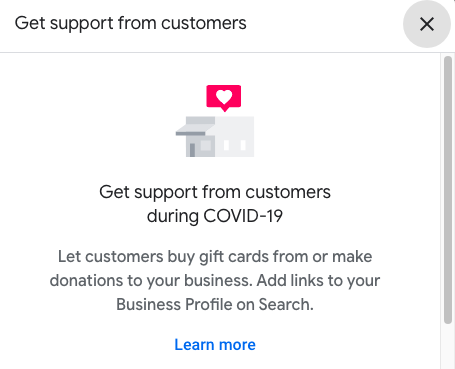
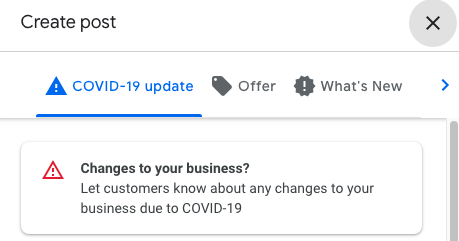
    • There are two COVID-specific post options right now. Both of these are great ways to update users about the status of your business.
      • UPDATE: These post features remain available to businesses.
        • Ways to support your business
        • General update about your status

    Screenshot of get support from customers option offered by Google My Business


    Screenshot of options related to COVID-19 in Google My Business Posts

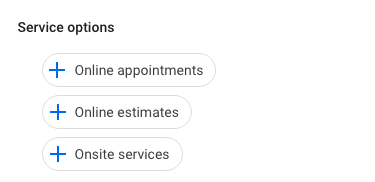
    • Google added backend attributes that help inform both Google and potential customers about what type of online and on-site services you provide.

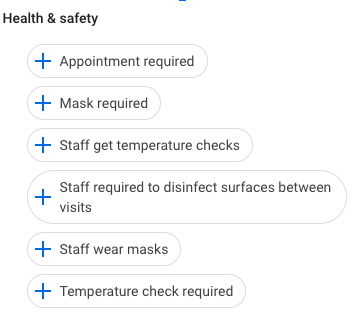
    • Google is now allowing businesses to display COVID-19 safety measures including mask requirements, staff requirements, and temperature checks.
      • UPDATE: Google has added more details around the safety measures taken by businesses.

    Screenshot of Google My Business safety options

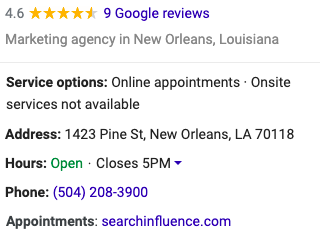
    • UPDATE: During the course of COVID-19, numerous businesses pivoted to offering online services. As a result, Google rolled out features to help businesses connect with users looking for virtual experiences. Some of these include online care, online classes, and online appointments.

    Screenshot of main business information on google my business listing

    Today, Google has essentially returned their listings to their pre-COVID functionality with the added benefits of having service and safety information more present on the listings. These are features that are likely to stay and help increase engagement with listings and provide more user-centric information beyond the business address and phone number.

    If you’re interested in discussing how Search Influence can help you navigate the post-COVID business landscape and your ongoing marketing efforts, please reach out to talk to a strategist about your digital marketing goals.

    Here are some additional resources to help your business run as smoothly as possible during this period.

    Images

    Mobile device

  • Gen Z is the Next Non Traditional Student: Move Them Down the Funnel with These 2 Tactics

    Key Insights

    • Since Generation Z (Gen Z) is the next generation of non-traditional learners, it’s essential to provide accessible and relevant information to this new generation of life-long learners.
    • Two tactics in higher education marketing—Facebook/Instagram Lead Generation and Email Nurture campaigns—can help move prospective students through the funnel and one step closer to applying and registering.
    • Facebook/Instagram Lead Generation creates a friction-less conversion point for users at the consideration stage of the funnel.
    • Email Nurture campaigns allow you to send personalized, targeted messages to prospects in the consideration and decision phase of the funnel, addressing key decision points in their journey.

    Woman working at a laptop in front of a window

    Higher education marketing isn’t an easy A—it’s always evolving because the upcoming generation heavily influences the industry. As Gen Z is added to the typical prospective non-traditional student pool, marketing strategies must also change to appeal to prospective students in a relevant and engaging way.

    One of the most prominent characteristics of Gen Z is their tech savvy. This generation was born into the interconnected world of the internet, smartphones, tablets, and other smart devices. Digital marketers targeting Gen Z must provide easily accessible information at their fingertips and across social media platforms to compete for their attention.

    When first targeting prospective students, universities need to clearly display the attributes that make them different. Once the intended audience recognizes an institution’s brand and starts engaging with their social media and web content, it’s time to shift the strategy from brand awareness to the next phase in the marketing funnel: consideration, and ultimately through to decision (applying) and to registration.

    During the consideration phase, the prospective student is more familiar with a school. They may schedule a virtual tour or download a brochure. Students may even start imagining themselves attending—but they aren’t quite ready to commit. Prospective students are likely still researching other schools and weighing their options. During this stage, universities need to provide the information prospective students are looking for. Universities can use first-party data, like past inquiries, to directly target and speak to prospective students in this stage of the funnel.

    Facebook/Instagram Lead Generation Ads and Email Nurture campaigns can engage digitally savvy prospective students and move them through the marketing funnel to take the next desired action.

    Facebook/Instagram Lead Generation Ads

    What is a Facebook/Instagram Lead Generation Ad?

    During setup, Facebook gives marketers the option to create campaigns based on objectives (i.e., goals). All campaigns can also be converted to Instagram (73% of Gen Zers actively use Instagram, while only 40% use Facebook).

    Universities can select a Traffic campaign if the goal is to send their target audience from Facebook/Instagram to an external URL, like a blog page. This campaign would be most applicable at the top of the funnel.

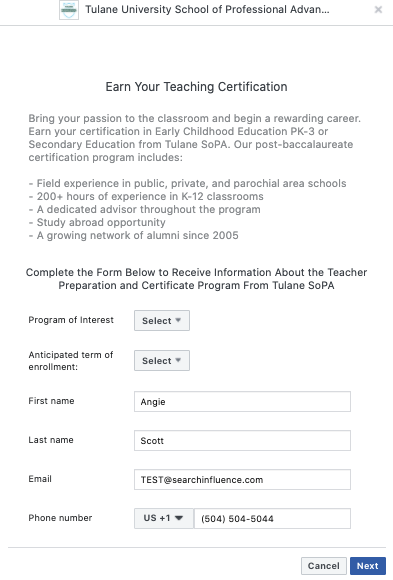
    In the consideration phase of the funnel, Lead Generation campaigns can be a convenient way to convert prospective students. Ads in Lead Generation campaigns look similar to other campaign ads, but instead of linking to a website outside of Facebook, Lead Generation ads send the user to an “Instant Form” directly in the Facebook (or Instagram) platform. Here, the user is prompted to fill out basic contact information.

    Then, in the decision stage, when it’s time to focus on driving potential students to fill out applications, marketers can show ads just to people who have completed that lead generation form. It’s best practice to run this campaign with a Conversion objective to optimize for users to take specific action on their site, such as an application.

    Why are Facebook/Instagram Lead Generation campaigns relevant?

    These campaigns are very user-friendly because the form fills are pre-populated with the user’s Facebook contact information, a feature many Gen Zers have come to expect. In a few seconds, the user can click the ad, retrieve the relevant information, and send over contact information that creates a new qualified lead. It’s that simple. (With some custom configurations, that conversion can automatically input into an enrollment management system like Slate!)

    Screenshot of Facebook ads campaign for higher education client

    Facebook/Instagram Lead Generation campaigns can also help universities gain more qualified prospects. Users don’t want to give their contact information to just anyone—if they’re submitting their contact information, they probably trust the business.

    It’s critical to target a lower-funnel audience to be most effective with this type of ad. Users who are already somewhat familiar with a university’s brand are more likely to be comfortable providing their information if they’re interested in learning more.

    How do Facebook/Instagram Lead Generation campaigns produce high-quality leads?

    When starting a new campaign, it’s common to feel like many of the prospects that come in aren’t high-quality leads. At first, it will take Facebook and Instagram’s machine learning some time to analyze and make changes to optimize a campaign to attract leads that fit neatly into a target demographic. Don’t be discouraged!

    If lead quality is still an issue after a few months, adding the “high intent” feature to forms can help. This feature adds a review screen for users to confirm before submitting a form. Adding this step helps ensure the user is consciously aware that they’re submitting their information. But note, this “high intent” feature is only available for users on mobile devices, so it will limit placements. Before turning this feature on, assess what percentage of impressions and past form submissions are coming from mobile devices.

    Email Nurture Campaigns

    The second critical tactic to move prospects further down the funnel is an Email Nurture campaign.

    What is an Email Nurture Campaign?

    In a previous blog post about engaging prospective college students, we define an Email Nurture campaign as “an intentional and strategic set of messages sent to a prospect over a period of time to guide them through the decision-making process to an ultimate desired action.”

    These email campaign strategies are built with conversion in mind and are sent to individual prospects directly, not to a bulk list at one time. The prospect’s action will trigger the type of email messaging sent to them. Each action the user takes will determine the next email they receive.

    Graphic showing higher education marketing funnel

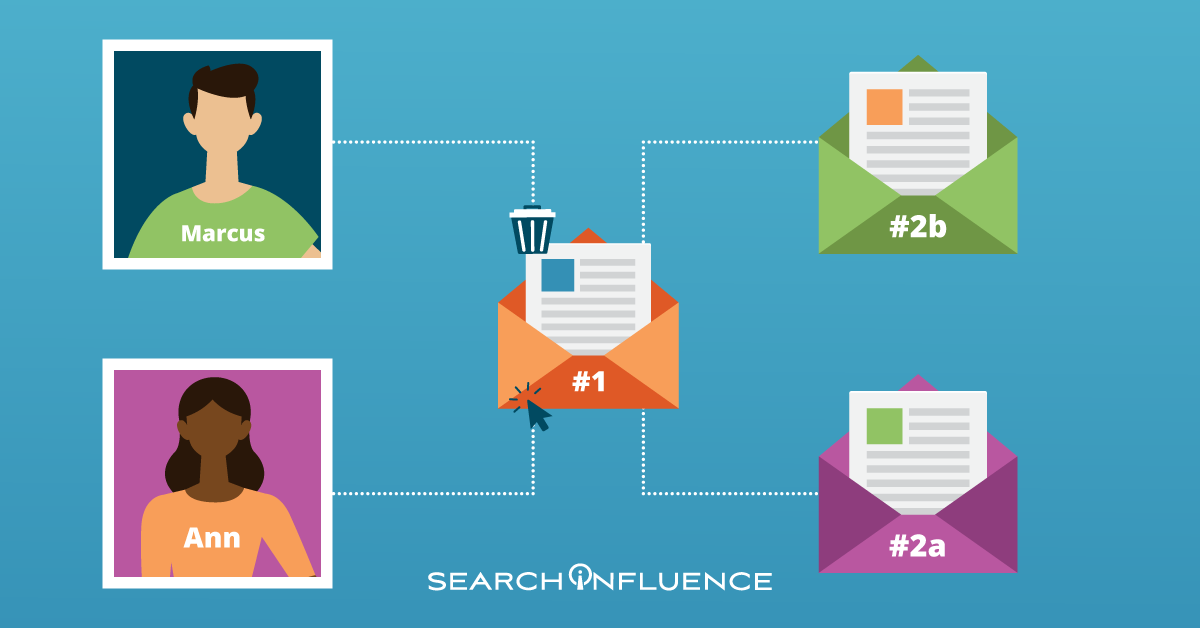
    For example, let’s say Ann (Lead A) and Marcus (Lead B) are both interested in studying urban planning and have submitted an online form on a university’s program page to receive more information.

    From that form submission, both Ann and Marcus will receive Email #1. Ann opens the email immediately and clicks through some of the included links. Based on her actions in that email, she might receive Email #2a one week later, which gives details about next steps and applying.

    Marcus, however, did not interact with Email #1 like Ann did. He deleted it after opening it. Marcus might then receive Email #2b, which contains different content focused on re-engaging him.

    Why are Email Nurture campaigns relevant?

    According to Statista, 90% of U.S. internet users used email each month in 2019.

    As a reminder, the prospective student is already aware of several universities and weighing their options at this point in the marketing journey. Targeted email allows a university to provide interested students with the answers they are looking for before they even search for them.

    In a webinar, Blackboard reported that prospective students have new concerns and questions related to the pandemic, including potential economic fallout, changes to the campus environment, and job prospects after college. Prospective students have stated they would like to hear from admissions counselors at least once a week via email.

    To address this, higher education institutions can implement an Email Nurture campaign to ensure prospective students are getting relevant information based on where they stand in their journey, in addition to personalized outreach from admissions counselors.

    Facebook/Instagram Lead Generation campaigns and Email Nurture campaigns are excellent tactics for engaging with prospective students and providing them with the information they’re looking for, pushing them one step closer to applying to your institution.

    Ready to start building a marketing campaign tailored to your ideal prospective students? Search Influence has helped local and national higher education clients create effective campaigns to target prospective students at all stages of the marketing funnel. Contact one of our experts to learn how you can enhance your current marketing strategies.

    Images

    Laptop

  • 6 Steps To Align Your Healthcare Marketing With Business Growth Goals

    Key Insights

    • Set specific, attainable goals that are important to all stakeholders
    • Implement measurable tactics to monitor campaign performance
    • Track patient booked rate and patient lifetime value to analyze the quality of new business

    Introduction

    Without clearly identified goals or strategies to measure results, your healthcare marketing efforts may be met with this question, “What are we getting for our marketing investment?”

    As a marketer, you should have the ability to point to well-structured, outcomes-focused data to answer this question each time it’s posed. Build ROI-focused marketing goals for your hospital or practice with this guide.
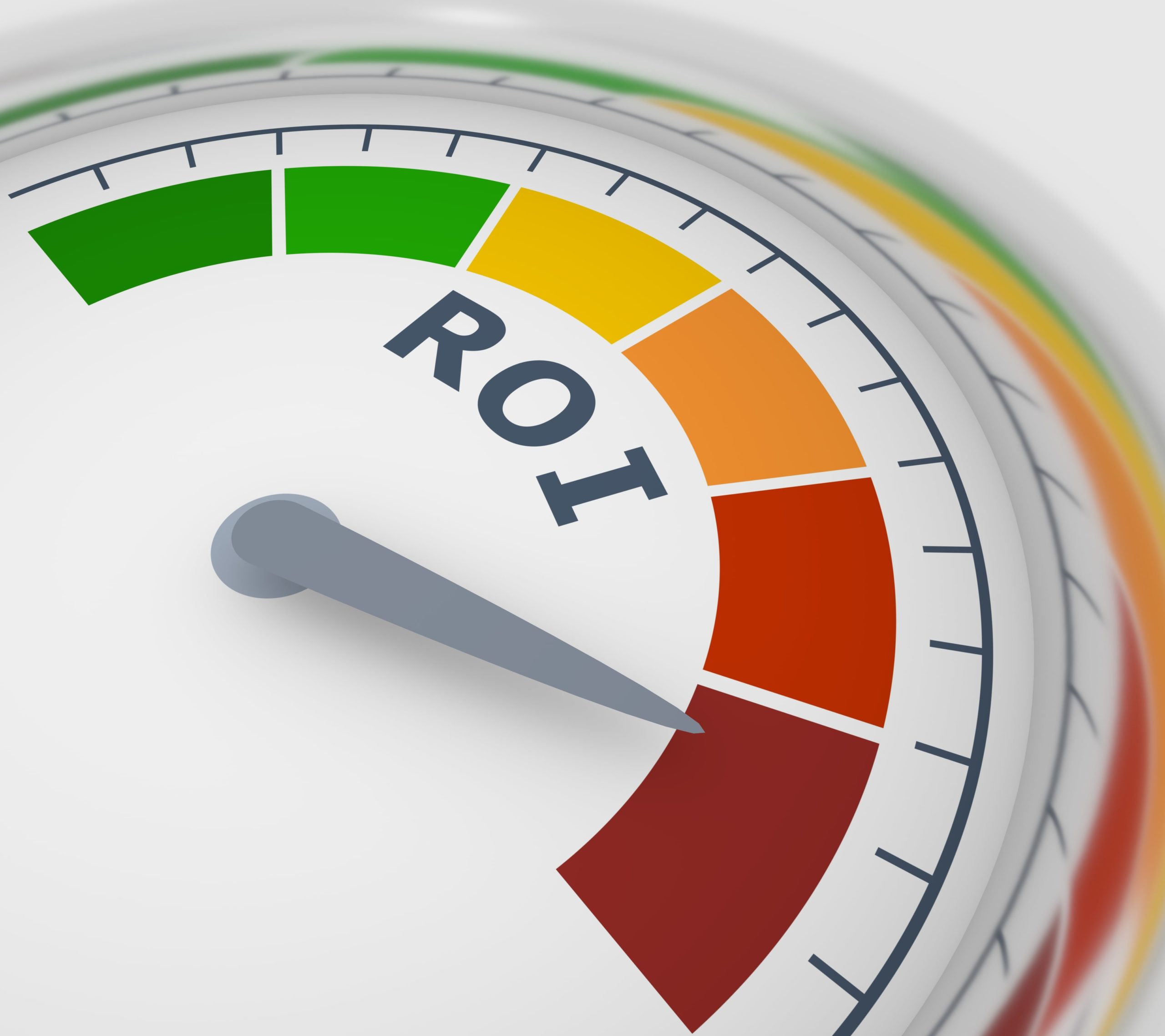
    Return on investment meter in the red

    Step 1: Understand Your Needs and Goals

    Typically, when stakeholders meet to discuss business growth and development, they discuss marketing needs and opportunities. Key points can include:

    • Patient retention
    • Filling the number of open beds
    • Building patient base to hire more physicians
    • Increasing utilization of surgical hours
    • Booking available appointment slots

    Understanding not only the significance of every need but the opportunity cost of underutilized appointment slots or surgical hours (i.e., missed revenue) is an effective way to triage goals.

    When setting goals, communication and accountability are imperative between marketing and operational stakeholders. The team should discuss campaign expectations, what success should look like, and how to measure results.

    Some great questions to ask yourself as you’re creating goals are:

    • What does success look like?
    • What kind of growth do we want to see in 6 months/12 months/2 years?
    • What organizational metrics will we track to know if we’re successful? How often can we report on these metrics?

    Step 2: Clarify the Product or Services You Want to Promote

    Now, let’s connect the “need” to “services” we’ll be promoting. If the need is to increase the number of surgeries and the goal is to increase surgery revenue by 8%, identifying which surgeries have the highest revenue and the greatest opportunities for promotion can drive your campaign strategy.

    You can also look at each of the needs in Step 1 by procedure/surgery to help understand the areas for growth.

    By doing this, your team will ensure that marketing activity funnels patients to the areas that need and can handle the increased volume instead of funneling more patients to an already overbooked area of the business, where you risk creating unhappy patients.

    Step 3: Determine Your Campaign Objectives

    Your goals (from Step 1) are the destination of where you want to be, and your campaign objectives are the driving force that get you there. The goals above are big picture organizational impact goals (For example: “Increase appointment time utilization to 90%”), whereas campaign objectives are more specific to the marketing campaigns themselves (For example: “Achieve 50 patient inquiries”).

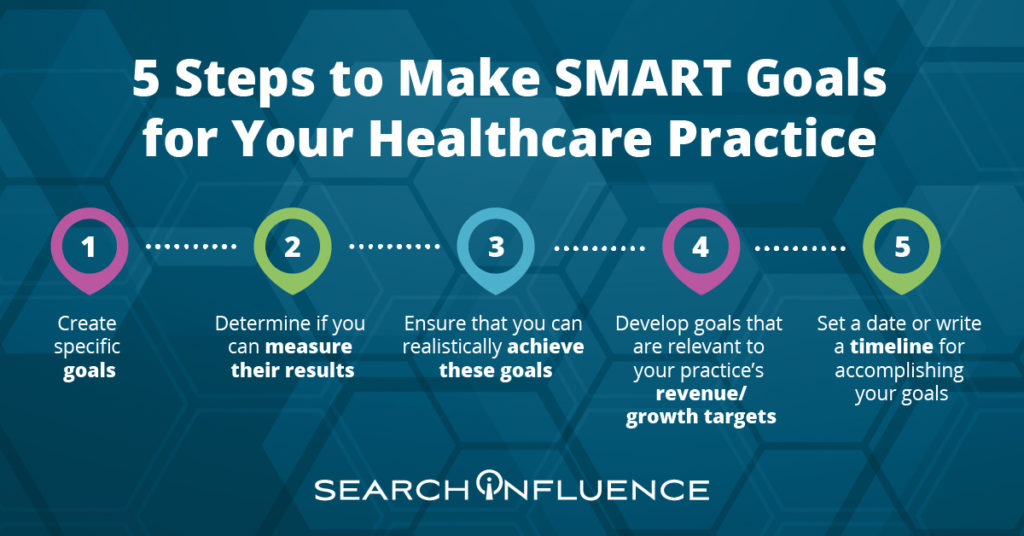
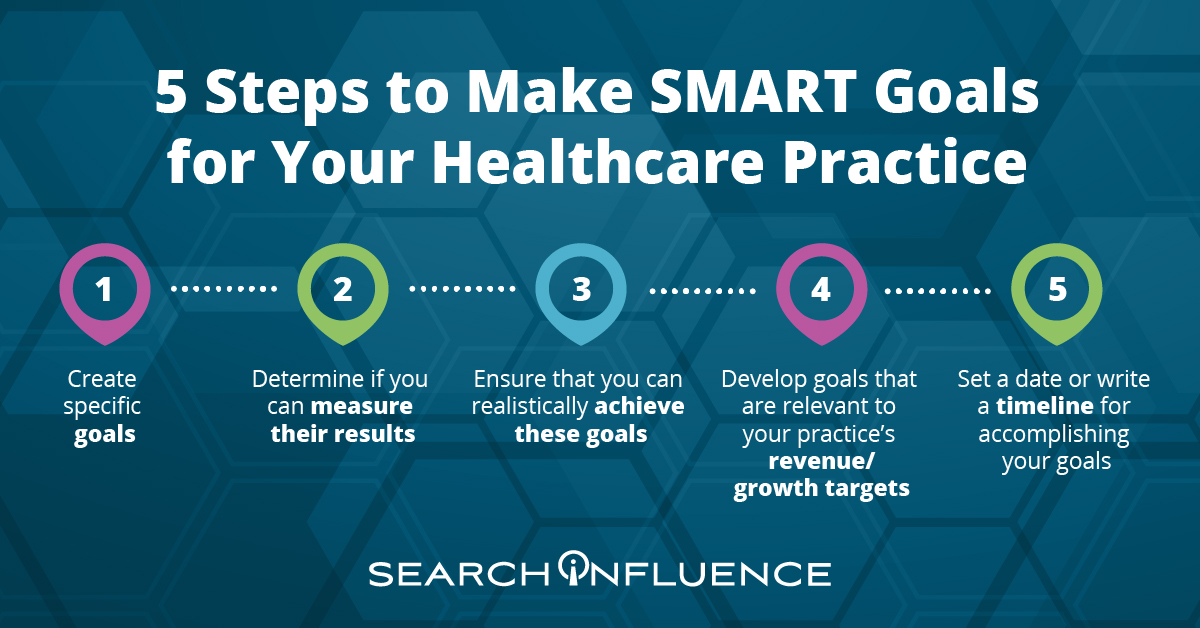
    Objectives keep specific campaigns on track and serve as the foundation of every marketing strategy. At Search Influence, we’re BIG on SMART goal-focused campaign objectives.

    • S – Specific
    • M – Measurable
    • A – Attainable
    • R – Relevant
    • T – Time-bound

    Five steps to creating a SMART healthcare marketing plan

    We found this to be one of the most productive ways to work toward an achievable goal and hold our campaigns accountable. The more specific you can be in defining your goal, the better.

    For example:

    • A campaign objective: “Increase appointments booked.”
    • A SMART campaign objective: “By June 1, increase ENT appointments booked by 20 new patients a month by implementing a Google Paid Search campaign.”

    To determine if your goal is attainable, compare your current state to where you want to be. Use any historical data or estimates that you can get your hands on.

    Using the example above, historical data may show your practice is only seeing an average of 2 new patients per month; a campaign objective that targets 20 new patients within the same timeframe is likely too aggressive for you and your staff. Adjust to something more modest.

    Consider how much more effort or how much you’re increasing your investment to drive those additional patients. If you know or can estimate your historical cost per new patient, that is the absolute best way to determine if it’s realistic to drive the number of new patients you want/need with the budget you are adding to your investment. This will help assure your goals are realistic AND profitable for your business.

    Step 4: Establish How You’ll Measure ROI

    Return on investment (ROI) can be looked at in several ways, with the calculation always being similar:

    (Revenue – Marketing Investment) / Marketing Investment

    How you apply that calculation may be different. You can look at:

    • Overall increase in revenue compared to overall marketing budget
    • New patient revenue compared to overall marketing budget
    • Procedure-specific revenue compared to procedure-specific marketing budget
    • Individual patients acquired by marketing activity compared to the cost to acquire them

    Additionally, some may choose to calculate ROI specifically by looking at profit as opposed to revenue. For others, that number may be far too complicated to obtain, so leveraging revenue is most often the more straightforward.

    • How can ROI help?
    • Justify next year’s marketing budget
    • Make your case for an increase in budget
    • Help you assess and report on improvements to marketing success for a given period and over time

    Step 5: Calculate Your Patient Lifetime Value or Average Revenue Per Patient

    Overhead shot of a doctor's desk

    You can look at Patient Lifetime Value and Average Revenue as a true average for your facility or you can look at it by department/unit. You can also look at year 1 value of a patient if that’s something that is important to you.

    Your patient management system may either provide this information for you or provide you the info you need to calculate this data point.

    If you want to come up with an estimate, you can do a simple equation of average cost per visit multiplied by # of visits. If you cannot get actuals, use estimates based on your experience—using estimates is better than having no data at all!

    For example, a pediatrician may expect to see a new patient at least 8 times within the first year. That frequency decreases as the patient ages—let’s say you expect 2 well visits and 3 sick visits in year 2. The estimate of sick visits could be based on actual numbers from your patient system, or you can estimate based on your experience. Let’s say the average revenue per visit is $200. This makes the value of the first 2 years is $2,600 (13 visits x $200 per visit). Even if this isn’t exact, it’s helpful to know the value of the patients that marketing is driving in order to use this figure in ROI calculations.

    If you really want to use exact numbers, pick a time period, say, the last 2 or 5 years, and pull data and find an average.

    One ROI measuring strategy is to center your ROI goals around new patient value. You can use this patient value number as a proxy for revenue in your ROI calculation. This is one way of getting around the need to have access to real revenue data.

    Step 6: Consider Your “Close Rate“ or Patient Booked Rate

    Now you understand the importance of attainable goals and factoring this into lead acquisition. However, does the number of patient inquiries matter if they aren’t converting via consultations, scheduling surgeries, or attending their follow-up appointments?

    Understanding your patient booked rate can build confidence in the attainability of your campaign objective.

    To find your patient booked rate, ask yourself:

    • If you had 10 inquiries last month, how many of them ended up visiting your facility?
    • What factors may have prevented someone who called your office or scheduled an appointment online from qualifying as a good candidate for a procedure?
    • Are there internal opportunities to improve how many inquiries turn into in-office visits?

    After evaluating the patient booked rate, consider the probability of your team booking 20 new patients a month before finalizing your goal. For example, a practice with a close rate of 80% would need fewer new inquiries to increase their in-office visits than a practice with a 20% close rate. You can also find opportunities internally to increase your booked rate so that you can book more of the inquiries that you want marketing campaigns to deliver.

    Understanding these data points will help you have informed, concrete discussions about marketing. They are helpful in budget, performance, and growth conversations.

    Search Influence builds your patient pipeline and helps you stay productive. We work with you to set measurable and transparent campaign goals to help you understand how your medical marketing activity impacts your healthcare practice’s success.

    Gain professional insight into how to calculate these metrics and set yourself up for success by calling (504) 208-3900 or filling out our form to get the conversation started!
     

  • Search Influence to Present at the 2021 Canadian Association for University Continuing Education (CAUCE)

    Search Influence will co-present “If You Build It, Will They Come? How to Design & Market an In-House Online Program” at the 2021 Canadian Association for University Continuing Education (CAUCE) conference, alongside our partner Christa Payne, the Assistant Dean, Administration and Operations for the Tulane School of Professional Development.

    CAUCE’S mission is to advance learning and workplace readiness in 21st century Canada, with a dedication to supporting the success of members serving professional and adult learners and diverse learning communities. The conference’s theme is “Spotlight 2021: Reimagining the role of CE in Higher Education.” This is Search Influence’s first time presenting for the CAUCE community.

    Session Description

    With the demand for online programs increasing, many universities will consider if and how they should go about creating online offerings. Some programs do well online, some don’t. In this session, we will help you think through the strategic thinking that went into your decision to create the program and the marketing, the data you used and what you may have missed.

    Search Influence and the Tulane School of Professional Development (SoPA) have made the mistakes and they have the learnings and will detail the process they defined and tweaked after building six in-house online programs. Our two speakers are deeply involved in the decisions and execution of our online programs and its marketing, and are able to get into specifics about what made our Master’s in Sports Studies successful and how we missed the mark on the Master’s in Security Studies.

    For those who rushed to bring programs online due to COVID, you’ll receive bonus tips on how to determine if you should keep those programs online.

    You Will Learn How To:

    • Identify the industry need
    • Assess the student population and define the target market
    • Strategize and run digital marketing
    • Monitor the viability of the program with data

    Speakers

    Assistant Dean, Administration & Operations for the School of Professional Advancement at Tulane University, Christa Payne
    Christa Payne is responsible for finances, operations, marketing, and facilities. In her role, Christa has worked to design and launch new online programs at both the graduate and undergraduate level. Christa has over 20 years experience in marketing, brand development, financial analysis and strategic consulting.

    She received her BA in Psychology from Sewanee and her MBA with a concentration in Strategic Management & Innovation from Tulane.

    Search Influence Director of Account Management, Alison Zeringue
    Alison Zeringue is responsible for client success and happiness as head of the digital marketing account strategy team. With over 10 years experience as a digital strategist and almost 4 years in higher education marketing strategy, Alison shares knowledge and insights from exposure to 100s of Search Influence clients.

    Alison is also a member of Search Influence’s executive leadership team focused on growing the business. Alison is a graduate of LSU’s Manship School of Mass Communication.

    Prior to joining Search Influence in 2011, Alison worked in marketing and advertising for small businesses, nonprofits and entrepreneurs throughout Louisiana. Her passion and tenacity for quality content, social media and their direct effect on search engine rankings are what makes her a key member of the Search Influence team.

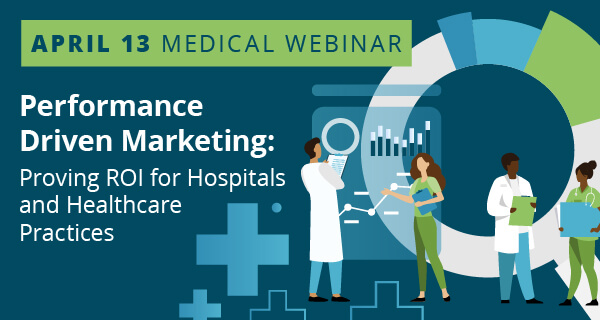
  • Search Influence to Host Healthcare Marketing Webinar, “Performance Driven Marketing: Proving ROI for Hospitals and Healthcare Practices”

    Performance driven marketing: proving ROI for Hospitals and Healthcare Practices

    As a medical marketer, it’s your job to help hospital administrators and practice owners understand how their medical marketing investment fuels patient growth.

    Join Search Influence Director of Sales and Marketing, Paula French, and Sales and Partner Strategist Gabrielle Woodard for the free webinar, Performance Driven Marketing: Proving ROI for Hospitals and Healthcare Practices.

    Paula and Gabrielle will demonstrate how to tie your marketing efforts to the revenue of your hospital or healthcare practice and share best practices on how to measure performance data and track the value of your work.

    Learning Objectives for this Webinar

    • How to use marketing performance data to advocate for your marketing budget and plan
    • Guidance to evaluate if your marketing strategy helps reach your patient acquisition goals
    • Opportunities to bring conversions and transactions online, and how this makes everything—including your marketing—more trackable
  • 2020 Medical Search Trends: Medical Searches Met and Exceeded Pre-COVID Levels Across Specialities

    2020 Medical Search Trends: Medical Searches Met and Exceeded Pre-COVID Levels Across Specialities

    This post was updated by Paula French on March 4, 2021 to reflect refreshed statistics and analysis. It was originally published in October 2020. 

    Key Insights:

    • Monitoring search trends can make your campaigns more effective because you can adjust your strategy based on the latest information.
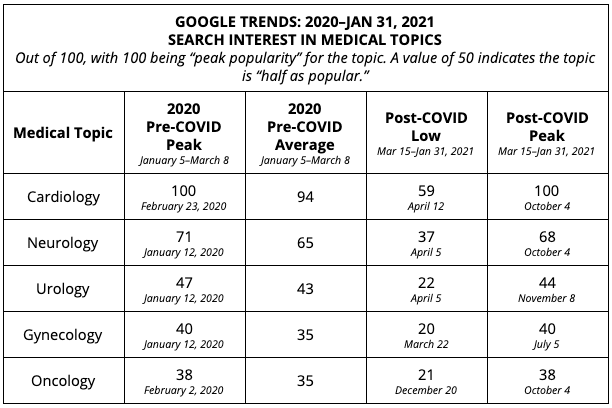
    • As of January 2021, several medical practice areas, including cardiology, neurology, urology, and gynecology, have seen their search volumes return to pre-COVID levels.
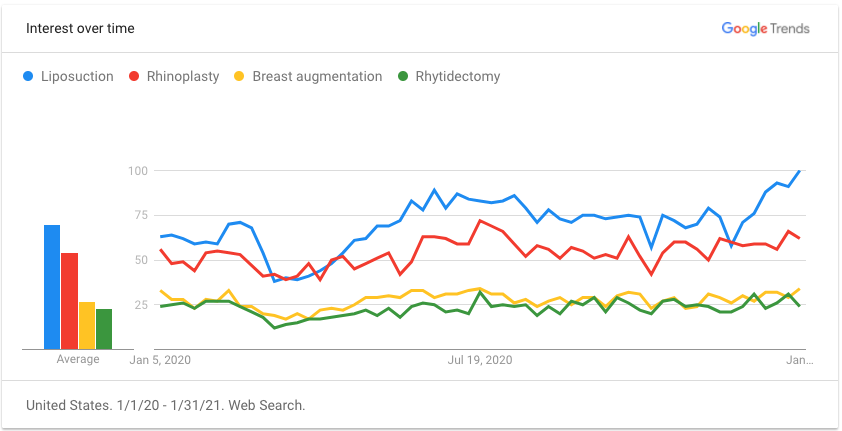
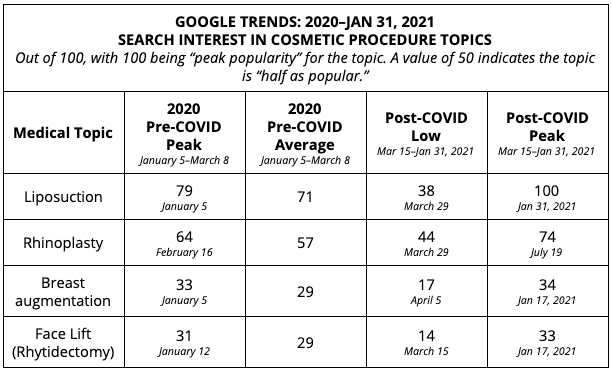
    • Cosmetic procedures saw a short-lived dip in search interest for liposuction, rhinoplasty, breast augmentation, and face lifts in March. By the end of May 2020, interest exceeded pre-COVID levels for 3 of the 4 procedures: liposuction, rhinoplasty, and breast augmentation. Face lift interest exceeded pre-COVID levels in late July.
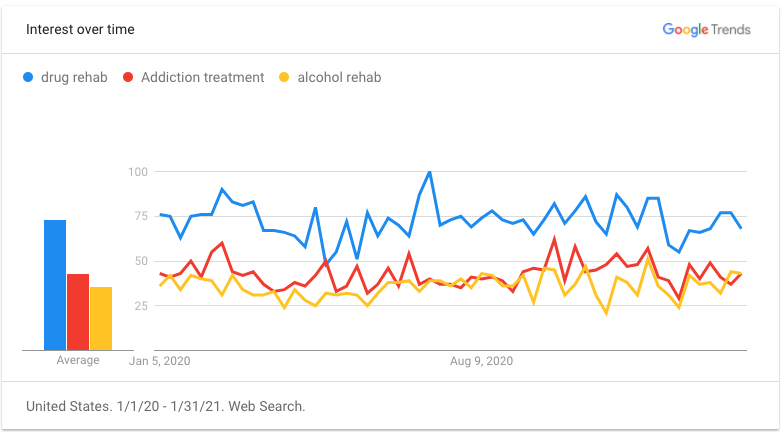
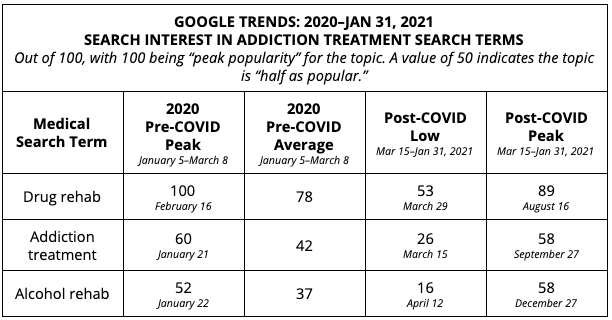
    • Addiction treatment searches didn’t drastically dip as much as other medical specialties and have been slowly rising to their pre-COVID levels. The most recent data indicates they have now exceeded early 2020 interest.

    2020 Medical Search Trends

    Monitoring search trends is a critical piece of managing a productive digital marketing strategy. It can inform your need to adapt your marketing strategy, whether that is away from search to other mediums or to invest more heavily in search engine optimization and paid search.

    2020 has seen shifts in search trends unlike anything I’ve seen in my 11 years working in SEO. It’s no surprise given the “pivots” and “unprecedented” year we’ve had. In a recent conversation with a colleague in the medical industry, we discussed expectations for 2020 healthcare revenue and what we’ve seen so far in the return of patient confidence.

    I was interested to see how search trends on Google mapped with what we had seen with the practices and hospitals with which we work, so I took a look across several practice areas and assessed the data.

    How do I read the Google Trends charts below?

    Each chart that shows the change in the amount of interest in a given topic based on the number searches during a time frame. Specifically, Google calls this metric “Interest over time” and defines it as “search interest relative to the highest point on the chart for the given region and time. A value of 100 is the peak popularity for the term. A value of 50 means that the term is half as popular. A score of 0 means there was not enough data for this term.”

    For more on how Google calculates Trends, see here: FAQ about Google Trends.

    I have included a table of my own analysis of the numerical data, looking for highs, lows, and averages both “pre-COVID” and “post-COVID.”

    In some analyses below, we look at “Topics” which looks across several ways people could be searching to gauge searchers interest level at a point in time. In others, we look at “Search terms” which is used when it makes sense to compare to similar search terms that would otherwise fall under the same topic (such as “drug rehab” & “alcohol rehab,” as they both fall under the topic of “addiction treatment”).

    Medical Specialities: Cardiology, Neurology, Urology, Gynecology, Oncology

    Summary of findings for medical speciality search trends:

    • By October 2020, searches were either at or right below pre-COVID levels, and saw a similar peak in January 2021.
    • Cardiology, neurology, urology, and gynecology all follow the same pattern: initially, searches for these specialties dipped in March 2020, but people were still searching for these terms, even in the earliest days of the shutdowns.
    • The lowest point of searches for these topics was around mid-April, which is when the public started to recognize that this stay-at-home life was going to become our new normal for much longer than we originally thought.
    • Since April 2020, searches have been on the rise, with dips during the holiday weeks of July 4, Labor Day, Thanksgiving, and Christmas.
    • Oncology saw a lower level of variation throughout the year. Interest levels dipped slightly after the shutdown and remained steady afterward, with an interest level ranging from 21-38, averaging around 30.

    2020 Google Trends for Medical Specialties

    Cosmetic Procedures: Liposuction, Breast Augmentation, Rhinoplasty, Rhytidectomy (Facelift)

    2020 cosmetic surgery trends chart

    Summary of findings for cosmetic procedure search trends:

    • There was an initial, short-lived dip in search interest for liposuction, rhinoplasty, breast augmentation, and face lifts (rhytidectomy). This dip spanned across the end of March and into April.
    • After the dip, there was a surge in interest, with the number of searches actually exceeding pre-COVID levels at the end of January 2021 for liposuction, rhinoplasty, breast augmentation, and face lifts.
      After the dip, there was a surge in interest, with the number of searches actually exceeding pre-COVID levels at the end of January 2021 for liposuction, rhinoplasty, breast augmentation, and face lifts.
    • By late January 2021, liposuction saw peak interest (100), significantly exceeding pre-COVID interest levels, when the peak was 79.
      Rhinoplasty interest also peaked in July and remains above the pre-COVID average.
    • Breast augmentation search interest met and then exceeded pre-COVID interest in the summer of 2020, and has peaked above the pre-COVID high in January 2021.
    • Face lift interest initially peaked in July at 36, decreased a bit through the fall, and peaked again in January 2021, with an interest level of 33, which is higher than the pre-COVID peak of 31.

    2020 Google Trends for Cosmetic Surgery industry

    Addiction Treatment: Drug rehab, Addiction treatment, Alcohol rehab

    2020 addiction treatment google trends chart

    The addiction treatment search interest analysis is based on specific “search term” interest, whereas medical and cosmetic graphs above were based on topic interest. This is a result of the availability of data for topics vs. search terms.

    Summary of findings for addiction treatment search trends:

    • There was also a significant dip in addiction treatment search terms, but interest has risen to varying degrees in comparison to pre-COVID peaks.
      The search term “Drug rehab” saw it post-COVID peak interest (89) in the week of August 16, which is only slightly less than the pre-COVID high on February 16 (100).
    • The pre-COVID 2020 average for “addiction treatment” was 60. During the heaviest shutdown period (March 15–May 10), the average interest was 44, with the lowest point being 26 on March 15. The post-COVID peak was September 27, with an interest level close to pre-COVID levels (58).
    • “Alcohol rehab” searches reached their peak (58) during the week of December 27, exceeding the pre-COVID 2020 high of 52 in late January.

    Addiction treatment data chart

    How can search trends help us help more patients?

    I assume that by now you’ve compared this data to what you see at your practice or hospital. The goal of monitoring search trends (along with your own campaign-level data) is to inform necessary adjustments to your medical marketing strategy.

    During the early months of shutdowns, we were hyper-focused on looking for shifts in consumer behavior to adjust our strategies. In the best-case scenarios, we were able to shift budget to the channels where our clients’ audiences were spending their time and away from the channels where they weren’t as active (and produced some really awesome results). Then, we made additional changes when that activity returned.

    There are several reasons we can attribute to the overall return of searches and why in many cases, medical searches are exceeding their pre-COVID levels. Whatever the reasons, this is a critical time for businesses to analyze their marketing mix closely to assure they are both

    • carefully spending their marketing budget
    • confident they’ll understand the outcomes of their marketing investment

    If you’d like some support in analyzing where you’re currently investing in marketing, want some fresh ideas, or are interested in partnering with an agency like ours, reach out. Our dedicated team of strategists will work with you to understand your goals for 2021 and provide recommendations to help you build your patient pipeline.

    P.S. If you are looking for more insights, check out our recent post “How Hospitals and Healthcare Practices Can Adapt to Google Updates” and follow along with us on our Healthcare & Medical Marketing Blog for future industry updates.

  • 3 Actionable Ways to Make Your Creative More Diverse

    Example of diverse photo assets for ad campaigns

    Key Insights

    • Diverse creative does not stop at just photography—companies should diversify their videos, illustrations, and voiceovers.
    • Companies who do not have the resources to create their own assets can purchase existing diverse photos and videos and edit existing illustrations to be more representative of diverse audiences.
    • The presence of POC in creative is not enough; designers and marketers must be thoughtful of how minorities and POC are portrayed across all mediums.

    In a perfect world with a bottomless budget and endless hours, companies would always be able to hire skilled photographers, illustrators, videographers, and actors to acquire custom creative assets that represent the company and their target and aspirational demographics for every marketing campaign. A lot of companies, however, must rely on existing stock assets due to varying limitations. The problem with stock photography, illustrations, videos, and audio, however, is that most of what is available depicts white men and women. Does this even matter? Maybe not as much to people who look like the subjects of these photos.

    By excluding people of different races, genders, body types, ages, and abilities, marketers are ignoring and erasing members of these communities. If that isn’t reason enough to prioritize the inclusion of diverse assets in marketing campaigns, Google and The Female Quotient conducted a survey in 2019 concluding “that people are more likely to consider, or even purchase, a product after seeing an ad they think is diverse or inclusive.” Specifically, “64% of those surveyed said they took some sort of action after seeing an ad that they consider to be diverse or inclusive. 69% of black consumers say they are more likely to purchase from a brand whose advertising positively reflects their race/ethnicity.”

    The study also states that “71% of LGBTQ consumers said they are more likely to interact with an online ad that authentically represents their sexual orientation,” and data shows that LGBTQ households spend 35% more on online purchases each year than non-LGBTQ households.

    #1 Use Diverse Stock Photography and Video Resources

    As marketers, we should strive to not only include minority groups and POC in our creative, but we should also be thoughtful about how these communities are portrayed in photos and videos. Who is leading the meeting? Who is teaching the class? Who is in handcuffs? If the answer to these questions could perpetuate any stereotypes—no matter how subtle—consider skipping those assets and continuing your search.

    The mere presence of underrepresented communities is not enough; we must make sure they are represented positively and in a way that would make members of said communities proud. Nappy.co is an excellent free resource for photos of Black and Brown people and a great jumping off point for diversifying your photo library.

    Example of diverse vector art for a marketing campaign

    #2 Adapt Vector Art

    Illustrations may seem more straightforward, but will actually require the designer to be just as, if not more, thoughtful as when selecting stock photos. Whether starting from scratch with an illustration or purchasing stock vector art, the considerations are the same. Just as with stock photography, we want to:

    • Avoid perpetuating any stereotypes, not only in subject matter, but also in more subtle ways.
    • Pay extra attention to how facial features, hair, or skin tones are depicted.

    Even in anthropomorphized objects, these considerations need to be prioritized. A design choice may be unintentional or innocuous, but they can have serious implications and reveal damaging subconscious biases. In 2017, a Kellogg’s Corn Pops box depicted a community of corn pops, and the one brown corn pop in the entire group was depicted as a janitor. Kellogg’s understandably faced serious backlash for the illustration and quickly corrected and reprinted the box.

    Luckily, illustrations (unlike photography) are adaptable. Obviously creating vector illustrations from scratch allows the designer to create any scene they want, but stock vectors are also fully customizable, too.

    • These file types usually include .ai, .eps, or .svg files that can be edited in graphics editing software like Adobe Illustrator.
    • Body types, skin tones, facial features, clothing, positioning, and so much more can be edited to represent people of all races, genders, body types, ages, and abilities in various settings.

    #3 Expand Audio Talent Search

    Marketers can’t deny the prevalence and effectiveness of video in marketing and advertising, so a company’s journey to diversifying their creative should not stop at visual assets. In recent years, there has been a push in Hollywood to cast POC voice actors to play non-white characters. While this is a move in the right direction, diversity in voice acting for marketing can be taken a step further.

    Traditionally, women were hired for voice-overs about fashion and beauty, and men were hired for voice-overs about beer and cheeseburgers. We are seeing a cultural shift in household dynamics, where men and women are making important decisions together.

    Adweek estimates that today, 85-90% of voice-overs are done by women across categories, reinforcing that women have more power over the wallet and decision making than originally thought. No matter the industry, marketers should seek out POC voice actors if their videos contain POC characters, and should keep in mind that actors of any gender can be persuasive and appropriate for their videos.

    Purchasing existing diverse creative assets can seem like a daunting task for companies on a budget, but becoming aware of what resources are out there and leveraging additional options for inclusivity is key.

    Stock assets are often thought of as cheesy, unnatural, and overwhelmingly white, but this is not always the case! Marketers must explore diverse stock photo and video options, edit purchased or custom illustrations to be more diverse, and hire diverse voice actors if they want their campaigns to be more effective and reach a wider audience.

    Every organization is different, and not everyone has a dedicated marketing team with the expertise needed to source or create diverse assets. When you work with Search Influence, you’ll leverage our team’s expertise to create diverse and inclusive content for your marketing campaign. Connect with our experts today to discuss your digital marketing goals.

    Sources

    nappy.co

  • 6 High School Interns Join the Search Influence Team as Part of YouthForce NOLA Partnership

    YouthForce & Search Influence - Partners since 2015Search Influence welcomed a cohort of six interns from YouthForce NOLA. YouthForce NOLA is a nonprofit organization that collaborates with businesses to prepare young people from underserved communities in New Orleans for fulfilling careers in high-demand industries. Search Influence and YouthForce NOLA have had a long-standing partnership that dates back to the internship program’s inception in 2015. Since that time, Search Influence has hosted more than 10 interns, with two continuing to work at the agency after completing their internships.

    Search Influence and YouthForce NOLA are working together to safely resume their partnership during the coronavirus pandemic. Currently, Search Influence’s employees are working remotely, and the YouthForce NOLA intern cohort will join the team virtually. The six high school students participating in the internship program attend public charter schools in New Orleans: Booker T. Washington High School, Livingston Collegiate Academy, and the New Orleans Military and Maritime Academy.

    As a digital marketing agency that is actively involved in developing local talent, being a part of this program is a wonderful feeling,” said Search Influence co-founder and COO Angie Scott. “For our interns, understanding how to navigate and thrive in professional environments will be critical to their success in the future.”

    The interns who are joining Search Influence will learn about many aspects of digital marketing, including:

    – Account management
    – Editing websites and web content
    – Quality assurance processes
    – Sales

    Each YouthForce NOLA intern will be paired up with a mentor who will guide them throughout the experience. The mentor coordinates training with agency subject matter experts and offers feedback as they progress through the program.

    “I love working with the interns because I recognize how important professional experience is for a young person trying to navigate what their career and ‘adult life’ will look like,” said Teri Murphy, an account coordinator at Search Influence and second time YouthForce mentor. “I think it’s impactful for the interns to have someone relatable they can work with to see what’s possible for them.”

    Welcome, YouthForce interns! We can’t wait to see you grow into CHARGED members of our team.

  • Search Influence Celebrates 15 Years of Optimizing Potential

    Holy cow, friends! 15 years. Wow.

    Search Influence is older than Angie’s and my second child who is heading to high school next year.

    We had a lot of ideas back then (most of which Angie helped me realize wouldn’t work). Looking back, it’s powerful to think this little endeavor has turned into a thriving, award winning digital marketing agency.

    We recognized the idea for Search Influence had potential when in 2005, immediately following Hurricane Katrina, we helped a chiropractic clinic (which was completely destroyed by the storm) rebuild to a thriving practice solely through digital marketing.

    At 15, we’re still in our adolescence and have many more years to mature and grow.

    We look forward to the next 15 years of optimizing potential. With a skilled and experienced leadership team, we have a clear understanding of where we can provide the greatest value to our current and future clients.

    We’d like to express our gratitude for all who’ve helped Search Influence become the company it is today.

    I’m proud of so many of our accomplishments, some of which are that we have:

    • Launched the careers of hundreds of marketers — some of whom are still with us
    • Optimized the potential, and grown the business, of thousands of clients big and small including:
      • Angie’s List
      • The National WWII Museum
      • Audubon Nature Institute
      • New Orleans Tourism
      • Tulane University
      • Lakeview Regional Medical Center
      • The Maple Street Chiropractic Clinic
      • And many, many, more.
    • We have been fortunate enough to give back to some great organizations, including:
      • Youth Rebuilding New Orleans
      • Prevent Child Abuse Louisiana
      • PowerMoves NOLA
      • And many more.
    • And we’ve received much recognition for our professional endeavors including:
      • US Social Media Awards
      • Top Workplaces
      • Best Places to Work
      • Women of The Year
      • Inc. 500/5000
      • American Advertising Awards
      • And more.

    Thank you!
    Will & Angie Scott

    Will & Angie Scott, Search Influence Co-Founders, at Hancock Whitney Zoo To Do 2019