Blog

  • Hot or Not: Content Trends Pre- and Post-COVID-19

    Key Insights

    • Business owners shouldn’t let the uncertainty of COVID-19 discourage them from marketing.
    • An empathetic brand tone is important.
    • As people stay at home, online user engagement has increased and brands are being more heavily scrutinized for mistakes than ever before. This creates an opportunity to reach users more effectively, but with a lower margin of error.
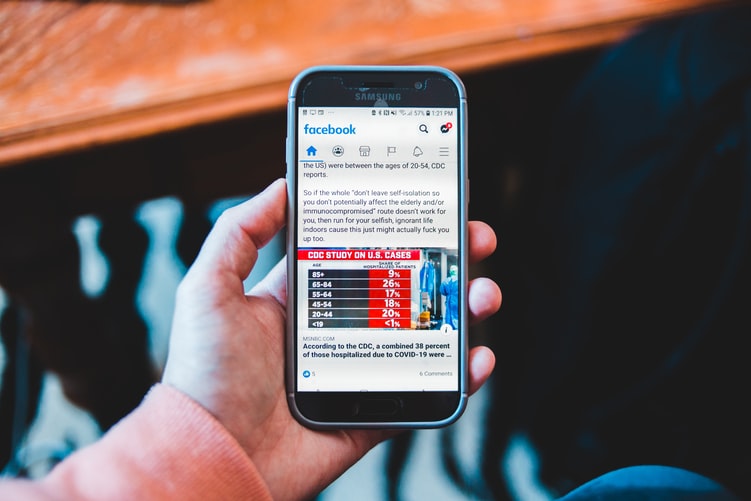
    Person holding mobile device looking at Facebook news feed

    Introduction

    Navigating the harsh reality of changing phases, mandatory closures, and reduced capacity during COVID-19 has left many business owners feeling overwhelmed and uncertain about the future. With frequent changes affecting businesses everywhere, customer communication is more important than ever.

    In this blog, I will unpack four evergreen content trends to determine if they’re ideal for communicating messages in a post-COVID-19 world. Some of this insight was derived from a SEMPDX presentation by Search Influence CEO Will Scott.

    Conversational Content: HOT

    Conversational content is—without a doubt—HOT. With the constant change of information since mid-March of this year, you should keep open communication with target audiences.

    Conversational content is informal and encourages the user to initiate communication directly with a brand or company. Examples of this include a live chat on your website or hosting a webinar with live Q&A. Even before COVID-19, users looked for more human engagement; but months of isolation have created a greater yearning for connections of any kind. In regard to marketing, this need is evident in the increase in the number of B2B webinars during the early months of isolation. Comparing March to January 2020, the number of B2B Webinars increased by almost 50%.

    In the Guide to Conversational Marketing, CEO Jitendra Gidwani explains: “The idea that you can build lasting customer relationships through quality conversation over time isn’t just anecdotal conjecture. Feeling as if they are genuinely heard is the single most likely thing to keep customers devoted to a brand.” Learn more about how to communicate with your customers by reviewing our guide to business continuity messaging during COVID-19.

    Influencer Marketing: HOT

    Influencer marketing is HOT. A post-COVID-19 world doesn’t seem like the ideal market for a social media influencer…or is it? Increased engagement combined with lower prices will result in maximum return in your marketing investment.

    Influencer marketers have large social media followings and are able to effectively convey their experience to followers and promote different products or services by simply using them and posting about it. The brand or company featured typically pays a fee, which varies depending on the size of the Influencer’s following.

    Engagement with Influencer content has surged because of increased screen time in 2020. Research from Later.com shows that the average screen time is up to 5h40m per day, an 18% increase from weeks prior to COVID-19 stay-at-home orders. Followers are paying attention in this new era of content creation, with nearly 80% of influencers reporting higher engagement from their followers.

    In addition to increased user engagement, another perk of Influencer marketing in the current climate is reduced prices. According to Business Insider, sponsored deal drop-offs have devastated travel, dining, and event-based creators whose content depends on the ability to leave their homes. Some have responded by lowering their rates. In a survey sent to over 500 Influencers, it showed that over 40% are currently reducing their normal rates, and the reductions average at 30%.

    Your business could collaborate with an Influencer by asking them to promote the re-opening of a business, and if applicable, demonstrate their individual social distancing and COVID-19 procedures!

    User Generated Content: HOT

    Content created by users is always HOT, not only because it’s free, but also because it’s honest. Why not let your users kick-start your content process?

    User generated content (UGC) is indicative of its name; it’s content created by customers that features and/or promotes a brand/product. Keep in mind: it’s not all about ratings and reviews. If you’re on the lookout for brand mentions, even of adjacent topics, UGC can be a great source for your own content machine.

    Oysters XO has the ultimate UGC success story. Oysters XO provides an innovative oyster-shucking experience that adds a lively, interactive touch to luxury events of all kinds. As events everywhere were cancelled, they adapted to the new restrictions and started to offer a virtual experience, teaching users how to shuck fresh oysters in the comfort of their own homes. One satisfied customer decided to create a video testimonial to tell his followers about his amazing experience. The customer was Neil Patrick Harris…yeah, you read that correctly. The video he created, on his cell phone, will now help elevate the Oysters XO brand in a way that a high production advertisement never could because it is raw (no pun intended) and sincere. Check out the video below.

    High-Production Content: NOT

    High-production content is NOT HOT. Pre-pandemic, it was valuable for certain industries; however, now there’s less budgeted for bells and whistles, and more demand for empathetic content.

    High-production content includes any content created with a large production value, such as professionally produced videos or podcasts. As the world has adjusted to COVID-19 protocols, there has been a large increase in content created at home. Examples include television interviews on talk shows like “Live With Kelly and Ryan” being conducted virtually and musicians hosting concerts from their homes on Instagram and Facebook Live.

    Businesses everywhere have been affected financially by the mandatory closings and other COVID-19 restrictions. According to Ad Exchanger, brands leaning into faster, cheaper production may not return to the old way of doing things post-pandemic.

    For more information about adapting to the “new normal” of marketing, check out our “6 Messaging Adjustments to Remain Relevant During COVID-19.”

    Want to keep your business hot? One of our strategists can help adapt your marketing plan to keep in line with best practices during this ever-changing time. Contact a member of our team today.

    Images
    Mobile device

  • “Support Parks & Recreation” Campaign Wins “Best Strategic Use of Social Media” from US Social Media Awards

    “Support Parks & Recreation” Campaign Wins “Best Strategic Use of Social Media” from US Social Media Awards

    The 2020 US Social Media Awards selected Search Influence as the first-place winner of “Best Strategic Use of Social Media” for the digital marketing agency’s Together for Parks Alliance millage campaign. See the full list of 2020 winners here.

    In 2019, Search Influence ran a successful digital marketing campaign in support of a property tax millage reallocation that will provide critical funding to a coalition of New Orleans parks and recreation organizations.

    The Together for Parks Alliance was comprised of Audubon Nature Institute, New Orleans City Park, New Orleans Parks & Parkways, and New Orleans Recreation Development (NORD).

    With almost a decade of experience promoting Audubon Nature Institute through digital advertising, the Search Influence team’sbackground helped them strategize and create an impactful campaign that drove online action from advocates and voters.

    The millage passed with over “overwhelmingly” positive response—75% of voters voted YES on May 4, 2019!

    The Alliance’s organizations will begin to receive the approved funding in 2021, which will make New Orleans an even better place to live and visit.US Social Media Awards 2020

    The Search Influence team is thankful to be recognized for the great work of an amazing team for this award-winning campaign. Award judges’ feedback indicated “this was a beautiful example of a coordinated, cross-channel effort.”

    Thank you, US Social Media Awards, for recognizing this campaign for Best Strategic Use of Social Media!

  • Which Email Marketing Strategy Will Help Me Reach My Goals?

    Key Insights

    • Email marketing is still 100% relevant
    • Establish specific goals for your email marketing campaign
    • Determine the metrics you want to measure before executing your campaign
    • Think of conversion and retention campaigns as umbrella campaigns. Choose a more specific subset campaign once you decide which aligns best with your marketing goals

    You may have gotten a notification in your email inbox about this blog. Or, you started your morning organizing the daily or weekly emails in your inbox. Hello, email marketing!

    Yes, we’re still talking about email as an effective marketing strategy in the age of TikTok and Instagram. When done correctly, email campaigns can help businesses build brand loyalty and nurture potential leads into customers. Companies have the chance to get directly in front of their audience,—99% of consumers check their emails every day—while exhibiting the value of their products and services.

    Remember: if your audience chose to subscribe to your email list, they have some interest in your brand. Don’t waste their time with irrelevant content that has them reaching for the “Unsubscribe” button.

    In this post, we’ll define conversion and retention email campaigns, explore campaign types within those categories (campaign-ception!), and find the right email marketing strategy for your campaign.

    Determine Your Goal: Conversion or Retention?

    Before you decide on a strategy, you need to identify your main goal. Do you want your campaign to result in X% more subscribers buying a product or downloading an ebook? Perhaps you want only X% to Y% subscribers to hit “unsubscribe” in the next quarter or X% more engagement with your content.

    These are examples of conversion and retention goals—now, let’s find out which type of goal is for you! Think of conversion and retention campaigns as umbrella campaigns. Once you decide which aligns best with your marketing goals, you’ll choose a more specific subset campaign.

    Once you pick a goal that’s S.M.A.R.T. (specific, measurable, attainable, relevant, and time-bound) and your metrics to measure, you’ll know if your email marketing strategy should be a conversion or retention campaign.

    Conversion goals focus on your subscribers completing the desired action prompted by your email.
    Examples:

    • Download an ebook
    • Purchase a product
    • Fill out a form
    • Register for a service

    Retention goals focus on keeping your subscribers engaged and satisfied with your brand. You can measure their success by monitoring how subscribers interact with your emails.
    Examples:

    • Rate of subscribers vs. unsubscribers
    • Open rate
    • Click-through-rate
    • Content engagement

    An animated envelope with a notification symbol on the top

    Conversion Email Campaigns

    Conversion email campaigns focus on building brand loyalty and establishing trust with potential leads that have shown interest in a business’s product or service. They nurture leads through the buyer’s journey with the ultimate goal of, you guessed it, conversion.

    If your industry has a more extended buyer’s journey, conversion campaigns nurture prospects from the top of the marketing funnel and through the entirety of your buyer’s journey.

    The first email in a conversion campaign won’t end with “buy now.” You’ll have to build trust with your audience before we get there! (However, if your buyer’s journey is on the shorter side, you can always adjust your email campaign’s length).

    Drip Campaigns

    A drip email campaign is a multi-email strategy that targets your leads along every stage of the marketing funnel. Drip emails are relatively simple to set up and can be great tools for a quick-start campaign.

    Purpose: Drip emails are sent at regular intervals to potential leads. Each email is connected to an overarching goal or strategy.

    Recipients: Recipients are potential leads identified in real-time or when they take a specific action (e.g., fill out a landing page form) that serves as a catalyst to start the drip campaign.

    Content: Content will align with your marketing funnel. Campaigns typically start at the top of the funnel with more general content (introductory information, overview) and eventually lead readers to content encouraging decision-making. A specific call-to-action will be outlined in each email.

    Timing: These emails are sent automatically according to an established campaign timeline.

    Possible Metrics: Open rate, click rate, and the desired conversion.

    A typewriter spelling out the word goals

    Nurture Campaigns

    Nurture email campaigns are similar to drip campaigns, but they’re even more detailed and contain many moving parts.

    Purpose: Readers are nurtured through the marketing funnel by content sent over a period of time, ultimately leading them to the desired action.

    Recipients: Similar to drip campaigns, recipients are potential leads that are identified in real-time or when they take a certain action (e.g., fill out a landing page form) that serve as a catalyst to start the nurture campaign.

    Content: Content should be tailored to your marketing funnel and your lead’s behavior. They should receive specific content based on which action they took. Did they request general information? Have they downloaded your ebook? Content could include F.A.Q.’s, testimonials, additional information, benefit stories, and a call-to-action leading them to the next step in the funnel.

    Timing: Communication is automated with a customized timeline based on a set of defined actions (unlike drip campaigns that follow one general schedule). If your lead takes the desired action, they stop receiving one series of emails and move on to the next email series (or another step.)

    Possible Metrics: Open rate, click rate, desired conversion, and length of time in each email segment.

    Retention Email Campaigns

    While both conversion and retention email campaigns do build trust with readers, retention campaigns focus more on trust than promoting products or services. Customers receiving these emails fall into the “Delight” stage of the marketing funnel. Delight content focuses on maintaining the loyalty of established customers.

    You want to retain customers and build brand loyalty by delighting and engaging them with helpful updates, promotions, sales, news, and upcoming events—delivered right to their inbox.

    Here’s what that this looks like:

    One-Off Campaigns

    One-off email campaigns are short, sweet, and focused.

    Purpose: These email(s) offer specific promotions or timely events your business is running.

    Recipients: Those already familiar with your brand, such as subscribers who have already made a purchase or leads near the bottom of your marketing funnel.

    Content: Keep it short and visual! Content should be easily skimmable and focused around eye-popping graphics.

    Timing: Timing will vary with the offer and strategy. You can send out multiple emails leading up to the event or just send one the day of to create a sense of urgency.

    Possible Metrics: Open rate, click-through-rate, and visiting a specific site page.

    Newsletter Campaigns

    Newsletter email campaigns are non-promotional and sent out periodically to customers.

    Purpose: Update customers about your business and establish a sense of loyalty and trust—you’re not asking them to convert!

    Recipients: Broader audiences that have subscribed to your mailing list. Your audience can be at different levels in your marketing funnel, but they are usually familiar with your brand.

    Content: Newsletters contain topical company news, important updates, helpful tips, and other content that makes readers feel like an insider at your business.

    Timing: Campaigns are recurring and regularly occur monthly or quarterly.

    Metrics: Open rate, click-through-rate, and unsubscribe rate.

    Email campaigns can be an excellent marketing tool with a pretty impressive R.O.I.—it can generate $38 for every $1 spent! If you’re not sure where to start, contact our team at Search Influence. Together we can help craft, set up, and optimize an email marketing campaign that’s tailored to your goals.

    Images:

    Envelope

    Typewriter

  • What You Need to Know About Website Accessibility

    Key Insights

    • Every business is required to implement certain accessibility standards on their websites, not just major corporations
    • An accessible website ensures that people with disabilities can seamlessly use it
    • Many SEO best practices are also a part of website accessibility guidelines

    Introduction

    Having a website that follows accessibility guidelines is increasingly important for businesses. It’s imperative to have a website that is functional for people with disabilities to service that demographic of consumers; it’s also the law. Every business is required to implement certain accessibility standards on their websites, not just major corporations. In 2019, there were over 2,000 lawsuits over website accessibility compliance.

    An accessible website ensures that people with disabilities can seamlessly use your website to browse and buy your goods and services. In this post, we’ll define what it means for your site to be accessible, how it impacts your business, and provide you with examples and best practices.

    Person using a screen reader to browse internet

    What Does It Mean to Have an “Accessible” Website?

    Having an accessible website means implementing usability features to support the 110 million to 190 million adults who have significant disabilities. Disabilities vary widely, and it can feel overwhelming to consider how to serve this entire audience. You can start by viewing the Americans With Disabilities Act (ADA) and Web Content Accessibility Guidelines (WCAG).

    Why Should You Have an Accessible Website?

    Making your website accessible is a win-win situation for users and businesses. Consumers can find the services they need, and you can provide them the services they want.

    Requiring website accessibility is a huge step in limiting frustration and difficulty for people with disabilities. Imagine all of the different ways that you use the Internet on a daily basis. Now imagine it again, but this time being unable to use many of the websites you want.

    Businesses of all sizes run the risk of encountering lawsuits if they do not have an accessible website. Large corporations such as Domino’s have been sued for not following accessibility standards. Common industries most impacted by web accessibility lawsuits:

    • eCommerce sites that host transactions
    • Organizations that offer services:
      • Law firms
      • Medical facilities
      • Schools

    What Are the Key Points of the Web Content Accessibility Guidelines (WCAG)?

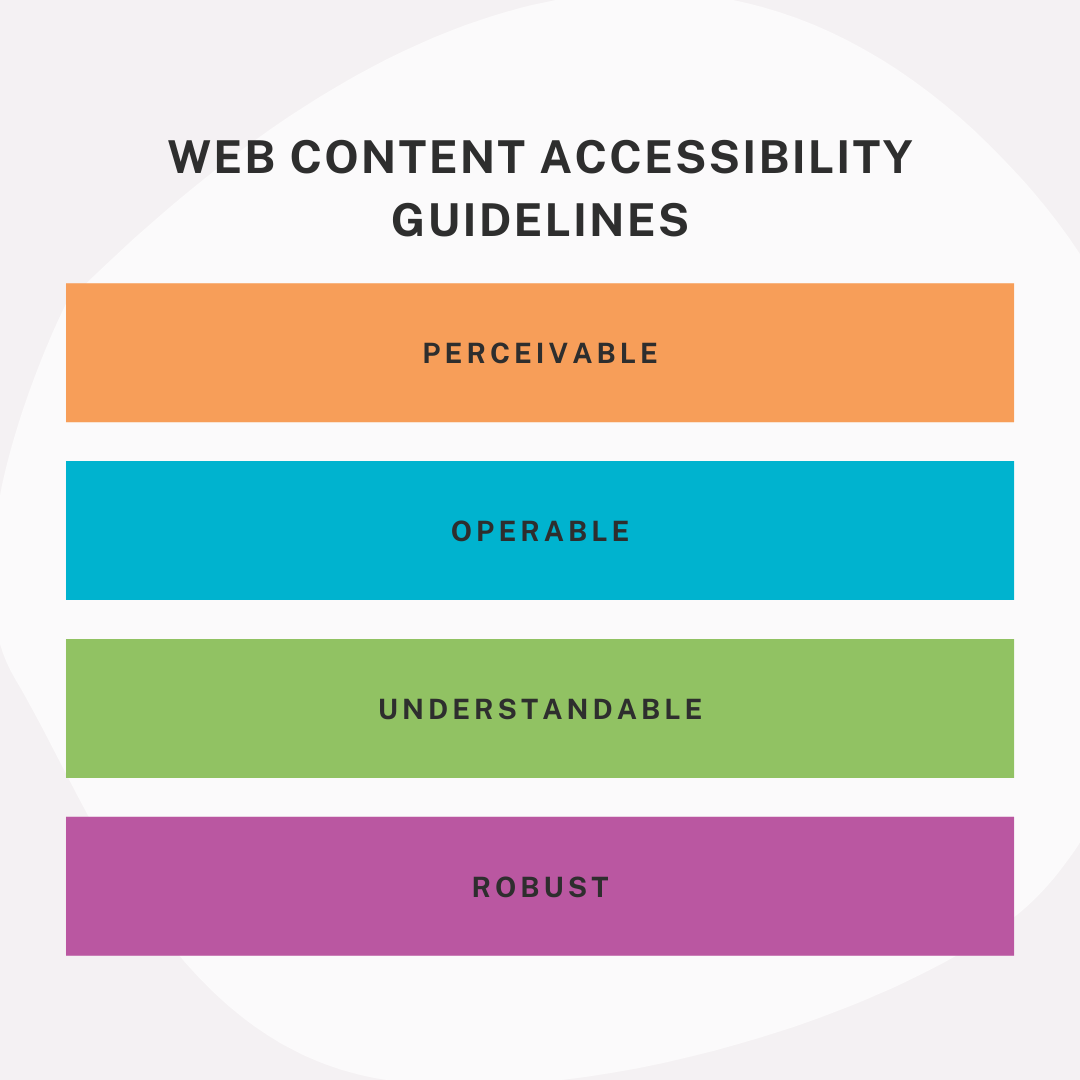
    Web content accessbility guidelines, perceivable, operable, understandable, robust

    The WCAG covers a wide range of ways to make your website accessible to individuals with disabilities. Use their checklist to start making your website accessible to all types of users who seek your services.

    Guideline categories:

    • Perceivable: Information and user interface components must able to be perceived by users
    • Operable: Users must be able to operate user components and navigate the website
    • Understandable: Information and user components must be able to be understood
    • Robust: Content must able to be interpreted by a variety of users, including assistive technologies

    Each section further outlines how you can accomplish these goals. For example, under the Perceivable category, sites are required to have alternative text for their images so that a person with a visual impairment who uses a screen reader could have the image described to them.

    What Are the Levels of “ADA Compliance”?

    The WCAG has varying levels of compliance for websites. Here’s a brief rundown:

    • A: Lowest level—Includes some accessibility features, but often doesn’t have enough to satisfy all users and situations.
    • AA: Mid-range level—Recommended because it satisfies many requirements and makes sites accessible in most situations. The goal should be to make your website AA compliant at the minimum.
    • AAA: Highest level—Requires many specific features that may not be possible to set up in some scenarios, which is why it isn’t used as the standard. Implementing the AAA features may even require a dedicated staff member to keep up with the latest guidelines and maintain AAA compliance.

    How to Make Your Website Accessible

    It’s important to start from the beginning. How complicated will it be to make your website accessible will come down to how your website was built. Things as simple as whether your website was built to support alternative text on images can be make or break. If you’re looking to upgrade your website sometime soon, make sure to use best practices for website accessibility right from the start.

    If that’s not the case, there are many things you can do to make your website accessible. Even paying close attention to your site’s SEO can make a huge difference. Alternative text, for example. Alternative text is recommended for SEO for multiple reasons one being that images show up in image search results. But, it’s also recommended for website accessibility. Many SEO best practices are also a part of website accessibility guidelines, so it’s a great place to start.

    There are lots of great tools you can use as a quick, easy solution to automate the process of making your website. However, it is important to research the tools you pick and make sure that they will make your site at least AA compliant. If not, consider what additional work you may need to do once the tool has done some of the work.

    Website accessibility should be a priority for your business because it benefits you and the users visiting your site. Your business benefits from clients who may have been lost if your website was not compliant, and it limits your exposure to accessibility lawsuits. Users with disabilities benefit because they can find and use your services more comfortably. You can start by reviewing accessibility guidelines. Here’s an introductory tool we created.

    Reach out to one of the experts here at Search Influence today to see what we can do to help you get started on your path to accessibility! Contact us today to learn more.

    Images

    Screen reader


  • Search Influence to Host Education Marketing Webinar, “Top 7 Ways to Drive Prospects Into and Down the Funnel”

    Sign Up for Higher Education Marketing WebinarProspective students are showing growing interest in online learning.


    Many wonder if now is the time to continue their education rather than competing for opportunities in a shrinking job market. Those once resistant to the idea of online learning now feel comfortable pursuing experiences remotely. 

    Take advantage of these changing sentiments to drive enrollment! Join Search Influence Director of Sales and Marketing, Paula French, and Account Supervisor, Ariel Tusa, for the free webinar, Top 7 Ways to Drive Prospects Into and Down the Funnel.

    Paula and Ariel will share knowledge from real-world examples and first-hand experiences to demonstrate how to nurture prospects from awareness to application using website optimization, content, targeted advertising, and email marketing. The webinar will also include dedicated time to address your questions.

    You will learn:

    • How COVID-19 impacted education search trends
    • Tactics to get your programs in front of career changers
    • Ideal formula and structure for program and degree page content that converts
    • Opportunities to create innovative conversion points on your website that help you qualify leads

    If you can’t make the live session, be sure to still register and we will send you a recording of the webinar.

  • Four Steps for Successful Digital Marketing Tracking

    Marketing campaigns are only as successful as the tracking put in place to measure their success.

    A person holding a pen over a notebook

    What’s that joke, “If a tree falls in the forest and no one is around to hear it, does it still make a sound?” The same philosophy applies here! If a customer converts after engaging with one of your digital marketing campaigns and there isn’t reliable tracking in place to measure it, how do you know if the conversion is an outcome of your digital marketing efforts? Additionally, successful tracking parameters provide your marketing team with clarity around which tactics are and aren’t working. This way, there’s no guesswork involved on how to best spend your marketing dollars.

    In this post, we’ll go through four helpful steps for tracking your digital marketing campaigns and why they’ll help your business.

    #1 Know Your Metrics

    Depending on your stakeholder, their industry, and their goals, the metrics you report on will differ. Let’s walk through a couple of results that are often top priorities for our clients.

    Return on Ad Spend (ROAS)

    • Return on ad spend calculates the return (revenue) a business recoups from the cost they’ve invested on advertising.
      • Return on Ad Spend = Revenue Per Sale/Cost Per Sale
    • Regardless of the stakeholder, their industry, and their specific goals, the ultimate goal will always be the same: bringing in more money.
    • Reporting on ROAS to your stakeholder allows you to say, “we’ve made X dollars after spending Y dollars on advertising.”

    Cost Per Lead (CPL)

    • Cost per lead measures the average amount of money a business spends per lead.
      • Cost per Lead = Ad Spend/Lead
    • Tracking the cost per lead for a stakeholder goes beyond quantifying the total number of leads a campaign and/or platform is driving. It demonstrates how much it costs to actually the leads.

    #2 Understand Which Metrics Matter to Your Stakeholder

    With all of the tracking parameters available, the metrics you can report on are endless.
    How can you ensure you report on the right data? Talk to your stakeholder about what’s important to them!

    • For example, a stakeholder says their main KPI (key performance indicator) is potential new patients.
    • The primary metric would be the number of leads generated through calls and form submissions.
    • The secondary metrics would be website traffic and clicks.

    #3 Determine Your Technological Needs

    What technology do you need to track your results? Continuing with the example above, the stakeholder’s main KPI is potential new patients. You’ve determined the metrics that matter are calls/forms and website traffic/clicks.

    To report back to them on calls and forms, you need to set up call tracking and forms on their website.

    • Call tracking is the process of assigning a dedicated tracking phone number to a business for certain marketing campaigns.
      • For example, if a potential new patient finds your business via a Google Paid Search campaign, a dedicated call tracking number is associated with the advertisements.
      • This number automatically forwards to the business’s main line, but it allows you to see how many new prospects contacted your business because of this campaign.
    • A form is a short questionnaire that lives on a website that can be used to gain more information on potential new patients.
      • For example, if a prospect reads about a particular service on your website and wants to reach out for more information or to schedule an appointment, they can fill out a form.
      • This form will request various information (the potential new patient’s name, phone number, email address, etc.). Once it’s submitted, this information goes to your business (usually via email) in real-time so that you can follow up on the lead.

    To report back on website traffic/clicks, we will need to set up Google Analytics.

    • Google Analytics is a free service provided by Google that allows you to collect and analyze data about your website, its visitors, and how those visitors behave on your website.
    • If you’re new to the platform, take some time to familiarize yourself with Google Analytics and how to best utilize it for your tracking purposes.

    #4 Communicate Your Results

    How do you communicate the great results you’ve worked so hard to determine, understand, and track?

    A group of women sitting at a conference table

    First, determine how often to report on the metrics that matter.

    • Here at Search Influence, we provide our clients with monthly reports.
    • Monthly reporting allows campaigns the time to run, accrue new data, and show progress.
    • While we keep a close eye on these campaigns in the interim, it also allows each campaign’s dedicated team member to check and adjust the status, make necessary revisions, and ensure that the campaign is optimized to the best of its ability.

    Second, be strategic about what information to include in these reports.

    • Unless the information included is meaningful to your stakeholder, it’s really just fluff.
    • Create a SMART Goal for each campaign. A SMART Goal is a specific, measurable, achievable, relevant, and time-bound goal determined based on—you guessed it—their goals.
    • Once that goal is set, ensure your tactics work towards achieving that goal.

    Finally, make your report digestible for your stakeholders.

    • You can have every meaningful metric in a report, but if your stakeholder isn’t engaged or can’t understand the report, it’s not meaningful to them.
    • Listen and learn how your stakeholder communicates and receives information, and build your reporting from there.

    Takeaways:

    • A marketing campaign’s success is closely tied to the tracking in place.
    • Know your metrics and understand which metrics matter to your stakeholders.
    • Establish the technology needed to accurately track those metrics.
    • Master how to best communicate the results to your stakeholders.

    The marketing experts at Search Influence can help you track the metrics that matter to your business. Schedule a consultation with our team to learn more about how we can help you optimize your digital marketing campaigns.

    Images:

  • Facebook Ads Boycott: What Advertisers Need to Know

    Facebook Ads Boycott: What Advertisers Need to Know

    Key Insights:

    • A Facebook Ads boycott is taking shape under the hashtag #StopHateforProfit aimed at forcing action from Facebook regarding its policies on hate speech, political ads, and disinformation.
    • While the list of brands pausing Facebook Ads grows, so does the opportunity for smaller or competitor brands to eat up some of the market share, likely at lower costs due to the already high usage rates of social media and apps, as well as decreased competition.
    • SMBs and values-driven organizations, especially those already in a fragile state due to the economic impact of COVID-19, will need to take a hard look at opportunity costs.

    A person scratching out Facebook's name on a smart phone with a stylus

    What do Coca-Cola, Birchbox, Eddie Bauer, The Hershey Company, Verizon, and The North Face have in common? At least this: you won’t see their ads on Facebook in the next month.

    In the last week, an advertiser boycott of the highly effective Facebook Ads platform has taken shape under the hashtag #StopHateforProfit, a campaign that picked up steam when civil rights groups backed it in June. So far, full support comes from groups including the Anti-Defamation League, Color of Change, Common Sense Media, Free Press, the NAACP, and Sleeping Giants.

    Many believe Facebook has a history of refraining from action against misleading political advertisements, hateful content, and disinformation. They have called for brands to pause advertising on the platform in July to make Facebook feel the heat.

    What do these groups want? The call to action for Facebook involves stopping hateful content— in particular, generating ad revenue from offensive content—and a further list of demands. This list includes (but is not limited to) policing Facebook groups over 150 members in size and flagging hateful content for review. Learn more about what is included in this AdWeek article.

    The social media giant has weathered other scandals and criticism in the past, most recently the Cambridge Analytica scandal over privacy. Facebook, with its 7 million advertisers, is likely to weather this boycott as well. But some in the industry believe this time is “different” due to the current climate and public sentiment among Americans.

    The boycott organizers have called on more advertisers to follow suit. At Search Influence, we’ve had at least one client consider pausing their advertising to take part in this boycott.

    A neon sign of a heart and a 0

    How should an advertiser decide if they should take part? Consider these facts:

    Facebook Ads Are Still Highly Effective

    In the first quarter of the year, thanks to quarantine and economic shutdowns, people spent more time in apps and on social media than ever before. Worldwide, average weekly time spent in apps and games on Android phones grew 20% year-over-year in Q1 2020, and experts expect this to normalize going forward.

    For companies who depend on Facebook Ads for the growth of their livelihoods, joining this boycott will be a difficult task. Costs and targeting options available in Facebook Ads are unmatched in the digital advertising industry. The knowledge of their effectiveness for advertisers is evidenced by the fact that many of the advertisers participating in the boycott only committed to pausing their ads for one month, only in the US, and only on Facebook—but not Instagram, which is owned by Facebook and still managed through Facebook Ads platform.

    Opportunity Will Be Created by Advertisers Who Pause

    At the onset of the COVID-19 pandemic, consumers in quarantine spent more time than ever on social media and in apps, which created more “inventory” for ads to be served. At the same time, advertisers pulled their campaigns due to budget cuts. Less competition drove down costs dramatically. Due to these reduced rates, we saw our clients’ budgets stretch farther than ever and their campaigns experience record engagement rates. Portfolio wide, our clients who continued spending on Facebook Ads saw improved costs across the board for every campaign objective. For conversion-objective campaigns—which we typically use for our clients who need to generate leads or purchases—costs per acquisition were down 32%.

    Some industry experts predict this boycott could create similar conditions to the early days of the pandemic. While the list of brands pausing Facebook Ads grows, so does the opportunity for smaller or competitor brands to eat up some of the market share, likely at lower costs due to decreased competition and already high usage rates of social media and apps.

    Pausing Digital Ads Can Affect Your Campaigns’ Performance

    If you plan to pause and restart your Facebook or other digital advertising campaigns for a boycott (or any other reason), it’s important to understand the opportunity cost created by the downtime. Disrupting your data can send your campaigns back into “learning” mode, and create a setback. It won’t be as simple as turning your campaigns back on and expecting results at the same pace as when you stopped. Platforms like Facebook Ads are designed to nurture campaign improvements the longer a campaign runs because the platform collects more data and optimizes as time goes on. For example, a conversion-objective campaign will gain more conversions as data is collected about what parts of the audience are converting at higher rates than others.

    Big Brands Benefit in Publicity

    Brands like Starbucks and Ben & Jerry’s may (or may not) take a sizable hit from suspending their Facebook advertising for a month or more, but they certainly benefit from publicity. By joining this cause, they’re being featured in the media and press coverage on the boycott. If we could place a valuation on the earned media as a result, it could certainly make a dent in the share of voice lost from their campaign pauses.

    Also of note are companies joining the boycott likely for the goodwill who don’t stand to lose much. The Clorox Company plans to maintain its total advertising budget, but shift it’s spending to other media. Surely a company with soaring stock prices that profited from the global pandemic can afford to risk their advertising results for the rest of the year… but can a small business with less prior experience testing and tuning other advertising platforms afford the risk?

    Is Joining the Boycott Right for Your Organization or Business?

    While you may feel compelled to take part in a boycott backed by civil rights groups should it align with your values, it’s important to weigh the consequences fully. With many SMBs already in fragile financial states due to COVID-19’s economic impact, now may not be the ideal time to risk losing additional business. Could more jobs be at stake? As an advertiser, you should also consider how this aligns with your target customer. Will you be perceived as insensitive, or “not down for the cause,” if you continue to advertise?

    Five factors you should consider:

    • What is your opportunity cost of pausing advertising on Facebook?
    • How significantly are Facebook, Instagram, and Audience Network ads contributing to your overall performance?
    • If you pause, what would it take for you to be comfortable resuming your Facebook Ads, What is the likelihood that those conditions will be met? In the meantime, can you withstand the pause in advertising?
    • If you pause, where will you funnel that media spend? What are the results you could expect from those channels?
    • As an alternative to boycotting, are there other ways your organization could support civil rights groups?

    As a small or medium-sized business or organization, we recommend consulting with your digital advertising team or an expert here at Search Influence to fully evaluate whether joining a boycott of Facebook Ads is the right move for your short and long term growth. Contact us today to learn how you can enhance your online marketing efforts with our recommendations.

    Images:

    Facebook

    Neon Sign

  • #ShowYourPride: Engaging the LGBTQ+ Community Online

    This post was updated by Crysten Price on June 30, 2020. It was originally written by a Search Influence alumnus on June 16, 2016.

    The LGBTQ+ community is a tech-savvy group with a proclivity towards online shopping. This community is a great audience to consider for ad spend targeting. They have always been early adopters of technology and online trends, with the internet functioning as a safe place to form communities and access resources that might not have been easily or readily available.

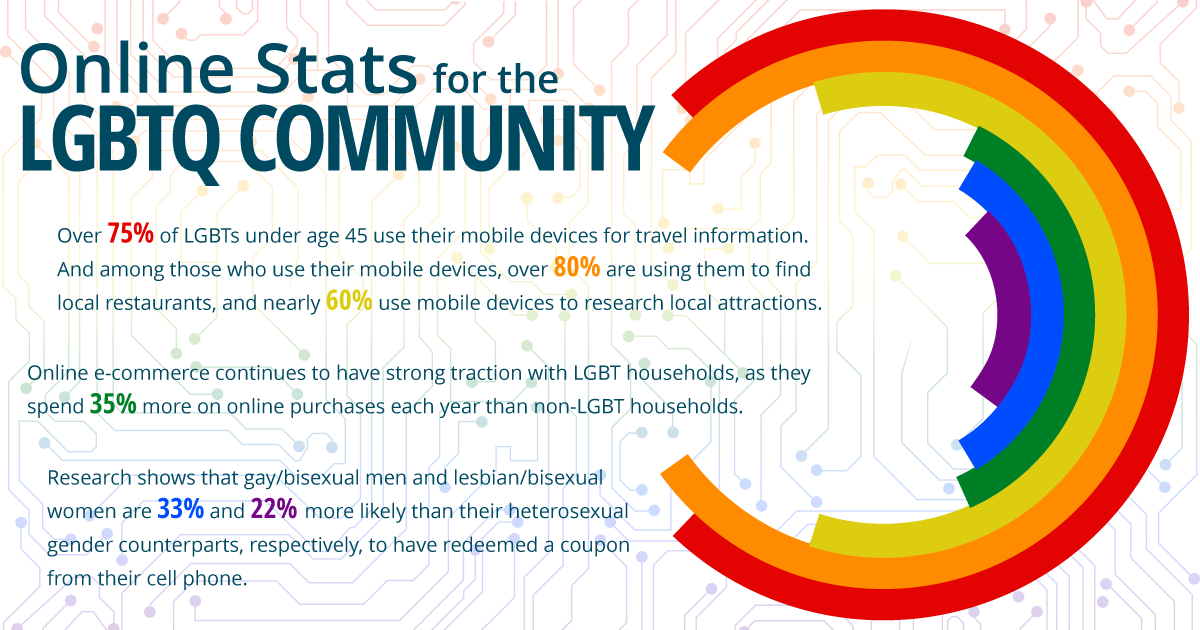
    Online Engagement LGBTQ Statistics Mini Infographic - Search Influence

    How to Make Your Biz LGBTQ+ Friendly with GMB

    Google My Business (GMB) listings offer business owners a free platform to engage with their customers. Your business profile is easily accessible to users on Google Search and Maps. Join over 190,000 other businesses across the globe that enabled the LGBTQ-friendly attributes to their listing by following Google’s quick and easy instructions.

    Keep in mind, to manage your business information in Search, Maps, and other Google properties, you must first verify your business listing. After your GMB listing is set up, you can explore other ways to welcome prospective LGBTQ+ customers:

    • Request/encourage patrons to leave Google reviews highlighting your business as a LGBTQ+ friendly space.
    • Add images of LGBTQ+ customers and travelers to your GMB profile.
    • Use Google Q&A and Posts to let travelers know your business is inclusive.

    If you’re new to GMB, use the following guide to claim your business online:

    • Add or claim your business online or via the GMB app
    • Verify your listing with the following:
      • Requesting a postcard (most common)
      • By phone call or text
      • Email
      • Instant verification (rare)
    • After Google verifies your listing, your business information will be eligible to appear live in Search, Maps, and other Google services

    LGBTQ+ Community and Social Media Platforms

    When it comes to outreach, you can’t rely on a single, catch-all approach. Tailor your campaigns and messaging to subcommunities and audiences across different social media platforms to garner better reach and impressions. To be more specific, Black Twitter is an online subcommunity of Black users on Twitter focused on issues of interest to the their community. As you craft messaging to subcommunities, keep their online subculture in mind.

    Similarly, on TikTok—a social platform widely known for viral dances—content is algorithmically recommended based on user preferences. “Gay TikTok,” or “Alt TikTok” is a subset of content geared toward LGBTQ+ users and their favorite queer culture trends and aesthetics.

    Person holding phone cell phone in the sky with TikTok load screen visible

    Interacting with these users requires taking a step back from the mainstream. References to Gay TikTok culture can help you create more relevant, exciting content, that users will want to engage with.

    Ensuring Authenticity Within LGBTQ+ Targeted Content

    When posting to social media, consider whether your content fits within the interests of the LGBTQ+ community. If it does, use relevant hashtags or try engaging with influencers in the community. However, do your research to ensure that your messaging isn’t missing the mark or reads as inauthentic.

    Users can quickly pick up on Pride-themed content that seems like a marketing gimmick. A 2019 eMarketer survey revealed that gay and lesbian respondents were more likely to patronize a company known for its LGBTQ+ friendliness; however, although subgroups of the LGBTQ+ community expressed that they were more willing to support businesses that promote inclusive ad content, roughly half of the respondents reported that they were “much more” likely to support these businesses. This could be attributed to the fact that ads featuring same-sex couples and relationships are sometimes perceived as marketing ploys rather than a genuine commitment to inclusivity.

    When creating content, consider the aforementioned subcommunities and how to connect with them organically with authentic messaging that is inviting and kind.

    LGBTQ+ Community and Mobile Usage

    Members of the LGBTQ+ community are said to be mobile leaders, and when compared with their heterosexual counterparts, they are more likely to be considered technology “wizards.” Wizards are the consumers Experian Marketing Services has identified as those for whom technology is central to their way of life. This consumer segment, with high mobile technology adoption and usage rates, is an important target for mobile campaigns.

    • Over 75% of the LGBTQ+ community under age 45 use their mobile devices for travel information.
    • Among those who use their mobile devices, over 80% use their devices to find local restaurants, and nearly 60% use mobile devices to research local attractions.
    • Online e-commerce continues to have strong traction with LGBTQ+ households, as they spend 35% more on online purchases each year than non-LGBTQ+ households.
    • Research shows that gay/bisexual men and lesbian/bisexual women are 33% and 22% more likely than their heterosexual gender counterparts, respectively, to have redeemed a coupon on their cell phone.

    Laptop in front of window on desk with love in rainbow color

    Get Digital Marketing Help from the Experts

    Identifying and targeting user groups of interest involves a robust digital marketing strategy, but you don’t have to start from square one all on your own. The experts at Search Influence can help you craft inclusive messaging that resonates with various target audiences so you’ll get the most out of any campaign. Schedule a free consulting session to learn how you can enhance your online marketing efforts with our recommendations.

    Source Content:
    https://www.experian.com/assets/simmons-research/white-papers/2013-lgbt-demographic-report.pdf http://communitymarketinginc.com/year-end-research-report-top-ten-2013-trends-seen-in-lgbt-travel/
    http://www.nielsen.com/us/en/insights/news/2015/us-lgbt-shoppers-make-more-trips-spend-more-than-average.html

    Images

    LOVE

  • In Uncertain Times, Stretch Your Budget with Online Advertising

    In Uncertain Times, Stretch Your Budget with Online Advertising

    Throughout these past few months, our industry has experienced roadblocks, challenges, and changes that alter the way we look at the work we do for our clients. We will take a look at three clients and how their experiences measure up to what the experts say about advertising and marketing in the current landscape.

    March/April 2019 vs. March/April 2020

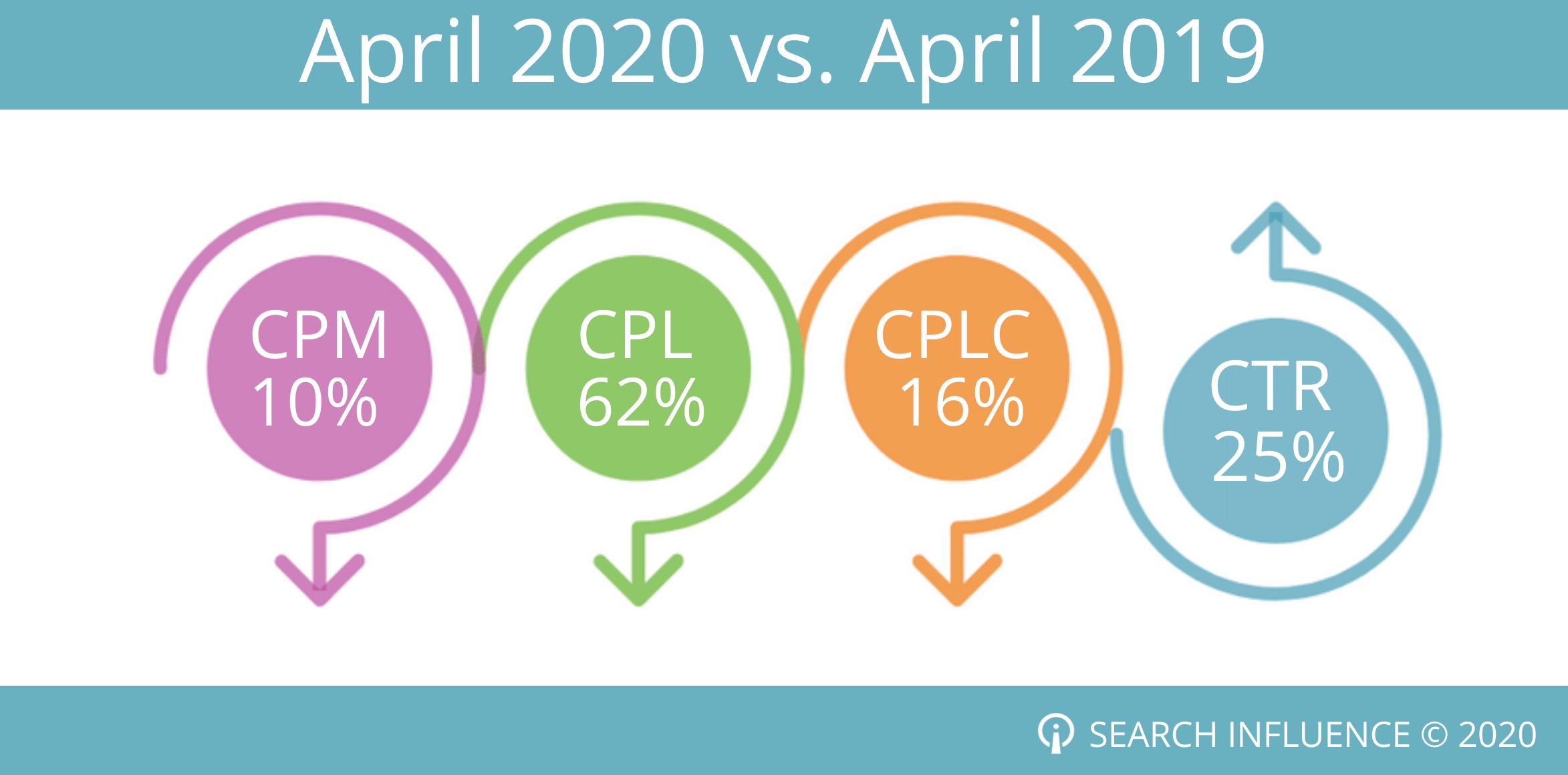
    • All cost metrics have improved across the board—aligning with the fact that experts say it is cheaper to advertise right now.
    • Campaigns with Brand Awareness, Lead Gen, Reach, Traffic, and Video View objectives perform especially well.
    • Engagement has increased, demonstrated by a 25% improvement in Click-Through-Rates (CTR)—the percent of impressions who clicked on an ad.

    March/April 2019 vs. March/April 2020
    We see that increased digital ad inventory and lower competition generate low-cost ads. Digital media and social media usage are up with advertiser competition down, which means it costs less than ever right now to reach larger audiences.

    • Campaigns leveraging video ads, Cost per ThruPlay decreased 64%.
    • Cost Per Engagement has decreased for every objective, which demonstrates a higher level of engagement.
    • CPM and Cost Per Click (CPC) decreased for every objective.
    • 32% in Cost Per Lead (CPLs) for conversion campaigns.

    A Search Influence branded graphic showing CPM, CPL, PCLC, CTR from April 2019 to April 2020

    Client Impacts

    Audiology and Speech Therapy Client

    Since the start of COVID-19, an audiology and speech therapy client found itself in flux due to restrictions on non-emergency medicine & procedures. The practice was quick to adopt teletherapy and virtual speech therapy options for its patients. New services and forced closures of the physical clinics created an urgent need to inform existing patients of these new services. It was also imperative to continue the acquisition of new prospective patient leads. The client needed a new gameplan.

    Strategy & Tactics

    • Communicate clearly on the website and via email marketing for current patients.
    • Implement Facebook and Instagram Display Network ads with careful monitoring & adjusting.
    • Change advertising creative quickly to promote teletherapy options.
    • Pause all other messaging.

    The client found success running advertising in March. The campaign hit a new performance threshold and exceeded the typical monthly lead volume by 69%, at the lowest CPL to date. In April, the lead volume grew an additional 25% and CPL reduced further, by 16% month-over-month. This indicates that the campaign budget is being spent more efficiently than ever on the Facebook Ads platform, with a highly engaged audience.

    Higher Education Client

    This client offers degree programs and continuing education for a non-traditional student with a focus on online classes. The client was poised for potential growth due to the online nature of their product, but new uncertainties surrounding the future of higher education and the traditional in-person instruction created potential problems.

    Our client had to focus on yield while building their pipeline for future semesters. Also, the non-traditional student decision cycle and the journey are typically a long one.

    Strategy & Tactics

    • Transition remaining courses online.
    • Play up financial aid, transfer policies, credit for life/work experience messaging.
    • Continue digital advertising—no spending reduction.
    • Leverage client-produced Facebook Live Series for top-of-funnel.
    • Shift blog post strategy focus to online learning & other timely topics.

    In March, Facebook Display generated the highest number of inquiries in a single month since its launch, primarily from our lead generation campaign. We saw a 111% increase in inquiries from Google Smart Display month-over-month. In Q1 of 2020, our client achieved 47% of 2019’s inquiries and spent only 29% of the budget.

    Reconstruction Surgery Client

    A multi-physician cancer reconstruction client with national and international clients had their operations limited by state restrictions on non-emergency medicine. Unfortunately, cancer doesn’t stop in a pandemic, but with fewer people attending routine medical appointments, we wondered if the diagnosis would slow down? With restrictions in place requiring the practice scale back, the client also had to figure out how to be productive and build the pipeline for the future. It was clear we needed to keep their medical marketing plan running full-steam.

    Strategy & Tactics

    • Communicate clearly on the website and via email marketing for current patients.
    • Add to top-of-funnel strategy.
    • Continue paid advertising with careful monitoring and adjusting.

    During the month of March, our client continued advertising in paid search and saw its lowest CPL in three years on Google Ads and patient inquiries were up 27% in March compared to February 2020 (on Google). In April, based on a drop of impressions, we decided to redirect the budget from Google Paid Search to Facebook Advertising while still keeping the Google Paid Search campaign on.

    After this adjustment, we hit our lead volume goal and reduced the CPL acquired via Facebook by 14%. All-in-all, this resulted in exceeding our pre-COVID-19 stated goal for leads from Facebook & Google advertising.

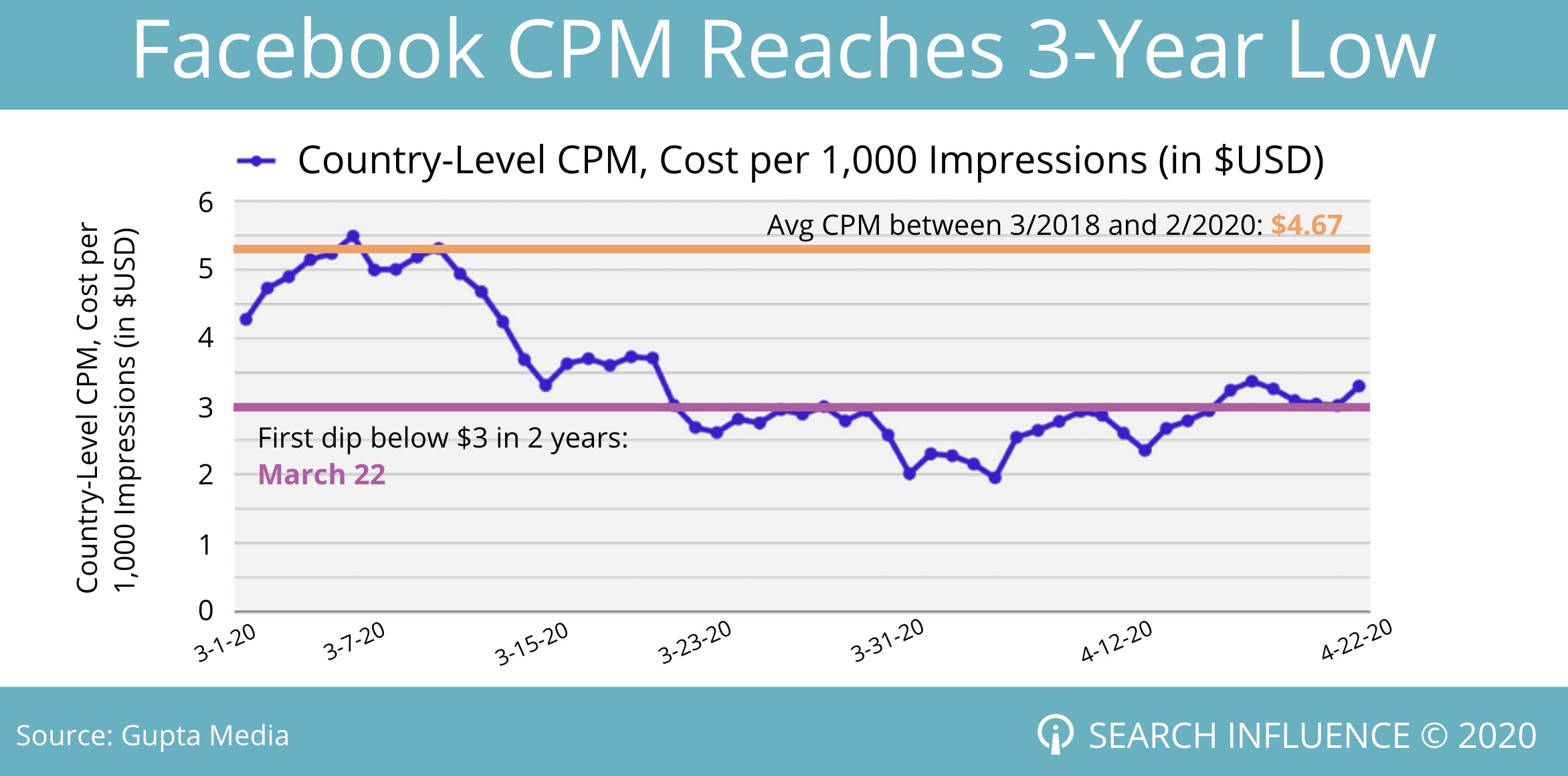
    Search Influence branded graphic showing Facebook CPM totals between March 2020 and April 2020

    Lessons

    • Rapid pace of technology adaptation among the greater population has changed consumer behavior for the long haul—those who already offered online options and services see growth.
    • The low cost of Facebook Ads make budgets stretch farther than ever. On Google, while search volume is down, those who search have high intent.
    • Online courses within your industry could offer new revenue stream opportunities. Do you have a special way of doing something that you can share with others in your industry?
    • Facebook lead generation campaigns are making up for volume drops in other lead gen avenues, due to a massive increase in usage of Facebook’s platform.
  • A Message from our CEO & COO

    Please read below a message to our team from Will and Angie Scott, our co-founders and CEO, COO respectively, which Will delivered with the support of the Search Influence executive team on June 9, 2020.

    Dear Influencers,

    I want to start with a quote from Ibram X Kendi, an author on Race and Racism who published an anti-racist reading list in The New York Times and whose book I listened to over the last week. Mr. Kendi says:

    “No one becomes ‘not racist,’ despite a tendency by Americans to identify themselves that way. We can only strive to be ‘antiracist’ on a daily basis, to continually rededicate ourselves to the lifelong task of overcoming our country’s racist heritage.”

    I’m sure many of you join me in having been—at different times—shocked, saddened, and enraged over the last few weeks. Some of you have been on this rollercoaster your whole lives, while many of us have had the luxury of confining it to moments in time.

    I appreciate those of you who have gone to the protests in the last week. I appreciate those of you who are reading, educating yourselves, and doing the work of self reflection. Thank you.

    At Search Influence we believe unequivocally that Black lives matter and we are committed to the equitable treatment of all our team members. We recognize that our demographics don’t match those of the city in which we live and work. We still have work to do.

    We have always had a strict policy of “you be you.” We want to see you. And we love you.

    There’s no such thing as color blind. We want to revel with you in whatever culture you call home.

    To the extent you are comfortable being you at work, please know we want to see you.

    Please take this as a call to action. Help us be better. If any of our team members—up to and including Angie and me—appear to be insensitive, let us know. I know we don’t have anyone working here who would seek to intentionally offend or demonstrate bias, but I am sure we won’t always get it right. We may need help to do better.

    Will Scott
    Co-founder & CEO

    Angie Scott
    Co-founder & COO