Blog

  • Create a Student-Centric Journey with the Marketing Funnel

    Key Insights

    • By creating a student-centric journey with the marketing funnel, universities can better understand the mindsets and behaviors of prospective students.
    • When considering goals and tactics for your student-centric campaign, ensure your ask is appropriate to a student’s current mindset and behavior.
    • To ensure your student-centric marketing plan yields real-world results, ask yourself during every step of the process, “Am I considering the mindset and behavior of my audience?”

    For those who work in marketing, the marketing funnel is nothing new. Understanding the decision-making process of prospects is an age-old, effective marketing strategy. Like teenagers, adults in their mid-20s are still figuring out what they want to do with their career post-bachelor degree, all while learning how to budget their own money and make sure the laundry pile doesn’t get too high.

    By creating a student-centric journey with the marketing funnel, universities can better understand the mindsets and behaviors of prospective students. When university marketers understand who would be interested in their graduate programs, they can create a user experience that drives prospects down the student funnel.

    a student walking down a paved pathway

    The Marketing Funnel From the Prospect’s Perspective

    Looking at the marketing funnel from the student perspective allows marketers to open their eyes to the right types of content and the appropriate placement to have the most effective strategy. You can use the higher education inbound marketing funnel to create a map of the route a prospect takes from the time they first encounter your brand, to the time they register, and even through retaining them and turning them into a loyal advocate for your brand. This differs from the normal marketing funnel in that it allows you to gain a deeper understanding of a student’s habits and desires.

    To fully understand the student-centric journey, you must take an in-depth look into a student’s mindset and behavior during the marketing funnel’s awareness, consideration, and decisions stages.

    Awareness

    To better understand the mindset of prospective students in the awareness phase, you have to learn about their habits. These prospective students are working full time after earning their bachelor’s degree and probably feel truly independent for the first time in their lives. They are likely in their mid-20s, or maybe a little bit older, and have some sort of career plan but are still trying to figure it out a little bit.

    These prospective students are also likely to understand the type of career advancement that interests them, but don’t have a complete plan yet. Prospective students in the awareness phase may wonder if earning a graduate degree would be worth it, as well as the potential ROI, their availability to take classes, and if they would qualify for their desired program.

    While these prospective students are still figuring things out, they are probably consuming industry news and best practices and spending some time on LinkedIn and other job sites evaluating the career opportunities available to them after earning a graduate degree. Their web searches might include:

    • How to get promoted
    • How much money does [career/job] make?
    • How to become a [career/job]

    This information should inform your strategy by giving you insight into what your prospective students look like—from their possible age to their work life. To help them move onto the consideration phase, you should present them with information that makes them more confident that a graduate degree can elevate their career and earning potential.

    Consideration

    During the consideration phase, prospective students’ mindsets have changed slightly. Prospective students want to collect information about their prospective university’s programs, culture, and what it’s like to attend.

    Some problems they may worry about during this phase include:

    • Their ability to meet application deadlines
    • Their ability to meet school’s requirements for admission
    • Unsure if the program is a good fit

    Prospective students will begin to look to FASFA, articles about best programs, job titles of recent students, and available jobs for the program that interest them. Their Google searches will include things like:

    • Master’s programs near me
    • Best (program name) programs
    • Affordable (program name) programs
    • Online (program name) programs
    • Jobs for master of (program name)

    As a university marketer, you should use this information to inform the next steps of your campaign. This could be helpful in preparing your strategy for content, SEO, Facebook ads, and Google ads. To help prospective students to move into the decision stage, you should present them with information that shows the validity of your program and that your program can help them get the job they desire with a flexible schedule and affordable price.

    Decision

    Okay, you’ve made it! You’re now in the decision stage.

    During this stage, prospective students have:

    • Established their consideration set
    • Formed opinions about the pros and cons of programs
    • May have identified a first choice

    But they haven’t made all their decisions yet so they need guidance. Students during this phase may need help starting the application process and may still be unsure how to pick the right university. They may not know the best semester to begin their program.

    To help alleviate this uncertainty, they may start:

    • Reviewing programs or universities
    • Spending more time on the school’s website and social media
    • Search university professors on Rate My Professor
    • Use tuition/financial aid calculators

    To help them find this information, they will start searching for things like:

    • Branded searches (school’s name)
    • Application deadlines
    • Tuition information
    • Financial aid applications

    During this stage, you should center your ads and content around your universities application deadlines, tuition information, and financial aid applications to aid in their search.

    Be sure to have all this information readily available for students during the decision stage. The easier it is for students to find this information on your website, the easier it will be for them to decide to attend your university. Make your website easy to scan through so applicants can find this information quickly.

    students posing while wearing caps and gowns

    Goals and Tactics

    When considering goals and tactics for your student-centric campaign, When considering goals and tactics for your student-centric campaign, ensure your ask is appropriate to a student’s current mindset and behavior. For example, your ask in the awareness stage should require less of a commitment than your ask in the decision stage.

    Awareness

    During the awareness stage, your program may help prospective students advance their careers. Your campaign should bring to their attention that your program answers the questions about their career problem.

    The appropriate KPI to track this metric is website traffic. One tactic you can use to bring attention to your program is centering content around the expertise of your professors and programs on timely topics. This can be done through blogs and social media posts.

    Consideration

    During the consideration phase, your number one goal is to get prospective students’ contact information. To measure this KPI keep track of all inquiries. To get contact info from prospective students, showcase your universities rankings, common graduate job titles, and success rates of former students as incentives to request more information.

    Decision

    Finally, during the decision stage, you should convert prospects into applicants. This is where you want to get started applications to become completed applications. To track this KPI, measure started applications and completed applications. The number one tactic you should use to ensure that students finish filling out their applications is making your application process as simple as possible.

    Closing: Tying Tactics to the Funnel

    To ensure your student-centric marketing plan yields real-world results, you should ask yourself during every step of the process, “Am I considering the mindset and behavior of my audience?” By keeping this in mind throughout your campaign, you can ensure your university’s programs are presented as a solution to your prospective student’s career problems. Remember, your audience is still trying to figure out what direction they want to go with their career, be sure your campaign informs them and helps them make that decision.

    Use the steps above to create a well-thought-out and designed higher education inbound marketing plan. If you need more counseling on creating a campaign that can attract prospective students to your campus, contact the education marketing experts at Search Influence.

    Images:

  • Shopify App Store SEO – A Quick and Dirty Guide to (App Store Optimization)

    Shopify App Store SEO – A Quick and Dirty Guide to (App Store Optimization)

    Key Insights

    • Don’t Suck: Running your app store business with the same considerations as a real-world business can go a long way toward good Shopify App Store SEO.
    • Think Like an SEO: SEO at its core is straightforward: keywords, content, and links.
    • Write for the User, Mostly: What’s best in life is conversions, acquisition, sales, whatever you call the victory condition.

    [ez-toc]

    Don’t let your app’s performance on the Shopify App Store keep you up at night.

    Shopify App Store SEO or ASO “App Store Optimization” doesn’t have to be rocket science. In fact, my quick review of the top-ranked articles in Google shows it’s just good old-fashioned SEO.

    The proof, as they say, will be in the pudding. But, we’ll have to wait a bit for that.

    So here’s the story. My Strava and Facebook friend and once and future client, Matt, reached out with a question. “Why are we on the third page of the Shopify App Store for our primary search term?”

    That search term is “email marketing” on the Shopify App Store, but on Google, one would likely need to search for “Shopify email marketing.”

    Shopify is the leading software platform for online stores and offers third party tools on their app store for anyone who doesn’t know.

    A Shopify Store is super simple to set up, and there are a ton of app developers and designers ready to provide a solution if what you need isn’t available right out of the box.

    At Search Influence, we don’t do a ton of e-commerce marketing, but we have had a few clients in the space with relative success. E-commerce is an area where our Online Ads team, in particular has interest in digging deeper.

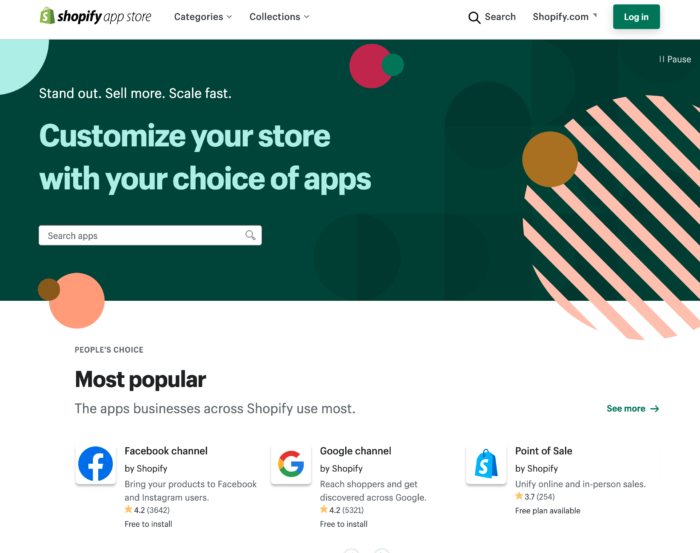
    Shopify app store home page

    In general, the same rules apply for most app store optimization as with search engines. The nuances depend on the platform (Apple App Store, Google Play Store, Amazon, etc.) and mileage may vary. However, thinking of ASO issues as SEO issues makes a big difference.

    Don’t Suck

    Mike Blumenthal, known to the Local Search community as “Professor Maps,” says the first rule to getting good reviews is “don’t suck.”

    As it turns out, this is also true in App Store SEO.

    Running your app store business with the same considerations as a real-world business can go a long way toward good Shopify App Store SEO.

    This article on the Shopify blog outlines best practices for success on the Shopify Web Store and discusses how you might get penalized. Many of these are similar to Local SEO and review optimization and a couple of items specific to Shopify App Store Optimization (ASO).

    On the Shopify App Store, you can get penalized for:

    • Poor support: i.e., failing to respond to Shopify merchants in a timely fashion or in a professional manner. Your support of your Shopify App users is similar to the importance of user sentiment in ranking in online review sites, which is a thing in Local SEO.
    • Frequent bugs and crashes: In other words: Is your app working? Does it do what you say it will?
    • Incentivizing reviews or fake reviews: Shopify indicates they’ll take “strict punitive action” if they discover fake reviews. In Local SEO, this is a mixed bag, right? Yelp hammers fake reviews and many legitimate reviews from folks who aren’t “good Yelpers,” but Google takes a much more laissez-faire approach.
    • Any violation of the Shopify Partner Program Agreement.

    Think Like an SEO

    Anyone who has spoken with me about SEO has heard me say that SEO at its core is straightforward: keywords, content, and links.

    • Keywords: What are people searching for when the answer should be your offering?
    • Content: Does your site’s content demonstrate you as a trusted resource for that offering?
    • Links: Do other sites reinforce your relevance and authority for those search terms by linking to you?

    Like so many other things, simple doesn’t always mean not easy.

    There are some artificial constraints in the case of a listings database like the Shopify App Store. There are restrictions on title, description, and page content, just like SEO.

    • The length of your app name
    • The icon you can use
    • The constraints on your app listing content

    The Shopify requirements for public apps details what you should and shouldn’t do with your listing.

    That said, your app name (equivalent to the title for Shopify App Store SEO) can only be 30 characters. This is a pretty darn tight constraint.

    So, back to SEO basics, what do we need to be thinking about for Shopify ASO?

    1. Keywords: What are the humans who want what you have to offer typing into the Shopify App Store search box?

    Like website SEO, in Shopify App Store SEO, you need to have a clear idea of people’s search terms.

    You can get some clues from the existing categories in the Shopify App Store. You can look at the categories for ideas and then validate that with traditional keyword research. If your best keyword matches a category, that makes life much easier.

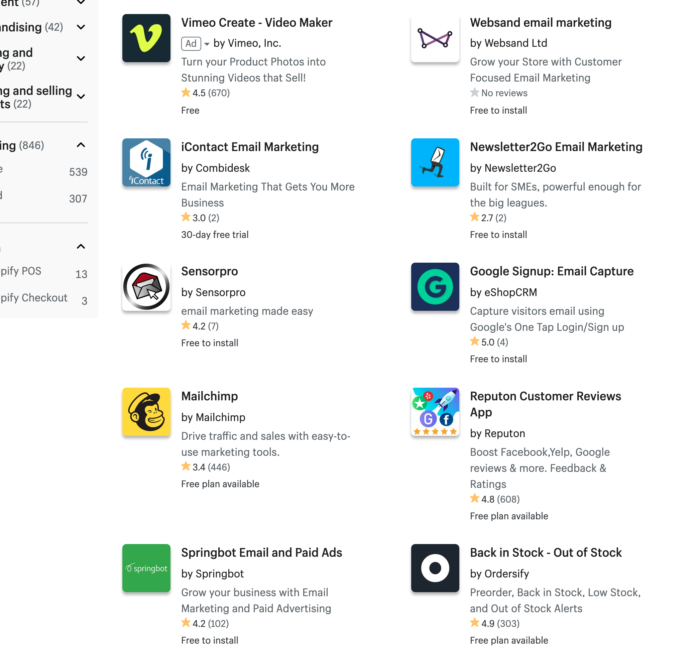
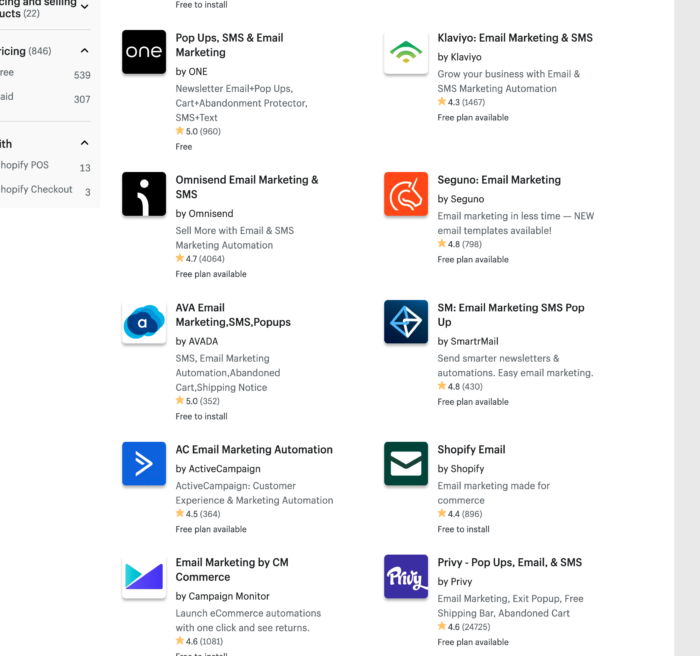
    Notice how many of the apps on page one of the Shopify App Store search results for “email marketing” have email marketing in their app name.

    Free to install Shopify apps

    But on page 3, you’ll notice most don’t have “email marketing” in their app name.

    free to install marketing apps

    Even industry giant Mailchimp is on page three—at the time of this writing, right above Springbot.

    So, how do you do keyword research? Tools! You need tools.

    • Google AdWords Keyword Planner. You need an account but don’t need to buy ads.
    • SEMrush or ahrefs. These are Swiss Army knife SEO tools with WAY more features than keyword research and well worth the money if SEO or Shopify App Store optimization is important to your e-commerce business.
    • Answer The Public. This is a robust tool, but the feature most of us use is the ability to generate questions that might be searched for about a given topic.

    2. Get those keywords in your content!

    The most powerful place to get a keyword for SEO is your page title < title >. It’s also beneficial to have it in your page description—not so much for SEO, but for user experience.

    When optimizing your app store listing, the app name serves as your title tag. It will be what shows up in the app store search results. If possible and natural, include your keyword here. Keep in mind that you only get 30 characters.

    Like with meta descriptions and other meta tags in website SEO, including your keywords in your Shopify app tagline makes an impression on humans and may affect the Shopify App Store SEO factors.

    You can also add keywords with the images you upload of your app. As with good website design, consider the user and make these descriptions actually represent what’s in the image. Don’t make all of your image descriptions, which render in HTML as text (or alt tags), your most important keyword if you can avoid it.

    example of code on the back end of shopify

    While we’re looking at source code, this is a great way to diagnose if you discover you have a broken link.

    3. You built it; you uploaded it, now link to it!

    It is entirely natural for you to link to your app on the Spotify App Store. Opportunities for links:

    • Link to it from your website.
    • Make a promotional video and link to it from your YouTube channel.
    • Go guest blog somewhere and link to it.
    • Share it on your social media channels.
    • Tell your friends
    • Include it in ads, if you can

    Shopify App Store optimization isn’t one-size-fits-all. Look for links in all the usual places.

    Shopify does sell ads on the Shopify App Store, but organic traffic is the gift that keeps on giving.

    And if you want hard data, it does appear you can track your Shopify app listing with Google Analytics. If you’re serious about selling online, this seems like a must.

    Aside: While I haven’t dug in, it appears that App Store Analytics either integrates or has functionality similar to Google Search Console.

    Write for the User, Mostly

    In the movie Conan the Barbarian, the main character, played by a young Arnold Schwarzenegger, is asked by a Mongol general, “What is best in life?” To which Conan replies, “To crush your enemies, to see them driven before you, and to hear the lamentations of their women.”

    A meme titled 'what is best in life?'

    I think we can all agree it’s best not to be a barbarian.

    And, in the world of e-commerce and online marketing, that’s not really what’s best in life.

    What’s best in life is conversions, acquisition, sales, whatever you call the victory condition.

    What that means is:

    • Be a storyteller
    • Help your customers understand how you solve their problems
    • Write good marketing copy

    Consider whether the language you use communicates authority and trustworthiness.

    Bringing It All Together

    Shopify App Store optimization is SEO. The format is more constraining, but sometimes constraints spark creativity.

    Think about the exact keywords your customer would use to find you.

    Make sure your content speaks to what your customers are searching for and supports their position in the buyer’s journey.

    Be a human—a human telling a story to other humans of why they need your help.

    Finally, think about how you can quantify your ASO efforts. Any good SEO knows that you can’t just load the search engine results page and be confident you’re seeing the same thing your users do. From a quick review, it looks like the tools from App Store Analytics may be helpful.

    And if you need help, contact Search Influence. Since before most people could spell it, we’ve been doing SEO, and I’m confident the same rules apply. And, of course, you’d make our Digital Advertising Manager, Jeanne, happy if you let us run some ads too.

    Happy selling!

    Images:
    Barbarian meme

  • Nurturing Inquiries Into Lasting Patient Relationships

    Key Insights

    • Your prospective patient could be in any of the three patient funnel phases, and so it’s important to meet them where they are with the information and communication provided.
    • Responding quickly and in a valuable way to inbound patients can be the differentiating factor between booking an appointment and losing that appointment to a competitor.
    • Sometimes, even if your marketing strategy does all the “right” things, some inbound patients don’t take the next step and book that appointment. But, by providing them valuable, various touch points throughout their journey, you can put yourself in a position to further nurture them.

    Every inquiry has the potential for a new patient to make the jump from interested to committed. However, in the healthcare industry, competition is high. Patients may be willing to travel great distances for the right provider—but that prospective patient may just move on to the next option if they don’t hear from you quickly or get the right answer. If you do not respond quickly enough, this could mean you run the risk of losing potential new patients.

    In this post, we will walk through the three different phases your prospective new patients can fall within the marketing funnel, the most valuable ways to communicate with those patients in each of those phases, and a few platforms to aid in nurturing these newly formed relationships.

    Graphic displaying medical marketing funnel

    Top of the Funnel Marketing

    Top of the funnel marketing (also known as the awareness phase) refers to any marketing efforts with the goal of improving a business’s online presence and overall brand awareness. Your initial touchpoints should align with where the potential patient’s place in the marketing journey. At the top of the funnel, the patient seeks educational information. They will conduct research online for relevant, valuable information related to the issue and/or illness they’re navigating.

    Key metrics to consider in a brand awareness campaign include impressions (or views) on your paid advertisements and/or website traffic.

    Types of content to offer:

    • A website that houses clear, search engine optimized content so that patients can find your website and understand that your offerings are relevant to their needs
    • Testimonials from previous patients advocating about their pleasant experience/results
    • A frequently asked questions page to help resolve any often-asked questions, such as insurances accepted, office hours, or office location
    • Paid advertising efforts, such as Facebook Display, with high-level messaging that has the goal of building brand awareness

    Middle of the Funnel Marketing

    Once this prospective patient has some initial education, they move from the top of the funnel to the middle (also known as the consideration phase). Marketing efforts within the consideration phase use metrics such as increases in: clicks on paid advertisements, the average session duration on the website or views on videos.

    In this phase, the patient seeks a deeper level of information and spends more time absorbing content. Similar to the awareness phase, the types of content offered should provide answers and insight for the patient.

    Types of content to offer:

    • Expansive, detailed website and/or blog content that speaks to your office’s specialty, the types of options you offer patients, etc.
    • Option for patients to schedule a complimentary education call with a member of the staff to ask any questions and learn more
    • Paid advertising efforts, such as Facebook Display and Remarketing, with more targeted messaging that has the goal of driving a conversation

    Bottom of the Funnel Marketing

    The last and final stage is the bottom of the marketing funnel, also known as the decision phase. Once a patient has entered this stage, they’ve absorbed information about their symptoms and options (likely both online and via education calls), and feel ready to make a decision on next steps. Most likely, these next steps will come in the form of a booked appointment. This means, more than ever, it is important to respond quickly. Ideally, you have an appointment management system that conveniently allows patients to book appointments.

    According to The Lead Response Management Study conducted by Dr. James Oldroyd of MIT, the odds of qualifying an inquiry (potential patient) are 21 times less likely when comparing a response rate of 5 minutes vs. 30 minutes. Additionally, the odds of successfully scheduling a qualified inquiry (potential patient) decrease by over six times in the first hour. Because that patient likely identified a few options during their consideration phase research, failing to quickly reach out could result in them scheduling their appointment with another doctor/office.

    Once the patient has scheduled their appointment, you can still provide valuable content, such as:

    • Outreach confirming the appointment, location, and other useful details
    • Downloadable PDFs that include information about what to bring and what to expect during the initial appointment
    • Success stories and testimonials from previous patients who had similar symptoms, underwent similar procedures, etc.
    • Paid advertising efforts, such as Facebook display & remarketing, with messaging that includes a very clear call-to-action

    Doctor showing patient information via tablet

    How to Nurture Past, Current, and Prospective Patients

    Sometimes, regardless of how effectively you provide value to prospective patients, it may not result in a newly scheduled appointment or surgery. However, even if they don’t convert at the time, another benefit to providing avenues for potential patients to engage (e.g., downloadable PDFs, Facebook display advertisements) is the opportunity to identify them and further nurture them.

    The most important thing to consider when developing a nurture strategy is that any efforts deployed are HIPAA compliant. There are some limitations here, and so it’s important the strategy adheres.

    A few HIPAA compliant nurturing methods:

    Email Marketing

    There are a few different tactics that can be deployed through this avenue depending on the ultimate goal and quite a few different email marketing platforms that can be used to ease the creation and distribution.

    • Newsletters to past, current, and potential patients highlighting updates to the office, any changes in personnel, etc.
    • Messaging to past, current, and potential patients promoting upcoming specials to help entice appointments booked, reminders about upcoming appointments and/or that appointments are due to be scheduled
    • Outreach that includes more information about the office or testimonials to potential patients who have previously shown interest

    Facebook Display & Remarketing

    Remarketing to users on Facebook is HIPAA compliant and a beneficial way to get back in front of potential patients. When creating this strategy, consider:

    Creative and messaging

    These two elements should look and sound different to patients in different funnels. Identifying what types of questions could be answered within each phase, the types of content that would be beneficial to consume, etc., are a few great ways to curate both the creative and messaging.

  • Targeting

    Identifying and honing in on the target demographics, geolocations, and other relevant audience specifics will help see that advertising dollars are only spent where they are likely to produce more qualified inquiries.

    Overall strategy

    Facebook offers a variety of objectives (conversion, traffic, lead generation) to pursue. This effectively tells Facebook how to best optimize campaigns.

    How to Ensure You Make an Impact

    It can feel overwhelming to determine how to market your business online. With so many different best practices, strategy options you can make an impact by considering the phases of the marketing funnel and the most valuable ways to communicate with the patients in those phases. By providing your prospects with different valuable touchpoints, you put yourself in a great position to nurture them through the funnel.

    Contact Search Influence for help with all your digital marketing needs. Our team of experts can help you implement all the best practices and strategies needed to turn inquiries into long-lasting relationships.

  • Search Influence Presents Virtual Higher Education Marketing Training, “How to Gain Stakeholder Trust in Your Marketing Plan ”

    About the Virtual Training

    As an education marketer, it’s your job to help deans, admissions, and other stakeholders understand how new marketing strategies fuel student growth.

    Search Influence will guide you through how to build a case for new marketing efforts, including ways to demonstrate how your strategies impact your institution.

    Learning objectives:

    • How to use quantitative goals to plan and pitch marketing strategies.
    • Tactics to demonstrate how a given strategy will help you reach a specific target audience.
    • Guidance to tailor your discussion based on personality styles and role.

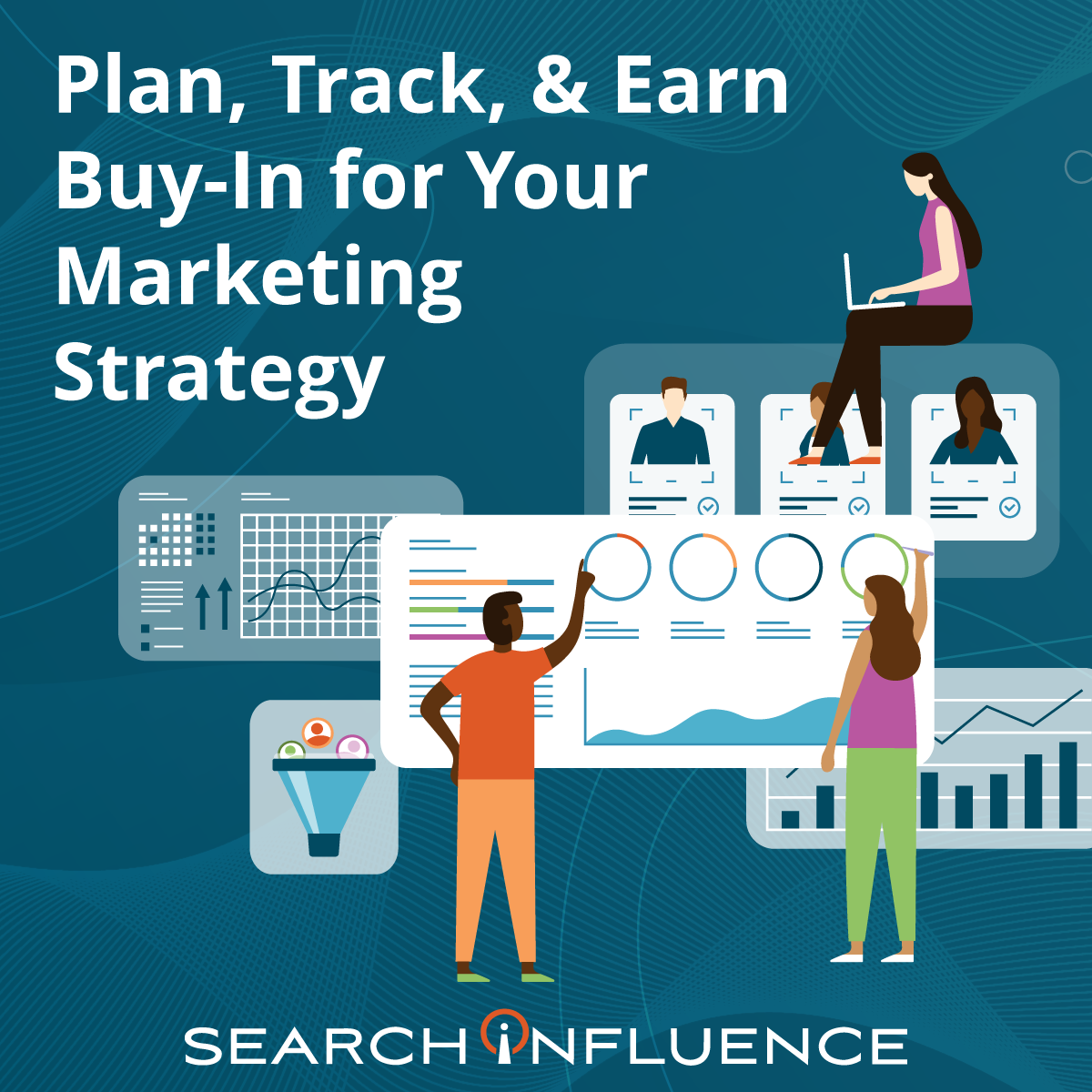
    Plan, Track, & Earn Buy-In for Your Marketing Strategy webinar graphic

    This is the third part of our free training series, “Plan, Track, and Earn Buy-In for Your Higher Education Marketing Strategy. The series helps higher education marketers create a strategic and measurable marketing plan and build excitement for the plan among stakeholders.

  • Increase Conversion Rates and Improve Rankings with a Mobile-Optimized Website

    Key Insights:

    • A mobile-optimized website can make or break a business since a bad mobile user experience can result in a loss of leads and conversions.
    • With more than half of site visitors coming to sites through mobile, your mobile site must have a positive user experience.
    • A positive user experience revolves around how easily a user can navigate a site and complete their goal.
    • Google expects your mobile experience to be just as good, if not better, than desktop.
    • Ensure a positive user experience for mobile users through site speed, ease of use, and similarity to desktop experience.

    In this digital age, it’s standard that people access the internet on their mobile devices vs. a desktop computer. A mobile-optimized website can make or break a business since a bad mobile user experience can result in a loss of leads and conversions. This post will talk about what a positive mobile experience entails and why it’s so important for businesses today.

    A smart phone sitting on a table

    Why is the Mobile Experience Important?

    A bad mobile user experience hurts lead conversions and the overall perception of your company and service.

    According to recent studies, over half of internet visits in 2017 originated from a mobile device. As of August 2021, that number has moved to 56.75%. With over half of website visits coming from mobile, your website should accommodate those users. And, with over 53% of users only willing to wait 3 seconds for a mobile page to load before abandoning the page, it’s essential to make sure that the user experience of your mobile site is optimal.

    A positive mobile user experience helps retain leads that come to your site from mobile devices and increases the likelihood they convert. A user navigates to your site with a goal. If they aren’t able to complete that goal with ease from their phone, they won’t continue to use your site and service—meaning, they won’t convert.

    Additionally, Google has stated they use a mobile-first ranking strategy. This means that before they check the desktop version of your site, they look at the quality, effectiveness, and user-friendly aspects of your mobile site to determine your ranking within the search engine.

    You can check out Google’s mobile-first indexing best practices here. Some key takeaways:

    • Google expects a positive mobile experience and checks on this by making sure your desktop and mobile versions of your site are virtually the same
    • Google verifies your site makes good use of structured data
    • Your site has fast load times.

    Google provides Mobile-Friendly Testing Tool you can use to indicate whether Google finds a page on your site mobile friendly.

    A positive mobile experience impacts the perception of your business. With almost everyone on a mobile device and accustomed to certain standards of the digital world, a bad mobile experience leaves the wrong impression. A user might think, “Maybe if this business isn’t ‘with the times’ and able to provide a good mobile experience, what else can’t they do for me?”

    A smart phone and tablet on a table

    3 Components of a Strong Mobile Website Experience

    Positive Browsing Experience

    A positive user experience hinges on a user’s ability to navigate a site with ease. In a mobile context, this means a user can navigate the pages of the site to accomplish their goal without having to put in too much thought on how to do so.

    The site navigation needs to be easy to find and easy to use. For example, if you have a lot of pages and the menu expands so long when clicked that a user can’t easily click on the pages they need, that results in a negative user experience.

    Another example could be looked at in the scope of e-commerce:

    • Can the user easily access the cart?
    • Can a user easily and intuitively add and remove items from their cart?

    Your mobile site should make it so that the user doesn’t have to think about what they need to do; they can just complete the actions they need with ease.

    Clear and easily clickable calls-to-actions benefits users when navigating around a site and completing actions. If a user can’t accomplish their goal easily, it will likely result in a lost lead and conversion.

    Site Speed

    Users and Google value site speed. Users are not willing to wait around forever for a page to load. This case is even more true on a mobile device. If you picture why someone might be using mobile over desktop, it very well might be that they are on the go. A user in the middle of something, needing to be able to accomplish a goal quickly, is even less likely to wait for a page that’s taking too long to load completely.

    The Mobile Experience Mirrors the Desktop Experience

    As outlined in its best practices, Google expects your mobile experience to mirror your desktop experience. All the same tasks a user can do on your site on a desktop should be as easily accomplished on mobile. For example, a user should have as easy of a time scheduling an appointment on the mobile version of your site as they could on a desktop.

    With so many visitors coming to sites on mobile, it’s imperative that your site follows good mobile user experience best practices. This will help with lead generation and with search engine rankings. Not sure where to start? Reach out today and talk to us about conducting a user experience audit for your site.

    Images:

    Smart phone

    Smart phone and tablet

  • Search Influence Presents Virtual Higher Education Marketing Training, “Marketing Data, Dashboards, and Decisions”

    Search Influence will host Marketing Data, Dashboards, and Decisions on Tuesday, Dec 7, 2021 at 12pm EST/11am CST.

    Register for this training and our January session here. All registrants receive a recording of the first part of the series, as well as all upcoming sessions.

    About the Virtual Training

    Discover how to unlock powerful insights by using quantitative data to tell a story about the performance of your institution’s recruitment and marketing strategies.

    Learning objectives:

    • Suggestions for tools and high-level processes to use when integrating disparate data into a dashboard.
    • How an integrated reporting dashboard can improve efficiency.
    • Methods to tie marketing and enrollment data together to communicate your work to non-marketing people.

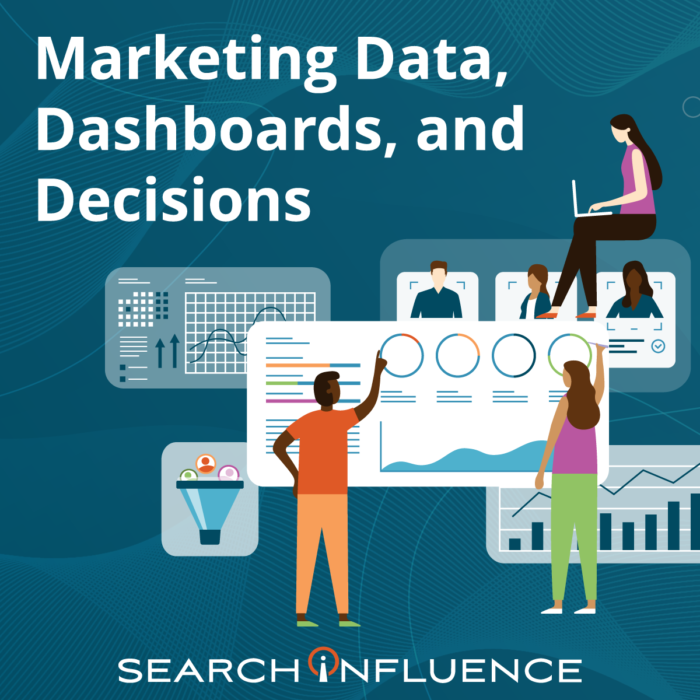
    Plan, track and earn buy in for your marketing strategy graphic

    This is the second of our free training series, “Plan, Track, and Earn Buy-In for Your Higher Education Marketing Strategy.” The series helps higher education marketers create a strategic and measurable marketing plan and build excitement for the plan among stakeholders.

    Upcoming

    Session 3: How to Gain Stakeholder Trust in Your Marketing Plan

    Tuesday, Jan 11, 2022 | 12PM ET/11AM CT
    Register

    As an education marketer, it’s your job to help deans, admissions, and other stakeholders understand how new marketing strategies fuel student growth.

    Search Influence will guide you through how to build a case for new marketing efforts, including ways to demonstrate how your strategies impact your institution.

    Learning objectives:

    • How to use quantitative goals to plan and pitch marketing strategies.
    • Tactics to demonstrate how a given strategy will help you reach a specific target audience.
    • Guidance to tailor your discussion based on personality styles and role.
  • What Does An SEO Agency Actually Do For My Business?

    Key Insights

    • Good SEO agencies focus on your website with the same vigor and attention-to-detail that you have with your brick and mortar.
    • Expertise, authority and trust (E-A-T) is the foundation of a good long-term SEO plan. If your website doesn’t have these factors, it is impossible to rank well in search engine results.
    • SEO agencies help their clients develop a long-term plan by auditing their site, pinpointing keywords and building E-A-T, which comes with a unique set of challenges because it cannot be directly measured.

    Any good SEO agency knows that owners and executives are protective and calculated when it comes to businesses and their bottom line. Because of this, agencies know they must instill trust and deliver results. However, as a business owner/leader, that doesn’t mean you will know exactly what those results should be and how they improve your business results.

    SEO agencies may vary in their approach, but their overall goal for your business website is to present it as a resource search engines will want to show searchers.

    An SEO Agency Should Help You Understand Your Website’s Strengths and Opportunities

    A good SEO agency will first familiarize itself with your website, typically done by conducting a website audit. With an audit—which generates performance metrics surrounding your site’s visibility, speed, and traffic—an SEO agency can pinpoint opportunities and highlight success areas!

    Once your agency knows where you are thriving and where you can grow, they can begin forming your long-term SEO plan. This plan will align with the business goals you’ve set and can be a major tool in helping you reach them.

    An SEO Agency Should Identify Relevant and Authoritative Keywords

    Even those unfamiliar with SEO may have heard the terms “keywords” or “long-tail keywords” tossed around in conversations or articles. In simple terms, keywords and long-tail keywords are the phrases found on your website that match a person’s search query. Without optimizing your content with relevant keywords, Google (let alone searchers) will not be able to find it. This fact alone makes it a key priority for your SEO agency.

    While defining the term “keyword” is simple, deciding which keywords to focus on in your SEO plan is not as cut and dry. An SEO agency familiar with your industry and business will be able to successfully conduct keyword research to pinpoint phrases that your customers and potential leads will use to find your content. More than that, they will know how to strategically implement those keywords across the pages of your website for the best impact.

    An SEO Agency Should Enhance Local Relevance

    Local relevance measures how well your content matches a search query that includes or intends a location. This refers to searches like “urgent care near me” or “restaurants open now.”

    A huge chunk of daily searches look for you using locally relevant search results. Recent research done by Russ Jones, the Principal Search Scientist at Moz, found that “58% of people search for a local business on their smartphone daily.” The more your business website is locally relevant, the higher you will rank in those search results.

    Jones’ study additionally found that “50% of local searches on mobile lead visitors to a store within one day.” This means more foot traffic to your brick and mortar, not just your website.

    An SEO team that knows this will complete tactics customized to your business/industry specifically geared to building local relevance. These tactics should include:

    • Maintaining your Google My Business profile
    • Creating local listings by promoting NAP (name, address, phone number) consistency across multiple websites—sites that may show up in search results before your business’s actual website. Creating local listings also ensures that Google doesn’t generate and automatic listing for you, which could show potential customers the wrong information.

    An SEO Agency Should Establish Expertise, Authority, and Trustworthiness

    An agency looking out for your business’s best interests will prioritize your website content’s expertise, authority, and trustworthiness, otherwise known as E-A-T.

    What makes E-A-T challenging is that it is not something you can directly measure and it’s not a direct ranking factor that you can pinpoint. However, a good SEO agency will have the knowledge and experience to establish and influence your E-A-T through various channels.

    These tactics include:

    • Regularly updating your site with rich content
    • Organizing your site’s structure to make the most sense for your customers and industry
    • Ensuring that your site is secure

    Your site’s show of expertise, authoritativeness, and trustworthiness are essential factors for your existing customers, potential leads, and Google. In fact, it is heavily referenced in Google’s Search Quality Rater Guidelines because it is the sites with the best apparent E-A-T that Google awards the most visibility to (i.e., those on the first page of Google’s search results).

    A person on a laptop and smartphone

    An SEO Agency Should Improve Expertise

    Showing expertise is all about showing what you know and how you know it. It is crucial for SEO because it communicates to searchers and Google that you know what you’re talking about. Not establishing expertise leaves you at risk of being left out of search results.

    How do SEO agencies improve website expertise for clients? Through the content on your website. But it is not enough to simply post any ol’ content. Experienced SEO agencies know that the content on your site should do two things:

    • Answer the questions your customers ask. You know your industry and customers, and your SEO agency does too. They will have learned both your industry and target market so well that they know exactly what your potential leads need to know from you. This may be done in blog posts or a frequently asked questions page.
    • Showcase your qualifications. This will look different depending on your industry. For example, a doctor will add where they went to medical school or completed residencies. This might be done on your About page with a written biography or videoed introduction.

    An SEO Agency Should Build Authority

    Authority refers to your brand’s reputation within your field.

    The list of reputable, authoritative brands on the internet goes on and on. And despite these websites aligning with different industries, they all have one thing in common: Searchers seek them out for specific things. Google notices this and rewards those sites with top rankings because of it. Because those websites have proven to be knowledgeable and reliable resources, their authority is strong and hard to compete within search engine results pages.

    An SEO agency will map out exactly how to build your authority in topics you already show expertise in. You can accomplish this by aligning yourself with authoritative experts in your industry with guest blog posts or building up your backlink profile by developing content authoritative experts will want to link to.

    Above all, an SEO agency will ensure that all of your content can be fact-checked. The fastest way to damage authority is to share false information.

    You may also hear the term “domain authority” thrown around in talks about website authority. The term refers to a score of how likely your site is to rank over competitor sites.

    This score, created by Moz, is “based on data from [their] Link Explorer web index and uses dozens of factors in its calculations.” While it is different from E-A-T website authoritativeness, pointing your SEO plan towards E-A-T will help you increase your domain authority.

    An SEO Agency Should Increase Trustworthiness

    At the base of relationships—personal or business—is trust. If your website and its content can’t be trusted, Google will likely shield searchers from it.

    Your SEO agency will show trustworthiness through on-site optimizations that include:

    • limiting the number of ads that display at once.
    • installing an SSL certificate (the lock icon that shows next to your URL on most browsers).
    • ensuring you have a user-friendly, attractive-looking website.

    They will also show trust through your site’s content. This means completing tactics like clearly displaying your contact information, reviews or testimonials, and privacy policies.

    An SEO Agency Should Make Sure Your Customers Can Find You

    Your customers are on the internet and they are looking for you! Your SEO agency’s job is to make sure that they can find you. Contact Search Influence today to learn more about what an SEO agency can do for your business, your customers, and your bottom line.

    Images:
    Smart phone and computer


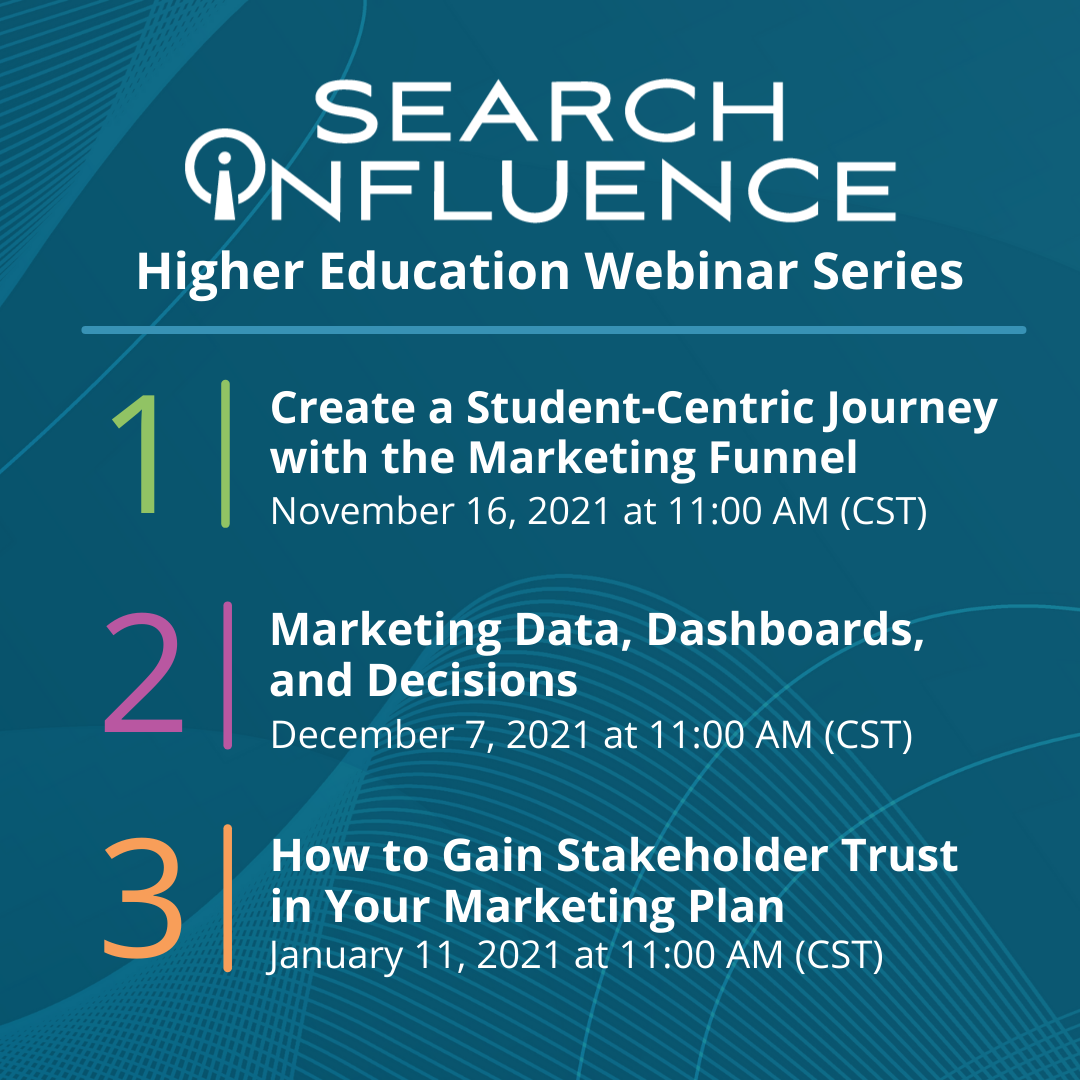
  • Search Influence Hosts Higher Education Marketing Series, “Plan, Track, and Earn Buy-In for Your Higher Education Marketing Strategy”

    Search Influence will host Plan, Track, and Earn Buy-In for Your Higher Education Marketing Strategy, a free, three-part training series. The series is designed to help higher education marketers create a strategic and measurable marketing plan and build excitement for the plan among stakeholders.

    Watch all three recordings here.

    Dates for Search Influence's 3-part higher education marketing webinar

    Session 1: Create a Student-Centric Journey with the Marketing Funnel

    Tuesday, Nov 16 | 12PM ET/11AM CT
    Watch the recording here.

    In this Higher Education Strategy Session, Search Influence will walk you through how to nurture prospects with tactics that align to the marketing funnel and student journey.

    Learning objectives:

    • How to look at the marketing funnel from the student’s perspective.
    • The ideal formula and structure for content that converts on your program and degree page.
    • Opportunities to create innovative conversion website points that help you qualify leads.

    Upcoming Sessions

    Session 2: Marketing Data, Dashboards, and Decisions

    Tuesday, Dec 7 | 12PM ET/11AM CT
    Watch the recording here.

    Discover how to unlock powerful insights by using quantitative data to tell a story about the performance of your institution’s recruitment and marketing strategies.

    Learning objectives:

    • Suggestions for tools and high-level processes to use when integrating disparate data into a dashboard.
    • How an integrated reporting dashboard can improve efficiency.
    • Methods to tie marketing and enrollment data together to communicate your work to non-marketing people.

    Session 3: How to Gain Stakeholder Trust in Your Marketing Plan

    Tuesday, Jan 11, 2022 | 12PM ET/11AM CT
    Watch the recording here.

    As an education marketer, it’s your job to help deans, admissions, and other stakeholders understand how new marketing strategies fuel student growth.

    Search Influence will guide you through how to build a case for new marketing efforts, including ways to demonstrate how your strategies impact your institution.

    Learning objectives:

    • How to use quantitative goals to plan and pitch marketing strategies.
    • Tactics to demonstrate how a given strategy will help you reach a specific target audience.
    • Guidance to tailor your discussion based on personality styles and role.
  • How a User Experience Audit Benefits Your Business

    Key Insights

    • Website user experience audits help businesses retain users and increase conversions.
    • If you understand the data behind user behavior, you can anticipate a user’s needs when designing and optimizing your website.
    • Examine trust factors, content considerations, and device usage when completing an audit.

    Woman typing on laptop computer and media app icons

    What Is a User Experience Audit?

    A user experience audit, or UX audit, is the process of reviewing a website for areas of usability improvement. There’s no one way to complete an audit because each one depends on the type of products or services offered and data analysis of user types and behaviors. It’s important to keep in mind a few key questions when completing a UX audit:

    • How does user experience impact conversions?
    • Are there usability issues, design issues, or both?
    • Should you consider your business initiatives when performing a UX audit?

    In this post, we’ll cover the questions above, along with the impacts of trust factors, content, and device usage in order to retain visitors and improve conversions.

    User Experience’s Impact on Conversions

    Imagine visiting a website to purchase shoes but find that you can’t add the item to your cart. You could refresh the page or revisit the site at another time, but many people will just visit other websites in search of the same shoe.

    If you’re the business of the original website, you’ve just lost out on a conversion—and likely more than one. Ensuring that your site supports users’ interactions without interruption is vital in retaining users and ensuring they convert.

    Usability Issues

    A site might seem functional, but it could lack the design necessary to increase user interaction and conversions. A ResearchGate study attributes 94% of a user’s first impressions of a site to its design. A poorly designed site could make all the difference in a user staying on the site or leaving with little to no engagement.

    Consider Business Initiatives When Performing a UX Audit

    Each business will have its own specific business initiatives that they want to achieve, such as raising awareness of their brand, increasing user engagement, or improving their ROI. Those initiatives can drive how to look for improvements to a user’s experience when completing a UX audit.

    Graphic of speech bubbles in multiple colors

    The Value of Trust

    Include trust factors on your site to establish credibility with your users. Trust factors are indicators on your site that can help users feel more assured in using your services or buying your products, such as testimonials, awards, and certifications.

    Content accuracy and quality can also impact a user’s trust. Issues such as incorrect grammar or inconsistent contact information help users to decide whether your business has credibility.

    Content Considerations

    A site with lots of pretty pictures won’t cut it. Written content plays a crucial role in determining user engagement. Site language should compel the user to stay on the site and learn more about the products or services offered.

    According to Small Business Trends, 70% of small businesses don’t use calls to action on their site. When a user visits a website, they expect some sort of direction in order to convert. If all they see are images but no clear and obvious path to purchasing a product or service, they likely won’t comb over the site to find out where to complete the purchase. Having clear and specific calls to action is imperative for driving conversions on your site.

    Why Device Type Matters

    Examining how users engage on your site helps you understand how to design for devices that best work for your users. In recent years, mobile device usage has grown over desktop usage. In the span of a single year, mobile usage went up by 10%, while desktop dropped by 6%.

    Several factors impact device usage, so it’s important to understand the data behind user visits and behavior on your site. Do more users visit your site on mobile versus desktop? If so, you should design your site in a way that lends itself to a better user experience on mobile.

    As you can see, UX audits are important for ensuring your site is designed in a way that is suitable to a user’s needs. Incorporating trust factors, understanding user behavior, and captivating content are necessary for a business’s success. By executing these concepts, you can increase visitor retention and engagement, thus increasing your conversions.

    Ready to grow your business with a UX audit today? If so, contact our team for a free consultation!

  • How to Drive Better Results with a Stronger Agency Relationship

    Key Insights

    • Define and communicate your goals.
    • Designate a decision maker and stakeholders.
    • Make time for your agency.
    • Be open to sharing your business results.
    • Provide feedback to your agency partners.

    A great relationship and a solid rapport with your agency lays the groundwork for excellent results and ideal collaboration throughout the lifespan of your campaigns. With open lines of communication, your agency can better customize your user experience to you and your campaign goals. If you’ve built a strong relationship with your agency, you’re likely to feel more in the loop with goal setting and goal achievement.

    This post will cover some ground rules for building stronger relationships with your agency and explain how a strong relationship can influence campaign results.

    A group of people working at a table

    What You Should Expect from Your Agency

    When you first hire an agency, setting ground rules or expectations and knowing everyone’s roles and involvement is crucial to having a great partnership.

    An agency should assign you one point of contact versus having you track down the right graphic designer, website developer, or content editor. Your account manager should work as a liaison to agency teams that support all facets of your campaigns and maintain responsibility for all communication. Additionally, your account manager should be knowledgeable of campaign optimizations and, ultimately, campaign results.

    The account manager should set a monthly meeting cadence, with a bare minimum of one monthly reporting meeting per month. In the infancy of a campaign, bi-weekly check-ins are recommended so you can make refinements to the quality of the leads your marketing agency generates. Forbes suggests that ongoing communication helps both the client and agency ensure the opportunity for success while strengthening the relationship. In meetings, the account manager should report and discuss the following:

    • Campaign results & progress (both good and bad)
    • Upcoming optimizations and tactics
    • Needs for photo and video assets to support optimizations

    The account manager should be able to thumb through your current assets and make suggestions on whether or not your assets are usable. If they are unusable, they might pair you with one of their preferred photography or videography vendors. Additionally, they should request insight into how their campaigns are affecting your bottom line and business.

    In order to make sure they positively affect your bottom line, your marketing agency should work with you to define:

    • Clear key performance indicators (KPIs)
    • This includes primary KPIs and secondary KPIs

    KPIs should be defined and established at the start of any new campaign. Your goals should stay central to all conversations since these goals will indicate the success of your campaign. If your ongoing discussions with your agency do not include goals or KPIs, inquire how your agency is measuring success for the campaigns they manage.

    A person on a computer and smart phone at the same time

    Define & Communicate Your Goals

    It’s crucial that a business defines and communicates its goals to their agency so there’s transparency and no room to question what you define as success. Your agency needs to know the end goal for your campaign in order to achieve those results.

    When your agency asks you about goal setting, start by thinking about how you’d define success. Ask yourself:

    • Is it a certain revenue number?
    • A certain number of sold tickets or appointment bookings?
    • Improvement in targeted keywords?
    • Increased website visits?

    If this is data you haven’t been tracking for past campaigns, your agency should have a model that will prompt you and your team to make some assumptions. These models should help you set targets or estimate certain metrics, such as the number of leads or the conversion rate.

    Designate a Decision Maker and Stakeholders

    Having too many cooks in the kitchen is never a good thing—and not ideal for your agency relationship. You must determine who will be involved with the agency, both directly and indirectly. Clearly defining one central point of contact to interact with your account manager daily makes communication run smoothly for both teams.

    Having the ability to make quick and accurate decisions ensures your agency achieves success faster. When considering the best point-of-contact for your account managers, you want to ensure that this person has decision-making power. A lack of autonomy could delay projects for days or even weeks until the point-of-contact can bubble up requests for approval to the top person with decision-making power.

    Make Time

    During and after choosing roles and delegates for your agency partnership, ensure your team dedicates adequate time for managing and maintaining an A+ relationship with your agency.

    At the very minimum, your agency will ask you to join monthly reporting meetings, bi-weekly performance reviews, and respond to emails with feedback to information that needs your approval, including:

    • Content marketing
    • Blogs
    • Ad copy
    • Graphics
    • Videos
    • Other assets crucial to the success of your campaigns

    Your agency will want your opinion on creative and feedback on performance in the infancy of your campaigns because this essential feedback can influence the success of your campaigns. Once you are comfortable with your agency and feel like they act as an extension of your team, you may feel comfortable auto-approving creative assets—which then takes a load off your plate!

    Provide Assets

    As previously mentioned, assets can potentially make and break your campaigns. In the startup phase of campaigns, you must provide high-quality assets to ensure the success of your campaigns. These requests might be as simple as logins to your website, CRM systems, or third-party listings such as Yelp, Bing, and Google My Business. This request might also include creative assets such as:

    • Images
    • Videos
    • Logos

    These assets often aid campaigns such a Google and Facebook Display. Therefore, we must use professional, high-quality assets. High-quality assets can help cement the trustworthiness of your brand and products. It’s logical to assume that users might be hesitant to buy from a brand using low-quality assets in their ad campaigns. If you are in a position where you don’t own high-quality video and image assets, you should be upfront with your agency and don’t be afraid to ask for help. Your marketing agency should be able to aid with getting new creative, whether that be leading the charge on a logo / creative overhaul or simply matching you with the right photographer or videographer in your market. Creative assets are so important that it’s always worth investing in five-star creative before launching any campaign.

    Be Open to Sharing Your Business Results

    As you form your relationship with your marketing agency, you should consider them an extension of your current internal team. You want to establish this comfort level so you feel good about sharing business results with your agency.

    Being transparent about your agency’s revenue is the bare minimum of information you should provide. This level of transparency helps your agency understand and calculate your return on investment. Your marketing agency should want to influence your bottom line and cannot know how they affect your bottom line without full transparency.

    Provide Feedback to Your Agency partners

    Ultimately, the best thing you can do to ensure your agency gives you top-notch service is to provide your marketing agency with feedback. A good agency will want to hear the good AND the bad to cater to their relationship and to meet your wants and needs. Your agency should solicit feedback about the following:

    • Quality of completed work or deliverables
    • Feedback on the quality of campaign leads generated
    • Any satisfaction or dissatisfaction with your existing relationship

    An agency is not able to make any changes without feedback from you. Per the American Marketing Association, ​​one of the most complex relationships in our industry is the client and agency partnership—so establishing a good cadence for feedback should be at the top of your priorities!

    If you follow the above six ground rules, you should have a successful agency relationship that feels like a match made in heaven. Remember that transparency and openness on both sides are crucial to achieving both teams’ desired results.

    For more info on our consulting services, contact the experts at Search Influence.

    Images:
    Group working
    Individual working