Blog

  • Search Influence Unleashes a Powerhouse of New Talent With 6 Hires

    Search Influence is expanding! Say hello to our  “Super Six” — the latest recruits to join our talented team.

    Search Influence's newest Account Manager - Jessica Toben Jessica Toben, Account Manager
    A Baton Rouge native, Jess joins us with a degree in Fashion Merchandising and Marketing from Southeastern Louisiana University. With nearly 13 years in the B2B and B2C e-commerce industry, Jess has collaborated with a diverse range of retail clients, from children’s clothing to luxury jewelry and designer apparel. As an Account Manager at Search Influence, she enjoys blending creativity and analytics to create compelling marketing strategies that boost engagement and conversions.

    When she’s not working, Jess enjoys spending quality time with her three daughters, practicing yoga, traveling, and keeping up with the latest Taylor Swift theories about when the next album will drop.


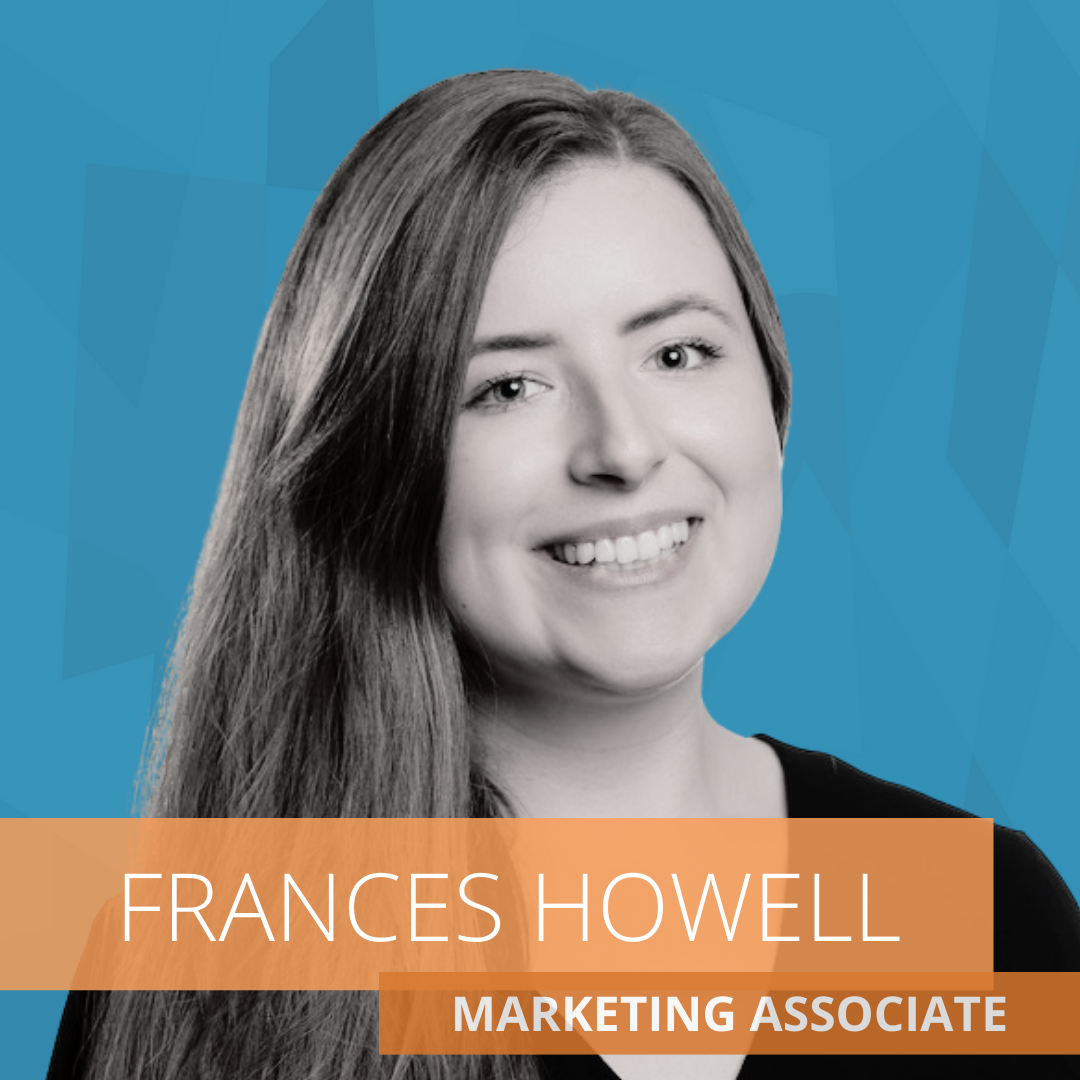
    Search Influence's newest Marketing Associate - Frances Howell

    Frances Howell, Marketing Associate
    Frances hails from Stoke-on-Trent in the UK, a city famous for Wedgwood pottery and the birthplace of Robbie Williams. She brings four years of experience in marketing and communications, primarily in B2B tech public relations, along with content marketing and internal communications. Frances holds a Bachelor’s degree in Arabic and History from the School of Oriental & African Studies in London and an Associate’s degree in Culinary Arts from Delgado Community College in New Orleans.

    Frances moved to New Orleans in 2020, where she worked as a cook at the Windsor Court Hotel in New Orleans before joining our team as a Marketing Associate. In her free time, she enjoys cooking, reading, and exploring the city’s best mocktails.


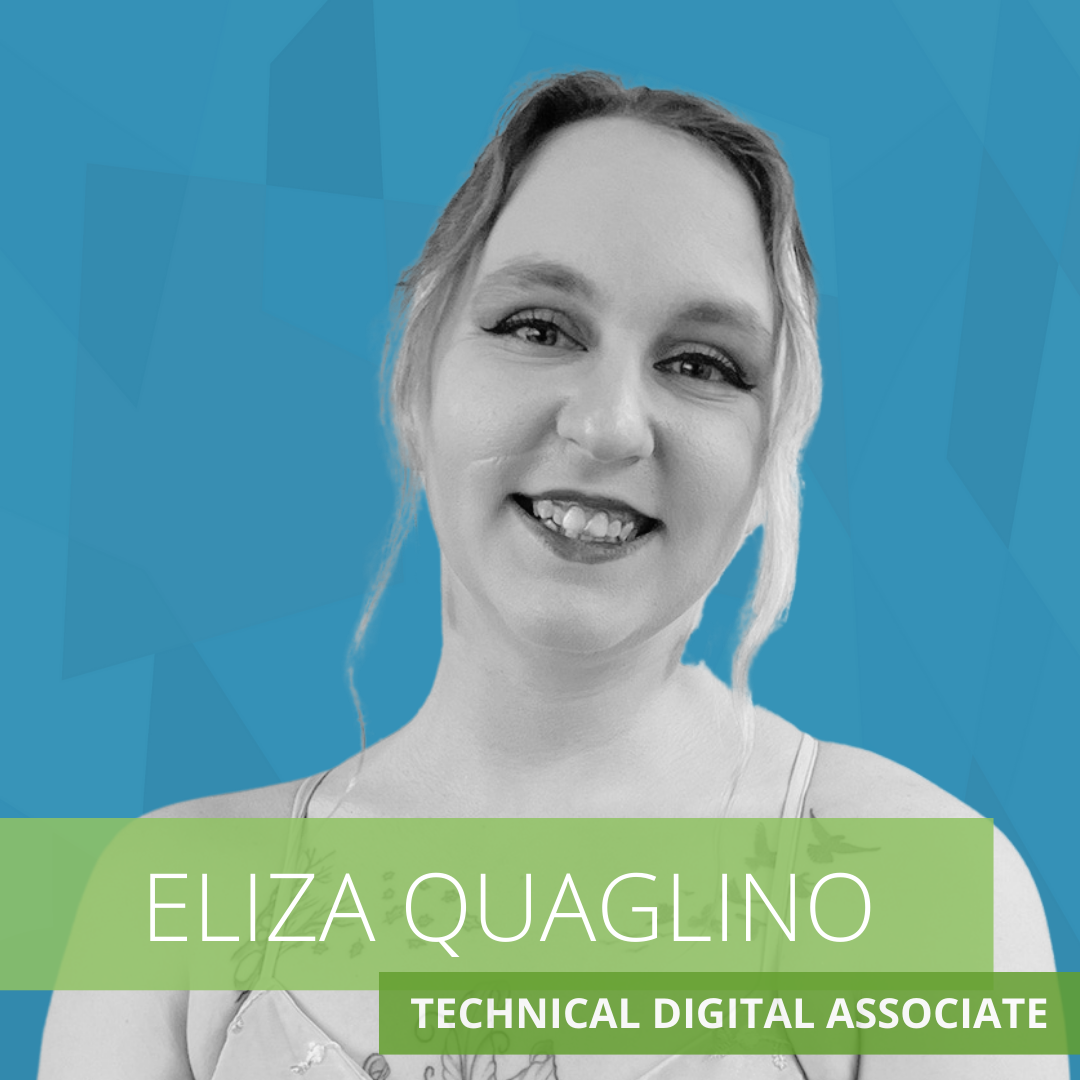
    Search Influence's newest Technical Digital Associate - Eliza QuaglinoEliza Quaglino, Technical Digital Associate
    Eliza, a native of the New Orleans area, holds a BA in Humanities and Social Thought from the Louisiana Scholars’ College at Northwestern State University and is currently pursuing her MA in English with a focus on Writing and Linguistics. Specializing in digital marketing tech at Search Influence, she enjoys data reporting and crafting visually appealing Looker Studio reports, as well as exploring various marketing techniques.

    Outside of work, Eliza is a dedicated cat mom to her four beloved cats: Verona, Rorschach, Aja, and London. She is also a passionate enthusiast of coffee and brew science, spending countless hours perfecting new syrup recipes and crafting artisanal cold brew — all meticulously documented in a detailed spreadsheet.


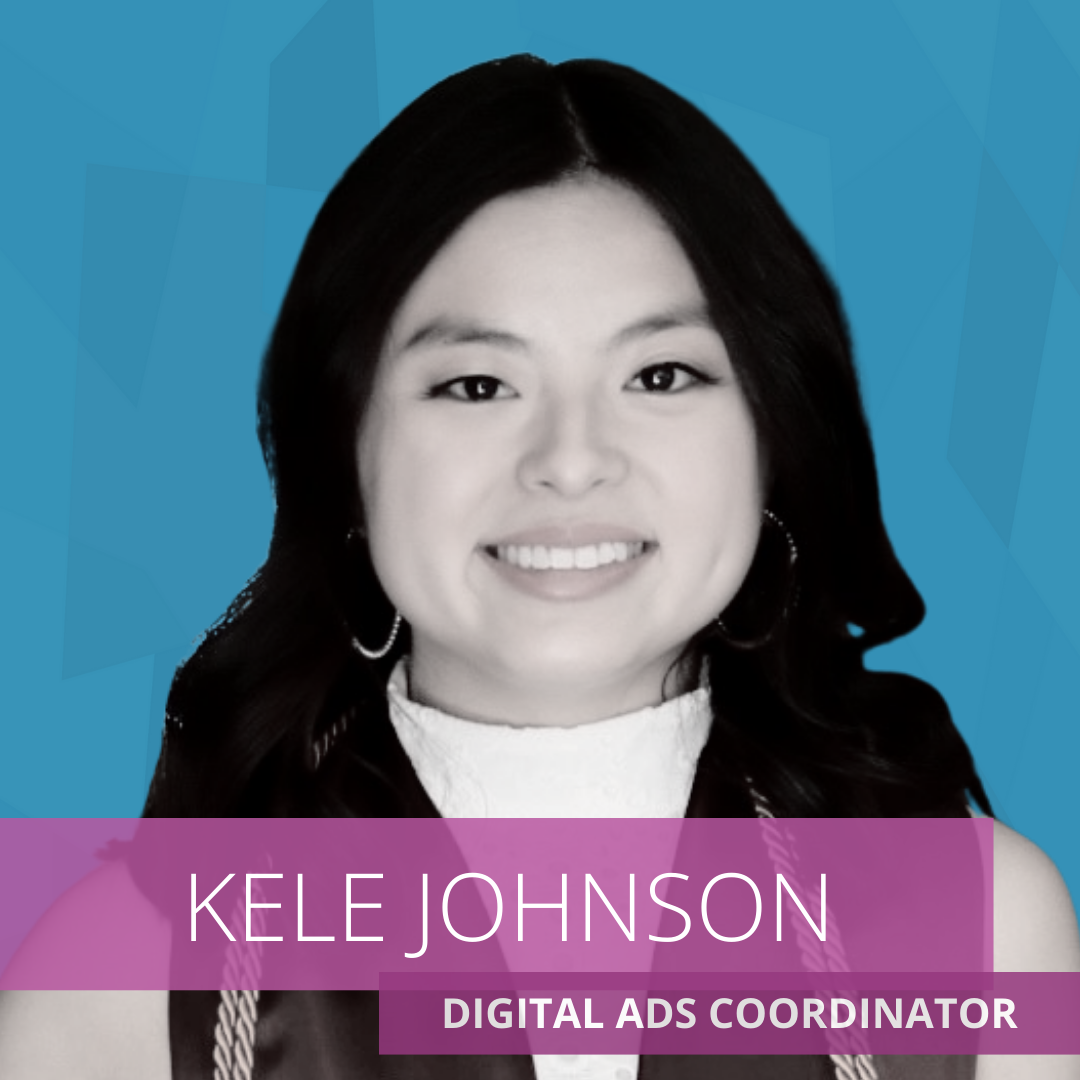
    Kele Johnson, Digital Ads Coordinator
    Search Influence's newest Digital Ads coordinator - Kele JohnsonHaving grown up in New Orleans, Kele pursued her academic journey at Loyola University New Orleans, where she earned a Bachelor’s degree in Business Administration with a concentration in Marketing. As a Digital Ads Coordinator at Search Influence, Kele brings her expertise in crafting compelling ad campaigns and driving results for clients.

    When she’s not at work, Kele enjoys maintaining an active, creative lifestyle by teaching and participating in Pure Barre and dance classes. A true movie enthusiast, she’s always on the lookout for the next great film to enjoy, making the most of her downtime with cinematic adventures.


    Search Influence's newest Account Manager - Kali Bertucci Kali Bertucci, Account Manager
    Another fellow New Orleans native, Kali graduated from the University of New Orleans with a Bachelor’s degree in Marketing. She brings over seven years of experience in sales and marketing to the Account Management team, having worked in local broadcast and digital media, as well as the live entertainment and sports industry.

    Kali is passionate about music and loves attending concerts of all kinds. After three years in Shreveport, she’s returned home to NOLA and can’t wait to dive back into our city’s delicious culinary scene (of course!)


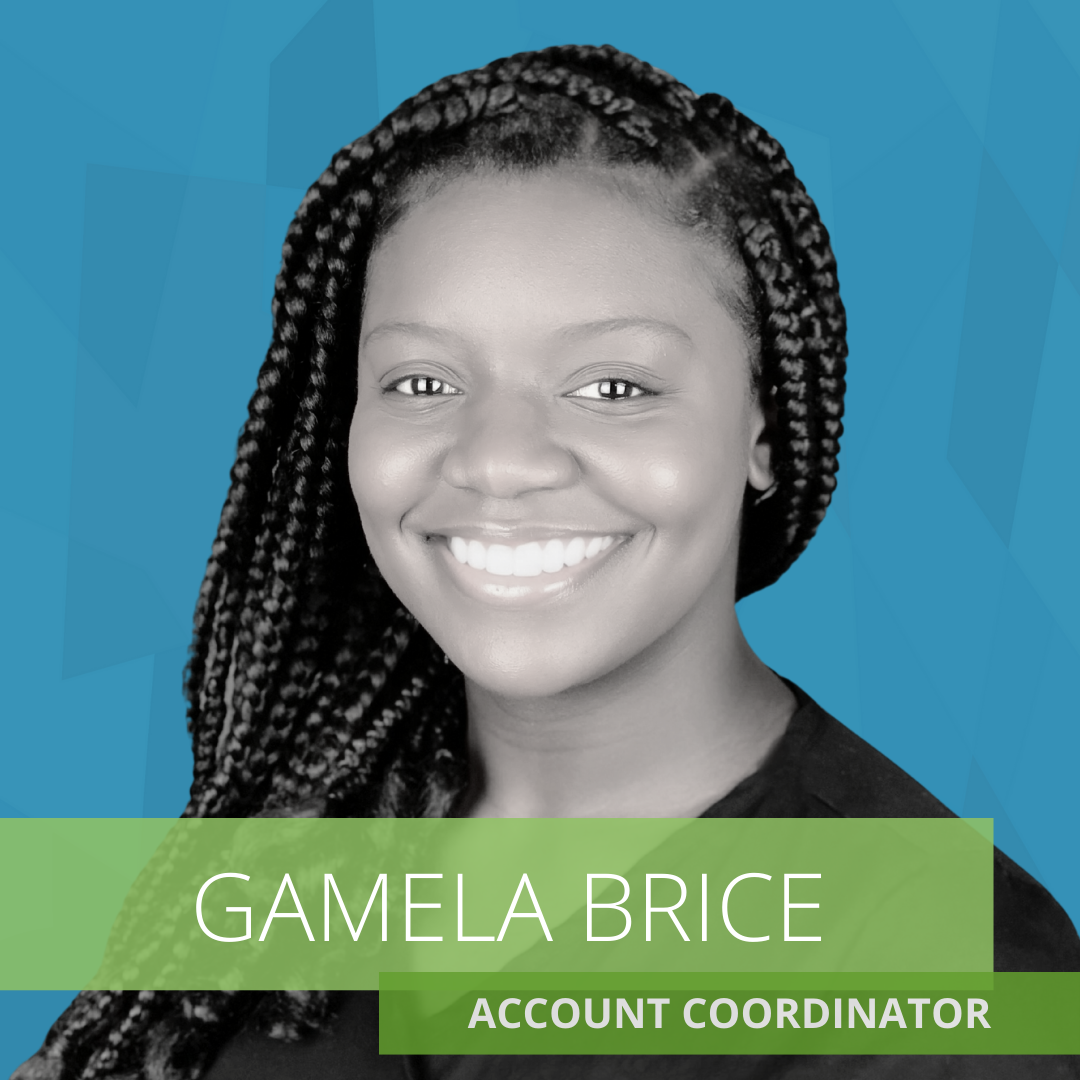
    Search Influence's newest account coordinator - Gamela Brice

    Gamela Brice, Account Coordinator
    Born and raised in Stockton, California, Gamela’s journey took her to the vibrant city of New Orleans, where she graduated from Loyola University New Orleans with a degree in Mass Communication. With a passion for digital marketing, Gamela thrives on reaching large audiences and building connections with clients and consumers.

    When Gamela isn’t coordinating the execution of strategies and campaigns in her role as Account Coordinator, she’s spending quality time with friends and family. As a dedicated foodie, she enjoys binge-watching her favorite shows and exploring local restaurants.


    Welcome, everyone, to Search Influence! We’re looking forward to seeing all that you’ll bring to the table in your new roles.

    Interested in joining a digital marketing agency consistently voted as a best place to work in New Orleans? Check out our current job openings today.


  • Social Search: How Gen Z & Millennial Search Habits Are Changing

    Social Search: How Gen Z & Millennial Search Habits Are Changing

    Key Insights

    • Gen Z and Millennials increasingly favor social search over traditional search engines like Google.
    • As social search becomes more prominent, brands need to optimize their presence on social media platforms to capture the attention of younger, tech-savvy audiences.
    • Social search engines prioritize visual content, which resonates more with younger audiences. Platforms like Instagram and TikTok emphasize images and videos, making it crucial for brands to invest in high-quality visual media to capture attention and drive engagement.

    As has been true for countless generations, young people find their own unique way of doing things.

    From turning rhythm and blues into rock and roll to developing new ways to dress, youth always finds a way to adapt the norm.

    You can see this same trend in how this new generation searches the web.

    Gen Z and Millennials are moving away from traditional search engines like Google in favor of what they consider a more authentic experience — social search.

    Understanding and adapting to these changes is crucial for digital marketers trying to reach this ever-elusive demographic.

    As social SEO becomes increasingly important, brands need to optimize their presence on social media platforms to capture the attention of these younger, tech-savvy audiences.

    At Search Influence, we are committed to staying ahead of these trends and ensuring our strategies evolve to reach all audiences. Whether it’s optimizing for traditional search engines or harnessing the power of social media platforms, we dedicate ourselves to continual learning and adaptation.

    Just as previous generations adapted to Elvis and high-waisted jeans, today’s businesses must evolve with social search.

    What Is Social Search?
    A cloud of social media icons depicting popular platforms

    Social search refers to using social media channels to find information, discover products, and learn about services. This approach leverages social media platforms’ dynamic and interactive nature, where users can tap into a wealth of real-time, user-generated content (UGC).

    Traditional search engines like Google and Bing operate by crawling the web, indexing pages, and ranking them based on factors such as backlinks, page speed, keywords, and domain authority.

    Users input relevant keywords, and the search engine returns a list of websites and pages that best match the query while also considering the above ranking factors.

    Issues arise because the best answer to a searcher’s query can get overshadowed by big, trusted (by Google), websites’ desire to capitalize on the searches regardless of their relevance.

    And for generations obsessed with authenticity, it feels particularly shady that a search for “best hiking gear” yields results from The New York Times, CNN, and Forbes.

    These websites have the online authority and know-how to satisfy Google’s ranking factors, not necessarily the user’s query.

    In contrast, social search harnesses the power of social media channels and engagement to surface content that is often more current and contextually relevant.

    Reddit, for instance, enables users to find information through community discussions and “upvoted” posts, often providing more nuanced and diverse perspectives. Platforms like Instagram and TikTok allow users to search for content using hashtags, user profiles, and trending topics, providing results that are influenced by real-time interactions and community interests.

    Let’s contextualize this with a real-world example.

    Say you’ve had a long day at work and are on the hunt for an easy recipe.

    A simple search on TikTok for #quickrecipes will produce a bounty of popular, easy-to-follow, short-form videos based on past content you’ve interacted with, all from authentic sources in your community.

    This makes the search for dinner simple and satisfying.

    TikTok’s powerful algorithm has led to countless viral recipes, like Feel Good Foodie’s Baked Feta Pasta.

    @feelgoodfoodie If you love my Baked Feta Pasta recipe, you can now order it for pickup or delivery from the Creators Kitchen As Seen On TikTok! It’s a new brand that features my viral #bakedfetapasta ♬ original sound – Feel Good Foodie

    In contrast, a search for “quick recipes” on Google opens a floodgate of 3,000-word blogs from the likes of Food Network and Taste.

    While some might not mind this result, for many Gen Z and Millennials, all they see is hard-to-digest content from their parents’ favorite brands.

    Social media platforms show results based on what users engage with in their online communities, leading to a more personalized and trusted experience.

    This is an experience that Gen Z and Millennials can’t get enough of.

    Gen Z and Millennials Are Driving the Social Search Revolution

    There has been a significant cultural shift in how younger generations seek information. The phrase “Google it” is gradually being replaced with “Search it up” on social media.

    This change in language reflects a broader trend: Traditional search engines are no longer the default for discovering new products, services, and information for young people.

    Instead, Gen Z and Millennials are turning to social media search for visual content, peer reviews, and influencer recommendations.

    According to Persuasion Nation, 97.5% of Gen Z use social media as their primary source of shopping ideas, underscoring the dominance of these platforms in influencing purchasing decisions.

    Reasons behind the preference for social search

    • Visual content and peer reviews: Social media platforms offer rich visual content that resonates with Gen Z and Millennials. From Instagram stories to TikTok videos, visual media captures attention and conveys information quickly and effectively. Peer reviews and influencer recommendations add an extra layer of authenticity and trust, making it easier for users to make informed decisions based on real experiences.
    • Direct interaction and community engagement: Social media enables direct interaction with brands, influencers, and peers. Comment sections, likes, and shares facilitate community engagement and discussion, creating a sense of belonging and active participation. This interactive element is something traditional search engines cannot replicate, making social media search more appealing to younger users.
    • “Junk” in traditional search results: There is growing dissatisfaction with the commercialization and spam often found in traditional search results. Users are increasingly wary of ads and sponsored content that can clutter their search experience. While similar ads can be found on social media, they are often delivered by influencers users trust — not a pop-up while scrolling through a blog.

    Concerns about social media search

    While Hubspot reports that 29% of Gen Z and Millennials prefer to use social search engines, it’s not all sunshine and rainbows.

    There is an erosion of trust in social media platforms due to concerns about privacy, misinformation, and the authenticity of content.

    This duality highlights the complex relationship younger users have with social media as both a valuable resource and a potential source of mistrust.

    Impact of Social Search on Traditional SEO

    Traditional SEO involves optimizing a website’s content to improve its ranking on search engines. This includes:

    • Keyword research
    • On-page optimization
    • Building backlinks
    • Ensuring technical elements like site speed and mobile-friendliness are up to par

    The primary goal is to enhance visibility in search engine results pages and drive organic traffic to the website.

    On the other hand, social search SEO focuses on optimizing content for discovery on social media platforms. This involves creating engaging, shareable content that resonates with the target audience. Keywords still play a role, but the emphasis is more on user engagement, video content, and social sharing.

    A phone being held on a brick wall under a painting of a "Like" bubble commonly associated with Instagram

    The success of social search SEO is measured by the level of interaction and community engagement a post receives rather than just its ranking position. And, where those social posts might rank in Google and Bing.

    How social search is influencing changes in SEO strategies

    Social search is driving changes in SEO strategies by emphasizing the importance of creating content that is not only relevant but also highly engaging and shareable. Traditional SEO strategies are increasingly incorporating elements of social SEO, such as focusing on video content and community authenticity. This hybrid approach aims to enhance both search engine rankings and social media visibility.

    Brands now recognize that creating compelling visual content and leveraging influencers isn’t just for social media — it’s an integral part of SEO strategy as well.

    By mixing the powers of social media’s community-driven, user-generated content with the strengths of SEO, marketers can now grasp what has long eluded them… authenticity that ranks across all platforms.

    These strategies help increase brand identity and drive traffic from social platforms back to the website, enhancing overall SEO performance.

    Potential challenges and opportunities presented by social search

    The rise of social search presents several challenges for traditional SEO, particularly in adapting to the preferences of younger audiences.

    One significant challenge is creating content that Gen Z and Millennials trust and want to interact with.

    These generations prefer easily digestible, straightforward content that quickly satisfies their search queries.

    For example, short, informative videos or visually appealing infographics are more likely to engage these users compared to lengthy, text-heavy articles.

    Additionally, traditional SEOs must develop strategies for platforms outside of Google. While Google remains a dominant player, platforms like Instagram, TikTok, and Reddit are increasingly important for reaching younger audiences.

    This requires a shift in content marketing strategy to include the creation of shareable, engaging content tailored to these social media platforms.

    How to Adapt to This New Era of Search

    Optimize for social search

    To increase discoverability on social media sites, it is essential to conduct thorough research on relevant keywords and hashtags to include in your post captions and your profile bio.

    See? Some things never change.

    Utilizing keywords and hashtags can significantly enhance your social SEO performance.

    Ensure that your content descriptions and hashtags align with the latest search trends on social platforms.

    This strategic approach will help your brand appear in more search results on social media sites.

    Optimizing your social media profiles is crucial for strengthening your brand identity and enhancing your social media efforts. Use relevant keywords in your profile descriptions, and include clear, concise information about your brand.
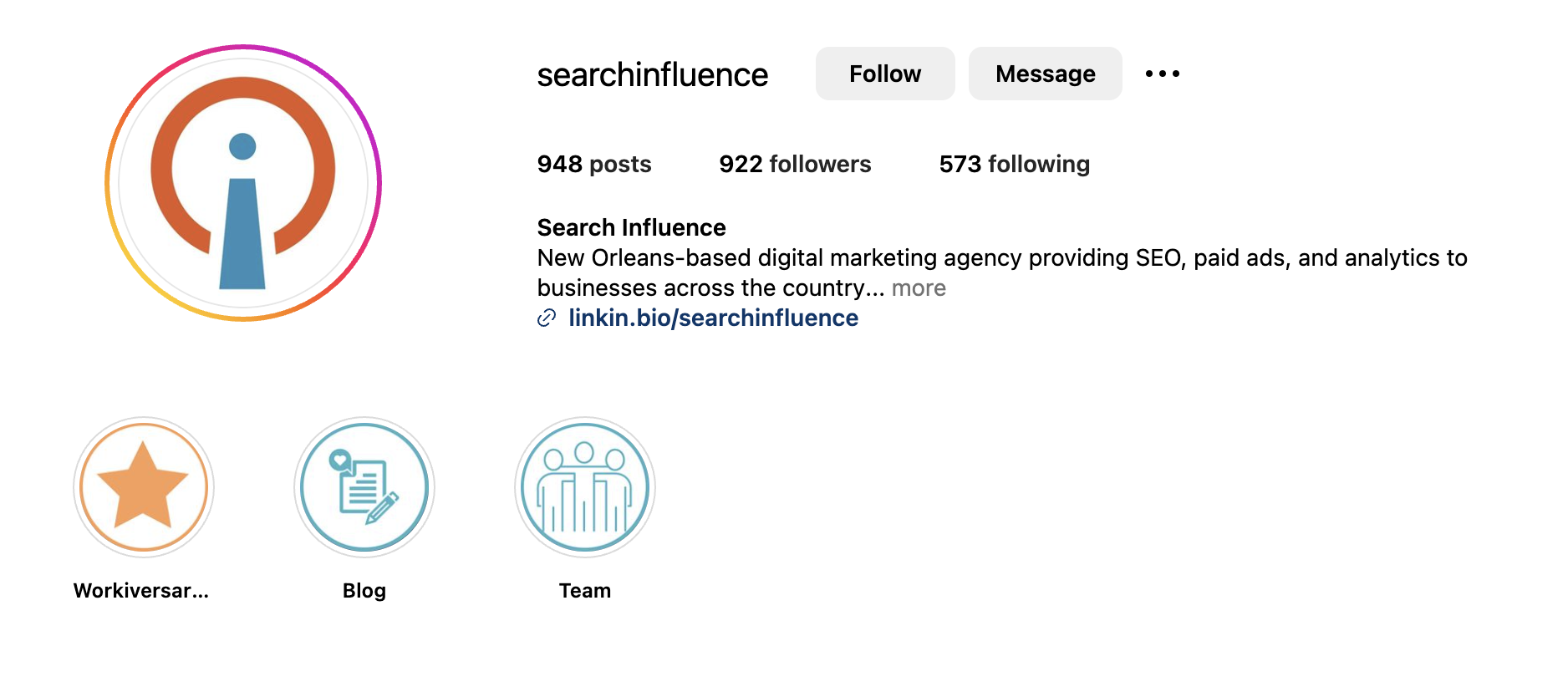
    A screenshot of Search Influence's Instagram profile header, showing the importance of proper optimization

    Make sure to link back to your website from your social media pages to drive traffic and improve your overall SEO strategy. Consistency across all social media accounts is key to creating a cohesive and recognizable brand presence.

    Understand the platform

    Each social media platform has unique features and algorithms, requiring tailored strategies to maximize your reach and engagement.

    For example, Instagram and TikTok both rely heavily on visual content, such as short-form videos, while Reddit relies on community interaction and conversation engagement.

    Developing specific strategies for each platform will allow you to leverage their strengths and connect with your target audience effectively.

    Social media algorithms and features are constantly evolving.

    To keep your strategies relevant, stay informed about these changes by following digital marketing news and updates. Regularly updating your knowledge ensures that your social media efforts remain effective and aligned with the latest trends and best practices.

    Create engaging visuals

    Investing in high-quality images, videos, and graphics is crucial for capturing attention on social media.

    Professional and visually appealing content stands out and attracts more engagement. Platforms like TikTok and Instagram Reels have popularized short-form video content, making it a powerful tool for social discovery. Create short, engaging videos that are informative, entertaining, and easily shareable.


    View this post on Instagram


    A post shared by Search Influence (@searchinfluence)

    Keeping your feed active with fresh content, even if it seems repetitive, helps maintain visibility and keeps your audience engaged.

    Leverage influencers and user-generated content

    Collaborating with influencers who align with your brand values and target audience can significantly boost your social media interactions with Gen Z and Millenials.

    Influencers can create authentic content that resonates with their followers, enhancing your brand’s reach and credibility. Influencer partnerships can also drive more brand mentions and improve your social media signals, ultimately benefiting your SEO strategy.

    Promoting user-generated content is an effective way to increase engagement and build community around your brand.

    Encourage customers to share their experiences using branded hashtags, making it easier for others to discover and engage with your content. UGC not only provides authentic, relatable content but also boosts your brand’s visibility and trustworthiness.

    Trust the Search Engine Experts at Search Influence

    No matter the year or the platform, marketers will always have to adapt their sails to the winds of young people.

    Before SEO and digital marketing, brands spent millions on 30-second spots between music videos on MTV.

    Before that, the mad men of ad agencies bought entire pages in Rolling Stone, trying to grab the ever-fleeting attention of youth.

    Allow Search Influence to be your first mate as you navigate the seas of social search.

    Our knowledgeable team has years of experience getting results for brands just like yours.

    As SEO thought leaders, we take pride in leveraging the latest industry trends to build result-driven campaigns for our clients.

    Get in touch with us today to learn more about all the services we offer.

    Image Credits

    Group of Social Media Logos, Credit to Alexander Shatov

    Phone on Brick Wall, Credit to Karsten Wingeart

  • Gain Recruitment SEO Insights From Will Scott’s Recent UPCEA Blog Post

    Will Scott on Higher Education SEO Strategies for UPCEA Guest Blog

    Search Influence Co-Founder and CEO Will Scott recently wrote a guest blog post for our higher education marketing partners at UPCEA.

    The blog post, titled “Drive Success: Using Recruitment SEO to Fill Higher Education Seats,” takes an in-depth look at how higher learning institutions can utilize recruitment SEO to adapt to evolving demographics and industry shifts.

    In his blog post, the SEO expert argues that traditional higher education marketing tactics are not enough. Today’s learners discover and explore educational programs differently, and institutions need to adapt their strategies accordingly.

    Takeaways from Will Scott’s UPCEA Blog

    • The Enrollment Funnel in the Digital Age: Today’s students research programs online throughout their decision-making process. Marketers must ensure a seamless online experience, from the initial discovery to application completion. This reiterates the importance of recruitment SEO, or optimizing websites for search engines.
    • A Shrinking Traditional Market: The number of high school graduates is declining, forcing universities to redefine their ideal students. Adult learners and non-traditional students present new opportunities, but also challenges, as they may not be aware of programs that can help them achieve their goals.
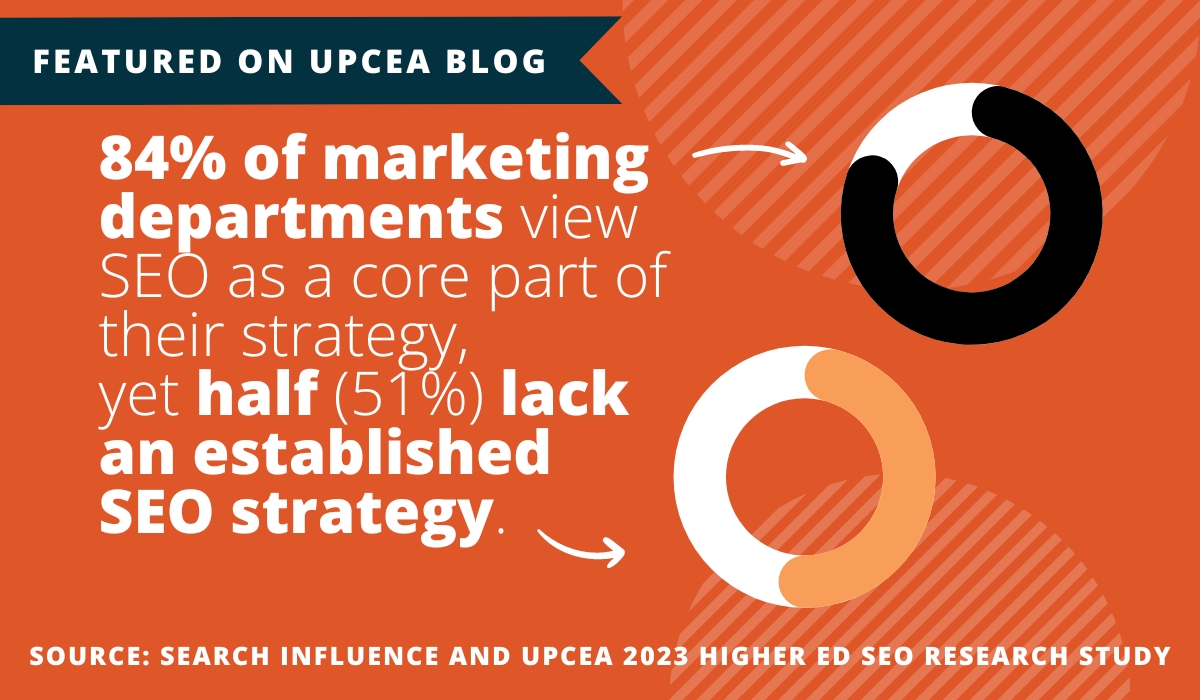
    • The Power of SEO: A well-crafted SEO strategy can significantly improve a university’s online presence. It can increase brand awareness, attract qualified leads, and move potential students down the enrollment funnel. Search Influence and UPCEA’s Higher Ed SEO Research Study shows that 84% of marketing departments view SEO as important, but only half have a defined strategy.
    • Beyond Discovery: SEO isn’t just about getting noticed. Prospective students often conduct follow-up searches to validate their initial impressions. Consistent presence in search results builds trust and credibility. Conversely, an absence can undermine an institution’s efforts and benefit competitors.
    • Challenges to Effective SEO in Higher Ed: Many universities lack the resources or expertise to implement a strong SEO strategy. Professional, Continuing and Online departments may be understaffed or underfunded, and institutional leaders may not understand the value of SEO. A Search Influence study revealed that marketing departments rated their SEO skills as just average, and website audits showed significant room for improvement.

    Infographic for Search Influence's Will Scott's UPCEA Guest Blog Post on Higher Education SEO Strategies

    Learn More About Recruitment SEO With Search Influence

    Prospective students are just a search away. Don’t let outdated marketing strategies hold you back.

    Search Influence has years of experience helping universities including Tulane SoPA and Palo Alto University attract qualified leads and fill seats with strategic SEO.

    Contact us today and learn how we can transform your website into a student discovery powerhouse.

  • Will Scott Talks Higher Education Schema in Seer Interactive Guest Blog

    Search Influence - Will Scott on schema for Seer Interactive

    In a June guest blog for B-Corp certified digital marketing agency Seer Interactive, Search Influence Co-Founder and CEO Will Scott breaks down a fundamental, yet often overlooked, higher education SEO tactic: schema markup.

    Schema markup for higher education websites is a form of microdata added to a website’s HTML to help search engines better understand the content. It uses a semantic vocabulary (i.e., code) known as Schema.org to annotate various webpage elements with metadata. By crawling your schema, search engines can get a better sense of who you are and surface your site in the SERPs in response to relevant search queries.

    Schema markup is the back-end roadmap for your higher ed website. It guides search engines, like Google, Bing, and Yahoo, through the campus of your content via structured data that’s easy to understand and follow. This helps streamline your site’s crawlability, boost your chances for rich snippets, and improve your visibility in the search engine results pages (SERPs).

    How do you know if your institution’s schema markup is up to par? See Will’s blog, “Higher Education Schema – How Your School Can Win Google,” for tips to better speak search engines’ language.

    Key Takeaways From “Higher Education Schema – How Your School Can Win Google”

    Schema is much beyond just simple code. In “Higher Education Schema – How Your School Can Win Google,” Will goes deep into this core technical SEO concept, offering insights on:

    • The Fundamentals of Schema Markup: Understand the basics and why it’s essential for higher education websites.
    • Step-by-Step Implementation: Detailed instructions (with a template) on how to apply schema markup using Schema.org, tailored specifically for educational institutions.
    • Practical Examples: Real-world applications and examples to illustrate how schema markup can be effectively used.
    • Impact Analysis: Insights on how schema markup can grow your institution’s online presence and drive more prospective students to your enrollment funnel.

    Search Influence - High Education Schema for Seer Interactive

    Dive Deeper Into Higher Education Schema

    2024 research from Schema App found that 1 in 5 digital marketers have trouble showing the value of their schema markup. If you’re unsure whether your school’s schema is truly search engine fluent, do your part in helping Google to translate it.

    See Will’s full article on Seer Interactive for more “higher ed schema 101” and how to optimize your site for search engines

  • Get Ahead With AI for SEO: Will Scott on “Make Marketing Make Sense” Podcast

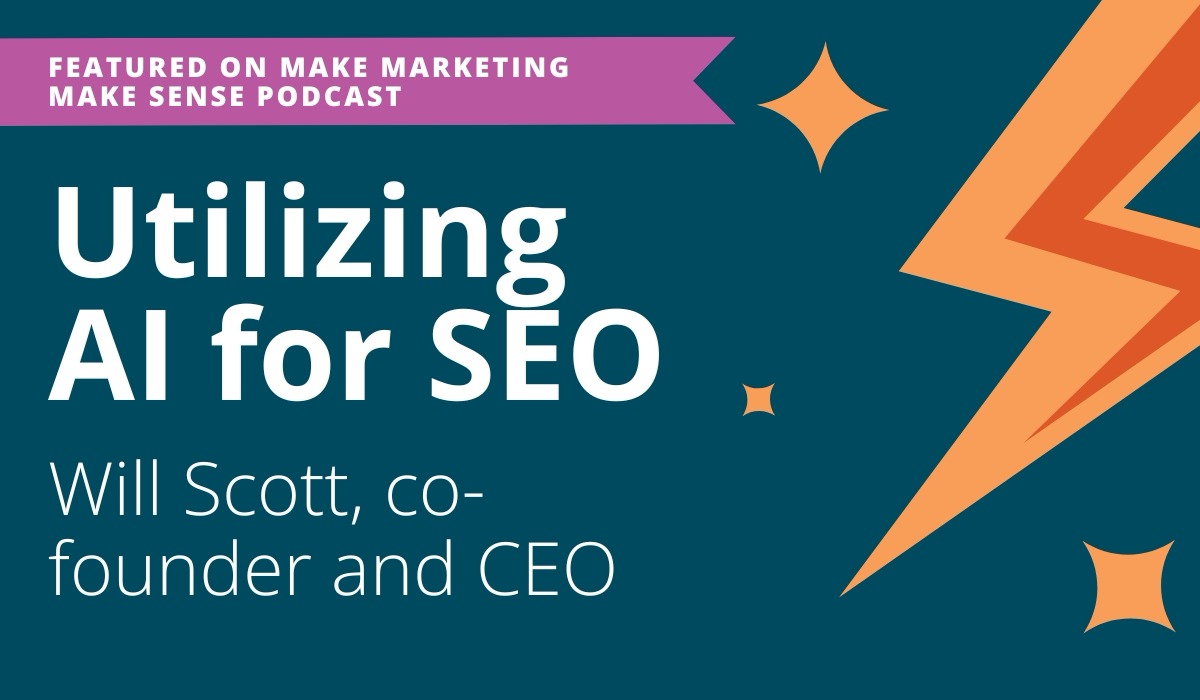
    A Search Influence Graphic outlining the of the article

    Search Influence Co-Founder and CEO Will Scott made his first appearance on the Make Marketing Make Sense podcast to share how marketers should utilize AI to supercharge their SEO efforts.

    Make Marketing Make Sense is a weekly podcast hosted by Comfy Stone Films Co-Founder and Account Manager Josh Owen. The podcast invites entrepreneurs and marketing experts to simplify the latest trends in this ever-evolving industry.

    Comfy Stone Films helps businesses grow by making effective online video content on such topics as video marketing strategies and production tips.

    Watch the full podcast below to gain valuable insights into how AI can take your SEO strategies to the next level.

    AI for SEO Insights From Will Scott

    Since putting his first website online in the mid-90s, Will has worked through countless evolutions of SEO. Few advancements have had the same impact as Artificial Intelligence.

    During his guest appearance in Make Marketing Make Sense, on the episode Utilizing AI for SEO, Will discusses:

    • How AI can streamline SEO content creation
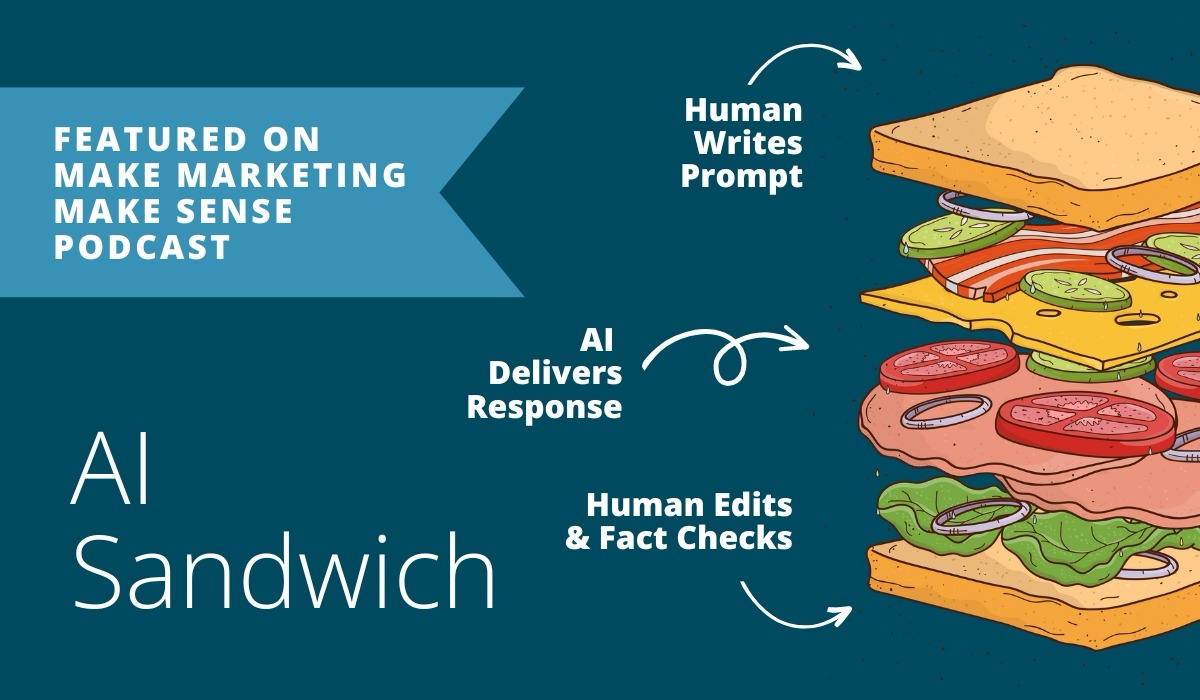
    • How to combine AI with a human touch using the “AI sandwich” method
    • How to prompt AI to create SEO-optimized content

    A Search Influence graphic depicted the "AI Sandwich"

    The SEO vet also explains how tools like Wave.video and Make.com can help you create worthwhile video content and automate your workflows.

    Looking for more ways to use AI to boost your marketing efforts?

    Read blogs from Will Scott to dive even deeper into the robot revolution.

    Learn How to Use AI for SEO With Search Influence

    Harness the power of AI to elevate your SEO and digital advertising strategies with Search Influence.

    Our team of experienced digital marketers has spent almost 20 years at the forefront of the industry.

    Contact us to take the first step towards supercharging your marketing efforts.

  • 2024 Higher Education Marketing Benchmarks: Get Past Your Blindspot

    2024 Higher Education Marketing Benchmarks: Get Past Your Blindspot

    Key Insights

    • A shifting higher education playing field is causing universities to reevaluate their results and the costs associated with them.
    • Despite increased competition and an evolving modern learner, higher education marketing departments can still reach their enrollment goals by tracking the right metrics to inform future strategies.
    • New Search Influence and UPCEA research reveals a blind spot in higher education marketing tracking: cost per inquiry and cost per enrollment.
    • Cost per inquiry and cost per enrollment are compasses that help you determine your marketing budget’s efficiency and effectiveness. By tracking these key metrics, you can see what’s working and what’s not as part of the bigger picture.
    • Marketers who keep a pulse on their campaigns via in-depth tracking are more satisfied with their overall marketing performance.

    Changing demographics, limited resources, and increased competition in higher education are making university leaders rethink their marketing strategies.

    Colleges and universities need to pinpoint where to invest their resources for the best return — and where to trim the fat.

    This starts with tracking the right higher education marketing metrics.

    While overall marketing metrics offer valuable insights, the ability to analyze the data at the program level will ultimately determine which institutions meet enrollment goals and which fall behind.

    In “What Gets Measured Gets Managed,” our 2024 higher education marketing benchmark research conducted in partnership with UPCEA, we analyzed whether professional, continuing, and online (PCO) units are tracking two key metrics that could inform critical outcomes: cost per inquiry (CPI) and cost per enrollment.

    See the state of tracking in higher education marketing and how your institution compares to others in the industry.

    Key Findings of the UPCEA Research Study

    The average annual digital ad spend on PCO units is nearly $900k

    The modern learner has gone digital, and the higher education marketing sector rightfully followed suit.

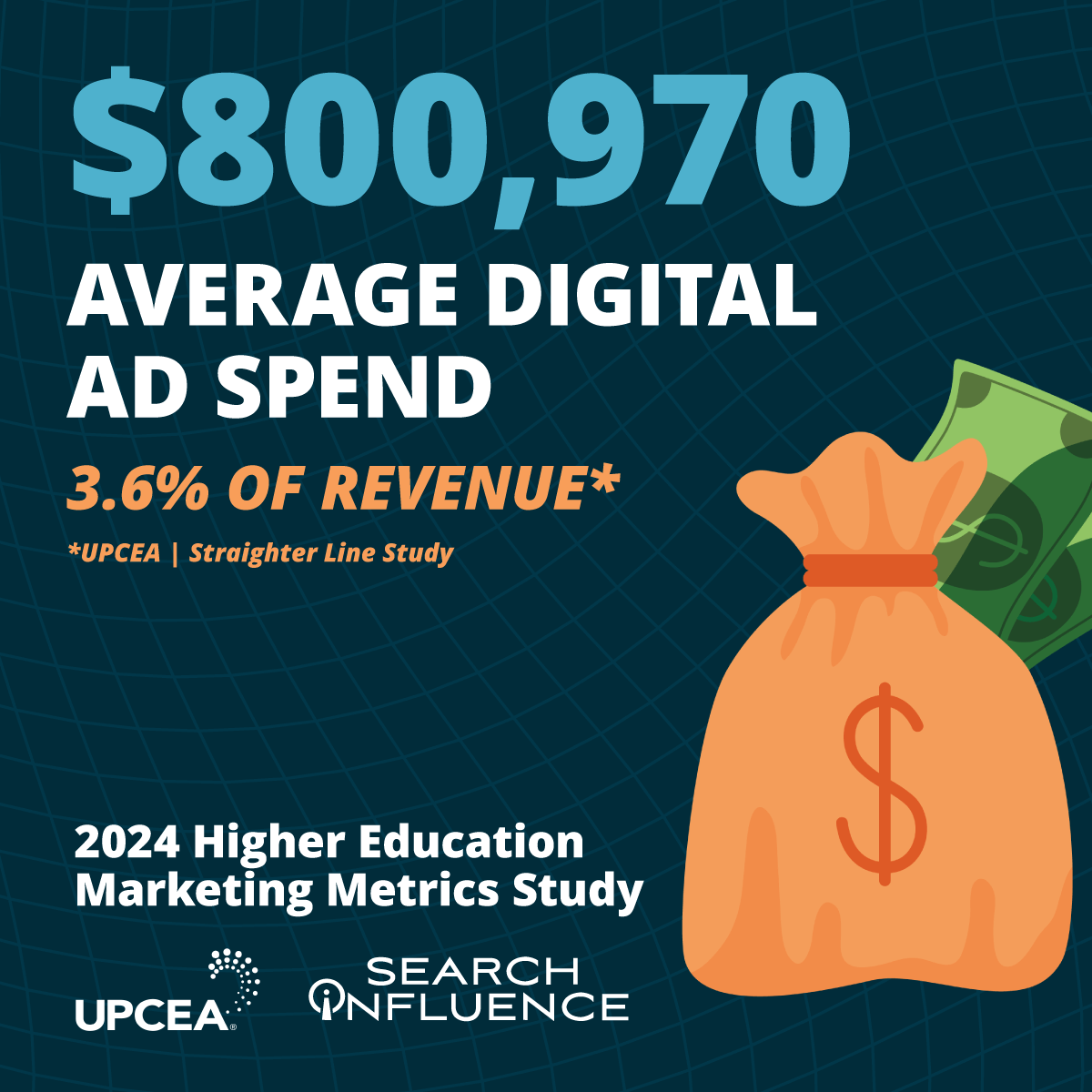
    Professional and online education units spend an average of $800,970 each year on digital advertising spend, including paid search, social advertising campaigns, and connected TV (CTV) streaming ads.

    Average digital ad spend was $800,970 - Search Influence Higher Education Marketing Benchmarks

    As the new learner searches for higher education programs online, digital advertisers must meet inquirers where they are in their enrollment journey.

    This involves continuous learning, adapting, testing, and re-testing — a process that starts with tracking the right campaign data, like cost per inquiry.

    Less than half of higher ed marketers track cost per inquiry

    Cost per inquiry is the most important metric to track to reduce the expenses of driving your prospects to take action. But if you aren’t tracking this key metric, the good news is you’re not alone.

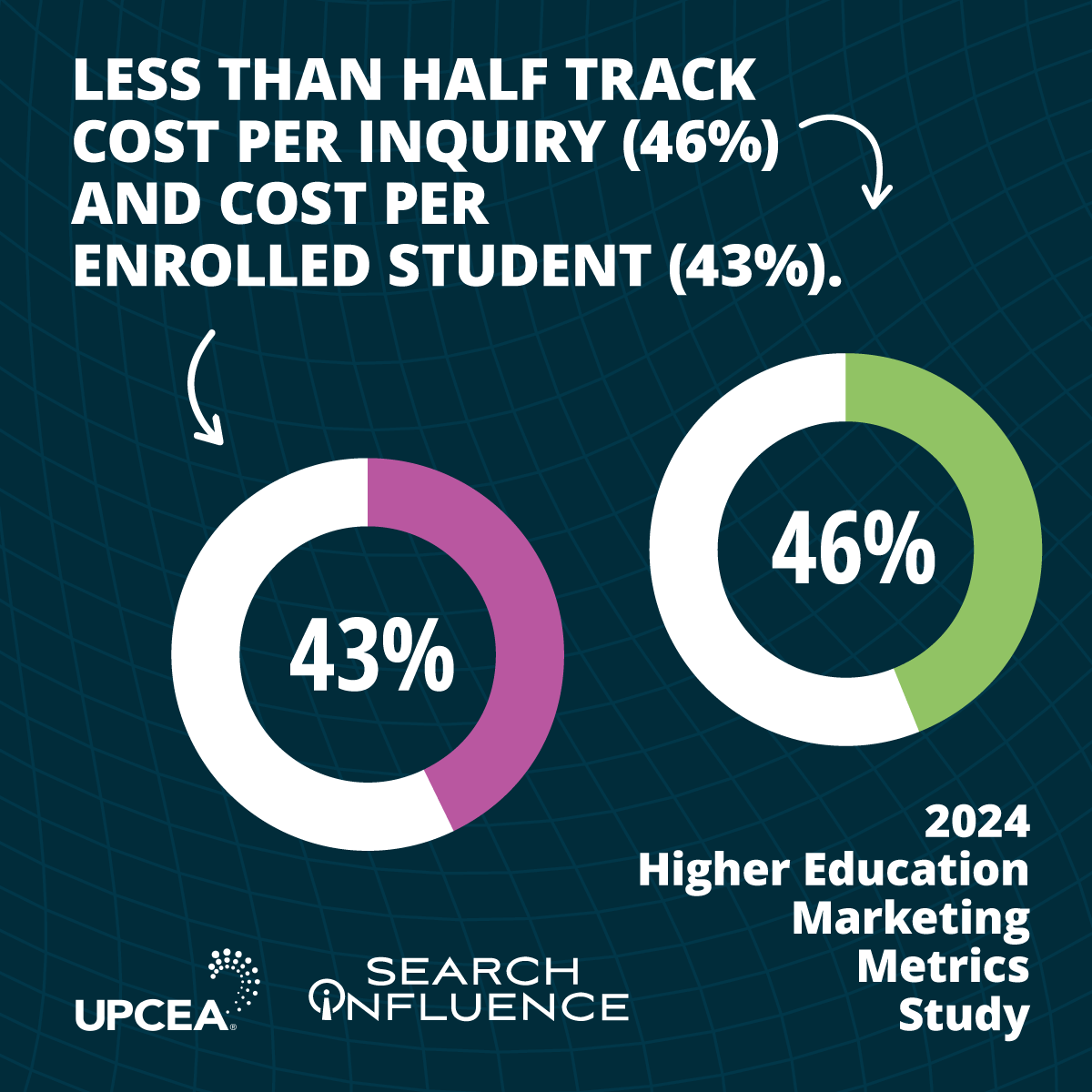
    Today, most higher education marketers have a fairly strong grasp of the source of their inquiries — not necessarily the costs associated with them. Nearly three-quarters (73%) of marketing units track inquiry sources for their PCO programs, while less than half track cost per inquiry (46%) or cost per enrolled student (43%).

    And, for nearly one out of five research survey respondents (17%), metric tracking isn’t even on their radar.

    Less than half track cost per inquiry and cost per enrolled student - Search Influence Higher Education Marketing Benchmarks

    The average cost per inquiry (CPI benchmark) for professional and online education is $140.

    Of the 46% of PCO units that track cost per inquiry, the average CPI for the 2022-2023 fiscal year was $140, with a median of $106. Roughly one-third (32%) of PCO units had a CPI between $50 and $100, 15% between $101 and $150, and 15% over $200.

    The expenses associated with this CPI benchmark for marketing varied but most often consisted of:

    • Media spend (88%)
    • All marketing expenses, excluding salaries (46%) and agency management fees (39%)

    Result satisfaction is fairly low, with 38% of survey respondents reporting they’re content with their school’s CPI, and 27% not sure.


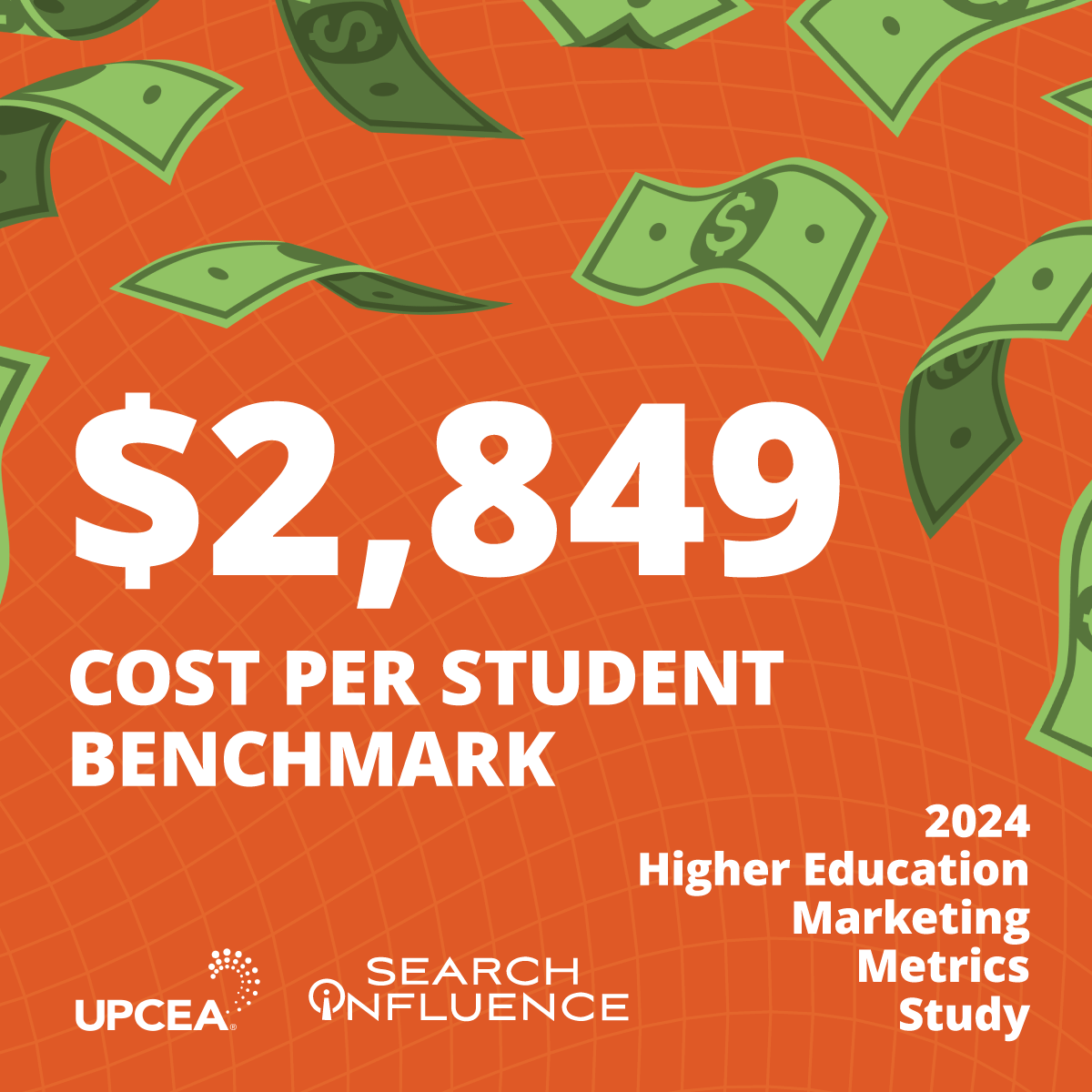
    The average professional and online education cost per enrolled student is $2,849.

    Of the 43% of PCO units that track cost per enrolled student (43%), the average cost per enrolled student for the 2022-2023 fiscal year was $2,849, with a median of $1,173. 27% of PCO units had a cost per enrolled student under $500, and an additional 27% had a cost per enrolled student of over $3,000.

    $2,849 cost per student benchmark - Search Influence Higher Education Marketing Benchmark

    Email marketing is most often managed in-house, while digital advertising is most often outsourced

    Nearly three-quarters (73%) of higher ed email marketing and half of search engine optimization (44%) efforts are entirely managed in-house. However, digital advertising remains an item ripe for outsourcing, with half of the survey respondents exclusively outsourcing their Google paid search campaigns to experienced agencies.

    Whether it’s due to budget constraints or simply just a preference to keep things internal, most PCO units mix and match what is outsourced and what is managed in-house. However, it’s important to note that managing any marketing campaigns in-house requires universities to have the time, skills, and resources to monitor campaigns and stay up to date on trends.

    If you’re unsure whether partnering with an agency is the best option for your university, start a conversation with us today.

    Marketers who track their campaigns are more happy with performance

    Tracking campaign performance has a direct link to overall marketing satisfaction.

    According to our research findings, those who are satisfied with their back-end campaign tracking capabilities are more likely to be satisfied with how those campaigns perform in the wild.

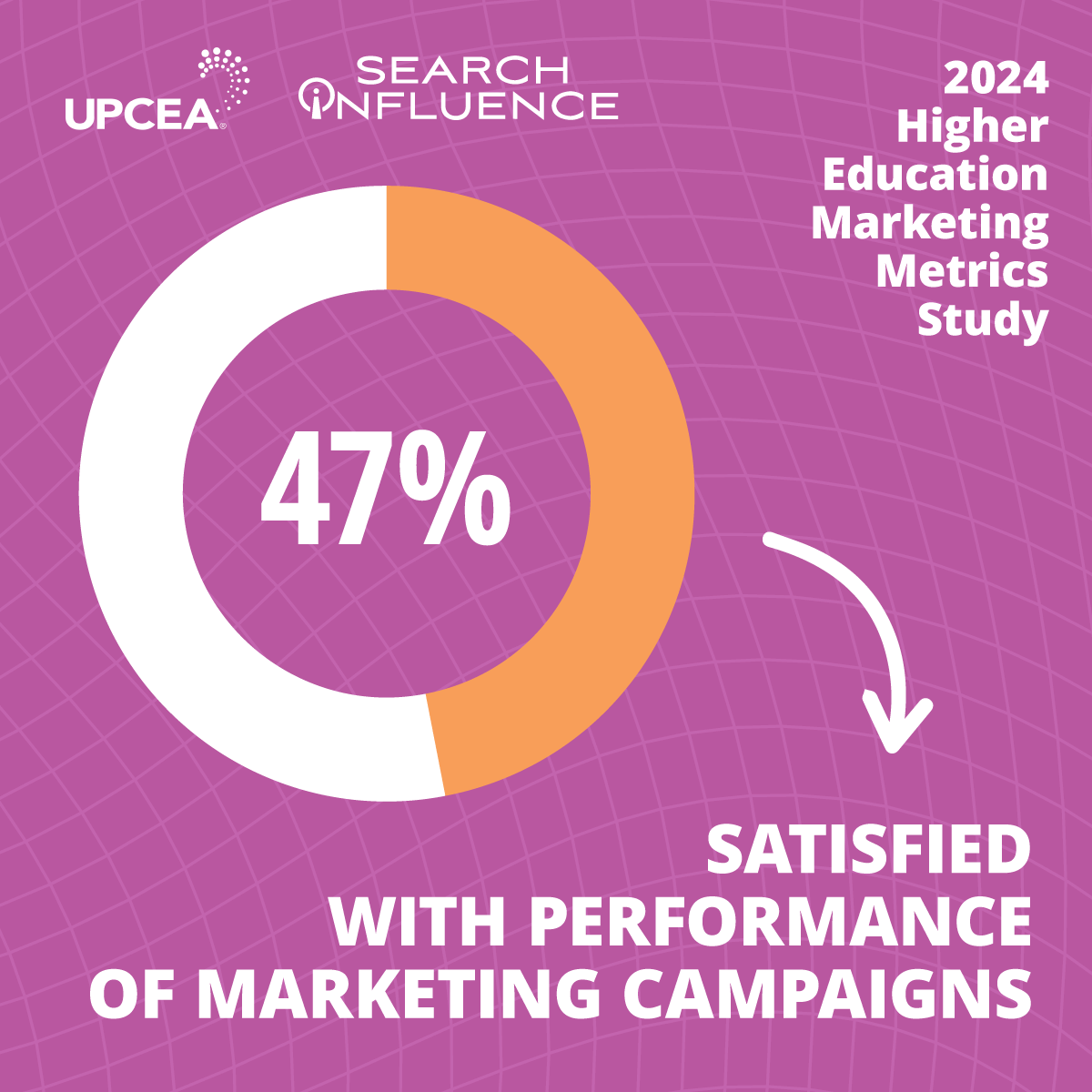
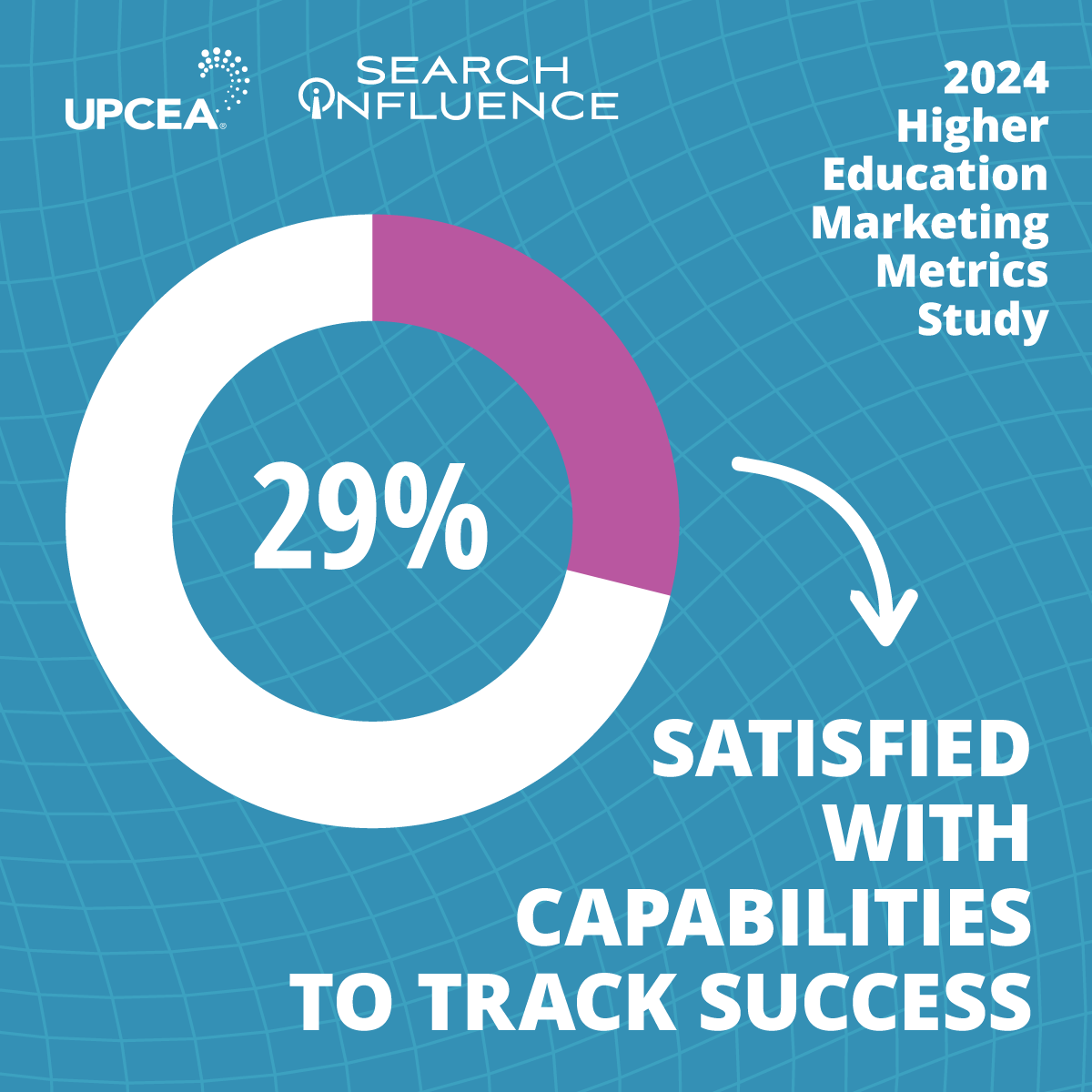
    Despite this, many marketers lack the know-how, resources, and time to keep a steady pulse on their campaigns, leaving key metrics to fall to the wayside — entirely overlooked. Fewer than half (46%) of survey respondents report satisfaction with their campaign’s performance, and only 29% are satisfied with their ability to track such success.

    This blind spot then creates a grueling cycle of campaign launch → result dissatisfaction → repeat, with no guide for improving results.

    29% of companies were satisfied with capabilities to track success - Search Influence Higher Education Marketing Benchmark

    How Higher Education Marketing Benchmarks Drive Marketing Outcomes

    There’s an old saying by British mathematician Lord Kelvin that goes, “To measure is to know.” 

    When thought of strategically, digital advertising is data for dollars. Within a single campaign, you can gain insights into its effectiveness, ranging from lead quality to cost per inquiry, without hours of tedious pen-to-paper calculations. And, with industry-wide higher education marketing benchmarks, you can compare how you’re doing with competitors and determine ways to refine your budget and outcomes.

    Going beyond basic metrics like cost-per-click and leveraging more granular metrics like cost per inquiry helps you:

    • Have more confidence in your inquiry quality and quantity
    • Know which campaigns are performing or underperforming, and which optimizations to make to improve results
    • Assess how adjustments like budget and targeting changes affect campaign results
    • Establish a starting point to dive deeper into metrics like conversion rates as prospective students move through the enrollment funnel

    Armed with a well-rounded understanding of each inquiry, you can drive home campaigns that resonate without wasted ad spend.

    How to utilize cost per inquiry

    Cost per inquiry isn’t a metric exclusive to higher education institutions. Healthcare, hospitality, and B2B marketers have long relied on this measurement to assess the state of their incoming inquiries.

    Why? Because CPI is a direct measurement of budget efficiency and effectiveness.

    Your institution’s CPI is calculated by dividing how much you’ve spent on marketing and advertising by the number of inquiries received. In higher education, inquiries commonly originate from emails and college websites, specifically:

    • Request for information forms
    • Brochure request forms
    • Request a visit forms

    Utilizing a CPI metric gives your marketing department valuable insights into your advertisements’ impact. It helps you examine your performance and provides guidance on budgeting and refining your marketing strategy.

    But, just like any marketing metric, CPI works best when it’s evaluated as part of the bigger picture. Building your data stack with additional key metrics, like cost per enrolled student, helps you visualize the cost of the entire conversion process, from the initial inquiry to final enrollment.

    How to utilize cost per enrolled student

    Cost per inquiry is a leading indicator of success.

    Cost per enrollment is the most definitive metric you can review to see how much you are spending to get a new student.

    This metric encompasses the total costs invested in securing a student’s enrollment, factoring in expenses from the initial marketing efforts and campaign launch all the way to the student’s matriculation. Most often, these include:

    • Media spend
    • Agency management fees
    • University marketing team salaries
    • All other marketing undertakings

    When analyzing cost per enrollment over time, or comparatively within your programs, you can get a sense of where you need to make the biggest changes – either budget, resource allocation, or overall strategy.

    Leveraging cost per inquiry and cost per enrollment in tandem can lead you down the right path to campaign effectiveness. Ideally, by adopting these metrics into your tracking tool kit, your higher education institution can prioritize the digital marketing campaigns that yield the most inquiries at the lowest costs.

    Not sure how to calculate your school’s cost per inquiry or cost per enrollment? See our new CPI Calculator or download our free worksheet for help getting started.

    Gain Insights Into Your Higher Ed Marketing Performance With Search Influence

    The bottom line: Tracking cost per inquiry and cost per enrollment is an untapped opportunity for many schools looking to maximize every marketing dollar invested. These often neglected, yet incredibly insightful, metrics help you understand what’s working, what isn’t, and how to allocate your budget accordingly for the best results.

    We hope that, with this new industry-wide benchmark, your college or university will better judge the performance of your professional and online program marketing.

    If you’re unsatisfied with your digital advertising performance, tracking these key performance metrics can get you past your blind spot. After all, you can’t improve what you don’t measure, and what gets measured gets managed.

    Download the full 2024 higher education marketing benchmark research study with UPCEA today.

  • 3 Tips to Choose the Right Attribution Model for GA4

    Man using GA4 with help from New Orleans marketing agency, Search Influence

    Key Insights

    • It’s essential to choose the right attribution model in GA4 to understand how your marketing efforts contribute to user interactions and conversions (key events).
    • GA4’s default data-driven model offers a dynamic approach to attribution, but marketers beware: this model isn’t ideal for all websites.
    • A knowledgeable digital marketing agency can help you choose the right attribution model for your business.

    Does your attribution model show the real value of each touchpoint? Or does it mislead your strategy?

    As you sunset your Universal Analytics property and welcome Google Analytics 4, we recommend you use this time to rethink how you track user engagement.

    But, with so many options, choosing the best way to collect data on user behavior can be challenging.

    Allow our experienced analytics tracking team to make it simple for you, starting with the basics.

    What Is GA4?

    Google Analytics 4 (GA4) represents the next generation of Google Analytics, designed to replace the now-obsolete Universal Analytics. As of July 1, 2023, Universal Analytics ceased processing new data, marking a significant shift in how digital analytics will be managed moving forward. By July 1, 2024, Google will cut all access to the Universal Analytics interface, and its API will be completely discontinued.

    Google Analytics 4 introduces various innovative features to understand and analyze data across platforms. Unlike its predecessor, which primarily focused on session-based data collection, Google Analytics 4 is built on an event-driven data model. This allows for a more flexible and comprehensive approach to tracking users’ interactions with websites and apps.

    Business people understanding GA4 with help from New Orleans marketing agency, Search Influence

    What Are Attribution Models in Digital Marketing?

    Attribution models help marketers understand which marketing channels, campaigns, or interactions contribute most significantly towards achieving their business goals, such as sales and conversions (now called key events in GA4).

    The last-click model has traditionally been the most commonly used model by platforms like Google Ads, Facebook Ads, Universal Analytics, and various other programmatic display networks. But the AI-driven predictive analytics available with Google Analytics 4 is sure to shake things up — more on this later!

    Why might the conversion data between Google Ads and Google Analytics 4 be different?

    Mismatched data across platforms is a common point of confusion for those spending their days in the depths of data collection and user metrics.

    While both Google Ads and Google Analytics 4 capture user interactions, their reporting structures can vary, thus leading to mismatches in key event data.

    For example, using the last-click attribution model in Google Ads but data-driven attribution (GA4’s default) in Google Analytics 4 can lead to Google Ads saying you have three key events, but your GA4 property says two.

    Google Analytics 4 uses the last click as the attribution model for all Google Ads conversions based on key events. Only key events where Google Ads is the last non-direct click are used to create conversions in Google Ads, even if a non-last-click attribution model is selected in Ads.

    If you wish to compare key events for an attribution model in Google Ads against an attribution model in Google Analytics 4, you must select paid and organic channels’ last click to get an accurate comparison of the data.

    The most important thing is to understand the various nuances of attribution across platforms so that you can better analyze what data is being reported on and use that to make decisions.

    If that feels too in the weeds, a knowledgeable analytics and lead tracking agency can help.

    Types of Attribution Models


    In the digital realm, the importance of collecting data is undeniable (some might even call me a data hoarder).

    But how you choose to collect new data or even decipher historical data can make all the difference in understanding customer behavior.

    About the attribution models in GA4:

    • Paid and Organic Data-Driven Attribution: Uses advanced machine learning to analyze each touchpoint’s impact across the customer’s journey, dynamically assigning credit based on the data-driven insights it gathers.
    • Paid and Organic Last-Click Attribution: Credits the key event to the final interaction, whether from a paid ad or an organic search result, focusing on the last point of contact before a purchase or key event.
    • Google Paid Channels Last-Click Attribution: Specifically targets the last ad clicked from Google’s paid channels as the sole contributor to a key event, emphasizing the effectiveness of final paid interactions.

    Other attribution models to be aware of:

    • First-Click Attribution: Prioritizes the initial engagement by assigning all key event credit to the first marketing touchpoint, highlighting what initially attracted the customer.
    • Linear Attribution: Spreads credit equally among touchpoints throughout the entire customer journey on the path to a key event, recognizing each step’s contribution to the journey equally.
    • Time Decay Attribution: Assigns increasing credit to touchpoints nearer to the time of the key event, acknowledging that interactions closer to the sale may have more influence.
    • U-Shaped Multi-Touch Attribution: Allocates more credit to the first and last interactions (typically 40% each) and distributes the remaining credit among the middle interactions, valuing the roles of both initiating and concluding engagements.

    With Universal Analytics, all of these attribution models were available, but as of November 2023, Google Analytics 4 and Google Ads have sunset first-click, linear, time decay, and position-based attribution models, leaving two primary models: data-driven and last-click.

    Understanding the New Default Data-Driven Attribution Model in GA4

    Google Analytics 4 uses a sophisticated data-driven attribution model that shifts from the models used in Universal Analytics. This default model in Google Analytics 4 leverages advanced machine learning algorithms to analyze both converting and non-converting paths across web stream data, providing a nuanced understanding of how various touchpoints influence user actions.

    The mechanics of GA4’s data-driven attribution

    Google Analytics 4’s data-driven attribution model collects data from each interaction or event on your site or app. This attribution model takes everything it knows about a person and then assigns a value to each source based on its understanding of that person’s journey.

    While doing this, it considers multiple factors, such as:

    • The timing of interactions relative to key events
    • The type of device used
    • The number of ad interactions
    • The order of exposure to various marketing initiatives

    This approach allows GA4 to assign partial value to each source, effectively measuring its impact on the user’s journey toward a key event.

    Compared to other models

    Google Ads has used data-driven attribution for years. Many marketers feel it provides a more balanced view that accounts for the entire customer journey rather than just the first or final interaction before a key event.

    This can help guide strategy decisions by not over-weighting lower-funnel tactics that are more likely to result in last-click conversions and under-valuing all of the touchpoints that may influence the customer’s decision.

    Our team believes the default data-driven attribution setting is ideal for large sites where you want to understand how various touchpoints on the customer’s journey lead to a key event. However, the downfall of this model is that Google doesn’t reveal exactly how the model makes these decisions. This means you just kind of have to trust it.

    Early days but promising 

    It’s still the early days for the new Google Analytics setup process and data-driven attribution. While you should be cautious about fully relying on this new default attribution model, its ability to analyze data dynamically and adapt to new web and app data streams is undeniably intriguing.

    Pro tip: To ensure the most accurate results, we believe you should be cautious of data from any and all attribution models, not just data-driven attribution.

    Just like the humans interpreting this data, attribution models have their own quirks that can lead to skewed information. Because of this, our team double-checks all data to ensure the utmost accuracy.

    Tips for Choosing the Right Attribution Model in GA4

    The first step in saying goodbye to Universal Analytics is selecting the optimal attribution model in Google Analytics 4. This step is crucial for harnessing the full potential of your web data streams and improving overall website performance.

    Here are a few tips to ensure your attribution model aligns well with your digital marketing framework.

    Small sites should consider last-click attribution

    For smaller websites with less complex customer journeys, the last-click attribution model may be ideal. This model attributes all the key event values to the last touchpoint before a key event, simplifying analysis and decision-making for sites where single interactions often directly lead to key events. There are two main reasons for using last-click over data-driven for these smaller sites:

    • There is not likely to be much of a difference when comparing these two models, as the data will be limited.
    • Additionally, as Google states, “Depending on data availability, data-driven attribution models may leverage aggregate data from data sharing settings.” This means that conversions could be attributed to sources that aren’t even part of your marketing strategy.

    Large sites should consider data-driven attribution 

    Larger sites with more complex customer journeys should use GA4’s data-driven attribution. This will provide a more complete view of the impact of each marketing channel to better inform decisions.

    Compare models and experiment as much as possible

    Within GA4, you can use the attribution model report to compare last-click to data-driven attribution and see how various channels or sources drive conversions with each model. It is important to note that it is best to look at Chrome browser users only, as other browsers have implemented privacy features that make it less likely that users are tracked across devices or for extended periods of time.

    Don’t hesitate to experiment with different attribution models in GA4. The platform’s flexibility allows you to switch between models to see which offers the most valuable insights, using custom reports to track performance against new metrics.

    By incorporating these strategies, you can enhance your marketing effectiveness through more accurate attribution in GA4, ensuring that your approach not only reflects the complex nature of modern web and app engagement but also aligns with evolving business goals and industry practices.

    Contact the Attribution Tracking Experts at Search Influence

    The time is now: You must transition from Universal Analytics to Google Analytics 4 to track and analyze traffic, marketing campaigns, and audience interactions.

    At Search Influence, our expertise in data-driven digital advertising allows us to capture every lead and assess the quality and source of these leads to fine-tune your marketing strategies for future success. Our team is adept at setting up and customizing GA4 to meet your specific needs, ensuring you can track and maximize the impact of your marketing activities.

    Contact the experts at Search Influence for help transitioning to Google Analytics 4 and to learn more about all of our digital marketing services.

    Image 1: https://images.unsplash.com/photo-1593437955835-fc8c51725430?q=80&w=1970&auto=format&fit=crop&ixlib=rb-4.0.3&ixid=M3wxMjA3fDB8MHxwaG90by1wYWdlfHx8fGVufDB8fHx8fA%3D%3D

    Image 2: https://img.freepik.com/free-photo/businessman-making-presentation-with-his-colleagues-business-strategy-digital-layer-effect-office-as-concept_1423-123.jpg?t=st=1716398015~exp=1716401615~hmac=7b9cc7746e9b67bf0dcbe7e0f015285bfd421a1d171d09b5c89b4f40321a3cd9&w=1800

  • Google officially launches AI Overviews for search

    Google officially launches AI Overviews for search

    Google announces AI Overviews are available for all US searchers

    Google is trying to steal your searches, what can you do about it?

    At yesterday’s Google I/O, Google announced it is rolling out “AI overviews” for all US searchers.

    Without getting too geeky, the AI Overviews are “retrieval augmented generation,” where essentially Google looks into its large language model (i.e. big ol’ database of knowledge) and compares what’s there to search data to build a better answer.

    If you’d like more information, Barry Schwartz has a good review on Search Engine Land.

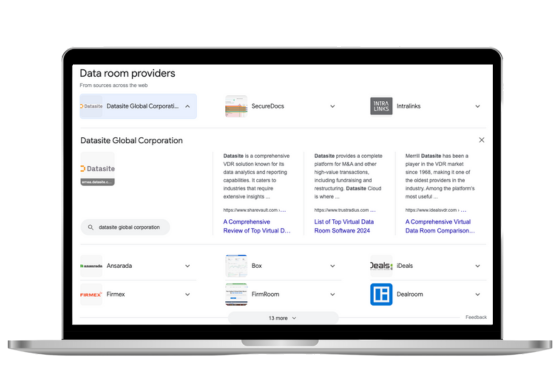
    Google Screenshot AI Overview Example - Datasite - Dataroom Providers

    If you’ve been watching what Google is doing with SGE (Search Generative Experience) during its beta, you may have seen that the Google “answers” are sometimes incorrect and potentially distract searchers away from the valid results below.

    What this means is that the “10 blue links” and the maps we were used to are pushed even further down the page.

    AI Overviews are only part of the problem, though. Google is also putting more ads at the top of the page, meaning your winning map or organic search is lower still.

    This is not the time to freak out, though. We are very early in this rollout, and at Search Influence we’ve been testing how to keep you on top even with these changes.

    If you’re a Search Influence client, look forward to some interesting new tactics in your SEO strategies.

    For the past decade, when we’ve said “search,” we’ve meant Google. In the coming decade, we may be talking about searches on any number of engines, apps, and devices.

    At Google, as in life, change is the only constant. Look forward to updates as we get further in our testing.

  • Save Your Google Universal Analytics Data from Deletion on July 1

    Save Your Google Universal Analytics Data from Deletion on July 1

    UA Storage Studio with Search Influence

    Did you know Google will permanently delete all Universal Analytics data on July 1, 2024?

    Sign up by June 14th, and we can help save your Google Universal Analytics data from deletion.

    Universal Analytics has existed since 2005 and was retired last year. It will cease to exist on July 1 and all historical data will be permanently deleted. Moving forward, Google expects businesses to leverage data tracked in Google Analytics 4, which may limit your ability to make marketing decisions.

    Reasons why Google is deleting Universal Analytics data:

    • To free up server space
    • To streamline their operations
    • To ensure they comply with updated consumer privacy standards

    While that’s all fine and good for Google, what does it mean for the countless businesses that utilize this data?

    When Will Universal Analytics Data Be Deleted?

    According to Google:

    “Starting the week of July 1, 2024: You won’t be able to access any Universal Analytics properties or the API (not even with read-only access), and all data will be deleted. While the standard sunset took weeks to complete, the full Universal Analytics shutdown will happen within a week. We know your data is important to you, and we recommend that you export your previously processed data before this date.”

    What This Means for You

    Google will delete your historical website analytics data, which means you won’t be able to log into the UA interface to examine past performance on anything prior to when GA4 was installed.

    If you need to maintain access to your historical website analytics data, now is the time to act.

    The benefits of saving historical data

    Historical data is a valuable tool for businesses looking to optimize their digital advertising campaigns.

    Retaining historical data makes it easier for you to:

    • Analyze past performance
    • Identify trends
    • Make data-driven decisions to improve future strategies

    Historical data allows for a deeper understanding of customer behavior, helping you tailor your digital marketing campaigns to meet consumer needs.

    Implications if you don’t save historical data

    If you decide not to save your historical data, some implications you should be aware of include:

    • You won’t be able to compare current or future performance to anything prior to when GA4 was installed.
    • It could be harder to make decisions about future marketing strategies.
    • It could be difficult for you to understand the results/outcomes of your current campaigns.
    • You miss out on analyzing seasonal trends data that can help to inform your campaigns.

    How Search Influence Can Help

    Introducing Search Influence’s UA Storage Studio dashboard!

    Search Influence will support you with a quick and efficient process for backing up your Universal Analytics data.

    We will:

    • Export and back up your Universal Analytics data before the deadline
    • Create your very own UA Storage Studio dashboard to allow you ongoing visibility into those metrics, which gives you access to usable and actionable data for future campaigns
    • Make the data accessible for future dashboards you may wish to build

    You’ll fully own both the backup and the dashboard, meaning they’ll be yours forever, regardless of your future marketing decisions.

    Current pricing is valid through May 24, so act now for the best rate. June 14 is the final date to sign up to ensure your backup will be completed by the deadline.

    Who Should Consider Backing Up Universal Analytics Data?

    Backing up historical data benefits businesses of all types.

    You should consider backing up your data if:

    • It is important to your business to compare your website performance to prior years
    • Your business has seasonality
    • You want to be able to create dashboards that show website analytics over multiple years

    If you’re still having trouble deciding if saving your UA historical data is the right move, the analytics and lead-tracking specialists at Search Influence are here to help.

    How to Back Up Universal Analytics Data With Search Influence

    Search Influence will back up your Universal Analytics data by exporting the data to one of two destinations for long-term storage. Then, we’ll use that as a data source to produce a new dashboard allowing you ongoing visibility into the data.

    The cost of the dashboard and backup depends on how much data we back up — which is driven by how many years of data, the amount of data, and if you want monthly, weekly, or daily data.

    We have recommendations for these parameters and can help you decide the best backup strategy.

    Current pricing is valid through May 24, so act now for the best rate. June 14 is the final date to sign up to ensure your backup will be completed by the deadline.

    If you are a client and would like to take advantage of our backup Universal Analytics data service, contact your account manager.

    This service is available to you even if you are not a current Search Influence client!

    If you are not a client, please fill out our website contact form, and we’ll respond quickly. You can also call our office at (504) 208-3900 and press 1 for sales.

  • Search Influence Is a Proud Keeper Sponsor of Zoo-to-Do and Zoo-to-Do for Kids

    Search Influence has proudly sponsored Audubon Nature Institute’s Zoo-to-Do and Zoo-to-Do for Kids for over ten years

    Search Influence is pleased to announce our continuing partnership with Audubon Nature Institute as a Keeper Sponsor for the 46th annual Hancock Whitney Zoo-to-Do and the 35th annual Zoo-to-Do for Kids presented by Children’s Hospital of New Orleans.

    This marks our thirteenth year of sponsoring this event and over a decade of helping Audubon Nature Institute craft results-driven digital marketing campaigns.

    Learn more about our distinguished partner’s one-of-a-kind fundraising event and the vital conservation work it helps to finance.

    About Hancock Whitney Zoo-to-Do

    Held at Audubon Zoo in beautiful Uptown New Orleans, Hancock Whitney Zoo-to-Do is a party with a purpose.

    This event promises an elegant evening of exceptional cuisine, live entertainment, and unique activities that capture the essence of New Orleans’ cultural heritage.

    This year’s entertainment lineup includes live performances from:

    • Phunkey Monkeys
    • Sierra Green and the Giants
    • Casa Samba

    Other forms of fun at this year’s Zoo-to-Do include:

    • Lexus luxury car raffle
    • Lee Michaels Fine Jewelry Pick-A-Present
    • Online silent auction

    While attendees enjoy craft cocktails, gourmet dishes, and live music, their dollars go to support conservation efforts and the maintenance of critical facilities at Audubon Nature Institute.

    As this year marks the 100th anniversary of Audubon Zoo’s historic Odenheimer Complex, it’s only right the original home of the Audubon Aquarium gets a facelift courtesy of Zoo-to-Do. Proceeds from this year’s event will enable Audubon Nature Institute to undertake renovations of the Odenheimer Complex’s rotunda, scheduled for completion in late 2024.

    The 2024 Hancock Whitney Zoo-to-Do will also allocate funds to support Audubon Nature Institute’s efforts to protect the decreasing population of Louisiana pine snakes. Through its Louisiana Pine Snake Conservation and Recovery Program, Audubon Nature Institute has successfully bred and reintroduced hundreds of these endangered snakes into the wild.

    This important work is why Search Influence has been committed to our Audubon Nature Institute partnership for over a decade.

    Zoo-to-Do for Kids Presented by Children’s Hospital of New Orleans

    The kids deserve some fun, too, right?

    Presented by Children’s Hospital of New Orleans, Zoo-to-Do for Kids offers a family-friendly evening packed with live entertainment, large inflatables, various games, delicious food, and plenty of good times. This delightful event creates an enchanting atmosphere where children and their families can explore a world of wonder while supporting their friends in the animal kingdom.

    Search Influence’s Commitment to Community

    Since we started helping businesses optimize their potential back in 2006, Search Influence has been dedicated to volunteering and community involvement.

    Along with sponsoring Zoo-to-Do for nearly 15 years, we have committed to many other worthwhile causes, including:

    • Breastoration
    • Audubon Scales & Ales
    • PowerMoves NOLA
    • YouthForce NOLA
    • International Women’s Day

    Partner With Our SEO and Digital Marketing Agency

    Search Influence is a digital marketing agency in New Orleans that values long-standing relationships, like the one we have with Audubon Nature Institute. For over a decade, Search Influence has helped Audubon Nature Institute craft digital advertising campaigns that drive growth and conservation efforts.

    Interested in partnering with Search Influence for your next digital marketing campaign?

    Contact us today to learn more about all of our services.