Blog

  • The November Influencer: Get Ahead – Navigate Cookie Changes and Marketing in Uncertain Times

    Stay ahead in digital marketing with The Influencer, Search Influence’s monthly newsletter covering SEO, digital advertising, and content strategy. Get top tips to fuel your online growth, expert insights from the Search Influence team, and our latest company news. Don’t miss out!

    Search Influence - How to use cold email marketing to reach new audiences

    How To Use Cold Email Marketing to Reach New Audiences

    MADISON HORST | 8-MINUTE READ

    Looking to diversify your top-of-funnel marketing strategy and increase new audience engagement? Cold email marketing with Search Influence is your way in.

    Read More


    Cookie Frosted with the Rainbow G Google Logo - Cookie Deprecation with Search Influence

    Adapting to Google’s Cookies Deprecation: Essential Strategies for Marketers

    MARISSA MAGGIO | 10-MINUTE READ

    Learn how to prepare for cookie deprecation. Discover how Search Influence can help adapt your marketing strategy for a privacy-first, cookie-light future.

    Read More


    Search Influence - Effective strategies during a national Crisis

    Should You Be Marketing During a National Crisis?

    ALISON ZERINGUE | 6-MINUTE READ

    Marketing during a national crisis helps your brand stay the course in the face of adversity. Explore budget-friendly strategies with Search Influence.

    Read More


    Search Influence is a finalist at the 2024 US Agency Awards

    Search Influence Named a Best SEO Campaign Finalist at the 2024 US Agency Awards

    REN HORST | 2-MINUTE READ

    The 2024 US Agency Awards shortlisted Search Influence in the Best SEO Campaign category. Learn more about this recognition.

    Read More

  • Cookie Tracking 101 – November Client Insider

    Cookie Tracking 101 – November Client Insider


    Digital advertising targeting is changing, and it’s not as scary as it might sound.

    You may have heard chatter about the “death” or deprecation of third-party cookies. Today’s Client Insider will help you better understand what this means and how it’s changing the world of digital marketing and advertising.

    Background

    For years, browsers have explored suppressing third-party cookie-based tracking on websites. Safari was first, and Google Chrome was expected to follow in 2025. Google, however, announced alternative plans: instead of deprecating third-party cookies, Google Chrome intends to let users make an “informed choice” about how they are tracked (there is no timeline for this).

    The good news: Search Influence and our clients do not rely solely on third-party cookies for targeted advertising or tracking. For example, first-party data collected directly from interactions on a client’s website is a key component of our campaigns. This data is more reliable and privacy-compliant than third-party cookies, allowing for effective conversion tracking within the client’s digital properties.

    We view the phasing out of third-party cookies as an opportunity to adopt more sustainable, privacy-friendly practices that strengthen customer relationships and trust.

    Impact

    Two key elements are affected:

    • Targeting: Advertising platforms can still target some users based on data gathered by cookies, but it will be limited.
    • Conversion Tracking: Tracking conversions in the future will require more client involvement. Your account manager will speak with you about upgrading your conversion tracking as needed.

    To ensure our client campaigns remain effective, Search Influence routinely uses and explores alternative methods for tracking and targeting, such as first-party data, contextual advertising, and browser-based tracking solutions like Google’s yet-to-be-released Privacy Sandbox. See “What’s next?” below for more.

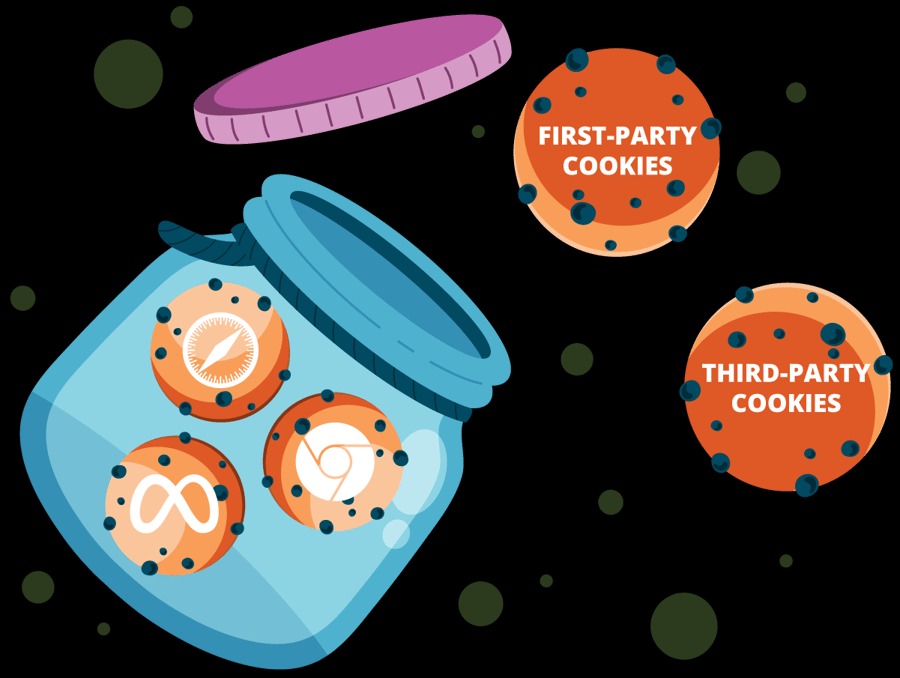
    What’s the difference between first-party cookies and third-party cookies?

    First Party Cookies Third Party Cookies
    What are they? Tracking code that a website owner places on their own site. The website owner receives the data. Tracking code for companies other than the website owner. The data is shared with the third party.
    Examples Google Analytics
    Meta Pixel
    Advertising Conversion Pixels / Tags
    Advertising Networks
    Data Companies
    Meta Pixel (first and third-party cookie)
    How is the data used? Understand your website’s visitors and user behavior; remarket to your website visitors Drive interest-based targeting; understand user interests and behaviors across sites
    Who collects the data? Data is collected by the website you are currently browsing Data is collected by other companies/websites (like ad and data platforms) that track users across multiple websites or devices
    Are these cookies suppressed by browsers? NOT impacted by the deprecation of cookies Impacted by the deprecation of cookies

    What’s next?

    What is Search Influence doing to keep clients’ digital ads effective?

    • Targeting based on first-party data
    • Leveraging other targeting that doesn’t rely on third-party cookies, including contextual targeting, addressable geo-fencing, and campaign audience retargeting
    • Upgrading conversion tracking
    • Staying tuned in to platform updates and adapting quickly as new options are available

    What can you do?

    • Maintain and grant us access to up-to-date CRM records
    • Score your leads so the data can fuel your campaigns to drive more high-quality leads
    • Allow access to our team to set up server-side tracking

    Final thoughts

    This isn’t the first major disruption to ad tech. Platforms will adapt to protect their revenue and provide effective advertising services to businesses.

    Your Search Influence team is also ahead of the curve! In our almost 20 years, we’ve navigated countless industry changes and algorithm updates to serve our clients and meet their goals. Thank you for trusting us to navigate yet another change for you!

    If you want to geek out with us, you can learn more about the details in this blog post.

  • SEO In-House vs. Outsourced: Should You Hire an Agency?

    Search Influence SEO

    Key Insights

    • SEO is crucial for online visibility, increased website traffic, brand recognition, and revenue growth.
    • While it may be tempting to handle SEO in-house, it’s essential to recognize that effective SEO requires meticulous attention to detail, constant monitoring, and adaptation to evolving search engine algorithms.
    • When deciding between in-house and outsourced SEO, consider your budget, the need to stay updated on SEO trends, your SEO goals, and the tech necessary for effective SEO.

    Incorporating SEO into your digital marketing strategy is paramount in today’s fiercely competitive online arena. SEO (Search Engine Optimization) is one of the driving forces behind your business’s online visibility.

    It’s the key that unlocks the doors to higher website traffic, increased brand recognition, and, ultimately, greater revenue.

    When deciding the best route for your SEO success, it might be tempting to take SEO efforts into your own hands, especially if you have an in-house team with some digital marketing know-how.

    After all, who understands your business goals better than your employees? But before you embark on the journey of handling SEO in-house, it’s crucial to pause and reflect.

    Effective SEO isn’t just about understanding your business; it’s a multifaceted discipline that demands meticulous attention to detail, constant monitoring, and adaptation to ever-evolving search engines.

    In this blog post, we’ll delve into the debate of SEO in-house vs. outsourcing, offering insights and compelling reasons why entrusting your SEO efforts to a specialized SEO agency may be the smartest move for your business’s growth and online success.

    Skills & Knowledge for Effective SEO

    If you’re considering taking your SEO efforts in-house, the SEO skills you need to drive results include:

    Research and analysis

    Crafting a successful SEO strategy hinges on thorough research and analysis. This entails extensive keyword research and competitive analysis, the basis for well-informed SEO campaigns.

    Content writing

    Content remains central to SEO, demanding the creation of SEO-friendly materials. This encompasses everything from on-page optimizations to new content marketing pieces. Proficient content writers produce high-quality, engaging content that resonates with your target audience while also favorably positioning your site in search engine results.

    Technical SEO expertise

    Technical SEO is a critical facet of the SEO landscape. It involves optimizing website structure, enhancing loading speeds, and ensuring search engine compatibility.

    Website development

    Proper SEO goes hand-in-hand with seamless website development. SEO success often requires collaboration with web developers and graphic designers to create a user-friendly, visually appealing website. A well-designed website improves user experience and plays a pivotal role in SEO rankings. Search Influence’s web development team works with your existing website to execute our SEO recommendations.

    Outreach / PR for link building

    Link building is a fundamental element of SEO. Building valuable backlinks demands skillfully executed outreach and PR activities. These high-quality backlinks enhance website authority and visibility in search results.

    Data and analytics

    Data-driven decision-making is at the core of effective SEO. Leveraging advanced analytics tools, SEO practitioners monitor the performance of strategies, providing insightful reports.

    Analytics and lead tracking allow for adjustments and alignment of SEO efforts with your business objectives.

    These skills and knowledge areas are essential for anyone looking to successfully navigate the complex world of SEO. Whether you choose an in-house SEO team or partner with an SEO agency, understanding these foundational aspects is crucial for achieving favorable results in the digital landscape.

    Time Commitment for Successful SEO

    Effective SEO isn’t a one-time task; it’s an ongoing commitment that demands significant time and effort. Typically, you can expect to allocate anywhere from 25 to 50 hours per month for SEO-related activities. This allocation includes time spent on strategy development, execution, and continuous evaluation.

    SEO campaigns require meticulous planning and execution, involving keyword research, content optimization, technical SEO enhancements, and link building efforts. Managing this workload can overwhelm a small business or those with limited resources.

    Plus, SEO isn’t static. Search engine algorithms evolve, user behavior changes, and competitors adapt their strategies. To remain competitive, you must update your SEO strategies and tactics every three months. This iterative approach ensures your SEO campaign stays aligned with industry trends and search engine updates.

    It’s essential to take a step back and assess the performance of your SEO efforts annually. Determine which pages are excelling in search engine rankings and which are not. This evaluation allows you to reallocate resources and update your priorities for the following year.

    For many businesses, maintaining this level of commitment and staying up-to-date with the SEO world can be challenging. This is where SEO agencies and their teams of SEO experts come into play, offering the time commitment required and the expertise and ongoing training needed to ensure your business grows and thrives in the digital marketing arena. An agency’s dedicated marketing manager or SEO team can handle specific tasks and provide the time and skills to drive your business forward online.

    What You Get From a Skilled SEO Agency

    Outsourcing SEO to a skilled SEO agency offers many advantages that impact the success of your projects.

    Some of the benefits of hiring a skilled SEO agency include:

    • Access to and Knowledge of Tools: SEO agencies are equipped with a wide array of essential tools and resources for effective SEO management, such as Semrush, Ahrefs, and Google Search Console. These tools aid in keyword research, competitive analysis, and performance tracking.
    • Staying Up-to-Date on SEO Trends and Changes: SEO is a dynamic field with frequent algorithm updates and evolving best practices. SEO agencies are dedicated to staying current with these changes, ensuring your SEO strategy remains effective and compliant with industry trends.
    • Established Processes for Implementation: SEO agencies have well-defined processes for implementing changes and optimizations swiftly and efficiently. This systematic approach ensures a seamless execution of your SEO strategy.
    • Experience: SEO professionals within an agency have extensive experience working on various SEO projects. Their expertise allows them to easily navigate the complexities of SEO, offering solutions tailored to your unique needs.
    • Skills Across Specialties: A skilled SEO agency boasts a diverse team of experts, including content writers, researchers/strategists, and technical SEO specialists. This multidisciplinary approach provides you with a range of skills at your fingertips without the need to build and manage an in-house SEO team.
    • Data-Backed Strategy: SEO agencies base their strategies on data-driven insights. They analyze performance metrics to gauge the impact of your tactics on rankings, traffic, and lead generation, ensuring concrete evidence guides your SEO journey.
    • Diagnosing Underperformance: When your SEO efforts don’t yield the desired results, SEO agencies have the expertise to diagnose underperformance and recommend corrective actions promptly. This proactive approach is crucial for maintaining and improving your organic traffic and search engine rankings.

    Collaborating with an SEO agency grants you access to a team of seasoned professionals who can streamline your SEO efforts, enhance your online visibility, and confidently drive your business forward.

    An outsourced SEO success story

    The Tulane School of Professional Advancement (SoPA) partnered with Search Influence, an experienced higher education digital marketing agency, to enhance their online visibility and attract prospective students. Over this multi-year collaboration, Search Influence has implemented a suite of digital marketing strategies, including SEO, paid digital ads, and email marketing. These digital marketing tactics have increased enrollment across various programs, from bachelor’s to master’s programs and graduate certificates.

    One of the standout success stories from this partnership came when Search Influence helped Tulane SoPA bring an underperforming third-party Online Program Management (OPM) built microsite back from the dead.

    On the direction of Tulane SoPA’s former OPM partner, the private continuing education school hosted information about their information technology and cybersecurity degrees on a microsite separate from their main website.

    Tulane SoPA came to Search Influence with the following concerns about their microsite:

    • The look and feel (user experience) was inconsistent across the two properties.
    • The OPM did not allow Tulane SoPA to apply edits to the microsite, adding another layer of complication that made it difficult to capitalize on the IT undergrad program.
    • It was difficult to holistically analyze data and performance.
    • The former OPM partner owned Tulane SoPA’s microsite, which meant that a vendor change would prompt the loss of any SEO authority gained from the microsite.

    On top of the above concerns, Search Influence also recognized a separate set of challenges:

    • Running these two programs on individual websites proved to be a counterproductive strategy. The online visibility of both programs suffered as they couldn’t tap into the wealth of educational content available on the primary website. Conversely, the main website lacked the necessary depth of information about these programs and what they offered.
    • Both websites faced the risk of being flagged for duplicate content. Vital details such as tuition fees, the admissions process, and financial aid information were duplicated on each site, making them susceptible to search engine penalties. Neither site was positioned to organically rank well for IT or cybersecurity keywords, nor were they effectively nurturing prospective students interested in these programs to take the next step and apply.

    Search Influence used an SEO-first approach to migrate the OPM microsite pages into Tulane SoPA’s main site. At the end of the project, the microsite was completely sunset.

    As a result of this strategy, Tulane SoPA:

    • Enhanced their content’s richness by implementing comprehensive front and back-end content optimization and expansion strategies
    • Ensured the microsite’s search engine prominence remained intact during a seamless technical transition
      Solidified its position as a prominent leader by actively refining conversion strategies and introducing supplementary inquiry forms

    Search Influence’s expert SEO knowledge and implementation fixed Tulane SoPA’s website woes and helped them drive more prospective students to their site.

    The results below look at a year-over-year comparison to the three-months prior to the migration (to account for seasonality).

    • 90% increase in total organic traffic
    • 456% increase in organic blog entrances
    • 890% increase in organic blog traffic
    • 895% increase in new users to the blog
    • 54% of organic website traffic is attributed to the blog in this time period, compared to just 10% prior.

    This success reflects the expertise of an outsourced SEO agency in driving targeted results and leveraging industry insights to optimize websites. It demonstrates the value of outsourcing SEO tasks to dedicated specialists and the potential for substantial business growth through practical SEO work.

    Search Influence SEO

    Questions to Ask Yourself When Making Your Decision

    What’s our organization’s budget for SEO services?

    When deciding between in-house SEO or outsourcing SEO services, consider the following financial factors:

    • Initial Investment and Ongoing Costs: Understand the distinction between one-time setup costs and monthly or annual expenses. Also, consider potential overruns or unexpected costs that may arise during your SEO journey. You will be responsible for these unforeseen costs if you choose in-house SEO.
    • Cost of an In-House SEO Expert vs. Agency Retainer/Fees: Compare the cost of hiring and maintaining an in-house SEO team to the fees associated with an SEO services agency or freelance SEO expert. If you choose to outsource SEO, it may be more expensive upfront but will save you money and headaches in the long run.
    • Tools and Software: Evaluate the availability and cost of essential SEO tools and software needed for effective SEO campaign management. Can your in-house team afford the necessary digital marketing software?
    • Training and Conferences: If you choose an in-house SEO specialist, you must set aside funds for courses, webinars, and potentially attending SEO conferences for your SEO professional’s ongoing education and skill enhancement.

    While hiring a skilled SEO agency for your higher education marketing can help you craft successful campaigns, Search Influence understands that might not always be in the budget.

    That’s why we created an SEO workbook to help higher ed markets take charge of their online campaigns.

    Do we know the latest SEO best practices and trends?

    When deciding between in-house SEO or outsourced SEO services, you should consider the following:

    • Internal Expertise: Assess the current knowledge level of your internal teams or SEO manager and identify any gaps in expertise that might require external training or assistance.
    • Stay Up-to-Date: Recognize the frequency of search engine algorithm updates and the importance of staying ahead in a constantly evolving field.
    • Dedicated Learning Time: If you can’t allocate regular time for your team to learn and stay updated on the latest SEO best practices, ensuring continuous improvement, you should consider hiring an SEO specialist agency.

    What are the goals of our SEO project?

    When deciding between in-house SEO or SEO outsourcing, you should consider the following:

    • Short-Term vs. Long-Term Goals: Define immediate objectives and long-term SEO strategies to ensure your SEO efforts align with your business goals.
    • On-Page vs. Off-Page Optimization: Determine the balance between improving on-page website elements and addressing off-page SEO factors to achieve your desired results.
    • Local vs. National Focus: Decide whether to prioritize local search optimization or expand your reach to a broader national or global audience.
    • Integration With Other Marketing Efforts: Understand how SEO will fit into your overall marketing strategy, including its integration with PPC, social media, and email marketing efforts. Most SEO agencies can handle all your digital marketing needs.

    What does a staff member or agency need to learn about our niche?

    When deciding between in-house SEO or SEO outsourcing, you should consider the following:

    • Unique Challenges of Niche Industries: Recognize potential obstacles or limited resources specific to your niche sector that may impact your SEO strategy.
    • Specialized Knowledge: Consider the specific information needed to understand keywords, your target audience, and the intricacies of your industry, which will be vital for practical SEO work and content creation.

    Do we have the technical skills and software subscriptions necessary for effective SEO?

    When deciding between in-house SEO or an outsourced agency, you should consider the following:

    • SEO Toolkits: Review the availability of tools for keyword research, link building, and on-site optimization to ensure you have the necessary resources for your SEO campaign.
    • Website Infrastructure: In order to implement effective SEO, you must have someone who knows how to evaluate your current website’s SEO-friendliness and then determine whether migrations or significant overhauls are needed.
    • Analytics and Reporting: Ensure access to robust analytics tools that allow you to measure and report on the progress of your SEO efforts effectively.
    • Integration Capabilities: Before deciding to bring your SEO in-house, you should determine if you know how to integrate SEO tools with other marketing and analytics platforms to streamline your SEO operations and improve overall efficiency.

    After considering your SEO goals and industry knowledge, it will be easier to decide between an in-house or outsourced SEO strategy.

    Should You Outsource SEO Services or Build an Internal Team?

    Considering that 68% of online experiences begin with a search engine, you can’t afford to ignore SEO.

    But should you build an in-house team or hire an agency?

    Several key takeaways emerge when deciding between outsourcing SEO services and building an in-house team. Your choice depends on various factors, including budget constraints, existing expertise, the need to stay current with SEO trends, and your specific project goals.

    One critical consideration is the remarkable potential of partnering with the right SEO agency.

    When you collaborate with a skilled agency, they don’t merely provide services; they become an extension of your team. This partnership can yield immense cost savings, as agencies have the tools and expertise required for efficient SEO results.

    Search Influence Can Help Your Business Grow

    As a leading SEO agency in New Orleans, we understand the significance of being found online. That’s why we’ve spent nearly 20 years helping businesses just like yours find success.

    Our dedicated experts have honed their SEO skills through years of strategizing, testing, and developing cutting-edge methods to ensure potential customers can discover your business.

    Take Search Influence’s In-House vs. Outsourcing SEO Quiz to answer whether partnering with a higher ed digital marketing agency is the right approach for your institution.

    Your journey to digital success starts here.

    Image Sources:

    Image 1: https://images.unsplash.com/photo-1531545514256-b1400bc00f31?auto=format&fit=crop&q=80&w=2874&ixlib=rb-4.0.3&ixid=M3wxMjA3fDB8MHxwaG90by1wYWdlfHx8fGVufDB8fHx8fA%3D%3D

    Image 2: https://images.unsplash.com/photo-1516321318423-f06f85e504b3?auto=format&fit=crop&q=80&w=2940&ixlib=rb-4.0.3&ixid=M3wxMjA3fDB8MHxwaG90by1wYWdlfHx8fGVufDB8fHx8fA%3D%3D
  • Adapting to Google’s Cookies Deprecation: Essential Strategies for Marketers

    Key Insights:

    • Google announced in July 2024 that Chrome will not fully block third-party cookies but instead give users the option to manage tracking permissions. This shift allows for greater user autonomy and may lead to fewer users permitting third-party tracking.
    • With the potential decline in third-party cookie data, competition for the remaining audience segments may increase, impacting ad targeting and cost-effectiveness. Marketers will need to adapt by shifting to alternative data sources and strategies.
    • Marketers can explore new methods, such as contextual targeting, server-side tracking, and tools like Google’s Privacy Sandbox and Meta’s Conversions API. These solutions offer privacy-compliant ways to track and optimize campaigns in a cookieless environment.

    Google Chrome was expected to eliminate the use of third-party cookies starting in early 2025; however, they announced alternative plans in July 2024. Instead of completely not allowing websites to track users with third-party cookies, Google will let users make an informed choice that applies across their web browsing and that they can adjust at any time.

    Google statements are vague, and they haven’t shared a clear plan for rolling out this new Chrome experience.

    Worst case scenario: All Chrome users decide to opt out of third-party cookies.

    More likely scenario: A portion of Chrome users opt out, and competition increases for the remaining inventory (Source: DigiDay).

    Marketers are still preparing for a profound impact on the digital advertising industry, as many advertising campaigns and platforms still rely heavily on third-party cookies to target and track their audience.

    By leveraging a combination of strategies, prioritizing user privacy, and staying agile in adopting new technologies, your campaigns can continue to deliver personalized experiences and measure ad effectiveness in a post-third-party cookie world.

    Learn how in the blog below.

    Cookie Frosted with the Rainbow G Google Logo - Cookie Deprecation with Search Influence

    What Are Cookies?

    Websites gather data from first-party cookies on their own sites, while third-party cookies come from other services that keep tabs on users across different sites and devices. You’ll often see advertising platforms and analytics companies using these third-party cookies to track how people behave online for things like targeting ads, attributing conversions, and optimizing performance.

    As Google Chrome initiates third-party cookie deprecation, marketers are exploring alternative methods for tracking and targeting, such as first-party data, contextual advertising, and browser-based tracking solutions such as Google’s Privacy Sandbox.

    First Party Cookies Third Party Cookies
    What are they? Tracking code that a website owner places on their own site. The website owner receives the data. Tracking code for companies other than the website owner. The data is shared with the third party.
    Examples Google Analytics Meta Pixel, Advertising Conversion Pixels / Tags, Advertising Networks, Data Companies
    How is the data used? Understand your website’s visitors and user behavior; remarket to your website visitors Drive interest-based targeting; understand user interests and behaviors across sites
    Who collects the data? Data is collected by the website you are currently browsing Data is collected by other companies/websites (like ad and data platforms) that track users across multiple websites or devices
    Are these cookies suppressed by browsers? NOT impacted by the deprecation of cookies Impacted by the deprecation of cookies

    Impact of Cookies Deprecation

    Two key elements are affected:

    • Targeting: Advertising platforms can still target some users based on data gathered by cookies, but it will be limited.
    • Conversion Tracking: Tracking conversions in the future will require more client involvement. Your account manager will speak with you about upgrading your conversion tracking as needed.

    To ensure our client campaigns remain effective, Search Influence routinely uses and explores alternative methods for tracking and targeting, such as first-party data, contextual advertising, and browser-based tracking solutions like Google’s yet-to-be-released Privacy Sandbox.

    Should marketers fear these changes? How dramatic is the impact?

    The advertising industry is innovating to find new ways to deliver effective ads while respecting user privacy. Phasing out third-party cookies will be gradual, but it’s not necessarily something for marketers to fear. Marketers should view the phasing out of third-party cookies as an opportunity to adopt more sustainable, privacy-friendly practices that lead to stronger customer relationships and trust. By staying informed and proactive, marketers will navigate this transition effectively.

    Do you expect privacy regulations to get more strict?

    The pressure to enhance online privacy is driving Google to develop alternatives to third-party cookies. As privacy concerns intensify, more regions may adopt stricter data protection laws similar to GDPR (Europe’s privacy legislation) and CCPA (California’s privacy legislation). Consequently, businesses must be more transparent about their data practices and secure clear consent from users.

    Historically, the industry has adapted to other disruptions. In April 2021, Apple introduced a requirement for all apps in the App Store to display a prompt, as part of its AppTrackingTransparency framework, discouraging tracking on iOS devices unless users explicitly opt-in. This policy limited certain types of data collection and sharing without direct user consent. In response, marketers shifted their approach by targeting broader audience segments and relying more on ad networks to identify and reach their target audiences effectively.

    To what extent is conversion tracking impacted by the end of cookies?

    Most businesses (including Search Influence’s clients) do not currently rely on third-party cookies for targeted digital advertising or analytics and lead tracking. To maintain ad effectiveness, we recommend continuing to leverage first-party data collected directly from interactions on a client’s own website. This data is more reliable and privacy-compliant, allowing for effective conversion tracking within the client’s own digital properties.

    Generally, the end (or significant reduction) of third-party cookies significantly impacts conversion tracking, but alternative methods and technologies are emerging to address these challenges.

    Alternative Solutions for Tracking Without Third-Party Cookies

    First-party data

    • Leveraging first-party data collected directly from interactions on a client’s website is crucial. This data is more reliable and privacy-compliant, allowing for effective conversion tracking within the client’s own digital properties.
    • Meta’s solution: Meta encourages advertisers to leverage first-party data. This includes data collected directly from interactions on the advertiser’s own website, which remains unaffected by third-party cookie policies.
    • Google’s solution: Enhanced conversions use first-party data and hashed user information (like email addresses) to track conversions more accurately without relying on third-party cookies.

    Server-side tracking

    • Implementing server-side tracking helps bypass the limitations of client-side cookies. Clients maintain control over user data and ensure accurate conversion tracking by processing tracking data on the server.
    • Meta’s solution: Meta has introduced the Conversions API, which allows servers to send conversion data directly to Meta. This server-side solution provides a more reliable method for tracking conversions.
    • Advertisers at risk are those who haven’t implemented first-party cookies with the pixel or the Conversions API.

    Privacy Sandbox

    • Google’s Privacy Sandbox initiatives aim to enable interest-based advertising and conversion tracking without third-party cookies. These solutions group users into cohorts based on similar interests while maintaining individual anonymity. (Google hasn’t rolled this out and hasn’t provided a target date.)

    Will Ad Platform Pixels Still Track Conversions, or Do We Need to Use Google Enhanced Conversions and Meta’s Conversions API?

    Person accessing the Google Search web homepage - the affect on Google's cookie deprecation on tracking and analytics

    Meta will eventually phase out the Meta Pixel, but there’s no timeline for this yet. That said, the most immediate recommendation is to explore Conversions API to preserve campaign measurement proactively.

    On Google Ads, Search Influence recommends implementing enhanced conversions for the web (or leads for importing offline conversions) to protect against cookie deprecation and preserve accurate measurement.

    While conversion tracking has never been 100% accurate, we believe that tracking what you can is crucial to maintaining campaign effectiveness.

    Recommendations on How to Address Changes to Targeting and Strategy

    For Search Influence clients, we do not expect to make dramatic changes to our clients’ strategies based on the way we currently target and leverage data. For some clients, we will work with you on any necessary improvements to the below.

    Collect first-party data

    Focus on collecting and leveraging first-party data (information collected directly from their own users). This can include data from their website, CRM systems, and customer interactions.

    • First-party data is collected directly from user interactions on a company’s own website or app, providing accurate and reliable insights. This includes data from user registrations, purchases, and on-site behavior.
    • Users are generally more comfortable sharing data directly with brands they trust. Clear communication about data usage and robust privacy policies can enhance this trust.
    • First-party data allows for effective personalization, as businesses can tailor experiences based on user preferences and past behaviors observed directly.

    Leverage CRM systems & ad integration

    Adapt a strong CRM strategy to capture valuable first-party data, improve lead nurturing processes, and get more accurate performance insights from advertising campaigns.

    Identify the right CRM system

    • Evaluate CRM systems that best integrate with existing tools and advertising platforms. Popular options include Hubspot and Salesforce. In our experience, Hubspot is the best fit for most businesses (and Search Influence can help you build it out).

    Set up lead tracking and data collection

    • Collect first-party data from your website (registrations, purchases, form submissions) and ensure this data is flowing into the CRM.
    • Implement pixels and APIs (e.g., Facebook Conversion API, Google Ads Enhanced Conversions) to connect user actions on the website with CRM lead data.
    • In Google Ads and other platforms, set up offline conversion tracking by importing sales data from your CRM system or other offline customer interactions (phone calls, in-store purchases).

    Implement lead scoring

    • Establish lead-scoring criteria based on user behavior (e.g., visiting key pages, downloading resources, submitting forms).
    • Use the CRM to track interactions across marketing channels and create a lead-scoring system that assigns value to each action. High-scoring leads can be segmented for more personalized and higher-budget ad campaigns.

    Automate follow-ups and nurturing

    • Leverage your CRM’s automation features to send tailored email follow-ups, segment their audience, and deliver retargeting campaigns based on a lead’s score and behavior.
    • Create automated workflows that nurture leads through email, SMS, or targeted ads, guiding them toward conversion.

    Measure and optimize

    • Once the CRM is fully integrated with your advertising efforts, review the data regularly. Ensure accurate tracking of cost per lead (CPL) and return on ad spend (ROAS) through the CRM.
    • Refine campaigns based on lead score data. Allocate budget to maximize high-quality leads.

    Cookieless targeting solution examples

    • Contextual targeting places ads on content directly relevant to the ad. Instead of relying on user data, it uses themes and interests found in the content to determine relevance. This privacy-friendly targeting method is often applied in programmatic advertising.
    • Addressable geo-fencing enhances traditional geo-fencing by focusing on specific locations without relying on third-party cookies. Instead, it uses address lists sourced from CRM data or carefully curated lists, enabling advertisers to reach users within targeted geographic areas based on first-party insights.
    • Campaign audience retargeting helps advertisers reconnect with existing, cookieless audiences. Advertisers establish an initial campaign to build a retargetable audience, re-engaging them across platforms with relevant content.

    What Changes to Conversion Tracking Do You Recommend?

    To combat Google cookie deprecation, implement your advertising platforms’ recommended tracking solutions, such as Enhanced Conversions for Google Ads and Conversions API for Meta Ads.

    Additionally, leveraging GA4’s reporting identity features can help track users more effectively across devices while respecting privacy. Search Influence recommends the device-based reporting identity to get more data for small businesses.

    Last, Consent Mode v2, combined with GA4, allows advertisers to maintain measurement accuracy by modeling conversion data for users who opt out of cookies.

    • With Consent Mode v2, you can capture and model conversion data even when users opt out of non-essential cookies. This ensures that you still have access to key insights and helps mitigate data loss.
    • When users decline consent, GA4, in conjunction with Consent Mode, uses aggregated and anonymized data to estimate conversions and user journeys, providing a more complete view of campaign performance without breaching privacy regulations.

    How Soon Should You Take Action?

    You should start planning and adapting your 2025 advertising strategy to mitigate the impact of upcoming cookie deprecation.

    While this might seem like a daunting task, there’s no need to worry.

    The Search Influence team is monitoring the deprecation of the third-party cookie and outlining key steps that will be taken in this transition.

    Contact us today to learn how our experienced team can help you transition your digital advertising strategy in 2025 and beyond with our cutting-edge services.

  • Search Influence Named a Best SEO Campaign Finalist at the 2024 US Agency Awards

    Search Influence is a finalist at the 2024 US Agency Awards

    We’re honored to announce that Search Influence has been named a finalist in the Best SEO Campaign category at the 2024 US Agency Awards! This recognition highlights our collaboration with Halvorson Plastic Surgery, where strategic SEO drove meaningful growth in patient inquiries and expanded their reach to patients seeking quality care.

    The Nominated Campaign

    For the past two years, we’ve partnered with Halvorson Plastic Surgery — a trusted provider of cosmetic and reconstructive procedures in Asheville, NC. We have a shared goal to maintain a steady flow of new patient inquiries by implementing thoughtful and data-driven SEO strategies.

    Over the past year, we pursued a two-stage SMART goal:

    • Increase year-over-year organic search leads.
    • Rank within the top five for specific target keywords central to the practice’s success.

    We’re thrilled to announce that we met and exceeded both goals, helping Halvorson Plastic Surgery connect with more prospective patients while enhancing the practice’s online presence and visibility. This success earned us a shortlisted spot in the 2024 US Agency Awards for Best SEO Campaign.

    We’re proud to partner with Halvorson Plastic Surgery to enhance their search rankings and online visibility, helping more patients connect with trusted care and make informed choices.

    Four key categories contributed to this success:

    • Content Strategy: Boost rankings and authority through publishing keyword-targeted blog posts, optimizing on-site content, and creating off-site content
    • Off-Site Entity Optimization: Increase authority and reach with off-site content creation and link-building
    • Technical SEO: Enhance search engine understanding and site navigation by implementing schema
    • Google Business Profile Optimization: Improve local visibility and SEO with profile updates and optimizations

    About the US Agency Awards

    The US Agency Awards celebrate innovative strategies and impactful campaigns led by agencies of all sizes and specialties across the United States. With 20+ categories, the awards highlight achievements across industries such as marketing, PR, technology, design, and digital advertising.

    An expert panel of industry professionals scores each submission through a rigorous two-step process. In the first stage, judges pre-score entries to create the shortlist. In the second, the panel meets to select winners, with some categories also recognizing a silver prize. This year’s winners will be announced on November 14 via the US Agency Awards site.

    Award-Winning Search Engine Marketing Agency

    We’re honored to be shortlisted for the 2024 US Agency Awards and thank Halvorson Plastic Surgery for their trust in this partnership.

    This recognition follows our Silver Award win for the Best Integrated Campaign at the 2023 US Agency Awards and our shortlist at last year’s US Search Awards for the Best Use of Search B2C – PPC category.

    Search Influence is a full-service search engine marketing agency committed to helping clients grow through strategic SEO. If you want to strengthen your online presence, contact us to learn more about our expert SEO services.

    Specialize in higher education marketing? Check out our new SEO Roadmap offer for three months of actionable strategies that position you for search success.

  • Lights, Camera, Action: Add Video Marketing to Your 2025 Strategy

    Lights, Camera, Action: Add Video Marketing to Your 2025 Strategy

    Transform Your Marketing Strategy With Video in 2025

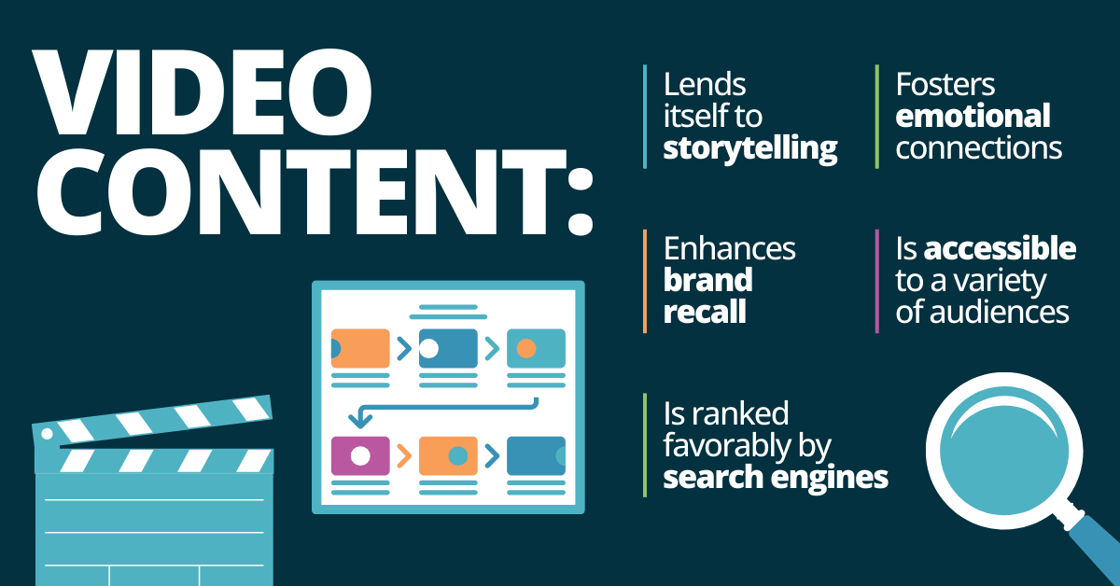
    Video content stands out by fostering connection, enhancing brand recall, and driving action.

    With consumers exposed to an average of 5,000 ads a day — ten times the number from 50 years ago — cutting through the noise demands a more strategic approach than ever. That’s why it’s imperative to incorporate video content into your 2025 marketing strategy.

    Illustrations

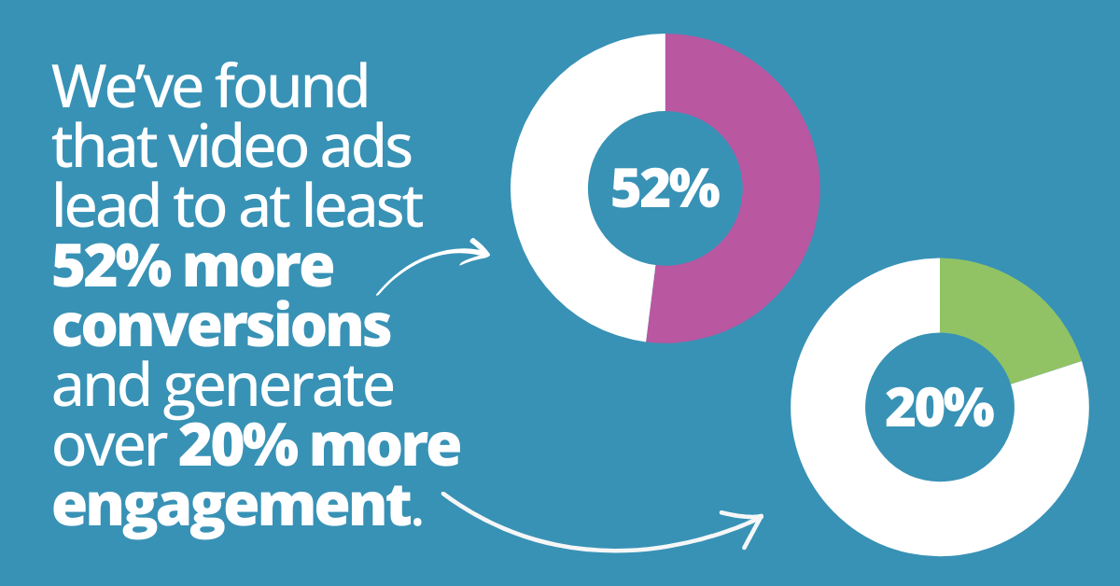
    Videos compel viewers to action more effectively than static image ads. We’ve found that on average, video ads lead to at least 52% more conversions and generate over 20% more engagement.

    While it’s essential on social media — where the share of time US social users spend watching videos will reach 58.2% this year — video is also an impactful content form on display ads, connected TV, and owned channels like websites and email.

    Circle charts

    If you’re hesitant about the time investment required for video marketing, we’re here to help you seamlessly integrate video into your strategy from campaign ideation to execution.

    We offer:

    1. Content Creation:
      From display ads and information montages to testimonial videos, our content captures your audience’s attention.
    2. Production Management:
      We handle all aspects of production, from strategy ideation to managing logistics, including on-site shooting at your location.
    3. Partner Selection:
      We help identify and select the best partners for your project, providing examples of previous work and inspiration to ensure alignment with your vision.

    Learn how we can elevate your 2025 marketing strategy with impactful video content.

    Contact us today to explore our advanced video marketing solutions.

  • The Kids Are All Doing It: Your Guide to Social Search [The Influencer – Oct 2024]

    Social Search: How Gen Z & Millennial Search Habits Are Changing

    Insights from Co-Founder and CEO Will Scott

    Social Search: How Gen Z & Millennial Search Habits Are Changing

    WILL SCOTT | 10-MINUTE READ

    Discover why Gen Z and Millennials are choosing social search over search engines. Learn how you can still use SEO strategies to capture their attention!

    Read More


    Track and Report the Right Higher Ed Marketing Analytics to Improve Your Strategy

    Track and Report the Right Higher Ed Marketing Analytics to Improve Your Strategy

    ALISON ZERINGUE | 8-MINUTE READ

    Discover how to leverage higher education marketing analytics to optimize strategies, boost enrollment, and track key metrics effectively.

    Read More


    What’s Included in Higher Education Cost Per Inquiry (CPI) for Marketing?

    What’s Included in Higher Education Cost Per Inquiry (CPI) for Marketing?

    FALLON MYERS | 6-MINUTE READ

    Tracking your school’s cost per inquiry leads to efficient budget spend and better marketing decisions. Learn how to track higher ed CPI costs with Search Influence.

    Read More


    Will Scott to Present on AI for Content Marketing at Pubcon 2024 in Las Vegas

    Will Scott to Present on AI for Content Marketing at Pubcon 2024 in Las Vegas

    COLLIN GUEDON | 3-MINUTE READ

    Search Influence CEO Will Scott presented on AI for content marketing at Pubcon 2024. Read the blog to learn how to use AI for content marketing to boost SEO, repurpose content, and drive traffic.

    Read More


    Search Influence Launches Higher Education Marketing Resources & Guides Page

    New Marketing Resources

    Search Influence Launches Higher Education Marketing Resources & Guides Page

    Our rich collection of resources serves new marketing professionals seeking foundational knowledge, seasoned marketers searching for innovative tactics, and higher ed leaders looking to support institutional goals.

    Read More

  • How To Use Cold Email Marketing to Reach New Audiences

    • Cold email marketing is often underused in top-of-funnel strategies, yet it’s a powerful way to introduce your brand to new audiences and build awareness early in the buyer’s journey.
    • Cold emails work best as part of a multi-channel strategy, including display ads and social media. It creates a unified approach to reaching new audiences and amplifying your brand.
    • Cold emailing leverages advanced targeting, allowing businesses to personalize messages based on factors like location, interests, and demographics for maximum relevance.
    • Adhering to regulations like the CAN-SPAM Act, GDPR, and CCPA is vital in cold email marketing to maintain compliance and foster trust with your audience.
    • Search Influence offers targeted cold email campaigns with verified, double opt-in lists, ensuring spam-proof targeting, high deliverability, and expanded brand visibility.

    Most people associate email marketing with nurturing prospects already in the pipeline. However, cold emails open the door to new audiences, helping you connect with people beyond your current reach.

    Cold email marketing goes beyond conventional email use cases, combining the precision of digital ad targeting with the direct reach of email to build relationships from the ground up. It shifts email into a top-of-funnel strategy, sparking interest and driving awareness in audiences that traditional campaigns often miss.

    With the right data and approach, cold emails can effectively grow your brand visibility and expand your customer base. Here’s what to know about cold email marketing, its capabilities, and how Search Influence uses it to increase your brand’s impact.

    Search Influence - How to use cold email marketing to reach new audiences

    Using Cold Email Marketing to Reach New Audiences

    Using cold email marketing as a top-of-funnel strategy reaches people who may not know your brand but fit your target market. Unlike traditional email marketing strategies, which focus on targeting those in existing lists, cold emails tap into new audiences and potential leads. When used in tandem, these strategies create endless opportunities for prospect engagement.

    Many marketers worry that cold emails come off as intrusive and only end up in a spam folder. However, according to RAIN Group Center for Sales Research, 80% of buyers would rather be contacted via cold emails than through cold calls.

    Think of it as a digital handshake that opens the door to new opportunities, both for you and the recipient.

    At Search Influence, we deliver personalized cold email campaigns with verified, double opt-in lists, ensuring targeted and compliant outreach. This strategy complements your existing email efforts and allows you to reach untapped audiences.

    Cold Email Marketing Benefits for Top-of-Funnel Growth

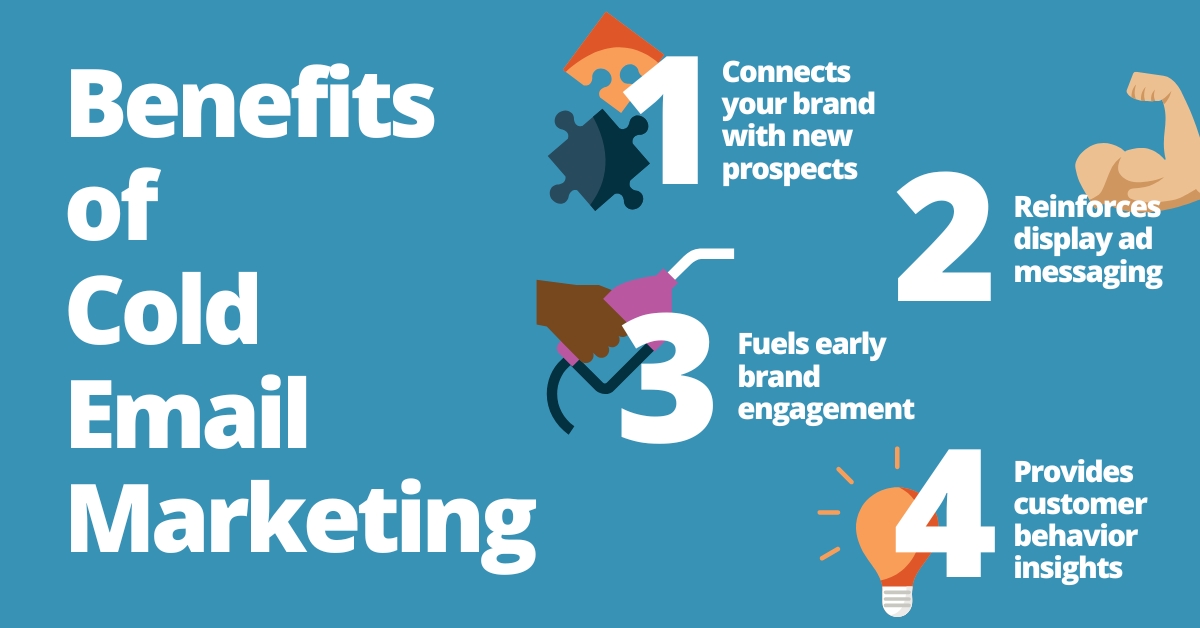
    Cold emails connect your brand with new prospects

    Cold email marketing is a way of making a strong first impression, increasing brand awareness, and positioning your brand as a solution to your audience’s challenges. This tactic introduces your brand to prospects who may not have even heard of it — directly in their inbox.

    A key advantage of cold email marketing is the ability to use re-drops, which involve sending follow-up emails to the same audience, particularly those who didn’t engage with the initial message or only clicked without taking further action. Re-drops increase impressions, giving prospects additional opportunities to engage with your content and, ultimately, convert.

    Cold emails reinforce display ad messaging

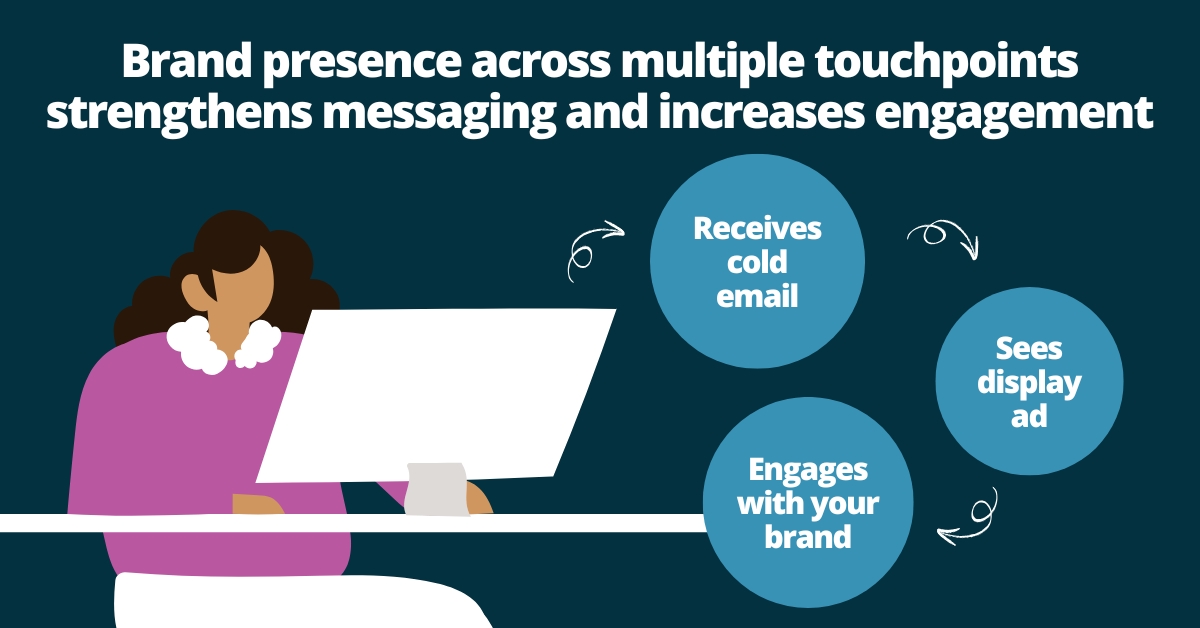
    A cold email is most effective when used alongside other outreach tactics, like display ads, to create a cohesive strategy. Recipients who receive a cold email and then see your display ad are more likely to remember your brand. This coordinated effort strengthens your overall messaging and increases the chances of engagement by making your brand more memorable across multiple touchpoints.

    Search Influence - brand Presence across multiple touchpoints strengthens messaging and increases engagement

    Cold emails fuel early-stage engagement

    Cold emails are often the starting point of a prospect’s journey. By offering useful resources, educating the recipient on your brand, or inviting readers to take a low-commitment action (like downloading a guide or signing up for a webinar), you drive early engagement. This type of early interaction primes recipients for future nurturing campaigns, moving them deeper into the funnel where they’re more likely to convert.

    Cold emails provide customer behavior insights

    Every cold email campaign gives you valuable data. By tracking how prospects respond (whether they open, click, or ignore your messages), you gain insights into customer behaviors and preferences. These insights help refine future outreach and improve the performance of other marketing tactics like retargeting ads or automated follow-ups, optimizing your approach for later stages in the funnel.

    Search Influence - The Benefits of cold email marketing

    Advanced Targeting Techniques in Cold Email Marketing

    Cold email marketing isn’t just about sending messages to a random list of prospects — it’s about precision. Like paid advertising, cold emails use advanced targeting techniques, so you can pinpoint the exact audience most likely to engage with your brand. This strategy takes into account a variety of factors, ensuring that each email is tailored to the specific needs and behaviors of the recipient.

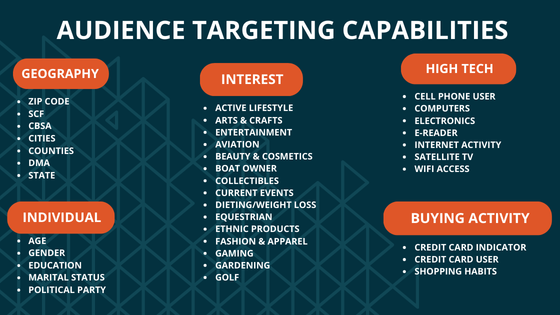
    Some key targeting capabilities include:

    • Geographic: Reach prospects based on their location, ensuring your message resonates with local trends, needs, and market conditions.
    • Individual: Hone in on personal demographics like age, gender, education, marital status, and even political party to make your outreach more relevant.
    • Interest: Align your email content with the recipient’s personal interests to personalize your messaging and increase chances of engagement.
    • High-Tech: Use technology preferences to refine your audience, ensuring you’re reaching those who are best suited for your product or service.
    • Buying Activity: Focus on prospects based on their shopping habits and credit card usage, allowing you to reach those whose recent spending patterns suggest they may be interested in your products or services.

    By combining these advanced targeting techniques, cold email marketing becomes a powerful tool for reaching the right audience at the right time. It creates a personalized experience that speaks directly to the recipient’s current needs.

    Search Influence’s advanced targeting capabilities

    Search Influence takes advanced targeting even further to create email campaigns that break through the noise of a crowded inbox and resonate with the people who matter most.

    Our custom top-of-funnel email marketing service gives you access to curated databases of potential prospects, all verified through a double opt-in process to ensure deliverability and privacy compliance. We set precise demographic specifications — including social, economic, geographic, and interest-based factors — and efficiently build campaigns using your brand’s unique content and creative.

    Search Influence's Audience Targeting Capabilities with Cold Emails

    Integrating Cold Email Marketing into Digital Advertising Strategies

    Cold email marketing works best as part of a broader, integrated digital marketing strategy. When combined with display ads, social media outreach, and other top-of-funnel tactics, cold email creates a robust, multi-channel marketing effort.

    Let’s put this into perspective with an example. Say you’re a higher education marketer looking to generate high-quality leads and expand your student base. Cold emails would introduce your institution to a targeted audience, display ads would reinforce the message, and social media campaigns would keep the conversation going. Each tactic complements the other, creating a unified strategy that reaches prospects wherever they are.

    This approach builds brand awareness and allows your university to track engagement, gather insights, and refine recruitment strategies for future outreach efforts.

    Addressing Concerns About Regulatory Compliance

    Is cold emailing legal in the U.S.?

    Yes, cold email marketing is legal in the U.S. as long as it follows relevant regulations. While cold email outreach is permissible, businesses must ensure they adhere to established guidelines like the CAN-SPAM Act to avoid penalties and maintain ethical practices. Ensuring compliance protects your business from penalties and also helps maintain trust with your recipients.

    What are the customer data privacy regulations for cold email marketing?

    Cold email marketers must adhere to key data privacy regulations. In the U.S., the CAN-SPAM Act requires businesses to provide opt-out options, avoid misleading subject lines, and include a valid physical address. Internationally, the GDPR in the European Union demands explicit consent before emailing recipients, while the CCPA in California gives consumers the right to know how their data is used and opt out of data sales.

    To stay compliant, marketers must use verified email lists, respect privacy preferences, and ensure transparency in data handling. Understanding all of the requirements helps you avoid penalties for cold email marketing, which can be costly and damage your brand’s reputation.

    How does cold email marketing differ from buying email lists?

    Far from a black hat technique, cold emailing ensures compliance with regulations, making them 100% spam-proof. Cold email marketing uses opted-in, validated email addresses, meaning recipients have actively agreed to receive messages through a third-party platform. These lists are continuously refreshed to stay relevant, with individuals added or removed based on changing interests.

    On the other hand, buying email lists often involves sending messages to unverified, unopted-in recipients through your own system, which can cause inconsistent deliverability and harm your sender reputation. Cold outreach avoids these risks by using an external platform, protecting your domain, and ensuring higher email deliverability, all while following ethical practices with the recipient’s best interests in mind.

    Achieve Top-of-Funnel Success With Cold Email Marketing

    Cold email marketing is a powerful way to grow brand awareness, generate high-quality leads, and reinforce your display ad messaging.

    By targeting the right audience with personalized outreach, you effectively engage new prospects and drive early-stage interactions that set the foundation for deeper connections.

    Interested in how cold email marketing can diversify your top-of-funnel strategy and increase brand visibility? Get in touch with us today to see how we can help you reach new audiences and drive sustainable growth.

  • WEBINAR: Top Trends for Your 2025 SEO Strategy [Search Influence and UPCEA]


    About the Higher Ed SEO Trends Webinar

    Search Influence and UPCEA hosted the joint webinar “Top Trends for Your 2025 SEO Strategy to Attract the Modern Learner.”

    AI-generated search results and social search have transformed user behavior, including how prospective students research and apply to institutions. As higher education marketers, our job is to make it easy for prospective students to find the information they need. Therefore, failing to adapt to these higher ed SEO trends could result in losing prospects to more visible competitors in 2025.

    In this webinar, we explored a new way to think about SEO that will future-proof your strategy in a time of changing search behavior. UPCEA’s Chief Research Officer Jim Fong and Senior Director of Research Bruce Etter, joined UPCEA Platinum Partner Search Influence to share a blueprint for a 2025 SEO strategy that attracts and guides more students through the funnel.

    Learning Objectives for the Higher Ed SEO Trends Webinar

    • How AI-generated search results and social search impact your institution’s visibility
    • The key components of a higher ed SEO strategy built to outlast trends
    • How to communicate to your team about this new way of thinking about SEO 

    How to Watch the Webinar

    Watch the webinar recording to learn how to build your 2025 SEO strategy to attract and engage the modern learner.

  • Learn About Key Higher Education Marketing Metrics From Paula French’s UPCEA Blog

    Learn about Key Higher Education Marketing Metrics from Paula Frenh's UPCEA Blog

    Search Influence’s Director of Sales and Marketing Paula French recently wrote a guest blog post for UPCEA titled “How Higher Education Marketing Metrics Help You Boost Enrollment.”

    While this is Paula’s first guest blog post for UPCEA, she is a regular speaker at UPCEA conferences and our joint webinars.

    As with her speaking appearances, Paula’s UPCEA blog is filled with higher education marketing insights to help universities see real-world results.

    An Overview of Paula French’s UPCEA Blog Post

    In her guest post for UPCEA, Paula addresses the growing challenges higher education institutions face, particularly the shrinking demand for traditional undergraduate degrees.

    She highlights a key opportunity to boost enrollment: focusing on adult learners — students aged 25 and older — who prioritize career advancement, flexibility, and program quality.

    To successfully reach this audience, Paula emphasizes the importance of understanding marketing benchmarks in higher education, specifically two critical metrics: cost per inquiry (CPI) and cost per enrolled student.

    Paula’s blog underscores that tracking CPI helps institutions optimize their budgets by revealing which of their campaigns best generate inquiries. Additionally, monitoring the cost per enrolled student provides a more comprehensive view of how efficiently marketing efforts convert interest into actual enrollments.

    By consistently tracking these higher education digital marketing benchmarks, universities will make smarter, data-driven decisions that lead to more sustainable growth.

    To dive deeper into these strategies, download the 2024 Higher Education Marketing Metrics Research Study Search Influence created in collaboration with UPCEA.
    Higher Ed Marketing Metrics Research Study 

    The Search Influence x UPCEA Partnership

    As an UPCEA Platinum Partner, Search Influence helps higher education institutions learn how to measure marketing success.

    This partnership focuses on providing valuable insights through joint research, including our recent Higher Education Marketing Metrics Research Study and our 2023 Higher Ed SEO Research Study.

    Together with UPCEA, we explore the state of higher education digital marketing, offering institutions industry insights and data-driven strategies for optimizing their marketing efforts.
    In addition to research, Search Influence and UPCEA collaborate on webinars to educate universities on enhancing their SEO and paid ad strategies.

    Learn More About Higher Education Marketing Metrics

    How Higher Education Metrics Help You Boost Enrollment

    Read Paula French’s full blog post on UPCEA’s website for expert insights into tracking the higher education marketing metrics that matter most.

    Find even more higher education marketing insights in our past UPCEA guest blog posts written by our Director of Account Management Alison Zeringue, and CEO & Co-Founder Will Scott.

    Whether you’re looking to refine your SEO strategies or optimize your paid advertising, Search Influence is here to help.

    Contact us today to learn how we can help your institution achieve sustainable growth through data-driven marketing strategies.