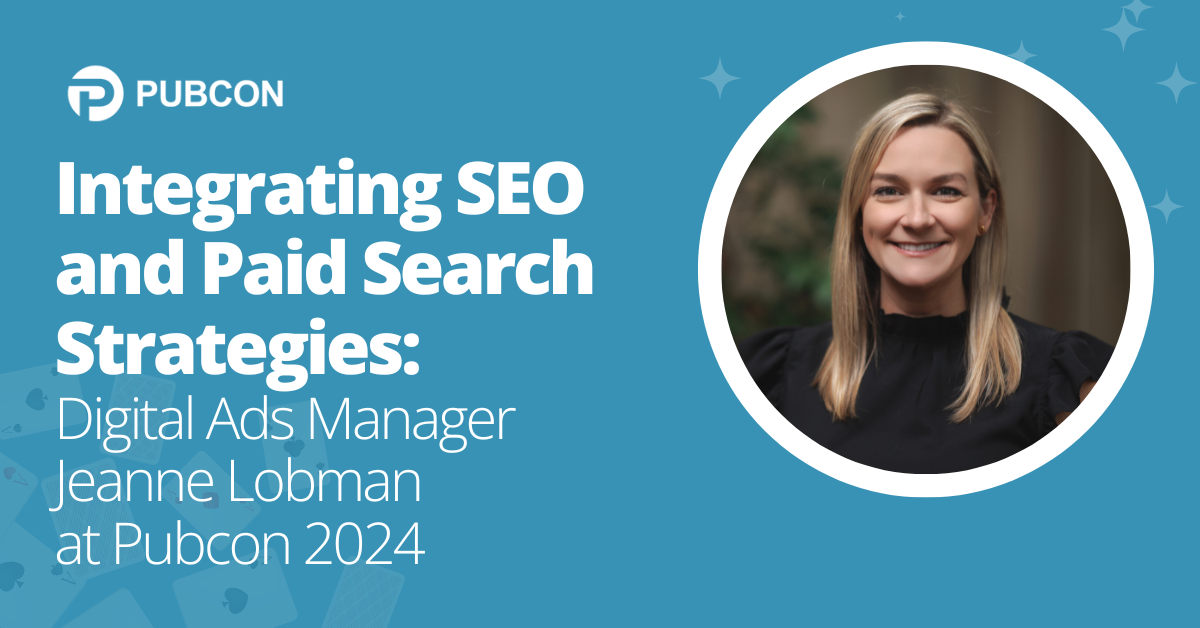
Search Influence’s Digital Advertising Manager, Jeanne Lobman, will present the session Integrating SEO and Paid Search Strategies at Pubcon 2024 in Las Vegas, Nevada, from 3:20 to 4:10 PM on Wednesday, October 16.
Along with AdLift Co-Founder and CEO Prashant Puri, Jeanne will explain how digital marketers can drive results by combining the powers of organic search and paid advertising.
An Overview of Integrating SEO and Paid Search Strategies
Jeanne’s session, Integrating SEO and Paid Search Strategies, is tailored for seasoned digital marketers seeking to elevate their approach.
In this advanced session, Jeanne will explore how blending organic SEO with paid search tactics creates a unified strategy that maximizes traffic and enhances campaign performance.
By leveraging the strengths of both channels, attendees will learn how to boost ROI, achieve business goals more efficiently, and drive long-term growth.
Key takeaways from the SEO and paid search strategy session include:
Unified Keyword Strategy: Discover how to develop a unified keyword strategy that leverages the strengths of both SEO and paid search to target high-converting keywords and reduce bid costs.
Data Synergy: Learn how to use data from paid search campaigns to inform your SEO efforts and vice versa, ensuring a more data-driven approach to your marketing.
Content Optimization: Explore techniques for optimizing content that performs well in organic search and supports your paid search objectives.
Budget Allocation: Understand how to strategically allocate your budget across SEO and paid search to maximize your marketing spend and achieve the best possible ROI.
Performance Metrics: Gain insights into the most effective performance metrics for measuring the success of your integrated campaigns and making informed adjustments.
Case Studies: Review real-world case studies that illustrate the successful integration of SEO and paid search strategies, highlighting best practices and key learnings.
Jeanne’s Years of Paid Search Strategy Experience
With almost 15 of experience in digital marketing, Jeanne has established herself as a leading authority in paid search strategy.
As Search Influence’s Digital Advertising Manager, Jeanne guides paid advertising campaigns to align with clients’ goals, ensuring optimal results. Her strategic mindset and data-driven approach allow her to craft impactful campaigns, track performance, and deliver actionable insights.
Beyond her hands-on expertise, Jeanne is a respected speaker and trainer, sharing her extensive knowledge to elevate both her team and the digital marketing industry.
Search Influence at Pubcon 2024
Jeanne won’t be the only Search Influence team member sharing valuable insights at Pubcon 2024.
Co-Founder and CEO Will Scott will present the session Content Repurposing and Content Generation. In it, he will explain how digital marketers can leverage AI and large language models to revitalize existing content.
You can also find Will at other Pubcon 2024 sessions, including:
Don’t miss Jeanne’s insightful session at Pubcon 2024 to learn how to integrate SEO and paid search strategies for maximum impact. To attend live, view the session details and full event schedule.
Many institutions don’t track crucial metrics like cost per inquiry (CPI) and cost per enrolled student, missing opportunities to optimize their marketing efforts and better allocate resources.
Higher education institutions need precise tracking and insights to enhance their marketing strategies, effectively engage prospective students, and drive enrollment.
Institutions that actively track key metrics like CPI and cost per enrolled student see higher satisfaction with their marketing campaign performance.
In the high-stakes arena of higher education, every marketing decision counts.
Without precise tracking and insightful analysis, your marketing efforts are like a ship navigating without a compass — directionless and bound to get lost in the sea of competition.
For years at Search Influence, we’ve partnered with institutions like Tulane SoPA and Tufts University College, helping them leverage analytics to optimize their marketing campaigns.
Our experience has shown that those satisfied with their ability to track success are also more likely to be satisfied with their campaign performance.
This report provides valuable insights into how data-driven marketing can lead to greater accountability, smarter decisions, and, ultimately, success in attracting and retaining students.
Read on to learn how tracking the right metrics can empower your institution to thrive in a crowded higher education market.
Why Tracking Marketing Metrics Is Important for Higher Ed Institutions
As higher education institutions face increasing competition and evolving expectations from prospective students, it’s essential to track and analyze key performance indicators (KPIs).
Higher education marketing metric tracking allows institutions to:
Measure their return on investment (ROI)
Manage campaign performance
Allocate resources effectively
Tracking key metrics provides a clear picture of what’s working and what’s not, enabling higher education institutions to make informed decisions that directly impact student recruitment.
By focusing on data, institutions can:
Determine which marketing channels yield the highest engagement
Identify the content that resonates most with their audience
Adjust their strategies in real-time to enhance results
This kind of accountability is critical for marketers, program managers, and faculty who need to develop courses and offerings that align with market demand and student interests.
Effective higher education marketing tracking can also have a significant impact on resource allocation and budgeting. When institutions measure their efforts to engage adult learners, they create a framework of accountability that drives smarter decisions.
Search Influence and UPCEA’s Higher Education Marketing Metrics Study
To gain a deeper understanding of the marketing metrics and costs associated with online and professional education programs, Search Influence partnered with UPCEA to conduct a comprehensive study.
The findings of this research highlight the importance of data-driven decision-making for higher education marketing strategies.
Follow along as we break down key findings from this study that can help your institution boost online conversions.
Less than half of higher ed marketers track cost per inquiry
One of the study’s top takeaways is the critical role of tracking specific metrics like cost per inquiry (CPI) and cost per enrolled student.
Despite the significance of these metrics, less than half of higher education marketers track them. While nearly three-quarters (73%) of marketing units track the source of inquiries, only 46% track CPI, and just 43% track cost per enrolled student.
Shockingly, nearly 17% of institutions don’t track any of these metrics.
This gap in metric tracking reveals a missed opportunity for many universities to optimize their marketing efforts and ensure they effectively reach their target audience.
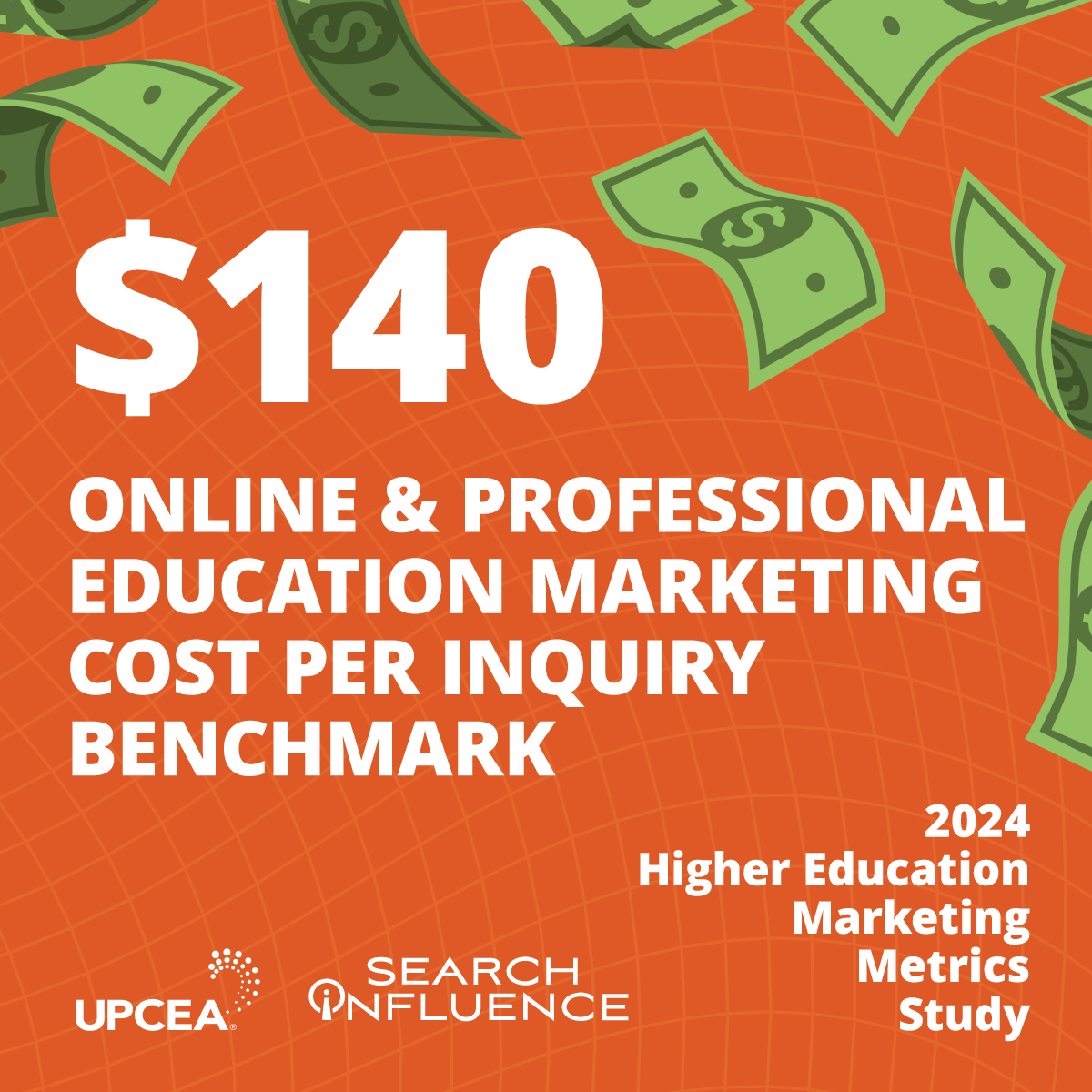
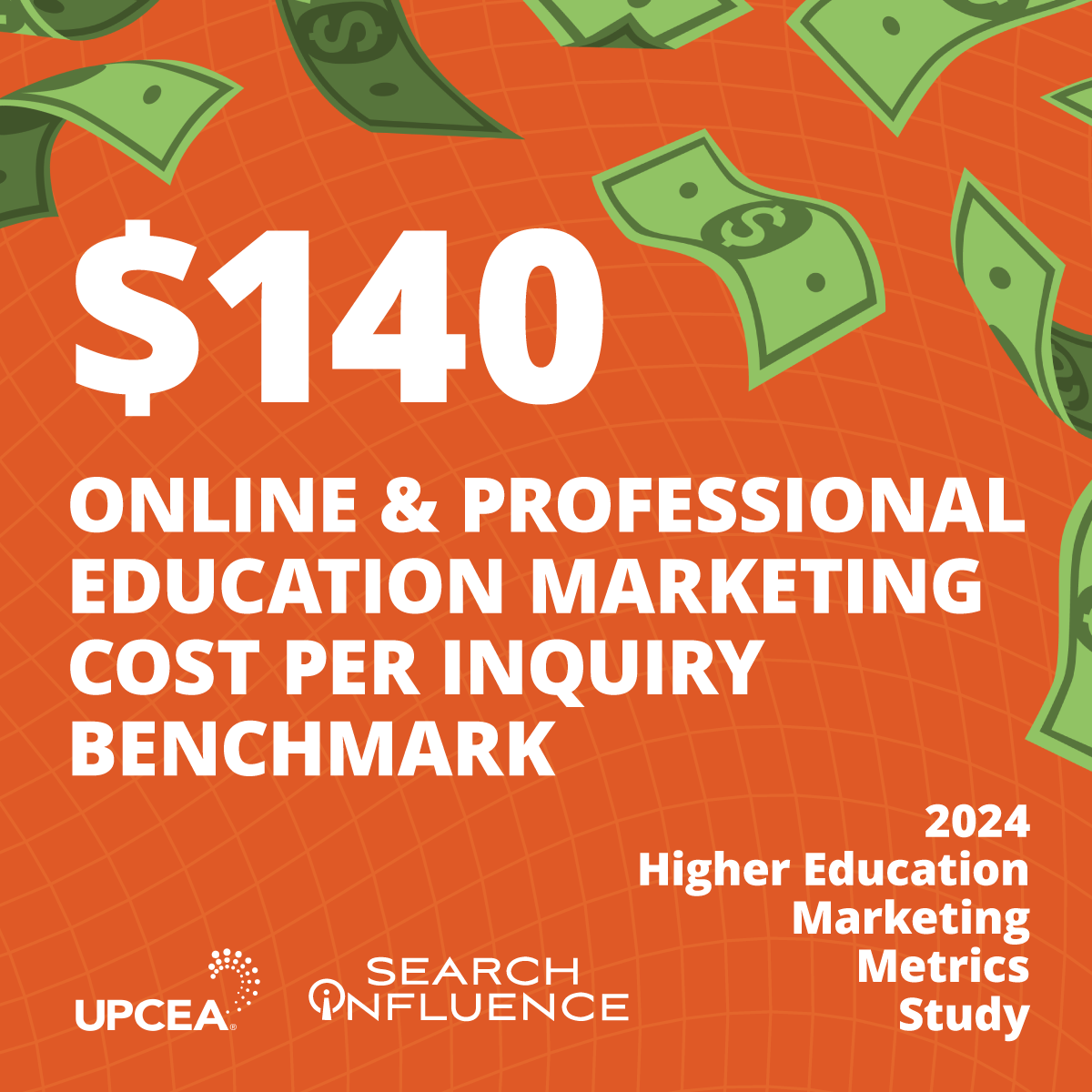
The average professional and online education cost per inquiry is $140
For those tracking cost per inquiry, the study found that the average CPI for online and professional education programs is $140, with a median of $106.
This metric is a crucial indicator of how well marketing dollars are being utilized to attract prospective students. Tracking these costs allows university marketing departments to make informed decisions about where to allocate their resources, ensuring that digital marketing efforts are cost-effective and impactful.
Email marketing is most often managed in-house, while digital advertising is most often outsourced
The study reveals that while 73% of higher education institutions manage email marketing in-house, half outsource their digital advertising (such as Google paid search) to external agencies.
This trend indicates a potential missed opportunity for maximizing ROI, especially given email marketing’s high return of 36:1.
When email campaigns and SEO are managed internally without adequate resources, universities may not fully optimize these channels, contributing to dissatisfaction with results.
Conversely, outsourcing digital advertising allows for continuous tracking and optimization, often leading to better performance.
Marketers who track their campaigns are more happy with performance
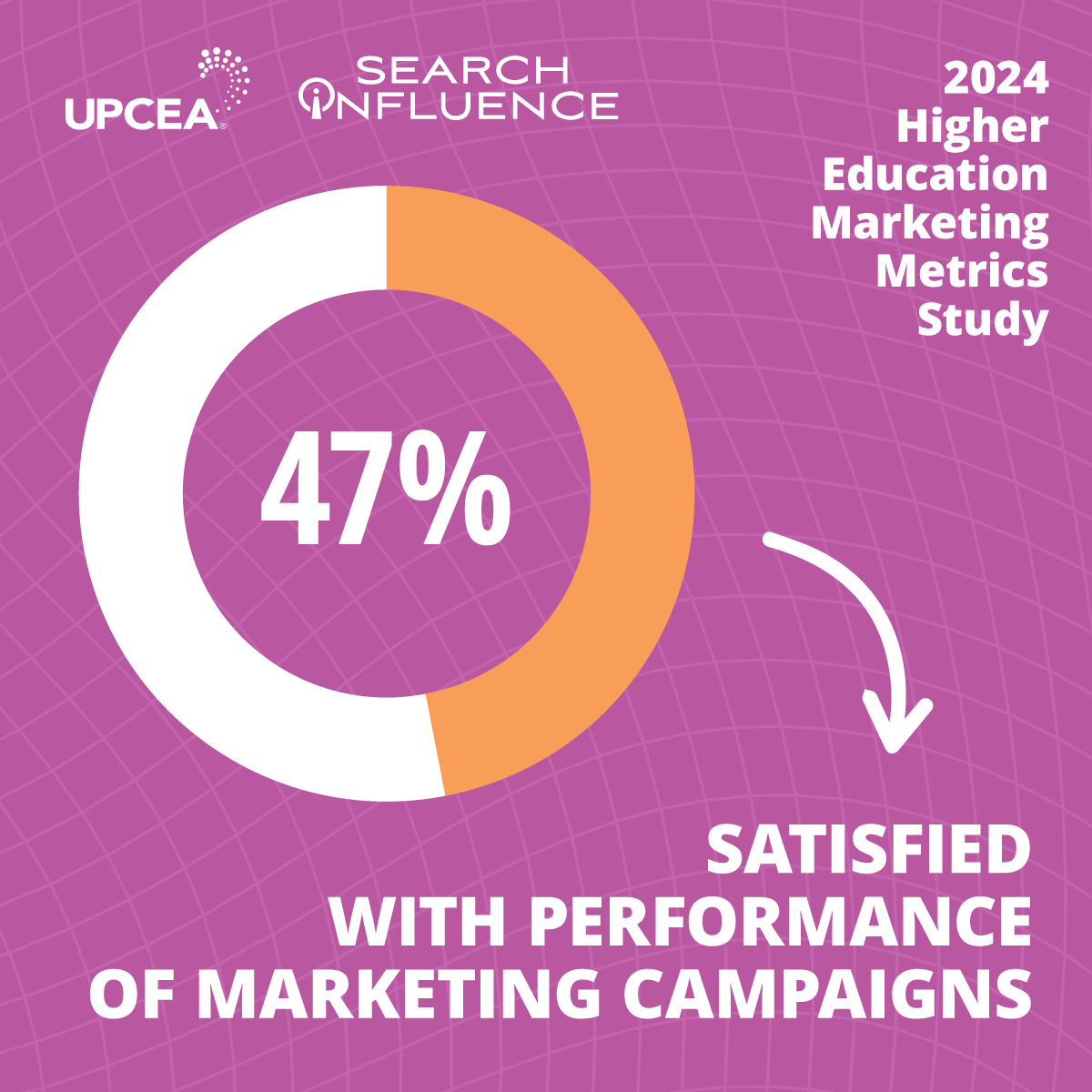
Another significant finding is the correlation between tracking marketing metrics and overall satisfaction with campaign performance. Only 47% of respondents expressed satisfaction with their marketing campaigns’ performance, and just 29% were content with their ability to track campaign success.
However, those who actively track metrics like cost per inquiry and cost per enrolled student report higher satisfaction levels, indicating that effective metric tracking is linked to better marketing outcomes.
Analytics, Tracking, and Reporting Opportunities for Higher Education
If you’ve read this far, we’ve made the case that it’s important and effective to track key metrics. You might be asking — what exactly are these key metrics?
Below are the two most important metrics we recommend you track.
Cost per inquiry
By monitoring cost per inquiry, institutions can identify the most cost-effective methods for attracting inquiries and allocate resources accordingly, ensuring that marketing dollars are spent where they yield the highest return.
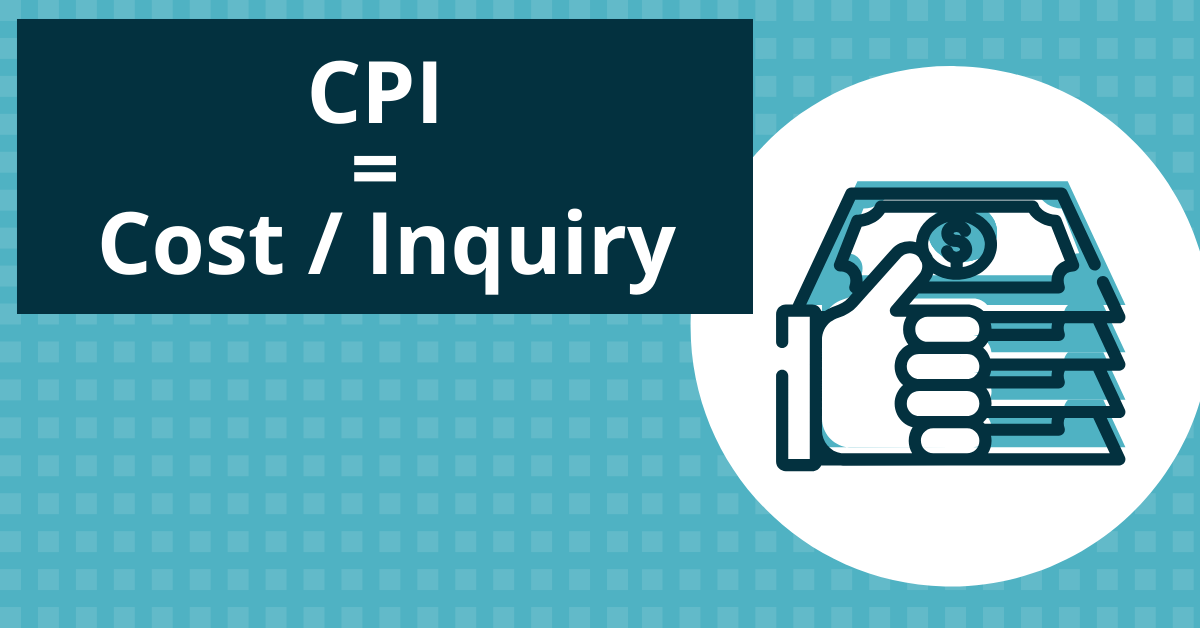
CPI is a widely recognized metric, yet less than half of higher education marketers actively track it. This metric calculates the total marketing and advertising spend divided by the number of inquiries received, providing a clear measure of budget efficiency and effectiveness.
Tracking CPI allows marketing teams to gain insights into which campaigns generate interest and drive students into the enrollment funnel.
Cost per enrolled student
Another crucial metric for higher education institutions is cost per enrolled student, which measures the total expenses involved in securing each student’s enrollment. This includes all costs from the initial marketing outreach through to the point of a student’s matriculation, encompassing media spend, agency fees, salaries, and other related marketing activities.
Our study highlighted that less than half of higher education marketers track this metric, even though it offers invaluable insights into spending efficiency and the overall effectiveness of recruitment strategies.
Understanding cost per enrolled student helps marketing departments optimize their strategies by identifying which campaigns are most successful at converting inquiries into enrolled students. This metric serves as a vital tool for aligning marketing efforts with enrollment goals.
By integrating systems capable of tracking both cost per inquiry and cost per enrolled student, higher education institutions can make data-driven decisions that enhance the efficiency of their marketing plans and improve outcomes across the enrollment funnel.
Tracking metrics can lead to new opportunities
When you better understand your ad spend, you can reallocate funds to other areas of need.
Without a strong SEO focus, university websites may become challenging to navigate, leading to frustrated users who quickly leave the site. This can result in lower search engine rankings and less visibility among the target audience. By contrast, investing in SEO helps universities improve user experience, making it easier for prospective students to find information about programs, admissions, and campus life.
For universities aiming to attract the modern adult learner, SEO offers a strategic way to capture attention and stand out in a competitive market. With an effective SEO plan, universities can ensure their websites rank higher in search results, making prospective students more likely to find them when searching for educational programs. This visibility is especially crucial as more students turn to online searches to explore their educational options.
Reallocating budget and resources toward SEO could be a game-changer for universities. By gaining a deeper understanding of their website’s performance metrics and ad spend, marketers can identify gaps in their current strategy and shift focus to overlooked areas.
At Search Influence, our strategic approach to marketing tracking has consistently driven impressive results for higher education institutions.
For Palo Alto University, we increased average monthly inquiries from 185 to 272 by expanding focus on key degree programs, optimizing paid advertising, and refreshing campaign messaging. This resulted in a 49% increase in leads within just two quarters.
Similarly, we helped Tulane SoPA surpass its goal of 500 inquiries per month by implementing a full-funnel marketing strategy. Our efforts, including targeted paid advertising and optimized landing pages, led to an average of 791 inquiries per month — a 58% increase over the initial target.
These successes demonstrate our commitment to helping higher education institutions enhance their enrollment strategies through effective marketing tracking and optimization.
Learn More About Higher Education Marketing Analytics
Accurate marketing tracking is essential for higher education institutions to optimize their campaigns, attract prospective students, and drive enrollment.
Our UPCEA x Search Influence study sheds light on how universities can better measure the success of their marketing efforts through metrics like cost per inquiry and cost per enrolled student.
By leveraging these insights, institutions can make data-driven decisions, improve resource allocation, and ultimately achieve their enrollment goals.
Search Influence Co-Founder and CEO Will Scott will present at Pubcon 2024 in Las Vegas, Nevada, on Wednesday, October 16th, from 10:30 to 11:20 a.m.
In his session Content Repurposing and Content Generation, the SEO pro will discuss how marketers can use AI and large language models (LLMs) to breathe new life into their existing content and use AI for link-building to identify optimization opportunities.
If you’re a content marketer, SEO professional, or digital strategist looking to work smarter, not harder, this session is your first-class ticket to a whole new world of workflow efficiency.
This blog will address what you can expect from Will’s upcoming Pubcon session.
An Overview of Content Repurposing and Content Generation
Why is Hollywood full of adapted screenplays?
Why does Nike always have another retro shoe release?
Because coming up with new ideas is hard and more expensive.
Like screenwriters and shoe designers, marketers don’t always have the time or funds to reinvent the wheel.
But many marketers do have countless archived blogs, press releases, social media posts, and videos collecting virtual dust across their platforms.
Will’s October Pubcon session, Content Repurposing and Content Generation, will equip you with the skills to turn your old, boring content into new, engaging formats.
Those who attend will learn practical skills to:
Identify high-potential older content for AI-assisted updates
Use LLMs to expand, rewrite, and modernize outdated articles
Create multiple content formats from a single piece (e.g., blog post to video script, infographic to podcast)
Enhance SEO performance of existing content through AI-driven optimization
Develop a sustainable content recycling strategy that saves time and resources
Will’s presentation will highlight how generating fresh, AI-driven content opens the door to valuable link-building opportunities. As you repurpose old content into new formats, AI for link-building helps you identify link-building prospects and optimize your content for greater visibility.
As Will has emphasized before, using AI tools to repurpose content isn’t about spamming the web with low-quality material. Instead, it’s about strategically reworking content into fresh formats that can be shared across multiple platforms, boosting visibility and driving traffic.
This session will equip you with the skills to maximize your content investment and keep your websites fresh and relevant in the age of AI.
Search Influence at Pubcon 2024
Search Influence’s presence can be felt across Pubcon 2024.
Search Influence Is On the Cutting Edge of AI for Content Marketing
From AI-driven content repurposing to cutting-edge AI content link-building techniques, Will’s Pubcon 2024 sessions will give you the tools you need to create engaging content faster. To catch them live, check out the full Pubcon schedule for session details.
Looking to learn more about AI for SEO content now? No need to wait for Pubcon to access Will and Search Influence’s expertise. Our team is always here to help you revolutionize your SEO and digital advertising campaigns with innovative tech and results-driven strategies.
Properly calculating CPI is vital for higher education institutions to gauge the effectiveness of their marketing efforts and avoid inefficiencies.
To gain a complete picture of their marketing costs and CPI, institutions must consider all related expenses, including media spend and staff salaries.
Implementing advanced tools like CRM systems can significantly improve the accuracy and effectiveness of CPI tracking, leading to more strategic decisions.
Utilizing resources like Search Influence’s CPI worksheet grants institutions more precise assessments of the state of their CPI.
Every dollar spent on higher education marketing is a step toward shaping your institution’s future. But how do you know if those steps lead you in the right direction?
Accurately calculating cost per inquiry (CPI) as a key performance indicator reveals the true impact of your marketing efforts and drives strategic decisions that shape your institution’s success.
Despite the critical role of CPI tracking, our 2024 Search Influence x UPCEA Research Study found that fewer than half (46%) of the institutions surveyed actively monitor CPI for their professional, continuing, and online (PCO) programs. This oversight can lead to missed opportunities, wasted budgets, and stagnant enrollment numbers in the increasingly competitive educational sector.
To help you assess the effectiveness of your marketing spend, we’ll explore what’s included in marketing CPI and how to accurately calculate higher ed CPI costs.
All the Costs You Should Consider When Calculating Cost Per Inquiry
To remain competitive, higher education marketing departments must be well-equipped to systematically track and analyze critical metrics like CPI. These insights are essential for making informed, data-driven decisions that optimize budget efficiency and fuel impactful strategies.
At its core, CPI for higher education marketing is an invaluable measure of this efficiency, quantifying the amount spent on digital advertising to generate each student inquiry.
Such inquiries typically come from various sources, such as request-for-information forms, brochure requests, or visit requests to your institution. They might also generate from your email campaigns.
While it’s important to know the source of your inquiries, it’s equally important to measure the total investment required to secure a prospective student’s enrollment. These costs vary depending on your institution’s budget strategy, but most frequently entail:
Media Spend: The total cost associated with purchasing advertising space across various platforms to generate student inquiries.
Agency Fees: Payments made to external marketing agencies for their expertise and services in executing and managing digital marketing campaigns.
Marketing Team Salaries: The compensation provided to in-house marketing staff who plan, execute, and monitor marketing strategies aimed at driving inquiries.
Additional Marketing Efforts: Any other expenses related to higher education marketing activities, such as email and SMS campaigns, virtual events, and open houses.
Why Is Tracking Higher Ed CPI So Important?
Tracking CPI is a non-negotiable for institutions who want to enhance their marketing efficiency and align strategies with successful campaigns. Here’s why:
Gain Valuable Insights: By leveraging CPI metrics, your marketing department can identify which campaigns drive the most inquiries and enrollments, helping to focus efforts on the most effective strategies.
Identify Successful Trends: Tracking these metrics allows your institution to spot successful trends within its target audience. Recognizing these patterns enables you to replicate effective strategies, ensuring your campaigns are continuously refined based on fresh data.
Improve Budgeting Decisions: CPI metrics play a significant role in guiding budgeting decisions. By understanding which campaigns generate the most inquiries at the lowest cost, you can allocate resources to maximize your marketing budget.
Maximize Enrollment Success: Prioritizing campaigns that deliver high inquiry rates at a low cost optimizes your budget and increases the likelihood of meeting or exceeding your enrollment goals.
However, without accurately tracking CPI, even the best strategies can fall short — leaving your institution stuck in strategy blindspots that hinder true growth and success.
How to Accurately Calculate Higher Ed CPI Costs
Accurately calculating CPI costs often involves utilizing advanced tools like customer relationship management (CRM) systems or applicant tracking systems. These technologies streamline the process of managing inquiries and tracking their progress through your enrollment pipeline.
A CRM system is designed to manage interactions with potential and enrolled students. It offers a centralized platform to monitor essential metrics such as the source of inquiries, CPI, and cost per enrolled student. The data provided by a CRM is indispensable for understanding the full scope of your marketing efforts and ensuring that no inquiry falls through the cracks.
In fact, 74% of businesses report that CRM technology provides better access to customer data, which, in turn, enhances decision-making processes. For higher education marketers, this means more precise tracking of where your inquiries come from and how much your institutions spends to generate each one.
Benefits of using a CPI worksheet for higher education
To assist institutions in calculating and managing their CPI, we offer a free CPI worksheet specifically for higher education. This tool can help you better understand your costs and streamline your tracking processes by providing:
Confidence in Results: By using a CPI worksheet, you’ll have confidence that you’re driving the right amount of inquiries and achieving the desired outcomes. It helps you quantify your marketing efforts and ensure that your resources are being utilized effectively.
Benchmarking: Our CPI worksheet allows you to evaluate your institution’s performance against broader industry standards. According to our Higher Education Marketing Metrics Research, the online and professional education CPI benchmark is $140. This benchmarking helps you identify areas where you may overspend or where there is room for improvement.
Vendor Evaluation: If your institution works with third-party vendors, you can use our CPI worksheet to assess whether their promises are realistic and then measure their performance against the actual results to make informed decisions about future collaborations.
Ready to start calculating your school’s higher ed CPI? Download our free CPI worksheet for greater chances of more precise calculations.
How Better CPI Tracking Can Boost Higher Ed Enrollment
Despite the clear benefits of tracking marketing metrics like CPI, our research found that less than a third of higher education marketing leaders are satisfied with their ability to track the success of their campaigns.
This lack of tracking can directly impact the effectiveness of marketing strategies and, ultimately, enrollment outcomes.
Only 47% of our research survey respondents expressed satisfaction with their marketing campaigns’ performance, and a significant portion (31%) of marketing departments struggled to correlate their marketing success with enrollment numbers. This gap underscores the importance of tracking higher ed CPI costs effectively, which can provide the data needed to advocate for additional resources and optimize your budget.
By improving CPI tracking, your institution will have more accurate forecasts and refine its marketing strategies to focus on efforts that yield the best results.
Search Influence Can Help You Evaluate Your Higher Ed CPI Costs
Without a clear understanding of CPI, it’s challenging to allocate resources effectively or measure the success of your campaigns.
At Search Influence, we bring extensive experience in higher education marketing, helping institutions like yours achieve measurable results. In just one of our success stories, we assisted Palo Alto University in increasing its monthly inquiries by 49% in one quarter — well surpassing the institution’s initial goals.
If you’re looking to optimize your school’s CPI and improve your marketing outcomes, let our experienced team help make it happen. Our tenure in higher education marketing, combined with tools like our CPI worksheet, can guide your institution toward more efficient and effective marketing.
Search Influence’s Director of Sales and Marketing Paula French recently wrote an article for University Business sharing expert insights for higher education marketers.
University Business is a leading news outlet that caters to top decision-makers in higher education.
It provides insights and strategies to college and university leaders across the United States, addressing challenges and trends in the academic world.
University Business helps higher education leaders make informed decisions through a combination of news analysis, exclusive interviews, and practical resources.
Insights From Paula French’s University Business Article
Paula French’s article in University Business highlights the crucial need for universities to shift their focus toward adult learners. This demographic presents a significant growth opportunity amidst declining traditional undergraduate enrollment. Adult learners are driven by professional outcomes, flexibility, and program reputation — making their needs distinct from those of traditional students.
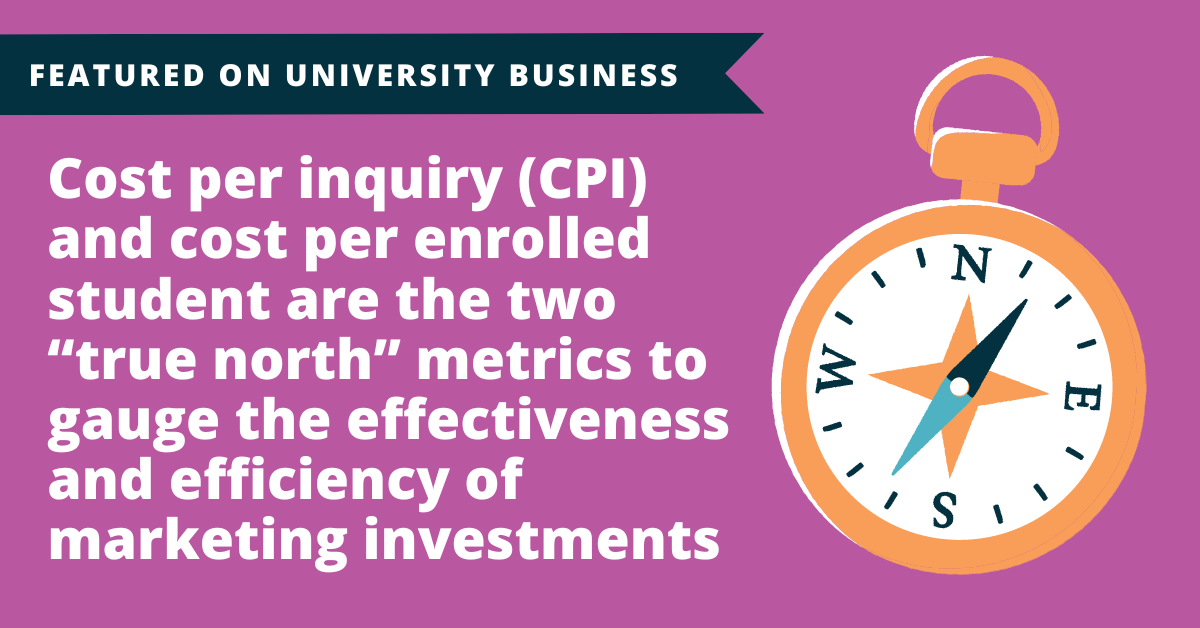
To effectively market to this group, universities must prioritize tracking key metrics — namely, cost per inquiry (CPI) and cost per enrolled student. These “true north” metrics provide critical insights into the efficiency and effectiveness of marketing efforts, allowing institutions to allocate resources more strategically. Paula emphasizes that while campaign-level metrics like click-through rates are important, the ultimate goal is to drive enrollments, making CPI and cost per enrolled student the most valuable indicators of success.
The article also notes that many institutions lack visibility into these metrics, presenting a missed opportunity to optimize marketing spend and improve ROI. By focusing on these metrics, universities can make data-driven decisions that enhance campaign performance, drive enrollment, and ensure long-term success in a competitive educational landscape.
Read the full article for even more digital marketing for higher education insights.
Contact Our Higher Education Marketing Agency
Ready to strengthen your institution’s marketing strategy?
At Search Influence, we specialize in helping universities optimize their potential.
Tracking and optimizing CPI is crucial for higher education marketers to ensure budget efficiency and maximize return on investment.
Failing to track CPI can make it difficult for higher ed marketers to correlate marketing success with enrollment, justify budget allocations, and optimize campaigns.
Tracking CPI empowers higher ed marketers to forecast conversion rates accurately, allocate resources cost-effectively, and refine strategies to attract the right audience.
In the competitive realm of higher education marketing, efficiency is critical.
Higher education marketers that understand cost per inquiry (CPI) will significantly influence the success of advertising campaigns, when the metric is leveraged properly. CPI, which measures the cost to acquire each inquiry is the first step to budget efficiency and maximum return on investment.
Failing to track CPI can lead to you missing out on valuable insights that enable you to streamline your marketing efforts and better engage your target audience.
Search Influence, in collaboration with (UPCEA), The Online and Professional Education Association, has conducted extensive research on the benefits of CPI tracking in higher education marketing.
Through a comprehensive survey collecting data from industry leaders, we established the first higher ed cost per inquiry benchmark of $140. This initiative is part of a broader, multi-year goal to encourage higher education institutions to measure CPI diligently and consider all factors included in advertising costs.
In this post, we’ll discuss how to successfully track your campaigns using CPI.
The Importance of Tracking Cost Per Inquiry in Higher Education Marketing
In higher education marketing, failing to track cost per inquiry results in inefficient budget use and an incomplete understanding of your marketing efforts. Without CPI tracking, higher ed marketers struggle to correlate marketing success to enrollment, making it challenging to justify budget allocations and optimize campaigns effectively.
When you don’t track CPI, you risk:
Spending money on campaigns that drive clicks but no conversions
Making decisions solely on metrics like cost per click and click-through rate, rather than focusing on which campaigns are actually driving inquiries
Funneling money into underperforming campaigns based on the wrong metrics
Discontinuing campaigns that effectively generate leads because you’re not focusing on the right metrics
Tracking CPI offers numerous benefits, including empowering higher ed marketers to:
Make data-driven decisions
Forecast conversion rates accurately
Allocate resources more cost-effectively
By understanding the cost and quality of inquiries, institutions can refine their strategies to attract the right audience, thereby improving overall campaign performance. Metrics like CPI are vital for evaluating marketing health and success, enabling institutions to enhance enrollment processes and achieve a better return on investment.
Insights from our higher ed marketing research study
Higher education institutions spend an average of $800,970 on paid ads each year.
Without tracking CPI, higher education marketers can’t be sure they’re allocating their resources effectively and getting the appropriate results for the amount they’re spending.
Only 29% of higher ed marketers are satisfied with their capabilities to track the success of their campaigns. This is a frighteningly low percentage, considering the average higher ed marketer spends nearly a million dollars on paid ads yearly.
You can achieve your enrollment goals more efficiently by focusing on tracking and reducing CPI.
Tracking cost per inquiry allows you to:
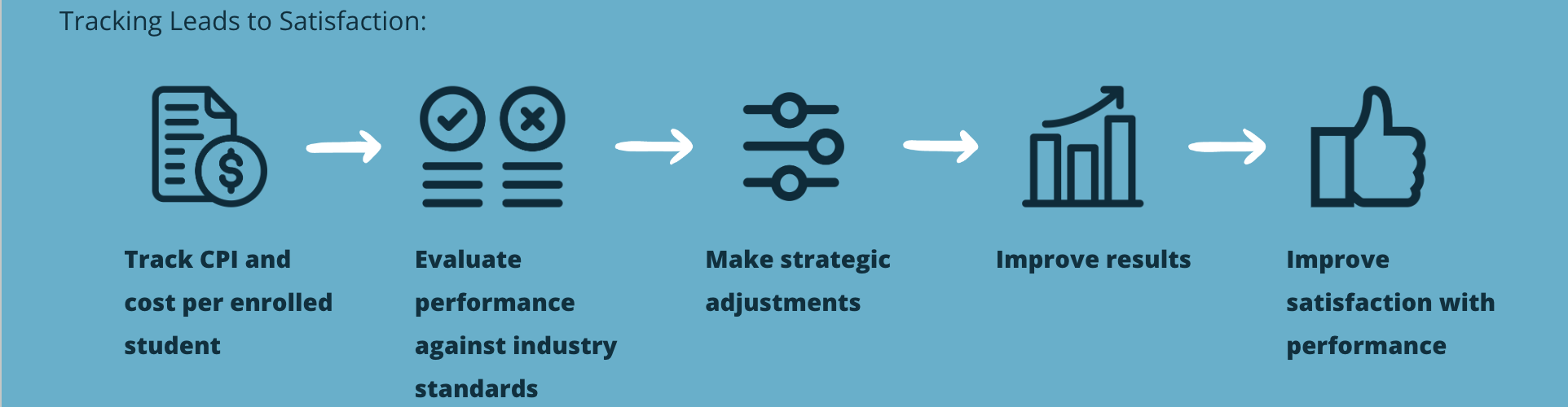
Have confidence that you’re driving an appropriate amount of inquiries and yielding the desired results
Direct where to optimize your budget to make it more efficient
Understand how adjustments, including targeting and budget changes, impact results
Establish a jumping-off point that allows you to look at deeper metrics — such as the lead quality driven by these channels and conversion ratios as these inquiries move through the enrollment funnel
By establishing a CPI benchmark, we encourage universities to track key metrics and be aware of all factors included in your advertising costs. This benchmark serves as a tool for your institution to compare its results with similar schools and programs, giving you confidence in your efforts by truly demonstrating how much you’re spending — no more guessing games.
At Search Influence, we know these insights will empower institutions to improve their marketing strategies and achieve better results.
Are You Able to Truly Track the Success of Your Ad Campaign?
Universities investing in paid advertising must be setup to effectively track the success of their campaigns. Without the necessary information and strategies in place, you risk wasting significant portions of your budget. This underscores the true necessity of tracking cost per inquiry for higher education institutions.
Some universities suffer from lack of data. Some universities suffer from an overabundance of data spread across disparate systems. Both scenarios hamper effective measurement.
You need readily available information to make timely adjustments to your strategies, and a process that ensures you regularly analyze cost data and adjust your marketing strategy accordingly. Unfortunately, our research indicates that many institutions struggle in this area. Fewer than half (47%) of marketers are satisfied with their campaign performance, and only 29% are satisfied with their ability to track success. This dissatisfaction highlights a significant gap in campaign efficiency and effectiveness.
CPI allows you to truly measure the success of your campaigns because your true success is measured by the number of students filling seats at your institution. By focusing on CPI, you get exactly what you pay for, ensuring your budget is used wisely and efficiently to boost enrollment.
This correlation between tracking ability and campaign satisfaction reinforces the importance of CPI in driving higher ed marketing success.
According to our research study, 92% of those who are satisfied with their ability to track also report they agree or strongly agree that they are satisfied with the performance of their marketing campaigns.
Track Cost Per Inquiry With Confidence
Don’t waste your budget — utilize CPI to achieve precise, measurable results and ensure every dollar spent on advertising contributes to your institution’s enrollment goals.
At Search Influence, we advocate for robust CPI tracking to help you optimize your strategies and achieve the best possible outcomes. Our team has years of experience assisting higher ed institutions to maximize their marketing results including helping Tulane SoPA exceed its inquiry goal by 58%.
Need support creating cost-effective campaigns with definitive KPIs?
AI content marketing is changing the way agencies, internal marketing departments, and freelancers go about their daily workflow.
As more marketers add generative AI to their competitive toolkit, the gap between those who use AI versus those who don’t will grow. This makes jumping on the proverbial AI train today more crucial than ever.
Search Influence uses a suite of data-driven AI tools, including Anyword, to complement our content creation processes, thus maximizing our efficiency while ensuring our content is performance-optimized.
Just as AI has its benefits, it also has its limitations. To mitigate AI shortcomings, it’s important to maintain the magic touch of the human editor via the “AI sandwich.”
Intuitive prompting can distinguish between content that meets expectations and content that falls short of them.
Over the course of history, countless tech advancements have reshaped how we view and approach our daily workload.
In the late 19th century, the invention of the tractor revolutionized the average farmer’s day-to-day by enhancing planting and harvesting efficiency, thus reducing the need for manual labor. In the mid-20th century, the introduction of ATMs made banking more accessible, minimizing the necessity for bank tellers to be available around the clock. Now, fast forward to the early 21st century, and generative AI tools are empowering content marketers to maximize their productivity and automate the creation of performance-driven copy, all in just a few keystrokes.
Recently, I had the pleasure of sitting down with our good friends at AI platform Anyword to discuss the impact of AI on content creation and how it helps our team work smarter. In our joint webinar “AI Performance Writing: How to Apply AI + Analytics to Your Content,” we dove deep into the state of AI content marketing, its opportunities and challenges, and how Search Influences uses data-driven tools like Anyword to better predict the success of our content collateral.
In case you missed it, here’s a quick overview of our action-packed discussion for your convenience, and maybe — just maybe — you’ll consider giving it a watch in your free time if you’re interested (100% shameless plug there).
The AI Train: Getting On or Getting Left Behind
Few industries will be as affected by generative AI as marketing. That is, if you look at some hot takes by sites like Hotjar, Spiceworks, and U.S. News & World Report… among many, many others.
The pressure is on many agencies, internal marketing departments, and freelancers to adopt AI into their daily workflows. This mounting pressure isn’t necessarily being applied from internal sources, but rather in the way the industry tides are naturally turning.
The data shows that more and more marketers are integrating AI into their daily tasks, whether it’s to help generate a punchy headline or to save time in their workload altogether. With a steady influx of marketers leveraging the power of AI, those who do not will inevitably feel the brunt of a competitive disadvantage.
Since generative AI first broke, Search Influence knew we couldn’t be one to miss the proverbial “AI train,” as it would only pass us right up on the route to our competitors. As Bora Tarimcilar, our Anyword webinar co-panelist and client support specialist, put it, “If you’re not on the train, there is this kind of sense of getting left behind.”
Anyword: The AI Software Built for Content Marketing
Search Influence started testing Anyword in 2023, at a time when generative AI was first starting to grow wings and take flight in the public eye. We set out on a mission to add another AI platform to our diverse suite of tools, which includes platforms like ChatGPT, Adobe Suite, Surfer SEO, and Google Gemini, among several others.
With Anyword, we’ve found success in creating performance-driven content that resonates with our clients and their audiences. The tool has since become one of many key strategy components for producing high-quality, impactful content.
Benefits of Using AI in Content Marketing
Investing in AI today has its payoffs tomorrow.
Timesaving for peak efficiency
The phrase “time is money” rings true in content marketing. We all wish we had more hours in the day, especially when deadlines are looming.
With AI as a +1 on our teams, we can now produce an entire ad campaign’s worth of copy in minutes versus the hours we’d have likely spent prior.
The faster we produce content, the more time we have to focus on strategy, optimization, and the bigger picture as a whole.
Relevant, competitive content
An important disclaimer: Generative AI is not a subject matter expert. It doesn’t have a degree, it doesn’t have any certifications, and it certainly doesn’t have real-world industry experience.
However, AI models do function by scraping the web for a “common consensus” on what to include in its outputs in response to your prompts.
For example, let’s say you’re writing a blog for your legal client titled, “When Should You See a Personal Injury Lawyer?” and you default to AI to help get you started. After receiving your prompt, the AI model will analyze a vast dataset of online content, including articles, legal blogs, FAQs, and expert opinions on personal injury law. It will then identify common themes, important legal terms, and frequently mentioned advice to construct a well-rounded response.
This helps ensure that the content you write is robust, researched, and in line with what your competitors are discussing. Plus, it may even help fill in some topic gaps that you’ve missed but your competitors haven’t.
A hub for brainstorming
Sometimes, the hardest part of content creation is simply getting that first word or sentence down.
AI tools are perfect for those “blank page” moments. Need a catchy headline or an engaging intro? Generative AI’s brainstorming capabilities can spark creativity and help overcome writer’s block, setting the stage for compelling content that doesn’t leave you with a headache.
If you’re not all in for AI automation, using tools for brainstorming purposes is one of the best use cases for getting your feet wet with this new tech. Even the best fires need an accelerant here and there, and AI is just that for your content creation process.
Challenges of AI Content Marketing
Despite all its benefits, AI content marketing is not without its limitations. To get the most value from an AI tool, you’ll need to know what to look out for — just as much as what to look for.
Robotic tendencies
AI is, in its truest form, just a robot. It’s not the kind you see in science fiction movies that are cynically threatening, but nonetheless, there’s no human behind the screen.
Generative AI is not capable of experiencing human emotion, and it naturally lacks empathy. Unless you give it highly detailed context, it won’t automatically know that you’re maybe speaking to an audience with highly sensitive needs, like, for example, those in the “Your Money or Your Life” category.
Because the model is not human, it also does not know how to distinguish fluff from lean, helpful content. With fluffy content, you lose the full extent your content can make on your audience simply by being generic and impactful. You’ll always need to bring humanness to the content, which also means double-checking that the content reads natural and conversational, not robotic.
AI buzzwords
“Unwavering,” “top-notch,” “a beacon of,” and so on — sometimes, it seems like AI has a few favorite words and a severely limited vocabulary.
With these “AI buzzwords” comes one inevitable pitfall: Your content ends up using the same adjectives to describe your brand or services as your competitors.
This can be beneficial in some areas, like when you’re trying to establish a place in the industry relative to your competitors, but it also leaves you with the risk of content that sounds the same as everyone else’s — thus affecting your ability to stand out.
At one point, these terms likely did do considerable justice to content, and some could even have been classified as power words. Now, however, their impact seems diluted due to overuse.
Machine hallucination
AI is, again, no subject matter expert, and it is capable of making mistakes.
The phenomenon “AI hallucination” occurs when an AI model generates content that is factually incorrect or nonsensical. This happens because the AI tries its best to create plausible-sounding information based on patterns it has learned, even if the actual data or facts do not exist.
ChatGPT even has a disclaimer that it can make mistakes, and to always check information that isn’t common knowledge.
By blindly trusting the facts and evidence AI provides you, you risk publishing inaccurate and possibly even offensive content that could harm your brand’s trustworthiness, authoritativeness, and overall bottom line.
Mitigating Common AI Shortcomings
Where there are problems, there are solutions.
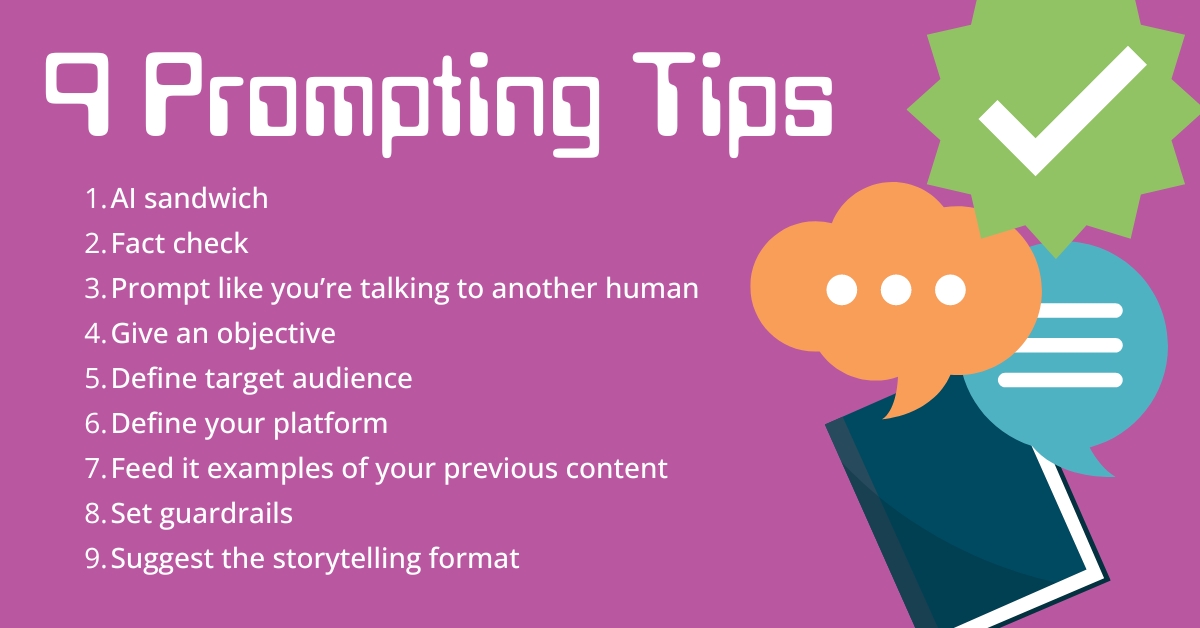
The AI Sandwich
Generative AI is your teammate, it’s your dynamic +1, but it is not your replacement.
The human editor will always be necessary to create a human-like feel in the content, fact-check all information, and optimize it for maximum engagement.
At Search Influence, we like to call the relationship between the human and the AI model the “AI Sandwich.”*
The human (acting as the top bun or slice of bread) prompts the machine with all the important information it needs to produce a quality output, and then they wait as the machine gets to work (acting as the sandwich’s hearty sandwich ingredients — think lettuce, tomato, onion, cheese, and meat). Once the machine produces its output, the human editor (now acting as the bottom bun or slice of bread) goes behind it, cleans it up, personalizes it more to the brand, fact-checks it, and overall adds that human touch.
While the content is not produced top-to-bottom by a sole human writer, it is perfected by the human, which grants an overall stamp of approval that the copy meets quality standards.
*Learn more about the AI Sandwich and its use cases with Search Influence CEO, Will Scott, on the “Make Marketing Make Sense” podcast.
Practical prompting
If you’re worried about generic, impactful content and the overuse of AI buzzwords in your content, the solution starts with your prompt.
I’m a strong believer that the quality of your prompt determines the quality of your output. If you give the AI model a bare-bones prompt and expect it to fill in the gaps, it may do so in a way that doesn’t suit your brand or campaign goals.
I recommend you include these points to be as specific as possible with your prompts:
Your campaign goal and keywords (if applicable)
Your tone of voice and your target audience
Your desired call to action
Your desired word count
Any terms you do or do not want to be included in your output
When you’re working with a platform like Anyword, with pre-built prompts, covering all your bases is simple. But if you aren’t using a tool with pre-built prompts provided, there are a ton of helpful articles, videos, and templates online that can get you started.
Dive Deeper Into AI Content Marketing
A very, very big thank you to Anyword for inviting me to join “AI Performance Writing: How to Apply AI + Analytics to Your Content.” I hope that you all are just as excited and geeked out as we are about this new wave of content marketing.
And, if you’re not, that’s perfectly okay. Just know the AI train does have a seat open for you.
Search Influence specializes in full-service content marketing, from SEO and paid advertising to email marketing, social media, and beyond. To learn more about how we’re using AI content marketing to drive client success at scale, get in touch with us today.
Tracking, reporting, and analyzing are three pillars of a successful higher education advertising strategy.
From click-through rate to cost per inquiry, several metrics temperature check your paid ad campaign performance.
Search Influence and UPCEA collaborated to establish the first industry-wide cost per inquiry benchmark to help higher education marketers assess the state of their campaigns.
Tapping into the right metrics and data sources for your university unlocks insights that best optimize your campaigns.
When in doubt, partner with an experienced paid advertising agency that is proficient in turning data into decisions.
According to 2023 research from Invoca, 87% of marketers feel that data is their most under-utilized asset.
Like a gym membership, full of promise but often underused, data insights are what lead to the most gains in your higher education marketing campaigns.
But the challenge lies in knowing which numbers matter and where to dig them up.
Today, more universities than ever rely on paid advertising to attract the new tech-savvy adult learner. The global shift to digital marketing has opened doors to new metrics and tracking capabilities, all of which help gauge your campaigns’ success.
If you’re a digital marketer, tracking and reporting on the right metrics ensures you use your resources effectively to reach your goals. Here’s what to know about measuring paid advertising success in higher education — and how an agency can help you uncover the metrics that truly matter.
The Importance of Tracking & Reporting in Paid Advertising
Diligently tracking and analyzing vital metrics empowers your higher education institution to assess the impact of your digital campaigns. By maintaining a vigilant oversight of the performance of your paid advertising initiatives, you gain the ability to:
Understand your audience
Data shows that 71% of consumers expect personalized marketing, and 76% feel frustrated when brands fail to meet this expectation.
Achieving this level of personalization starts with knowing your prospective student. This goes beyond mere demographics, factoring in their aspirations, challenges, and the digital footprints they leave.
Through a deep dive into audience analytics, you can segment your prospective students more effectively, crafting campaigns that address their specific needs and interests.
Whether it’s highlighting flexible scheduling for working adults, showcasing success stories from similar backgrounds, or emphasizing support services for international students, tracking audience insights helps center your messaging around your core audience.
Optimize your campaigns
The digital advertising playing field is dynamic, with campaign performance varying by the minute.
Real-time data analysis plays a critical role in optimizing your campaigns for the best results. It enables you to make immediate adjustments, such as pausing underperforming ads or reallocating the budget to more successful ones, which fosters a cycle of testing, learning, and optimization.
Staying agile and responsive to campaign performance 24/7 through successful tracking keeps your advertising aligned with your marketing goals.
Enhance the return on your investment
The true value of tracking and analysis lies in its ability to reveal not just which channels and campaigns are performing but also why.
By dissecting the elements of successful ads — be it the magic words, compelling visuals, or the right call-to-action — you can fine-tune your approach, guaranteeing every dollar spent is one working towards greater engagement and higher conversions.
In doing so, you’ll demonstrate the value of your marketing campaign in ways you want the most: increased return on your investments.
Effective Metrics for Measuring Paid Advertising Success in Higher Education
Tracking the right marketing metrics can make the difference between campaigns that meet the mark and ones that fall flat. The following metrics act as vital signposts, indicating the health and impact of your advertising efforts:
Click-Through Rate (CTR): gauges the initial appeal of ad copy and visuals, signaling how well your ads grab attention and prompt click
Conversion Rate: measures the success of those clicks in achieving desired outcomes, like applications, spotlighting how ads translate interest into action
Return on Ad Spend (ROAS): assesses financial efficiency, comparing campaign costs against generated revenue to quantify your advertising investment’s return
Cost Per Acquisition (CPA): calculates the average expense of attracting a student via paid ads, offering insights into the cost-effectiveness of marketing strategies
Engagement Metrics: explores deeper interactions beyond clicks, revealing how compelling and relevant your content is to potential students
Beyond these widely recognized metrics is a critical but often overlooked indicator: Cost per inquiry (CPI).
This metric offers a nuanced view of the investment needed to generate a prospective student’s interest, providing a deeper layer of insight into campaign efficiency and the quality of engagement.
Cost Per Inquiry in Higher Education Marketing
In higher education marketing, CPI measures the financial investment needed to generate a single prospective student’s interest in your offerings, such as your programs, courses, or services.
This metric uncovers exactly what it costs to catch the eye of a potential student, whether they’re signing up on your contact form, reaching out by email, or picking up the phone to learn more.
The “cost” cost component varies based on:
The specific marketing campaigns
The mix of marketing channels used
The capability to track an inquiry back to its origin
By focusing on CPI, your institution can pinpoint the effectiveness of your ad campaigns, guaranteeing that your allocated budget directly contributes to attracting potential students. This helps you achieve a favorable balance between the cost of attracting inquiries and the quality of interest generated.
Benchmarking your CPI against the wider industry
In collaboration with UPCEA, Search Influence established the first industry-wide CPI benchmark to help higher ed marketers like you better assess how you measure up to others in your industry.
Our 2024 Higher Ed Marketing Metrics Research Report revealed that while 73% of marketers track the source of inquiries for their professional, continuing, and online (PCO) programs, less than half (46%) of higher education marketers track CPI.
For those who are tracking this key metric, the average PCO CPI is $140, with a median of $106 and a range of $29.03 – $450.
The research study also unveiled a strong link between metric tracking and satisfaction with results. In fact, 92% of those confident in their tracking abilities also report being satisfied or very satisfied with their marketing campaign performance. This finding reinforces the old adage that “what gets measured gets managed,” emphasizing the importance of diligent tracking in achieving impactful marketing outcomes.
Key Data Sources to Track for Campaign Success
Where you track matters just as much as what you track. At Search Influence, we recommend leaning on the following data sources to keep a steady pulse on your campaign success:
Website Analytics: Tools like Google Analytics are indispensable for observing how users interact with your site. They offer a window into which paths lead towards inquiry or application and highlight the landing pages that work best.
CRM Integration: By syncing CRM data with your digital campaigns, you gain a comprehensive view of the prospective student’s journey, from first contact to enrollment, helping to pinpoint effective strategies.
Social Media Insights: The rich data from social platforms can inform you about engagement levels, reach, and which content types drive actions, allowing for agile strategy adjustments.
Other Prospect Data Sources: Don’t overlook additional touchpoints like email interactions, webinar participation, or content downloads. These can provide valuable insights into your audience’s preferences and behaviors.
Tracking cost per inquiry
Cost per inquiry is a more individualized KPI, with extra flexibility in how you can measure it to best fit your institution.
Most marketers track CPI as a KPI for:
Specific Digital Marketing Channels: Differentiated CPI from paid search, organic search, etc., for precise adjustments to strategy and budget
All-Platform Digital Marketing Spend: Comprehensive CPI across all digital channels to understand the overall budget impact and guide comprehensive financial strategies
However, some marketers may find it more fitting to track:
CPI Per Program: Segmented CPI analysis for individual academic programs to enable targeted marketing enhancements
Organic CPI: CPI exclusively from organic search to refine SEO and content tactics
Overall CPI Across All Marketing Expenses: CPI from all marketing activities for a global perspective on investment efficiency
Whichever way you look at CPI, it’s a versatile metric designed to suit the distinct objectives of your institution and unveil whether your marketing dollars are spent wisely.
Maximizing Results Through Agency Partnerships
Struggling to keep track of your paid campaign’s success? Partnering with an experienced advertising agency can help take the weight off your shoulders.
With an agency’s robust tracking, reporting, and analysis capabilities, you’ll be equipped with the insights needed to make informed decisions and refine your strategies. You’ll gain the advantage of knowing:
Precisely what to measure
How to tailor your optimization efforts
The best ways to integrate these insights into your campaigns for enhanced performance
Agencies are data specialists. They know how to interpret your school’s results, provide actionable next steps, and ensure your strategy always aligns with the latest industry and software changes.
Are You Tracking the Right Metrics?
At Search Influence, we pride ourselves on our ability to obtain results, track them, and report them back to your institution.
We’re here to eliminate the guesswork from tracking the essential metrics that propel your success forward. To get you started, we’ve crafted a comprehensive, free worksheet designed to simplify the calculation of your CPI.
The Search Influence team is excited to announce that we have been named an honoree in the New Orleans CityBusiness 2024 Empowering Women Awards.
The Empowering Women Awards recognize businesses in the Greater New Orleans region dedicated to helping women succeed both at work and in our community.
Learn how women thrive and drive growth at our digital marketing agency.
About the New Orleans CityBusiness Empowering Women Awards
The New Orleans CityBusiness Empowering Women Awards celebrate the significant strides made by for-profit companies in advancing gender equality within the New Orleans area. These prestigious awards highlight the innovative and impactful efforts of organizations committed to creating a more inclusive and equitable workplace for women.
The Empowering Women Awards are part of New Orleans CityBusiness’ broader initiatives that spotlight exceptional women in the region, such as the long-standing Women of the Year program.
This award serves as a hub of inspiration and a model for other organizations looking to emulate the successes of the honorees.
New Orleans CityBusiness evaluates companies based on several key criteria:
Their practices in recruiting, hiring, and promoting women
The availability and quality of mentorship programs for women
Efforts towards systemic changes to eliminate inequality
Representation of women in leadership roles, such as on boards or in C-suite positions
Contributions to advancing women’s causes through philanthropic and community efforts
The provision of scholarship assistance to support women’s education and career development
By recognizing these exemplary companies, the New Orleans CityBusiness Empowering Women Awards celebrates achievements and encourages other organizations to adopt similar practices, fostering a community-wide commitment to gender equality.
A Digital Marketing Agency Built for and By Women
Co-founded by Angie Scott in 2006, Search Influence is dedicated to creating an inclusive workplace culture that fosters both personal and professional growth for all our team members.
We are proud to be certified as a WBENC Women’s Business Enterprise since 2022, with Angie Scott holding majority ownership. This certification not only acknowledges our efforts but also reinforces our mission to support and elevate women in the workplace.
Women are integral to the fabric of Search Influence. They make up 79% of our workforce and hold 75% of our leadership positions, with each leader having a minimum tenure of 11 years. At least two-thirds of our leadership team has been women since the very early days of Search Influence, reflecting our long-standing dedication to gender equality.
We have instituted hiring practices that promote accessibility and inclusivity. We carefully screen job descriptions to eliminate gender bias and employ a panel interview process to ensure a fair evaluation.
Our compensation structure is transparent and equitable, focusing on the value of the role and the candidate’s experience rather than relying on salary history. This practice helps prevent perpetuating salary disparities.
This acknowledgment is especially meaningful as we stand alongside many other businesses dedicated to promoting gender equality.
Interested in working for a company recognized for empowering women? Let us help you achieve your career goals while championing equality and inclusion in the workplace.
Check out our current job openings to optimize your potential with Search Influence.
We’re thrilled to announce that Search Influence has made it onto the Inc. 5000 list for 2024! This recognition marks the eighth time we have been honored by Inc., previously being listed on the Inc. 5000 six years in a row from 2012 to 2017 and on the Inc. 500 in 2011. This year, we ranked 393rd in the Advertising & Marketing category and 4,154th overall. Locally, the digital marketing agency was ranked 14th in New Orleans and Metairie, and 28th in Louisiana.
See how our commitment to excellence has led to this continued recognition.
The Inc. 5000 List at a Glance
The Inc. 5000 list recognizes America’s fastest-growing private companies, ranking them based on revenue growth over a three-year span.
Companies on the 2024 Inc. 5000 list were evaluated based on their growth from 2020 to 2023. To qualify, businesses must:
Have generated revenue by March 31, 2020
Have generated at least $100,000 in revenue in 2020
Have generated at least $2 million in revenue in 2023
Be a privately held, for-profit business based in the United States
For over 40 years, the Inc. 5000 list has been a hallmark of business success, with past honorees including such notable names as 7-Eleven, Domino’s Pizza, LinkedIn, Microsoft, Yelp, and Zillow. As a proud, privately held company based in New Orleans, we’re honored to stand among some of the nation’s growth leaders.
Our innovative approach and commitment to a progressive work culture have earned us significant recognition over the past few months. In 2023, we won a Silver Award at the US Agency Awards and were finalists at the US Search Awards. We were also named one of the Best Places to Work by New Orleans CityBusiness in 2022 and 2023, bringing the total number of trophies in our cabinet from this award to four.
From our humble beginnings as a small startup in 2006 to our 2024 Inc. 5000 recognition, we’re proud to consistently push the boundaries of what’s possible for our company, our clients, and the digital marketing industry.
Your Partner for All Things Digital Marketing
We are grateful to be back on the Inc. 5000 list. To achieve this milestone once again by Inc. reinforces our dedication to sustained success.
Let us share the benefits of this honor with you, by helping you enrich your campaigns with our extensive experience and industry trust.
Connect with us today to discover our digital marketing services and see why we’re ranked among America’s fastest-growing companies.