Category: Content Marketing

  • Content Marketing: Doing It Right in 2014

    Feb14You might have heard the buzz: content marketing is not only here to stay, it’s critical for business success in 2014. The Internet noise is getting louder every day, and discoverability is becoming a greater challenge as the data streams expand with chatter from websites, blogs, and social media.

    If you’re looking to capture an audience online, you need an effective content marketing strategy in place.

    Why Content Marketing is Key

    Backlinks, keywords, and automated social tools just aren’t going to cut it anymore. Part of the reason is an increasingly Internet-savvy consumer base that can sort the authentic from the spammy at a glance—and the rest is due to major shifts in search engine algorithms, particularly Google.

    Google Hummingbird, the search engine giant’s most recent algorithm update, is all about promoting quality content and pushing it to the top of search engine results. In a definitive acknowledgment of the sharp increase in mobile search, Hummingbird aims to provide results that reflect the way people talk—delivering a conversational and contextual experience, rather than treating searches as keyword strings.

    In order to improve your search engine rankings, you need content that informs, answers questions, and adds value.

    Mistakes that Hold Your Content Marketing Back

    In order to get content marketing right, there are certain objectives you have to accomplish. Your content marketing should attract, engage, expand, and ultimately convert your audience.

    Some of the common mistakes that prevent content marketing from reaching those objectives include:

    • Producing in a vacuum. If your marketing department handles all of the content generation, from conception to execution, they’re eventually going to sound stale. Consider soliciting content ideas from other departments, working with a freelance copywriter, or seeking guest bloggers.
    • Publishing static content. To engage your audience, you need to win them over. This means providing something more than dry facts or market-speak—and giving readers a way to respond with thoughts of their own. Value quality over quantity, and produce content that informs, intrigues, and entertains. Make sure you’re always responding to comments and questions from readers.
    • Sharing on the wrong channels. When it comes to social media, a lot of companies have decided that more is more—and thinned out their efforts in order to reach as many social platforms as possible. This dilutes your brand and wastes your time. Most businesses can’t go wrong with Google+, Facebook, Twitter, and LinkedIn. As for the rest, experiment: keep what works, toss the rest.
    • Failing to analyze results. Content marketing is useless to your organization without analytics. You need to know what, where, and how your marketing efforts are working—where visitors are coming from, why they stay (or leave), and whether they come back.

    So What’s the Right Way?

    The real secret to effective content marketing in 2014 is quality. But what is “quality,” and how can you produce it?

    Quality content starts with defining your audience. Who are you creating this content for, and what do they want or need? What engages them? Find out as much as you can about your target audience—where they are online, what they respond to, even what they don’t like.

    When you move to the content creation phase, keep your target audience in mind. This includes the format of your content, whether your audience prefers text, images, video, interactive apps, or some combination of media. Finally, post your content on the channels your target market is most likely to frequent.

    The Internet changes, but content marketing remains one of the most effective strategies for online marketing success. Make 2014 the year you embrace content marketing done right.

    What’s working for you? Let us know in the comments!

    Image courtesy of Gerd Altmann

    Megan Totka is the Chief Editor for ChamberofCommerce.com. She specializes on the topic of small business tips and resources. ChamberofCommerce.com helps small businesses grow their business on the web and facilitates connectivity between local businesses and more than 7,000 Chambers of Commerce worldwide.

  • 5 Content Marketing Myths You Need to Unlearn

    The popular SEO strategy of content marketing has always been effective. Now, with recent changes to Google with its Hummingbird update and the increasing importance of social media, good content marketing is more important than ever for boosting your online visibility and search engine ranking.

    While content marketing isn’t exactly rocket science, it’s still important to understand the strategies and methods that really work—as opposed to all the myths out there that won’t get you any further ahead. Here are the top five content marketing misconceptions you may believe, and what you need to do to adjust your approach.

    Myth #1: It’s Like Printing Your Own Money (Or: Content Marketing is About Making Sales)

    The myth: The main goal of content marketing is to generate leads and increase sales for your business. If this isn’t happening for you, then you’re wasting your time with content marketing.

    The truth: Content marketing does lead to more leads and more sales—but it’s a gradual process, and it’s hard to measure the impact on sales directly. You’re only wasting time if you’re focused on making your content sell (a point that’s explored further in the next myth).

    The true goal of content marketing is to strengthen your brand. Done effectively, your content will serve to build familiarity through increased visibility, and improve likability and trust for your business through more shares and greater authority in your industry.

    Myth #2: It’s All About Me (Or: Content Marketing Should Focus on Your Business)

    The myth: All of your content should be about your products or services. You need urgent language, lots of promotions, and prominent calls to action in every piece of content you publish.

    The truth: Brochures and billboards are not content marketing—they’re advertising. Keep in mind that your goal is to increase visibility and build your brand. If all your content does is push your products or services, you’re going to be viewed as spamming people, no matter how tastefully worded your advertisements are.

    Your content should provide consumers with value that will benefit them even if they don’t buy from you. That’s how you strengthen your authority and help your content get passed around, so you’re seen by more people.

    Myth #3: If You Write It, They Will Come (Or: Content Marketing is Easy)

    The myth: All you need to do is churn out a lot of content and post it online. The more content you have, the higher you’ll rank in search engines. It doesn’t matter what the content says—just how much there is.

    The truth: Google, the biggest search engine on the planet, has always favored quality over quantity when it comes to content. With the recent changes to their search algorithms and the way keywords and links are weighted, quality content is even more vital. Once again—you need to offer consumers something of value.

    Content marketing does take work, but the returns are worth the time and effort you’ll put in.

    Myth #4: Set It and Forget It (Or: Content Marketing Can Be Automated)

    The myth: You can cheat when it comes to content marketing. Just use some of the many automated tools that are out there to keep content coming, and it will look like you’re active—which in turn will elevate your SEO, because search engines love fresh content.

    The truth: While there is something to the idea that fresh content attracts search engines, it’s more important to satisfy your visitors, subscribers, and customers. And it’s easy to tell when your content feeds are automated.

    The biggest advantage of content marketing is the ability to give your business a “personality” through branding. If your brand is “we only care enough to have this software program talk to you,” no one will engage with your content—and your efforts, such as they are, will be wasted.

    Myth #5: No One Reads This Stuff Anyway (Or: Content Marketing is Just What’s on Your Website)

    The myth: Content marketing is useless. Posting all this stuff to the website doesn’t bring any more visitors, so we might as well concentrate on different strategies to increase traffic, like pay-per-click campaigns.

    The truth: There’s more to the world of content marketing than your website pages. Small business blogs, social media feeds, guest blogs and articles, whitepapers, even commenting on other industry blogs—all of these things are content marketing and all of them feed into your brand and your online footprint.

    What’s your content marketing strategy for 2014?

    Megan Totka is the Chief Editor for ChamberofCommerce.com. She specializes on the topic of small business tips and resources. ChamberofCommerce.com helps small businesses grow their business on the web and facilitates connectivity between local businesses and more than 7,000 Chambers of Commerce worldwide.

  • 4 Tips to Writing Attention-Grabbing Social Media Posts

    CONTENT CONTENT CONTENT

    We are bombarded by content and information everyday. The average person reads a couple thousand words and sees about 247 images each day. Something interesting from a marketing standpoint: we see anywhere from 3,000-20,000 marketing messages every day! All of these words and images are pieces of informative content that we have to internally process.

    I mean seriously think about it…

    TEXTS                                                      PHONE CALLS
    EMAILS                                                   RADIO
    WEBSITES                                             TELEVISION
    TWEETS                                                  MENUS
    FACEBOOK POSTS                          BLOGS
    SEARCH RESULTS                              STREET SIGNS
    INFOGRAPHICS                                  BOOKS
    GOOGLE+ POSTS                              MAGAZINES
    PINS ON PINTEREST                         NEWSPAPERS
    PRESENTATIONS                                FOOD LABELS
    BILLBOARDS                                         MAIL

    Whew—it’s exhausting just thinking about it! And I guarantee there is more than what I listed! Most of it probably goes in one ear and out the other, so, as marketers, we only have a split second to catch the attention of someone who is already being bombarded by information. Here’s a list of 4 types of social media posts that are guaranteed to catch the eye of your clients’ audience.

    1. Anything that drives interaction
    Any post that encourages a user to interact with a page usually works well with social media marketing. By interact I mean liking a post, sharing it, commenting, retweeting, +1, pinning on Pinterest, etc. If you can do this organically (without forcing it), then it’s even better!

    Tri County Equipment Facebook Post

    2. Anything with eye-appeal
    We are a very visual culture (why do you think the iPhone took off like it did?)! If you can integrate words into a visual image that presents the information is a well-designed way, then you’re golden! I’m talking about the infographic, people. There are good and bad infographics out there. But a good rule of thumb is don’t over load it with information, and make sure what you are presenting is relevant to your client’s industry. This example below was pinned 508 times and liked 76 times on Pinterest.

    Infographic About Zimbabwe

    3. Anything That Links the Brand to Current Events
    If you can find a way to tie the brand into something that is relevant to current events in the news and/or pop-culture world, you need to post about it! People often try too hard with this one, so please don’t force it! The brand needs to truly be relevant for this to happen organically.

    Volkswagen Google+ Post for Shark Week 2013

    4. Anything That Stirs An Emotional Connection
    We are an emotional species, and significant life events can really change our lives. If you can stir an emotional feeling in someone, they are likely to be more drawn to the brand. Note: This doesn’t always have to be the warm and fuzzy feelings! If you want to touch on the controversial subjects, there is an audience for that as well!

    Susan G Komen Facebook Post

     Now get out there and create some engaging content!

  • The BIG PROJECT To Get Your B2B Content Marketing Strategy Going In A BIG Way

    Content Marketing Strategy - ebook image
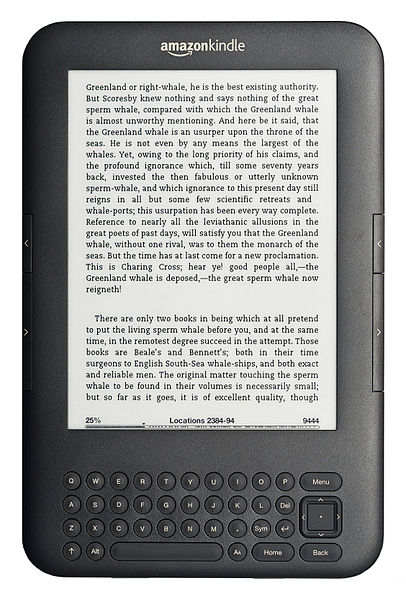
    Don’t worry. Unless you’re selling whaling vessels, you don’t need to write like Melville.

    Are you an expert in your field? Do you want potential customers to know that? Give them proof by literally writing the book. Now, don’t go anywhere just yet. Yes, I did just say that you should write a book, but we’re not talking about the next Great American Novel or even the next Mildly Interesting American Novel. We’re talking about writing an ebook.

    Here’s what you need to do: write 20-50 pages. Actually, write however much you can. Only got 15 pages in you? Fine. Want to crank out 100? Go for it. As long as it’s high quality, relevant information with supported claims and research aimed at providing readers with solutions, you’re good. One of the easiest ways to do this is to start with your FAQs and expand from there because: 1) You know all these answers. 2) You know that your customers are asking these questions.

    Alternatively, you could start by publishing a series of blog posts that you then put together in a collection with an introduction to pull it all together. Boom! You’ve got an ebook. Have you written articles for industry insiders? Bam! Ebook!

    Here’s why you need to do this: people like to get information before they spend money. It’s that simple.

    1) Give the People What They Want to Establish Your Company as a Leader

    Decision makers want all the information they can get from the best, most credible source it can come from. Make that source is you. Before you can start selling your products or services, you need to sell your brand and your business as a leader in the industry—and not just as a leader in terms of size or profit. You need your potential customers to view you as a thought leader in your industry, an authority, an innovator. You’ll look like you know what you’re doing, and that builds confidence in your customers.

    2) Get Many Miles Out of the Info

    One of the greatest benefits of writing an ebook is that once it’s done, you’ve got all the research and content that you’ll need to power your content marketing for months. You’ll publish your ebook, release a mobile version, get a few blogs out of it, stick it on SlideShare, put it on YouTube, publish a press release about it, post about it on all the social media sites, promote those posts, turn it into an infographic (bonus points for a series of infographics), do some guest blogging on the topic, and on and on forever and ever… or at least until your audience has already consumed it in those various forms. Except isn’t your audience always growing and changing (if you are doing it right)? Update everything in a year or two and do it all again. Repurpose that content so that your audience is getting relevant information in just about any form they want it and you are getting backlinks, social signals, and other valuable SEO stuff.

    3) Get There Before Your Competitors

    The Content Marketing Institute and MarketingProfs found that 16% of B2B marketers used ebooks as part of their content marketing strategies in 2012, up from 9% in 2011. Utilizing this tactic while it is still relatively rare will make you stand out among your competitors and establish yourself as an authority in the field (see number 1 above).

  • Stop Writing Press Releases For The Wrong Reasons

    As many in the SEO industry already know, Google is not impressed with link building strategies of old, especially when those links are coming from optimized anchor text in press releases. New guidelines are decreasing the SEO value of press releases and their use for link building at all is up in the air, so now seems to be the perfect time to refocus the purpose of your press releases.

    Gone are the days of pointless keyword-stuffed press releases being used to generate valuable backlinks–but that’s good news. Even with the new guideline regarding optimized anchor text, press releases can still be part of a comprehensive link building strategy. More importantly, they can be a great addition to your content marketing strategy, which you should never ignore. A good press release can still reach people and can still bring people to your site, and isn’t that the whole point after all?

    When it comes to quality, you’ve got to start at the beginning—your topic. The key word here is newsworthiness. Now, this doesn’t mean that you can’t publish a press release unless the media is hounding you for a comment, but something does need to have happened or be about to happen. Opening a new location? Launching a new website? Got a new certification? Great! You’ve got a press release. Unfortunately, it won’t look like this:

    New press release daily newspaper headline

    Alternatively, if you play it right, you can also offer some comment or insight into other news events that are related to your industry. This is a popular strategy when study findings or reports are released. This can sound misleadingly simple, but things can go laughably wrong when the connection between the event/report/etc., that you are piggybacking on is a stretch. Newsjacking can have negative consequences on your reputation when it’s done poorly, and you want to add something to the conversation, not just recount it. You should also make sure that you have fully investigated whatever it is that you are commenting on. You don’t want to end up coming off as uninformed.

    Though the topic is important, it’s not the only thing that you need to consider when preparing a press release. While you might have come to press release writing as part of an SEO campaign, don’t forget that this is an established form of communication with rules and standards. If you want to have your press release published on reputable sites, it’s going to need to pass review. These might not be stringent inspections, but you’ll still want your release to look professionally written by someone with journalism experience.

    Monkey
    This guy definitely knows what he’s doing.

    The most important thing to consider with the writing is probably whether the press release emphasizes the news you are writing to share. The best way to do this is by writing in the Inverted Pyramid style. This means that the vital facts are all included in the first paragraph, and everything else follows in order of importance. Though no writer wants to plan for people to stop reading what they have written, the point is that if the reader were to not finish your press release, they would already have read the most important bits. However, the goal is the same as all content — write for people, not machines. It probably won’t even do you much good to write a press release for machines at this point.

    In fact, it looks like it might hurt your campaign to write for the machine now. Though you can read a more in-depth guide to safely linking in press releases here, there are a few things to keep in mind:

    1. You need to be linking to content that is of high quality and is interesting. This content should also not be stuffed with keywords.

    2. The content should be relevant to the press release, meaning if a reader wanted to learn more about what you are writing about, the link would bring them to a page that gives them what they are looking for.

    3. The links should be inserted naturally. This means no more keyword-rich anchor text. Google has caught on to this and does not like it.

    Here’s the bottom line: even with the devalued links, you can and should still use press releases to your advantage, but they need to be done right.

  • 3 Simple Techniques to Clear the Path to Landing Page Conversions

    Getting conversions should be the first thing in your mind as you write your website landing page. If you want a high percentage of your visitors to convert, you need to make the desired action prominent and clear from the beginning, and you need to provide the visitor with a clear path toward the conversion goal. No distractions.


    The conversion actions will be simple:

    • Fill out the form
    • Call for a consultation
    • Sign up (newsletters, email subscriptions, etc.)
    • Download (product info, white papers, etc.)
    • Click or Like a social account
    • Open a live chat with a support representative

    You’re going to explicitly tell them to complete one of these tasks in your call to action at the very end, but you need to accomplish a couple things before they will take that leap.

    In most cases, you’re going to have to answer three basic questions the visitor is likely to have in his or her mind:

    • Do you have what I want?
    • Why should I get it from you?
    • Can I trust you to provide me with the experience I want

    This is where creativity comes in. There are some basic, repeatable techniques you should consider using as you try to answer these questions, but how to execute and prioritize your answers is a decision you have to make.

    Techniques

    Recognizing Needs and Motivations

    “Cosmetic surgery can help change how you feel about yourself by changing how you look.”

    Someone clicking on a paid ad for cosmetic surgery clearly dislikes something about their appearance. However, changing their face, neck, breasts, or whatever, is not the end goal. They want to FEEL better about the way they look. If they can’t trust surgery to provide them with that, they will go elsewhere. This quote addresses that underlying motivation, and it should leave the reader feeling like they have come to the right place.

    Alleviating Fears

    “We understand that making a decision to undergo a nose surgery can be life-changing. Therefore, we are dedicated to obtaining beautiful, natural and elegant results catered to the needs of each individual.”

    A visitor is much more likely to fill out a form or call for a consultation if some of their basic fears have been addressed and dispelled in the landing page pitch. Obviously, surgery is a big undertaking with plenty of risks. This quote confidently says, “we agree, this is a big deal, but we have the skill to get you through it.”

    You also can calm fears and build trust by mentioning awards, years of experience, certifications, professional society memberships, media appearances, success milestones, and more.

    Screen Shot 2013-08-16 at 1.04.57 PM

    Everyone Else is Doing It…

    “Teletrac’s Fleet Director is a proven platform that is already trusted by more than 20,000 fleets of all sizes, including 200,000 vehicles across 75 countries.”

    Sending people the message that their colleagues/neighbors/friends are already using and enjoying a service or product is a powerful motivator. You won’t always get a chance to back your statement with objective numbers, but it will go a long way if you can make an effort to activate a reader’s desire to conform.

    Final Thoughts

    Don’t agonize over every sentence. Each thought, each word matters in a landing page pitch, but you don’t have to question every instinct you have. If you employ some of the techniques listed above, you can have more freedom to go with what your gut tells you as you fill in the rest of your landing page. Some sentences that previously might have read as filler material are now working in support of your effort to win trust and guide someone toward an action because you have set them up properly.

    Before you submit your work, you should take a final look at it. Use four simple tips to make sure your pitch looks good and has the maximum opportunity to convince visitors to act.

    The self-edit checklist:

    1. Break up any big chunks of text and make sure there is plenty of whitespace on the page
    2. If you don’t already have a bulleted list, make one
    3. Organize information and add subheads so visitors can easily scan and find the information that’s most relevant to them
    4. Make sure your call to action is simple and clear

    If you use the techniques above to answer your visitors’ basic questions, and you always perform the self-edit checklist before your content goes live, you can put out quality landing pages that get results. I promise this will help raise your quality score and get more conversions.

  • 5 Content Mistakes to Avoid

    You work hard to promote your business, providing your clients with the best services and customer experience possible. However, in order to develop a loyal customer base, it’s necessary to first attract potential clients who may be interested in the services that you offer. This often begins with their first glance at your webpage. Not only is web content important for these same visitors to reach your site, it’s instrumental in keeping their attention on your company.

    No matter how wonderful the products and services your business provides may be, one look at your webpage can make or break a potential client’s commitment to the company. For example, improper grammar, punctuation, or spelling not only makes you look foolish, it ultimately detracts from the overall credibility of the organization itself. That’s why copyediting is important to everyone, whether you specialize in legal services or auto repair.

    While there are hundreds, or even thousands, of words that are misspelled, misused, and generally abused regularly in sales copy, here are a few particularly common mistakes to look out for:

    Words to Watch:

    1. Effect/Affect
    In general, effect is used as a noun, while affect is used as a verb. E.g.
    “The effects of water damage in your home can be severe.”
    “Mold and other toxins can greatly affect the air quality in your home or business.”

    2. Premier/Premiere
    If your services are the highest quality in the area, you are the “premier” service provider. A “premiere” is the opening night of a film or production. E.g.
    “We are the premier carpet cleaning service in the state, providing affordable rates and guaranteed customer satisfaction.”
    “Did you catch the premiere of ‘Game of Thrones’ last night?”

    3. Lose/Loose
    This is a common typo, yet can make such a bad impression on a potential client. For example, an educated consumer may think twice about enlisting the services of a lawyer who guarantees no fees in the occasion that you “loose your case.” E.g.
    “You have nothing to lose when working with us, because we offer a free case evaluation, and charge no fees unless you are compensated for your losses.”
    “If your plumbing fixtures are loose or in need of repair, trust the skilled professionals at our company.”

    4. Insure/Ensure
    In the same vein, informed customers would never choose to purchase a flood protection policy from a company who “insures complete customer satisfaction.” Insure is used exclusively in limiting financial loss or liability; that is, providing or obtaining an insurance policy. Ensure, on the other hand, means to guarantee a condition, term, or event. E.g.
    “We insure boats, trucks, cars, and ATVs.”
    “We will work hard to ensure you are satisfied with the quality of our products.”

    5. Team/Staff
    Team, staff, and other collective nouns are always singular. E.g.
    “Our team is dedicated to providing high quality service and repairs.”
    “The staff at our company is highly trained, and capable of handling any job you need completed.”

    As you can see, there are a number of linguistic pitfalls that should be avoided when posting content to your website. Make sure to carefully look over your page, or hire a team of competent copy editors to ensure the quality of your content matches that of the product you work so hard to promote.

  • Two Easy Ways to Avoid Sending Your Readers into a Grammar Rage

    I am terrified to write this post. As anyone who has ever corrected someone else’s grammar in writing can tell you, I’m going to make a mistake. I have no doubt that someone will notify me of my horrendous grasp on the English language via irate (hopefully misspelled) comments. I assume the ensuing grammar rage will look a little like this:


    Angry... ?

    Bring ’em on, I say (reluctantly)!

    So, on to the main event! I have chosen a job that has me spending whole days explaining the differences between dependent and independent clauses, your and you’re, which and that, etc. We’ve already gone over why clear content is so important, so this means that the edits are sometimes extensive. I have noticed that I end up saying the same things over and over.

    The two things I tell writers everyday:

    1. Read over your work….. out loud

    I cannot express enough the importance of proofing your own work. It even helps to let some time go by between writing and reading it. But sometimes, you need to go even further. Yep, get your vocal cords involved.

    Web copy (and all writing, really) should sound like people sound when they speak. Sure, it can be a more polished version of what you would say, but it still needs to follow natural speech patterns and syntax. I’m certain that most of the awkward sentences I come across when editing would have been caught by the writers if they would have heard them and not just read them. Reading aloud can also help you feel out where the natural pauses are, showing you where you need to add commas. And that brings me to my next constant correction…

    Low pressure system over the eastern United States

    2. Commas! Commas! Commas!
    (aka LOOK IT UP!)

    Though you should always use some type of spell checking program, do not rely on it to fix all of your grammar errors. Most people know whether comma usage is a weakness for them. If this is the case for you, there is help. Fortunately, all you need to know about grammar (and everything else, I guess) is online. Seriously, if you question what you are writing or whether that comma is in the right place, LOOK IT UP! Purdue has a great online resource you can refer to for comma questions, and Grammar Girl is super helpful when you have a quick question about almost any writing topic.


  • Clarity, Enthusiasm, Persuasion — 5 Copywriting Tips From The Pros

    Being a copywriter can often times be stressful. If you’re developing content for your own business, you often have to consider the impact of what you’re saying and tweak your wording to sell your product in the best light possible. Developing the art of copywriting takes times and involves developing compelling content that get people to take action. Whether you’re updating your company’s blog or creating an array of new product pages for your sales endeavors, you have to take the time to craft something that is informative, original and authoritative. The following are a few tips to keep in mind when you’re copywriting.

    Write With Clarity

    Each piece of content you write should to be absolutely unique and absolutely clear. When a person visits a website to get information on a business or product, they want as much information as possible without filler or hype. All of the copy should pack as many details about the product or service into the smallest amount of space possible.

    Your copy should tell the reader why they are here, emphasizing a main idea and purpose that supports why they should take advantage of your business. Don’t bog it down with adjectives like “fantastic” or “great” — superlative words are cheap, but they’re not what your reader is there for. Keep it simple, concise, and to the point so your product’s message is front and center. For example, don’t just say “My spa’s fantastic services are the best in the area” — your reader has nothing to go on but your word for that. Instead, say “Our Shiatsu-trained masseuse can address each and every pressure point in your back to relieve the aches and pains of sports injuries.”

    Be Enthusiastic, Not Gimmicky

    While brevity is the soul of effective copy, genuine enthusiasm about the product is the force that drives it. We’ve all seen infomercials: the promoters on don’t simply stand behind a product and rattle off a list of features in a bland, monotone voice. They are passionate and exited, driving consumers to take action.

    While enthusiasm is good, gimmicks are not. At some point, everyone hits the “wall” where they feel like they’ve used up all their ideas. Rather than throwing up your hands and pulling a “Wait, that’s not all!”, take some time to come up with something original and professional. Keeping a variety of interesting words in your mental toolbox can really help with this — a strong verb or interesting metaphor will always be better than a bland list of product features. Also, don’t veer too far in the other direction and use language that just sounds impressive without conveying meaning. Fancy specialized jargon will obscure your message and even leave your readers cold. If they’re wondering why you had to resort to obscure wording instead of explaining your point in plain language, your credibility has just taken a hit. Online purveyor of all things nerdy Think Geek is especially good about this, selling their high-tech gadgets with a style that’s accessible to the common reader.

    Don’t Push, Persuade

    Using general statements that are unsupported typically cause a reader to question authority. Build your credibility and authority by offering insight and referencing statistics or facts. Don’t simply push your statements on a reader: back them up with the research you’ve taken time to perform. Integrating facts and figures into your work is surprisingly easy (hint: everybody loves a list), and your customers will be wowed by objective data that supports your claims.

    However, it’s a fine line between being persuasive and pushy, so do your best to let the service or product sell itself. Often the best way to engage a reader to take action is not by telling a reader what to do, but rather telling them what a service could do for them. Always remember WIIFM (What’s In It For Me?): you’re speaking to potential clients, trying to convince them of the company’s worth. As Bing Crosby said, you have to accentuate the positive and eliminate the negative. The reader knows their situation: what they want is to be assured that the problem will be fixed, and that they will be treated well in the process. Rhetoric on subjects other than that main crucial one is unnecessary.

    If You Don’t Have Something Nice to Say, Don’t Say It At All

    Negative language will turn readers off quickly. Using negative language can cause issues in communication and readers base their perceptions of you or the businesses you’re writing for on the way we say things to them.

    Focusing your writing on positive language. Rather than constantly writing what competitors can’t do or don’t offer, focus instead on what can be done and the services provided. By eliminating words like “don’t” and “won’t,” you can avoid negative expressions and focus your copy on the positive, therefore projecting a more positive image and communicating more clearly. For example, if you’re an attorney that’s writing a blog post about local DUI policies, you don’t want to elaborate on all the negative consequences that come with a conviction: chances are your readers are already depressingly aware of these facts. Instead, talk about the concrete methods and techniques you can apply to make the process as smooth as possible, and the positive results you’ve gotten in the past.

    Give It a Final Polish

    Last but not least, read over your copy before it goes live. It seems simple enough, but most writers often overlook this quick and easy final task, and nothing destroys your credibility faster than an obvious typo on the page.. Don’t just rely on spell-checker to find your mistakes: take the time to give your copy a quick read through to discover any errors you might have overlooked. Often times reading your work out loud will allow yourself to catch awkward sounding sentences and help you hear if everything flows smoothly and coherently.

    It takes time to develop quality content. After all the English language isn’t exactly easy to understand sometimes. However, by keeping these simple tips and tricks in mind, you can craft highly effective social media updates, product pages, press releases, advertising copy and more!

  • Write It Like Letterman: Finding Your Voice by Copying Others

    RNC Viral Piece
    Graphic by Kate Voisin

    So a couple of weeks ago we had a little thing called Pat Sugrue needed to punch up a few jokes in a viral piece about the Republican National Convention that he was working on for a client. Usually, we would convene a meeting of a few writers and creative people to bounce ideas off the walls of a conference room until something stuck, but we couldn’t do that thanks to Isaac.

    Instead, Pat and I went back and forth over Google Chat until the jokes had been appropriately sharpened. Since I actually have a record of that conversation in the chat transcripts, I thought I’d shine a light on a process that has always seemed to help me in situations like this.

    What it boils down to is this: sometimes you have to try to write like someone else to find your voice.

    Convention Without Walls

    Pat was working with one of the themes of the RNC, that it was a “convention without walls.” The first idea that popped into his head was the cognitive dissonance between wanting a convention without walls while simultaneously wanting to build bigger and increasingly more fortified walls between Mexico and the United States. My brain went a different direction.

    My first thought was “what would David Letterman say?” Now, I know he is a creepy old man who has been on television so long that his relevancy waxes and wanes on the lunar cycle, but the man can tell a joke. Earlier in the week, he had said that Isaac heading toward the RNC was “further proof that God is a woman.”

    That, my friends, is a well-crafted joke.

    So, hearing Letterman’s voice in my head the entire time, I sent Pat this: “Delegates at the Republican National Convention say they want to have a ‘convention without walls.’ And of course by walls they mean uteruses.”

    BOOM.

    Pat said he was looking for more of an Onion headline, so this came next: “RNC’s ‘Convention Without Walls’ Disrupted as Al Gore Sends Hurricane Isaac to Knock Down Actual Walls.” Next I did Jay Leno: “This whole ‘convention without walls’ idea was great. Yeah. Really great. Yeah. Until the real walls blew in.”

    Notice how I withheld all actual humor from the Leno joke to mimic his actual complete lack of humor. Next came Conan O’Brien: “Anthony Weiner tried to crash the RNC. Did you hear about that? He thought their motto was ‘A Convention Without Pants.’”

    And that fourth one was the one we ran with.

    Mature Poets Steal

    Now, I know you may not often find yourself in situations where you will need to emulate late night talk show hosts, but the concept can be applied to anyone. If you are looking for something clear, concise, and with a dose of 1950s nostalgia and an edge of horror, try to think about how Stephen King would approach the subject.

    Want brainy and so impossibly complex that no one can finish the book without needing another book of footnotes to explain what was going on? Try David Foster Wallace, James Joyce, or Robert Browning. (Personally, I think everyone should always try to write like Joyce in Dubliners, but pick your poison)

    This kind of writing exercise may not produce the exact results you are looking for every time, but it will definitely start you off on the right track if you give it an honest try.

    What are your favorite writing tricks when you get stuck?