Category: Content Marketing

  • Write it Like You Own It: Defining Online Content Authority

    Respect my authority!
    Better do what he says, honey. He's got a badge.

    As a writer, one of the first and most integral choices you have to make before you put one single word onto the page is disarmingly simple, and yet deceivingly complex: what authority, if any, do I have?

    The answer to this one simple question will define the tone of whatever it is you are writing. It doesn’t matter if you are delicately constructing a poem, building a larger narrative one matchstick at a time, or sitting down to crank out 250 words for a roofing company’s website as a freelancer, you have to know where you stand, especially if you are using content to build online authority.

    Own Your Online Content

    Are you the absolute authority and source of definitive knowledge on this subject? Are you satirizing something? Do you want to expose the faults in an argument? Are you lacing your content with subtle humor? Do you just have to tell the reader when this business opens and what services they provide in the most direct way possible?

    All of these questions can be answered by determining where you, as the content creator, exist in relation to what you are producing. Sound simple? Well, there are a whole bunch of ways you can screw this up.

    I’ve been writing online content for a few years now, and I can tell you one of the most fundamental ways to mess up website copy is to write it in the third person. That can confuse and otherwise turn off a potential customer pretty quickly, and it is difficult to create the kind of authoritative content you need when you don’t know where you as the author stand.

    High Quality Content

    So there’s been a big storm, and you wake up with a tree limb speared straight through the roof of your guest bedroom. You stand there, scratching your head, wondering how you are going to find a roofer that will come out and patch your roof before it starts raining again.

    Suddenly, you remember something… the internet! You reach into the pocket of your Star Wars pajamas (I can’t be the only one to still wear these to bed every night, right?) grab your cell phone, tap the app that brings you to Google, and type in “24 hour roofer.”

    The very first site on the list looks great. The name of the business is actually “24 Hour Roofer.” Perfect, right? So you click on the link, wait for it to load, because AT&T, and then when you finally get the site open, you are greeted with this:

    “24 Hour Roofer is a great place for roofing. They can come help you right away. They have been doing this for a while now, and they can replace your roof quickly. You should call them.”

    Sweet Star Wars PJs.
    Admit it. You're jealous.

    Now, it’s important to note that you aren’t looking at Yelp reviews. You are looking at the actual site. Who is telling you this? Is it someone who works there? If so, why are they not saying “we?” Is this some sort of testimonial? If so, who is testifying?

    Why are people staring at me? Are they just jealous of my sweet PJ’s? What is going on? Ahhhhh!

    See how this can quickly lead to an existential dilemma? You know what can prevent it? Good, clean copy written in an authoritative voice.

    In other words, write it like you own it, even if you’ve never even heard of the business:

    “Roof problems? Come to 24 Hour Roofing. With over 40 years of experience, we can patch, repair, or replace your roof, no matter how damaged or worn out it is. As a locally owned and operated business, you can trust us to be there when you need us. Call today!”

    Problem solved! These guys sound awesome. Whoever wrote that content knows what I am looking for, and they are clearly telling me how to get it. That’s exactly what I needed! Now back inside! Froot Loops for everyone!

    Tone Makes all the Difference

    If you are writing something for yourself, your tone and sense of authority can come naturally, but it becomes much trickier if you are creating content as a freelancer who has never actually used the business and who really didn’t know it even existed half an hour ago.

    Your job is to write like you own the place. A clear sense of ownership really comes through the writing and can create a sense of trust and reliability that may seem intangible but can really go a long way with a potential client.

    Like anything else, this is an acquired skill. The more content you create that clearly lays out the who, what, where, why, and how in a direct way, the better you will be at making your eventual reader believe you are an authority on this topic, no matter what kind of “childish” pajamas you wear.

    Have you ever had an experience with bad or poorly written content on a site that scared you away?

  • Copy This Copy – The Importance of Clean Content

    Having clean, edited online copy is vitally important. Whether we’re talking about content for a website or a blog, it can make a big impact — for better or for worse. As Mitt Romney’s campaign recently found out, even text written for mobile apps should be given a close look before going live.

    romney

    While most people assume that they have a good enough grasp on the English language to get by, the facts are simple — typos are easy to make, and a second pair of eyes can be your saving grace. As a former reporter for a daily newspaper, I know the importance of having an editor work their magic before copy is printed. But in today’s Internet-minded world, writers can be too eager to hit the publish button, sending unedited content to the masses in an instant.

    Not only can errors be embarrassing, but also they can completely change the original intention of the content.

    blog

    People could visit your website, your blog, or your mobile app for a variety of reasons. Whether they’re looking for news, general information, or something as simple as a laugh, you don’t want them to be turned off by copy that was poorly edited (or worse, entirely untouched).

    Your content can say a lot about you, your company, and your purpose. If it’s well-written, clear, and concise, it says that you took the time to get it right. It says that you are concerned about the details, and more importantly, it says that you care about your reader.

    If, on the other hand, your copy is riddled with spelling mistakes or grammatical errors, it can convey a negative view of your organization. It communicates to your reader that quality isn’t your top priority. And if you’re in the business of trying to market a service or a product, it can be a tough sell.

    Instead of just leaving the job to spell check, consider working with an editor or a proofreader before publishing your content online to ensure that your text is error-free. If time constraints or your budget won’t allow, at the very least, have a co-worker take a look at your copy before it goes live. As the adage goes, you never get a second chance to make a first impression, and having a pair of eyes to catch the occasional stray comma or poorly-placed participle can be a lifesaver.

  • Newsletter Marketing 101: Why Your Customers are Ignoring You

    Do your email newsletters never get opened? Do your fans often ignore you on your social media outlets? Many small business have trouble figuring out how to engage their customers and potential customers. How you communicate with them is important, and newsletter marketing is a big part of that.

    Whether you send a monthly or bi-weekly email newsletter, the likelihood of a user clicking the link to “unsubscribe” from your newsletter is 67%, according to an ExactTarget study. Here are some helpful tips of direct marketing via newsletters and how to leverage your newsletters through social media.

    • When should you send out your newsletters? According to Mashable, don’t send your newsletters on Monday — customers usually get a blast of emails at the beginning of the week and will ignore your emails. Don’t send on Friday afternoons because it’s closing time and the last thing a customer is thinking at 5 pm is your email.
    • What is the main focus of your email? Will your newsletter include promotions or will it be informative? You want to set these guidelines so that your customers know what to expect. In your newsletter, you can discuss a new product and/or service you are carrying or even how you resolved a concern with a customer. Deals and freebies for subscribers can also be effective.
    • Do you have an opt-in or unsubscribe option? The top three reasons users “unsubscribe” from email newsletters are overfrequency of your emails, repetitious or boring content, and the number of emails a user gets from several companies.
    • Is the newsletter content boring? The first way to engage a “subscriber” is having an enticing subject line. If the subject is drab, the user will not even open your email. Keep the content concise. If your newsletter can’t be scanned in five minutes, you might as well not send it out.

    • How do I market my newsletter? Now that you have sent out your newsletter, you can also reach people who do not subscribe already. You can post a link to your newsletter on Facebook and Twitter. You may have fans who aren’t aware of or do not subscribe to your newsletter but still like you, and marketing to them is a good way to boost subscribers.
    • How do you measure the success of your newsletters? Some services, such as Mailchimp, provide metrics for your efforts. It’s important to gauge if a subscriber opens your email or what draws them in. Without metrics, it’s hard to visualize what you are doing wrong or right.

    These helpful tips will get your business on track for performing effective newsletter marketing. How do you interact and engage with your customers?

  • What to Expect From Your Email Marketing Campaign

    No joke, this is what my wife’s inbox looks like.

    I’ve sent out a few newsletters in my time at Search Influence, and I’ve had to curb the client’s expectations more than once. Email marketing can be a time-consuming, arduous process and returns what seems to be very little. While email marketing is becoming more obsolete in this social media-dominated world, it’s still worth pursuing. Your expectations just need to be adjusted (read: lowered). Below I’ll break down the different metrics, what they mean, if you should care about them and what you should be expecting out of a successful campaign.

    Open Rate
    The Open Rate is exactly what it sounds like… well, sorta. It measures how many recipients opened the newsletter, but beware. These numbers are usually vastly underreported. For instance, if the recipient’s email blocks images, it will not count as an open unless they click to display them. Many people (including myself before learning this information) choose not to display these images, so I wouldn’t put much stock in this metric.

    If you do, however, here is what you should expect. I’ll use an industry familiar to me – Beauty and Personal Care. I had a client express disappointment with the performance of a particular Mother’s Day campaign. It went out to roughly 1,500 recipients and had an Open Rate of 19%, which looks pretty terrible on the surface; however, MailChimp reports that the average Open Rate for this industry is 14.94%. It might not be something to write home about, but after delivering this information to the client they were much more impressed with their campaign.

    Click Rate
    Good thing these names pretty much define themselves. Saves me some time. The Click Rate (click-thru rate or CTR) is how many people click a link from your campaign. This metric is going to be drastically lower than your Open Rate. It’s possible to get into a double-digit percentage here, but not likely. In fact, The Click Rate average for most industries is less than 5%.

    Bounce Rate
    In email marketing, the Bounce Rate is determined by the number of email addresses that failed to receive the message sent. There are two types of Bounce Rate: hard and soft. A hard bounce occurs when the recipient email address does not exist or is unrecognized. This is generally anywhere from 1% – 5% for most industries. It’s important to purge the incorrect addresses when this occurs, as it can bring down your sender reputation.

    A soft bounce is when the message is sent back from a valid email due to an issue with the server, such as an inbox that has reached capacity. There’s not much you can do about these, but the average is typically less than 3% so it doesn’t have a negative impact.

    Abuse Complaint Rate
    One of my biggest pet peeves is also one of the most ridiculous. I cannot stand it when someone abuses the “Abuse Complaint” function in eblasts. Its intended purpose is to mark spam or emails to which you may not have subscribed. If you use an eblast client like MailChimp, it will automatically remove these emails from your list. If you’re sending out your own, you could be blocked from the ISP if too many complaints are received, so constant vigilance is needed.  The industry averages are mostly below 0.01% for this, so if yours is higher than that I don’t know what to tell you. Delete all emails in your list? Wipe your harddrive? Burn your computer? I don’t know, I’m just spit-balling here. This feature is not intended to be used as a quick way to stop receiving annoying emails because you hastily forgot to uncheck the “send me news and specials” box of a form. That’s what the next section is for!

    (Sorry, I know I can get unnecessarily worked up over something so trivial. My therapist and I are working on it. For the time being I’ll shift my hatred to those who are more deserving of it, like people who leave shopping carts in parking spaces or in the middle of the lot because they’re too lazy to walk the 30 feet to the cart corral.

    People who leave shopping carts in parking spaces. People who leave shopping carts in parking spaces. People who leave shopping carts in parking spaces)

    Unsubscribe Rate
    …is, again, exactly what it sounds like. It’s the rate of people that unsubscribe from your newsletter. This is what most people intend to do when reporting you as spam, but are too lazy to find out the proper way to do so and end up doing unwarranted damage to your campaign stats.

    I’m just going to stop here before a tirade ensues.

    People who leave trash in movie theaters. People who leave trash in movie theaters. People who leave trash in movie theaters…

    These are the basic factors that you’ll be looking at when running an email marketing campaign — remember, while your success can be tracked with some measure of accuracy, it’s all relative. Next time you send out a newsletter or special email offer to your subscribers, take a look at your metrics. You might be pleasantly surprised!

  • Guest Post & Infographic: 6 Ways You Can Use Google+ to Build Authority

    Kaila Strong is an Account Manager at Vertical Measures.

    Infographic: The Authority Building Machine
    Internet Marketing Infographic by Vertical Measures

    Knowing how to build website authority is essential both in terms of increasing traffic and maximizing sales. With the emerging popularity of Google+, just about anyone with a Google profile can utilize the platform to help with building awareness for their website or brand. In addition, with the evolution of Google Pages you can also help build the authority of your website and connect with your customers too!

    Here are just a few ways you can use Google + to build your websites authority and connect on the platform.

    Google+ Button

    Haven’t added the Google+ button to your site yet? Do it! The social network is growing in popularity and should be around for a little while – at least we hope. Allow your site visitors to +1 your content such as blog posts, video, white papers, and even your products. Anywhere you think someone might want to give you props via +1 you should place a button.

    Additionally, use Google+ to start sharing your content with like-minded folks. Build up your circles and share your posts to get +1’s too. Share others content and ask others to share yours. Google has access to this information and can see if you naturally receive +1’s on good content. Worth mentioning, many are saying that a +1 on content can get it indexed and cached by the search engine giant much faster.

    Google Pages

    The announcement that Google now allows businesses to have Google+ pages certainly thrilled many around the web. Share breaking news, updates, promotions, links, photos, and even talk face-to-face with your customers via Google+ Hangouts just like you would do with your personal profile.

    First, build your Google+ page and fill out all the important areas. Add photos, video, and fill out the About section. Add a link to your website (do-follow!), and update your status messages regularly. Add profiles to your circle and encourage others to add you to their circle. Add a Google+ Page badge to your site with a link to your profile. Monitor how well your Page is doing through the use of Google Analytics and Google+ search.

    Engage

    Continue to engage on your Google+ business Page and from your personal profile as well. You might even go so far as making it a company policy to get all employees on Google+ by the end of the year. Encourage your staff to participate on your branded page and with others in your industry to connect with new people. Building up a community on social platforms isn’t an easy task, but with the help of your staff you can do so collectively. You’ll find that over time your community will naturally share your content, +1 your posts, and help increase the authority of your website all at the same time.

    As Google + matures and grows in popularity so will the ability you have as marketers to drive engagement and authority for your brand. See how Google + fits into the building authority process? The infographic below shows you just how important diversifying efforts are to building authority.

    Examining Ripples

    One interesting feature of Google+ are Ripples. “Google+ Ripples creates an interactive graphic of the public shares of any public post on Google+ to show you how a post has rippled through the network.” You’re able to see who publicly shared the post, the comments they’ve made, how the post was shared over time, and statistics on how the post was shared. Use Ripples to examine the who, what, where, when, and why of viral posts. Attempt to emulate the messages that receive the most engagement. Here’s a list of 10 amazing Google+ Ripples to get started.

    Extending Network

    Use Google+ to extend your network. Sure, not all your friends and connections will be on Google+ but quite a few of them will be – especially those “in the know”. Look to connect with others through the use of Huddles or examine Ripples to see who the influencers are within Google+. Add those folks to your circles and reach out to them, working to add them to your inner circle.  Build up your brands authority by being connected with these folks, or your own authority for being in their circles.

    Optimize Page

    Don’t forget to optimize your profile and business page. The meta description of your business page is your intro, headline, and name, so make sure to fill them in appropriately. Optimize your Google+ personal profile too with these easy-to-follow tips.

    These are just a few ways to utilize Google+ to your advantage and work to build authority. As you can see in the Infographic below, using Google+ is just one of the ways you can build authority.

  • SEO Copywriting Tips

    SEO Copywriting is a critical facet of online marketing. We are constantly giving our writers SEO copywriting tips to help them deliver better content for our customers.

    SEO Copywriting Tips from RoboScribe
    SEO Copywriting Tips from RoboScribe

    As such, we’re going to start giving SEO copywriting tips right here. Some of these content tips may be more applicable to our writers, some may be appropriate for the general public.

    Writers: Please give us your feedback and let us know if there’s anything you’d like our guidance on. Chances are if you have an SEO copywriting question there are many others who share that concern.

    And please, feel free to share your tips in the comments.

  • 5 For Friday — Links, Stories & Posts For Your Weekend

    12 Incredible Internet Activists Changing the World Through Social Media — Mashable

    In honor of World Humanitarian Day, Mashable has assembled a collection of 12 movers and shakers in the human rights world who are using social media to pitch campaigns and raise awareness about issues from illiteracy to world hunger to clean water rights.

    How Small Business Can Build Links And Likes With Facebook — Link Spiel

    Facebook is free, easy to use and, for good or for ill, overwhelmingly dominant in the social media realm. So why are so few small businesses utilizing it to its full potential? Link Spiel’s Debra Mastaler gives this nuanced and thorough approach to the basics — along with sharing the astounding example of a small ice cream shop in a town of 216 that boasts 453 likes and a boom in consumer awareness at zero cost to them.

    HOW TO: Properly Use Badges To Engage Customers — Mashable

    Gamification of social media has been on the up and up since FourSquare poked its head into the scene in 2009. Instantly attention-grabbing, colorful and fun to collect, badges are a shareable media piece that everyone loves to show off. However, Foursquare has taken the focus off its badging system and as a result the approach has been derided as outmoded, gimmicky and just plain lame. However, a well-designed badge system offers a wide array of appeal to the savvy marketer. Click through to find out how to optimize your badge campaign!

    Statistics: Don’t Make These Mistakes – Whiteboard Friday — SEOmoz

    Everybody loses when skewed facts make its way into news sources, and the way you conduct your business shouldn’t be any different. SEOmoz’s Whiteboard Friday tackles the process of converting raw data to actionable numbers, using valid statistics to effectively make a point without compromising data integrity.

    Separate Social Media or Do You Live Your Brand? — Marketing Pilgrim

    Only 13% of small business owners maintain a separation between their work and personal social media presences, with only 5% not working weekends and nearly none at all banning cell phones from private spaces such as the dinner table or bedroom. While we all struggle with being constantly tuned in and tapped on to a frenetic data-intensive world, small business owners often don’t have the luxury of putting “my views are my own and not those of my company or employer” disclaimers on their online movements. Do you live your brand both online and off? How do you balance the two?

  • The Huffington Post’s Business Strategy – SEO and Content Farms vs Branding and Customer Loyalty

    There has been much discussion about the Huffington Post since the announcement of its acquisition by AOL early this month.

    Content Farms are like the McDonald's of Content.

    There has been a lot of praise and criticism for its internet marketing and SEO tactics including content-farming, a practice of creating, many times tremendously low quality, pieces solely for the purpose of attracting visitors via trending searches.

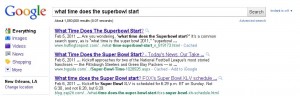
    The Huffington Post’s content model has been under much scrutiny, especially in the wake of a debate about low quality content in Google search results. As Jason Calacanis of Mahalo.com said, “If you make Google look stupid, they’ll fuck you up.” A content farm is basically a website or company that produces a massive amount of content a day at low prices, and therefore low quality. Content Farms are like the McDonald’s of food, or the Soulja Boy of Rap, and you normally don’t want to find their efforts in your search results. A great laughable example of this results when you Google: what time does the Super Bowl start?

    Yeah, the Huffington Post, the serious political blog getting purchased for $315 million is responsible for that crap. Beyond this, it is a site for unpaid bloggers to submit their possibly low quality, redundant content. To get back to what Calacanis said, and what Matt Cutts of Google has been saying, sooner or later low quality (but not quite spam) and redundant content will be penalized to a greater extent by Google. Whether through Facebook likes, bounce rates, account personalization, or several other means, Google is looking at ways to do this.

    I would argue, however, that what should be even more important to the Huffington Post than SEO is its brand. A brand is not a logo, it’s a promise to customers, inherent in a company’s products. As of 2/15/11 – 10:15 am CSD, if you Google News “obama’s budget,” you get results from the Huffington Post among others, but what you don’t get in the first 30 results is the Economist, a weekly magazine, which in spite of current economic conditions and a $130 yearly subscription rate, is experiencing growth in the United States. This is because the company knows what matters to its readers. Economist readers know that the content will always be well above average, including the free stuff on the website. This is a real danger for the Huffington Post: if, as they claim, the bulk of its readership is interested in the serious, paid-for political pieces and the equally as serious unpaid contributions from people like John Kerry, then it risks alienating its most important customers by posting 153 word “articles” about Lady Gaga smoking pot.

    There are some pros. If you beleive that the perception of Huffington Post’s most loyal readers is not altered by the inclusion of subpar content, then there really is not much of a branding problem at all. Without this problem, the SEO strategy works wonders. As recently discussed in the New York Times, the Huffington Post sometimes creates search engine optimized content based on what they predict will be a popular search, or what is trending on Google and Twitter during any given time frame, like the Super Bowl page. If you can maintain a core audience and acquire additional readers who are interested in pop stars and what time the Super Bowl starts, you are cultivating more eyes to make more clicks to make more ad revenue. There is also the added bonus of the possibility that these newly acquired customers will stick around, actually read some real news, and maybe an Op-Ed here and there.

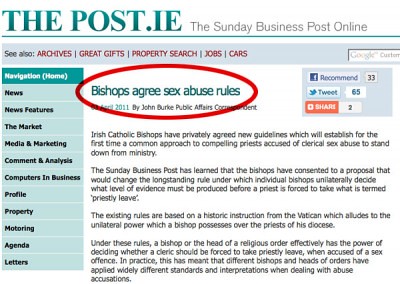
    Furthermore, whatever happens to be news at any given time will inevitably be trending online. It makes perfectly good sense to make sure you are using the right keywords and html optimizations to grab hold of the traffic that you are competing for. This is where the Huffington Post wins–where the New York Times spelled out the acronym SEO in its title tag, the Huffington Post would have stuck with the acronym, after a review of the evidence below.

    Ultimately, AOL is now responsible for answering these questions. What do you think about the Huffington Post’s business strategy?

    Image Source: Thanks to selective_hearing on Flickr for the McDonald’s image.

  • To blog, or not to blog

    On Tuesday our paid search manager, Anthony Coleman wrote an excellent blog: “What small Business can learn from Comics”. In two days of publication we have seen over 700 visits to his blog post, making it the most popular blog in Search Influence History. I feel we may have a competition on our hands now. Using his search marketing expertise and his love for comic books, Anthony wrote a blog explaining why Marvel Entertainment has a much stronger internet marketing campaign than their competitor DC Comics. His educational and entertaining blog was retweeted by Marvel and then picked up on their Facebook page, thus making it the most popular blog in Search Influence history.

    Why was Anthony’s blog so popular? He chose a topic he is genuinely interested in and wrote about it. This blog post was fun for him to write which translated to an enjoyable read for followers. As seen by Anthony’s blog, taking the time to write a well rounded blog can bring new visitors to your site and help keep your existing visitors engaged in your product or service.

    Small business owners are experts at running their business. There is nobody in the world that is going to know more about your business than you. So write about it! Why? Not only will it help your search engine rankings, but it can put your business in front of new clients. A well maintained blog will show your customers that you are an expert at what you do and that you are keeping up with the latest and greatest in your industry.

    By writing fresh content on your site you are giving your business the opportunity to be distributed and found by others. When you write about something you are passionate about chances are somebody else shares the same passion. In case of comics, thousands of people share this interest. When faced with the question to blog or not to blog, find something you are genuinely interested in and relate it to what you do.

    Coming from a family of small business owners, I know most small business owners have an opinion about everything. Let the world hear yours in the form of a blog! After you have written a blog, share it with everyone you know. With social media outlets there is no limit to where your blog might end up. So sit down and let the world hear your voice. You never know, it might get picked up Marvel Entertainment.

    Special thanks to Brian Hillegas for the great image!