Author: Search Influence Alumni

  • Dungeons & Dragons: An Inspirational, Creative Team-Building Exercise

    The path before five adventuring comrades follows the dark tunnels of an ancient ruin. With only a torch to share among them, and their wits and reflexes, they must avoid traps, goblins, disease-ridden rats, and other unknown horrors that they would never expect to find. But at the end of this adventure, should they succeed in overcoming their obstacles, is a treasure trove of gold and jewels, and a single item that might protect them in the coming months. Will they succeed? In a campaign of Dungeons and Dragons, that is up to the creativity of the player and the roll of the dice.

    Search Influence employees at a weekly DnD game.
    Search Influence employees at a weekly DnD game.

    Dungeons and Dragons (DnD) is a Tabletop Role-Playing Game (RPG) that allows for a group of people to fall into a largely unknown and dangerous fantasy realm as characters other than themselves.

    So why talk about an RPG within a blog for an SEO company? That’s because the game itself is a way to give employees, and their supervisors, a chance to have fun, separate themselves from reality for a little while, and create a level of teamwork and adaptability.

    In many ways, this is a great opportunity for like-minded (or open-minded) coworkers to come together and experience a kind of adventure that can span about as long as a career. There are even a few stories of DnD players that have outgrown their characters, but have continued the story with some of their children. The game develops a very strange, but professional and long-lasting, friendship and also supports a creative, and adaptable mindset. It also tends to make people more open with each other. If you can’t trust a friend that you fought side-by-side with against a mountain-horde of Trolls and Orcs, then who can you trust?

    rafiq_blog2
    Various dice used for a DnD game

    In order for a campaign to be successful, everything and everyone needs to come together to reach an eventual goal, survive, and then move on to the next stage of the adventure. Players team up and start to understand each other’s strengths and weaknesses, and figure out ways to support each other with their ongoing endeavors. The Storyteller, or Dungeon Master (DM), then provides goals in the form of quests, as well as obstacles and ways to reach each goal. Sometimes, very little information is given, and it’s up to the creativity and adaptability of the party to find an answer that perhaps even the DM never thought of.

    Of course, Dungeons and Dragons isn’t the only RPG in existence, and it’s better to find a setting and a genre that everyone is interested in following. The important thing is the journey, and the times you work together to keep moving forward.

  • 5 Tips for Managing a Multi-Location Business Online

    Managing a business with multiple locations online can be challenging. It’s important to connect potential customers online with the business location nearest them. Follow these 5 tips for best practices for managing your multi-location business.

    1. All locations need their own individual page!

    It’s important for each location to have its own page on your website. You want each location page to rank for local search in the area. Having one page for each location maximizes the relevancy of the location web page to a searcher and has better chance of ranking locally, especially in blended results (organic mixed with maps results).

    2. Optimize content for each page 

    Add content to the page optimized for a top level keyword and location. Make sure to do this in a way that reads naturally.  
    Optimize all the thing meme
    Content can be relatively short and simple, explaining what the business is / offers, unique selling points, and where the business is located.  Make sure to also optimize the On Page heading (H1), title tag, and meta description as these are all important factors for SEO. It is crucial to have unique content for each page. Many businesses use the same content for all location pages, only switching out the geographical location. This duplicate content leaves the site vulnerable to penalties from Google. For a business with over 100 locations, creating unique content can be difficult. A tip for the writing unique, compelling content for these pages is to incorporate some “local flare” or any information specific to that location in the copy.

     

    3. Provide a good user experience

    On each location page, also be sure to list out the name, address, and phone number for that location. Its important for visitors that come to the page to be able to easily contact the business or find out where it is located. Adding a map with a pin on your location also proves to help visitors get a better visual of exactly where you are located. When listing the NAP for each, keep the format consistent across all pages. Make sure the name is the actual, official name of the business–instead of “Domino’s New Orleans”–as this will be consistent with other local listings across the web.


     photo 25650BaffinBayDrLakeForestCASelfStorageSmartStopSelfStorage_zpsb1f60ccf.png

    4. Tell Google where you are!

    Implement Hcard or schema around each name, address, and phone number of the location pages. Let Google know who and where you are. These are microformats that provide a standardized way to tell Google and other search engines your contact information. By implementing Hcard around your NAP, you can let Google know “this is my physical location.” Adding this code to the site will help the location page rank well in local search. By knowing where your business is located, Google now knows the page is more relevant to searchers.


    5. Consistent Citations

    When creating local citations across the web, be sure to list the name, address, and phone number of each location consistently. Having consistent listings across online directories helps enforce your physical address to Google and increases the chances of ranking locally. It is especially important to have your NAPs listed consistently on your Google+ local listings. If the directories allow, add the location landing page url in the website field, as this page is most relevant to the listing information.

    Google offers businesses with 10 or more locations a way to bulk upload local listing information. The upload process creates new listings as well as edits pre-existing listings. From my experience, this method has proved to be a very slow process. Bing offers very similar services for multi-location businesses, but 25 or more locations are required to use this upload. The most efficient bulk upload offered by a directory has to be Foursquare. I created a bulk upload for a business with 117 locations, and in less than 24 hours all the listings were created/updated and live.

    Following these 5 steps can dramatically help your local search presence. What other tips do you have for managing a multi-location business? Please share in the comments below!


  • Optimize Your YouTube Videos With Video Transcripts

    youtube

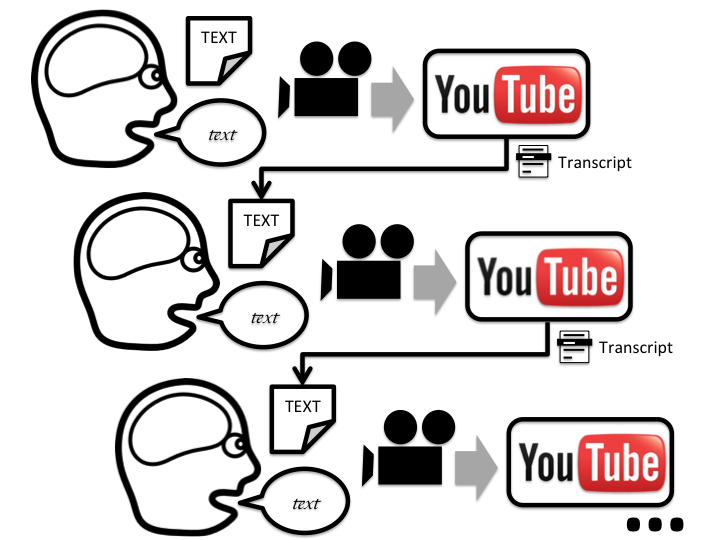
    Using YouTube to promote your business is one of the best avenues to take when it comes to outranking your competition. YouTube is one of the largest search engines available today, which means that everyone is trying to get a piece of the action. The only problem is that most people do not know how to leverage the power of YouTube, because their video gets lost in what I like to call “The Black Hole Of Videos”. People still have not learned that YouTube is a search engine, and therefore, your videos have to be identify by the search engine as an authority. Video transcripts can play a major role in telling search engines, “Hey! Look at me! I am a good video and I have content to prove it!”

    youtube 2

    The problem with YouTube video optimization is the only thing that YouTube has to determine what the content of your video entails is the description, the title, and the tags. While these are great ways to get more viewership for your videos, if your niche is popular with a lot of competition it could be very hard to outrank. Video transcripts give YouTube something to actually read and determine what your video is about based on more than just titles, descriptions and tags. YouTube and Google read text to optimize content, so by adding a transcript you are adding extra content to crawl! Remember, content is king in search engine land. The transcripts are classified on your video as “CC” or “closed captioning”. It’s almost equivalent to putting your Youtube video on steroids. Most of your competition will not upload a video transcript and this gives you an advantage of your competition.

    If you don’t have time to transcribe your video, go to Fiverr.com. People have offers to transcribe videos for $5 dollars so you don’t have to! Transcriptions will skyrocket your YouTube videos to the next level, simply because you are giving YouTube content to actually read and crawl instead of just titles and tags.

  • Improving EdgeRank on Facebook Pages: Chasing the Mythical 16%

    EdgeRank FormulaFacebook has been rather straightforward about the fact that Pages only reach about 16% of their fans on average organically. The social media giant recommends posting engaging content, such as videos and photos, or asking questions of your fans in order to reach a wider audience. Of course, they also heavily recommend promoting your content so that more of your fans have an opportunity to see it and interact with your page. But, what if you simply don’t have the budget to spend on social influence?

    We typically don’t sponsor posts on Search Influence’s Facebook account, so it seemed like the perfect candidate for a case study on organic reach. I started the project in March with no real goal other than figuring out if our reach could grow just by changing the type of content we were sharing on our page. I was already posting on a daily basis, but we saw very little interaction with our fan-base, and practically no interaction from fans who were not directly connected to our office (employees, spouses, my mom…).

    The Experiment (and a little trial and error):

    Viral Poll on Facebook

    I began posting much more image-heavy content and focused a lot more on interacting with our biggest brand advocates– our employees. Sharing photos increased post reach from the get go, but reach grew exponentially larger when we tagged our employees in photos of them. That simple act could take a photo from a reach of 350 to 500 or more. We also took some of our internal contests to the Facebook page, asking our fans to weigh in on the “Best April Fool’s Day Meme” and “Best Group Costume”. These questions were seen by thousands of users, because a News Feed “story” is created for each person who answers a question. We also posted photo albums of company events, which were quite successful in terms of reach.

    Screen Shot 2013-07-22 at 5.23.44 PM

    After only two weeks of focusing on sharing pictures, albums and videos on our page in addition to our daily blogs, the results were glaringly obvious. The reach difference between a link post and an image post ranged anywhere from 15-40%, which is a sizable amount when you’re looking at our total fan count. On average, the image posts were reaching 34% of our fans, with some reaching upwards of 54%. The link posts featuring our blogs? Not so much. They reached only 14% of our fans on average and often much less than that. I will happily admit to being a big data nerd, and these numbers certainly don’t lie.

    But… what does this have to do with EdgeRank?

    EdgeRank Blog

    To calculate EdgeRank, Facebook looks at three main factors for each post (or “edge”): Affinity, Weight, and Time Decay. The “Weight” factor is where post type plays in, and clearly has a huge impact on how frequently your “Edge” gets seen by your fans. By utilizing post types with a heavier Weight, you are more likely to show up on users’ News Feed, and therefore much more likely to get interaction (which increases your “Affinity” score for that fan). When you really think about the algorithm, these two elements are so intertwined that one distinctly begets another.

    By increasing the Weight of our posts, we reached a wider variety of our fans. As those fans began seeing more of our content, they interacted with it, which further increased our Page’s reach amongst our audience. After a few weeks of posting more heavily weighted content, we were seeing a larger Reach for ALL of our posts, not just those with images. We also took the knowledge we gained about post types and applied it to our blog posts– posting a blog with a photo instead of just a link improved its organic reach significantly. By slightly modifying our posting, we greatly improved our interaction level and reach. Have any other good ideas to improve Facebook Page EdgeRank or Reach? Let us know in the comments!

  • Expand Keywords for Expanded Results

    Letters

    Keywords are the key—no pun intended—to driving traffic to your site, and is part of the SEO basics a site owner needs to know. A smart business manager will put a great deal of thought into which terms to target. Even a fantastic list can always use improvement—however, four simple keyword expansions can be the trick to increasing your impressions using terms that are proven to get results.

    Keyword expansion is quick, easy, and almost guaranteed to work. It might not drive tons of traffic, but it will certainly add to your existing pool.

    1: Pluralize

    Many of the main keywords can come to mind almost automatically: if you sell dog brushes, you’ve probably already factored “buy dog brush” into your list. But even if someone only wants to buy one, they’ll often search for “buy dog brushes”. Because some engines recognize plurals as separate keywords, you are potentially losing out on all the impressions from the “dog brushes” searchers. Adding an –s or –es to your common terms becomes a no-brainer when you realize how easily it can boost your traffic.

    2: Rearrange

    People typing search queries don’t always use syntax and grammar the way they do in everyday speech. To continue the example above, someone might search “dog brush buy,” which follows a pattern of what they want (dog brush), followed by what they want to do (buy). Yes, it’s likely to be a far fewer number of people than those searching “buy dog brush,” but that fewer number is not insignificant. Mixing up your word order often elicits more results.

    3: Misspell

    Another regularly overlooked area for keywords are typos and misspellings. Some errors are certainly more common than others; a check down the search query report should show you where you might have luck. If your canine brushes are of the affordable variety, running both “cheap dog brushes” and “cheep dog brushes” could benefit you. Fewer search engine gurus are competing for misspellings, as well, meaning you’ll have a good chance at capturing more of the market.

    4: Match

    The three different match types—exact, broad, and phrase—generally work together to generate the most impressions and clicks even though many choose to limit to exact match for a quality response. If your aim is to get more traffic to your site, though, casting a wide net will bring in more fish. Broad match additions to “dog brushes” might include “dog kennels” or “hair brushes,” but people running those searches might also be pleased to stumble across you. You’ll also pick up on new keywords, through broad and phrase matches that make sense, which you can incorporate into your list.

    Keywords and keyword rankings are important to being found online. With a few additions and clicks, you’ve now expanded your keywords to draw impressions from those who pluralize, rearrange, or misspell words, as well as those running similar searches. You’ll benefit in impressions and ultimately traffic as well, without stressing over your keyword list.

    Megan Totka is the Chief Editor for ChamberofCommerce.com. She specializes on the topic of small business tips and resources. ChamberofCommerce.com helps small businesses grow their business on the web and facilitates connectivity between local businesses and more than 7,000 Chambers of Commerce worldwide.

  • Effective Use of Exceptions

    Throw Lots of Exceptions

    It seems like a good idea, when writing new code, to use liberal amounts of thrown exceptions to signal erroneous situations. The more the better. Any time you can detect a situation where your data is completely wrong, throw an error. In Ruby just using a simple raise with a message (or no message) can go a long way to saving your sanity.

    if something_is_fishy
      raise "something is fishy"
    end

    # or the single-line version

    raise "something is fishy" if something_is_fishy

    In this case your program will crash and your environment will inform you about the file and line number where the error occurred. However I have been using custom error classes (subclasses of StandardError) to more clearly describe what is wrong.

    class UnexpectedlyInvalidInput < StandardError; end
    class UnexpectedResponseType < StandardError; end
    class ThisIsImpossible < StandardError; end

    Some sources advise you to only throw exceptions which you intend to catch. I disagree. In fact most of the error throws you write should not be caught, because most of those should not be thrown at runtime anyway! Strive to use exceptions to detect situations when you, the programmer, have screwed up because something impossible has nonetheless happened. What counts as “impossible” may depend on your business requirements, documented behavior of APIs, common sense, or subjective judgement.

    Obviously it will get tedious or impossible to throw errors at every stage of the code where someone may have messed up (especially in a dynamic language like Ruby). Below I will list situations where it is convenient and natural to throw.

    When using a case or a series of if, else if, else if, ... to interpret the several possible variants of your data (such as “ok” and “error”), put a final else, which throws an error indicating you got an unexpected variant. If you do not put the else and you get an unexpected variant, you will spend valuable time sifting through the aftermath to determine that that was actually the cause of the error. Skip that step and you’ll be able to go fix the actual problem.

    case arg['status']
      when 'ok' then show_user_the_money
      when 'error' then show_alert_dialog
      else raise InvalidStatus
    end

    In an API client module you can throw an error if the raw data you get from the API is not the correct type. You expect the API to adhere to its documented behavior. If it does not, you can’t seriously expect to do anything except change your code. Throw an error.

    If you are expecting a data value to be not nil, by all means, throw an error if it is nil before you use it. The behavior of nils in many programming languages, including Ruby, allows for the program to continue on willy-nilly until you get lucky enough for a crash somewhere else, maybe in another module.

    def procedure_which_expects_non_nil arg
      raise ArgumentError, "arg cannot be nil!" if arg.nil?

      # rest of the code
    end

    In all of the above cases, you now have a clear directive of how to proceed if the program throws any of the errors. You need to fix your bug, alter your usage of an API, or fix a bug that produces a nil erroneously.

    Don’t Worry About Catching

    Don’t try to catch very much. The above errors, for example, have no valid reason to be caught. Try to stick to throwing errors, which indicate bugs to fix rather than normal conditions that will happen as a matter of course. You may need to catch at the top level sometimes to deal with low level unpredictable IO situations like a broken pipe.

    It’s a Bad Idea™ to catch all errors (without re-throwing). The reason for this is that you will be painfully unaware of problems with your code that you did not expect. In Ruby, this includes syntax errors, which are not detected until late runtime and manifest themselves as exceptions!

    # NO! BAD! VERY BAD!
    begin
      results = do_lots_of_complex_things
    rescue #recover from ANY kind of exception
      results = []
    end

    If you do rescue from all errors, make sure to re-throw simply by using raise by itself (shown below).

    # not bad
    begin
      results = do_lots_of_complex_things
    rescue => e
      send_an_error_email(e)
      raise #re-throws the error e
    end

    # also not bad
    begin
      results = do_lots_of_complex_things
    rescue SpecificProblem
      results = []
    end

    The normal way to catch without re-throwing is to make sure it is only for a specific error class (shown above). Finding out which class you want to catch is tricky but worth it.

  • 3 Easy Steps to Launch a Successful PPC Campaign

    I’ve been in online advertising for about 8 years now. In that time, I’ve launched hundreds of accounts and thousands of search campaigns. Not all of them have gone as smoothly as I would like to believe. Instead of relying on my years of knowledge, I have a blueprint that I follow to ensure there is a successful launch.

    Here’s an easy 3-step beginner guide to to launching a successful campaign that your clients (and boss) will be proud of.

    Step 1. Check You Campaigns Settings

    One of the most important parts of setting up a paid search account is checking all of your campaign settings. This is especially important when using something like the Bing Ads’ import feature or creating new campaigns in AdWords Editor.

    • Location
      • Make sure your location is targeting where you or the client have specified. While you could use geo-modified keywords for a state or region, you are likely to see a lower CTR due to poor ad relevancy and low conversion rates.
    • Language
      • Make sure the language you are targeting matches your location targeting and your ad content. If you are targeting a bilingual region such as Quebec, it is best practice to create a French and an English campaign with ad content in the appropriate language. Serve French ads to French speakers and English ads to…you get the point. 🙂
    • Ad Networks
      • This is a big mistake for a lot of new advertisers — your campaigns should never target more than one network at a time. While it is perfectly fine to advertise text ads on the display network, you do not want your low CTR from the display network negatively impacting your search text ads.
    • Device Targeting
      • On July 22nd, this setting will be non-existent, but you must be sure to check you bid adjustments for mobile devices. Not all businesses or websites lend themselves to mobile devices, and despite Google’s certainty that mobile is the future, there is no reason to overbid on a low-performing segment.

    enhanced-campaign-mobile-bidding


    Step 2. Assembled the Ad Groups

    good keyword themes

    • Keyword Themes
      • How your keywords relate to your ad content, the search query, and the landing page really matter. While it isn’t the biggest factor in quality score (CTR is still 70% of the a good QS), keyword theming it majorly important to relate your service/product/whatever to the searcher. Over- and under-simplifying themes is a common mistake that even a lot of veteran PPC advertisers make, so don’t be discourage if you aren’t sure where to start.  The best way to determine how keywords should be grouped is by figuring out what they mean to the searcher and what the searcher is expecting to see.
    • Keywords Match Types
      • Like keyword theming, this has a lot to do with anticipating what question a user is going to ask a search engine and how. I am a huge fan of exact and phrase match because if gives you the best CTR and limits the amount of negative keyword research you’ll have to do. However, for the PPC noob I would recommend using modified broad match with a hefty list of negatives to eliminate search noise. If you follow this advice your quality score and wallet will thank you.
    • Ad Content
      • One of the most important elements of a good launch is good ad content. When writing ad content, the most important things is answering the search query’s question. It is equally important to show why you answer the question better than your competition. Including value props, calls-to-action, and relevant ad extensions will help you get the click.


    Step 3. Set Up Conversion Tracking and Analytics Integration 

    • Conversion Trackers
      • This is probably the most overlooked and financially dangerous thing to forget when setting up a PPC campaign. Whether you consider a conversion a click-to-call, a form submission, or even view of keypage, you have to set up conversion tracking. With both AdWords and Bing Ads this is a simple process — you just insert a snippet of code onto your determined conversion page. This is typically the last action you want a visitor to do on your site before leaving your site.
    • Google Analytics
      • Undeniably the most powerful free analytics tool available. Google Analytics allows you to see what your PPC visitors are doing on your site. Having this knowledge will allow you make data driven decision about on-page factors such as images, content, or layout. One of my personal favorite reports is Visitor Flow. This report shows the path a visitor takes on your site and what information you should include on your landing pages.

    That’s it!

    Setting up a new PPC campaign can become daunting and confusing. Using these three steps will help you stay on track and not waste time or money. A properly set up campaign will ensure you can make better ROI decisions without backtracking and guesswork.

    Pro-Tip: If you have a hard monthly cost and want to effectively manage your spend use the shared library’s Budget feature. It will allow you to assign a set daily spend to multiple campaigns. It will alleviate the stress of manually adjusting each campaigns’ daily spend. Be sure to check your performance though. If you start seeing more opportunity in a particular account you may want to separate it from the others and assign an individual budget.

    Share Budgets for PPC Campaigns

  • Influencer Spotlight: Annette Golemi

    Annette Golemi

    What do running, LSU tigers, and New Orleans cuisine have in common? They are all beloved by SI’s PR/Marketing Associate, Annette Golemi! Born in the Chicago suburb of Park Ridge, Annette moved to Mandeville, LA when she was only 6 months old. From then on, New Orleans and Southeast Louisiana held a special place in her heart. With much love for the area and its food, people, and sports, it was no surprise to Annette’s family when she moved to Baton Rouge to attend LSU. “I bleed purple and gold,” said Annette of her beloved alma mater.

    After graduating from LSU with a bachelors degree in public relations, Annette moved to Austin, TX, where she began an internship with a local PR firm. Shortly after, she was offered a position at a different local PR agency where she worked for over a year. It was at this point family, food, and fantastic job opportunities called her back to New Orleans, where she then began work at SI.

    As a PR/Marketing Associate, Annette’s day to day activities revolve around building the Search Influence brand as a nationally recognized and premiere Internet marketing company. Annette truly excels at her job with her fantastic ability to connect and engage with those around her. When asked about her favorite part about working at SI, Annette replied, “I absolutely love our company culture. I feel so privileged to work with such intelligent, well-versed, and hard working colleagues that truly work as a team. I am always so pleased to know that if I ever need help with a project, I can reach out to any of my team members and receive a positive attitude along with helpful results.”

    Influencer Spotlight

    When she’s not building up the Search Influence brand, Annette loves trying new local restaurants. “I keep a running list on my cell phone of restaurants I hear people talking about or places I learn about from Eater NOLA.” Also an avid runner, Annette enjoys the outdoors, especially the running paths in Audubon Park.

    We are thrilled to have such a wonderful team member in Annette and look forward growing as a company with her and through her hard work!

  • Switching to Trello from Pivotal Tracker

    We started using Pivotal Tracker over 2 years ago to track the status and progress of our first big software development project. As the lead developer, it fit perfectly into the workflow that I had envisioned for my fledgling department. I added user stories, gave them points and watched my velocity rise and rise as my two week iterations rolled by. I was showing value, being agile and I was generally happy with the progress of the project.

    That project launched a few months later and it has been in use ever since. Then bug fixes and feature requests started to trickle in. And the development department grew. And after the success of the first, second, third, and fourth projects were added to the queue. It was obvious that Pivotal Tracker was going to need some additional tools to manage multiple projects and multiple developers across those projects. We looked into several add-ons, third party tools and even used a Google doc for a while, but nothing seemed to work quite how we wanted.

    As we focused on one project, the iterations would still roll by on our inactive projects. It’s possible to change the “team strength” to 0% when you aren’t working on a project, but it is reset back to 100% every iteration, and an empty iteration is still recorded. This doesn’t look good and ruins the velocity estimates that Pivotal Tracker is so good for.

    I first found Trello while looking for alternatives to Pivotal Tracker. My first reaction was that it’s too simple. Where do you put in points? Why do I have to manually move stories from the backlog to the current iteration? I ruled it out along with other more beautiful apps such as Asana and Trajectory.

    The search was put on hold until I found a blog post by User Voice that describes exactly how they use Trello. I was blown away. First and foremost by the fact that a company would share this much information about it’s process. It has inspired me to be more open about how we develop software. Secondly, I was surprised to see them using it outside of the “one project is one board” paradigm. They use six boards to document, vet and prioritize new features and bugs. This really changed my view of how we could use Trello.

    We don’t have one single software product called Search Influence. We have a conglomeration of many tools to help each department be as efficient as possible and still give our customers the individual attention they need. We needed a way to track each of these projects individually. Having a “Next Up” list like User Voice would be infeasible because we would have to prioritize cards across multiple projects. I would rather prioritize the projects themselves and give developers freedom to choose which they want to work on. This has worked well for us in the past and Trello is making it even easier.

    We have one board with a card for each of our projects. It has lists for “Ideas,” “Research and preparation,” “Ready to begin,” “In Progress” and “Done”. Cards generally move left to right and “Done” really means “Done for now.” In the description of each card there is a link to a Google doc and its own Trello board. Developers assign cards to themselves from any list except “Ideas” and “Done.” I believe we will need a separate board for “Ideas” and “Research and preparation” in the near future from which the “Ready to begin” list will be populated, but for now all of our projects have been pretty well researched and we are working on some great features.

    This is how we are currently doing things, but it’s a work in progress. All of our current projects are researched and ready to be worked on, but the next change will be to create a board strictly for planning. This will make it easier for other parts of the company to be involved in our roadmap. If you have any questions or use Trello in different way, make sure to comment. We’re excited about the changes going on at Search Influence.

  • Influencer Spotlight: Joe Romito

    Joe Romito

    With both a B.A. and an M.A. concentrating in English, 24-year-old Joe Romito may first appear like one of many students with the same popular degree, if it was not for one distinguishing feature: comic books.

    A Philadelphia native, Romito attended the University of Pennsylvania, deciding to combine a minor in classic Greek and Roman literature with a focus in graphic novels.

    Although the combination was unique, Romito was not deterred when programs were scarce as he got ready to pursue a graduate degree. “Nobody really picked me up for a Master’s degree,” he said. “Initially, I was going to get my Ph.D, but I highly specialized in graphic literature, which is kind of a hard sell for universities right now.”

    However, after graduation, Romito decided to move to New Orleans instead. His girlfriend was attending law school at Tulane at the time, so it made sense for the couple to move closer together. “I had no job,” he said, “and I said, ‘Screw it,’ and packed up all my stuff and got in my car and drove down here.”

    Thankfully, Romito found a professor at the University of Chicago that specialized in comic book literature named Hillary Chute. “I thought, if she could do it, this might be a viable option,” he said. “In the end I wanted to teach about graphic novels, comic strips, graphic comic books, the whole medium.”

    After receiving his Master’s, Romito ended up moving back to New Orleans and after a brief employment at a local restaurant, Romito decided to pursue a career that better suited his academic goals. “I was tired of being a dishwasher,” he said. “I was a dishwasher at Delachaise, and one day I thought, ‘Maybe a master’s degree student should not be here washing dishes.’ It was a little ridiculous, if thats all I was going to do.”

    At the time, Romito was also freelance writing for Search Influence, and I decided to apply for an in-house position. He has now been a full-time IMA with the company for nearly 6 months and seems to much enjoy his new career choice.

    “It’s just weirdly comfortable,” he said. “I don’t feel stressed out. I feel like if I was in one of those TV offices with the cubicles I would just feel bad. I like the open air feel. I think it really makes you feel like a team, opposed to if everyone was stuck in cubicles and had to pop over the top like meerkats every time they needed to talk to someone.”

    IMG_0118

    Romito has certainly taken advantage of the sense of community at the company, organizing  game nights with his fellow employees. “When I first got here, I played my favorite game, which is “Find the Nerd,” he said. “Whenever I’m in a new social situation, I don’t tone myself down at all. I just max out on how nerdy I am around other people, and I’ve found in like 99% of situations, someone responds with the nerdiest thing that they do back at me. And I’m like, ‘Ok, I found a nerd.’”

    Romito found that the majority of the web developers in the office were interested in role playing games, so he decided to begin an inter-office game of “Dungeons and Dragons.”

    About 7 people are involved in the game, including Romito’s girlfriend, who is also a freelance writer for Search Influence. “Every Sunday we meet up at my place and play “Dungeons and Dragons,” and drink beer, and hang out,” he said.

    As far as pursuing his interest in comic books, Romito has not given up on the dream, he said.

    In his free time, Romito plays around with ideas for sci-fi fantasy novels, novellas, and short stories. He also has a number of “art friends,” he said, so would have no trouble enlisting the help of an illustrator if he ever decided to seriously move forward with a project.

    “I’m terrible at drawing,” he said. “I took drawing courses in college, and got good enough to know how bad I am. It was like, ‘Now I know enough to know this sucks.’ However, if I could ever get words on paper enough to actually say, ‘Hey, I got an actual, solid idea, do you want to get in on this project?’ I know I would be able to write it, and I would be able to get someone to do the illustrations.”

    As for now, Romito remains a humble IMA for Search Influence. But look for him to accomplish great things in the world of science fiction in the near future.