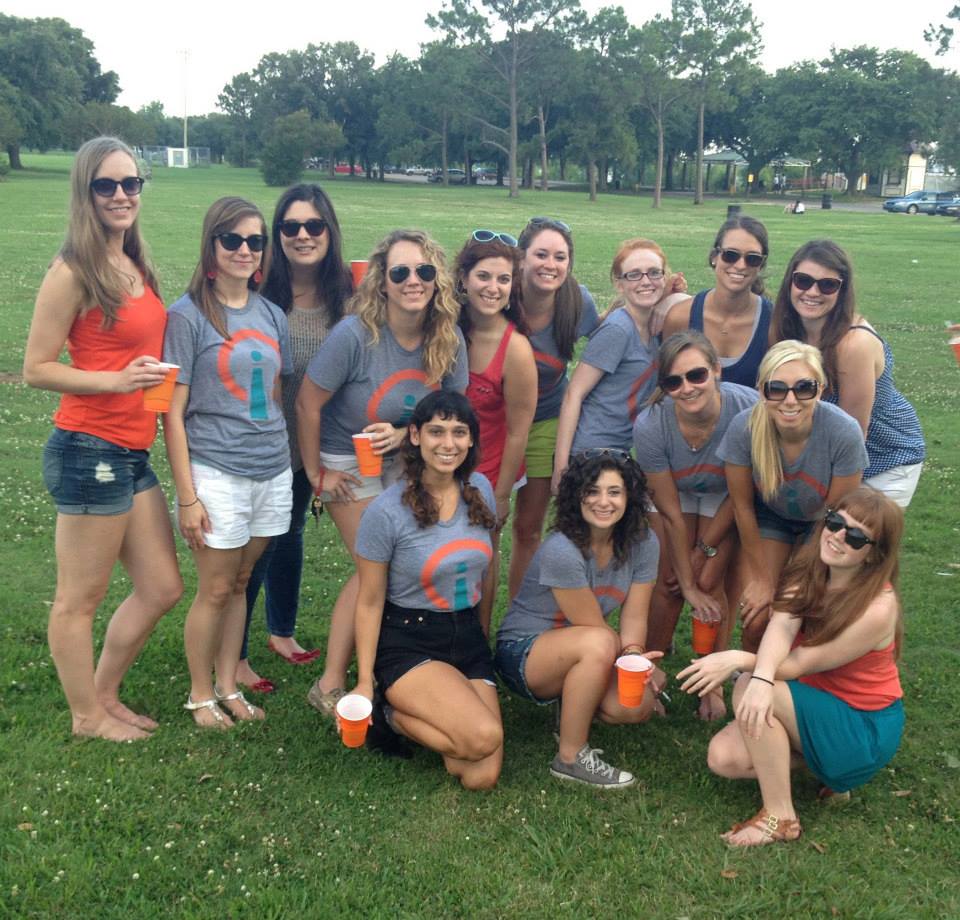
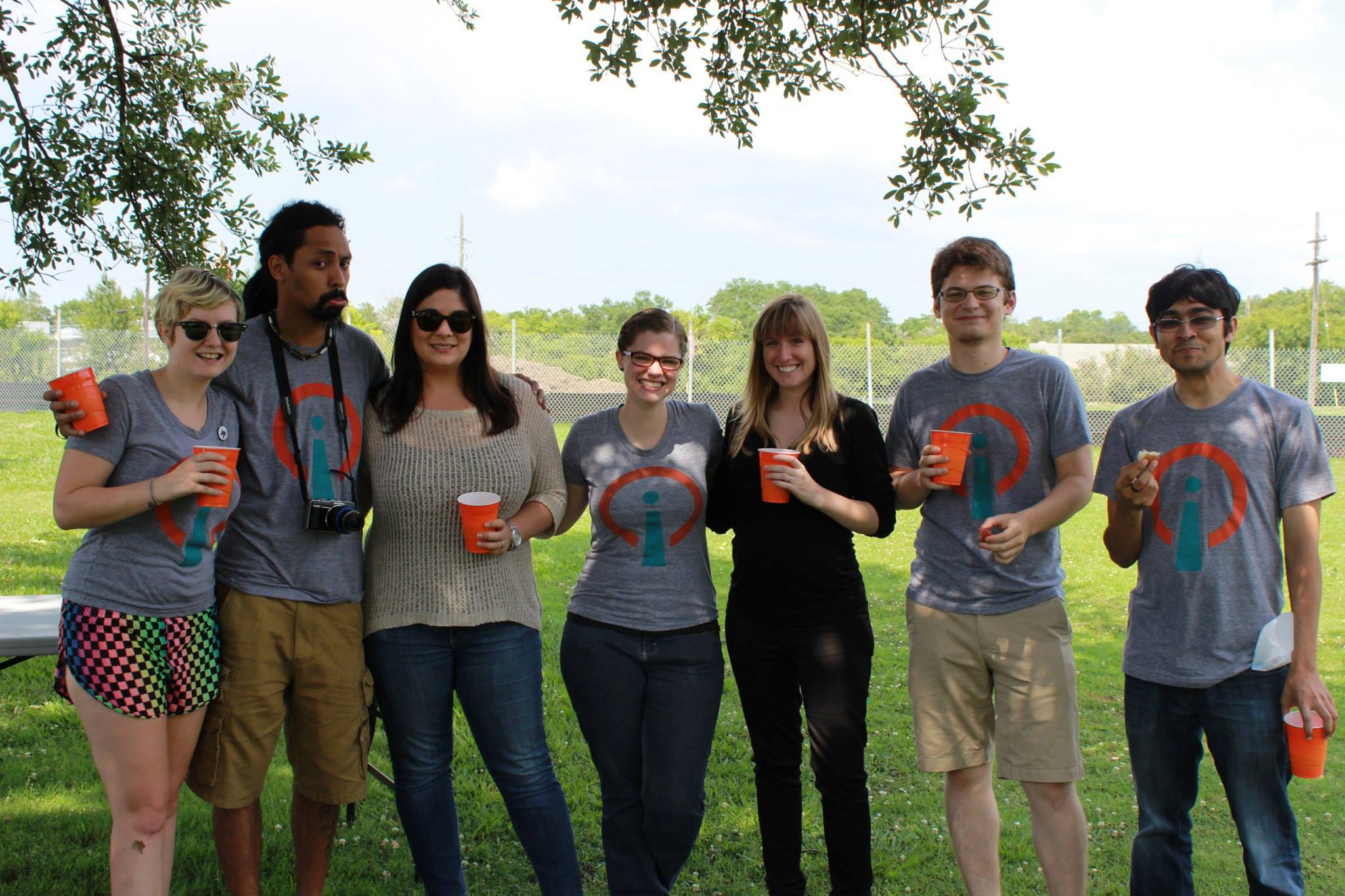
At a recent Wednesdays at the Square event, I ran into a friend who was sporting red shoes along with a nametag that read, “Ask me about my red shoes.” The Wizard of Oz, of course, popped into my head, but I asked the question anyway. Turns out, the movie had nothing to do with her shoes of choice. Instead, they embodied some familiar virtues such as courage and, most importantly, heart.
The Red Shoe Society consists of young professionals that support the Greater New Orleans Ronald McDonald House, which provides temporary accommodations and other supportive services for families with sick children. The Red Shoe Society’s collective mission is to bolster this built-in support system that helps needy families from all over the State of Louisiana. They raise money and awareness by organizing fundraisers, hosting monthly dinners at the house, and networking at events like the weekly festivals at Lafayette Square. They also utilize social media, getting their message out on their Facebook and Twitter pages.
Anita Mirchandani, a full-time teacher, says that they are trying hard to grow as an organization. “We have only been around for 1 year. In addition to raising money for the house, our current goal is to get more members. We are really small right now and need to expand.”
In order to recruit and raise money, they plan social events where more young professionals have the opportunity to get involved with the cause while expanding their networks. Anita says, “We have social mixers every so often to raise money, like the Cocktails for a Cause event on May 23rd at the Rusty Nail, where 20% of the profits go towards the house.” At places like the Sovereign Pub and Ralph’s on the Park, the volunteers also hold the “Making Ties” happy hour events, which provide young professionals a chance to learn about the organization’s mission and join the charity.
Since the Red Shoe Society consists of teachers, bankers, attorneys, and several other professionals, they remain flexible in scheduling their service around their regular business hours. However, they all come together each month and work hands on at the house. Anita says, “We have a monthly dinner where the members bring in food to the house for the families to eat. So one night a month, they come ‘home’ to a cooked meal after spending an exhausting day at the hospital.”
Many people have seen the slider on the top of Google search results when searching for “things to do various city,” but have you seen it when searching other local terms lately? When I searched the term, “Pizza New Orleans,” I noticed the slider appearing instead of the seven pack for the first time today! I search this term often–not because of my love for pizza, but because of my client’s pizza chain. Never in the history of everdom have I seen the slider show up for this particular term.
What if Google is leaning more towards this instead of the seven pack? This can be a good and bad for local businesses. Good because your business will not be pushed all the way to the bottom of page one, way under the seven pack. Potentially bad, because many people may be driven to click the pretty images on top of the screen vs. clicking on the plain jane search results.
What does this mean for me, you ask? How can I be a part of this beautiful slider? As our fearless leader says, “Barnacle SEO is the answer!” A well optimized Google Place listing and page are the first steps. Your best possible scenario is to be the Theo’s Pizza of the page! Theo’s is the first Google Place listing in the slider AND the third organic listing on the page. As per usual, the more real estate the better.
It’s going to be very interesting to see where Google takes this and how far it will go. Will it eventually replace the seven pack? Only God–I mean Google knows!
P.S. This doesn’t show up for everyone. A few of my co-workers have seen this in the wild and a few have not. Have you noticed this type of result for other queries besides “pizza” or “things to do?” Tell us in the comments below!
One of the reasons I love New Orleans is that living local is part of everyday life. People love shopping and eating at local businesses. Thankfully, you won’t find many chains in the New Orleans zip codes (you need to go out to Metairie for that)! My friend Christine Alex recently started a jewelry business that imports handmade pieces from several countries across the world. This Q&A profiles her company, touching on why it totally fits in with the local New Orleans vibe.
How did you come up with the idea for your business? I came up with the idea for Culture Shock when I was traveling abroad. I thought it was cool to bring back jewelry instead of postcards to my friends and family. The jewelry became a hit and eventually more and more people began giving me money and asking me to bring items back for them. That’s when I thought it would be really neat for people to be able to buy handmade items from all over the world without having to leave their couch. Culture Shock became an LLC in October 2012 and officially launched on January 18, 2013.
What is the goal/vision for your business? When I studied abroad, I gained a deep level of respect for other cultures and as a result, appreciated my own culture so much more. My goal is to educate my customers about other cultures while selling them a piece of someone else’s culture to wear.
What products do you offer? I sell jewelry that I hand picked from all over the world. The biggest countries that I receive my inventory from are Nicaragua, India, and Nigeria. Aside from offering a selection of imported items, I also began creating my own ethnic inspired items. In addition, as a way of honoring my own Creole culture, I created an apparel line under Culture Shock called Naturally Creole. This line offers a selection of Creole-themed apparel and accessories.
Do you have an online presence? Website, Facebook, Twitter, Pinterest? Yes, I have a website, Facebook, Twitter, Pinterest, and Instagram. Facebook and Instagram receive the most engagement from followers. I have noticed usually the same people follow us across social media platforms.
Why do you use Facebook? What is the benefit that it is bringing to your business? I use Facebook because it’s where my customers are, and I want to develop a relationship with them. Facebook allows my customers to understand the personality of my brand and learn more about my company and the products that I offer.
On the content she posts to her platforms: I try to post content related to the countries that I import my items from. I post photos, videos, and open-ended questions. Pictures usually receive the most activity from our followers. On Pinterest, I pin items from our website.
Do you run any contests on Facebook? If so, what kind? Yes, giveaways.
On her customers: Word of mouth and social media have been important in building brand awareness and getting people to buy our great pieces. I’d love to get more interaction from our social media followers to continue to build the brand!
I love a good hashtag, y’all. I think everybody does! They are great engaging pieces of content in social media posts that can really build engagement among your followers. They are also extensions of your post that allow you to specify your tone and point of view. Pinterest, Twitter, Google+, and several other platforms have all integrated hashtags into their interface and users love them. Personally, I’ve been using hashtags with these platforms for years, and I find that it really allows my sarcastic personality to shine through!
Well I have BIG news for y’all. Between 11pm last night (when I last checked my facebook) and 9:30 am (when I first checked my facebook today), Facebook rolled out the use of hashtags. And I gotta say… I’m not sure how I feel about it.
Now, we all knew this was coming. There have been rumblings of it for weeks! But, it is finally here. I feel like an apocalypse has happened in the social media world. I mean, c’mon… hashtags are just for Twitter and Pinterest right? Right?! Apparently not.
What I’m interested in is how the hashtags will be incorporated considering Facebook’s privacy settings. I am hashtagging under the pretense that hashtags are for trending purposes. But if my settings are “Friends Only”, does that mean that my post will not be part of what is trending on Facebook? I’d love to know the answer to that one!
Here are some shots from the trending hashtag, #hashtag, as of this morning. Some people are stoked, and some are not so stoked. How do you feel about this?
On June 13, Google announced that it had acquired Waze, a social-sharing platform that uses crowdsourcing to gather real-time information about road closures and traffic jams to give mobile searchers accurate, up-to-the-minute directions. The deal will provide new data for Google Maps that might improve local search capabilities and help fuse online content marketing with in-store sales.
Apple announced this week that when iOS 7 comes out this fall, Siri will have a new integrated web search feature powered by Bing. This update could go a long way toward making the voice activated virtual assistant a better web search option for iPhone users, and could potentially drive a lot of new traffic to Bing.
New analytics are available on Twitter to help users identify trends in their accounts without having to go to a third-party tool. While the data is basic, it may provide marketers and small businesses with valuable insights into the behavior of their followers.
A recent study shows that the “ability to use data analysis to extract predictive findings from big data” is the most prized skill for a marketer to have. You might be surprised by which skill ranked second. Overall, the list shows that some “old school” skills still have a lot of value.
Proper link building is a key ingredient in developing a successful blog. Paid advertising and social media strategies will only take so far. This author shares the story of how he got the links he needed to get his travel blog out to a wide audience.
I have always been hesitant to use keyword ranking reports as the focus for a successful SEO campaign. They are a useful measure, but they aren’t the most important, nor are they reliable and trustworthy. Don’t get me wrong. Ranking reports have value. Just not as the primary reporting standard.
The prescription for success is focusing on the website performance rather than obsessively watching over the rankings. This image shows this client hit the #1 spot in April then again in May, and within that time the #1 spot garnered them 8 visits.
A website needs to be a dynamic living entity. Google respects business owners who take care of their website properties and make those sites engaging, interesting places to visit. Website owners need to be mindful of which pages on the website are the strongest and most visited. What pages have the highest and lowest Bounce rates, and why? Which pages have the highest and lowest time spent on page – is there room for improvement?
A positive user experience is influential to the site strength. Quality backlinks. Author trust. Engagement in the industry discussions online. These are the things that will make a site strong, and from that strength, the site will show up in the SERPs, but maybe not for the phrases you want or expect.
Things ain’t what they used to be
A brief blog post in mid-May says it very succinctly:
“Keyword ranking as a metric is diminished in importance and relevance as performance metrics are starting to replace it.”
“Performance” encapsulates so many details. It’s a lot of what is already mentioned: the behavior of the visitor once they land on your site.
If they are digging around to other pages,
reading more information,
spending time on the site,
taking the quizzes sitting in the sidebar,
watching the videos embed on the page,
– if they are doing these things, Google is rewarding that site as being trusted as a resource.
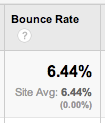
An excellent Bounce rate, not seen very often in this client’s industry.
If visitors land on a page and immediately see the content is not rich enough, there is no multi-media experience, there are no big happy buttons encouraging that visitor to go read about the doctor or lawyer, baker or candle stick maker, it’s boring. And they will leave. When visitors Bounce,
you lose a potential customer,
and it sends signals to Google that your page has little value.
“If Not Keywords, What SHOULD you be looking at?” Well, it depends on your business and your goals, but traffic and conversions are going to be more useful than keyword rankings alone.”
I’m not drawing a line in the sand saying that ranking reports no longer have any value. What I am saying is for years we used rankings as the thumbnail data for reporting. Rankings were the first thing discussed in new client kick-off calls and the first thing addressed in monthly conference calls.
However, keyword ranking reports are flawed. They have been since the beginning of keyword ranking reports. But they were, and still ar,e one measurement to use; one that is becoming a little less relevant.
Rankings are always moving around. How many times have I said “The keyword rankings are simply a snapshot in time. The report is not reflective of reality for all searchers all of the time.” I have said that a LOT.
Ranking reports tell a very specific story. You’ve chosen keyword A, B, and C, and that’s what you will be chasing. But what if your site ranks for X, Y, and Z? You won’t necessarily know it because those phrases aren’t in your list. This is bad tunnel vision.
Google is showing us with every algo update, that what the business owner or the SEO thinks that a website should rank for is not necessarily what it will rank for.
A ranking report can’t predict the success or failure of a business online; it can absolutely help guide decision making and improving the website property, but it is not the definitive measure telling us that we have achieved the #1 spot and can now expect to dominate.
So What’s Important Now?
Rankings are still important. We still use rankings as a weather vane. But we have to remember that between the increasing personalization of search results and the localization of search results, rankings data is skewed. We have to recognize that.
Search results are personalized, based on website browsing history in some cases
Results are location based, so if you live in town A you will see something different if you move to town B
Previous search history is used to predict the most relevant links
People use different devices to search–although as people increasingly sync their smartphones, laptops, and tablets with each other, this may become less of a factor in the future
Or in Keyword Rankings are Dead: Long Live the ROI: “A keyword searched in New York by a logged-in Google account user showed different results than those done by a first-time user in Baltimore. A surfer searching on Google in Montana displayed different results than one in Texas. The more we searched, the more we realized Google has taken the rankings game one step further and personalized it based on a visitor’s search history, along with other important geographical and demographical information.”
This is simply more background as to why ranking reports are flawed data, and more evidence why we cannot rely on these as our primary gauge of achievement.
Our team here has had some fairly intense discussions on improving Bounce rates on select pages and strategies around increasing conversions. Looking at length of page visits and flow of site visits. Trying to pinpoint ways to improve the user experience and help them stick around longer on site. These are the things we are talking about and measuring and testing.
In Rankings are dead – long live conversion!: “With Google’s continued focus on location based rankings, we strongly believe that rankings are becoming much more dependent on their specific location. For example, one keyword could rank much higher in Scotland than it does in Brighton. Even today when our clients mention that their highest paid person in office spots that their website isn’t ranking high for a particular ‘money word’, it can be tempting to scream at nobody in particular “It’s not just about rankings!!”.”
Search Influence’s newly established Team Building Committee, a group of nominated SI employees that helps promote our eclectic company culture, put together a “Spirit Week” last week in preparation for our first company crawfish boil.
Our first day of Spirit Week allowed SI employees to roll out of bed, ready to go to work. We celebrated “Pajama Day” on Monday, complete with comfy Yoga pants, slippers and the usual plaid sleep bottoms. SI Developer Andre Eble won Best Costume and an iTunes gift card for his unique combination of penguin flannel and Spider-Man.
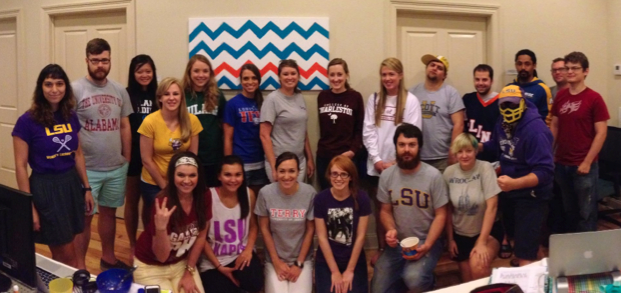
School spirit was in the air on Tuesday when we celebrated “College Day” and witnessed school rivalries and die-hard alums. Some of the team chose to wear college t-shirts, while others went all out in a costume.
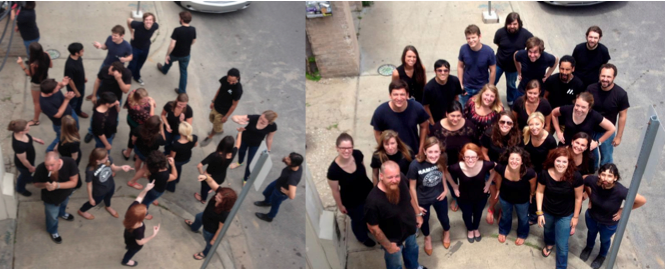
Wednesday was “Dress Like Your Favorite Lead Developer Day.” This day was dedicated to our very talented Lead Developer Luke Ludet and his timeless daily wardrobe choice: a black t-shirt and jeans. The SI office was filled with Luke Ledet wannabes reppin’ their black tees and jeans. Can you spot the real Luke Ledet in these pictures?
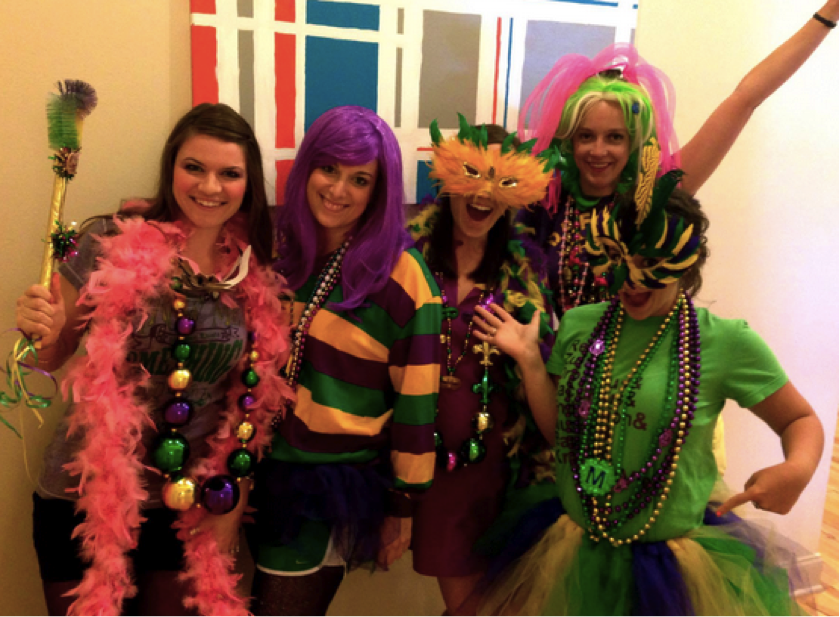
Our department teams got together for Thursday’s “Group Day” and used our arts and crafts skills for hilarious group get-ups. The White Label Account Management Team stuck to their New Orleans roots and put on their best Mardi Gras gear ready to party.
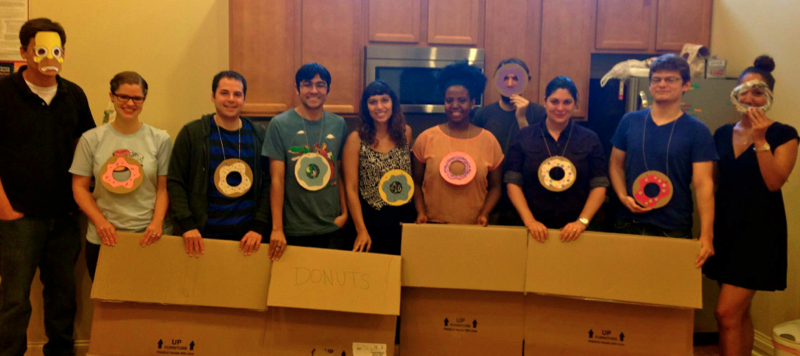
Our Production Team gave the office a sweet tooth when they dressed as Homer Simpson and a box of donuts.
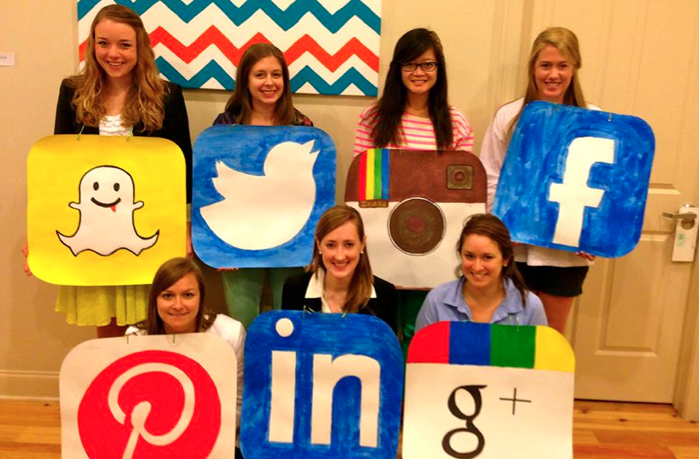
The Direct Account Management Team was social media savvy and dressed as their favorite iPhone apps.
The A-Team used their local search skills as inspiration for their costumes and dressed up as Google Maps pins. Designer Will Monson, interpreted the theme a little differently and dressed as a member of SI’s predominantly female “group”- Account Management.
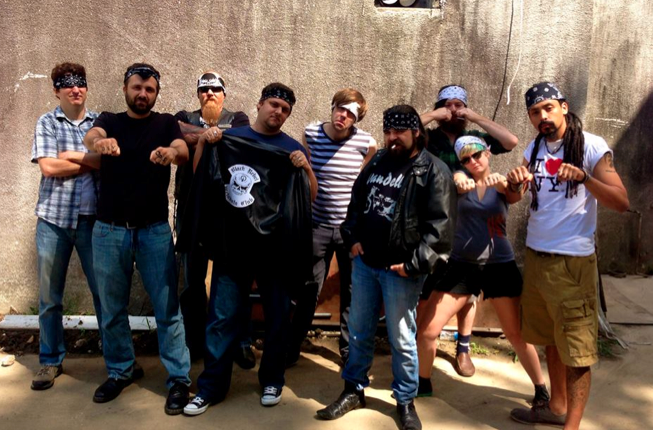
And, the Best Costume Award for “Group Day” went to the Development Team, or rather “Black Rebel Meta Data Club,” for their hardcore biker costumes.
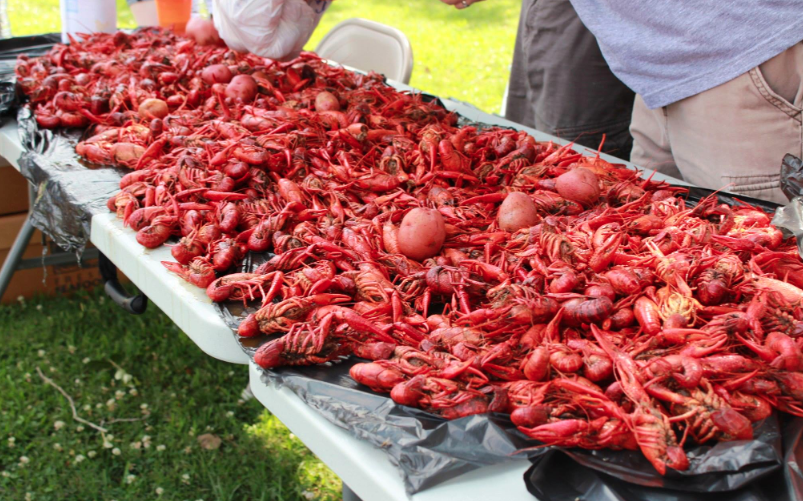
Spirit Week came to an end during Friday’s company crawfish boil at The Fly at Audubon Park, where we enjoyed Abita Amber and delicious boiled crawfish from Johnny’s Seafood. The team played games, tossed frisbees and spent time with co-workers from other departments.
Thanks to our wonderful Team Building Committee for their creativity and a successful Spirit Week. And, of course, a special thanks goes to Will and Angie for encouraging our dynamic company culture and making Search Influence such a great place to work.
As usual, Google is always testing new search results and the way the results display. Dr. Peter Meyers of Moz recently noticed a change in the Google search interface. The results displayed included restaurant reviews from Reason, New York Times, and the Wall Street Journal when he searched [mexican restaurants].
In a recent announcement, Facebook plans to consolidate its ad offerings down from 27 to close to half of that. Offers for online deals will disappear and they are changing way “Sponsored Stories” are laid out. Expect these changes to slowly roll out.
If you have heard of this NSA PRISM program, you should pay attention now. The Guardian uncovered a top secret document that showed that officials had direct access to systems of Google, Facebook, Apple and other internet bigwigs. The document was allegedly used to educate intelligence operatives on the program.
Jade W of Google announced that Google will now start displaying “Are you a business owner?” to direct branded search results. Although it is a minor change, it seems as though Google is attempting to engage small business owners more. Have you started seeing this change for other SMBs?
For those who still use Yahoo as their primary search engine will notice a change in the search results. Yahoo has attempted to de-clutter the SERPs and moving search results higher up on the page. Do you like the new changes? Will you start using Yahoo?
If you’re like me, you love to find any and all ways to save a little time here and there. That is why I have compiled a list of my top 3 time saving SEO Chrome extensions.
1. SEO SERP
What does it do?
SEO SERP is arguably the best thing since sliced bread. I am embarrassed to admit that I ever googled a keyword then proceeded to count the actual location of the site I wanted to see rank for that term on a search engine result page. What this extension does is it allows you to type in a keyword or phrase and the website you hope to see rank. Press submit, then it tells you the page’s position on search engine results. Don’t make the awful time sucking mistake I did. Download the SEO SERP Google Chrome extension today!
Get the Extension
Visit SEO SERP’s Chrome extension page to add this extension now!
2. SEO Mozbar
What does it do?
Better put, what doesn’t it do? Quickly view meta data on a particular page, reference page and domain authority, view page load time, see followed, no-followed, internal, and external links, and so much more. All of that information sits right there at the top of your Chrome window, awaiting the inquisitive click of your mouse.
Get the Extension
Seriously though, if you don’t already have this fantastic reference, download the SEO Mozbar now!
3. Notes Anywhere
What does it do?
Sticky notes have long since been a great tool for reminding yourself of important tasks and helping clutter your desk with vibrantly colored bits of random information. Like their tangible cousins, the Notes Anywhere Chrome extension does exactly what its name implies. It leaves notes anywhere on any page of any website you want. Close that tab, quit Chrome, or even restart your computer and the notes will still be there next time you visit the site. This is a fantastic tool for adding reminders to yourself of things to adjust, pictures to add, additional content to include, or whatever you want! Best of all, your actual desk isn’t flooded with a rainbow of reminders about various website changes.
For the organizationally minded person, you can also view a summary of your notes by clicking on the Notes Anywhere button at the top of the Chrome window. Use this extension as you please, but for me personally, this tool has helped cut out the time I spend searching for the exact location I want to remember to add a link or insert a picture on a specific page.
Get the Extension
Visit Notes Anywhere’s Chrome extension page to add this extension now!
Whether you hope to save time, like to stay organized, or just enjoy learning about great Chrome extensions, I highly recommend adding any and all of the above. You’d be amazed at the time you save when you don’t have to dig around for information. All that’s left now is to find an extension that cuts down on my procrastinating habits.
With so many fantastic Chrome extensions out there, it’s hard to name them all in one blog post. Which time saving Chrome extensions make your top 3 list? Share them in the comments below.
It’s no secret that a company’s online presence can help and maybe hurt their business, and this is especially true for start ups that are turning to the Internet to get the word out about their services or products. This list (while in no way exhaustive) is a great collection of some of the biggest mistakes that rookies make. Some of the mistakes listed include poor/no user interface and user experience, pages that take forever to load, funky site architecture, meaningless URL naming conventions, and skimping on content marketing and blogs. Of course, there’s also the ever-present “Don’t Ignore Social Media.”
Will Scott, our very own CEO of SEO, has a post on Search Engine Land this week all about how infographics can affect your rankings, traffic, and leads. The piece details how one Search Influence client has benefited from the creation of infographics specifically designed with leads in mind. There’s also some fun stuff in there about the history or representing information visually.
In this post SEO-focused copywriting agency SuccessWorks gives quite a few tips for planning and implementing a content strategy. The first point of planning, and what I think is the most important step of writing anything, is to keep the audience in mind — identify and then analyze who they are, how they get to your site, and what they do with the content. Once you know what your audience is looking for, audit your site and take inventory periodically to make sure that everything is fresh, applicable to your audience, and unique.
While this isn’t the whole list of 64 tips (it’s only 19, but the rest of the list will presumably be posted on the aimClear blog at some point in the future), the information given here is valuable to those just starting out or who have been doing it for a while. And the list is helpful for anyone managing any sort of account, from SEO to paper.
She probably could have used some help.
Some of the items are very basic and are actually life lessons: keep your promises, be a thoughtful listener, be confident. Some of these are enlightening more specifically to business, like don’t expose yourself to legal risks and don’t let your client find something out from another source.
Another list! Can’t you tell we love ’em here? And blogs, too! This one is a great reflection on lessons learned from blogging since 2006. The first is my favorite: Blogging is hard. With so many marketers and other blogs telling business owners how awesome blogs can be and a great one can really drive traffic, lots of people want to get into blogging for their companies. It can seem to some people that a blog is easy to throw together and doesn’t take long. This is absolutely not the case, and as the author reminds us, it’s completely ok to say that you aren’t ready for the type of commitment and work that comes with maintaining a quality blog with posts going up on a regular basis.
 At a recent Wednesdays at the Square event, I ran into a friend who was sporting red shoes along with a nametag that read, “Ask me about my red shoes.” The Wizard of Oz, of course, popped into my head, but I asked the question anyway. Turns out, the movie had nothing to do with her shoes of choice. Instead, they embodied some familiar virtues such as courage and, most importantly, heart.
 In order to recruit and raise money, they plan social events where more young professionals have the opportunity to get involved with the cause while expanding their networks. Anita says, “We have social mixers every so often to raise money, like the Cocktails for a Cause event on May 23rd at the Rusty Nail, where 20% of the profits go towards the house.” At places like the Sovereign Pub and Ralph’s on the Park, the volunteers also hold the “Making Ties” happy hour events, which provide young professionals a chance to learn about the organization’s mission and join the charity.


 1.
1.