Author: Search Influence Alumni

  • What’s the Perfect Marketing Budget for Your Company?

    In our years of experience as a digital marketing agency, we’ve found that a typical marketing budget for a business is 5-10 percent of revenue, sometimes more when in growth mode. But don’t stop reading yet! Determining the exact budget for your business, and how to allocate it, depends on a wide range of factors, from goals to company age. Here are five questions that can help your business determine its ideal marketing budget.

    1. What Are Your Needs and Goals?

    Most effective marketing budgets start with a bottom-up approach. This means that your first step is to define your company’s quantifiable goals and objectives. This could be the number of new customers or accounts you’d like to see in the next year. It could also be how quickly you need to see results on your campaigns. The important thing is that the goal is well-defined. This way, you can come up with specific strategies to reach your target, and you can easily measure which strategies are working (and which ones aren’t!). Quantifying your business goals as much as possible will help you create a much stronger marketing budget and marketing campaigns.

    2. What Does Your Historical Data Look Like?

    So you need specific objectives…but how do you determine what those should be? One effective tool is historical data. For example, if you’re trying to figure out how many new leads you need per month, look at data from previous months. How many people typically contact you per month? How many of those people are qualified potential customers? How many typically convert into actual customers? And is this conversion rate providing you with enough customers to keep your company growing? Once you determine how your company has been performing, you’re in a much better position to decide if and how you’d like to change that performance. In other words, you’re in the perfect place to set measurable goals!

    For more information on how to track leads and determine the quality of those leads, visit our Analytics & Lead Tracking page!

    3. How Old Is Your Company?

    Historical data is great—if you have historical data. Brand new companies usually don’t, which can make determining a marketing budget especially challenging. Luckily, the experts are here to provide guidance! Both entrepreneur.com and websolutions.com recommend that new companies should allocate between 12 percent and 20 percent of their gross revenue to marketing costs. While this range might seem a bit high, there is logic behind it. New companies must be more aggressive with marketing spend because survival depends on building lasting brand recognition with an audience that’s never heard of them before. Once companies have established their brand and customer base, they can change their focus to maintaining the awareness and market position they’ve gained, while incrementally growing their business. And they can adjust their marketing budget to the 5-10 percent we recommended earlier.

    4. What Should Your Marketing Plan Include?

    So once you’ve established your goals and consulted your historical data if possible, what sort of marketing tactics should you use to achieve those goals? First, a typical marketing budget covers both public relations and advertising, in addition to the previously discussed branding. It’s a very wide range, but it can most easily be broken down into print and digital communication. Print communication includes traditional marketing efforts, like billboards, newsletters, brochures, and press releases—and don’t forget to budget for design, printing, and mailing costs. Digital communication, on the other hand, includes developing a website that’s both SEO friendly and user-friendly, using online advertising to your advantage, and maintaining active social media accounts. Depending on your industry, you might also want to budget for additional marketing efforts that don’t neatly fit into the print or digital category. This could include broadcast advertising, on radio or television, or special events like conferences and trade shows.

    To learn more about how digital marketing can help your company reach its goals, visit our pages about Content Marketing and Online Advertising!

    5. Where Is Your Target Demographic?

    With all those marketing options to choose from, how do you know which ones are right for your business? One key way to narrow down the list is to define your target demographic—not just who they are, but where they are. This question not only applies to the physical location but also to online behavior. What types of media does your target demographic use? Do they spend more time checking their emails or scrolling through Twitter? Whether you’re marketing in the print or digital arena, knowing the places your target demographic frequents can help you put your content in the best location to make the most efficient use of your marketing dollars. In fact, your target demographic can help you decide whether to use print or digital marketing in the first place. While traditional media can strongly contribute to brand awareness and complement your digital strategy, the right balance of print to digital marketing depends greatly on your industry and your customers. Know your target demographic, and you can feel confident you’re investing in the right media.

    At Search Influence, our goal is to help you grow your business and optimize your potential online. If you’d like professional insight into choosing the ideal marketing budget for your company, call 504-336-3422 or request a proposal online today.

    Images:

    Rihanna

  • Zoos, Aquariums, and Non-profits: Here Are Three Top Tips to Fundraise Like a Pro

    Based in a city known for its tourism and attractions, Search Influence is no stranger to digital marketing for zoos, museums, and other non-profits. We’re here today to pass on some of our knowledge to you! These three tips for fundraising through social media are sure to spark your creativity and help get donations flowing through the door.

    Two hands holding a ball of money - Search Influence

    1. Make Giving Easy

    Even the most dedicated patron can get turned off if they have to fill out confusing forms or trudge to your office in person. Streamline the donation process by taking advantage of easy online giving platforms. Some user-friendly platforms and campaigns include:

    FundRazr

    MuseoBlogger points to the Boston Museum of Science’s success with FundRazr. This app is free to download and offers patrons a number of custom giving options. For example, they can either choose to contribute anonymously or to identify themselves via their Facebook profiles. Similarly, they can choose to give either by credit, debit, or PayPal. MuseoBlogger writes that FundRazr is “intuitive, convenient, and provides both instant gratification and recognition.” Maybe that’s why Boston Museum of Science raised over $1,200 from Facebook users alone—likely all donors who were not contributing via the traditional channels.

    Text to Give

    Colleen Dilenschneider, Chief Market Engagement Officer for IMPACTS Research & Development, highlights Cameron Park Zoo’s mobile giving campaign and Rosamond Gifford Zoo’s Adopt an Animal program as two nontraditional fundraising campaigns. As part of their mobile giving campaign, the zoo encouraged guests to donate $5 or $10 through a simple text message, making it easy for patrons to show support from home or say thanks after a great day at the zoo.

    Adopt an Animal

    The Adopt an Animal program at Rosamond Gifford Zoo is available to animal-loving patrons throughout the year, but in honor of National Adoption Day, the zoo ran a two-day promotion to spread awareness of the program. To reach a wider audience, they lowered the minimum donation requirement and created a smaller, custom donation package. This promotion generated an extra $350 and gave incentive to those who may not normally donate to the program.

    It’s simple. The easier it is to give to your organization, the more likely people are to donate.

    2. Establish a Brand

    Having easy donation platforms is great—as long as people know about them! To make the most of any digital fundraising campaign, you first need a community of fans and followers. And the first step in building that community is establishing your own brand. This gives patrons a clear idea of who they’re engaging with and helps them feel a personal connection with your organization and its values. After all, no one wants to give away hard earned money to a stranger on the internet!

    Complete branding should be an in-depth endeavor. It requires cohesion between your physical location, website, and social media platforms. If you’re looking for a place to start, think about visual branding: assure your color scheme, logos, fonts, and overall visual aesthetic remain consistent across all your on- and off-line locations. Or, you could start with brand values. Post clear causes or ideals that your organization believes in, and then provide evidence of those values through success stories and patron or employee spotlights. For an at-home example of establishing brand values, check out our About Us page and see how we communicate our dedication to optimizing business’ potential and the New Orleans community. Then, pop over to our pages about Success Stories and Company Culture to see those values demonstrated in action.

    3. Get Inspired With Engagement Ideas

    With your brand established and clearly communicating exactly who patrons support when they donate to you, it’s time to engage with the community! There are tons of great ideas out there, but here are some of our personal favorites.

    First, make it very clear where donations will be going and how patrons will benefit by giving. Just like how people prefer to support trusted brands over internet strangers, patrons are more likely to donate if they know exactly what their money will achieve. Consider offering additional perks for high-dollar donors. For example, a newsletter with updates about their chosen animal or a plaque with their name by their sponsored exhibit.

    Another popular engagement idea is live-streaming certain exhibits. Offer a night-stream that shows patrons what nocturnal creatures are up to when the zoo or aquarium is closed. Keep a 24/7 feed going on monkeys or other active and entertaining animals. Or, if one of your animals is expecting, consider broadcasting her pregnancy and birth, as well as her baby’s early growth. While this isn’t as directly tied to fundraising as animal adoption programs, it will nonetheless warm viewers’ hearts and get them engaged with and excited about your organization, building the meaningful connections that could turn into donations down the road.

    Finally, appeal to photographers. Nothing gets people excited about zoos and aquariums like cute pictures of fuzzy animals, and encouraging visiting professionals to take photos means your organization gets all the exposure with a fraction of the cost and effort. Consider using your social media accounts to host fan photo contests, like the Shedd Aquarium, or repurpose the photos you already have with a caption contest. To go even further, consider hosting photographer-only after-hours events, like Aquarium of the Pacific. This offers amateurs and professionals alike the opportunity to take great pictures without the general public getting in the way. When they post their photos, it’s free advertising for your organization, and it’s a great opportunity to extend your network to include the photography communities.

    Consult the Experts

    We promised three fundraising tips, but here’s a bonus fourth! If you want to focus the majority of your time and energy on running your organization, Search Influence is here to help you with everything from content marketing to online advertising. Request your proposal online today.

    Images:

    Moneyball

    Zootopia

    Giraffe

  • Connect Your Brand With Your Community

    Human beings are social animals, but what kind of community would form around your company’s online branding? Brand loyalty is easily observed in beverage and automotive industries, and fans of a particular brewery or manufacturer often consider that brand preference a part of their personal identity. Coke or Pepsi, Chevy or Ford, and Windows or Mac: these rivalries and preferences elicit emotions like the choice between sports teams. The fans of a brand develop a tribal sense of community, but it doesn’t happen with just any company. What if you could make your brand inspire that degree of enthusiasm and loyalty?

    A collection of company branding icons - Search Influence

    Make Your Brand Relatable

    When kids try to make friends, the classic advice is to “be yourself.” Similarly, your online branding strategy needs to come from a genuine place if it’s going to build a following. Big promises and low prices will motivate a purchase, but you need to meet or exceed a customer’s expectations in order to make them a fan. When you think about brands that have been popular for decades, they have earned the lasting support of repeat customers. Quality products and reliable service aren’t just slogans, they’re perceptions that match the experience of satisfied customers.

    A branding campaign should not require an overhaul of the way you do business. It can be as simple as identifying your strengths or making your marketing more consistent. But where do you go once you’ve got your brand established? The first step is finding those that relate to your brand the most. Target the interest groups and demographics most likely to identify with your brand through online advertising, and track their progress along the consumer journey. After they’ve visited your site or clicked on an advertisement, keep your brand visible with targeted remarketing. Every impression and interaction is an opportunity to confirm the value and reliability of your brand.

    Three women having coffee and a business conversation at a diner - Search Influence

    Emphasize Human Interaction

    Automation is great for business efficiency, but customers appreciate interacting with your human employees. When an existing customer calls with a problem or question, they react differently when answers come directly from a person instead of a recorded message. We’ve all experienced the frustration of answering a dozen automated questions in order to complete a simple task. In contrast, it’s easy to imagine how it feels to interact with a single employee throughout an interaction with a business. Whether they’re contacting a travel agent, realtor, or secretary at a law firm, people have a different experience when they have the chance to repeatedly connect with the same human being. Their connection with that individual becomes their connection with the whole company.

    Of course, the conduct of your employees can have a positive or negative impact on the way your brand is perceived, depending on how they interact with customers. When training and managing employees, remember how their treatment of customers can impact the long-term reputation of the business. Efficiency is important, but be sure to acknowledge and reward employees who go the extra mile for customers. It can be as simple as remembering a name or some other personal detail. A friendly voice and attention to detail can make customers feel valued by your company, even when you’re offering a no-frills product or service.

    Find Followers on Social Media

    Find a voice that resonates with your target audience and sets your business apart from the competition. On social media, your company’s response to news and trends will give the public additional opportunities to identify with your brand. Whether you develop a presence on Facebook, Instagram, LinkedIn, or Pinterest will depend on your target audience and what’s appropriate for your industry.

    You’ll want to post frequently in order to keep your business visible, but the majority of the posts should not be directly promotional. That doesn’t mean you have to spend all your time writing your own witty blogs. Not everyone is rocking the digital marketing industry like Search Influence. Rather, you can share news stories and articles related to your industry and community. By sharing authoritative, newsworthy content, you prove to followers that your business is keeping up with the latest trends. Not only are you building your brand, but you’re also making your business a valuable resource to potential customers, even when they aren’t currently in the market for your services.

    One of the biggest benefits of social media is that it provides a more detailed view of your target audience. As your following grows, you’ll gain a more detailed understanding of the interests, demographics, and preferences of people interested in your company. This information enables you to develop customer profiles and more specifically define your target audience. Identify the trends that groups of your fans have in common, and you’ll have an edge on the competitors who still advertise indiscriminately to the public at large.

    How Does Community Generate Revenue?

    Your customers understand how traditional advertising works. Across all platforms, paid content and advertisements get a lower CTR than personal content generated by close friends and family. When a friend recommends a business or vacation destination, that recommendation is more impactful than a commercial. By building a connection with the community, your online branding can make itself a topic of conversation. You can design promotions that encourage fans to show their support on social media. When people see that a close friend voluntarily supports your business, that recommendation carries weight. Get customers to advocate for your tourist attraction, dealership, or boutique, and you have a powerful alternative to conventional ads.

    Establish Your Brand As a Community Ambassador

    Members of the public are generally skeptical about the motivations of corporations and businesses. The global economy never ran on gumdrops and compliments, but consumers like to see brands that make a visible effort toward conservation, disaster relief, and other causes with a broad base of support. Politically controversial issues are a gamble because they needlessly turn away potential customers. It’s far better to publicly give to a popular cause and leverage social media so that fans can share the news of your good work. Many of your donations to non-profits can be tax-deductible. Improving the image of your company isn’t a fast process, but it has the potential to greatly increase your revenue by converting potential customers into supportive fans.

    If you need help clarifying your brand or marketing your business online, our team can help. Grounded in a foundational understanding of SEO, we know how to build authority and make your business stand out. Digital marketing isn’t just a way to generate new leads—it’s an increasingly vital part of remaining competitive in today’s marketplace. Request a proposal from Search Influence to amplify the digital voice of your online branding.

    Images:

    Brands

    Facebook

    We Like You

  • 3 Practical SEO Tips to Get More Clients for Your Law Firm

    1603-SI-TheInfluencer-KL-A-04-lg

    Have you ever wondered why your competition appears at the top of search engine results pages while your firm is nowhere to be found? Attorneys today face new marketing challenges, including how to access the ever-increasing number of clients who are using the Internet to search for legal services online. These three practical SEO tips are the stepping stones to getting your firm’s website and the specific practice areas of your firm’s lawyers to appear prominently on the results pages of search engines like Google and Bing.

    Law Books Image

    1. Create High-Quality Content

    Most importantly, your site should feature content that is compelling and thoughtful. Rather than prioritizing obvious and underhanded SEO tactics such as keyword stuffing, organize your website so that there are separate pages dedicated to each of your practice areas and focus on writing comprehensive and user-friendly text to explain each practice area. Your content will naturally include the keywords that potential clients search for when they need legal help. For example, if a consumer is searching for a personal injury lawyer in New Orleans, they will be directed to the page on your site that explains how personal injury attorneys can help clients who have been injured in an accident that was the fault of another.

    2. Select High-Value Keywords

    Speaking of keywords, to see results with SEO, you need to do your due diligence and conduct keyword research so that you know exactly what consumers are searching for. The trick is to focus on your local area by using keywords related to your practice areas and where you are physically located. Try using a keyword planning tool that will tell you what keywords consumers are using to search for your type of legal services. For example, consider the case of The Law Office of Jerod Gunsberg. When their campaign first started with us in 2010, the firm was not ranking for any of their crucial competitive keywords. As of May 2018, they rank #3 for “domestic violence defense attorney los angeles”, #6 for “theft defense attorney los angeles” and #2 for “meth lawyer los angeles” and “prostitution lawyer”. By implementing an aggressive strategy in a highly competitive market, we got Jerod Gunsberg in front those in need of a defense attorney and closed quality cases. In the first 5 years of their campaign with us, the SEO strategy brought in 589 leads. With a 469% increase in organic traffic compared to the first month of their campaign, we continue to connect the right audience with strong cases to The Law Office of Jerod Gunsberg.

    Social media icons image

    3. Create and Optimize Social Media and Blog Presence

    For law firms, creating and regularly updating social media pages is another important step in making your firm more visible online. One way to build authority on Google is to create and optimize your Google My Business profile and engage in evolving Google My Business activity to increase your local presence. Most legal professionals make an effort to build their brand and audience on LinkedIn, but you can also create a social profile on sites like Facebook and Twitter and integrate them into your website. Make sure you focus on regular and relevant updates to your social media profiles by simply making updates on topics related to your practice areas. You can also increase the relevancy of your profiles by adding two or three paragraphs of information describing the type of legal services your firm provides. Lastly, consider setting up a blog where you publish your own interesting and unique content focused on your areas of law. Once your social media and blog presence is relevant and current, you will further strengthen your site’s SEO capabilities.

    Let us help you follow these three steps to build your online presence and help potential clients find you when they would never have known you existed!

    Image Credits:
    Law Books Image
    Social Media Icons Image

  • ‘Tis the Season to Get Creative: Using Social Media for Holiday Marketing

    Many of your customers are gearing up for numerous holiday festivities that involve family, friends, and coworkers. This time of year also inspires lots of shopping. According to a study done by Deloitte, the average American will purchase 15 gifts during the holidays with the months of November and December generating 30 percent more revenue than non-holiday months. With all the gift giving and celebration, a stellar online presence, particularly on social media, is key to your business having a shining season. Keeping your customers engaged and informed of specials, events, and general happenings in the behind-the-scenes aspect of your business builds trust but also can build sales. In 2015, 75 percent of shoppers used the internet to research which gifts to purchase. So, don’t be afraid to get creative and light up your customers’ timelines with compelling copy. Need a little inspiration of your own? Here are some social media marketing tips that will get you in the holiday spirit.

    Christmas gift giving from 22 minutes - Search Influence

    Deck The Halls…With Lots Of Images

    Photos, videos, and other images are paramount to a healthy social media presence and they also present the perfect opportunity to engage potential shoppers on all levels. Create an Instagram video and show quick, behind-the-scenes clips of your store or showcase a new product or one of your lesser-known services. According to Wyzowl, 74 percent of shoppers who watched a demonstration video about a product or service subsequently bought it. So, show off your Spielberg skills and put together a product video to demonstrate how a featured item in your store is used. Remember, this doesn’t have to be a costly high-tech venture; just use a smartphone and tell a short and sweet story about how your shop is preparing for the holidays. Upload to your social media or even YouTube. If stills are more your thing, take some high-quality photos using your iPhone or a more professional camera and post images of employees who are in the holiday spirit. You can even include some shots of that huge order fulfillment you and your crew are working tirelessly on. Make the images personal and easy to share. If you are running low on your own photos, try incorporating user-generated photos from your customers.

    Tinsel Everything From Wall to Wall

    In other words, cover your bases when it comes to social media. Since your potential customers are more than likely shopping for other people, you are not necessarily trying to gain the attention of your traditional customer base. You may be trying to appeal to a mother buying a gift for her 20-year-old son, or a 30-something purchasing something for his niece. If dad is buying something for his daughter and your business has the perfect gift, let him know. Facebook has proven to be a wonderful resource that really does appeal to pretty much every demographic. With tools like Facebook ads, it’s becoming easier to target your potential shopper, so make sure the language that you’re using in your content speaks directly to your audience.

    Tinsel being placed on a tree in It's a Wonderful Life - Search Influence

    Spread the Joy of Your Business

    Today’s consumers want to know the ethics behind the companies they are shopping with. According to a 2015 Nielsen report, 66 percent of respondents were willing to pay more for products and services that came from companies who were committed to positively impacting social and environmental issues. So, tell your customers who you are and what you stand for. Are you doing any fundraising or charity events for the holidays? Share it! Are you participating in a food drive or giveaway? Tell us about it! Does your company’s mission align with the spirit of the season? Even better. These are positive events that can not only create a space for your company to give back but also encourage trust with your customers and impact sales, too.

    Give the Gift of Hashtags

    Added to the Oxford Dictionary in 2010, the hashtag is social media’s way of organizing ideas, keywords, and campaigns. Search some of the current trends and see if an existing hashtag fits your company’s voice or vision for the season. If not, jump start your own! Consider running a promotion based on your customers reposting or sharing a specific photo or post. Have them use a catchy hashtag you’ve created that is personal to your holiday messaging. To incentivize their repost or share, offer participants a small discount.

    Jimmy Fallon and Justin Timberlake using hashtags - Search Influence

    Embrace All the Holidays

    Facebook is a wonderfully diverse platform that will surely get you views from people of all walks of life, so don’t narrow your focus on just one holiday. Show love to each one of them and give them a shout out on your page. Let everyone know how inclusive you are across age groups, interests, and religious and cultural holidays alike. Take the time to wish your current and potential customers a happy holiday season and welcome them to your store.

    This time of year, after all, is about love, celebration, and gratitude. Let your customers know you care with a thoughtful social media campaign that will inspire them. If you need assistance with creating a holiday strategy and managing your social media, contact our team. We are happy to help you deck the halls with holiday content that will get your customers into the spirit of the season!

    Images:

    Gift Giver

    Tinsel

    #Hashtag

  • Meet & Greet : Your Buyer Personas and What You Should Know About Them

    When you ask a small business owner what kind of customers they want to attract, it’s not uncommon to get an answer like “everyone” or “anyone who can use our service.” When you’re creating marketing content, however, it’s not often possible to create something that will appeal to every single person on the planet—some people simply won’t be interested. For example, it doesn’t make a lot of sense to try and convince a college-age renter to install a new roof. It’s a more efficient use of your marketing resources to zero-in on people who are most likely going to be your customers. The best way to do this is to create buyer personas. Doing this will help you to define exactly who you are trying to reach.

    Zoolander Who Am I Image - Search Influence

    What is a buyer persona?

    A buyer persona is the Everyman of your customers. It combines all the characteristics your customers have in common and puts them into one fictionalized person who represents your average consumer. The buyer persona is based on real information about your clientele, and it defines their age range, gender, income, common pain-points, and what they’re hoping to get from your product. It also combines your demographics with psychographics to build a buying character that is pretty much human.

    Why are buyer personas important?

    Having a well put-together buyer persona helps two people: you and your potential customer. According to a survey by Rapt Media, 63% of consumers would think more positively about a brand that gave them content they found valuable, interesting, and relevant. Whether you’re reaching out via a direct mail campaign, emails, or Facebook, no one wants to be stalked by content they’re not interested in.

    Wedding Crashers Image Of Gloria Saying I'd Find You - Search Influence

    By focusing your marketing efforts on your buyer persona, you’re ensuring your message gets in front of people who are most likely interested, without alienating those who aren’t.

    At the same time, knowing your buyer persona means you can give your customers exactly what they’re looking for, ensuring they trust you when it’s time to make a decision. For example, if your buyer persona is an on-the-go business traveler who doesn’t want to waste time during the research stage, you can present them with content in an easy to digest infographic. The potential customer is now more likely to engage with your content and come back to you next time they need a problem solved.

    How can I build a persona for my business?

    Your buyer persona should be based on who your real customers actually are. You can do this by directly surveying your current or past customers. Ask them about their background and demographics, as well as more probing questions like how they heard about your product, why they bought it, how they’re using it, and what (if any) difficulties or reservations they’ve had since their purchase.

    Talking directly to your customers is the preferred method, but if you’re not getting enough information, supplement it with searches on sites like Quora and industry forums to see what kinds of information people are seeking. Content Marketing Institute recommends you ask these three questions when searching: 1) What is the first thing my customer thinks of in the morning; 2) What are their last thoughts at night; and 3) Why is this so. The first thoughts they think about will reflect their daily to-dos and frustrations.

    Image Of Titus Telling Kimmy That He Already Did Something Today - Search Influence

    By the end of the day, they’ll start considering the macro level of what they’re doing with their life. The ‘why’ gives context to the first two questions. If you end up getting a couple of different answers for some of the above questions, that’s totally okay. It just means you probably have more than one buyer persona.

    What does a great buyer persona look like?

    A strong buyer persona will read much like a character description from a play or TV show. Describe Olivia Pope from the TV show “Scandal.” What does she do for a living? How old is she? Does she live in a city, the country, or a suburb? East Coast, West Coast, the South, or Midwest? What kind of clothes does she wear and what is her favorite pastime? With her line of work and hobbies, what kind of products would she be most interested in and find to be most helpful? This is a short list, but you get the picture. Buyer personas completely flesh out your customer base, creating what may look like a complete person or personality. The more detailed, the better. The sharper your assessment of your client base, the better targeted your marketing and the more likely you will attract your most likely customer.

    Image Of Scandal's Olivia Pope Saying It's Handled - Search Influence

    Need an expert to help you build your buyer persona? We offer a variety of great services to target your customers and engage them online. For help creating a digital marketing campaign that speaks directly to your potential customers, contact our team!


    Images:

    Zoolander

    Wedding Crashers stalker

    Titus To-Do List

    Olivia Pope

  • “Where You At?” 4 Attractions That Are Owning and Winning the Social Media Game

    If you’re anything like me, you’re likely to experience an immediate rush of nostalgia when you hear the phrase “where you at?” Probably because you can recall the early 2000’s when Boost Mobile coined the famous tagline. However, with updates to technology happening all around us, the popular tagline has never been more applicable. Thanks to social media, we’re no longer limited to experiencing some of the world’s greatest wonders and destinations through a fashion magazine or a dusty book at the neighborhood library. Now, with a finger scroll, you can experience live snaps from the Louvre in Paris by night and wake up to astounding images of Tokyo’s Imperial Palace by morning.

    Travel Glasses - Search Influence

    Although some attractions have found the path to social media enlightenment challenging, enticing content can generate the right kind of attention and turn your historic venue or neighborhood candy store into the next viral sensation. Here’s a look at four different attractions that have used social media to help skyrocket their brand’s popularity and engage audiences.

    The Tate Collective

    It’s not every day that you see dancing art from the 1840s, but The Tate Collective, a collection of four UK art galleries, managed to change the way millennials saw classical art with their 1940s GIF party. Using their wide reach in the area and the innovation of a growing young population, their site saw one GIF re-blogged over 100,000 times, increasing the Tate Collective’s Tumblr followers by 25,000 users throughout the campaign.

    Grand Central Station

    While it’s not your typical attraction, Grand Central Station provides a great example of an entity whose making the most of social media. With 750,000 people trekking through the station every day, this travel hub has turned into a true social experience. Creating their own easy to remember hashtag (#ShareGCT), their Instagram, @GrandCentralNYC encourages visitors to share the sights and sounds of one of the world’s busiest travel stations. Not only does this provide visibility through user sharing but it also creates great content for them and an awesome way for travelers to occupy their time.

    The Metrograph

    Utilizing a cool backdrop to attract visitors, the Metrograph has made the most of their newly acquired foot traffic by also using it as a teaching experience. Metrograph’s designer accidentally created one of New York’s hottest new Instagram backdrops by “Sharing the magic of cinema beyond the rectangle of the movie frame.”

    New Orleans Tourism and Marketing Corporation

    Last but not least, we have the city of New Orleans. The city has perfected its social media campaigns just in time for its tricentennial celebration. With what’s slated to be one of the city’s largest celebrations, the New Orleans Tourism and Marketing Corporation (NOTMC) took to social media to coin the giant fête’s theme and slogan, “One Time In New Orleans.” Having had ample time, they’ve perfected the pitch using their captivating #FollowYourNOLA campaign across all social media platforms. NOTMC has set the precedent for how an entire city can showcase itself to the world!

    The Bachelorette Second Line - Search Influence

    Although you may lack the budget of an entire city, not to worry—you too can generate revenue simply by capturing engaging photos and videos from some of your city’s most unique landmarks and busiest hubs.

    How to Make Yourself #Instagrammable

    Becoming a viral sensation doesn’t require in-depth knowledge of string theory, but it does take some strategic planning in order to execute it effectively. So, how can you do it? We’ve gathered a few simple tips:

    Pay Attention!

    Make sure to pay close attention not just to the trends on social media, but also your customers’ behaviors. If you notice that your visitors are drawn to a particular window or centerpiece, then encourage them to share it on their social media! Whether it’s a cool Instagram frame prop or your own clever hashtag, encourage avid and amateur photographers to capture and share their vision with the world. Consistency is key here—the more engaging the content the better!

    Keep It Simple, Silly!

    Social media, while ever-changing, has always stayed true to one principle: Everyone can do it.

    Ease of access to social media has made networks like Twitter and Instagram catapult to the forefront of experience sharing. Don’t believe me? Try social listening to gauge just how many users are on board with Instagram’s change in chronology, or Twitter’s new testing feature that now allows users to tweet with a 280-character limit.

    #DontOverkillTheHashtagTitle

    When curating your hashtag, make sure it’s easy to remember. The last thing you want is for a spelling error to donate your hard earned traffic to another profile. Not only will your hashtags generate lots of attention, but also the constant onslaught of user-generated content will make for weeks of recyclable posts! You’ve filled your content calendar without even having to schedule a professional photo shoot. Keep it simple yet provocative, and you, too, can be #Instagrammable.

    Time to Empty Your Plate

    Got the creativity but don’t have the time? Or, have the time and not the creativity? There’s a professional for that! Let our team at Search Influence help you create a social media campaign that will engage your clients and potential customers.

    Here at Search Influence, we’ve established ourselves as leaders in digital marketing by executing social media strategies for the likes of The National WWII Museum and the Audubon Nature Institute. Learn more about how you can Up Your Social Media Game!


    Image:

    Sunglasses

    Bachelorette

  • Rookie Website Mistakes, Part 5: Weak Content

    Welcome to Part 5 of our series on Rookie Website Mistakes. In Part 4, we learned about single page website design and how they often put form over function much to the detriment of your SEO and the user experience. While we all want a shiny new website with all the bows and whistles, it’s more important to focus on quality content that will give the users what they want. Having weak content can prevent search engines from exploring your site and leave visitors with more questions than answers. Avoid this mistake by following the tips below.

    Hit the Sweet Spot of Content Length

    Unfortunately, there’s no magic number for how long your content should be. Because I can’t tell you that precisely 253 words will make your page number one, I’ll instead give you the frustrating advice my high school English teacher gave me–your content should be as long as it needs to be. Obnoxious, right? But, what it comes down to is that your content should provide all of the related information on the given topic you’ve chosen for the page.

    Very broad topics, like ‘what is family law,’ are going to be longer, while very specific topics, such as ‘features of Victorian-style roofing,’ might not have as many relevant details. Generally, more technical content like a plastic surgery procedure outline will be 500–700 words, while an ‘About Us’ page will be more around 250.

    If you’re not sure how much you should write on a given topic, scope out your competitor’s pages to see how much they’ve written. If they’ve written 500 words, chances are you can build out your own content to be more competitive than theirs.

    That being said, you don’t want to over-inflate your content just to make it longer. The other half of ‘as long as it needs to be’ is that it shouldn’t be any more than necessary to make your point. At Search Influence, we’ve named this superfluous content ‘fluff”; it provides the same amount of nutrition to your content as fluffy cotton candy. Fluffy content makes you sound less authoritative on the subject and doesn’t actually provide the reader with important or new information.

    Focus on EAT Content

    Google uses the acronym EAT to describe the characteristics of high-quality content: Expertise, Authoritativeness, and Trustworthiness. The opposite of fluff is EAT content. Producing EAT content gives you a better reputation in the eyes of Google, and it can help you rank above competitors writing on the same topic who don’t meet the EAT requirements.

    Of all the EAT qualifications, expertise sounds the scariest. When you’re a marketer or a small business owner, you might not feel like an expert on everything you want to write about, and you may not have a degree or certificate that proves you’re an expert. For some topics, like medical and financial, Google expects that you have some sort of formal training to back up your knowledge on the subject. But for most industries, “everyday expertise” that you’ve acquired from working in the field or having a first-hand experience is sufficient. Google evaluates expertise by looking at how useful and detailed the content is, so the goal should be to write what you know, and your expertise will shine through.

    You can also increase your EAT levels by incorporating specific statistics, studies, and other information from reputable sources. Make sure to cite the source and explain the findings in your own words if you can. You don’t need to be overly formal about this, either; saying something like “According to the CDC, 43 percent of sudden, unexpected infant deaths are caused by SIDs” would be sufficient.

    Save Your Spam for Quick Lunches

    Keyword stuffing is an old SEO practice that involves using a keyphrase as many times as humanly possible in the content, even if it doesn’t make sense in context. Sometimes, the keyphrase would even be hidden in the page footers and the background of the page! Google has caught on to this and will penalize sites they think are providing a poor user experience by being spammy. Focus on writing clear content that is centered on a theme and answers the reader’s potential questions. Then you can go back and naturally incorporate a few keyphrases throughout the content.

    Image of SPAM on a conveyor belt - search influence

    Try to pick long-tail keywords that are more specific. For example, instead of using the broad keyphrase ‘botox,’ you could use variations of the long-tail keyphrase ‘does Botox work on crows feet.’ Google is clever enough to pick up on variations, so you can use the exact match long-tail keyword from the example above, and then use ‘Botox for crows feet,’ ‘crows feet Botox,’ ‘treating crows feet with Botox,’ and even ‘Botox around the eyes’ throughout the content to keep things natural.

    If you’re unsure what keyphrases you should be using and trying to rank for, Search Influence can build you build a keyword strategy, track your keyword rankings, and even write content for you. Call us to discuss your content goals!

    Put Some Words Behind the Scenes

    While putting keywords in all sorts of nooks and crannies of your site is considered spam, there are some parts of the backend of your website where you should optimize for keyphrases. Make sure you check out this previous blog for an explanation of what the backend of the site means if you’re unsure what I’m talking about.

    Readers can’t see the metadata of a page when they’re viewing your content, but search engines can see it. It works as a sort of behind the scenes shortcut to what your page is about. Your title tag, meta description, and image alt text should all have relevant keyphrases to solidify ‘this is what this page is about.’

    But metadata is useful for people, too. The title tag and meta description appear in the search results; they encourage the viewer to click through to the page by showing them what kind of information they should expect from your content. Alt text on images will appear in place of an image if for some reason the image won’t display. It is also used by screen readers to describe an image to visually-impaired users. Without alt text, users and search engines could be missing out on crucial information.

    Craft a Killer Call-to-Action

    The final piece of really strong content is a great call-to-action. Now that visitors have read your content, what do you want them to do? This should be a specific action and related to the content they’ve just read. If you’re a cobbler and I’ve just read your page on all the different styles of shoes you can cobble, I should have a pretty clear idea if my shoes can be cobbled. So now, I may want to learn more about the process, what it will cost, or how I can go about making an appointment to have my specific shoe assessed. The call-to-action will direct me to something I will find useful and that will still serve your business needs and entice me to eventually come in to the shop. The goal is to use the call-to-action to convert.

    Strong content will build trust with the reader, provide them with valuable information, and help drive them to buy your product or service. Putting words on the page just for the sake of it could actually drive them away. Download our whitepaper for more information, and tune in next time to learn about mistakes made when going to replace an old website.

    Image Of 6 Rookie Mistakes White Page Graphic For Search Influence - Search Influence


    Images:

    SPAM

  • How Patients Are Searching for Doctors Online: Make It Easier for Them to Find You

    The digital world has infiltrated every facet of our lives, including our health care. Yet, many physicians don’t know how to best compete in this online marketplace. The sheer amount of information on the internet has empowered patients to choose physicians with discretion and change care providers if they don’t have a good experience.

    By placing your clinic’s online presence in the same digital spaces that your potential patients occupy, you can increase the likelihood that they’ll choose you for their next appointment.

    Help Them Find Their Diagnosis

    Patients come into an appointment with a pretty robust working knowledge of all the possible rare tropical diseases they could have and a comprehensive list of all side effects of each potential treatment. How do they have all of this information? They Googled it.

    While some people still go straight to their mom, most first enter their symptoms into a search engine or medical-focused portal like WebMD. They investigate all the possible causes of the symptoms, available treatment options, and further advice on what kind of care they should seek. By creating content that answers these questions, you can position yourself as an authority on the subject and build trust with the readers.

    Claim Your Listings

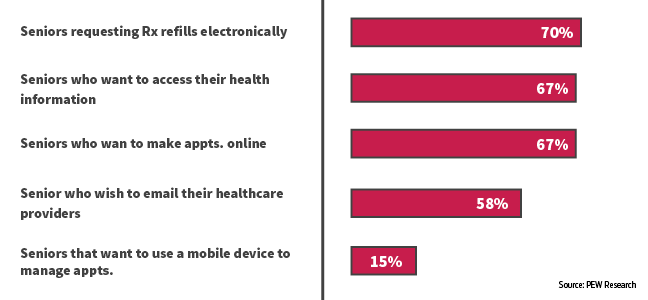
    Once people have a good idea of what could be wrong with them and what kind of medical care they need, they might not immediately make an appointment. Instead, they may return to search engines to do further research. They search facilities and doctors nearby, check to see which providers are in their insurance network, and read reviews. This chart from Gravitate shows some of the queries people are searching.

    Having information about specializations, board certifications, awards, presented papers, and other selling points on your website is useful, but often patients are looking at third-party sites like Healthgrades for reviews from other patients. You only have control over the content of your website, but if you claim your listings on some of these sites, you can update them to have an up-to-date address and phone number, a link to your website, a list of current physicians and specialties, and even responses to negative reviews.

    For help claiming your listings or other healthcare marketing services, contact Search Influence.

    Put a Face to Your Practice

    When you claim your listings, it’s a good idea to list all of your physicians and some of their basic information. You can also provide detailed bios of each doctor on your website. Yext conducted a study on how people search for physicians and found that 76.3% of patients search for individual providers, while only 29.9% research facilities.

    Patients want to feel like a partner in their own healthcare, so finding a physician who is personable, knowledgeable, a good listener, and willing to go out of their way to help the patient is important; a strong doctor-patient relationship may even be favored over a cutting-edge facility if the patient is seeing a different doctor every time or feels more like a lab rat than a person.

    By giving information about the people behind your practice, you’ll appear in front of a much wider audience and get conversions through your personality and expertise.

    Take Advantage of Social Media

    Americans, especially the younger generations, get the majority of their news and information from social media, for good or ill. But even older people use social media to share interesting articles and connect with people who share similar experiences and worldviews. By sharing important and relevant medical information, you can help educate patients and combat misinformation. 

    If you consistently share quality content, potential patients will trust you and see you as an authority within your field. While they may not run off and make an appointment immediately, you will be in their minds already the next time they get sick. Social media is also a great way to continue to engage with patients you’ve seen before by responding to comments and questions. This way, they will feel like you still care for them as a person, even after their treatment has ended. Just be sure to maintain patient privacy.

    By finding patients where they are on the internet and providing them with quality content that answers their questions, you can position yourself as a source for medical information and quality care. Contact our team for help building a digital marketing campaign suited to the unique needs of the medical industry.


    Images:

    Gravitate Graph

  • How to Spiel Like Spielberg: Using Videos to Showcase Your Business

    How to Spiel Like Spielberg - Search Influence

    YouTube changed history when it was created in 2005, allowing businesses and individuals to upload personal videos that had the potential to impact the world. Today, video dominates with four times as many customers preferring to watch a video about a business than reading content about it. If video has that much influence, businesses should consider the impact of having customized ads on YouTube. In addition to having a greater social media presence, an investment in online advertising increases your visibility, often consistently delivering qualified leads for your business. This combination is ultimately the best of both worlds.

    Grow Your Business With Our YouTube Ads Webinar

    The Search Influence team invites you to join us for a new webinar on how to showcase your small business through YouTube ads. With such a large audience at your fingertips, it is incredibly vital for your business to have a presence on this platform.

    In the webinar, you will learn:

    • Best practices and how to use video for your business
    • How to promote your business using video content
    • How video influences purchase behavior

    Grab the Attention of Your Most Ideal Client Base

    Our experts will discuss content diversity and techniques for offering a variety of educational, thought-provoking, and engaging visuals for current and potential clients. We will also share resources and tools for creating high quality videos that fit your budget. Feel like you don’t know much about professional videography? Our webinar will discuss best practices for making your video, from concept and production to branding and messaging. We will even share information on the best places to publish your video once it is complete.

    Finding your audience is just as important as creating the video itself. We’ll dive deep into the world of YouTube ads, providing you with details on how to target your client base, determine the stage of the customer journey they are in, and analyze and track leads. These tips will help you to generate buzz around your video content and capture your ideal audience across screens and devices.

    Contact one of our experts to learn how you can enhance your current marketing strategies.

    Image:

    Mobile Video