Tag: social media marketing

  • Five for Friday: Twitter Trends, #Mobilegeddon, the State of Moz, and More!

    1. Twitter Is Rolling Out Trends with Descriptions on the Web – Marketing Land

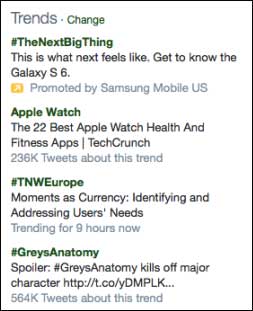
    TwitterTrendsListImageIn an effort to improve engagement with its more casual users, Twitter has made multiple changes to its platform. The most recent has just rolled out on mobile and web, offering descriptions and metrics on trending topics. Now, you can see what a trending topic means and how many other users have shared it.

    2. Moz’s 2014 Annual Report – Moz

    SEO authority Moz has just released their annual report for 2014, showing “many ups and downs.” Despite a few challenges this year, CEO Sarah Bird still proudly showcases the decrease in cost-of-revenue, increase in workplace diversity, and interesting work perks like charity donation totals and paid vacation. In this bid for transparency, we see another interesting example of tech company work culture.

    3. Mobilegeddon Is Here: Google’s Mobile-Friendly Algorithm Is Live! – Search Engine Journal

    Wondering what all the hubbub is about with Google’s new update? Normally, Google doesn’t give much warning ahead of its changes, but this one has been on the SEO world’s radar since last October. Google’s major mobile-friendly push will affect more sites than either Penguin or Panda. But don’t worry: if your site is already mobile-friendly, your ranking won’t be affected. If not, Google’s Webmaster Tools feature will tell you how to fix it.

    4. How Mobilegeddon Impacts Paid Search – PPC Hero

    Speaking of #Mobilegeddon, it’s very likely Google’s Ad Rank formula will be affected by the new mobile criteria. With the changes leading up to the algorithm rollout, we saw both organic search results and AdWords ads labelled with the “mobile-friendly” tag. So it’s not a stretch that AdWords ads will also be affected by how mobile-friendly a website is, both as a factor in the ranking formula and as it affects ad extensions and formatting.

    5. Game of Angels Maps Tech Influence Networks – Tech Crunch

    influencermapimage

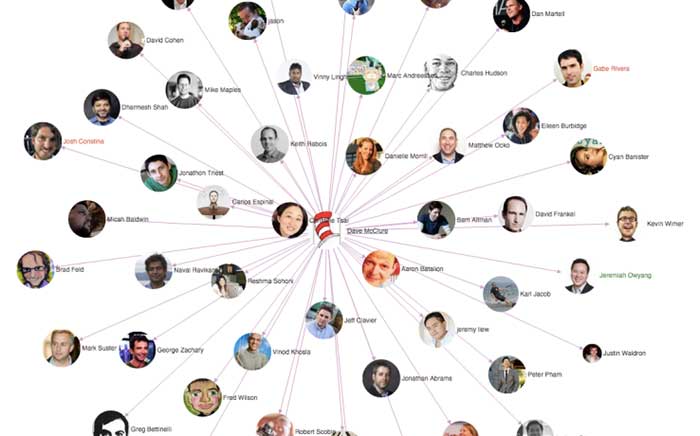
    Developer Pierre-Jean Camillieri is trying to answer the question “who influences the influencers” with his new tool, Game of Angels. Though the program is in its early stages, it could help entrepreneurs connect with industry leaders who have the most online clout.

    The tool gives a visual map of influencers and their major connections based on the number of interactions they have. However, it’s currently limited to those Camillieri himself deems major influencers and industry leaders.

    Image Sources:

    Twitter Trends

    Influence Map

  • Making Patients & Customers into Fans: Are Facebook Fan-Building Campaigns Effective?

    Medical Facebook Likes Image Preview - Search Influence

    Looking to connect with your ideal patients and customers online? Facebook fan-building campaigns are just what the doctor ordered for creating the perfect online experience for your audience as well as building your community of followers.

    But before we delve into the specifics of Facebook fan-building campaigns and how this online marketing strategy can win you customers and patients alike, let’s briefly go over what fan building is. Fan building is a way for businesses to acquire likes on Facebook and to connect with all the people that matter to them. While a business can acquire fans organically, paid ads are more effective and efficient at increasing a business’s fan base and amplifying the rate of fan growth.

    Part 1: Are Page Like Ads Effective at Fan Building?

    Short answer: Yes. Facebook page like ads are effective.

    Case Study 1: 

    Let’s look at Client A. Client A is a well-established business specializing in reconstructive surgery. Search Influence started a fan-building campaign for Client A toward the end of 2011 and have been actively managing it ever since.

    In order to maximize the client’s budget, we focused ad copy around the authoritative nature of our client in the field of reconstructive surgery and targeted these ads to users we identified as most likely to convert (in the form of a page like) based on their interests and online behaviors.

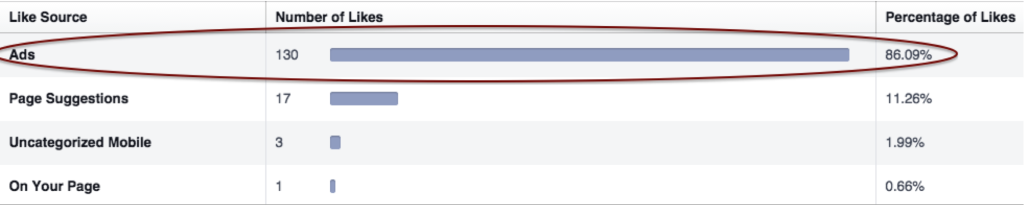
    Prior to the Facebook fan-building campaign, Client A had around 550 page likes from various organic sources. Not a shabby number to begin with, but we were able to get that number up to 21,000 within a year. Within two years, Client A had more than 30,000 fans … within three years, more than 65,000 fans. And likes acquired from our fan-building advertising campaign made up of a majority of the fan growth:

    Page Likes By Source (Daily):

    Facebook Fan Buikding Likes Image Search Influence

    The above segments the daily page likes gained by source. As you can see, likes as a result of fan-building ads made up more than 85 percent of the likes gained.

    Case Study 2:

    Client B is a multi-location addiction treatment and recovery facility. We started running a fan-building campaign for Client B toward the end of 2012. The campaign lasted two years and increased Client B’s fan base by more than 6,000. For Client B, we focused on grabbing the attention of users by including encouraging and supportive language within our ad copy, and we targeted users that we identified as most likely to be interested in the services offered by the client or to know someone that could benefit from the services offered.

    One of the main roadblocks was getting users to like a page that focused on such a sensitive subject. After all, why would anyone want to publicly like a page about addiction treatment and recovery? Well, if you fill your page with interesting content that is relevant to your business and engaging to your audience, users are more likely to follow and interact with your page. So with Client B, we first got users’ attention with our page like ads, and we kept their attention with the content on the page!

    Once we stopped running Client B’s fan-building campaign, we noticed that while the fans gained from the campaign were still there … the rate at which new fans were coming in has stalled. Take that as you will, but we came to the conclusion that fan-building campaigns are, in fact, effective. Moreover, fan-building campaigns are sustainable (more on that next).

    Part 2: Is Fan Building Sustainable? YES!

    Fan-building campaigns are a sustainable way to increase your fan base. If you create an effective campaign with the right message and proper targeting, page likes gained from fan-building campaigns don’t just disappear once the campaign ends. Users like pages because they’re interested in the product, the business, or the brand, and they want to know what’s going on and to get updates.

    That being said, just having an active fan-building campaign isn’t the be-all and end-all to building and maintaining fans. As demonstrated in Case Study 2, an effective fan-building campaign only starts with knowing who your target audience is, how to reach them, and what message will speak best to your target audience. From there, the campaign flows into what is actually on your page.

    You can get page likes by having the most interesting and enticing messaging in your ads and by targeting the exact audience that should be interested … but if your page is boring and dry, you’re not going to be able to sustain the page likes you gain and maximize your fan-building campaign’s potential.

    Lagniappe: Likes For Lives

    A relatively recent tactic used for fan-building campaigns is called “Likes For Lives.” The concept behind Likes For Lives is that for every like a business receives on its page, it will take some sort of action to save a life. The action is usually a donation of some sort.

    Below is an ad from our most recent Likes For Lives campaign we ran for a client of ours during October 2014. October happens to be breast cancer awareness month, so we decided to incentivize Facebook users to click like by pledging to give a $1 donation for every like. This particular Likes For Lives campaign gained our client 748 likes from October 10 to October 30, 2014. The average cost per like was 48 cents.

    The Likes For Lives campaign generated more clicks in the 20 days that it ran compared to this client’s monthly average of 150 likes from its regular fan-building campaign. Therefore, a Likes For Lives campaign for this specific client was very successful.

    Likes For Lives Faebook Fan Building Image Search Influence

    One of the best ways to stand out and speak to users, no matter what type of advertising campaign you’re running, is to have a unique and attention-grabbing ad copy. And Likes For Lives campaigns provide just that. If you know who you’re trying to reach and how to create the targeting needed on Facebook to reach them, why not utilize the Likes For Lives incentive to build your fans and help a cause? Likes For Lives campaigns are a great way for all businesses, especially those with a health care focus, to gain positive brand awareness and to strengthen the fan base.

  • Nix the Wix SEO Challenge: Tips & Tricks

    Wix Timeline Image - Search Influence
    Wix Company Timeline

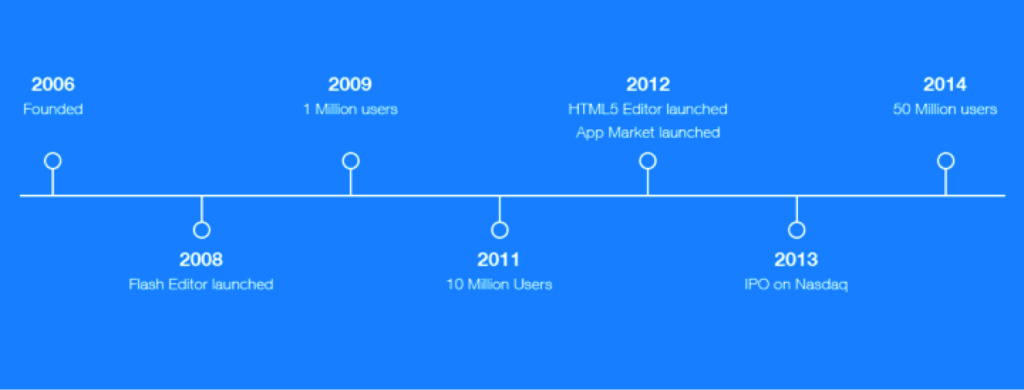
    Although Wix sites have been rising in prominence over the past few years, many question whether websites created through the cloud-based Web development platform are ideal for search engine optimization. Wix uses an HTML5 drag n’ drop website-building platform to provide users a simplistic website-building experience. Although Wix prides itself on providing a code-free interface, it assures us that it is SEO-friendly, even providing its very own SEO settings for users. Let’s take a look at how you can get the most SEO usage out of your Wix website.

    Update Meta Tags

    Give some attention to how your site is found online. Meta tags are your best opportunity, as they are the way viewers learn what your page has to offer them and the first interaction they will have with you. The title tag will be what a user sees in Google, Bing, or Yahoo when they search for a particular phrase. The search engine result also includes a small description, usually from the meta description in the HTML of your site. This will require targeted keyword research and attention to copywriting to make sure you are integrating the best SEO practices.

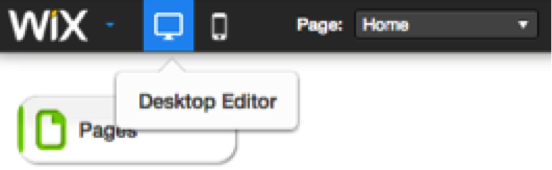
    Wix Desktop Editor Image Search Influence

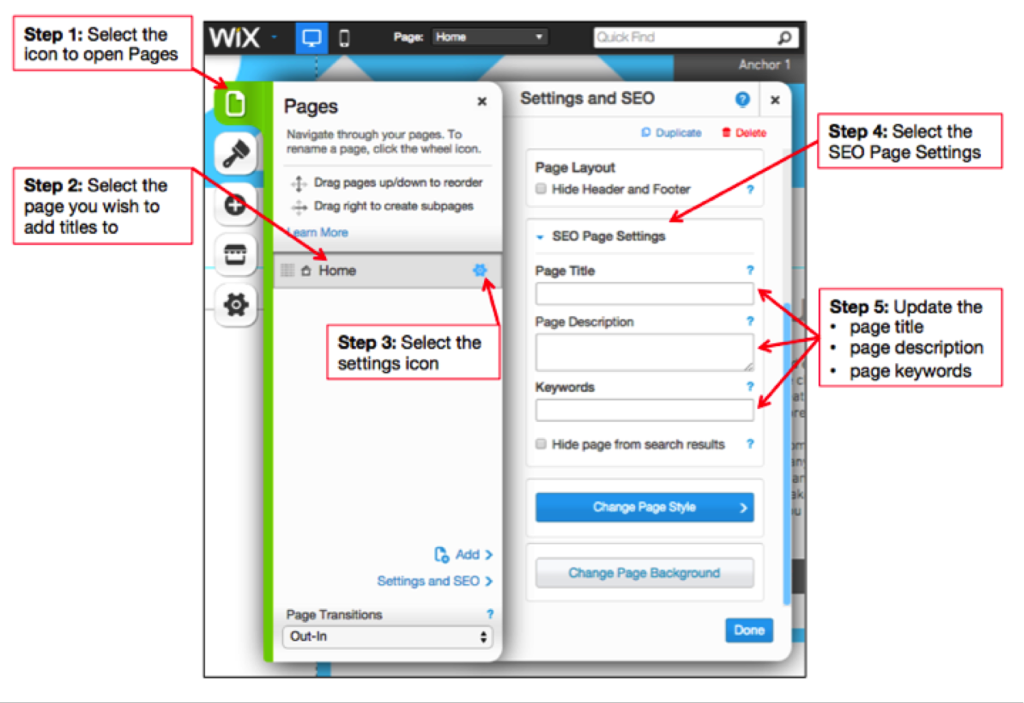
    To add meta titles to your Wix site, access your Wix Editor. The Wix Editor gives you options to edit in either the desktop or mobile version of your site. You will have to use the desktop view in order to make changes. Select the page icon, and when you see the page you wish to add titles to, click the settings icon next to it and then proceed to click the SEO Page Settings. Here, you will be able to update the page title, page descriptions, and page keywords. (See image below for details.)

    Wix Meta Tags Image - Search Influence

    Note: Both desktop and mobile versions of the site contain the same pages, so the title and meta description will translate to your mobile site.

    Add Alt Text to Images

    You might already know that viewers love to be brought in by useful, explanatory images. You might not know that search engines can read these images if they are optimized properly, allowing them to be found in image searches. As such, you can get to work optimizing pictures on your site to enhance your SEO efforts.

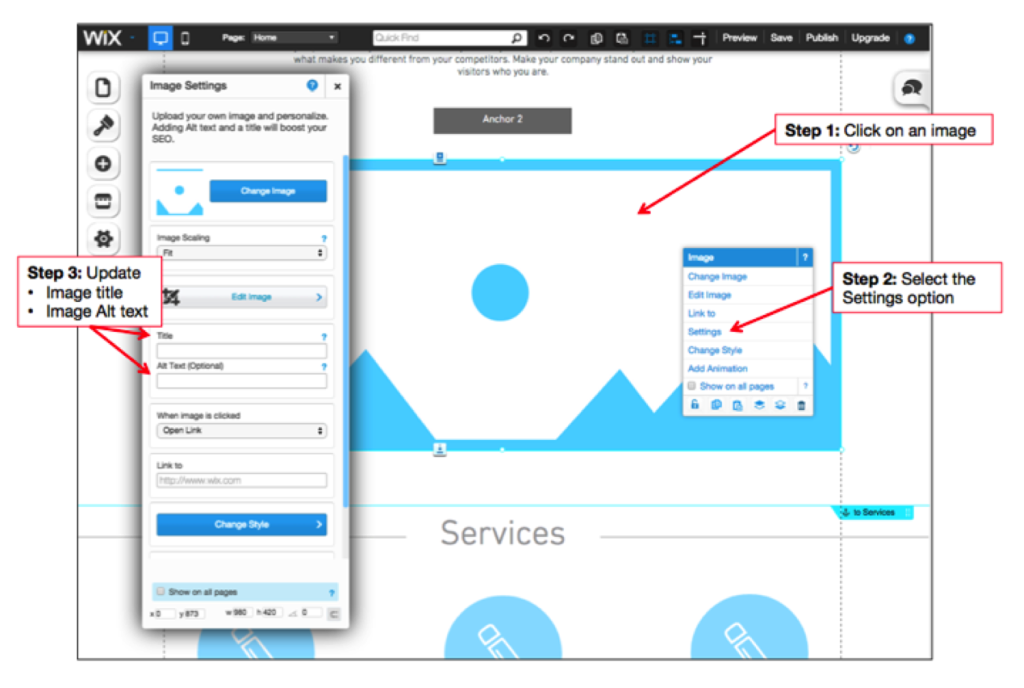
    In order to add alt text to your images, click an image inside the Editor you wish to optimize. From there, select Settings from the pop-up menu. In Image Settings, fill in a title and alt text. Here is a detailed image of how to do this:

    Wix Image Alt Text - Search Influence

    Get Social

    You’ve invested so much hard work into your site, so isn’t it time to share it? Another great way to bring in more traffic is to effectively disseminate your message across social media sites. While you should be regularly posting informative content across your channels with relevant links back to your site, you should also make it possible for viewers to share straight from your site. In order to make this simple for your viewers, enable buttons and easy clicks on your site.

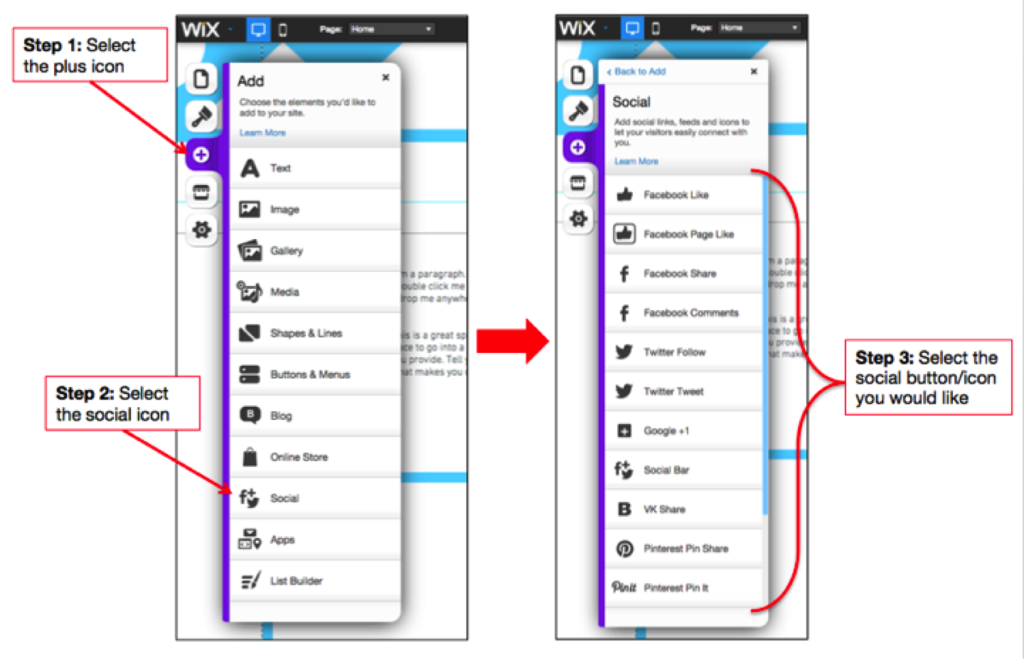
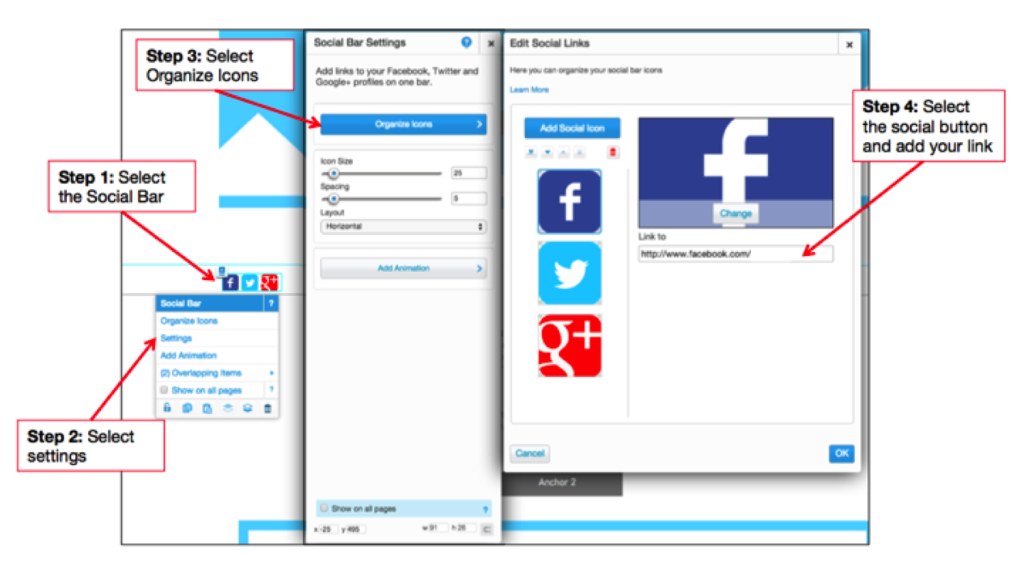
    To add social icons to your site, click the plus sign to open Add in your Editor. From there, click Social. You will have a selection of different networking sites, so select the one you wish to add. Here is a detailed image of how to do this:

    Wix Get Social 1 Image

    Once you select the type of button, be sure to include the appropriate URL (your social link for follow buttons). Here is an example using the Social Bar:

    Wix Get Social 2 Image

    Make Your Site Visible

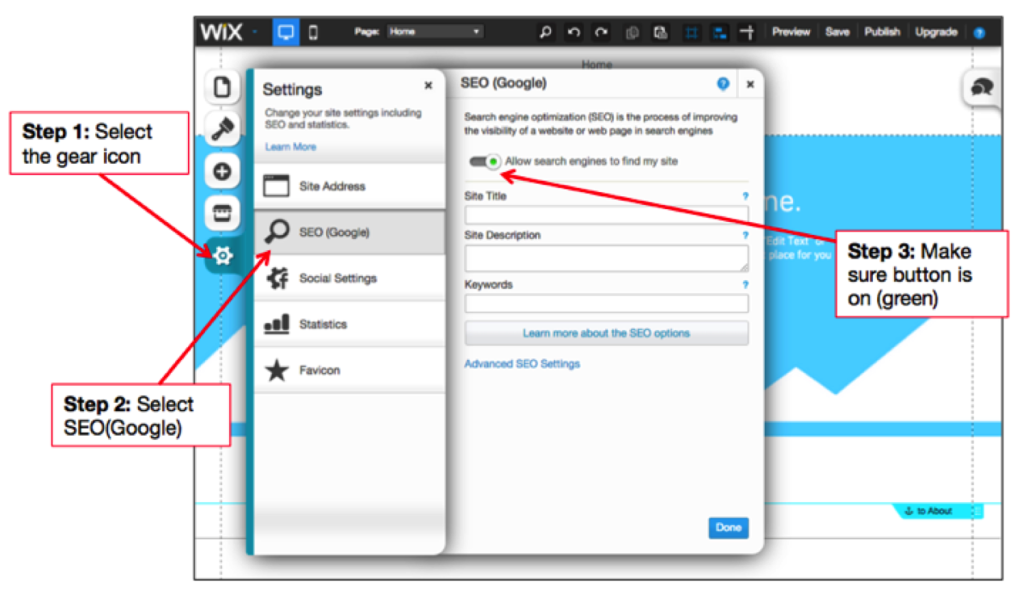
    If you’ve just set up your site, you’ll need to give search engines a little time to find and index your site. The best way to get started is to make sure you’ve selected “Allow Search Engines to find my site” in your site’s SEO settings. Without updating this setting, you will never be found. Don’t risk losing all of your hard work. If you already have a published site, be sure to verify that this is selected.

    Wix Visible Site Image

    Once you’re sure the search engines can see your site, you’ll want to help them find it. Add your web address to your Chamber of Commerce listings, note any industry associations you have, and make sure you get listed in local online directories.

    Also, be sure to submit your sitemap to Webmaster Tools to help Google better crawl and categorize your website. Wix automatically generates a sitemap.xml file, and you can view it by adding sitemap.xml to the end of your domain name. (Note: If you want to use Google Analytics, you will have to upgrade your account to a premium plan.)

    Optimizing on Wix doesn’t seem so bad, does it? Take heed and explore its options for yourself!

  • Ain’t Nobody Got Time for That: Make Social Media Fit Into Your Busy Schedule

    Ain’t Nobody Got Time for That: Make Social Media Fit Into Your Busy Schedule

    It isn’t news that an active social media campaign is an integral part to any business model. In these modern times, simple and frequent Facebook posts can go a long way when potential clients are choosing between you and the competitor. Time, however, is also important, and budgeting out a few posts a day can take a shocking amount of it. Surprisingly, many businesses are unaware of the various ways they can solve this problem on their own.

    Simple Tools

    Facebook Audience Scheduled Post Image - Search Influence

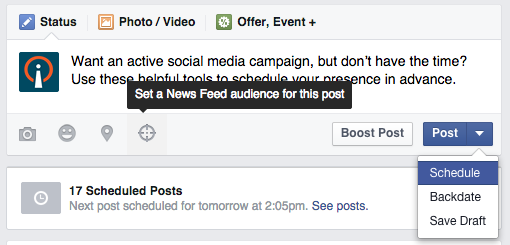
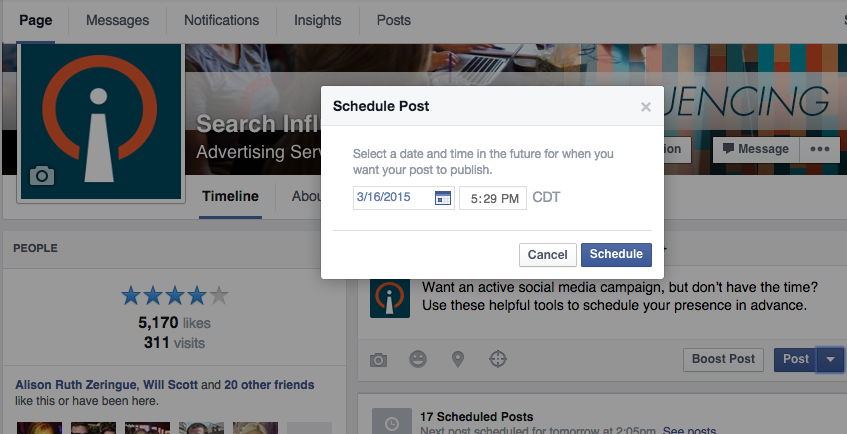
    One of the best and most widely used solutions is the scheduling feature in Facebook. To use it, simply enter in the text, link, and/or image that you wish to post to your business’ profile page. Once you’re ready to publish, click the small drop-down arrow next to the “Post” button. From there, choose “Schedule,” and then pick the day and time you wish to have your update sent to your followers’ newsfeeds. Although it may take you some time to schedule all the posts you will want to share for the whole month, the amount of time it will save you overall is definitely worth it!

    Facebook Scheduled Post Image - Search Influence

    More Advanced

    Another tool that helps companies organize their social media presence is Hootsuite. On the surface, it may not seem as intuitive and user-friendly as Facebook scheduling, but with a little practice, it becomes a lot faster. The only catch is the $9.99 per month you’ll need to pay for pro service. With the upgrade, you’ll gain access to bulk scheduling, enabling you to schedule an entire week’s, month’s, or even year’s worth of posts at the drop of a hat.

  • Google & Twitter Rekindle Old Flame with New Deal

    Today, I’m going to tell you a love story between two Internet powerhouses. There’s drama, there’s intrigue, and there’s a rekindling of romances. Is it for the money? Is it for the power? That’s for you to decide.

    You may have heard that in February, Twitter CEO Dick Costolo announced that Twitter and Google have rekindled a former partnership. Apparently, the two companies have agreed to a deal that would put a real-time feed of tweets from Twitter back into Google’s search result pages at some point in the first half of this year.

    In this post, I’ll lay out what we do know about these star-crossed lovers: a little bit of background on the duo’s previous tryst, how this new partnership benefits Google and Twitter individually, and what this means for you (especially if you’re a business owner).

    The Skeletons in the Closet

    Back in 2009 (or centuries ago in Internet time), when Twitter was a mere three years old, the two companies formed a similar agreement. As that young relationship took off, Google unleashed something it called Real-Time Search, which featured current tweets and other instant information appearing right alongside your searches. Real-Time Search was well on its way to becoming pretty awesome when, suddenly, in 2011, that feature and the relationship met a tumultuous end. Twitter decided not to renew partially due to growing pains and partially because the COO at the time, Ali Rowghani, was into keeping Twitter’s content proprietary to its users. As a result, Google was left to crawl Twitter’s site in order to index tweets, which is clearly a recipe for failure, and thus, the two were left to go their separate ways. Until now.

    What’s in it for Google?

    When Google was a young, nascent startup, the founders formed a list of the 10 things that comprise the company philosophy. Topping this (pretty tender) list is, “Focus on the user and all else will follow.” If you keep reading, you’ll find that numbers three and four respectively are, “Fast is better than slow,” and “Democracy on the Web works.” The list also includes several items oriented towards the power of and need for information.

    With Twitter, Google gets fast, user-focused information. And as that old adage goes, information is power. Or is it knowledge? Regardless, you get the idea. Twitter is powerful: it has facilitated uprisings, coordinated revolutions, encouraged dialogue on important issues, revolutionized protests, and most of all, it’s user-generated. That kind of authority and relevancy is pretty invaluable.
    Search Influence Twitter Firehose Image

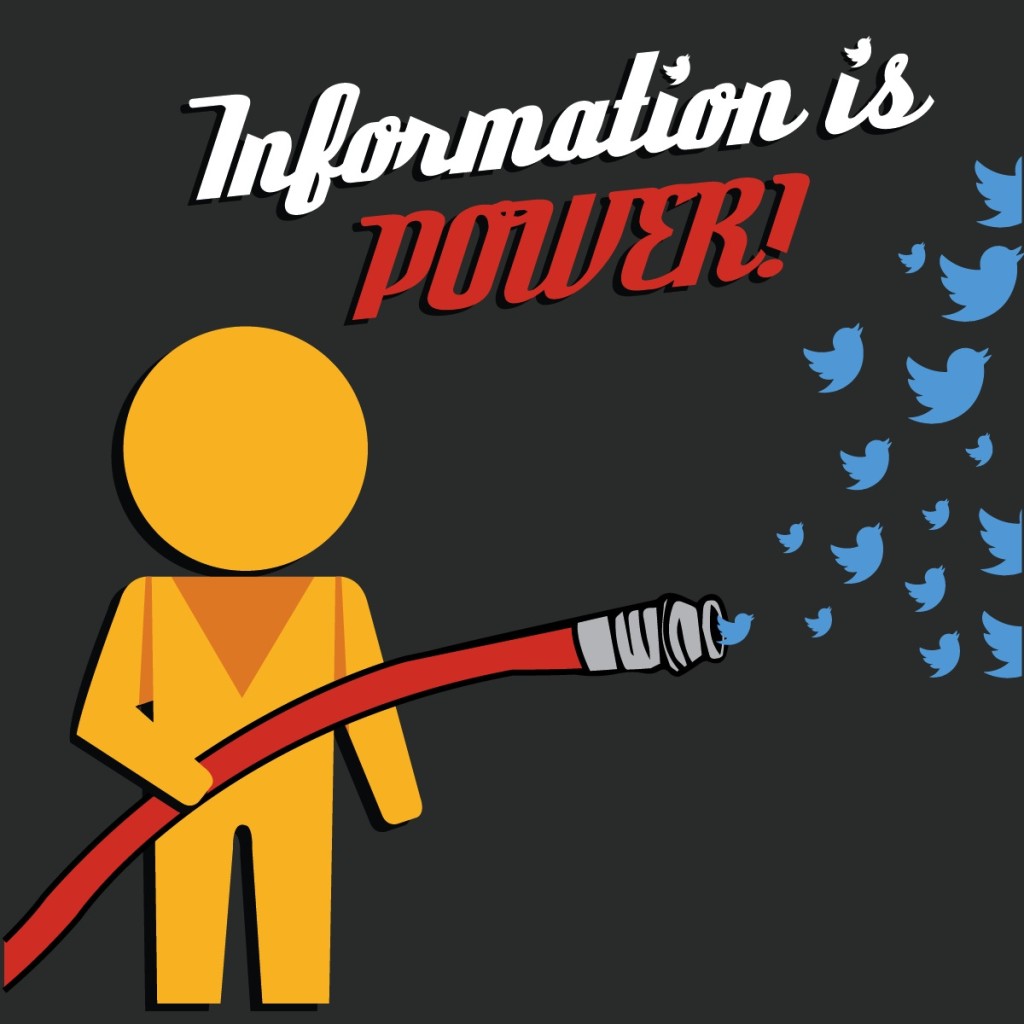
    So, in this partnership, Google gains access to what’s known as the “fire hose” of tweets, which basically means it gets a stream of 9,000 tweets per second, giving it immediate access to whatever is going on in the Twitter-sphere at the time. This kind of power allows Google to provide even more relevant, reliable information to its users.

    At this time, it is unclear whether or not Google will be paying for these tweets, though it did last time. If it does pay this time, however, there’s a good chance it won’t be very much, given that Twitter came to Google asking to rekindle this flame. So, who can really blame Google for wanting to try this whole partnership thing again?

    What’s in it for Twitter?

    In case this wasn’t already clear, I’ll give you a short answer: GLOBAL EXPOSURE. Google is a socialite with connections to everyone, everywhere, and Twitter is just trying to get in on a piece of that sweet pie. If you’re anything like me, you may be thinking, “Well, isn’t Twitter doing just fine on its own? Can’t it be successful without returning to its almighty ex?”

    The answer to that, apparently, is…not so much. In 2013, 46 percent of Twitter users visited the site daily. In 2014, that stat dropped down to 36 percent. On top of losing grip on what was once seen as a stalwart user base, Twitter has the smallest market share out of the top five social media sites. Finally, only 19 percent of the U.S. adult population uses Twitter, which seems fine, but that is the lowest amount of all the top five social media platforms. Who knew Twitter was the runt of the social media litter?!

    They did. And this is their effort to remedy that. By partnering up with Google again, Twitter gets a marketing cachet like never before. They’ll likely see more signups, more engagement, and higher ad revenue. As Costolo so eloquently put it in a recent earnings call, it’s all about the eyeballs:

    “We’ve got the opportunity now to drive a lot of attention to and aggregate eyeballs, if you will, to these logged-out experiences, topics, and events that we plan on delivering on the front page of Twitter. And that’s one of the reasons this makes a lot more sense for us now.”

    Though this almost certainly does not mean tweets will magically get favor from the Google gods and outrank other types of content, it does promise lots of rewards for Twitter.

    What does this mean for YOU?

    Basically, it means you should use Twitter. If you’re a business that works online in any capacity, this will likely be a positive development. Through this agreement, you can expect better, localized SEO results and new advertising benefits every time Google picks up your tweet.

    However, it’s important to keep in mind that this also means tweets have a bit more longevity now. There’s a chance that Google will archive relevant tweets, which means they could show up on a search results page six months down the road.

    In the same vein, any negative tweets from disgruntled customers have the potential to leave a more enduring imprint on a related Google search. It could be best practice to invest in some kind of social media/Google monitoring service so you can stay up to date on what’s being said. If you opt to respond to a negative Tweet, make sure you remain professional and work to mitigate the issue.

    On the other hand, positive feedback from clients on Twitter will also show up on those results pages, meaning the invaluable customer testimonial is making a mean comeback.

    What happens now?

    Now, we wait. As tweets enter the public domain, it’s hard to say what will happen to the importance of Twitter followers and Google+. If you’re wondering where exactly the tweets will appear, Bloomberg theorizes that they “will start to be visible in Google’s search results as soon as they’re posted.” This leads us to believe they’ll probably show up in a section like the existing Knowledge Graph; however, it’s also possible that they’ll position the feed to the right of the current search results.

    Who’s to say where this Internet powerhouse duo will take us next? Share your thoughts, predictions, and questions in the comments section below. We’d love to hear from you!

    Image source:

    Hashtag Burn
  • Five for Friday: Social Media Ad Wars, De-Spam Yourself, Text for Food, & More!

    1. Google Fiber Launches New Product! – Google Fiber

    This week, Google Fiber introduced its newest Web connectivity feature, Fiber Dial-Up, to help us all get back some of the time that’s constantly being consumed by ever-present technology. The folks at Google were able to recognize that many of us can’t seem to find enough time during our busy days to get back to the little things, like “texting your mom, hugging your child, running to the restroom …” This is where the dial-up mode idea started, and now Google has found a way to give us our time back so we can go back to enjoying the little things in life. Check it out here and get ready to meditate to the relaxing and nostalgic sounds of dial-up. What will you do with your time?

    Thanks, Google! (April Fools!)

    2. E-Commerce and Text: Two Sides of the Same Coin – Tech Crunch

    Two important messaging announcements hit the tech world recently:

    1. 600 million users of Facebook Messenger will soon be able to order food, buy products, and text directly with businesses.
    2. Magic messaging company is raising an astonishing $12 million from Sequoia to allow you to order any on-demand service simply by sending a text message.

    In short, this means that mobile messaging is now a commerce platform in which the user can seamlessly go from text messaging to ordering food, products, and direct business communication. This is the beginning of the “conversational commerce” revolution—a term coined by Chris Messina—that will open up much more opportunity for companies to join the texting revolution and ditch their countless applications. This will absolutely simplify companies’ paths to their consumers by eliminating the need for apps and non-compatible services and allowing marketing messages to reach users directly through their texting service. Put more simply: we all text more than ever, so why not expand texting’s potential to sending payments, buying products, ordering on-demand services, paying bills, and more? What do you think about this development—will the ability to text a business or make online purchases via text increase your participation in e-commerce?

    3. Twitter and Facebook vs. Google and Yahoo – Marketing Land

    Last week, online research firm eMarketer released data predicting that Twitter and Facebook are poised to surpass both Yahoo and Google in terms of display advertising revenue in the United States. Additionally, Yahoo and Google are both predicted to see a share decrease in online display ad revenue in 2015.

    The financial success in ad space for both Facebook and Twitter is attributed in large part to marketers allocating more of their budgets to mobile display advertising. This goes to show that advertising on social media outlets is paying off for both marketers and social advertising platforms. How do you think these trends will play out over the course of the year? Will Google and Yahoo hold their own against these competitors, or is social media the wave of the future for online advertising?

    4. Moz Releases New Spam Score Feature – Moz

    Over the past year or so, Moz has been developing a metric that can determine whether or not a site may trigger a negative reaction from Google. Utilizing 17 different factors, the folks at Moz have compiled an algorithm that calculates the “spamminess” of a given website in order to predict any penalties or bans that Google might graciously bestow upon that site. This calculation will assign a site with a “Spam Score” of either “Looks Good,” “On The Borderline,” or “Trouble’s Lurking.” For now, this tool only operates on the subdomain level, but it will soon launch on a larger scale to be able to grade full pages or root domains. Subscribe to Moz.com or start a free trial to learn more about this feature and access your Spam Score now!

    5. Dive Into Your Content With Analytics – Moz

    When such a large part of our business has to do with content marketing, it’s important to stay up to date on the latest creative trends and most successful channels. However, sometimes the best information is in your Google Analytics data. Last week, Jeff Sauer from Moz published a thorough analysis showing how reviewing performance metrics in Google Analytics can inform your content strategy, thereby validating your content marketing efforts and producing greater traffic and revenue results.

    Sauer dives into Google Analytics and provides examples of how we can explore content groupings, specific dimensions, and even coding features to highlight common content topics, adjust our definitions, and monitor the effectiveness of our content. These practices can be extremely helpful for advertisers who are looking to get the most out of their marketing and really optimize their content to its fullest potential. Check out Sauer’s article here for his full analysis, along with some helpful tips!

    Image Sources:

    Gotcha!

    This Means War

    I Don’t Like Spam

  • Five for Friday: Facebook P2P Payments, Social Media Madness, SXSW recap, & more!

    1. Are P2P Payments on Facebook Messenger Just the Beginning? – Marketing Land

    It seems that every other week, Facebook rolls out a new feature to keep the social media mammoth at the forefront of its industry. Now, Facebook is looking to become a leader in peer-to-peer payment. Recently, Facebook added the option to send and receive money via its messenger app, immediately positioning itself as a direct competitor to successful companies like PayPal and Venmo. Marketing Land discussed how the new process works and the possible next innovations for Mark Zuckerberg and the team.

    UK Basketball Chet White UK Athletics

    2. Social Media Lessons from NCAA Top 10 Men’s Basketball – Rival IQ

    March is clearly the month for madness. These teams have excelled on the basketball court this season, but how have they performed on social media? Rival IQ takes a look at six social media lessons we can learn from 10 of the top men’s college basketball programs.

    3. The Ultimate Roundup of 2014’s Biggest April Fools’ Day Pranks – Mashable

    April Fools’ Day is almost here. In previous years, this holiday has become a successful way for companies to spread their brand across the Web. Mashable provides a nice recap of the greatest corporate April Fools’ Day pranks from 2014. Do you think this year’s pranks can live up to them?

    4. SXSW Interactive Wrapping Up: 5 Things to Remember – Inc.com

    South by Southwest—a set of film, interactive, and music festivals—recently wrapped up in Austin, Texas. Among the topics discussed, one highlight was a panel discussion on gender bias in tech. WWL-TV and WDSU-TV recently featured Search Influence in stories about New Orleans leading the way for women in tech. Inc.com put together a great list of five things to remember from SXSW 2015.

    5. 7th Annual Shorty Award Winners for Best Use of Social Media, Apps and Video – Adweek

    Each year, the Shorty Awards attempts to recognize the top brands and organizations producing real-time short form content across various social media outlets. The seventh annual Shorty Award winners were recently announced, and Adweek featured a recap of all the winners and honorable mentions. Check out the full list of winners, and who knows, maybe you’ll make the list next year!

    Image Sources:

    April Fools’ Dog Image

    Awards Reaction Image


  • Social + SEO: Better When They’re Working Together

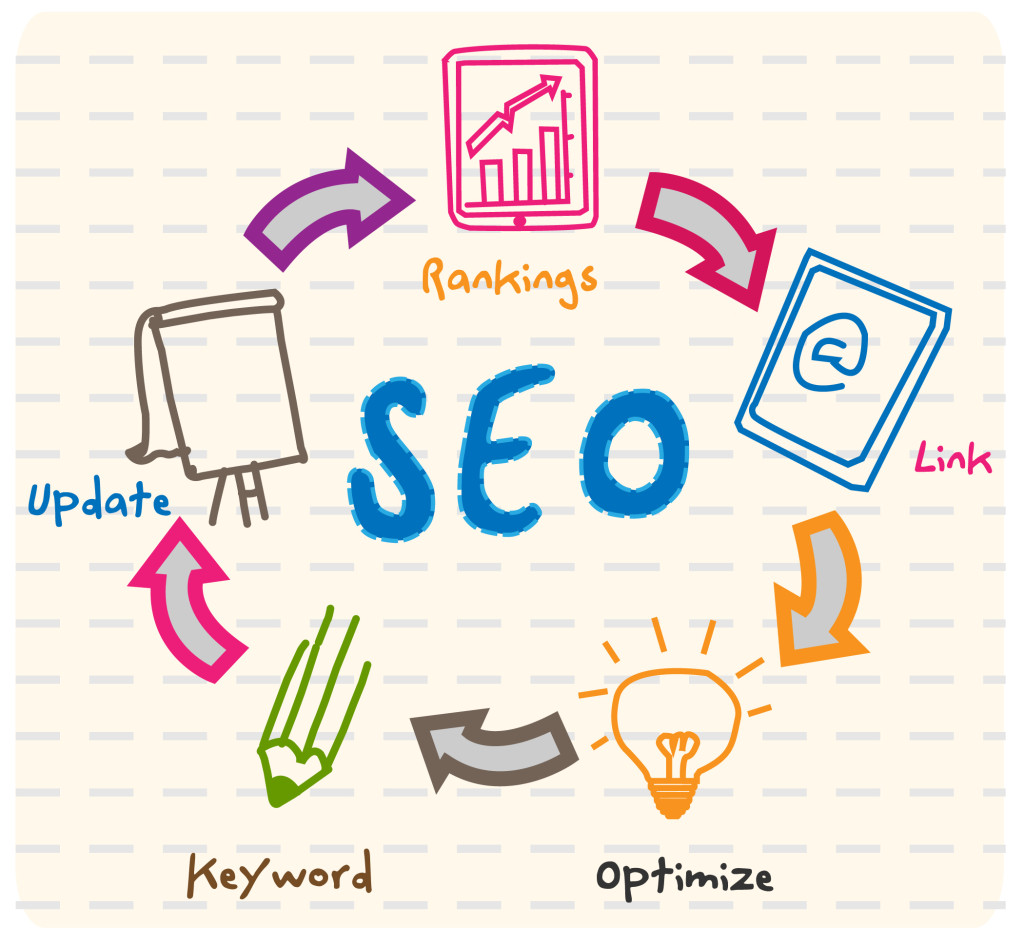
    SEO Cycle Image - Search Influence

    Modern search engine optimization has become inextricably linked with content marketing. Yet in many companies, social media strategies are developed separately from the SEO and content marketing plan. This can work—but you’ll realize optimal results by aligning social media with SEO for an overall strategy that boosts brand awareness, improves domain authority, and increases your rankings.

    Here are some tips for social media strategies that can fuel your SEO and help you rank higher in all types of user searches.

    Grow your Following

    In the early days of social media, building a massive following was the number one goal for most marketers. Today, the emphasis has shifted from quantity to quality—but the number of followers you have is still an important factor for domain authority.

    Of course, it’s equally important to develop an authentic audience. Google, in particular, can tell when most of your following is made of spam and bot accounts, so “buying” likes or follows doesn’t help—and in fact can harm your online reputation. Instead, grow your following naturally by posting interesting content on a regular basis. Engage your followers with interactive content and by responding to comments or starting discussions.

    Share your Other Content

    Posting links to your content—such as articles, blog posts, and downloads—along with brief commentary on social media, is a great way to repurpose your content and boost your SEO. Of course, sharing on social media will give you more eyes for your content, but the benefits to SEO go beyond that.

    In addition to extra traffic to your website or blog, which is a peripheral SEO benefit, social media sharing encourages others to share your links. The more often your links are posted on other social media accounts and websites, the more domain authority you’ll build. This type of inbound link-building is much faster than traditional or manual methods.

    Optimize Social Media for Search

    It’s important to know that your social media posts can show up directly in search results—if they’re optimized. When you’re composing posts, be sure to apply basic SEO strategies such as including keywords, placing them strategically and naturally, and tagging image, video, and infographic posts with relevant keywords. Even if your posts don’t make it into search engine results, they’ll still increase your brand authority and contribute to a stronger online reputation.

    Increase Social Shares with Viral Content

    The more shares and retweets your posts have, the greater your domain authority—and the higher your search engine rankings. In order to get your content shared more often, you need to create content that people want to talk about.

    Of course, every marketer wants to release the next viral sensation. There is no guaranteed strategy for making something go viral, but you can increase your chances of catching lightning in a bottle by creating content with a strong visual component (either a visual medium or a blog post that’s heavy on images, for example), and make sure it has the following characteristics:

    • Informative
    • Relevant
    • Entertaining
    • Practical
    • Surprising
    • Unique

    Of these characteristics, the last one is the most important. Create content your audience has never seen before, and they’ll be eager to share it with friends.

    Connect with Similar Companies

    In the world of social media, your “competition” can be your friend—and that’s good for your SEO. Engaging with similar businesses, particularly local companies or those in similar industries, can help you grow your audience and your relevance, which in turn increases your search engine ranking.

    Share content with other companies like yours and comment on their posts. Usually, they’ll return the favor by engaging with you, which will attract their audiences to your social profiles. Google will also start associating you with other brands when you engage with them, which improves your overall authority.

    When it comes to online marketing, social media and SEO should go hand-in-hand. How does your social media strategy complement your SEO approach?

  • Filter In New Clients – The SEO Benefits of Instagram

    As a business, it’s important to connect with potential customers in as many ways as possible. You maintain your website, attend networking events, and post regularly on Facebook, but could you be doing more? Enter: Instagram.

    InstagramForBusinessLogo

    As of December 2014, there are 300 million monthly active users on Instagram and over 75 million daily users, which offers great potential to broaden your brand’s reach. You’re probably familiar with some of the benefits for adding your businesses on Instagram: it’s a visual medium, there’s potential for marketing contests, it has interesting filters, and the list goes on. But did you know there are also SEO benefits

    Increased Social Activity

    The debate rages on over the correlation between social presence and higher search engine rankings. Search engines deny a relationship, but the data overwhelmingly suggests that increased social activity for specific webpages means higher rankings. No matter which side you believe, I think we can all agree that positive branding and increased online presence isn’t a bad thing.

    Optimized Profiles

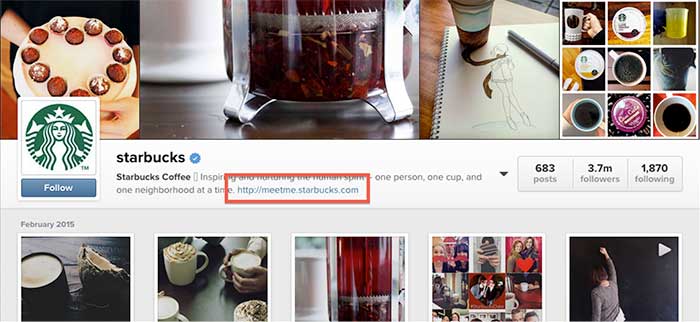
    On Instagram, you can create an optimized profile for your business with a clickable link back to your site, which contributes to your overall link profile. Additionally, Instagram is both searchable and indexed by search engines, contributing to your business’s overall real estate for a branded search.

    StarbucksInstagramImage

    Although images aren’t indexed directly through Instagram, there are third-party sites that utilize their API and make the images indexable by search engines, which furthers your business’s potential to appear in image searches. Some popular web viewers are Websta, Gramfeed, and Followgram.

    Keeping Posts Relevant

    Regardless of whether your potential customers are viewing your Instagram photos through a computer or mobile device, it’s very important to align your business with the interests of your target demographic. A basic guideline to follow is the rule of threes: ⅓ promotional posts, ⅓ informational posts, and ⅓ engagement posts.

    What might that look like on Instagram?

    Let’s say you are a fitness company. Your promotional post might be a photo of your company’s new running shorts right out of the box as they’re hitting the shelves. An informational post could be a photo of a healthy lunch that encourages your followers to eat well. You might also post a scenic landscape of a morning run with a fantastic filter to engage with your followers.

    NikeRunningInstagramImage

    Using #hashtags

    All posts should include #hashtags to increase the likelihood of your content being liked and shared. You can also enable sharing permissions that automatically post to other social media platforms, like Facebook and Twitter, whenever you share on Instagram. By seeding your content to additional social networks, it has the potential to be picked up and shared by even more people in the social space.

    Mobile Benefits

    Since many users access Instagram on a mobile device, there are additional SEO benefits that are more unique to the platform.

    Even though Instagram doesn’t currently offer clickable links on individual posts, you’re still encouraging followers to interact with your business through mobile devices. Since Instagram users are often looking at your posts on a mobile device, they’re more likely to visit your business’s website on their mobile device as well.

    Websites that are optimized for mobile perform better in search engine results because Google looks at a website’s mobile capabilities as part of their algorithm. By encouraging users to visit your mobile site by interacting with them on Instagram, you’re helping your overall SEO efforts.

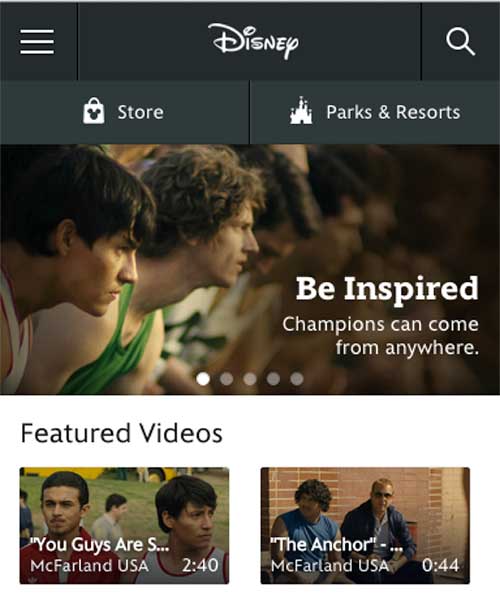
    DisneyInstagramImage

    As you can see, there are more reasons for your business to be on Instagram than the awesome filters. This platform enables you to boost your SEO efforts while also connecting with your target demographic and increasing your brand’s reach.

    Sources:

    http://www.litony.com/wp-content/uploads/2014/11/Instagram-for-Business.jpg

    http://blog.instagram.com/post/104847837897/141210-300million

    http://www.theverge.com/2013/12/12/5203578/instagram-now-has-150-million-active-monthly-users

    https://instagram.com/starbucks/

    https://help.instagram.com/147542625391305

    https://instagram.com/nikerunning/

    https://help.instagram.com/365696916849749

    http://m.disney.com/


  • Defibrillate Your Clinic’s Social Media Plan in Five Steps

    Over the past decade, there have been steady increases in the acceptance, usage, and number of social networks. With membership in the hundreds of millions and even billions, social media networks like Facebook, YouTube, and Twitter have become excellent platforms for businesses that want to reach and engage their audiences. Because they form part of a more niche industry, it is crucial for hospitals, healthcare practitioners, pharmaceutical companies, and others in the healthcare industry to have a detailed online strategy in place across various social media platforms. Below are five steps to designing a comprehensive social media plan that take into consideration the challenges and specific needs of the healthcare industry.

    Challenges

    Healthcare providers face a number of unique obstacles when entering the world of social media. Businesses in this industry typically have multiple stakeholders, from existing patients to future patients to other physicians. Each stakeholder has unique expectations regarding communication standards and topics, and a fully fleshed out plan that follows these steps should take these expectations into consideration.

    The healthcare industry is strongly regulated by organizations like the FDA. However, in the recent surge of social media outlets and usage, the healthcare industry has faced a unique challenge: the reigning regulatory offices have not cited clear guidelines regarding the use and management of these social media platforms. Seeing as some information on the topic has been released, it is important that you review these sources before creating a social media plan for a business in the healthcare industry.

    Creating Your Plan

    1. Define Your Personality

    As a business and as a brand, you will need to define your online social personality: how do you want your stakeholders and audience to perceive you? Thinking of your brand as an individual will allow you to adopt a more coherent voice across your chosen social media platforms. To help define your voice, ask yourself questions like the following:

    • What color would you associate with your brand?
    • If your brand was a person, what kind of clothes would they wear?
    • What type of car would this person drive?
    • How would his or her friends describe him?
    • Does this person have likes or dislikes?

    Although it may be difficult in the beginning to uncover the personality of your practice, carefully designing this aspect of your social media strategy will allow you to create a more concrete tone and voice.

    Along with defining your voice, take the time to study and understand your stakeholders. Decide which groups you would like to reach: existing patients, future patients, other healthcare professionals, insurance companies, or any combination of these. This decision will impact the tone and purpose of your social media campaign, as each of your audiences will react best to content that is specifically designed for them. By keeping your target audience in mind, you will enhance your ability to focus your social media updates, allowing you to promote audience engagement and build a stronger, more trusting relationship.

    2. Listen

    After you have settled on the tone and audience of your social media strategy, pause to listen to the existing conversation. Determine how your audience and competitors interact within the social space, monitor conversations about your industry, and track the ways in which your brand is discussed online. Using tools like Google Alerts and hashtags, Sprout Social, monitoring forums and other online spaces to understand the existing conversations.

    Listening to the discussions that are in place across the spectrum of social media platforms will allow you to gain a sense of which healthcare topics are currently trending. It will also help you to identify the concerns, questions, and interests of your target audience, allowing you to build a strategy to address these topics during your social media campaign.

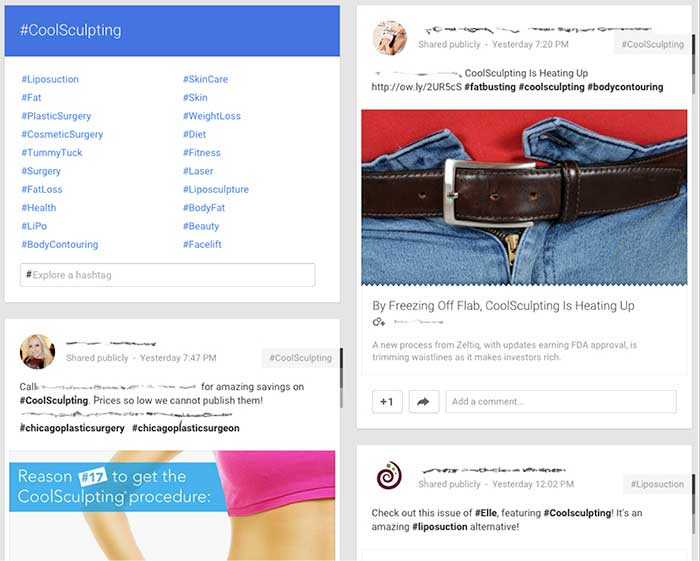
    GooglePlusIndustryHashtags

    Example using Google+ to review similar hashtags and industry competitors

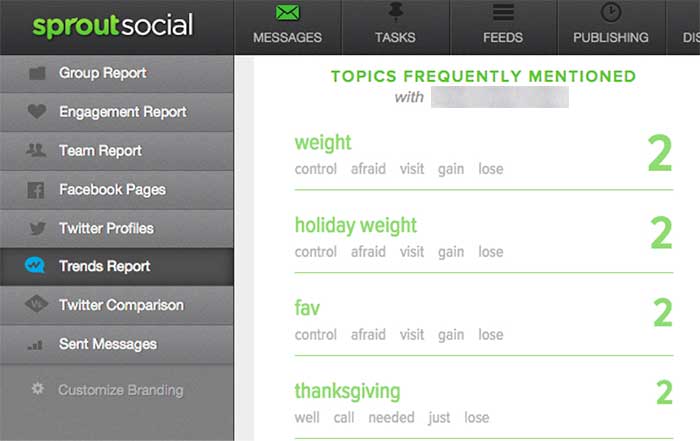
    SproutSocialConsumerConversation

    Example of using Sprout Social to understand how consumers are talking about your brand.

    3. Find Your Voice

    Next, begin your own conversations! Look for areas in the industry that lack a strong voice. Use that space to make a name for your brand and to demonstrate your expertise. Also, provide topics and the secure space for conversations regarding the health industry and health issues. Help moderate conversations to keep the discussions moving and the connections building. Encourage your audience to converse with you and with each other to foster a sense of community.

    To make use of your influence on social media, you can use a number of strategies:

    • Add personal, authentic stories: Depending on your goal, these can consist of success stories, anecdotes of achievement, or triumphs over a disease or disability.
    • Facilitate conversations and actions: Give healthy-eating challenges or build a place to help raise awareness for widespread health issues.
    • Wow the crowd with numbers: Build credibility by showing your audience the bigger picture. Share statistics, infographics, and other information about your industry or practice.

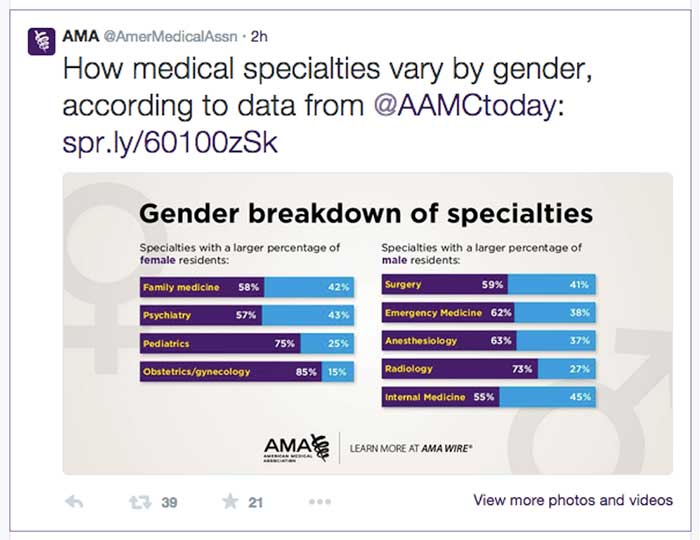
    AmericanMedicalAssociationExample

    Example from the American Medical Association using numbers to engage in a conversation. Only 2 hours after being tweeted this post received 39 retweets and 21 favorites.

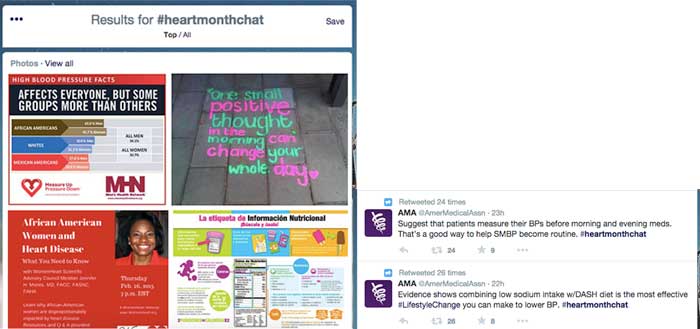
    TwitterHealthcareDiscussion

    Example of Twitter healthcare community discussing heart health online via #heartmonthchat and how the American Medical Association was able to find their voice in the conversation giving advice and statistics. Both tweets were retweeted and favorited several times.

    4. Collaborate

    Social media has become a frequent place of feedback for companies, and you can take advantage of this fact by using the social space to collaborate with your audience and with others in your industry. Do not be afraid to talk to your audience about their experiences and how to improve them in the future.

    Use social media as a place to work with other practitioners and organizations to raise awareness regarding healthcare topics. By working with others, you can increase your audience reach and further your message.

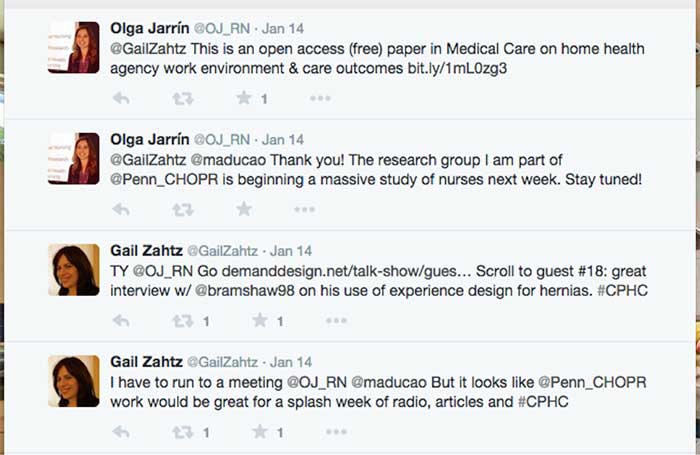
    GailZahtzHealthcareTwitterAdvice

    Example of Gail Zahtz (expert in patient-doctor relationships, offers advice to healthcare industry) collaborating with others in the healthcare industry to make information more readily available.

    5. Measure Your Success

    Although the last step in this plan is to measure your success, it is important to review your achievements on a regular basis and throughout each step of the process. Measure growth and success in the online space by an increase in followers, consistent interaction, and rising mentions across social media platforms.

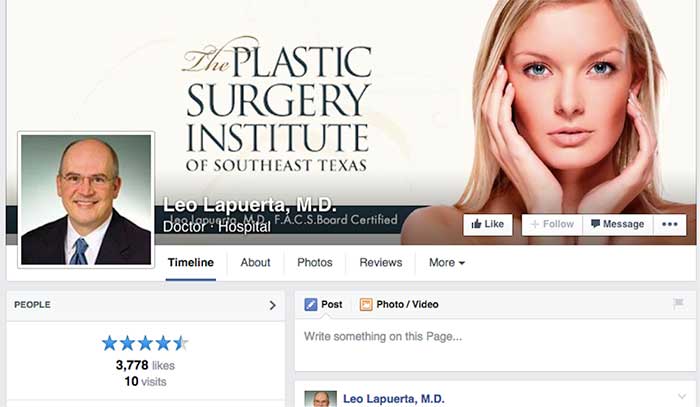
    ThePlasticSurgeryInstituteFacebookLikes

    Example of growth of likes on Facebook using these steps. Prior to this campaign beginning, The Plastic Surgery Institute of Southeast Texas ~500 page likes.

    Consider the steps above when designing your own social media strategy. For more inspiration, check out some of these healthcare companies that have successfully created an empowering online presence!