Tag: ppc

  • Here’s How to Take Advantage of Google’s Expanded Text Ads

    AdWords Text Ads Image 3

    In May, Google announced a major expansion of the traditional 25-35-35 text limits we’ve come to know and begrudgingly abide. Trying to squeeze your brand name, unique selling propositions, an emotional appeal, a sense of urgency, and a killer call to action into just 95 characters, at times, amounted to a game of linguistic Tetris.

    Now, with double the characters to convince potential customers why they should convert, it’s become crucial to rethink how we think about ad copy and develop new tools for improving our Paid Search ad copy strategy.

    1: ALWAYS Use All of the Available Characters

    Take full advantage of Google’s generous gift! There has been some debate in the PPC realm concerning the truncation of ad copy based on the user’s device. However, an overwhelming majority of the literature suggests that you should be trying to get as close to that 30-30-80 limit as you can.

    2: Lead With Your Most Important Copy

    54531900

    Put the most important information at the start of a line, such as your call to action or promotional text. Headline 1 will always show, but depending on the screen size of the searcher’s device, Headline 2 and the Description could be truncated depending on the pixel width of your text.

    Even though you should be trying to hit the full 150 characters, you do want to ensure that the absolutely crucial information in your ad copy is placed at the start of each line.

    3: Brand + USP + Emotional Appeal + CTA = Click!

    We all have a variation of a similar formula for winning ad copy, now you can make sure that your ads are checking each of those boxes. Expanded Text Ads allow you to include content that previously may have been bumped from an ad in lieu of the more important call to action or brand name. Now, you have the space to try out new versions of your formula and find what works for your business.

    4: Develop Thematic Content

    AdWords Text Ads Image 2
    Don’t treat the different elements of the ads as separate entities. Use your extra characters to create content that flows from Headline 1 to Headline 2 and through the description.

    5: Provide Pre-Qualifying Information

    Are your landing pages seeing a lot of traffic but not converting visitors into customers? Now you can pre-screen would-be bounces by including qualifying information in the ad copy!

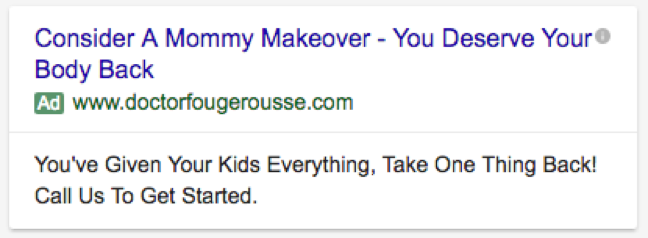
    For instance, if your plastic surgery practice only accepts candidates for Breast Lift surgery who are physically healthy, non-smokers, you can include this information in your ad to prevent users who won’t end up converting from initiating that first click (and spending your ad dollars!).

    Bonus Tip: Path Fields = Not Optional

    The “optional” Path 1 and Path 2 fields have replaced Google’s Display URL with the domain name now automatically populated from the Final URL. These combined 30 characters are a great area of opportunity to showcase the relevancy of your landing page to the searcher’s query. Highlight topical keywords, location specific services, or even promotions that show the user that your business provides exactly what they’re looking for.

    The number one rule is to be creative and try new things, so get started augmenting your ad copy today and share your results with us in the comments! Need help? Call the experts at Search Influence.

  • Here Are 10 Eye-Catching Medical Display Ads That Worked

    1609-SI-TheInfluencer-KL-A-04

    Need a little inspiration for your practice’s online ad campaign? The following medical display ads are some examples of online advertising at its finest. They boast an impressive balance of striking imagery, audience targeting, creative calls-to-action, and concise copy.

    These advertisements from Stewart Dermatology and Dr. Grant Stevens, FACS, at Marina Plastic Surgery utilize close-ups of women, which grab the attention of viewers more effectively than the alternative. Consider using real people in your ads to appeal to more potential patients.

    #1: Stewart Dermatology
    1

    #2: Dr. Grant Stevens

    2
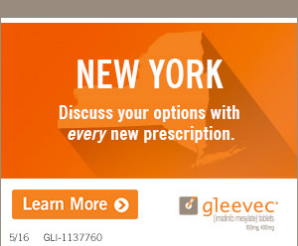
    You can also target specific audiences to yield even better results for your online ads. For example, these ads from Gleevec and Allure Dental could target people specifically in New York or specifically adult males seeking dental or orthodontic work.

    #3: Gleevec

    3


    #4: Allure Dental

    4
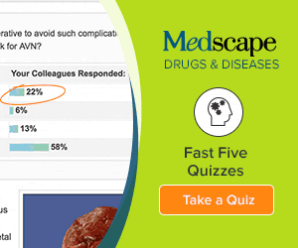
    Using a creative call-to-action is also essential for conversions. The following ads from Medscape, Dermatology Associates of Wisconsin, S.C., and Hospital for Special Surgery challenge the viewer to do much more than “Click Here.” Consider trying “Request an Appointment” or “See Our Success Stories” on your display ads as a way to challenge your potential patients to more actively engage with your advertisements.

    #5: Medscape

    5


    #6: Dermatology Associates of Wisconsin

    6


    #7: Hospital for Special Surgery

    7


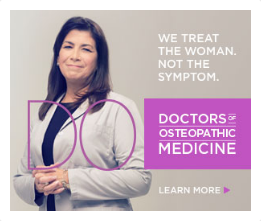
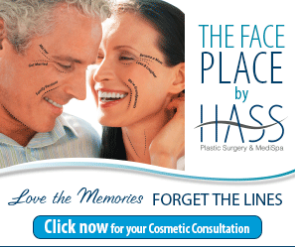
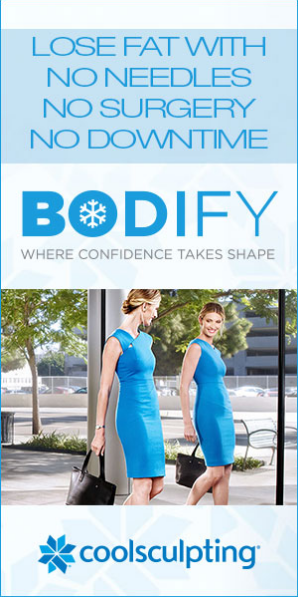
    Short and catchy phrases and slogans can do a great job of getting and holding viewers’ attention. Here are a few examples from Doctors of Osteopathic Medicine, Hass Plastic Surgery and MediSpa, and Coolsculpting: “We treat the woman. Not the symptom,” “Love the memories, forget the lines,” and “Lose the fat. No needles. No surgery. No downtime.”

    These slogans perfectly utilize short, concise phrases that successfully capture the viewer’s attention.

    #8: Doctors of Osteopathic Medicine

    8

    #9: Hass Plastic Surgery and MediSpa

    9


    #10: Coolsculpting

    10

  • A War of Words: 4 Tips to Help Lawyers Win the Cost-Per-Click Bidding Wars

    1601-SI-Newsletter-0112-Big-KG-C-01

    Whether a veteran attorney or a recent law school graduate, legal professionals have likely noticed that the world of generating leads and winning new clients has changed drastically. While tried and true marketing methods such as word of mouth and putting your picture on a billboard still have their place, effectively using online resources can have a huge impact in establishing a solid client base. In particular, paid online advertising for attorneys has become so vital that competition for keywords has skyrocketed. Although it may seem daunting and difficult to know how to begin, these critical tips can help you win the cost-per-click (CPC) bidding war.

    1. Understanding the Competition

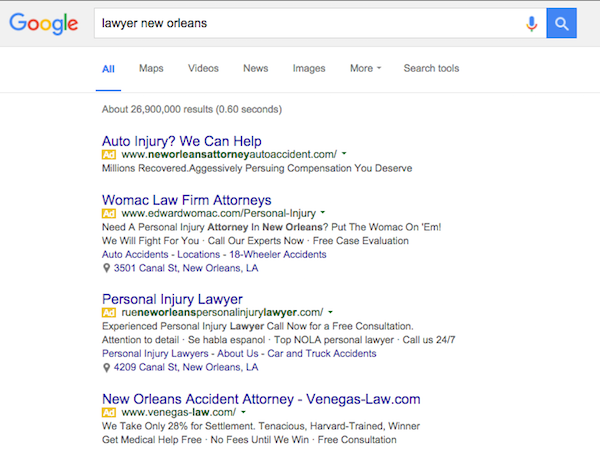
    Consumers who are searching for a lawyer often turn to the Internet to conduct their research. With that in mind, marketing online has become an integral part of building and sustaining a law practice. When it comes to paid online advertising, it’s important to first understand your competition. Legal keywords are typically among the most expensive in Google AdWords, with terms related to “attorney” and “lawyer” topping the cost charts. High levels of competition naturally follow expensive keywords, as lawyers constantly place bids on the exact same terms. Try conducting your own competitive research and search the keywords in your geographic area to see for yourself what ads are getting top placement. Simply run a search on the keywords you’re hoping to target and see which keywords your competition is already bidding on. Take a look at their ads and start crafting a plan to make yours even better.

    Screen Shot 2016-01-05 at 9.04.41 AM

    2. Target Specific Keywords

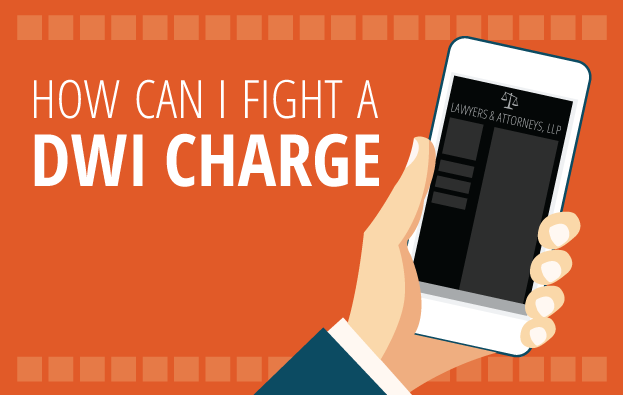
    So how do you overcome the highly competitive landscape and win the bidding war in your online ads campaign? First, you should create a list of specific and relevant three- to five-word keywords to explicitly target. This is a trial-and-error process, and it takes time to accumulate useful data. A simple way to start is to use the Google AdWords Keyword Planner, which will help you compile specific keyword ideas. This tool will also help you determine average traffic and CPC for your potential keywords, and it will make suggestions based on your site’s URL. In addition, it’s critical to focus on relevancy and make sure that your keywords, your ads, and your landing pages all match the searcher’s intent. For example, if the keyword in your ad is “DWI lawyer,” the click should take the consumer to a page with content for “DWI lawyer.”

    How Can I Fight A DWI Charge?

    3. Use Negative Keywords

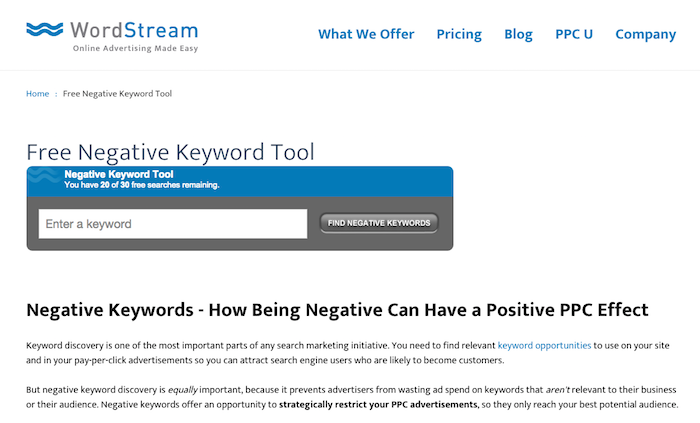
    Another crucial aspect of a successful paid online advertising campaign is the use of negative keywords. This allows you to stop your ad from appearing when you know that the consumer isn’t interested, which can help improve the click-through-rate of your ads. Using negative keywords informs Google that certain search queries are irrelevant to your practice, ensuring that you don’t pay for clicks that will not lead to conversions. You can start by using a free negative keyword tool like the one from Wordstream, which will return an extensive list of search terms that may not be related to your practice area. Using this tool is especially essential in the legal world, where you are bidding on expensive keywords that could result in unnecessary and costly clicks.

    Screen Shot 2016-01-05 at 9.25.01 AM

    4. Optimize Your Landing Pages

    Now that your paid online advertising campaign is set up with specific and relevant keywords and you’re getting clicks from consumers searching for your exact type of practice, it’s important not to derail all of your efforts with ineffective landing pages. Your landing pages should be directly on point to the ads that the consumer clicked on. They will likely need to be continuously tweaked with different types of offers to see how people respond to them. You might want to consider using videos on your landing pages with subject matter explanations directly from a lawyer, or customer testimonials from successful cases. In addition, having a chat function on legal landing pages can be particularly critical for consumers who are hoping to have immediate answers to case-specific questions.

    Keeping your paid online advertising strategy focused on these tips will help you capture leads that you would have normally missed, allowing you to conquer the competitive CPC bidding war for attorneys.

  • Insta-Ads: Facebook Brings Instagram Ads to Life

    Good news for advertisers! It appears that Instagram Ads are now open for advertisers through Facebook’s Power Editor.

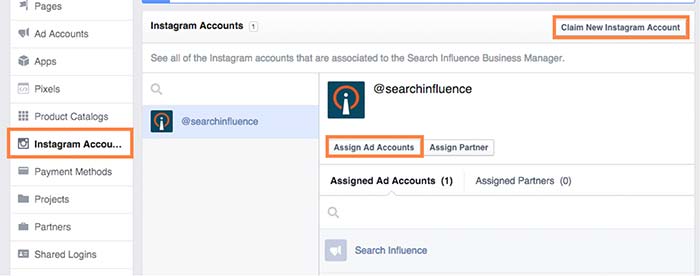
    While no official announcement has been made (and Instagram hasn’t even updated their site), I stumbled across these new features while poking around my Business Manager. What tipped me off was the ability to claim Instagram accounts under the Business Settings in Business Manager. From there, you can assign ad accounts to individual Instagram accounts. Interesting, right?

    instagramadscreenshot

    There is also a notification at the top of the page that states that “Instagram ads are gradually rolling out and might not be available to you right now. You can claim your Instagram account to have your setup ready. Read more here.”

    How Do They Work?

    After doing some digging and playing around with Power Editor, I was able to create an ad for Search Influence’s Instagram profile. However, the only ad objectives currently available on Instagram are “Clicks to Website” and “Mobile app installs.”

    Earlier this month, Instagram launched its Ads API Partners program. According to AdWeek, “Instagram Ads API Partners will be able to perform tasks including scheduling and publishing content to the Facebook-owned photo- and video-sharing network, monitoring audiences and sharing access to Instagram accounts across teams.”

    What Does This Mean For You?

    All of these updates come as very welcome news, as managing and advertising for businesses on Instagram was difficult in the past. Previously, Instagram advertising was only open to larger brands willing to spend $200,000 or more on brand awareness for a three-week campaign.

    Do you plan on using Instagram advertising? How do you think it can benefit your business?

  • Go Go Google Grantspro

    Nonprofit Marketing PPC Image - SearchInfluence

    Being a Google Grants Pro:

    So you’ve heard of Google Ad Grants … in fact, you applied to be a part of the program ages ago. IN FACT, you have been a part of the Google Ad Grants program since like 2005 and you’ve been running campaigns in AdWords to promote your mission and grow your nonprofit organization like a pro (and all on Google’s dime—$10,000 worth of dimes, to be precise).

    Well, that’s cool. Congrats on being a pro with your Google Ad Grants account. But what if we told you—you’re not really a pro until you get accepted into Google Grantspro?

    That’s right. After Google Ad Grants comes Grantspro, and along with Grantspro comes $40,000 of Cold. Hard. AdWords spending limit. Get excited. Your nonprofit organization is about to expand its reach to where it has never reached before…gain visibility where it was never visible before…increase awareness where it was never aware before!

    Wait. What?

    Becoming Eligible for Google Grantspro

    Ah, the good part. Pay attention.

    To become eligible for Google Grantspro, you must:

    • Currently be a part of the Google Ad Grants program. (What’s that? Oh, boy.)
    • Have conversion tracking installed and have successfully tracked at least one conversion.
    • Hit the Google Ad Grants budget cap for at least two different months over the past six months.
    • Currently be a part of the Google Ad Grants program. (What’s Google Ad Grants? Seriously?)
    • Have maintained an average account level click-through rate of 1 percent or higher over the past 6 months.
    • Be on good terms with the Google Ad Grants program.
    • Submit an online application for Google Grantspro.
    • Currently be a part of the Google Ad Grants Program. (How do I become a part of that? Come ON!)
    • Complete biweekly maintenance of your AdWords account.
    • Complete an annual survey.
    • Agree to share your impact or conversion data.

    Sounds simple enough, right? You just have to meet all of the above requirements and you’ll be good to go! Just kidding. Space is limited, and meeting the minimum eligibility requirements does not guarantee acceptance.

    It’s OK. Don’t cry. This is why we’re here: to make sure your application stands out to the College Admissions Rep so you get into your first choice school. Erhm…

    Seriously though, think of Search Influence as your admissions coach. We’ve been through this process before, and we’re familiar with every step of the Grantspro application process. This is part of our job. Get in touch and let us help your nonprofit rise above the rest!


  • Running With The Pack: Competing in Local Search Just Got Harder

    Running With The Pack: Competing in Local Search Just Got Harder

    Overnight on Aug. 6, Google updated search results for mobile and desktop searches from local seven-pack to a three-pack. This is not just in the United States; it seems to be worldwide and rolled out at one time. It’s really early to start dissecting this change, but I’m not seeing much good about it.

    What Does This Mean for Organic Search?

    For organic search, it means it’s even harder for searchers to find you. It looks as if these changes from Google are driving consumers to a business’ My Business page and perhaps encouraging more ad spending.

    Organic—Looking a Little Closer

    On Mobile

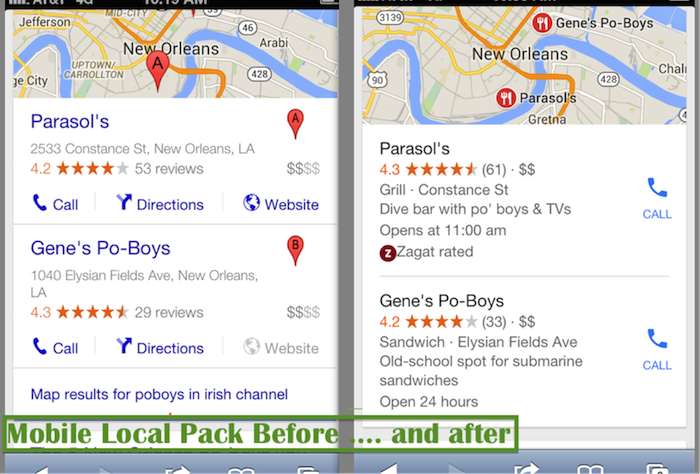
    Before Google rolled out this change, when a search on mobile gave local pack results, the user could immediately click on what they needed directly on the search results page, including:

    • Click-to-call
    • Click to get some directions
    • Click on the website

    Now, the mobile local pack only provides a click-to-call button:
    Mobile Local Pack Click Call Image

    If the searcher wants to visit the website for more info, they have another click in order to navigate to the My Business page:
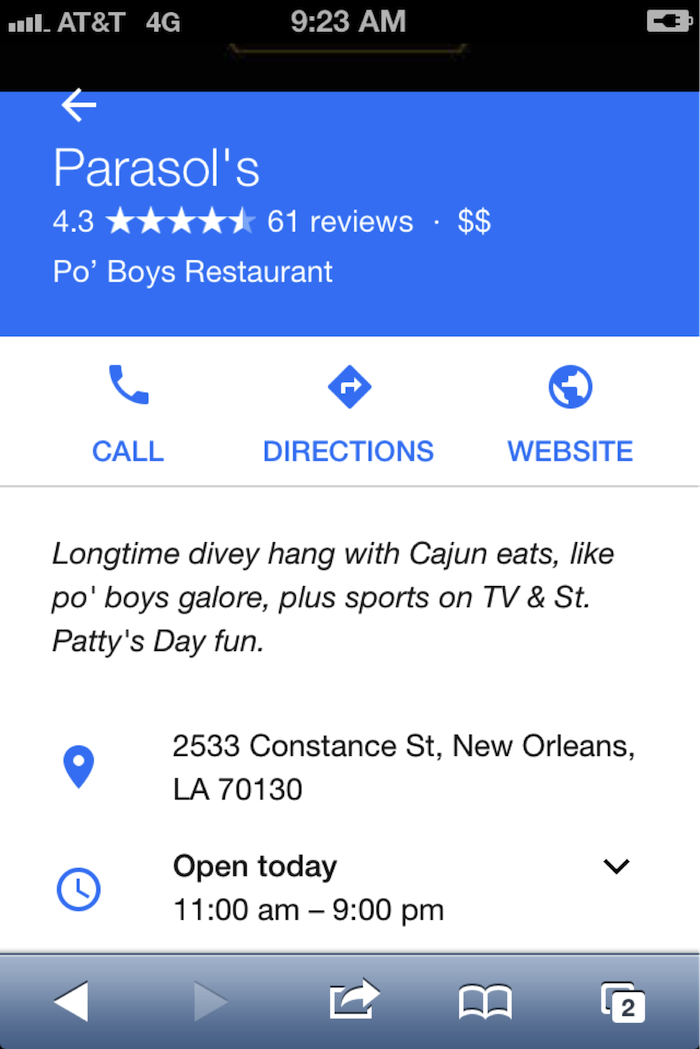
    Navigate Google My Business Page Image

    On Desktop

    With the new update, I get the three-pack with no immediate click opportunities:
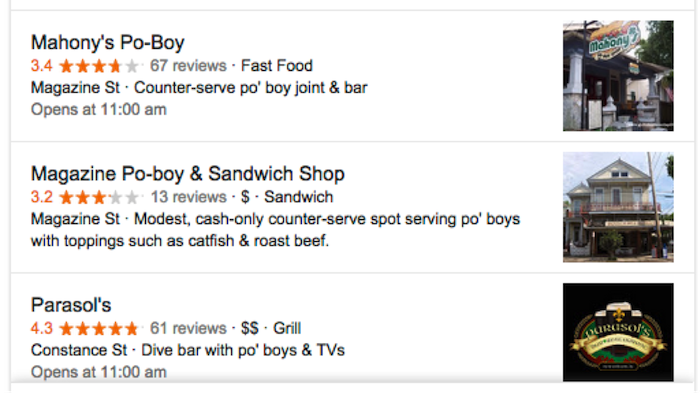
    DesktopThree Pack Google Image - Search Influence

    Update:

    Ryan Schulze, Senior Account Associate, commented, on this published post with an interesting correction. (It takes a village.)  He shows how some searches on desktop are giving the website link in the 3-Pack.  It suggests different search categories have different clicking opportunities.  I would guess this is based on percentage of search performed on mobile vs desktop.
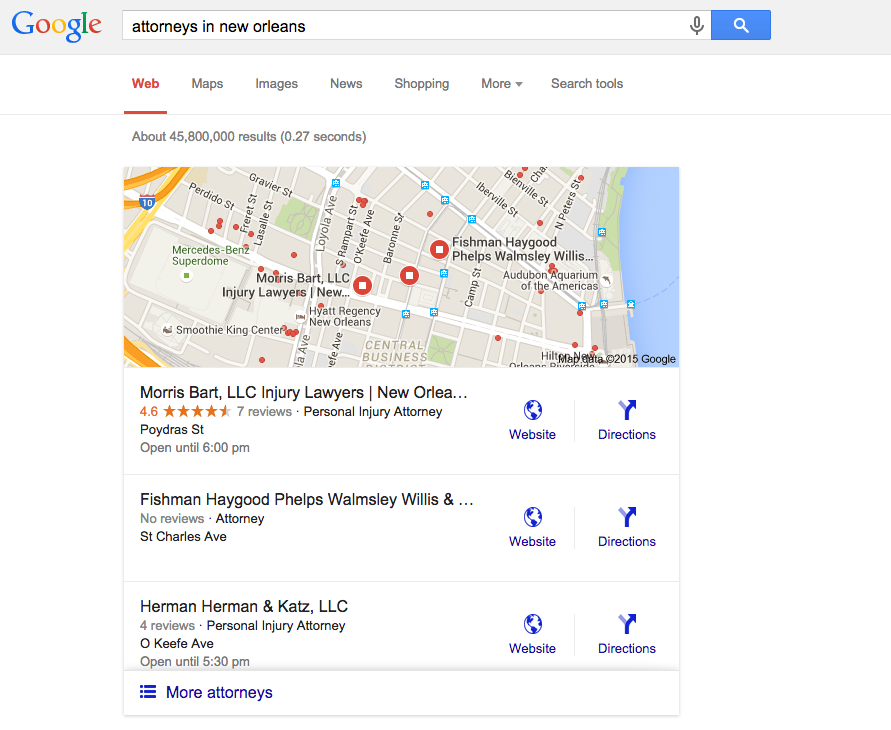
    attorneys in new orleans 3 pack desktop

    Back to the story …

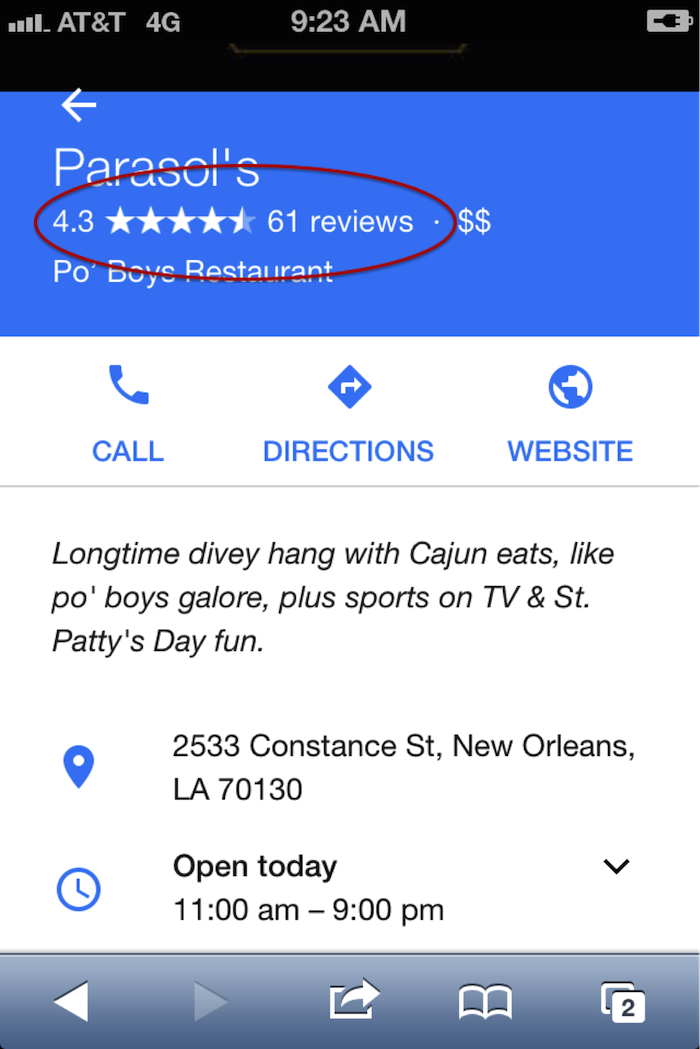
    I click on Parasol’s, thinking I will get its website or the Google My Business listing. Instead, it drives me to the local finder with ALL of the competitors right there!

    • This is not great if you’re in the three-pack because you must fight the competitors again for the searcher’s attention.
    • If you’re not in the three-pack, this levels the playing field. You have a chance to woo the searcher away from their initial choice.
    • If you are a searcher, it’s annoying because you have already indicated your preference with your first click, and Google forces you into an extra click to call the business. In addition, you are forced into viewing more choices after you made your decision.

    Desktop searches are losing ground to mobile, but desktop isn’t dead, and it still dominates search in some industries—usually those that skew to an older population.

    This does show us that it is still incredibly important to claim and optimize a Google My Business listing. Those Google My Business listings can get your business into the desktop local finder list, which is a long list of competition, so images and reviews are still important efforts to woo the searcher over to your business:
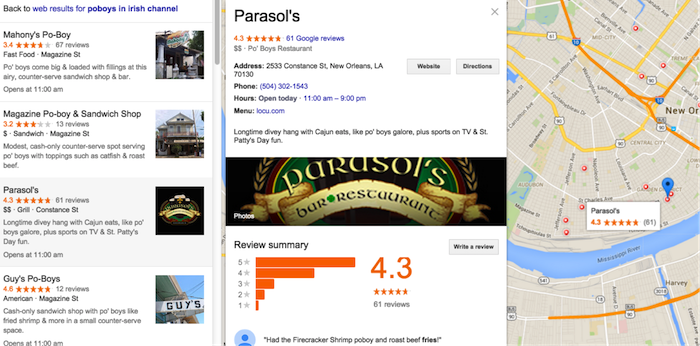
    Local Business Maps Pack Image - Search Influence

    Reviews on branded search results on desktop and mobile:
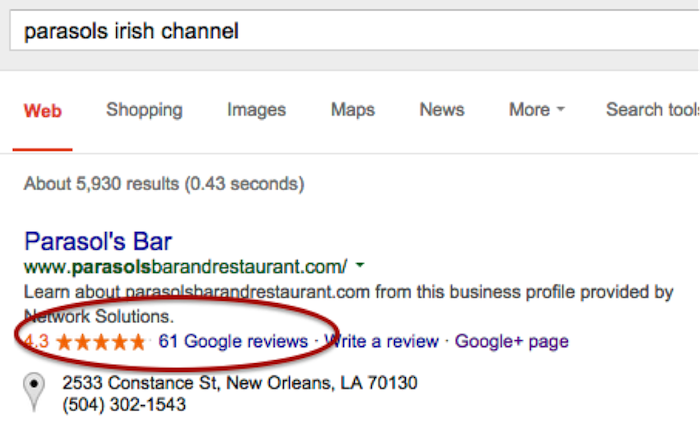
    Online Reviews Branded Search Image - Search Influence

    Online Business Reviews Mobile Image - Search Influence

    (FYI: if you’re ever in New Orleans in March, Parasol’s is a great place to be.)

    Early Data on Organic Visits

    I was chatting with Megan Lindsey, senior account manager at Search Influence, about the effect of this change for one client in particular. Lindsey sums it up nicely: “I imagine now since a searcher has to click on the business name and then once more on the ‘website’ button that people aren’t as inclined to keep clicking. I would think that most clients, even if they were in the top three maps results, are losing organic traffic because of it, but especially the ones who aren’t there anymore.”

    The early Google Analytics data supports Lindsey’s hypothesis. I found no great winners: Several clients’ Google organic was static, and several were worrisome. These clients are local businesses that are historically very strong in their markets. Over the weekend dates, there were 20 percent to 35 percent losses in organic website traffic, which seems to have rebounded Monday to Wednesday, so it appears things are still settling down.

    CLIENT A

    google / organic

    Aug. 7, 2015 – Aug. 10, 2015: 179 visits

    July 30, 2015 – Aug. 3, 2015: 285 visits

    % Change -37.19%

    Aug. 7, 2015 – Aug. 12, 2015: 319 visits

    July 31, 2015 – Aug. 5, 2015: 364 visits

    % Change -12.36%


    CLIENT B

    google / organic

    Aug. 7, 2015 – Aug. 10, 2015: 161 visits

    July 30, 2015 – Aug. 3, 2015: 210 visits

    % Change -23.33%

    Aug. 7, 2015 – Aug. 12, 2015: 161 visits

    July 31, 2015 – Aug. 5, 2015: 210 visits

    % Change -6.76%


    CLIENT C

    google / organic

    Aug. 7, 2015 – Aug. 10, 2015: 36 visits

    July 30, 2015 – Aug. 3, 2015: 54 visits

    % Change -33.33%

    Aug. 7, 2015 – Aug. 12, 2015: 58 visits

    July 31, 2015 – Aug. 5, 2015: 67 visits

    % Change -13.43%


    Have Calls Increased?

    The clients above usually do really well in the local pack and in organic website traffic, so let’s see what happened to their call volume. If you are a lucky business falling in the three-pack, consumers might be calling your business more now than visiting your website.

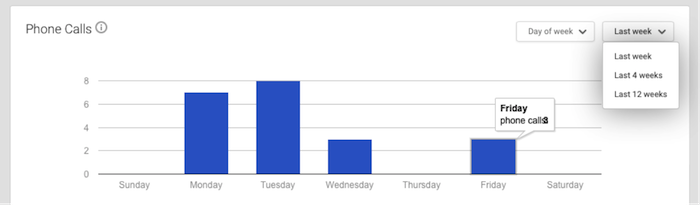
    When you log into the Google My Business page and go to Insights, this is the data you get:
    Phone Call Data 1 Image - Search Influence

    It’s severely limited and not really insightful. The date ranges are not customizable. There is no data after Aug. 8. I have to wait until next week to get any data on effects of call volume from the three-pack rollout, and I can’t compare to the previous week. I will have to do some elementary math that surely Google could program to ensure a better user experience.

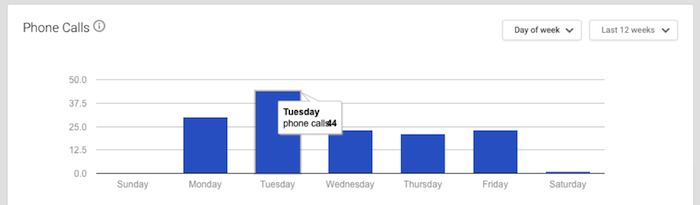
    The data is summarized to the point of being so generalized it is virtually useless. This is 12 weeks of call data. I know Google can do better.
    Phone Call Data 2 Image - Search Influence

    It warns that call volume is “approximate and only significant values may be shown.”

    Also, the call numbers could be calls from three different sources: Google Maps, search and maps for mobile. This is so frustrating for business owners. I would want to know EVERY call I received! And I would want to know where I received the calls! Google has the data, and it just isn’t sharing with business owners.

    And Paid Search?

    On the first day of the this rollout, local search expert Mike Blumenthal made these early comments: “I am not sure what will happen on clicks for AdWords, but those businesses that were lower in the old display may feel compelled to double down on their AdWords activity.”

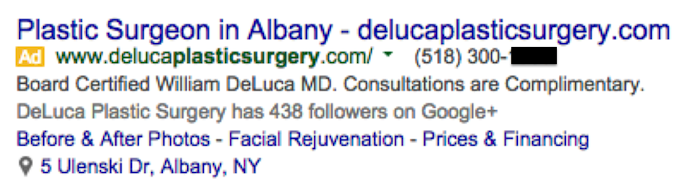
    I asked Jeanne Lobman, senior online advertising manager at Search Influence, to check it out and give us some input. “Those businesses that were previously only ranking in spots four to seven in the local pack (and nowhere organically) are now going to need to spend money on AdWords ads in order to be seen in the search engine results pages. Additionally, since Google has removed the website URL and the phone number from the local pack info, it could be beneficial to run AdWords in order to make sure searchers can easily find your phone number and call you (on desktop). This would be accomplished by using call extensions with your campaigns, which adds your phone number to your ad (as seen in the below example).
    Plastic Surgery Google Ad Phone Image - Search Influence

    On mobile, the local pack results do include the call button, but there’s no link to the website. When you click the local result on mobile, you are taken to the G+ page, which then has a link to the website. To avoid having that extra step, running an AdWords campaign on mobile ensures you can land people directly on your website with one click.”

    Lobman pulled some AdWords reports to see what impact this change may have had on click-through rate. She says it’s really too early to tell any effects, but the data so far suggests there seems to be an increase in clicks and impressions but little to no change in click-through rate, conversions and conversion rate.

    So Now What?

    We need to give it a little more time to settle in before we make any dramatic changes. When we looked at six days of organic visitor data versus four days of data, we see big improvements, so watching the data to make smart moves is the action item.

    Walk through the process that visitors might use to find your website online, and try to improve what you can control, such as adding phone numbers in your desktop AdWords ads or continuing to encourage reviews from your customers.

    Your engagement online is a reflection of how you engage with your customers in real life. Providing for the searcher with easy linking from ads, Google My Business images, reviews and informative website content is a long-term plan, and it’s a good one to win trust and authority.



  • Give Your Facebook a Facelift: Social Media for Dermatologists and Plastic Surgeons

    Facebook Facelift Image - Search Influence

    Time Magazine recently posed the question, “Can Plastic Surgery Make You More Likeable?” Certainly, there are many benefits to cosmetic procedures for the patients, but it is also time for plastic surgeons and other physicians to think about how to make their practices more “likeable.” Facebook and social media can be used to attract new patients and shape the local perception of a business. For example, Search Influence helped one plastic surgery practice attract nearly 70,000 new fans on Facebook. Search Influence can help create and manage the online presence of your business through social media, but if you want to get started on your own, follow these five steps:

    1. Make a Facebook Page

    Most Internet users visit social media sites daily, and social media can be a cost-effective place to advertise. Facebook accounts are free to create and maintain, and AdWeek reported last year that advertising on Facebook is 70 percent cheaper than the industry average. While using it effectively will take a significant amount of work, creating a Facebook page for your practice takes only a few minutes. With pictures and information about the procedures you offer, a Facebook page allows potential clients to learn about your practice without following an external link. This can be a great place for a list of services and a few testimonials from past patients. It’s a streamlined version of the most relevant information, and you can direct people to call your office or visit your website to learn more.

    2. Get More “Likes”

    It’s easier said than done, but awareness about your practice will grow as users “like” your page. To draw their attention, it helps to have compelling pictures and interesting information. Showing a little personality can encourage people to identify with your practice, which helps set you apart from the competition. As more people interact with your page, Facebook will give you demographic information about their ages, where they live and other details that can help you better know the local market.

    Struggling to get potential patients and customers to follow you on Facebook? One way to get more likes on Facebook is through Facebook fan-building campaigns, which have been effective for Search Influence plastic surgery clients.

    3. Get People Involved

    Ask questions, and post updates that encourage people to interact with your page. When fans “like” an image you’ve posted, it makes it more likely that their friends will also see your page. If you post about local events and holidays, it will help connect you with your community.

    4. Update Your Page Regularly

    While it’s inadvisable to offer medical advice over social media, your page or a separate blog can be a great place to explain procedures or post updates about your practice. If you explain medical terminology and correct common misunderstandings, then potential patients will see you as more qualified and trustworthy.

    5. Pay to Play

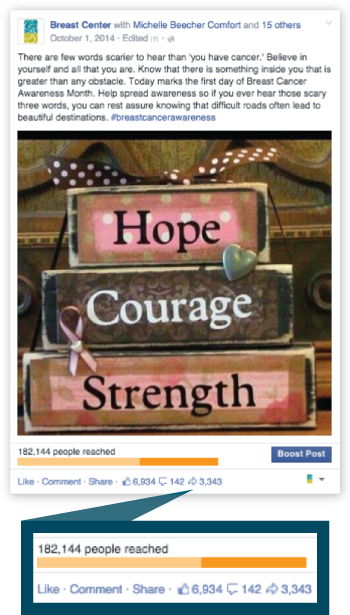
    Advertising your page on Facebook involves a lot of choices. Do you want help accumulating “likes,” or is it more important that people visit your website from your Facebook posts? While pay-per-click (PPC) advertising assures that people are viewing your page, your name will show up on more news feeds if you pay for exposure. For example, a promoted Facebook post for a Search Influence plastic surgery client reached more than 182,000 people.

    First Promoted Facebook Post - Success Study - Search Influence

    Because of the variety of choices involved, streamline your social media strategy and achieve successful results with the team at Search Influence managing your advertising plan. Search Influence can advertise on several sites and measure results in the ways that matter most to your practice, including new patients and calls to your office.

    If you want to give your whole business image a facelift, then injecting social media into your marketing plan is the most cost-effective option. Our team at Search Influence can help you create and manage your online image, and we can advertise on a variety of platforms including Facebook, Google+, Youtube, Pinterest and Twitter. Continuously providing updates can be a lot of extra work for your busy staff, and some employees may already spend too many work hours on their social media accounts. Let Search Influence manage your online image to make sure everything is handled professionally. Find out more about our services by browsing our website.

  • Web Augmentation: 9 Tips to Get Your Plastic Surgery Practice Trending

    Web Augmentation for Medical Practice Marketing Image - Search Influence

    Every second, there are almost 50,000 unique searches on Google. With that much traffic, it’s crucial to establish your plastic surgery practice as an online authority. By using social media, search engine optimization, and paid search strategies, you’ll be able to climb to the top of Google’s rankings in short order.
    Tips for Social Media

    Utilize “Audience Insight” on Facebook

    As of March 31, 2015, there are 1.44 billion monthly active users on Facebook, making it the platform with the largest audience for your advertisements. With Audience Insight, Facebook helps you sort through your targeted demographics in order to understand the kind of content that is popular among them.

    Use targeted Facebook ads

    If you use targeted Facebook ads, you can choose what kind of Facebook users will see your microdermabrasion advertisements. Not only can you sort your audience by age, location, and gender, but you can also target them according to their relationship status, whether they have children, and their personal interests. Facebook fan-building campaigns are also effective in making patients and customers into fans.

    Tag and post about local events and businesses 

    If you want to maximize your visibility, you’ll have to post outside of your practice. By sharing posts about local events and businesses, you’ll increase your presence in the community. Your potential clients will start to follow and share your content if your page is a reliable source for interesting information. 

    Tips for Search Engine Optimization

    Research Longer Keywords

    A short keyword like “chemical peels” is a competitive keyword, which means a lot of practices will be using it. Try to find a longer keyword that your audience will search for, like “chemical peel for rough skin in NJ.”

    Host Webinars

    Live Internet events boost your SEO rankings because they keep your audience on your website for a long time. Set up some demonstrative or informational webinars that prove your expertise while optimizing your search results.

    Make Your Site Mobile-Friendly

    More and more people use their phones and tablets, rather than a computer, to browse the Internet. A mobile-friendly website will ensure that the information on your website is accessible to everyone. In fact, mobile website traffic for our plastic surgery clients’ websites averaged 48.6 percent. And that doesn’t include tablet traffic; it is purely mobile.

    Another way to pump up your plastic surgery website is to use natural content on your practice’s website. Find out about how medical marketing is making the switch to natural content.

    Tips for Paid Search

    Post Lots of Information on Your Landing Page

    By having a wealth of information on your landing page about topics that are relevant to your practice—such as eyelid surgery—you ensure that your potential client gets the knowledge they desire. When this happens, they’ll stay on your page longer, and their trust in your expertise will grow.

    Invest in High-Quality Video Production

    Potential clients will seek out videos demonstrating a procedure before they schedule an appointment for one. If your practice has a high-quality video demonstration of laser hair removal, 79 percent of the potential clients who watch it will visit your website. In addition to videos, other types of content can help attract patients searching online for your practice. Find out the four ways to drive conversions in the medical industry.

    Have Your Contact Information Readily Available

    The content you make available on your website is meant to inspire more people to come to your practice. Having your contact information readily available increases the chance that potential clients will call your site, visit it, or save it for later.

    Implementing these tips will get your plastic surgery practice trending in no time!


  • Five for Friday: The Analytics Glitch, Google’s Beginnings, Mardi Gras Madness, & More!

    1. Google Analytics Data Drops Off On Monday, February 9th – SEO Roundtable

    Did you notice that all of your customers suddenly decided to boycott your website this past Monday? You’re not the only one. Luckily, this is not an issue with your website or your business; it’s actually a brief glitch in the data of Google Analytics. This problem appears to have affected thousands of websites. Though Google has yet to give an official statement on the matter, they have assured us that they are looking into the problem.

    MLB.com animated GIF

    2. Your Guide to Everything Mardi Gras – New Orleans Online

    Mardi Gras celebrations are in full swing this week, and New Orleans Online has released an infographic to help us navigate and understand the chaos! Filled with tidbits on the history of Mardi Gras as well as helpful hints for making the most of this year’s events, this infographic can guide both newbies and veterans through the Carnival season in New Orleans.

    mardi gras animated GIF

    3. Lessons Learned from the Early Days of Google – Matt Cutts

    Today, we know Google as the wooly mammoth of the Internet—large and in charge. Whether we are aware of it or not, no company has had a greater impact on how we navigate the World Wide Web. But it wasn’t always that way. Google, like all huge companies today, had humble beginnings, with a lot of blunders and a lot of lessons learned. Matt Cutts revealed all in his presentation at UNC Chapel Hill last month.

    google animated GIF

    4. Is Yahoo Stealing Mobile Search Share from Bing? – Marketing Land

    Yahoo is beginning to make its first divergence from its search alliance deal with Microsoft. The search engine has its eyes set on the mobile market, a segment that was not part of the search alliance deal made five years ago. The search engine has gained traction on mobile devices not at the expense of Google, but at the expense of its ally Microsoft.

    5. 8 Sure-Fire Ways to Beat Out Your Top PPC Competitors – Hanapin Marketing

    Yesterday, Jamie Smith and Cassie Oumedian of Hanapin Marketing presented a webinar on the eight ways to beat out your top PPC competitors. Some of the expert tips included competitive intelligence and monitoring insights, why location targeting is a must, and bid strategies to outrank your competitors. If you weren’t able to catch the webinar live, you can go to the Hanapin Marketing website to get the full recap.

    Image Sources:

    Dog Typing Image

    Mardi Gras Parade Image

    Google Doodle Image

  • Google AdWords Cram Session: Don’t Let Google Kick You in The Ads

    To start off this post: yes, we are a Google Partner. No, we do not do Google’s laundry or cook romantic meals for Google. And we try our best not to steal Google’s side of the bed. We are, however, certified and qualified to help you with all aspects of your online advertising campaigns by building an appropriately aggressive website marketing strategy. So what makes us certified and qualified? Well, let me bring your attention back to our lovely Partner: Google.

    The Perks of Partnership

    Being a Google Partner has lots of perks. From access to live trainings to beta testing opportunities to extra support and professional networking (the list goes on and on, but feel free to peruse here), you can bet we love being a Google Partner. However, along with the perks come some requirements, one of which is obtaining certifications in Google’s products and services.

    One of these certifications focuses on proficiency in using Google AdWords, Google’s online advertising platform. This platform allows users to market their products or services in the Google search engine and affiliated sites. Still following? Great! Now, in order to become a certified Google AdWords advertiser, you will need to pass a couple of tests. In the upcoming paragraphs, I’m going to give you (1) a quick overview of each AdWords exam, and (2) a few general test-taking tips. You’re welcome.

    Google AdWords Exams

    GoogleAdwordsLogoImage

    There are a total of four exams for AdWords certification: Advertising Fundamentals, Advanced Search, Advanced Display, and Video Advertising. Google requires you to pass the Fundamentals test along with at least one of the advanced tests in order to become certified.  However, here at SI, we like to take both advanced tests for good measure. We’re thorough like that. After getting certified in AdWords, you then have the option of taking the Video Advertising exam.

    1. Advertising Fundamentals – 2 Hours. 90 Questions.
    This is the exam that covers all the basic features of AdWords. Questions will pop up on topics like campaign and ad group management, ad formats, and budgeting and bidding options. In order to pass this exam, you’ll need to achieve an 85% or higher. The good news? If you achieve a passing score, it’s valid for two years!

    2. Advanced Search – 2 Hours. 98 Questions.
    This exam goes more into detail on best practices for managing campaigns on Google’s Search Network and Search Partners. Questions will be on topics like ad and site quality, AdWords API, understanding ad performance, and performance optimizations. In order to pass this exam, you’ll need to achieve an 80% or higher. The validity period for this exam is one year.

    3. Advanced Display – 2 hours. 88 Questions.
    This exam focuses on best practices for advertising on the Google Display Network and on YouTube. Questions on this exam test your ability to plan, design, implement, measure, and refine display and video advertising campaigns. In order to pass this exam, you’ll need a score of 70% or higher. The validity period for this exam is one year.

    4. Video Advertising – 1.5 Hours. 74 Questions.
    This exam focuses on video ad campaign creation and management on YouTube and the Display Network. In order to pass, you’ll need a score of 85% or higher. The validity period for this exam is one year.

    General Tips

    VisitorsImage

    If you’re hoping for more test-specific tips, don’t worry…more posts on AdWords certifications to come. However, to get you started on your studying, here are a couple of general test-taking tips!

    1. First and foremost: have a plan. (What is this? Standardized Testing 101?) Don’t cram all the studying into one day or even one week and then rush through the exam hoping you’ll pass. Do this instead:

    • Set a realistic test date for yourself. Might I recommend giving yourself a one-month study period?
    • Take a look at the study guides provided by Google and come up with a time frame that will allow you to go over and understand each section of the study guide thoroughly.

    Google provides you with a wealth of studying material for each exam because Google wants you to succeed. Use the materials provided. Stick to a timeline. And don’t panic!

    2. Which brings me to my second tip: don’t panic. Google is a very forgiving partner and is big on second chances! If you don’t pass on your first try, you can try again in seven days.

    3. Log into AdWords and play around on the platform a little. Not only will this help familiarize you with the many aspects of the AdWords platform, but it will also give you a point of reference when going over the Google study guides for each exam. Plus, haven’t you heard of the phrase “hands-on learning?” It very much applies here.

    On that note, I’m going to cut myself short so you can process all the information you just read. If you’re interested in becoming AdWords Certified, click here. If you’re interested in getting some professional help from an awesome team of AdWords Certified Individuals, click around. You’re in the right place. We’re a Google Partner, after all!

    Thanks to Search Engine Land for the Google AdWords Image, to Google for the cute Google cartoon, and Renee Jacques for the cute cat gif!