Tag: ppc

  • 5 Strategies to Get Guests Talking and Increase Event Attendance

    5 Strategies to Get Guests Talking and Increase Event Attendance

    With the right marketing strategy, your event will be the topic that everyone seems to be discussing. Potential attendees will feel compelled to join in the fun. Millennials have coined a term for this pervasive social anxiety: “FOMO,” for “fear of missing out.” This social enthusiasm is great at motivating that final step for a successful gathering: converting people who are merely aware of the event into participants who actually attend. Whether you’re still sending invitations or collecting RSVPs, every event planner needs to know how to make their big bash the talk of the town.

    Image of Ariel from little mermaid in New Orleans, LA

    Email Marketing

    You know the contact information for your most dedicated fans and colleagues. Give newsletter subscribers and loyal customers the inside scoop, and they’ll be happy to make plans in advance. Include links to any special promotions or contests leading up to the event to help encourage your fans to spread the word and invite friends through social media. And be sure to tease out the event over a few targeted emails, building excitement and revealing new surprises that your customers can’t get enough of.

    Whether it is your regular newsletter or promotional messages for the big event, less is more, especially when it comes to emails. Flooded inboxes are a familiar experience, and many people cull through their incoming mail on a smartphone, further limiting the time and screen space allowed for each message to make its case. When you’re promoting an event, don’t send out too many emails to the same recipients, or you may turn potential attendees into unsubscribers.

    Facebook Promotion

    Facebook events allow you to track RSVPs and disseminate essential information. People need clear details about the time, location, and parking. Facebook makes key logistical information easily accessible, and it also provides a platform for easy promotion. With event marketing on Facebook, you can pay for promotion to get more views and attendees. Even without paying for advertising, you can design posts that encourage engagement. Produce exciting promotional infographics, and your fans will be happy to spread the word.

    Schedule important posts for the early afternoon, preferably from Wednesday to Friday. Those times allow a larger number of active Facebook users to see your posts, and they can still share the news before the weekend. Social media also allows you to gauge enthusiasm and adjust your promotional strategy, depending on which posts get more engagement. Learn more about how social media management can help you find attendees for your big event on Facebook and other platforms.

    Remarketing

    Not everyone who clicks on your page will attend, but people who visit your website and event page have demonstrated interest. Target those undecided visitors with remarketing through Google Display or Facebook Display to remind them about the event and keep it top of mind. This is especially important if your event tickets typically sell closer to your event. As with other forms of targeted advertising, you can put your message in front of local viewers with relevant interests, and you can even filter by age groups and other demographic variables. Remarketing is special because it is tailored to potential guests who have demonstrated a very specific interest.

    Not everyone checks Facebook more than five times a day, and it’s easy to forget about upcoming events. Online advertising provides reminders for converting interested viewers into actual attendees. Even users without a social media presence will still see advertising on search engines and other web page banners.

    Influencer Marketing

    Advertisements are great reminders for upcoming occasions, but trusted online personalities can have an even more profound influence on attendance. Make your gathering popular by getting relevant influencers on board. In some ways, the internet is still a lot like high school, and influencers are the popular kids with a lot of sway over which parties and trends are “cool.”

    Reach out to the internet personalities relevant to your industry and audience, and they may be interested in helping to spread the word. Some influencers are content creators who rely on sponsorship. Others are bloggers who share reviews and news relevant to their followers. Influencers make great VIPs, and they may also be interested in giving away tickets, further spreading the word.
    Social media icons rotating in New Orleans, LA

    Snapchat and Instagram Stories

    If you’re targeting a younger audience, you need to keep up with the latest trends. Snapchat and Instagram allow you to tell a compelling visual story. The week and day of the event, be sure to have someone on staff dedicated to updating your feed with behind-the-scenes videos, live updates, and reactions from attendees. You can even get your influencer to take over your social account during the event to stir more excitement. Publishing a lot of content during the event, and encouraging your guests to do the same, is the best way to jumpstart your marketing and attendance for the following year.

    From underwater welders to teenaged musicians, a surprising range of communities are active on Instagram and Snapchat. If you aren’t sure about the best place to reach your audience, then it’s worth getting professional help. Consulting services can help you determine which outlets are most effective for your industry and target audience, while lead tracking and analytics will help you determine how best to elicit reactions from followers.

    Event marketing is about more than spreading the word. Use your established branding to show how every attendee will have a great time. With the right impression and frequent reminders, your local community will be FOMO-ing all the way to your big day. Whether you’ve booked an exclusive venue or amazing guest speaker, promotion (through advertising or social media) is just a way to spread the exciting news. Once you’ve done the hard work of planning a gathering, FOMO is the natural reaction of people who understand what a great time you have pulled together.

    Have a big event coming up but no time to promote it? Request a proposal to learn how Search Influence can help you succeed.


    Images:

    Social Media Pendulum 

  • How to Write Clear CTAs That Convert

    According to Small Business Trends, “70% of most B2B websites lack a call to action.”

    With millions of websites in existence, the odds are slim that a user will visit your site and miraculously remember your URL or bookmark it for later viewing. Without a continued, personal connection through an email newsletter, a white paper download, a podcast subscription, a special offer, or another form, it may be the last time that person connects with your business online.

    A call to action, or CTA, attempts to establish that connection with your potential customers once they click on your PPC ad and head to your landing page. Even if you’ve got a CTA on your site, it may be deterring visitors rather than inviting them to explore your business. Here are some tips to make your CTA convert visitors into customers.

    Start Strong With Action Verbs

    There’s not a lot of space to get your point across, so it’s important to get straight to the point. Use an action verb to start your call to action. If you’re in the eCommerce world, consider using words like “shop” to start your CTA, possibly followed by “and save 50%.” The goal is to be direct and informative, highlighting the exact action you want your potential customer to take.

    Image of CTA Get Your Guide - Search Influence

    Focus on Value and Benefits

    As a general rule, think of how you might be able to finish your potential customer’s thoughts for their desires/pain points/expectations, and then use that action verb at the end of the following sentence: “I want to _______.” What was the first thing that came to mind that your clients might choose? Grow more leads? Find shoes that slay? Get My Custom Ad Analysis? Start My Free Software Trial? The answers to this hypothetical question are completely dependent upon your business, but one thing remains true—they need to focus on how you can delight your customer by providing them relevant solutions and unique selling points that make their life or job easier. Instead of phrases like “Buy Now,” which focus on an action a user has to do, get more creative by emphasizing what he or she will get out of clicking that CTA.

    In a case study from Unbounce, a B2B website owner reported a 38.26% increase in conversions after replacing just one action verb—Order Information vs. Get Information. With the former, “order” puts the customer in a difficult position—there’s either purchasing the service or not. But with “get,” the potential customer gets to see advantages or rewards. He or she is potentially awarded valuable, relevant information for choosing to continue the buyer’s journey. It’s this combination of value and relevance that can make or break a click.

    Another tip about delivering benefits: Don’t make claims or offers you can’t deliver on. This is going to be the start of a potential relationship with a new customer. The last thing you want to do is promise something you can’t afford.

    Image Of Girl Writing On A Blank Card At Her Desk - Search Influence

    Keep It Short and Be Specific

    According to research performed by Dan Zarrella at Hubspot, the most engaging Press Release headlines are between 90–150 characters. The same holds true for crafting landing page headlines and their corresponding CTAs. Be concise, focused, and goal-oriented. Going back to emphasizing value for the customer, consider these more focused and value-driven options.

    Generate Leads ⇒ Generate {higher quality} leads by {unique qualifier}

    Drive Sales ⇒ Drive {higher value or more} sales by {unique feature}

    Measure ROI ⇒ Measure ROI {across all channels} with our {unique product}

    Sure, the first versions were about as short as you could get, but the amended CTAs remain concise while giving a more in-depth and accurate portrayal of what the customer will get. Clear copy should help reduce any anxiety or confusion that someone may have about exploring your company. And let’s face it; people have a limited amount of time to explore your content. Make the time they spend on your site valuable, not wasted.

    Use Natural Language—Submit or Click Now? No Thanks.

    These antiquated terms used to be exciting when it really was a novel concept to be able to click on something and get immediate results. After all, most CTAs before the internet involved a number that you had to call. Now, though, that novelty isn’t the selling point; what you can provide your customer is. When thinking about writing your CTA, think about how you can connect with them. One way to use this in your writing is to use the words “you” and “my/our.” For example, “Drew Brees Can’t Stop Talking About Our Training Program. Learn Why and Get Fit.”

    Steer clear of using ornate language by cutting unnecessary adverbs and adjectives. These words may seem like they add value to your copy, but they’re hiding the value that you can provide your customer.

    Also, avoid using industry jargon in your copy. This can include words like, “franchise,” “utilize,” “virtualization,” “capitalize,” and especially acronyms that only a limited number of potential customers would even understand, like these marketing big ones: KPI, RSS, CAC, CSS, CRM. Doesn’t look too inviting does it?

    Does the Size and Layout of the CTA Matter On a Landing Page?

    Just like your copy, your page layout should be neat and clean. Kissmetrics recommends: “The size of your CTA buttons is also important. A too-small version won’t command attention, while a supersized one will make you seem desperate.”

    Think about how your landing pages look from a visual standpoint. Avoid the color red for your CTA. There are too many associations with danger, stop signs, stoplights, aggression, etc. You’ll likely see more positive results from calm colors like blue or green.

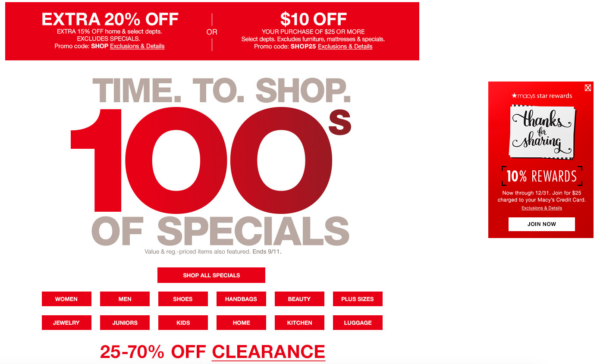
    Also, consider the size and spacing of your text on the page. It should be scannable so that a visitor can instantly pick out the information they’re interested in. Cut out the clutter. For instance, here’s an example from Macy’s current main landing page. Aside from the mixed messaging of the different values, can you spot the call to action?

    Image Of Macy's Landing Page Sale - Search Influence

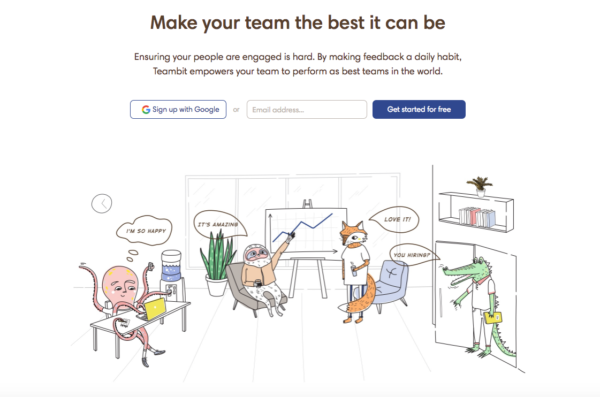
    Their “star rewards” offer is shifted to the right of the page. The goal for a button’s CTA is to predict where the user will look next. This one missed that mark. Also, it’s hard to tell what “JOIN NOW” means until you read the tiny print at the top indicating this CTA is for their rewards program. And finally, they’re asking a lot of their visitors to read the fine print on all of these different offers. A cleaner example of a landing page with less clutter and more clarity would be like this one from Teambit, an employee feedback, recognition, and survey startup.

    Image of Teambit Landing Page - Search Influence

    The value? Your team could be the best it can be. Sounds great. How do I go about doing that? Oh, I’ll get started for free. They have detailed information if you scroll through their page about just how they help people. But the reason why it succeeds is because it doesn’t worry about that up front. It focuses on the why with a compelling headline followed by clean copy and a simple CTA. Sometimes, it really is that simple.

    A Few Final Ideas for Crafting Great CTAs

    In addition to the previously mentioned points, here are a few examples of how you can make your CTAs stand out and drive conversions.

    1. Make sure to always display the benefits. If you’re offering a free guide, then say so right away (e.g. “Get the Knowledge You Crave – Download Our Free Guide.”).
    2. Try using a pain point that your potential customers may be hitting. For example, “Tired of Not Seeing Results In Your Ad Campaign? Watch Our Free Webinar to Find Out…”
    3. Also, you can try using an Influencer who supports and promotes your brand. This adds authority and intrigue to your CTA. Viewers who see that “Mark Zuckerberg Is Crazy About Our Team’s Marketing Ideas” will likely want to click on the corresponding, “Discover Why” button.
    4. Lastly, utilize testimonials from your current clients. This is a source that people often overlook. Your customers should be the biggest proponents of your brand. If a client has said that you’re the best company they’ve ever worked with, then take that and condense into copy to go along with a short, action-oriented CTA. Of course, always make sure to attribute ownership of the testimonial, and it goes without saying that creating a fake testimonial is a horrible idea for your brand. You’ve got to earn them.
    5. Numbers are great. If you have some success metrics, consider including them on your landing page. Are 100% of your employees certified in the service you’re promoting? Visitors should know that.

    Have any great examples of CTAs in landing pages or other types of content that you’ve seen? Share them with us! A great CTA can have your business seeing more conversions and fewer bounces. Need some more guidance on building a landing page that has strong calls to action that focus on your company’s brand and values? Reach out to us at any time.


    Images:

    Macy’s

    Teambit

  • Paid Search, SEO, and the Evolution of Google

    Paid Search, SEO, and the Evolution of Google

    No man ever steps in the same river twice, for it’s not the same river and he’s not the same man. –Heraclitus

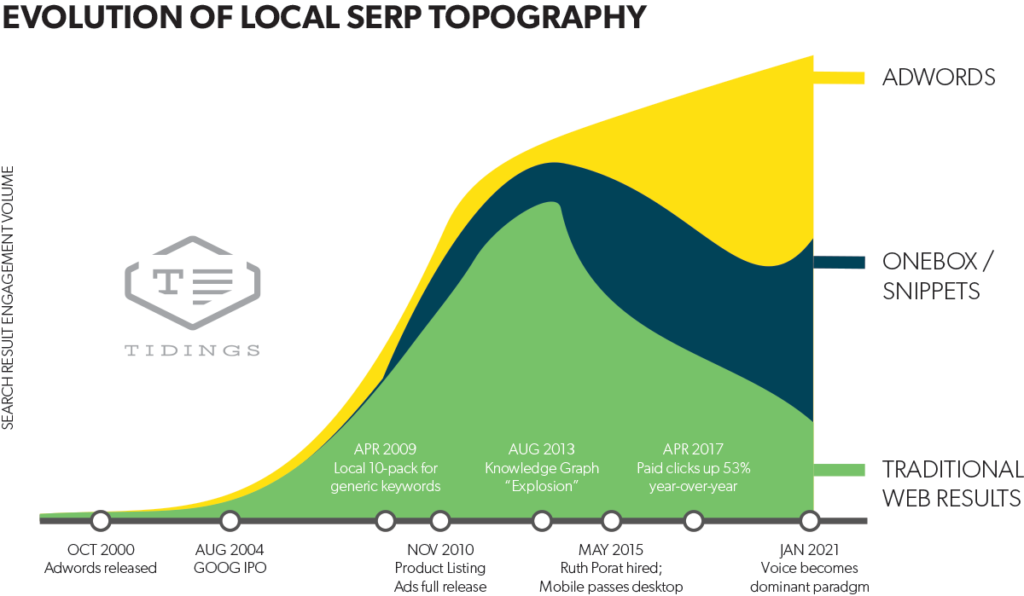
    One thing that’s certain in the world of search is that technology and user habits are always evolving. David Mihm recently wrote an excellent blog on the ever-changing landscape of search engines otherwise known as “SERP Topology.” We recently had the honor of hosting David as a guest speaker for a lunch & learn for the whole team. He provided us with some powerful insights about the evolution of Google. Here are some key takeaways.

    Local serp topography graph

    As you can see above, based on his predictions it is highly likely that Google search results will be more and more driven by paid advertising as opposed to traditional SEO in the next 5-10 years.

    Practically, this will impact your business in a few different ways. Some industries will continue to stay relevant with a traditional SEO approach, but for many, it will become a less effective strategy.

    If you’re a business owner, here are some things to keep in mind:

    1. What percentage of closed business is coming from digital marketing efforts?
    2. Where, specifically, are your leads coming from?
    3. How is your team converting those opportunities?

    Brand Awareness

    If you’re producing content, it will become increasingly important to promote that content using social platforms and other advertising options, such as Google Display Ads. Marketing your brand through ads will continue to be an important and useful strategy.

    Referrals

    The connection economy will continue to increase in importance. Who are the influencers in your industry online? Where are they? Find out what platforms the thought leaders are on and connect with them.

    Also, find out where your customers are hanging out. If it’s Facebook, then you should seriously consider developing a strong presence there.

    Lead Generation

    Organic SEO is very powerful, however, one of the downsides is that it can take a long time to grow results. Google ads are a great option to compliment SEO and content marketing strategies because you get instant feedback from your target audience. From there, you can take that feedback, find those great leads, and nurture them into customers.

    SEO

    Search engine optimization is not going away anytime soon. And, in the next 10 years, it will remain relevant for many industries. However, it won’t be quite as effective in the near future. As Google continues to generate the majority of its revenue from advertising expenditure, it inherently implies a push toward incentivizing businesses to use those tools.

    If you’d like to understand more about how to advertise your business online, or how you can best take advantage of SERP Topology, reach out here to chat with a strategist.

    Image:

    SERP Topology

  • 5 Questions Your Medical Practice Should Ask Before Hiring a Paid Search Firm

    5 Questions Your Medical Practice Should Ask Before Hiring a Paid Search Firm

    When it comes to choosing a marketing firm for your paid search campaign, it’s important to do your homework—especially if you’re in the medical industry. According to Pew Research Center, 8 in 10 online health inquiries start with a search engine, and 72 percent of internet users said they looked online for health-related information. Beyond patients frantically Googling their symptoms, they’re also searching for medical care providers. The right ad agency will make sure you show up on page one of the search results.

    But on top of a highly competitive and saturated market, medical practices also face added challenges to adhere to strict medical guidelines and discuss sensitive and highly personal topics appropriately. All said, a paid search campaign can do wonders to both improve your brand awareness and get new patients in your door. Here are five questions you should ask your prospective paid search agency before signing a contract.

    1. What Experience Do You Have Working With Clients in the Medical Industry?

    Your ad agency shouldn’t just know costs per click and search engine optimization, they should also know how to speak your language. More than that, they should know how to speak your language to your prospective patients. Search Influence has been helping clients in the medical industry stand out and rank in search results since 2007. In that time, we’ve worked with medical clients in 30+ cities across 18 states. Our experience ranges from plastic surgeons and dermatology clinics to hospitals, counseling services, and physical therapists. We use a holistic approach for every campaign to create brand recognition, improve ranking, and—most importantly—deliver qualified leads.

    Our years of experience have helped us build a database of technical and demographic knowledge in order to strategically reach your desired patients where they’re at. In fact, we have helped our clients stay on the frontline of innovation by optimizing their sites for procedures as soon as they are approved and available to the public. For example, when the FDA approved gummy bear implants in 2013, we already had content written for our clients and were ready to run promotions to highlight this highly desirable option at the time.

    We also understand the meticulous detail required to accurately reflect the standards and restrictions of medical societies, HIPAA, and the platforms where we promote your content. We know how to accurately post images in accordance with both American Society for Aesthetic Plastic Surgery (ASAPS) and American Society of Plastic Surgeons (ASPS) promotional guidelines or how to use language that aligns with Google’s expectations for websites in the medical industry—an issue that can even cause Google to suspend your site.

    Stethoscope on a computer keyboard

    If you’re curious about the current state of your website or worried about a site suspension, you can contact us to help you get on the right track.

    In addition to meeting all of the medical industry standards, it’s also important that you position your practice as a thought leader. Our deep knowledge of the subject matter ensures that your content is optimized and technically accurate. More than just knowing that gynecomastia is the condition and breast reduction surgery is the procedure, we also understand the discreet and laser-precise writing required to appeal to men who are searching for this sensitive topic. As your PPC agency, we will deliver results because we start with strategy, and we understand your business.

    2. What Is My Cost Per Lead?

    Your cost per lead will depend on market factors such as seasonality, the size of your city, and the number of advertisers in your area. However, at Search Influence, our typical target for plastic surgeons is $50-$60 per lead. For us, we care most about delivering you qualified leads that actually become patients.

    So how do we actually calculate your cost per lead (CPL)? Let’s say, as an example, that you offer a procedure for $5,000, and you’re willing to pay 10 percent (or $500) in order to get a lead for that procedure. However, you know that not every lead that contacts you is going to become a patient. Let’s say that 1 out of every 10 leads who contact you about the procedure will actually become a patient. That’s a 10 percent conversion rate, which results in a CPL of $50.

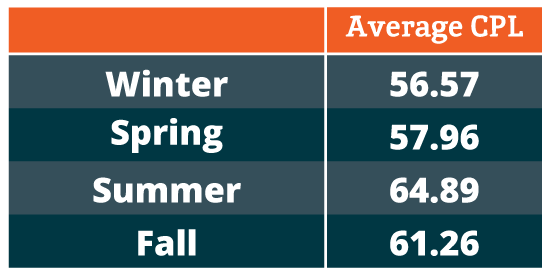
    Of course, if your conversion rate is higher or if your cost for acquisition is higher or lower than the example, we can adjust accordingly. The table below outlines seasonal averages for some of our plastic surgery clients to show how we can achieve results for your practice.

    As a medical practitioner, your bottom line all comes down to how many patients are walking through your door (and how much you paid to get them there). For you, a worthwhile investment in paid search results in qualified leads that can translate into actual patients. We get that. That’s why we have built-in systems to seamlessly track your leads, and a post-launch schedule to fine-tune your campaign as quickly as possible. Not only will you have clear reporting, but you can also use our lead tracking system to create an organized database of qualified leads, allowing your team to close leads faster.

    3. How Do You Measure Return on Investment?

    PPC is not a “set it and forget it” machine. Successful online ad campaigns should run on a continual loop. You have to look back to determine what’s working and adjust in real-time to build on successes. Our reporting can help you pinpoint the average cost per patient so you know your exact return on investment. You’ll know if your leads prefer to call or fill out a contact form, and you’ll gain valuable insights like location demographics.

    Physician holding a tablet

    Your PPC agency should also collect continual feedback from you about the quality of your leads in order to apply that information directly to your campaign and avoid any wasted ad spend. With endless customization opportunities—not a prix fixe package—your marketing firm should have a system in place to make things easy, but also be ready to break the rules to fit your budget and make your campaign a success for you.

    4. What Procedures Are You Promoting and What Drives the Most Leads?

    Remember that thing about endless customization? Yeah, that applies here, too. Your ad agency should have the know-how to build a holistic strategy that both grows your brand and promotes your most important services.

    Brand building and search engine optimization are definitely comparable to the age-old chicken and the egg situation. You have to have some brand recognition if you want to rank high on search engines, and once you rank, you’ll get greater brand recognition. So what does that mean for you? Well, if you don’t rank yet, you’ll need to do more than simply optimize your content and build your link profile. You’ll have to create a dynamic strategy to build the overall awareness of your brand. After all, in the age of the internet, who says you can’t have all your eggs in your basket and eat some chicken, too?

    Your online marketing agency can help you do just that. That’s why at Search Influence we start with a comprehensive kickoff meeting to understand the details of your business. Why? It’s simple. Formulating the right strategy first will save you money and get you the right leads.

    Once we understand your business goals, we can target the right procedures and help you establish your brand around specialties and services that matter to you. We can also help you identify missed opportunities. For example, while aesthetic services aren’t the highest revenue driving procedures, they’re a great way for plastic surgery practices to continue generating revenue even when the doctor is booked with another client. Or, perhaps you specialize in rhinoplasty and want to be established as the leader in your market for that procedure. We can center your campaign on your qualification as a rhinoplasty surgeon to build your brand as the preferred specialist. It all depends on your needs, and your ad agency should do the setup work to understand those needs from day one.

    5. On What Page Do Leads Land During a Campaign?

    You can have beautifully written ads, but without the right landing page, your leads are highly unlikely to convert into patients. Especially when it comes to AdWords, you have to optimize for both your human readers and Google’s Quality Score. Google can spot landing pages that don’t align with the search term in the ad and actually make you pay more as result. For example, if someone searches for liposuction, clicks on your ad all about liposuction, then lands on a general page about body contouring services, then you’re missing the mark on user experience and Google’s best practices.

    Without optimized content and a dedicated landing page, your chances of converting are slim.

    A recent report from Unbounce placed the average conversion rate in the healthcare industry at only 2.9 percent. And if you’re using your homepage as your landing page, then you’re totally missing out. Your ad agency can create dynamic landing page content that makes it easy for prospective patients to take an action, with custom forms and click to call buttons that prove your return on investment. In fact, the same Unbounce report shows that healthcare businesses in the 90th percentile achieve conversion rates at 9.3 percent, and the right content and strategy can help get you there.

    Landing pages are just one key element in a successful ad campaign. At Search Influence, we care about delivering a holistic advertising strategy focused on results. Contact our team to see how we can help optimize your medical practice’s online presence.

  • How to Use Google’s New Quality Score Columns to Drive Lower Costs Per Conversion

    If you’re a hands-on business owner using Google AdWords, you’ve no doubt come across the term “Quality Score.” You know it’s an important metric for the success of your account, but what does it mean? What factors contribute to this important number? And how does improving the overall quality of your account result in more leads? In this blog post, I’ll take you through a quick introduction to Google’s Quality Score and several strategies for monitoring, analyzing, and optimizing this metric.

    What Is Quality Score?

    According to Google, “Quality Score is intended to give you a general sense of the quality of your ads. The 1-10 Quality Score reported for each keyword in your account is an estimate of the quality of your ads and the landing pages triggered by them.” The main components of a keyword’s Quality Score are the Expected CTR for your account’s keywords and how your performance stacks up against that expectation, Landing Page Experience, and Ad Relevance. As your account runs and your keywords begin to receive impressions and clicks, Google ranks each keyword as Above Average, Average, or Below Average for the following criteria:

    • Ad Relevance – This component quantifies how closely related your keyword is to the ads in your ad group.
    • Landing Page Experience – Google rates your site based on the relevancy of your keywords to your landing page and the ease of navigation. Can the user find what they’re looking for on your landing page?
    • Expected CTR – AdWords knows the historical CTR of your ads. Using this information, the platform determines an Expected CTR for a given keyword and each keyword is then measured by how close actual performance is to that pre-determined expected performance.

    A keyword’s Quality Score used to be based on the keyword’s historical performance on Google until it achieved a significant number of impressions in your account. However, now Google reports a null score until that threshold has been reached. Once the keyword receives a significant number of impressions, its Quality Score will start to reflect how it performs in your account, and historical performance will be a lesser factor.

    Theoretically, your account level Quality Score is the cumulative result of the historical performance of all keywords in an account. It would be a painstaking process to capture this information on an individual keyword basis to determine the average Quality Score across the account. Luckily, there are wonderful geniuses who have developed scripts to do this for us. Google doesn’t confirm this Quality Score’s existence, but it’s generally accepted that there are different levels of Quality Score other than the visible keyword level Quality Score.

    Why Is Quality Score important?

    The components of Quality Score along with your set bid and the expected impact of your ad extensions are factors in the calculation of your Ad Rank. Your Ad Rank determines the position in which your ad will show as well as how much you pay for each click. Improvements in your Quality Score can lead directly to decreased Costs per Click. Without raising your monthly digital advertising budget, reduced CPCs allow you to generate more traffic to your site. The additional, cheaper traffic to your site creates more opportunities for Conversions at a reduced cost.

    Where Can I Find the Quality Score?

    Whether you’re using the new AdWords experience or the old interface, navigation is similar. However, there are a few additional functions currently only available in the old AdWords that we’ll explore in a later section.

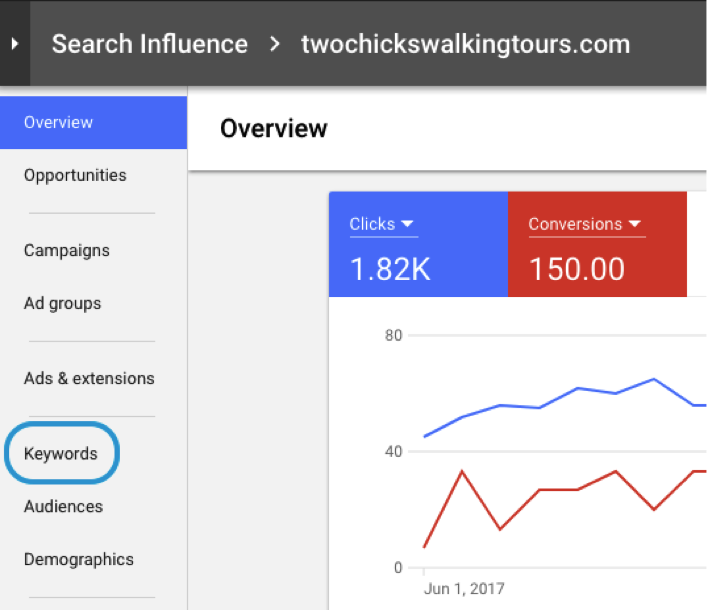
    1. Navigate to AdWords and select Keywords in the page menu.

    Screenshot of a keywords tab in Google AdWords - Search Influence

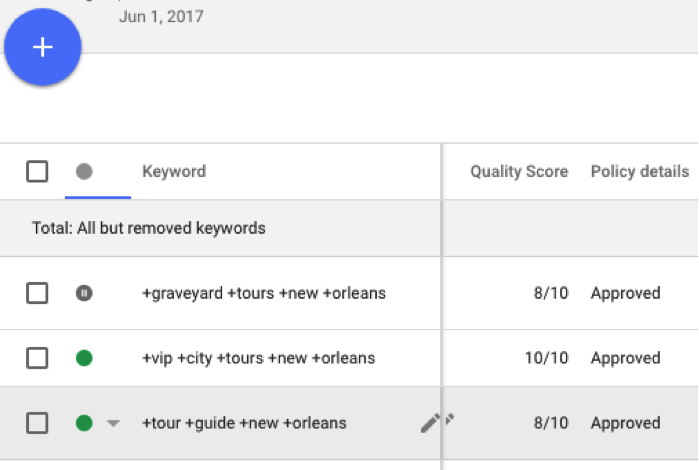
    1. If not already present, you may need to modify your columns to include the Quality Score column.
    2. Now you will be able to compare Quality Score across keywords.

    Screenshot of a Quality Score comparison in AdWords - Search Influence

    • You can sort by Quality Score or use the filter function to view only keywords with a specific Quality Score threshold.

    What Is a “Good” Quality Score?

    If a keyword’s Quality Score is 1-3, this is cause for concern. You’ll want to identify specific criteria needing improvement. If the score is 4-5, you can definitely make a couple of improvements, but you’ll want to focus on improving the areas that will have the biggest impact on your overall Quality Score. If the keyword’s Quality Score is 6 and above, the keyword is performing quite well, and you might only make minor adjustments.

    How Can I Diagnose My Quality Score?

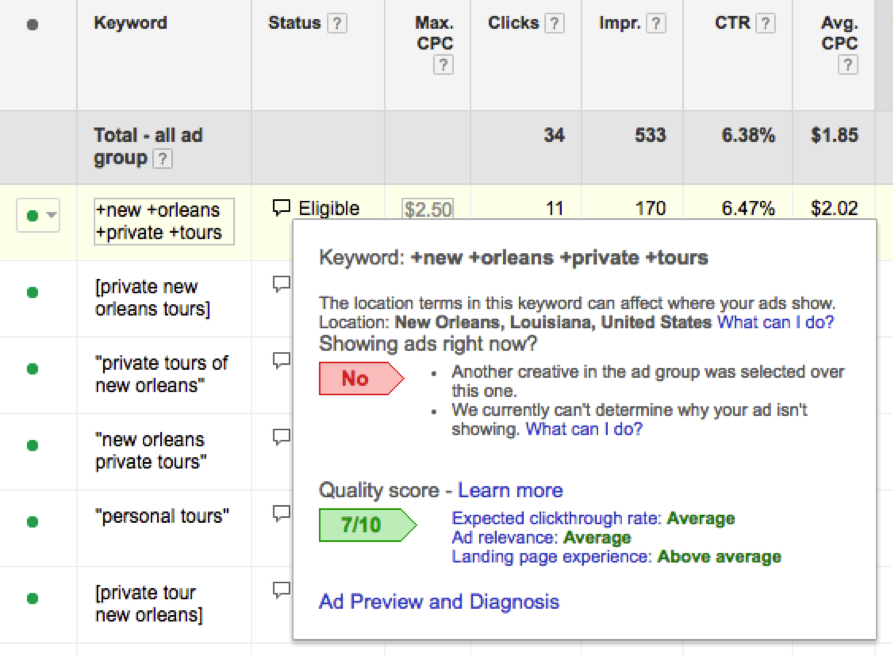
    You know that a Quality Score of 2 isn’t great, but how do you figure out where to start with improvements? In the old AdWords, you used to have to hover over the speech bubble next to the keyword to see Google’s rating of each of the three factors.

    Screenshot of keyword analysis in AdWords - Search Influence

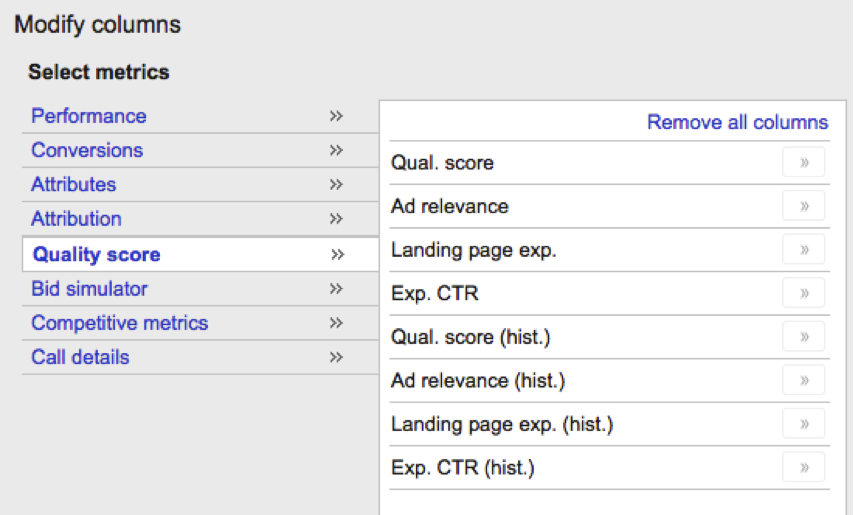
    This is extremely time-consuming. In the past, we’ve used a script to make this process a little more automated, but in early May of 2017, Google released brand new Quality Score columns to make the large-scale analysis of this data even easier. In the old AdWords, modify your columns and review the parameters available under the Quality Score heading. Unfortunately, these columns are not yet available in the new AdWords experience as of this posting.

    Screenshot of Quality Score columns - Search Influence

    Google now allows you to add columns to see your criteria rankings—Above Average, Average, or Below Average—within the platform. If a keyword has Above Average ratings for 2 out of 3 factors, you can easily identify which factor is having the greatest impact on the Quality Score for that keyword. There are also historical measurements of these metrics that can help you determine whether changes to your account positively or negatively affect the various components of Quality Score. For instance, reviewing historical Quality Score performance alongside current performance can help you determine if the new ads you implemented improved Ad Relevance or if the edits to your Landing Page contributed to improving the overall experience.

    How Can I Improve My Quality Score?

    So now that you’ve identified areas for improvement, what steps can you take to fix these issues? If your keyword has a Below Average Expected CTR, this is the easiest element of Quality Score to improve. Here are some strategies for improving this criterion:

    • Review the Search Term Report for this keyword for opportunities to implement more relevant keywords that users are searching and clicking in place of the keyword with a low expected CTR.
    • This could also mean that your ads are not compelling enough for people to click through. A quick way to give your account a natural CTR boost is including Dynamic Keyword Insertion (DKI) in your ads.

    If Ad Relevance is an issue in your account:

    • An ad is deemed relevant to a keyword when the keyword appears in the ad. Review your ads alongside your keyword to determine if the keyword in question is highly relevant to the ads for that ad group.
    • As I’ve already mentioned, account organization is key. Would the keyword be more relevant to another existing ad group? Is the keyword important enough to warrant the creation of a separate ad group?
    • You can also duplicate an existing ad and edit the copy to include a keyword with a low Quality Score to try and give that keyword a boost.
    • Ensure that your ads are answers to the queries the ad group most often receives. Reviewing your Search Term reports can help you figure out the information that users are most curious about.
    • Google also takes into account keyword density on the site, so improving your Landing Page could also be a factor to improving ad relevance.

    If your Landing Page Experience is subpar:

    • Don’t ignore the impact of your site’s mobile landing page experience!
    • Make sure that your keywords and ads are relevant to the content on the landing page.
    • Implement image optimizations like meta text, title tags, and alt text to include relevant keywords.
    • Brainstorm better CTAs for your buttons.
    • Improve your content.
    • Create more visible conversion points, like a highlighted click to call button on mobile, a click to call button at the top of the body content, and a corresponding form below.
    • Work to improve the navigation experience.
    • Forms or downloads on the landing page should clearly indicate what will happen if clicked by the user.

    You can’t have a “set it and forget it” mindset when it comes to Quality Score, especially considering the potential impact on your overall Cost per Conversion. I recommend performing a quarterly Quality Score analysis on your account and using insights from that analysis to drive the next quarter’s account optimizations, pacing out your changes, and using the historical Quality Score columns to judge the impact of your optimizations. If you have any other Quality Score tips, tricks or insights, please leave us a comment. If you’re new to AdWords and need some help setting up your account for success, please reach out to our team. We would love to help you optimize your potential!

  • Success Story: ALCC American Language

    Learn how we helped ALCC American Language new inquiries while delivering higher site traffic and more frequent engagement on social media.

    The Situation

    The client is a language school located in New York City whose mission is to help international and local students learn English in a supportive atmosphere. The client’s goal was to increase the number of enrolled students and increase their number of fans on Facebook.

    The Approach

    Our strategy included a mix of campaigns that would ultimately increase the volume of leads via forms, calls, and social media engagement by making the client more visible and accessible online.

    We did this using the following campaigns:

    The Outcome

    Paid Search:

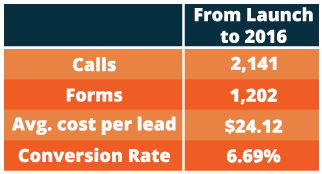
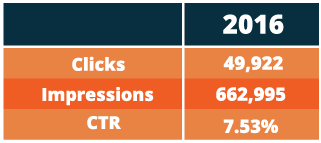
    When analyzing their paid ads campaign, even 2 years after initial launch, ALCC American Language saw continued growth in new student inquiries and conversion rate. During 2016, they averaged 279 new inquiries per month (179 calls and 100 website contact form submissions). Testing and tuning the campaign resulted in a conversion rate of 6.69%, which is an increase from the start of their campaign in 2013 at 2%. Additionally, in 2016 the paid ads averaged 55,250 impressions and 4,160 clicks per month.

    Graphic image of increased inquiries - Search Influence

    Graphic image of increased clicks, impressions, and CTR - Search Influence

    Facebook:

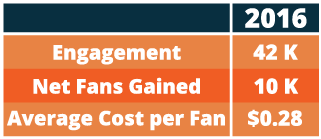
    Looking year over year from 2015 to 2016, the client saw a significant rise in Facebook engagement. Their fans increased from 10,000 to 18,000 fans and the engagement, which includes reactions, comments, and shares, increased from 34,000 to 42,000.

    Graphic image of social media engagement increase - Search Influence

    Search Engine Optimization:

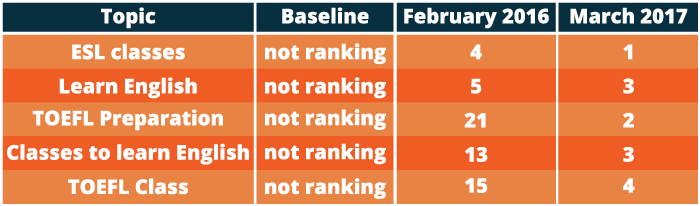
    Through methods such as monthly blogging, press releases, user experience improvements, authority building, and helpful website content, the client gained increased Google rankings for top key search terms and overall website traffic. At the start of ALCC American Language’s campaign, they weren’t ranking for industry relevant keywords and common search terms. As of this year, they are ranking in the top 5 positions of Google for the majority of their important keywords. Additionally, they saw a 57% increase in their goal conversion rate from their total website traffic and a 38% increase in web page visits per session from their organic website traffic when comparing 2015-2015 to 2016-2017.

    Graphic image of keyword ranking for ALCC - Search Influence

    By using a comprehensive, custom strategy, we were able to help ALCC American Language bring in more prospective students so that they can continue to do what they do best—help those striving to learn English. Interested in learning how we can help improve your online presence? Reach out to us at any time.

  • Google Attribution Allows Clear, Seamless Campaign Analysis for Marketers

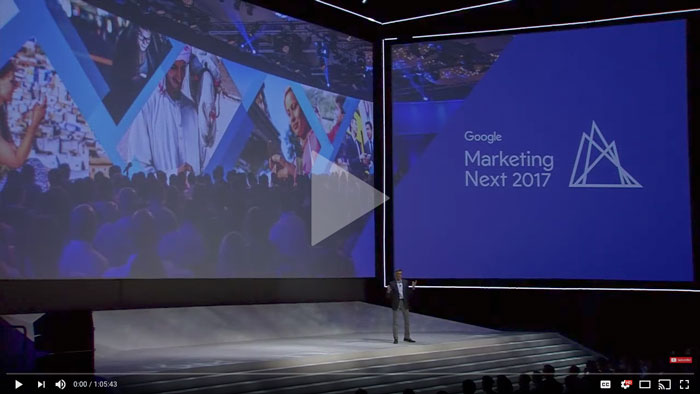
    How do you know which of your interactions with a customer mattered the most? How do you measure an organic search that someone performed for a product on one device compared to an ad clicked right before the point of purchase on another? Well, Google set out to solve some of these and other problems that marketers face daily with their newest rollout from their Marketing Next event—Google Attribution. Now, marketers can finally begin to answer the age-old question that is typically at the forefront of their minds—is my marketing working?

    How Google Attribution Streamlines Data

    Google Attribution uses machine learning and data to help marketers measure the impact of each of their marketing touch points, across multiple channels, and across multiple devices. It uses data that’s already there from Adwords and Google Analytics; it just takes that data and shows you how each customer moved through their buyer’s journey and attributes those conversions respectively. It provides a single view of the path to purchase to help marketers learn what is actually working compared to what seems to be working.

    “The aim of Google Attribution is to simplify the complex problem of multichannel, multi-device attribution by leveraging data advertisers already have in Google Analytics, AdWords, or DoubleClick Search,” said Kishore Kanakamedela, director of product management at Google.

    To give an example of how a richer lens of an entire campaign was able to better benefit a business, Virgin Holidays utilized store sales measurement to look at store sales after users clicked on a search ad:

    “Virgin Holidays discovered that when it factors in store sales, its search campaigns generate double the profit compared to looking at online KPIs alone. A customer purchasing in-store after clicking on a search ad is also three times more profitable than an online conversion.”

    Google already rolled out a store visits measurement in 2014. They’ll be rolling out store sales measurements as yet another touch point that marketers can analyze through Google Attribution.

    And possibly the best part? Attribution is free for anyone to use. It’s in its beta version right now and will be more readily available this fall.

    A Shift Away From Last Click

    Until now, many marketers were left to use last-click attribution to measure the value of their efforts. With last click, the reward for the conversion often went to the last touch point that the user made, often with a sale after a click on an ad. This could lead to false impressions about the effectiveness of an ad campaign versus display ads, organic search, social, email affiliates, and many other interactions that a customer made with a business along the buyer’s journey. Maybe organic search is actually more important display ads or vice versa.

    With Attribution, users can see how effective each step of a campaign is instead of just pointing to the last click of an ad before purchase. There are so many micro-moments that happen on the path to purchase. Now, marketers can have a more accurate view of business, and in turn, can then update bids or move budgets between channels based on such results.

    Image Of Woman Typing On A Computer With Media App Logos Flying Around - Search Influence

    This move to a more holistic view of a campaign makes sense. Video ads, banner ads, carousel ads, emails, social campaigns, and all other types of digital materials work together to drive solid leads to become conversions, so why would it make sense for only the final ad to get all of the credit and influence a business’ campaign and budgeting decisions?

    There is already a slew of companies that have seen the benefit of implementing the data-driven results of Attribution. Check out the success stories that Google has touted so far.

    Eliminating Waste and Annoyance With Unique Reach

    Most people use multiple devices to access their multimedia channels, whether that be a phone, a tablet, a smart TV, or a computer. For example, let’s say you’re shopping for a new laptop. You may first see a search ad when searching on your phone and then find a display ad while on your tablet. Then, you’ll come across a shopping ad by the time you decide to purchase the laptop on your current computer that needs replacing. According to Bill Kee, Google’s Group Product Manager for Attribution presenting at Marketing Next, “30% of people use 5 or more devices today. If you reach each of those devices three times, you’ll reach that person 15 times.” It’s safe to say that’s a bit of an overkill.

    With Unique Reach reporting in AdWords and DoubleClick, marketers will be able to measure how many people were shown display and video ads. It will show unique users and their average impressions. This helps marketers better understand how many people they reached in their target audience and how many times they reached them. This will allow businesses to find any wasted budget in over-saturated placements and, more importantly, better please their potential customers by not wasting their time with endless ads.

    People are expecting a simple, frictionless user experience on their path to purchase. Unique Reach is, well, unique in that it puts the customer right at the heart of the journey. Unique Reach is available in AdWords now and will be available in DoubleClick in the coming months.

    Image Of Person Sitting Out By The Water At Sunset - Search Influence

    The Customer Is the New Channel

    Instead of the mindset of measuring your reports within online or offline channels, Google has highlighted the importance of recognizing the customer or user as the new channel. The line between being online and offline has disappeared.

    Consumer expectations are higher than ever. So, the best way to meet those expectations is to try our best to understand consumers’ intent. Google also shared their Surveys 360 product connected to AdWords and Google Optimize. It helps marketers deliver more relevant ads with targeted surveys that seek to understand a customer’s intent along with their buyer’s journey.

    Marketers are already working hard to develop a strategy that brings conversions for their potential and current clients; Google Attribution helps them work smarter with data. By using their machine learning to put context into the consumer journeys, this new tool should help marketers create a simple, more streamlined campaign that their users will love and respond to. To quote Sridhar Ramaswamy, Senior Vice President of Ads and Commerce at Google and opening speaker at the Marketing Next event: “To really assist people, we need to become smart in how we use data to assist them.”

    Interested in learning how we can better market your business? Reach out to us at any time.


    Image Sources:

    Google Marketing Next

    Woman Checking Her Phone At Sunset

  • Why Do Digital Agencies Have Setup Fees for Online Ads?

    Why Do Digital Agencies Have Setup Fees for Online Ads?

    We often get the question from prospective clients of why we have setup costs for our online advertising programs. They ask this question because some of the companies that they speak with either don’t seem to have setup costs or don’t communicate a setup cost as such. Even those who say they don’t have setup fees have some costs associated with building campaigns, but the extent to which they are or are not thinking strategically on behalf of their customers is a big factor in whether or not they will indeed charge for it.

    How Can a Media Company Not Charge a Setup Fee?

    Often, media companies choose not to charge setup costs. Sometimes this is because they use a third party that automates the process for them, eliminating some of the complexity and control of digital media buying.

    In other cases, a media company (TV, Radio, Newspaper or Cable outlet) may choose not to charge a setup cost because the difference between what they’re spending on advertising and what you’re paying is sufficient—they know they will make up whatever their actual costs are in a very short period. In other words, they may be keeping excessively high margins for what is, in essence, a commodity.

    The challenges of these perspectives are not very different

    In short, the advertiser—the merchant, the customer, the office—who is buying advertising services or other digital offerings doesn’t realize that in order to have those setup costs, the actual money spent on advertising has to, by definition, be lower. And, if the amount spent on advertising is lower, unless there are significant efficiencies in automation—which there seldom are—one will have a less effective advertising program.

    So, there really is no such thing as a “free lunch”

    When deciding how to advertise online, the most important thing to consider is whether or not your ads are going to be seen by your targeted prospects. With less money to spend on advertising, you have a choice of either targeting less precisely or displaying fewer ad impressions over time. With those two options, it’s easy to see how your campaign is less effective when a greater amount of the dollars are going to fat margins rather than the management of the campaign.

    Automation can be good

    In fact, we use automation to assure we don’t overspend and to do some interesting things like changing ads in the case of weather changes and special circumstances. But, there’s a dark side as well. For all the good automation does, it can also lead to irrelevant traffic, i.e. people who will never become customers but are still targeted by the automated ad buys. And, if not managed well, automation can lead to overspending the budget.

    To allow automation to work efficiently, the companies that use automated platforms for management of online advertising must, in the main, set and forget the campaigns. They are hopeful they will be able to deliver results through automation, not through active management.

    How Is Search Influence Different?

    We typically don’t think of ourselves as competition to traditional media companies who’ve decided to launch a digital agency arm. When we think of competitors, it’s typically the traditional agencies— traditional marketing agencies and pure-play digital marketing agencies. The reason that we identify these as the potential competitors is that within their advertising programs, there’s typically a focus placed on strategy.

    Strategy requires people. Digital and traditional agencies have grown over time based on the expertise of their team members. They are therefore able to deliver strategic plans rather than just automated processes. We have the people in place to deliver. Every one of our online advertising team members goes through a rigorous training process and must be certified in multiple areas of expertise before they get to own campaigns.

    As traditional media companies have come to realize that people are buying much less television, radio, newspaper, and Yellow Pages advertising, they need a replacement product. They have seen the value of digital advertising as an item of sale. As an item of sale, it’s not something in which they have invested significant strategic knowledge and development. The agencies with whom Search Influence competes have invested in at least some strategic development in their teams, whether it be through continuing education, certification, or years of experience.

    We are always looking for ways to optimize the potential of our clients and our team members, and that’s why we review automation systems with some frequency. We have yet to find one that delivers the results we can achieve with our human intervention. Of those we’ve tested, they may hit target budgets and costs per click (CPC), but they don’t deliver the same results. Again, what we’re after is not just traffic, not just customers, but the right traffic and the right customers. That said, we’ll always keep looking and exploring.

    As such, while we often find ourselves selling against traditional media “agencies,” we do not think that, when it comes to digital, they represent real competition or the value we know we can deliver.

    How Search Influence Helps Digital Advertising Clients

    Our core purpose at Search Influence is to Optimize Potential.

    So before anything, we engage in a thorough review of your existing assets, both digital and traditional analog media. We also engage in an equally comprehensive business review to assure we understand your goals for your possible future campaigns. This way, we can strategically map all of the relevant information to an effective digital campaign to deliver the best results.

    When thinking about what goes into the business decisions around advertising, we know that it’s much more than clicks or even calls. It’s about the right click and the right call at the right time. The goal is to deliver that refined prospect to your business with the expectation that they will move from prospect to customer. Before we spend one dollar on Google or Facebook, we will have investigated all of the facets of your needs and how they might impact our execution of your campaign.

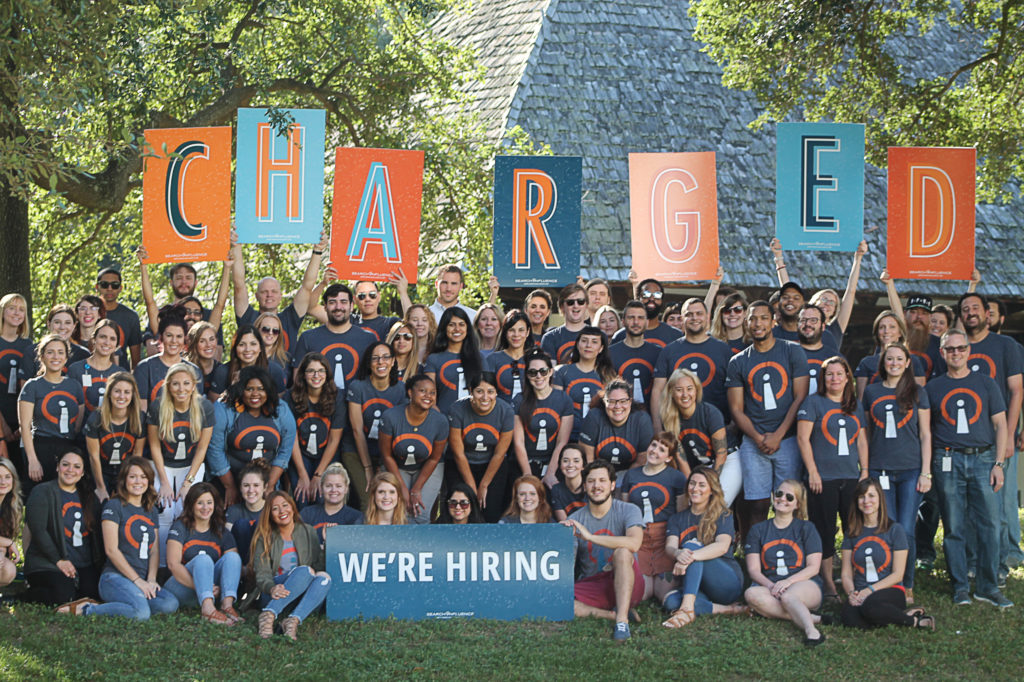
    Charged Employees of Search Influence

    Why You Should Care How About How We Get It Done

    You may think to yourself, “It doesn’t really matter how it gets done, as long as I get more traffic to my website, more calls, and more inquiries coming through.” The unfortunate truth is this: the wrong kind of contacts can cost you time and money.

    As the Pareto Principle implies, 20% of the prospects who might get in touch with you are going to be responsible for 80% of the business you will ultimately do.

    If you could tailor your marketing and advertising so that you only spoke to the 20% of customers who were going to drive the greatest value to your business, wouldn’t you have a much more successful business? Wouldn’t your team be more engaged if they knew that each client engagement, or patient interaction, was putting them with the right customers?

    We know it’s a lot of work to get this right, and only when you work with a strategic partner can you have an expectation that you will get what you need as early in the process as possible. When we work with clients, whether they’re spending $1,000 or $100,000, we work strategically to assure them we’re delivering the greatest value possible for their advertising dollars.

    Wouldn’t you rather spend your money on the most valuable customers? We think you should, and that’s why we believe that we are not competing with the mass-market automated systems that don’t deliver the kind of value you need. With a fundamental understanding of technology-enabled marketing and the expertise and know-how to back it up, we can be true partners to our clients regardless of their budget.

    If you’d like to learn more about the why and the how, we’d love to hear from you. Please fill out our contact form or give us a call. We’ll be glad to review your current situation and come up with some strategic recommendations.

  • Google Paid Search vs. Facebook Paid Social: Team Players or Adversaries?

    When it comes to choosing between Facebook and Google advertising, it’s important to note what your business’s goals are. Both platforms are beneficial to business in their own ways and often work in conjunction to help businesses achieve maximum online visibility, gain more customers, and increase leads and sales. In order to best understand the opportunities with these two advertising channels, it’s important to know what each has to offer.

    Google Paid Search and Facebook Paid Social

    No one can deny that as far as search engines go, Google takes the cake. With more than 3.5 billion searches being conducted every day, Google is by far the world’s most popular and widely used search engine. Because of this, advertisers are able to reach a broad potential audience who may be seeking their products or services. Google AdWords, the PPC advertising platform for Google, allows advertisers to utilize the Search Network and the Display Network. Through the Search Network, advertisers can bid on keywords and phrases to trigger certain Google searches. The Display Network offers visual ads and can reach those who are not just searching on Google, but on other sites as well (i.e. a banner displaying your business’s logo on YouTube).

    Image Of Don Draper Discussing The Future Of Advertising - Search Influence

    Considered the pioneer of paid social advertising, Facebook has refined its process and has become an important part of many businesses’ marketing strategies. Like Google, Facebook is an extremely prominent website, with more than one-fifth of the entire world’s population active on the site monthly. Because Facebook users tend to share a lot of personal information—interests, relationship status, political views to name a few—Facebook advertising can target very specific demographics, showing Facebook users what they want to see.

    What Types of Ads Does Each Channel Offer?

    Both Facebook and Google include a variety of ad formats to appeal to a variety of audiences.

    Google Ads:

    • Text – These ads are only words, and can immediately reach customers as they search on Google.
    • Responsive – Size, appearance, and format can be adjusted depending on the ad spaces.
    • Image – Graphics that are static or interactive, and can be animated in .gif and Flash format. These can show on websites that partner with Google through the Display Network.
    • App Promotion Ads – As the name states, these ads can drive app downloads and engagement for your business. These will only show on devices that can support the app.
    • Video – These can stand alone or show in streaming video content on websites that partner with Google.
    • Product Shopping Ads – These show a photo, title, price, store name, and other details about a product you are selling.
    • Showcase Shopping Ads – This type of ad shows a product but expands when it’s clicked on to show related products and store information.
    • Call-only Ads – Ads that include your business’s phone number to drive phone calls. These types of ads only show on devices that support phone calls.

    Facebook Ads:

    • Domain Ads – With a simple format, this ad displays on the right column. This type of ad does not display on mobile.
    • Page Post Link – The most common of all Facebook ad types, this type of ad links to your external website and includes a large image for grabbing the attention of Facebook users.
    • Carousel Ads – A relatively recent development in Facebook advertising, these ads allow e-commerce advertisers to showcase up to five of their products, each with its own picture, link, and title.
    • Dynamic Product Ads – These ads target based on past actions on your website, also known as remarketing.
    • Lead Ads – Allows Facebook users to fill out a form on either desktop or mobile directly from Facebook.
    • Canvas – Only available on mobile, customers can interact with the ad by swiping through the carousel, zooming in and out or even tilting the images.
    • Page Like – This allows users to immediately like a Facebook page.
    • Page Post Photo and Video – Showcases pictures and videos from your business. Video advertising is especially engaging as Facebook video receives up to 8 billion video views per day!
    • Mobile and Desktop Apps – Similar to Google’s app promotion ads, these drive installs of a business’s app to mobile and desktop.
    • Event – Allows a business to promote their event to visitors.
    • Offer – This type of ad can only be created on a page with at least 50 likes, and it allows a user who clicks on the ad to redeem a special promotion.

    Google and Facebook: Friends or Foes?

    As previously stated, it’s highly common for Facebook and Google to be utilized together in a marketing campaign for their different advantages. Many marketers are drawn to Google because of the search volume and opportunity for exposure there. Google allows for targeting based on location, keywords, demographics, devices, and languages, as well as re-marketing, which can target users based on searches that have previously been conducted. While PPC ads are text-based, advertising opportunities are versatile. Extensions, user reviews, map data, and shopping ads are just a few examples of how Google advertising can be further optimized.

    Facebook advertising is not only extremely targeted but also highly visual, which many see as an advantage over Google. Facebook ads are essentially unavoidable, appearing in your target audience’s News Feed or the right column of their page. Because advertising on Facebook is based on specific insights and interests, chances are that the ad will be more engaging to the user.

    Image Of the Internet Being Friends - Search Influence

    Perhaps the biggest difference between each platform is the behavior of the users. When searching on Google for products or services, users have an idea of what they are looking for. Facebook, on the other hand, is not typically used to seek a product or service. However, the likelihood of a Facebook user to be exposed to a product or service that appeals to them is very high.

    While Google and Facebook are often seen as adversaries in the marketing world, the possibilities with each vary greatly. Try this team together for utmost potential in maximizing any campaign’s performance.

    Image Sources:

    Don Draper & The Future Of Advertising

    The Internet Shaking Hands

  • Nothing More Local Than My Pocket #pubcon 2016

    Today I’m presenting at Pubcon on Mobile PPC. We all know mobile phones are ubiquitous, but there are a bunch of great stats which show how important they’ve become to us.

    • 33% of Americans would rather give up sex for a week rather than their cell phones.
    • 70% of Americans would rather give up alcohol for a week than their cell phones.

    Clearly this poll was not in New Orleans.

    And now the presentation.