Tag: local search

  • The Do’s and Don’ts of Content Syndication for SEO

    A few weeks ago, I received a question about the value of content syndication in marketing strategies. Because it’s one that I also asked when I first started at Search Influence and began learning about SEO, I wanted to actually address this question in a full blog post.

    The Magic Of Mobile - Search Influence

    What Is Content Syndication?

    Content syndication is the process by which a piece of content (blog, news article, graphic, video, etc.) is pushed out to other sources. You see this, for example, when online news outlets pick up press releases or other articles and repost them verbatim to their own sites.

    From a UX point of view, this can be a great way to increase your reach to potential customers. From an SEO point of view, content syndication can garner valuable backlinks and help to increase website authority. And from an overall marketing point of view, the efforts spent on syndicating content can also build great relationships with other websites and organizations.

    Backlink and Authority Building

    The process for syndicating content is similar to that of general link outreach and is for a similar purpose as well: to generate authoritative backlinks that, down the line, contribute to your own site’s authority. Coupled with the opportunity of increasing reach to your business’s original content, this can be a worthwhile tool in your marketing arsenal.

    The Caveats of Content Syndication

    That said, there is a right and a wrong way to syndicate content when it comes to SEO. Here are some things to think about when considering it for your marketing strategy:

    1. Duplicate Content

    Syndication is inherently creating duplicate versions of your content and putting them on other websites. In the case of written content, this can actually detract from your SEO efforts if done incorrectly. It’s important to understand the policies and practices of the websites you’re syndicating to and ensure they are declaring yours the primary version.

               Genie From Aladdin Multiplying - Search Influence

    This can be done a number of ways but the primary ones are:

    – Rel=canonical – This is a meta attribute that basically tells search engines that the page they are on is the same as another page. In this scenario, syndicated versions of your content will set your original URL as the canonical. For more information, check out Google’s own post on the rel=canonical attribute.

    – Noindex – This is a robots meta tag that tells search engines not to index a page at all so that it won’t appear in search results. Ideally, in this case, syndicated versions of your content will be set to noindex so your original post isn’t competing for rankings with them.

    2. Backlinks

    Remember to include an actual backlink to your content when syndicating. This can be forgotten when you get caught up in pushing your content out there or when syndicating images and videos. Ideally, this would go to the original content’s URL, rather than another page on your website.

    3. Site Authority

    This is an oft forgotten consideration when choosing a syndication site. Quality and quantity both have their place when creating your syndication strategy.

    In an ideal situation, if you were to get one backlink from content syndication, you’d want it to be from a site with the authority equivalent of Google itself, and you’d want it to have a follow link back to your website.

    But, we don’t live in an ideal world, so it’s important to keep in mind the actual authority of syndicating websites and find out if the links you’re getting are follow or nofollow. Check out this resource to learn a little more about the importance of follow and nofollow links.

    With all this in mind, content syndication can be a great opportunity for websites. But, like I said in my last post “The Importance of Content Marketing to Your SEO Strategy,” it doesn’t matter if you don’t have great content to start with.


  • Search Influence Year in Review: Our Top 10 SEO Blog Posts of 2016

    With this year drawing to a close, now is the time to reflect on the year and prepare for a successful and productive 2017. In keeping with this, we’ve highlighted our top SEO blog posts of 2016 to get you extra pumped for your New Year’s re-SEO-lutions.

    Image Of Happy New Year Script - Search Influence

    1. An Update: How to Get Rich (Answers, That Is) With Google

    In 2016, it’s estimated that approximately 40 percent of queries on Google resulted in “Rich Answers.” So what are these Rich Answers, and how can your website get selected for a Rich Answer on Google’s search engine results page (SERP)? This updated post gives you all the details.

    2. Barnacle SEO – Local Search Engine Optimization for the Sam’s Club Crowd

    3745255

    For small businesses with small budgets, the “Barnacle SEO” approach may have big payoffs. Learn how attaching yourself to the white whales of the SEO world can expose you to new markets and customers.

    3. Nix the Wix SEO Challenge: Tips & Tricks

    Sure, Wix is the uber-easy-to-use, code-free web developing platform for dummies, but just how well do Wix sites get along with search engine optimization? Thanks to these quick tips and tricks, it’s easier than you may think for Wix sites to play nice with SEO.

    4. 10 SEO Blogs You Should Be Following

    Fancy yourself a true SEO connoisseur? This list outlines all the insider blogs you should be reading to stay up to date on the constantly changing world of search engine optimization. Hey, even if you’re new to the game, resources like the Google Blog and MOZ Blog provide a plethora of information to get started.

    5. These 10 Expert Tips Will Drive Traffic to Your Business’s Website

    Driving traffic to your website means driving sales for your business. Our in-house experts share their insights when it comes to getting people in the online door. Hint: If you’re promoting on Facebook and publishing press releases, then you’re off to a good start.

    6. 5 Tips to Improve Local Search Rankings Even If You Don’t Have a Physical Location

    Many businesses are opting for prime real estate on the interweb instead of brick and mortar locations, but that doesn’t mean you need to sacrifice website optimization. Check out these five tips for increasing your ranking.

    7. Google My Business for Doctors: Visibility, Authority, & SEO

    Claiming or creating a Google My Business listing can have big search impacts for medical practices. Follow this step-by-step guide for single practitioner practices, multi-practitioner practices, and multi-location practices.

    8. Local SEO: How to Clean up Citations for Better SERP Visibility

    A citation is the presence of a business’s name, address, and phone number (NAP) on any website. The consistency and accuracy of your NAP across sites will improve your local SEO rankings. Learn the four basic steps to complete an effective citation cleanup.

    9. 12 Things You May Not Know About Online Marketing

    Are you ready to be shocked and awed by the amazing (and hard to predict) world of online marketing? Here’s a list of some of the things that caught our Search Influence team members by surprise when they were rookies in the game.

    10. The Importance of Content Marketing to Your SEO Strategy

    Content marketing is the bread and butter of your SEO strategy and, in many ways, the success of your brand. Are you telling a relevant and compelling story about your business? Are you targeting the right audiences? This post will help you answer these important questions.

    What better way to bring in the new year than with a new online marketing strategy? We hope these posts offer some helpful insights and maybe even a little motivation for a productive and optimized 2017.

  • 3 Things Leonard Cohen Taught Me About Content Marketing

    Leonard-Cohen image

    On Thursday, November 7, the legendary singer/songwriter and poet Leonard Cohen passed away. Being a fan of his music, I reflected on the impact of his art and remarkable career.

    It didn’t take me long to figure out that there’s a wealth of writing wisdom in his life that can be applied to content marketing. Here are three things that stood out to me:

    1: Persistence Is Important

    Cohen famously said, “If I knew where the good songs came from, I’d go there more often.”

    The best content is perfected over time. Remember, if you’re just starting out, commit to a long-term strategy. Many content campaigns are abandoned too soon. Others are neglected. Make sure to test reactions, and stay the course. The payout is worth it.

    2:  Focus on the Process

    In sales, the best way to solve an activity problem is by generating more activity. Content marketing is very similar. You have to feed the monster. SEO is a marathon, not a sprint. The goal is to create a catalog of valuable content that over time will give your site authority and boost your search.

    3: Quality Over Quantity

    Leonard Cohen was a famously slow writer. He once said, “I wish I were one of those people who wrote songs quickly. But I’m not.”

    According to an Orbitz Media Studios study, the average blog in 2016 took three hours and 16 minutes to write, and twice as many bloggers spent six hours per post than in 2015.

    With the proliferation of bad content, it’s important that your small business stands out. Quality content that is timeless and can be recycled will be more effective than the generic vanilla stuff everyone forgets.

  • A Day in the Life of an Account Manager at Search Influence

    Twitter Takeover Presley Broulliette

    With all of the great positions available at Search Influence, it’s easy to wonder what each department or each position does every day. Earlier this week, I took to Search Influence’s Twitter to break down what my day-to-day as an Account Manager looks like. Though each day is different, they all share a common theme: client communication, meetings, and managing my team.

    Responding to Client Questions

    Mornings always consist of answering emails. Each person on the Account Management team has clients from across all industries and locations, all of which communicate with us primarily through email and phone. I like to take the mornings to open up all emails, check for emergencies, and answer any questions our clients may have. It’s great to know that our clients are getting reliable customer service, as we strive to answer all requests within a 24-hour span.

    Search_Influence_Jobs Tweets

    One of my favorite aspects of being an Account Manager is getting to work with clients from all industries. On a daily basis, I talk to everyone from a plastic surgeon to a mortuary cooler provider! Our client rapport is incredibly diverse.

    Our Morning Whiteboard Meetings

    Every morning at 9:30, the entire Account Management Team meets by our whiteboard to go over metrics and tasks for the day. We also use this time for giving other members of the team “kudos” for being CHARGED.

    Paid Search Meeting

    On Tuesdays, members from all departments meet to talk about our paid search, or PPC, clients. This meeting is a great way to discuss successes as well as potential roadblocks in our campaigns.

    Paid Search Meeting Search Influence

    Managing Your Team: Weekly 1-on-1 Meetings

    The biggest difference when you are promoted from an only client-facing position to a management position is managing your team. One of the best things about being in a management position at Search Influence is being able to work closely with my team and watch their careers grow.

    In order to stay up-to-date with my team, their clients and any questions they have, we have weekly 1-on-1 meetings. This hour-long meeting is a dedicated time for my team to ask any client or career-related questions, as well as a time for me to follow up with any projects that are pending or in progress. This time isn’t specific to the Account Management position either—all departments at Search Influence have these dedicated 1-on-1 times!

    Other management duties consist of leading employee reviews at the 6-month and annual mark and reviewing my team’s tasks/projects.

    Wrapping Up Big Projects

    Search_Influence_Jobs Tweets

    After lunch, I typically dedicate my time to working on big projects. These can be client-related, internal, or team-related. I’m most productive in the afternoon, so this is the time that works best for me, but it’s different for all members of the Account Management team.

    Search_Influence_Jobs Tweets

    The project that I am most recently working on consists of revamping the presentation deck that we use when we kick off a new client. It was a great opportunity, and I’m so excited to see this project through!

    My Account Management Career

    Search Influence has been a great career experience so far within my almost three years here. Because I was hired fresh out of college (Geaux LSU!), I’ve worked my way up from Junior Account Associate to the management position I hold now. I’m thankful for the opportunity I’ve been given and would encourage anyone looking for a client-facing role to apply!

  • The Importance of Content Marketing to Your SEO Strategy

    content-marketing-is-important-for-SEO image

    A few weeks ago, I wrote about the basics of link building and how content is crucial to any editorial link building strategy. Today, I want to talk about exactly why it’s so important and what you can do to start writing great content, not only for SEO, but also for your overall content marketing strategy.

    What Is Content Marketing?

    Content marketing is the strategic creation, distribution, and promotion of content to generate leads, sales, and brand awareness. This could be anything from a social media post or a webpage to a regularly updated blog or news section of your website.

    Really it applies to any piece of content that a consumer could see.

    Content for SEO

    That’s why, when it comes to SEO, content is one of the most important factors in search engine algorithms and the basis for multiple other factors that affect search visibility and traffic. It is also why SEO factors into your content marketing strategy.

    Did you know:
    – 75% of consumers use search engines regularly when doing product/service research (CMI)

    – 60% of consumers purchase a product/service based on that research (UpScribed)

    Well, search engines like Google do. That’s why they include specific guidelines for creating content:

    screen-shot-2016-10-11-at-1-40-40-pm

    Because content is the foundation of the consumer experience, search engines have placed a premium on its value as a ranking factor.

    Consumer-Focused Content

    Like any foundation, you need to build upon your website’s existing content to really reap the benefits. More valuable content equals more visibility and more links. It’s not enough just to have a website with good content. You need to keep creating more new and germane content to maintain your relevance in the eyes of search engines and to continuously provide opportunities for references, backlinks, and lead generation.

    Did you know:
    – 86% of consumers stated that using a search engine allowed them to learn something new or important that helped them increase their knowledge. (Pew Research Center)

    – 95% of B2B buyers are willing to consider vendor-related content as trustworthy. (Curata)

    – Businesses with websites of 401–1000 pages get 6x more leads than those with 51–100 pages. (Hubspot)

    It all loops back to user experience. Search engine algorithms are developing to incorporate user experience as a ranking factor.

    Content Creation Strategies

    So, how can you create a content marketing strategy with search engines in mind?

    1. Create custom topical content. One of the major rules in SEO is to avoid duplicate content, so let’s start there. Your content should be completely unique and each page should have one main topic or focus, ideally centering on something potential customers would search.
    2. Utilize titles and headings. By organizing your content with descriptive titles and headings that focus on the topic you’ve picked, you’re more clearly indicating to search engines and users what the page is about.
    3. Reference products and services by name. Don’t skirt around the subject with euphemisms and colorful language. While advanced, search algorithms aren’t the best at gleaning information that’s not explicitly stated.
    4. Create new pages. Like I said before, each page should have a topic of its own so if there’s something you want to talk about, make a new page or post for it. Locations, products, and services are all examples of things that warrant their own pages, as long as there’s enough to say about them.
    5. Which leads me to my last tip: Fill up your pages. If you can’t come up with at least 300-ish words on a subject, it probably doesn’t actually deserve its own page.

    Did you know:
    – The average length for content ranking in the top 10 results of Google is at least 2000 words. (Quicksprout)

    Just remember, search engines are ever-developing to match user intent. So, when in doubt, write for your potential customers and make sure your content is reaching them.

    Image Sources:
    Image 1 (Keyboard Graphic): Google Photos
    Image 2 (Screenshot): Google Support
    Image 3 (Office Space Meme): Relatably


  • #NOLATech Week 2016: How To Drive More Traffic To Your Site

    In conjunction with NOLATech Week 2016, Search Influence hosted a workshop to help support small businesses in their online marketing efforts. Paula Keller and Mary Silva presented on how to boost your local search rankings and ways to drive traffic to your website respectively.  

    Paula Keller’s “How To Boost Your Local Search Rankings”

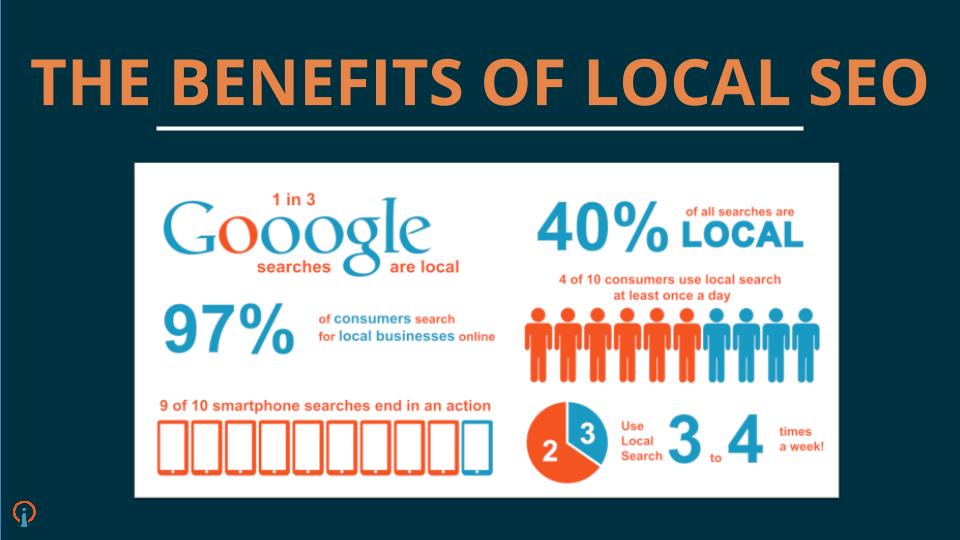
    Paula’s “How To Boost Your Local Search Rankings” presentation took the audience through what types of businesses benefit from local SEO efforts. It also detailed the different types of Google My Business pages and how to use them. With the insight from Paula’s presentation, business owners can better understand how to optimize their business both onsite and offsite to gain better local search rankings.

    search-influence-university-how-to-boost-your-local-rankings-10-11-2016


    Mary Silva’s “10 Ideas To Drive Traffic To Your Website”

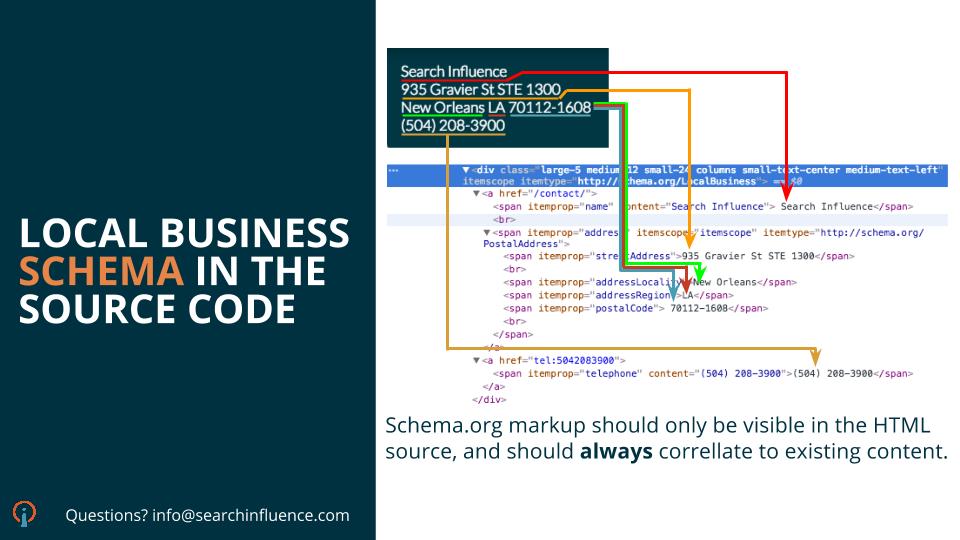
    Mary’s “10 Ideas To Drive Traffic To Your Website” presentation tackled concepts that influence your site’s user experience and actionable ways to help improve traffic to your site. It covered topics ranging from highly technical concepts like Schema markup and Google Search Console Analysis to less laborious efforts like directory and authoritative link earning. She explained how to use Schema.org rich snippets to create more engaging search results for your website on Google. Her presentation also went into detail on how to use social media efforts effectively to not only post but also promote engaging content like infographics. “Think of your online marketing efforts as a service,” said Mary, Internet Marketing Team Lead at Search Influence. “We know our users, and we’re getting them closer to their end goal faster. Make your overall goal to give users a cleaner, better experience and make users lives easier. ”

    search-influence-university-10-ideas-to-drive-traffic-to-your-website-5-26-2016

    In utilizing some of the tips and tools explained in these two presentations, guests could help increase their business’s online success in many ways including, but not limited to, improved visibility in local search results and increased traffic to their sites.

    For more information on the event, visit townsend.bunksite.com/ or contact the office directly at 504-208-3900 or Search Influence, 935 Gravier St #1300, New Orleans, La. 70112.


  • Here Are Our Top 5 Blogs From September

    Another month, another top five blogs from Search Influence! All of these posts are chock-full of information that will help you keep your website in tip-top shape and give you some insight into life at Search Influence. Subscribe to our blog to stay up to date on what’s going on in the world of SEO and Search Influence.

    #5: How Google Possum Has Affected 3 Pack: A Before and After Review

    Google’s newest update has had some drastic effects on the search results 3 pack. Amy Arnold gives us the lowdown on some listings that are pretending to be dead.

    Google Possum Update

    Look at that beautiful Google update devouring those listings.

    #4: What Happened to Facebook’s 20% Text Grid Tool?

    Michelle Neuhoff Boyd is back at it again this month and refuses to leave the top five standings. Whether you’re a Facebook fiend or a business taking advantage of the social platform, this blog entry has mountains of information about the inner workings of the Social Media giant.

    #3: Happy Working Parents Day: 10 Influencers on Lessons From Their Working Parents

    To celebrate National Working Parent’s Day, Mary Silva whipped up a heartfelt blog post complete with written and video interviews of some of our employees. Tears may be shed by the time you reach the end of the video, so be sure to have that tissue box ready.

    Kid nodding head

    #2: Search Influence Adds 3 New Hires in August

    Search Influence added three more employees in August and a lot of people were interested. Learn more about our new team members in this post compiled by Melissa Verzwyvelt.

    #1: Barnacle SEO – Local Search Engine Optimization for the Sam’s Club Crowd

    Last but not least, Mr. Barnacle SEO himself, Will Scott, saw a massive resurgence in popularity of his blog where he coined the industry changing term. Take a gander at this super informative blog.

    While you’re at it, follow our blog to get the latest updates from Search Influence.

  • Link Building: How to Develop a Winning Link Profile

    The Basics of Link Building

    Backlinks are a significant factor in a website’s search visibility. When a site links back to your website, it signals to search engines that it’s authoritative enough to be an information resource for other websites. That’s why it’s so important to any SEO strategy.

    However, SEO’s and businesses alike walk a thin line when it comes to generating backlinks for their sites. Each backlink has a different value depending on that source site’s own authority and trustworthiness. The goal is to develop a diverse but high-value link profile of authoritative links from a variety of source types. This process is called link building.

    I like that your backlink profile's so natural image

    Link building can be categorized into two different types of work: manual link building, where a link is submitted to directories or included in profiles, and editorial link earning, where a site links to your website organically because they want to share or refer to your content.

    Manual Link Building

    It may seem like this is not the preferred method for link building. However, don’t forget that we want a diverse link profile. The character of your link profile reflects the character of your business to search engines.

    It’s natural to place your website and information on sites that potential customers may use to find a business like yours (i.e. directories) or in your social profiles. This is the same as adding your business’s information to a phone book or business card that you share with people.

    When doing manual link building, just remember that you want the sources of your links to make sense and reflect the authority and relevance you’d like your website to have. Ideally, these links come from sources like your social profiles, local directories like Google Maps or Yelp, and niche directories that apply to your industry (Healthgrades.com for doctors, for example).

    Editorial Link Earning (aka Link Attraction)

    It’s a little more difficult to build out the other side of your link building strategy—editorial link earning. You can’t control these links like those that you manually build. However, link earning is a great opportunity to show the internet just how great you are at what you do and can result in some of the most valuable links out there. It should also already fit into your overall branding strategy.

    So, what are editorial backlinks? These are links that people have shared on their own websites or social media back to your website. For example, if someone read a blog post that you wrote for your business and thought the content was so engaging and noteworthy, they shared it on Facebook or wrote their own blog referring to yours, you’ve just received an editorial backlink.

    Social interaction vector image

    This type of link building starts with creating great content and ends with sharing and strategically placing that content for the most relevant and influential users to see and engage with it.

    That’s it, the basic composition of any good link building strategy. Link building definitely takes some thinking but it is immensely valuable to your overall SEO. Directory and social profile links are important in building brand awareness, and creating and sharing great content is highly integral to exhibiting your business’s overall value and capabilities both on- and offline.

    To find out why link building is important for dentists, click here.

    Image 1 Credit

  • How Google Possum Has Affected 3 Pack: A Before and After Review

    Google Possum Update

    Throughout September, the local search industry has been watching the results of the dubbed Google Possum update.

    In August 2015, Google shook up local search results, which changed the Map Pack from a 7 Pack to a very exclusive 3 Pack. This change was a dramatic one by omitting many local businesses and by making inclusion nearly impossible for businesses in the exterior of city limits and in suburbs.

    Fast-forward two years, and we now have Possum.

    “Possum?”

    Joy Hawkins wrote an excellent blog post summarizing the effects observed by the Possum update, and in that post she attributes Phil Rozek with creating the Possum moniker because “it is fitting since many business owners think their Google My Business listings are gone, when in fact they are not. They have just been filtered — they’re playing possum.”

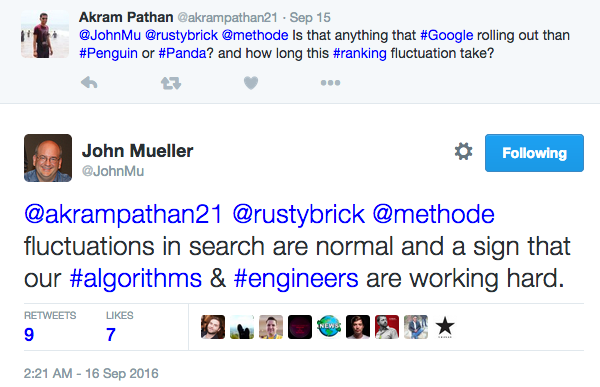
    And officially? … Possum is an unannounced update, meaning the SEO community collectively compared notes and decided this was an algo update. Google did not directly announce or confirm this update. However, John Mueller did Tweet a comment, which I completely paraphrase as “if you see stuff happening, maybe the Google Engineers are doing something.”

    Possum Update Tweet


    “Google is now filtering based on address and affiliation.”

    In her post on all things Possum, Joy Hawkins cleanly lists the effects of this change. Among her list is the observation that Google is now filtering results based on duplicate address, website, or affiliation.

    We see duplicates all the time in map results for local searches for any place that has multiple practitioners:

    • Doctors (plastic surgeons, orthopedists, dermatologists … )
    • Lawyers
    • Dentists and orthodontists
    • Hair salons
    • Etc.

    For example, a doctor’s clinic can have numerous Google-allowed listings: one for the practice and one for each physician or practitioner seeing patients at that practice. Each of these listings will have the same address, phone number, and website, so one clinic or practice can end up with multiple listings and dominate the results landscape.

    But user experience for such a repetitive Local Pack is not ideal, and Google is all about user experience. We have a plastic surgeon client, Deluca Plastic Surgery in Albany, NY, who has been fighting this battle for a long time.

    Dominating the Local Pack No More

    Anyone searching “plastic surgery Albany NY” back in April 2016 would have seen the 3 Pack all leading to the same practice. In fact, in the “More Places” Maps results, the same practice completely dominated with positions 1, 2, 3, 5, 6, 7, 8, and 16. What the heck, Google?!

    I had copied and pasted the Maps results into a spreadsheet just for fun back in April. I’m glad I did, because I can share this story with you. Here are just the first eight results from that April 2016 Maps search—those in yellow all lead back to the same practice:

    April 2016 Maps Search Results

    Our client was ranked at 18th and 20th. Our client is in Albany, and the website had and has stronger Domain Authority, stronger NAP, more reviews, and on and on, so it just didn’t make sense.

    We did some work to mitigate those results. We had some minor success, but fighting a battle against Google’s algorithm, you might not always come out a winner.

    And Then Possum Came Along

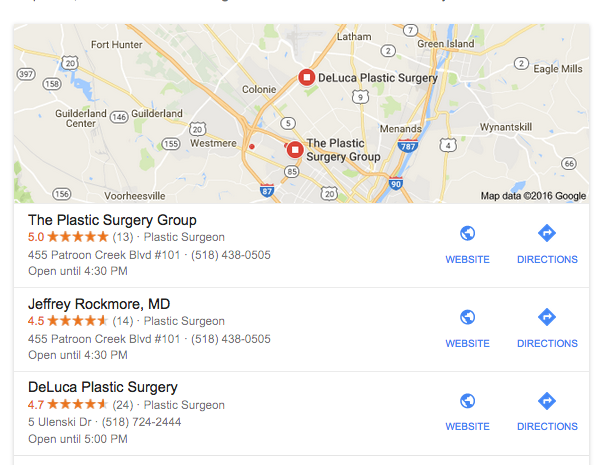
    Today, we now see Deluca in the 3 Pack. Woo hoo!
    Google maps results after Possum roll out

    We are feeling pretty good about this (don’t take the wind out of my sails), but we acknowledge that all is not perfect in this scenario. In this 3 Pack, the doctor in the second listing is a plastic surgeon at the practice represented in the first listing.  He has the same address and phone number, but he has his own, personally branded, website.

    This is one example among millions of searches, but it may suggest that domain is a primary indicator of the duplication filter. This needs lots more observation and input, and I encourage you to let us know if you have seen 3 Pack changes this September.

  • Top 5 Most Read Search Influence Blogs of August

    It’s back to school time, and you know what that means—time to catch up on your reading! Here are the top five most read Search Influence blog posts of August. Study up!

    1: What Happened to Facebook’s 20% Text Grid Tool?

    Ranking in the top five for yet another month, this updated blog post gives the ins and outs of Facebook’s latest text grid update. Peruse this popular post to learn what this update means for your advertising.

    2: Search Influence Jobs: What Does an Account Associate Do?

    Get a sneak peak into daily life at Search Influence! This upbeat post talks about three great aspects of working as an Account Associate: personal growth, great team members, and helping businesses.

    3: Local SEO: How to Clean up Citations for Better SERP Visibility

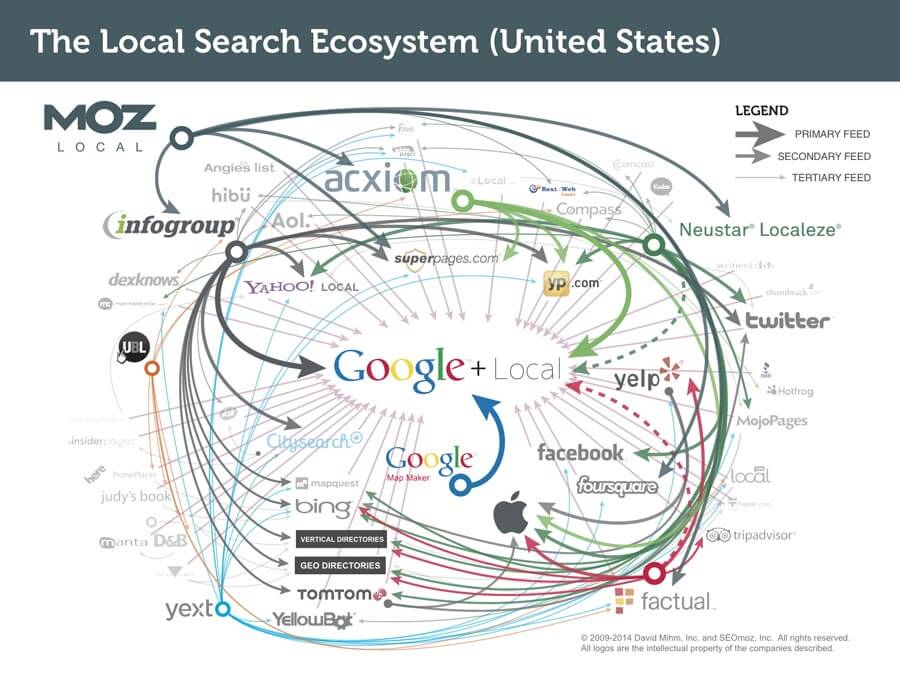
    Local_Search_Ecosystem_USIf the image above makes zero sense, then you should probably read this post. Learn all about how consistent citations can increase your website’s visibility to search engines.

    4: 5 Ways Technology Has Changed the Olympic Games

    There’s no better remedy for Olympic withdrawal. Instead of mourning the sudden lack of Michael Phelps and Simone Biles in your life, learn about technology’s impact on the Olympics.

    5: Two New Hires Join Search Influence

    Welcome Kayla and Mildred! Get to know the two newest members of the Search Influence team, complete with fun facts about cars, Google Android, and Wolverine 3.

    Image 1 Credit