Tag: local search

  • Site Audits and Your Business: An Introduction

    Just like any portion of your business, your website requires constant maintenance to ensure that it is running as optimal as it should. It’s very well known that Google loves to constantly change their algorithm, forcing websites to adapt quite frequently or else their search engine rankings will suffer. Whenever a video game patches in a major update, they release a list of patch notes so that players can stay abreast of changes. Google, however, does not afford webmasters that same luxury. The massive changelog initially has to be discovered, and then Google (most times) will decide to give some insight on how they just changed the internet. So, what does a site audit have to do with this? A site audit doesn’t just look at one aspect of a website; it looks at the entire thing. By inspecting every nook and cranny of a website, it’s tough to miss anything.

    What is a site audit?

    In essence, a site audit is exactly what it sounds like—an audit of your website in its entirety. A slew of benchmarks are measured to determine the overall “health” of your website and suggestions are made on how to improve any issue that may arise (and they will arise). The factors covered in site audits are technical, content, and off-site. These three topics also contain an array of subcategories that are necessary to cover.

    Endless Knowledge Image Of A Man With His Brain Open - Search Influence

    It is also important to know that a comprehensive site audit is no easy or simple task. They require a few days of dedicated brain power to aggregate all of the information that is necessary to give you an in-depth view of your site. These reports generally end up over 30–40 pages long and are full of pertinent information and screenshots. If they aren’t, you may have been fleeced.

    The Technical

    Technical factors on the website are simultaneously the most important and least important impacting parts of a website. For example, every website should have a robots.txt file on the root directory of their website. If you happen to disallow search engines from crawling your site with this file for whatever reason, it will never show up in any search engine. Ever. Never ever. The flipside of this is that having a good robots file also doesn’t guarantee that your website will ever reach high search engine results, even though a bad robots file will guarantee that you won’t reach them. Server configuration is also another large part of the technical aspect of site audits. Many people use sites like Godaddy to host their website, but these often have default settings that your site will be set to until you change them.

    Image Of Dog Moving Joysticks - Search Influence

    There is far too much to go over in the course of a standard blog post, but Search Influence does offer Comprehensive SEO site audits and can go over every nook and cranny of a website to measure its health.

    The Content

    As Bill Gates oh so famously quoted, “content is king,” and that still continues to ring true. While images and videos are definitely a plus for any website, the content is the real hero of this story. To make things even more confusing, quality is better than quantity but quantity is still a necessity or your content will be determined to have low quality. But, if your quality is too high, your content will be considered low quality.

    Content on your website should be a certain length —300 words per page is the gold standard, but more definitely doesn’t hurt. Your content must also be relevant to your business and to the page itself. In addition to this, the only way Google will be able to relate your content to your topic is if you add in relevant keywords. If you add too many keywords, however, Google gets very angry and stops liking your website. This makes content writing a sort of a magic area to ensure the best message is being sent to search engines crawling your site.

    After the main content is created, the next step is to set up the metadata for each page. Metadata is coding on the backend that gets read by search engines and can also be displayed in search engine results.


    Image Of SI Title Page In Search - Search Influence

    Image Of SI Meta Description - Search Influence

    The screenshots above show the metadata for our own site. Without having this code in place, search engines that encounter your website have no idea what it’s about. When a search is performed, the search engine will produce a snippet to show in their results.

    Image Of SI SERP - Search Influence

    This screenshot is the preview snippet for our company as displayed in Google. Notice how that title tag and meta description both populate into the search engine results page. This not only helps Google recognize your website and relate it to the topics you would like to rank for, it also provides users with a preview of the web page.

    The Off-Site

    Off-Site factors are probably the toughest part about increasing how favorably search engines see your site— it is also the most important. This section is overwhelmingly dominated by websites that are linking to your website. Having plenty of websites link to you helps to add authority to your site, but if one site links to your site too much, it will appear spammy and both websites can see punishment. A good start to increasing the number of unique domains that link to you, or your backlink profile, is to start with social profiles and high-ranking local profiles such as Yelp!

    After some time of making your business presence known online (and offline), you’ll find that news sites and blogs will link to your site as well. The more this happens, the more authoritative your website becomes, and the more search engines will prefer it to others.

    If this all seems overwhelming, contact our Sales Team. They are happy to go over the logistics of this process and see if it’s a fit for your company’s budget. The SEO Experts at Search Influence are always willing to help a website in need.

    Image Sources:

    Brain of Knowledge Image

    Shiba Image

  • A Day in the Life of a Sales Executive at Search Influence

    Meet Bailey Colomb! Here’s a glimpse into what an average day looks like for Bailey as a Sales Executive working at Search Influence. From her favorite breakfast food (hint: think Ron Swanson) to some of her favorite perks of the job, you’ll get an insider glimpse into what it’s like to join the SI sales team.

    Bailey Colomb, Sales Executive at Search Influence

    Where did you grow up? Where did you go to school?

    I’m from New Orleans. I was born and raised in Lakeview and went to Mount Carmel for high school. I went to college at the University of Southern Mississippi in Hattiesburg, MS. I graduated in Hospitality and Tourism. I wasn’t interested in working at a job that was behind a desk with no social interaction.

    When you’re not working, what are some of your favorite things to do around New Orleans?

    I’m very close with my family. Almost my entire family lives in New Orleans. Every Sunday we’ll do lunch or dinner at my mom’s and my family will all come over. I also have a lot of friends here from college and high school, so we like to do a lot of happy hours. A lot of us after work will go out for happy hour, too. Anywhere that has live music, alcohol, and fries—I’m interested!

    What is your ideal breakfast to get you through a busy workday?

    Anything that includes bacon. I’m not a huge breakfast person before work, but my ideal breakfast would definitely be bacon oriented.

    What led you to this position at Search Influence?

    I was an account manager for almost a year and a half. I’ve been in sales a month, so it’s a very recent transition. I think as an account manager (AM), there are a lot of great things about it, and everybody on the AM team really enjoys being creative and thinking of out of the box ways to help clients, but sometimes the day-to-day responsibilities cloud that. That was an area of opportunity that I wanted to pursue. Being in sales lets you focus on this fresh canvas. These new potential clients have never been approached by anyone, and I get to create this really broad creative strategy to help them.

    What was the craziest job you had before you started at SI? Did you learn anything from that experience that you apply to your sales position today?

    I worked at the Royal Sonesta, which is in the 300 block of Bourbon. My shift that I normally worked was 7 a.m. to 3 p.m. I would get to work when people were going to bed.

    I think that everyone should work in some sort of customer service job because it teaches you about literally everything. It taught me to listen first and hear what people really needed, and then figure out how to help them instead of just assuming. Sometimes you’re so quick to get to the solution that you’re not actually listening to the problem.

    If I talked to your co-workers, what are some adjectives you think they’d use to describe you?

    I would say outgoing and definitely chatty. People always make fun of me because I have a story for everything. I would hope that they would say knowledgeable because I feel like I really have learned so much since being here. It’s cool to be in a position where people are asking you the questions, instead of you asking the questions.

    What is the first thing you do when you arrive at the office?

    The first thing I do is make my coffee. And then I check my email, I check my calendar and get my whole day forecasted. At 8:45 we have our sales meeting, which is great. It’s a touchpoint at the beginning of the morning to see where we are, if there are any updates, check our metrics and any deals we’re working on. Then, we share our daily priority. That is the most important thing we think needs to get done. A lot of the priorities will be making calls if there are prospects to reach out and call. Or, if you have a call that’s in the presentation stage, then preparing the presentation to have ready for the next call.

    Describe an average day at work.

    Right now we are working through our cadences. The cadence is setup to have different touch points throughout the week to try to make that connection with someone who could use our help. After the initial conversation, if they are interested in learning more, then we set up a discovery call so we can get to know their business and get as much information as we can to put together a broad strategy. If all goes well, the next step would be to send a contract and have a kickoff call with an AM who gets into the nitty gritty details of the deliverables.

    What are some big milestones your team is currently working toward?

    We just rolled out our sales playbook, which has been really great. It’s a huge resource for all of us to turn to with tips and tricks for the best ways to leave a voicemail, best ways to send an email, or how to handle pushback when we’re on the phone. It’s been a really good resource for all of our new team members to use. The cadence is also something we recently rolled out that has been really successful. Since the cadence, we’ve had about five outbound calls that have turned into sales presentations.

    What is the most challenging aspect of your job?

    The most challenging is, coming from an AM perspective, you have a lot of platforms that tell you exactly what you need to do, so you know what your day looks like. I’ve had to adjust how I come in and organize since there’s less structure. It’s made me change the way I stay productive and organized throughout the day.

    What is the most fulfilling part of your job?

    The most fulfilling part of the job, for me personally, is that everything is a trial and error right now because it’s so new. We’re all learning together to figure out what works and what doesn’t. I get to be one of the people who is helping to get the department up and running. It’s all the more fulfilling to be able to build new relationships with people here who have so much knowledge.

    What skills do you utilize from previous positions in your career to succeed in sales?

    Definitely customer service, and with that, having no shame. The worst they can do is hang up on me or tell me no, so I might as well just call them. Being in the service industry for so long has helped me be a good communicator and make people comfortable. That’s important in sales because you want to be as conversational as possible and the least sales-y as possible.

    What are some of the perks of a sales job?

    Happy hours! Getting out of the office to mingle more. The second week I joined the sales team was New Orleans Entrepreneur Week, and we got to go out and network and hear speeches. That’s definitely been fun to meet new people.

    What stands out about the culture at Search Influence that makes your job more enjoyable?

    The people. I feel like everybody says that, but it really is what keeps people motivated, keeps morale up, and keeps people here as long as they’ve been here. I remember when I interviewed here, seeing the people coming in and out of the office, I knew I wanted to work here because everyone looked so cool and laid back. Everyone is so easy to work with and collaborative. I think that is one of our strongest competitive advantages.

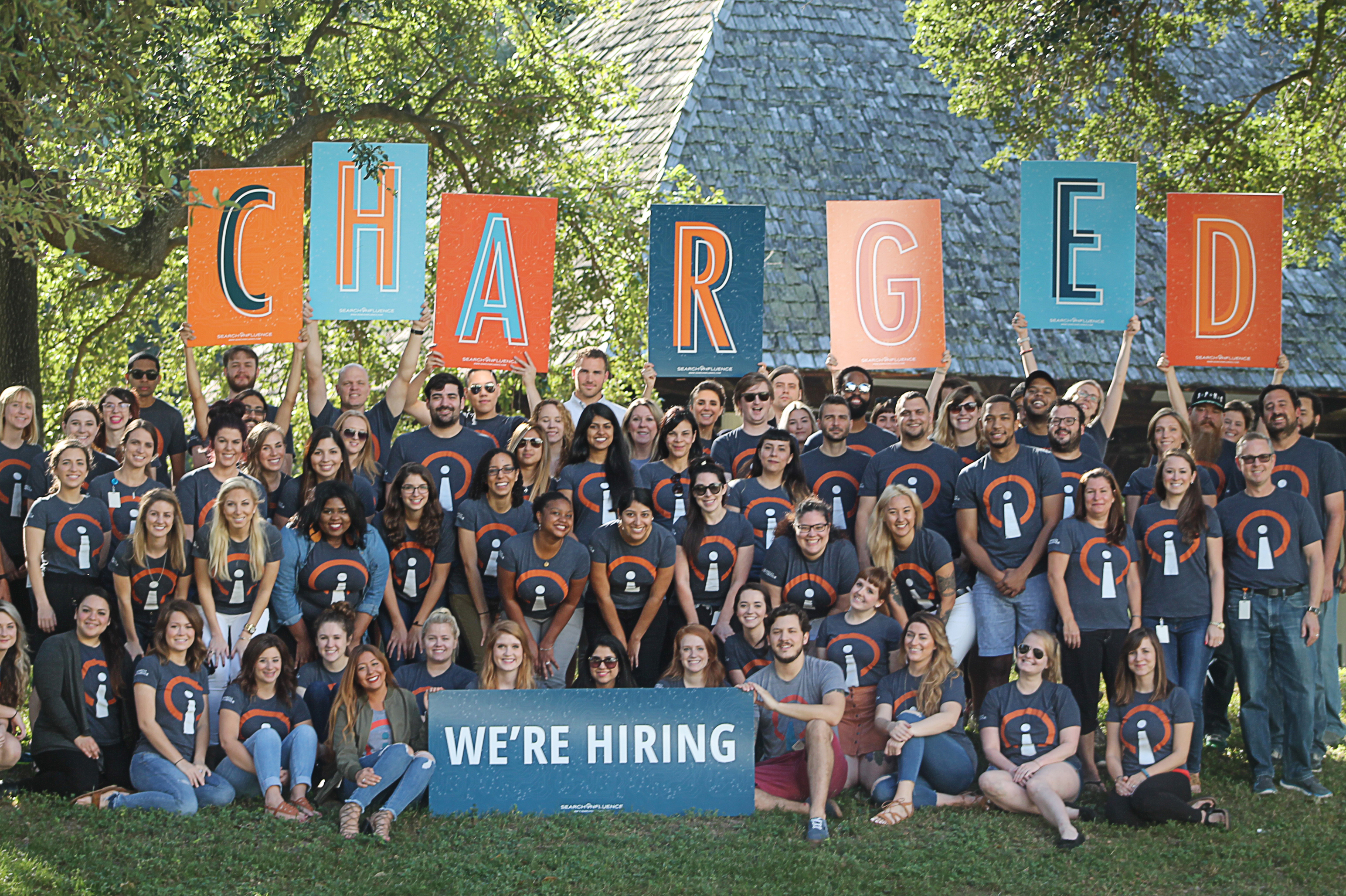
    Charged Employees of Search Influence

    What’s your favorite work memory at SI?

    Me and my friends at SI have a “Ladies who…” group, which is just an event once a week where we do something different. Like ladies who lunch, who happy hour, etc. It is super fun to not only build those relationships in the office but also build those friendships out of the office, too.

    What would you like others to know about your job that they may not expect?

    I think, for me, it was hard switching my AM brain to a sales brain. But, it was interesting to see how much in common the positions had—sales encompasses a lot of the things that each department does each day. Also, it’s just not that scary. I thought it would be really intimidating to pick up the phone and talk to a doctor, but we don’t know what they know, and they also don’t know the things that we know.

    What are your biggest goals for your career in the next 5 years? Beyond?

    My biggest goal in the next few years is just not to get too comfortable and to always stay challenged and learn something new every day. It’s easy to get in a rut and just do what you do because it’s a routine and not because it’s challenging.

    Looking ahead, what are you most excited to achieve and take part in at SI?

    Some big sales! I’m excited now that we are really focusing in on the direct side; it’s exciting to be part of the team that is supporting and growing that. I think we have great clients now who have supported us for a long time, and it’s cool to be a part of the team that’s going to help contribute to that.

    Sometimes it can be hard to explain what we do in the SEO world. What are some successful tactics you’ve used to inform new clients about our industry?

    The way I always describe it is that I help local businesses rank on Google. Obviously, there are a lot of little technical things that go into it. But at the end of the day, our main goal is that when a user searches for something and types in a keyword related to one of our local businesses, it’s our client that shows up in the first five rankings. That’s who the user clicks on and engages with. Everyone Googles things, so it’s easy to relate to that.

    In your opinion, why does online marketing matter for small business? What role does it play in the local economy?

    I think it’s important for small business because people might not know that you’re there unless you tell them. You do that through online marketing. That’s how you make your brand known in this day and age; not doing it is not an option.

    What are prospective clients most surprised to learn when you talk to them about the benefits of online marketing?

    I think that a lot of people obviously know about Google and know how it works, but I don’t think they know how or why those businesses are ranking. They are surprised by all the things you can do to improve your rankings. I don’t think that they understand the actual manpower it takes to manage all these things so that when you do type something into Google, it’s your business that shows up.

    What were you most surprised to learn about this industry when you started working at SI?

    I literally knew nothing. I straight up Googled, “What is SEO?” Every day was different; it was an uphill battle because it’s such a vast level of knowledge. My surprises were very similar to our clients’ surprises.

    What advice would you offer to someone considering a sales position in this industry?

    I would say go for it! I definitely do not regret trying something new. I had never done sales before. There’s an aspect of selling in everything you do, but I had never picked up the phone and tried to sell something. It’s changed the way I think about my work. It’s helped me build on the character traits I already had, and also build new ones as I get more comfortable and gain more experience.


    If you’re interested in learning more about a sales position at Search Influence, please visit our careers page to view our current positions available. We look forward to meeting you and discussing a potential career at Search Influence!

  • How a Debate About Onions Showed Google Might Not Be Infallible

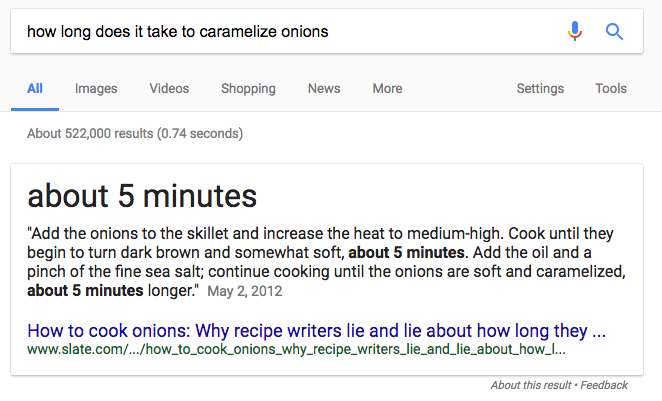
    A couple of weeks ago, I was driving to meet a friend for dinner when I heard a segment on NPR’s Marketplace that featured Tom Scocca talking about his article on Gizmodo about caramelized onions. At first, it seemed like many a segment on NPR we’ve come to expect—interesting and mildly entertaining. It wasn’t until the segment got to the point of the matter that I was hooked. When people were searching on Google for “how long does it take to caramelize onions?” they were getting misinformation. How could such a simple question turn up a false response from the world’s largest, and arguably smartest, search engine? I wondered, are there other moments like this that have happened between users and Google?

    How Did Google Misinterpret What Is Common Knowledge to Most Chefs?

    To be fair to Google, this wasn’t entirely their fault. The initial blame goes back to the thousands of recipes that live on the internet telling readers how to caramelize onions, from an at-home amateur cook’s blog to the New York Times. For whatever reason, instead of telling home cooks to patiently take their time to cook the onions on a low to medium heat for upwards of 30-45 minutes, a lot of recipes listed the expected cooking time as 5-10 minutes. If you’ve ever attempted to caramelize onions in this amount of time, I’ll go ahead and break it to you—it’s impossible. To save you from a bunch of food chemistry, I’ll just say that it has to do with the sugar content in onions.

    Purple Onion Cut In Half - Search Influence

    So, why is there so much content online that gives users, and in turn Google, misinformation? The simplest answer is that writers of recipes were trying to simplify a process that would turn an ordinarily easy recipe for a weeknight meal, like French Onion Soup, into a 1 ½ –2-hour ordeal. In Scocca’s Slate article written in 2012, he gave many different examples of well-known chef’s attempts and failures at trying to achieve caramelization in less than 20 minutes. The article is littered with keywords Google would love and came from a highly reputable source. At its beginning, he references the 5-10 minute myth, and for a while, this had a positive response—The New York Times changed their language when talking about caramelization in their recipes, and even the Wikipedia page was updated as a result.

    But, when people typed “how long does it take to caramelize onions” into Google, they continued to see the false expected cooking times appear in Google’s search result box that is supposed to give users “one true answer,” a term coined by Danny Sullivan, founder of SearchEngineLand.

    How Long Does It Take To Caramelize Onions Google Search - Search Influence

    It turns out, Google was looking at Scocca’s Slate article, with all of its high word count and keyword-laden, well-written text, as the authoritative source. The only problem was that its algorithm focused on and crawled the first paragraph that referenced the 5-minute cooking time. The myth Scocca was trying to debunk ended up getting “bunking,” to use his inverse take on the word.

    Users Push for Quick Answers

    Google hasn’t always answered questions. Users typed in what they were looking for, and they got a list of web pages that may help them find it. But Google realized people wanted short, quick answers to questions, so they developed the short answer box. It’s virtually set apart from the search results and has a slight drop shadow.

    This also isn’t the first time Google has had issues with its short answer box. About a month ago, if you were to ask “Is Obama planning a coup d’etat against the U.S. government?” the response was that he indeed was planning a communist coup at the end of his term. Ask why a fire truck is red and you got a Monty Python joke. While the latter could lead to some harmless John Cleese quotes passed around the office, the former could actually misinform the public in a harmful way.

    Why Are Firetrucks Red Google Search - Search Influence

    Google’s Response and Their Plan to Fight False Information and Fake News

    Google has been dealing with this for a couple of years now. In 2015, they announced that they were using RankBrain, an artificial intelligence algorithm, in combination with Knowledge Graph, which pulls information for short queries from sources like Freebase, Wikipedia, and the CIA World Factbook—very reputable sources. It currently contains 3.5 billion facts. And, with all of these instances of inaccurate snippet responses, Google was quick to fix the issues. Searching for the cooking time for caramelizing onions now brings up the correct answer. Also, along with Facebook, Google also upped their fight against fake news by using fact check systems in their searches and feeds. So the big question is, how does all of this relate to your small business, practice, firm, bakery, brewery, insurance agency, etc.?

    The Importance of Rich, Accurate Content

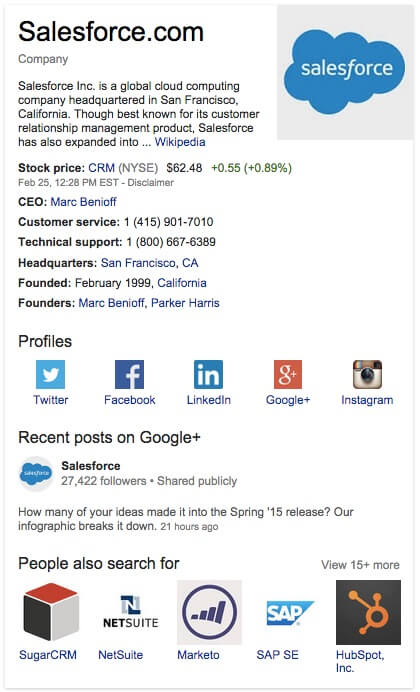
    Whether you’re working on new content or need on-site or local search optimization, the importance of producing educational, on-point, authoritative content is key. The Knowledge Graph’s “panels” pull information from your “about us” page, including contact information. These show up in the sidebar of searches and can include photos from your Google+ page as well as any reviews of your business. So, it should be a no-brainer that your Google+ page should be up to date and any reviews of your company are responded to promptly. Above all, make absolutely sure that your NAPs are consistent and current; an incorrect address showing up in a panel is not the quick answer that potential customers want.

    Salesforce Google Plus Account Screenshot - Search Influence

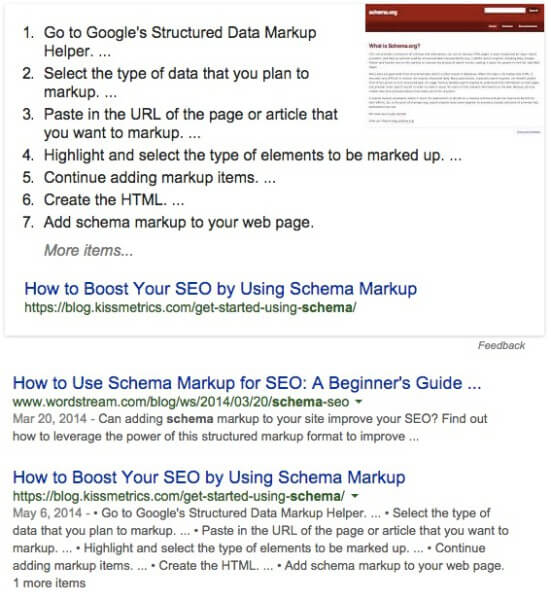
    There’s also the chance that your longer content could be pulled into a short answer box. At first, Google’s Knowledge Graph was pulling just short answers to questions, but it has since gotten smarter at pulling answers from longer content, like how-to guides with 20-point checklists or in-depth, 1,000+ word content that gives users lots of useful information to peruse. As always, make certain your content is not only accurate but also engaging enough to pull viewers deeper into your site and actually convert.

    Does This Completely Change SEO?

    In short, no. As this article from SearchEngineLand points out, in most cases, “the source getting pulled into the Knowledge Graph is already in the first few organic search results anyway.”

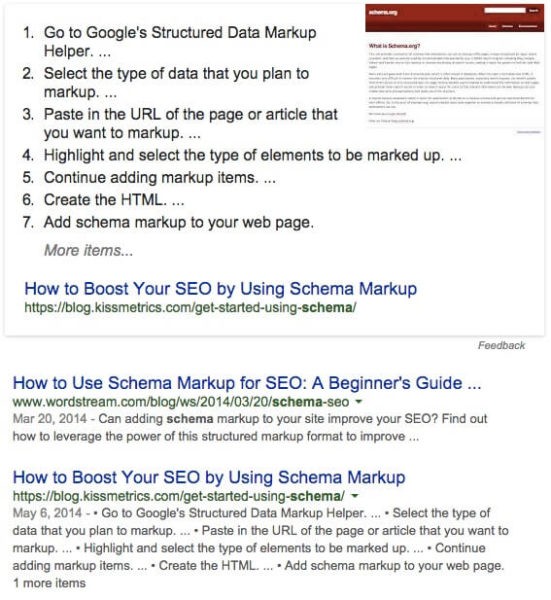
    How To Boost Your SEO Using Schema Markup Screenshot - Search Influence

    Good SEO will improve your ranking regardless and will, in turn, improve your chances of showing up in a short answer box. But even if your business never shows up there, your target audience is still searching for more than just a quick answer. They’ll want to dive into your site for in-depth, relative information. Similar to previous algorithm updates with Hummingbird and Panda, there may be some minor ups and downs in organic search numbers. But if your content is consumer-focused, educational, expertly written, and optimized, then your SEO plan will help out Google’s Knowledge Graph as well.

    If anything, these inaccuracies in Google’s AI have taught us that the search begins and ends (ideally in conversion) with the user. Keep in mind the unique relationship between your business and your potential client.

    Make It Easier for Google

    So, what are some additional steps you can take to make sure your site is up to current SEO best practices? Check out our recent white paper on things to avoid when building or optimizing your website. It includes valuable information, like configuring your URLs and making sure you’re mobile-friendly. Have any more questions on how to increase website traffic? Reach out to us at any time.

    Images

    Onions

    Short Answer Box via Gizmodo

    Fire Truck via TheOutline.com

    Knowledge Graph Panel via SearchEngineLand

    Short Answer Box via SearchEngineLand

  • Marketing to Males: How Can Your Cosmetic Surgery Practice Draw in More Men?

    In a society that remains focused on physical appearance, plastic surgeons have plenty of healthy competition to appeal to the audience in their community. Because plastic surgery procedures are being purchased overwhelmingly by women—in 2016, women purchased 90.7% of plastic surgery procedures compared to 9.3% purchased by men—most marketers target female prospects. However, research shows that doctors could be doing a lot more with their marketing strategies when it comes to targeting men.

    A New York University Medical Center study demonstrated the highly female-centric marketing campaigns being implemented by plastic surgeons. After analyzing 453 websites and 4,239 images on plastic surgeons’ websites, only 5% of the pictures included males, and 0.9% depicted both men and women together—not to mention that only 22% of these websites included any services related directly to males. In fact, some plastic surgeons completely ignore the male market in online marketing efforts or minimize them significantly.

    While popularity in some procedures has risen in male patients, plastic surgeons are seeking appealing and effective ways to market their services to men. What exactly is drawing in the men who are getting these procedures? Research shows that the following factors could help influence men to feel comfortable undergoing plastic surgery procedures for issues they want to resolve, ultimately helping them to gain more confidence.

    Dos Equis Man Jazzed About Plastic Surgery - Search Influence

    Pay Attention to What’s Already Popular

    When it comes to marketing to male consumers, it’s important to note trends. At the top of the list of surgical procedures performed on men in 2016 were liposuction, breast reduction, eyelid surgery, nose surgery, and facelifts. Popular non-surgical cosmetic procedures included injectables like Botox and Sculptra, as well as skin rejuvenation procedures like dermabrasion. Choosing to focus on these procedures and providing a plethora of before-and-after photos of men who have had these procedures done could prove beneficial to your plastic surgery ad campaign. Plus, the images can demonstrate the natural results that men may be seeking if they associate cosmetic procedures with highly noticeable and dramatic results.

    Focus on Youth and Energy

    The last thing that any male—or person, for that matter—wants to hear is that they look “tired.” Appearing to lack energy can be detrimental in a lot of ways, especially in a busy workplace that may be riddled with young people vying for the next promotion. By decreasing wrinkles and folds through plastic surgery, the fatigued look improves dramatically. Many men want to restore that youthful, energetic look that they had in their twenties, and this could provide effective fuel for your ad campaign. Again, consider highlighting before-and-after photos that demonstrate the great results men might not know they’re looking for!

    Target the Dads

    After years of raising kids, it’s hard for the stress and work not to take a toll on the body and appearance in general. Child raising years are common for the appearance of wrinkles and weight gain. Fathers are an excellent and relatively untapped market for plastic surgeons, in a similar way that mothers have been an effective marketing target. Try changing the dialogue in your ads to focus on hardworking fathers who deserve to treat themselves to a naturally younger look—a.k.a. the “Daddy Do-Over.”

    New Girl's Schmidt Celebrating Himself - Search Influence

    Emphasize a Natural Yet Rugged Look

    While many men may attribute plastic surgery to women and femininity, in reality, strong, masculine features can be enhanced with procedures that can provide natural-looking results. Some of Hollywood’s most notable and masculine heartthrobs haven’t come by their looks completely naturally. Even Dwayne “The Rock” Johnson confessed to having liposuction performed on stubborn flab, and George Clooney admitted to having an eyelid lift to help achieve his youthful glow. Men’s grooming is increasingly popular and less taboo than it has been in previous years, and the idea of shaving off ten years is now a highly acceptable idea.

    Beauty And The Beast Gaston Showing Off His Manly Chest - Search Influence

    Market to Couples

    Perhaps one of the more effective tactics is to reach men through their girlfriends or wives. It isn’t uncommon for a husband or boyfriend to use his girlfriend’s or wife’s products and to become hooked on the results. This can translate to cosmetic procedures as well: if a female significant other comes back from a cosmetic treatment with a refreshed glow, this becomes a recommendation in itself. Target your marketing to couples by age, encouraging them to enhance their bodies together or to reclaim their youthful looks.

    Pay Attention to Male Shopping Trends Online

    Men are increasingly turning their shopping experiences into social experiences, comparing prices and discussing them with others via social media. While this type of online behavior has been typically associated with women in the past, it is becoming increasingly popular among males. An online study from ManScan shows that 72% of men compare prices online, 56% read reviews of products and services, and 44% share this information with others. In many cases, the products and services discussed involve health and wellness. This information bodes well for the sharing of information about potential surgical procedures. By using a cost/benefit analysis with cosmetic procedures, plastic surgeons may see positive results with the male market.

    The male market provides an excellent opportunity for cosmetic surgeons to grow their practice through online advertising. By focusing on trends and behaviors, targeting men in ads can prove highly beneficial when done well. Consider these ideas and get more clicks to your website.

  • Home Sweet Home: Think of Your Website Like a House to Help Your Business

    It’s the American dream: work hard, build your business up, start a family, and buy a house with a white picket fence. Most of us are cruising for the same kind of idyllic dream for our business as well, even if we have a harder time figuring out how to get there. But what if I told you that one of the biggest factors contributing to business growth was, basically, a house? One you don’t need a mortgage to buy.

    Ok, so it’s not really a house: it’s your website.

    Image Of A House Working Like A Website - Search Influence

    But a website is a lot like a house. Its construction and design both build on top of each other and work to create a structure that is your business’s online home where people come to visit you. If you need a general contractor to make sure your house isn’t going to cave in, you can request a site analysis from us. But if you’re unsure if that’s necessary, or you’re just really obsessed with House Hunters and need to see where this is going, read on.

    Building From the Ground Up

    Your realtor wants you to see a new house on the market. First things first: you have to drive to it. The road you’re on is like the internet. You can get pretty much anywhere, and each road feeds off into more roads, creating the path you take (or the black hole you find yourself in when you’re “taking a five-minute break”). To avoid following random roads and hoping you get where you want instead of the Arctic, you need to know what your destination is. For a house, that’s the address. For a website, that’s the domain, also called the web address. See, I’m not making this all up; they’re completely related. The domain name in the example URL www.exampleswag.com is “exampleswag.”

    Image Of Floating House From Disney's Up - Search Influence

    So you know how you’re getting there, and you know the address, but what are you going to? Houses don’t float in the sky, and it would be very difficult for municipalities to enforce building regulations if they did.

    Just as a house sits on a physical lot, so too does a website have a physical home—the hosting and server. The server is a physical machine that sits somewhere out in the world, storing all the files that comprise your website onto its hard drive. Your hosting administrator owns and maintains the servers. When you pay someone like GoDaddy or HostGator to host your site, you’re asking them to host your website’s files on their servers, essentially renting land from them to build your house on. Sketchy real estate practice, but totally normal and secure for websites.

    Front End and Back End

    So you roll up to the house with your realtor for the walk-through. What exactly are you looking at as you’re exploring the property? On a website, there are essentially two different halves: the front end and the back end. The front end is everything a visitor to your site can see and interact with, similar to the walls, furniture, and doorknobs in your house. The back end involves the more structural aspects of the site: the wiring, plumbing, and framing of your house. When you’re buying a house, you want it to look nice on the front end and to have all the features you need (clawfoot bathtub, anyone?), but you also need it to function well on the back end. It doesn’t matter how beautiful the granite countertops are if the roof leaks every time it rains. This is why it’s so important to ensure your website has good bones. You can request a site analysis from us to find out where yours stands.

    The Foundational Platform

    Your website is built on a platform just like your house is built on a foundation. Popular platforms include WordPress and SquareSpace, but there are others. These two, in particular, are so popular because they are CMSs (content management systems) with really user-friendly interfaces. Once you get your CMS “key,” meaning the CMS platform has been installed on your site, you get easy access to all the contents of the house and can move furniture around and paint walls to your heart’s content.

    You could, of course, build your house without a foundation, or build your website from scratch one line of code at a time instead of using a CMS. It’s a pretty big job, and it really only works best for websites with few, static pages. Best to leave the roughing it to the survivalists and Mainer moose hunters.

    Bricks and Mortar: What Is Your Site Actually Made Of?

    The first known use of lime mortar was in 4th century BC Greece and Egypt. The first publically available description of HTML was in 1991. Times are a-changing, but structural integrity never goes out of style. HTML stands for HyperText Markup Language, but essentially it’s just the basic coding language used to create a website. Its primary use is to create each page of the site. It’s the framework that holds all of your stylish branding and outstanding content. Speaking of style…

    External Stylesheets Are the New Black

    HTML can be used to add some style to your website, but it’s a bit limited to tinted plaster and popcorn ceiling—think of the oldest website you can remember visiting because it was probably all HTML. The reason it looks so basic is that HTML is also what makes the bones of the house, so it ends up being a bit like trying to use the insulation of your house to create the wall color when that’s just not the insulation’s job.

    CSS (cascading style sheet), however, exists outside of the construction of the functional aspects of the site. All the CSS code is accessed separately from the HTML, so the style is rendered on top of each page as it loads. If HTML is the framework, CSS is the paint, wallpaper, and fancy flooring of your house. You can go crazy with customization and design whatever you can envision (I’m thinking mauve, personally).

    CSS can be housed above the fold content, the chunk of code that fits within the frame you see when the page first loads, but it’s better when it’s kept on an external stylesheet. An external stylesheet is a separate file from the page file and is accessed from the server individually to render a given page. When your site keeps the styling on an external stylesheet, search engines can clearly distinguish between style and substance as they go through the page code, leading to faster and more accurate crawls.

    Bringing In Personal Style

    The house has been bought and built, it’s all spruced up with trendy finishings, and now it’s time to fill it with furniture. Website copy is your site’s furniture. Having stellar copy is important for two reasons: it gives function and form. Each room in your house is divided into different functions by the furniture. Having content on each page of your site that is focused on the topic of the page tells visitors what information they should be expecting from that page and makes it easier to navigate to the information they want. When a guest comes to your house looking for a bathroom, for example, they’ll know which room is the bathroom because they will see bathroom furniture, and they will skip over the room with a bed because they know beds don’t live in bathrooms.

    In addition to having informational and focused content, you need to have strong content. If your copy is full of typos, lacks value, or has a tone that is off-putting to your readers, they’re going to leave, no matter how well the rest of your site functions. Would a guest notice your stunning parquet floors if they’re covered in dirty rugs and chairs that probably aren’t safe to sit on?

    Putting All the Pieces Together

    In the end, each piece of your website ends up working with the others to create the site, and if one isn’t receiving top marks, the whole site isn’t meeting its potential. After all, it only takes one dealbreaker to turn a dream house into a fixer-upper. But you can make your dream house work for you and your business. Take a good hard look at how your website looks now (or use the audit you’ve cleverly gotten from us as a guide), and decide what work needs to be done. If you’re not the DIY home improvement type, don’t worry—Search Influence has master carpenters on staff, so reach out to us for help!

    Image Of A Beautiful House Revealed - Search Influence

  • Fake News, Audience Targeting, and the Death of the 4th Estate

    Content marketing. Political marketing. Fake news. Content amplification. These are all instruments in providing pertinent information to audiences who will become newly inspired and be provided with valuable takeaways. What happens when you elevate content? Your audiences increase, consumption rises, and you essentially engage and “steal” influencers. Here are 3 key ways to leverage more devoted and more precious followers.

    1. Understanding the Traditional Media Tailspin

    Though traditional media has been effective throughout the history of marketing, it is important to realize the descent and, in some cases, collapse it has experienced in the last few years. Newspaper advertising looks to take the hardest hit with a decline in revenues between now and 2020, falling from $18.8 billion to $14.9 billion. (Source: Marketing Charts) While print dropped, digital advertising soared. As consumer behavior shifted online, this new media rose and grew tremendously over the years. Digital advertising has demonstrated continued growth where revenue rose 6 percent last year to $209 million. (Source: NYT) Surviving the tailspin and crash of traditional media and understanding digital marketing is essential to getting re-established as a marketer and to attracting audiences.

    Image Of Papers Writing - Search Influence

    2. Attach Yourself to Amplified Content

    Seek audiences floating by in the online and social media currents and latch onto them by serving them pertinent, targeted content. You will need to learn what interests your targeted audiences and how to keep them engaged at the right time. Once you know your audience, have and maintain a large online presence.

    Social interaction vector image - Search Influence

    To obtain online existence that lasts,  you will have to create valuable and amazing content. Venture into using infographics, videos, memes, guides, reviews, etc. These are all great ways to persuade and capture. But, you must realize your wonderful content will need help.

    Though your content is at it’s highest quality, it is competing with countless information out there. To wean out the competition, you should look into Content Amplification Tools. Taboola, Polar, and Nativo are some tools to name a few. These resources all strive to streamline the creation of producing ads, optimize ads in real time, deliver ads across devices, and drive traffic to your content.

    3. Learn from Political Marketing and Fake News

    Want to “steal” and keep influence and get away with it? You can!

    We’ve seen “fake news” in the news in the last year and a half and the tremendous amount of influence it’s had on audiences worldwide. We’ve seen it influence the 2016 presidential election, and we’ve witnessed big brands such as Pepsi and New Balance endure its pitfalls when their statements were misconstrued as political biases that went viral. What is the lesson here? Though brands should be careful not to get involved in sticky situations, it’s vital to realize what has made audiences so enthralled and how to keep them.

    Image Of Fake News Keyboard Button - Search Influence

    When we revisit the 2016 presidential election, we remember just how loyal audiences were to the candidate they supported. They were essentially brand loyal, and the victory of their candidate was the product they sought and trusted. How can other big brands gain such loyalty and following? It’s using social media, like Facebook, to promote content. It’s considering sponsored posts to reach even more audiences and raise awareness. More importantly, it’s big brands considering and creating a plan of action to think more strategically and to elevate the truth of their brand. The big lesson here is, “Will our audiences believe us?” If they believe, “How do we build and keep their trust?”

    Brands will, more than ever before, think critically, keep demonstrating authenticity, and share valuable insights while taking back what fake news has stolen.

  • Want to Grow Your Medical Practice? Here’s 4 Ways Facebook Ads Can Help

    A How-To Guide for Growing Your Practice Using Facebook Image - Search Influence

    The world is filled with many ways to advertise a product or service. Simply hoping that your message makes its way to the perfect target audience certainly isn’t the best practice to ensure that your medical advertising efforts are a success. For medical professionals, it may be particularly tricky to target those individuals in your practice’s geographic reach, specialty area, or even other physicians looking to refer their patients to another trusted healthcare provider. Though it can seem nearly impossible to reach the perfect audience through traditional mediums like television or radio, Facebook is continuing to provide proven results for advertisers in the medical realm. A rich and unique resource of user personal interests and behaviors, Facebook is truly a health care advertiser’s dream!

    Image Of Baby Making A Joke About Doctors - Search Influence

    Whether you’re a specialist or a general family doctor, Facebook has the right tools to not only narrow down your ideal patient but also present your service in a way that truly connects these individuals with the personalized healthcare you can provide them.

    Here are 4 ways to use Facebook ads to your advantage:

    1. Use Facebook Display Ads to portray real people and satisfied patients in your ads.

    Facebook Display Ads can be the perfect way to send your audience to important areas of your website using striking images and creative calls to action. When using these types of ads, appealing to more potential patients is key. Using photos of real people and happy patients not only shows the success of your practice but makes ads more relatable to the audience. Finally, Facebook allows you to utilize their call-to-action buttons to tell users exactly what you want them to do when they see your ad. Consider using “Contact Us” or “Learn More” to drive potential patients to convert to actual patients!

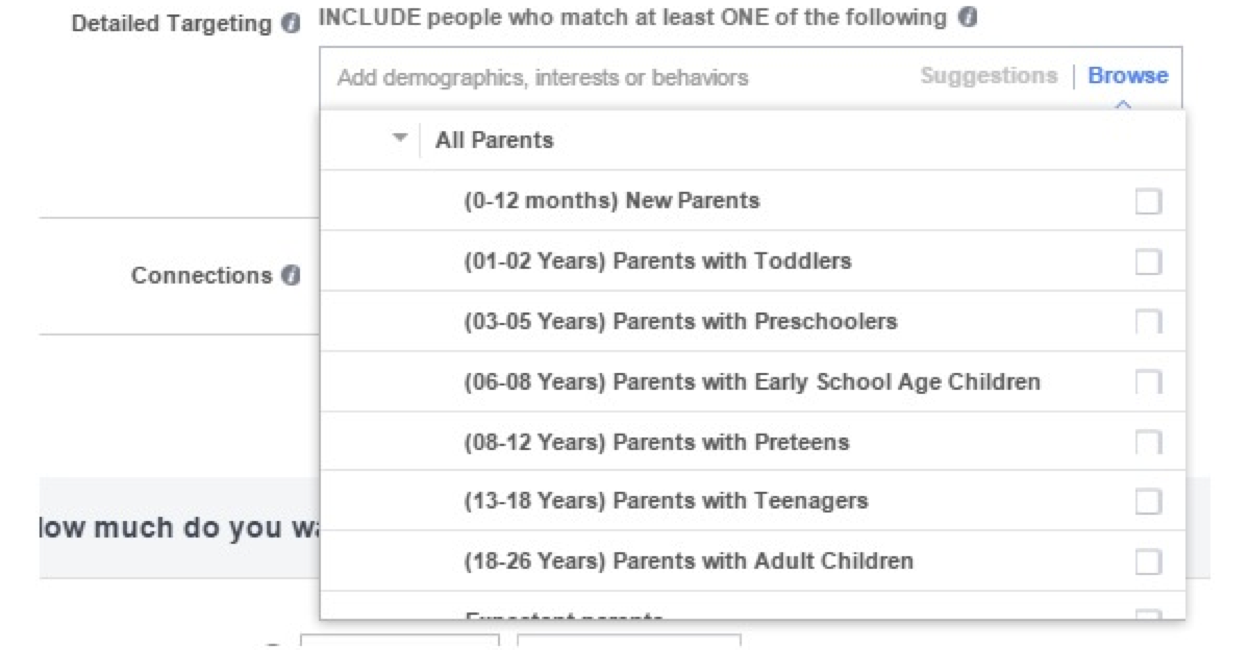
    2. Use Facebook’s ‘Detailed Targeting’ to your benefit.

    Facebook comes equipped with a number of targeting options that can be extremely helpful in identifying individuals that fit your target demographic. Everyone needs to see a doctor at some point, right? How about targeting people who have recently moved into your geographic area who might be looking for a new physician? You could also try targeting women who have recently become pregnant or seniors who might make more regular trips to the doctor.

    Picture Of Facebook Detailed Targeting Tool - Search Influence

    3. Referrals are your friend.

    Targeting other healthcare practitioners might not seem like the most effective idea at first, but using Facebook’s ‘Detailed Targeting’ to show your ads to other physicians or important referral sources always helps to keep your name at the tip of their tongue when talking to their staff and patients. Likewise, we all know that people seek advice on health care providers from their friends and family. It might be beneficial to target the connections of people who currently follow or Like your page. These tactics can only help drive more business!

    4. Don’t forget about HIPAA!

    It is always important to remember to follow HIPAA rules and regulations. When writing Facebook ad copy, never imply that you have knowledge about a sensitive health condition. Also, never collect or share personal information such as phone numbers or addresses. There are many successful ways to use Facebook ads to grow your practice that still align with HIPAA’s guidelines.

  • Get More Views on Your Company’s #Facebook Page

    The term “pound sign” has become obsolete and even deserving of ironic quotes these days. The “#,” now the almighty hashtag, is generally associated with where it originated: Twitter. The hashtag’s aim was to unify groups of individuals discussing similar topics across the social media platform. However, hashtag usage has now expanded to Facebook, and using them properly can guide more traffic to your business’s page.

    How Do Hashtags Work?

    The popularity of hashtags is still on the rise, and more and more Facebook users are typing in “#[insert topic]” to seek common ground with others online. Want to promote your nonprofit organization? When typed into a Facebook search bar, hashtags such as #nonprofit and #donate will lead to news articles, Instagram posts, and more that discuss these topics. Used appropriately, your hashtag can generate engagement among social media users who are browsing for a service that your company offers.

    Image Of Schmidt From New Girl Being Excited #Excitement - Search Influence

    #Don’t #Get #Carried #Away

    When deciding what hashtag seems the most appropriate, using a trending topic just for the sake of site traffic is a bad idea. If you’re looking to promote your law firm, adding #KanyeWest to a post would probably generate views, but ultimately would make your page look spammy —and desperate. Plus, doing so could result in ruining your online reputation. It’s also important to keep it short and sweet. Will Facebook users be typing in “#IneedatriallawyerinNewJersey”? Probably not. But #NewJersey and #TrialLawyer could certainly yield some positive engagement while sounding natural.

    Image Of Jimmy Fallon And Justin Timberlake Singing The Hashtag Song - Search Influence

    Facebook as a Search Engine?

    With Facebook generating around 1.5 billion searches per day, it’s easy to say that the platform is getting used as a search engine. With the proper use, hashtags can be excellent in online promotions and business news. However, too many hashtags can generate less traffic, so choose no more than two relevant tags per post. Once you’ve gotten a couple of trial runs with your hashtags, watch your analytics and see where the strengths lie. If a post’s views are going down as a result of your tags, try different ones!

    Photo Of Spongebob And Patrick - Search Influence

    Being clever with Facebook hashtags can enhance your business’s discoverability. Try inserting them into posts and let the results speak for themselves.

  • Top 10 Search Influence Blogs of 2016

    The year 2016 was filled with memes, the Olympics, superhero movies, and the election. You can bet, with over 46% of people now online worldwide, there were plenty of changes to online marketing, too. If you haven’t kept up, here are the top 10 blogs of 2016 to make sure your business is poised for the #bestyearever.

    Lieutenant Dan And Forest Gump At New Years - Search Influence

    1. What Happened to Facebook’s 20% Text Grid Tool?

    Our Internet Marketing Team Lead, Michelle Neuhoff Boyd, created this informative blog post that eased the confusion of Facebook’s 20% text grid tool. Find out how this new rule may affect your business.

    2. An Update: How to Get Rich (Answers, That Is) with Google

    Jim Carrey Typing - Search Influence

    Not rich with money, but with Google. Over the years, Google has changed their algorithm, and our team at Search Influence is making sure to stay on top of every change. Read this post from 2015 to learn more about rich answers.

    3. Getting Hands on With the New Google My Business

    Having a hard time understanding the new Google My Business? This engaging blog post can clear up any confusion on listings, editing, and more.

    4. Three Top Picks for The Big Idea at New Orleans Entrepreneur Week

    During New Orleans Entrepreneur Week, The Big Idea picked 10 entrepreneurs’ ideas in front of a large crowd, and everyone got to vote their favorite. See the top three picks that Paula Keller, our director of sales and marketing, enjoyed the most by reading this post.

    5. Email Marketing for Small Business: 9 Things Not to Do

    Find out how not to email your customers when just starting your business. Originally published in 2010 by a Search Influence Alumni, read all about effective email marketing.

    6. A Dentist’s Guide for Choosing Target Audiences on Facebook

    Jean-Luc Picard Star Ship Enterprise - Search Influence

    Ever wondered how to market your dentistry on Facebook? This guide will help you understand the most successful dental campaigns in the industry. You’ll know what age group and interests to target.

    7. Should You Be Using Google’s URL Shortener in Your Social Media Campaigns?

    Are you still unsure if you should use Google’s URL shortener? This blog post talks about the benefits of using their shortener, such as the URL analytics, redirects, ease-of-use, and more.

    8. Barnacle SEO – Local Search Engine Optimization for the Sam’s Club Crowd

    Will Scott, CEO and co-founder at Search Influence, published this post back in 2011. Learn more about the term Barnacle SEO and which sites to trust for small businesses.

    9. Nix the Wix SEO Challenge: Tips & Tricks

    This post from 2015 helps you make the most out of your Wix website by guiding you on the meta tags updates, sharing your site on social media, making your site visual, and more.

    10. 10 SEO Blogs You Should Be Following

    Do you want to read reliable SEO blogs? Here’s a list of the most informative SEO blogs that Monica Shariffskul put together. Many of these are on my top list, too.


    Be sure to subscribe to our Search Influence blog, and you’ll be the first to know when a new blog has been posted. Also, Happy New Year!

  • Google’s Ascent With User Experience

    Being found on the internet is essential to any business. We all know it, but few understand what it takes to be found. Luckily, there is an easy approach to beginning your own online marketing journey.

    Start by looking at Google, not as a search engine where businesses tirelessly compete to appear at the top spot, but as a user tool. Back in the ancient times of the internet, Yahoo had a $125 billion market cap, and Google was hoping to be acquired for $1 million. As time marched on, Google surpassed Yahoo as the number one search engine because of one key difference between them: the user experience. Google didn’t provide results promoting Google brands or its own material. Instead, it happily delivered the most relevant search results to the user. Results that took the user to a different website.

    While this may seem counter-intuitive—helping users leave your site and go to another—it has proved successful. Sure, users temporarily left Google by clicking on a third party’s link; it also guaranteed their return. Such a great user experience will entice anyone to return time and again for a similar experience. This is how Google surpassed Yahoo as the leading search engine, and it’s the best way for you to start your online marketing process.

    User Experience Vs. Design - Search Influence

    The lesson for you to take away as you embark on your journey is to put user experience first. When creating your website or content, don’t try to be overly fancy or technical. Start by making it simple and convenient. Websites become popular when users can easily navigate and find content that is relevant to their search. Don’t try to force your consumer into a Corvette when they are really looking for a minivan. Your customers will thank you when they can easily access your website, it loads quickly, and the information they are searching for is plain for them to see and understand.

    Going forward, as you build out your website, keep the consumer in mind each step of the way. How would you want to interact with the website of a business like yours? If you don’t know where to start, talk to the friend who doesn’t quite understand what you do. They can be your guide, explaining how they would want to navigate your site and their desired outcome. Use this to cater each step of the user experience to your actual users.