Tag: local search

  • 5 for Friday – Google Changes Its Logo, Apple Buys Beats, Internet Trends Report and More!

    spraypaint5

    1.Google Made the Slightest Change to Its Logo and Users Still Noticed – Mashable

    Google changed its logo and chances are, you probably didn’t even notice. The nerds did, though. Here’s a GIF of the logo, before and after.

    2.Apple Confirms It Will Buy Beats for $3 Billion – Mashable

    Apple confirmed the largest acquisition in company history – they will buy Beats Electronics and Beats Music for a cool $3 billion. No big deal, really.

    3. Lawyers Sue SEO Firm For Violating Google Guidelines – Search Engine Land

    A Michigan law firm is suing its former SEO company for allegedly using “spammy” techniques violating Google’s guidelines. I’ve been with Search Influence since October 2013 and have already seen changes in industry best practices, so it’ll be interesting to see what this means for SEO companies moving forward.

    4. The Most Important Insights From Mary Meeker’s 2014 Internet Trends Report – TechCrunch

    TechCrunch breaks down Meeker’s 164 slide report into 52 more digestible nuggets. Here are the 5 I found most interesting:

    • Mobile now accounts for 25% of all web usage
    • Internet advertising grew 16% this year
    • Music streaming is up, sales are down – sales fell in 2013, while streaming grew 32%
    • Photo sharing up 50% over 2013 in just the first half of 2014
    • 84% of mobile owners use their devices while watching TV

    2014InternetTrendsReport

    5. 7 Essential LinkedIn Marketing Stats: When to Post, What to Post and How to Improve – Search Engine Journal

    An interesting read about the third-fastest-growing social network. Don’t believe me? LinkedIn sends nearly four times more people to your homepage than Twitter and Facebook. Combined.

  • 5 For Friday – Backlinks, Knowledge Graph, And Privacy!

    FiveForFridaysColorfulFive1. Matt Cutts: Google Won’t Devalue Links Anytime Soon

    -Search Engine Watch

    Well, you’d certainly hope this is the case with the way Google is initiating hundreds of thousands of manual actions every month…But in Matt Cutt’s recent video, he explains the value of those quality links while Google continues to better understand and define what determines quality content. As it stands, Cutts sees the value of quality links to be a relevant ranking factor for the time being. So fear not, if you are working to improve the quality of your content along with improving and diversifying that backlink profile with authoritative links, you’re certainly protecting yourself from future menacing Penguin updates.


    2. Google’s Knowledge Graph Expands into Google Maps

    -Search Engine Land

    Google’s knowledge graph is expanding from organic search results into their map results. Much like the results from regular search queries on google.com, the knowledge graph will now pull information cards with quick facts about certain places searched in Google maps results. But hey, don’t just take Search Engine Land’s and my word for it, run a maps.google.com search for New Orleans’ own St. Louis Cathedral and check it out for yourself!


    3. European Court Requires Google to Delete Personal Info

    -Search Engine Roundtable

    Hey SEOs! Reputation management just got easier! If you live in Europe that is. In a recent ruling, a bill so cleverly titled “the right to be forgotten” requires that search engines, such as Google, Yahoo, and Bing must remove links from search results for a person’s name if that person requests to have that result removed.

    GoogleLogo

    4. How to Dramatically Improve Your Google Authorship

    -KISS Metrics

    This article provides some great tips for improving your Google authorship. As with any authorship improvement tip article, though, do keep in mind that excessive guest blogging is a definite no no. Keep the list of sites you contribute to condensed and featuring only those important and authoritative sites you write for. Guest blogging, if done incorrectly, can be seen as a spammy link-building tactic. A definite highlight of the tips provided in this article was “feature your most flattering picture…you don’t have to be good looking. You just have to…’put your best face forward.’” So no worries—you don’t have to be Brad Pitt, Ryan Gosling, or Jon Hamm. You just want to ensure your thumbnail image is clear.


    5. 5 New and Improved Twitter Features Marketers Should Use

    -Search Engine Watch

    This article is a fantastic overview of those new Twitter features and how they translate into tactics marketers can utilize. A particularly interesting, stand out feature is that Twitter now allows for engaging tweets to appear larger than others. Now “all” you have to do is make sure your tweets are always relevant, engaging, and interesting to your audience.


  • 5 for Friday – Google SSL Warnings, Twitter & Amazon Collab, and more!

    1. Twitter and Amazon Link Up, Add Items To Your Shopping Cart With A Single Tweet – Buzzfeed

    452416003

    Amazon is using Twitter to drive sales with the new #AmazonCart feature. This may be a major breakthrough for ecommerce businesses. It’s super simple:

    1. The business tweets out a link for a product.

    2. Interested consumers can then reply to that tweet with the hashtag #AmazonCart.

    3. The product will instantly appear in the consumer’s Amazon cart.

    The consumer’s Twitter has to be linked to their Amazon account in order to do this, but the new feature should drive sales for E-commerce businesses with products on Amazon. Twitter users can also search the hashtag #AmazonCart to see what other people are buying. Isn’t technology great?!

    2. Become Your Own Rumpelstiltskin: Spinnin’ Crappy Online Reviews Into a Better Business – Search Engine Journal

    This is a great article on how to approach negative reviews. There are bad reviews from people who genuinely had a bad experience and bad reviews from people who are just plain irrational.

    How do you tell the difference between these people?

    If you look through an irrational person’s profile it’s full of negative reviews and they usually make overly dramatic and sadistic statements. People that genuinely had a bad experience  usually have a mix of positive and negative reviews if you look through their profile, there are some positive comments within their negative review and they make rational statements about their experience.

    How do you deal with this?

    Respond to the irrational reviewer with a generic, but genuine message without addressing specific points of concert. If they respond back, don’t respond again. Respond to the rational reviewer by addressing their specific concerns quickly and assuring the reviewer that steps have been taken to ensure that this will not happen again.

    3. New App Reveals How Much Information You’re Giving To Facebook – Search Engine Journal

    FacebookScaryScary! A new app, called Digital Shadow, was launched as a promotional tool for the upcoming video game Watch Dogs. It uses data you’ve given to Facebook to guess your location, your income, and your passwords. They use algorithms to predict your interest, desires, and fantasies. We live in an era where we like to document everything online from how we’re feeling to what we purchased to where we are in the world. It’s an eye opener to find out that there are people in the world that can use that information against you to hack your computer or to be more influential in their sales tactics towards you.

    4. Google Pauses Webmaster Tools SSL Warnings In Order Clarify Them In Future – Search Engine Roundtable

    Google recently sent out mass SSL warnings via Google Webmaster. They decided to pause the warning after they realized they were causing mass confusion. Now, Google is working on making the warnings clearer and tweaking the criteria before restarting them.

    Google is simply providing information about the server response for HTTPS access to your URL. If it responds, but the SSL cert does not match the domain, the warning lets you know. Basically, Google wants the hosts to either serve content via HTTPS properly, or not serve content there at all. Serving content via HTTPS without a valid TLS/SSL certificate will result in users seeing browser warnings. Avoiding this makes sense, no matter how many site users actually see the warning.

    5. Announcing Schema.org Actions – Schema Blog

    LegosAction

    Schema.org introduced vocabulary that allows websites to describe the actions they enable and how these actions can be invoked. You can use action schema to play a video, review a movie, or purchase a product. The new schema adds context to a link or content. It is a way of interpreting content to cite sources and authors and the type of activity that happened between the two. From what was said in the press release, the actions schema is still a work in progress and will be enhanced as more users use action schema and provide feedback.

  • 5 For Friday – Links, Stories, & Posts for Your Weekend

    5-Dice

    1. SEO 101: Getting the On-Page SEO Basics
    – Search Engine Journal

    This article provides a ground-floor explanation of some of the basic, on-page SEO elements. Though this article may not seem useful for experts, this article takes into account that the rules for SEO are always changing. A refresher to update readers on what’s changed slightly and what’s stayed the same can help a new site get started and an old site get freshened up. The article also offers some useful tools to help with implementing the basics it suggests.

    2. Fix These 5 Email Marketing Missteps
    – Mashable

    Emails are such a normal part of our daily lives that we forget how to treat it during marketing campaigns. This article describes 5 problems that are commonly found and offers solutions to overcome these issues. It’s important to use whatever tools we have on hand when it comes to marketing, and email is no exception.

    3. How to Identify Non-Ranking URL Page Types Using Google Site Search
    – Search Engine Watch

    The author provides the benefits of using Google’s site search in order to identify and find “valuable indexation metrics” for non-ranking page types. Though the author doesn’t state that this should replace crawling a site, he does state that there are useful details to gleam from a slower and more in-depth study of a site.

    4. Marketing 101: How to Create a Successful Influencer #Marketing Plan
    – Search Engine Journal

    Reaching your target audience means enlisting the help of people with a good voice in the industry, known as an influencer. The article provides a definition of influencer marketing, as well as the benefits that can come from it. There are also a few simple ways suggested in designing the marketing strategy, reaching out to influencers, and keeping them with you. The author also puts emphasis on making sure to have something to offer when reaching out to influencers. Anyone with a steady audience and a good voice does not need or wish to offer any favors for free.

    5. 6 Changes We Always Thought Google Would Make to SEO that They Haven’t Yet
    – Moz

    This article gives an interesting insight into the Google changes and updates that experts have expected, but haven’t seen implemented yet. The notes are sensible, and when it comes to changing SEO rules, it’s extremely important to try and stay ahead of the game and to figure out the path that Google is trying to take search.

    FridayPeople

  • Why I Hate Your Website: A Guide to Good Web Content

    Hopefully you’ve read some of our other great blogs on sharable content and you’re sending out all those valuable signals that lead people back to your website. These leads are great and all, but what good are great signals and roadmaps if they lead you to something… disappointing?

    Imagine your favorite childhood adventure movie: A six-pack set of friends, perhaps accompanied by a talking animal of some sort, follow the strange, convoluted clues of an ancient map they found in someone’s grandfather’s attic. What if these young adventurers followed this map to the very end only to find a great big chest full of nothing?

    HeavilyGuardedContent

    That would be the worst movie ever.

    So, just to clarify, your website is that chest, and you’ll want to make sure that there’s some treasure up in there. How? Treasure = good content.

    Sidenote: I recently heard an interview on NPR with Pixar Animation Studio’s president Ed Catmull that relates to this topic. The interview was introduced with “content is king” so, you know I was tuned in. In the interview, Catmull downplayed the importance of technology in Pixar’s movies. “It’s not about the technology,” he says.  “We use the technology, we develop it, we love it, [but] it’s about the story.” So, if Pixar believes in content, you should too!

    So, what makes good web content?

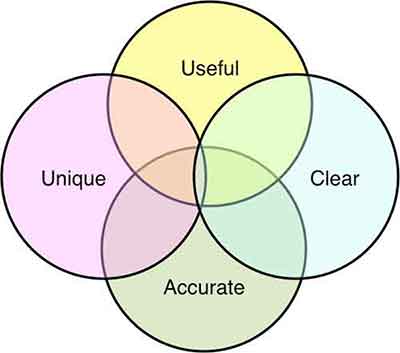
    From a broad perspective, here are four characteristics that can guide you to good content.

    Infographic

    Useful

    Your viewers have jumped down the rabbit hole in search for something. It’s your job to know what that something is. Have they arrived at this page looking for contact information? For pricing? To make a purchase? — Make sure you know why the viewer has made it to this point. Then, and only then, can you provide the solution.

    Be as detailed as possible, but also be concise. My number 1 rule: no fluff. Aaron Wall of SEOBook puts it perfectly, “Good writing does not add extra words for the sake of word count. Each word carries purpose and meaning.”

    Clear

    Make it easy for your visitors to find what it is they are looking for. Your site should not be iSpy, Contact Info Edition. Organization of your content is paramount. The longer your visitors have to search for information, the more likely they are to jump to another site. Make the information easy to skim.

    ispy-meme

    A major issue I see is vanity capitalization. If the intent is to highlight important information, the tactic has the opposite effect. With so many Capitalized words throughout the Content, it becomes Unclear why You are Capitalizing anything at all? See how difficult it was to read that one sentence? Capitalize words within your subheadings, headings, navigation bars, etc. all you like, but don’t go cap-crazy within your content. Sending too many signals to your reader that THIS or THIS or THIS or THIS and THAT are important throughout your page can become confusing. If everything is important, nothing is important.

    Pro Tip: Subheadings are a great way to point your site visitor in the right direction. But don’t go overboard.

    Unique

    Duplicate content is something I see a lot of. It’s not just a personal pet peeve; it’s bad for SEO. So, don’t fill out multiple pages with the same content just for the sake of having multiple pages. Not only is this confusing for your site visitors, but it is confusing for search engine crawlers as well. So, you’d think if it’s bad for your viewers and it’s bad for your ranking, people wouldn’t do it. However, you’d be surprised how many sites I see with duplicate content on top of duplicate content. Make sure each page has content unique to that section. If the two pages are too similar, find a way to combine them. Otherwise, reword things to show the unique purpose and perspective of that specific page.

    Accurate

    Make sure your hours of operation, your address, your pricing, promotional deals – any information that may fluctuate – is up-to-date. The more active you are on updating your site’s information, the more accurate your site will be. This is not only good for your visitors, but good for search engines. Being up-to-date on information makes you a more reliable source.

    I can’t count how many times I’ve wondered if a site was open on a particular day—whether it was due to an obscure holiday (Hey, it’s New Orleans, places close their doors for seemingly no reason whatsoever), or due to conflicting information—and their site was anything but helpful. Letting your site visitors know what’s what ultimately gives them the information they need to be customers. And that’s the point, isn’t it?

    Whether you’re adjusting old content or starting from scratch, think from the perspective of your site visitors. It’s also good practice to examine the sites you visit frequently. What are some frustrating aspects of navigating the site? What is some information you wish they displayed? The key aspects of good content are all around you, take note of them! Observing the successful (and less successful) aspects of other sites, whether they are related to your industry or not, can help you navigate your own site’s content.

    So, how about it? What are some examples of good content that you see on a regular basis?

    GoogleSearch

  • Heaps of SEO from Down Under

    While I was in Australia earlier this year, I used google.com.au to search for a good happy hour spot after a long day at Bondi beach (they have free beach wi-fi!!). No matter how hard I searched, the best watering holes weren’t showing up in my search results. Little to my knowledge, it was because I was searching for “bars in sydney,” while all the other blokes and sheilas in Aussie call them by a different name, “hotels.” The following are the search results from various keyword searches in Australia. Check out how they vary just by changing one word!

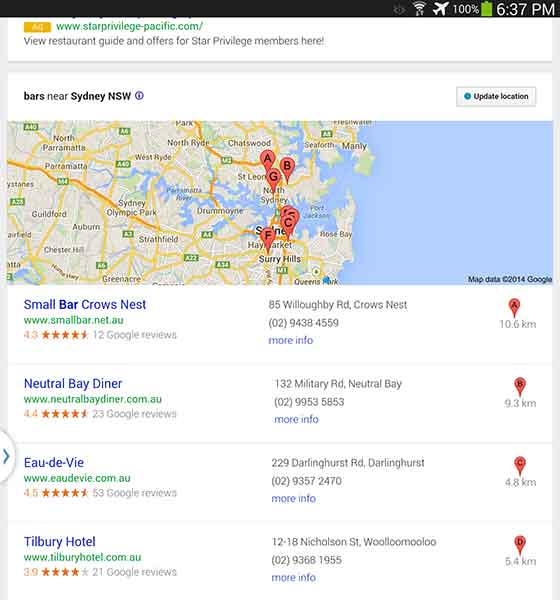
    “Bars in Sydney”

    AusSEO-Bars-01

    I found that the “bars” results were filled with restaurants that happened to serve classy drinks (not exactly what I was looking for). And I don’t mean to whine, but it’s mildly upsetting that results A, B, and G are located in North Sydney. SEO in Australia needs to step up its game.

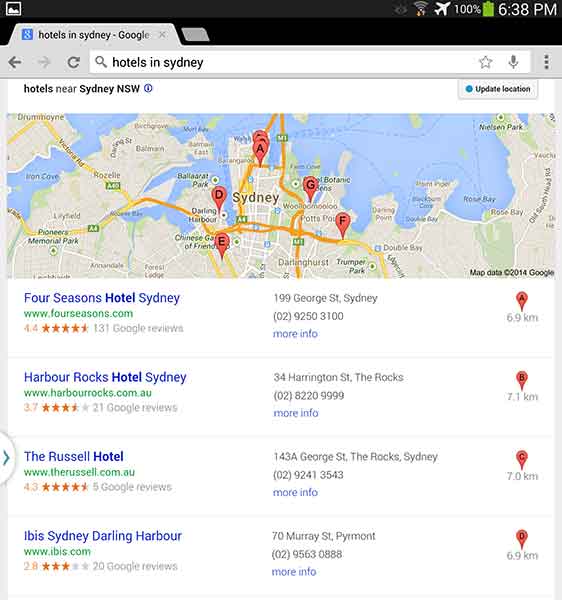
    “Hotels in Sydney”

    AusSEO-Hotels-01

    Unfortunately, looking at “hotels” wasn’t helpful either. This keyword can get a little complicated because, while bars are called hotels, hotels are also called hotels. I think it would be really difficult for a bar to outrank an actual hotel, even on google.com.au.

    “Pubs in Sydney”

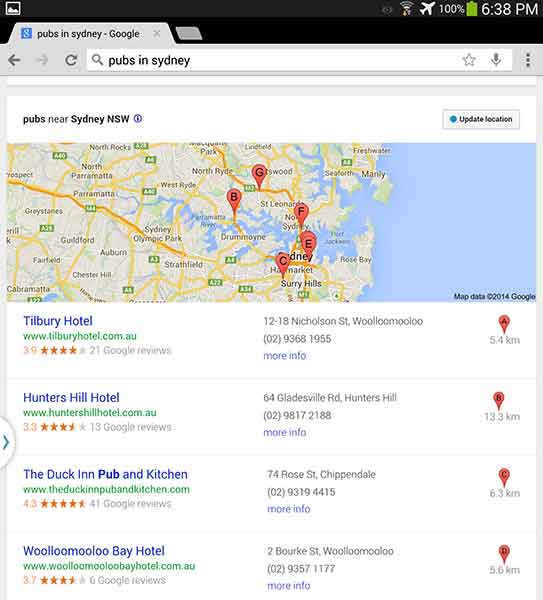
    AusSEO-Pubs-01


    The best results? Pubs. Each result was a bar with “hotel” in their business name and “pub” in the meta description. Pubs are a big part of Australian and English culture so it is fitting that this 7-Pack produced the best results.

    If you want to run a local campaign, pay attention to changes in culture and language in your area. You may be able to target locals and tourists differently by focusing on some keywords more than others. As Ja’mie King would say, SEO in Australia is, like, so random.

    PublicSchools

    Have you had any strange encounters with Google keywords in certain areas? Let us know in the comments!

  • Takeaways From Pubcon New Orleans Day Two

    Last week I had the amazing opportunity to attend Pubcon New Orleans for the first time. It was one of the most fruitful learning and networking experiences I’ve had the chance to be a part of. I felt like I could spend forever just absorbing everything I could from everyone I met. One of the major themes that I got from all the speakers I saw at PubCon was the importance of good content. So, now I’m here to tell you about some of the main takeaways I got from the particular sessions I attended.

    IMG_52111-1024x368-1

    Peter Shankman: Keynote

    The keynote by Peter Shankman focused primarily on the power of good customer service. His four main points were Transparency, Relevancy, Brevity, and Top of Mind. He said you don’t have to go crazy with customer service, just be “one level above crap.” On this note he mentioned the Morton’s Steakhouse story where he jokingly tweeted at them about wanting a porterhouse steak upon landing in New Orleans from a flight. They then sent someone to meet him with a steak when he got off the plane. This simple gesture(although not scalable for every brand) led to a lot of great publicity for Morton’s. It’s all about making your customer feel special.

    An audience you are more transparent and honest with that feels invested in is 78% more likely to buy. Peter also said that when(not if) you screw up, own it. People are 44% more likely to stick with you if you own it. He mentioned the stark difference between how Eliot Spitzer handled his prostitution scandal by admitting the fault and resigning versus how Anthony Weiner handled his sexting scandal by saying he got hacked and not owning up to it.

    Peter mentioned the importance of being relevant and listening to your audience as well. He mentioned a non-profit that saw a 37% increase in donations just by being engaging and active with their audience online.

    The third important facet Peter Shankman mentioned was brevity. He particularly said that brevity is the future of social media and not just in the way we think of it through Twitter now. He said jokingly that we’ve all become the dog from the movie Up, because recent studies show that we have a 2.7 second attention span. Shankman said that mobile messaging is the future and Twitter is just the pipe, so we must learn to write well and concisely.

    Finally, Peter talked about the importance of being top of mind. You want to be the first person someone thinks to go to for whatever they need. He also mentioned the idea of having “zombie loyalists,” or people who have you at the top of their mind for recommendations.

    IMG_5231-768x1024

    Will Scott: Barnacle SEO

    Next I had the opportunity to sit in on Will Scott’s talk about Barnacle SEO(a term he coined in a Local Search News post back in 2008). Barnacle SEO is all about leveraging authority for local search. Specifically, the idea is to attach oneself to a “large fixed object” and wait for customers to “float by in the current.” It’s not as simple as using someone else’s authority, because Will says the most important thing in business is sincerity. “If you can fake that, you’ve got it made,” he says.

    He also mentioned that Google’s weakness is sites they consider super authoritative like YouTube, Yelp, Pinterest, Facebook, YP.com, and such. This is making Barnacle SEO have a huge comeback. YouTube for example dominates universal search and according to a MarketingLand infographic, 8 out of 10 video results are from YouTube.

    Although using backlinks from these authoritative sites and directories like YP.com for local SEO efforts is important, it’s also super important to “keep it clean-ish” by using tools like Whitespark.

    Greg Gifford: Local SEO- It’s No Laughing Matter

    After Will Scott, Greg Gifford, Director of Search and Social at AutoRevo, took to the stage with his presentation about the complications of local search. His awesome presentation featuring punny references to 142 movies and also contained precise, actionable tips. He mentioned the changes in local search like the maps pack finally stabilizing at seven listings and how optimized vertical and local directories now rank very well. A huge opportunity for small businesses to rank well lies in simply adding city and state to title tags.

    Greg also mentioned how the goal of Google Plus Local(aka Google Places) seems to be like a drive through, a place for people to get what they need by getting in and out quickly. He also brought up the Google email about “duplicate listings” that rolled out with Google finally merging the old dashboard to the new. If you want to know more about this email, check out my blog post here.

    His optimization tips for G+ included writing long, “awesome” descriptions using formatting and links, uploading lots of photos, using as close to the max 10 categories as possible while keeping them relevant, engaging in the fairly few number of users on G+, and circling users as a business. As far as reviews on G+ go, he mentioned that you have to earn them and ask for them, you need at least five reviews to see the star average, you should shoot for 10 then diversify, one to two reviews a month is normal, and having them come in consistently rather than in bursts is important.

    IMG_5215

    Casey Markee: The “Big Easy” Guide to Google-Friendly Link Earning

    Casey Markee started his presentation with a quote from Matt Cutts saying, “The objective is not to make your links appear natural, the objective is that your links are natural.” He mentioned that the “four tenants of Google-friendly links” are those that provide clear value for the user, are niche-relevant, get clicked to send some measurable form of trackable analytics traffic, and are “earned” freely versus being given.

    He listed nine link “earning” classes that Google still loves which included:

    1. Link Bait Type Content- Sharable and Buzz-Worthy
    2. Evergreen Content- No Expiration Date
    3. Local Link Earning- Publish Local Resources
    4. Scholarship Link “Earning”- Ex: SilverCross.com Ability Achievement Scholarship
    5. Beneficial Link “Earning”- Participate in Online Forums
    6. Sponsorship/ Partner Building- Support Causes
    7. Profile Links- Social Profile Building
    8. Selective Guest Blogging- Quality not Quantity
    9. Brand Mentions- Get Regular Mentions Turned Into Live Links

    He ended with saying that link earning is a marathon not a sprint, and that quality content is key!

    Mike Stewart: Building a Future Proof Plan for Organic Local Search Rankings

    The biggest takeaway I got from Mike Stewart’s presentation was to think beyond Google search and about other places where people often search like Siri, Amazon, Facebook, and Bing. He also explained the difference between some white hat and black hat SEO tactics, and the importance of doing it right. Mike took us back to basics explaining that “SEO is about creating, editing, organizing, and delivering content and metadata to increase relevance to specific keywords on the web.”

    Finally he gave us “Seven Simple Content Ideas That Drive Shareability” which are as follows:

    1. GIVE: Offers, discounts, deals, and contests that everyone can benefit from
    2. ADVISE: Tips, especially about problems that everyone encounters; how to do something
    3. WARN: Warnings about dangers that could affect anyone
    4. AMUSE: Funny pictures and quotes, as long as they’re not offensive to any group
    5. INSPIRE: Inspirational quotes
    6. AMAZE: Amazing pictures or facts
    7. UNITE: A post that acts as a flag to carry and a way to brag to others about your membership in a group

    This is just a very small portion of the many helpful tips and tools I learned at PubCon this year! Let me know what you think about all the tactics you’ve learned here today.


  • Content: The Beginning

    In the beginning there was the Internet.

    At least, that’s what I tell myself when I try to think back to my early childhood. Kids (whatever, I’m a kid, kids younger than me) are glued to smart phones, they have these things called tablets and nooks… but what of books? What of literature? These are some of the questions people had about television back when the youths first sat their little rumps down in front of the tube. Now, the eye of Sauron has turned to the Internet.

    internet.gif

    Don’t get me wrong, the Internet is chock-full of copious amounts of information (all the information, in my opinion—if it’s not on the Internet, it doesn’t exist) and can be extremely useful. Ah, but therein lies the issue!

    The Internet is an extremely powerful thing, a great source for random, trivial, and (sometimes) useful knowledge. However, with great power comes great responsibility. Although many can argue that the Internet is killing language (lik3 wut3v3r dude), excusing poor spelling, grammar, and vocabulary, the Internet has also bred a whole new generation of nit-picky grammar specialists. You know who I am talking about, that one person who loves to correct your use of words, followed by a sweet, misleading asterisk.

    What am I getting at?

    hercmeme.jpg

    Although a lot of time goes into straightening out the aesthetic and function of websites, many forget to think about the words.

    To quote the great V, “Words will always retain their power. Words offer the means to meaning, and for those who will listen, the enunciation of truth.”

    However, choosing those words can be a difficult, sometimes even Herculean, task. On the one hand, your content needs to be purposefully crafted, tailoring to those aforementioned language *specialists*, but on the other hand, your content needs to be clear, concise, and easily understood by a diverse audience, i.e. everyone.

    Good Content = Good SEO

    But how do I write good content? You may ask. Obviously, content will vary depending on your site, your brand, and your audience. But, say we were to tackle “good” content on a broad scale

    Check back for my next blog where I break down the concept of content, starting first with: The What — What Your Content Needs To Say.

  • Addressing Duplicate Listings In The New Google Places for Business

    Welcome back to the wonderful world of Google! Last week I explained in a post the email that Google Places for Business has been sending out to business owner accounts.

    Part of that email included a bit about your account containing listings that were identified by Google as being duplicates existing within your account. Now I’m here to explain to you the two most common ways in which we see duplicate Google listings and how they can be addressed.

    Internal Duplicates

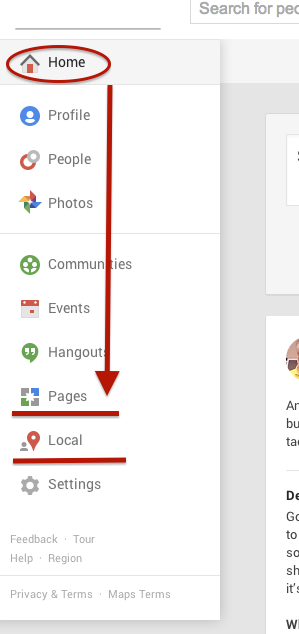
    Screen Shot 2014-03-14 at 1.00.44 PM (2)One way we tend to see duplicate listings in Google Places is from within your business owner account, in your own business dashboard. To see how your businesses are appearing in your account dashboard, go to the Places for Business dashboard, which can be found by going to plus.google.com. Then click “Local”(to see your  Location pages) and “Pages”(to see your Location, Brand, or other Google Plus Pages) in the drop-down on the left.
    The Local dashboard is where we generally identify internal listing duplicates. With the bulk dashboard updates performed by Google, we’ve seen this happening quite often. Since a lot of businesses have been force pulling their listings into the new dashboard by claiming them through the Places section of plus.google.com, there appears to be two listings in the dashboard of these accounts after Google’s mass update.

    Generally, one of these listings appears as verified (the one forced pulled into the new dash) and the other as unverified (the one Google pulled over). Sometimes they both lead to the same G+ page when you click through the “view this listing” link in each. This is just a weird hiccup, and if you wish to clean up the dashboard by deleting the unverified one, it will not affect your listing. As long as you have the verified listing in the new dashboard, you are the sole owner of said listing under this new update.

    In other cases, however, we’ve created a verified local social page through our force pull into the new dashboard that has all of our social content like G+ posting and YouTube videos. Then, when Google pulls in the location page from your old dashboard, that page is a “duplicate” with all your old reviews on it. In this case, both pages would have content that you wouldn’t want your business to lose through “deleting” a duplicate. So, you’d want to make sure the reviews from the location page are moved over to the newer, verified page before having it deleted. This will require a phone call to The Google Places Team support center.

    Obviously if one of these pages has content that you don’t mind losing or doesn’t have any content, that page can be deleted. If the one you want to delete is the verified one and you need the unverified page to be your primary, verified listing, you might be able to avoid having to reverify the listing through getting assistance from The Google Places Team.

    External Duplicates


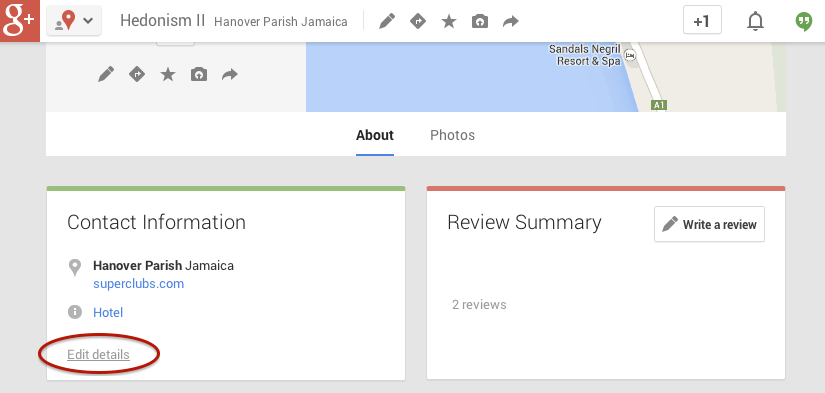
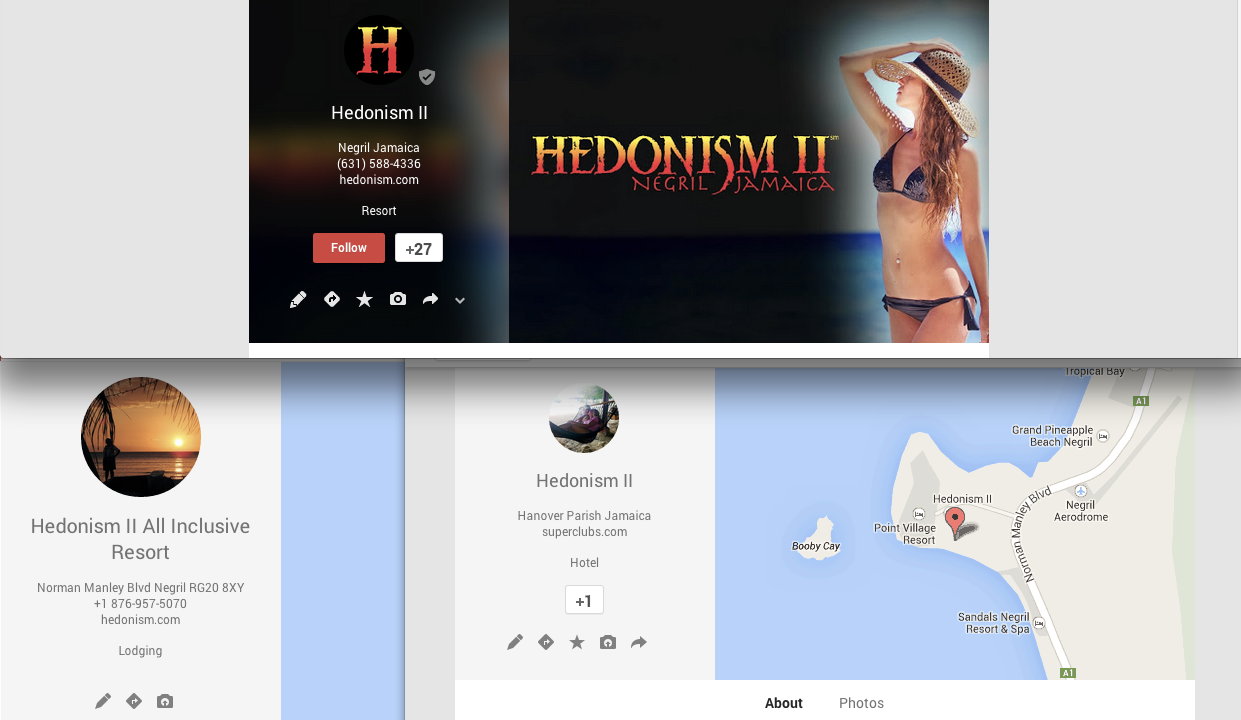
    Another way in which we see duplicate Google business listings is on the front end through Maps search results. You’ll see below that Hedonism II has a couple of duplicates that come up in Maps results. Getting these kind of duplicates cleaned up is a bit easier than the situation explained above. What you’ll do to remove these duplicates is called making a “community edit” or “mapmaker edit.”

    Screen Shot 2014-03-13 at 1.18.56 PM

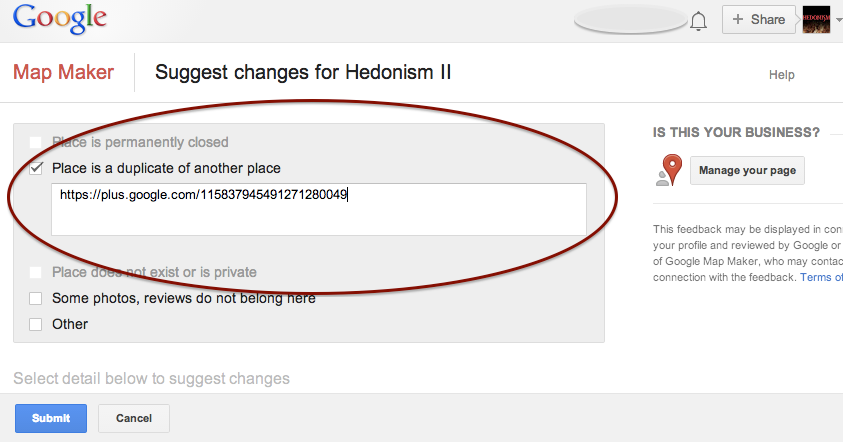
    Go to the duplicate listing you’d like Google to remove. Under the “About” section of the Plus page, then at the bottom of the “Contact Information”  you’ll see the option to “Edit details.” Once you click that, you’ll have to option click a check box to suggest to Google that this “Place is a duplicate of another place.” You’ll also have a box in which you can leave comments about the report. I suggest leaving a link to the correct/verified page in this field to help the duplicate identification process. See screenshots of this process below.

    In my experience, these changes will usually take affect within a week of reporting if Google deems it an accurate report. If no changes take affect in a week, I usually send the report again, wait a week, and repeat again as needed(I’ve never had to report more than 3 times, though).

    Understanding the many nuances of what’s going on here might seem fairly daunting, but the level of which you wish to understand these intricacies is dependent on how much control you wish to have on your business reputation/ presence in Google.

    Screen Shot 2014-03-13 at 1.20.25 PM Screen Shot 2014-03-13 at 1.21.06 PM

    If you have any questions, feel free to comment below!

  • New Search Influence Production Members

    Take a look at our newest Internet Marketing Associates!

    Alex Talbot

    AlexAlex is a native New Orleanian. He grew up in Gretna and went to Jesuit High school. Alex recently graduated from Loyola University with a degree in marketing and economics. Before joining us at Search Influence, he worked in sales and brand management at a cable and satellite company. In his spare time, Alex plays in a punk rock band called Pears, previously known as the Lollies.  One of Alex’s most recent performances was on Mardi Gras day at Siberia! Alex joins the technical Internet Marketing Associate side of the SI production team. His focus includes interpreting web marketing trends and search optimization plans for national SMBs in a variety of different industries. Alex also analyzes web traffic statistics to create detailed reports of link building campaigns and marketing initiatives.

    Nakia Thomas

    photoNakia grew up in Gonzales, Louisiana. She attended Louisiana State University, where she graduated with a degree in communications. Before becoming a part of the Search Influence team, Nakia was a Formal Wear Specialist (She helped pick out gowns and tuxedos!) at a wedding boutique, and did some freelance and ghost writing work.  Additionally, Nakia writes songs, and helps one of her good friends with his record label. Check out this single she helped write! NGWY (No Good Without You). Nakia adds to the growing content focused Internet Marketing Associates group of the production team here at SI. She focuses on writing and optimizing content for our client’s websites, video scripts, blog, social media, and more. Nakia also performs Internet research, website edits, quality assurance, and editorial review.

    We’re so excited to add these two multi-talented people to our growing team! If you’re interested in becoming an Internet Marketing Associate, or any part of the growing Search Influence team, check out our list of available careers!