Tag: Facebook

  • Five for Friday: Facebook P2P Payments, Social Media Madness, SXSW recap, & more!

    1. Are P2P Payments on Facebook Messenger Just the Beginning? – Marketing Land

    It seems that every other week, Facebook rolls out a new feature to keep the social media mammoth at the forefront of its industry. Now, Facebook is looking to become a leader in peer-to-peer payment. Recently, Facebook added the option to send and receive money via its messenger app, immediately positioning itself as a direct competitor to successful companies like PayPal and Venmo. Marketing Land discussed how the new process works and the possible next innovations for Mark Zuckerberg and the team.

    UK Basketball Chet White UK Athletics

    2. Social Media Lessons from NCAA Top 10 Men’s Basketball – Rival IQ

    March is clearly the month for madness. These teams have excelled on the basketball court this season, but how have they performed on social media? Rival IQ takes a look at six social media lessons we can learn from 10 of the top men’s college basketball programs.

    3. The Ultimate Roundup of 2014’s Biggest April Fools’ Day Pranks – Mashable

    April Fools’ Day is almost here. In previous years, this holiday has become a successful way for companies to spread their brand across the Web. Mashable provides a nice recap of the greatest corporate April Fools’ Day pranks from 2014. Do you think this year’s pranks can live up to them?

    4. SXSW Interactive Wrapping Up: 5 Things to Remember – Inc.com

    South by Southwest—a set of film, interactive, and music festivals—recently wrapped up in Austin, Texas. Among the topics discussed, one highlight was a panel discussion on gender bias in tech. WWL-TV and WDSU-TV recently featured Search Influence in stories about New Orleans leading the way for women in tech. Inc.com put together a great list of five things to remember from SXSW 2015.

    5. 7th Annual Shorty Award Winners for Best Use of Social Media, Apps and Video – Adweek

    Each year, the Shorty Awards attempts to recognize the top brands and organizations producing real-time short form content across various social media outlets. The seventh annual Shorty Award winners were recently announced, and Adweek featured a recap of all the winners and honorable mentions. Check out the full list of winners, and who knows, maybe you’ll make the list next year!

    Image Sources:

    April Fools’ Dog Image

    Awards Reaction Image


  • Social + SEO: Better When They’re Working Together

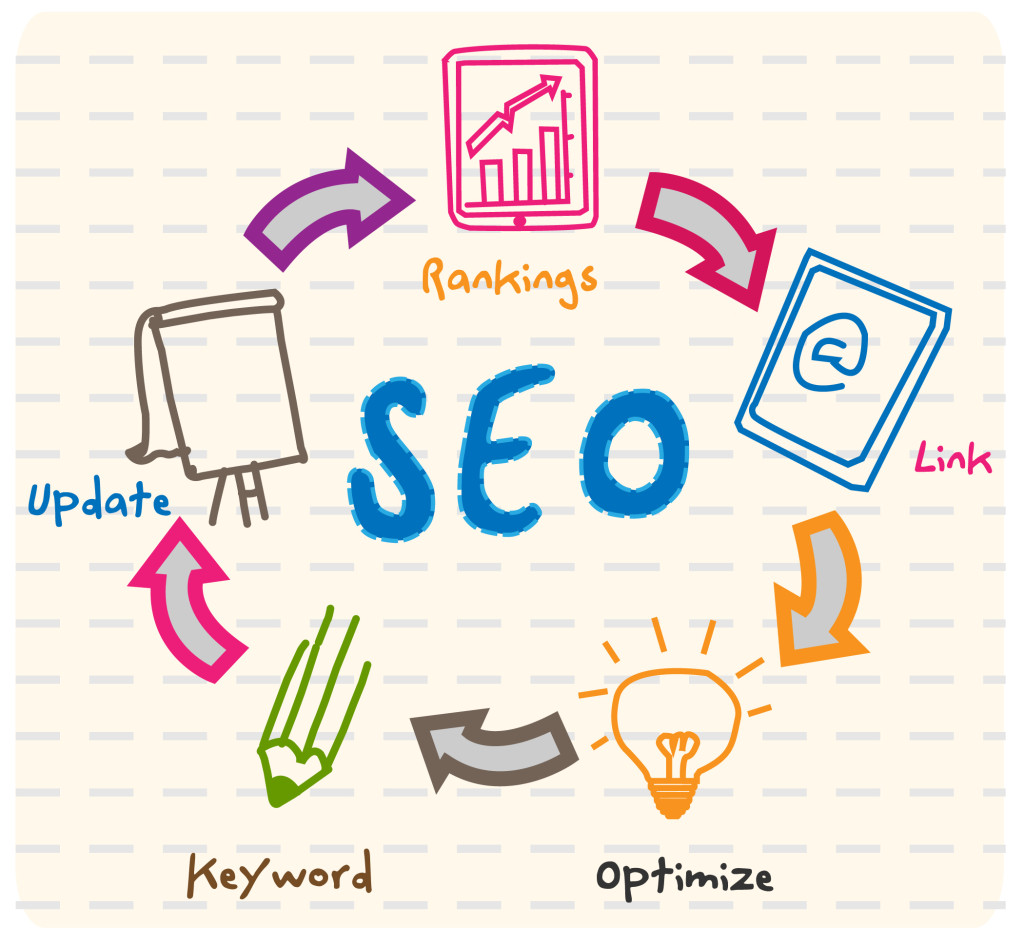
    SEO Cycle Image - Search Influence

    Modern search engine optimization has become inextricably linked with content marketing. Yet in many companies, social media strategies are developed separately from the SEO and content marketing plan. This can work—but you’ll realize optimal results by aligning social media with SEO for an overall strategy that boosts brand awareness, improves domain authority, and increases your rankings.

    Here are some tips for social media strategies that can fuel your SEO and help you rank higher in all types of user searches.

    Grow your Following

    In the early days of social media, building a massive following was the number one goal for most marketers. Today, the emphasis has shifted from quantity to quality—but the number of followers you have is still an important factor for domain authority.

    Of course, it’s equally important to develop an authentic audience. Google, in particular, can tell when most of your following is made of spam and bot accounts, so “buying” likes or follows doesn’t help—and in fact can harm your online reputation. Instead, grow your following naturally by posting interesting content on a regular basis. Engage your followers with interactive content and by responding to comments or starting discussions.

    Share your Other Content

    Posting links to your content—such as articles, blog posts, and downloads—along with brief commentary on social media, is a great way to repurpose your content and boost your SEO. Of course, sharing on social media will give you more eyes for your content, but the benefits to SEO go beyond that.

    In addition to extra traffic to your website or blog, which is a peripheral SEO benefit, social media sharing encourages others to share your links. The more often your links are posted on other social media accounts and websites, the more domain authority you’ll build. This type of inbound link-building is much faster than traditional or manual methods.

    Optimize Social Media for Search

    It’s important to know that your social media posts can show up directly in search results—if they’re optimized. When you’re composing posts, be sure to apply basic SEO strategies such as including keywords, placing them strategically and naturally, and tagging image, video, and infographic posts with relevant keywords. Even if your posts don’t make it into search engine results, they’ll still increase your brand authority and contribute to a stronger online reputation.

    Increase Social Shares with Viral Content

    The more shares and retweets your posts have, the greater your domain authority—and the higher your search engine rankings. In order to get your content shared more often, you need to create content that people want to talk about.

    Of course, every marketer wants to release the next viral sensation. There is no guaranteed strategy for making something go viral, but you can increase your chances of catching lightning in a bottle by creating content with a strong visual component (either a visual medium or a blog post that’s heavy on images, for example), and make sure it has the following characteristics:

    • Informative
    • Relevant
    • Entertaining
    • Practical
    • Surprising
    • Unique

    Of these characteristics, the last one is the most important. Create content your audience has never seen before, and they’ll be eager to share it with friends.

    Connect with Similar Companies

    In the world of social media, your “competition” can be your friend—and that’s good for your SEO. Engaging with similar businesses, particularly local companies or those in similar industries, can help you grow your audience and your relevance, which in turn increases your search engine ranking.

    Share content with other companies like yours and comment on their posts. Usually, they’ll return the favor by engaging with you, which will attract their audiences to your social profiles. Google will also start associating you with other brands when you engage with them, which improves your overall authority.

    When it comes to online marketing, social media and SEO should go hand-in-hand. How does your social media strategy complement your SEO approach?

  • Defibrillate Your Clinic’s Social Media Plan in Five Steps

    Over the past decade, there have been steady increases in the acceptance, usage, and number of social networks. With membership in the hundreds of millions and even billions, social media networks like Facebook, YouTube, and Twitter have become excellent platforms for businesses that want to reach and engage their audiences. Because they form part of a more niche industry, it is crucial for hospitals, healthcare practitioners, pharmaceutical companies, and others in the healthcare industry to have a detailed online strategy in place across various social media platforms. Below are five steps to designing a comprehensive social media plan that take into consideration the challenges and specific needs of the healthcare industry.

    Challenges

    Healthcare providers face a number of unique obstacles when entering the world of social media. Businesses in this industry typically have multiple stakeholders, from existing patients to future patients to other physicians. Each stakeholder has unique expectations regarding communication standards and topics, and a fully fleshed out plan that follows these steps should take these expectations into consideration.

    The healthcare industry is strongly regulated by organizations like the FDA. However, in the recent surge of social media outlets and usage, the healthcare industry has faced a unique challenge: the reigning regulatory offices have not cited clear guidelines regarding the use and management of these social media platforms. Seeing as some information on the topic has been released, it is important that you review these sources before creating a social media plan for a business in the healthcare industry.

    Creating Your Plan

    1. Define Your Personality

    As a business and as a brand, you will need to define your online social personality: how do you want your stakeholders and audience to perceive you? Thinking of your brand as an individual will allow you to adopt a more coherent voice across your chosen social media platforms. To help define your voice, ask yourself questions like the following:

    • What color would you associate with your brand?
    • If your brand was a person, what kind of clothes would they wear?
    • What type of car would this person drive?
    • How would his or her friends describe him?
    • Does this person have likes or dislikes?

    Although it may be difficult in the beginning to uncover the personality of your practice, carefully designing this aspect of your social media strategy will allow you to create a more concrete tone and voice.

    Along with defining your voice, take the time to study and understand your stakeholders. Decide which groups you would like to reach: existing patients, future patients, other healthcare professionals, insurance companies, or any combination of these. This decision will impact the tone and purpose of your social media campaign, as each of your audiences will react best to content that is specifically designed for them. By keeping your target audience in mind, you will enhance your ability to focus your social media updates, allowing you to promote audience engagement and build a stronger, more trusting relationship.

    2. Listen

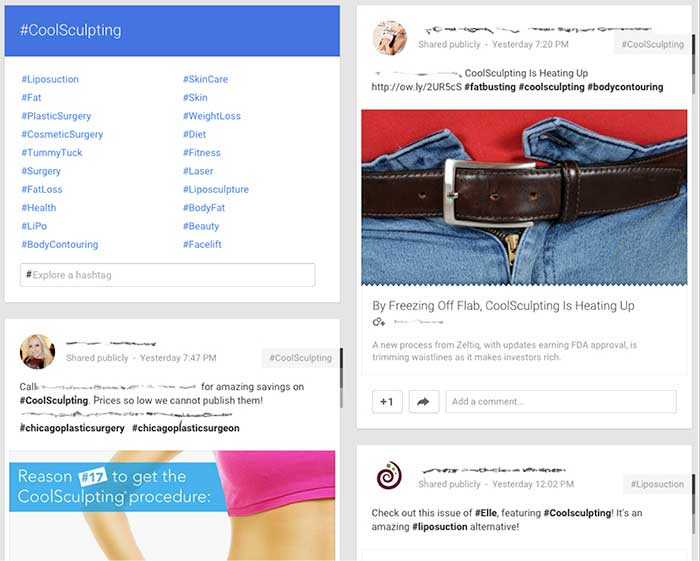
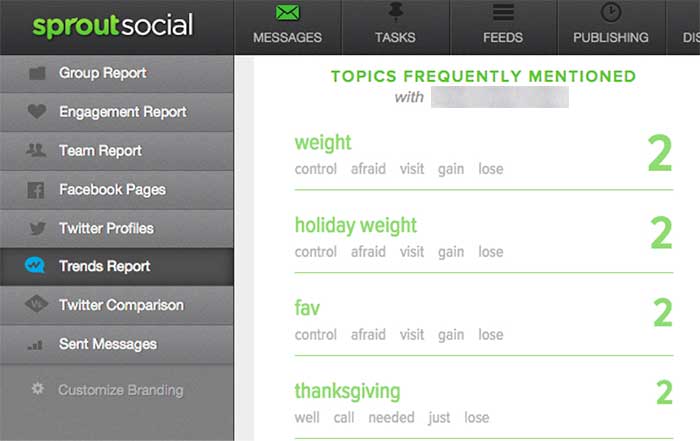
    After you have settled on the tone and audience of your social media strategy, pause to listen to the existing conversation. Determine how your audience and competitors interact within the social space, monitor conversations about your industry, and track the ways in which your brand is discussed online. Using tools like Google Alerts and hashtags, Sprout Social, monitoring forums and other online spaces to understand the existing conversations.

    Listening to the discussions that are in place across the spectrum of social media platforms will allow you to gain a sense of which healthcare topics are currently trending. It will also help you to identify the concerns, questions, and interests of your target audience, allowing you to build a strategy to address these topics during your social media campaign.

    GooglePlusIndustryHashtags

    Example using Google+ to review similar hashtags and industry competitors

    SproutSocialConsumerConversation

    Example of using Sprout Social to understand how consumers are talking about your brand.

    3. Find Your Voice

    Next, begin your own conversations! Look for areas in the industry that lack a strong voice. Use that space to make a name for your brand and to demonstrate your expertise. Also, provide topics and the secure space for conversations regarding the health industry and health issues. Help moderate conversations to keep the discussions moving and the connections building. Encourage your audience to converse with you and with each other to foster a sense of community.

    To make use of your influence on social media, you can use a number of strategies:

    • Add personal, authentic stories: Depending on your goal, these can consist of success stories, anecdotes of achievement, or triumphs over a disease or disability.
    • Facilitate conversations and actions: Give healthy-eating challenges or build a place to help raise awareness for widespread health issues.
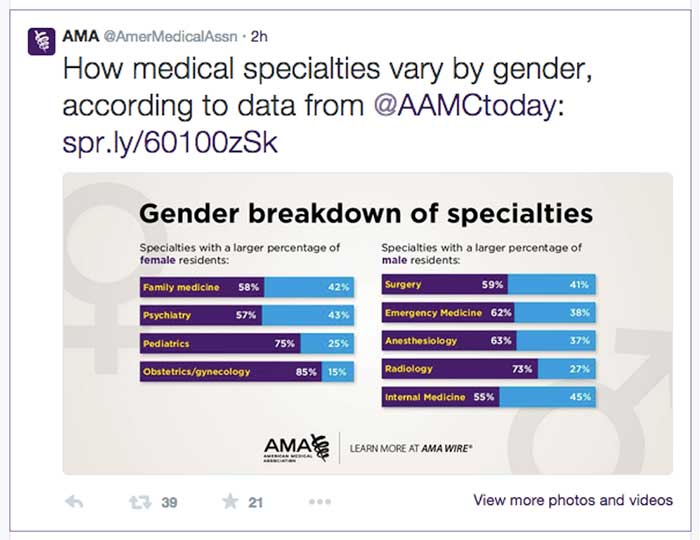
    • Wow the crowd with numbers: Build credibility by showing your audience the bigger picture. Share statistics, infographics, and other information about your industry or practice.

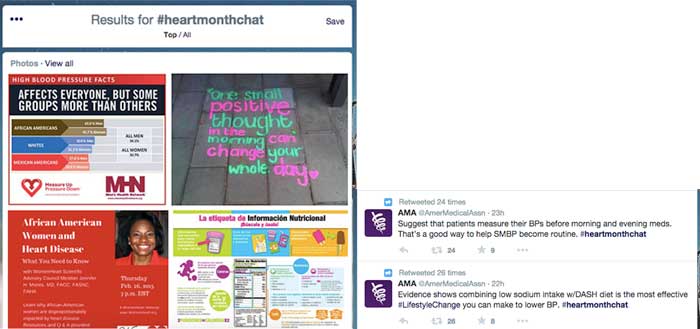
    AmericanMedicalAssociationExample

    Example from the American Medical Association using numbers to engage in a conversation. Only 2 hours after being tweeted this post received 39 retweets and 21 favorites.

    TwitterHealthcareDiscussion

    Example of Twitter healthcare community discussing heart health online via #heartmonthchat and how the American Medical Association was able to find their voice in the conversation giving advice and statistics. Both tweets were retweeted and favorited several times.

    4. Collaborate

    Social media has become a frequent place of feedback for companies, and you can take advantage of this fact by using the social space to collaborate with your audience and with others in your industry. Do not be afraid to talk to your audience about their experiences and how to improve them in the future.

    Use social media as a place to work with other practitioners and organizations to raise awareness regarding healthcare topics. By working with others, you can increase your audience reach and further your message.

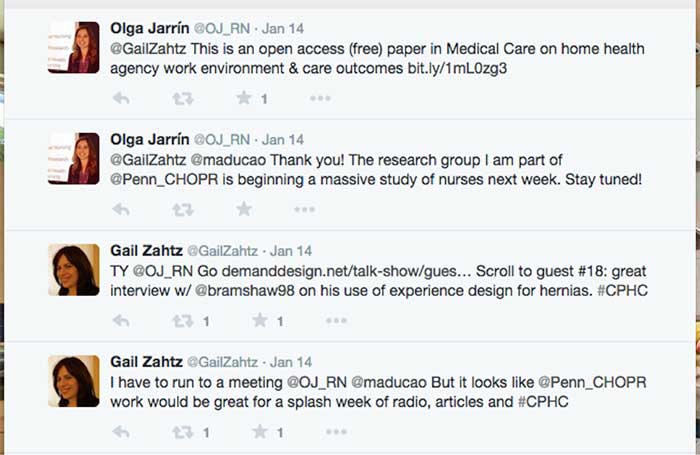
    GailZahtzHealthcareTwitterAdvice

    Example of Gail Zahtz (expert in patient-doctor relationships, offers advice to healthcare industry) collaborating with others in the healthcare industry to make information more readily available.

    5. Measure Your Success

    Although the last step in this plan is to measure your success, it is important to review your achievements on a regular basis and throughout each step of the process. Measure growth and success in the online space by an increase in followers, consistent interaction, and rising mentions across social media platforms.

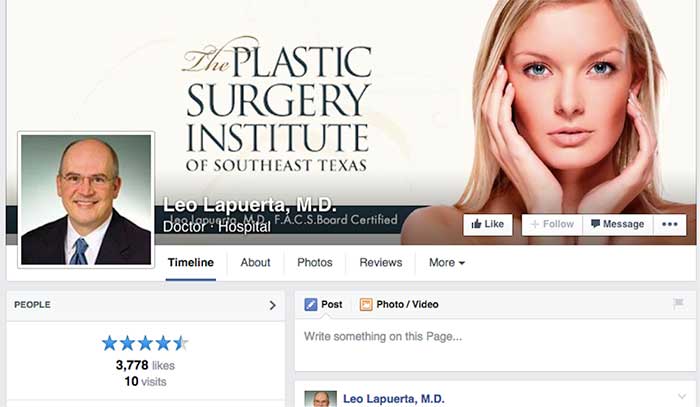
    ThePlasticSurgeryInstituteFacebookLikes

    Example of growth of likes on Facebook using these steps. Prior to this campaign beginning, The Plastic Surgery Institute of Southeast Texas ~500 page likes.

    Consider the steps above when designing your own social media strategy. For more inspiration, check out some of these healthcare companies that have successfully created an empowering online presence!

  • Behind the Scenes: How Social Media Is Being Used in the Local Film Industry

    Unless you have been living under a rock for the past ten years or so (and not just any rock, but one without TV or Netflix), chances are you have watched a movie that was filmed here in New Orleans. The city – and the state as a whole – has seen an explosion of film and television productions over the past several years, earning the region the title of “Hollywood South.”

    From comedies like 21 Jump Street to Oscar-winners like 12 Years a Slave, Louisiana has even surpassed film production stalwarts like Los Angeles and New York City to become the country’s production capital – all thanks to the highly lucrative tax credits introduced in 2002.

    And while the big-budget movies are driving the local industry (check out NOLA-shot blockbusters Jurassic World and Terminator: Genisys in theaters this year), this influx has also helped inject momentum into the independent film industry – more specifically, the micro-budget indie film scene. These are projects made by passionate local filmmakers looking to find a foothold in the industry at large.

    These are not films the average moviegoer is typically going to be able to see or even hear about. So how do these filmmakers get the word out? How do they raise the funds to even get it made? And how do people find out where they can see these smaller films?

    The best and easiest way is through social media, an umbrella term that can be divided into several different platforms (Facebook, Twitter, Instagram, etc.). The most effective social media strategies take a multi-faceted approach into account and are tailored to suit each medium’s strengths to maximize effectiveness.

    I talked to a few local filmmakers about the importance of social media and other Internet marketing strategies. I found that first and foremost on these filmmakers’ minds is exposure, whether for fundraising or promotional purposes.

    Fundraising and Promotion

    “Facebook is a useful platform that enabled a community to form around the project. It is very useful in promoting fundraisers and screenings,” explains Sam Bass, who has helped with the social media campaigns for two films, How to Disappear Completely and Give Light: Stories from Indigenous Midwives. “Twitter is better for engaging with people outside of your immediate community with the potential to lead to significant opportunities and connections.”

    “We began our social media campaign to draw attention to our Kickstarter,” says Hunter Burke of Construct Films, who is using social media to raise funds for and promote the film Atchafalaya. “It was the quickest and most effective way to get our message out.”

    Greg Tilton, director-producer of reddit doc, had a similar mindset, but he wanted to lay the groundwork for their project before asking for fundraising help. “Social media was key because I did not want our IndieGoGo campaign to be the first time someone had heard of the project,” he states. “It’s been successful because people who don’t know me or my immediate network are following and engaging the project.”

    Mac Alsfeld, the writer-director-star of Father-Like Son, found social media to be most effective after the film was made. “We heavily relied on Twitter to build a relationship with festivals,” he explains. “I think it is important to show festivals that you are the type of filmmaker that will market yourself and that festival to potential filmgoers.”

    Getting Help

    For these filmmakers and others, this was a very important part of the behind-the-scenes process. For the most part, they were navigating the tricky waters of social media without any substantial professional Internet marketing experience – though some had help.

    Burke turned to a friend who had social media marketing and crowdfunding experience. “I really owe a lot to him for educating me on what is standard, what has worked in the past, and also coming up with some wonderful ideas. Without him, I would have been totally lost.”

    Lucky enough to be dating someone in the tourism and marketing industry, Tilton found it helpful to have someone more experienced to bounce ideas off of. “As I experimented, talked to her, and read a lot of articles online, I slowly built up my knowledge. She was a great sounding board for ideas.”

    Thoughts on Social Media

    Even without much prior experience, these filmmakers now have some very astute thoughts about the medium overall gained from their newfound experience.

    “I do believe that it is VERY important to have a presence within the social media community,” declares Kenna J. Moore of Ghost of Elysian Films, who was awarded the Emerging Vision Award for a Louisiana Filmmaker at the 2013 New Orleans Film Festival and the Louisiana Shorts Jury Award in 2014. “It is crucial that our image and what is being put out there is closely monitored. I like to have a presence but stay away from all of the ‘look-at-me’ syndrome that one can easily fall victim to in most social media settings.”

    “The thing about social media is that it is, at its core, incredibly voyeuristic,” says Tilton. “Many people do follow the musings of their interests, so there is a large audience to be engaged and many want to be a part of something big. You can find that audience.”

    Tips for Fellow Filmmakers

    As for fellow indie filmmakers feeling overwhelmed by social media, all the filmmakers have useful tips to share:

    Bass: “Have a social media strategy. Know how to work it. And don’t panic when nothing happens for a week. The most important things are follow-through and relationship building.”

    Alsfeld: “Show people that you have passion. Use your social media to blast information. And even more importantly, have fun. Don’t be boring.”

    Burke: “We performed the best when we released media. Posting a picture, an interview with the filmmaker, or a sample of the score really got our audience interested. People really responded to something they could interact with. Make it a fun experience. Keep it simple. Leave them wanting more.”

    Moore: “I’ve learned that social media has pros and cons. Some people gain opportunity and references from it. Some social media activity allows for negativity and distraction. I would encourage people to stay focused.”

    Tilton: “If you have nothing to say, don’t say anything. So many people are retweeting and posting haphazardly. It’s just a jumble of buzzwords and hashtags. Just make sure it’s always quality and you will find that pays off bigger.”

    Additional Resources
    Here are some more tips directed specifically at indie filmmakers on making the most out of social media:

    7 Tips for Promoting Your Indie Film on Social Media via Premium Beat

    6 Tips on Using Social Media for Your Indie Film via Media-Match

    Image Sources:

    3, 2, 1 Film Image

    Social not-working Image

    The End Image

  • Don’t Be An Advertising Grinch: Grow Your Profits 3 Sizes This Holiday Season

    Can you believe we’re already on the verge of December? Are you prepared for the holidays? I’m not asking if you have your Christmas tree (or Hanukkah bush) picked out or if your travel plans are confirmed…we’re talking about advertising, and specifically online advertising. Hopefully, you’ve already adopted online advertising into your business’s ad strategy (if not, I just happen to know of an exceptional company that can help you get started), but this year, having an online presence for your products or services is more crucial than ever.

    Therefore, it’s only appropriate that we at Search Influence help prepare you and your business for the upcoming season! Here are 8 Questions, Tips, and Best Practices to get you in the right mindset and bring some holiday cheer to your ad strategy.

    1. What channels are you using?

    It’s common knowledge that there are a plethora of ways you can reach potential customers online, whether it’s via email marketing, PPC, social media, etc., but which is the best for your message?

      1. Email Marketing
      2. PPC
      3. Facebook
      4. Social Media in General
      5. Retargeting

    It’s easy to get overwhelmed if you think about utilizing all of these channels, especially if you consider how much it could cost you. So if you don’t have an unlimited budget, try and think about it this way: which channels are you already utilizing that you can focus on during the holidays? Which one (or two) channels might you add, even if it’s just for the holiday season, in order to build awareness and not get lost amongst all the other businesses advertising during the holidays? As with anything else during the holidays, the most important thing is to try not to spread yourself too thin. It’s better to put more budget and effort into a couple of channels than to lose your message by trying to use them all.

    2. Let the Christmas creativity flow!

    Your audience is already primed for the holidays – feed into it!

    Creative is extremely important this time of year. Keep your ad copy fresh by changing up your creative from the rest of the year and integrating topical messages into your ads. And don’t worry about sounding cheesy — this is one of the few times you can get away with it! When people are bombarded with holiday messages, think outside of the box. How do your products or services apply to this time of year? For example, are you a culinary business with an audience inclined to embrace your new recipes and cooking supplies at this time of year? Or are you a travel agency whose key demographic might be looking to escape from the cold weather with one of your vacation packages? There are many lenses you can look through when selling your product, so don’t lose sight of the way your consumer will be feeling during the holidays. Just ask yourself: how can your business/brand help enhance the message of the holidays?

    3. What are you prepared to offer?

    Use “giftable” language.

    This is crucial, especially if you have an online business or utilize e-commerce. It’s the holiday season after all, so people are looking everywhere for – and expecting to see – holiday deals. Remember to use gift-centric language in your ad copy. Could you market your service as a gift for your customers? Make it less about you trying to sell them something and more about what they’ll be getting from you if they turn to you during the most competitive time of year.

    Think about advertising sales/offers/discounts that are time sensitive. Putting out an offer that must be utilized before the new year is a good option because it encourages people to buy now, and it could be more trackable and traceable to a holiday campaign.

    On the other hand, if you’re a “resolution-related” company, your holiday advertising might expand past Christmas into the new year. No one wants to hear about gym memberships when they’re wolfing down the cranberry sauce.

    BraceYourselvesNewYearsImage

    Finally, if you’re going to advertise offers during the holidays, be sure to utilize offers that are truly compelling. Don’t announce something as including free shipping unless it is paired with something else; your message certainly won’t stand out if you’re offering only free shipping along with everyone else.

    4. Christmas isn’t the only holiday in December,

    nor should it be the only thing on which you focus your advertising efforts.
    Is your product or business Christian-centric? If not, would you risk alienating a subset of your audience if you mention “Christmas” in your ad copy and/or message? This may seem like a minor opportunity, but it could be a great chance to demonstrate self-awareness and show your customers how well you know them.

    Additionally, be sure to think about the time surrounding the holidays, not just the holidays themselves. For example, if you’re utilizing a mobile campaign, use the pre-holiday weeks to increase your customer base and drive mobile app installs ahead of the holiday season, and focus your post-holiday time for new device owners activating apps and devices for the first time. Lastly, remember that a lot happens in the buying cycle after December 25th. Consider using after-holiday clearance or Boxing Day specials, and keep in mind New Years and everything that comes with that – hello, resolutions!

    5. Think device.

    If you’re an online advertiser, multi-device targeting for this time of year is crucial. Consumers are omni-channel. People shop online and in-store; therefore, you should really boost your visibility and advertise on as many devices as possible. This may sound easy, as on Google Adwords all you need for this is to make sure your device targeting is set to “All.” However, just because your ads can show up on mobile or tablet does not mean they are automatically optimized to do so. Here are some thoughts to keep you focused on multi-device targeting:

      1. Mobile is where it’s at! This year, there are more people using more devices than ever before.
      2. According to this year’s Facebook Holiday Webinar, over 60% of people in the US use at least 2 devices every day.
      3. Facebook also found that over 40% of all online adults start an activity on one device and finish it on another (think conversions); therefore, cross-platform and cross-device marketing are extremely important. Simply put, more consumers are starting their holiday shopping in-store and finishing it online (or vice versa).
      4. Do not think of mobile as a technology, but as a consumer behavior. Why is your consumer searching on mobile? What do you want to tell them when you show up on their mobile device?
      5. Mobile optimized ads should have creative that accommodates a small screen. For example, utilize a click-to-call function and display a very short, user-friendly menu so your site is easily navigable on a smartphone display. To learn more about using mobile ads or optimizing your site to fit mobile parameters, check out what Google has to say on the matter: Google Mobile Ads.

    6. Account for Black Friday/Cyber Monday.

    The holiday season seems to be getting earlier and earlier each year. This year, the retail space seems to have forgotten about Thanksgiving by skipping straight from Halloween to Christmas.

    Technically, you as an advertiser should be thinking similarly (thoughts about holiday shopping and marketing do start in October), but it’s certainly ok if you’re late to the party! Everyone knows the real “gifting” takes off around Thanksgiving and Black Friday.
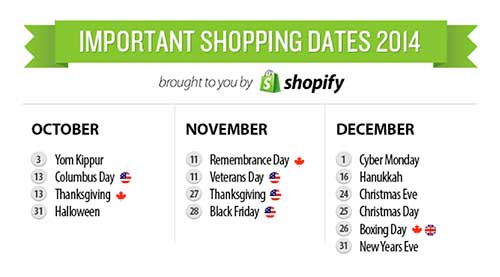
    ImportantShoppingDatesImage

    That being said, there are certain days that have evolved online regarding holiday shopping. If you’re into e-commerce, you’re already familiar with Cyber Monday, but it might help to organize your holiday advertising efforts even more granularly, as every year there seem to be more “dates to remember.”

    1. Black Friday – November 28th

    2. Cyber MondayDecember 1st – keep in mind: Facebook announced that this year, 25% of online shoppers will place their orders from a mobile phone on Black Friday and Cyber Monday! (https://www.facebook.com/business/success).

    3. Green Monday – December 8th – usually the shipping cut off for most postal outlets to get standard-shipped packages to customer before Christmas.

    4. Free Shipping Day – December 18th – a one-day event held in mid-December. Merchants are encouraged to offer free shipping with guaranteed delivery before Christmas. Like I said earlier, don’t think free shipping alone will give you an edge above everyone else – but it certainly helps! Sign up to be listed as a participant of Free Shipping Day here.

    5. Super Saturday – December 20th – the last Saturday before Christmas, Super Saturday is a big revenue day, as it technically marks the end of the shopping season that is considered to begin on Black Friday. Super Saturday targets last-minute shoppers. Typically, this day is a good day to offer one-day sales in an effort to accrue a great deal of last-minute Christmas revenue.

    6. Boxing Day – December 26th – As mentioned in #5, people are opening the new devices they received over the holidays, downloading apps, and/or looking to trade gifts in for something else. Online and in-store advertisers oftentimes offer deeper discounts on remaining merchandise, which can be a great way to get rid of leftover inventory.

    7. Social Media Presence is Crucial.

    GrinchMemeSocialImage

    The holidays are a very popular time for social media presence; your audience is online more often, whether it’s for shopping or to connect with friends and family. Therefore, make sure you increase your presence as well! Up your post load, produce more articles, and sponsor more updates to make sure you’re seen by your target audience and to show them you’re not “out of office” for the holidays.

    However, you may have to do some shopping yourself in order to make this happen. Advertising inventory prices will be rising for the holidays across Facebook, Twitter, and LinkedIn, so you must decide if you want to expand your budget in order to adequately boost your social media involvement.

    Before you grinch out on this, consider that your potential profit might be worth a slightly (and temporarily) elevated budget. After all, Facebook reports that 46% of shoppers who used Facebook before shopping used it to look for deals, promotions and holiday gift ideas, and they often discovered these things through their news feed. (Facebook Holiday Webinar).

    8. Stay organized!

    This last “tip” isn’t so much about online advertising as it is about advertising in general! Like anything concerning your business, staying organized is key, but it can be even trickier around the holidays when we seem to be juggling our personal and professional lives more than usual.

    Regarding your online presence, we recommend creating a promotional calendar before the month even begins. Know what days you’d like to run what ads, and become as comfortable as possible with the seasonality of the month. You can also take advantage of the ad-scheduling features on certain ad platforms – this way, you can create your ads, post promotions, sponsored updates, etc. ahead of time and then schedule them to run on certain dates/times without you having to be around the computer.

    Simply put, plan ahead as much as possible! This will leave less work for you to do later when you’re trying to baste a turkey, or when your luggage inexplicably gets lost by the airline…

    Now some might think this goes without saying, but remember to breathe. You do not need to implement all of these suggestions into your ad strategy! Whatever you do decide to do this holiday season, the most important thing is to document and remember the results for next year and to ultimately strengthen your marketing strategy. Just because it’s the holiday season doesn’t mean you need to stress about your advertising. But unlike the holidays, just try not to get your family too involved.
    SIHappyHolidaysImage

    Image Sources:

    Brace Yourselves

    Important Shopping Dates

    The Grinch

  • Help! I’m A Cyborg And Nobody “Likes” Me

    Technology is redefining human connections, which has made social media a crucial ingredient in any marketing strategy. With many different outlets available used to communicate with your audience, how do you choose the best approach for your business? When sitting behind a computer screen, it is easy to forget the purpose of B2C marketing – building and maintaining meaningful relationships with your customers.

    Here are some quick tips to create that connection through your social media campaign.

    Be Receptive

    Always be conscious of how your product and service will benefit the customer. Keep these benefits in mind when encouraging your customers to engage in your promotion and be receptive to their feedback. The beauty of social media is that it allows you to create a more personal approach to marketing those benefits, receiving feedback from the consumer and personally responding to his or her thoughts or concerns within minutes, demonstrating your excellence in customer service.

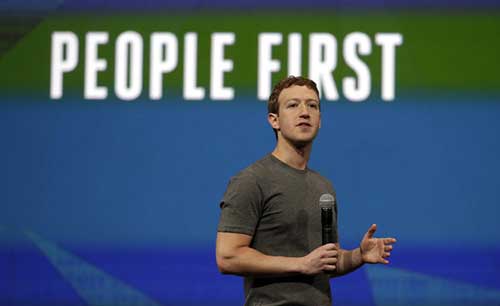
    FacebookPeopleFirstImage

    Be Genuine

    It is critical that the voice and verbiage used for your campaign is coming from an authentic place. Eliminate the robotic, scripted tone and your audience will feel like they are not conversing with a business, but with a person who actually cares about their needs.

    HaveALotOfFeelingsImage

    Be Direct

    In this fast-paced society, your audience is most likely pressed for time and multitasking. Give them stimulating content in a short, digestible format that they will consider worth their time. Your mindfulness and appreciation for their time can go a long way.

    Keeping your campaign personal, and showing your gratitude to your customers in a genuine way can be the key to a successful social media campaign. As long as your customer service is consistent with your social media efforts, your business can build and maintain those essential relationships.

    Image Sources:

    Thanks to Buzzfeed for the Mean Girls gif and for the Facebook “People First” image.

    Other Source:

    LinkedIn’s Social Media & Emotional Brand Attachment Case Study


  • Five For Friday: A Very Twitter Christmas, Facebook Gets Scroogy With Likes, & More!

    iphone5borderimage

    1. Are Twitter Users the Most Efficient Holiday Shoppers? – MarketingLand

    Given their 160-character count limit, Twitter users are clearly efficient communicators. And now, we are learning that they are super efficient holiday shoppers as well. The popular social platform released a study highlighting its ability to influence shoppers in their decisions on retail establishments and which specific items to purchase. 54% of users are more likely to purchase an item if they saw it advertised on Twitter. The study also shows that Twitter users not only shop earlier, but they also shop more frequently for holiday purchases. I guess now we know where retail shops should be marketing during the holidays.

    2. Secrets to Properly Linking on LinkedIn – Business2Community

    We all have a LinkedIn page. We’ve entered in our resume details, uploaded a picture, maybe got endorsed by a friend or two, and received a glowing recommendation from our moms, but now what? How exactly can you benefit from this?

    Here are 12 secrets from LinkedIn pros! Adopting some of these habits will help you increase your presence and improve your network. Some tips include:

    • Message people in groups for free!
    • Share useful and relevant news (mainly for attention).
    • Use tools, like FiveHundredPlus, to stay organized.
    • Follow first; Like, Share, and Comment second.

    LinkedIn can be confusing, and it may seem unnecessary, but with the growing number of companies and business people joining and actively using the platform, it has become more beneficial to understand how it works. Creating a substantial network will help in the long run. So, go forth and connect!

    3. How-To: The Most Perfect List Post – Business2Community

    Everyone loves lists! However, with their increasing popularity and Internet users’ ever-prevalent short attention spans, how do you keep readers reading?

    Business2Community offers a near-perfect list of tips for creating the best and most effective list post. There are several things to consider when writing out a list, and remember, every detail matters. Some of the tips provided are:

    • Always, always, always have an introduction and a conclusion (excluding the distinguished SI Five for Friday posts).
    • Pick the right number (10 instead of 5, 7 instead of 8). Trust us, it’s science.
    • In the title, use “10” instead of “ten.” Seriously, it matters.
    • Write longer posts.

    These tips are guaranteed to help make your list go viral, or at least make sure your readers actually read through to the end.

    YouArePerfectImage

    4. The End of Facebook Like-Gate as We Know It – MarketingLand

    Say goodbye to the days of entering a contest on Facebook with the simple click of a Like button. Facebook engineers have dismantled the ability for companies to use Likes as the entrance fee for contests and prize drawings.

    The effects of this are two-fold. For one, companies will now have to engage users on a deeper level in order for them to connect with the business. This change effectively ends the use of “artificial incentives.” Two, they also expect to see more conclusive results when determining demographics, as opposed to the scattered results received when companies were giving away iPads haphazardly to gain social media presence.

    However, it is also being argued that ending Like-gating is solely meant to gain revenue for Facebook. The belief is that companies will pay for Likes if they have to. And now, they have to.

    5.  What’s the About Page Supposed to Be About? – CopyBlogger

    The About page seems pretty self-explanatory, but it has actually evolved over the years and is no longer a place for you to just describe your business/products. For a more effective page, use it to start a conversation with your reader and emphasize to potential clients that you have what they are looking for. Because this is often the most visited page on your site, it is wise to grab the reader’s attention from the get-go. Let your personality shine! This will assure your visitors that they are in the right place, and they are more likely to continue browsing your site.

    There are 5 steps to creating a superior About page:

    1. Engage with readers by introducing your personality and humor on the site. Don’t be afraid to be different.
    2. Get into the readers’ heads. Make them think you’re reading their mind by showing them you have exactly what they are looking for.
    3. Brag, but humbly. Include some testimonials so others are singing your praises.
    4. Near the end, insert a bit of your biography. Make sure you express why you do what you do, and why you love it.
    5. Call to action! Invite your readers to sign up for your email list, call, or contact you. Most of the time, they will!

    Image Sources:

    Thanks to Mariah Summers for the “You Are Perfect” gif.

  • Facebook Engagement: How To Make Your Fans Say “I Do”

    Get more exposure to your business’ Facebook page. Incorporating these elements will enable your business to provide better and more shareable content!

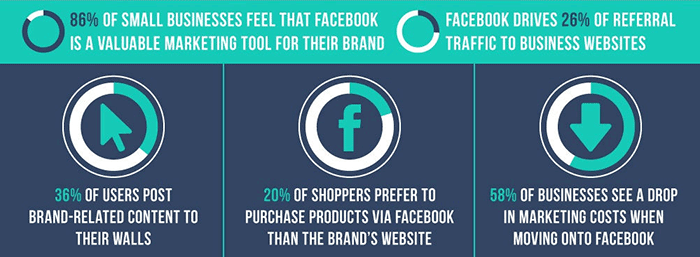
    There are 30 billion pieces of content shared via Facebook every month. That’s billion with a “B”! How is your business going to get noticed in this content sharing frenzy? One way is to write great and engaging posts people want to read! If people enjoy your posts, they will be much more likely to “like” the post, comment, or best of all, share it with their network– which has potential to reach a much larger, untapped audience.

    FacebookBusinessesStatsImage

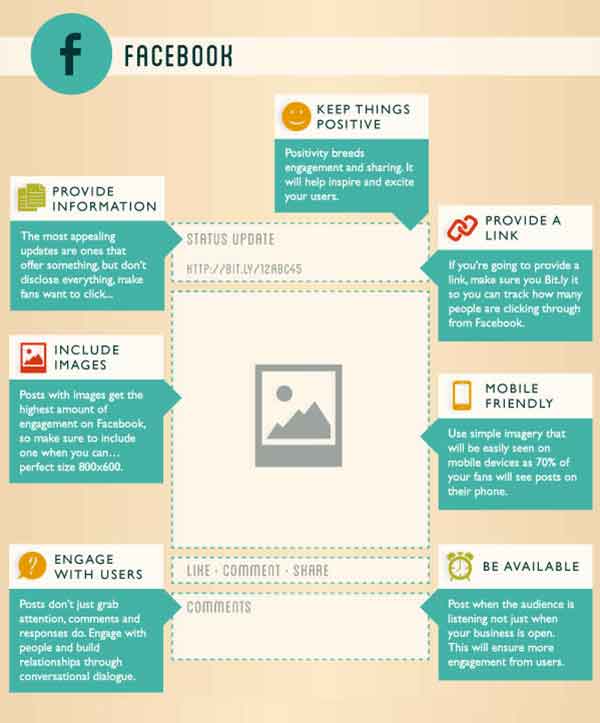
    If you are new to social media or find yourself with writers block, see some of our suggestions to create better and more engaging posts. Below is as brief list of the many ways in which you can create great content, but remember to pick just a few ideas per post to prevent overwhelming your reader.

    1. Don’t make every post “promotional.”

    For example, only posting about your business and the products you offer may not be the most exciting update for a fan to read. Instead, post about specials, sales, or events that are happening in the near future.

    2. Use images whenever possible.

    It has been proven posts with compelling text coupled with an image will get more engagement than plain text or a link alone. Take it a step further, instead of using stock images use authentic and unique images from your business.

    3. Create a “weekly something.”

    If you are a restaurant, post a recipe of the week every Tuesday. Or, if you are a dermatologist schedule a recurring post about products you recommend. Create some consistency and give your fans something to look forward to.

    4. Share or repost other business’s updates that you find interesting.

    Sharing or reposting other business’ great articles, posts, and pictures is a great way to grow your audience and offer great content to your fans.

    5. Respond to comments that are left on your posts.

    Big or small, it is always great when a business comments back on posts. In addition, you should occasionally comment on other people’s posts as well, especially on posts created by fans of your page!

    6. Take a little extra time and create a unique meme for your business to share on your social media platforms.

    This great tool called the Meme Generator allows you to create whatever meme you like with a variety of stock images available.

    7. Lastly, share something silly every once in a while!

    Found a video of an adorable elephant sneezing, two babies talking to each other, or a great gif? Share it! This will not only get your posts more likes, but good chance it will get shared a great deal with your business’s name attached to it. People love companies that have a sense of humor. It shows real people are behind the computer screen.

    PerfectFacebookPostImage

    Image Sources:

    Thanks to Pam Dyer for sharing this infographic about the “Perfect” post.

    Thanks to Steve Parker for sharing this mini graphic about Facebook for businesses.

  • Five For Friday: Amazon Gets Physical, Tinder Cleans Up, & G+ Asks, Am I Pretty?

    FiveForFridaysColorfulFive

    1. Google Testing New Local Interface In Web Search Results – Search Engine Roundtable

    Google is testing a new interface for showing the local web search results. Back in August, we saw that Google was showing the local carousel within the results, but this new interface is simply a list of the results and isn’t going to preview a map within the carousel.

    2. Tinder Spammers Move to SMS After Improvements To Dating App’s Security – Tech Crunch

    For awhile now, the dating app Tinder has been overwhelmed with spam bots, or accounts created to flirt with Tinder users and then direct them to adult sites. However, this summer, Tinder was called out by Symantec and therefore had to address the issue with an update. At first it appeared the update addressed the issue, but a new report is showing that the spammers have just moved to using SMS texts.

    3. Report: Amazon To Open New York Retail Store – Marketing Land

    Recept news reports say that Amazon is planning to open a Manhattan store just in time for holiday traffic. According to WSJ, the new store, opening at 7 West 34th Street, is to operate as a mini-warehouse of sorts, allowing returns and pickups. Others had reporting that this might be a place for Amazon to showcase it’s upcoming products such as new e-readers, the Fire Phone, or Fire TV. Either way, this could be a game changer for this e-commerce provider.

    4. Google Adds The Ability To Post Polls On Google+ – Marking Land

    As of October 9th, Google+ is giving users the ability create and share polls. This was a tool Facebook was offering back, but then pulled back in 2012 finding it redundant. This new feature in Google+ will on the web and Android versions within the next few days, and then eventually iOS.

    5. Google Makes Conversational Search Even More Intelligent – Search Engine Journal

    OpenTableLogoImageOn October 9th, Google announced an update to their conversation search functionality which should make it easier for planning. Overall the new features include, location-based searches, making reservations, and finding directions. These new features are now available on the Android and iOS app. What does this mean for businesses? It’s more even important to optimize your site for local search as well as to verify your Google+ local listing. If you own a restaurant, then you should ensure you are listed on OpenTable so you don’t miss out on potential customers!
  • HashTag, You’re It: Tagboard Allows Businesses To Display Hashtags In One Place

    Do you use a certain hashtag to promote your business on social media? Do your customers have a popular hashtag they use when posting about your business?

    If you answered yes, then it’s time to get excited because TagBoard makes it a whole lot easier to keep track of popular hashtags from your fans across multiple social media platforms.

    What is Tagboard?

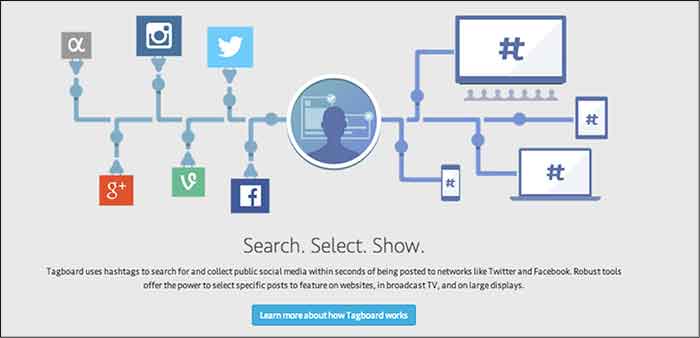
    Tagboard is a tool that lets you see all similar hastags across multiple social media platforms. The platforms that Tagboard searches are:

    TagboardPlatformsDiagramImage

    How can your business benefit from Tagboard?

    Tagboard uses an easy way to search for specific hashtags! All you have to do is search any hashtag to see a feed of all related hashtags and updates from the various social networks Tagboard scans.

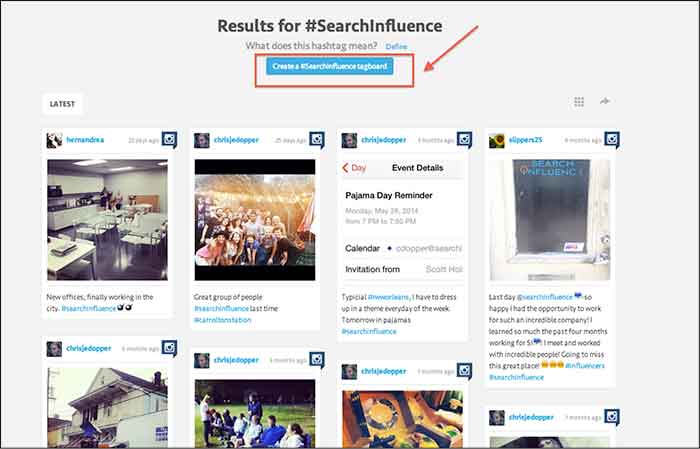
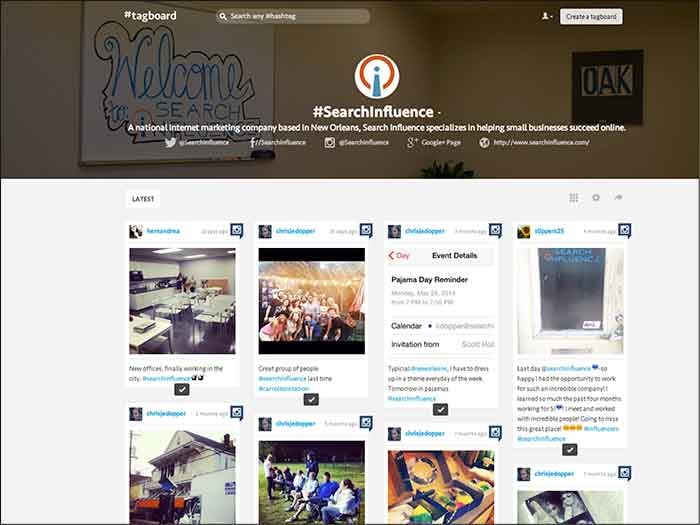
    Take Search Influence as an example. When searching for #SearchInfluence, multiple posts populate the board. If you want to use this hashtag as your own and custom brand it, you simply click on “Create #Hashtag Tagboard.” This is beneficial to getting your hashtag out there once created and seeing the interaction once the hashtag goes viral across multiple platforms.

    TagboardResultsImage

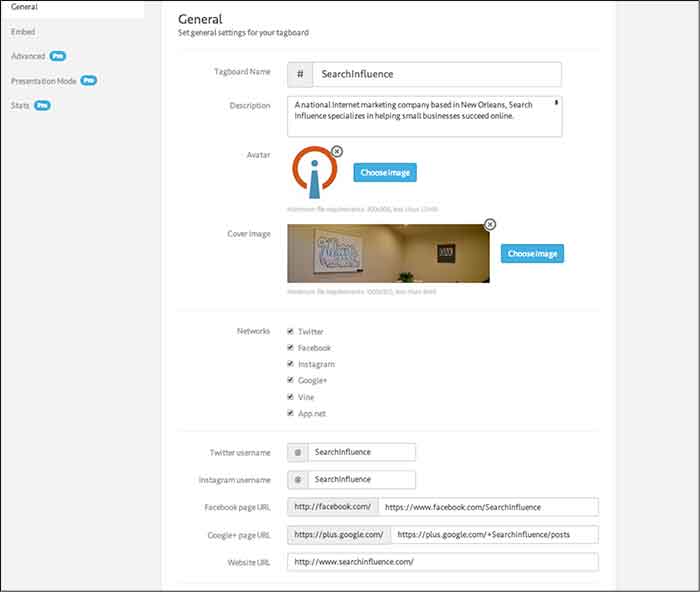
    Once “Create #Hastag Tagboard” is selected it prompts you to complete a short form to fill out and customize to your brand and business.

    TagboardSettingsImage

    After filling out the form, your tagboard is complete and ready to be shared. Simply click on the “Share Tagboard” button and copy and paste the link into anywhere you want to promote or share you Tagboard.

    TagboardHomepageImage

    You can make multiple custom Tagboards for multiple hashtags. The possibilities are endless.

    Bonus SEO Benefits!

    As a bonus, Tagboard.com is an authoritative website in itself! Moz’s Open Site Explorer reports Tagboard has a domain authority of 68/100. When you go through the steps above to create your own hashtag Tagboard, the resulting page provides a followed link back to your website and other social media networks.

    Using Tagboard to claim your hashtags is a great way to further your website’s SEO and online reputation.

    What hashtag do you use to promote your business? Comment below to share your successes in using hashtags.