Tag: content strategy

  • What Happened to My Meta Descriptions in Search Results?

    During a typical day-to-day interaction with Google’s SERP recently, I started to realize the variable nature in which meta descriptions were being pulled into search results for our site. We know that last December Google announced the expanded the character count guidelines for meta descriptions, but that did not seem to be the only input at play—it was pulling in the implemented meta description for some searches and a chunk of the content from the website for other search verticals.

    Let’s start with a service page present on our domain. Within the page’s coding, we have implemented the following meta description:

    However, a search for “seo services new orleans” generated a completely different meta description from the one implemented in the site’s coding.
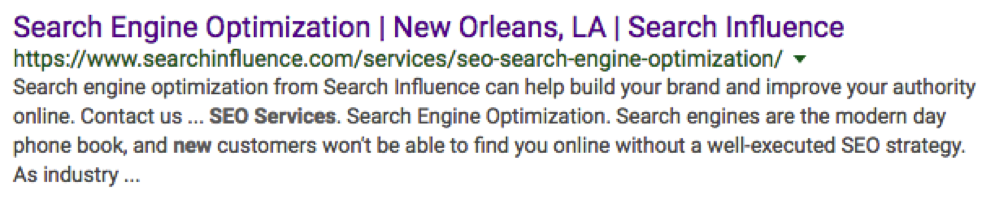
    Google appears to have made the decision that our implemented meta description was either less accurate or less relevant to our search intent than the page’s content. What jumps out here is that in the SERP we see that three of our search terms are bolded in the description, including the “new” from New Orleans. Google has made the decision to extract the “new” and treat it as its own search value and not necessarily as a string with “New Orleans”.

    With this in mind, I began to test the limits of Google’s ability to crawl and pick specific parts of content to utilize in a meta description. Let’s start with our main domain’s meta description.

    In the search for “digital marketing new orleans” our implemented description pulls in perfectly.

    So in this case, our intent and meta description seem to be perfectly aligned. But, what if I picked some unrelated string of words from my content? I scrolled toward the bottom of searchinfluence.com and picked out a chunk of content to see if I could get it to populate as the meta.
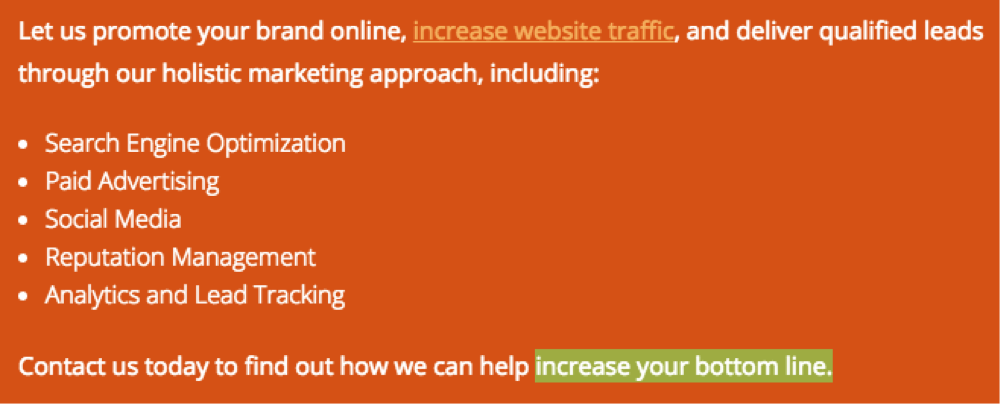
    Wow, that was easier than anticipated.
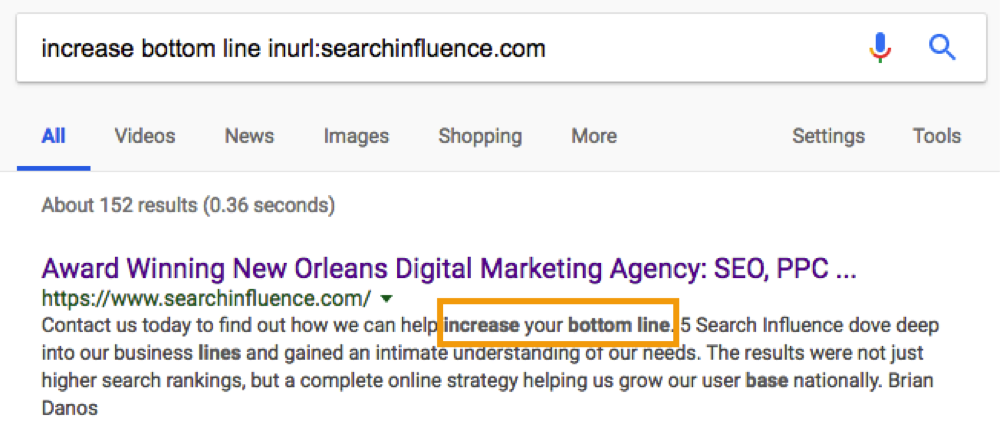
    Let’s take this a step further. What happens if we Frankenstein some sort of combination of content and our original keyword search.
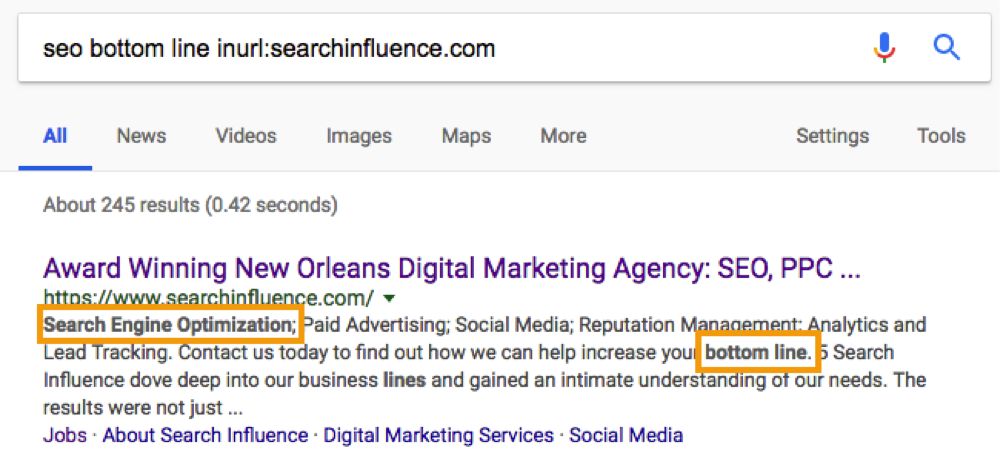
    So, from this small sample, we can see that Google is actively trying to best address your search intent by extracting the most relevant information from the most relevant pages related to your search query.
    This leads to many follow-up questions: How do I optimize my meta descriptions? Does the length matter? How do I make sure I capture the searchers I want? This presents a lot of loose ends, as these types of things always face small adjustments and tweaks from Google. However, this research can help us form some conclusions about general rules.

    1. Assure your meta description addresses the main focus of the page with search volume in mind.

    If Google is trying to tell us that intent matters, then it makes sense to align your meta descriptions with the intent of the searcher. Let’s take a roofer for instance:
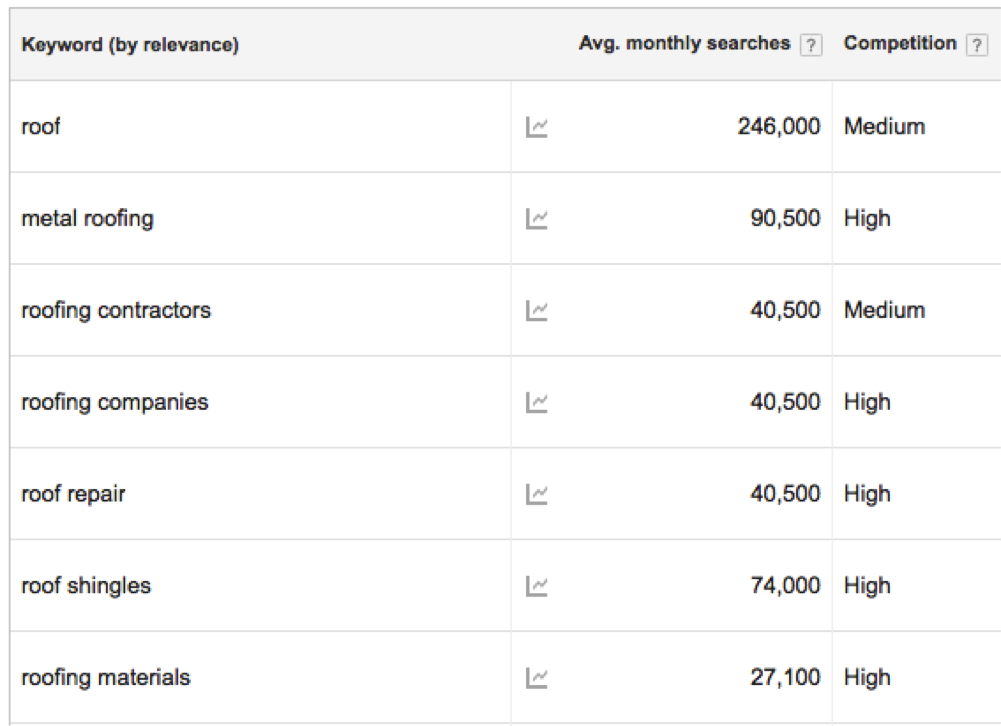
    What can I infer from these average monthly searches? For the main domain, best practice would be to address metal roofing, contractors, “company,” repair, shingles, and materials if I want my implemented meta description to pull in for all of the keywords. Keep in mind that, as tempting as it might be, if your page’s content does not address a particular topic or keyword we do not want to include it in the meta description for the sake of attracting searchers. Your keywords or topics in your meta descriptions and on-page content should always align very closely.

    Also, think about pages with a lower number of clicks and conversions. Am I missing any top-level keywords on these pages? Which keywords or topics can I implement to help searchers better understand my product or service? This may require some testing, however, it will aid the end goal of pushing the target audience to the desired product or pages.

    This might seem like a return to a “keyword focused” construction of meta descriptions, but it is more about aligning what your business provides with what a potential customer or client might be searching. If you want your meta descriptions to pull into the SERP, this must be kept in mind.

    2. Meta descriptions should reflect the page’s content.

    When writing meta descriptions, you should also consider the variance in search queries. In theory, your page can rank for a number of keywords outside of your original plan. With that in mind, the meta description should work hand-in-hand with the page’s content. This way, when Google prioritizes one over the other you are still accurately presenting your product or service.

    Additionally, in terms of marketing, find what works best for conversions and stick with it. Since we cannot create a meta description that catches every possible search term or query, you should be strategic about using terms or queries that will best position your business in front of searchers.

    3. Google is utilizing Semantic SEO for Metas.

    What we see in bolded text in the SERP results, as seen in earlier sections and the image below, is that Google is continuing to think about searches semantically. In other words, Google is applying more meaning to your searches than a strict A-to-A, keyword-to-result formula. It is trying to infer certain things about your search and what type of content you seek in return. Think about your Semantic SEO strategies and how those can be integrated into your meta descriptions.
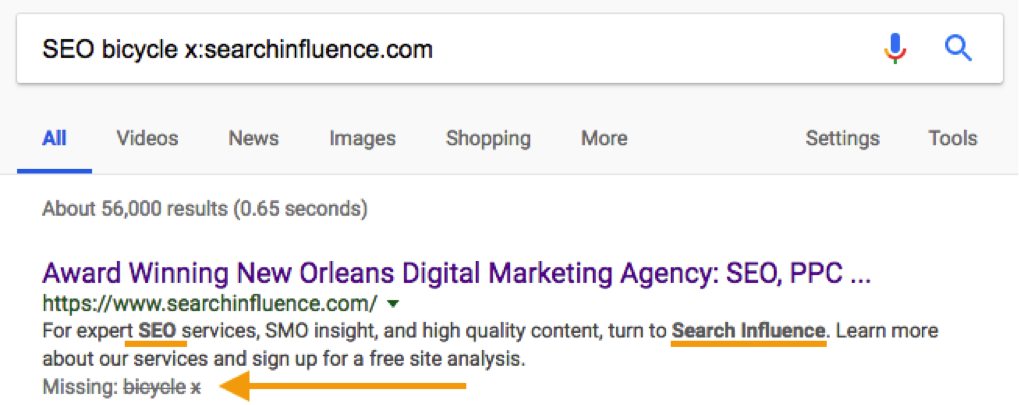
    In the above example, we see that Google hit on “SEO” and “searchinfluence” as indicated by the bolded text in the meta description. Below that, we see terms that were excluded, “bicycle” and “x”. What this shows us is how Google is thinking about your search query semantically and thinking about the context of what you are searching, excluding terms that are not semantically part of your search vocabulary.

    4. Utilize the extra space.

    Google has provided us with some extra legroom for our descriptions by expanding the character count to somewhere around 300. Testing has indicated that descriptions can go beyond 300 characters, but that is the explicit cut off provided by Google. While Google will still pull in “shorter” metas that fit the old standard, it makes logical and semantic sense to include as much information that covers as much search intent as possible.

    As with most things Google, this is continually evolving and requires continued observation and testing. However, there are clear signals about the ways meta descriptions are being rethought as they relate to the SERP. This is a great opportunity to test our new ideas and apply new SEO strategies to see what works and how it can positively impact your business.


    All screenshots were taken by Cory Agular.

    Images:
    Start

    Young Frankenstein

    Cat Reflection

    Space

  • Pubcon Florida 2018: Chatbots Are Cool, But We Gotta Keep Marketing Human

    Pubcon Florida 2018: Chatbots Are Cool, But We Gotta Keep Marketing Human

    I am sorry to say that until last week, the only Pubcon events I’d attended were in Las Vegas, and of course, when after Katrina the show came to New Orleans in 2013 (wow, seems like only yesterday).

    So, last week I went to Ft. Lauderdale for Pubcon Florida. It was a really enjoyable show.

    To give a little context, Pubcon Las Vegas is like the CES, SEMA, or ComicCon. There is way too much going on to feel like you’re seeing it all. Kind of like Las Vegas itself.

    But this show, the South Florida show, co-produced with the South Florida Internet Marketing Association (SFIMA) is much more manageable.

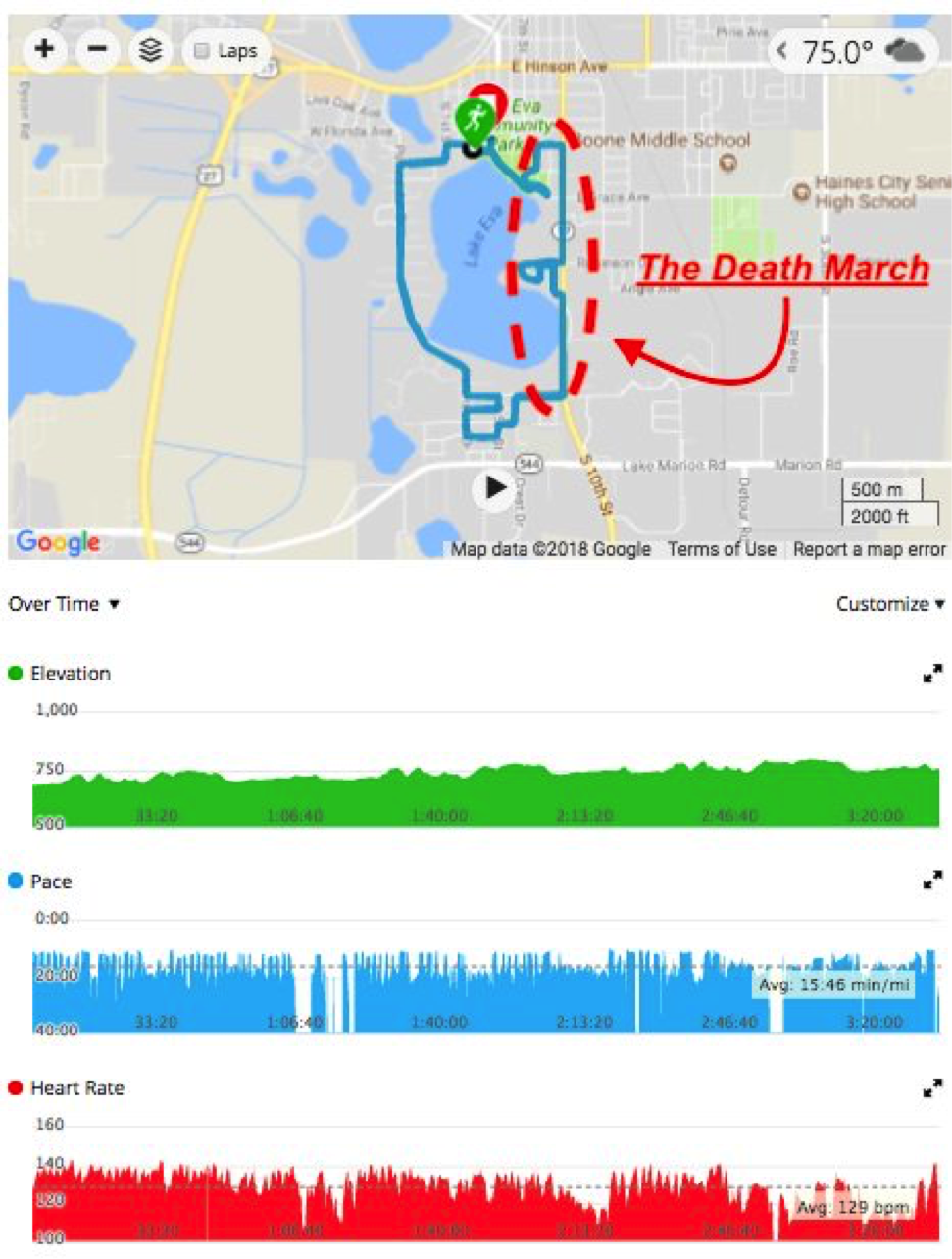
    I was able to bundle a little fun with this trip, stopping over in Haines City, FL (my hotel was in Lakeland, FL), to take part in Ironman 70.3 Florida.

    Feel free to read my account of it if you’re interested in the exploits of a mediocre, middle-aged athlete.

    We Need to Stop Chasing Google

    Every keynote speaker at Pubcon were people I would gladly watch any time. I was sad to miss the closing keynote with Purna Virji of Microsoft but glad I caught both Wil Reynolds and Lee Odden. I have seen Purna speak many times and as I tweeted at SEMPDX Engage, I could listen to her read the phone book.

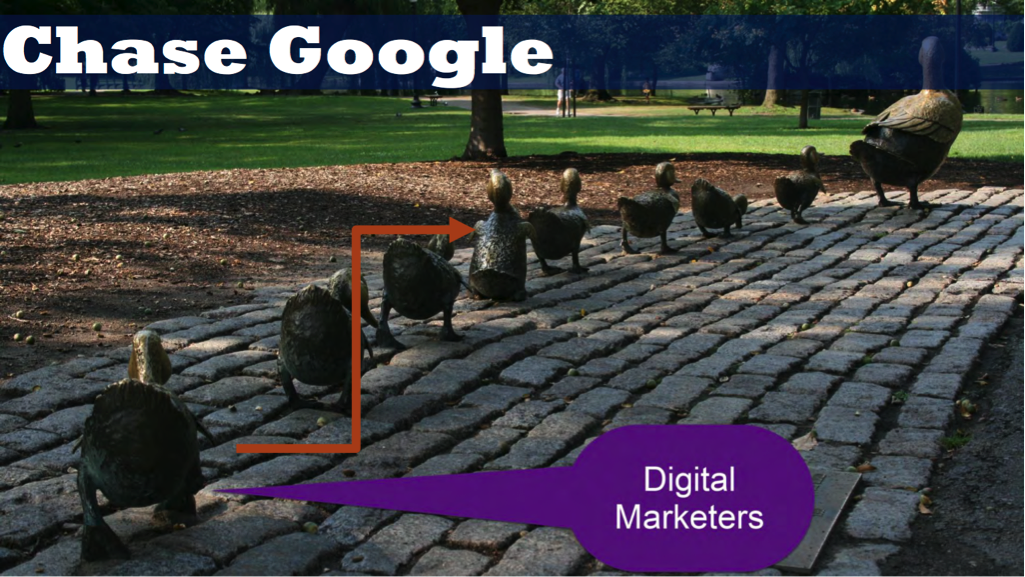
    Wil made some really excellent points about how we as marketing companies need to be thinking about our relationship with the search engines and ad platforms, including a great metaphor about the follow of chasing Google when Google is itself chasing the user (searchers, humans, whatever).

    It is really easy for us marketers, especially those like me who grew up in an SEO world, to get enamored of the technology and forget that at the end of the day it’s about humans. Or as they use to say in the Yellow Pages, putting buyers and sellers together.

    I like Wil. He’s a northeasterner who has been doing this for a while. Our cultural references are similar and clearly our penchant for a well-placed profanity.

    Lee Odden was talking about the intersection of PR and Content Marketing. Lee has been preaching the value of content since the early days—perhaps even before The Content Marketing Institute.

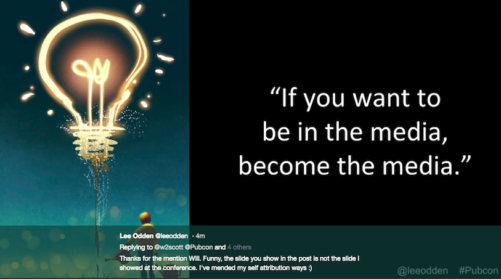
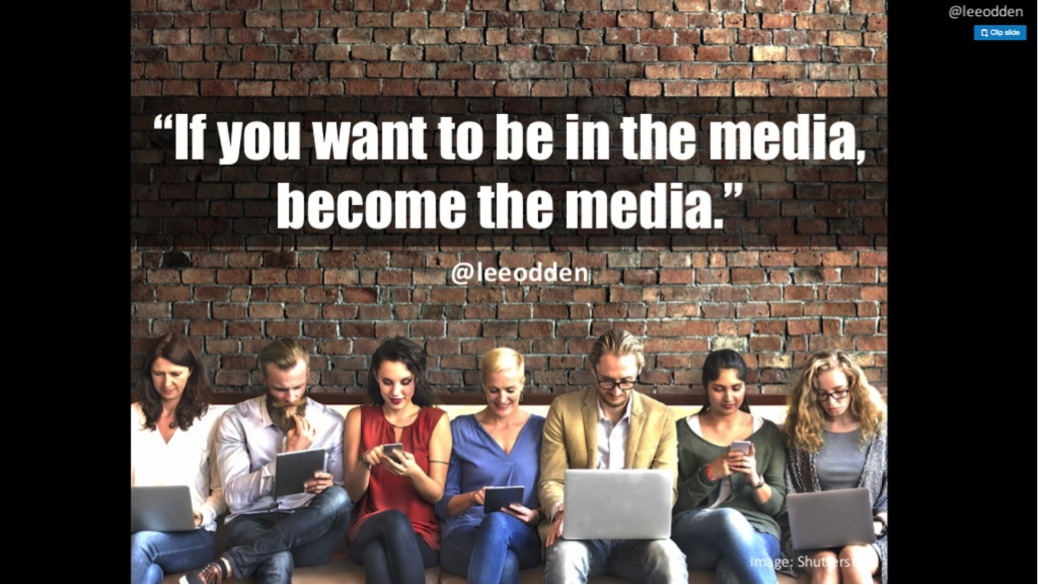
    According to Lee, “If you want to be in the media, become the media” – I always enjoy when presenters attribute themselves to quotes in their presentations.

    UPDATED: Lee Odden was nice enough to give me the right image. I included here a screenshot from Twitter so you can see his message as well.

    My interest in these two presentations is a little self-serving. Both were arguing for a more holistic view of both the user (browser, searcher, customer) than that of the typical digital marketer.

    Trust Building for Brands

    My presentation, entitled “Brands Win Online” was a further expression of a theme that we’ve been presenting on for years.

    In essence, brands get traffic because they’re brands. Even when, in a Google search, a brand is lower down the list they’ll get the click because of brand recognition. We see this all the time at a tactical level where we are able to influence search results by doing branding focused advertising.

    The first iteration of this idea, done this way, was in a presentation to the BIA/Kelsey show called: Presence + Authority + Trust = Winning

    Paula has also banged this drum a few times with her presentations on local branding including her MozCon presentation: Fake it till you make it: Brand Building for Local Businesses

    There were, of course, other great sessions. Mat Siltala was his usual brilliant self, and I learned quite a lot from Tony Wright whose presentation I had the pleasure of moderating.

    Here’s a link to Mat’s presentation on SlideShare: Creating Content for Social Media

    Did you know, Tony studied Opera?!

    The Benefits of Going to a Growing Conference

    One of the great things about this smaller conference is that there were no must-miss presentations. I could have spent all day in sessions and felt like I was learning a ton. And, of course, there are a number of takeaways for me to bring home to the team. Including a Barnacle SEO reference by Steve Shackelford of DealerOn.

    Brett, Joe and the team put on a great show and have been doing so for the past 17 years. If you’re interested in a more manageable show than the big Las Vegas extravaganza, do check out Pubcon Florida next year.

    Maybe, this one will get on autopilot and we can hope to see Pubcon back in New Orleans someday!

  • Five Tips for Creating Customer Advocates for your Tourist Attraction

    When your past customers talk to their friends and family about their vacation, are they likely to recommend your business? Word of mouth is critical for sustainable, long-term business growth, and social media has multiplied the number of connections between people sharing travel advice and reviews. In fact, a recent study from Nielsen found that 92 percent of consumers say they trust brand advocates, including recommendations from friends and family. Here are just a few of the ways to encourage customers to help promote your tourist attraction.

    Spongebob Sqaurepants laughing - Search Influence

    1. Attach Your Brand to a Real Person

    People naturally connect better with human beings, and it’s even better if customers interact with the same face repeatedly. Do you have a secretary or hostess who can orient new customers to your services and their options? Family-run and personality-driven businesses have an easier time identifying their brand with friendly owners and managers, but any business can make itself more relatable by avoiding shortcuts that result in impersonal service.

    Whenever possible, avoid using automated responses and impersonal emails. Over the phone, your business should be represented by a friendly voice. When electronic communication is necessary, try to use the same staff member so that customers have a chance to develop a rapport. By creating that dialogue, you’ll appeal to your audience’s emotional side, which neuroscientific research has linked directly to decision making in the brain. This genuine and friendly first impression is the first step toward creating a lasting customer who can, in turn, become an advocate for your brand among their peers.

    An excited man with a camcorder on a beach - Search Influence

    2. Create Photo-Ready Shareable Experiences

    If you know you’re creating a remarkable in-person experience for your guests, be sure you make it easy for them to translate that into photos, videos, and content online through their social channels. Tour guides and attraction managers know the best locations for group photos, and you can remind parties and couples of the optimal times to take out their cameras. Introverts may be reluctant to ask for someone else to take pictures, but waitresses and tour guides can start the conversation by suggesting a photo op. All of your customers’ friends will be curious to see where the picture was taken.

    Whether it’s a funky statue that’s perfect for a photo op or a contest through your social media platform to get guests to share their best photos in exchange for a gift certificate or branded swag, make sharing fun and interactive. You can even offer free Wi-Fi at your location and post signage with your branded hashtag or social media handles to make it as easy as possible for your guests to share right away and include you in their posts.

    3. Claim Your Online Presence & Stay in Touch Through Social Media

    Speaking of social, don’t forget to continue to foster that relationship with your guests online, even long after they’ve left. One of the most important steps of building customer advocacy is claiming your online presence. Brand your social media platforms with your company logo and beautiful photos of your attraction so that guests will know right away that you’re legitimate. Rather than just trying to promote your business on social media, be sure you also provide helpful information, fun events in the community, and posts that showcase your brand “personality.” When your fans find your posts helpful and relevant, they’re much more likely to share them with their fanbase.

    In addition to the usual social media platforms like Instagram and Facebook, you need to claim your Google My Business page. Since the Google ratings and reviews appear alongside search results, it’s important that your listing is accurate, detailed, and looks professional. This includes checking your hours of operation and adding photos of your attraction so that guests know they’re looking at the right listing.

    4. Collect Emails By Offering Promotions

    Every business is offering membership discounts and promotions these days, and an email signup is an easier alternative to the sometimes cumbersome memberships. When advertising on social media and your website, encourage customers to sign up for future promotions. Potential customers who are still planning their vacation will be interested to see whether special discounts or offers coincide with the time of their planned visit. In the meantime, your well-crafted emails will make sure your attraction isn’t forgotten as they get closer to finalizing plans.

    At the end of their visit, satisfied customers will be interested to see if you offer promotions they can share with friends. By giving email subscribers advanced notice about special events, you make them feel like they have inside information. When they feel like they have a special connection with your business, customers are more likely to advocate for your business. When their friends are visiting the same destination, they’re even more likely to recommend your business because you’ve continued to make a positive impression.

    Amy Poehler in Parks and Recreation saying Please - Search Influence

    5. Ask Nicely

    Just like Google My Business, it’s important to keep track of reviews on all social platforms. Depending on your industry, Yelp or TripAdvisor or another website may be more relevant. Many business owners forget to ask customers for reviews. Unfortunately, the customers who are self-motivated to write reviews are often the ones looking to vent about a negative experience. Happy and satisfied customers rarely feel the need to go through the necessary steps to write a review, but they’re more likely to take the time if someone at your company makes it clear how much their time would be appreciated.

    Whether you’re running a Ferris wheel or a hole-in-the-wall gourmet donut shop, you need customers to spread the word and advocate for your business. Once you’re confident in the quality of your services and products, it becomes a matter of encouraging customers to share their excitement online. The good news is that most of the things that help build advocacy also improve your connection with customers. When you leverage that connection to further improve your business, you can join in the success of tourist attractions that are winning on social media.

    Need help getting started? Learn more about our consulting services to help build a solid reputation for your attraction.

    Images:

    Spongebob

    Camcorder Dad

    Parks and Rec

  • Mobile Travelers: 4 Ways Mobile Search is Used in Vacation Planning

    Mobile Travelers: 4 Ways Mobile Search is Used in Vacation Planning

    We’ve come a long way from lugging around heavy guidebooks and drawing out routes on paper maps. In fact, we’ve even come a long way from planning vacations on desktop computers. Google shares that a growing number of travelers are planning vacations on their mobile devices, with mobile’s share of travel visits growing 48 percent in 2016, and mobile web conversions for travel sites growing 88 percent that same year. As a result, it’s increasingly important for businesses in the tourism and travel industries to optimize their websites for mobile and make researching and booking trips easy for mobile customers. Here’s how!

    Take me away - Search Influence

    “Micro-Moments”

    According to the same source from Google, the key to a successful mobile travel site is leveraging micro-moments. These are moments of intent when someone acts on a need—for example, looking for a hotel once they’ve booked a flight to that city. Google names the core four micro-moments of planning a trip as I-want-to-get-away, Time-to-make-a-plan, Let’s-book-it, and Can’t-wait-to-explore. Different businesses in the travel industry will prioritize different micro-moments—for example, an influencer on Instagram might focus on I-want-to-get-away while a local tourism bureau might concentrate on Can’t-wait-to-explore. But, catering to customers across all four micro-moments certainly can’t hurt!

    1. I-want-to-get-away

    Also called Dreaming Moments, these are the times when people start thinking about their next vacations—and Dreaming Moments happen often. Again, according to Google, 37 percent of U.S. travelers think about planning vacations once a month, and 17 percent think about it once a week or more. In 2015, 38 percent of non-branded travel searches came from mobile devices. Today, that number is only increasing. So, how can travel and tourism businesses cater to this growing audience?

    One option is using SEO services to help your website rank higher in search engine results for questions like, “What to do in [destination]?” and, “Where is [destination]?” These are two of the top travel questions people ask Google. Another great resource is YouTube. Google estimates that roughly 106 million of YouTube’s monthly unique visitors are travelers, and 64 percent of people who watched travel-related videos did so during Dreaming Moments. This means that learning to attract customers on YouTube is a must for businesses catering to I-want-to-get-away micro-moments.

    Animation of a plane flying - Search Influence

    2. Time-to-make-a-plan

    Also called Organizing Moments, these are the times when travelers have decided to take a trip but are still considering different hotels and airlines with an open mind. During these moments, travelers are figuring out the logistical details of their journey—like how long flights will take or how much hotels will cost. And, they’re figuring out these logistical details on mobile. On Google, mobile flight-related searches are up 33 percent year over year, and mobile hotel searches are up 49 percent.

    To reach customers during Time-to-make-a-plan Moments, consider online advertising campaigns, or Google services such as Hotel Ads and Google Flights. And, of course, make sure that your website is fully optimized for mobile!

    3. Let’s-book-it

    Booking Moments are incredibly important—not only because they’re the times when travelers start spending money, but also because these moments may have the most room for newcomers to make an impact. Going back to data from Google, 46 percent of travelers who do mobile travel research made their final booking decisions on mobile but did the actual booking itself on a desktop or laptop computer. This means that customers are likely not getting everything they need from mobile during Booking Moments. Businesses that improve their mobile booking have an opportunity to rise above the competition.

    Google recommends Book on Google as a way to increase conversion rates for mobile Booking Moments. But, other ways to improve customers’ mobile booking experience include streamlining the check-out process to remove any unnecessary steps and making sure your site is secure. Customers will be more likely to book on-the-go if they trust that their information is safe and secure.

    4. Can’t-wait-to-explore

    Also called Experiencing Moments, data from Google proves that these are also areas of huge potential. Travelers are increasingly planning their vacation activities while they’re on the trip, with 85 percent of 2016 leisure travelers deciding on activities after arriving at their destinations. Here again, travelers are making these plans on mobile. In fact, mobile searches from hotels increased 30 percent in 2016. Companies who aren’t catering to this growing audience are missing out on potential business.

    So, how can a travel industry business appeal to customers in Experiencing Moments? Provide travelers with information! The same source from Google found that 53 percent of leisure travelers are interested in visiting new places, compared to just 18 percent who want to return to previous destinations. This means that the majority of vacationers are somewhere they’ve never been before. Offer recommendations for restaurants or attractions, and make these recommendations location-aware—Google searches for “places to eat near me” more than doubled in 2016.

    Two planes making a heart shape in the sky - Search Influence

    Travel is increasingly becoming a mobile-centric industry, and businesses have a lot to gain by targeting customers in these core travel micro-moments. Whether it’s improving YouTube reach to grab viewers during I-want-to-get-away Moments, or making sure a site is hosted on a secure server for Let’s-book-it Moments, Search Influence is here to help. Bon Voyage!

    Images:

    Take Me Away

    Want to Get Away

    Bon Voyage

  • 5 Tips for Engaging Email Marketing

    Sending frequent emails isn’t enough. In fact, if your content isn’t thoughtfully developed for your target audience, your hard work can find its way to the spam folder. From collecting email addresses to allowing people to unsubscribe, basic newsletter marketing is required to reach your audience’s inbox. Once you’ve got an interested audience, engagement is the first step to generating conversions.

    Craft a Strong Subject Line

    If your subject line isn’t engaging, the email may not be opened. Your subject line needs to communicate the content of the message clearly. Are you talking about a new product that’s not available anywhere else? Create urgency by emphasizing the timeline on the sale or promotion. From commercials and social media, we all have a basic understanding of how to make a compelling pitch. The challenge is creating an original subject line for each email marketing blast.

    Curious dog using the internet - Search Influence

    Your subject line should attract interest like a BuzzFeed headline, whether it’s describing an upcoming sale or exciting news updates for your stakeholders. Numbers are easy to digest, and they make better use of fewer characters. An email with “5 insider coupons” is more appealing than a vague promise of a special promotion. Similarly, “curiosity gap” is a term for headlines that give just enough information to make readers curious to read the rest of the story. Give the reader just enough information to pique their interest, and they will open the email in search of the answer.

    Create Valuable Content

    Before you put too much work into planning the perfect subject lines, make sure that your email marketing blasts are worth opening. Collect compelling, interesting, and useful information that rewards subscribers who continue to open and read emails. With both your website and email marketing, content is king. Whenever practical, offer special advantages and updates on future events. Are your subscribers offered insider discounts and advanced notice of sales?

    If your email marketing campaign suffers from a high rate of people clicking “unsubscribe,” then you aren’t meeting the expectations of subscribers. Think about the types of content that would most interest your target audience, whether they are interested in regular news about your industry or only occasional updates, presented in a timely manner. Offer special promotions and tips that reward people for continuing to follow along.

    Rotating mobile device - Search Influence

    Optimize for Mobile

    Many viewers will be sorting through their inbox on a smartphone. In fact, mobile devices are where 65 percent of emails are first opened. Those first seconds are critical in determining whether the recipient reads the message, archives it to read later, or deletes it immediately. A complex, information-rich chunk of text may get archived for later, but that’s no guarantee that it won’t be forgotten.

    If you have too many images or a poorly formatted page, you’ve already alienated a lot of potential readers. A modern email marketing campaign needs to leverage a mobile-friendly approach to newsletters, as well as websites. Short lines of text and a fast loading speed are essential. When targeting readers on their mobile devices, try to get them to engage while still on their smartphone. Keep your message short and clear, and quickly convert views into leads with an effective call to action.

    Use Compelling Calls to Action

    What’s your desired outcome for your email marketing campaign? Whether you’re looking to collect more followers, increase website traffic, or turn subscribers into repeat customers, the call to action should reflect your goals. The call to action should have a sense of timely urgency, and it should dovetail with the value offered by your email. Are the readers looking for a coupon or more information about new technology? Direct readers to your website for additional details. Have them call or visit your contact page to use the coupon today.

    Animation of a call to action icon on a mobile device - Search Influence

    Be careful about sounding too gimmicky or cheesy, both with your subject line and your call to action. We’re all familiar with the promotional hyperbole of excited advertisers, promising that this one-time offer is the best thing ever. Try to avoid language like “click here,” which is both overly specific and vague. “Here” doesn’t explain the content or purpose of the page that you want the reader to visit. “Click” places all the emphasis on the first action you want from the viewer. A stronger call to action would focus on the benefits of calling or visiting. Will they learn more about a new service? Will clicking or calling allow them to schedule a free consultation or request a proposal?

    Break Up the Text With Subheadings

    Attention spans are shorter, regardless of whether readers are pausing with their smartphones or relaxing with their laptops. Even a compelling subject line won’t compensate for a large, intimidating block of text. Break up your message into short paragraphs with frequent subheadings. Get conversions instead of TL;DR responses and deletions.

    Like subject lines, subheadings should summarize content in a concise and interesting way. Readers who aren’t interested in the first paragraph may find a later subtopic appealing. Similarly, readers on a tight schedule should be able to skim the page to locate the information most relevant to their needs.

    Email marketing is an effective way to generate leads, but it only works with an engaging message and appropriate formatting. Contact our team to learn more.

    Images:

    Internet Dog

    Mobile CTA

  • 5 Strategies to Get Guests Talking and Increase Event Attendance

    5 Strategies to Get Guests Talking and Increase Event Attendance

    With the right marketing strategy, your event will be the topic that everyone seems to be discussing. Potential attendees will feel compelled to join in the fun. Millennials have coined a term for this pervasive social anxiety: “FOMO,” for “fear of missing out.” This social enthusiasm is great at motivating that final step for a successful gathering: converting people who are merely aware of the event into participants who actually attend. Whether you’re still sending invitations or collecting RSVPs, every event planner needs to know how to make their big bash the talk of the town.

    Image of Ariel from little mermaid in New Orleans, LA

    Email Marketing

    You know the contact information for your most dedicated fans and colleagues. Give newsletter subscribers and loyal customers the inside scoop, and they’ll be happy to make plans in advance. Include links to any special promotions or contests leading up to the event to help encourage your fans to spread the word and invite friends through social media. And be sure to tease out the event over a few targeted emails, building excitement and revealing new surprises that your customers can’t get enough of.

    Whether it is your regular newsletter or promotional messages for the big event, less is more, especially when it comes to emails. Flooded inboxes are a familiar experience, and many people cull through their incoming mail on a smartphone, further limiting the time and screen space allowed for each message to make its case. When you’re promoting an event, don’t send out too many emails to the same recipients, or you may turn potential attendees into unsubscribers.

    Facebook Promotion

    Facebook events allow you to track RSVPs and disseminate essential information. People need clear details about the time, location, and parking. Facebook makes key logistical information easily accessible, and it also provides a platform for easy promotion. With event marketing on Facebook, you can pay for promotion to get more views and attendees. Even without paying for advertising, you can design posts that encourage engagement. Produce exciting promotional infographics, and your fans will be happy to spread the word.

    Schedule important posts for the early afternoon, preferably from Wednesday to Friday. Those times allow a larger number of active Facebook users to see your posts, and they can still share the news before the weekend. Social media also allows you to gauge enthusiasm and adjust your promotional strategy, depending on which posts get more engagement. Learn more about how social media management can help you find attendees for your big event on Facebook and other platforms.

    Remarketing

    Not everyone who clicks on your page will attend, but people who visit your website and event page have demonstrated interest. Target those undecided visitors with remarketing through Google Display or Facebook Display to remind them about the event and keep it top of mind. This is especially important if your event tickets typically sell closer to your event. As with other forms of targeted advertising, you can put your message in front of local viewers with relevant interests, and you can even filter by age groups and other demographic variables. Remarketing is special because it is tailored to potential guests who have demonstrated a very specific interest.

    Not everyone checks Facebook more than five times a day, and it’s easy to forget about upcoming events. Online advertising provides reminders for converting interested viewers into actual attendees. Even users without a social media presence will still see advertising on search engines and other web page banners.

    Influencer Marketing

    Advertisements are great reminders for upcoming occasions, but trusted online personalities can have an even more profound influence on attendance. Make your gathering popular by getting relevant influencers on board. In some ways, the internet is still a lot like high school, and influencers are the popular kids with a lot of sway over which parties and trends are “cool.”

    Reach out to the internet personalities relevant to your industry and audience, and they may be interested in helping to spread the word. Some influencers are content creators who rely on sponsorship. Others are bloggers who share reviews and news relevant to their followers. Influencers make great VIPs, and they may also be interested in giving away tickets, further spreading the word.

    Social media icons rotating in New Orleans, LA

    Snapchat and Instagram Stories

    If you’re targeting a younger audience, you need to keep up with the latest trends. Snapchat and Instagram allow you to tell a compelling visual story. The week and day of the event, be sure to have someone on staff dedicated to updating your feed with behind-the-scenes videos, live updates, and reactions from attendees. You can even get your influencer to take over your social account during the event to stir more excitement. Publishing a lot of content during the event, and encouraging your guests to do the same, is the best way to jumpstart your marketing and attendance for the following year.

    From underwater welders to teenaged musicians, a surprising range of communities are active on Instagram and Snapchat. If you aren’t sure about the best place to reach your audience, then it’s worth getting professional help. Consulting services can help you determine which outlets are most effective for your industry and target audience, while lead tracking and analytics will help you determine how best to elicit reactions from followers.

    Event marketing is about more than spreading the word. Use your established branding to show how every attendee will have a great time. With the right impression and frequent reminders, your local community will be FOMO-ing all the way to your big day. Whether you’ve booked an exclusive venue or amazing guest speaker, promotion (through advertising or social media) is just a way to spread the exciting news. Once you’ve done the hard work of planning a gathering, FOMO is the natural reaction of people who understand what a great time you have pulled together.

    Have a big event coming up but no time to promote it? Request a proposal to learn how Search Influence can help you succeed.


    Images:

    Social Media Pendulum 

  • Five Surefire Signs Your Online Reputation Needs Work

    A bad reputation is terrible for business, and yet online reputations are difficult for many business owners to fully understand—much less control. When a customer is upset in your restaurant or store, it’s relatively easy for a manager to handle the situation in person. Problems with online branding can be harder to detect than an angry patron. A negative online review might feel less urgent than a disgruntled customer screaming at your employees, but that review may be seen by countless potential customers in the future. An unpopular social media presence is a missed opportunity for cost-effective community engagement, and unpopular websites appear lower in search rankings. Learn how to identify the signs of a reputation problem online and protect the future of your brand.

    Thumbs down key on a keyboard - Search Influence

    1. Your Bounce Rate Is High

    We all do it. You visit a website, but it doesn’t have what you wanted, so you return to the search engine and try elsewhere. When your website has a high bounce rate, it means that people aren’t finding what they wanted. Bounce rate issues are insidious because they erode your online reputation with search engines, but they can be caused by a combination of overlapping factors. Low-quality content can drive up a bounce rate, but so can technical details about website formatting.

    Websites that aren’t responsive or mobile-friendly have a high bounce rate because mobile users are unable to access the content. On the other hand, some sites are difficult to navigate on any device because of unclear menu options and poor organization. The text on a page should be clear and helpful, relevant to the topic at hand. If a link about a specific product directs to a landing page with information about the general industry, then users may decide to search elsewhere. The easiest way to address a high bounce rate is to work with a web designer and content creator to improve the user experience.

    2. There’s an Increase in Negative Reviews

    It’s impossible to please everyone, and some customers always seem to find a reason to be disappointed. Nevertheless, a streak of negative reviews can undermine any online reputation. When negative reviews appear, it is important to address the reviewer’s concern within your company. Accept the feedback as an opportunity to prevent a repeat of the same disappointment.

    When the reviewer’s concerns are being addressed, it sometimes makes sense to reply to the review. Make it a brief and professional response to avoid getting entangled in an argument. As quickly as possible, move the discussion out of the public eye, preferably by providing an email address for further correspondence. Many people are more understanding and open to resolution in direct correspondence, but remember that anything you write in email can still be copied into a public forum. Ultimately, any response to negative reviews is an exercise in damage control. The best solution is prevention, providing such a high quality of service that the positive reviews outnumber negative ones.

    3. Your Social Media Engagement Is Lacking

    Social media marketing is a cost-effective way to interact with customers and build your brand awareness. An inactive Facebook page is a missed opportunity for advertising, and so is a mismanaged page. Excessively promotional posts don’t offer value to your audience and can give a negative impression. If none of your recent posts have any likes, shares, or comments, then your audience is not engaged with your message.

    Rather than only promoting your business, use social media to share other kinds of content as well. Share informational posts about recent news and updates relevant to your industry or community. Include frequent posts that aim primarily to elicit engagement, whether they share a cute animal picture or joke. Depending on what’s appropriate for your industry, you can also post a poll asking for people to voice their preference between popular techniques or theories.

    4. Your Website Is Not Authoritative

    Authoritative websites rank higher on Google, but building authority takes time. One of the most reliable methods for building authority is inbound links. When important, trustworthy websites link to your website, it shows search engines that your content is a trustworthy authority on those subjects. In the early days of search engine optimization, you could improve your ranking by posting links to your website in random blog comments and basically spreading the links as many places as possible. Now, algorithms are smart enough to sort out what is authentic, and will not reward those who take shortcuts to improve their ranking.

    To build authority, invest time into quality content that provides useful information to visitors. Accelerate the authority-building process by getting your business (and website) mentioned in newspapers and trade journals, resources that have already established themselves as reliable. Ultimately, a high quality and helpful website will be shared by people organically as a resource. Your authority will grow as visitors share your page with their friends.

    Rotating image of a person's identity - Search Influence

    5. Your Branding Is Inconsistent

    Inconsistent branding isn’t always as obvious as it sounds. Some companies might change their name while keeping the same website, and then it’s obviously important to go through and eliminate all appearances of the old name. On the other hand, many businesses use a shortened version of their full name in casual conversation. It can be tempting to use the shorter name in website content, making the tone friendly and hospitable, but search engines don’t appreciate that your company’s nickname isn’t an altogether different name. If a search engine thinks your business can’t keep its own name straight, then that’s a sign that the content may not be reliable. Avoid using shortened versions of your name, and make sure to proofread when you’re publishing content and adding your business to online directories.

    To protect and improve your online reputation, talk with a digital marketing consultant. The team at Search Influence has experience managing all the key aspects of your brand’s internet presence.

    Images:

    Changing Identity 

  • Repurpose, Recycle, Reuse: How to Extend the Life of Your Content

    Just as nothing on the internet ever truly dies, how a tweet can survive long past its creation and subsequent deletion, or how a web domain created twenty years ago can still exist, albeit in an updated version of its once pixelated visage, your content should never fade into obscurity.

    Sure, you could let your content sit for months or years unchanged, be it a blog or testimonials page on your main site, but you would be missing out on opportunities to take advantage of the dynamic nature of the internet. The internet is not a rigid landscape—far from it. It’s malleable, adjustable, and constantly changing. Your content should align with this adaptability, too. But, how exactly can you do that? By recycling and repurposing your content, that’s how.

    Image Recycling Paper Bin - Search Influence

    What Is Repurposed Content?

    Once you’ve finished that final line of copy and then published your content to your site or blog, there are many different ways that you can keep going from there. Repurposing content is a way in which you can take existing content that you’ve previously published, and transform it into a different type of format.

    For instance, if you notice that an eBook or long form blog post is either receiving a high number of downloads or page views, then an option exists for repurposing that piece of content into any of the following options:

    • SlideShare
    • Podcast
    • Infographic
    • Webinar
    • How to Guide
    • Q&A
    • White Paper

    The choices are nearly limitless since everyone consumes content in so many different ways. Where someone may love to sit down with a 90-page eBook, others may prefer that information read aloud to them through a video webinar. Stagnant organic traffic is a stat that no marketer likes to see. But sometimes, all your content needs is a little refreshing through the lens of another format, a new spin, or a different light.

    Girl Walking Upside Down - Search Influence

    Chances are you already have some well-performing content on your site. Instead of going through the painstaking process of looking at each one and trying to determine if it merits repurposing, look at your specific metrics. Aaron Agius from LouderOnline recommends page views, time on site, and social engagement. One of the nice things about repurposing your content is that it shouldn’t take you an enormous amount of time to achieve. Blogs can be quickly turned into eBooks or white papers, with minimal re-writing, giving you an entirely new form of content that can draw more views. And as we should all know, by the rule of seven, it can take some time before a buyer is willing to make a firm commitment.

    What Are Some Examples of Repurposed Content?

    Blog → SlideShare
    The team at Copyblogger is known for producing quality content that focuses on writing marketing copy for small and large business alike. They took one blog post by Pamela Wilson, “The 3-Step Journey of a Remarkable Piece of Content,” and transformed it into a SlideShare. As of today, that SlideShare has garnered 42k views. While the original blog post is around 750 words, the SlideShare takes about 30 seconds to consume. It pulls the most pertinent information from that blog and gives it to us in an easy-to-digest format.

    Video → Blog
    The team at Moz is well known for their Whiteboard Friday videos spearheaded by Rand Fishkin. Not only do these videos dive into often-complex SEO strategies in a more easily digestible format, but they’re also distributed as blog posts with transcriptions.

    Repurposing your content can also help to alleviate some of your content scheduling stresses, because most of the work has already been done!

    Recycling Boxes Hanging - Search Influence

    Everybody Loves Recycling

    Recycling content is a great way to make sure your content reaches its fullest potential and greatest audience. Not everyone may have seen that blog you shared a few months ago. If you noticed a large spike in organic traffic after the initial posting and are frustrated with a subsequent drop-off then recycle it. Whereas repurposing involved changing your content into a new format, recycling is fairly straightforward.

    ICYMI: In Case You Missed It
    One way to recycle your content may just be the simplest—share it again through your social channels. This is especially true for evergreen content that will always be useful for your viewership. That being said, it’s not quite that simple. You should never be sharing the exact same social post about a blog as you did a few months ago. Ideally, you’ve made an update or change to the blog, as well as the social post itself. Otherwise, you run the risk of looking like you’re trying to package your old post as something new. When posting, consider including an “in case you missed it” (ICYMI) notifier.

    Update Your Content With New Information

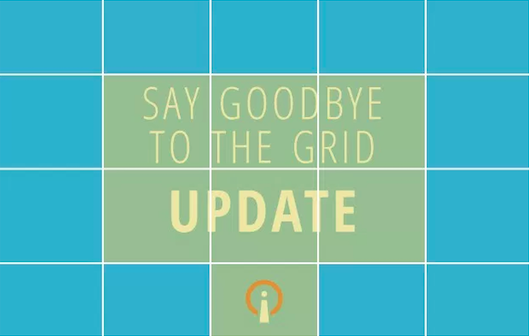
    An example of an updated post that was recycled comes from Search Influence Internet Marketing Team Lead Michelle Neuhoff Boyd. Her blog, “What Happened to Facebook’s 20% Grid Tool?” received an update about three months later with new information.

    Say Goodbye To The Grid Update - Search Influence

    This is a great example of a chance to remind your readers of the value of your content. A week before this update went live, the blog received 74 unique page views. The week following the update, it received 139 page views. Throughout the month of the update, it received 366 page views.

    It also capitalized an important aspect of choosing when to recycle content—trending topics. When this is the case, don’t worry about waiting too long to get your content out there. This ensures that it reaches your viewership when they’re most actively talking about a current trend.

    How’s the Traffic Looking?

    Another way to determine what content you should recycle is by looking at what pages are getting traffic. For example, if you have an old blog that is continuing to get a ton of traffic, consider taking a look at it again to see if it can be updated with relevant industry news or updates. This can take an already well-performing piece of content and extend its life even further.

    These are just a few of the many ways that you can repurpose and recycle your content. With so many different formats for content these days, there are scores of opportunities abound. By paying close attention to the metrics of your content and recycling those that once performed well or repurposing them in fresh, novel ways, you can keep your brand’s voice relevant in the ongoing but ephemeral dialogue that is the internet. Have you experimented with repurposing or recycling your content? We’d love to hear about it in the comments below. We’re also happy to give guidance on directing your content so that it reaches more eyes.


    Image Source:

    Recycling Container

    Girl Upside Down – Photo by Tanja Heffner on Unsplash

    Recyclable Paper Boxes – Photo by Jon Moore on Unsplash

  • Meet & Greet : Your Buyer Personas and What You Should Know About Them

    When you ask a small business owner what kind of customers they want to attract, it’s not uncommon to get an answer like “everyone” or “anyone who can use our service.” When you’re creating marketing content, however, it’s not often possible to create something that will appeal to every single person on the planet—some people simply won’t be interested. For example, it doesn’t make a lot of sense to try and convince a college-age renter to install a new roof. It’s a more efficient use of your marketing resources to zero-in on people who are most likely going to be your customers. The best way to do this is to create buyer personas. Doing this will help you to define exactly who you are trying to reach.

    Zoolander Who Am I Image - Search Influence

    What is a buyer persona?

    A buyer persona is the Everyman of your customers. It combines all the characteristics your customers have in common and puts them into one fictionalized person who represents your average consumer. The buyer persona is based on real information about your clientele, and it defines their age range, gender, income, common pain-points, and what they’re hoping to get from your product. It also combines your demographics with psychographics to build a buying character that is pretty much human.

    Why are buyer personas important?

    Having a well put-together buyer persona helps two people: you and your potential customer. According to a survey by Rapt Media, 63% of consumers would think more positively about a brand that gave them content they found valuable, interesting, and relevant. Whether you’re reaching out via a direct mail campaign, emails, or Facebook, no one wants to be stalked by content they’re not interested in.

    Wedding Crashers Image Of Gloria Saying I'd Find You - Search Influence

    By focusing your marketing efforts on your buyer persona, you’re ensuring your message gets in front of people who are most likely interested, without alienating those who aren’t.

    At the same time, knowing your buyer persona means you can give your customers exactly what they’re looking for, ensuring they trust you when it’s time to make a decision. For example, if your buyer persona is an on-the-go business traveler who doesn’t want to waste time during the research stage, you can present them with content in an easy to digest infographic. The potential customer is now more likely to engage with your content and come back to you next time they need a problem solved.

    How can I build a persona for my business?

    Your buyer persona should be based on who your real customers actually are. You can do this by directly surveying your current or past customers. Ask them about their background and demographics, as well as more probing questions like how they heard about your product, why they bought it, how they’re using it, and what (if any) difficulties or reservations they’ve had since their purchase.

    Talking directly to your customers is the preferred method, but if you’re not getting enough information, supplement it with searches on sites like Quora and industry forums to see what kinds of information people are seeking. Content Marketing Institute recommends you ask these three questions when searching: 1) What is the first thing my customer thinks of in the morning; 2) What are their last thoughts at night; and 3) Why is this so. The first thoughts they think about will reflect their daily to-dos and frustrations.

    Image Of Titus Telling Kimmy That He Already Did Something Today - Search Influence

    By the end of the day, they’ll start considering the macro level of what they’re doing with their life. The ‘why’ gives context to the first two questions. If you end up getting a couple of different answers for some of the above questions, that’s totally okay. It just means you probably have more than one buyer persona.

    What does a great buyer persona look like?

    A strong buyer persona will read much like a character description from a play or TV show. Describe Olivia Pope from the TV show “Scandal.” What does she do for a living? How old is she? Does she live in a city, the country, or a suburb? East Coast, West Coast, the South, or Midwest? What kind of clothes does she wear and what is her favorite pastime? With her line of work and hobbies, what kind of products would she be most interested in and find to be most helpful? This is a short list, but you get the picture. Buyer personas completely flesh out your customer base, creating what may look like a complete person or personality. The more detailed, the better. The sharper your assessment of your client base, the better targeted your marketing and the more likely you will attract your most likely customer.

    Image Of Scandal's Olivia Pope Saying It's Handled - Search Influence

    Need an expert to help you build your buyer persona? We offer a variety of great services to target your customers and engage them online. For help creating a digital marketing campaign that speaks directly to your potential customers, contact our team!


    Images:

    Zoolander

    Wedding Crashers stalker

    Titus To-Do List

    Olivia Pope

  • How to Preserve Your Online Reputation as a Plastic Surgeon

    We’ve all had it happen. Your small business or practice is reaching customers, connecting with them on social media or through chat on your site, and giving them helpful answers to their questions. It’s natural and supportive, just how it should be. And then, after all that work to build your reputation, someone posts a negative or snide review of your work. This one post, while frustrating to see, could put a damper on your reputation as a skilled, trustworthy plastic surgeon. But let’s face it—there will always be vocal customers. Here’s some advice on how to handle these moments of crises.

    Doctor holding tablet PC talking to patient - Search Influence

    Be Proactive, Not Reactive

    The first step in monitoring how your practice is perceived online is by listening to social channels. An analysis of Facebook, Twitter, and LinkedIn will help you notice what patients are saying about you. This way, you can catch small concerns before they become major headaches. When patients comment on your page, engage with them in a genuine way (even when it’s positive!).

    Also, you and your partners should evaluate some of the top physician-review websites, like yelp.com, vitals.com, and healthgrades.com. While you’re at it, claim your online listings. Managing your online reputation starts by claiming your listings on key online directories and social networks. These directories and networks allow you to share information that presents your practice in the best light.

    Doctor holding out stethoscope - Search Influence

    Make Sure Your Website’s Content Doesn’t Make False Promises

    Even the slightest exaggeration about what a product can do for your patients can be a red flag for Google and a false promise for your patients. Examine your existing content on your site, keeping a keen editing eye for any hard promises for products or treatments, i.e., “Our facelift procedure will turn back years on the clock” or “you will get the results you want.” Promises like these cannot be broadly made for every patient. By being upfront with your patients about expected results, you can limit any confusion, outrage, or dissatisfaction with outcomes.

    Respond Quickly and Politely to Negative Reviews

    Nearly 70% of patients who post negative feedback tend to respond positively if their concerns get noticed and responded to. Be prompt and be professional. If you or your staff make a mistake, it’s best to own up to it and make a genuine apology instead of trying to defend your position. A sincere apology can work wonders in diffusing a delicate situation. Instead of responding with your initial emotional response, remain calm and genuine—remember, everything on the internet never truly goes away, so don’t use a canned response. By staying professional, polite, and personal, you’ll not only help that one patient, but you’ll also show your community that you’re a physician who cares. You’ll also possibly grow your practice by garnering an influx of potential patients. And, when you can, try to take the conversation offline. More often than not, your answer to their complaint won’t be so simple that it can be summed up in one or two sentences. Also, there will likely be patient-specific information that should not be shared online.

    Consider Patient Confidentiality

    If you’re going to be talking about a specific patient on your website or through your social media channels, make sure to get their permission first. This includes instances where you are just uploading their image and not using their words. Facebook posts with pictures receive 53% more likes than those without, but these could put your practice in danger if you never get permission from the client to begin with. Patients should be notified if their image will be used, details of what the image will be used for, its expiration date, and a note detailing the patient’s right to revoke consent before it is signed off by the patient.

    By practicing due diligence on the front end, you’ll save yourself from a mountain of legal trouble and paperwork down the road. For more detailed information about your online presence and patient confidentiality considerations, check out our blog here.

    Use Facebook to Tout Your Expertise and Build Trust

    According to a report done by Search Engine Watch, 33% of people use social media for healthcare information. Also, nearly 90% of respondents aged 18–24 said they would trust medical information shared by others on their social media networks. That’s putting a lot of trust into others for a very integral part of our lives—our health. By making sure you have a strong presence on social media, you add valuable, trusted medical advice in a channel where, far too often, people are given either misleading or false information about how to diagnose and treat medical symptoms.

    Ideally, by continuing to connect with and respond to your patients on platforms like Facebook, you can start to turn them into promoters of your practice, not just patients that visit once or twice a year and then go about their normal routines. You’ll be top of mind when their friends ask about a local clinic to get an injectable filler or a breast augmentation procedure.

    If you’re interested in learning more about how to manage your practice’s online reputation, reach out to Search Influence. One of our experts will be happy to help you develop and keep a healthy online presence in your local community.