Blog

  • Women in Technology: The Influencer Way

    1603-SI-TheInfluencer-KL-A-02

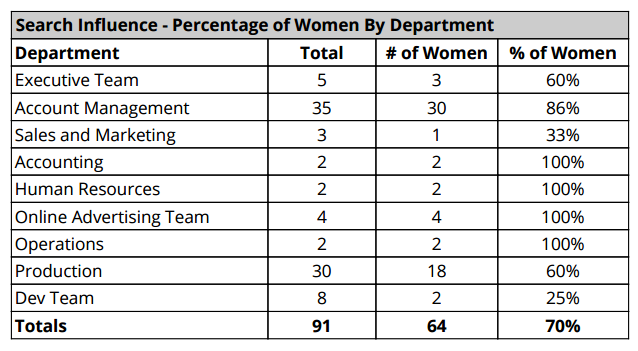
    I actually never seemed to notice that our staff is over 70% women until it was pointed out to me recently; however, I’m not surprised, since New Orleans was ranked one of the best cities for women in technology in 2015. While it’s no secret that many people still view the technology field as a “guy’s world,” there are those of us who predict 2016 to be a big year for women. As usual, Search Influence is one step ahead of the industry, with a female COO/co-founder and women in upper management of almost every department. Here is a chart that outlines the percentage of women in each department at Search Influence:
    Woman In Tech By Department Image
    This month, I sat down with a few of the inspiring women who make up the Search Influence team to learn more about why they chose their path and how they feel about the future of women in technology.


    London F Image Jordan P Image Mary S Image Mattie K Image

    Serena Hirasawa: So, first things first: how long have you all been at Search Influence, what is your current title, and did you have any previous tech industry experience before starting here?

    London Fougerousse: I am a Junior Online Advertising Associate. I’ve been here for almost 10 months. I didn’t have a lot of tech experience previous to working here, so I’ve learned all that I know from working at Search Influence. Other than personal tech experience, my educational background is in secondary education and literature, so there were a lot of tech innovations for the classroom that we were focused on and kind of using social media in the classroom to get people more interested in and up-to-date on digital technology.

    Jordan Polhemus: I am an account manager. I’ve been here for about two and a half years. I had a little bit of coding and WordPress experience before working at Search Influence and several years of marketing experience as well.

    Mattie Kenny: I’ve been with Search Influence for three and a half years. I am a web developer, and I did do a lot of Internet installation for small businesses when I was in high school; that was my job. Which is not remotely actually involved in the tech industry.

    Mary Silva: I’ve been at Search Influence for almost three years now; I am an Internet Marketing Team Lead on the technical side of the Production team. My tech experience before Search Influence was a few different things. School wise, I was an online marketing-focused major at Tulane. I was really fortunate to be in college right when that was becoming part of the curriculum. I also worked part time for the Tech Connection Apple Store and managed their website. I did all of their freaky web-dev stuff that they trusted me with. SI is my first formal job experience, and my job story is actually pretty funny—Will Scott [CEO] came to speak to class about SI and sort of side-note mentioned that they needed new website photos, and my professor interrupted him to say, “We have a photographer in this class! Mary, raise your hand.” So I raised my hand and was real embarrassed but then I thought, actually, this company seems really cool. So after class I stayed behind and went up to Will and said, “Yeah, I could do your photos for your website, but also I’d just really like to work for you. I know you don’t have any part-time employees, but would you consider it? Because I’d really like to work for you guys.” So the next day I got a phone call from the Search Influence production manager at the time asking me to come on in, we’d like to consider you for a part-time position even though we’ve never done this before. And that’s how I got the job.

    SH: What other kinds of online marketing classes and projects did you do in college?

    MS: We had a really cool class where we actually got to run paid ads. I can’t remember the name of the course now, but we essentially came up with a business idea. Mine was to create a Yelp, but specific to tattoo parlors for people to find tattoo shops around the globe. We made a Facebook page and website for it and then we ran paid advertising for our business to see how it went. It was really cool, we were put into groups of two to three people and worked together to do some A/B testing for ads to see what worked for what types of businesses, and in the end we were able to compare everyone’s experiences to see what was successful. So that was a really cool experience that you don’t typically get in a classroom setting. We also had a class through the same professor that worked to get you AdWords and Analytics certified, so that was nice too. Good experience in college.

    SH: When is the first time you each became interested in or considered the technology field as a viable career option?

    MK: The first time I considered it was probably in high school. When I went to college, I was considering majoring in computer science, but opted for political science, because…reasons. I probably made a misstep there, but I thought about it while I was in college.

    LF: I can’t say that this was really something that I was specifically looking for—I’m so happy I found it. But I’m always interested in pushing boundaries and pushing expectations that people may have of myself, especially as a woman. And really, any time you can combat any stereotype is a step in the right direction for sure.

    MS: I’m on the same page as you, London; I sort of fell into it. I grew up using my dad’s computer, and in high school, I had all kinds of guy friends who were into building computers and coding, and I always thought it was cool but felt like it was a “dude’s thing.” I was not really asked to be a part of that—but I wanted to. Then I went to college and was a neuroscience major, because I was a science nerd, and that was more of an acceptable field for both women and men at the time. And then realized that I wasn’t really trying to be a neuroscientist—it was a little more difficult than I expected. So, I thought, “Business school makes sense. It’s more practical,” and once I was there I realized that, oh, I could do this techy stuff that I loved and also combine it with business in the online marketing field. So it was sort of combining a practical field with something I loved, which was cool.

    JP: It’s just gotten really valuable now. I mean, 10 years ago, people weren’t spending the money to have an in-house marketing person or at least an agency to do this stuff, and now they think, I have to do this because it’s so important and all of my competitors are doing it. So now, the training that we have and the work we do at Search Influence is so much more valuable, and clients see that.

    MS: It’s really integral to a business’ success these days. Whereas in the past it was like, “Oh, it would be nice if we could afford a budget to get a nice website,” but now, you have to get a nice website and get it together online.

    SH: I definitely agree with the fact that everything is moving in that direction—if you don’t do it, then you’re not going to be successful. Do you have any female role models in the STEM field that you look to now for motivation and inspiration or from when you were younger that really sparked that interest?

    LF: I did not grow up with any rigid stereotypes. My mother is a huge role model for me and she is an HR manager in the oil and gas field, and I grew up with a lot of kids whose mothers stayed at home. Which, there is nothing wrong with that—it’s their choice—but I didn’t grow up with the common refrain of someone saying, “This is what women do, and this is what men do.” I think that background is something that has really encouraged me to say, “Well, I can try this or do that.”

    MS: For me, it was also similar. I wouldn’t say that I necessarily have a role model in STEM, but my mom was the president of a publishing company growing up and she was a working woman, you know, in the office every day. So it was cool for me to see growing up not only that a woman could work in offices—obviously women do that—but to be in such a position of respect and authority and at a fairly young age. So that’s sort of who and what was my role model growing up, that my mom was awesome so I could be just as successful.

    JP: That’s funny, because that’s what I was going to say. I grew up with a really powerful and strong mom in the workforce, and it wasn’t so much an option [for me] but more like, “You are going to kick butt at what you do and work really hard at it,” and I had a huge amount of respect for that. Both my parents are in real estate; my dad is a contractor and my mom owns a real estate company, and when everything hit the fan with the housing market around 2007-2008, their business model completely changed. They went from selling an average house for $500k down to maybe $110k, and then they had to combat that and change how their business model worked. So when I was in college, they had transitioned to selling foreclosures at that point, and every other contractor and real estate agent in my parents’ county went bankrupt—except for my parents, which was so amazing, because they were able to change what they were doing. I had a huge amount of respect for them, because in the tech industry, everything we do is going to be completely different in two years. So, the way they were able to model their business and change it opened my eyes, because I was old enough at that time to realize what they were doing, and it was all spurred by my mom; she did that. So I’m with you on the mom thing. It’s more of a business-related than a STEM thing, but I can understand that how they modeled that would be relatable to the tech industry because you always need a software upgrade or to adapt every 10 seconds.

    MK: Definitely when I was younger I was influenced by Marie Curie. And also Melinda Gates, who is Bill Gates’ wife, was a big influence on me. But she was a lot less hard-science oriented and more humanitarian oriented, but she is STEM-adjacent at the very least. Those were really big role models for me.
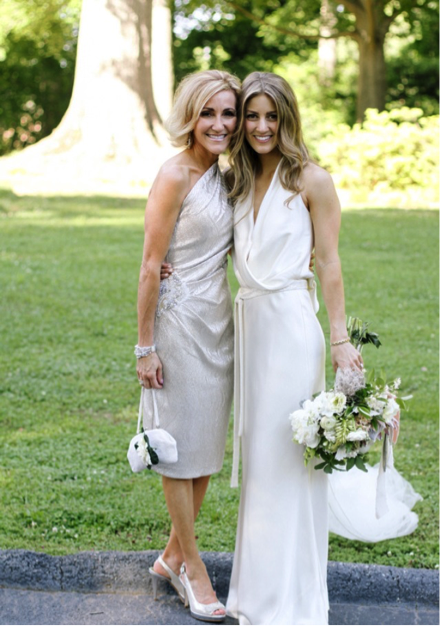

    JP Wedding Image  LF Image

    SH: It’s really interesting and awesome that three of you chose specifically your mothers and that you all had that strong role model in the home. Someone I’ve seen as a STEM figure to girls on a larger scale is Dana Scully from The X-Files, especially when the show was first on the air [in the 90s and early 2000s]. She influenced so many girls across the country to pursue those kinds of interests, because she was a doctor and an FBI agent and super successful in those positions.

    LF: And the gender roles on that show are so interesting because they do make a big deal about it. We would watch a show like that created today and it wouldn’t be explicitly talked about, the fact that she was so strong. That and Silence of the Lambs; it’s kind of like a similar detective-y play on a traditional men’s role.

    MS: I think our generation has been really fortunate in that maybe before us it was really important to choose a female role model, in particular in the STEM field if you were interested in that, but I feel like we’ve been fortunate enough to grow up in an era where things were changing to the point where it’s kind of all around us. Like, we saw a lot of powerful women in a lot of different places in society, so it’s been a lot easier for us to not have to pick a role model but say that we’re surrounded by amazing women, and we can do that too.

    SH: So based off of that notion, why do you think it’s important for women and girls to pursue their interests in STEM? What do you do to encourage young girls to explore this growing industry?

    LF: You can’t be what you can’t see, so while we have our mothers as fantastic role models, and my mother’s position is not directly related to the STEM field, if I am to continue in this and pursue it my daughter would have a role model in the field. It’s just the more and more people push themselves into areas that are less populated by women, the more and more you’ll have people perceiving that it’s normal for a woman to do this and that it’s not stereotype-breaking.

    MS: I think it’s important to encourage girls at a younger age, because I remember being really young, probably like fifth grade or something, and being in these gifted classes because I was a big math nerd growing up and they were always putting the guys in the spotlight for succeeding in math even though [the girls’] grades were technically just as good, but that was sort of just naturally how things occurred in the classroom. And when I went to high school, I went to an all-girls school. I was just as successful as I was when I was in mixed-gender schools, but I was able to be the math president of the honor society because there wasn’t this sort of natural occurrence of putting guys in the spotlight. So I feel like being aware of those accidental natural ways things happen in the classroom at a young age and how that can influence the mindset of young girls is something we should be better at and self-aware of.

    JP: If you think about it from a business perspective, let’s say you have 100 people in a room in the STEM field and only 10 of them are women, but the demand in a business is the same. Fifty percent of the people out there purchasing are women, probably more than that, because usually women make the purchases in the family. If you can make the website or business that is focused towards women and you are a woman, you have a huge advantage over all the other men in the room because you are able to create products for women unlike men could. You would be able to establish yourself as the expert with a lot of demand and very little supply for women who are web designers or graphic designers or brand and marketing managers, because if I have a product for a women and I’m creating a marketing team, I’m probably going to want to have a woman head that because they will be able to see it differently than a man.

    MS: Diversity definitely provides a lot of perspective for businesses, not just gender-wise but ethnicity, background, income, and everything. Diversity is so important for a business’ success because you can’t have a group of like-minded individuals running a business, or you won’t be able to see the obstacles to overcome. For young girls, I think it’s important to recognize the competitive advantage that they have to offer from their background and everything to understand why you as a unique person have something special to offer to a business.

    MK: Nothing is off-limits because of gender. Or age, ethnicity, or where you grew up. If you find an interest, pursue that interest until you stop being interested in it, and you realize that something else suits you better.

    SH: I definitely think it is really important to encourage young girls. I read this once in an article a few years ago, and I try to put it into practice as often as I can, that when you talk to young girls that you see, even the little girl you see on the streetcar that looks at you and you say “Hi,” I always try to ask them a question about their interests or related to their intelligence as opposed to commenting on their appearance. I try to reinforce that yes, you are beautiful, but there’s so much more, and your brain is great too, just to cultivate that and understand that concept from a young age.

    MS: It’s those little social cues that we’re just used to, and it’s important to acknowledge and be aware of.

    SH: Do you currently participate in any STEM activities/organizations outside of work?

    MS: I work with Longue Vue House & Gardens, which puts on a yearly STEM event, Day of the Girl, for young girls in the community ages 7-12. She brings in women from all kinds of STEM fields and has them talk to the girls about what they do and their industry. I had a chance to do that a few months ago, and it was really cool because she had me from Search Influence in the technology field, and she had a female engineer from Shell, and a women who worked for the water-cleaning industry to incorporate science there, and then she also had an Olympic gold medalist in swimming. So she had all of these women from New Orleans talking about what they do very candidly and exposing them to, “Hey, this is what they do. Just keep that in mind and know it’s possible.” I think it takes as little as that interaction to ingrain it in little girls that you can do whatever you want, and yeah, if you want to be a stay-at-home mom, that’s great too. But you’re still able to expose them to great values and opportunities. I’ve also been getting into Girls Who Code, so I’d like to be part of hosting workshops where I could teach them how to code like basic front end stuff.

    MK: I do computer, math, and science tutoring to teach girls to code in the Marigny, specifically targeting little girls of color. I’ve been doing that a little less than a year. I started following @BlackGirlsCode on Twitter and ended up getting together with some other Nola Women in Tech people.*
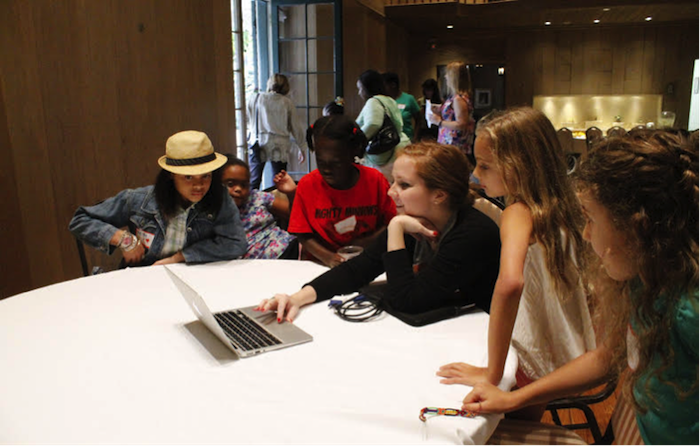
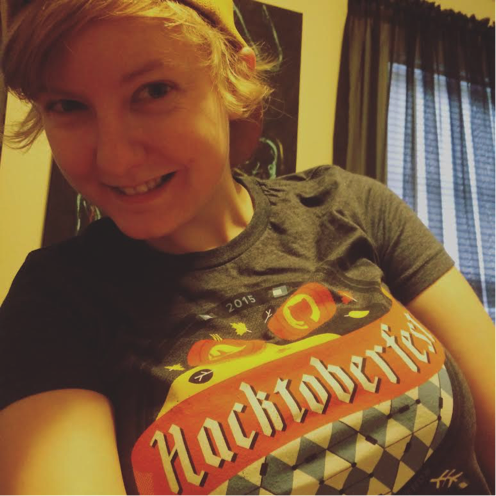
    Longue Vue Day of the Girl with Mary Silva  Mattie With Hacktoberfest Shirt Image

    SH: In an ever-changing digital world, how do you feel like a job in the tech industry has impacted your life outside the office?

    JP: It’s made us so relevant by making us understand how a business works and how to utilize the tools that we have. Also, the structure of Search Influence makes us so used to change, which is kind of an oxymoron, but it makes us get used to always changing our systems, which happens so often in the STEM industry. As a whole, you have to be used to it, and if you’re not then you’re not relevant and you’re not valuable—to an employer or an industry.

    MS: I think as a person I’ve also become better at handling when things go wrong. And inevitably, since our industry changes so much, things go wrong more often than you’d expect. So I feel like when things go wrong I take it a little more lightly because I know I can handle it.

    SH: Do you have any tech-oriented career goals (i.e. give a TED talk, build your own computer system, visit Google Headquarters, program an app, etc)?

    JP: I have a whole doc dedicated to my career goals! Some of them are personal goals, but they’re still things that I’d like to do. I’d like to be really great at developing things from a coding perspective. I’d also like to work more in Photoshop and Illustrator. Specifically this year, I’d like to become a guest writer for an industry blog like Search Engine Land, and a long-term goal of mine is to do a Moz talk, but it takes a couple years to pitch something like that.

    MS: It’s weird because I just accomplished one of my big personal goals which was building my own website. I’m usually a pretty modest person, and this is the first time in my life where I feel like I really want to toot my own horn because I built a multi-page website using JavaScript and HTML and CSS and external style sheets and everything that I wanted to accomplish with building my own website in the course of like four to five months. I was fortunate enough to take the Tech Talent South coding class, and that is what incited it for me. My professor made fun of me because I was like, “Okay, this is all well and good, but I actually want to launch my website now,” but the class we more like teaching you the fundamentals of coding and the background, and I was like, “No, no—I need to build an entire website,” which I was able to do! I have to figure out what’s next on my list—maybe building a site for someone else.

    LF: Right now, I’m currently working on several certifications. I have AdWords and Bing, but I’m working on Google Analytics and stuff like that. One thing I’m trying to focus more on, since I’ve been here for almost a year, is just learning just more about what we do from a full-circle perspective. I really know what I do in my department, but I’d like to really get a better understanding of what the technical team does and account management and the developers to see how they all work together.

    MK: I’ve been writing this water app in multiple different programming languages as I learn them to record how many cups of water you drink every day. Also, I did Hacktoberfest this year from Github and DigitalOcean, and my t-shirt is pretty awesome. I’d like to become a more full-stack oriented developer and have a more holistic understanding of development.

    SH: Are there any blogs, websites, resources you use to expand your knowledge?

    MS: The Moz Blog is my go-to. Every Friday, I look for my email to see what’s new this week.

    JP: I also love Moz. I actually read, pretty religiously, Harvard Business Review. I only do it once a week, and it’s more focused on business practices and things like that. I also like that within that they have financial sections, which drives a lot of business decisions. Search Engine Land is great, too.

    MK: Github is always a great resource. There’s tons of great free programming materials and books available. Definitely Stack Overflow—when in doubt check there, because someone has already had the same question, and someone else has had the answer. It’s kind of like a Yahoo Answers for programmers, but it also has sections for, like, sci-fi, so if you have a question about Star Trek, you can ask it there, which I definitely have before. The Women in Tech subreddit is always nice, definitely for support, and the Women in STEM subreddit is nice to have people to talk to and bounce ideas off of.

    SH: Last question: what is your favorite app on your phone right now?

    MS: I’m terrible: my favorite app right now is a cat app, Neko Atsume. It’s a Japanese app that is so basic, like, you put food out and toys out, and cats come visit you, and you get to name them and take pictures of them playing with the toys you leave out for them. They also leave you gold and silver fish, and as you collect fish, you can buy more toys and food for them. It’s ridiculous but wonderful.

    JP: As I’ve had to delete several apps recently to make room on my phone for pictures of Phyllis, I’d say that my favorite app is my camera just so that I can take pictures of my dog. #phyllisforpresident

    MK: I really like Venmo so I can easily give my friends cash. I don’t have too many sweet apps. I don’t even have Facebook on my phone. But then I see people who have like a million apps and I’m like, what the heck? My phone is super utility oriented.

    LF: I am a grandma at heart, so my NPR One app gets a lot of use. Also, the Overdrive app, which you can sync to your library card and you can download free e-books and audiobooks and I love it.
  • Search Influence Sees the Luck In Threes with Our Newest Influencers

    1602-SI-NewInfluencerBlogImage-MNB-A-01

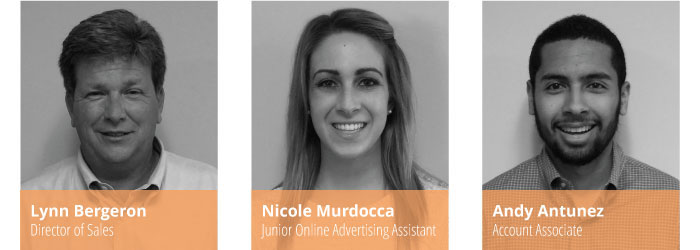
    This month, we were lucky enough to welcome a few new faces to the team here at Search Influence. Say hello to our three newest Influencers!

    Lynn Bergeron – Director of Sales

    Lynn is a lifelong resident of Harahan, LA. He graduated from the University of New Orleans with a degree in business administration. He has over 20 years of both indirect and direct sales and sales management experience. He is the father of three young men and three dogs, and he is an avid golfer.

    Nicole Murdocca – Junior Online Advertising Assistant

    Nicole is originally from Jackson, NJ and is currently finishing her senior year at Tulane University. She will graduate with BSM degrees in marketing and management this May. Nicole can be found cheering on the Green Wave, as she is a varsity member of the Tulane Cheerleading team. She is also a sister of Sigma Delta Tau. In her free time, she loves (window) shopping on Magazine Street and going for long runs down the St. Charles streetcar line. She is excited about joining the Search Influence team!

    Andres “Andy” Antunez – Junior Account Associate

    Andy was born and raised in New Orleans. He recently graduated from the University of New Orleans with a degree in marketing and a concentration in sales this past December. While he was there, he was very involved with his fraternity, Lambda Chi Alpha, and he planned their yearly fundraiser in which they raised over 250,000 pounds of food for Feeding America, which is their philanthropy. He is also very fluent in Spanish. He loves college football and has to watch it every Saturday when it’s in season.

    We’re always excited to welcome new energy and talent to our growing team. If you’re ready to jump into our fast-paced environment, visit our careers page and apply!

  • How to Win Leads and Influence Potential Customers with LeadSNDR

    1603-SI-TheInfluencer-KL-A-03-lg

    Depending on your business, lead generation can be one of the most, if not the most, important performance indicator for your marketing efforts. Regardless of the medium (online, billboards, radio, etc.), a critical part of lead generation is asking yourself: How do you want to receive leads?

    At Search Influence, our CEO has a saying: “Do you want your door to swing, your email to ding, or your phone to ring?” Choosing the method of lead generation that works best for your business is the first step towards gaining qualified leads.

    Between the three, tracking the success of lead generation through emails and calls is typically more reliable than foot traffic. Unless you ask each customer who walks in the door how they heard about you, it’s unlikely you’ll be able to gather measurable results over time. In our experience, we’ve found the greatest success generating and tracking leads by using forms and call tracking through our in-house system, LeadSNDR.

    LeadSNDR logo image

    Lead Generation

    Lead generation marks the conversion of a website browser to a potential customer. By filling out a form or calling you for more information, the person is signifying to you that they are interested in your business and they’re ready to hear what you have to say.

    The methods utilized by LeadSNDR make it easy for that casual website browser to reach out to you, regardless of where they are on your website, so they can convert to a potential customer.

    We use both forms and call tracking to ensure you’re offering site visitors their preferred method of communication to reach out to you. There’s nothing more frustrating than searching a site for an email or phone number when you have a question. It’s more likely that you’ll give up and go to a competitor’s site than spend time searching the site you’re on.

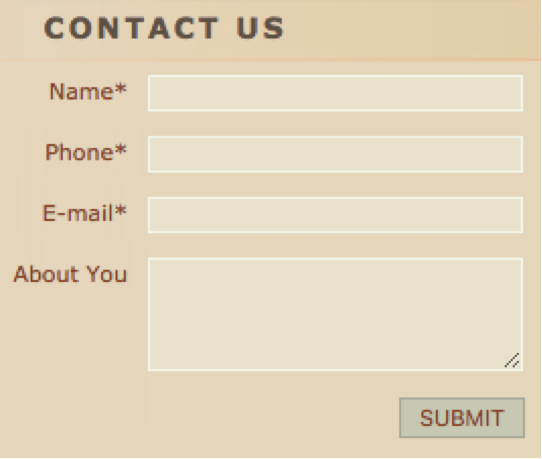
    With LeadSNDR, there is a mini form on each page that asks the minimum basic information required to get back in contact with your potential customer. By putting a form on each page, the site visitor doesn’t have to leave the page they’re on to get in contact with you, which provides a good user experience.

    Contact Us LeadSNDR Image

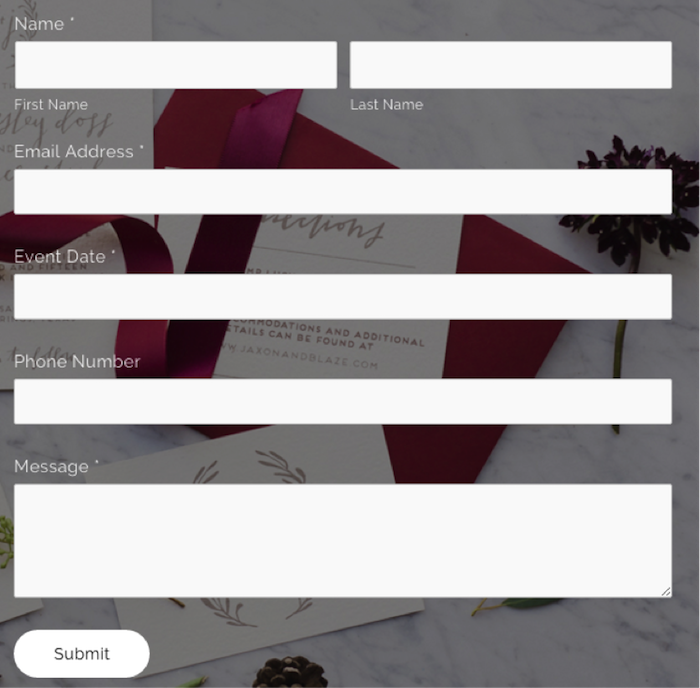
    We also put a larger form on the contact page with additional fields, in case the visitor wants to send more information, so you’ll be prepared to discuss their specific question when you contact them.

    It’s also important to make it easy for a potential customer to call you. We recommend putting your phone number big and bold in the header of your website so it’s easily visible regardless of which page you’re on, which also provides a good user experience.

    Large Contact Form LeadSNDR

    Lead Tracking

    You know that you want your email to ding and your phone to ring, you’re ready to put your number in the header of your site and forms on every page, but what do you want to know from your potential customers? You’ll likely want the basics like their name and how to get ahold of them, but what about the actual information you’re asking?

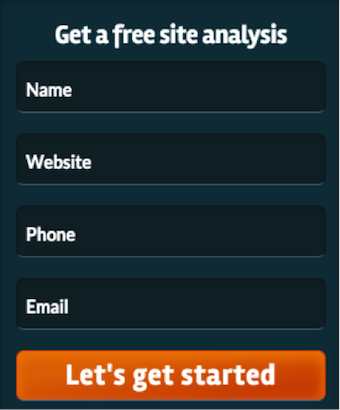
    The LeadSNDR form system is designed to suit the specific needs of your business with the ability to completely customize your form. You can specify everything from the colors and button text to the questions you’re asking your potential customers.

    Quick Reservation Form LeadSNDR Small Contact Form LeadSNDR

    Another key factor of the forms is the ability to gather information that is not asked of the customer but still valuable to tracking your leads. By integrating LeadSNDR with Google Analytics, you can see which search engine was used, if the user clicked on a paid ad or organic results, what page the user landed on, and even the IP address. This information allows you to examine trends and make informed decisions about improvements to your website to create more lead generation through form fills.

    For call tracking, it’s not only important to make it easy for a potential customer to call you, but also to know how they got to your site. LeadSNDR allows you to set up specific call tracking for numerous sources, which means that phone calls are catalogued by how a visitor arrived on your site. With call tracking, you can differentiate the amount of calls received from a Facebook post from calls received by Google organic search.

    The reporting system used in conjunction with LeadSNDR also gives you the data on the amount of calls you receive each month, their duration, the average number of rings before answered, and more. You’re also given the option to record calls to conduct quality assurance testing.

    Using LeadSNDR for Your Business

    By combining lead generation with tracking, you will be able to drive quality leads to communicate directly with your business and measure trends to set you up for future successes. LeadSNDR provides your business with the tools it needs measure the performance of your marketing efforts and convert site visitors to customers.

    For more information about LeadSNDR and how to increase your business’s leads, please contact us today.

  • How to Keep Your Law Firm’s Ads Legal

    With the recent death of Justice Antonin Scalia, the Supreme Court is on arguably on track for confusion, gridlock, and bipartisanship. This uncertainty could affect the future of affirmative action, abortion, union rights, and several other topics that are scheduled to go to court within the year. In the face of this uncertainty, we have been looking back at the famous Bates v. State Bar of Arizona ruling of 1977, which held major implications for digital marketing even before the World Wide Web was invented. In this case, the Court emphasized the benefits of advertising as a means of informing consumers of goods and services. A five to four opinion ruled that any restrictions on advertisements for legal services was in violation of the first amendment. The majority decision continued, however, to stipulate that advertisements that are “false, deceptive, or misleading, of course, [are] subject to restraint.” The opinion went on to address the grey area between perceptions of advertisements: “we recognize that many of the problems in defining the boundary between deceptive and nondeceptive advertising remain to be resolved…”

    In light of this acknowledged grey area, the question is: How do you keep your online legal ads legal?

    Legal Definition of Online Advertising

    Online advertising is not just limited to email blasts, pop-ups, or those dreaded YouTube clips that you must watch for at least five seconds. The legal definition varies by state, but in many states, online advertising is broadly defined to include your website and maybe even social media accounts. To be safe, assume that everything you or your firm publishes online is an advertisement.

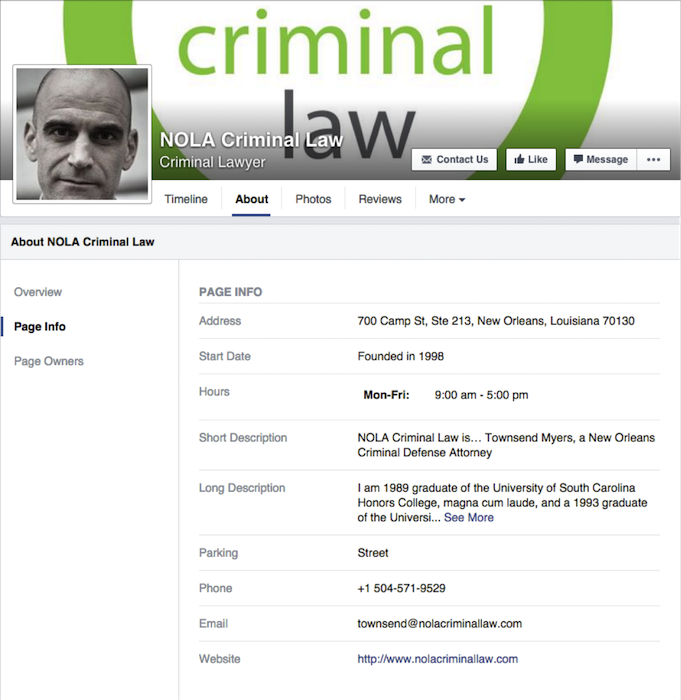
    Avoid Misleading Claims

    To avoid false advertisement, everything you publish must be truthful and accurate. In terms of digital content, you will want to hook readers but not make over-exaggerated claims. This might take some creativity from your digital marketing team, but misrepresentation of services could lead to legal repercussions. It’s common sense. Don’t lie.

    NOLA Criminal Law Facebook Image

    Ad Targeting

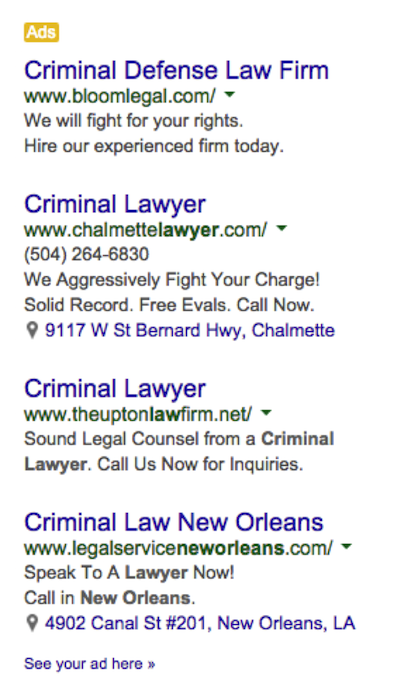
    Because state laws vary, targeted ads are a great resource a firm can use to ensure ads only appear within a certain geographical region, avoiding inadvertently breaking another state’s regulations. You should keep all of your online ads relevant and targeted to your state or area. On top of staying within the realms of your state’s advertising laws, ad targeting also helps save you money. You can avoid appealing to people outside of your legal jurisdiction and reduce waste on your advertising budget.

    Criminal Lawyer Google PPC Ads

    Creative Commons

    An image in an advertisement, whether a pay-per-click or on Facebook, needs to be creative and eye-catching. But all material published online or used in an advertisement still needs to comply with copyright laws. To ensure compliance, you can use creative commons material, join a stock photo website, pull images or graphics from a public domain repository, or ask the owner. A firm needs to get creative while staying safe.

    Even though the 1977 Bates v. State Bar of Arizona ruling solidified an attorney’s right to advertise, laws regulating the legality and specifics of Internet advertisements have yet to develop. We are operating in a grey area. To stay in the clear, make sure you everything you publish online is not a misrepresentation.

  • Want to Ace the Interview? Be Ready to Talk About These 6 Things

    Want to Ace the Interview? Be Ready to Talk About These 6 Things

    1603-SI-TheInfluencer-KL-A-05-lg

    I have been screening and interviewing candidates at Search Influence for over 5 years. I’ve seen a lot of resumes, and I’ve met a lot of great, interesting people. One of the things I love about our search for rockstar team members is that we hold group interviews for many of our positions, which allows us to meet so many more potential Influencers face-to-face. We understand that there is only so much a resume can express, and we believe that each candidate has a greater story to tell than a resume and cover letter can. (Yes, you should still leverage the many available resources online to help increase your chances of an interview invite by creating a resume that shows off your best qualities.)

    If you ask a hiring manager in any company what they want to see or hear from a job candidate, your answers will greatly vary: 1- vs 2-page resume? Objective or no objective? Should I bring a copy of my resume? Should I bring notes? That will forever be the case, so do your best to read your interviewees and, ultimately, to be yourself and show off your best qualities!

    You should be prepared to talk about these six things:

    1. Why are you awesome?

    First, remember what an interview is all about. You are there to talk yourself up and show off your skills and experience. There is, of course, a delicate balance with being overly confident, but it’s critical to not be afraid to brag on yourself a little bit.

    2. What made you stand out in prior roles?

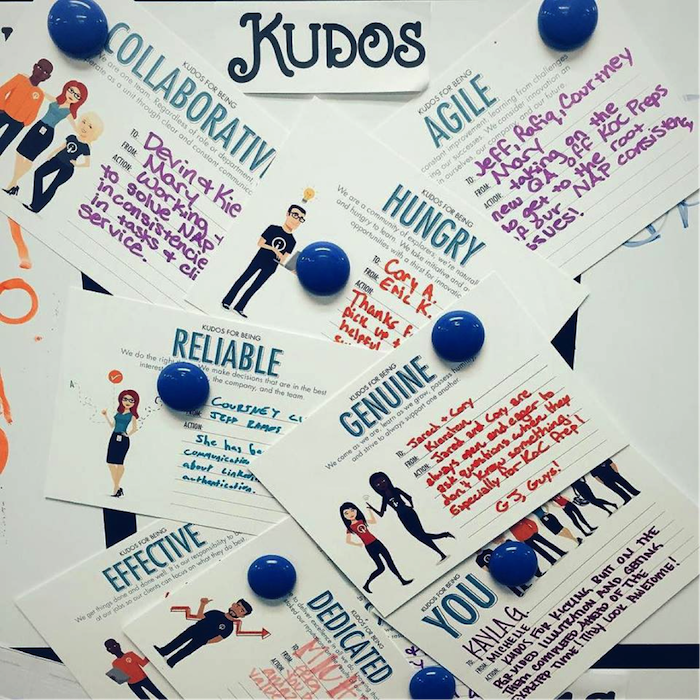
    Many of our high-performing Influencers are such because they are driven to always improve themselves, improve results for clients, and be generally accepting of new and different responsibilities. If you were “Employee of the Month” at your summer internship or named “Top Campaign” in your capstone advertising class, share with us how you earned that recognition. It’s not about the award but the qualities that you displayed or the work you produced that led to it.

    Kudos Cards

    3. Do you have relevant experience?

    This is where interview prep helps. Study the job description and make notes on what job duties relate to the work experience you have. In the interview, draw the connection for the interviewer on what you have done in prior roles and how that relates to what you’ll be doing in your day to day.

    4. Are you customer focused?

    No matter what department, we are all here to support our customers and ensure we meet and exceed their marketing goals. Displaying an understanding of customers’ needs is critical. This is true whether you are interviewing for an Account Management position, where you’ll be interfacing directly with customers; in production, where you will be creating great work for customers; in web development, where you will be improving our customers’ sites; or in programming, where you’ll be making applications that help us better support our customers.

    Alison Zeringue

    5. Why you are right for a career at Search Influence?

    Demonstrate that you have the skills to do both the job you are applying for today and any future positions you may be qualified to move into after you are hired. Many of our Influencers begin their time with us in an entry-level position and grow into a position with more responsibility as they show ownership and capabilities to handle more work independently. A genuine interest in and enthusiasm for the work are the keys to long-term happiness in any job.

    6. What questions do you have for us?

    We don’t ask, “Do you have any questions?” Instead, we ask, “What questions do you have for us?” Having questions prepared is pretty standard interviewing advice, but, I am here to tell you it’s as important as “they” all say—not only for the company, but for you! You should have a good idea of what the job is and what you will be doing when you leave the second interview. You wouldn’t enter a long-term relationship without finding out a little bit about what you are signing up for, right?

    For more keys to what makes our Influencers so successful, dive into our seven core values, CHARGED, or read this blog post that Hannah Selser, Account Associate, wrote on why she loves her job at Search Influence.

  • 5 Things Healthcare Professionals Should Never Post on Social Media

    Over the past decade, social media has become a major part of nearly all aspects of life, including the business world. With the ever-growing importance of social media marketing, more and more businesses—including doctors, dentists, and others in the medical field—are using social media sites such as Facebook, Twitter, LinkedIn, etc. to connect with current and potential future customers.

    Thanks to the expansive, direct, and often personal nature of social media, with all those benefits also come numerous pitfalls that must be avoided to ensure that you get the most out of social media. Here are five things to never post on social media if you are a doctor or work in the medical field.

    1. Inaccurate Medical Information

    We have all seen it on social media before. Somebody shares an article claiming a miracle cure or the shocking results of some unbelievable new study. Unfortunately, very few of these attention-grabbing headlines are actually backed up by truthful scientific research in the article itself.

    As a trusted medical professional, it is your responsibility to avoid sharing or liking these bogus news stories about medical treatments unless you have thoroughly read the story and have verified its accuracy. Sharing something like this can reflect very poorly upon you and your practice. Be wary of satirical articles as well, because some people may not be able to distinguish the difference at first glance.

    2. Misleading Information or Images

    An offshoot of the previous category, misleading information or images can be just as detrimental as false info. This can include anything that could be considered deceptive or ambiguous to patients. Photoshopped images, exaggerated guarantees, and more can fall into this category.

    A perfect example of this can be seen with the American Society of Plastic Surgeons’ rules and regulations specifying that any images that are not real patients must be identified with “Model” on the image itself.

    3. Anything Violating Patient Confidentiality

    Similarly, The American College of Physicians cautions doctors to be particularly aware and respectful of patient confidentiality when using social media. This is a slippery slope in today’s over-sharing society—even a faceless image of a skin rash can be a breach of patient confidentiality.

    Remember to always obtain written permission from the patient if you want to use an image of them or any body part. It is best to avoid talking about specific patients at all on social media unless you have clear permission to do so. And be careful when taking pictures around your office to post so that no patients or medical records can be seen in the background.

    4. Opinions on Controversial Issues

    Today, many people use social media to express their opinions and speak their mind without realizing that there are consequences for what you say in the digital world, just like in the real world.

    It is best to avoid any controversial topic or “hot button” issue at all cost. This includes divisive subjects including anything to do with religion, politics, racism, and abortion.

    5. Complaints or Rants

    It is equally as important not to use social media as a platform to blow off steam. Using social media to complain about your day or a patient or to rant about a particular situation will always come across as unprofessional. Everything you write on social media has the potential to come back and haunt you.

    In the end, it is best to remember that when using social media as a physician, only post information that your patients and community will find useful. Be professional and remember that social media posts still have real world outcomes that can negatively affect you and your practice.

    Image Credits:

    The Simpsons
    Scrubs

  • SEO Helps You Say “I Do” with a Wedding You’ll Never Forget

    Mardi Gras is winding down, so it’s time for the second most festive time of year in New Orleans: wedding season! February is National Weddings Month, and happy couples all over the country are prepping and planning for their upcoming big day. For many brides- and grooms-to-be, this process begins online with vendor research, decor inspiration, and even placing orders for things like guestbooks and cake toppers. To see how their expertise in SEO and Internet-driven business affected their plans, I decided to ask several of our recently wed Influencers how the Internet shaped their wedding day dreams.

    LM wedding 1

    Nothing Like an Old-Fashioned Google Search

    You’re recently engaged and you have no idea where to start to plan your wedding, so you turn to your go-to resource of infinite knowledge: Google. As Influencer Chris and his wife found out when they were planning their wedding a year and a half ago, sometimes a basic search is all you need to really get the ball rolling.

    “New Orleans has a ton of wedding resources, and there were often many options to look at when searching for things like ‘wedding photographer New Orleans’ or ‘popular New Orleans wedding venues,’” he says. In big cities or popular destination wedding locations, the list of available vendors is seemingly limitless, so those with higher SERP rankings really beat out the competition for customers who don’t have the time to thoroughly investigate every result.

    When there are so many options, it’s good to find techniques for narrowing your search down to exactly what you want. Influencer Alison knew she wanted to get married in her church and needed a photographer who would capture the day perfectly. When it came time to search for a photographer, she explains “I was hoping to find one that had photographed weddings at my church before (they would know best angles, nuances of the church layout, etc.).”

    To find the right person, she searched for “Mater Dolorosa + wedding photos” and found several photographers who had worked in her church before. This search technique is also helpful for viewing potential venues full of people and activity instead of trying to imagine it on a site visit. It is essential for photographers to have their images optimized so they show up in searches like these.

    1602-SI-TheInfluencer-KL-A-05-lg

    Pins on Pins on Pins

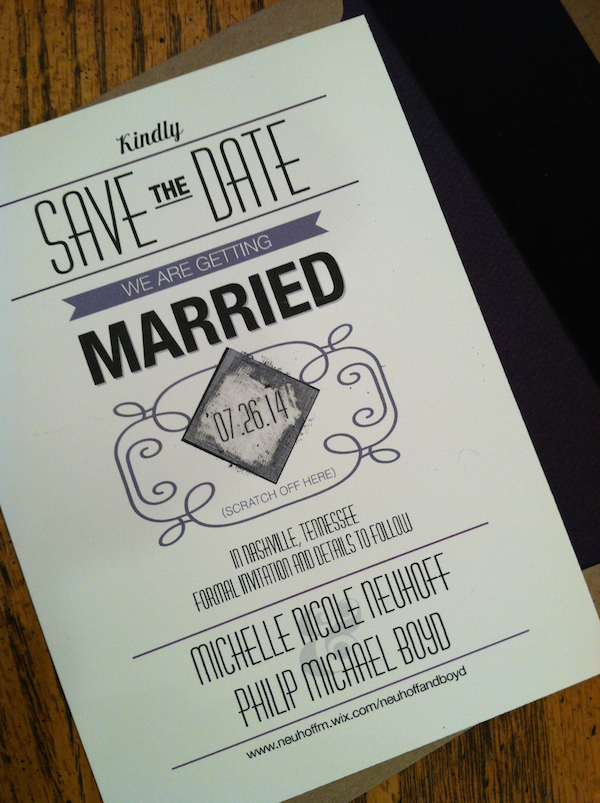
    While Google searches were the most popular way to find specific vendors near the wedding location, Pinterest provided plenty of inspiration for our Influencer brides. The image-based format of Pinterest means that thousands of ideas for flowers, decor, fashion, favors, and dramatic exits can be explored, compared, grouped, and saved. Many of these pins also include a link to Etsy or another location to buy the depicted object or instructions on how to copy the look yourself. Influencer Kari had a small, DIY-style wedding and used Pinterest for all her decor inspiration, and she even found a DIY wedding veil. Another Influencer, Michelle, also used Pinterest for design inspiration, allowing her to source most of her ideas from other sites, including a donut-shaped bride and groom cake topper from Etsy and scratch-off save-the-dates.

    MichelleBoyd-SavetheDate

    Tying the Knot

    No discussion on modern wedding planning could be complete without mentioning The Knot. For nearly 20 years, the husband and wife team behind this site have culled countless wedding resources, inspiration, advice and etiquette tips, and organization tools into the ultimate wedding planning portal. Influencer Laura testifies to its power: “I … used The Knot a great deal to conduct searches, make lists, check items off said lists, and place bulk orders of favors, stationery, decorations, invitations, etc. The Knot is awesome because it helps you stay organized and provides links to external vendors to best meet your needs.”

    The lists of vendors proved helpful to most of our Influencers. Vendors are searchable by location, price, and style considerations, and each vendor’s page on The Knot includes basic information, photos, a link to the vendor’s website, and customer reviews. Good reviews from other couples often tipped the scale when it was down to the final decision. The Knot also selects the “best of weddings” in each vendor category every year, providing a credential the vendor can put on their website.

    Utilizing SEO techniques not only helps wedding vendors as they compete in a heavily saturated market, but it also makes things easier for brides and grooms. Wedding planning can be stressful and overwhelming at times. From optimized searches to social media engagement to customer testimonials, the Internet has quickly and efficiently brought resources from all over to couples, hopefully alleviating that stress and putting the focus back on fun and love.

  • Google Grants: What Every Nonprofit Should Know

    1608-SI-TheInfluencer-KL-A-01LargeIf you work for a nonprofit, you probably already take advantage of many of the free tools and services available to you. From software and applications to professional services, a huge number of corporations offer donations to show their commitment to the causes nonprofits represent—but few offer tools as powerful as Google AdWords. If your nonprofit isn’t reaping the benefits of a free AdWords campaign, it’s way past time for you to jump on board!


    What Are Google Grants?

    Essentially, Google Grants offer free in-kind AdWords advertising services—$10,000 USD worth per month, to be exact—to 501(c)(3) nonprofits. This is a huge deal because the AdWords platform offers a streamlined way to get your organization’s story and message in front of any target audience you want, meaning more visibility, supporters, and donations.

    1602-SI-TheInfluencer-KL-A-03-lg

    It’s important to note that unlike with the paid version of AdWords, Google does have some restrictions on the types of ads created with Google Grants:

    • Ads must be text-based (meaning no videos or images)
    • Ads appear only on Google’s search engine results pages
    • All campaigns are keyword-targeted
    • Your max cost-per-click (CPC) is $2.00 USD

    But the most exciting part? Your Google Grant is valid forever! All you have to do is maintain eligibility.

    What’s AdWords and Why Do I Need It?

    Let’s backtrack for a minute. If you haven’t heard of Google’s AdWords platform, it’s a powerful tool that allows you to distribute ads for your organization across the web. As a supplement to SEO, paid advertising can increase traffic to your site, often much more quickly than SEO alone, while building your brand in the eyes of your target audience.

    And when it comes to advertising, there’s no question that Google knows what it’s doing. The tech giant’s ad network is the largest in the world and reaches <80% of global Internet users, which means high visibility for any ad you create. With AdWords, you can share your message with more people—and with Google's customizable tools, you can be sure your story is shared with the people most likely to engage and donate, whether they're across the street or across the world. Not an AdWords expert? No problem. AdWords' customized functionality gives you as much control as you want. Beginners can launch an effective campaign with AdWords Express, the quick and easy version of AdWords that offers automated management services, until they’re ready to optimize their ad campaigns to the fullest. More experienced users can take advantage of AdWords’ spectrum of insights to monitor keyword strength, ad performance, and other areas.

    Charity:Water Image
    Image from Charity: Water, a member of Google for Nonprofits

    How Can I Tell if I’m Eligible?

    1. Do you meet Google’s location requirements? Your headquarters must be located in one of the 50+ eligible countries. If you’re in the US, you must have current 501(c)(3) status, and if you’re headquartered somewhere else, you must meet the defined charity status of that country.
    2. Have you checked the list of prohibited organization types? Governmental health entities, hospital or health care organizations, and academic institutions cannot receive assistance through Google Grants.
    3. Do you have a live website? You need somewhere for ads to link to! Google demands “substantial content”—meaning more than just a page or two.

    Where Do I Sign Up?

    If you’ve answered “yes” to all three questions in the last section, you’re ready to get started!

    1. Sign up with a Google for Nonprofits account. If you haven’t done so already, become a member here for access to free tools and services like Google Apps and Google Analytics.
    2. Enroll in Google Ad Grants and complete the application. Sign up for either AdWords or AdWords Express, depending on how you plan to maintain your ad campaign. Google’s account creation guide makes it easy to create an account that fits your needs, though it’s important to note that the process may take between 4–6 hours to complete. You’ll be expected to provide basic information about your organization, but you should also have a basic idea of how you intend to start your ad campaign. Google will ask for things like sample keywords and ad copy as well as your goals for your ad campaign (recruiting additional volunteers, getting more donations, promoting fundraisers, etc.).
    3. Submit your account for review. The Google for Nonprofits team will take it from there by verifying your eligibility and going over your application. Be prepared to wait: the process is run by volunteers and takes between 4–6 months.
    WaterAid Image
    Image from WaterAid, a member of Google for Nonprofits.

    Should I Manage My AdWords Campaign on My Own?

    While it’s definitely possible for nonprofits to run their own ad campaigns, some beginners have found it frustratingly difficult to gain traction—even with $10,000 worth of services waiting in the wings. Getting only a handful of visitors each month can make it seem as though all of your grant money is going to waste, and it can take time to build strategies that make the most of the AdWords platform. Search Influence has run successful Google Grant campaigns for a number of nonprofits, and we’ve even helped organizations take the next step up toward Google Grantspro, which offers $40,000 worth of in-kind AdWords services per month.

    Consider letting us do the work to create high-performing ads—all you have to do is wait for the performance reports!

    Image Credits:
    Charity: Water Image
    WaterAid Image

  • The Prescription for Better Online Reviews for Your Practice

    Just last month, Forbes ran an article titled “Why Doctors Must Market Themselves in 2016.” Much as customers at a restaurant can get on Yelp to write about their experience, patients can review their physicians on Yelp and other sites as well. RateMDs.com, Healthgrades.com, and Vitals.com are just a few examples of sites that host online reviews for physicians, dentists, and hospitals. ZocDoc.com even includes an app that allows you to search for nearby physicians in your insurance network. These websites had around 6.4 million hits last year, and in 2014, more than half of patients reported that they used physician-rating websites to select a doctor. Even if your practice hasn’t decided to take a look at your online reviews, many of your patients already have.

    Part of the Broader Trend

    According to a BrightLocal survey, 88 percent of consumers trust online reviews as much as they trust a personal recommendation. Patients who scour the Internet for reviews on cars and restaurants will naturally use similar resources when looking for a dermatologist or other medical practice. Even when patients are referred by a friend or another physician, many will search for directions through Google, which will reveal reviews entered on Google+. In effect, online reviews are ubiquitous to the point of being unavoidable, and addressing online reviews has become an equally unavoidable part of healthcare marketing.

    1602-SI-TheInfluencer-KL-A-04-lg

    The Danger of Online Reviews

    Not everything on the Internet is true, but negative reviews can have a very real effect on the reputation and success of your practice. As with any business, it’s unfortunately the least satisfied patients who seem most motivated to leave reviews, and they counterbalance the handful who would take time to write about a positive experience. In the same study where 61 percent of participants used online reviews to find doctors, only about one in five took the time to write reviews themselves. A major key of online reputation management is encouraging the satisfied majority of your patients to leave reviews. Learn how here.

    Use the Feedback

    The University of Utah Madsen Health Center decided to start sharing survey data with their physicians in 2008, and the hospital jumped in patient satisfaction from the 34th percentile up to the 80th over the course of six years. What’s more, safety, mortality, and efficiency scores improved while malpractice premiums and costs went down for the hospital. While some online criticism may be groundless, trends and insights can also be useful as feedback to improve your practice and the quality of service provided.

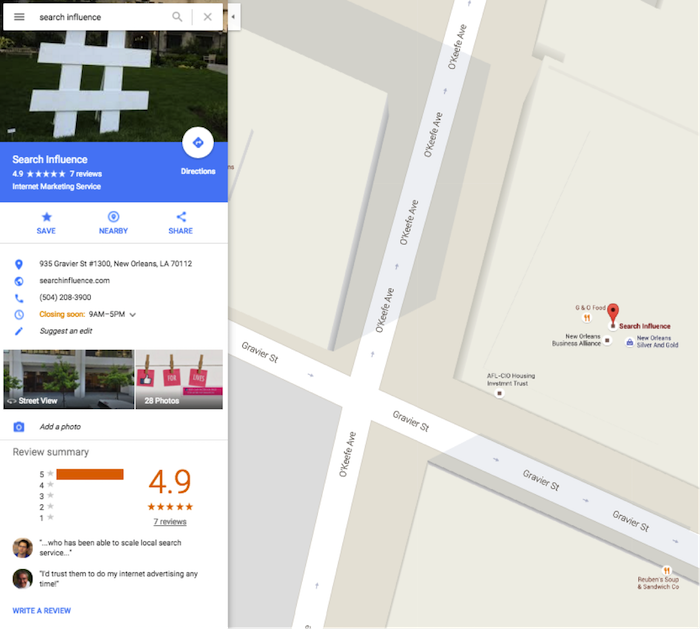
    Search Influence Google Maps Location Image

    Plan Your Strategy

    Because negative reviews have cumulative and long-term effects on your practice, a long-term outlook is needed to address the problem.

    • Claim Your Listing – Your practice may already exist on Google+ and other review sites. Claiming the listing allows you to monitor reviews and respond to negative ones.
    • Update Your Information – Entering your hours, contact information, and services makes your practice more accessible.
    • Check Out Competitors – How do your ratings compare to other practices in your area? Do you have listings on the same review sites?
    • Reply to New Negative Reviews – Do not delete negative feedback, but feel free to reply as appropriate.

    How to Handle Negative Feedback

    Reviewers who are upset sometimes make outrageous claims, but deleting the review only fuels a bigger reaction. When publicly responding to negative reviews, it is important to express sympathy for the person’s negative experience and move the conversation out of the public eye. People looking at the reviews should see that you have addressed the complaints, but they don’t need to read a long exchange that distracts from positive reviews.

    Screen Shot 2016-02-10 at 11.13.02 AM

    Screen Shot 2016-02-10 at 11.13.15 AM Consider Calling in the Professionals

    While claiming your practice on current listings does not take much time or expertise, managing the online presence across several sites can be a job that warrants a little professional help. The team at Search Influence can get results, especially when it comes to strategies that get your satisfied patients writing reviews. Ultimately, online reviews should just be one component of a comprehensive online marketing strategy. Increased visibility in the search rankings can help generate leads and reviews, which becomes a cycle for growth.

    Image Credit:

    Doctors at Work Image

  • Earn More Facebook Friends for Your Business with These 4 Tips

    According to the National Day Calendar, what we all know as February 11 is actually observed as National Make A Friend Day, not to be confused with June 8, which is National Best Friends Day (though we celebrate that here, too!). As it is described on the National Day Calendar website, new friends can broaden our horizons by guiding us to see with fresh perspectives, challenging us to try something new, and connecting us to opportunities, all of which are common features of Facebook friends.

    Friends Are for More Than Just People

    For this reason, people aren’t the only ones adding more friends to their Facebook lists. In fact, businesses, brand names, and even franchises have joined the world of Facebook. The more friends your company can make on social media sites such as Facebook, the more your audience grows, as will your SEO, and from there, the success of your business.

    Facebook itself understands this great significance of friendship, as it just recently celebrated its 12th anniversary with a new goal of having five billion of the world’s seven billion humans connected to the social network by 2030.

    But first, you have to know how to make those friends, so we’ve gathered four main ways to grow a Facebook friends list for your franchise.

    1. Post More Videos – It’s All About the Movement

    In the same way that YouTube grew to be so popular, Facebook Live is allowing people to broadcast in real time to their audiences directly from their mobile devices. The movement of the video in the News Feed catches the attention of those who are watching, and they’re more likely to share such content with their own group of friends, which will result in more views on your page, and from there, more friends.

    2. The Message – Communication Is Key

    The recently enhanced communication tools on Facebook help businesses offer real-time customer support through messages in the form of an online chat type of private messaging system. With this advanced messaging ability, your franchise can respond to conversations in private, more quickly, and with greater sensitivity than ever before.

    3. Pass It On – The Ripple Effect of Shareability

    Organic reach via Facebook is increasingly becoming a thing of the past, but there is one way around it, and it is through shared content. When you craft your Facebook status in a way that will encourage or entice your friends to pass it on to their friends, this will increase your reach, which will therefore lead to an increase in your list of friends.

    4. Advertise with a Purpose – Give Them What They Want

    When creating paid Facebook ads for your franchise, try to think with regards to what your audience wants more than what you seek. If you create an attention-grabbing, thought-provoking advertisement in a unique way, such as the carousel format available on Facebook, then you will be more likely to succeed. Along with that, create content that requires or encourages an interactive response from those who will view it. The more that people respond to what you post, the more others will see it and visit your Facebook page as a result.

    When it comes to the nature of growing a Facebook friends list for your franchise, think in the same way that you would if you were trying to make friends yourself. With that, you will personify your franchise in a way that makes it relatable to those who see your content, encouraging them to engage with you and therefore continuously add more friends to your list!