Blog

  • 7 Best Social Media Platforms for Your Digital Marketing Strategy in 2019

    A group of people using social media on their mobile devices at Search Influence in New Orleans, LA

    Social media is an essential element of a holistic and integrated marketing plan. Different social media platforms allow you to create and share content, reach specific audiences, and accomplish your marketing and business goals. Before you begin expanding your current social media marketing, make a plan. Here are some questions to help you get started:

    • Who are you trying to reach?
    • Where does your target audience consume content online?
    • Which message(s) do you want to send your target audience?
    • What is your end business goal?

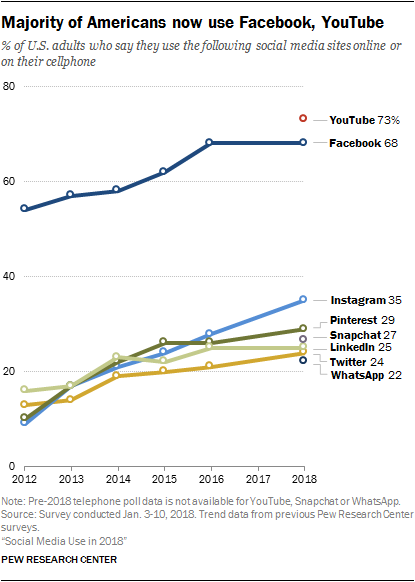
    Your answers to these questions will help you define your business goals and translate them into social media marketing goals. You will then be able to prioritize which social platform to use. If you are new to social media marketing, Facebook is where you should start. If you already have decent engagement on one platform, where should you go next? Most Americans are active on two to three social platforms, so why limit your marketing to just one?
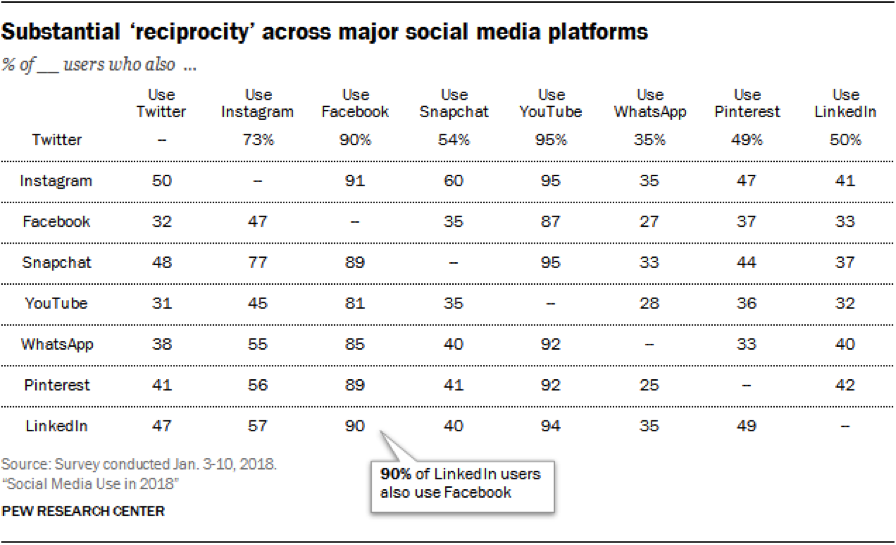
    Screen shot of social media stats

    Which Social Media Platform Is Best for Marketing?

      1. Facebook – With more than 2.27 billion active monthly users, Facebook is definitely your number one choice. Through Facebook Ads Manager, you can target users based on their location, age, gender, level of education, relationship status, job title, interests, purchase behavior, device usage, and so much more. And it doesn’t end there! Facebook allows you to create Custom Audiences to reach current customers or patients. Custom Audiences can be created from the phone numbers or email addresses you’re already collecting, or from Facebook Pixel to target people who have visited your website. To reach new customers, use Lookalike Audiences; these are created from Facebook’s insights about Custom Audiences to target users with similar online behaviors. You may think “My target demographic isn’t on Facebook,” and you could be right, but Facebook Ads Manager takes the guesswork out of it. This platform allows you to create and serve your message to the right user on Facebook, Instagram, or (through the Audience Network) across the web. As stated by Facebook,

    “1 billion+ people see a [Facebook] Audience Network ad each month.”

      1. Instagram – Owned by Facebook, Instagram boasts more than 1 billion monthly active users and has the same advertising options as Facebook. First and foremost, it’s a visual platform, which provides you with an opportunity to showcase your business’s personality. There are a number of free tools you can use to improve your audience’s creative experience.
      2. YouTube – YouTube allows your business to post and share an unlimited amount of video content, which you can then share on social media, send via email, or embed on your website. As a product of Google, there is also an added SEO benefit of having a YouTube channel and producing video content on the platform. With more than 1.8 billion active monthly users worldwide, YouTube has essentially become the second largest search engine behind Google. When it comes to paid advertising on YouTube, it takes the lead over Facebook for video. Facebook charges your account for each 10-second view, while YouTube does not charge you until a user has consumed at least 30 seconds of an ad. According to expandedramblings.com,

    “YouTube overall reaches more 18-34 and 18-49 year-olds than any cable network in the U.S.”

    1. Google My Business – You may not consider Google My Business to be a social network per se, but this free platform offers features that Facebook, Instagram, Twitter, etc. do not. Posts are searchable via keywords, they positively affect your SEO rankings, and they provide an opportunity for backlinks. You can read more about why you should be posting on Google My Business.
    2. LinkedIn – This platform is known as the primary social networking platform for professionals. You can use LinkedIn to update customers on your business, connect with industry partners, and recruit new team members. As a professional network, it is the top choice for B2B social media marketing. According to Forbes, “LinkedIn is one of the best platforms for generating leads and now makes up 46 percent of the social media traffic generated to company websites for B2B firms.”
    3. Pinterest – Similar to Instagram, Pinterest is a visual platform. Pinterest allows your business to show off your product offerings, before-and-after images (great for home improvement, beauty, and cosmetic surgery industries), and curated pin-boards. As you are probably already aware, its audience is primarily female. Pinterest is an oasis for hobbyists, brides and grooms, and day-dreamers in general. Keep this in mind when sharing content. Travel itineraries, suggested packing lists, landscaping ideas, craft projects, and wedding inspiration are the bread and butter of this platform. But don’t think you’re limited to just engaging with your audience. According to Hootsuite, 87 percent of Pinners have made a purchase through the platform.
    4. Twitter – Twitter is a quick-paced platform that’s perfect for sharing the latest trends or your business’s take on current events. Its audience skews somewhat younger but is split pretty evenly between men and women. Your business can participate in a larger conversation by using hashtags for trending topics. These hashtags allow you to reach new potential customers in your industry. Twitter can also be used to monitor positive and negative reactions from existing customers, and you can use the platform to provide additional customer service.

    How Do You Decide Which Social Platforms to Use?

    So, now that you’re familiar with the seven best social platforms for your digital marketing strategy, you should keep these tips in mind. When trying to decide which platform(s) are best for your business, first review your goals and audience, and then make a plan. Then, meet your audience where they are engaging online. Once you have started sharing on one of these platforms, analyze your efforts and look for areas to fine-tune your targeting and content strategy before jumping to another platform. If you’d like more advice on how to use social media platforms to effectively target your ideal clients, start a conversation with our experts by calling (504) 208-3900.
    Whichever type of social media platform you decide to use in your marketing strategy, Search Influence has your back. Our social media experts can work with you to implement a strategy and track the campaign’s performance. Start a conversation with one of our strategists today to make the most of your social media.

    Images:

    Group of people using mobile devices
    Reciprocity Table
    Social Media Line Chart

  • How Voice Command Is Changing SEO

    iPhone with its screen displaying Google search at Search Influence in New Orleans, LA

    Most marketers are familiar with the shift from laptop and desktop computers searches to mobile searches. Statista reports that searches performed on mobile devices have continued to grow in recent years, with mobile devices making up 55 percent of all organic search engine visits in the United States in the second quarter of 2018, up from 46 percent in the second quarter of 2016. In fact, the number of mobile search users is expected to increase to 221 million by 2020.

    The shift to mobile search comes at a time when most smartphones are equipped with some sort of voice-assisted search capability, such as Siri, Alexa, and Google Assistant. Artificial intelligence (AI) assisted voice search has effectively changed the way users are searching for the information, products, and services that they need, with searches now taking place with nothing more than the sound of your voice. As mobile and voice searches continue to increase, marketers should be mindful of the impact these search trends will have on their SEO strategies and plan accordingly to remain competitive and continue to stand out in search engine results.

    Mobile Optimizations Are Key

    As most voice searches are done on some type of smartphone or mobile device, having a mobile-friendly site is critical to ensure your business or brand appears for valuable voice searches that are taking place on mobile phones. Marketers should take steps to make sure their websites are mobile-friendly. Luckily, Google offers a free tool that can assist in determining how mobile-friendly your website is.

    In addition to researching and implementing Google’s suggested mobile optimizations for your site, the layout of your content on a mobile device is also very important. Try breaking content up into shorter paragraphs, utilizing lists and bullet points, and including images to help make your content more mobile-friendly and keep readers engaged.

    Optimizing Content for Voice Search

    One of the most important factors to keep in mind when considering voice searches and SEO is the fundamental difference in the way people type versus the way people actually speak. Search Engine Watch notes that searchers using voice-assisted search are more likely to use full sentences and grammatically correct language, compared to using a non-sentence when typing a phrase or question into Google.

    For example, a voice-assisted query about the importance of voice search and SEO could be:

    “Why is Voice Search important to SEO?”

    Whereas a typed query would be more informal and broken up:

    “Voice search SEO”

    Marketers looking to optimize content for voice search should utilize clear, conversational language that answers specific questions.

    The Impact on Local SEO

    A large percentage of all voice searches are location-based queries, making it more important than ever to make claiming and optimizing your business listings and Google My Business listing a priority in your SEO strategies. Due to the inherently mobile nature of smartphone use, a large portion of voice requests through Alexa, Siri, and similar AI technologies also deal with navigation and location.

    What exactly does this mean for local business owners? This means that now, more than ever, utilizing well-thought-out local SEO tactics will be especially important for your business to appear at the top of local search engine results.

    Local businesses should look for ways to creatively include local information in their SEO strategies to capitalize on local search intent via voice-assisted search queries. Try including both long tail and short keywords within your content that mention local landmarks and places in your neighborhood.

    Woman on a laptop at Search Influence in New Orleans, LA

    Keep It Simple

    While the thought of another technological trend impacting your SEO strategy and results can be intimidating, keep in mind that many of the tactics one would use to optimize for voice searches are also ones that would be used when optimizing for traditional searches as well. Optimized content is the foundation of any SEO strategy, regardless of whether or not you’re optimizing your content for a traditional or voice-assisted search.

    Other SEO building blocks that positively impact search engine results for traditional search queries include mobile-friendliness and mobile site speed. Again, the good news is that if you continuously focus on optimizing your site as well as your site’s content for traditional search queries, chances are that you’ll be in a good position when it comes to optimizing your site for voice assisted searches as well.

    As voice search continues to grow, it will be up to marketers to adapt to capture the benefits of this new type of search. By continuing to employ tried-and-tested SEO tactics and staying up to date on how new trends can impact your SEO, you can stay ahead of the competition and keep potential customers engaged. Our team of experts thrives on staying on top of new trends in the digital marketing landscape. Reach out to us today to learn how we can help your business stay up to date as well.

    Images:

    iPhone on Google search

    Woman on laptop


  • The Best and Worst of Super Bowl LIII Ads – Jordan Polhemus From Search Influence on WWL

    Jordan Polhemus, Account Supervisor at Search Influence, sat down with WWL to discuss this year’s best and worst Super Bowl ads from a marketing standpoint. Check out her insights on:

    • Which ads scored and which fell flat
    • Recent trends in brand messaging and inclusive marketing

    Super Bowl commercials never fail to showcase the latest marketing strategies and brand messaging tactics. At Search Influence, we strive to keep up with proven strategies and best practices to help our clients optimize their online presence. Our SEO services can help your business get found online and grow with a customized content marketing strategy. Let’s start a conversation today.

  • How Do I Get My Business on Google My Business?

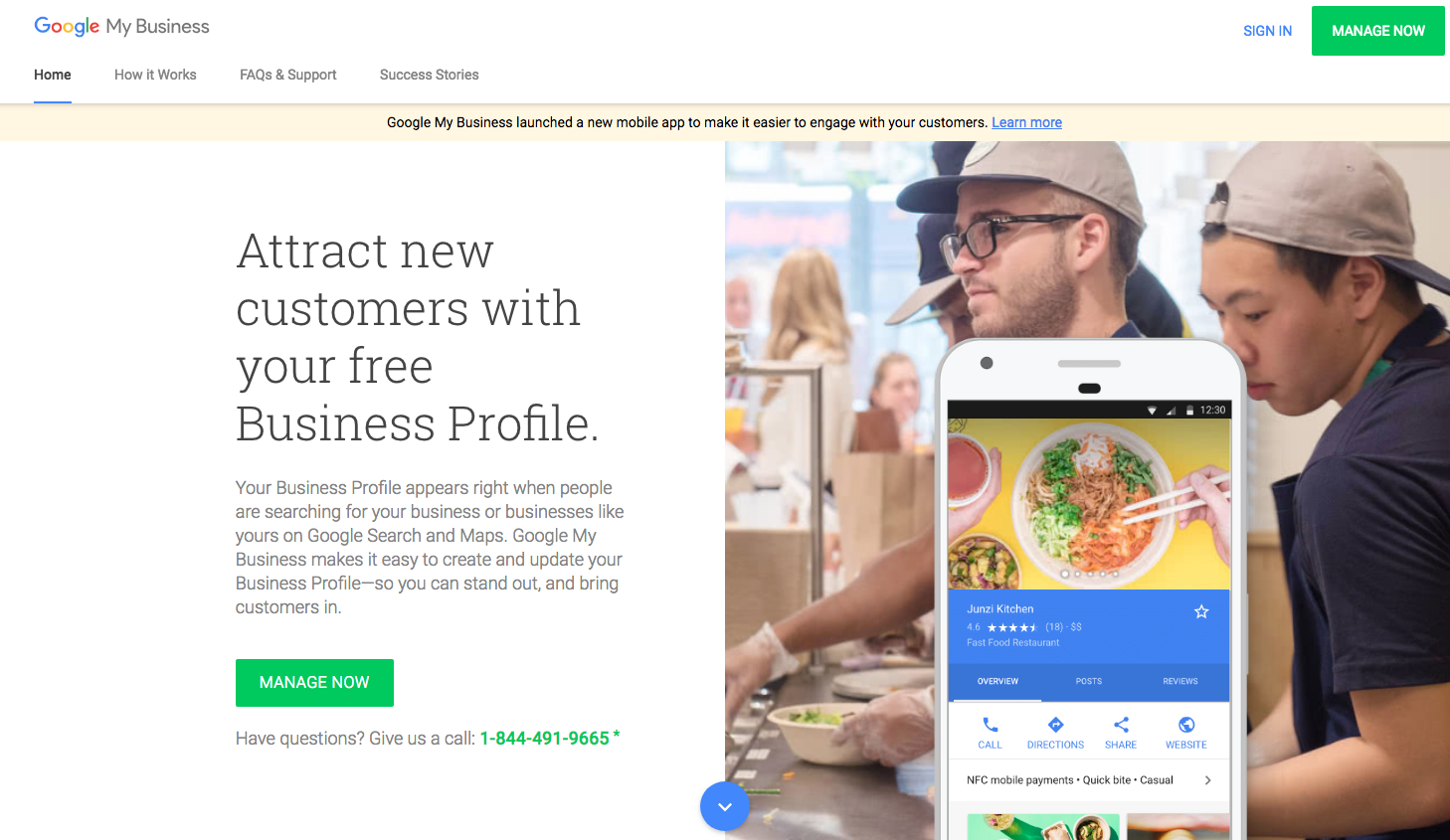
    Homepage of Google my Business on a computer screen at Search Influence in New Orleans, LA

    Google My Business is a free tool offered by Google that lets business owners create a listing for Google Maps and Google Search. Google My Business (GMB) also offers the ability to manage your listing in many ways, but the first step is to get listed. So, how do you get listed on GMB? This step-by-step guide will show you precisely how.

    Add or Claim Your Listing on Google My Business

    1. Go to Google My Business and Click the “Manage Now” Button

    2. Head over to the official Google My Business website. You’ll find the bright green “Manage Now” button in multiple places, but they all lead to the same place. Note that this does require a Google Account to complete, so make sure you have one available that will always be easily accessible.

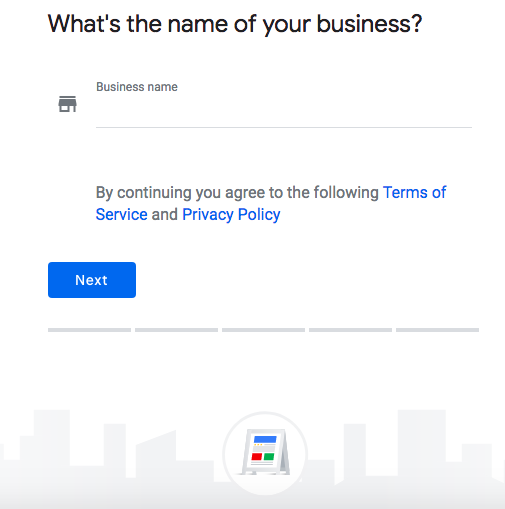
    3. Enter Your Business Name

    4. Enter the name of your business in the box that is presented to you on this page. If your business has already been claimed and verified, you’ll receive a notice that will instruct you to use the recovery email address to get access to the listing. If not, you’ll enter your address on the next screen; the option to hide your address for service area businesses is in this step as well.

      Screenshot of Google My Business page on a computer screen at Search Influence in New Orleans, LA

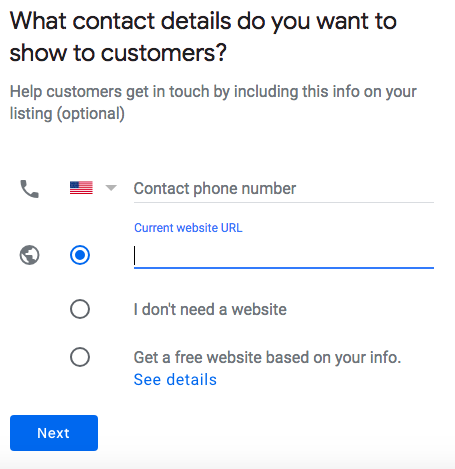
    5. Add Contact Information

    6. A potential customer doesn’t have much value if they can’t contact your business. Entering your phone number and website will display it on your GMB listing. You’ll also enter your address here. Be aware, Google will not allow any P.O. boxes for business addresses. Don’t worry if you own a service area business and don’t want to have that information displayed all across the internet; you can choose not to display your address.

      Contact info page of Google My Business on a computer screen at Search Influence in New Orleans, LA

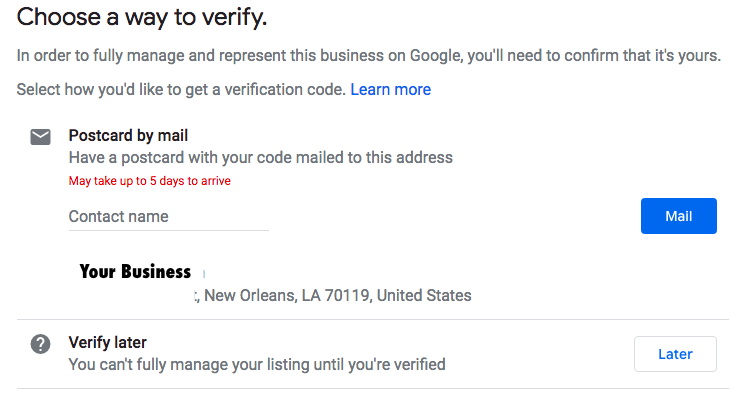
    7. Verify Your Business

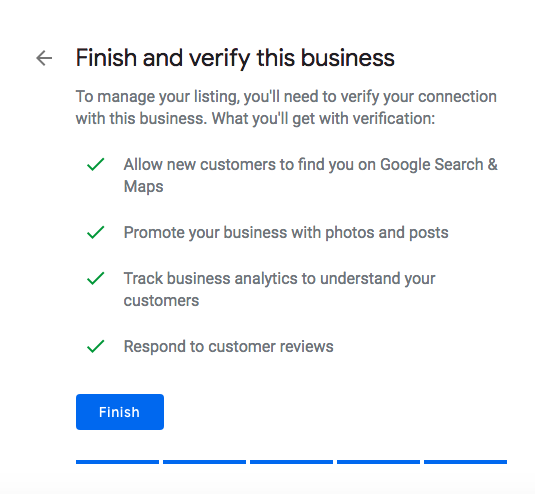
    8. After clicking finish, you’ll be taken to a screen to verify your business listing. The most common verification method is through the mail. Google will send a postcard to the address that was entered for the listing to verify that it actually exists at the location that was added to the GMB platform. Once a millennia (internet time of course), Google decides that a simple phone call is enough to verify a listing. The chances of this happening are very rare, so make sure to keep an eye on your mailbox!

      Postcard verification page of Google My Business on a computer screen at Search Influence in New Orleans, LA

    9. Confirm Your Business

    10. After verifying your business, you’ll just have to confirm your business details one last time, and you now have a shiny new Google My Business listing! Now that all of your information is verified and confirmed, your listing will show up in Google Maps and in Google Search whenever it matches a relevant search query.

      Screenshot on a computer screen of a Google My Business page at Search Influence in New Orleans, LA

    What Can I Do With Google My Business?

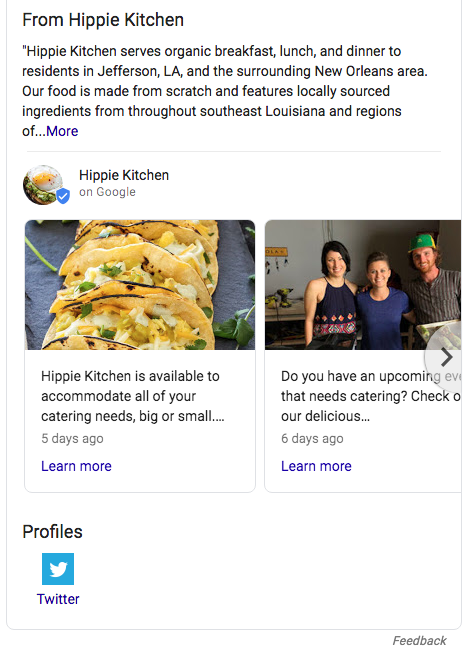
    Admittedly, verification is only the first step of your GMB journey. In addition to the visibility that it provides you on Google Maps and in Google Search, Google My Business allows you to interact directly with users. The first way is by posting on Google My Business. Users can “follow” your business on Google Maps, which allows them to view posts on their mobile device. These posts also show up in Google Search results. You can add a call to action that gives users a direct way to interact with your business when discovering your posts.

    Example of a post on a Google My Business page at Search Influence in New Orleans, LA

    Optimizing your profile is another customizable feature of GMB. You can add a menu, add a service area if you service more than your storefront, add product listings, ensure that you have the most accurate categories associated with your business, add photos, and much, much more. There is a GMB mobile app that also lets you manage on the go while at work or while working on vacation, as some people like to do. It gives you some very thorough metrics like top search queries, calls from your listing, website clicks from your listing, how many direction requests you receive from Google Maps, and a suite of other features. All this may sound like a lot, and it is. Managing your online presence can be tough, but Search Influence does offer local SEO services that cover every corner of Google My Business.
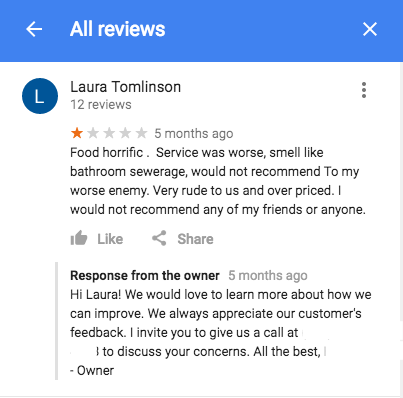
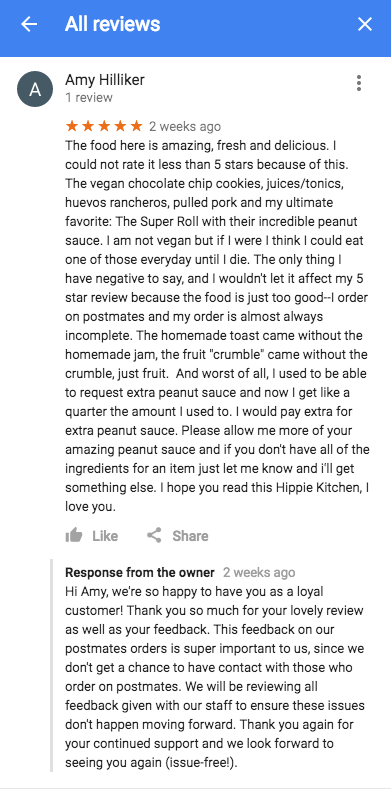
    Another bonus is that the strength in Google My Business’s signals for significant local search relevance was increased just from having a GMB listing. Once your business starts to receive some reviews, for better or for worse, this also improves your local presence. Even if a review is not favorable, it does provide a good opportunity to reach out to dissatisfied customers in a professional and public manner. Having a high rating with a large number of reviews is definitely something that looks good to people who find your business while searching on Google.

    Example of a bad user review on a Google My Business listing at Search Influence in New Orleans, LA

    Example of a user review on a Google My Business listing at Search Influence in New Orleans, LA

    Google My Business is essential to any business attempting to optimize their local SEO, which should be almost every small business. With a whole suite of services, this platform has progressed light years from the old Google+ Local and will only continue to grow. At Search Influence, we set up and manage GMB accounts for countless clients and continue to follow and track best practices. Don’t wait to take advantage of this free service! Get in touch with us for your local SEO needs and explore our complete digital marketing services.

  • SEO News: Data Aggregator Factual Now a “Submission Only” Source for TDCs

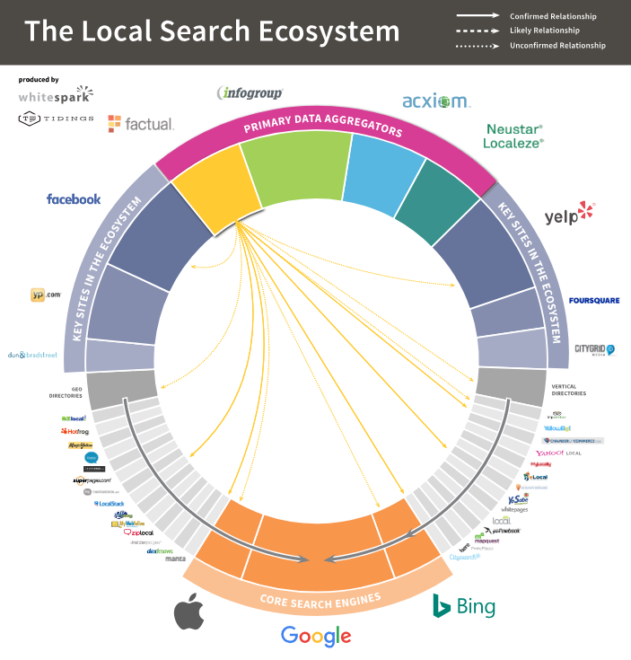
    SEO professionals who deal with clients’ backlink profiles and citation distribution on a daily basis are likely familiar with Factual, one of the largest data aggregators in the local search space. Factual does not accept listing submissions or edits from individual users; rather, they utilize trusted data contributors (more on that later) to help collect, validate, and then disseminate what they describe as “the ongoing accuracy of core business attributes.” In basic terms, you want to have your business listed on Factual as a platform because it helps push that data to other data collecting websites, expanding your digital reach across the internet.

    What Does Factual Moving to Submission Only Mean?

    Factual going to submission only means that third-party trusted data contributors (TDCs) can no longer guarantee that these data submissions will be accepted on Factual’s end. In TDCs like Yext or Moz, users can submit their business data, and the TDCs will push that information all at once to data aggregators, of which Factual is just one. Some other examples of data aggregators would include Acxiom, Neustar/Localeze, and Infogroup. TDCs help SEO professionals by guaranteeing that accurate listings will populate on these very important aggregators. 

    Yext logo


    This helps SEO professionals save a lot of time because it allows them to manage a client’s core data, have the data sent to these aggregators, which then send the data to more sources. Additionally, these tools help measure the accuracy of the listings, telling you if there is a discrepancy in name, address, phone number, or other attributed data. There is tremendous value in having accurate data for these reasons:

    • The data gets pushed from these four aggregators to numerous other internet sources.
    • Having consistent data for your name, address, phone number, and website adds authority to your business, in terms of SEO.

    Why Does Factual Going Submission Only Matter?

    Data aggregators that are willing to accept data from third-party tools as well as measure their accuracy help SEO and/or link builders tremendously in terms of time saved. For those at an agency or juggling numerous clients, monitoring these listings individually and having them edited is a gigantic time suck and oftentimes can be less than effective.

    By eliminating Factual from the equation, there is one less data aggregator that you can manage en masse via third-party tools. Factual will remain an important directory and aggregator, but you have to manage the data in a different way; more than likely, manual review on the physical listings will the best way to ensure accuracy. If there are inaccuracies, the best course of action would be to follow the guidance on how to make edits on their FAQ page.

    Why Did Factual Go to Submission Only for TDCs?

    This is a bit unclear, but Factual made this decision across all platforms. They did not cherry pick the sources that they would allow to guarantee submission or measure accuracy, but rather decided to limit the functionality available to the TDCs. 

    Factual’s next steps might be indicative of a larger trend industry-wide, or it might be just an internal decision based on factors we are not aware of. Regardless, this is worthy of monitoring going forward, because if more TDCs follow suit, local listing and data distribution management might be a bit more challenging in the near term.

    Even though the SEO industry is always changing, the marketing experts here at Search Influence are always keeping up with industry trends to optimize our clients’ SEO campaigns. If you think your business could use help with listing management or other SEO strategies, contact us today to start a conversation.

    Images

    Whitespark

    Yext

  • Understanding Facebook’s Algorithm – Ariel Tusa from Search Influence on WDSU

    Ariel Tusa from Search Influence joins Christina Watkins on WDSU! She shares some knowledge about:

    • The Facebook Algorithm

    • Tips for tailoring your feed to show the types of posts you WANT to see


    These tips can be helpful for your personal Facebook page, as well as your business’s Facebook page. Social Media Optimization is beneficial for businesses in most industries, and understanding the basics of the Facebook Algorithm is the first step in developing a social media strategy for your business. To learn more about social media optimization, contact us at Search Influence.

  • How to Optimize YouTube Videos for SEO

    Man watching optimized Youtube videos on his phone at Search Influence in New Orleans, LA

    What’s your first thought when you think of YouTube videos? Funny pet compilations or cooking tutorials? Well, if so, then it might surprise you that YouTube is more than just a resource for entertaining clips or personal vlogs (video blogs); it’s actually the second-most visited website in the world, behind Google. More than 1.5 billion users log into YouTube per month. It’s even crept into the television market, and the time that people spend watching YouTube on their TV has doubled in the past year.

    Still, only 9% of small businesses utilize YouTube. And, because YouTube is owned by Google, it pays to ensure that your videos are optimized for SEO just like your website. That might be the difference between a few views and a few thousand.

    Gif of Youtube logo

    A Beginner’s Checklist to YouTube SEO

    1. Title

    Just as your company’s web pages need metadata that contains clear and concise title tags with researched keywords, your video’s title needs to clearly list the topic while also using keywords. It’s one of the few places where you can put keywords, so it’s important to do some preliminary keyword research to see how people are searching for your product or service. A word of caution though—don’t put keywords in your video’s title just for the sake of inserting keywords. As with Google, this practice will not help your position in the YouTube search results page (YSRP). The key is to make it relevant while describing what the video is about.

    Example title of an optimized Youtube video from Search Influence in New Orleans, LA

    1. Description

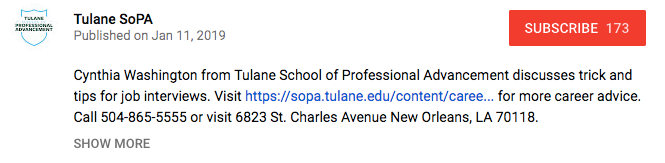
    A video’s description should be just that—a description of the video. You don’t need to transcribe the entire video or write a short story about it; you just need to give a relevant but brief description. In addition to your title, descriptions are a place where you can utilize keywords. Again, don’t go throwing keywords into your description hoping that it will make your video rank highly in the YSRP. YouTube is smarter than that. Use choice, relevant keywords.

    For length, it’s best to aim for under 250 characters, or roughly 30 words. After this character limit, YouTube uses the “show more” prompt to hide the rest of your description. It’s also important to fit your keywords, a valuable resource link, and a call to action before this threshold. What’s a valuable link? Your company’s homepage can work just fine. But, you’ll get even better value if you can use a page deep in your site—think service pages, product pages, testimonials, limited offer pages, etc. Also, make sure to use “http://” or “https://” before the URL, or it won’t hyperlink in the description!

    After the “show more” fold, you can add more useful links and information, including prompts to follow you on Twitter, subscribe to your YouTube channel, or like you on Facebook.

    Example Youtube video description from Search Influence in New Orleans, LA

    1. Tags

    You’ve got your title; you’ve optimized a concise description; now it’s time to add tags. This is where you don’t want to be stingy. Add any keywords you’ve already used as well as other related keywords, as long as they make sense and are relevant to the content of your video. Also, YouTube recently starting using hashtags as another way to improve searchability.  

    Stephen Colbert saying

    1. Transcript

    This is one that not everyone may know about. YouTube will automatically create subtitles for your video, but their automated transcription process can be unreliable. By uploading a transcript (captions) of your video, you’ll know that someone who watches silently on mobile (which, if Facebook video is a point of reference, a lot of people do) will see an accurate transcription of what’s being said.

    Anna Kendrick saying

    1. Interaction on your part!

    YouTube is similar to social media in that you shouldn’t use the tactic of “set it and forget it.” Just like if someone is interacting with your business’s Facebook page or Instagram post, you should respond in a timely, professional manner. YouTube is also susceptible to, how should I put it, lively discussions in the comment thread. If there are any negative comments or reviews, respond to the ones where you feel you can actually help remedy a situation, and ignore the ones that are simply trolling.

    1. Promotion

    So you’ve uploaded your video and interacted with users in the comments. Great job! But, you’re still seeing pretty low views. Paradoxically, one of the ways to get your video higher up in YSRP is through views, but it’s hard to get views if it’s not being found. Now is the time to promote it. Share it on your blog, social media channels, email marketing campaigns, and even tell your friends, family, or network associates. This can help bring in those valuable views. You can track viewer data through YouTube Analytics. To learn more about using YouTube Analytics, Hootsuite has a detailed guide here.

    It’s Never Been Easier to Create Quality Video Content

    Since the launch of YouTube in 2005, not only has traffic within the platform drastically increased, but the quality of the content being produced has jumped leaps and bounds when compared to the very first video, a 19-second clip of YouTube co-owner Jawed Karim at the zoo talking about elephants.

    But one of the limitations that used to exist, whether or not you had a nice camera or a crew to shoot your video, doesn’t exist anymore. With the capabilities of smartphones, it’s very easy to point and shoot a tutorial, video blog, company profile, or any other type of video content you want to share with the world. By utilizing these tips, you can be on your way to adding some bingeable video content to the YouTube community. At Search Influence, our digital marketing experts can help your business build and grow your brand online. Check out some of the many clients we’ve worked with. Want to chat? Fill out the form in the sidebar today.

    Images:

    Man With iPhone on Head

    Youtube Logo 

    Stephen Colbert

    Anna Kendrick

  • What Is Domain Authority & Why Does It Matter?

    Computer screen displaying domain authority metrics at Search Influence in New Orleans, LA

    Your website has been live for some time. You’re past the development stage, so now you’re starting to think about the nitty gritty side of its performance. What does Google think of your content? Are your pages valuable? Why is your site ranking below competitors in search results?

    Your website’s domain authority score can help answer these questions and provide valuable insight. But what exactly is domain authority and how can you utilize it to grow the number of visitors to your site?

    What Is Domain Authority?

    Domain Authority (DA) is a score given to your domain based on an algorithm developed by the SEO company, Moz. It is a projected numerical value of how well a site will rank in search engine results. The algorithm to determine Domain Authority takes into consideration link profiles (a list of all your website’s backlinks), content quality, SEO best practices, and more. Just as Google and other search engines must measure various front and back-end site features when fetching up search results, DA scoring tools also take numerous factors into consideration.

    But, what is a good domain authority score? Domain authority is relative—there is no ideal DA score. Ultimately, you want your authority to be higher than that of your competitors. There is so much variation in search results that it would be difficult to say a higher DA will lead to better results versus a competitor; however, it is a good indicator that you are utilizing sound digital marketing techniques and providing high-quality content for your industry.

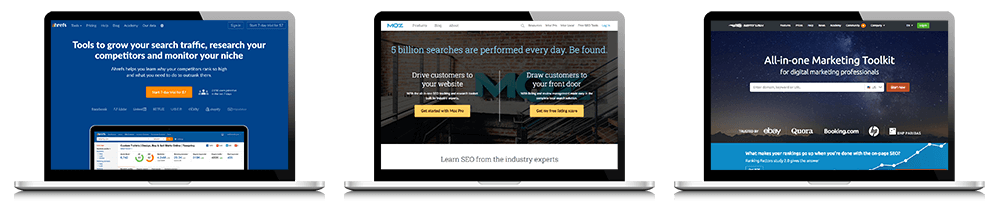
    Additionally, there are tools that measure domain authority using different metrics than Moz, such as Ahrefs or SEMRush. In many cases, the DA measured by these tools is significantly different on a 1-100 scale and varies from tool to tool. Measuring DA requires a degree of relativity to the other results within that tool. Google claims it does not acknowledge or recognize domain authority score when serving up search results. The score is just an estimation based on several different factors of how well you will rank. As is common in the digital marketing industry, Moz announced a recent update to their process. They will release changes to their Domain Authority score calculations in early March. Algorithm changes can impact your score because it may change what Moz thinks is valuable about your domain. While the things being calculated in these scores may not directly correspond to how search engines are ranking your pages, there is still value in knowing your domain score.

    How Do I Check for Domain Authority?

    Now that you understand a little bit more about what a domain authority score is, how do you find yours? There are several tools available that provide you with your score and how your score ranks up among your competitors.

    Ahrefs

    This effective tool can provide extensive information about your domain’s authority score, as well as other insights into how your score is being calculated. With a paid subscription, you can see your DA score along with other statistics, like the number of healthy backlinks you have and how your organic traffic is doing. It will even show you how many points your score has gone up or down on a daily basis if there are any changes.

    Moz

    The originator of the DA score, Moz, offers a free Chrome extension, MozBar, to measure your Domain Authority. Subscription to a Moz Pro account gives you access to SEO campaign monitoring, as well as tools that can help increase your Domain Authority score overall.

    SEMRush

    Another leader in SEO tools for sites, SEMRush is a great option when monitoring your domain authority. Not only does it allow you to keep up with your DA score, but you can also use it to complete competitive research between you and your competitors.

    These are just a few of the top tools you can use, but you may still be wondering why you should even bother checking your domain authority.

    Domain authority metrics displayed across three laptop screens at Search Influence in New Orleans, LA

    Why Does My Domain Authority Matter?

    Knowing your DA score can help improve your overall domain value in search engines. Having a higher DA means that you are predicted to be higher in the search results than domains with a lower score. It can be a good benchmark on your site’s SEO and the value of information present on your site. If you have a lower domain score compared to your competitors, then it might be time to start searching for strategies to increase your score.

    How Do I Increase My Domain Authority?

    Since so many factors go into the calculation of your DA, there are a variety of areas you can focus on. Here are some of the few more valuable points:

    Building Strong Backlinks

    Backlinks are arguably one of the most important contributors to high domain authority. What we are talking about here are quality backlinks. For a quick refresher of backlinks and their value, check out our previous blog post. Backlinks coming from other sites with high authorities shows that you are also a reliable source of valuable content and information. By acquiring a multitude of quality backlinks, you are in turn raising your own authority. This also has the opposite effect if you acquire backlinks that are not high quality. It is important to note that Moz has updated their algorithm to devalue purchased links. In the past, people have tried selling links from sites that claim to have high domain authorities to sites looking to boost their own domain authority. However, this will no longer be beneficial; in fact, it could be harmful to a site’s domain authority. Getting backlinks from sites that can be considered spammy in turn tell the algorithms that your site might be spammy as well. It is crucial to your site’s health to disavow bad backlinks in Google Search Console with this tool.

    Having Useful and Valuable Content

    People use search engines to find information; so, if your website provides valuable content that answers people’s questions or provides them with the knowledge they are looking for, your authority will be higher. A valuable threshold for content quality is Google’s E.A.T. guidelines—expertise, authoritativeness, and trustworthiness—so make sure your content hits these marks.

    Using Overall SEO Best Practices

    Engaging in Search Engine Optimization makes your content—therefore, your site—more easily accessible and reliable to search engines’ algorithms. Your site is more likely to have a higher domain score and display higher in the Search Engine Results Page (SERP) if your content is more accessible to search engines. Learning more about SEO best practices and how to implement them can not only be immensely beneficial for your domain authority but also for your site’s traffic overall.

    All in all, even if Google doesn’t calculate the domain authority of a site, it can still be a powerful estimation of how meaningful and reliable Google thinks the content on your site is. If you have a higher score than your competitors, then likelihood of you outranking them in the SERPs is pretty high. Working to increase your site’s DA authority can have plenty of positive SEO benefits. Still feel confused or overwhelmed? Request a free analysis from Search Influence to see how we can monitor your domain authority and help steadily increase it with a customized SEO strategy for your business.

    Images:

    Computer Screen With Metrics

  • CCPA and Political Ads: What You Need To Know and Why It Can’t Wait ‘til 2020

    The recently-passed California Consumer Privacy Act and proposed changes to political ads will change the digital marketing landscape in 2020. I know what you are thinking: 2019 just started, why should I already be concerned about complying with new rules and regulations that go into effect in 2020? As many companies learned through complying with the GDPR (General Data Protection Regulation), it’s much better to start implementing changes as soon as possible.

    With the recent breaches of consumer data, privacy and transparency have been major concerns. Passing the GDPR in 2018 was a huge step toward combating privacy concerns, but U.S. companies can still expect much more to come in the way of regulation and legislation. Not only will the US start enforcing their own data regulations, including the CCPA, but new rules are arising that would require greater transparency for political advertising.

    Lock on the keyboard of a computer at Search Influence in New Orleans, LA

    Key Components of the California Consumer Privacy Act (CCPA)

    Effective January 1, 2020, the CCPA aims to protect the privacy, security, and rights of California consumers. The law allows citizens, or the state itself, to bring action against a company for violations of the law. According to Varions, the rights given to Californians from this privacy act include the following:

    • Know what personal information is being collected
    • Know if their personal information is being sold or disclosed and to whom
    • Say no to the sale of their personal information
    • Access to the personal information that is being collected
    • Equal service and price if they choose to exercise privacy rights

    Why Being GDPR Compliant Doesn’t Mean You’re Automatically CCPA Compliant

    While the goals of the CCPA and the GDPR are extremely similar, businesses need to be aware that just because they comply with the GDPR requirements does not mean they are compliant with the CCPA. In many ways, the CCPA expands on ideas and regulations of the GDPR. For example, the CCPA requires a way for consumers to control their own information, as opposed to the required consent for data in the GDPR. The CCPA’s rule on notifying consumers if their data is sold to third parties and allowing them to opt out is another major difference.

    So what do marketers need to do to prepare for this 2020 deadline? First and foremost, they need to be sure to closely examine the data that they currently collect and how it is used. Data fields on forms, profiles, and landing pages are an important part of this scrutinization process. If they collect personal information, clear language and cookies need to be in place to inform users about what information will be stored, shared, or sold. Privacy policies must also be updated with steps the consumer can take to have their personal data deleted.

    What Could Change With Political Advertising for the 2020 Elections?

    The 2020 elections are not far off, and many political campaigns at both the national and statewide level have already been kicked off. After the controversy over the 2016 elections, protection of data and transparency with political advertising has been top of mind. In March of 2018, new regulations were proposed by the FEC for how political advertisers should run disclosures that are clear about who paid for the ad. After commissioners met in June, there was still no clear decision for an approved proposal.

    Currently, the FEC law requires that advertisements include disclaimers for three ad types: Communications by Political Committees, Express Advocacy by Any Person, and Solicitations by Any Person. The newly proposed rules would apply to the same ad types, but require that these ads state who paid for them and if a candidate authorized the ads. Another difference these policies propose is that advertisers will no longer be able to omit ad disclaimers based on size constraints. Instead of omittance, “adapted disclaimers” must be used, which would have the largest impact on online advertisements.   

    Keep in mind that while the majority of marketers may not be working directly with a political campaign, these rules still apply to anyone who expressly advocates for or against a candidate in paid digital ads. This could encompass a large variety of digital advertising users, even outside the realm of politicians. The urgency behind the push for new policies should encourage all advertisers to be more transparent in regards to paid political ads, not only in preparation for inevitable future regulation but also in an effort to maintain good faith with consumers.

    Despite the fact that the FEC has yet to pass an official regulation from these proposals, the Digital Advertising Alliance (DAA) has implemented new guidelines “designed to bring greater transparency and accountability” to political advertising. Under these guidelines, the DAA is urging political advertisers to use a purple PoliticalAds icon in the top right corner of ads, which will link to any required disclosure information. For advertisers using this icon, there should be little to no work left to do in order to comply with the FEC regulations once a final decision is made about the proposed disclaimer policies.

    Woman tapping on her watch at Search Influence digital marketing agency in New Orleans, LA

    What Else to Expect Before 2020

    A lot is still changing as far as privacy regulations are concerned. The CCPA has seen a lot of criticism for how quickly the law was pushed through, and for what some say is oversight on how certain aspects will be enforced. This backlash has led to speculation that the CCPA could still see a lot of change before it goes into full effect on January 1, 2020.

    Advertisers should be sure to keep an eye out for any more changes. Many data collectors are now pushing for federal regulation before other states pass laws and create a patchwork of varied laws, making compliance across the country much more difficult. However, don’t be deterred from continuing to take advantage of digital advertising channels. As stated in our recent blog by Alison Zeringue, spending on digital marketing and advertising has continued to grow. In addition to spending more on digital advertising, we are also seeing marketers increasing the use of targeted audiences, despite new regulations and privacy concerns being at an all-time high.

    If you’re concerned about the changes to digital advertising, the experts at Search Influence are here to help. We follow the news and the trends to ensure that our clients’ digital marketing campaigns are effective while following the letter of the law. In addition to creating regulation-compliant online ads, we track their performance as well. Start a conversation today to learn more about how we can help your business grow.

    Image:

    Tapping on Watch


  • Four Steps to Improve Your Content Marketing Strategy

    How much content have you consumed today? Probably more than you realize. The American Marketing Association estimates that the average consumer is exposed to upwards of 10,000 brand messages a day. As consumers, we have no shortage of options for anything our hearts desire, from where to get our teeth cleaned to who we call when the A/C breaks. And as marketers, we have no shortage of ways to reach those consumers. With these four steps, you can evaluate and enhance your content marketing strategy to help stop the endless scroll and capture the eyes of your target audience. Take note and let’s make this one piece of content worth your consumption today.

    A person scanning content on a website at Search Influence in New Orleans, LA

    Evaluate your Current Content Strategy

    According to Content Marketing Institute’s 2018 benchmark report, 38 percent of B2B marketers say they have a content strategy, but they don’t actually have it documented anywhere. If you don’t write down your plan, do you really have a plan at all? Whether it is lack of time or lack of people, many businesses understand the value of content marketing but don’t have the capacity to fully implement a fleshed-out strategy.

    By performing an audit of your current content strategies, you can document your successes and areas of opportunity, determine the key metrics that align with your business goals, and get your whole team on board with a plan.

    A content audit should record the following details in one organized place:

    • Who is creating your content (all stakeholders/departments involved)
    • Where content is being published
    • How frequently new content is getting implemented
    • What types of content you are creating (i.e. videos, blog posts, social posts, etc.)
    • What measurable results you are achieving (i.e. page views, rankings, likes/shares, etc.)

    Once you understand the current state of your content strategy, you can then set goals moving forward. Your content marketing goals should align with overarching company goals, and they should be specific, measurable, attainable, relevant, and time-bound (S.M.A.R.T). For more tips on how to set goals for your marketing strategy, check out our recent blog about S.M.A.R.T. goals.

    Woo the Right Audience

    When optimizing your content strategy, it’s important to not only think about your company’s goals, but also to frame your content around your target audience’s goals and pain points. You’ll first want to define your audience by creating up-to-date buyer personas.

    A buyer persona is a fictional “character” that represents a focused and clearly defined target audience based on actual customer behaviors and demographic research. By gathering insights from recent customers about their motivations, concerns, and decision-making processes, you can better understand how to appeal to a similar audience and nurture the right leads. You will also want to survey stakeholders within your company who interact firsthand with your customers in order to reveal any inconsistencies and better examine how prospects are converted.

    Your persona should include details like age range, gender, income, education level, and location, as well as what platforms they use regularly, their interests and hobbies, and any barriers that prevent them from making a decision. For B2B companies, you will also want to consider the persona’s job title, industry, company size, and career goals. Put all of these factors together into one organized document that you can share with your marketing team and content creators.

    Once you build buyer personas, you will be better able to deliver consistent content to reach your audience in all stages of their journey. You can map different content types, like blog posts vs. paid ads, to different stages of their journey in order to give your content creators more guidance. For example, an awareness level blog post will likely share more general industry-specific information, while a consideration level post will weigh the pros and cons of two possible solutions to a pain point. Buyer personas allow you to create intentional, cohesive content that can help you, in time, build a community of loyal brand advocates.

    Improve the Quality of Your Content

    Gone are the days of stuffing in your keywords to optimize content or sneaking in internal links to your product pages without the proper context. It may seem obvious that everyone wants to create quality content, but what does that actually look like these days?

    Stephen Colbert tapping on his watch

    Well, it starts by making the right first impression. And you have less than three minutes to do that. According to Harvard Business Review, the average viewing time for content is 2 minutes and 27 seconds. By optimizing your content titles and subheadings around what your prospects are actually searching for, you can answer their questions and eliminate their doubts more quickly. Skimmers can see immediately if your content is worthy of their time. Bulleted lists can also break up content, while a multimedia approach that incorporates a mix of text, video, and custom graphics can enhance engagement.

    Of course, the old adage “show don’t tell” still plays a major role in determining quality. Show the value of your services and products by featuring customer testimonials and case studies as part of your content strategy. Include any accreditations or awards naturally in your content, and promote mentions you get in local publications. Check out how we showcase our client success stories or read our testimonials at Search Influence for more ideas on how you can prove your value through firsthand accounts and reviews.

    Finally, quality is not just in the eyes of the consumer. You also have to impress the search engines. You’ll want to consider Google’s guidelines for quality, specifically the Expertise, Authoritativeness, and Trustworthiness (E-A-T) of the content. According to Google, high E-A-T content should contain factually accurate information that is sourced from accredited experts in that field.

    There are a couple of quick ways to improve your E-A-T quality right away. First, rather than publishing blogs from a generic company author, create individual authors and corresponding bios for your content creators so they can publish content in their name. Additionally, you can improve the trustworthiness of your content by citing reputable sources and accredited experts in the industry.

    Build a Distribution & Publishing Schedule

    Now that you have taken stock of your current strategy, honed in on the right audience, and improved your quality, you’re ready to share this beautiful content with the world. Remember that documented plan we talked about earlier? Time to make that a reality. Build out a schedule for publication, including the number of posts or pieces of content you will publish monthly, when they will go live, who will author them, and how they will be promoted.

    You should consider any of the following types of content to publish:

    • Website and blog content
    • Advertising on Google Ads or Bing
    • Social media posts (Facebook, Instagram, Twitter, LinkedIn, Pinterest, YouTube, etc.)
    • E-books, digital downloads, or case studies
    • Infographics or custom graphics
    • PDFs of brochures or product manuals
    • Video tutorials, product spotlights, or podcasts

    Remember to focus on the platforms that matter most to your buyer personas, and determine what metrics you will track for each platform. For a Facebook post, for example, you may want to focus on shares, while you may look at conversion rates or cost-per-click for your online advertising campaigns. Success should always tie back to your S.M.A.R.T. goals and target a specific aspect of your buyer persona’s customer journey.  

    Ultimately, content marketing is a cycle of continuous improvement. As you start out, don’t worry about trying to get your content on every possible platform. Remember that, as your library grows, it will become easier to start creating new types of content. For instance, you can turn a series of blog posts into a robust digital download, or you can break up a custom infographic into several small, focused graphics for social media.  

    Even if you start small, building and maintaining a content marketing strategy takes time and a dedicated team. At Search Influence, we aim to serve as an extension of your team by offering content marketing services built around your brand goals. From idea creation to distribution and reporting, we’ve got your back. Request a free analysis with one of our strategists today.