Blog

  • Unlocking Higher Ed SEO: Insights From Alison Zeringue’s UPCEA Blog

    higher ed seo

    Search Influence’s Director of Account Management Alison Zeringue wrote a blog post for our trusted partners at the University Professional and Continuing Education Association (UPCEA) titled “Paid Search & SEO in Higher Ed: Are Our Search Marketing Priorities Right?

    Summarizing Alison Zeringue’s UPCEA Blog

    In her blog post, the digital marketing veteran shares her expertise on higher education SEO and the findings of Search Influence and UPCEA’s three-part Higher Education SEO Research Study.

    “As an SEO marketer for more than 12 years, I’ve seen the broader marketing world’s knowledge of SEO grow over time, but there remains a gap in knowledge in many industries, including higher education. Our research study results confirmed this.”

    Alison points to one of the leading indicators of this knowledge gap: While 91% of higher education marketing survey respondents integrate paid search into their SEO strategy, only 27% implement keyword optimization and link building.

    She believes this disparity between SEO prioritization and paid search reveals the fundamental issue in higher ed SEO: Higher education marketers need education on:

    • how paid search and SEO differ
    • how they are connected
    • which tactics they should implement to support both.

    Throughout the blog, Alison explains how higher ed marketers can begin investing in SEO to bridge this gap and bolster their higher education digital marketing strategy.

    The Search Influence UPCEA Partnership

    In 2022, Search Influence and UPCEA partnered to create a comprehensive research study that looks at higher ed marketing leaders’ perspectives on SEO and evaluates the SEO readiness of professional, continuing, and online education (PCO) units.

    The study revealed good news for higher education marketers — they have an underutilized tactic that can significantly impact their recruitment ecosystem.

    Access our SEO research study here to learn more.

    Maximize Your Search Marketing Gains With Search Influence

    The team at Search Influence has years of experience helping higher ed institutions reach their full SEO and paid search potential.

    Contact us to see all the high-level digital marketing services we offer.

  • Demystifying Higher Ed SEO’s Real ROI: Insights From Will Scott’s UPCEA Blog

    Higher Ed SEO

    For many higher education institutions, SEO is an untapped goldmine.

    Despite reigning in higher website visibility, user traffic, and conversion rates, colleges and universities overlook SEO as part of their digital marketing strategy. Why?

    They don’t see SEO as a tactic that will deliver a solid return on their investment.

    To challenge this widespread misconception, Search Influence CEO and Co-Founder Will Scott wrote a blog for UPCEA, demonstrating the profitability of SEO can be for higher ed institutions.

    Will Scott’s UPCEA Blog Talks Higher Ed SEO Payoff

    On June 23, Scott had the opportunity to contribute a blog post for UPCEA (University of Professional Continuing Education Association).

    Titled “How to Quantify Higher Education SEO ROI — ‘Show Me the Money,’ Says the Dean,” Scott’s blog post keys higher ed institutions in on what the true SEO ROI looks like: increased enrollment of prospective students.

    See the full blog post to understand:

    • What SEO means in higher ed
    • How paid search and SEO work better in tandem
    • The impact of higher ed SEO on ROI — the proof is in the pudding
    • Tricks for making SEO work for you

    Search Influence’s Partnership With UPCEA

    In 2022, Search Influence become a Platinum Partner of UPCEA to share its higher education marketing expertise and help institutions understand the value of SEO and paid ads in driving more prospects to their schools.

    So far in their two-year partnership, the pair have collaborated on a Higher Ed SEO Research Study, which reveals the need for solid SEO strategies across institutions. Search Influence will also publish industry-relevant articles and blog posts, host webinars, and attend UPCEA conferences to continue to help this partnership flourish.

    Make Your SEO Efforts Count With Search Influence

    As Scott puts it, “SEO is an investment, not an expense.”

    If you’re trying to plant your roots in effective SEO for higher ed and watch your ROI grow, Search Influence can help you take the first step.

    Contact us today to see how our ROI-focused agency can wow your doubtful deans with real results.

  • Will Scott’s Higher Ed SEO Blog: A Must-Read Journey on Search Engine Land

    higher education seo

    Search Influence CEO and Co-Founder Will Scott had the opportunity to contribute a blog to Search Engine Land — a leading publication on digital marketing, advertising technology, and the MarTech landscape.

    In his blog, “How Higher Education Is Failing at SEO,” Will shares his vast knowledge and the findings of Search Influence and UPCEA’s 2023 Higher Ed SEO Research Study.

    Will Scott’s Search Engine Land Blog SparkNotes

    Will’s blog pulls highlights from the UPCEA SEO research study to discuss the perception and comprehension of higher education SEO amongst marketing leaders.

    The research findings might surprise you.

    “84% of marketing departments see SEO as a core part of their marketing strategy, but half (51%) do not have an established SEO strategy.”

    Will explains some possible reasons for this disconnect and how higher ed institutions can overcome these challenges.

    Will believes there is SEO opportunity for higher ed institutions

    While “there’s no silver bullet for higher education SEO,” higher ed institutions do have a unique competitive advantage.

    “Given the importance of relevance and trust (surely you’ve heard of E-E-A-T), there are few more trusted websites than those associated with educational institutions. So as an academic unit within a university, your ability to appear for relevant searches is amplified. All you need is great content,” Will writes.

    In true Will Scott fashion, the experienced SEO expert describes how higher ed institutions like yours can leverage Google Search Console and optimized content writing to your benefit.

    The Higher Ed SEO Experts at Search Influence

    We get it — SEO can seem overly complex and, because of that, daunting to implement.

    But no matter where you are in your SEO journey, we are here to provide the support you need to flourish online.

    Contact us today to learn more about all of our digital marketing services.

  • Search Influence Director of Sales and Marketing Paula Keller French Appears on Suds and Search Podcast

    higher education seo

    On June 8, 2023, Paula Keller French, Director of Sales and Marketing at Search Influence, made her second appearance on SearchLab’s Suds & Search podcast to discuss higher education SEO.

    Suds & Search is a weekly podcast that features digital marketing experts who have in-depth conversations on all things search.

    In this episode, Paula and SearchLab Founder and CEO Mark Bealin sit down to discuss key takeaways from “Slipping Through the Cracks: Understanding PCO Unit SEO Capabilities,” a collaborative study between Search Influence and UPCEA (University Professional and Continuing Education Association).


    Paula French’s Feature on Suds & Search

    “Slipping Through the Cracks: Understanding PCO Unit SEO Capabilities” brought telling findings to the world of higher ed SEO.

    During the 30-minute Suds & Search episode with Paula, Mark and listeners get an insider glimpse into the three-part research study, with a main focus on:

    • The importance of a solid higher education SEO strategy
    • How the higher ed target audience is rapidly changing
    • The impact of the Search Influence + UPCEA study on the current industry

    “Search Influence partnered with the non-profit group UPCEA to generate the most comprehensive study I’m aware of for how higher ed institutions are handling their SEO,” said Mark Bealin. “The nice way to put it is that the study found that there’s a lot of opportunity.”

    higher education seo

    To get exclusive access to the research’s most impactful findings, download the full SEO research study here.

    Dig Deeper Into Your Higher Ed SEO Strategy With Search Influence

    51% of universities don’t have an established SEO plan. Does yours?

    higher education seo

    Whether you’re new to SEO or need help refining your current strategy, Search Influence has the higher education digital marketing expertise to turn your most valuable prospects into enrolled students.

    Get in touch with us today to see how you can optimize your institute’s fullest potential with the help of SEO.

  • From the Minds of Higher Education Marketing Experts: Highlights From the UPCEA SEO Research Study

    From the Minds of Higher Education Marketing Experts: Highlights From the UPCEA SEO Research Study

    Key Insights

    • Universities are investing in paid search, which demonstrates they see search as an important part of the prospect’s journey.
    • However, SEO does not get this same level of investment.
    • SEO is an underleveraged opportunity for schools to increase enrollment.
    • SEO is critical in reaching prospective students and the new adult learner.
    • Performing SEO at an expert level, backed by a strategy, could improve results.

    Search Influence joined forces with the University Professional Continuing Education Association (UPCEA) to release our highly anticipated Higher Education SEO Research Study.

    This three-part research study aimed to understand institutional and marketing leaders’ perspectives on search engine optimization (SEO) and evaluate the SEO readiness of professional, continuing, and online education (PCO) units within higher education institutions.

    We have now spent a few months discussing the results and understand how our findings could be useful to a variety of professionals — even beyond the scope of higher education. To get some fresh perspectives on our research, I sought the insights of several industry leaders, including Search Influence Co-Founder and CEO Will Scott, Search Influence Co-Founder and COO Angie Scott, Search Influence Director of Account Management, Alison Zeringue, UPCEA Chief Research Officer, Jim Fong, and Co-Founder and CEO of SearchLab, Mark Bealin.

    Graphic of a group of digital marketers coming up with a great paid search advertising campaign for higher education

    Investment in Paid Search Shows Importance of Search Overall
    Alison Zeringue, Search Influence Director of Account Management, Alizon Zeringue

    Our Director of Account Management Alison Zeringue noticed the stark contrast in investment between paid advertising campaigns and organic search amongst higher education institutions. Alison has spent the last six years developing her higher education SEO expertise (on top of many years prior in SEO and marketing).

    91% of respondents indicate they integrate paid search into their SEO strategy. Anecdotally, almost all higher education institutions we’ve encountered run some type of paid search advertising (usually on Google). With so many universities investing in paid search, we know that they see the value in search overall as part of the prospective student journey.

    So, why do 51% of universities indicate that they don’t have a strategic SEO plan?

    We attribute the disparity in investment in paid search over SEO to a few things:

    1. SEO is harder to understand (but a well-crafted paid search campaign can also be quite complex if you take advantage of all features available).
    2. SEO takes continual human effort over time (although paid search needs continual optimization to be most effective).
    3. Paid search can be easier to tie to enrollment (but it is possible to do this with SEO too).
    4. Paid search results can be more tangible (and if you know what metrics to track and how to report on SEO success, SEO results can be tangible as well).
    5. SEO can be seen as something that is part of the ongoing website work and doesn’t need a dedicated investment in budget (but in order to assure you are truly able to compete on Google, a dedicated SEO investment is as critical as your paid search investment).

    “Wow, What an Opportunity!”
    Mark Bealin, Co-Founder and CEO at SearchLab and Host of Search and Suds Podcast

    I recently appeared on Suds and Search, the popular digital marketing podcast hosted by Co-Founder and CEO of marketing agency SearchLab Mark Bealin. As an SEO industry veteran, Mark was blown away by the amount of headroom there is for professional, continuing, and online departments to leverage SEO as a tactic.

    The study showed that these institutions don’t take advantage of SEO at the pivotal moment when they need to appeal more to adult learners. Basic SEO strategies and tactics are easily overlookable. Reports aren’t always reliable or understood.

    This presents a big opportunity for universities and colleges that recognize the disconnect in their digital strategies.

    SEO metric reporting was a significant theme throughout the report and demonstrated leaders aren’t well-informed about SEO metrics.

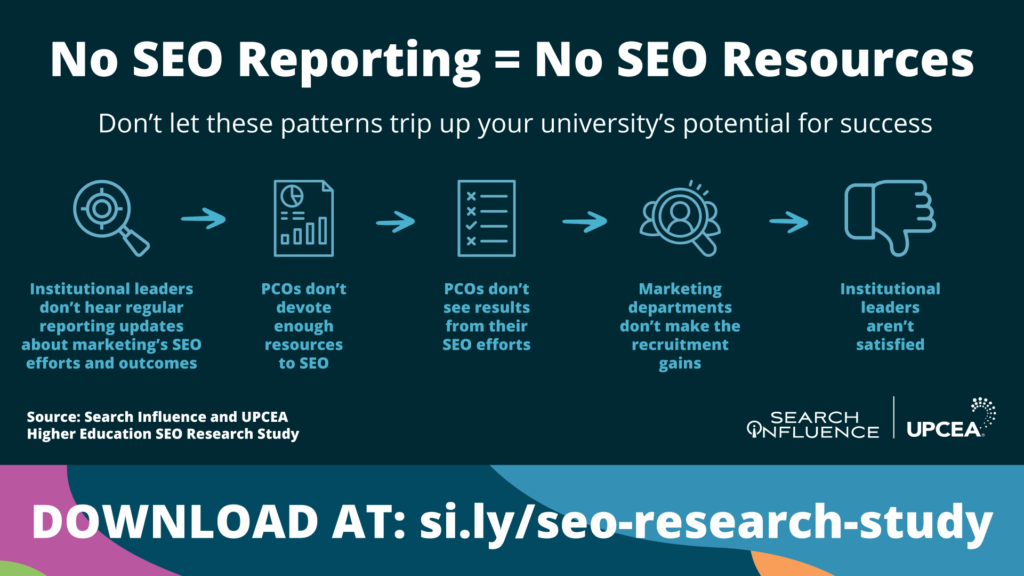
    The data indicates that 62% of higher education institutional leaders want reporting on SEO metrics, but just 31% receive regular updates. This, and other data points in the study, highlight a self-perpetuating pattern:

    Institutional leaders don’t hear regular reporting updates about marketing’s SEO efforts and outcomes. Therefore, they don’t push for or support SEO resources, and, consequently, they don’t get SEO results. 

    No SEO reporting means no SEO resources for your business

    Greater Higher Education SEO Expertise Could Improve Results
    Angie Scott, Co-Founder and COO at Search Influence

    Our Co-Founder and COO Angie Scott, in addition to her financed-focus, heads our HR operations — meaning she’s in tune with the skills and capabilities needed to perform a job well.

    Angie found it interesting that institutions graded their SEO capabilities an average of 3.5 on a scale of 1 to 5, where a 1 is not very capable and 5 is extremely capable.

    She wondered: Wouldn’t you want something this important performed at an expert level?

    What skills are needed to perform higher education SEO effectively?

    • Research and analytical abilities
    • Technical website development expertise
    • Copywriting
    • Graphic design
    • Public relations/media outreach
    • Strategic thinking and creative problem solving

    The skills needed to perform SEO well in the higher education industry are not likely to be found in one single individual, or even two. Beyond having the baseline skill set of each, higher education SEO marketing experts must be able to stay up-to-date with trends and work closely with evolving technology to keep their strategies ahead of the curve.

    Executing SEO Tactics Without a Strategy Is a Missed Opportunity
    Will Scott, Co-Founder and CEO at Search Influence 

    Co-Founder and CEO Will Scott pointed out that, although many institutions are doing tactics that are part of SEO, they don’t perform them strategically. This means they miss valuable opportunities for the tactics to have the greatest impact on enrollment success.

    Others don’t necessarily perform SEO tactics with intention. This was evident in the study from the assessment of 100 websites, in which universities had an average score of 58.6. Less than half (47%) of UPCEA members had a score above 60.

    What does it look like to perform SEO strategically in higher education?

    1. Targeted keywords per program/degree/certificate page (based on research)
    2. Content plan for each offering (pillar pages with cluster content, including related blog posts, videos, and/or graphics)
    3. Linkbuilding plan for each targeted program or degree
    4. Cadence for monitoring technical site health
    5. Identified key performance indicators (KPIs) and reporting plan

    Learn more about how to apply these strategies and tactics in the replay of our webinar, UPCEA Higher Education SEO Research Study: How to Impact Your Enrollment.

    SEO Is Critical to Reach the New Adult Learner
    Jim Fong, Chief Research Officer at UPCEA

    Last but not least, let’s summarize the takeaways from UPCEA’s Chief Research Officer Jim Fong. If you are in higher education marketing and haven’t yet heard of or from Jim, you’re in for a treat. He’s a legend and a treasure trove of knowledge and insight for higher education leaders and marketers alike.

    Jim has heavily researched and analyzed changing demographics and how that ties into the need for colleges and universities to focus and lean into new offerings for the adult learner. He also speaks to unique challenges in the fact that the new adult learner is much younger than some may picture, can be harder to reach, and, is much savvier than students of the prior generation. The new adult learner spends more time researching educational opportunities in their evaluation process — which includes using search engines to look at their options. (Read more about Jim’s perspective in his blog post, Greeting the Student of the Future on their Terms at the Digital Storefront.)

    Jim’s preface to the full higher education research study prescribes four clear actions and observations:

    1. PCO units need to abandon legacy and focus more on the new adult learner in the design of their websites.
    2. There needs to be more emphasis on search engine optimization, as opposed to locked-in institutional templates and over-design and creativity.
    3. Metrics should play a bigger part in the continuous improvement and planning process.
    4. Institutions need to have a clear strategy for their websites and how to integrate the needs of the adult learner into the process.

    The data is clear — SEO is an underleveraged tactic for universities to boost enrollments.

    To me, this is very exciting. While many may think “we’re doing everything already,” this data shows that a lot actually aren’t. And that translates to new ways to reel in even more students that you may not have already explored in your other enrollment marketing efforts.

    To view all of the data from the three-part study, download our Higher Education SEO Research Report. There’s also a webinar replay available, which gives you highlights of the study in addition to best practices on how to address the opportunities in our findings.

    You can also learn even more about higher education digital advertising and marketing services with Search Influence here.

  • Search Influence Doubles Down on Talent: Recognizing Two Promotions Worth Celebrating

    Search Influence Doubles Down on Talent: Recognizing Two Promotions Worth Celebrating

    Search Influence, a New Orleans-based digital marketing agency, recognized the hard work and dedication of two of its employees, Lindsey Schultz and Shira Pinsker, by promoting them to new roles within the company.

    shira pinskerShira Pinsker Promoted to Senior Marketing Manager

    Shira Pinsker joined Search Influence as the Product and Marketing Manager in early 2020 and was instrumental in guiding marketing efforts through the uncertainty of the pandemic. With more than 15 years of experience in marketing and communications, her wealth of knowledge, creativity, and strategic thinking directly impacts the agency’s marketing success. In the last year, Shira spearheaded the launch of a two-year partnership between Search Influence and UPCEA (University Professional and Continuing Education Association) to grow Search Influence’s impact as a digital marketing agency within higher education.

    In her new role as Senior Marketing Manager, Shira Pinsker will oversee efforts to broaden and deepen the marketing strategy within Search Influence’s key markets of higher education, medical and health, and tourism and hospitality. Using her expertise in branding, messaging, and strategy, Shira will continue to communicate the value of digital marketing to prospective clients in order to help them optimize their potential.

    Shira is excited to take on this new role and looks forward to using her skills and experience to help both Search Influence and our clients succeed.

    Lindsey SchultzLindsey Schultz Promoted to Digital Advertising Analyst

    Lindsey Schultz joined Search Influence as a Digital Advertising Coordinator in 2021 and quickly became an integral part of the team. Her problem-solving skills and keen eye for detail have become an incredible asset to the company, and she consistently demonstrates a collaborative and enthusiastic attitude with both clients and colleagues.

    As a result of her hunger and dedication, Lindsey was promoted to Digital Advertising Analyst.

    As a Digital Advertising Analyst, Lindsey will strategize and optimize the digital advertising campaigns for Search Influence clients. She will also work with the rest of the team to ensure campaigns meet or exceed their goals and that clients receive the best possible return on their investment.

    Lindsey’s analytical skills and attention to detail make her well-suited for this role, and she looks forward to taking on new challenges while continuing to deliver outstanding results for her clients.

    Lindsey and Shira are excellent examples of the talent and dedication that exist within the Search Influence team, and their promotions are well-deserved recognition of their hard work. Search Influence is proud to have such talented individuals on the team, and we’re excited to see what they will accomplish in their new roles.

    Congratulations to Lindsey and Shira on their well-earned promotions!

    Interested in joining the Search Influence team? Check out our open positions!

  • Improving SEO In Higher Education Must Be a Priority: Insights From UPCEA Webinar

    Improving SEO In Higher Education Must Be a Priority: Insights From UPCEA Webinar

    Priority: Improving SEO in Higher Education

    Search Influence joined the UPCEA team, Jim Fong and Bruce Etter, as they unveiled the highly anticipated UPCEA Higher Education SEO Research Study in a lively and informative webinar.

    We’re grateful for the engaged audience, who brought us compelling questions. It was obvious from what they asked that we had some tech-savvy folks attending.

    UPCEA Higher Ed SEO research study webinar: top takeaways to grow your enrollment

    For those who have yet to dive into the study, we’ve got you covered with a summary of the key takeaways:

    • Marketing and institutional leaders see SEO as foundational but admit their PCO units lack SEO strategy.
    • Institutional leadership often lacks reporting.
    • UPCEA members performed poorly in an SEO audit.

    In fact, in the SEO readiness audit of 100 random UPCEA member institutions, only 19% had an excelling score.

    And to pre-answer a question some may ask, this is an UPCEA metric. Search Influence collaborated on the factors, but the grades came from the research itself.

    Why Is SEO Important in Higher Education?

    From our discussions with higher ed marketing leaders, individual PCO units spend significant dollars on paid online advertising and next to nothing on SEO.

    The ROI of SEO is obvious to anyone paying for paid search. Keywords in search can inform your SEO strategy. If you’re paying for it and you don’t rank #1, that’s an opportunity.

    Any department that has in-house web management, social media, or content creation staff has the makings of an SEO team already in place.

    In short, SEO is foundational — most know it, and few are doing it.

    Higher Education SEO Questions From the Audience

    The following questions came directly from the audience in the webinar Q&A section. We clearly had a smart audience and appreciated all the great questions.

    Q: Which other tools do you use for keywords?

    In the webinar, we talked about how we used Semrush data for part of the SEO audit done by the UPCEA team, hence the “other tools.”

    A: One of the best “keyword” tools any organization can use — especially resource-strapped higher ed marketers — is Google Search Console. GSC gives you the ability to see page-by-page and query-by-query where your opportunity is.

    It also shows you what Google thinks you’re relevant for already, which can identify a shorter path to execution.

    In addition to GSC, at Search Influence, we rely on a few tools depending on the use case:

    • Ahrefs – Great overall tool, with an especially good view of page and subdomain level authority
    • Semrush – Another great tool overall, with reporting and site auditing capabilities
    • Surfer SEO – This one is newer in our toolbox. It’s not a pure “Keyword” tool. It’s actually an optimization tool that can help identify content clusters for building topical authority, as well as auditing and outlining SEO optimization of individual pages.

    Q: How do you navigate building backlinks without buying backlinks in a way that Google “disapproves” of?

    Google says, “Any links that are intended to manipulate rankings in Google Search results may be considered link spam.”

    That doesn’t mean that all “backlinks” are bad. It just means you should look for good links. What is a good backlink? A good backlink is one that is relevant, directional, and on a site likely to drive real users.

    Just because you ask for it doesn’t make it bad. It’s about intent.

    Some easy opportunities:

    • Local citations, such as directory listings
    • Other schools within your parent university or college
    • Institutions you collaborate with in real life
    • Local organizations with which you support or partner

    Q: Are internal links counted as backlinks?

    No. They’re internal links, which are awesome, too.

    There are a bunch of great things about internal links:

    • You get to control the anchor text used.
    • They can help to reinforce topical authority, e.g.:
      • You have portfolio pages
        • Which have program pages
          • Who have individual courses and
          • Instructors and
          • Resources and
          • Etc.
    • They’re navigational — in other words, they support the student journey, moving prospects down the funnel toward their eventual application.

    Photo of colorful books stacked on top of one another

    Q: Advice on structuring some complete revision of websites? Would you recommend program by program, or another way?

    This is a classic “it depends” kind of situation. From a business and organizational perspective, what matters most?

    Is it most important to categorize by type, e.g., on-campus, hybrid, certificate, non-degree, etc.?

    Or by program, e.g., homeland security, human resources, organizational management, etc.?

    Once you make that decision, stick to it, build your silos — but not too deep — and think about reasonable interlinking between them.

    Q: From the user side, have you noticed any impact on CTR with truncated title tags?

    Not really, but it’s not something we’ve studied.

    Q: Any concern with title tags and truncating on Google?

    No. In our opinion, this is an opportunity. It’s Google telling you what great looks like. What we’ve seen is that these are most often picked up from some on-site content.

    If you find it happening, consider recrafting your title tag and your leading H1 to match. That should give the machine what it wants.

    Q: Any advice on how to shift the narrative that SEO is free or should be very low cost and doesn’t need as much investment?

    Echoing what I said above:
    The ROI of SEO is obvious to anyone paying for paid search. Keywords in search can inform your SEO strategy. If you’re paying for it and you don’t rank #1, that’s an opportunity.

    The keyword ranking tool we use just came out with a new “forecasting” feature. It allows you to build a keyword group, assign dollar value and conversion rate, and see the business impact of moving from position X to position Y over time.

    We looked at paid search accounts, grabbed keywords we know to convert, and built forecasts. The impact, in many cases, is staggeringly obvious.

    Reach out and we can run a limited version for you.

    Conclusion

    The UPCEA Higher Education SEO Research Study shed light on the critical need for SEO in PCO marketing and beyond. Many, perhaps most, institutions have a lot of room for growth and optimization.

    It’s crucial for universities to recognize the value that SEO can bring to their marketing and seize the opportunity to be present for all their prospective students.

    The webinar showcased that, while leaders acknowledge SEO as a foundational element, there’s a gap in implementing effective strategies within PCO units. Additionally, the need for improved reporting for institutional decision-making and better SEO performance among UPCEA members was clear.

    It’s time for universities to embrace SEO and reap the benefits of higher visibility, engagement, and growth.

    We encourage you to join the conversation, share your own experiences, and learn from others. Feel free to comment below to keep the conversation going.

    If you’re looking for expert guidance to help you navigate the world of SEO, don’t hesitate to get in touch with Search Influence.

    We’re here to support you in optimizing the potential of your organization.

    Images

    Books

  • Why Is Google Traffic Down In April 2023?

    Why Is Google Traffic Down In April 2023?

    Update from the “Correlation is not Causation” file.

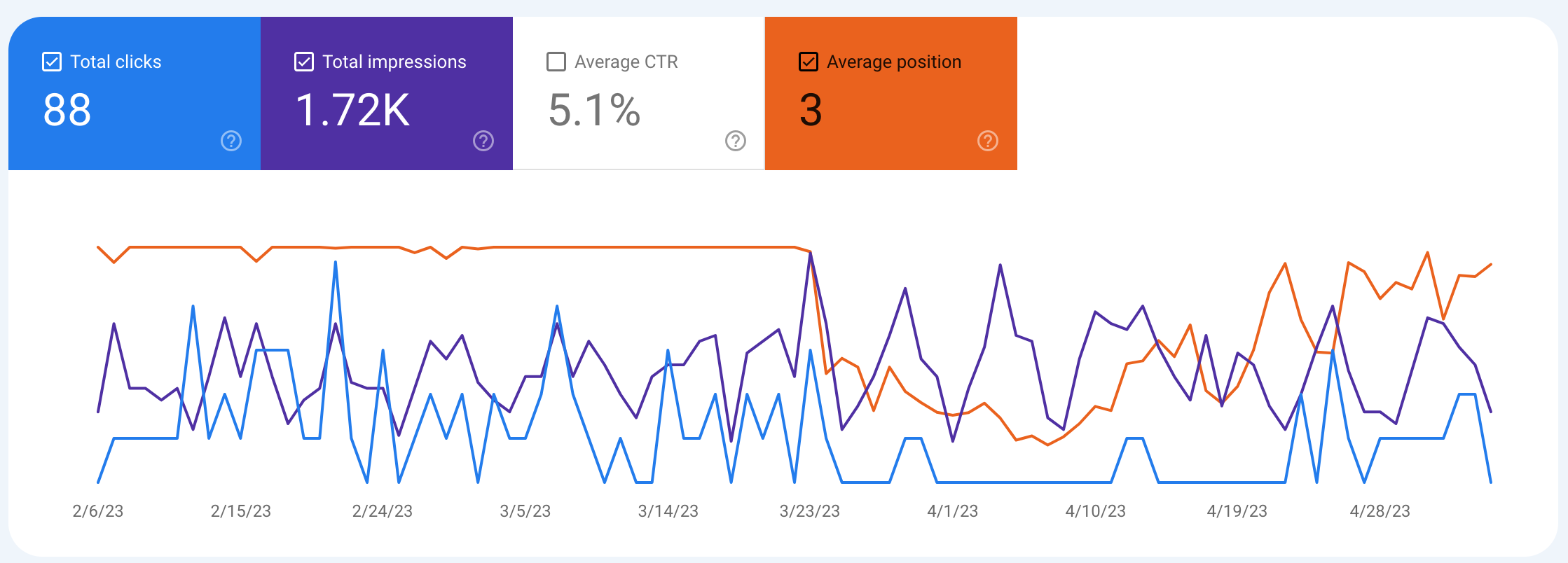
    While investigating more, I noticed this in Google Search Console. A client who has historically had consistent #1 ranking for a specific phrase showed significant volatility in the last month. That volatility roughly coincides with the finalization of the March Core Update.

    Maybe March Core Update Impact - Correlation is not Causation


    Original Post: May 5th, 2023

    On a monthly basis, we look at various data for some, not all, clients to include in what we call “Highlights and Insights,” or H&I as I like to call them.

    Among the things we look at are:

    • Traffic
    • Ranking
    • Pages getting traffic
    • Recent work (i.e., deliverables)
    • SMART goals, if applicable

    I have personal responsibility for the SEO strategy of a small number of clients. I know it’s funny — the CEO is doing SEO strategy. But, with maternity leaves, hiring, research and development, and personal relationships, it’s important to me.

    This means I’m responsible for three clients’ H&I. I was surprised as I was preparing them to see that their April 2023 Google organic and paid search traffic is universally down month-over-month.

    So I wondered, is it me? Are we doing something wrong? But, no.

    It turns out that all of them have seen increases in ranking, both in our keyword tools and in Google Search Console. We’re also seeing individual pages we’ve been optimizing or promoting get more prominence relative to the site as a whole.

    I feel a little bit vindicated.

    So I took my confusion to Twitter.

    The first to chime in was Brett Tabke of Pubcon fame.

    Next was Susan Staupe, LocalU Superfan and a great marketer in her own right.

    And I was reminded of Cindy Krum’s presentation at the recent Zenith Conference in Duluth, where she talked about Google features pushing her client out of the entire space above the fold during the World Cup for Football (aka Soccer) related searches.

    So, of course, I mentioned that, and Cindy contributed.

    And finally, though he gave a “hard to say” on this one, Barry Schwartz suggests this may be related to the April 2023 Reviews Update:

    I previously embedded a post to an unconfirmed, and Barry believes unrelated more recent update.

    Thanks, Barry for setting me straight.

    I’m glad to have some corroboration of our experience and validation from industry experts.

    But what else could it be?

    Maybe, as Greg Sterling suggests in Near Memo, Bing is winning.

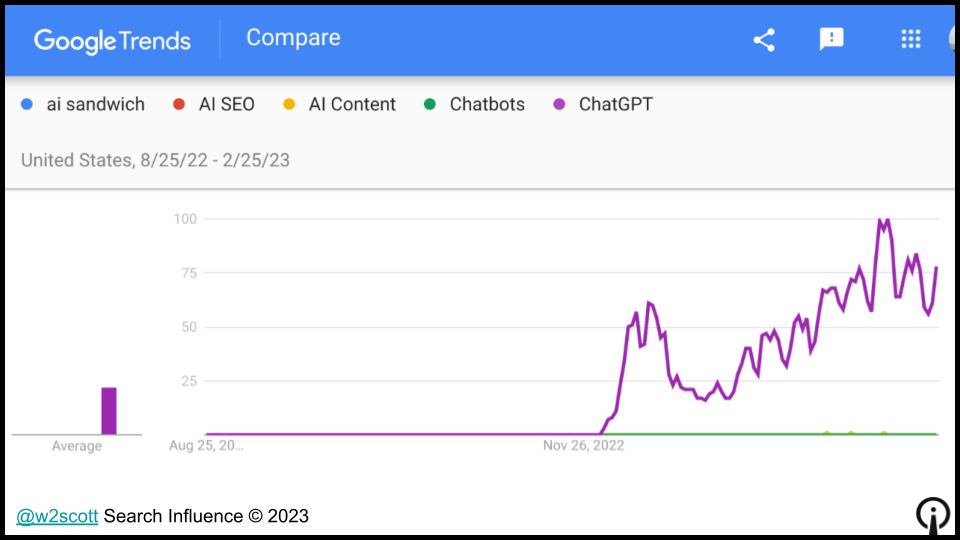
    Or perhaps, for “I’m wondering” kind of questions people are going to ChatGPT.

    The masses know about ChatGPT — the headlines are everywhere. And as I showed in my AI content presentation at Pubcon and Zenith, Google Trends data demonstrates that ChatGPT is in the consciousness of everyday Americans.

    Is ChatGPT Eating Google's Lunch?

    Who knows?

    I’m just glad it’s not just us, and I’m hopeful Google gets its act together for the sake of all those businesses who rely on that traffic.

    And our outlier — because there’s always one — Lawn and Garden. It’s springtime, you know.

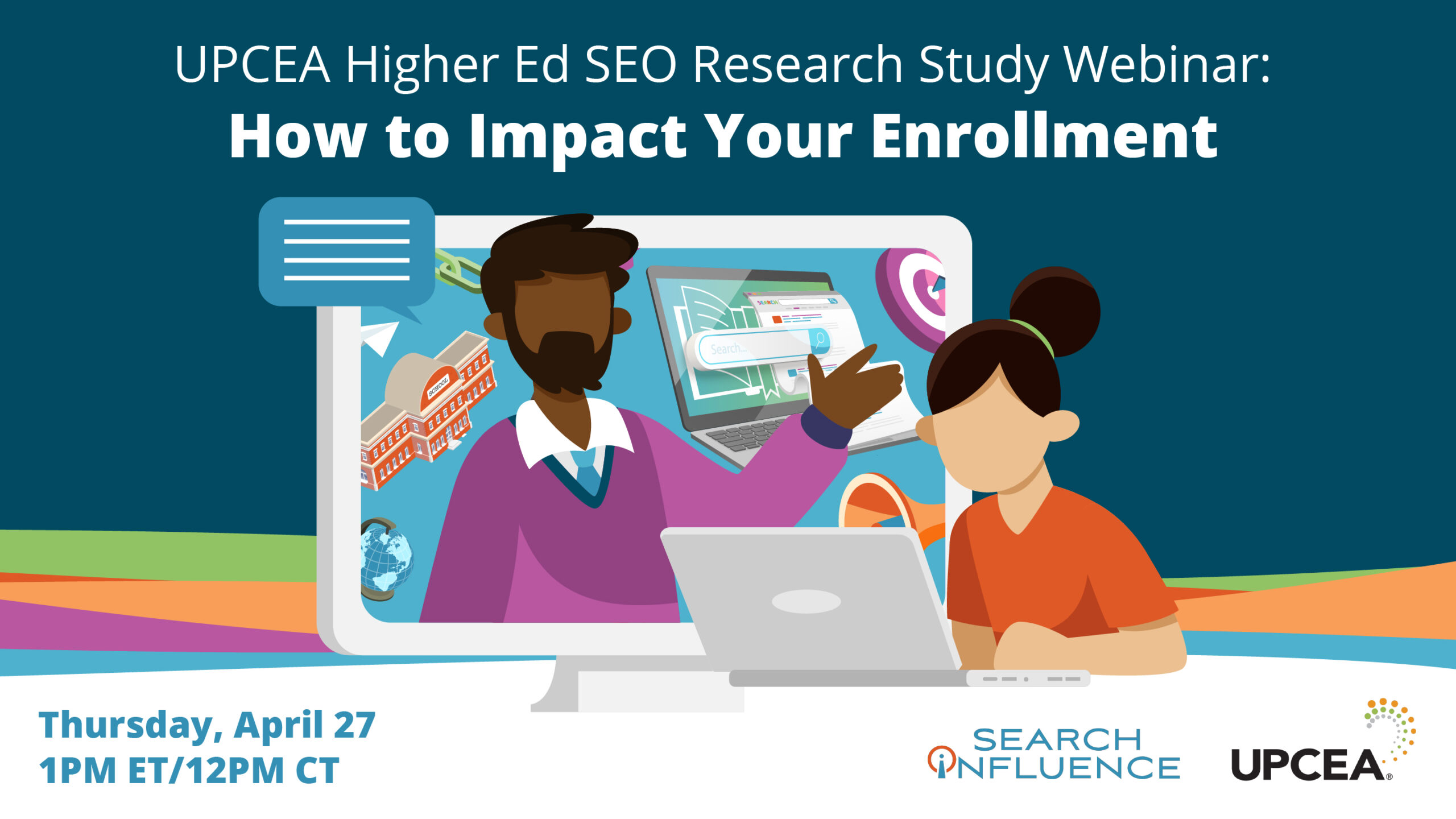
  • Search Influence and UPCEA Present, “Higher Education SEO Research Study – How to Impact Your Enrollment”

    UPCEA Research Webinar

    About the Webinar:

    Watch the recording here.

    Join us for a discussion of the latest findings from UPCEA’s Center for Research and Strategy led by UPCEA Chief Research Officer Jim Fong, Senior Director of Research and Consulting Bruce Etter, and UPCEA Platinum Partner Search Influence.

    UPCEA and Search Influence collaborated on a three-part higher education research study to understand institutional and marketing leaders’ perspectives on search engine optimization (SEO) and evaluate the SEO readiness of professional, continuing, and online education (PCO) units.

    The research indicates that while higher education marketing leaders and institutional leaders value SEO as a tactic, 51% of respondents said that their unit does not have an established search engine optimization plan or strategy.

    The webinar will cover how universities like yours prioritize SEO and how peer websites rank. The data reveals good news: higher education marketers have an underutilized tactic that will make a significant impact on their recruitment ecosystem.

    Learning Objectives for the Higher Education Webinar:

    • The most significant findings from the research study
    • An understanding of the study’s implications on recruitment strategies
    • Recommendations for leveraging this critical opportunity to drive more students to your programs
  • A Quick Intro to AI SEO

    Key Insights:

    • In the past few months, artificial intelligence (AI) has transformed the way marketers think about search engine optimization (SEO).
    • From content creation and optimization to keyword research and link building, AI’s many use cases can benefit any SEO strategy — yours included.
    • These tools can be a boon for SEO. We must exercise care, however, to assure we’re presenting accurate information. The output of AI tools is not true “subject matter expertise,” but instead a statistical reckoning of what word comes next.

    The age of AI-powered advertising is here, and it’s here to stay.

    Today, 64% of marketing businesses have already adopted AI tools into their strategy, with that number on the rise as more YouTube tutorials, crash-course articles, and emerging tools pitch new, game-changing use cases by the minute.

    Among its impressive list of functions, however, AI might just take the cake in conquering the art and science of the one thing digital marketers swear by most: search engine optimization.

    In this post, we’ll look at some of the most revolutionary ways you can use AI to enhance your SEO strategy and rank higher in the search results — all in half the time and effort you’re spending now.

    So, What Exactly Is AI SEO?

    AI-based SEO involves the usage of artificial intelligence tools to help improve a website’s organic performance in search results.

    Trained on massive data sets, these Large Language Model (LLM) AI tools can support your SEO strategy by analyzing your website, offering insight into not only what you should improve but how you can improve it, and then doing most — if not all — of the recommended work for you.

    AI SEO

    It’s no secret that SEO can be complex, and the effort it takes to see impactful results can bog down even the most seasoned strategists. But now, apps like ChatGPT are automating the nitty-gritty tasks that go into climbing search rankings, like keyword research, on-page content optimizations, and metadata generation.

    Between the headache spared from hours spent in Google Search Console to the writer’s block solution to crafting compelling page titles, the pros of using AI for SEO are unlike anything the industry has seen before, and they’ve only just begun.

    The Benefits of Using AI for SEO

    The power of AI technology is hitting certain industries the hardest, with online marketing and search engine optimization being at the top of the list.

    What does this mean for you?

    Hopping on the AI train doesn’t mean caving to the bandwagon. It means adapting to what will eventually become an industry standard and staying competitive at the same time.

    You may be left behind if you fail to embrace this sweeping change. But the good news is it comes with a laundry list of benefits, with some including:

    • Increased efficiency: AI can automate much of the time-consuming work involved in SEO, freeing up your team to focus on more strategic tasks.
    • Improved accuracy: Machine learning can analyze large amounts of data and identify trends on your site that would be difficult for humans to find. This ability can help you make more informed decisions about how to improve your website’s SEO.
      • Caveat: When it doesn’t know the real answer, ChatGPT and other LLM-trained AI tools can “hallucinate,” making up very convincing-sounding wrong answers. So, be sure to verify any “facts.”
    • Enhanced personalization: AI can be used to personalize the user experience on a website, which can lead to increased engagement and conversions.

    It’s important to keep in mind that, although AI can act as a plus-one to your team, it can never replace the level of quality assurance that comes with the human touch. Today, there’s still a need for strategists and creatives to prompt the machine and edit the output to make sure it’s accurate and reflects your values, voice, and tone.

    This idea of the human prompt – AI output – human edit is referred to as the AI Sandwich.

    AI can significantly improve and streamline your efforts, especially if you do your homework to find the proper tool and use it the right way.

    How to Choose an AI SEO Tool

    Once ChatGPT broke waves and grabbed the world by storm in November 2022, countless tech companies started the race to create the perfect platform that wins the busy marketer’s time and dollar.

    AI Chatbot

    With the sea of options currently available (and more to come), there’s a good chance you’ll find that the hunt for the right AI SEO tool isn’t so cut-and-dry. Some platforms will have overlapping capabilities, others will have exclusive features, and all will claim to be the best of their kind.

    Just because the market is highly saturated, however, doesn’t mean you’re bound to a continuous cycle of trial and error until you get it right. Before you invest any significant budget, time, or trust into an AI SEO tool, you’ll want to consider:

    • The features and functionality of the tool
    • The price of the tool and the required length of subscription
    • The reputation of the company that developed the tool
    • The reviews of other users and industry leaders

    Many businesses and marketers may opt to take the free route, turning to ChatGPT’s basic version to satisfy their SEO needs. Although the conversational chatbot may be a relatively safe starter bet, accessing its latest, most powerful language model, GPT-4, comes with a monthly subscription fee of $20.

    Most other quality platforms, like Jasper and Frase, will also require dishing out some dollars. As with any tool, the cost is quickly justifiable if they save you time and money.

    Keep in mind that not all AI tools are created equal. Some will have significant limitations or steep prices, so be sure to remain critical while testing your options and only settle once you’ve verified your choice(s) work with your SEO game plan.

    AI tools

    How to Use AI to Step Up Your SEO Game

    After choosing an AI SEO tool, it’s time to put your platform to work and usher in the results you’re looking for.

    Write and optimize your content with ease

    Writing winning content and giving it a longer shelf life just got a whole lot easier with a little help from AI and machine learning.

    Enter your topic, keywords, URL, and just about any other instruction into an AI-powered content creator tool, and you’ll get an optimized output at lightning speed that’s as competitive as it is time-efficient.

    And, if you’re just trying to find your muse, you can ask ChatGPT to recommend titles, headlines, and even outlines to get your started.

    Find the right keywords

    In the land of search engine optimization, your keywords are one of your biggest allies. But if you don’t have an experienced SEO company aiding your strategy, determining the right targeted searches can feel like a losing battle.

    Your saving grace? A list of keyword ideas, segmented by search intent, sorted by difficulty, and fueled by search ranking success — all AI-generated with just a few keystrokes.

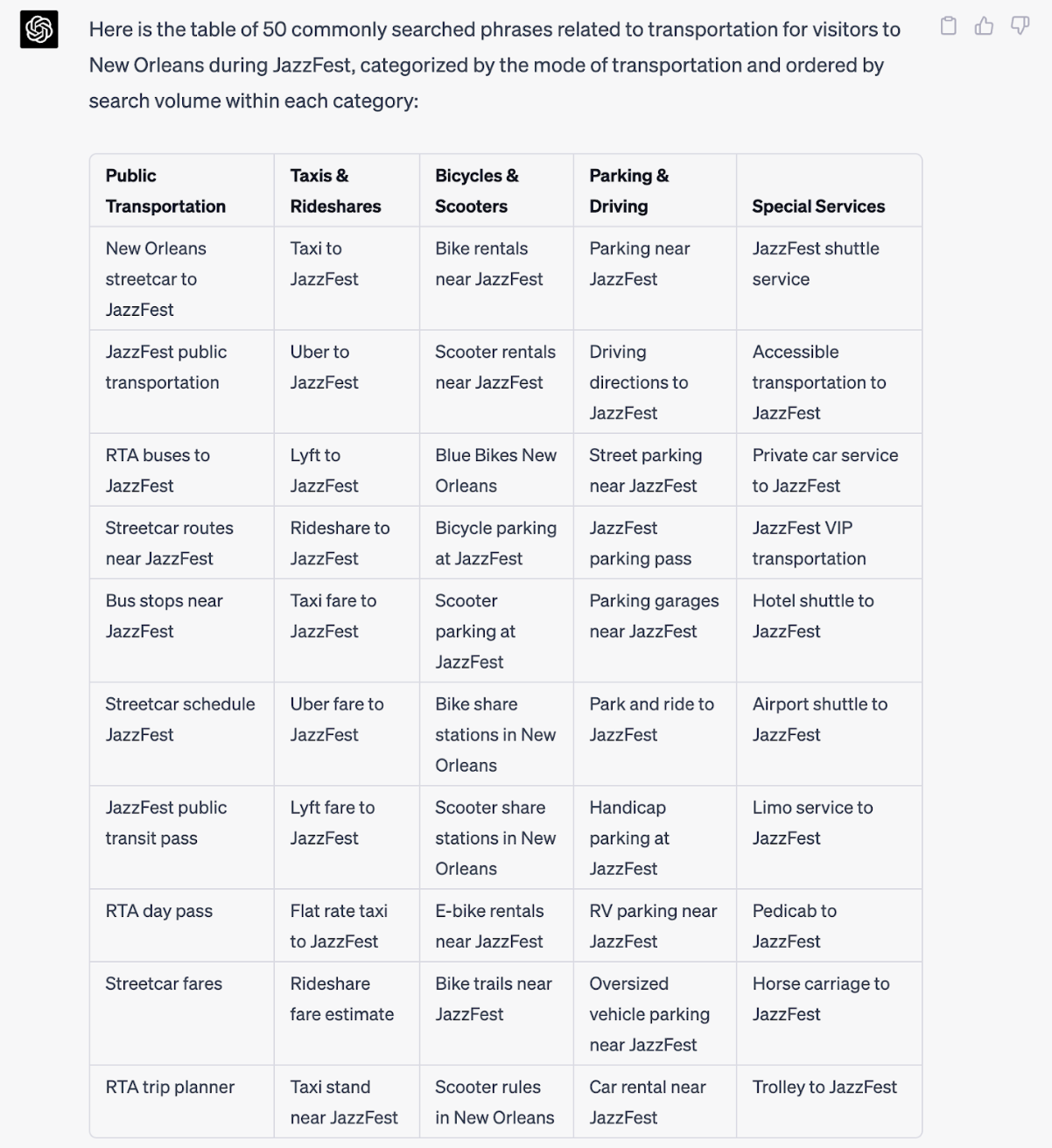
    And, ChatGPT can even put them in a nicely organized table for you.
    ChatGPT data organization

    Build your links up

    66.31% of pages on the Internet have no backlinks. If you’re in that number of sites with no links pointing back to you, you’re missing out on valuable opportunities to build your authority in the eyes of Google and benefit your SEO.

    Fortunately, ChatGPT and its machine-learning friends can help you with link building by:

    • Analyzing the topical focus of your current content
    • Composing a list of on-topic sites you might reach out to
    • Generating a great email to the webmaster to make a connection

    What Are the Risks of AI for SEO and Business?

    A chainsaw is a great tool if you need to chop down a tree. If you find yourself trapped in a shed in the countryside, perhaps not so much.

    AI takeover

    We are already seeing AI-generated content farms clogging up the pipes of the internet in ways human content never could. And many companies are starting to think of all the ways they can use AI to cut costs.

    Dropbox recently announced significant layoffs, citing AI as both an opportunity and a threat for competitive impact.

    ChatGPT and the other tools spawned by use of the OpenAI API are only a few months old, and there’s now ways to predict their ultimate impact. If you’re concerned your content or the content you’re getting from contractors are going to trip up that AI filter (not a real thing, by the way), there are tools to help you check the likelihood of AI. Beware, of course, because false-positives happen, so you don’t want to base hiring, firing, or disciplinary decisions on their output.

    At Search Influence, we’re cautiously embracing the opportunity to enhance our existing processes. We are reluctant, however, to go all in given the potential risks.

    Search Influence in New Orleans: SEO-Proficient, AI-Curious

    When used with care, artificial intelligence has the potential to improve SEO outcomes. It seems everyone from small startups to tech giants are turning to this new way of bringing in business.

    As Uncle Ben says in Spiderman, “With great power comes great responsibility.”

    As a New Orleans digital marketing agency, Search Influence embraces what the future of AI holds. We’re using it to get results for our clients across industries. Whether it’s to inform our keyword mappings or help optimize our blog posts, we believe in the power of AI-based SEO and doing our part to welcome this new era of advertising — the right way.

    Curious about where AI SEO will find its place in your marketing strategy? Let’s start talking about it together.