Blog

  • Microformats – Web 3.0? Really?

    Microformats, an extension of the concept of the “semantic web,” are renewed again for SEO. While they’ve been around since at least 2005, microformats use XHTML to build upon existing standards to make it easier for people to be able to use normal-looking content and for search engines and other inhuman web site visitors to parse information to connect disparate pages like Google Places and review sites.

    Just Semantics

    Semantic web design is nothing new to the SEO community. We know the difference between span style=font-size:30px and an H1 tag or strong and b, and we’re clear that Google and other spiders read the two tags differently. But with microformats, the intent is not to (necessarily) change the presentation along with the meaning, as most HTML tags do, but it integrate metadata for spiders and other programs.

    Three microformats are clearly worthwhile for the search marketing community: rel=nofollow, hCard, and hReview. There are other microformats that are for events, syndication, or denoting a more personal relationship between people, but these are of particular, niche uses. Most microformats can be tested using the Google Rich Snippet Tester, which will also alert you to some of Google’s peculiarities about microformats.

    rel=“nofollow”

    Nofollow is an “elemental microformat,” one that is a “minimal solution to a single problem,” that is pervasive throughout the web thanks to Google’s endorsement from 2005. Every blog owner knows about nofollow. It’s the key to making comment spam not hurt your site. Put simply, making a link be nofollow-ed keeps your “link juice” from reaching that site, effectively taking away your endorsement of the link.

    While it was a common practice to “sculpt” your link profile using nofollow, 2009 brought about an announcement from none other than SEO dominatrix Matt Cutts, changing how nofollow is treated, effectively eliminating sculpting as a highly effective technique.

    Nevertheless, nofollow is a necessary part of any comment or signature system.

    hCard 1.0

    “hCard is a simple, open, distributed format for representing people, companies, organizations, and places, using a 1:1 representation of vCard … properties and values in semantic HTML or XHTML.” Uhhh… What?

    vCard is the electronic equivalent of a business card, saved in a .vcf file. It’s a file you send or have for download that includes information like name, company, telephone, or even logo and photo. hCard puts that kind of functionality onto a website using a “compound microformat,” allowing spiders and even some browsers to parse out the information.

    hCards can be downloaded directly to a vCard usingbookmarklets, on-page links or browser plugins for Safari, Firefox, Chrome, or IE. This could be the new way to give someone you’re meeting for the first time your card.

    hReview 0.3

    hReview is similar to hCard, described as “a simple, open, distributed format, suitable for embedding reviews (of products, services, businesses, events, etc.) in HTML, XHTML, Atom, RSS, and arbitrary XML.” hReview works in the same way as hCard, using classes to mark text as metadata. However, fields in hReview can be hidden for better presentation, using a class of “value-title” and putting the content in a title attribute.

    hReview isn’t as immediately applicable as hCard, though it can connect reviews with a places page. We’re currently testing how best to do this, and what it really takes to make that connection — let us know if you’ve found anything!

    Web 3.0

    Is this really the next step in the Internet’s evolution? Certainly, the term Web 2.0 has been bandied about, referring to the social sphere, where everyone networks with and talks to random people, trying to raise awareness of their pet ideas and projects. But with the “death” of the first round of social networks like Friendster and MySpace, and the utter ubiquity of others like Twitter and Facebook, could the web be going through its next iteration by making every page be “semantic” to better provide meta-information?

    Well, the social web was just the effective monetization of old ideas like BBSes, forums, and chatrooms; similarly, the semantic web is just further specializing the strides in separating presentation from content that began with the deprecation of the <font> tag with the rise of CSS.

    Are microformats the future of the web? Are you using them right now?
  • Yellow Pages & SEO – Print Dollars for Internet Dimes

    Picture of The Pets.com Sock Puppet on Flickr
    The Pets.com Sock Puppet

    I was having a conversation today with one of our clients for whom we do Yellow Pages SEO, and I swear I was transported back to the year 2000. It’s amazing to me that more than a decade after Yellow Pages companies first started getting their feet wet on the internet, they still don’t quite get it.

    Trading print dollars for Internet dimes,” they say.

    But it doesn’t have to be that way. The online opportunities are immense for well established brands like the Yellow Pages for SEO, websites, paid search advertising, social media. With feet on the street combined with the power of SEO, the Yellow Pages, if they could ever get their act together, would eat our lunch.

    Some of you may not be aware of my history. In fact, I’ll bet that the majority of you aren’t aware of my history.

    First things first – I’m old. I’m over 40, live my life on the Internet, and I’m an avid user of Social Media. I represent a growing demographic online. And I remember when the Yellow Pages were a valued and viable advertising medium.

    For the first six years of the Internet as we know it, I built websites. I put my first website online in 1994.

    At first it was simple sites for individual clients who thankfully knew less than I did. They must have, because they paid me. And then I built database driven sites used for things like distance learning, e-commerce, digital uploads, and much more functional uses.

    Then I got to lead a team. We cranked out literally 2,500+ websites in the span of two or three years. In fact, we built a very early content management system, and I personally wrote the code for the first CRM I ever worked on. That content management system is actually still running today, believe it or not.

    Oh yeah, that company, it was founded by a guy who got his start in Yellow Pages. In fact, my boss at the time was a visionary. He knew the internet was hurtling toward print media like a meteor. He was just a little ahead of his time.

    Oh Yellow Pages, Wither Goest Thou?
    Oh Yellow Pages, Wither Goest Thou?

    After my boss, later my partner, successfully blew through $1 million with little to show for it, we had to switch gears. We built Yellow Pages online. We took the data files from those old dusty books and turned them into the online Yellow Pages.

    It seemed to us at the time that the best way to transition publishers from print to online was to make an online version of the book that looked just like the Yellow Pages. SEO barely existed in those days. This was pre-Google. Our idea of optimizing for search included renaming the domain name 1A-whatever.com, submitting to directories, and stuffing the keywords meta-tags with anything even vaguely relevant.

    And then came Google.

    We had to figure out how to make those big fat sites that looked like Yellow Pages rank well in Google. And we did it.

    Our team took the Sprint Yellow Pages from 0 to 1 million unique visitors a month in 18 months. We were so good we were actually profitable. And along came another company who, interested in our customers and our profitability, bought our company.

    Yellow Pages companies of the day realized, many as early as the late 90s, that print was dying. They realized that to remain viable businesses they had to take advantage of their one real asset.

    Yellow Pages have feet on the street and long relationships with advertisers. IRL.

    Picture on Flickr: Sellin' Yellow Euro Style
    Sellin' Yellow Euro Style

    So first we sold online Yellow Pages, then we built online Yellow Pages. Yes, that’s right, we sold them before we built them. So what came next for the Yellow Pages? SEO.

    We sold them, we built them, and now we had to get them traffic. And now they’re all hooked. They can’t walk away from the Internet. In some cases it’s about all they’ve got.

    So a decade later, I’m talking to one of our Yellow Pages customers, and he’s got his sales force in the field trading print dollars for Internet dimes.

    If only he’d come to us when he was pricing the product. We could have shown him how Yellow Pages SEO and websites can be profitable. We know from experience that, if done well, our customers trade print dollars for Internet dollars.

    And the Yellow Pages knows how to sell the value! Yellow Pages have been proving the value through call tracking numbers and metrics for decades. But here again, in this “new” medium, they forget what they’re good at.

    My favorite slogan from the Yellow Pages was “making phones ring and doors swing”. With those six words they told the merchant “we’re here to bring you new business”. And they weren’t afraid to prove it.

    These days, the Yellow Pages, SEO, and websites are really just an extension of the old message. With 60% of searches demonstrating some kind of the local intent, it’s still about making phones ring and doors swing.

    Tell me I’m wrong. Tell me Yellow Pages sales reps can’t sell online marketing.

    What’s that sound? Sounds like phones ringing and doors swinging.

    Picture of Dinosaurs and Meteor Never Forget
    Never Forgive, Never Forget The Meteor

    What do you think? Can the dinosaur get out of the way of the meteor?

    Image Credits:

  • Marketers Like Us – How I’ve Learned to Stop Worrying and Love Having No Privacy

    Not too long ago, I was completely ignorant of any tracking on the internet. I thought, like many, that the things I did online were solely known to me and wouldn’t affect anything. I thought that “Private Browsing” really meant that, and that no one else would know or care that I played a bunch of flash games and that I worked in whatever field I did.

    Flash forward to now — I’ve had a whopping year of intensive exposure and training in Internet Marketing: found out what Facebook is really for; why Google might not even find the site I’m looking for; what Google is doing in my status bar, even if I typed in the url; how Google’s ads knew exactly what I typed; that Google’s rankings are always in a state of flux; and even how I like to see the pages I visit. In short, entering this job totally changed how I look at the web.

    And I’m happier for it. Sure, people are always trying to create some kind of “Google is Watching You” zeitgeist, whether through their use of AdBlock and Ghostery, or by bringing up the problems Google’s had with European trade officials, or how much Google’s search results have changed since the last time they noticed. People seem to be concerned that someone’s watching their online habits specifically. But I’m now the person who’s watching, and I know how and why I’m doing it.

    internet privacy
    Is this who's looking at your browsing habits?

    To be fair, everyone who’s “invading” privacy is watching online habits. It’s easy to say it’s on a “macro” level, but it’s harder to convince some people that it’s more like an ant farm than an investigation. For internet marketers, not only is it simply not profitable to look at the individual, but it’s becoming less feasible and less legal to do so.

    Firstly, targeted marketing based on internet behavior isn’t an unregulated free-for-all on your personal information. 2009 brought a proposal from the FTC for seven “Self-Regulatory Principles for Online Behavioral Advertising,” outline in this Interactive Advertising Bureau report. But for this discussion, it’s important to note that the regulations do not affect collection of data “solely for [the website’s] own uses,” or for contextual advertising like Adwords, “as it delivers advertisements based on the content of a Web page, a search query, or a user’s contemporaneous behavior” — the two main ways marketers use your data online.

    What most marketers are concerned with are those non-regulated uses. Google Analytics, found 39 times more than the “average” tracker on the web, is largely for the company’s own use. Google, still the top dog for internet searches, puts its contextual ads right next to its search results — a strong source of revenue for its advertisers.

    Analytics, despite privacy advocates’ concerns, is nothing to be afraid of. It’s only to make sites more responsive to their users. One of the greatest tools for the company owning (or managing) the site is to know how people actually use their site. Certainly, most hosting packages do this in a rudimentary way, but few have the immediate gratification of being able to see the site alongside what links are clicked.

    Internet Privacy
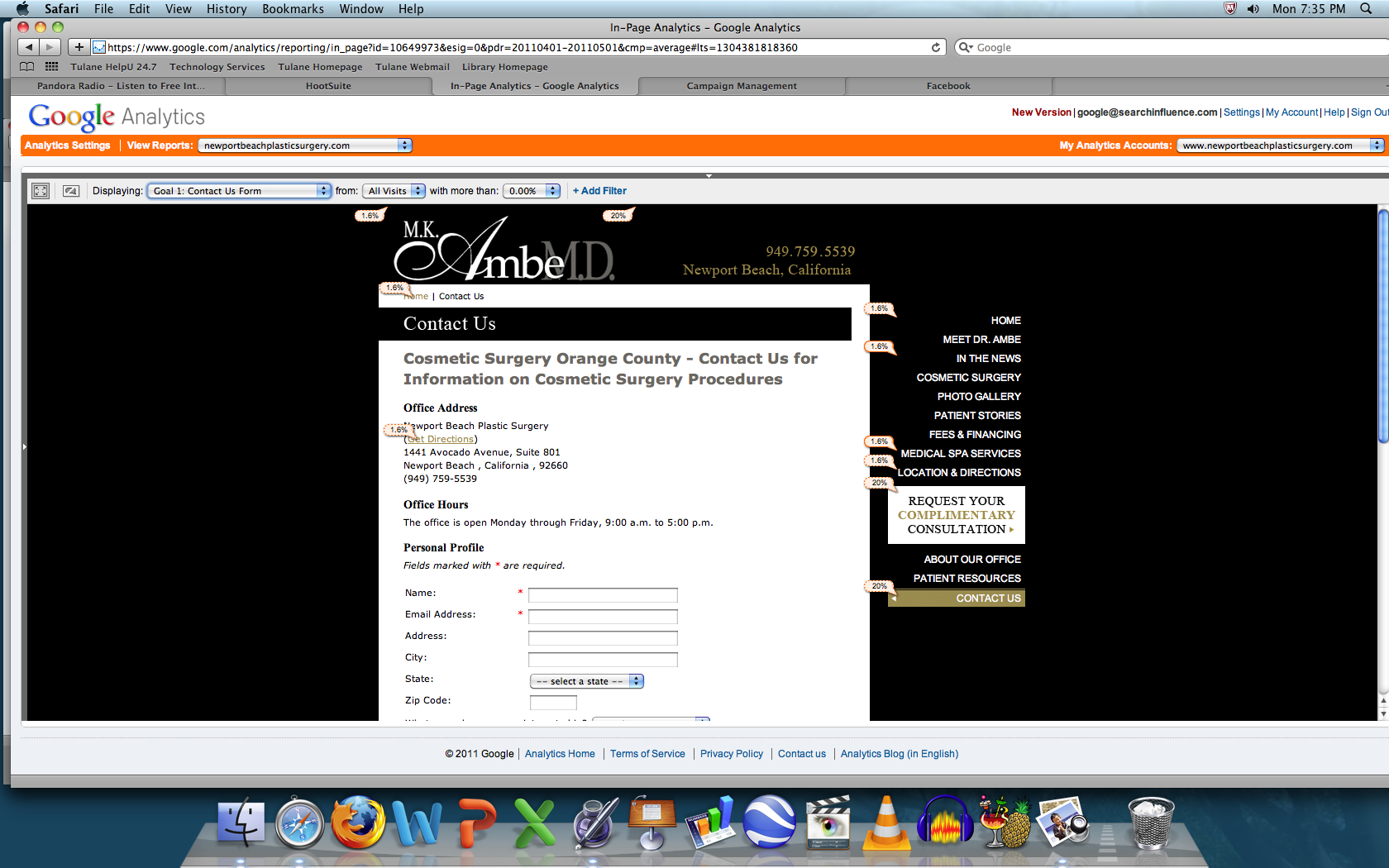
    Conversions from a Contact Page in Analytics
    Internet Privacy
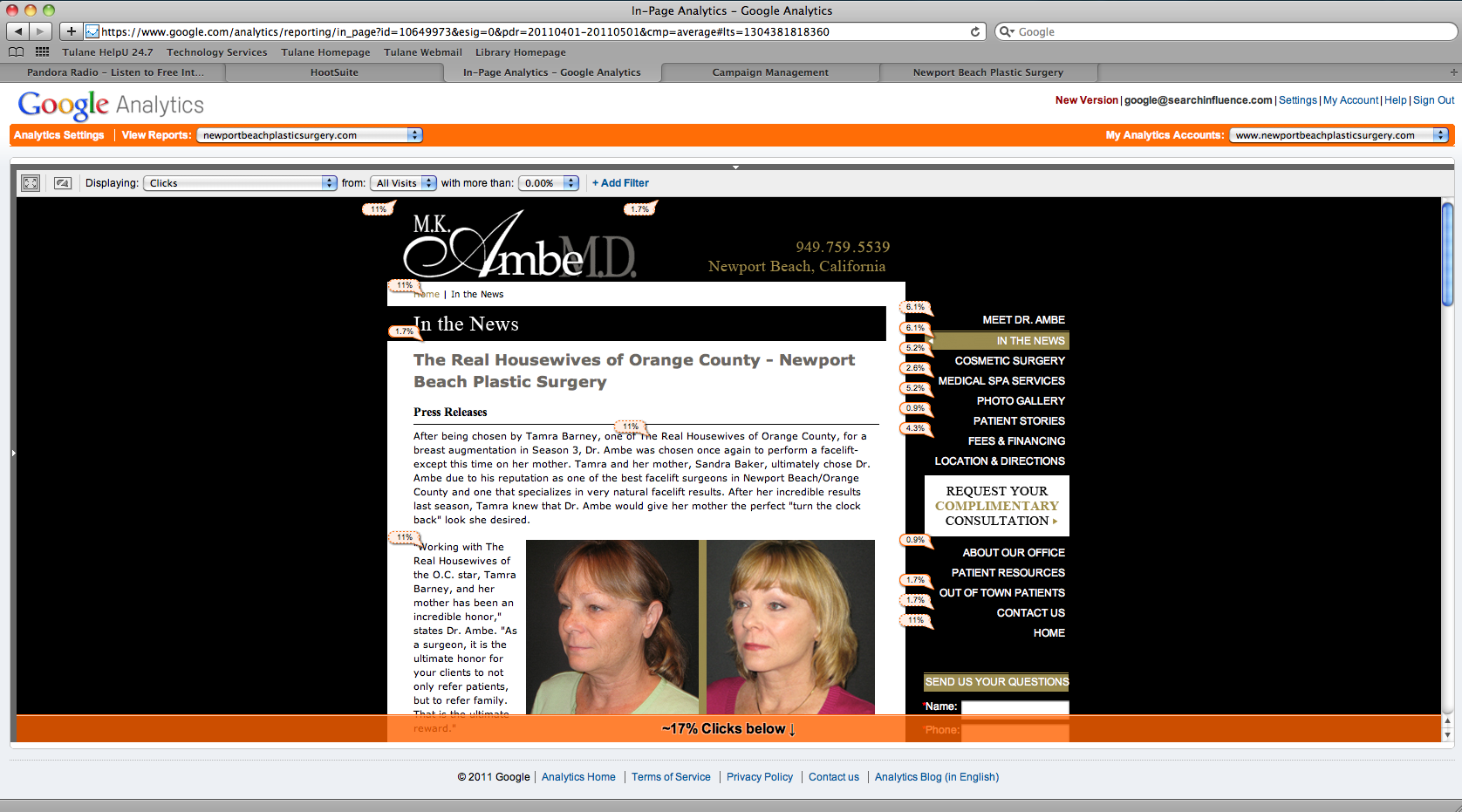
    Landing Page overlaid with In-Page Analytics

    The In-Page Analytics shows the percentage of clicks to the various pages in little pop-ups next to each link. Of course, it’s only tracking links to the page, so you have to take it with a few grains of salt if you have contextual linking on the page, but it gives site owners and especially ad campaign runners an idea of how to make their choices more relevant to browsers. The page below shows that almost 2% of visitors hit up the contact page from here, and another view shows us that a fifth of the people visiting the contact page complete a form — whether that’s good or bad is for the marketer to decide, but that information is certainly useful. Should that information not be in the hands of small businesses? The 12000 people searching for “block javascript” in Google think so.

    And what about those 12000? How can I know that? Because Google “betrays” its users privacy and gives vague estimates of how much people search for various keywords. Again, this helps small businesses without walls of supercomputers to better gather data so that they can garner a little bit of information to better serve their customers.

    Internet Privacy
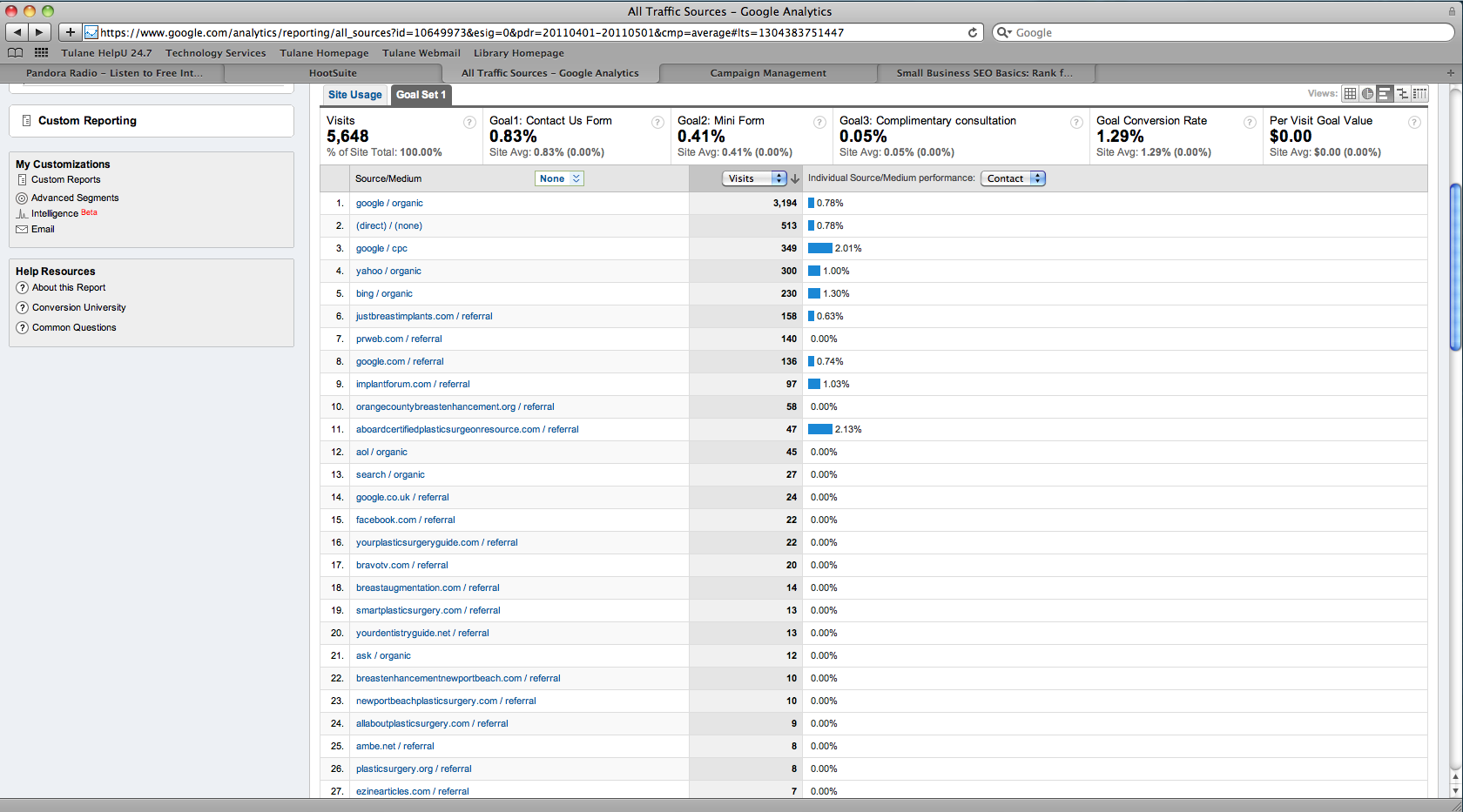
    Drilldown of Referrals from Other Sites

    Finally, what about pages you visit that aren’t part of the site you’re on? Why would a site owner want to know that? Surely, they couldn’t want to know what page you were on before this one! But the internet is the ultimate word-of-mouth; “Who referred you?” becomes “From where were you referred?” and unfortunately, people just don’t pay enough attention to notice effectively on their own.

    So instead of ineffective tools and sheer guesswork, the visitor loses a little privacy to help small business owners understand how people came to their site and make it better for those visitors by tailoring the content and design. And this is the mindset behind any loss of privacy for the visitor. Marketers like us aren’t trying to figure out who specifically visited our site and did what — if we were, we’d use other tools that can’t be so easily blocked, and would only be used for malicious visitors.

    While some might call it “drinking the Kool-Aid,” I’ve understood more deeply why losing just a little privacy and not trying to circumvent analytics and other tools are a boon for the whole Internet — making it more valuable to the visitor, so that sites give to the reader what they really want. Stop worrying, and support your small businesses on the web.

  • SEO for Musicians: Take Advantage Of Your Audience!

    With a little SEO sauce, your website can go from air-guitar…

    If you’re involved in any kind of creative endeavor, chances are you’re waiting to be discovered. The duty of the artist is not just to make art, but to share it with others; this goes doubly for musicians, whose opportunities for media expansion have exploded in the last several years.

    Getting discovered by an agent who happens to be at your show is so 90’s. With sites like Myspace, BandCamp, Twitter, Last.fm, Facebook, Soundcloud and others, bands now have a wealth of tools to choose from to stay in touch with their audience, as well as personal sites and blogs where they have full control over the message. While maintaining all of these entities can be an overwhelming amount of work, practicing basic SEO and maintaining a strong, cohesive media profile throughout a few selected ones can be just as or more effective than spreading yourself thin.

    It’s important to remember that people aren’t just searching text these days; make sure that your music samples, videos and other media knick-knacks are available for your audience. Allowing for streaming makes your music accessible for the casual web-surfer, while putting up a selection of singles for download can increase loyalty and brand retention among those who enjoy your sound enough to hang on to it. And please — if you’re making tracks available for download, make sure your ID3 tag ducks are in a row. You don’t want your listeners to download a track, listen to it once and delete it a few days down the line because they have no idea where it came from. Everything should be consistently titled and formatted for maximum ease of consumption.

    On-page SEO is a must, particularly if you’re a hometown outfit. This doesn’t have to be an involved, link-intensive campaign, but covering your touring area is necessary if you want to be seen by the casual Googler. Basic keyword research from AdWords can help with this. Additionally, backlinking from community sites such as Digg, Reddit and various music forums (both local and non-), while not particularly weighty as far as pagerank, can contribute to visibility and drum up community interest — your music connecting with the real ears it needs to find. Similarly, maintaining an active profile on Youtube is a must. Even if you don’t have a full-on music video, the ‘tube is another place to put up tracks and offers more opportunity for keyword insertion.

    … to rock star!
    On the more tech end of things, hreviews are a new and trendy kind of metadata that’s easy-to-implement and offers more bang for your buck than the traditional flavor. Avoid Flash whenever possible, as Google doesn’t index it (and everyone hates unnecessary Flash interfaces anyway), and consider making your site mobile-friendly with HTML5. Making the switch is less difficult than it sounds, particularly for less complex sites, and it allows for the possibility of listeners checking out your product anywhere — on the street, at the gym, and on the way home from the (hopefully) impressive gig you’ve just played. If you’re a smaller band, chances are you’re friendly with other acts in your immediate hometown and greater touring area. Find out whose links are worth more and offer to swap — this will both boost your pagerank and draw in new views from areas you may not have made a significant impression on yet.

    Once your flagship .com site is up and running, utilize the wealth of free tools at your disposal to figure out where your traffic is coming from. Google Analytics and Urchin are invaluable to help figure out what you’re doing wrong, what you’re doing right and where to concentrate your efforts. Sonicbids will allow you to connect with the right promoters for your sound, as well as develop an EPK — electronic press kit — which will lend you a great deal of professional appearance and credibility.

    Lastly, blog blog blog your little heart out. Besides being an excellent way to stay in touch with fans and a good creative outlet in general (stimulating the old writing muscles can only help your lyrics!), blogging is a fantastic way to continually update your site with fresh information — which, as we all know, Google loves. Let your home base languish with nary an update or new media for eight months and you’ll surely see a drop in both ranking and pageview.

    The scary and exciting thing about contemporary music marketing is the immense egalitarianism that presents itself in the face of all these tools. A fledgling band should first and foremost know its audience; the younger and more tech-savvy your ideal crowd is, the more you should invest in your Internet presence. While a good marketing campaign won’t win you mass fan adoration or an instant record deal, it gets your product out there in the public eye (or ear!) to be reviewed, discussed and enjoyed.

  • Reviewing the Yelp Review Filter

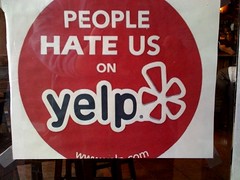
    Image: People Hate Us on YelpI’ve just published a longer article on the Yelp Review Filter, what it is, how to manage it and, of course, how to spam it.

    Since I wanted to make it a page rather than a post it doesn’t have comments so I’m putting up this post to collect comments.

    Are you a business who is stinging from being Yelped? Tell us about it and we’ll do a follow up blog post with the best stories.

    And even if you’re not a business owner I’d love to hear your opinion of the Yelp Review Filter in the comments.

  • Is Google Ignoring Your Backlinks? Webmaster Tools Can (Maybe) Help (Sometimes)

    Congratulations Dog!
    Congratulations Dat Dog, you almost rank in the Top 3 for your own name!

    Anyone who is aware of the most basic and fundamental tenets of SEO knows as long as you’re not screwing up your site too bad (using only flash, no content on home page, etc.), backlinks will be the most important factor determining how well your site performs organically. If you don’t believe me check out how much better Dat Dog performs after I gave them a link in my last Search Influence blog (it actually shot up 10 spots in a few days in spite of being new and having hardly any words on their home page). The problem is, Google may or may not be using all of your backlinks, so not all of them will have value to you.

    Before any search engine can see your backlinks, it needs to index the page containing them. Consider that search engines are constantly scanning the web for new pages to include in their index, which will be available for searching. To be considered for any search you need to be in that engine’s index. So how do you know if you’re indexed? The easiest way is to search for the actual URL in any search engine, like you see below. In this case, this Scottsdale plastic surgeon‘s Thank You page is not in Google’s index (which is fine because it has no value being there).

    When your page is not indexed, you get no results.

    So back to your backlinks. You know they are out there, you know where they are, and you know whether they have been indexed or not, but do you really ever know whether Google, or any other search engine, is reading or ignoring the links pointed towards your site? Some people think as long as the page that your link came from is indexed, Google is reading all of the backlinks and boosting your page rank, but it’s not always the case. Let’s say your backlink was added to a page that a search engine has previously indexed: it’s possible that the Google Spider has not come back to visit the page, and doesn’t see your link yet. Beyond this, we just don’t always know what search engines are really doing, it’s highly possible that some may deem a given page worthy of indexing and only feel like visiting some of its links.

    Here is the sure-fire way of knowing whether Google has even read a given link to your site: Webmaster Tools. If you haven’t registered for one of these accounts do it ASAP. Here you can submit your sitemap, get warnings about problems you’re having, and much more, including getting a list of your backlinks.

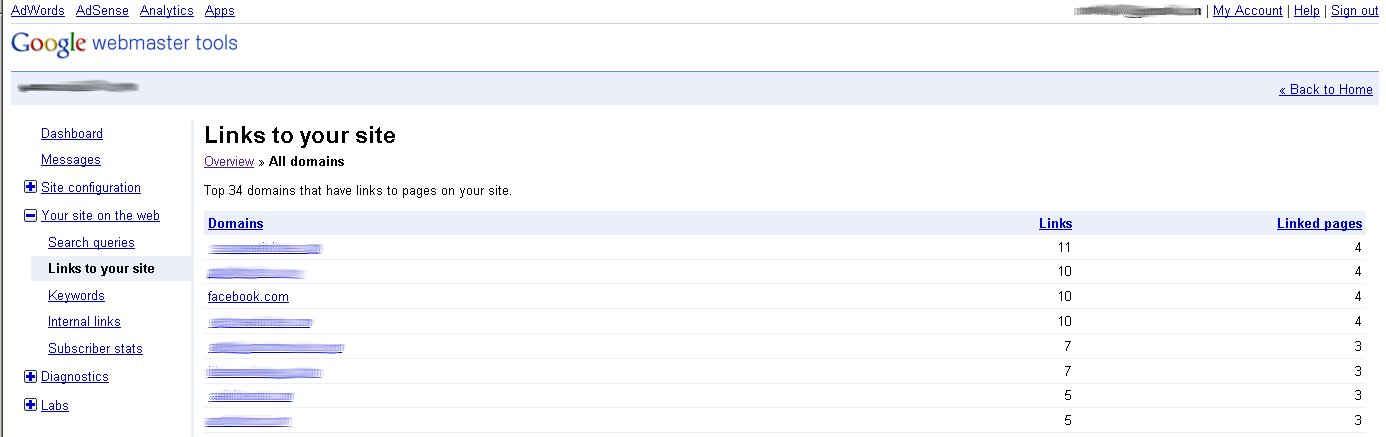
    After you sign up and submit your site, your links won’t appear instantly, but will slowly accumulate. In the Dashboard, under Links to your site, click More. Then, under Who links most go to More and you can download a spreadsheet of all the links that Google is willing to admit to knowing about!

    OMG look this site has a link from facebook.

    This is far from fool-proof. As I read on Search Engine Roundtable, there have been some reporting issues with these links. The least you can do is pull your links from the dashboard and visit the sites that you’ve never heard of before and make sure you really have a link on that site. Many times content gets scraped by spam sites, which is not necessarily bad for you, depending on the reputation of the site and the content that it scraped. Another problem is this: just because the link is not mentioned in this report, doesn’t mean Google doesn’t care about it and has not viewed it, it’s just impossible to know, because the SEO dominatrix won’t tell us. The internet is gigantic and growing every day. Search engines do amazing things, but they can’t be perfect, especially with their free software. Just because you can’t find a link in this report doesn’t mean it is not there; you should be worried, however, if you know you have several different pages that link to you from a given domain, and none of them show up here after months. You might want to stop building links there.

  • Government and Social Networks: Democracy on the Rise?

    In January, the world media and most of its consumers were riveted as events unfolded in #Egypt as the ouster of Hosni Mubarak gradually unfolded. It may have been the most widely televised, blogged, photographed, and tweeted-about revolution in the history of the planet, as people received up-to-the-second updates as to what was occurring in Cairo.

    (Of course, Kenneth Cole unwisely used these events as a way to promote his clothing on Twitter, but that’s neither here nor there.)

    Social media, particularly Twitter and Facebook, allowed people all over the world, especially Egyptians (after a nationwide internet blackout was reversed), to voice their concerns, support, and questions regarding the revolution in Tahrir Square. In some ways, one could argue that social media websites allowed the revolution to take place, as people in Egypt could instantly communicate and coordinate with one another. One Egyptian man even named his newborn daughter “Facebook” to signify the network’s importance in coordinating the revolution successfully.

    Well, what about our own government? Some might say that our politicians have been slow to capitalize on the connectivity of social media, especially in the Oval Office. Bill Clinton only wrote two emails while in office, George W. Bush didn’t start using social media until after his presidency, but President Obama seems to have staffers controlling communications via Facebook, Twitter, and Hootsuite at all hours of the day, which proved to his advantage in the 2008 election. Many members of Congress have active accounts on these sites as well, and the media in Washington and other political power centers have long established their presence on social networks.

    Mr. President's Twitter

    What does this mean? Well, for starters, rather than writing your Congressman, you can now tweet @ him or her and vice versa, opening up a new form of conversation in the political arena. As important legislative deadlines approach, like the budget debate earlier this month, constituents can get instant updates not only as to who’s voting for what, but also concerning behind-the-scenes negotiations and deals that can make-or-break a legislative agenda. The President can live-tweet his speeches and public events as they happen (#SOTU), and he often chooses to announce his press conferences via Twitter. In New Orleans, our mayor even has his own Twitter account and updates it frequently.

    What’s even more interesting is that politicians’ use of social networks can essentially cut out the traditional media in the chain of communication between politician and constituent. Rather than having a reporter or broadcaster select and edit the quotes they choose to convey to their readers (we’re all too familiar with “sound bytes” that are taken out of context), politicians now have a direct line to speak to their supporters and discuss their views and actions on their own terms.

    However, social media does the same for media outlets as well. Many Washington reporters have their own active Twitter accounts, and certain news organizations, like the New York Times, have them as well. (Hint: if you click on a link leading to any NYT article, you can bypass their new paywall and read it for free. @nytimes #FF)

    Does this make American politics more democratic? Absolutely not, but it seemed to have that effect in Cairo. While business on Capital Hill will progress as it always has, social media allows for a deeper focus and scrutiny on political events. One now has greater access to inner workings of our political system and can speak up as speeches are made, negotiations are conducted, and votes tallied. If Egypt, is any indicator, social networks are now becomingly increasingly powerful tools in the political landscape, a trend that can only increase in the future.

    (For further reading, check out NPR’s article entitled “Digital Media Could Make Or Break Presidential Race.”)

  • Google Places And HotPot Merge Into One Streamlined Service

    When Google introduced HotPot, the Foursquaresque recommendation engine based on social results, it was hailed as a seamless integration of Yelp-style reviews and uniquely Google functionality. We’ve already discussed its simple ethos of personalized recommendations based on friends’ and peers’ reviews, furthering the “social results are relevant results” direction that the company seems to be heading in. HotPot’s paper showings were a resounding success, moving the reviews coming in from Google users from a mere 3 percent to 20 (as opposed to second-hand aggregated reviews from Yelp and its army of clones). However, the G-team has recently announced the merger of HotPot into Places. Is this a smart move on Google’s part? What kind of practical changes are we likely to see?

    The popular HotPot app, which featured “check-in” functionality, will be folded in to the extant Places app. Additionally, the Places interface (both mobile and full web versions) are reorganized, with HotPot ratings available alongside objective geographic information. (The original HotPot UI required a click-through from the review screen in order to display this data.) Other than that… well, not much. While there is something to be said for a unique socially-focused review engine, as far as Google is concerned less is more. However, the Places app has undergone a slick expansion to allow for on-the-go rating.

    Image courtesy googlemobile.blogspot.com/

    My personal gut reaction to this decision is that it is a positive move to eliminate functional redundancy. While HotPot has helped bring in first-hand reviews directly from Google users, the service itself never really took off the way that Places (or HotPot’s more cosmetically similar cousin Foursquare) has. Integrating location-based reviews and functionality directly into Places pages can only make things simpler for both businessowners and users, who already have quite enough to deal with in Google Tags, Boost, Buzz, Maps, and Latitude — just to name a few. While making business presence known online is integrally important in the contemporary marketplace. However, the layers upon layers of features Google has added, while useful for discrete and specific purposes, can undoubtedly appear overly complex and confusing to a business owner who simply wants to make themselves available online without suffering the visibility implications of not chasing after the newest in the seemingly ceaseless succession of new features rolled out in front of them. Furthermore, establishing a direct link between an online “home base” and reviews of the business is a way for users, businessowners and reviewers to seamlessly get the information they need or add to the discussion with ease.

  • SEO and Public Relations: This Small, Small World Has Room For Both

    In a world of fierce, undercutting, and faceless competition, Search Engine Optimization mixed with social media brings back to small businesses a much-needed breath of fresh air. It has been learned that you can’t fight big business on its own turf. Unlike the national chains that have dominated the first part of this century, small business owners cannot cut prices and run million dollar ads. The overhead of trying to compete in this manner has bankrupted many of Middle America’s small entrepreneurs.

    Enter SEO and social media; suddenly this big bad world is more reminiscent of a classic ride at Disney World. You know, the one where all the little kids talk about how there isn’t that much difference between you and me regardless of language or location. That’s right, because it’s all about getting to know each other and figuring out how to communicate. This is exactly the purpose of using SEO and social media outlets to bring people to your business, except in our “big kid” world we call it public relations.

    Okay, I understand that most of your pure business gurus out there believe that public relations is, and I quote, “just ass-kissing and party-planning.” Five to ten years ago they might have had a point, but in this contemporary economy the true principles of the craft are a huge part of why smaller companies have a fighting chance again. The consumer has a renewed interest in quality, and is willing to spend a little more for a more personable experience. While the bottom line is still net profit, they way to success lies within the methods you use to obtain your goals.

    If Google and other search engines have replaced the YellowPages, then SEO has replaced the one-page ad. Sure, Adwords are still a highly profitable drive for visits and conversions, but the SEO in and of itself spans beyond the normal realm of marketing. A business owner takes special interest in what the consumer is looking for when they go searching. The use of these technologies can help a business mold their image into something much more appealing to the audience. They are interacting directly and specifically with their public through just a few small changes.

    When you throw social media into the mix, then you are really getting some classic public relations action. The basic idea of the PR world is to promote goodwill for your company to its public. So a business going on Facebook to garner “likes” that convert to sales has to add things to this medium that will stir interest. Some of the typical things you will see in a business fan page are news, specials, and community projects. This is public relations! You are showing your consumer the good you do for them and the community. These simple acts inspire the kind of loyalty that results in a stronger bottom line.

    In effect, established public relations principles mixed with cutting-edge marketing strategies not only gain customers, but implore them to be active members in the community that is your business. They feel a connection not only with what you do but also with the personal responses you show to your environment. This is the way small business regains its individual face, loyal customer base and larger profits. Now that’s something to plan a party for!

  • Why Villifying DKI Is Pointless

    Image courtesy gamespot.com

    Dear Paid Search Advertisers,

    This {KeyWord:fallback phrase} is not your enemy.

    Many veteran PPC marketers tend to vilify dynamic keyword insertions (or DKI). They usually present examples of DKI which have been obviously done by someone who is not skilled in the nuances of paid search copy writing – this bothers me.

    It bothers me because I think there is a valid purpose for dynamic keyword insertion in paid advertising. While some uses are nefarious (let‘s be clear – I do not own a black hat) a lot of them are legitimately useful for marketing efforts.

    First let’s talk about how to use DKI because after seeing some serious DKI GONE BAD, I figured I should explain how to use it.

    When using DKI, you need to be careful of how you input the word “keyword” before the colon.
    {keyword:________} would make your inserted keyword will not be capitalized. By capitalizing the “K” in {Keyword:________} the first letter of the word is capitalized. When you type {KeyWord::________} every word will be capitalized. And when you capitalize every letter i.e. {KEYWORD:________} all of your letters will be capitalized and searchers will think you are partially deaf and/or screaming your headline at them – don’t do this.

    Now that I’ve explained how to use DKI, let’s move on to when it is appropriate to use it.

    BE WARNED! I am not advocating DKI abuse – use at your own discretion.

    Image courtesy of jeffreyhill.typepad.com

    The Good Use of Leveraging Other Brands

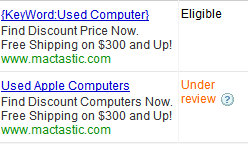
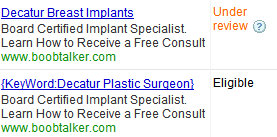
    This is a scary, scary topic for most advertisers because they fear legal pursuit from owners – however DKI is probably the smartest way to advertise when you are a small third-party reseller. A great example is Apple. If you are a Main St. electronic boutique who specializes in selling discounted Apple computers, how do you set up a campaign that is effective that isn’t flagged by the ad po-po? Build a focused ad group using the trademark terms as keywords and  DKI in your headline.
    EXAMPLE:

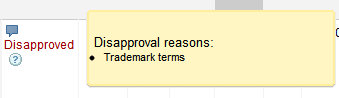
    The Eligible ad will fly through the review process unharmed because it does not directly mention Apple but the Under Review ad will result in you seeing this message time and time again:

    Doing this can really help you penetrate a very specific niche of a larger market quickly and, if set up properly (i.e. exact matching the correct terms you want to appear in the headline), cost-effectively.

    The Bad Use of Leveraging Other Brands

    Using DKI for leveraging a competitors’ brand  is great when you want to undermine their newest promotion, expose possible unsightly transgressions, or just really piss them off.

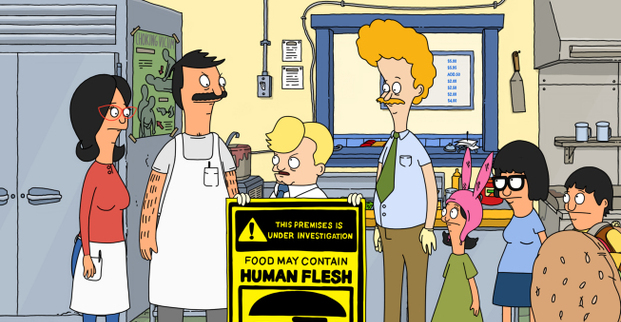
    Image courtesy of FOX TV Network

    Let’s say you are the neighborhood traditional American restaurant and you want to increase your market share after some bad press comes out about a direct competitor – use it to your advantage.

    Find all the variables and misspelling of their name, use one of those misspelling as your fallback phrase and have their actual brand name insert dynamically in the headline.

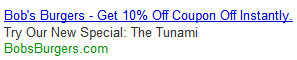
    So if your competitor’s ad is in position one for the phrase “Bob‘s Burgers“:

    Have your ad in position two with :

    This will make your competitor $#*! a brick and Google won’t do anything because you are following their guidelines. This is like saying you love praying so you are giving it up for Lent – you got them in a technicality.

    NOTE: I would never do this for a client – this is merely a suggestion for you devilish paid search marketers out there *polishes halo*

    The Good Way to Avoiding Negative Approval Status

    Another use of DKI is avoid long review process and disapprovals because of  “non-family“ or “adult” ad copy.  What are “non-family” and “adult” ads? Here’s the official definition:

    Ads are reviewed and categorized as Family Safe, Non-Family Safe, or Adult Sexual Content depending on the content of the ad and website.

    So basically anything part of the human anatomy and any word you wouldn’t say around your mother. I am frequently annoyed by this particular rule because I deal with a lot of plastic surgeons who perform cosmetic and reconstructive breast procedures. Breast – a word that is so mundane that to be considered “non-family” by the Search Overlord Googleus Maximus is ridiculous. I’m still confused that the headlines “Breast Cancer Treatment”, “Breast Implants Surgery”, and “See Big MILF Breasts Now” are all consider the same even though the context of the word is vastly different. Since this is a problem I run into on daily basis, using dynamic keyword insertion is pivotal to me getting ads up and running (without several phone calls and 5-7 business day wait time).

    Here are some examples of ads that will be marked as “Non-family” and “Approved”.

    Image courtesy of knowyourmeme.com

    The Bad Way to Avoiding Negative Approval Status

    Google hates drugs and at the top of their list seems to be medical mary jane. I’m not sure why, especially considering it is legal in California (and safer than all other drugs).

    Regardless of Google’s Stalin impersonation, if you are trying to advertise on Google for marijuana related ads and terms you are gonna have to jump through some hoops. What I’ve learned from my time running a medical marijuana campaign is you can trick Google into approving your ads and use DKI to make your ad relevant to searchers.

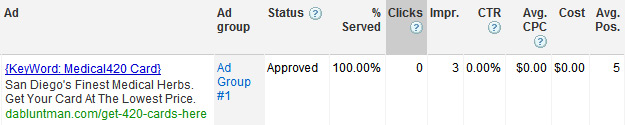
    EXAMPLE:

    This is an ad I tried to run for for the lulz on a $100 free Google Adwords account just to see if I could do it. As soon as I hit the submit button, the image below appeared on my screen.

    Google’s automated system was not in the mood for my shenanigans.

    Using DKI, I changed the headline and even made the display url more ridiculous to prove a point and in less than 30 minutes my “medical marijuana” ad was not only Approved, it was receiving impressions.

    The shocking part about this is my free Google Adword account’s medical marijuana ads were approved faster than a 6-year-old plastic surgery account that had the word “breast” in the adcopy (I swear Adwords’ review team is composed of untrained golden snub monkeys that respond negatively to the human anatomy – “DKI,” more like “DIK”.)

    Image courtesy of zoofacts.com
    They are sooooo cute but such terrible ad reviewers…

    I guess this post was to make people aware it does not make you lazy, dumb, or a noob to use dynamic keyword insertion. In fact, I think if you know how to use is properly it can be extremely beneficial to your ad campaigns. Think of DKI as something to master, like martial arts. Could you possibly kill your ad group’s performance? Of course! But if you hone this skill you could be hundred hand slapping your ad competition, Kenshiro-style.
    Image courtesy of knowyourmeme.com