Blog

  • Google announces Voice Search for Chrome and more

    Google held their “Inside Search” event this week, and as usual, the announcements were innovations worth getting excited about. Then again, we’ve come to expect that as the norm from Google.

    Voice Search has been a part of mobile phones for a while now, but Google announced that it would be bringing the feature to Chrome. Rather than type into a search bar, the user can simply speak the term and watch Google do the magic. At the conference, more complex sentences such as “How do I say How do I get a cheeseburger in this neighborhood in Spanish?” were used successfully. On a cell phone, the feature seems more functional to keep people’s hands on the wheel while driving, but on the computer it seems more like a novelty than anything else. That, and I’m sure it won’t be long before the videos of guys yelling inappropriate terms at their computers starts showing up on YouTube.

    Image Search also got  a new feature: users can drag a picture from their desktop into the search bar and Google will try to pull info from the photo. For example, if it’s taken in a location Google recognizes, it will pull information on that place and give you results on it. Stalking just got that much easier. Thanks, Google. That wasn’t it for images, though — Google Instant will also pull results as you type a picture into Google Image Search, just like it does when you do a regular web search. It may only save a few seconds, but those seconds may add up to valuable time saved. Instant brags that it brings results faster, and an example at the conference showed some pages loading in under a second. I like hearing that!

    What do these new innovations mean for SEO? As image search becomes more powerful, website owners may have to carefully consider how they name the photos they use on their sites, as they may also be turning up in Google Image Searches and may draw the attention of a potential customer.

    On the whole, Instant means that people will rely on faster web searches as the norm. The bottom line here: this means you only have a few seconds during a web search to capture a user’s attention, so SEO is more important than ever to ensure that your website is at the top of the list when Google does it’s search-at-the-speed-of-light trick. As the tech around us continually evolves, we must do the same to keep up with it, or risk being left behind.


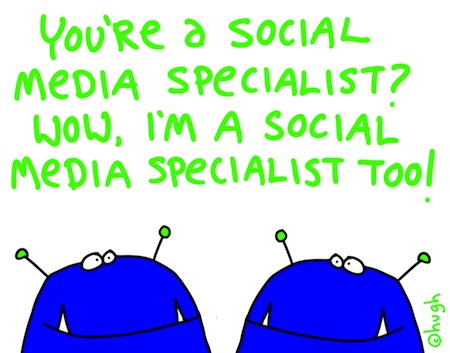
  • Is there such a thing as a real Social Media Expert?

    Now that we’re in a society that boasts a Twitter and Facebook for every business from restaurants to fortune tellers, you have to be savvy when it comes to social media. But what if your business has been around for a few decades, and you have no idea how to manage these websites yourself? Social media presence? I know, I can feel your head hurting from here, and I assure you, it’s quite alright. The world of social media is a complex one, and there’s nothing wrong for searching for help within it.

    Social Media Entrepreneur Peter Shankman (founder of HARO) recently posted  a blog about “social media experts” and why hiring them is a waste of your time, which has made some waves in the social media industry. He makes some valid points — it’s perfectly possible that any dude with a laptop and an idea can go get some business cards printed and start calling himself a social media expert. Of course, people seeking social media help may be less educated on what to look for and can be suckered by these types. But does that mean all “social media experts” are actually con artists?

    Shankman points out that the dot com era gave Internet professionals the illusion of credibility much in the same way that titles like “social media expert” do now. This is true, but does it mean that every dot com was a sham with a bunch of clueless dudes behind it staying up late in their parents’ basement? Not at all. Several notable companies survived, Amazon.com being one of the biggest.

    Social media experts are a similar story. There are a ton of self-proclaimed experts out there who certainly cannot bring to the table what a website or personal business needs for growth. On the other hand, to generalize and say that they are useless as a whole because people are abusing the term is a mistake. A social media expert is merely a new form of PR rep, whose playing field is the Internet and whose toolbox is made up of key sites such as Facebook and Twitter. Sure, one can pour effort into posting on those sites and trying to get the name of your business out there, but unless you have the knowledge and experience needed to approach these sites appropriately, it’s just more spam that no one will read.

    What’s the solution then? If you want to hire a social media expert, research first. Know what you’re getting into and have an idea of what you want. Adding anyone to the payroll and not really understanding what they are doing, but instead waving your hand and expecting them to “take care of it” is the quickest way to get cheated. Ask questions about how they plan to approach promoting your business in this way. You don’t have to be an expert yourself to do some research and know what you are asking someone else to do for you.

    With 600 million Facebook users and nearly 200 million Twitter users to appeal to, it’s surely a mistake to assume that we know how to approach them with little or no experience in social media and how it can work for us. One thing we do know is that it’s a powerful platform, and one that only continues to grow and manifest possibilities for the people that choose to use it.

  • Google Transparency – Is It Really That Bad?

    Could it hurt Google to be a little bit more clear? Mr. Kohn at Blind Five Year Old thinks not. Google’s public persona can be unclear and capricious, while the size of their user base is so large that noise from their algorithm can have deep effects on the livelihood of those users. Are his principles of “real” engagement, transparency, and amplification already seen across Google’s user interactions? Or does the the SEO community and the SEO dominatrix take care of the rest?


    Support Forums – MUST GET FIX BEFORE SOMEONE GET KILL!!!

    The ecosystem of the Google Forums allows professionals, amateurs, and Google professionals to come together and try to solve the problems that come up in the daily life of a website owner. However, the average website owner or business professional doesn’t have the faintest idea of how Google is organized or to whom even to address problems.

    When a Map Error puts customers in danger, you’d like to see a fast response and some targeted information to help your specific situation. The first response to the thread is by a Google Employee, probably on the Maps team. However, the responder who is best situated to directly take a look at the problem and at least explain what’s going on to cause the error simply puts a boilerplate answer.

    It takes a community member to explain in detail what’s going on. This could be Google awaiting a naturally crowdsourced solution to support problems, but that sounds like a euphemism for “we don’t have time for this through inappropriate channels.” That’s fair, of course, but those channels are hard to find and cold copypasta doesn’t reheat well, especially when it’s an error so far beyond the ken of most business owners.


    Blog Posts – “In short. This articles fails it’s own goals.”

    For those without a “MUST GET FIX,” researching Google through their corporate blogs would seem to be a worthy pursuit. But even when giving deep information about what factors enter into the search algorithm, Google isn’t immune to denouncements of “unmitigated prevarication.” Again, the complaint is that it’s PR instead of real help.

    To be fair, I can’t see this complaint, especially in the Panda algorithm change posts. Through sticking to their guns about not releasing too much algorithm data, Google has provided intuitive, i.e. non-technical, ways to check the perceived quality of a site. Here, despite claims of “misdirection” and “saying one thing and doing another,” Google might even be giving better information than they’re credited with, saying that the algorithm is using techniques that are either fuzzy or heuristic or some other kind of higher statistics that somewhat accurately model real human interactions — basically, don’t bother chasing the algorithm, it chases you.

    Compounding this problem of transparency, webmasters only see the noise; that is, they don’t see how well the algorithm works overall and are only concerned with their own site, a little statistical blip that is hard to reconcile with the overall trends. Furthermore, well-educated webmasters also see where Google policy and practice diverge, whether it’s for Ads, Maps, or Snippets. In addition, the wheedling that can happen when a site owner talks directly to Google and the mystique of getting that number for that red phone undermines the transparency Google works to show.


    ThinkInsights – Data Beats Opinion

    When it comes to the state of search, Google offers a set of studies they’ve conducted and compiled at their ThinkInsights, giving a glimpse at what Google is interested in right now. Since April, they’ve been pushing Mobile internet, which affects most areas of internet marketing: PPC, website design, and specified marketing. These reports are published as slideshows in Powerpoint and PDF formats.

    These studies are Google’s way to keep everyone up to date while pushing its products. Like the early videos for learning AdWords, this kind of infotising does a lot for Google, but may not give the kinds of in-depth information some might hope. Here, Google could  improve two areas. Firstly, they need to amplify. These things could be better shown to the average person if they were one-shot infographics or otherwise promoted for easy sharing and larger reach. But it’s not just that — format and distribution might not be a problem if the information were targeted, but it’s neither juicy enough for the common reader, nor specific or new enough for the marketer. The information is often more of a middle-ground, possibly good for the part-time marketer, but not for keeping up with new trends or finding the next big thing. But is that Google’s job?


    Matt Cutts – Yes, there is a Santa

    Regardless of whose job it is, Google has its own unofficial mouthpiece in its head of Search Quality, Matt Cutts. While he’s a bit of a god among mortals in the search community, his position allows him to discuss with professionals and semi-professionals on forums, blogs, and other social arenas. Most recently, his role in shutting down incorrect speculation on ranking penalty factors puts him at the forefront of any transparency discussion. In this case, he seems to follow the debunking flowchart Danny Sullivan created. He sees a fairly bizarre claim, but didn’t respond until he saw the same claim repeated on Hacker News.

    Looking at the comments, you immediately see issues with the one-man show. Not only is a real person capable of mistakes and poor wording, but the nature of a small industry gives people long memories. Furthermore, his direct connection to Google and his dislike of discussing specifics of the algorithm give way to vagueness and expected corporate doublespeak. Finally, the high level of technical savvy of his audience lets them research well, leaving others to repeat the supporting data to undermine his transparent claims.

    I feel for Mr. Cutts — he doesn’t have to trawl messageboards and blogs to help people understand his business better, but he does, often to a less than warm welcome. But his position is somewhat self-made as the most vocal Google Guy, leaving the door open for the last line of transparency, the SEO community, who are the alternative to top-down transparency.


    SEO Community – Publishing the Factors

    Google is a corporation, and therefore sometimes has to avoid certain topics or cloud the waters to dissuade people from gaming the system. The SEO community comes to the rescue and fills in the blanks. Anecdotal reports, such as case studies, forum posts, and SEO blogs, are incredible sources, especially when you find yourself in the same situation. But it’s not these that provide the greatest transparency for those under Google’s will; it’s things like Rand Fishkin’s Search Ranking Factors and David Mihm’s Local Search Ranking Factors that fill in the blanks that Google leaves through its inability to talk about the algorithm or provide meaningful search data.

    These factors reports are the result of serious research and collected soft feelings from knowledgeable industry professionals — a good combination of information. Furthermore, since they provide methodologies and even raw data, you can double-check or even focus on a subset of their data, allowing the ultimate kind of transparency.

    These information sources beyond Google’s reach are the real transparency for the Search Industry. They are the ones who give as unbiased as possible information (minus high-level trade secrets of course) and unplug the bung for much of the meaningful search truths.


    It’s hard to be a large, looming company and give enough care and information to your users to make them feel like you’re being transparent. Giving credit where it’s due, Google is often meeting the criteria asked; however, meeting the criteria and meeting the small business owners’ expectations of those criteria are two separate issues.

    The biggest issue for Google’s transparency, despite the multiple sources of information and moderately high level of involvement, is amplification. They aren’t making their information particularly easy to access, nor are they making the answers they give very public. But that’s not the worst thing — bloggers, researchers, and other SEO kings are more than happy to throw their two cents in, letting independent sources keep the information lines clear. Finally, the quest for transparency, especially on the internet, is a bit of a red herring: the Internet is not the democratic utopia we hoped it was.


    Is Google doing enough to make its products, services, and policies clear for you?

  • Please Tweet Responsibly – Learning From Others’ Social Media Mistakes

    Twitter is a social media force to be reckoned with, and nowhere is that more apparent than in recent news.  In case you’ve been living under a rock, Twitter is a global microblogging platform that allows users to broadcast information, ideas, status updates, etc. in 140 characters or less.  Tweeters subscribe to others’ broadcasts by “following” each other.  Boasting an estimated 200 million users, Twitter is definitely a service you should be utilizing to promote your business (or your “personal brand”) online.  Think about it – that’s 200 million potential followers for you!

    But remember how we said it’s a force to be reckoned with?  If you’re not mindful of what you’re sending out into the Twittersphere, you might accidentally create a lynch mob.  Designer Kenneth Cole created an uproar when a member of his social media team attempted to take advantage of the trending topic #Cairo to sell shoes; people were offended that the tweet made light of serious current events.  The tweet was quickly taken down and replaced with an apology message, but it was too late – who knows how many people had already seen the tweet?  Lesson learned:  think about how your tweet will be received by the general public before you post it.

    We can all finish the saying, “If you don’t have anything nice to say…”  Now let’s all memorize this:  if you don’t have anything public-appropriate to say, maybe you shouldn’t say it at all – just to be on the safe side.  Rep. Anthony Weiner has certainly learned this lesson over the past two weeks.  In an honest mistake, a scandalous photo that was meant to be sent to a Seattle woman as a DM (direct message) was posted to his account as a public tweet and viewed by countless Weiner followers.  #Oops.  We’ll have to wait and see how this affects his campaign for congress, but we’re thinking it won’t be favorably.  If you’re new to Twitter, you should check out one of the many helpful tutorials online; at least make yourself familiar with the locations of each button in whatever interface you’re using.  Even the most experienced Tweeters should double- and triple-check every post before sending; at the very least, you might catch an embarrassing spelling mistake.

    If you’re not careful, Twitter misuse could cost you your job – that’s exactly what happened back in March when someone with access to Chrysler’s Twitter account confused the official account with his own private account.  It seemed that Chrysler had posted a profane tweet with anti-Detroit sentiment.  Chrysler didn’t take too kindly to this and canned the guy after deleting the tweet and apologizing to its account’s followers.  Again, #oops.

    We can basically sum up all of the Twitter tips above with a lesson you should have learned long ago in elementary math – CHECK YOUR WORK!  It still applies and always will.  Now happy tweeting!

  • Local Search Ranking Factors 2011

    It’s always interesting to see the outcome of the annual “Local Search Ranking Factors” study. As contributors we have strong opinions about many elements, and like you, we’re always learning as well.

    Now that we’ve had a chance to review, we’ve identified:

    • Places where we agree
    • Criteria where, for us, the jury is out
    • Things we question

    The Top Ten from This Year’s Local Search Ranking Factors Study:

    • Physical Address in City of Search
    • Manually Owner-verified Place Page
    • Proper Category Associations
    • Volume of Traditional Structured Citations (IYPs, Data Aggregators)
    • Crawlable Address Matching Place Page Address
    • PageRank / Authority of Website Homepage / Highest Ranked Page
    • Quality of Inbound Links to Website
    • Crawlable Phone Number Matching Place Page Phone Number
    • Local Area Code on Place Page
    • City, State in Places Landing Page Title

    Identified Factors We Are Totally Behind

    Pure Local – This is defined as results in maps.google.com and on Google.com when a 2, 3 or 7 pack exist

    Place Pages criteria – those changes you can make to your Place Page

    Sara Tweedy: ”A business’s Place Page is the foundation of a business’ online local presence. {don’t love this image: http://www.flickr.com/photos/matsuyuki/198736304/} The targeted, specific criteria on the Place Page is essential to Google understanding what your business does”. These criteria include:

    • proper categorization of services/products your business provides
    • explicit, developed usage of the details section
    • basic optimization including pictures and video.

    A complete Place Page sets the groundwork for a stellar local presence, which will then allow for higher rankings.

    Off Site / Off Place Page

    Sara Tweedy: Volume of citations is an integral component of any local presence. Citations reinforce a business’s name, address and phone number to Google. It is a necessity to obtain many authoritative citations to back up a Place Page. Without these citations, Google won’t give the deserved credibility to your business. Tweedy says, “When discussing the most recommended factors in the results of the survey, I was a little concerned that NAP consistency did not make the list. Ask anyone that works here, I am a consistency pusher. It is imperative that a business’ NAP is consistent EVERYWHERE it is seen online, and it should all feed back to the Place Page. When this does not happen, it could lead to a convoluted local presence, and will ultimately wreak havoc on rankings. “

    Reviews

    Amy Arnold comments, “We found that velocity, in other words, a consistent review pattern over time, is much more important than sheer volume, i.e. loading in a whole bunch at the beginning and never having reviews after that.”

    Reviews are an important Local Search Ranking Factor, but in our experience website criteria may play a stronger role than volume of reviews. By no means do we suggest Reviews are unimportant. But perhaps not as strong a factor in our collective minds as website criteria. Paula Keller states, “With the new integrated or “blended” results Google rolled out in October 2010, the organic strength of your website and the correlation between the information it displays and your Place page is more important than ever in local.”

    Website Criteria

    In going through the Local Search Ranking Factors 2011 from David, we discussed website factors passionately! One opinion put forth was that if your phone number on site is crawlable, it best match the Place Page. I think we can all agree on this. The preference is to have the phone number crawlable on-site and accurate match.

    To have the City, State in the landing page appears to be a strong factor. We have done some testing on this; it’s not 100% conclusive, but it seems to be a positive move with some qualifications.

    Clearly, there are dependencies on the client’s industry and market.

    For example, besides the Pizza Hut, pizza places are not super competitive in a city of <100,000 population, so we have had some obvious success with this technique with a locally-owned-pizza-franchise client in moderate sized market. As soon as the City-State landing page rolled live, the client experienced a nice bump in rankings within 1 week:

    • keyword 1 jumped 4 positions in ranking from position 8 to 4
    • keyword 2 jumped 6 positions in ranking from position 12 to 6
    • keyword 3 was just added to the site and already stands at position 7

    Fast and effective – we like.

    However, a personal injury attorney (read: highly competitive) in one of the top 30 metro areas in the country (read: more highly competitive), didn’t see as much obvious success. It strengthened the attorney’s site and Place Page, but didn’t have as immediate and noticeable impact as the pizza place.

    • keyword 1 — 6th, was 7th
    • keyword 2 — 9th, was 10th
    • keyword 3 — 13th, was 16th
    • keyword 4 — 15th was nowhere

    We do have some pretty strong feelings about the strength of the website and it’s influence on the total local-online package. Website strength has so many factors:

    • domain age (always good)
    • internal links
    • on-site optimization
    • external linking
    • diverse and unique content on-site, etc.

    All of these factors have to be built over time, and a young business with a young domain may not have all of these elements created yet. Domain age is not directly the sole effect on site authority; it’s all of the online authority that is built over time. With age comes wisdom, or … with age comes authority.

    CONTRIBUTORS

    Photo Credits:

  • Google’s +1 button coming to new websites

    You may have recently read about the advances of Google’s +1 button, which originally debuted in March of this year. The button allowed Google users to recommend content from search results and ads, and as of June 1st, the button is showing up on other websites as well, for well known news outlets such as Mashable, The Huffington Post, Reuters, The Washington Post and TechCrunch. Retailers such as Best Buy and Nordstrom also made the list.

    The way the button works is simple — by pressing it, you push that item up in Google’s search results, which means anyone in your Google network will see it when they search for the same thing or something related. If you want to get in on where this is going early, you can join in on the experiment through Google Labs here. Webmasters can also add the +1 button to their own sites by checking out the process on Google’s +1 Webmaster site.

    Google enthusiasts will be happy to see this innovation growing, which works a lot like Facebook‘s Like button. In fact, it could be argued that the +1 button will be a direct competitor to Facebook’s system, since many sites have implemented Facebook connectivity by featuring the Like button beneath their articles and encouraging users to show their Facebook friends what they like. Soon, we may see the Like and +1 buttons sitting side by side on sites. Will people take the time to click both — or will they choose one?

    Ultimately, the Google +1 system also manipulates SEO on a personal level, as users are more likely to click something another friend recommended than wade through unfamiliar search results. It’s a brilliant move on Google’s part, but will surely get the brains of SEO businesses churning as they’ll need to include this new system in their plans for clients along with Twitter and Facebook.

    What do you think about the +1 system? Does it look interesting to you, or would you prefer to continue to use the already-familiar “Like” button and share with your Facebook friends?

  • MonitorThis — Keep An Eye On Your Brand’s Online Reputation Without Lifting A Finger

    While Google may seem as inescapable as the Empire, it’s not the primary search engine (nor English the primary language) of many areas of the world. As the Internet makes impressing potential customers and business partners in a cohesive manner more important, managing the different pages that these individuals will see when performing research on you becomes an intrinsic part of any online marketing campaign. Assessing your Internet reputation should be the first step in any management thereof. While a Google search “snapshot” is useful for the moment in which it is performed, it is by no means exhaustive of every single venue information users may have posted about your brand, and does not include the possibility for further exhaustive monitoring. Fortunately, a more sustainable solution exists for the brand info-junkie.

    MonitorThis is a free service that collates results from 25 different global web resources into a single digest-style RSS feed. This list includes an impressive array of social media (from small-scale blog-focused projects such as blogdigger to the behemoth of Twitter), news aggregators like Google and Yahoo News, and sharing/discovery engines like Metacafe and del.icio.us. Interestingly enough, Bing is also included in the sites aggregated– with its recent decision to start weighing Facebook likes into its SERP rankings, you’re getting a double whammy of meta-social search. The service observes results from all of these sources, updating its feed instantly so you can see your chosen keyword’s mention as soon as it’s indexed by the various engines’ spiders.

    It’s unfeasible to track down every blog venue, review directory, social networking site and even article engine that may make mention of your brand or business, MonitorThis makes it easy to stay on top of every aspect of your online appearance. Simply import the OPML file into your favorite RSS reader and rest easy knowing you’ve got a watchful eye on your name and reputation.

  • Quora: More Than the Average Q&A Site

    I first discovered Quora just a few months ago, and quickly grew addicted. When searching for opinions, recent history, or even anything involving the tech world, Quora becomes my first stop. The site’s main strength lies in the quality of its users who also create quality questions and answers. Many of these users are Silicon Valley insiders, and for a while, Quora was the next big thing. Whether that is still the case can be debated, but Quora has a lot of collected knowledge that is easily accessible.

    Quora looks similar to many other Q&A sites, and indeed, the basic format hasn’t changed. However, a few things Quora handles particularly well are the profile, the feed, and the search. When starting an account, Quora emphasizes ties to either Twitter or Facebook and insists that you use your real name. The real identity becomes especially important as your name and title accompany each answer. While anonymous answers and questions are an option, a real identity and relevant title greatly increase the answer’s credibility. This becomes particularly important when insiders answer questions about their company, often the case for questions about Quora itself, Twitter, or even Google.


    Much like Facebook’s newsfeed (the two founders came from Facebook, after all), Quora provides questions and answers that should be relevant for each user. Not only can users follow topics, but they can also follow other users or particular questions to be notified of any new answers. As you develop your interests, the newsfeed becomes more interesting to explore as new things are constantly popping up.

    The search bar at the top helps users find the content they need with suggestions much like Google’s, and by combining search with the question input field, redundant questions also get rooted out. Quora seeks to keep duplicate questions out, so users only have to find one place for the information they need. Once the right question is found, the answers are ranked by various up-votes and down-votes much like Digg, so the relevant information comes easily.

    These features, an overall smooth performance, and a little bit of the right publicity have created a user experience that attracted many of the Silicon Valley insiders that laud the service. This emphasis has helped create valuable and high-quality content in a relatively niche subject. However, the scope of this subject has reached beyond just the tech world. Other topics such as politics, food, science, movies and business have good followings that have developed high quality answers. Already, I have found Quora to be a great way to learn about new topics such as cooking and real estate at a moderate depth. This way, you gain a little personality in your answers and also avoid much of the lower quality advice that can creep to the top of some Google searches.

    I happen to eat through Quora’s content like candy, and there doesn’t seem to be an end to it in sight. However, I rarely feel guilty about spending my time there as I’m constantly learning new things, finding new viewpoints, or keeping up on relevant topics. If you are unfamiliar with this site, I strongly suggest you check it out. Chances are you’ll learn something.

  • Chinese college student attacks internet regulator — with eggs


    Millions of Americans log onto Facebook every day without giving it a second thought, but something we consider a part of our everyday lives is very much a forbidden fruit in China. A recent protest has drawn attention in the news to just how fortunate we are to be able to use social media as a part of our regular communication.

    Chinese internet regulator Fang Binxing may have known he’s not in most students’ good graces when we walked into Wuhan University to give a talk on internet security this past week, but he probably didn’t expect to be attacked by an angry student with projectiles such as shoes and eggs. However, that’s exactly what took place.

    A student only identified by his Twitter handle, @hanunyi, claims that several other students had planned to join in on the protest, but got cold feet at the last minute. After being interrupted by the projectiles, Binxing cut the talk short and left to go to the airport.

    In the hours that followed, a surge of support for the attack appeared on internet forums and channels, only to be deleted by censors. Less courageous voices named @hanunyi a hero for the people, offering him all sorts of rewards for his act.

    Fang Binxing’s work in banning a tremendous number of websites from the Chinese public is considered a safety precaution. Websites such as YouTube and Facebook are considered a danger as they may enable Chinese citizens with a means to oppose Communist Party rule.

    The incident has not been officially acknowledged, but the Associated Press quoted a policeman in saying it was “under investigation”.

    The extent of the internet censorship in The People’s Republic of China is not commonly known to most people in other countries. China has a long history of not allowing its occupants to openly communicate, banning everything from books to films. In China, every key social media site including Facebook, Twitter, Tumblr, LinkedIn, Foursquare and many more are banned.

    How would your business be different if you could no longer use social media?

  • Bing and Facebook Likes — Search Becomes More Social

    While Google announced its own independent “liking” feature in the form of the Google +1 button several weeks ago, Microsoft competitor Bing announced on Monday that it would be directly incorporating Facebook “like” data into its search rankings. For the logged-in Bing user, a result that may have originally appeared lower in relevance will gain a boost toward the top simply by the virtue of having been liked by the user’s friends. In this gutsy move, Bing has divorced itself from the simple “search engine” label and is now something more like a community opinion aggregator, specifically relevant to the individual utilizing it.

    The question is, how useful is this going to be to the average searcher? While I like and respect my Facebook friends, chances are I’m not going to be interested in what every one of the 400+ party acquaintances, elementary school buddies and past coworkers think that I should be looking at. While Facebook has some rudimentary measures in place to weigh whose profiles are more important to yours and vice versa, I’m not sure if this weighting will translate well to said friends’ opinions of search results. However, opinion harvesting is not simply related to your own friends list; Microsoft is touting this measure as a triumph of “collective IQ,” stating in its official blog post about the move that results will also be influenced by the likes of those who are not in your network. It’s the wisdom of the crowd, extended to large-scale. Popular recipes, for example, are markedly prominent when their ingredients are searched for:

    While I’m unsure of the specific implementations of this move, such as incentivizing users to actually stay logged in to Facebook while they browse, I’m not sure if this is the death of objective search results. Google has always based its rankings at least partially on outside approval, and who’s to say that the average Bing user won’t benefit from the recommendations of their peers?

    One intriguing and complex aspect of this new method will come in the form of “enabling conversation,” wherein Bing attempts to determine who (if anyone) in your friends network is most qualified to help make a decision or provide advice. If you’re searching for a certain city, for example, those in your network who live or have lived in said city will be suggested to provide recommendations. This is a useful but potentially enormously complex system involving huge amounts of data gathering, one whose practical applications remain to be seen when tested by user interaction.

    With Bing and Facebook announcing this unprecedented merger of sociality and search, Microsoft’s rebranding of Bing as a “decision engine” instead of a “search” one is well-chosen. While results may be skewed toward the populist instead of the purely informational, there is unquestionably a specific niche for this kind of service, and I’ll be surprised if the coming months don’t usher in an even closer and more integrated relationship between the two.