Pinning for SEO: Pinterest Can Boost Your Rankings
Pinterest is a hot topic right now, and not just for people wanting inspiration for their future wedding. While blogs, websites, and the big-name social sites get all the SEO airtime, Pinterest can get overlooked, even though it has huge potential to boost your company’s rankings. With the right tactics, you can start pinning your way to greater exposure, one infograph or product at a time.
Sneak In Keywords
Pinterest may appear to be all about the images, but that doesn’t mean there aren’t opportunities to scatter your keywords around the site—and doing so can provide a big payoff. Your profile’s “About” section is only 200 characters long, but making those words count will give search engines something to do.
For each board you create, incorporate one or more keywords into the title; that will make them more interesting to search engines, and more likely to be spotlighted. And when you pin, edit your image file names to include keywords, and utilize the 500-character description for each pin to scatter keywords. Remember to go back and edit previously pinned images, too, so you don’t lose those valuable SEO opportunities.
Check and Uncheck
There are two little features in Pinterest that can make all the difference for your SEO. Both are under “Settings.” Make sure the option to hide your boards from search engines is turned off; hiding your pins will defeat the entire point of using Pinterest.
While you’re on your “Settings” page, click the “Verify Website” button. This step certifies that the website on your profile is, in fact, yours, and puts a check next to the domain in search results. That check translates into increased traffic and higher SEO rankings, since both consumers and search engines are more likely to find you legitimate.
Go Outside the Platform
Pinterest, like any social media, is most useful as a connection tool. Link to your website, blog, Facebook profile, LinkedIn profile, and any other sites connected to the company, from your Pinterest “About” section and/or your pin descriptions. Encourage users to view more of what you have to offer by directing them beyond the images on your boards.
Additionally, pull your pictures from outside Pinterest to generate fresh content. While repinning creates connections, new pins draw attention, as they haven’t been seen before. Search engines scan pin quality as well as text, so pin high-resolution images whenever possible.
Board Smart
Think of your Pinterest boards as your welcome signs, drawing in users and search engines with strong titles and an enticing variety. Put your best boards up higher, since viewers often see just the top one or two rows, and edit each board to make sure it has a category. When you sort your images based on customers’ needs and desires, your Pinterest can become a well-organized storefront, even if you don’t sell products. And with the new Pinterest Web analytics, you’ll be able to see at a glance what’s working and what needs to disappear.
Pinterest may have started as a virtual corkboard for the crafty, but it’s exploded into nearly every realm. Take on the pinning challenge and make it work for you!
Megan Totka is the Chief Editor for ChamberofCommerce.com. She specializes on the topic of small business tips and resources. ChamberofCommerce.com helps small businesses grow their business on the web and facilitates connectivity between local businesses and more than 7,000 Chambers of Commerce worldwide.
Google hosted their big developers conference this week, Google I/O. Although there were no big new products introductions, one service that has been getting a lot of attention is Google Now. Although this product was released over a year ago, it is now available for free download on Apple and Android phones and tablets. Guillaume Bouchard has some interesting ideas about how Google Now will affect the SEO community and what we can do to stay ahead of the curve.
Google announced another big update this week. Google Maps is undergoing a complete makeover. The maps will be more interactive and customized for each user. Search results will be clearly labeled on the map with icons and brief descriptions. They’re also promising “smarter directions” and “tours generated from user-submitted photos.” The update is invitation-only right now.
This is a fun article and a good read for anyone working in SEO. Introducing somebody to SEO is not easy, and it’s good to take a step back from our industry jargon and realize that clients – usually small business owners – might not know what “organic search” is!
We’ve been hearing for a while about the importance of content marketing. This infographic lays out the cold hard facts about how and why content marketing is essential for your business.
5. Google Local Adds New Troubleshooter to Move Reviews When a Business Relocates – http://blumenthals.com/blog
One more update from the all-important Google. Google has announced that they now have a process in place to submit requests for when a business relocates, changes its name, or changes ownership. This is something that has plagued Maps teams for a while and it’s great to see Google doing something proactive in order to simplify the process.
At a recent event I found myself ranting – yes, really, ranting and I understand there’s video – about what I think is a very big deal for SMBs and those who market for them. The topic at hand was call tracking and local search.
Over the course of my interaction with a few of our attendees I discovered that at least a couple of them were using call tracking to demonstrate ROI for their customers in a potentially harmful way. Call tracking in local SEO, if done poorly, is one of the most irresponsible things an online marketing company can do.
What’s Coming – It’s Kinda Long:
The NAP (+W)
The History of Call Tracking
Why doing it wrong really hurts SMBs
When is it OK?
How you can do it with less risk
Your NAP +W and Why It’s So Important Not to Mess It Up
The first time I heard the NAP (Name, Address, Phone Number) referenced was in a presentation by my friend Gib Olander who at that time worked for Localeze, one of the 3 main data providers for online and offline directories. Gib and I were presenting on a panel at SMX Local & Mobile in July 2008. My presentation was on a concept I called “Barnacle SEO” and Gib’s was all about the NAP. Mike Blumenthal has sinced added the +W (web site).
NAP +W is:
Business Name – you should have one and only one name. It should be the same on your web site, yellow pages listings, Secretary of State web site and everywhere else.
Address – the location of your business in the real world. This should be identical, or very close, to the version of your address in the USPS database.
Phone Number – your main business phone number. In the best case this phone will be answered by someone who says “Thanks for calling [Business Name], may I help you”?
+ Web Address – your home on the web. All about your business, hopefully including your Name, Address and phone number.
In relational databases there’s a concept of a Primary Key, which is the piece of data which ties together data in different tables. So, in databases, the primary key helps you identify a unique record. In the world of Local Search, the NAP is like that. In other words, your NAP defines your business. It’s like your fingerprint on the web.
Hopefully it’s self-evident that when you mess with your NAP you run the risk of confusing Google and other local search engines, which is never a good idea. If you screw up your NAP you may find yourself invisible in maps and locally focused searches.
If you get many customers who came to you from search, this can be devastating for your business.
History of Call Tracking
A lot of folks in online marketing are relatively new to call tracking. To those of us who grew up in and around the Yellow Pages business, they’re nothing new. In the Yellow Pages universe, they refer to them a number of ways. “Metered lines,” “RCF (remote call forwarding) lines,” and other names all describe what we now know as call tracking.
The Yellow Pages providers and their industry analysts were trying to do the same thing we’re trying to do now. They were trying to show either directly, or by inference from category data, that the ads they were selling had value by demonstrating a direct ROI (Return on Investment). There is little doubt that if your primary goal is to prove the value of your marketing efforts, you can’t beat call-tracking for service and local businesses.
Over the years, some of those same companies who were providing call-tracking for Yellow Pages have morphed into our current crop of call-tracking providers for local SEO and online marketing.
Why Doing It Wrong Hurts SMBs
Small business advertisers typically have a limited budget for marketing and are therefore attracted to “performance based” solutions, in other words, those that feel like they come with a guarantee. Call-tracking is a great way to track leads and demonstrate the performance of these programs.
Small businesses are also often fickle and impatient. And they’re not professional marketers, so we can’t expect them to think like we do about their investment.
And they don’t usually understand exactly what it is we as marketers are doing for them. In the case of Call Tracking, they likely have NO idea of the risks of their local and maps rankings if their NAP gets screwed up.
According to an acquaintance of mine who works for Google in Local Support and Operations, Google’s systems don’t support replacing your local number with an 800 number if they’re still able to verify your local number. Yes, you can have multiple numbers, but Google is going to treat the one they are able to find and confirm through their own data as authoritative. Google is looking for the greatest number of signals — some of them human generated, like phone verification — to assure their data is correct, so if they find a call tracking number in all the places they look for authoritative data it can be incredibly problematic long term.
There are 3 major data providers in the US, Axciom, Localeze, and InfoGroup. One of those 3 is the origin for 90+ percent of the data you see online. But, like Google, they too get some of those data from crawling the web. So you can see how it becomes a vicious cycle – publish bad NAP, bad NAP get’s crawled and goes back into the ecosystem, bad NAP lives on long after the campaign has ended.
At Search Influence we have a pretty deep expertise in NAP clean up — that’s right, NAP clean up — and a staff trained in how to manage listings. Most locally focused SMBs, plumbers, roofers, even doctors and lawyers don’t have the expertise to do it themselves. And, this should be obvious, they’ve got businesses to run.
Putting a bad NAP into the ecosystem can hang around for YEARS. We all know that guy who keeps getting calls for the pizza place which used to have his number, right? Imagine your frustration if you were the pizza place. Think of all the sales you’d be missing.
Beyond the NAP issues, for local search call tracking can be a crutch for weak metrics. It’s a heck of a lot easier to tell a customer they got 20 calls than to pick up the phone and ask about their business.
When is It OK to Use Call Tracking for Local SEO
NEVER!
Ok, maybe not never.
I think it’s OK to use call tracking with PPC and other online ads as long as one takes precautions against those numbers being seen with other referral sources. And, for national accounts (preferably with ads) I don’t feel as strongly given the lower, perhaps negligible impact of maps. But I realize that’s not Local SEO.
For local / maps SEO, I want to state clearly that tracking numbers in local search should be avoided at all costs.
My friend Thomas Ballantyne says he’d be OK with lead gen services in local as long as the business name wasn’t a match for his. In other words, if you want him to buy leads that use local search you’d better not muck up his NAP. From a home-service provider we hear it clearly, think about using a slightly different business name in the same way some providers use a slightly different URL. That way you don’t have to worry about your lead-gen stuff winding up in the cluster.
If, however, a client is adamant that they need to see the calls generated or they need to record calls that come from search it can be done, but the proper precautions have to be in place.
How You Can Do It with Less Risk
The safest way to track phone leads is by dynamically switching the number using Javascript.
Search engine robots are increasingly capable of “seeing” dynamic content so this is an imperfect method by itself.
It does, however, reduce the likelihood your tracking numbers will be identified and muck up your NAP+W.
A little more technological implementation can reduce the likelihood of NAP confusion even further:
First, determine the User Agent of the visitors to your site – the identifier of the browser – and ensure that it’s not a robot, such as GoogleBot or BingBot. If you determine the visitor is a robot, you must show your proper NAP.
If at all possible, ONLY show a call-tracking number when there is a utm_source, or other tracking code on the URL string. Doing this will explicitly assure your tracking numbers are only present for visitors from a specific source, or ad campaign.
Finally, if you want to be absolutely certain your numbers won’t get spidered you can render them in images. By replacing the image which contains the phone number you assure it won’t be misread. This is not the preferred method given it’s not mobile friendly and clickable.
End of Rant…Phew!
I hope it’s clearer now why call-tracking is such a dangerous tool. Yes, it’s a tool we use, but much like using a chainsaw, we take every precaution available.
Our local business clients don’t know what they don’t know and often don’t know to ask “what are the risks.” So we, as their shepherds, need to be sure that we do no harm.
I’d love to hear some other opinions. Do we have an ethical responsibility to our clients to educate them in the risks, or does the end justify the means?
Due to financial limitations, many non-profits find it difficult to increase their online presence. It may be difficult for local non-profits to compete with the big brands that are creeping on their digital space. Yet there are a few ways for non-profits to interact with their target audience online for very little out of pocket expense. What is this magical tool that non-profits should be utilizing? Social media, of course.
Social media outlets prove to be great tools to capture, engage, and inform your supporters. It works as a way to provide a face to your cause and keep your loyal audience up to date. A recent study by Craig Newmark reported that 92% of non-profits are on Facebook and 90% are on Twitter. Non-profits are spending more and more time investing in their social media marketing. However, simply signing up for your social media account isn’t enough. How do you reach your audience? What do they want to hear? What will get them excited?
Five quick tips for non-profits when crafting your social posts:
Sneak Peeks: everyone appreciates a good inside scoop! Are you about to launch a new product or event? Why not let your social media audience get the inside information first. This will create buzz around your brand!
Insider Photos: you most likely know that pictures are a great addition to your social posting and should be worked in whenever possible. Including behind the scenes pictures is a great way to engage your fans and highlight your supporters. It provides a great “this is what happens when you aren’t here” anecdote. Team Gleason does a great job of including behind the scenes shots to keep their Facebook Fans engaged and sharing interesting content!
Keep your posts relevant: is there an upcoming organization event? Post about it! Is there local breaking news? Tweet it! The beauty of social media is that you’re able to comment on things as they’re happening. You want to stay relevant and timely.
Link to your site: how do you expect your social media to impact your web traffic if you don’t link to your site? When appropriate, link back to your site so fans can learn more information. Links work best when paired with an eye-catching graphic. Check out what The Museum of Modern Art did with a link to purchase tickets online.
But don’t always link to your site: yes, you want to drive site traffic, but you have to do it carefully. There is nothing social media users hate more than the self-obsessed page. The majority of your posts should be great and engaging content. Self-promotion should be the minority of your updates.
And don’t worry, non-profits. The social media sites want you to succeed! Facebook even recently released a resource center for non-profits. So get to posting and watch the fans and site visits increase!
How long has it been since you spent some time cleaning up your website? I’m sure for many of us, it’s been far too long. In this post, Scott Wyden Kivowitz gives some great tips for dusting on-site and off. A cleanup might be exactly what you need to increase your web presence. A good deal of the post focuses on social media and the benefits of linking your website to your various accounts. When it comes to off-site initiatives, social media is important once again, as you want to make sure you’re active on your accounts. Overall, this article has a lot of great advice when it comes to the little things you can do to get your website out there!
According to AllFacebook, the “Unofficial Facebook Blog,” the social media giant is fully embracing the popularity of Emojis. I’m sure you’ve noticed the recent addition to your status bar, where Facebook now asks how you are feeling. Apparently this was only the first step. Comments are now Emoji-laden as well, and Facebook is adding new support for the animated addition. Unlike most Facebook changes, the presence of Emojis seems popular with users, who are apparently grateful for an additional way to express themselves—especially such an adorable way. I’m sure you can all expect to see many more cartoon cats on your newsfeed in the upcoming weeks.
Apparently Hipstamatic is making attempting to regain lost popularity with a new product called Oggl. Could this possibly be enough to replace Instagram in our hearts? As a latecomer to the iPhone, I’ve never used Hipstamatic, as Instagram was already the go-to photo app by the time I switched from Droid. Maybe this makes me biased toward Instagram, but I don’t foresee a big shift. Apparently Oggl allows you to edit photos after you’ve already taken them. The same filters and lenses from Hipstamatic are still available, though. According to this post, it seems like the makers are marketing the new venture as a more art-focused app (Oggl is NOT for selfies!). I guess we’ll just have to wait and see if edgy marketing can overtake Instagram’s immense popularity.
In case you missed, it, last week Instagram launched photo tagging. I know what you’re thinking: “It’s about time!” There’s now even a Photos Of You section, so you can keep track of pictures you’ve been tagged in. I’m still trying to decide if I like this switch, as I kind of enjoyed Instagram’s focus on photos rather than people. In this post, TechCruch’s Josh Constantine explains how this signals a new emphasis on identity for Instagram. (He has another interesting blog post linked on this page that further examines the issue.) He also tells you exactly how to use it, in case you’re interested!
For those who haven’t noticed, Google has removed the Related Searches feature from Search. For many of us, this was an important tool when it came to keyword research and will be sorely missed. In this post, Blind Five Year Old owner AJ Kohn, who’s pretty upset about the change, laments Google’s neglect of SEOs. It’s really interesting to hear his take on why Internet marketing matters, and how individuals working in SEO actually benefit Google. According to the post, it’s SEOs that are “demystifying search,” to help websites, which helps Google in turn. In fact, spurning SEO may end up hurting Google in the long run.
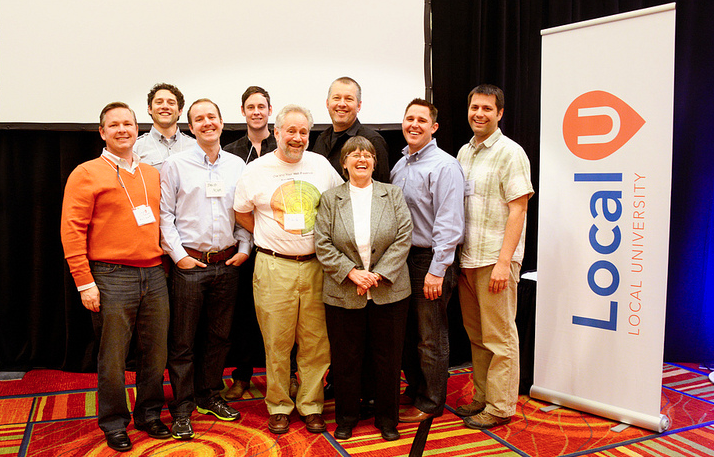
Local U brings together the brightest minds in Local Search.
With Local U just around the corner, I’m getting really excited about the opportunity it’s bringing to New Orleans. While there are so many things I love about the this city, it’s not necessarily known for its booming tech industry… yet. Local businesses could use a technological boost, and that’s exactly why I’m so eager to have Local U in our city. This informative event brings together some of the top players in local search to give entrepreneurs an introductory training session in Internet marketing.
Local University will take place at Tulane’s Lavin-Bernick Center on May 7, from 8:30 am – 1 pm, featuring tons of great speakers and topics. It’s extraordinary to have so many great minds come together to share their wisdom. Experts in the field such as Mike Blumenthal, Mary Bowling, Ed Reese, Aaron Weiche, and Mike Ramsey will all be there, as well as the lead Consumer Support staffer from Google Places.
I see local U as the perfect way for anyone who is managing their local online marketing, or managing those who do, to learn practical tools they can use for any current or future enterprise. There’s no better way to spread the word about your business in this day and age than online, and this conference gives you the know-how to do just that. I know a lot of people who have no idea how to clean up their reputation online or connect with clients through social media, and they often don’t know where to turn to harness these skills.
With sessions like Getting Social Online and Going Local with Google, individuals who have never previously taken an interest in search engine optimization, local search, or even social media can learn how simple techniques can maximize their online presence. If you’re interested in learning more about marketing your business online, make sure to sign up now!
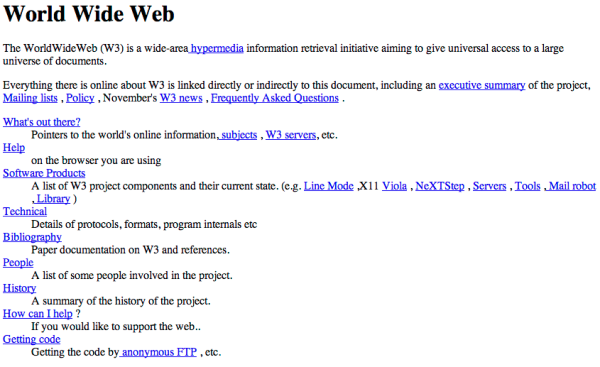
May 1, 2013 was the 20 year anniversary of CERN making the Internet available to anyone. Using today’s technology, which search engine do you think would be able to find the site considering that neither engine existed back then?
This is what the world’s first website looked like.
Getting new customers is great for any business, but the real challenge is retaining your existing customers. This 5 chapter guide explains why it’s important to focus your energy on remarketing and reconverting.
Twitter launched Vine on January 24, 2013. On January 25th, Khoa Phan created his first vine…and the rest is history. Check out his creative and colorful stop-motion vines in this article.
We are excited to announce new additions to the Search Influence team!
John Breerwood has been hired as an Internet Marketing Associate. Born and raised in New Orleans, John attended Louisiana State University where he received his bachelor’s in English. He received his Master’s in Creative Writing from New Mexico Highland’s University. Before joining the Production team, he was an English composition instructor and college radio DJ.
Elena Jambusarwalla has been hired as an Internet Marketing Associate. Elena moved to New Orleans shortly after graduating from Louisiana State University, where she earned bachelor’s degrees in English and Mass Communication. Before joining the SI team, Elena worked as the Associate Editor of Baton Rouge Parents Magazine.
Alexandra Stoicof has been hired as an Internet Marketing Associate. She attended The George Washington University in Washington D.C. where she received her degree in International Studies and Geography. After graduating, she worked for The World Bank and is now a freelance cartographer alongside her job at Search Influence.
Mary Silva has been hired as an Internet Marketing Associate. Born and raised in New Orleans, Mary is currently a Marketing major at Tulane University’s A.B. Freeman School of Business. Mary will graduate next spring and plans on continuing to pursue a career in online marketing. Prior to working for Search Influence, Mary worked at Tulane’s Executive MBA program as a marketing assistant.
Susannah Bunch has been hired as a Junior Account Associate. Native of New Orleans, Susannah attended the University of Alabama where she received her degree in Human Environmental Sciences. Before making her way back to New Orleans, she worked as an Event Planner in Destin, Florida.
Mac DeLaCruz has been hired as a Junior Web Developer. He made his way to New Orleans after leaving his home state of New York. Mac graduated from Hofstra University with a bachelor’s degree in English with minors in African Studies and Computer Science. Before working at SI, he spent six years as a Computer & Printer Support Specialist.
Shane Kretzmann has been hired as a Web Developer. Originally from Minneapolis, MN Shane moved to New Orleans in the early 90’s. In 1996 he started the city’s first Cyber Cafe; Realm Of Delirium, pioneering the industry in Louisiana. As a result of Hurricane Katrina he moved to Connecticut where he worked as the Web Service Group Manager for The Walker Group. Shane has since moved back to New Orleans and recently worked with Force Multiplier Solutions where he was part of a team that wrote software used in city bus stops today to alert riders the ETA of their bus.
Annette Golemi has been hired as a PR & Marketing Associate. She is from Mandeville, LA and attended Louisiana State University, where she received her undergraduate degree in public relations. Following graduation, she moved to Austin, TX and worked at a local public relations agency for one year before returning home to Louisiana.
Bing has made some significant changes in its local business listing management platform. Bing Places will replace the old Bing Business Portal, and along with the name change comes a simpler system that strips away much of the non-local search functionality that previously existed. Learn more about the update and decide whether you think this is a good move for Bing.
HubSpot’s 2013 State of Inbound Marketing Report has been released, and they’ve distilled the findings down to the 10 biggest discoveries. More than 3,000 marketing professionals from all over the world participated by sharing their thoughts on everything from strategy and organizational alignment to channel and budget management.
Building a better online community around your business has a number of advantages. This author urges you to focus on the hard work of attracting the right kind of customers to your community rather than chasing the latest algorithm updates.
All of the best tips, guides, tutorials, and resources that Google has offered on SEO are all here in one place. You can find everything from beginners guides to some advanced programming concepts that will help you become an optimization expert.
Dynamic search ads became a hot topic when they were recently added to all AdWords accounts. Advertisers expecting to increase profits simply by using DSAs on standard settings should think again. Here are some tips to make the most of your dynamic ads.
1. Back to Basics: Meta Descriptions 101 – Search Engine Journal
If you haven’t looked at your meta descriptions in over a year or 6 months, it may be time to refresh your meta data. Meta descriptions are the ones that will show up in search results, so they should sound coherent to humans. Read this refresher on meta tags.
2. Thinking about adding 10,000 pages to your site at once? Take caution. – Search Engine Land
If you are adding a large number of pages to your site, it is better to do so in stages according to Google’s Matt Cutts. Adding them in batches may be better. Releasing thousands of pages at once may cause Google to manually review your site for any suspicious behavior.
Google image search, universal image search, Bing image search. How do you keep them all separate? AJ Kohn from Blind Five Year Old walks you through the process of setting up filters for image searches in Google Analytics. Read and implement.
Attempting to take on Facebook and Yelp, the social check-in company rolls out its 6.0 update for its app. With local search as the primary focus of the new update, Foursquare users will see nearby recommendations and discovery features. Check it out.
According to a Syncapse report, a Facebook fan is valued at $174. The study takes a look at Facebook fans versus non-fans and analyzes their spending behavior along with their brand loyalty and several other factors. Would you agree with their estimation?
 Pinning for SEO: Pinterest Can Boost Your Rankings

 A lot of folks in online marketing are relatively new to call tracking. To those of us who grew up in and around the Yellow Pages business, they’re nothing new. In the Yellow Pages universe, they refer to them a number of ways. “Metered lines,” “
 The safest way to track phone leads is by dynamically switching the number using Javascript.

 1.
1. 
 I see local U as the perfect way for anyone who is managing their local online marketing, or managing those who do, to learn practical tools they can use for any current or future enterprise. There’s no better way to spread the word about your business in this day and age than online, and this conference gives you the know-how to do just that. I know a lot of people who have no idea how to clean up their reputation online or connect with clients through social media, and they often don’t know where to turn to harness these skills.
 1.
1. 






 Shane Kretzmann has been hired as a Web Developer. Originally from Minneapolis, MN Shane moved to New Orleans in the early 90’s. In 1996 he started the city’s first Cyber Cafe; Realm Of Delirium, pioneering the industry in Louisiana. As a result of Hurricane Katrina he moved to Connecticut where he worked as the Web Service Group Manager for The Walker Group. Shane has since moved back to New Orleans and recently worked with Force Multiplier Solutions where he was part of a team that wrote software used in city bus stops today to alert riders the ETA of their bus.
 1.
1.  2.
2.