SEO tactics work behind the scenes, pulling the Google puppet strings with keywords and coding wizardry. Congratulations! Your website traffic has doubled, and your site has more hits than a barroom brawl! However, while getting visitors is great, keeping visitors is better — and a pleasing, non-eye-searing website design can be crucial when you’re trying to win a potential customer’s trust.
With each installment of SI Design Theory, we’ll talk about a few simple styling tricks that you can implement in order to make your website more inviting. This week, we’ll be talking about fonts: the most basic element of any web design.
Difficulty Level: Easy
If Your Font Has the Word “Comic” In It, By Definition, No One Can Take You Seriously
Before we get into some of the finer points of typography, here is a list of fonts that will instantly date your site at about… 1998.
Comic Sans
Verdana
Courier New
Papyrus
Stay away! Yes, a few of these fonts are web standard and browser friendly. They’ve been around since the fetal stages of the Internet, but that’s probably not what you want your website to say (and the font, quite literally, says everything).
Here are just a few substitutes that are just as clean and readable as Arial Regular, Verdana, and Courier New:
Abadi, Gill, and ITC Kabel are fantastic at smaller sizes, and look great within body copy or as H1s (headers or subheaders). Helvetica Neue, as the name implies, is a modern twist on the old designers’ standby (better in large sizes). Arial MT Condensed, or almost any condensed, sans serif font, is a bold and eye catching choice for headlines.
Protip: You can use any licensed true type font on your website with this nifty CSS trick.
Minding the Gaps
When it comes to readability, spacing is everything. Let’s take a look at Abadi MT Condensed Light, in its unstyled glory, with no attention paid to its default spacing:
Perfectly acceptable, but with a little spacing, we can make this much better:
Space between letters is called “tracking.” Space between lines is called “leading,” or line height. As a general rule, large fonts need tighter tracking and larger leading. Small fonts need looser tracking and smaller leading.
If someone can come up with a snappy mnemonic device for remembering this, call me. But for the rest of us: play with line height and letter spacing until your text reads comfortably. You’ll also want to mind your margins. Give your paragraphs plenty of room to breathe on all sides, top, bottom, left, and right.
And never forget! Always justify (align) your text!
(Don’t) Paint It Black
We’ll talk about eye catching vs. eye searing colors in an upcoming post, but for now, a simple lesson: consider bringing your body copy down from stark black to a lighter shade of gray. Use blacks sparingly to create emphasis where you need it. As long as your grays are not too light, it will give a more pleasing and more modern look to your copy.
Fun With Fonts! Drawing With Type
It’s true that images will attract the eye in a way that simple blocks of text cannot. However, a well styled page doesn’t need to be bogged down with 100 stock photos in order to get your message across. The following image was made entirely with type.
Try resizing punctuation for a conjunction that is both useful and attractive. Bringing curling fonts together with tight tracking (as seen with P22 Zaner Three) can create unique borders and stylish separators. Even webdings (remember those?) have their place, as seen here with Unca Pale.
P.S. Never underestimate the impact one good drop cap.
Next time: Communicating with your visitors through color
You might be very surprised by what your customers really think of your business, especially if you haven’t looked before. Go ahead. Take a second and go Google any business. I googled sandwich shop reviews New Orleans.
All business owners know a businesses online presence is important, but to what extent might not be fully appreciated. Consumers continue to evolve the way in which they research and buy goods or services. Online shopping is a multi-billion dollar industry and continues to grow every year. Recognizing its importance is vital to the success of any business. No longer can businesses ignore what its customers are saying about them. Much like word of mouth, online reviews are growing in popularity and trustworthiness.
As social media and technology continue to root themselves in peoples daily lives the value of a well managed online presence continues to grow. The ability of a customer to express themselves freely and anonymously on the Internet can be a scary thought to many business owners, but proper monitoring of the top channels can result in very valuable advertising.
In the automotive industry, dealers blanket the air waves with television commercials, radio spots, direct mail pieces, billboard advertisements, and many other forms of advertising. But the decision process does not end there. There is a negative stigma related to the auto industry that makes people tend not to trust car dealers. If the money spent on advertising is met with an overwhelming number of negative reviews it is safe to assume potential buyers see this information and that the money was probably wasted.
In response to this dilema, people flock to online reviews to get an opinion. According to a Nielsen study in April 2009, consumer opinions posted online was the second most trusted form of advertising.
Why not use that to your advantage?
In theory, every single customer becomes a brand ambassador either positively or negatively expressing their opinions. For a minimal investment a dealer can leverage the word of mouth of all of their satisfied customers to enhance their businesses reputation. You can not control what they say, but you can take the following steps to help maintain your online reputation.
The three most important things someone can do to improve their online reputation are:
Maintain and Monitor a list of the top review websites in your industry
Treat all comments seriously and respond quickly and courteously. Use the channel where the review first appeared to respond.
Take the conversation offline, this does NOT mean get the comment removed. It means reach out to the reviewer with another way to contact you. Give them your phone number, set up a meeting, or send the person a direct message asking what can be done to help resolve or rectify the issue. Not all issue can be resolved but by reaching out to them you show everyone that you care what people have to say or think.
As food for thought, Where would you eat? I know where I would…
Recently, I decided that life would be simpler if I got a Mohawk — but a nice Mohawk, one carefully mown and primped into shape by a professional. I looked up my options with Google maps. This way, I could see where the salon my friend recommended me was located, how far it was out of my daily route, and what other closer options were. Google Maps gave me a pincushion map of the New Orleans area, and I started browsing each salon along my route from work to home.
Some listings had scant information and required me to turn to a Yelp page for the pertinent information. It’s not a huge inconvenience, but really, there aren’t many reasons you shouldn’t claim your business on Google Maps and fix up the listing with all the basic information. Most people turn to this tool for directions from point A to point B, and many take it for granted that whatever they need to find in the world will somehow be notated accurately on there already.
For example, Osama Bin Laden’s Hideout got its own little thumbtack on Google Maps’ canvas almost instantly its location was revealed to the public (yes, Google finds everything). Its corresponding Places page, though not a business, has acted as the Internet’s gathering point to gaze upon the building in question and post roughly 1600 snarky reviews about its interior and past owner.
However, if Osama’s hideout had been a business of inviting snipers to give their best go at him, he would have had a tough time getting any visitors to his locale. Here is a side-by-side comparison of what his location tag looks like compared to a bonafide business listing.
Three things to note. First, Osama’s hideout does not have his street address listed. This would make (and did) him very hard to find. Second, he has no contact information. How would potential customers ever know his business hours or rates? They can’t even visit his website, since that is the third thing he does not have listed.
If Osama had felt like optimizing his search results, he would have probably endeavored to go through the admittedly involved process of claiming his business on Google Maps. The effort is worth it, since most people looking for a business will inevitably want to know your location and get driving directions. Might as well make it convenient for your potential clients before they even set foot through the door.
Google has landed in hot water in France after offering its Google Maps product for free in the country. America is known as the land of the free, and we all know big businesses get to do pretty much whatever they want. The idea of a government stepping in to say a business can’t give away a service for free strikes me as particularly French.
But while this move may not slow down the Google machine, it could open the door to similar lawsuits as Google sets its sights on new markets in previously un(Google)mapped countries. Could this be the beginning of a real life game of Risk that Google might not want to lose?
France Fines Google for Flying Free
French officials allege that the search engine giant is unfairly leveraging its massive size to crush smaller French competitors who offer similar services to paying customers – specifically Bottin Cartographies, who initiated the lawsuit in 2010. A 500,000 Euro fine was leveled against Google as the result of the lawsuit, coupled with an additional 15,000 Euro fine.
A smaller company — maybe Bottin Cartographies — would take this as a huge and potentially disastrous setback after they sunk an untold sum into digitally mapping a new market, but something tells me Google isn’t losing too much sleep over this. To illustrate how much money Google made in 2010, SEOMoz deconstructed what Google’s reported 2010 earnings of $29.3 billion could buy.
Let’s just say no one needs that many Justin Bieber albums. Ever.
Quoi?
So what’s the big fuss over the relatively small fine?
Aside from the ongoing anti-trust legislation facing the company in more than half a dozen different jurisdictions, Google has had a relatively straightforward plan of attack since its inception, and charging for services like Google Maps isn’t part of that plan. Generally speaking, Google offers a free service that few can match in quality – search, maps, email – and then sells ads connected to that free service. Advertising is what makes Google’s world turn, and it’s much more difficult to sell ads for a service people have to pay to use than one anyone can access anytime they want to.
So if this French incident is an indicator of what Google can expect to see as it expands overseas, it could find itself on the slippery slope of charging some users for a service that is free in other parts of the world.
I guess what it boils down to is this: would you pay for Google Maps? What about anything else Google offers for free?
Welcome to the Internet — but look up, you’re about to crash! If you are surfing the web today, it’s likely that your surfboard of choice is your phone. Hopefully you’re not multi-tasking behind the wheel of a car, but smartphones can provide most people with extremely useful tools for everyday life. As for marketers, surf’s up! Phone marketing is the new big wave.
The dawn of the Internet brought a whole new meaning to the desktop. Instead of a work machine/second-rate gaming station, we gained a window into the whole world, with access to new games, programs, ideas, music, arts, niche news outlets, and fascinating people. There are free games, for surf’s sake! And no longer do free games mean Hearts, Mine Craft and Solitaire. We now have whatever we can get our downloads on to. And even if we want a game with a little more oomph, we no longer have to pay what now seems like a rip-off premium at our local retail national chain. We no longer have to buy what the retailers in our neighborhood are contracted to sell — the Internet lets us seek out what we want with hyper-specificity.
For marketers, these are vehicles for their product. Web page after web page is filled with banners, popups and text-based ad campaigns. Spam emails flood our inbox every morning. Of course there are some more appealing and friendly avenues, including blog content campaigns and the ever-important SEO; the potential for abuse is there, but there are subtle ways to do it. All of these tactics have been frequented by marketing professionals for the past fifteen years, and they have produced extremely successful results for businesses independent, corporate and all between.
The desktop is regaining its position as a work machine/game station, except every aspect of the desktop is now souped-up with the addition of the Internet. We may have a desktop that has a free copy of Open Office we grabbed online with a few clicks of the mouse, rather than a $249 copy of Microsoft Office. Even though Open Office is free, this very blog is being drafted on a licensed copy of Microsoft Word, because it’s already installed on my Mac. Why would I bother downloading what may or may not be sub-quality when my employer has already payed for this licensed copy of Microsoft Office on my machine? I could if I’d like, but again, why bother? Open-source is a draw, certainly. Maybe you will just prefer to use Open Office unless you’re in an environment where it is mandatory. I’d say that defies the path of least resistance. And that leads us to the trait we love about the Internet: it embraces the path of least resistance. It also has a pretty solid record of rewarding those individuals and entities that also embrace said path. So where am I heading with all this? Well, the path of least resistance: the mobile phone.
In 2012, the Internet is on our phone. If I’m riding along in a car with my friends and we want to know what’s on the menu at a restaurant we’ve never been to, are we going to stop at a friend’s house to use the computer or, worse, go there ourselves? Oh no. There are mobile phones in our pockets that will be telling us what’s on that menu. Even if the restaurant’s website (if they have one) is not mobile-friendly, there are a slew of menu sites out there that are optimized for people in our exact situation. The question is, which site is optimized for our phones? That is the question you need to ponder as well, even in the context of your own website or marketing campaign.
If you think that the Internet on the phone is only for those who are away from home, then you forget about the path of least resistance. If I want to know who plays “Spartacus” in the new season premiere, my friend on his Evo already has the answer before I’ve even lifted my laptop from the coffee table in front of me. With the phone, the Internet is either already in your hand or less than a foot away. Desktops are becoming less and less the vehicles of surf, regaining their position as just workstations and game systems. The mobile phone is the new vehicle of surf. It’s small. It’s simple. It’s easy. And if you care about your bottom line, you better hop on this wave, or find yourself on the rocks.
There are ways to prepare yourself for mobile phone marketing, like optimizing your website for mobile phones. To get into the real game, you can start testing out text marketing campaigns which are a real treat for bottom line as they are quick and easy for you to deploy. You can also engage with mobile phone-focused search engines. We will get into this and more in our next installment!
Are you one of the many business owners who’s decided to start a business during this challenging economic time? Competing online right out of the gate can be a deciding factor in your establishment’s survival. You’re probably already investing in your online presence to some degree, but check out this handy guide by Stoney deGeyter on the areas to maximize the potential of your efforts!
Getting More Clicks On Twitter (Infographic) — Marketing Pilgrim
Have you devoted serious thought to your content plan, scheduled your tweets in a timely manner and established a solid follower base, but still just aren’t getting the traction you want from Twitter? Optimize your tweets’ potential with this handy info graphic.
No matter how big the brand or careful the marketing team, nobody is entirely immune from a social media gaffe. When these events occur, however, the most important part is the response on the brand officials’ parts. Outspoken Media’s Lisa Barone takes us through a notable incident, and gives a few pointers on conducting oneself with grace via social media. Which segues nicely into…
Using Social Media Profiles for ORM [Online Reputation Management] — Graywolf’s SEO Blog
Online reputation management is as simple as making sure that positive chatter around an individual or establishment becomes more notable and relevant than potentially pre-established negative sentiment. Here, Michael Gray gives a network-by-network rundown of what you can do to make sure your brand is out there, established and buzzed-about.
How To Respond To Negative Reviews — ProNet Advertising
If you run a business, then chances are you’ve experienced a negative online review or two in your time. Valid or not, these reviews can really sting both on a personal level and potentially negatively impact your business. Here, Pronet’s Jen Williams gives some advice on how to best respond to a less-than-glowing evaluation in the online sphere.
And as a bonus, here’s a reminder: if you haven’t seen it yet, our new Google+ for Business ebook, Seven Steps to Social Media Heaven, is now available for download! Check it out and get all the best tips on building up a circle, promoting your business and tracking your success with the fastest-growing social network out there.
The biggest thing happening in technology this week is far and away the backlash against SOPA and PIPA. If you somehow missed the issue or need a refresher, check out the 10 minute video below, promoted via the Gizmodo page linked above or this Forbes article. Basically, Congress is trying to protect intellectual property in the United States with a bill that many people think will interfere with the safety and or architecture of the internet, and bring about the possibility of rather arbitrary government demands that sites be shut down or prevent transactions via court order. The blackouts seem to have been very effective. According to Reuters, Congress recently balked at the issue.
Have you ever seen a site with ads all over the place? So much so that you didn’t know where the actual links of interest were (‘fess up, torrent-heads)? Google ain’t feeling it. Search Engline Land recently announced this algorithm change which will unbelievably penalize those good folks over at MegaUpload, FilesTube and others.
Google is doing some pretty gnarly information-gathering with regard to public health. The flu trends page is a map of geographic locations which and their flu-related search activity. According to the CBS post, researchers at Johns Hopkins have found useful correlations in tracking the flu. For now on, if you get the flu, it’s your civic duty to Google the word flu 10 times that day.
The SEOmoz blog published an interesting Whiteboard Friday today about how to make your boring but necessary content rank well. One of my favorite strategies is to combine the good content with the sales-oriented boring content. If your website ranks well for relevant terms that aren’t turning into conversions because the popular page doesn’t have the sales information, try this tactic and see what happens.
This is interesting piece in time discusses Google’s new service, Google Search Plus Your World. Many say that the new service violates anti-trust laws by placing it’s own product ahead of others in certain search results. According to this writer, that’s not the case, as “Google is not violating antitrust law, first and foremost, because it does not have a monopoly on search,” and its biggest problem to worry about is user dissatisfaction. While I have recently been skeptical about the former there may be something to be said for the latter.
Google released their annual “Year-End Zeitgeist<” last month, a look back at the most popular search terms of 2011. The corporation defines zeitgeist as “the spirit of the times.” Despite the self-aggrandizing name, the Google Zeitgeist paints a mostly trivial picture of the past year.
I hardly know what zeitgeist means. I do know the term lends itself to pretension. It is probably more accurately defined here as the “general cultural, intellectual, ethical, spiritual, or political climate … along with the general ambiance, morals, [and] sociocultural direction” of a particular time. Though I hardly know what any of that means either, it sounds measurably less romantic and nebulous than the “spirit of the times.”
At any rate, the so-called zeitgeist of 2011 revealed itself rather dryly through “the aggregation of billions of queries people typed into Google search.” Instead of ranking the most popular queries by quantity, Google murkily curated the “fastest rising” searches.
Surprisingly, Google+ was the second fastest rising search of the year. Fair or not, Google+ users have been likened to tumbleweeds passing through a ghost town. That’s good for 2nd most zeitgeisty in the zeitgeist rankings? Smells like heimvorteil (home field advantage).
Home cooked algorithms aside, Google+ was nonetheless outdone. Rebecca Black was the “fastest rising” search of 2011. The spectacularly untalented teenager reached the pinnacle of online celebrity because of our culture’s virtually endless capacity for schadenfreude and shit flinging – which actually might be the “spirit of the times.”
The rest of the top 10 fastest rising searches uniformly consisted of death, entertainment, and technology – occasionally intertwined (Battlefield 3, at #5). More or less, these are timeless anxieties, curiosities, and preoccupations. This guy (Steve Jobs, #9) died, and that guy (Ryan Dunn, #3) died. This thing (the iPad2, #10) and that thing (the iPhone 5, #6) will make life easier.
Just how much can the most popular search terms reveal about our culture as a whole? I would think a lot; but the evidence points to something more marginal.
The truth is, search engines are inherently commercial – which says a lot for internet marketing, if not much about our erstwhile spirit. For the most part, people use Google to find breaking news or things to buy. Accordingly, the “Zeitgeist” results are minimally insightful, no matter what Google calls them. It requires some major leaps, bounds, and assumptions to glean anything about our “general cultural, intellectual, ethical, spiritual, or political climate” from Ryan Dunn dying in a car accident.
For example, New Orleans has a very clear-cut identity. Looking at the fastest rising searches and terms in the area last year, what stands out about the city? New Orleanians really want the iPhone 5 and some pizza. I guess that bodes well for the papajohns.com iPhone app. The spirit of the city is nowhere to be seen, though.
While Safesearch is apparently on when amassing the numbers, by trumpeting the year-end peek at search results as our “Zeitgeist,” there is no lack of wanking on Google’s part. Perhaps next year they should title their findings “bedeutungkitsch.”
Nearly everyone in the technology sector, especially those focused on the Internet, have een talking about the Stop Online Privacy Act and the Protect IP Act. We’re not here to debate the finer points of combatting intellectual property theft on the internet — the “SOPA Blackout” has done a fine one-sided job of that. (If you’re interested in a very in-depth look at the whole saga, try Forbes’s information dump.) This “Blackout” has all the right components of a perfect case study of SEO, technical site architecture, viral marketing, and the nature of the internet.
As a preface, President Obama has basically said SOPA in its current form is a no-go. Similarly, by 8:30am, SOPA was losing supporters in the Senate. Whether by virtue of the Internet’s rage or by simple practicality and a realization that the legislature was in over its collective head, SOPA and PIPA seem to be sidelined. Similar bills are waiting in the wings, but will likely not see the light of day until months later.
Full Blackout
Imagine a World Without Wikipedia
Two sites led the initial charge for the Blackout, and they did it almost completely. Reddit and Wikipedia have nearly completely blacked out their sites, both seemingly using JavaScript. Wikipedia has done this by hiding all the content on the page, then adding a content block using jQuery. As soon as this happened, some found a way to hack around it using a browser console, but most users will lose access to one the most-trafficked pure information sites on the Internet. Wikipedia’s method likely has no SEO impact, but is effective at getting the user to do what the site wants — ponder life without a user-generated information source like Wikipedia, and use their already-extant legislator search to find the right person to bug about the issue.
What if I want a news link?
Reddit, on the other hand, is serving a totally different page for all links to the site. Not only is it providing information and calls to action to call a representative or sign a petition, but it also provides a list of compatriots who have also “gone black.” But both of these full blackouts highlight a major problem for a business site — what if someone is looking for your site? Looking for your content? Looking to buy something from you?
Man, I hope they meant to do that…
One of Reddit’s brothers-in-arms is the game Minecraft, which is a for-pay game that’s been a bit of a media darling for its bizarre gameplay. But today, if you’re trying to find out about the game, all you can find from the site itself is that they’ve shut down the site in protest of SOPA. And that’s the gamble with a full takedown of your site — are your users aligned with you enough to understand or even support a totally unusable site? Is Wikipedia going to lose share to About.com or another mirror of the encyclopedia? Will Reddit lose share to i-am-bored.com?
The answer is, not really. Barring some shocking numbers come tomorrow, even any lost traffic today will be forgotten tomorrow. In addition, the kind of domain-level link-love and social clout that will be showered upon these sites may override any short-term losses. Essentially, we won’t forget that Wikipedia still has solid information about every Pokemon, that Reddit is the nouveau-garde of social sharing, or that minecraft.com is probably a trusted source for information about the game.
Blackouts for Smaller Sites?
But for personal sites, small businesses, and other smaller sites without the kind of instant recognition, the loss of a sale might be too much. While we’ve talked about the general level of knowledge of website owners, nowhere is it more evident than when this kind of blackout goes bad. WordPress has been shilling its “SOPAstrike” plugin, to be used by website owners to serve an SEO-friendly “503 Service Unavailable” error and redirect to yet another page to contact someone in charge. It’ll even bring your site back whenever it’s done!
Notice that phone_home()? The plugin description does mention that it will add your url and name to a petition automatically, but with all the vitriol and pushing, who has time to read all of 15 sentences? In addition, you’re trusting this author to not say, publish your link to a bunch of “bad neighborhoods” as SEOmoz likes to call them. It’s a security hole, even if it’s one with someone you think you can trust. Can your business handle that? Barring technical issues, will your business be able to lose that traffic and still make your daily sales? Certainly one bad day even if you have no sales shouldn’t wreck your profitability, but will one day of actually being down and then a few more days until your site has been crawled again? What if you forget something and are still serving the wrong kind of page?
Man, and I liked that game…
If you’re not going to use the recommendation and use something like Wikipedia’s javascript content, a small business oftentimes doesn’t have enough resources to consider the SEO implications of what it has done. The team that is making the game Overgrowth didn’t. This is a snippet from their site, a first-page result for the term [sopa successors]. While their splash sure is pretty, do they want such unrelated search traffic? When will their site be crawled again before Google thinks the home page is highly related to SOPA?
And what about the plugin they used? All programmers are not SEO whizzes. While it’s easy to slap your forehead on such a boneheaded move, you can’t assume that even a popular plugin will be the right way to create your protest. Again, the simple solution for small businesses is not always the safest for their search rankings.
Porn and Other Easy Fixes
Of course, blocking out your site or even worrying about if your content is being crawled is not on your radar if you simply change your images a little. Matt Cutts, Twitpic, Google, and some of your Facebook and Twitter friends have used this method to show that they do not support the bill. This easy change usually has little SEO effect, but you could get some interested search if you use image alt tags intelligently.
Porn Companies Care!
But it’s not just the highbrow ivory-towered linkerati who are protesting SOPA. Porn companies are doing it harder. One of the industries most impacted by SOPA could be adult entertainment. Many sites are user-generated, falling under the same licensing and piracy issues that YouTube would have. These companies have largely installed banners or JavaScript “click to see your content” splash pages.
Viral Call to Action
Moving from porn to an almost-related subject, the virality of the SOPA blackout has provided a killer case for organic lead generation. A lobbyist group like the Electronic Frontier Foundation can easily get a list of supporters and possible wallets to back their efforts, simply by being the recipient of a large amount of blacked-out links.
What a Gorgeous Landing Page. What do you think they want you to do?
This page is a beautiful example of how to get leads. The opt-in for the newsletter makes the user feel like it’s solely to make a stand, sign a petition, and publicly project your feelings. But even if a user doesn’t click that box, demographics, cross-referencing with social networks for deeper information, and simple numbers of responses allows the EFF to better target its marketing efforts online. The EFF could also (but isn’t, in line with their ideals) grab referrer data or other tracking information to further hone their form submissions.
Finally, these form submissions would never have happened without truly viral support. Random people are linking to the EFF, because they believe in the cause that EFF is championing. They touched a true part in many internet denizens’ hearts, and have reaped the benefits. This kind of authentic sharing is at the key of this blackout — even as most sites have maintained some kind of functionality to their content. It’s not about the action here, but the message, and as sites from as many industries as can be get behind the message, maybe we’ll see the lasting search and marketing effects of the action as the week plays out.
Dream Systems Media is the copyright owner of this info graphic.
Yelp and Foursquare, Google Maps and Siri — these are just the most recent efforts in Local Marketing. The folks over at Dream Systems Media put together this amazing graphic on the History of Local Search today. It shares just how far we have come with local marketing, from word-of-mouth through radio and TV to today’s local search. We wanted to share this timeline with our readers over here so enjoy and Kudos to the DSM team for putting together such an awesome graphic on local marketing!


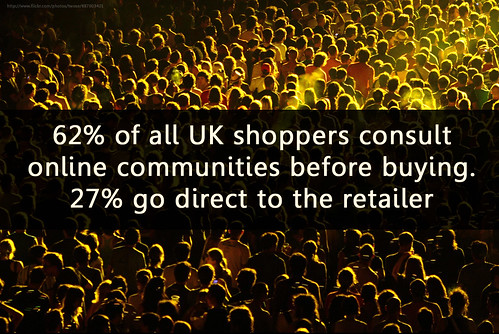 As social media and technology continue to root themselves in peoples daily lives the value of a well managed online presence continues to grow. The ability of a customer to express themselves freely and anonymously on the Internet can be a scary thought to many business owners, but proper monitoring of the top channels can result in very valuable advertising.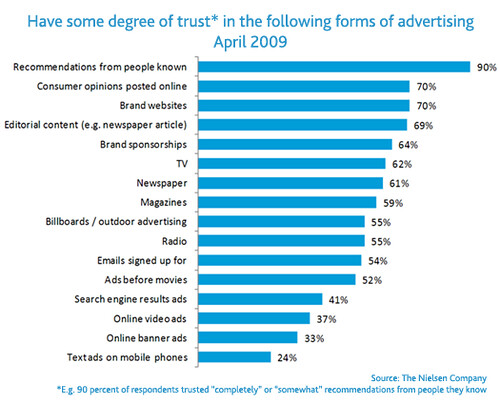

 Recently, I decided that life would be simpler if I got a Mohawk — but a nice Mohawk, one carefully mown and primped into shape by a professional. I looked up my options with Google maps. This way, I could see where the salon my friend recommended me was located, how far it was out of my daily route, and what other closer options were. Google Maps gave me a pincushion map of the New Orleans area, and I started browsing each salon along my route from work to home.


 For marketers, these are vehicles for their product. Web page after web page is filled with banners, popups and text-based ad campaigns. Spam emails flood our inbox every morning. Of course there are some more appealing and friendly avenues, including blog content campaigns and the ever-important SEO; the potential for abuse is there, but there are subtle ways to do it. All of these tactics have been frequented by marketing professionals for the past fifteen years, and they have produced extremely successful results for businesses independent, corporate and all between.