Category: SEO

  • Running With The Pack: Competing in Local Search Just Got Harder

    Running With The Pack: Competing in Local Search Just Got Harder

    Overnight on Aug. 6, Google updated search results for mobile and desktop searches from local seven-pack to a three-pack. This is not just in the United States; it seems to be worldwide and rolled out at one time. It’s really early to start dissecting this change, but I’m not seeing much good about it.

    What Does This Mean for Organic Search?

    For organic search, it means it’s even harder for searchers to find you. It looks as if these changes from Google are driving consumers to a business’ My Business page and perhaps encouraging more ad spending.

    Organic—Looking a Little Closer

    On Mobile

    Before Google rolled out this change, when a search on mobile gave local pack results, the user could immediately click on what they needed directly on the search results page, including:

    • Click-to-call
    • Click to get some directions
    • Click on the website

    Now, the mobile local pack only provides a click-to-call button:
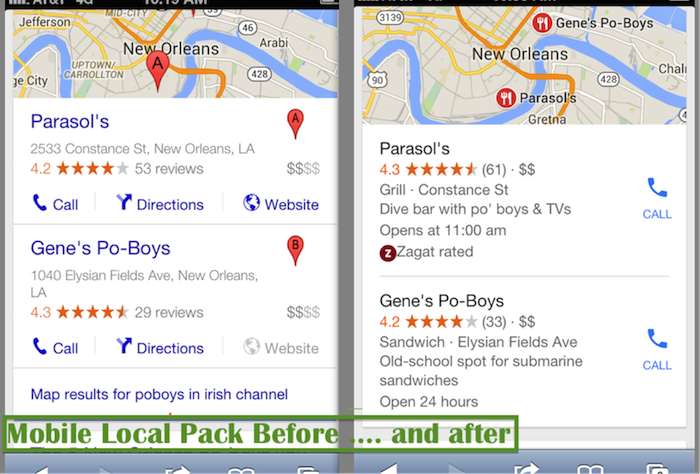
    Mobile Local Pack Click Call Image

    If the searcher wants to visit the website for more info, they have another click in order to navigate to the My Business page:
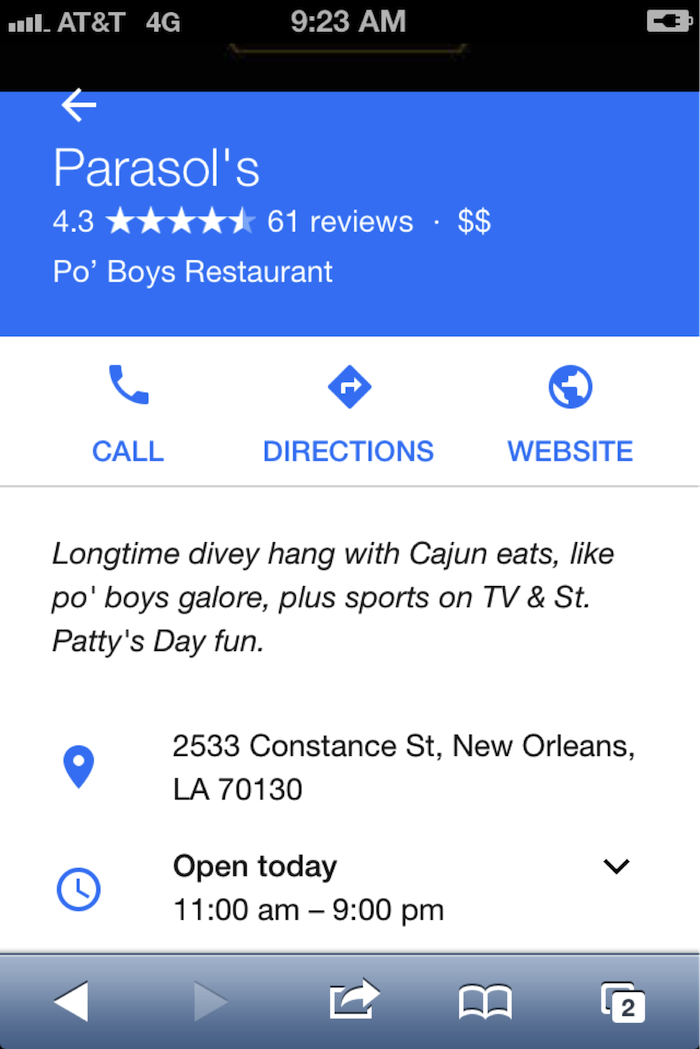
    Navigate Google My Business Page Image

    On Desktop

    With the new update, I get the three-pack with no immediate click opportunities:
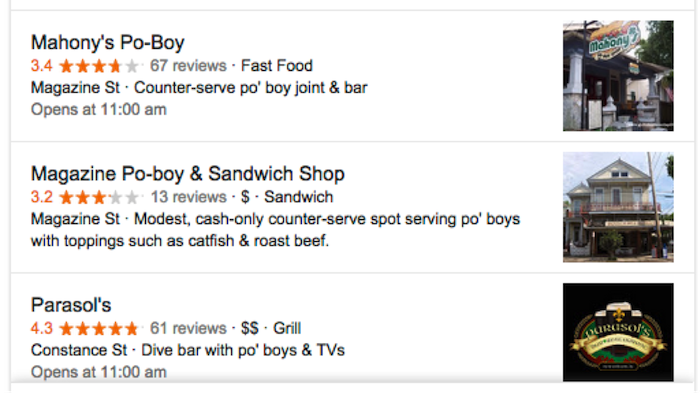
    DesktopThree Pack Google Image - Search Influence

    Update:

    Ryan Schulze, Senior Account Associate, commented, on this published post with an interesting correction. (It takes a village.)  He shows how some searches on desktop are giving the website link in the 3-Pack.  It suggests different search categories have different clicking opportunities.  I would guess this is based on percentage of search performed on mobile vs desktop.
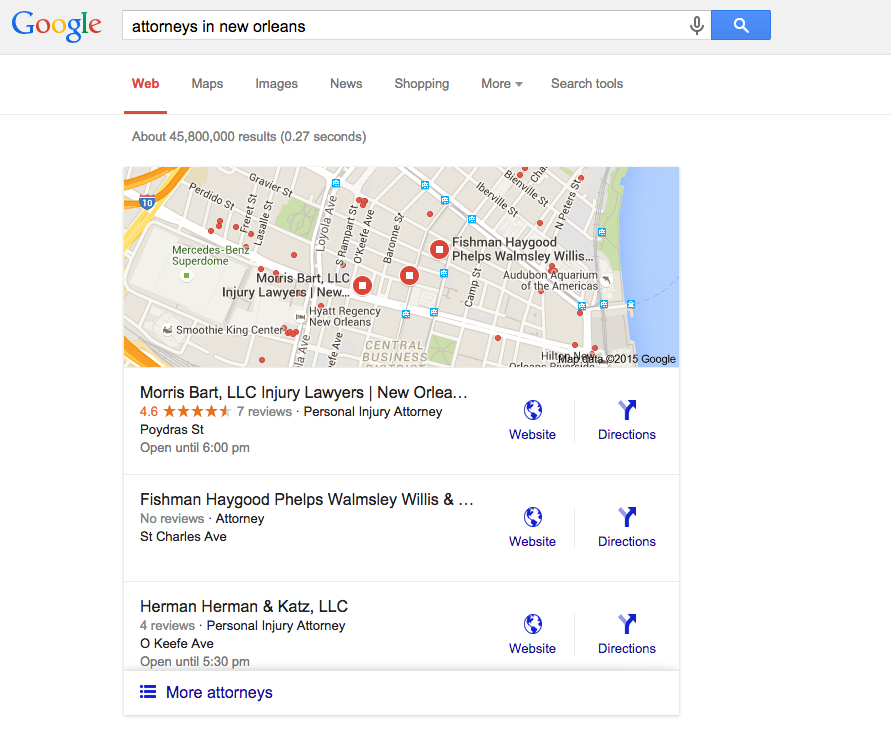
    attorneys in new orleans 3 pack desktop

    Back to the story …

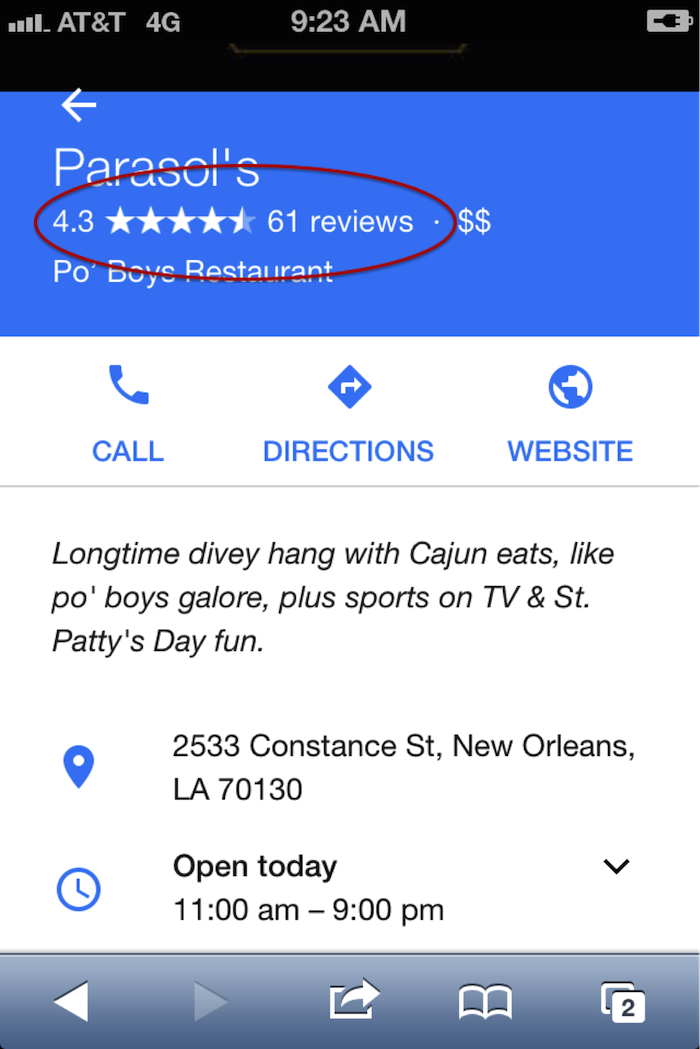
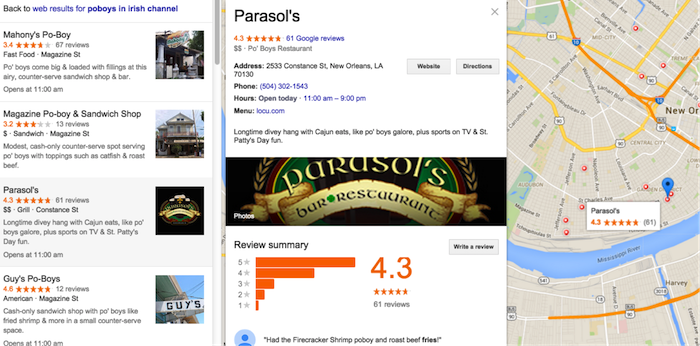
    I click on Parasol’s, thinking I will get its website or the Google My Business listing. Instead, it drives me to the local finder with ALL of the competitors right there!

    • This is not great if you’re in the three-pack because you must fight the competitors again for the searcher’s attention.
    • If you’re not in the three-pack, this levels the playing field. You have a chance to woo the searcher away from their initial choice.
    • If you are a searcher, it’s annoying because you have already indicated your preference with your first click, and Google forces you into an extra click to call the business. In addition, you are forced into viewing more choices after you made your decision.

    Desktop searches are losing ground to mobile, but desktop isn’t dead, and it still dominates search in some industries—usually those that skew to an older population.

    This does show us that it is still incredibly important to claim and optimize a Google My Business listing. Those Google My Business listings can get your business into the desktop local finder list, which is a long list of competition, so images and reviews are still important efforts to woo the searcher over to your business:
    Local Business Maps Pack Image - Search Influence

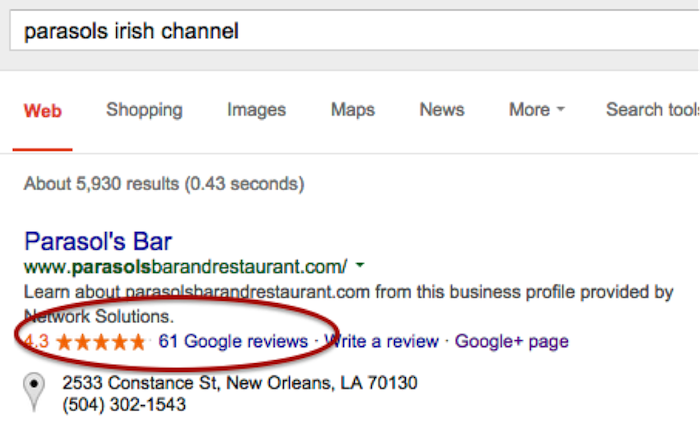
    Reviews on branded search results on desktop and mobile:
    Online Reviews Branded Search Image - Search Influence

    Online Business Reviews Mobile Image - Search Influence

    (FYI: if you’re ever in New Orleans in March, Parasol’s is a great place to be.)

    Early Data on Organic Visits

    I was chatting with Megan Lindsey, senior account manager at Search Influence, about the effect of this change for one client in particular. Lindsey sums it up nicely: “I imagine now since a searcher has to click on the business name and then once more on the ‘website’ button that people aren’t as inclined to keep clicking. I would think that most clients, even if they were in the top three maps results, are losing organic traffic because of it, but especially the ones who aren’t there anymore.”

    The early Google Analytics data supports Lindsey’s hypothesis. I found no great winners: Several clients’ Google organic was static, and several were worrisome. These clients are local businesses that are historically very strong in their markets. Over the weekend dates, there were 20 percent to 35 percent losses in organic website traffic, which seems to have rebounded Monday to Wednesday, so it appears things are still settling down.

    CLIENT A

    google / organic

    Aug. 7, 2015 – Aug. 10, 2015: 179 visits

    July 30, 2015 – Aug. 3, 2015: 285 visits

    % Change -37.19%

    Aug. 7, 2015 – Aug. 12, 2015: 319 visits

    July 31, 2015 – Aug. 5, 2015: 364 visits

    % Change -12.36%


    CLIENT B

    google / organic

    Aug. 7, 2015 – Aug. 10, 2015: 161 visits

    July 30, 2015 – Aug. 3, 2015: 210 visits

    % Change -23.33%

    Aug. 7, 2015 – Aug. 12, 2015: 161 visits

    July 31, 2015 – Aug. 5, 2015: 210 visits

    % Change -6.76%


    CLIENT C

    google / organic

    Aug. 7, 2015 – Aug. 10, 2015: 36 visits

    July 30, 2015 – Aug. 3, 2015: 54 visits

    % Change -33.33%

    Aug. 7, 2015 – Aug. 12, 2015: 58 visits

    July 31, 2015 – Aug. 5, 2015: 67 visits

    % Change -13.43%


    Have Calls Increased?

    The clients above usually do really well in the local pack and in organic website traffic, so let’s see what happened to their call volume. If you are a lucky business falling in the three-pack, consumers might be calling your business more now than visiting your website.

    When you log into the Google My Business page and go to Insights, this is the data you get:
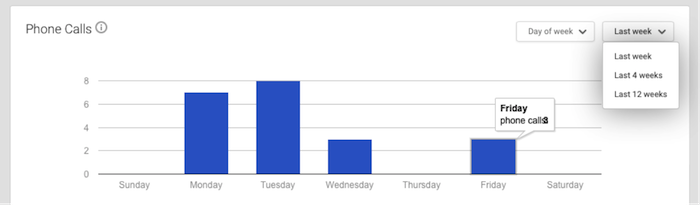
    Phone Call Data 1 Image - Search Influence

    It’s severely limited and not really insightful. The date ranges are not customizable. There is no data after Aug. 8. I have to wait until next week to get any data on effects of call volume from the three-pack rollout, and I can’t compare to the previous week. I will have to do some elementary math that surely Google could program to ensure a better user experience.

    The data is summarized to the point of being so generalized it is virtually useless. This is 12 weeks of call data. I know Google can do better.
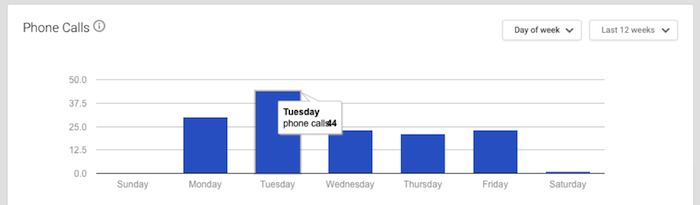
    Phone Call Data 2 Image - Search Influence

    It warns that call volume is “approximate and only significant values may be shown.”

    Also, the call numbers could be calls from three different sources: Google Maps, search and maps for mobile. This is so frustrating for business owners. I would want to know EVERY call I received! And I would want to know where I received the calls! Google has the data, and it just isn’t sharing with business owners.

    And Paid Search?

    On the first day of the this rollout, local search expert Mike Blumenthal made these early comments: “I am not sure what will happen on clicks for AdWords, but those businesses that were lower in the old display may feel compelled to double down on their AdWords activity.”

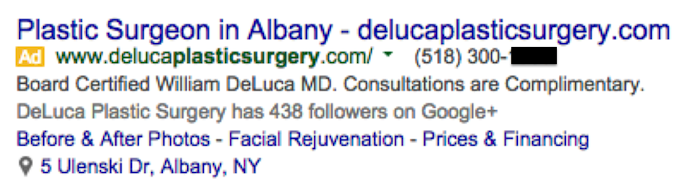
    I asked Jeanne Lobman, senior online advertising manager at Search Influence, to check it out and give us some input. “Those businesses that were previously only ranking in spots four to seven in the local pack (and nowhere organically) are now going to need to spend money on AdWords ads in order to be seen in the search engine results pages. Additionally, since Google has removed the website URL and the phone number from the local pack info, it could be beneficial to run AdWords in order to make sure searchers can easily find your phone number and call you (on desktop). This would be accomplished by using call extensions with your campaigns, which adds your phone number to your ad (as seen in the below example).
    Plastic Surgery Google Ad Phone Image - Search Influence

    On mobile, the local pack results do include the call button, but there’s no link to the website. When you click the local result on mobile, you are taken to the G+ page, which then has a link to the website. To avoid having that extra step, running an AdWords campaign on mobile ensures you can land people directly on your website with one click.”

    Lobman pulled some AdWords reports to see what impact this change may have had on click-through rate. She says it’s really too early to tell any effects, but the data so far suggests there seems to be an increase in clicks and impressions but little to no change in click-through rate, conversions and conversion rate.

    So Now What?

    We need to give it a little more time to settle in before we make any dramatic changes. When we looked at six days of organic visitor data versus four days of data, we see big improvements, so watching the data to make smart moves is the action item.

    Walk through the process that visitors might use to find your website online, and try to improve what you can control, such as adding phone numbers in your desktop AdWords ads or continuing to encourage reviews from your customers.

    Your engagement online is a reflection of how you engage with your customers in real life. Providing for the searcher with easy linking from ads, Google My Business images, reviews and informative website content is a long-term plan, and it’s a good one to win trust and authority.



  • Reconstruct the SEO Strategy of Your Medical Practice

    Medical SEO Image - Search Influence

    A referral by a physician used to be the most common way people chose health care specialists. However, now patients are turning to Google and other search engines for health information and to select a physician. In fact, 62 percent of smartphone owners used their phone to search for information about a health condition, according to the latest statistics from the Pew Research Center. Among those who look for online reviews to shop for doctors, roughly one-third reported choosing a physician based on good ratings, according to a national survey on the use of online physician rating sites published just last year in the Journal of the American Medical Association.

    To make the most of this trend, your practice must show up in Google search results prominently. If your practice is getting lost in a sea of search results, implement some of these medical search engine optimization tips to attract more patients.

    Create Great Content

    As demonstrated by the Pew Research Center’s facts on Internet use and health care, consumers today are hungry for health information. Your practice can benefit by providing the information consumers are looking for, but there’s a strategy to this. The days of simply putting the most common medical keyword strings all over your web pages are over. With Google’s new algorithm updates, websites that have consistent, quality content are the ones that will get the bump in the rankings.

    For a medical SEO campaign, create distinct web pages for related topics that prove your practice is  an authority on the subject. For example, an orthopedic practice that wishes to bolster its search engine rankings, should create separate web pages for a diverse range of topics such as  pediatric orthopedics and sports medicine. To offer more detail about specific treatments or procedures, these pages can then be broken down further into subtopics. On the sports medicine page, for example, include a subtopic about ACL reconstruction surgery or muscle tear prevention tips. Unsure what topics and procedures potential patients are interested in? With a personalized SEO package, Search Influence can help determine what topics your target consumers are searching for the most.

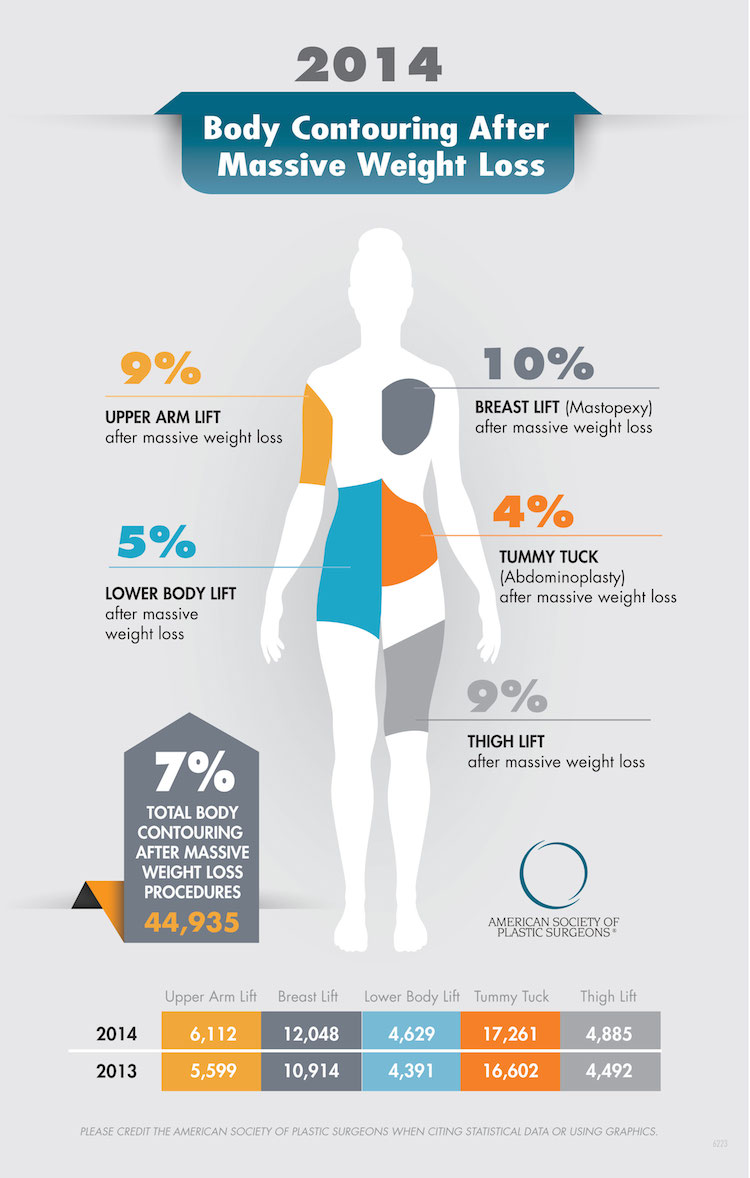
    Infographics are also great content to invest in for medical SEO because infographics can help grow website traffic. Research by AnsonAlex, a tech company focusing on tutorials, found that publishers who use infographics grow website traffic 12 percent faster than those with no infographics. In fact, the popularity of infographics has surged in recent years—increasing by 800 percent from 2010 to 2012, according to research from Web company Unbounce.

    Plastic surgery infographic image - Search Influence

    Image Optimization

    Along with infographics, you will want to include other images on your website as well. As we’ve said before, Google rewards websites that have interesting and relevant images displayed. Images keep people looking at your site longer, which gives you website more authority in the eyes of the algorithm.

    Help people find your pictures by optimizing them to include alternative text. For example,  say your practice has a diagram of what happens when a person suffers from a pulmonary embolism. If you optimize your diagram, it will likely appear when people perform a Google Image Search for pulmonary embolisms—possibly appearing as one of the first images they see. When they click on this image, they are giving a hit to your site and increasing your overall medical SEO ranking.

    Mobile Websites

    As evidenced by the whopping 62 percent of smartphone owners who use their mobile devices to look up health information, a mobile SEO strategy is  crucial. Google’s recent “Mobilegeddon,” or mobile-friendly update, was a move to further demonstrate just how important mobile websites are for SEO. It is imperative your medical practice has  a mobile-friendly design users can easily access on the go.

    But, be warned. Just because your Web developer tells you your site is mobile-friendly does not make it so. To see if your medical website passes the mobile-friendly test, use Google’s testing tool.

    Where has your medical practice seen the most success with Healthcare SEO and content marketing? Let us know in the comments.

    Image source:

    Infographic from the American Society of Plastic Surgeons


  • More Locations, More Problems? Optimize Your Franchise SEO—Part 2

    Franchise SEO tips image - Search Influence

    In part two of this two-part series about how to successfully optimize your franchise SEO, you will find three more winning strategies and steps for multi-location or franchise SEO.

    It’s All About Location

    The effort to have each location found in its own market is often perceived as the most challenging part of multi-location SEO. In part one of this series, we discussed the importance of building the central brand. Now we will tackle how to deal with individual location information, and the ways your franchisees can help to best optimize your franchise marketing and location SEO.

    1. On-Site Location Pages

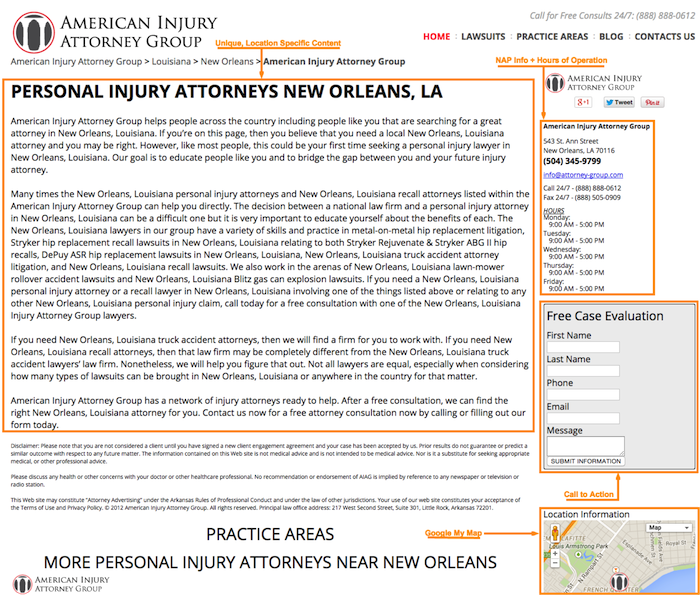
    Now that you have built up your central brand, it is time to focus on your individual franchises. Each franchise location should have its own location landing page on your company’s website. Taking extra care to create separate location pages allows search engines to better understand that you have individual locations in specific geographic areas. It also gives you an opportunity to tell users about the unique products and services offered at each different location.

    Here is a list of the necessary elements for an effective location page for Internet franchise opportunities:

    • My Map to Google+ page
    • Unique content for the specific location
    • Directions to the location from different landmarks, highways, surrounding cities, etc.
    • Photos of the location
    • Reviews of the location (probably best to have a separate page for these)
    • List of products and/or services (should link back to the main products/services pages)
    • Schema MarkUp to the name, address, and phone number
    • Link to the individual location’s social profiles
    • Link to staff member profile pages
    • Strong call to action

    Franchise SEO Tips 1 Image Search Influence

    As with all web pages, it is a best practice to implement unique, compelling content on your location landing pages. Users expect a rich experience when navigating your site, and bland content may turn them away. At the same time, content that is too dense with information or full of keywords may deter users from your web page. To keep site visitors interested, give them valuable information using bullet points in case they are in a hurry. Some multi-location businesses leave a portion of these elements to be completed by the individual franchise owners and managers. In an ideal world, this would be an effective solution, but knowing that these kinds of franchise marketing requests are often put on the backburner, it is best to have a solitary stakeholder in the corporate office responsible for these tasks.

    2. Citation Building

    Citation building is perhaps the most daunting exercise when approaching multi-location SEO. As it is with SEO for single-location businesses, consistency of name, address, and phone number in your online business listings is key. You will often see name formats including the location, such as “Company Name – Lakeview Location.” However, this is not a best practice for SEO purposes. Instead, remove the location information, and keep the business name exactly the same for all of the locations. The different addresses and phone numbers for each location will be enough to differentiate them for both Google and your potential customers.

    Each location should have a unique business description written for its online listings. This task may be best completed by individual franchisees, as it might be difficult for any one individual to write multiple, unique descriptions for essentially the same business.

    On the other hand, you should choose the same categories and logo for every location. Adding unique pictures of each location and its staff would be a nice touch, as well, but it may not be worth the trouble if you have upwards of 10 to 15 locations. Some directories will offer more fields than others. It is in your best interest to provide as much information as possible.

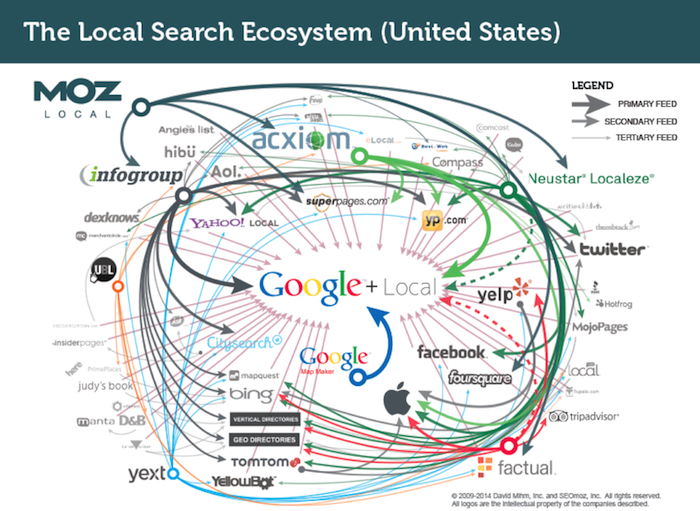
    Rather than taking on the incredibly time-consuming task of doing this for each individual business directory for every single location, consider using Moz Local. This tool makes pushing out each location’s name, address, phone number, categories, business descriptions, etc., to major directories as easy as a simple click of your mouse.

    As you can see below, the major online data feeds and directories share their information with each other, which should allow Moz to take care of most of your citation building and cleanup. Just 90 days after you submit the listings to Moz, go back and see where you stand. Some manual cleanup may be required.

    Local Search Ecosystem Image

    Expanding your search for niche directory opportunities for your company’s industry and each franchisee’s market is also highly recommended. By getting listed in these hyper-specific and hyper-local directories, you are giving search engines that much more information about what you offer and where your business should be found.

    3. Enlist the Help of Your Franchisees

    Enlisting the help of your franchisees may be a time-consuming task for some, which is why everything preceding this recommendation can be taken care of by one single source.

    Allowing each of your locations to manage its own social presence can be both empowering and helpful for your visibility in search engine results. To help manage the challenges that may arise, you should create a clear social media policy outlining what is and what is not acceptable. Make your branding and the content of the posts a top priority when creating this social media manifesto. You will also want to make this a working document just in case someone finds a loophole that needs closing.

    Each location should also be responsible for collecting positive reviews and testimonials from their customers. I would highly recommend incentivizing this effort and coaching your managers on the proper way to approach their customers. Written testimonials on the website serve as phenomenal selling tools. Reviews on Yelp, Google+, and other third-party review sites are even better.

    Getting everyone on the same page with webinars can also be advantageous to the cause. Some topics that you will definitely want to cover include social media branding, social media posting, social media interaction, and how to ask customers for reviews. Break each of these up into bite-sized chunks, and keep your focus on the industry’s top three social media platforms. Side note: record all of your webinars, and make them available to your franchisees at their leisure.

    Get Started!

    As you can see, there is plenty of work to be done in order to achieve success with multi-location SEO. As your franchise grows and brings on new franchisees, use the above recommendations as a checklist for each new location. You can get most of this done within a week’s time for each new franchise location. Doing so will save you a lot of trouble down the road. It may be in your best interest to contact Search Influence for your online marketing needs, especially including the complicated maze of managing multi-location SEO and franchise marketing.

    Image source:

    Local Search Ecosystem image

  • A Family Affair: Teaching Mom a Thing or Two About SEO

    Here at Search Influence, I have had the opportunity to work with a diverse group of clients—business owners from all kinds of different industries. But the best thing about coming to work every day? I have the privilege of working with a very special client: my mom.

    Bridget Mothers Day Image - Search Influence

    “So What Is It Exactly That You Do?”

    As the owner of two audiology practices, my mom has always been fascinated with the online marketing work that we do here at Search Influence. She understood well the need to strengthen her website and her practices’ online visibility in order to attract new patients and keep her business thriving. I encouraged her when she was ready to design a new, up-to-date, and well optimized website (something she desperately needed).

    Let’s Make This Official

    Although I was able to provide guidance and support, my individual capabilities were limited. Fortunately, though, I have the privilege of working with an extremely talented group of people with a wide array of skill sets. The next step was clear: it was time to get the Search Influence team involved and make my job as her “marketing consultant” official.

    Bridget Mothers Day 2015 Image Search Influence 2

    Giving Back

    I feel a great sense of satisfaction knowing that I am able to give back to such a hardworking, supportive, and inspiring individual. Through her SEO and online advertising campaigns, I have helped her attract more patients, strengthen brand awareness, and remain relevant in the highly competitive online marketplace.

    Working with her has been overwhelmingly positive. She is inquisitive, trusting, and always willing to help when needed. The only strange part has been adjusting to addressing her in this new professional capacity…for example, beginning a formal business email with “Hi Mom.”

  • More Locations, More Problems? Optimize Your Franchise SEO—Part 1

    Franchise SEO tips image - Search Influence

    Do you ever feel like your efforts to market your business with more than one location are ineffective? Do you live with the constant doubt about whether or not you did as much for one location as you did for another, or if your franchisees are doing something counterproductive that will painfully squander your efforts? You may also be wondering how to get users from all of your markets to find their corresponding local franchise business. How much is too much when it comes to overstuffed keywords for franchise SEO and duplicate web pages with franchise marketing?

    You don’t need to be an industry professional to know that comprehensive search engine optimization (SEO) requires a balance of more than a dozen simultaneously active elements. From consistently monitoring your targeted keywords to constantly generating new, compelling website content, maintaining high search engine rankings proves to be a multidimensional effort. It seems like all it takes is one surprise update or manual action from Google, and your entire SEO strategy can collapse like a house of cards. For multi-location businesses and franchises, this balancing act becomes even more complex, which is why Search Influence is here to help you not only maintain, but maximize the results of your Internet marketing and digital franchise efforts.

    In this two-part series, you will receive a five-step guide that should answer all of your questions about multi-location or franchise SEO. This first piece will focus on building the corporate brand—a frequently forgotten necessity in effective franchise marketing for any business, regardless of the number of locations.

    Build Your Brand

    This may seem logical, but many times, webmasters and marketers get so caught up in the challenges that come with the individual locations that they forget they have a brand to promote. These recommendations have nothing to do with location-based information; however, they are just as significant to your franchise SEO and Internet marketing success.

    1. Focus on the Main Pages

    When I refer to the main pages, I am referring to the homepage, the “about us” page, your blog, and your products and services pages—in other words, any page that contains content that is applicable to the brand and its offerings.

    These pages need to contain the best content on your site, as they will likely be the most visited. Depending on how many locations you have, you may want to include each location in the title tags of these pages, but I would avoid this practice if you have more than three, as title tags should not appear forced or spammy.

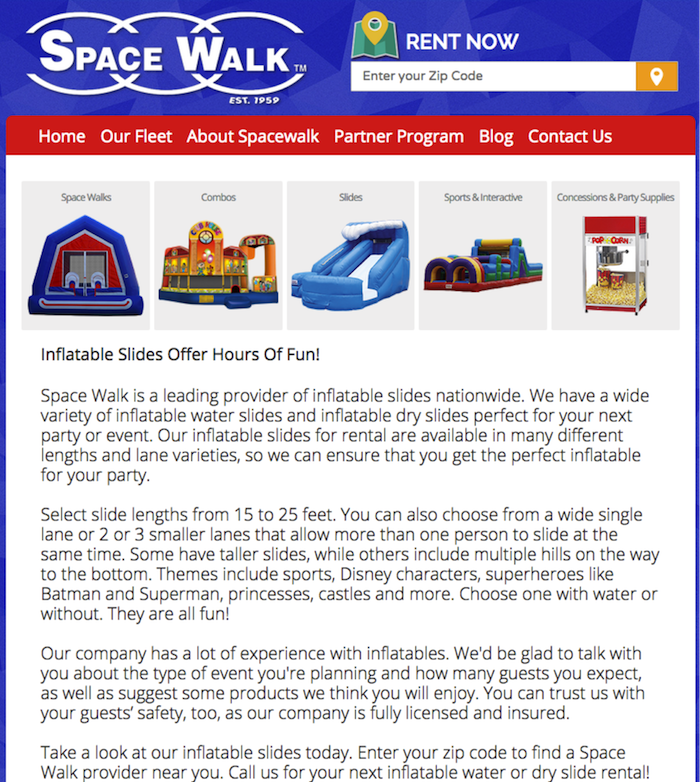
    Space Walk Franchise SEO Image Search Influence

    The blog, on the other hand, can be more versatile with regards to the content that you create. Your blog should be focused mainly on industry-specific topics, but it should also have a touch of personality. Things like showcasing your community involvement or a franchisee’s achievement are both great blog topics. Search engines love active blogs, because they show that you are keeping your site up to date by offering the latest and greatest industry knowledge in a timely fashion.

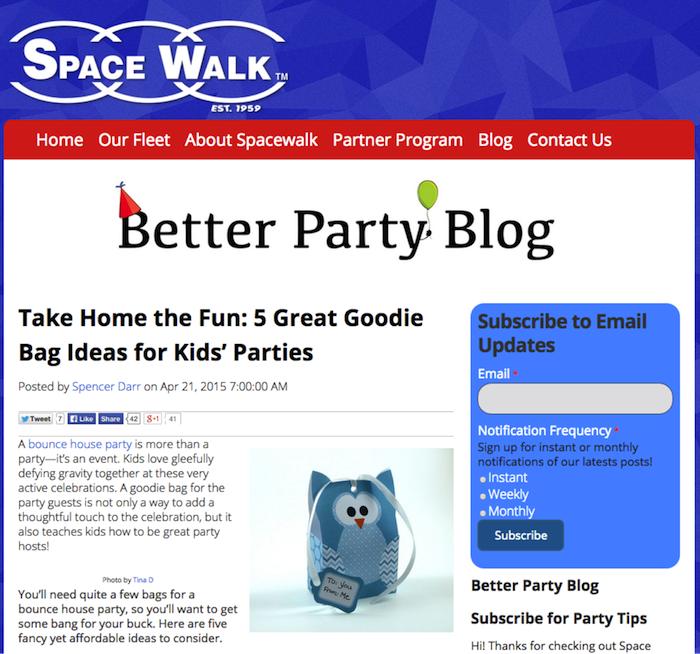
    Better Party Blog Space Walk Fanchise Image - Search Influence

    Having a mobile-friendly site is important to your franchise’s digital marketing efforts, especially with our heavy reliance on smartphones today. As Google rolled out one of its most significant algorithm updates in April 2015, your site could have been practically wiped off the map if it was not mobile-friendly, and the same is just as true today.

    2. Off-Site Authority for Your Brand

    Since Google’s more recent Penguin updates, the link building game has changed. Instead of worrying about getting links to your website and becoming keyword obsessed, we need to be thinking about building authority and a stronger overall presence for the brand.

    The simplest way to do this is by creating social profiles for your brand. This is not to say that franchisees cannot or will not create their own individual pages, but you should own the brand and its voice by claiming and being active on the major social channels.

    What are the major social channels, you ask? Google+, Facebook, and YouTube are all surefire winners here. But why Google+ and YouTube? One, they are both owned by Google, and you always want to make friends with the decision maker. Two, YouTube is the second biggest search engine in the world. By regularly posting content to these profiles, search engines will get a better sense of what you offer and, in turn, what you should be found for. Note: you will have to rely on your franchisees to help you verify their individual Google+ listings.

    Listing your company in categorical directories can also help the cause of brand building. If there is a relevant directory for the product or service you offer, your business should be listed, along with all of the details of your offering. In this scenario, becoming a part of industry associations can have as much of a benefit online as off.

    There is nothing that can beat real, newsworthy press. Whether it be a press release, a magazine article, or a blog post, when your brand is mentioned online, Google is going to recognize it and correlate the content around it to your website. A link back to the site in these cases can prove helpful as well.

    Now that you have a better sense for basic brand building, stay tuned for part two of this blog series, which will explain how to manage the optimization of all of your individual locations. At Search Influence, we are best equipped to help you succeed with your franchise marketing plan and franchise SEO efforts. Contact us today with any inquiries regarding how we can guarantee a successful online marketing strategy for your company.

  • Googleplasty: How to Reshape Your Search Results (Part 2)

    As more businesses begin to take efforts to improve their online presence, standing out in search results of highly competitive markets and areas becomes even more difficult—and nowhere is this perhaps more true than in the cosmetic medicine industry.

    In order to reshape your search results through the art of “Googleplasty,” you must know what factors make your business rank high in a Google search. Since we now know all about the different types of search results from part one of this two-part blog series, let’s talk about the most important factors that play a role in how high your practice ranks.

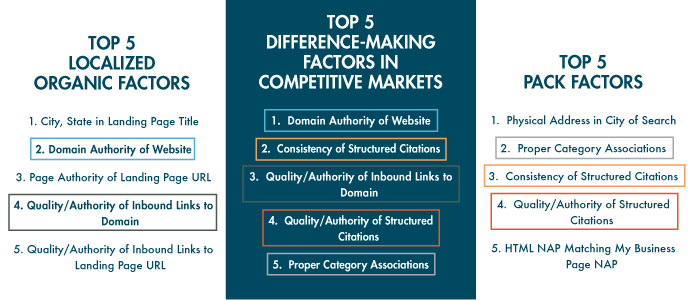
    The following three “Top 5” lists of factors are from from Moz’s 2014 Local Search Ranking Factors survey. The information came as a result of surveying 40 industry experts to determine what had the most influence on ranking in Google search results.

    top 5 search ranking factors

    As you can see, all of the factors that are integral in competitive markets also play a part in either localized organic or maps pack results. Due to their repeat importance, I think they’re the five factors most worthy of discussing in detail.

    1. Domain Authority of Website

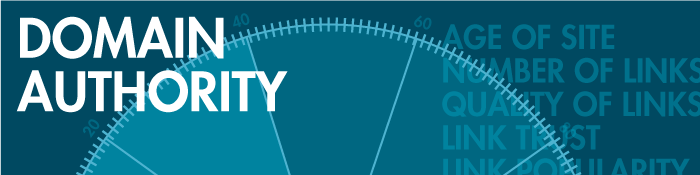
    domain authority

    First up on our list as the most important factor in competitive markets is Domain Authority, which isn’t much of a shocker. Domain Authority is a proprietary measurement (created by Moz geniuses) of a domain’s power within a 100-point scale. This score can be used to predict if a site is likely to rank in Google’s search results and can also be used to track a site’s growth and increase in strength.

    It is a metric that combines other metrics such as age, number of links, and quality of links, so it’s not easy to manipulate through singular or direct efforts. As it is directly put on Moz’s site, “The best way to influence this metric is to improve your overall SEO.”

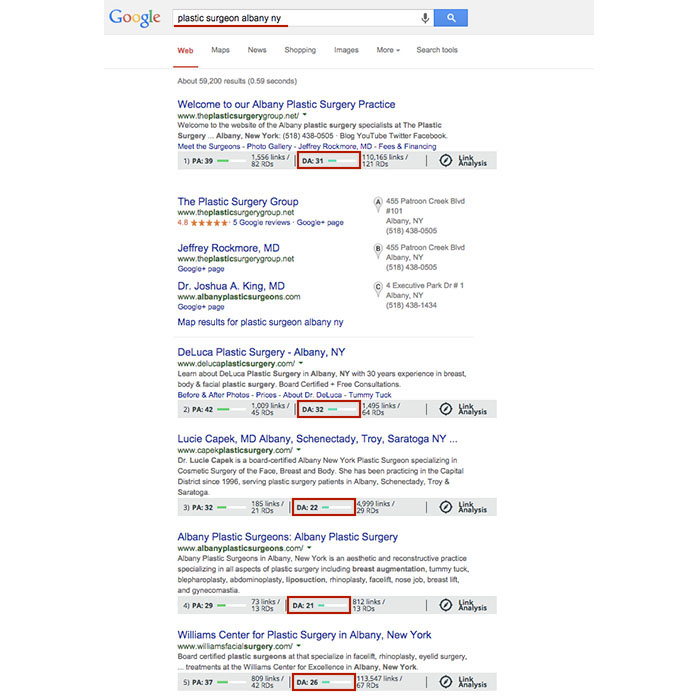
    Using Moz’s MozBar to see domain authority of pages in search results, you’ll see that the top five business sites in the localized organic results for “plastic surgeon albany ny” have Domain Authorities of 31, 32, 22, 21, and 26, respectively. As you can see here, having a score that is higher by a single point won’t guarantee that you rank above your competitor, but in this search example, business sites past the first page of results tended to have Domain Authorities lower than 20.

    Domain Authority Search Results

    2. Consistency of Structured Citations

    structured citation consistency

    While this factor isn’t as high ranking for localized organic results, it is third for the top maps pack factors and second here in the top factors for competitive markets. One reason for this is that in many competitive markets, such as plastic surgery or cosmetic dermatology, you’ll find maps packs in search results.

    To start, a citation is a place on the Web where a business’ name, address, phone number, and often website can be listed (sometimes referred to as the NAP of a business – name, address, phone). Any combination of the NAP, with or without all parts, listed on a site is considered a citation. A structured citation in particular is a listing of business information found on a directory website (e.g. YellowPages.com and Yelp.com). On the other hand, an unstructured citation can be business information on non-directory sites like newspaper sites, press release sites, and blogs, to name a few.

    By increasing the number of matching information sources (and therefore matching signals) to Google, you also increase your chances in having Google match this information to search queries, according to a recent webinar with Google’s Heather Wilburn. So if you want to be matched with potential patients searching for businesses like yours in your area, consistent business information across the Web is one of your best bets, especially in competitive industries like cosmetic surgery.

    3. Quality/Authority of Inbound Links to Domain

    inbound links to domain

    An inbound link to your domain (aka inlink or backlink) is exactly what it sounds like, a link leading to your website. The relevance to your industry or location and the authority of a website linking to yours in and of itself are the two best traits for quality links. Buying links or having links from random, spammy sites will hurt, not help you. Links from local sites and popular sites are a pretty safe bet. You can seek out local sponsorship opportunities as a good link-building effort or help other sites clean up their broken backlinks by using your working ones.

    To differentiate between natural link building versus spammy link building, remember that it’s all about user experience and what makes sense to the user. If your efforts don’t uphold the ideal of providing the best user experience possible, then they’re probably not good.

    4. Quality/Authority of Structured Citations

    structured citation quality

    As mentioned above, a structured citation can be any directory site that lists any variation of your business’ NAP or website. While consistency is most important, you also want to make efforts to build high-quality, authoritative citations in directories.

    Just like there are many factors to improve your own site’s authority, there are also many factors to determine the quality of a directory. You can delve into Whitespark’s blog on how to identify quality citation sources for a detailed breakdown, but basically a good rule of thumb is to look for high domain authority and human moderation in directory sites. Examples of human moderation include how DMOZ requires submission review by its team before a link goes live or how Google Plus, Yelp, and Bing listings all require verification via phone call or a postcard sent to the business.

    Google also considers niche directories highly authoritative. A niche directory is an industry-specific or location-specific directory. Since the Pigeon algorithm update, this kind of citation building has become especially important, and searching for your industry’s keywords will often help you identify these niche directories. If you search for “plastic surgeon columbus oh,” you’ll see that the directories healthgrades.com, vitals.com, and smartplasticsurgery.com appear on the second page of search results. Often, these types of directories require either verification or payment for those seeking to be listed on their site. If you understand the concept of barnacle SEO, you know that being listed on these types of big, authoritative sites is a great way to improve your own visibility to potential customers. Use your discretion to decide if the opportunity cost of getting on a directory isn’t too high to be worth the effort.

    Warning: If a site ever requests a “reciprocal link” to its site on your site in order to be listed, this is NOT A GOOD practice, and they are not worth your time.

    5. Proper Category Associations

    category associations

    Having proper category associations is another important factor for ranking in the maps pack that can set you apart from the rest in a competitive market. It’s a pretty simple concept, and it basically boils down to the part of the guidelines for representing your business on Google that tells businesses to “Choose categories that are as specific as possible, but representative of your main business.” A cosmetic surgeon with the primary category on the Google Plus local listing set to “surgeon” is less likely to rank above one with a primary category set as “plastic surgeon” in the maps pack, for example.

    Though this is a lot to grasp and take action on all at once, having the foundation and understanding of best practices to improve user experience and to better your business online will greatly improve your successes online in the long run.

  • Nix the Wix SEO Challenge: Tips & Tricks

    Wix Timeline Image - Search Influence
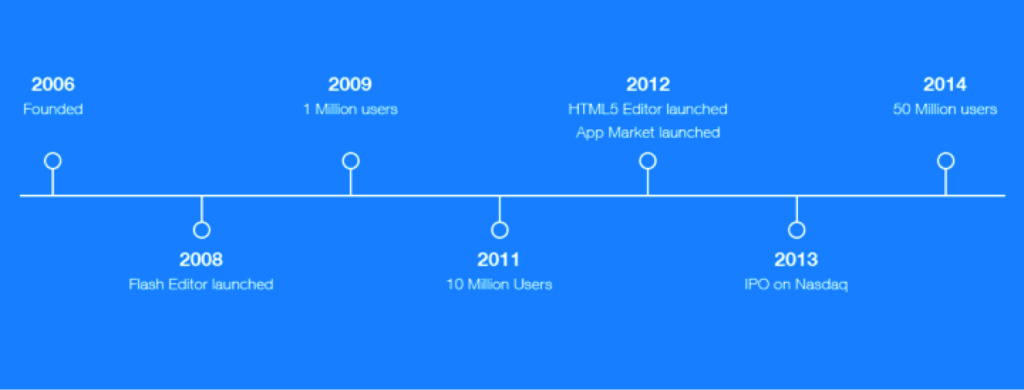
    Wix Company Timeline

    Although Wix sites have been rising in prominence over the past few years, many question whether websites created through the cloud-based Web development platform are ideal for search engine optimization. Wix uses an HTML5 drag n’ drop website-building platform to provide users a simplistic website-building experience. Although Wix prides itself on providing a code-free interface, it assures us that it is SEO-friendly, even providing its very own SEO settings for users. Let’s take a look at how you can get the most SEO usage out of your Wix website.

    Update Meta Tags

    Give some attention to how your site is found online. Meta tags are your best opportunity, as they are the way viewers learn what your page has to offer them and the first interaction they will have with you. The title tag will be what a user sees in Google, Bing, or Yahoo when they search for a particular phrase. The search engine result also includes a small description, usually from the meta description in the HTML of your site. This will require targeted keyword research and attention to copywriting to make sure you are integrating the best SEO practices.

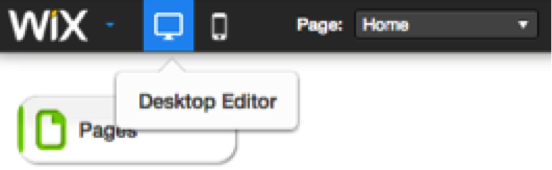
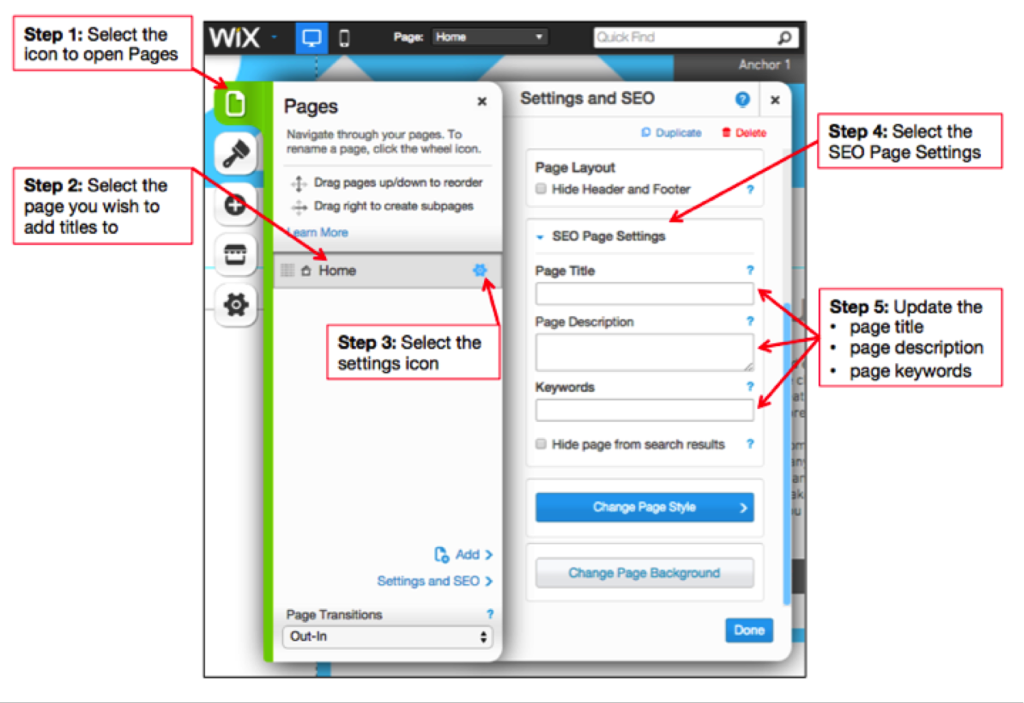
    Wix Desktop Editor Image Search Influence

    To add meta titles to your Wix site, access your Wix Editor. The Wix Editor gives you options to edit in either the desktop or mobile version of your site. You will have to use the desktop view in order to make changes. Select the page icon, and when you see the page you wish to add titles to, click the settings icon next to it and then proceed to click the SEO Page Settings. Here, you will be able to update the page title, page descriptions, and page keywords. (See image below for details.)

    Wix Meta Tags Image - Search Influence

    Note: Both desktop and mobile versions of the site contain the same pages, so the title and meta description will translate to your mobile site.

    Add Alt Text to Images

    You might already know that viewers love to be brought in by useful, explanatory images. You might not know that search engines can read these images if they are optimized properly, allowing them to be found in image searches. As such, you can get to work optimizing pictures on your site to enhance your SEO efforts.

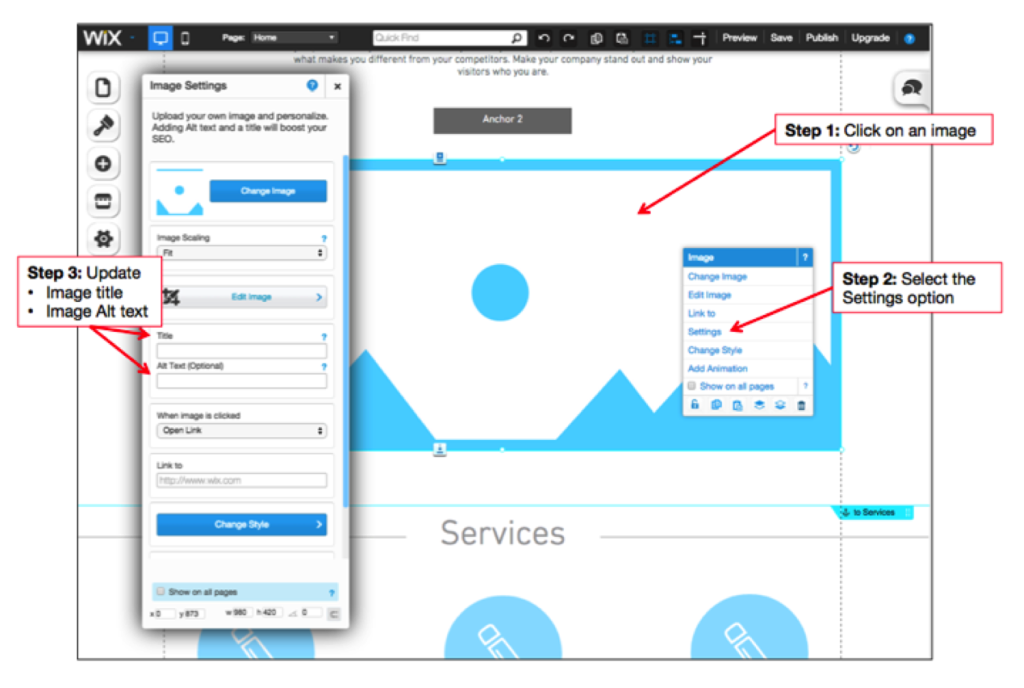
    In order to add alt text to your images, click an image inside the Editor you wish to optimize. From there, select Settings from the pop-up menu. In Image Settings, fill in a title and alt text. Here is a detailed image of how to do this:

    Wix Image Alt Text - Search Influence

    Get Social

    You’ve invested so much hard work into your site, so isn’t it time to share it? Another great way to bring in more traffic is to effectively disseminate your message across social media sites. While you should be regularly posting informative content across your channels with relevant links back to your site, you should also make it possible for viewers to share straight from your site. In order to make this simple for your viewers, enable buttons and easy clicks on your site.

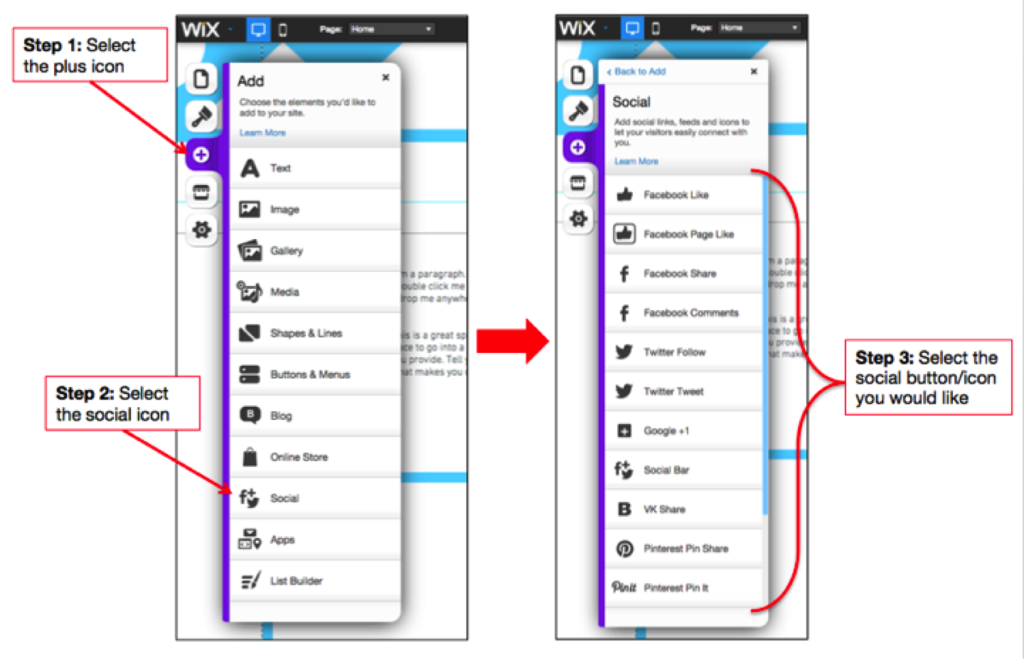
    To add social icons to your site, click the plus sign to open Add in your Editor. From there, click Social. You will have a selection of different networking sites, so select the one you wish to add. Here is a detailed image of how to do this:

    Wix Get Social 1 Image

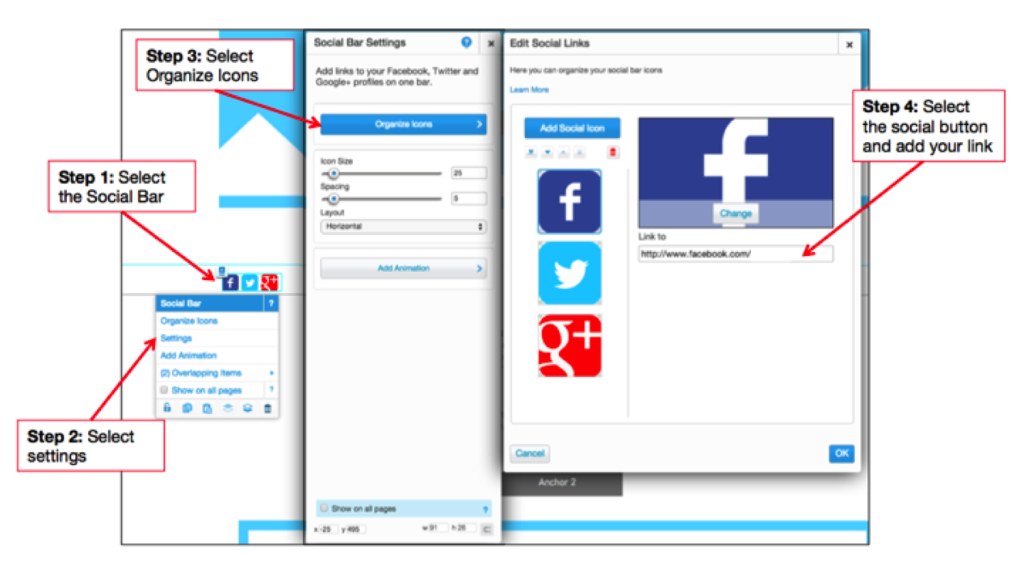
    Once you select the type of button, be sure to include the appropriate URL (your social link for follow buttons). Here is an example using the Social Bar:

    Wix Get Social 2 Image

    Make Your Site Visible

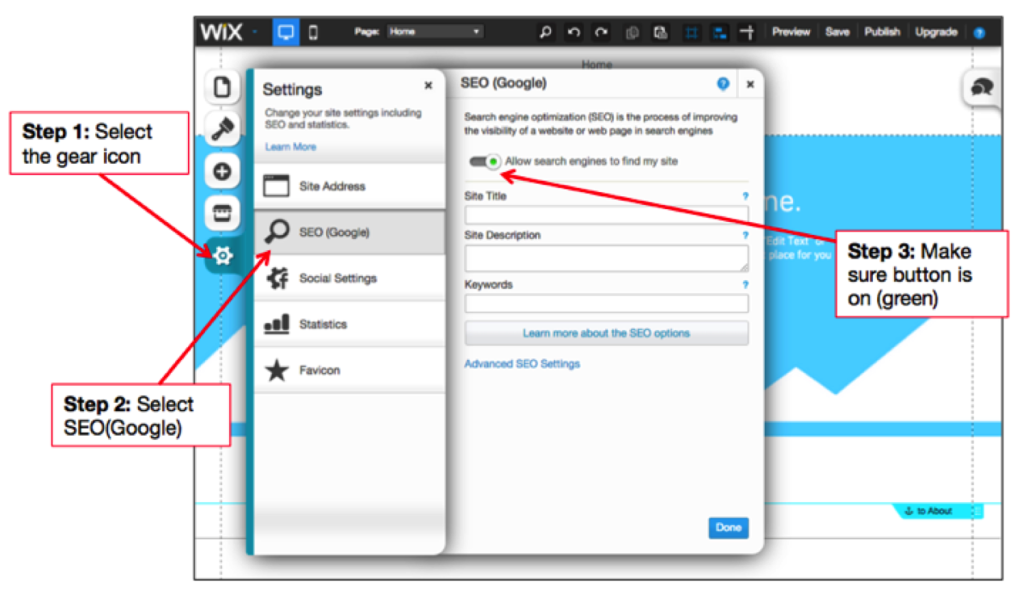
    If you’ve just set up your site, you’ll need to give search engines a little time to find and index your site. The best way to get started is to make sure you’ve selected “Allow Search Engines to find my site” in your site’s SEO settings. Without updating this setting, you will never be found. Don’t risk losing all of your hard work. If you already have a published site, be sure to verify that this is selected.

    Wix Visible Site Image

    Once you’re sure the search engines can see your site, you’ll want to help them find it. Add your web address to your Chamber of Commerce listings, note any industry associations you have, and make sure you get listed in local online directories.

    Also, be sure to submit your sitemap to Webmaster Tools to help Google better crawl and categorize your website. Wix automatically generates a sitemap.xml file, and you can view it by adding sitemap.xml to the end of your domain name. (Note: If you want to use Google Analytics, you will have to upgrade your account to a premium plan.)

    Optimizing on Wix doesn’t seem so bad, does it? Take heed and explore its options for yourself!

  • Googleplasty: How to Reshape Your Search Results (Part 1)

    As businesses grow more in touch with their online presence, it becomes more and more challenging to stand out in the search results of highly competitive markets and areas—and nowhere is this perhaps more true than in the cosmetic medicine industry.

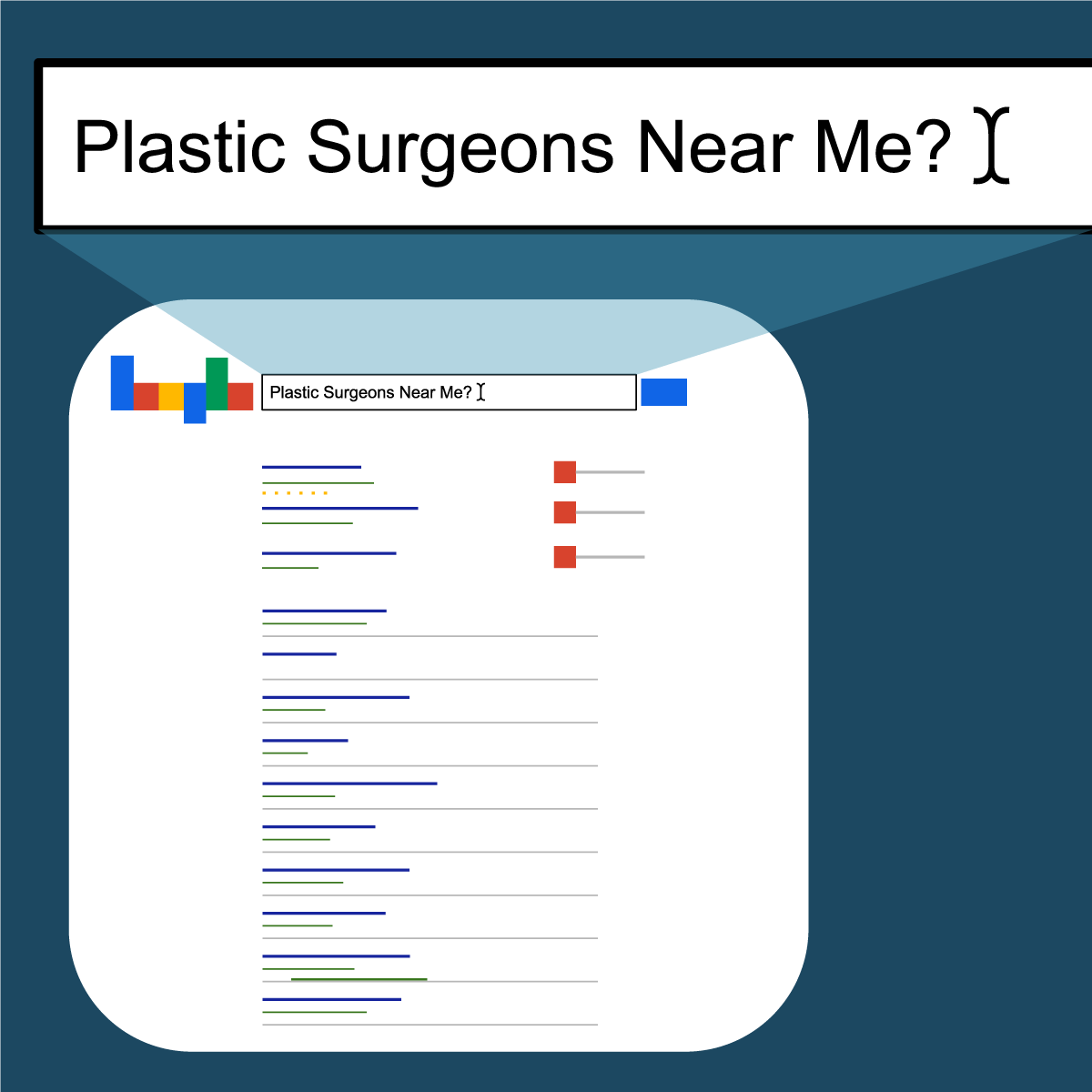
    Search Influence - Plastic Surgeon Local Google Search Results

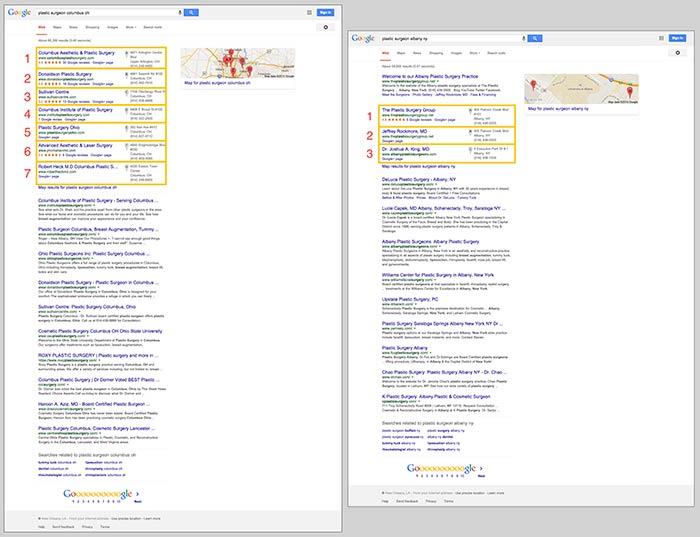
    First things first, let’s make sure we’re on the same page about the two major kinds of results that we see in desktop results for plastic surgeons. “Localized organic” search results and “maps pack” results typically appear together in what is referred to as “combined” search results. The factors that determine what appears in these two areas are not the same, as you can tell by the the difference in results and by the appearance of a site more than once between the two. Maps packs can come in a variety of forms and don’t show up for all search queries, which is also important to note.

    In the screenshot below on the left for the search “plastic surgeon columbus oh,” you’ll see 10 localized organic results below a 7-count maps pack. In the screenshot on the right for “plastic surgeon albany ny,” you’ll see 10 localized organic results, but the 3-count maps pack appears below the first organic result.

    Search Influence - Google Maps Pack Plastic Surgeon

    Stand Out in the Maps Pack

    In the maps pack itself, the most striking features are the review stars and rating display. The data in the maps pack area is pulled directly from Google Plus local listings in Google Maps. So, to make your practice stand out in the maps pack, you should claim and verify your Google Plus listing via Google My Business.

    Once you’ve claimed and verified your listing, you’ll want to get reviews from your patients. It’s important to understand that one or two reviews a month over a few months is better than 15 reviews in one week. As with most online marketing strategies, natural behavior is the best behavior.

    Stand Out in Localized Organic

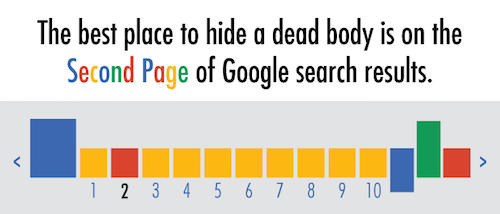
    The most obvious way to stand out in the localized organic results is to be ranking as high as possible and to AT LEAST be in the top 10 so that you’re on the first page. As the age-old SEO joke goes, “The best place to hide a dead body is on the second page of Google search results.” Hardly anyone looks past the first page, and—according to eye-tracking data—not many look past the top half of the search results page.

    Search Influence - dead body Google Search Results meme

    The Google PageRank algorithm that determines these rankings takes into account somewhere around 200 factors, so it’s not as simple as pinpointing one or two efforts to be made.

    Now that we’ve got a better understanding of what we’re looking at in search results, we can start to understand the major factors that affect ranking in each of these sections. Stay tuned for my next blog, where we’ll talk about the top five ranking factors in the maps pack, in the localized organic results, and in competitive markets!

  • Sweep Away The Competition By Spring Cleaning Your Backlinks

    So you want to do link building the white-hat way, but it seems these days most link building practices are pretty sketchy. One Google-friendly way to do link building is through identifying and fixing broken backlinks to redirect to pages on your site. Spring backlink cleaning, here we come!

    While there are many ways to approach broken link building, the method I find most doable is scanning relevant, authoritative sites for broken backlinks to pages for more info. Once you find a broken link and determine that a page on your site will adequately replace it, you’ll want to reach out to the owner of the site with the broken link to help them recognize the issue and take your opportunity.

    This practice is best for businesses with sites that already serve as a resource and that have many informational pages regarding various aspects of their industry. It is, however, totally doable for businesses that don’t meet these ideals, but said businesses will have to build out resource pages on the identified subject areas as they identify broken link opportunities.

    Throwing Away Broken Links

    Finding Sites

    So first, you’re going to have to find the best and most authoritative sites in your industry. Moz’s MozBar extension allows you to easily see Domain Authority and Page Authority of sites you’re on and sites in search results, which can be helpful in the hunt for good sites. Think of products and services that complement what your business offers to find more opportunities. For example, if I were trying to find a complementary business or service to Search Influence, the first type of business that comes to mind is a social reputation management service.

    Once you find one or more authoritative reputation management sites, you could use them to find MORE opportunities! To do this, you could use Moz’s Open Site Explorer and find backlinks to the sites you’ve already found that are also authoritative and relevant to your industry. You can use any backlink-finding tools you prefer, though. Other tools that can do this include LinkResearchTools’ Quick Backlink Tool and Majestic’s Site Explorer.

    liam neeson seo meme backlink

    Finding Broken Links

    Once you’ve got the list of sites you’d like to scan for broken links (I’d suggest at least 20 to 30, but it’s up to you), you’ll need to find said broken links. Internally, we use a tool (Screaming Frog’s SEO Spider) to find broken links for all of your sites, but any tool you find will probably do the job just fine.

    If you’re using Screaming Frog, you’d go to “Configuration,” then “Spider” to make sure your settings are set for an internal crawl. Enter the domain you want to crawl, and then click start. Once the crawl is complete, go to “Bulk Export,” then “All In Links.” Open the file, and we’re ready to get organized!

    Since we only want links, the first header you’ll want to filter is “Type” to only show HREF. Then filter “Status Code” to show everything but 200s, since 200 links are O.K. Finally, sort the “Destination” column alphabetically so that you can easily see and prioritize rows with off-site destinations. The site owners are most likely to be willing to replace broken off-site links. They might prefer to fix rather than replace broken internally directing links.

    Once you’ve followed the above steps for finding broken links on your chosen sites, we’re ready to take action.

    Finding Opportunities

    Here’s the tedious (but worth it) part of the whole process. Now that you’ve got lists of broken links, you’ll have to look through them and see if you can find the new page on that site that it should link to. If you can’t find the page and your site has links that will fulfill the objective of the original links, note that replacement link as one of yours instead of one on the original site. Sometimes this means looking at the “Source” column and checking out the context of the broken link. It also might mean creating content on your site, if it’s relevant to your business, to fulfill the needs of the broken link objective before moving forward.

    The last thing you’ll need is a list for each site you’ve investigated that includes the page that has the broken link (“Source”), the broken external link (“Destination”), the fixed URL, and the corresponding page on your site that could replace the broken link or be added to that page.

    Reaching Out

    Once you’ve got your lists of opportunities organized, you can reach out to the site administrator to have the broken link(s) replaced with your good one(s). You can find contacts to sites in multiple ways. The obvious way would be by finding a contact email or form in their “About” or “Contact” pages. I like this option because most times, if a site has created a way for users to contact them on-site, they’re responding to outreach through these mediums. If you’re unable to find any obvious way to contact a site, you can also use a whois lookup. I use the terminal emulator iTerm2 to do whois lookups, but you can also just use a web hosted whois lookup like whois.domaintools.com to find an email for the site Admin or Registrar.

    Here’s an example of a whois lookup for Wikipedia (You probably don’t even want to try to communicate with them, by the way. Possibly too big of a fish to fry.):

    WhoIS Lookup WIkipedia

    For time-saving purposes, I’d suggest creating a template you can use to email all of these prospects. In doing manual link removal requests in the past, I found some bits of information to be more fruitful to provide than others. You want to seem natural and authoritative (not spammy) while providing clear information, but you also want to be as concise as possible to avoid losing the attention of the receiver.

    You’ll want to include a short intro to introduce your authority and what you do, say that your message is intended for the site’s webmaster (as they would be the one implementing your suggested fixes), and note the Source page, the broken Destination URL, and the recommended replacement URL. If the replacement URL is just one you found originally linked to the site, now is your opportunity to share that you might have some additional information on your site that their readers might benefit from. Send all your messages, and then wait!

    While I’d say to make your own templates to sound more natural and fit your needs, here are two of mine for both use cases.

    Replacing URL With Same-Site URL

    Hi,

    My name’s (insert name here), and I am an industry specialist and was doing some research when I landed on your site…

    I was hoping to pass on some information to your webmaster or web developer, as I found a broken link on your site that your readers might need.

    While looking at this page on your site (source URL), I clicked on the link to this site (broken destination URL) and found that it didn’t work.

    Once on the site, I found that they must have moved that information here (replacement URL).

    While you’re working on updating this page, I was wondering if you’d be interested in including my page about (insert summary of page here) as a resource that might also be beneficial to your readers: (insert link to your site’s relevant URL here).

    Replacing URL With Your-Site URL

    Hi,

    My name’s (insert name here), and I am an industry specialist and was doing some research when I landed on your site…

    I was hoping to pass on some information to your webmaster or web developer, as I found a broken link on your site that your readers might need.

    While looking at this page on your site (source URL), I clicked on the link to this site (broken destination URL) and found that it didn’t work.

    I tried finding the correct page on their site for this info, but it seems that it might be gone altogether.

    My site happens to have some similar information, so I was wondering if you’d be interested in including my page about (insert summary of page here) as a resource that might also be beneficial to your readers: (insert link to your site’s relevant URL here).

    Hopefully, this helpful, good link building practice will aid in your efforts. Let us know your favorite, white-hat link building practice in the comments!

  • Social + SEO: Better When They’re Working Together

    SEO Cycle Image - Search Influence

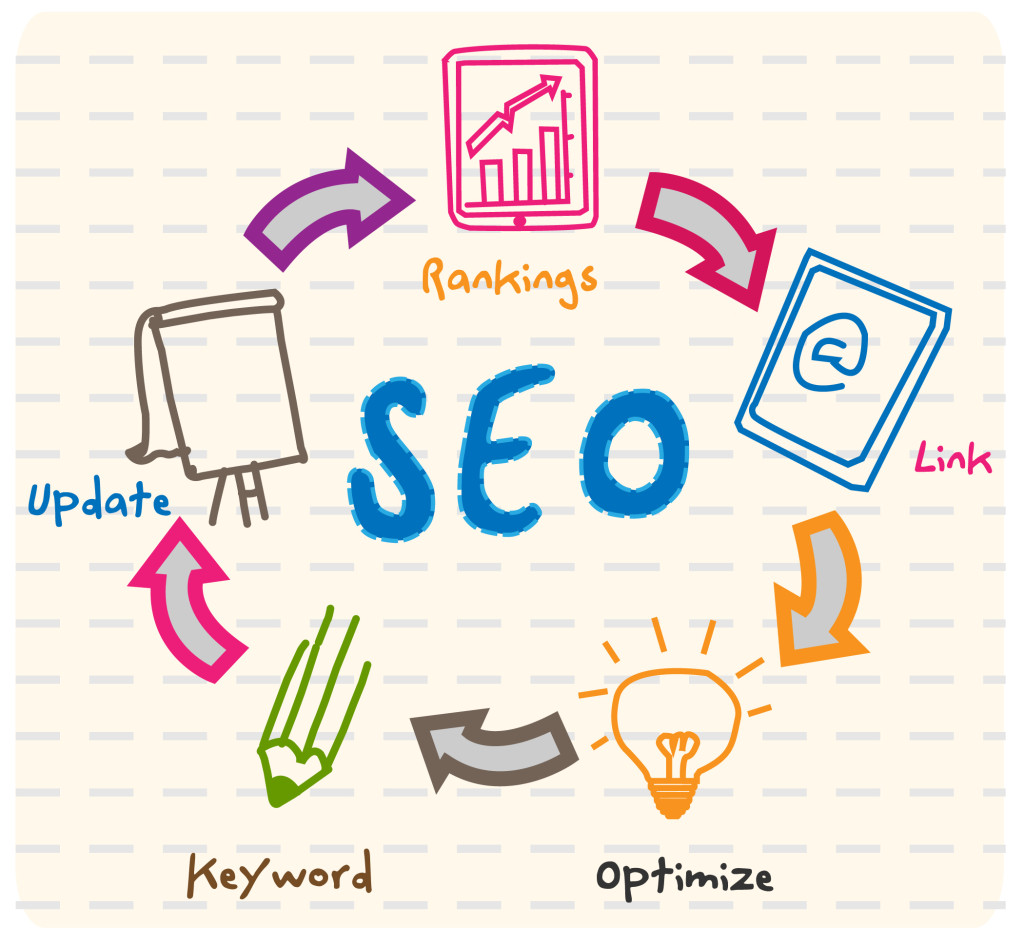
    Modern search engine optimization has become inextricably linked with content marketing. Yet in many companies, social media strategies are developed separately from the SEO and content marketing plan. This can work—but you’ll realize optimal results by aligning social media with SEO for an overall strategy that boosts brand awareness, improves domain authority, and increases your rankings.

    Here are some tips for social media strategies that can fuel your SEO and help you rank higher in all types of user searches.

    Grow your Following

    In the early days of social media, building a massive following was the number one goal for most marketers. Today, the emphasis has shifted from quantity to quality—but the number of followers you have is still an important factor for domain authority.
    Of course, it’s equally important to develop an authentic audience. Google, in particular, can tell when most of your following is made of spam and bot accounts, so “buying” likes or follows doesn’t help—and in fact can harm your online reputation. Instead, grow your following naturally by posting interesting content on a regular basis. Engage your followers with interactive content and by responding to comments or starting discussions.

    Share your Other Content

    Posting links to your content—such as articles, blog posts, and downloads—along with brief commentary on social media, is a great way to repurpose your content and boost your SEO. Of course, sharing on social media will give you more eyes for your content, but the benefits to SEO go beyond that.

    In addition to extra traffic to your website or blog, which is a peripheral SEO benefit, social media sharing encourages others to share your links. The more often your links are posted on other social media accounts and websites, the more domain authority you’ll build. This type of inbound link-building is much faster than traditional or manual methods.

    Optimize Social Media for Search

    It’s important to know that your social media posts can show up directly in search results—if they’re optimized. When you’re composing posts, be sure to apply basic SEO strategies such as including keywords, placing them strategically and naturally, and tagging image, video, and infographic posts with relevant keywords. Even if your posts don’t make it into search engine results, they’ll still increase your brand authority and contribute to a stronger online reputation.

    Increase Social Shares with Viral Content

    The more shares and retweets your posts have, the greater your domain authority—and the higher your search engine rankings. In order to get your content shared more often, you need to create content that people want to talk about.

    Of course, every marketer wants to release the next viral sensation. There is no guaranteed strategy for making something go viral, but you can increase your chances of catching lightning in a bottle by creating content with a strong visual component (either a visual medium or a blog post that’s heavy on images, for example), and make sure it has the following characteristics:

    • Informative
    • Relevant
    • Entertaining
    • Practical
    • Surprising
    • Unique

    Of these characteristics, the last one is the most important. Create content your audience has never seen before, and they’ll be eager to share it with friends.

    Connect with Similar Companies

    In the world of social media, your “competition” can be your friend—and that’s good for your SEO. Engaging with similar businesses, particularly local companies or those in similar industries, can help you grow your audience and your relevance, which in turn increases your search engine ranking.

    Share content with other companies like yours and comment on their posts. Usually, they’ll return the favor by engaging with you, which will attract their audiences to your social profiles. Google will also start associating you with other brands when you engage with them, which improves your overall authority.
    When it comes to online marketing, social media and SEO should go hand-in-hand. How does your social media strategy complement your SEO approach?