Category: Industry Insights

  • Should You Be Marketing During a National Crisis?

    Should You Be Marketing During a National Crisis?

    This post was updated by Alison Zeringue on July 14, 2025 to reflect current best practices. It was originally published on Nov 4, 2024.

    Key Insights

    • Data shows that marketers who continue marketing during economic, political, health, or environmental crises recover faster and build stronger customer trust than those who cut back.
    • In times of crisis, whether it’s an economic downturn or a natural disaster, your marketing strategy must adapt to meet changing consumer needs and maintain visibility.
    • Digital marketing channels like SEO, PPC, and performance TV provide high value during crises by maximizing reach and minimizing wasted ad spend.
    • Staying focused on brand longevity positions you for growth and success once the uncertainty passes.

    In a world where change is the only constant, every brand’s ability to adapt is tested time and again. Whether facing economic downturns, political unrest, health epidemics, or environmental disasters, marketers have to remain agile to respond to the inevitable effects of a national crisis.

    Yet, one thing remains true: Resilience in these trying times separates thriving brands from the rest.

    When a disaster strikes, the stakes for such adaptability and resilience are higher than ever.

    Marketers across the country face a dilemma: retreat and cut brand marketing budgets or seize the moment to strengthen their brand’s longevity.

    Cutting down on marketing during a crisis is a tale as old as time, though not a wise one. While crises often cause public turmoil, they also create valuable opportunities to maintain loyalty with your core audience and earn new customers at the same time.

    In this blog post, we’ll discuss the importance of marketing during a national crisis and show you how to maintain a strategic advantage during times of adversity.

    Importance of Brand Communication in Times of Uncertainty

    Importance of Brand Communication in Times of Uncertainty

    Here’s the stark reality: If you halt advertising during a national crisis, you delay your rebound and stifle your brand’s potential.

    Yes, consumers tend to temporarily alter their spending habits during tough times, prioritizing essential goods versus discretionary ones. But if you follow suit and slash your marketing budget to the very bare bones, you risk missed opportunities to stay top-of-mind when it matters most.

    Properly managing business disruptions, should they occur, is essential to maintaining a steady connection. When you keep your audience updated about any changes to your operations — whether it’s new safety measures, service interruptions, or modified hours — you demonstrate your commitment to their well-being and ensure they don’t feel left in the dark.

    As the country recovers from the mayhem, your target audience will, too (in time). If you don’t remain present, they won’t be thinking about your brand, even when they have the mental capacity to. Steady engagement builds trust and shows that you remain reliable and transparent during challenging times.

    Failure to do so translates to a crucial blow to your brand’s health, keeping you ten steps behind your competitors who were actively engaged during the mayhem.

    Tips for Budgeting for Smarter Marketing

    Hesitation is the enemy of progress. Instead of going into hibernation mode during a recession, brands need to embrace the challenge and pivot to a proactive budgeting approach.

    Don’t be tempted by budget cuts

    In times of crisis, the knee-jerk reaction is to tighten the purse strings, often resulting in reduced, or even halted, advertising spend. Sure, budget cuts give you the illusion that they’re helping your brand, especially in the short term.

    But, spoiler alert: Marketing research suggests otherwise.

    Instead of cutting the cord on marketing spend, shift your focus to staying visible and resilient to set your brand up for long-term success and faster recovery.

    As Hubspot says regarding crises “… just keeping promotional spend flat will put your brand in a dominant position. As an example, if all the companies in your category cut their promotional spend in half, suddenly your budget that was 10% of the total share of voice now doubles to 20% as a result.”

    Explore cost-effective advertising channels

    Advertising doesn’t always have to be synonymous with “expensive” — it boils down to what you choose to spend your dollars on.

    Digital marketing tactics, whether through SEO (search engine optimization), PPC (pay-per-click) ads, or performance TV, are generally an economically efficient choice. For example, online ad campaigns offer distinct advantages over traditional methods, such as precise targeting, expanded reach, and real-time performance metrics, helping you maximize your impact while minimizing wasted ad spend.

    SEO is also an excellent, cost-effective choice for maintaining visibility in search and driving long-term growth among your prospects. Start implementing strong SEO tactics now, and you just might see considerable results by the time the crisis is over.

    Whichever your preferred channel(s), focus on the ones that are most cost-effective for you. Those with the best cost-to-performance ratio will keep your brand afloat even in the most unexpected times.

    Stay focused on the long-term

    You’ve likely heard marketing is a long game. Go all in for the long haul.

    Consumer spending may dip temporarily, but your mission is to use this time wisely. Position your brand as a dominant presence in the minds of potential and existing customers, even if they’re not making immediate purchases. The downtime is a ripe opportunity to refine your strategic plans and strengthen your marketing processes to set your brand up for success when business picks back up.

    Think of your advertising opportunity today as a brand and pipeline-building objective for tomorrow. Focus on preparing for the future and what you can control rather than reacting to short-term fluctuations.

    Doing so makes you the go-to choice when they’re ready to buy, unlocking the key to loyal customers.

    Effective Marketing Strategies During a National Crisis

    Search Influence - Effective strategies during a national Crisis

    Marketing during an economic crisis

    Marketers en route to budget cuts during a recession should take a lesson from the mighty hand of the Great Recession of 2008. This economic downturn hit marketers hard and their strategies even harder.

    But it was kind to those who stayed the course.

    As the saying goes, “When the going gets tough, the tough get going.” Kantar research shows that brands that took the risk to continue advertising during the 2008 recession recovered 9x faster than those who jumped ship.

    Flipping the angle, Millward Brown data exposed the consequences of cutting advertising spend during this time. A staggering 60% of brands that paused TV ad spending for just six months experienced a 24% decline in brand use and a 28% drop in brand image. Brands that slashed budgets more aggressively than competitors faced an even grimmer fate — a painful loss of market share.

    For businesses already grappling with revenue losses, reducing marketing budgets during a recession often spells disaster. Your strategy must adapt, whether the intensity of a recession is minimal or as impactful as 2008.

    Recommended strategies

    To navigate low consumer sentiment, maximize your budget, and effectively market your business during a recession:

    • Allocate budget funds to the most value-driven marketing channels proven to work for your brand
    • Offer brand discounts, promotions, bundled services, or loyalty programs to reach cost-wary buyers
    • Highlight the cost-effectiveness and long-term savings of your products or services

    Marketing during a political crisis

    From government shutdowns to civil unrest and corruption scandals, political crises are historic shock factors that often lead to mass mayhem. Among these, elections introduce power shifts that, while typically orderly, can still disrupt markets and shake public confidence.

    Despite the so-called “election year effect,” your brand doesn’t have to get lost in the shuffle. Your job is to acknowledge and address the heightened consumer uncertainty head-on.

    In times of political transition, consumers may be more cautious with their decisions, seeking stability and clarity. As a marketer, this is your opportunity to position your brand as a reliable constant amid the noise. Focus on crafting messages that reassure, offering value and trust when consumers need it most.

    Recommended strategies

    To reach your audience and adapt your marketing during political crisis:

    • Focus your budget on long-term brand awareness to ensure your presence remains strong during and after the unrest
    • Prioritize clear, transparent communication to reassure your audience during times of political change or uncertainty
    • Avoid polarizing or controversial messages to maintain broad appeal and avoid alienating any part of your customer base

    Marketing during a health crisis

    Much like the Great Recession of 2008, marketers learned valuable insights during the COVID-19 pandemic — this time, in the context of marketing during a global health crisis.

    COVID-19 or not, a health crisis is often an agent of chaos, but it does bring brands real opportunity. Marketers should hold steady and adopt proactive strategies that position their brand as a trusted leader when customers need it most.

    As consumers tightened their belts and hunkered down at home, many brands instinctively pulled the plug on their advertising expenditures during COVID-19. According to Marketing Week research, more than half (55%) of marketers either delayed launching campaigns or were rethinking budget commitments in March 2020, the month the WHO declared COVID-19 a pandemic.

    The outcome? An environment teeming with advertising inventory but devoid of competition. Advertising costs plummeted to historic lows during the pandemic year (from March 2020 to the following year), resulting in astonishingly low costs per lead (CPL).

    With more people at home, significantly more time was spent online. In March 2020, Facebook reported record usage each day, creating ripe advertising opportunities for many marketers who just wouldn’t bite.

    In this chaotic landscape, the brands with a solid marketing strategy were the ones setting themselves up for success in the future.

    At Search Influence, we saw the success of our clients who chose to stick it out. In March 2020, one of our higher education marketing clients’ Facebook Display campaign generated the most inquiries in one month since its launch. There was also a 111% increase in inquiries from Google Smart Display month-over-month. For Q1 2020, our client achieved an impressive 47% of 2019’s inquiries — with only 29% of their budget.

    Recommended strategies

    To effectively manage prospect and customer relations during a health crisis:

    • Allocate funds to digital marketing channels, such as social media and email, where engagement increases as people spend more time online
    • Emphasize health and safety in your messaging, reassuring prospects that their well-being is your top priority during uncertain times
    • Shift to virtual services or events, offering online consultations, webinars, or shopping options to maintain accessibility and engagement

    Marketing during an environmental crisis

    The United States is, unfortunately, no stranger to the effects of environmental catastrophes. From California wildfires to Hurricane Katrina, these crises often leave devastating impacts on communities and businesses alike in their aftermath.

    Each environmental crisis brings a wave of uncertainty, many times disrupting supply chains, damaging infrastructure, and shifting consumer priorities toward immediate needs and safety. Communities are forced to adapt, and businesses must quickly pivot to meet new demands and expectations — all while doing everything possible to keep operations running.

    This makes staying connected with prospects and existing customers all the more important. Clear, compassionate communication reinforces your brand’s reliability during the immediate crisis and builds trust that can last long after it has passed.

    Recommended strategies

    To stay connected during an environmental crisis, adjust your marketing budget to allocate for messaging that shows empathy and provides real value. You should:

    • Prioritize transparent communication about key business details, such as closures, adjusted hours, or service availability, to keep prospects and customers informed
    • Demonstrate your brand’s commitment to recovery, whether by supporting local relief efforts, offering donations, or sharing sustainability initiatives that resonate with your audience
    • Implement real-time engagement tools, like live chat or automated messaging, to address customer concerns promptly and offer support in challenging times

    Marketing During a National Crisis FAQ

    What is crisis communication?

    Crisis communication is the strategic exchange of timely, accurate information between an organization and its stakeholders during a disruptive event.

    Crisis communications is the discipline that keeps employees, customers, partners, and the public informed when normal operations are threatened. A strong crisis communications program clarifies what happened, what the brand is doing about it, and what people should do next. It blends PR, customer service, and internal messaging across owned, earned, and paid channels to minimize misinformation, protect reputation, and maintain trust.

    How should I communicate with customers during a crisis?

    Effective crisis customer communication relies on clear, empathetic, and rapid updates delivered through the channels your audience already uses.

    Lead with empathy, acknowledge the issue, and state specific actions you’re taking. Keep messages short, jargon-free, and consistent across email, social, SMS, and on-site banners.

    Why is it important to have a crisis communication plan?

    A crisis communication plan ensures fast, coordinated responses that protect brand trust and speed recovery.

    When every minute counts, a pre-approved playbook defines roles, approval paths, key messages, and preferred channels, eliminating guesswork and delays.

    Helping You Turn Uncertainty Into Opportunity

    National uncertainty can be jarring for brands, but it doesn’t have to mean abandoning your marketing efforts.

    At Search Influence, we’ve helped countless businesses navigate turbulent times, enabling them to maintain momentum with targeted marketing. Our crisis marketing strategies, industry experience, and proven services are a cornerstone for brands looking to weather the storm and emerge stronger.

    Don’t let mayhem madness knock you off your path to digital marketing success. Contact us today to discuss your goals and make them a reality.

    Image Credits:

    iStock and Pexels

  • The 8 Best AI SEO Tracking Tools: A Side-by-Side Comparison

    The 8 Best AI SEO Tracking Tools: A Side-by-Side Comparison

    SI Essential AI SEO Tracking Tools

    Key Insights

    • AI search is already reshaping the way users discover content, and using the right tools for SEO is essential to track visibility across AI search platforms.
    • Accuracy matters. Because AI search results are dynamic and context-driven, SEO professionals must continually test and compare tools to ensure their targeted keywords are truly making an impact.
    • Not all AI SEO tools are created equal. Each platform offers unique strengths depending on your goals, budget, and reporting needs.
    • An experienced SEO expert will help you get the most out of these tools, turning raw data into strategic decisions that improve rankings, visibility, and performance.
    • SEO content must now work for both humans and AI. Tools that help identify citations, brand mentions, and gaps in AI visibility can guide more effective SEO content creation and optimization strategies.

    Updated October 13, 2025 at 10:36 AM Central by Will Scott, AI SEO Expert, and CEO of Search Influence.

    New & Improved: The Ultimate Guide to AI SEO Tracking Tools in 2025

    I created an updated post based on our testing and deep research with Claude. Check out the comprehensive review of AI SEO Tracking Tools, with side by side comparison tables and more.

    Table of Contents

    As AI-driven search evolves, marketers need more than instincts and old-school metrics.

    They need reliable AI SEO tracking tools to measure their visibility across platforms such as Google’s AI Overviews, ChatGPT search, Perplexity, and Microsoft Copilot. These search engines synthesize answers, prioritize trusted sources, and favor structured, entity-rich content.

    You still need solid technical SEO and consistent SEO tasks driving your campaigns. The real difference maker today is how you track and adjust your content creation strategy for artificial intelligence-driven results.

    That’s where the new generation of tracking tools comes in.

    And here’s the truth: It’s not just about which tool you’re using.

    It’s about how well you understand the insights those tools deliver and how quickly you can adapt your strategy based on what you find.

    Used effectively, these tools help you fine-tune your approach, improve rankings, and drive better results from Google Search and beyond.

    At Search Influence, we bridge the gap between tool and strategy. We don’t just run reports. We turn data into action.

    In this blog post, we’ll break down eight of the best AI SEO tracking tools available today.

    You’ll see how they compare in usability, insights, and pricing, and get our recommendations on which tools deliver the most strategic value.

    What Are the Best AI SEO Tracking Tools?

    What are the Best AI SEO Tracking Tools?

    1. Scrunch AI

    If you’re managing multiple brands or juggling several sites, Scrunch AI is quickly becoming one of the most versatile and agency-friendly platforms in the space. It’s one of the latest AI SEO tools I’ve tested, and so far, it’s my favorite.

    What sets it apart isn’t just its ability to track AI visibility across platforms, but how seamlessly it adapts to different client needs. Whether you’re running a site audit, optimizing top-ranking pages, or tracking brand mentions in AI-generated responses, Scrunch AI gives you the control and clarity you need to scale your strategy.

    Pros:

    • Offers both SMB/agency and enterprise pricing plans, making it flexible for teams of all sizes
    • Concierge onboarding helps you get up and running quickly, with expert support
    • API access for enterprise accounts enables deeper integrations with your existing SEO software and reporting workflows

    Cons:

    • Limited export capabilities may be a drawback for data-heavy teams

    Best for:

    Agencies managing multiple brands that need a single AI tool to monitor and compare performance across clients. It’s also a great option for marketers who need actionable insights across various search engine rankings.

    2. Advanced Web Ranking (AWR)

    Advanced Web Ranking (AWR) is a long-standing player in the SEO software space, now evolving to support the realities of AI search engines. Known for reliable rank tracking, AWR has introduced filters for SERP features — including Google’s AI Overviews — to help marketers monitor where and how their content appears in AI-generated results.

    While AWR doesn’t yet track visibility in platforms like ChatGPT search, or Microsoft Copilot, it gives SEO professionals a head start in understanding their footprint in Google’s AI ecosystem and Perplexity.

    Pros:

    • Already widely used by SEO experts and marketing agencies for standard SEO tasks
    • Lets users filter for AI Overview visibility, providing insight into performance in AI-enhanced search engine results
    • Helps assess how effectively your content satisfies search intent in AI-modified Google results

    Cons:

    • AI visibility insights are still surface-level — enough for awareness, but not enough to drive high-level strategy
    • Refers to AI Overviews as “SGE,” an outdated term that can muddy reporting
    • Doesn’t track presence on ChatGPT or CoPilot

    Best for:

    Marketers who want to begin tracking their presence in AI-generated Google results using a tool they already know. AWR offers a light lift for those testing the waters of AI search tracking while maintaining focus on core rank tracking and search intent metrics.

    3. Semrush (AI Analytics Tool)

    Semrush added an AI analytics tool to its already expansive suite, giving marketers early insights into how their brand and content are interpreted by AI search engines. While still in its early stages, this feature helps teams gauge high-level presence and sentiment across emerging AI-driven platforms.

    This isn’t a tool for granular AI visibility tracking yet, but it does offer signals that show whether your content is resonating within AI-generated content and across AI SEO surfaces.

    Pros:

    • Provides domain-level indicators such as sentiment, engagement, and visibility that can correlate to AI search engine performance
    • Offers limited but growing AI-specific reporting that aligns with AI SEO tools
    • Easy add-on for existing Semrush users — no steep learning curve required

    Cons:

    • Data is not yet comprehensive
    • Misclassifies some brand names
    • Insights are still surface-level compared to specialized AI SEO tools

    Best for:

    Teams already using Semrush who want a low-effort way to monitor their early visibility in AI-powered search environments. It’s especially useful for validating whether your SEO content and keyword research strategies are beginning to register across AI-generated results.

    4. xƒunnel

    xƒunnel is a newer entry on this list, but one that’s making waves by tracking user journeys through AI search engines, not just traditional SEO. Rather than stopping at keyword performance, xƒunnel maps how users refine their queries. It also surfaces where your brand is being cited within AI answers across platforms.

    Pros:

    • Tracks query refinement, giving deeper insight into how users evolve their questions
    • Persona-based breakdowns show how different demographics interact with AI search engines
    • Enables citation tracking across trusted sources like Reddit, YouTube, and more — places that influence AI-generated answers

    Cons:

    • Currently in limited release, so availability may be restricted
    • User interface is not as polished as more mature SEO AI tools
    • Requires manual inputs for some features, limiting scalability for large teams

    Best for:

    Brands and digital marketers who want to understand how they’re appearing (or not appearing) across the full AI search landscape. xƒunnel is especially valuable for teams interested in optimizing not just for search engine results pages, but for the emerging, conversational search behaviors reshaping how users engage with information.

    5. Rankscale

    Rankscale is one of the first purpose-built tools designed to monitor visibility in AI search engines. Rather than just tracking rankings on traditional SERPs, this SEO tool evaluates how often your brand or content is cited or surfaced within AI-generated responses — an increasingly important metric as organic traffic shifts toward conversational search.
    Its standout feature, the AI Search Rising Score, gives marketers a directional look at their SEO performance within the AI ecosystem. Rankscale also delivers strong entity-based insights, which help fine-tune your SEO strategy around how large language models interpret your brand.

    If you’re serious about preparing your SEO efforts for the future of search, this is one tool to watch closely.

    Pros:

    • Measures visibility in AI-generated search with a proprietary AI Search Rising Score
    • Tracks citation sources, showing which pages, platforms, or mentions contribute to AI visibility
    • Helps identify what entities AI search engines associate with your brand, supporting deeper search engine optimization
    • Provides high-level reporting ideal for informing strategic SEO efforts

    Cons:

    • Requires manual selection of each target keyword, which can be time-consuming at scale
    • Pricing is still TBD — uncertainty may limit accessibility for smaller teams or early adopters

    Best for:

    SEO strategists and marketing teams focused on refining their SEO software stack to support the artificial intelligence era optimization. Rankscale is ideal for tracking how your content performs in AI-generated search and understanding which citations and entities drive results.

    6. Otterly

    Otterly is a rising contender among the best SEO tools designed specifically for tracking brand performance in AI search engines. Unlike tools that rely solely on traditional keyword rankings, Otterly focuses on search prompt visibility. This makes it especially useful in an era where users interact with AI search platforms in more conversational ways.

    Pros:

    • Tracks visibility based on full prompts rather than just keywords
    • Works across multiple AI search platforms, including ChatGPT, Perplexity, and Google AI Overviews
    • Clearly displays brand mentions, citations, and links returned in response to each search

    Cons:

    • Requires manual entry of each prompt, which can be time-intensive
    • Doesn’t offer automatic topic clustering or entity suggestions
    • The interface is less intuitive than tools that use AI to surface insights automatically

    Best for:

    Teams that want highly structured, prompt-specific tracking across AI platforms. Otterly is a great choice if your strategy depends on SEO content optimization and refining title tags or other metadata to improve how your brand appears in conversational search responses. It’s especially useful for marketers who want more control over tracking defined topics rather than relying on automated discovery.

    7. Profound

    Profound is a powerhouse in the SEO AI tool landscape, designed specifically for large organizations that need deep, enterprise-grade insights into how they appear in AI-generated search results. With the most robust dataset currently available for AI search tracking, Profound gives SEO teams a clear view into their presence across platforms like Google AI Overviews, ChatGPT search, Microsoft Copilot, and Perplexity.

    Unlike other tools, Profound automates both topic clustering and citation tracking, offering rich, actionable insights with minimal manual lift. It’s one of the few SEO tool solutions that not only shows your brand’s visibility but also reveals where competitors are gaining traction and which essential SEO elements you may be missing.

    Pros:

    • Offers the deepest dataset available for tracking search results across multiple AI search engines
    • Auto-generates topic clusters and citation analysis, speeding up SEO processes
    • Highlights competitor visibility and entity optimization opportunities
    • Supports CSV exports for SEO experts who want to dig into custom reporting and secondary data layers

    Cons:

    • Enterprise-level pricing (starting at $3,000/month) limits accessibility for smaller teams
    • It’s not always clear whether topic groupings are AI-driven or manually curated, which may affect strategy interpretation

    Best for:

    Large SEO teams or enterprise brands that need a bird’s-eye view of their performance across AI search ecosystems for multiple websites. If you’re looking for SEO AI insights that go beyond basic rank checking and want to benchmark against competitors while automating much of the discovery process, Profound offers a powerful, though premium, solution.

    8. Peec AI

    Peec AI is a newer AI SEO tool on the market that’s gaining traction. It offers a straightforward way to track visibility across major AI search platforms, with the added benefit of location-specific tracking.

    Its pricing model is accessible for teams that don’t need enterprise-scale insights but still want to understand how their target keywords are performing in AI-driven search. While it doesn’t have the depth of some other tools, it’s a solid starting point for smaller SEO audit projects or those managing multiple client websites with limited resources.

    Pros:

    • Offers location-specific tracking, which is ideal for regional visibility (local SEO)
    • Covers a good range of AI search platforms
    • Entry-level pricing makes it a low-risk investment for AI tracking

    Cons:

    • Limited by the number of tracked queries — may not scale well for larger sites

    Best for:

    Budget-conscious marketers, freelancers, or agencies managing smaller client websites who want to begin tracking AI visibility and validating their target keywords in AI search. Peec AI is also a great complement to a traditional SEO audit, helping surface new optimization opportunities as AI search evolves.

    Which AI SEO Tracking Tool Offers the Most Accurate Data?

    AI-generated search results are dynamic and interactive, making data accuracy even more critical. They change based on user prompts, intent, and evolving models. Inaccurate reporting can lead to a flawed SEO strategy, ineffective content creation, and underperformance in what may soon become the dominant form of search.

    To stay ahead, marketers must monitor:

    • How keyword research efforts translate into mentions and visibility within AI search platforms
    • Whether tools are detecting citations embedded in AI responses versus just traditional blue links
    • How well tools can differentiate between AI Overviews, standard SERP features, and deep content citations

    What impacts data accuracy in AI SEO software?

    Several factors influence how trustworthy a tool’s output is:

    • Update frequency: Tools that update in real-time or daily provide more relevant insights. Weekly data may already be stale in AI-driven search.
    • Citation recognition: Look for tools that identify both direct links and entity-based mentions — a crucial distinction when optimizing for search engine optimization in the AI era.
    • Context parsing: Accurate tools must be able to separate brand mentions in citations from general topic references. This is especially important for tracking internal linking performance and content attribution.

    Keep testing. Keep learning.

    Because no AI SEO tracking tool is fully mature, the best approach right now is to test multiple platforms, validate their findings, and refine your SEO processes accordingly. Use these tools to supplement your broader SEO strategy, not define it outright. As the tools improve, so will the reliability of the actionable insights they provide.

    How Do I Choose the Right AI SEO Tracking Software?

    With so many new AI SEO tools entering the market, choosing the right one can feel overwhelming. But it all comes down to your goals, budget, tech stack, and where your audience is searching.

    1. Assess your goals

    Start by asking the big questions:

    • Are you trying to track brand visibility in AI search platforms like Google AI Overviews or Microsoft Copilot?
    • Do you want to optimize content for more citations in AI-generated search results?
    • Are you aiming to improve entity SEO and dominate specific topics or concepts?

    Knowing your objectives will help you choose between a simple keyword rankings tool and a full-scale platform built for AI visibility.

    2. Consider your budget and resources

    Some tools, like Profound, offer incredible insights but come with enterprise-level pricing. Others, like AWR, are more accessible but require more manual setup. Consider:

    • Enterprise vs. mid-market vs. small business needs
    • Your team’s bandwidth for manual input versus your desire for automated reporting

    3. Evaluate your current SEO stack

    Already using Semrush or another mainstream keyword research tool? Adding an AI component like Semrush’s AI Analytics can be a frictionless first step. If your team is already comfortable with keyword research tools and technical SEO platforms, an integrated solution may be ideal.

    • Already running local SEO or Google Business Profile campaigns? Look for AI tracking tools that complement those efforts.
    • Need deep customer journey data? Tools like xƒunnel can show how people interact with your brand across AI search engines.

    4. Think about the search engines you prioritize

    If you’re focused exclusively on Google Search, tools that specialize in AI Overviews might be enough. But if you’re looking for multi-platform coverage, choose tools that track across ChatGPT search, Microsoft Copilot, and Perplexity, too.

    5. Consider ease of use and reporting needs

    • Do you need easy-to-understand dashboards for client reporting?
    • Or do you prefer detailed CSV exports for deeper internal data analysis?

    The right AI SEO tool should match your workflow, not disrupt it.

    6. Plan for scalability

    As AI search ecosystems grow, so should your tracking capabilities. Make sure your chosen AI SEO tool:

    • Is updated frequently and keeps pace with AI developments
    • Has a roadmap to evolve with platforms like Google Search, Perplexity, and beyond

    A Real-World AI SEO Tracking Tool Example

    AI GPU Chip on motherboard

    To show how AI SEO tools can drive real results, let’s look at a hypothetical, but realistic, use case featuring Riverstone University, a mid-sized institution launching a new online Master’s in Environmental Policy program.

    Quick setup

    Riverstone’s marketing team wanted to increase the visibility of the new degree across AI-powered platforms like Google’s AI Overviews and ChatGPT search. Traditional SEO tools were no longer enough — they needed a way to monitor how the program was appearing in AI-generated search results.

    Tool selection

    After evaluating several tools for SEO, the team selected Rankscale. It offered the ability to track entity mentions, analyze citations, and identify how well the university was being represented across emerging AI search engines.

    Process

    With Rankscale in place, the Riverstone team got to work. They:

    • Tracked target keywords related to environmental policy degrees, sustainability education, and public policy programs
    • Used Rankscale to monitor search rankings and citation frequency across AI platforms
    • Analyzed where and how Riverstone was being mentioned, or missed, within AI-generated answers
    • Noted which meta descriptions and page content were being pulled into responses and where gaps in entity strength existed
    • Used these insights to create optimized content, strengthen internal linking, and improve schema markup in Google Search Console
    • Applied ongoing content optimization tactics to refine page copy, headings, and citations

    Potential outcomes

    With consistent use of AI SEO tracking tools, Riverstone’s team could:

    • Increase brand recognition and authority in environmental education topics
    • Earn more citations across AI search engines, driving AI-informed traffic to their program pages
    • Improve their search rankings in both traditional SERPs and AI Overviews
    • Track results over time and prove value to stakeholders using visual dashboards and exportable reports

    From higher education marketing to e-commerce, the best AI SEO tools can help you proactively shape how your brand is represented in AI-driven search.

    Whether it’s refining meta tags, optimizing for local search, or expanding SEO content creation, AI SEO tracking gives your team the power to act with intent, not guesswork.

    If you’re a marketer, an SEO expert, or just someone trying to future-proof your strategy, now is the time to start integrating AI SEO tools into your stack.

    My Final Recommendations

    Choosing the right AI SEO tools depends on your goals, team size, and budget. Here’s a quick breakdown:

    • Already using Semrush? The Semrush AI analytics add-on is an easy way to begin tracking AI Overviews without overhauling your stack.
    • Focused on citation visibility? Rankscale delivers strong insights into where and how your brand is mentioned in AI-generated content.
    • Have enterprise-level needs and budget? Profound provides the most comprehensive view of AI visibility and brand relevance.
    • Want to track the full customer journey in AI search? xƒunnel is a forward-thinking choice for journey-based visibility.
    • Need flexibility from SMB to Enterprise? Scrunch is a great choice.

    The great news is that all of these tool providers are iterating like crazy. If you find a feature in one you like, chances are it will be in all of them within weeks.

    Regardless of which tool you choose, an experienced AI SEO agency can help you unlock its full potential.

    At Search Influence, we don’t just track performance — we help you optimize content, interpret the results, and build strategies that drive organic traffic, support SEO-optimized content, and even improve your Google Business Profile management.

    The tools gather the data. We help you act on it.

    Learn More About the Best AI SEO Tools With Search Influence

    If you caught my recent sessions at the Zenith Digital Marketing Conference or our most recent UPCEA webinar on SEO for AI search, you heard my thoughts on how AI is reshaping the search landscape.

    When I look into my SEO crystal ball, one vision is clear: AI is leading the way.

    At Search Influence, we’re not just watching this shift happen. We’re actively helping our clients evolve with it.

    We believe insight is only useful if it drives action. That’s why we go beyond reporting to help you make smart, data-backed decisions — whether it’s refining SEO content, fixing broken links, improving internal links, or updating meta descriptions.

    Our work with clients includes everything from SEO content creation and keyword suggestions to SEO audits and digital advertising campaigns, all rooted in best practices that align with the realities of AI-powered search.

    If this blog post sparked ideas or gave you a clearer view of where SEO is headed, let’s talk.

    We’ll help you put the right AI tools and strategies in place to create optimized content, boost your organic traffic, and get measurable results from your AI SEO efforts.

    Images:
    Unsplash
    Unsplash

  • Higher Education SEO Trends in 2025: How to Compete

    Higher Education SEO Trends in 2025: How to Compete

    Key Insights

    • AI-Driven Search Requires Adaptation

      Emerging technologies like Google’s AI Overviews are reshaping search visibility. Universities must optimize content for AI retrieval, emphasizing depth, authority, and structured data to stay competitive.

    • Social Search Is Reshaping Discovery

      Younger audiences increasingly use social platforms for search. Universities must integrate SEO strategies with social media, prioritizing engaging, visual content to enhance discoverability.

    • SEO Roadmap Ensures Long-Term Success

      A structured SEO roadmap helps universities systematically improve rankings. Key actions—keyword research, content updates, and link-building—align institutions with evolving search algorithms.

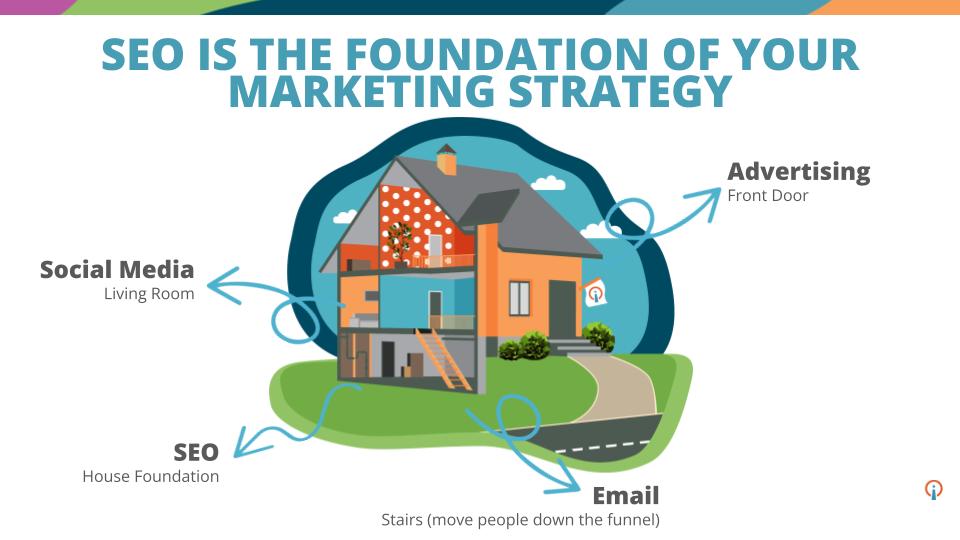
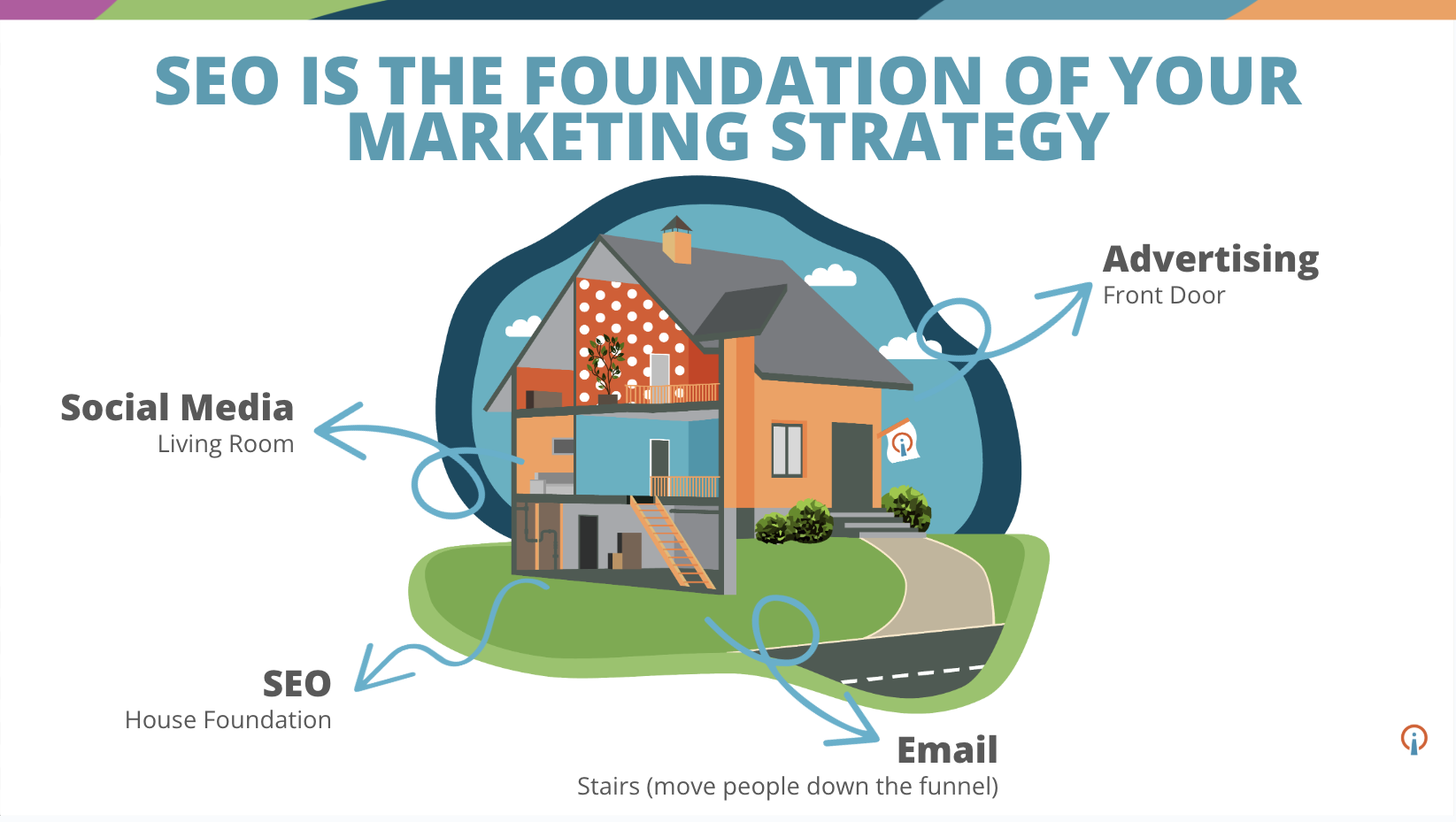
    SEO IS THE FOUNDATION OF YOUR MARKETING STRATEGY

    Why Is Higher Education SEO Important?

    Higher education SEO ensures universities stay visible in search results, attracting prospective students.

    With students relying on search to research programs, strong SEO improves rankings, enhances discoverability, and increases enrollment opportunities. Optimizing for AI search, social search, and evolving algorithms is critical for maintaining a competitive edge.

    Yet, according to our recent Higher Ed SEO Research Study developed with UPCEA, 51% of universities lack an established SEO plan.

    This oversight in strategy puts institutions at a disadvantage when it comes to improving search engine rankings and standing out in a crowded market.

    For universities ready for export guidance for 2025, an SEO roadmap serves as a crucial starting point to bridge this gap and develop a program-focused SEO strategy that incorporates upcoming trends.

    Search Influence’s SEO roadmap provides a customized guide for one key academic program including recommendations for:

    • Keyword strategy
    • Content strategy
    • Link building
    • Technical SEO optimizations

    But before you climb the Everest that is search engine visibility in 2025, you should know what to expect.

    In this blog, we’ll explore the key SEO trends impacting higher education and discuss how universities can develop a strategy to improve their search engine rankings and connect with prospective students.

    SEO Higher Education Trends in 2025

    Small animated rocket flying away from 3D computer browser windows, charts, and data

    Impact of AI Overviews on higher ed SEO

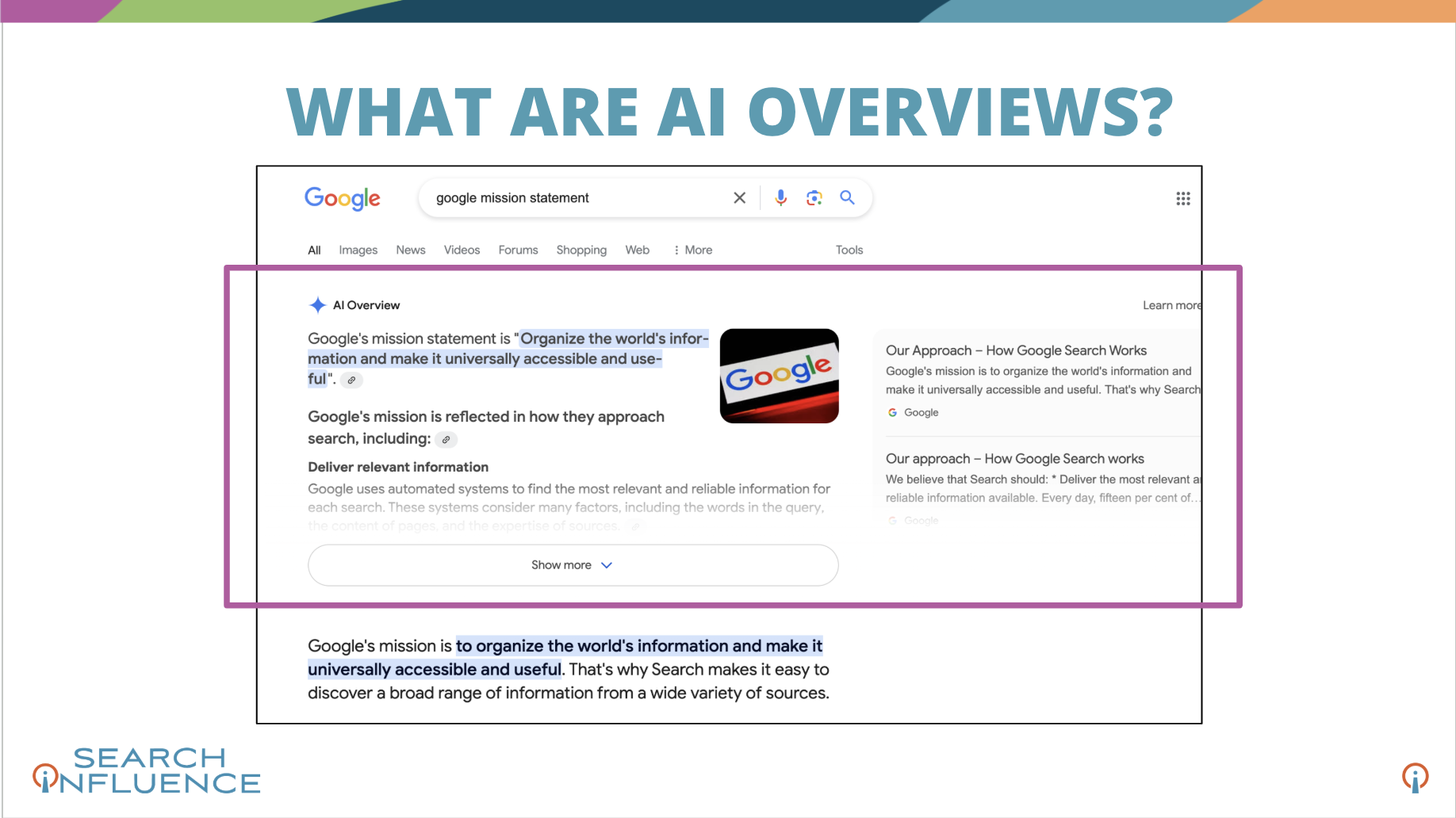
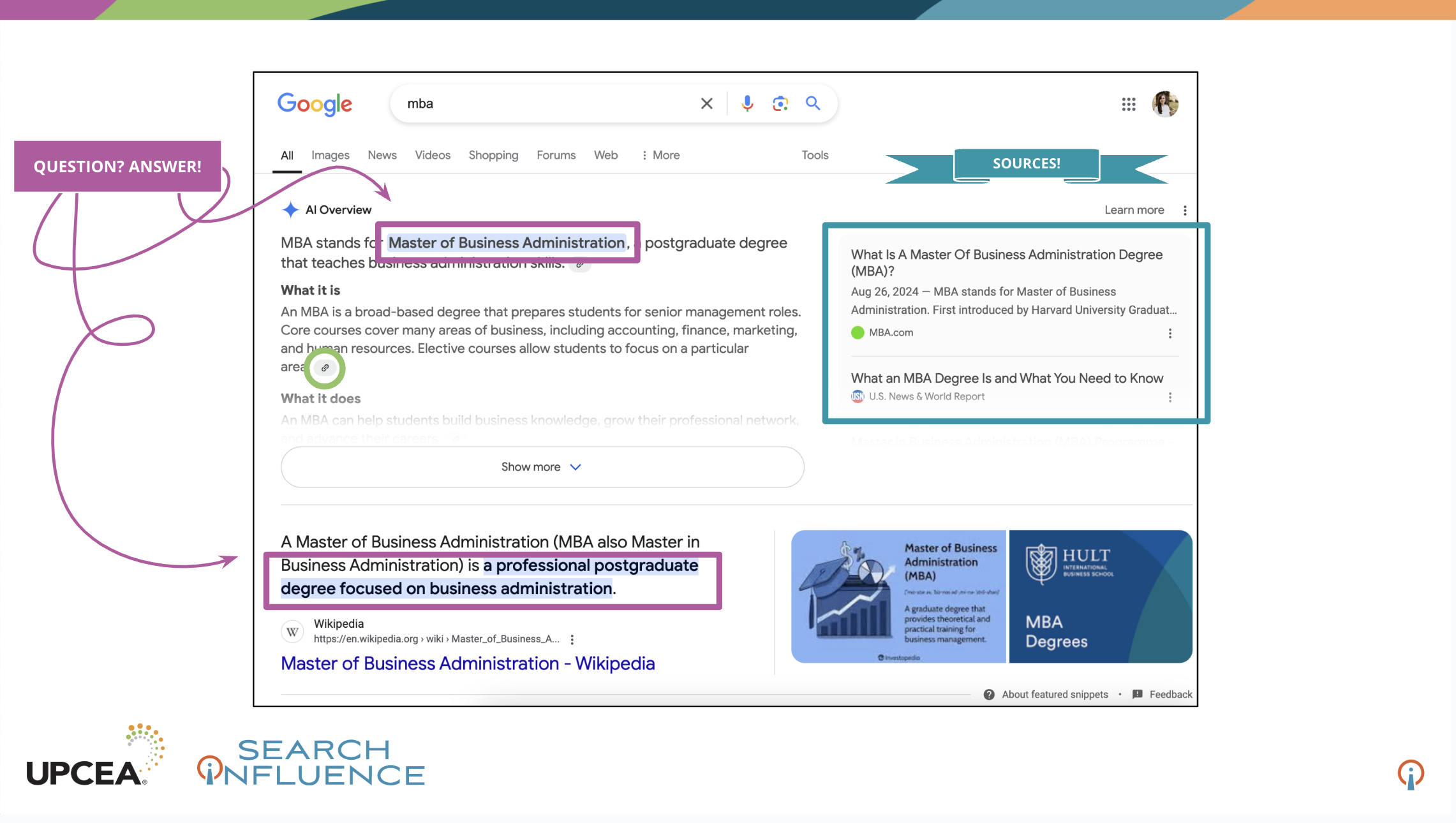
    As search continues to evolve, higher education digital marketers must leverage generative engine optimization (GEO) to reach their target audiences. Understanding AI Overviews is the first step in mastering this new form of search.

    In May 2024, Google introduced AI Overviews as part of its Search Generative Experience at Google I/O. This new feature leverages Google’s generative AI model, Gemini, to provide users with quick answers to their queries. AI Overviews generate brief snippets based on Google AI’s understanding of the question and relevant content from across the web.

    Alongside the generated answer, Google includes links to resources, allowing users to dive deeper into the topic if they choose.

    Possible challenges of AI Overviews

    • Informational content pushed down: Blog posts or general content on university websites are often pushed lower in search results by AI-generated responses, impacting traffic that universities previously earned from organic search results..
    • Limited visibility for non-featured websites: Educational institutions not featured in AI Overviews may struggle to gain online visibility, even if they rank well on traditional search engine results pages (SERPs).
    • Lack of content attribution: AI Overviews pull content from various sources without clear attribution, making it harder for universities to gain proper recognition or build brand awareness.
    • Reduced prominence of featured snippets: As AI Overviews take up more space in search results, traditional featured snippets may become less visible, reducing visibility for universities who worked hard to gain this placement.

    Strategies to overcome AI Overview challenges

    • Create detailed, well-researched content: AI Overviews often provide brief, surface-level answers. Universities can encourage users to click through and engage with the full material by developing in-depth content that offers more comprehensive insights.
    • Target long-tail keywords and specific queries: Focus on relevant keywords and highly specific searches that AI Overviews do not fully address. These keywords can help drive organic traffic from users seeking more detailed information, particularly for degree programs and specialized content.
    • Offer interactive content and direct user engagement: AI Overviews can’t replicate the value of user-driven experiences. By providing downloadable resources, webinars, or interactive tools, universities can offer unique value that sets them apart and builds stronger connections with prospective students.

    How social search is changing SEO for universities

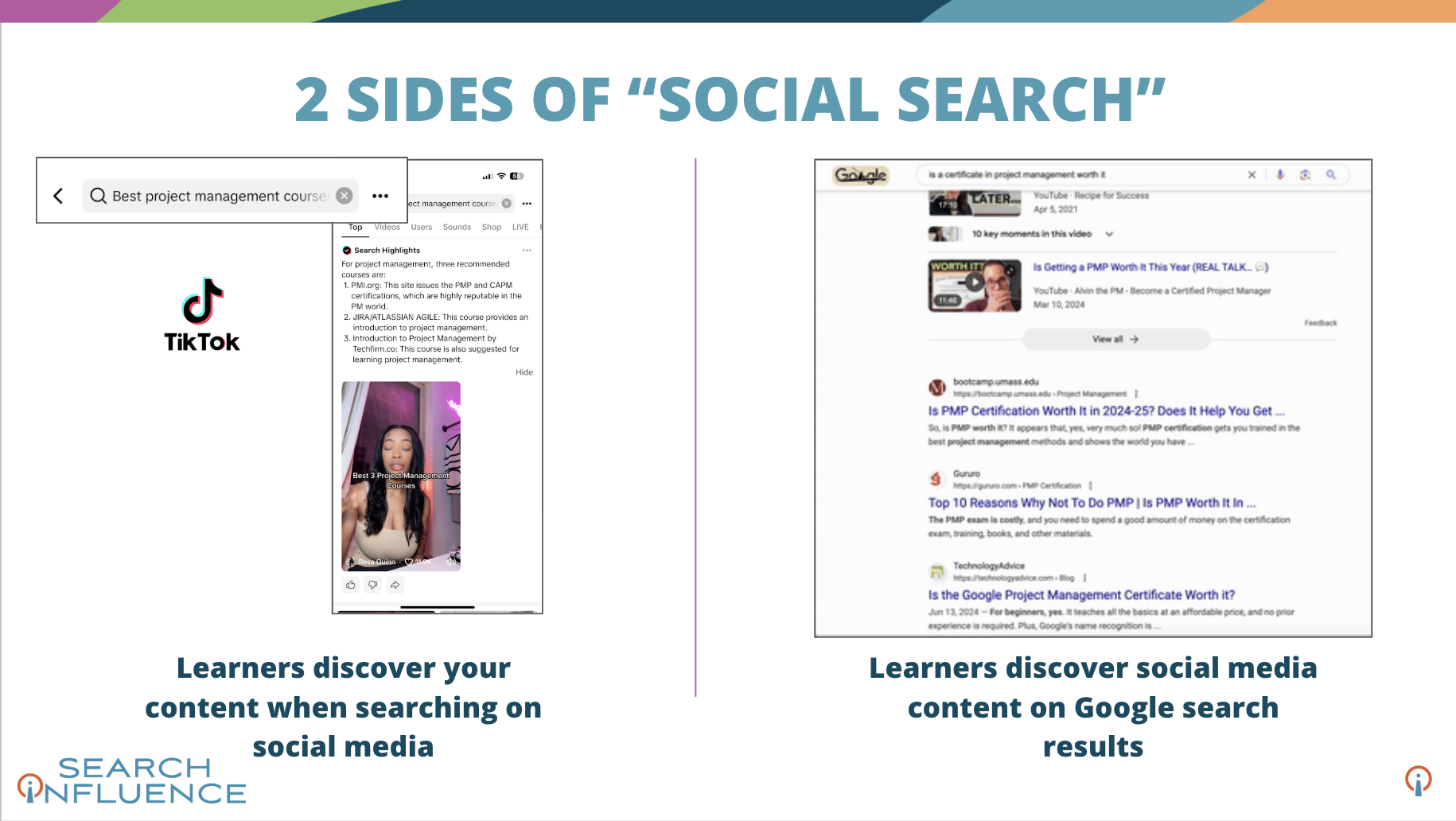
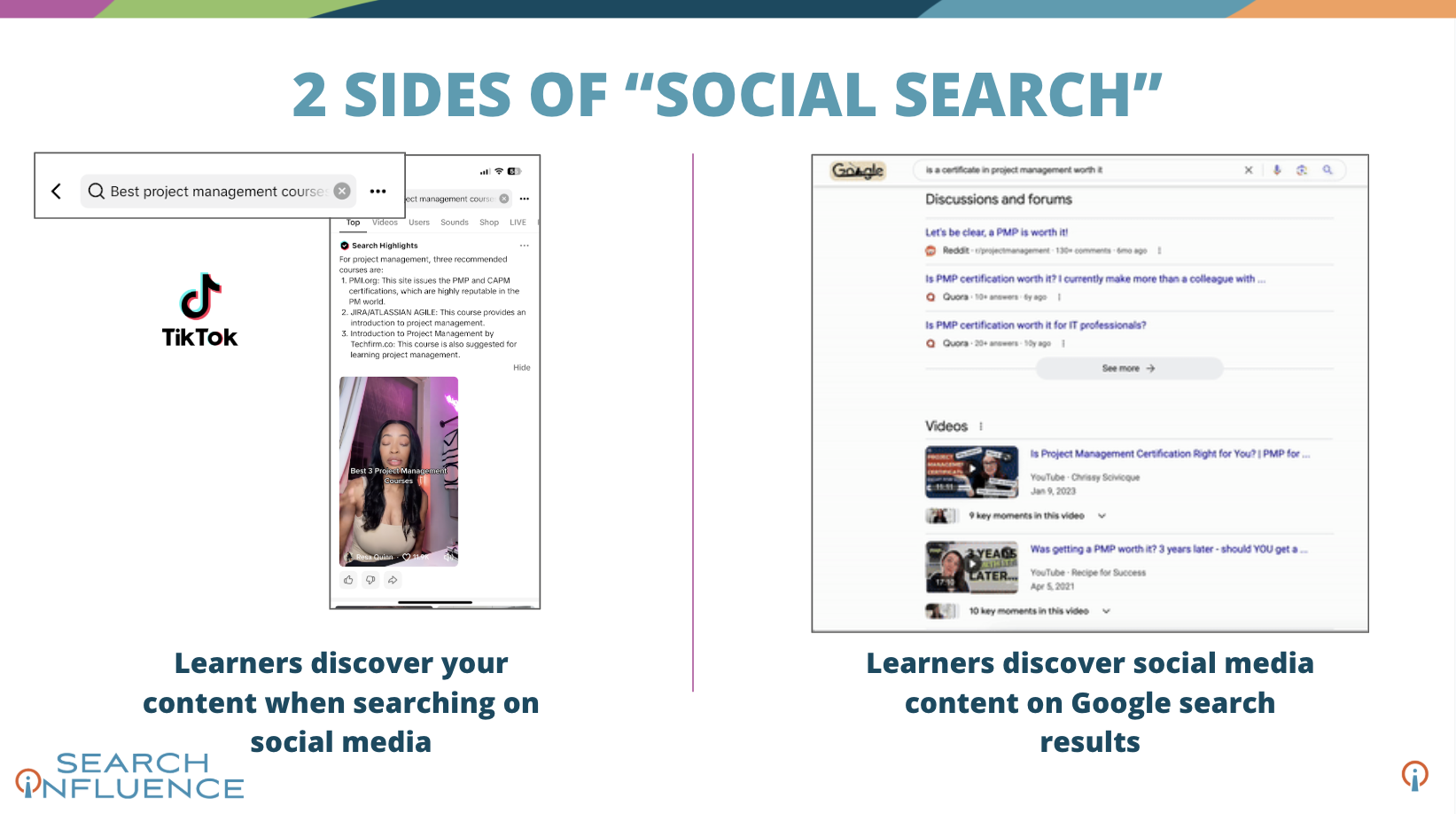
    Social search is rapidly gaining traction, particularly among Gen Z and Millennials, who increasingly use social media platforms to find information, discover products, and learn about services. This shift away from traditional search engines like Google is transforming how universities must approach recruitment SEO. Social search leverages the dynamic, interactive nature of platforms like TikTok, Instagram, and YouTube, where user-generated content (UGC) and real-time interactions play a significant role in how information is consumed and shared.

    Beyond social platforms becoming an alternative to traditional search, social content itself has started to rank higher in Google search results. This means that what universities post on social platforms impacts their visibility on social media and plays a crucial role in their overall SEO strategy.

    Possible challenges of social search for universities

    • Changing search habits: As Gen Z and Millennials shift towards social search, traditional SEO tactics designed for search engines like Google may not be as effective in capturing their attention. As social search continues to grow, higher ed websites must adapt to maintain visibility.
    • Limited control over rankings: Unlike traditional search engines, social search algorithms prioritize engagement over keyword optimization, making it harder for universities to rank higher based solely on incorporating relevant keywords. Social platforms are unpredictable, with ever-changing algorithms that often favor highly engaging content like likes, shares, and comments.
    • Engagement-driven visibility: Social search tends to favor content that generates high engagement, which can be difficult for universities to achieve organically without paid promotions. Smaller schools or institutions with less interactive content may find it challenging to compete with more popular or active brands.

    Strategies to overcome social search challenges

    • Repurpose content for social media: Universities can repurpose existing website content into highly shareable formats such as videos, infographics, or student testimonials on social media. This helps maintain a consistent message across platforms while catering to the content preferences of younger audiences.
    • Focus on visual content: Social platforms like Instagram and TikTok prioritize visual content, particularly videos. Incorporating multimedia into your digital marketing strategy is essential for keeping content relevant and visible for longer.
    • Boost engagement: To rank higher on social platforms —where algorithms prioritize engagement — universities need to focus on creating content that encourages interaction. Developing content that sparks discussions and encourages likes, shares, and comments can increase visibility in social search algorithms. For example, interactive posts like live Q&A sessions can help universities capture more organic search traffic from social platforms.

    Optimize “People Also Ask” to answer prospective students’ queries

    The “People Also Ask” (PAA) section in Google search results displays a list of questions related to the user’s original query. Each question can be expanded to reveal a brief answer, typically pulled from relevant websites. While PAA helps users quickly find information, it presents both challenges and opportunities for universities looking to attract prospective students through SEO for higher education.

    Competition for visibility is fierce, as the PAA box often pushes traditional organic search results further down the page. Even websites ranking on the first page may struggle to gain traffic. That’s why optimizing for PAA is critical. Prospective students increasingly rely on search engines to discover university programs, and the PAA box provides a valuable way to capture their attention.

    The good news is that structuring your content to answer PAA questions clearly and concisely also supports AI Overview visibility. This dynamic approach ensures that your educational website stays relevant in search results.

    Possible challenges of People Also Ask

    • Click-through rate (CTR) impact: Users may find their answers directly in the PAA section without needing to click through to a website, potentially lowering CTR even for high-ranking pages.
    • Answer quality control: Google pulls content for PAA from various sources, meaning the quality or accuracy of the answers won’t always reflect the expertise of your site, even if you provide more in-depth information.
    • Unpredictability of ranking in PAA: Google’s algorithm dynamically chooses which content to feature in PAA, making it difficult to guarantee your content will appear in this section.
    • Content cannibalization: If your content ranks both organically and in the PAA box, users might click on the PAA result, which offers less interaction and brand recognition than a direct visit to your site.

    Strategies and insights to overcome People Also Ask challenges

    • Provide concise answers to common questions: To increase the chances of appearing in the PAA section, create clear, concise answers within your content. Use structured headings and bulleted lists to make it easier for search engines to identify and feature your content.
    • Focus on long-tail queries: Target niche topics and long-tail keywords that have less competition. This can increase the likelihood of your content being featured in the PAA for specific questions related to your degree programs or student services.
      Build content around your expertise: Enhance the authority of your answers by including references to credible sources, expert quotes, and in-depth insights. This builds trustworthiness and improves your chances of being featured in PAA.
    • Use structured data: Incorporate technical SEO strategies such as structured data to help search engines better understand your content and increase its chances of appearing in the PAA box.

    Utilize video SEO to boost engagement with your audience

    Is video SEO the future of search?

    According to Hubspot, 96% of people say they watch explainer videos to learn more about a product.

    Let that sink in — 96% of people watch videos to learn more about a product!

    This underscores the importance for higher education institutions to create engaging video content.

    Video SEO involves optimizing your video content to rank higher in both search engine results and video platforms like YouTube and TikTok. This process includes targeting relevant keywords, optimizing video descriptions, transcribing videos, and creating high-quality content that engages viewers. Video SEO aims to increase visibility, drive organic search traffic, and boost audience engagement — all of which can improve your institution’s brand awareness and conversions.

    Not only does video SEO help with audience engagement, but it also contributes to improving your website’s search rankings, benefiting your overall SEO strategy.

    Possible challenges of video SEO

    • Competition: Platforms like YouTube and TikTok are highly competitive, with millions of videos uploaded daily, making it difficult for your content to stand out.
    • Time and resources: Creating and optimizing video content requires significant time, effort, and resources, more so than text-based content.
    • Technical SEO elements: Ensuring proper video metadata, schema markup, and fast loading speeds can be challenging, particularly when embedding videos on your site.
      User behavior: While video can be engaging, some users may prefer quick text results.

    Strategies and insights to overcome video SEO challenges

    • Create short-form videos: Whenever possible, create short, TikTok-style videos to answer users’ questions quickly. While longer videos can be valuable, short-form content is especially effective in the era of social search.
    • Keyword research: Focus on long-tail keywords specific to your audience’s search intent. This can help you target less competitive niches in the higher education space and boost your video content’s visibility.
    • Use engaging thumbnails and titles: Eye-catching thumbnails and compelling, keyword-rich titles can increase your click-through rates and overall engagement.
    • Include video transcripts: Transcripts make your content more accessible and provide search engines with additional text to crawl, improving your video’s SEO performance AND your website’s SEO. Transcribing your videos on your website also ensures you reach potential searchers who prefer reading content over watching a video.
    • Encourage engagement signals: Encourage viewers to like, share, comment, and subscribe. These engagement signals indicate to search engines that your content is valuable, increasing its chances of ranking higher.
    • Implement schema markup: Use proper schema markup to help search engines better understand your video content. This increases the likelihood of your video being featured in search results, especially in video carousels.
    • Consistent content creation: Regularly upload videos and promote them across multiple platforms, including your website. This consistency keeps your institution relevant and boosts your SEO efforts over the long term.

    Even universities need to prove E-E-A-T

    With AI Overviews as a dominant feature in search results, universities must focus more on creating authoritative, trustworthy content. Luckily, the search engine Goliath has laid out criteria for SEOs to do exactly that: Google E-E-A-T (Experience, Expertise, Authoritativeness, and Trustworthiness).

    These are the key factors Google uses when human reviewers evaluate the quality of content, especially for websites dealing with sensitive topics like higher education.

    E-E-A-T ensures that your institution’s content is accurate, well-researched, and delivered by credible sources — a must for higher education websites looking to thrive in today’s search engine results pages

    Leveraging authority and trustworthiness online is essential for universities to attract prospective students and build partnerships with academic and research institutions.

    Possible challenges of establishing E-E-A-T

    • Maintaining consistency: With various contributors producing content, ensuring that all pages across the university’s website meet E-E-A-T standards can be challenging.
    • Building authority: Smaller universities or newer programs often find it difficult to compete with established institutions in search rankings.
    • User trust: Consistently delivering accurate and up-to-date information is critical. Any outdated or incorrect content can damage the trustworthiness of the university.
    • Dynamic content: Frequent changes to curricula, research publications, and academic programs can make maintaining content relevance and authority resource-intensive.

    Strategies and insights to overcome E-E-A-T challenges

    • Highlight expertise: Feature content authored by faculty members, ensuring their credentials, academic achievements, and research experience are clearly showcased. Author bios and academic qualifications reinforce the expertise of your institution.
    • Enhance trustworthiness: Include student testimonials, case studies, and partnerships with respected organizations to build trust with prospective students and academic partners.
    • Content review process: Implement a rigorous content review and update schedule to ensure all information remains accurate, relevant, and aligned with the institution’s authority in the field.
    • Leverage user-generated content: Encourage reviews and success stories from current students and alumni. This content demonstrates real-world experience and fosters trust with your target audience.
    • Structured data and transparency: Use structured data to help search engine crawlers better understand the content on your site. Transparency in policies, admissions, and course details will enhance trust and improve your organic traffic.
    • Third-party mentions: Gaining citations or backlinks from respected educational sources, government websites, or reputable media outlets can help boost your university’s authority in search rankings.

    How an SEO Roadmap Can Help You Stay Ahead of SEO Trends

    In the ever-evolving world of higher education marketing, staying ahead of the latest trends is critical for attracting more prospective students.

    But how do you know where to start for an institution that’s attracting thousands of students to sometimes hundreds of programs?

    An SEO roadmap offers a strategic guide to ensure your university’s website remains visible and effective in search engine results.

    Here’s how an SEO roadmap will help fast-track your enrollment journey:

    Optimize for student search behavior

    An SEO roadmap provides valuable insights into how prospective students are searching for degree programs and other academic offerings. By understanding the keywords and phrases potential students use, your institution can adapt content to match their queries more effectively, helping you connect with a broader audience of prospective students.

    Adapt to algorithm changes

    Google’s search algorithms are constantly changing, which can impact your university’s website performance. An SEO roadmap ensures you stay on top of these changes by addressing updates like core algorithm shifts, mobile-first indexing, and search ranking signals. This helps your site maintain strong visibility in organic search results, keeping your content in front of more potential students.

    Stay ahead of emerging trends

    An effective SEO roadmap also accounts for emerging trends in the digital landscape, such as voice search, mobile-first indexing, and AI-generated results. These trends are crucial for reaching tech-savvy students who rely on the latest technology to find educational institutions. By adapting your SEO strategy to incorporate these changes, your university will stay competitive and relevant.

    Improve your content strategy

    An SEO roadmap offers actionable insights into what content updates your website needs and highlights new topics to address. It also identifies new types of content — such as videos, infographics, or interactive tools — that will help you engage your audience more effectively. This ensures your content marketing strategy aligns with both search engine algorithms and student interests, driving more organic traffic to your site.

    Gain authority through link building

    Building authority is key to ranking higher in search results, and an SEO roadmap helps identify valuable link-building opportunities. You’ll learn which websites your program should be featured on to gain credibility and boost your search rankings. Additionally, internal links can enhance the user experience and improve your site’s functionality, leading to better SEO performance.

    Stay Ahead of the Latest SEO Trends With Search Influence

    A screenshot of Google Analytics, showing 102 users for an unknown site in the last 30 minutes

    Uncover new opportunities to improve your educational website’s visibility and performance with an SEO roadmap tailored to your institution’s needs.

    At Search Influence, we provide actionable recommendations that align with the latest SEO for higher education strategies, ensuring your institution remains competitive in search results.

    Our team of SEO experts monitors evolving search engine trends and algorithm changes, so you feel confident that your strategy is up-to-date. With nearly two decades of experience, we understand the unique challenges faced by higher education institutions, and our SEO roadmap will help you capture the right search intent, increase rankings, and boost traffic.

    Looking for even more higher ed marketing insights?

    Don’t miss my presentations at the 2024 UPCEA MEMS conference in Philadelphia this December.

    My session, “Visibility is Vital: Maximize Enrollment by Tracking Marketing Metrics,” presented alongside Bruce Etter of UPCEA, will give valuable insights into which marketing metrics matter the most and how to use those metrics to optimize campaigns, maximize budget allocation, and improve conversions.

    I will also be presenting a 10-minute session “Practical Magic: How to Navigate 2025 SEO Trends” that will take a more in-depth look at all the higher education SEO trends covered in this blog.

    Contact our team today to learn more about all our digital marketing services.


    Images

    Unsplash and Unsplash

  • In-House Marketing vs. Agency Teams: Build a Strong Strategy Together

    In-House Marketing vs. Agency Teams: Build a Strong Strategy Together

    This post was updated by Paula French on 2/28/25 to reflect recent trends and best practice. It was originally published on 12/6/2018.

    Working professionals giving each other a high five

    Key Insights

    • As brands grow, marketing demands increase, making it difficult for internal teams to execute strategy, create content, analyze performance, and keep up with industry shifts all at once.
    • Agencies provide specialized expertise and resources that complement in-house efforts, allowing internal teams to focus on core business priorities and guide overall strategy.
    • Combining internal marketing strengths with agency support creates a scalable, results-driven strategy that adapts to changing needs without overloading your team.

    Internal marketing teams are often expected to manage it all — strategy, execution, and analysis — on top of keeping up with regular day-to-day tasks. But as the workload grows, so does the risk of burnout, missed priorities and deadlines, and campaigns that don’t perform as expected. The faster the industry evolves, the harder it is for stretched-thin teams to keep up, leading to outdated strategies and missed opportunities.

    While outsourcing can help lighten the internal load, some in-house teams hesitate to seek out agency support, fearing they’ll lose control over their marketing strategy. In reality, internal teams and agencies don’t have to compete. They can leverage their respective strengths to create an agile, focused, and impactful marketing approach.

    If you’re deciding between keeping all of your marketing in-house or partnering with an agency, here’s why you don’t have to choose just one, plus how to balance both for the best results.

    How Can an Agency Help Me If I Am a…

    Single-person marketing team

    Instead of feeling like a one-person show, you’ll have a team to bounce ideas off, refine strategies, and make sure nothing slips through the cracks while improving your results.

    Single-person marketing “teams” can feel isolated and underappreciated. Your organization’s leaders expect you to handle it on your own, but as you’ve tried to run campaigns, manage vendors, write content, plan the strategy, update your website, and still get results, you find two challenges:

    1. There isn’t enough time to do it all yourself.
    2. One person rarely has the skills to be strategic, create graphics, update a website, monitor results, and evaluate and manage vendors.

    A marketing agency takes the weight off your shoulders by acting as an extension of your team. They bring the time, skills, and experience to tackle everything from strategy planning to execution and performance tracking, so you’re not stuck doing it alone.

    Business leader

    No more juggling ads, content, and campaigns on the fly. Partnering with an agency ensures your marketing is always working, even when you’re too busy to think about it.

    When you’re responsible for driving the business forward, marketing is just one of many things competing for your time. Whether you’re managing it all yourself or working with local media vendors, it can be difficult to stay strategic and aligned with your goals.

    You may often feel that:

    1. Marketing takes a back seat when business operations call for urgent attention.
    2. You got into your field to do what you love, not market what you love.
    3. You are reacting to promotional ideas as they cross your desk, with no real strategy about how to best reach your customers.

    Being a leader means wearing many hats, and marketing often ends up as an afterthought. An agency helps shift it from a scattered, reactionary task to a well-planned strategy that actually supports your growth.

    Medium-to-large marketing team

    Even with a well-staffed, in-house department, keeping up with every aspect of marketing can be a challenge. Between aligning team members, executing campaigns, and adapting to industry updates, it’s easy to get stuck in the weeds and lose valuable time for strategy. You may find that:

    1. Your internal marketing team needs support in strategy and direction.
    2. The time it takes to execute tactics gets in the way of strategically analyzing what is truly working (and what is not).
    3. You struggle to keep up with new and changing marketing technologies and ideas.

    Partnering with a marketing agency helps bridge these gaps by bringing fresh insights, specialized expertise, and extra hands where you need them most.  Whether it’s adjusting your strategy, handling time-consuming execution, or keeping your team ahead of evolving trends, they’ll keep your marketing in check and on track without overloading your internal resources.

    Higher education marketer

    Instead of constantly shifting from one urgent task to the next, an agency’s support helps you be more intentional with your marketing.

    Higher education marketing is a constant balancing act. One minute you’re fine-tuning messaging for a new degree program, the next you’re trying to boost student engagement — all while keeping an eye on enrollment goals. With so many priorities commanding your attention, it’s easy to feel like you’re always in reactive mode and that:

    1. Your marketing efforts are spread too thin. You’re trying to serve prospective students, current students, and alumni all at once while balancing multiple degrees and programs.
    2. Data analysis and performance reporting fall by the wayside due to time constraints.
    3. Meeting ambitious enrollment goals feels unattainable without additional resources or expertise.

    An agency will take on recruitment and retention efforts, ensuring you reach the right students at the right time. With deeper data insights, you’ll make informed strategic decisions, focusing your time and budget on what drives real results.

    Want to find out if partnering with an agency is right for your institution? Take our Higher Ed SEO Quiz to discover your best staffing approach based on your current resources, strategy, and performance.

    In-House Marketing vs. Agency Partnerships

    A person giving a presentation in a conference room

    Balancing in-house marketing with agency support lets you stay involved while tapping into advanced expertise. Your team knows your brand best, while an agency brings the skills, strategy, and execution power to amplify your efforts.

    At Search Influence, many of our clients handle routine tasks internally while relying on us for more strategic, high-impact initiatives. The key is knowing which responsibilities are best handled by your in-house team and which most benefit from external support.

    What work should my in-house marketing team handle?

    Identifying unique stories that can be included in marketing

    Great marketing starts with great stories, but you can’t share what you don’t know.

    As part of your internal tasks, build relationships with departments and stakeholders across your organization. This ensures you stay informed of exciting news and developments that bring your marketing to life.

    For example, let’s say you are marketing for a university, and one of your instructors learns that one of her students won a research award. Would your marketing team hear about it?

    If you educate your staff on your marketing goals and build vital relationships, you’ll be less likely to miss valuable stories that strengthen your outreach.

    Serving as spokespeople for public relations and media opportunities

    Having the right people represent your organization in the media bolsters your brand’s credibility and reach. Instead of scrambling when a press opportunity arises, establish a roster of internal experts who can confidently speak on key topics.

    Identifying multiple spokespeople prevents over-reliance on a single person, speeds up media responses, and ensures you always have a knowledgeable representative prepared to engage with the public.

    By designating these spokespeople internally, you streamline the process and create a sense of ownership within your team. When staff members are prepared and empowered to speak on behalf of the organization, it fosters consistent messaging and a proactive approach to media inquiries.

    Creating day-to-day organic social posts

    Social media is where you build a genuine connection with your audience, and staying consistent is what’s key to maintaining that bond. Hubspot reports that social media is the preferred means for product discovery among consumers aged 18 to 44, making routine posting all the more important.

    For businesses with the right in-house resources, managing daily posts can be straightforward. But when time or expertise is limited, outsourcing certain aspects to an agency — like content scheduling, caption writing, or hashtag strategy — can help maintain consistency without adding to your team’s workload.

    You may find that capturing photos or videos in-house and passing them along to an agency for posting works best. This ensures fresh, timely content without the hassle of managing every detail.

    When should I hire a digital marketing agency?

    To improve your website’s SEO and increase organic traffic

    If your in-house team can’t keep up with the nuances of SEO, it’s time to bring in the experts.

    SEO is fundamental to getting your site seen, but it’s far from a one-size-fits-all solution. It takes ongoing attention, work, and a deep understanding of both on and off-site SEO tactics to rank high and stay ranked high.

    An agency will create a comprehensive SEO strategy that aligns with your specific goals, covering key areas like:

    • Deep keyword research to target the right audience
    • On-page optimization to improve visibility, from meta descriptions to header tags
    • Content creation that considers what your audience is actually searching for
    • Site performance improvements, from navigation to mobile optimization
    • Building valuable backlinks to boost your site’s authority
    • Performance tracking to refine strategies and stay ahead of the curve

    When an agency handles these technical details, you free up your team to focus on bigger-picture goals, knowing that your SEO is in the best hands.

    To manage and optimize your digital advertising campaigns

    With an agency managing your digital ads, you’ll rest easy knowing your budget is being spent efficiently, your ads are reaching the right people, and your strategy is always evolving to stay competitive.

    Digital advertising is one of the fastest ways to get your brand in front of the right audience. However, making the most of it is no easy feat. If you’re struggling to create effective campaigns, manage budgets, or keep up with performance tracking, an agency will give your campaigns the focus they need.

    Applying their specialized expertise, an agency positions your brand for paid advertising success by:

    • Crafting targeted campaigns on platforms like Google Ads and Meta
    • Selecting and optimizing keywords for maximum visibility
    • Writing engaging ad copy and designing eye-catching visuals
    • Leveraging advanced targeting to refine audience demographics and interests
    • Setting and managing budgets to ensure your ads reach the right people without overspending
    • Testing different ad variations to identify the most effective strategy
    • Monitoring and adjusting campaigns to keep things running smoothly

    To monitor campaign success through advanced analytics tracking and reporting

    Let an agency take the guesswork out of ad management, using data to refine and enhance your campaigns for maximum performance.

    Analytics and lead tracking require more than just simple data collection. It takes advanced know-how to make sense of your metrics, assess your performance, and use the insights as fuel for your future strategy. If you’re feeling lost in a sea of metrics, an agency will interpret the numbers and guide you toward smarter decisions.

    Trust your advanced tracking and reporting to an agency when you need support with:

    • Tracking leads from forms, calls, and other inquiries
    • Identifying the top-performing marketing channels to allocate resources effectively
    • Analyzing lead quality to improve conversion rates and maximize ROI
    • Conversion tracking set-up to measure sales, sign-ups, and other key outcomes
    • Making sense of your data with customized reports and KPI dashboards 
    • Conducting an ROI analysis to showcase the effectiveness of your efforts
    • Optimizing your campaigns based on performance data

    To craft and execute customized email marketing strategies

    With an agency’s guidance, your email marketing will be a well-oiled machine that consistently delivers high-quality, results-driven campaigns.

    Email marketing often gets treated as an internal “check the box” task without much thought beyond getting the message sent. But when the average cold email open rate is only 27.7%, it’s clear that every detail matters to help your emails stand out in a cluttered inbox.

    From timing to content, getting it right from the start is how you improve opens, reads, and conversions. An agency helps support your email strategy by:

    • Developing the right mix, whether that’s newsletters, nurture campaigns, or frequent email reminders
    • Curating relevant, targeted content that aligns with recipients’ interests and needs
    • Crafting compelling subject lines designed to increase open rates
    • Designing visually appealing emails that work across all types and prompt clicks
    • Segmenting your audience to send the right emails to the right people at the right time
    • Timing emails to ensure they land in inboxes at peak engagement times

    But I Don’t Want to Give Up Control! How Do I Balance In-House and Outsourced Marketing?

    Still debating between in-house vs. agency marketing, or a hybrid approach?

    For the aspects you are currently handling internally, take a moment and ask yourself if it’s the right responsibility for your business. As you go through each item, think…

    Yes, you CAN do it, but…

    1. Are you doing it well?
    2. Are you doing consistently?
    3. Are you monitoring results and making adjustments?
    4. If you were not spending time on this, what else could you be doing?

    If you’re worried about losing control over your marketing when you outsource, rest assured. While your agency will take the heavy lifting off your plate, you’ll still have the head seat at the dinner table. The best agency for you will integrate themselves as part of your team and include you in the strategy and reporting of results, at a minimum.

    Find Your Right Approach to Working With a Marketing Agency

    Are you feeling stretched thin in your marketing approach?

    When your in-house team partners with an agency, you create a dream duo that distributes the workload, increases your day-to-day efficiency, and grants you the extra bandwidth to achieve sustainable success.

    If you’re a higher education marketer interested in further assessing your ideal marketing approach, check out our Higher Ed SEO Quiz. This 5-question quiz will help you determine whether to outsource your work, keep it internal, or take on a hybrid strategy. In just minutes, you’ll have personalized insights to make informed staffing choices.

    See how Search Influence can help you develop a marketing plan that works for your team today!

  • Digital Marketing Trends 2025: Essential Higher Ed Strategies [WEBINAR]

    Key Insights

    • SEO is the foundation of higher ed marketing: Most institutions recognize SEO’s importance but lack a solid strategy. Strong SEO supports all marketing efforts and drives conversions.
    • AI Overviews are changing search visibility: Google’s AI-generated summaries are pushing down traditional search results, reducing organic traffic, and demanding new content strategies.
    • Social search is expanding beyond platforms: Social media content is influencing in-app searches and Google rankings, offering new ways to boost visibility.
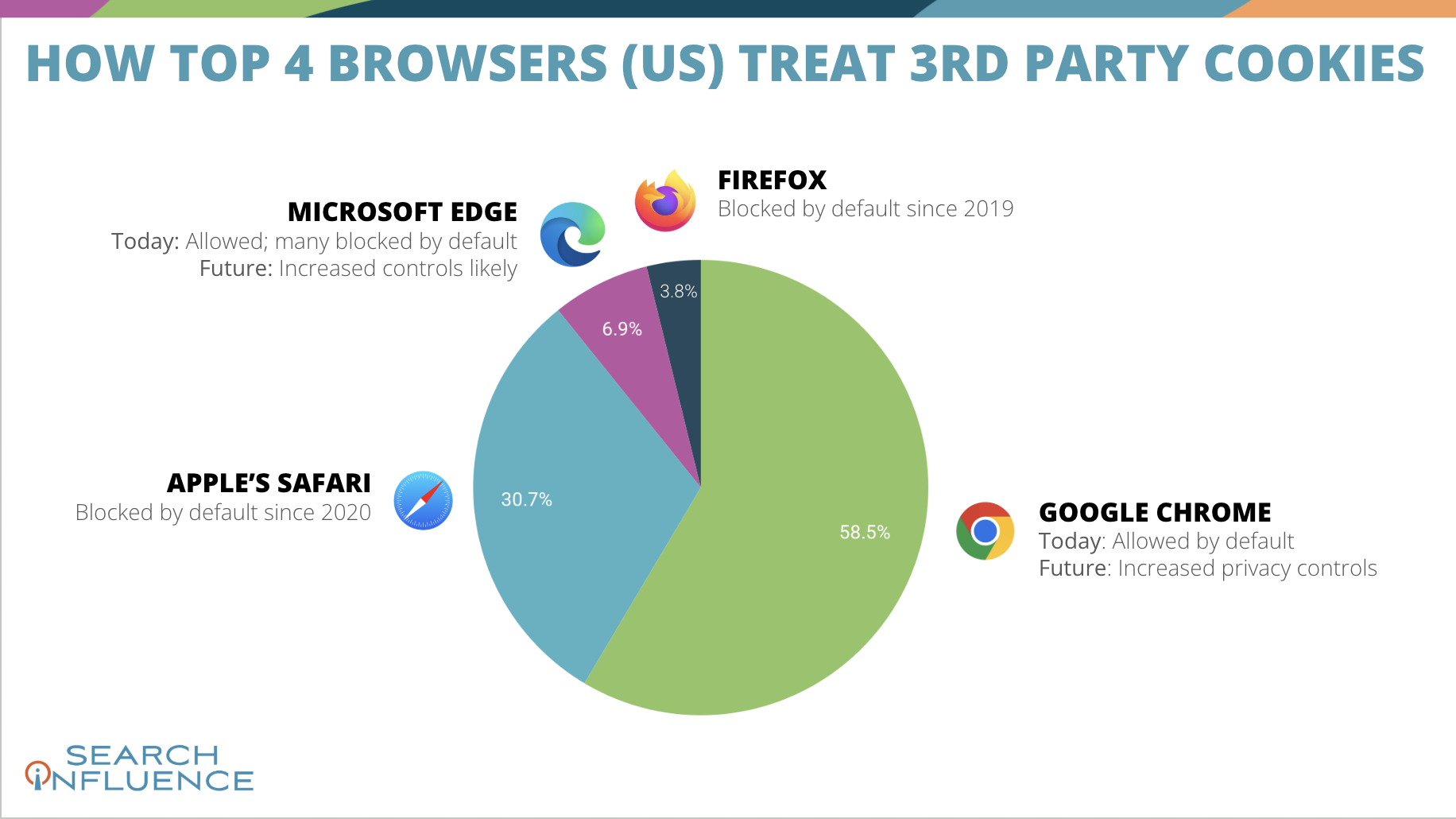
    • Cookie deprecation is reshaping digital advertising: With third-party cookies being phased out, marketers must prioritize first-party data and new tracking methods to maintain targeting and performance.
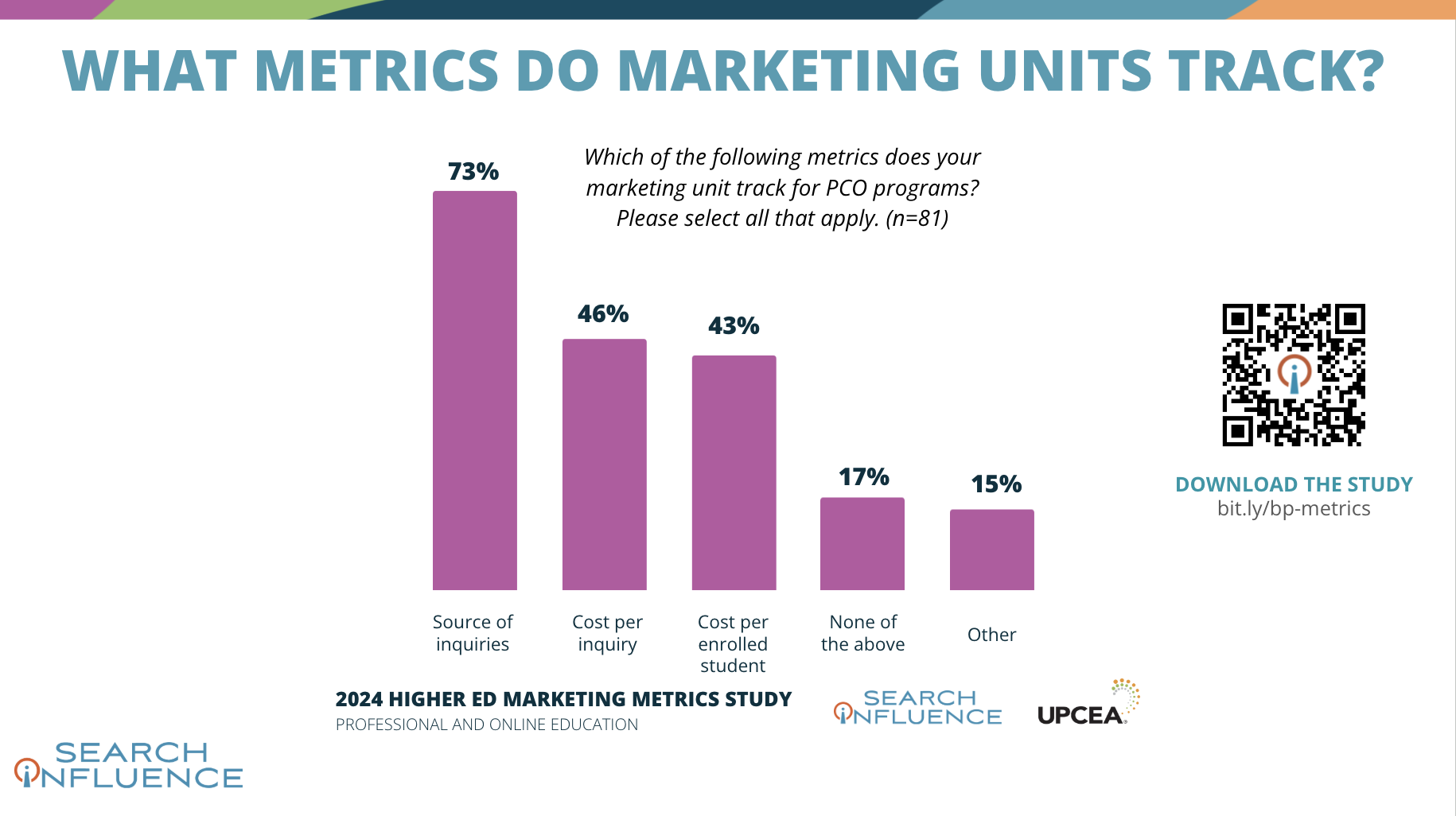
    • Tracking cost per inquiry (CPI) is critical: CPI is the most important metric for marketing efficiency, yet less than half of institutions track it.

    Digital Marketing Trends 2025: Essential Higher Ed Strategies [WEBINAR]
    In a guest webinar for The Leading Edge Thinking in Higher Education Series hosted by Bay Path University’s Center for Higher Education Leadership & Innovative Practice (CHELIP), Search Influence Director of Sales and Marketing Paula French shed light on the key digital marketing trends shaping higher education in 2025.

    Colleges and universities face an increasingly competitive environment. To attract and engage prospective students, it is critical for marketing teams to stay ahead of these trends.

    Higher education institutions are grappling with challenges like evolving search engines, changes in how prospective students search, and a shifting digital advertising landscape.

    To remain competitive, institutions need to adopt innovative strategies that leverage AI tools, optimize for emerging search results formats, and refine targeted advertising techniques.

    In her webinar, Digital Marketing in 2025: Best Practices for Higher Education, Paula explained how marketing teams can adapt to these changes. Paula also highlighted findings from Search Influence’s Marketing Metrics Research Report, emphasizing the importance of tracking cost metrics to enhance marketing performance and ROI.

    The Importance of SEO for Higher Ed Institutions

    According to the Higher Ed SEO Research Study by Search Influence and UPCEA, 84% of marketing departments recognize SEO as a core part of their strategy.

    Yet, 51% of those departments admit they don’t have an established SEO plan.

    This gap highlights a critical opportunity for higher education institutions to strengthen their marketing efforts by making SEO the foundation of their strategies.

    Think of your higher ed marketing strategy as a house.

    Advertising is the front door — it grabs attention and gets prospective students into the funnel.

    Social media platforms are the living room, where you engage in meaningful conversations and build relationships with your audience.

    Email marketing acts as the stairs, guiding prospective students down the funnel toward conversion.

    But SEO is the foundation — it supports every marketing effort by ensuring your website, the core of your digital presence, is optimized for discovery and user experience.

    No matter how prospective learners hear about your institution — whether through an ad, an email campaign, social media, a conference, or a Google search — you will lead them to your website to learn more or take action.

    A strong SEO strategy ensures visitors easily find the information they need when they arrive, resulting in a better user experience and higher conversion rates.

    Higher Education Digital Marketing Trends in 2025

    What are AI overviews

    AI Overviews: how generative AI is reshaping search in higher ed marketing

    While much of the conversation around AI in marketing focuses on how it helps create content — writing, graphics, videos — less attention is given to how AI search results are changing how prospective students find information about schools and programs.

    AI search will change the traditional structure of SERPs and the strategies digital marketers use to climb them.

    As search engines evolve, higher ed marketers must embrace optimizing for AI search, or, what some are more formally referring to “Generative Engine Optimization (GEO)” to maintain visibility.

    Understanding AI Overviews is the first step.

    In May 2024, Google introduced AI Overviews as part of its Search Generative Experience, powered by the generative AI model Gemini. These AI-generated summaries provide quick answers to user queries, pulling from content across the web and including links for deeper exploration.

    However, AI Overviews dominate search results pages, pushing traditional organic listings down. Even top-five rankings now require more scrolling, leading to less traffic. This means even if your certificate program ranks top five on the SERPs, it still might not get all the eyes it deserves.

    A Seer Interactive study shows that organic click-through rates (CTR) drop by nearly 70% when AI Overviews are present, highlighting the need to adapt your content marketing strategy.

    So, how can digital marketers adapt to AI Overviews?

    • Target commercial and transactional keywords: One of the most immediate steps your team can take is to focus on optimizing for commercial and transactional keywords. These types of searches — like “coding certification online” or “online MBA programs ranked” — are less likely to trigger AI Overviews. This means higher organic click-through rates and more traffic to your site. Aligning your content marketing efforts with these keywords can help you capture prospective students actively looking to enroll.
    • Evaluate keyword competition: Consider how competitive specific search phrases are and where your institution currently ranks. If you’re already performing well for less competitive keywords, you may have a better chance of becoming a source for AI Overviews. Like traditional SEO, start with the low-hanging fruit — targeting terms where you can realistically break through.
    • Align content with search intent: When developing your content strategy, aligning your content with the searcher’s intent is essential. For example, someone searching “how to become a CFO” has informational intent — they’re looking for guidance or advice. Google highlights articles, videos, and guides for these types of searches. By tailoring your content to fit this intent, you improve your chances of being featured in AI Overviews.
    • Create question-based content: Search engines like Google and AI platforms like ChatGPT and Perplexity are designed to provide direct answers to user questions. Creating question-based content that addresses specific queries — such as “What are the admission requirements for an online MBA?” or “How long does it take to complete a coding certification?” — increases the likelihood that your content will be featured in AI-generated responses.
    • Make content digestible: AI models and search algorithms favor content that’s easy to understand and well-structured. Use clear headings, subheadings, bullet points, and short paragraphs to make your content more accessible. Incorporating internal links and using Schema markup can also improve your chances of being featured in AI Overviews.

    Social search: expanding your visibility beyond traditional SEO
    Two sides to social search

    When people talk about social search, they typically mean how learners use platforms like TikTok, Instagram, or LinkedIn to find information and discover content.

    But social search extends beyond social platforms. Social content is increasingly appearing in Google search results, offering new ways to enhance your digital marketing strategy.

    For example, searching “best project management courses” on TikTok brings up typical video content like “Top 3 Project Management Courses.” But you’ll also see an AI-driven search highlighting what TikTok’s generative AI detects in those videos.

    Similar social content often ranks prominently on Google. Thanks to their large audiences and dynamic content, platforms like LinkedIn, Facebook, Instagram, TikTok, Reddit, Quora, and YouTube appear more frequently in Google search results.

    To capitalize on this, start by repurposing existing website content for social media. Share videos from your site on platforms like YouTube and TikTok, turn blogs into LinkedIn articles, and create short videos summarizing your program pages.

    This approach boosts engagement on social platforms while increasing your visibility on Google. Learners prefer social searches because they find information presented in engaging, authentic formats — so meeting them there makes your marketing campaigns more effective.

    You should also engage in relevant discussions on Reddit and Quora and optimize video content for YouTube — both of which can rank well in Google search results.

    This dual strategy strengthens both your social presence and your search visibility.

    Cookie deprecation: navigating the shift in digital advertising for higher ed.

    How top 4 browsers (US) Treat 3rd Party Cookies
    The deprecation of third-party cookies is reshaping the digital marketing landscape, significantly impacting how higher education institutions target and track prospective students.

    Without third-party cookies, it’s harder to tailor ads based on consumer behavior. It also limits how accurately you can measure the success of your digital advertising campaigns, often leading to sampled or underreported conversions.

    In the past few years, browsers like Firefox (2019) and Safari (2020) blocked third-party cookies entirely. Although Google Chrome, which holds nearly 60% of the U.S. desktop search market, delayed full deprecation, users have more control over data privacy, making it easier to opt out of tracking.

    Alternatives to cookie-based targeting include:

    • Contextual targeting, which places ads alongside relevant content (e.g., showing your online MBA program ad next to an article on “Best Online MBA Programs”), and leveraging first-party data collected through forms, applications, or interactions on your site.
    • Addressable geo-fencing allows you to target specific locations without relying on third-party cookies, layering in your own CRM data for added precision.

    Integrating your CRM data with platforms like Google Enhanced Conversions and Meta
    Conversions API is key for tracking. This approach offers more accurate reporting and allows platforms to optimize campaigns based on qualified leads. Your CRM can also create custom audiences for retargeting and help build lookalike audiences to expand your reach.

    As third-party cookies disappear, the focus shifts toward using data-driven insights from first-party data to refine targeting and improve performance across digital channels.

    By embracing these changes, higher education marketers can continue to effectively engage prospective students while navigating new data privacy norms.

    New standards of measurement: why tracking the right metrics matters

    When it comes to higher ed marketing, generating student inquiries is the first and most crucial step toward enrollment. That’s why cost per inquiry (CPI) is the single most important metric for evaluating marketing efficiency — yet too few institutions are tracking it.

    According to our 2024 Higher Ed Marketing Metrics Research Report: What Gets Measured Gets Managed, co-authored with UPCEA, only 46% of marketing teams track CPI, and just 43% measure cost per enrolled student.

    Without this data, institutions are missing key insights into how effectively their marketing spend drives prospective students into the funnel.

    What Metrics Do Marketing Units Track

    The good news?

    Those who do track CPI are more likely to be satisfied with their campaign performance.

    Why?

    Because having clear, data-driven insights allows marketers to optimize strategies, allocate budgets more effectively, and ultimately drive better enrollment outcomes.

    Our higher ed marketing metrics study found that the average CPI across institutions is $140, with variations by program type:

    • Graduate programs: $157 per inquiry
    • Undergraduate programs: $128 per inquiry
    • Non-credit programs: $51 per inquiry

    With enrollment marketing evolving rapidly, tracking CPI is no longer optional — it’s essential.

    Optimizing for CPI ensures your marketing dollars work smarter, helping you attract more students and maximize ROI.

    About Bay Path University’s CHELIP and Leading Edge Series

    Bay Path University’s Center for Higher Education Leadership & Innovative Practice (CHELIP) drives innovation in higher education. Since its founding in 2019, CHELIP has built on Bay Path’s 120-year legacy of teaching excellence to promote bold ideas and collaborative solutions that address the evolving needs of both students and institutions.

    One of its key initiatives, the Leading Edge Thinking in Higher Education Series, invites thought leaders from across the country to share insights on advancements in the field. This series tackles topics like top marketing trends, marketing effectiveness, and the increasingly important role of digital strategies in student engagement.

    Prepare for Digital Marketing Trends in 2025 With Search Influence

    In her guest presentation for Bay Path University’s Leading Edge Thinking in Higher Education Series, Paula highlighted key trends — like AI Overviews, social search, and cookie deprecation — having a major impact on higher ed marketing.

    As marketing leaders, it’s essential to prepare for these shifts. From machine learning in search to evolving data privacy standards, staying ahead ensures you get the most value from your campaigns.

    At Search Influence, we help higher ed institutions thrive by integrating data-driven strategies into their marketing.

    Download our Higher Ed Marketing Metrics Research Report to gain insights that keep your marketing effective and future-ready.

  • UPCEA Webinar Recap: Top Higher Education SEO Trends for 2025

    Key Insights

    • With enrollment trends shifting, target learners evolving, and search habits changing, your 2025 higher ed SEO strategy may need a refresh.
    • In a webinar with UPCEA, Search Influence shared tips and tricks for accommodating new search trends such as AI Overviews and social search to ensure your institution remains visible to prospective students.
    • As these trends shake up the higher ed playing field, your university must have an up-to-date SEO strategy in place to outpace the competition and reach your enrollment goals.
    • Search Influence and UPCEA hosted our webinar, “Top Trends for Your 2025 SEO Strategy to Attract the Modern Learner.”

      As SEO and Creative Manager at Search Influence, I joined Paula French, our Director of Sales and Marketing, alongside UPCEA’s Chief Research Officer Jim Fong, and Bruce Etter, Senior Director of Research and Consulting, to discuss the state of higher ed SEO going into 2025.

      In the webinar, we unpacked how the industry faces a seismic shift — one that universities must adapt to remain relevant in the eyes of prospective students.

      With enrollment decline upon us and a change in how students research potential schools, many marketing leaders are left to rethink their SEO strategy. Emerging trends like Google’s AI Overviews and the rise of social search are disrupting traditional search patterns, but they’re not without the promise of new possibilities to connect with prospects.

      Our webinar explored practical ways of thinking about the “new wave” of SEO and how your university can future-proof its strategy in the face of evolving search behavior.

      If you missed it live, here’s a recap of the top takeaways to help you build an SEO strategy that outlasts trends and attracts the modern learner.

      Higher Ed SEO Webinar: Top Takeaways

      The state of higher education

      The higher ed industry is reckoning with both a “demographic cliff” and changing perceptions of college’s value:

      • Only 36% of those surveyed have a “great deal” or ”quite a lot” of confidence in higher education, down 19% from 2015. (Gallup, 2023)
      • Though high school graduation rates are strong, fewer learners pursue college immediately after graduating, with the rate dropping from 70% to 62% over the past decade. (National Center for Education Statistics, 2024)
      • Undergraduate and graduate program enrollment has decreased by 2.5 million since peaking at 21 million in 2010. (National Center for Education Statistics, 2024)
      • In fall 2023, first-time student enrollment declined by 3.6%. Undergraduate enrollment rebounded during this time, mostly due to community college (+4.4%) and certificate growth. (National Student Clearinghouse, 2023)

      Despite justifiable concern for how this shifting student outlook may affect your institution, it opens the door to a new target demographic: the modern learner.

      This type of learner, often categorized by their interest in program flexibility, is exploring alternative pathways to achieving their career goals. They take an interest in non-traditional programs, including for- and non-credit training and certificates, as well as stackable undergraduate and graduate credentials.

      To stay competitive, university and marketing leaders must broaden their focus to develop and effectively promote diverse program types. Achieving this requires an SEO strategy that aligns with evolving trends in how students search for and choose schools.

      SEO higher education trends for 2025

      Impact of AI on SEO

      Generative AI platforms like ChatGPT are changing the way people find information online. According to 2024 Hubspot research, 1 in 3 (33%) of people use gen AI to complete their searches online, compared to just 12% in 2023.

      In the context of higher ed, this equates to a growing deviation from the search for programs in traditional search engines like Google or Bing. Students can learn about your institution and decide whether or not your programs are a good fit for them without ever having visited your website. (Note: ChatGPT’s paid version and Perplexity’s free version do include sources, so you may get referral traffic to your site if you are filtered into responses.)

      Though the mass movement is toward AI, traditional search engines still hold high prominence in the search journey, with Google processing 5.9 million searches each minute.

      However, the rise of AI-driven tools is reshaping user expectations for speed and relevance in search results. To stay ahead of these shifts, Google has responded by introducing its own AI-powered feature, AI Overviews (AIOs).

      AI Overviews

      Launched in May 2024, AIOs surface above organic search results to deliver quick, concise summaries of key information in response to queries. Each overview includes clickable sources, allowing users to explore the original content behind the summarized insights.

      Screenshot showing an AI search result

      While helpful for users, AIOs push organic listings further down, reducing visibility — even for top 5 rankings — as prospects may not scroll far enough to find your site.

      Research by Seer Interactive shows that the organic click-through rate (CTR) declines by roughly 70% when an AIO is present in the search engine results. For queries that do not generate an AIO, organic CTR trends around 2.94%. When an AIO is present, organic CTR declines to about 0.84%.

      On the positive side, organic CTR increases to 1.08% when a site is included as an AIO source.

      Adapting your strategy for AI

      While gen AI, whether ChatGPT or an AI Overview, is disrupting the search landscape, it doesn’t mean you should abandon focus on your SEO strategy. Instead, refine your university’s strategy to embrace AI and use it as a different opportunity to appear in front of prospects.

      To adapt your strategy to account for AI searches:

      • Optimize for commercial/transactional keywords: Informational-intent keywords (ex: “Why pursue an MBA?”) trigger an AIO 99.2% of the time. However, they only display 10% of the time for commercial and transactional-intent keywords (ex: “MBA program online”). Organic click-through rates are likely higher for these types of searches since they are less likely to be overshadowed by an AIO. While you shouldn’t deprioritize informational-intent keywords entirely, you should pay love to relevant commercial and transactional terms.
      • Evaluate search competition and how well you rank: Knowing how competitive your search phrases are and where your content ranks helps identify the changes needed to improve your visibility. If a search term does not have considerable competition and you rank well for it already, you may just need to optimize the content to potentially grab a spot in an AIO.
      • Look at search intent: Search intent informs how to develop your content. For example, if the search intent is informational, you’ll want to draft your content in the format that Google most often prefers for these types of searches (i.e., articles, videos, and guides). Step-by-step, “how-to” content generally ranks best, and thus gets pulled into an AIO, for informational content.
      • Develop question-based content: Google’s primary job is to help people find answers to their questions. Your content should always be positioned toward providing answers to those questions. If you’re unsure of the questions your prospective students are asking, you can perform a search of the root keyword term and look at the People Also Ask (PAA) section.
      • Make your content digestible: Your content should be clear and scannable for both prospects and search engines, using headings, bullet points, and short paragraphs. AI platforms like ChatGPT favor conversational, natural language, so optimizing for human-like speech can also boost your chances of being included in AI-generated responses.

      Impact of social search on SEO

      After AI, the second most disruptive search trend to consider in 2025 and beyond is social search.

      Social search refers to the use of social media platforms as search outlets, where users find information, recommendations, or content within platforms like TikTok, Instagram, or LinkedIn. This trend leverages the power of community-driven insights and visually engaging formats to connect users with information in a more interactive way.

      For higher education, social search means prospective students are increasingly using these platforms to explore programs, read reviews, and engage with content that shapes their enrollment decisions.

      To effectively reach these searchers, institutions must understand the different sides of social search and how each offers a new way of meeting prospects online.

      Types of social search

      There are two ways social search works. One involves prospective students searching for your content directly on social media, while the other happens when your social media content surfaces in search engine results

      Screenshot showcasing different types of social search

      The first side to social search is gaining steady favorability among searchers, primarily younger generations. According to Hubspot research, in 2023, roughly 15% of people preferred to search directly on social media over traditional search engines, with about 30% of Gen Z and Millennials most likely to use this method. However, in 2024, Hubspot found that the percentage of all generations that prefer to search on social media had increased, up from 15% to 21%.

      The other side of social search presents the opportunity to enhance your brand’s visibility directly within search engine results. More and more social sites, like LinkedIn and YouTube, are ranking on Google, and sometimes they even pull into AIOs. By optimizing your social profiles for search, you can increase the likelihood of appearing in these high-visibility spots, referring more prospects to your institution.

      Adapting your strategy for social search

      Since it offers more real estate for you to be found online, social search can have a considerable impact on your SEO strategy. When you prioritize building robust social media content, you can reach prospects both in traditional search engines and across highly trafficked social media platforms.

      To successfully integrate social search into your SEO strategy:

      • Repurpose your website content on social: The most efficient way to get started is to repurpose your high-performing content on your social accounts. You can do this by republishing videos from your site to your social account or publishing text-based articles on platforms like LinkedIn. Other ideas include adapting your blog content into videos or crafting video overviews of key program page information.
      • Expand your definition of social: When most people think of social media, they picture Instagram, TikTok, and Facebook. However, sites like YouTube, Quora, and Reddit are their own forms of social media and are often filtered into the search results, too. When you embrace all social search outlets, you can improve your visibility on social platforms themselves, potentially making you more visible in a Google search.

      Looking for more insights into the latest SEO trends for 2025? Check out our blog, “SEO Higher Education Trends in 2025: How to Compete,” for the full breakdown.

      Strategies to attract and enroll the modern learner

      Start investing in SEO now

      The definition of SEO has broadened to include three mediums for meeting your audience online: traditional search engines, AI platforms, and social media. As a higher education marketer, you now have extra opportunities to nurture your prospects down the funnel, but it won’t happen without a solid investment in SEO.

      While 84% of marketing departments view SEO as a core part of their marketing strategy, half (51%) do not have an established strategy in place. SEO is not additive or something to execute piecemeal when you have time or can just do the easy bits — it’s the foundation of your marketing strategy. Your website is where all your other marketing efforts lead, with SEO being the area of marketing that yields the most long-term results.

      A graphical explanation of SEO in marketing strategy

      Ranking high in search continuously becomes more complex with the latest trends, and the student journey is changing. If your university fails to adopt a comprehensive SEO strategy, it could result in losing prospects to more visible competitors.

      Develop the tenets of a solid SEO strategy

      Since SEO is foundational, it must serve as the solid framework upon which your entire marketing strategy is built. A strong SEO strategy prioritizes impactful tactics such as:

      • Targeted, relevant keywords tailored to each program, degree, or certificate page
      • Content plans for every offering, including pillar pages and cluster content
      • Link-building strategies that leverage profiles, directories, PR/media, and internal linking
      • Regular monitoring of technical site health to ensure peak performance

      Equally important is establishing key performance indicators (KPIs) and implementing a routine reporting process. Metrics such as organic inquiries, organic traffic, referral traffic from key sources, and rankings — including competitive comparisons — are essential for tracking success.

      Despite its importance, reporting is often overlooked. Our research with UPCEA reveals that while 62% of institutional leaders want regular updates on SEO metrics, only 31% currently receive them, leaving a critical gap in strategic oversight.

      If you lack the skills, time, and resources to execute a proper SEO strategy, consider working with an agency. They can help take much of the strategizing off your plate, while also granting you the confidence that your strategy is both up-to-date and optimized for success.

      Key Questions From the Webinar Audience

      Should we write in the first person when using question-based content since many users search using first-person wording?

      Using first-person language in question-based content can be effective but isn’t mandatory. FAQs and similar website sections typically adopt a second-person perspective, as it directly addresses the reader. Both approaches can rank well in search results, so the choice ultimately depends on your university’s style and tone. However, consistency across your content should always remain a priority.

      What’s the best way to find keywords to help with an SEO strategy?

      Begin by identifying root keywords related to your programs and understanding what prospective students are searching for. You can also utilize keyword research tools to expand this list and analyze metrics like search volume and ranking difficulty. Once you have a refined list, evaluate search intent to ensure the keywords align with your content’s purpose. A practical approach is to search for the keyword directly and review the top-ranking results to confirm its relevance to your target audience and content strategy.

      Should social media efforts focus on university accounts, personal accounts, or both?

      University accounts are often the primary choice for social media efforts. However, leveraging personal accounts, such as those of professors or staff who can act as influencers or thought leaders, can significantly enhance your strategy. Using both in tandem allows for broader reach and a more personalized connection with your audience.

      Guest writers tend to get better rankings within search engines. Is it wise to invest in such writers?

      The value of guest writers depends on their qualifications and expertise. Writers with specialized credentials or industry authority can enhance content ranking and credibility. Additionally, consider whether their content is well-optimized for SEO and aligns with your goals. Evaluating these factors will help determine whether guest writers are a worthwhile investment for your strategy.

      Is the shift to conversational content replacing keyword-centric strategies?

      While conversational content is becoming increasingly important, it doesn’t replace the need for keyword-centric strategies. High-value head terms and less conversational searches will always play a crucial role in driving visibility. A smarter approach balances both, integrating conversational content alongside targeted keywords to address diverse user intents.

      Discover More Higher Education SEO Best Practices

      Staying ahead of the latest trends in SEO is the most effective way to reach the modern learner and meet your enrollment goals in 2025. For deeper insights into the state of the industry and how you can adapt, be sure to watch the full recording of “Top Trends for Your 2025 SEO Strategy to Attract the Modern Learner,” linked here.

      Feeling stuck on implementing a strategy that moves the needle toward full-funnel success? Search Influence is here to help with higher ed resources to fuel your enrollment pipeline:

      • SEO Higher Ed Research Study: Read the latest on higher ed SEO, where marketing leader priorities lie, and the work that your university must do to outpace your competitors.
      • SEO Blog: Learn how to make a strong case for SEO to your higher-ups to ensure your university’s organic presence is optimized for success.
      • SEO Workbook: Gain access to exercises that help you develop three months of SEO techniques to boost your online visibility, from keyword strategy to technical SEO improvements.
      • SEO Roadmap: Rev up your SEO engine with snackable strategy recommendations for one top degree or program, plus dedicated time with our team to review and consult.

      Your higher ed SEO goals are within reach. Solidify your visibility in changing times with expert support today.

  • SEO In-House vs. Outsourced: Should You Hire an Agency?

    Search Influence SEO

    Key Insights

    • SEO is crucial for online visibility, increased website traffic, brand recognition, and revenue growth.
    • While it may be tempting to handle SEO in-house, it’s essential to recognize that effective SEO requires meticulous attention to detail, constant monitoring, and adaptation to evolving search engine algorithms.
    • When deciding between in-house and outsourced SEO, consider your budget, the need to stay updated on SEO trends, your SEO goals, and the tech necessary for effective SEO.

    Incorporating SEO into your digital marketing strategy is paramount in today’s fiercely competitive online arena. SEO (Search Engine Optimization) is one of the driving forces behind your business’s online visibility.

    It’s the key that unlocks the doors to higher website traffic, increased brand recognition, and, ultimately, greater revenue.

    When deciding the best route for your SEO success, it might be tempting to take SEO efforts into your own hands, especially if you have an in-house team with some digital marketing know-how.

    After all, who understands your business goals better than your employees? But before you embark on the journey of handling SEO in-house, it’s crucial to pause and reflect.

    Effective SEO isn’t just about understanding your business; it’s a multifaceted discipline that demands meticulous attention to detail, constant monitoring, and adaptation to ever-evolving search engines.

    In this blog post, we’ll delve into the debate of SEO in-house vs. outsourcing, offering insights and compelling reasons why entrusting your SEO efforts to a specialized SEO agency may be the smartest move for your business’s growth and online success.

    Skills & Knowledge for Effective SEO

    If you’re considering taking your SEO efforts in-house, the SEO skills you need to drive results include:

    Research and analysis

    Crafting a successful SEO strategy hinges on thorough research and analysis. This entails extensive keyword research and competitive analysis, the basis for well-informed SEO campaigns.

    Content writing

    Content remains central to SEO, demanding the creation of SEO-friendly materials. This encompasses everything from on-page optimizations to new content marketing pieces. Proficient content writers produce high-quality, engaging content that resonates with your target audience while also favorably positioning your site in search engine results.

    Technical SEO expertise

    Technical SEO is a critical facet of the SEO landscape. It involves optimizing website structure, enhancing loading speeds, and ensuring search engine compatibility.

    Website development

    Proper SEO goes hand-in-hand with seamless website development. SEO success often requires collaboration with web developers and graphic designers to create a user-friendly, visually appealing website. A well-designed website improves user experience and plays a pivotal role in SEO rankings. Search Influence’s web development team works with your existing website to execute our SEO recommendations.

    Outreach / PR for link building

    Link building is a fundamental element of SEO. Building valuable backlinks demands skillfully executed outreach and PR activities. These high-quality backlinks enhance website authority and visibility in search results.

    Data and analytics

    Data-driven decision-making is at the core of effective SEO. Leveraging advanced analytics tools, SEO practitioners monitor the performance of strategies, providing insightful reports.

    Analytics and lead tracking allow for adjustments and alignment of SEO efforts with your business objectives.

    These skills and knowledge areas are essential for anyone looking to successfully navigate the complex world of SEO. Whether you choose an in-house SEO team or partner with an SEO agency, understanding these foundational aspects is crucial for achieving favorable results in the digital landscape.

    Time Commitment for Successful SEO

    Effective SEO isn’t a one-time task; it’s an ongoing commitment that demands significant time and effort. Typically, you can expect to allocate anywhere from 25 to 50 hours per month for SEO-related activities. This allocation includes time spent on strategy development, execution, and continuous evaluation.

    SEO campaigns require meticulous planning and execution, involving keyword research, content optimization, technical SEO enhancements, and link building efforts. Managing this workload can overwhelm a small business or those with limited resources.

    Plus, SEO isn’t static. Search engine algorithms evolve, user behavior changes, and competitors adapt their strategies. To remain competitive, you must update your SEO strategies and tactics every three months. This iterative approach ensures your SEO campaign stays aligned with industry trends and search engine updates.

    It’s essential to take a step back and assess the performance of your SEO efforts annually. Determine which pages are excelling in search engine rankings and which are not. This evaluation allows you to reallocate resources and update your priorities for the following year.

    For many businesses, maintaining this level of commitment and staying up-to-date with the SEO world can be challenging. This is where SEO agencies and their teams of SEO experts come into play, offering the time commitment required and the expertise and ongoing training needed to ensure your business grows and thrives in the digital marketing arena. An agency’s dedicated marketing manager or SEO team can handle specific tasks and provide the time and skills to drive your business forward online.

    What You Get From a Skilled SEO Agency

    Outsourcing SEO to a skilled SEO agency offers many advantages that impact the success of your projects.

    Some of the benefits of hiring a skilled SEO agency include:

    • Access to and Knowledge of Tools: SEO agencies are equipped with a wide array of essential tools and resources for effective SEO management, such as Semrush, Ahrefs, and Google Search Console. These tools aid in keyword research, competitive analysis, and performance tracking.
    • Staying Up-to-Date on SEO Trends and Changes: SEO is a dynamic field with frequent algorithm updates and evolving best practices. SEO agencies are dedicated to staying current with these changes, ensuring your SEO strategy remains effective and compliant with industry trends.
    • Established Processes for Implementation: SEO agencies have well-defined processes for implementing changes and optimizations swiftly and efficiently. This systematic approach ensures a seamless execution of your SEO strategy.
    • Experience: SEO professionals within an agency have extensive experience working on various SEO projects. Their expertise allows them to easily navigate the complexities of SEO, offering solutions tailored to your unique needs.
    • Skills Across Specialties: A skilled SEO agency boasts a diverse team of experts, including content writers, researchers/strategists, and technical SEO specialists. This multidisciplinary approach provides you with a range of skills at your fingertips without the need to build and manage an in-house SEO team.
    • Data-Backed Strategy: SEO agencies base their strategies on data-driven insights. They analyze performance metrics to gauge the impact of your tactics on rankings, traffic, and lead generation, ensuring concrete evidence guides your SEO journey.
    • Diagnosing Underperformance: When your SEO efforts don’t yield the desired results, SEO agencies have the expertise to diagnose underperformance and recommend corrective actions promptly. This proactive approach is crucial for maintaining and improving your organic traffic and search engine rankings.

    Collaborating with an SEO agency grants you access to a team of seasoned professionals who can streamline your SEO efforts, enhance your online visibility, and confidently drive your business forward.

    An outsourced SEO success story

    The Tulane School of Professional Advancement (SoPA) partnered with Search Influence, an experienced higher education digital marketing agency, to enhance their online visibility and attract prospective students. Over this multi-year collaboration, Search Influence has implemented a suite of digital marketing strategies, including SEO, paid digital ads, and email marketing. These digital marketing tactics have increased enrollment across various programs, from bachelor’s to master’s programs and graduate certificates.

    One of the standout success stories from this partnership came when Search Influence helped Tulane SoPA bring an underperforming third-party Online Program Management (OPM) built microsite back from the dead.

    On the direction of Tulane SoPA’s former OPM partner, the private continuing education school hosted information about their information technology and cybersecurity degrees on a microsite separate from their main website.

    Tulane SoPA came to Search Influence with the following concerns about their microsite:

    • The look and feel (user experience) was inconsistent across the two properties.
    • The OPM did not allow Tulane SoPA to apply edits to the microsite, adding another layer of complication that made it difficult to capitalize on the IT undergrad program.
    • It was difficult to holistically analyze data and performance.
    • The former OPM partner owned Tulane SoPA’s microsite, which meant that a vendor change would prompt the loss of any SEO authority gained from the microsite.

    On top of the above concerns, Search Influence also recognized a separate set of challenges:

    • Running these two programs on individual websites proved to be a counterproductive strategy. The online visibility of both programs suffered as they couldn’t tap into the wealth of educational content available on the primary website. Conversely, the main website lacked the necessary depth of information about these programs and what they offered.
    • Both websites faced the risk of being flagged for duplicate content. Vital details such as tuition fees, the admissions process, and financial aid information were duplicated on each site, making them susceptible to search engine penalties. Neither site was positioned to organically rank well for IT or cybersecurity keywords, nor were they effectively nurturing prospective students interested in these programs to take the next step and apply.

    Search Influence used an SEO-first approach to migrate the OPM microsite pages into Tulane SoPA’s main site. At the end of the project, the microsite was completely sunset.

    As a result of this strategy, Tulane SoPA:

    • Enhanced their content’s richness by implementing comprehensive front and back-end content optimization and expansion strategies
    • Ensured the microsite’s search engine prominence remained intact during a seamless technical transition
      Solidified its position as a prominent leader by actively refining conversion strategies and introducing supplementary inquiry forms

    Search Influence’s expert SEO knowledge and implementation fixed Tulane SoPA’s website woes and helped them drive more prospective students to their site.

    The results below look at a year-over-year comparison to the three-months prior to the migration (to account for seasonality).

    • 90% increase in total organic traffic
    • 456% increase in organic blog entrances
    • 890% increase in organic blog traffic
    • 895% increase in new users to the blog
    • 54% of organic website traffic is attributed to the blog in this time period, compared to just 10% prior.

    This success reflects the expertise of an outsourced SEO agency in driving targeted results and leveraging industry insights to optimize websites. It demonstrates the value of outsourcing SEO tasks to dedicated specialists and the potential for substantial business growth through practical SEO work.

    Search Influence SEO

    Questions to Ask Yourself When Making Your Decision

    What’s our organization’s budget for SEO services?

    When deciding between in-house SEO or outsourcing SEO services, consider the following financial factors:

    • Initial Investment and Ongoing Costs: Understand the distinction between one-time setup costs and monthly or annual expenses. Also, consider potential overruns or unexpected costs that may arise during your SEO journey. You will be responsible for these unforeseen costs if you choose in-house SEO.
    • Cost of an In-House SEO Expert vs. Agency Retainer/Fees: Compare the cost of hiring and maintaining an in-house SEO team to the fees associated with an SEO services agency or freelance SEO expert. If you choose to outsource SEO, it may be more expensive upfront but will save you money and headaches in the long run.
    • Tools and Software: Evaluate the availability and cost of essential SEO tools and software needed for effective SEO campaign management. Can your in-house team afford the necessary digital marketing software?
    • Training and Conferences: If you choose an in-house SEO specialist, you must set aside funds for courses, webinars, and potentially attending SEO conferences for your SEO professional’s ongoing education and skill enhancement.

    While hiring a skilled SEO agency for your higher education marketing can help you craft successful campaigns, Search Influence understands that might not always be in the budget.

    That’s why we created an SEO workbook to help higher ed markets take charge of their online campaigns.

    Do we know the latest SEO best practices and trends?

    When deciding between in-house SEO or outsourced SEO services, you should consider the following:

    • Internal Expertise: Assess the current knowledge level of your internal teams or SEO manager and identify any gaps in expertise that might require external training or assistance.
    • Stay Up-to-Date: Recognize the frequency of search engine algorithm updates and the importance of staying ahead in a constantly evolving field.
    • Dedicated Learning Time: If you can’t allocate regular time for your team to learn and stay updated on the latest SEO best practices, ensuring continuous improvement, you should consider hiring an SEO specialist agency.

    What are the goals of our SEO project?

    When deciding between in-house SEO or SEO outsourcing, you should consider the following:

    • Short-Term vs. Long-Term Goals: Define immediate objectives and long-term SEO strategies to ensure your SEO efforts align with your business goals.
    • On-Page vs. Off-Page Optimization: Determine the balance between improving on-page website elements and addressing off-page SEO factors to achieve your desired results.
    • Local vs. National Focus: Decide whether to prioritize local search optimization or expand your reach to a broader national or global audience.
    • Integration With Other Marketing Efforts: Understand how SEO will fit into your overall marketing strategy, including its integration with PPC, social media, and email marketing efforts. Most SEO agencies can handle all your digital marketing needs.

    What does a staff member or agency need to learn about our niche?

    When deciding between in-house SEO or SEO outsourcing, you should consider the following:

    • Unique Challenges of Niche Industries: Recognize potential obstacles or limited resources specific to your niche sector that may impact your SEO strategy.
    • Specialized Knowledge: Consider the specific information needed to understand keywords, your target audience, and the intricacies of your industry, which will be vital for practical SEO work and content creation.

    Do we have the technical skills and software subscriptions necessary for effective SEO?

    When deciding between in-house SEO or an outsourced agency, you should consider the following:

    • SEO Toolkits: Review the availability of tools for keyword research, link building, and on-site optimization to ensure you have the necessary resources for your SEO campaign.
    • Website Infrastructure: In order to implement effective SEO, you must have someone who knows how to evaluate your current website’s SEO-friendliness and then determine whether migrations or significant overhauls are needed.
    • Analytics and Reporting: Ensure access to robust analytics tools that allow you to measure and report on the progress of your SEO efforts effectively.
    • Integration Capabilities: Before deciding to bring your SEO in-house, you should determine if you know how to integrate SEO tools with other marketing and analytics platforms to streamline your SEO operations and improve overall efficiency.

    After considering your SEO goals and industry knowledge, it will be easier to decide between an in-house or outsourced SEO strategy.

    Should You Outsource SEO Services or Build an Internal Team?

    Considering that 68% of online experiences begin with a search engine, you can’t afford to ignore SEO.

    But should you build an in-house team or hire an agency?

    Several key takeaways emerge when deciding between outsourcing SEO services and building an in-house team. Your choice depends on various factors, including budget constraints, existing expertise, the need to stay current with SEO trends, and your specific project goals.

    One critical consideration is the remarkable potential of partnering with the right SEO agency.

    When you collaborate with a skilled agency, they don’t merely provide services; they become an extension of your team. This partnership can yield immense cost savings, as agencies have the tools and expertise required for efficient SEO results.

    Search Influence Can Help Your Business Grow

    As a leading SEO agency in New Orleans, we understand the significance of being found online. That’s why we’ve spent nearly 20 years helping businesses just like yours find success.

    Our dedicated experts have honed their SEO skills through years of strategizing, testing, and developing cutting-edge methods to ensure potential customers can discover your business.

    Take Search Influence’s In-House vs. Outsourcing SEO Quiz to answer whether partnering with a higher ed digital marketing agency is the right approach for your institution.

    Your journey to digital success starts here.

    Image Sources:

    Image 1: https://images.unsplash.com/photo-1531545514256-b1400bc00f31?auto=format&fit=crop&q=80&w=2874&ixlib=rb-4.0.3&ixid=M3wxMjA3fDB8MHxwaG90by1wYWdlfHx8fGVufDB8fHx8fA%3D%3D

    Image 2: https://images.unsplash.com/photo-1516321318423-f06f85e504b3?auto=format&fit=crop&q=80&w=2940&ixlib=rb-4.0.3&ixid=M3wxMjA3fDB8MHxwaG90by1wYWdlfHx8fGVufDB8fHx8fA%3D%3D

  • Adapting to Google’s Cookies Deprecation: Essential Strategies for Marketers

    Key Insights:

    • Google announced in July 2024 that Chrome will not fully block third-party cookies but instead give users the option to manage tracking permissions. This shift allows for greater user autonomy and may lead to fewer users permitting third-party tracking.
    • With the potential decline in third-party cookie data, competition for the remaining audience segments may increase, impacting ad targeting and cost-effectiveness. Marketers will need to adapt by shifting to alternative data sources and strategies.
    • Marketers can explore new methods, such as contextual targeting, server-side tracking, and tools like Google’s Privacy Sandbox and Meta’s Conversions API. These solutions offer privacy-compliant ways to track and optimize campaigns in a cookieless environment.

    Google Chrome was expected to eliminate the use of third-party cookies starting in early 2025; however, they announced alternative plans in July 2024. Instead of completely not allowing websites to track users with third-party cookies, Google will let users make an informed choice that applies across their web browsing and that they can adjust at any time.

    Google statements are vague, and they haven’t shared a clear plan for rolling out this new Chrome experience.

    Worst case scenario: All Chrome users decide to opt out of third-party cookies.

    More likely scenario: A portion of Chrome users opt out, and competition increases for the remaining inventory (Source: DigiDay).

    Marketers are still preparing for a profound impact on the digital advertising industry, as many advertising campaigns and platforms still rely heavily on third-party cookies to target and track their audience.

    By leveraging a combination of strategies, prioritizing user privacy, and staying agile in adopting new technologies, your campaigns can continue to deliver personalized experiences and measure ad effectiveness in a post-third-party cookie world.

    Learn how in the blog below.

    Cookie Frosted with the Rainbow G Google Logo - Cookie Deprecation with Search Influence

    What Are Cookies?

    Websites gather data from first-party cookies on their own sites, while third-party cookies come from other services that keep tabs on users across different sites and devices. You’ll often see advertising platforms and analytics companies using these third-party cookies to track how people behave online for things like targeting ads, attributing conversions, and optimizing performance.

    As Google Chrome initiates third-party cookie deprecation, marketers are exploring alternative methods for tracking and targeting, such as first-party data, contextual advertising, and browser-based tracking solutions such as Google’s Privacy Sandbox.

    First Party Cookies Third Party Cookies
    What are they? Tracking code that a website owner places on their own site. The website owner receives the data. Tracking code for companies other than the website owner. The data is shared with the third party.
    Examples Google Analytics Meta Pixel, Advertising Conversion Pixels / Tags, Advertising Networks, Data Companies
    How is the data used? Understand your website’s visitors and user behavior; remarket to your website visitors Drive interest-based targeting; understand user interests and behaviors across sites
    Who collects the data? Data is collected by the website you are currently browsing Data is collected by other companies/websites (like ad and data platforms) that track users across multiple websites or devices
    Are these cookies suppressed by browsers? NOT impacted by the deprecation of cookies Impacted by the deprecation of cookies

    Impact of Cookies Deprecation

    Two key elements are affected:

    • Targeting: Advertising platforms can still target some users based on data gathered by cookies, but it will be limited.
    • Conversion Tracking: Tracking conversions in the future will require more client involvement. Your account manager will speak with you about upgrading your conversion tracking as needed.

    To ensure our client campaigns remain effective, Search Influence routinely uses and explores alternative methods for tracking and targeting, such as first-party data, contextual advertising, and browser-based tracking solutions like Google’s yet-to-be-released Privacy Sandbox.

    Should marketers fear these changes? How dramatic is the impact?

    The advertising industry is innovating to find new ways to deliver effective ads while respecting user privacy. Phasing out third-party cookies will be gradual, but it’s not necessarily something for marketers to fear. Marketers should view the phasing out of third-party cookies as an opportunity to adopt more sustainable, privacy-friendly practices that lead to stronger customer relationships and trust. By staying informed and proactive, marketers will navigate this transition effectively.

    Do you expect privacy regulations to get more strict?

    The pressure to enhance online privacy is driving Google to develop alternatives to third-party cookies. As privacy concerns intensify, more regions may adopt stricter data protection laws similar to GDPR (Europe’s privacy legislation) and CCPA (California’s privacy legislation). Consequently, businesses must be more transparent about their data practices and secure clear consent from users.

    Historically, the industry has adapted to other disruptions. In April 2021, Apple introduced a requirement for all apps in the App Store to display a prompt, as part of its AppTrackingTransparency framework, discouraging tracking on iOS devices unless users explicitly opt-in. This policy limited certain types of data collection and sharing without direct user consent. In response, marketers shifted their approach by targeting broader audience segments and relying more on ad networks to identify and reach their target audiences effectively.

    To what extent is conversion tracking impacted by the end of cookies?

    Most businesses (including Search Influence’s clients) do not currently rely on third-party cookies for targeted digital advertising or analytics and lead tracking. To maintain ad effectiveness, we recommend continuing to leverage first-party data collected directly from interactions on a client’s own website. This data is more reliable and privacy-compliant, allowing for effective conversion tracking within the client’s own digital properties.

    Generally, the end (or significant reduction) of third-party cookies significantly impacts conversion tracking, but alternative methods and technologies are emerging to address these challenges.

    Alternative Solutions for Tracking Without Third-Party Cookies

    First-party data

    • Leveraging first-party data collected directly from interactions on a client’s website is crucial. This data is more reliable and privacy-compliant, allowing for effective conversion tracking within the client’s own digital properties.
    • Meta’s solution: Meta encourages advertisers to leverage first-party data. This includes data collected directly from interactions on the advertiser’s own website, which remains unaffected by third-party cookie policies.
    • Google’s solution: Enhanced conversions use first-party data and hashed user information (like email addresses) to track conversions more accurately without relying on third-party cookies.

    Server-side tracking

    • Implementing server-side tracking helps bypass the limitations of client-side cookies. Clients maintain control over user data and ensure accurate conversion tracking by processing tracking data on the server.
    • Meta’s solution: Meta has introduced the Conversions API, which allows servers to send conversion data directly to Meta. This server-side solution provides a more reliable method for tracking conversions.
    • Advertisers at risk are those who haven’t implemented first-party cookies with the pixel or the Conversions API.

    Privacy Sandbox

    • Google’s Privacy Sandbox initiatives aim to enable interest-based advertising and conversion tracking without third-party cookies. These solutions group users into cohorts based on similar interests while maintaining individual anonymity. (Google hasn’t rolled this out and hasn’t provided a target date.)

    Will Ad Platform Pixels Still Track Conversions, or Do We Need to Use Google Enhanced Conversions and Meta’s Conversions API?

    Person accessing the Google Search web homepage - the affect on Google's cookie deprecation on tracking and analytics

    Meta will eventually phase out the Meta Pixel, but there’s no timeline for this yet. That said, the most immediate recommendation is to explore Conversions API to preserve campaign measurement proactively.

    On Google Ads, Search Influence recommends implementing enhanced conversions for the web (or leads for importing offline conversions) to protect against cookie deprecation and preserve accurate measurement.

    While conversion tracking has never been 100% accurate, we believe that tracking what you can is crucial to maintaining campaign effectiveness.

    Recommendations on How to Address Changes to Targeting and Strategy

    For Search Influence clients, we do not expect to make dramatic changes to our clients’ strategies based on the way we currently target and leverage data. For some clients, we will work with you on any necessary improvements to the below.

    Collect first-party data

    Focus on collecting and leveraging first-party data (information collected directly from their own users). This can include data from their website, CRM systems, and customer interactions.

    • First-party data is collected directly from user interactions on a company’s own website or app, providing accurate and reliable insights. This includes data from user registrations, purchases, and on-site behavior.
    • Users are generally more comfortable sharing data directly with brands they trust. Clear communication about data usage and robust privacy policies can enhance this trust.
    • First-party data allows for effective personalization, as businesses can tailor experiences based on user preferences and past behaviors observed directly.

    Leverage CRM systems & ad integration

    Adapt a strong CRM strategy to capture valuable first-party data, improve lead nurturing processes, and get more accurate performance insights from advertising campaigns.

    Identify the right CRM system

    • Evaluate CRM systems that best integrate with existing tools and advertising platforms. Popular options include Hubspot and Salesforce. In our experience, Hubspot is the best fit for most businesses (and Search Influence can help you build it out).

    Set up lead tracking and data collection

    • Collect first-party data from your website (registrations, purchases, form submissions) and ensure this data is flowing into the CRM.
    • Implement pixels and APIs (e.g., Facebook Conversion API, Google Ads Enhanced Conversions) to connect user actions on the website with CRM lead data.
    • In Google Ads and other platforms, set up offline conversion tracking by importing sales data from your CRM system or other offline customer interactions (phone calls, in-store purchases).

    Implement lead scoring

    • Establish lead-scoring criteria based on user behavior (e.g., visiting key pages, downloading resources, submitting forms).
    • Use the CRM to track interactions across marketing channels and create a lead-scoring system that assigns value to each action. High-scoring leads can be segmented for more personalized and higher-budget ad campaigns.

    Automate follow-ups and nurturing

    • Leverage your CRM’s automation features to send tailored email follow-ups, segment their audience, and deliver retargeting campaigns based on a lead’s score and behavior.
    • Create automated workflows that nurture leads through email, SMS, or targeted ads, guiding them toward conversion.

    Measure and optimize

    • Once the CRM is fully integrated with your advertising efforts, review the data regularly. Ensure accurate tracking of cost per lead (CPL) and return on ad spend (ROAS) through the CRM.
    • Refine campaigns based on lead score data. Allocate budget to maximize high-quality leads.

    Cookieless targeting solution examples

    • Contextual targeting places ads on content directly relevant to the ad. Instead of relying on user data, it uses themes and interests found in the content to determine relevance. This privacy-friendly targeting method is often applied in programmatic advertising.
    • Addressable geo-fencing enhances traditional geo-fencing by focusing on specific locations without relying on third-party cookies. Instead, it uses address lists sourced from CRM data or carefully curated lists, enabling advertisers to reach users within targeted geographic areas based on first-party insights.
    • Campaign audience retargeting helps advertisers reconnect with existing, cookieless audiences. Advertisers establish an initial campaign to build a retargetable audience, re-engaging them across platforms with relevant content.

    What Changes to Conversion Tracking Do You Recommend?

    To combat Google cookie deprecation, implement your advertising platforms’ recommended tracking solutions, such as Enhanced Conversions for Google Ads and Conversions API for Meta Ads.

    Additionally, leveraging GA4’s reporting identity features can help track users more effectively across devices while respecting privacy. Search Influence recommends the device-based reporting identity to get more data for small businesses.

    Last, Consent Mode v2, combined with GA4, allows advertisers to maintain measurement accuracy by modeling conversion data for users who opt out of cookies.

    • With Consent Mode v2, you can capture and model conversion data even when users opt out of non-essential cookies. This ensures that you still have access to key insights and helps mitigate data loss.
    • When users decline consent, GA4, in conjunction with Consent Mode, uses aggregated and anonymized data to estimate conversions and user journeys, providing a more complete view of campaign performance without breaching privacy regulations.

    How Soon Should You Take Action?

    You should start planning and adapting your 2025 advertising strategy to mitigate the impact of upcoming cookie deprecation.

    While this might seem like a daunting task, there’s no need to worry.

    The Search Influence team is monitoring the deprecation of the third-party cookie and outlining key steps that will be taken in this transition.

    Contact us today to learn how our experienced team can help you transition your digital advertising strategy in 2025 and beyond with our cutting-edge services.

  • How To Use Cold Email Marketing to Reach New Audiences

    • Cold email marketing is often underused in top-of-funnel strategies, yet it’s a powerful way to introduce your brand to new audiences and build awareness early in the buyer’s journey.
    • Cold emails work best as part of a multi-channel strategy, including display ads and social media. It creates a unified approach to reaching new audiences and amplifying your brand.
    • Cold emailing leverages advanced targeting, allowing businesses to personalize messages based on factors like location, interests, and demographics for maximum relevance.
    • Adhering to regulations like the CAN-SPAM Act, GDPR, and CCPA is vital in cold email marketing to maintain compliance and foster trust with your audience.
    • Search Influence offers targeted cold email campaigns with verified, double opt-in lists, ensuring spam-proof targeting, high deliverability, and expanded brand visibility.

    Most people associate email marketing with nurturing prospects already in the pipeline. However, cold emails open the door to new audiences, helping you connect with people beyond your current reach.

    Cold email marketing goes beyond conventional email use cases, combining the precision of digital ad targeting with the direct reach of email to build relationships from the ground up. It shifts email into a top-of-funnel strategy, sparking interest and driving awareness in audiences that traditional campaigns often miss.

    With the right data and approach, cold emails can effectively grow your brand visibility and expand your customer base. Here’s what to know about cold email marketing, its capabilities, and how Search Influence uses it to increase your brand’s impact.

    Search Influence - How to use cold email marketing to reach new audiences

    Using Cold Email Marketing to Reach New Audiences

    Using cold email marketing as a top-of-funnel strategy reaches people who may not know your brand but fit your target market. Unlike traditional email marketing strategies, which focus on targeting those in existing lists, cold emails tap into new audiences and potential leads. When used in tandem, these strategies create endless opportunities for prospect engagement.

    Many marketers worry that cold emails come off as intrusive and only end up in a spam folder. However, according to RAIN Group Center for Sales Research, 80% of buyers would rather be contacted via cold emails than through cold calls.

    Think of it as a digital handshake that opens the door to new opportunities, both for you and the recipient.

    At Search Influence, we deliver personalized cold email campaigns with verified, double opt-in lists, ensuring targeted and compliant outreach. This strategy complements your existing email efforts and allows you to reach untapped audiences.

    Cold Email Marketing Benefits for Top-of-Funnel Growth

    Cold emails connect your brand with new prospects

    Cold email marketing is a way of making a strong first impression, increasing brand awareness, and positioning your brand as a solution to your audience’s challenges. This tactic introduces your brand to prospects who may not have even heard of it — directly in their inbox.

    A key advantage of cold email marketing is the ability to use re-drops, which involve sending follow-up emails to the same audience, particularly those who didn’t engage with the initial message or only clicked without taking further action. Re-drops increase impressions, giving prospects additional opportunities to engage with your content and, ultimately, convert.

    Cold emails reinforce display ad messaging

    A cold email is most effective when used alongside other outreach tactics, like display ads, to create a cohesive strategy. Recipients who receive a cold email and then see your display ad are more likely to remember your brand. This coordinated effort strengthens your overall messaging and increases the chances of engagement by making your brand more memorable across multiple touchpoints.

    Search Influence - brand Presence across multiple touchpoints strengthens messaging and increases engagement

    Cold emails fuel early-stage engagement

    Cold emails are often the starting point of a prospect’s journey. By offering useful resources, educating the recipient on your brand, or inviting readers to take a low-commitment action (like downloading a guide or signing up for a webinar), you drive early engagement. This type of early interaction primes recipients for future nurturing campaigns, moving them deeper into the funnel where they’re more likely to convert.

    Cold emails provide customer behavior insights

    Every cold email campaign gives you valuable data. By tracking how prospects respond (whether they open, click, or ignore your messages), you gain insights into customer behaviors and preferences. These insights help refine future outreach and improve the performance of other marketing tactics like retargeting ads or automated follow-ups, optimizing your approach for later stages in the funnel.

    Search Influence - The Benefits of cold email marketing

    Advanced Targeting Techniques in Cold Email Marketing

    Cold email marketing isn’t just about sending messages to a random list of prospects — it’s about precision. Like paid advertising, cold emails use advanced targeting techniques, so you can pinpoint the exact audience most likely to engage with your brand. This strategy takes into account a variety of factors, ensuring that each email is tailored to the specific needs and behaviors of the recipient.

    Some key targeting capabilities include:

    • Geographic: Reach prospects based on their location, ensuring your message resonates with local trends, needs, and market conditions.
    • Individual: Hone in on personal demographics like age, gender, education, marital status, and even political party to make your outreach more relevant.
    • Interest: Align your email content with the recipient’s personal interests to personalize your messaging and increase chances of engagement.
    • High-Tech: Use technology preferences to refine your audience, ensuring you’re reaching those who are best suited for your product or service.
    • Buying Activity: Focus on prospects based on their shopping habits and credit card usage, allowing you to reach those whose recent spending patterns suggest they may be interested in your products or services.

    By combining these advanced targeting techniques, cold email marketing becomes a powerful tool for reaching the right audience at the right time. It creates a personalized experience that speaks directly to the recipient’s current needs.

    Search Influence’s advanced targeting capabilities

    Search Influence takes advanced targeting even further to create email campaigns that break through the noise of a crowded inbox and resonate with the people who matter most.

    Our custom top-of-funnel email marketing service gives you access to curated databases of potential prospects, all verified through a double opt-in process to ensure deliverability and privacy compliance. We set precise demographic specifications — including social, economic, geographic, and interest-based factors — and efficiently build campaigns using your brand’s unique content and creative.

    Search Influence's Audience Targeting Capabilities with Cold Emails

    Integrating Cold Email Marketing into Digital Advertising Strategies

    Cold email marketing works best as part of a broader, integrated digital marketing strategy. When combined with display ads, social media outreach, and other top-of-funnel tactics, cold email creates a robust, multi-channel marketing effort.

    Let’s put this into perspective with an example. Say you’re a higher education marketer looking to generate high-quality leads and expand your student base. Cold emails would introduce your institution to a targeted audience, display ads would reinforce the message, and social media campaigns would keep the conversation going. Each tactic complements the other, creating a unified strategy that reaches prospects wherever they are.

    This approach builds brand awareness and allows your university to track engagement, gather insights, and refine recruitment strategies for future outreach efforts.

    Addressing Concerns About Regulatory Compliance

    Is cold emailing legal in the U.S.?

    Yes, cold email marketing is legal in the U.S. as long as it follows relevant regulations. While cold email outreach is permissible, businesses must ensure they adhere to established guidelines like the CAN-SPAM Act to avoid penalties and maintain ethical practices. Ensuring compliance protects your business from penalties and also helps maintain trust with your recipients.

    What are the customer data privacy regulations for cold email marketing?

    Cold email marketers must adhere to key data privacy regulations. In the U.S., the CAN-SPAM Act requires businesses to provide opt-out options, avoid misleading subject lines, and include a valid physical address. Internationally, the GDPR in the European Union demands explicit consent before emailing recipients, while the CCPA in California gives consumers the right to know how their data is used and opt out of data sales.

    To stay compliant, marketers must use verified email lists, respect privacy preferences, and ensure transparency in data handling. Understanding all of the requirements helps you avoid penalties for cold email marketing, which can be costly and damage your brand’s reputation.

    How does cold email marketing differ from buying email lists?

    Far from a black hat technique, cold emailing ensures compliance with regulations, making them 100% spam-proof. Cold email marketing uses opted-in, validated email addresses, meaning recipients have actively agreed to receive messages through a third-party platform. These lists are continuously refreshed to stay relevant, with individuals added or removed based on changing interests.

    On the other hand, buying email lists often involves sending messages to unverified, unopted-in recipients through your own system, which can cause inconsistent deliverability and harm your sender reputation. Cold outreach avoids these risks by using an external platform, protecting your domain, and ensuring higher email deliverability, all while following ethical practices with the recipient’s best interests in mind.

    Achieve Top-of-Funnel Success With Cold Email Marketing

    Cold email marketing is a powerful way to grow brand awareness, generate high-quality leads, and reinforce your display ad messaging.

    By targeting the right audience with personalized outreach, you effectively engage new prospects and drive early-stage interactions that set the foundation for deeper connections.

    Interested in how cold email marketing can diversify your top-of-funnel strategy and increase brand visibility? Get in touch with us today to see how we can help you reach new audiences and drive sustainable growth.

  • Learn About Key Higher Education Marketing Metrics From Paula French’s UPCEA Blog

    Learn about Key Higher Education Marketing Metrics from Paula Frenh's UPCEA Blog

    Search Influence’s Director of Sales and Marketing Paula French recently wrote a guest blog post for UPCEA titled “How Higher Education Marketing Metrics Help You Boost Enrollment.”

    While this is Paula’s first guest blog post for UPCEA, she is a regular speaker at UPCEA conferences and our joint webinars.

    As with her speaking appearances, Paula’s UPCEA blog is filled with higher education marketing insights to help universities see real-world results.

    An Overview of Paula French’s UPCEA Blog Post

    In her guest post for UPCEA, Paula addresses the growing challenges higher education institutions face, particularly the shrinking demand for traditional undergraduate degrees.

    She highlights a key opportunity to boost enrollment: focusing on adult learners — students aged 25 and older — who prioritize career advancement, flexibility, and program quality.

    To successfully reach this audience, Paula emphasizes the importance of understanding marketing benchmarks in higher education, specifically two critical metrics: cost per inquiry (CPI) and cost per enrolled student.

    Paula’s blog underscores that tracking CPI helps institutions optimize their budgets by revealing which of their campaigns best generate inquiries. Additionally, monitoring the cost per enrolled student provides a more comprehensive view of how efficiently marketing efforts convert interest into actual enrollments.

    By consistently tracking these higher education digital marketing benchmarks, universities will make smarter, data-driven decisions that lead to more sustainable growth.

    To dive deeper into these strategies, download the 2024 Higher Education Marketing Metrics Research Study Search Influence created in collaboration with UPCEA.
    Higher Ed Marketing Metrics Research Study 

    The Search Influence x UPCEA Partnership

    As an UPCEA Platinum Partner, Search Influence helps higher education institutions learn how to measure marketing success.

    This partnership focuses on providing valuable insights through joint research, including our recent Higher Education Marketing Metrics Research Study and our 2023 Higher Ed SEO Research Study.

    Together with UPCEA, we explore the state of higher education digital marketing, offering institutions industry insights and data-driven strategies for optimizing their marketing efforts.
    In addition to research, Search Influence and UPCEA collaborate on webinars to educate universities on enhancing their SEO and paid ad strategies.

    Learn More About Higher Education Marketing Metrics

    How Higher Education Metrics Help You Boost Enrollment

    Read Paula French’s full blog post on UPCEA’s website for expert insights into tracking the higher education marketing metrics that matter most.

    Find even more higher education marketing insights in our past UPCEA guest blog posts written by our Director of Account Management Alison Zeringue, and CEO & Co-Founder Will Scott.

    Whether you’re looking to refine your SEO strategies or optimize your paid advertising, Search Influence is here to help.

    Contact us today to learn how we can help your institution achieve sustainable growth through data-driven marketing strategies.