Category: Industry Insights

  • Search Influence to Share AI Search Strategies for Higher Education at MEMS 2025

    Search Influence to Share AI Search Strategies for Higher Education at MEMS 2025

    As AI continues to redefine how students search for and engage with academic programs, marketers are rethinking how they track, measure, and optimize online visibility. 

    This December, Search Influence will share actionable AI search strategies for higher education at the 2025 UPCEA Marketing, Enrollment Management, and Student Success (MEMS) Conference, held December 2–4 in Boston, Massachusetts.

    Three members of the Search Influence leadership team (Will Scott, Paula French, and Jeanne Lobman) will present and moderate sessions on how institutions can:

    • Adapt to generative AI search
    • Integrate data-driven marketing channels
    • Create more credible, student-focused content

    Together, these sessions will help higher ed marketers translate data into decisions and strengthen visibility in the age of AI search.

    Search Influence Sessions at MEMS 2025

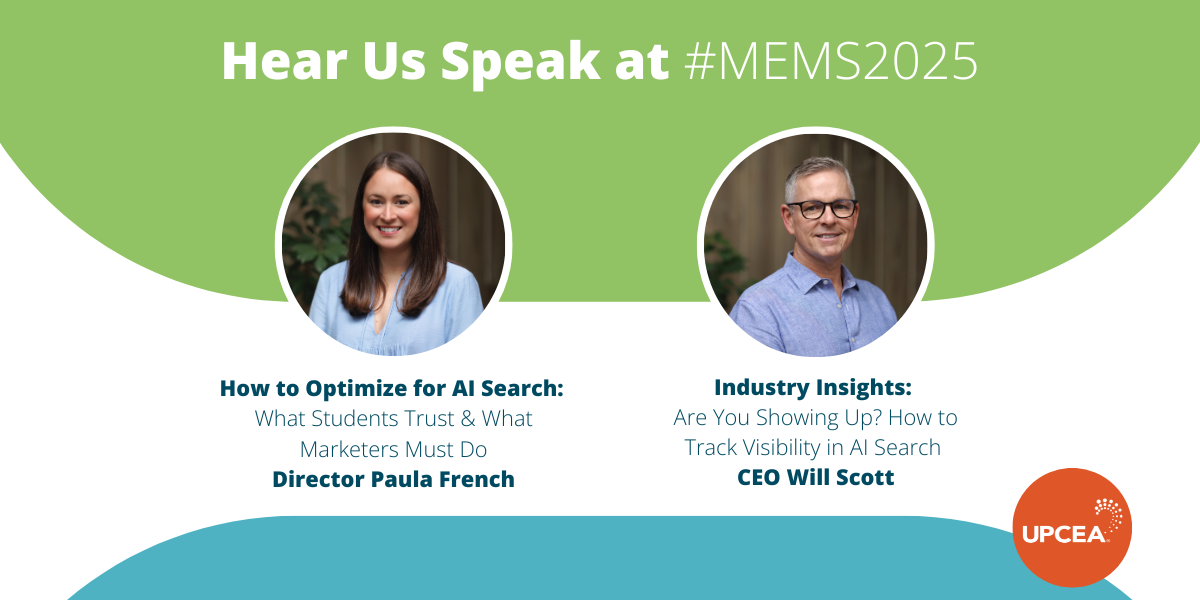
    MEMS2025 speakers graphic

    “Are You Showing Up? How to Track Visibility in AI Search”

    Presenter: Will Scott, CEO and Co-Founder, Search Influence

    Time: Wednesday, December 3 – 10:00 a.m.

    AI search is no longer theoretical. It’s measurable. In this session, Will will show institutions how to connect generative search visibility to real data and use it to drive recruitment strategy.

    Session Highlights:

    • Learn how to measure your institution’s presence across AI platforms like ChatGPT, Gemini, and Perplexity.
    • Discover how to segment AI-driven traffic using Google Analytics 4 and Looker Studio.
    • Identify metrics and tools that help you evaluate AI visibility and performance.

    “How to Optimize for AI Search: What Students Trust & What Marketers Must Do”

    Presenter: Paula French, Director of Sales and Marketing, Search Influence

    Co-Presenter: Emily West, Senior Market Research Analyst, UPCEA

    Time: Wednesday, December 3 – 3:30 p.m.

    Nearly half of prospective students now use AI tools weekly, and 79% read AI-generated summaries. In their presentation, Paula and Emily will translate this data into concrete next steps for marketing teams ready to compete in generative search.

    Session Highlights:

    • Review new findings from the 2025 UPCEA + Search Influence study, AI Search in Higher Education: How Prospects Search in 2025.
    • Understand what prospective students trust in AI-generated results.
    • Learn a three-part framework for AI visibility: discoverability, credibility, and content optimization.

    “From Search to Success: Integrating SEO and Email Marketing to Drive Enrollment”

    Moderator: Jeanne Lobman, Director of Operations, Search Influence

    Panelists: Tim Grenda and Caitlin Dimalanta, San Diego State University

    Time: Tuesday, December 2 – 2:45 p.m.

    Students don’t stop searching once they find a program. They start evaluating how institutions communicate. This session will explore how connecting SEO insights with email marketing creates a continuous, student-centered experience that strengthens engagement and drives enrollment.

    Session Highlights:

    • Explore how integrated SEO and email strategies guide students from search discovery to enrollment.
    • Learn how coordinated messaging increases engagement and conversion.

    “Boosting SEO and Engagement Through Testimonial-Driven Web Content”

    Moderator: Paula French, Director of Sales and Marketing, Search Influence

    Panelists: Caitlin Wilson and Krysten Cole, Boston University Metropolitan College

    Time: Thursday, December 4 – 10:00 a.m.

    Authenticity has become one of higher education’s strongest differentiators. This session will examine how testimonial-driven storytelling can improve SEO performance, strengthen brand trust, and create more meaningful engagement with prospective students.

    Session Highlights:

    • Understand the importance of authentic student and alumni testimonials in building credibility and enhancing visibility.
    • Learn how to turn stories into measurable content assets that support recruitment goals.
    • Explore how to connect storytelling with keywords and SEO strategies for stronger search performance.

    About MEMS 

    Hosted by the Online and Professional Education Association (UPCEA), the MEMS Conference brings together enrollment and marketing professionals from across the country to share strategies that connect innovation with measurable results. 

    Now in its 34th year, the event will focus on emerging technology, shifting student expectations, and the evolving ways higher education institutions can reach, recruit, and retain learners.

    Throughout the conference, Search Influence will host a booth where attendees can learn how to assess their institution’s AI visibility, explore AI SEO tools, and request a complimentary AI Website Grader developed by Will. Our team will be available to discuss real-world applications of AI-driven marketing data and how colleges can start improving their presence across generative platforms.

    Continuing the Conversation

    As AI search evolves, understanding how visibility, trust, and data intersect has never been more important. 

    If your institution is ready to know where it stands in AI search, download AI Search in Higher Education: How Prospects Search in 2025, or meet our team in Boston to explore how strategy, credibility, and creativity can elevate your visibility.

  • UPCEA Guest Blog: Paula French on AI Search Trends in Higher Education

    AI Search in Higher Education

    When prospective students begin researching programs, their first stop may no longer be your website…. or even Google

    Many now use generative AI platforms like ChatGPT, Gemini, and Perplexity to ask questions, compare options, and find fast answers. These tools influence what students see, what they trust, and which institutions they choose to explore further.

    In her latest guest blog for UPCEA, “AI Search in Higher Education: The Student Search Trends You Can’t Ignore,” Director Paula French breaks down what this shift means for enrollment marketers. 

    Drawing on insights from the new UPCEA x Search Influence research study, AI Search in Higher Education: How Prospects Search in 2025, Paula shares a data-backed look at how students search today — and what your team can do to improve visibility across every touchpoint.

    Top AI Search Trends in Higher Education 

    The study surveyed 760 adult learners aged 18–60 who are actively exploring educational opportunities. Their responses point to a growing reliance on digital tools that extend far beyond search engines.

    • 50% of students use AI tools weekly
    • 79% read Google’s AI Overviews
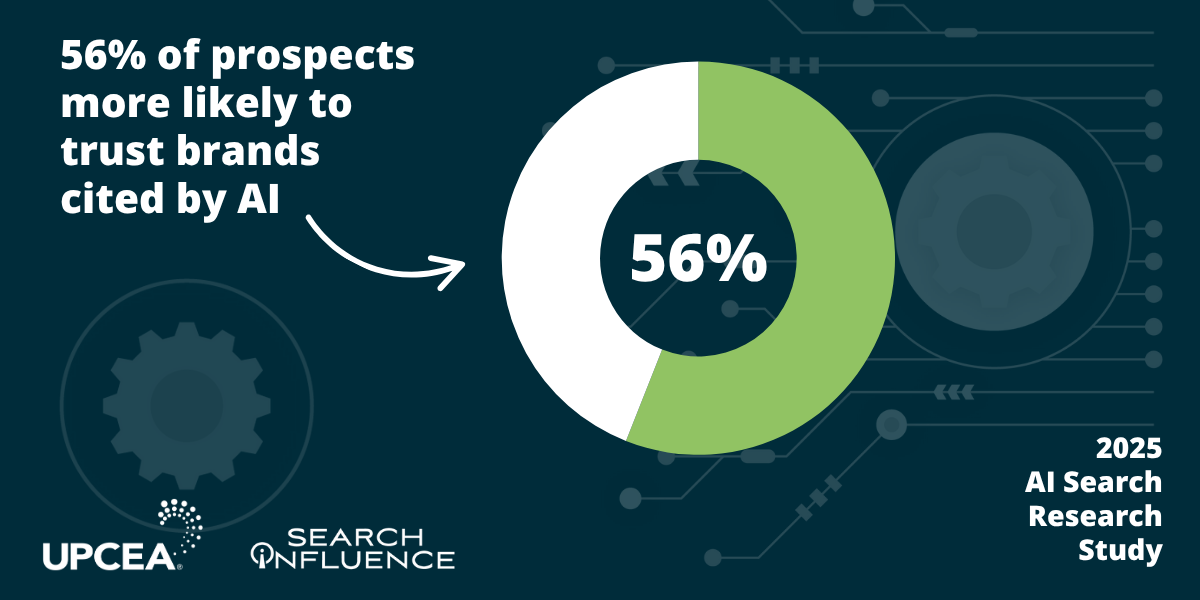
    • 56% are more likely to trust institutions cited in those Overviews
    • 61% use YouTube like a search engine
    • 77% consider university websites to be highly trustworthy

    Together, these numbers reflect a major shift in how trust is built and how options are evaluated during the early stages of the enrollment process.

    How to Improve Visibility Where It Counts

    Paula’s guest blog offers clear, actionable strategies for improving performance in AI and traditional search, including:

    • Structuring content with clarity using headings, bullet points, and schema markup
    • Including factual, up-to-date program details that AI tools prefer to cite
    • Publishing trust-building content like faculty bios, accreditation info, and student outcomes
    • Monitoring your presence in AI tools like ChatGPT, Gemini, and Perplexity to see what students are seeing
    • Auditing your site’s search performance to make sure you’re showing up where students begin their research

    Students are forming impressions earlier in the decision-making process, and they’re doing it in spaces many institutions aren’t actively monitoring. That’s a missed opportunity, and one that’s becoming harder to ignore.

    For a closer look at the data (plus tips on how your institution can adapt), read Paula’s full guest post.

    See Paula and the Team at MEMS 2025

    Attending UPCEA’s 34th Annual MEMS: Marketing, Enrollment Management, and Student Success Conference in Boston this December? Stop by the Search Influence booth to connect with Paula French, Jeanne Lobman, and Will Scott.

    Paula will also co-present with Emily West of UPCEA in a featured session titled:
    “How to Optimize for AI Search: What Students Trust & What Marketers Must Do” on Wednesday, December 3rd at 3:30 PM.

    The discussion will dive deep into student behavior and outline a strategic approach to visibility built around the pillars of AI SEO.

    View session details →

  • [Search Influence x UPCEA] Unpacking New Research on AI Search in Higher Education

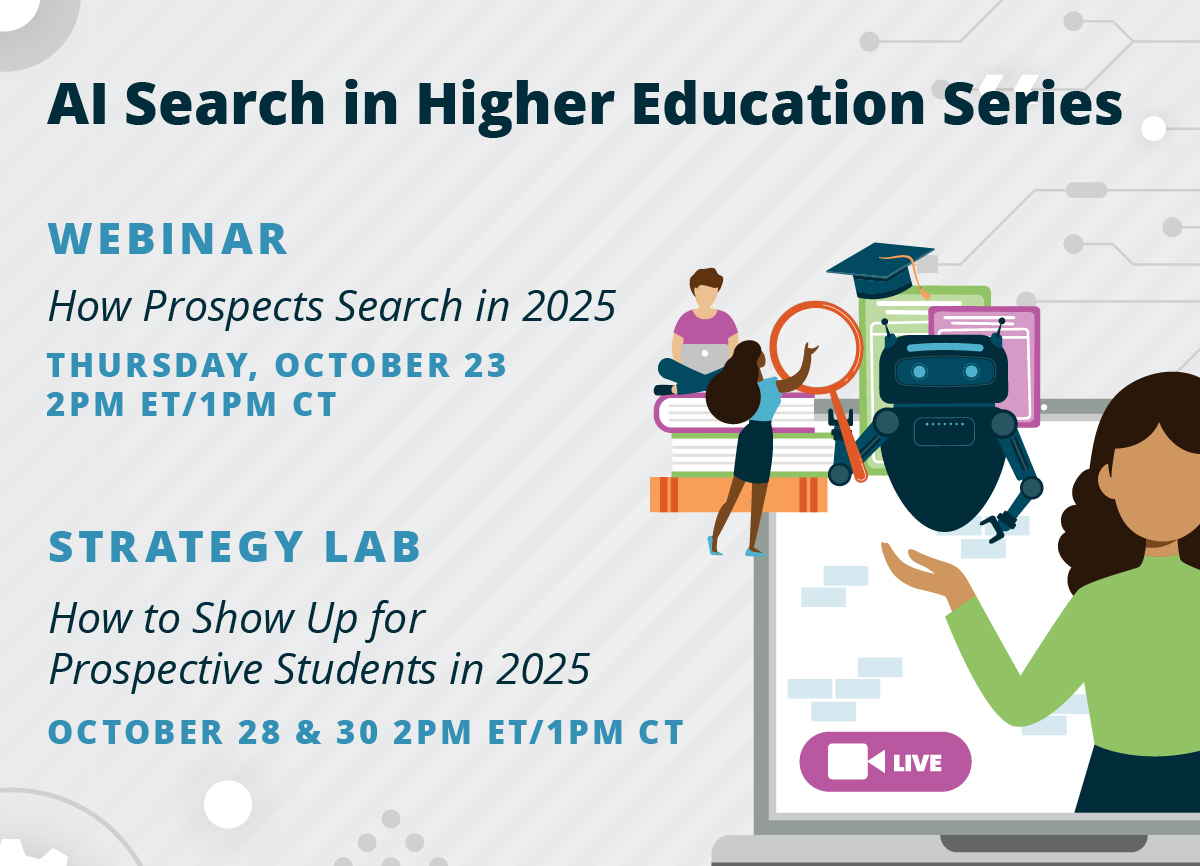
    AI Search in Higher Education Series image for webinars and labs

    This blog post was updated by Ren Horst on November 4, 2025 following the webinar event.

    50% of prospective students use AI tools at least weekly to research information online. 79% read Google’s AI Overviews, and more than half say they’re more likely to trust the institutions AI cites.

    These search behaviors are no longer emerging trends. They’re the new reality for enrollment marketing.

    On October 23, UPCEA and Search Influence hosted the live webinar “AI Search in Higher Education: How Prospects Search in 2025,” unveiling findings from the AI Search Research Study.

    The session explored what’s shaping prospective student behavior today, plus how higher ed marketers can adapt their visibility strategies for AI-driven search.

    How AI Is Changing Institutional Visibility

    The new research highlights a fundamental shift in how students discover, evaluate, and ultimately choose higher education programs. Traditional search engines remain important, but AI-driven platforms are shaping decisions in ways that enrollment marketers can’t ignore.

    For higher ed institutions, the implications are clear: If you’re not present in AI-powered search experiences, you may be invisible to a significant portion of your prospective students.

    “AI Search in Higher Education: How Prospects Search in 2025” unpacked the study findings, explained why they matter, and showed you how to position your institution for visibility in 2026 and beyond.

    Key Takeaways From the Webinar

    SEO then and now

    Search strategy has evolved from keyword targeting to context and credibility. AI engines understand meaning through entities, relationships, and trusted citations, not just keyword density. The webinar discussed how this shift changes on-page SEO priorities, emphasizing entity optimization, structured data, and semantically rich content to help AI engines interpret institutional expertise.

    Authority and content signals

    Institutional visibility depends on demonstrating trust through structure, accuracy, and reputation. AI platforms prioritize content that’s organized, verifiable, and supported by credible references. The webinar explored tactics for improving these signals, like incorporating earning links, highlighting faculty expertise, and securing third-party mentions that reinforce authority beyond your own website.

    Measuring AI visibility

    Understanding your reach in AI search is becoming possible through emerging analytics. Tools such as Google Analytics 4, Search Console, and Scrunch can reveal AI-driven traffic, question-based visibility, and citation frequency. The webinar covered how marketers are starting to quantify AI exposure, sharing practical ways to integrate early visibility tracking into institutional reporting.

    The Opportunity Ahead

    AI is fundamentally changing how students search and how institutions are seen. Yet, many schools haven’t updated their strategies to reflect how AI engines surface information.

    Those who act now will gain visibility in AI and Google, positioning their programs to be found, considered, and chosen.

    Turn AI into an opportunity, not a threat. Watch the full webinar replay and download the AI Search Research Study to understand what this shift means for your enrollment goals.

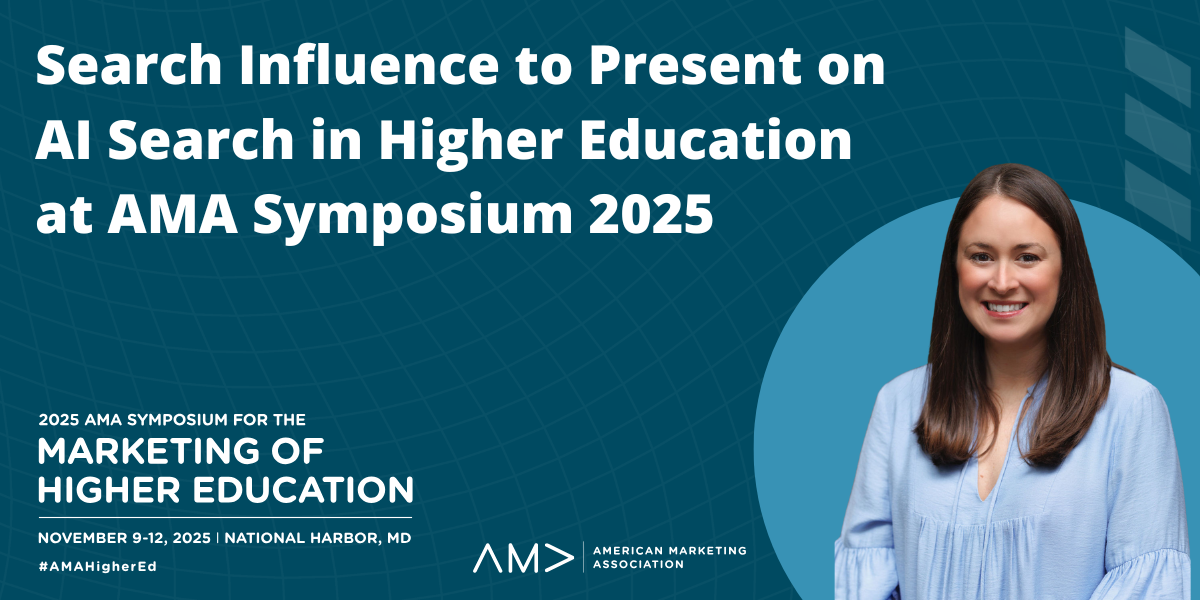
  • Search Influence to Present on AI Search in Higher Education at AMA Symposium 2025

    Search Influence to Present on AI Search in Higher Education at AMA Symposium graphic

    AI-driven discovery is rewriting the rules of visibility for universities. As prospective students increasingly rely on tools like Google’s AI Overviews, ChatGPT, and Perplexity, the traditional SEO playbook is no longer enough. 

    The next era of visibility requires a strategy built for recognition and trust within AI ecosystems, not just rankings on search results pages.

    Presentation Slides

    At the 2025 AMA Symposium for the Marketing of Higher Education, Paula French, director at Search Influence, and Tara Pope, director of marketing at Tufts University College, will explain how institutions can thrive in this new environment. 

    Their presentation, “How to Win AI Search: Three Pillars for Success,” will be held on Tuesday, November 11, from 2:50 to 3:40 p.m. in National Harbor, Maryland.

    The Evolving World of AI Search in Higher Education

    Recent findings from the new UPCEA + Search Influence research study, AI Search in Higher Education: How Prospects Search in 2025, reveal that generative AI is transforming how students find and evaluate programs:

    • 50% of prospective students use AI tools weekly.
    • 79% read AI-generated summaries when available.
    • 56% are more likely to trust a site featured in an AI Overview.

    These numbers highlight a pivotal shift. Visibility in AI search is now visibility with students. 

    Institutions that fail to appear in AI-generated answers risk being overlooked entirely, even before a prospective student reaches a search results page.

    Inside the Framework: Three Pillars of AI SEO

    In their AMA Higher Ed session, French and Pope will introduce a practical framework that helps institutions strengthen their visibility and authority within AI-generated environments.

    1. Entities

    AI systems interpret structured data and networked entity relationships. By using schema markup, entity-rich language, and consistent identifiers, institutions can help AI better recognize programs, faculty, and departments.

    2. Semantic relevance

    AI favors content that mirrors how people naturally ask questions. Structuring content in concise Q&A form, using natural language headings, and speaking clearly to student intents makes it easier for AI to parse and surface your content.

    3. Citations

    Trust is a currency in AI. When content is cited or linked from reputable sources (media, academic directories, “best of” lists), AI is more likely to elevate it. PR and content teams should actively integrate link building and authoritative mentions into the SEO strategy.

    Together, these three pillars form the foundation of a sustainable AI SEO strategy that builds visibility across traditional and generative search experiences alike.

    About the Speakers

    Tara Pope serves as director of marketing at Tufts University College, where she oversees marketing and communications for a diverse portfolio of programs, including Pre-College, Professional Education, and the Osher Lifelong Learning Institute. With more than 25 years in digital marketing and communications, her career spans technology, e-commerce, and higher education.

    Paula French, director at Search Influence, is a digital marketing leader with 15 years of experience helping higher education institutions enhance their online visibility and enrollment outcomes. She frequently contributes insights on SEO, analytics, and strategy to national audiences and industry publications.

    About the 2025 AMA Symposium for the Marketing of Higher Education

    The AMA Symposium for the Marketing of Higher Education brings together higher ed marketers and communicators from across the country to exchange insights and shape the future of education marketing.

    For more than 30 years, the Symposium has served as one of the field’s leading events, offering peer-reviewed sessions that inspire collaboration, innovation, and actionable learning. The 2025 Symposium will take place November 9–12, 2025, in National Harbor, Maryland, helping institutions refine their strategies, strengthen their reputations, and drive meaningful impact.

    Why This Conversation Matters

    As generative AI continues to influence how students research, compare, and decide on programs, institutions must adapt their content strategies accordingly. Optimizing for AI search in higher education means focusing on recognition, structure, and authority, not just visibility.

    Paula French and Tara Pope’s framework offers higher ed marketers a clear path forward: one grounded in data, built on collaboration, and ready for the AI-driven future of discovery.

    Learn More About the Research

    Want to explore the trends shaping student search behavior in the age of AI? 

    The new UPCEA + Search Influence research study, AI Search in Higher Education: How Prospects Search in 2025, reveals how students use AI, search engines, and university websites to make enrollment decisions.

    Download the study today to learn how your institution can adapt.

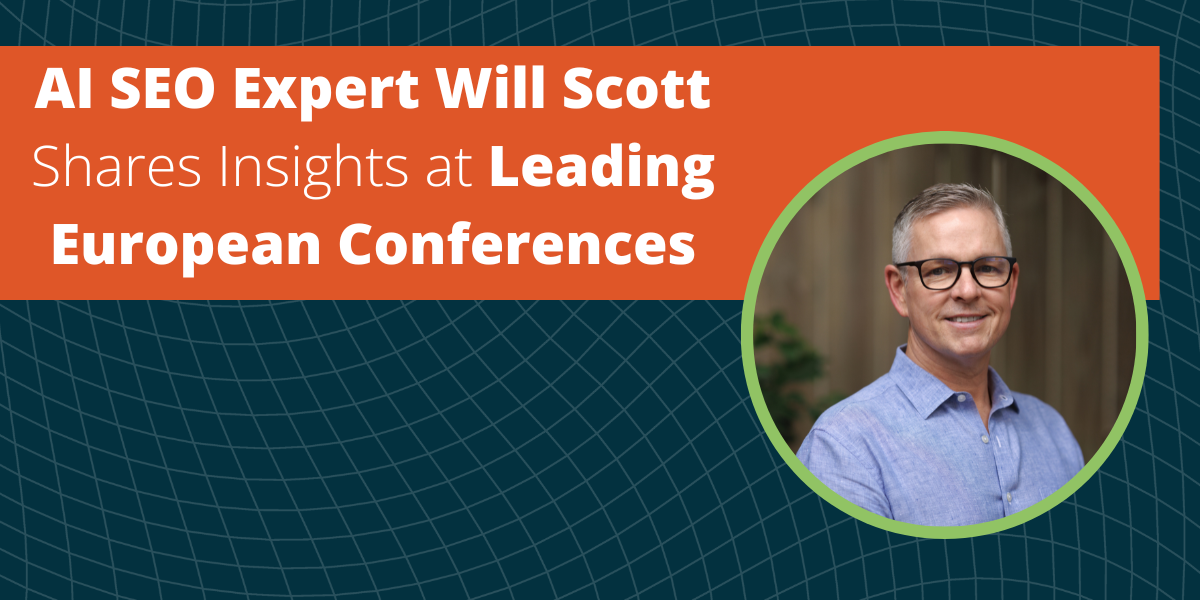
  • AI SEO Expert Will Scott Shares Insights at Leading European Conferences

    Search Influence continues to advance the conversation around AI SEO on a global scale.

    This fall, CEO and Co-Founder Will Scott represented the agency at two of Europe’s most respected industry events, SEOktoberfest G50 Summit in Austria and SMX Advanced Europe in Berlin, sharing insights on how artificial intelligence is reshaping search, content, and visibility.

    Bringing AI SEO Expertise to the Global Stage

    At SEOktoberfest, an invite-only event limited to just 50 of the top SEO professionals globally, Will joined peers from leading organizations, including Google, Yoast, and Faber Company, to explore the next generation of AI search and generative engine optimization (GEO).

    The gathering fosters open discussion among industry pioneers, offering a rare opportunity to exchange forward-thinking strategies about how artificial intelligence is redefining visibility and authority in search.

    Will’s participation highlights Search Influence’s position among agencies advancing the real-world application of AI SEO — ensuring clients benefit from strategies informed by direct collaboration with the industry’s brightest minds.

    Advancing AI SEO Strategy at SMX Advanced Europe

    Following SEOktoberfest, Will spoke at SMX Advanced Europe 2025 in Berlin, delivering the session “AI Tools for Creation, Deployment & Tracking.” The two-day event is known for fast-paced, expert-level presentations designed for experienced search professionals who want to deepen their technical and strategic knowledge.

    In his session, Will shared actionable approaches for integrating AI SEO tools into marketing workflows. His presentation emphasized how agencies and in-house teams can harness AI to enhance creativity, streamline execution, and measure success more effectively.

    These insights are part of Search Influence’s ongoing commitment to helping brands adapt to a rapidly changing search environment — where visibility depends on mastering traditional SEO fundamentals and emerging AI search capabilities.

    Continuing the Conversation on AI Search

    Will’s European appearances build on a growing list of speaking engagements, including SMX Advanced Boston, SMX Online Masterclasses, Local U, and Pubcon, where he has helped marketers understand and apply AI SEO. His expertise continues to position Search Influence at the intersection of AI innovation and strategic SEO, helping clients thrive in a marketplace transformed by generative search.

    Maximize Your Success With Proven Industry Experts

    At Search Influence, we don’t just talk about online growth. We engineer it.

    Our team combines deep industry knowledge with cutting-edge AI SEO strategies to help clients in higher education, healthcare, hospitality, and more rise above the competition.

    Every strategy we craft is backed by data, driven by results, and designed to unlock your full potential.

    Contact the AI SEO experts at Search Influence and transform your digital presence into a sustainable engine for visibility, authority, and measurable growth.

  • New From Search Influence – AI Search in Higher Education: How Prospects Search in 2025

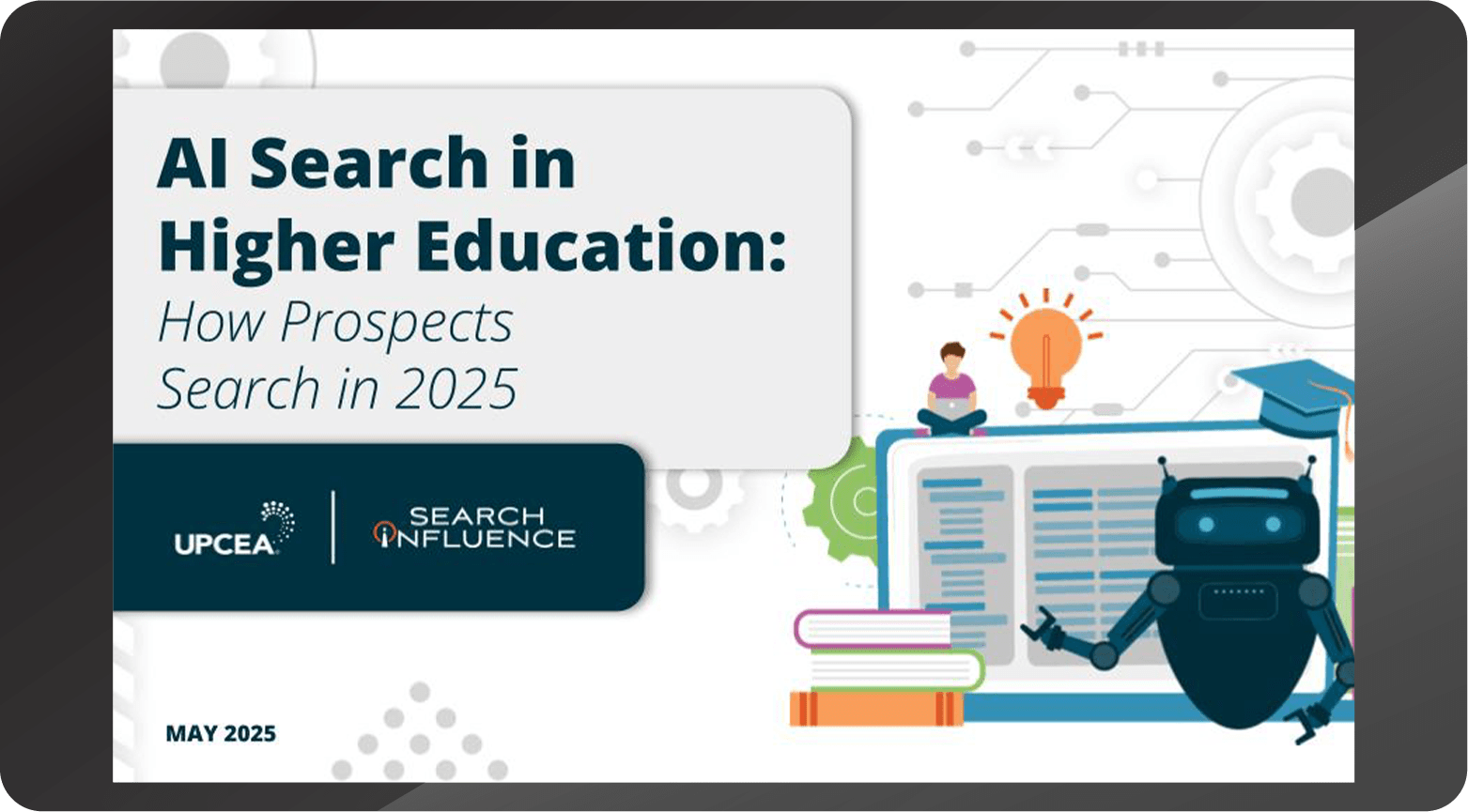
    AI Search in Higher Education: How Prospects Search in 2025 image on a tablet

    Artificial intelligence isn’t on the horizon for higher ed — it’s here. Half of prospective students already use AI tools weekly to search for information in the same way they use Google.

    To help institutions adapt, the Online and Professional Education Association (UPCEA), in partnership with Search Influence, has released the 2025 AI Search in Higher Education Research Study. This research sheds light on how prospective adult learners use AI, search engines, university websites, and other platforms to explore, trust, and select programs.

    Download the full AI Search in Higher Education Research Study

    About the AI Search in Higher Education Research Study

    The AI Search in Higher Education report surveyed 760 qualified adult learners between 18 and 60, all interested in advancing their skills or knowledge through online and continuing education. These respondents represent today’s prospective adult learners, a growth market for universities and an early indicator of broader enrollment trends.

    UPCEA led the research, bringing its deep expertise in online and continuing education, while Search Influence shaped the study with insights from our nearly 20 years as an SEO and AI search optimization agency.

    Together, we uncovered how AI, traditional search, and institutional websites are reshaping the way prospective students find, trust, and ultimately choose programs.

    Key Findings: How Prospects Search in 2025

    The results illustrate a rapidly diversifying student journey. Here are the top takeaways:

    • AI tools are an integral part of the enrollment funnel. 50% of prospective learners use AI platforms weekly, making them a standard part of the search process.
    • University websites anchor trust. 77% of respondents rated institutional websites as their most reliable source when exploring programs.
    • AI citations influence credibility. 79% of prospects read Google’s AI-generated overviews, and 56% say they are more likely to trust schools cited within them.
    • Search visibility drives consideration. 82% of students report they are more likely to consider programs that appear on the first page of search results.
    • Discovery spans multiple platforms. 84% of prospects use search engines, 61% use YouTube as a search engine, and 50% rely on AI tools in the same way they use Google.

    These findings confirm that students are moving fluidly between AI platforms, search engines, and video-based resources. Institutions cannot rely on a single channel. They must create content that performs across all of them.

    50% of prospects use AI tools at least weekly

    Why Online and Continuing Education Students?

    Online and continuing education students are often early adopters of new search behaviors, and their choices ripple outward to the broader higher ed market. They are career-focused, typically employed full-time, and actively researching programs that fit their personal and professional goals.

    By focusing this study on online and continuing education prospects, we’re able to capture a forward-looking snapshot of how AI search in higher education is shaping program discovery, trust, and enrollment decisions.

    What This Means for Higher Ed Marketers

    For higher ed leaders and enrollment teams, the implications are clear:

    • Multi-channel visibility is non-negotiable. Students expect to find you on Google, university websites, AI-generated responses, and video platforms like YouTube.
    • SEO is the connective tissue. Strong, authoritative SEO is the foundation that fuels visibility across both traditional and AI search engines. Without it, your programs won’t appear in the places students are looking.
    • Early movers will win. Many institutions have not yet adapted their strategies for AI search. Schools that act now will gain a competitive advantage in enrollment visibility and trust.

    Measuring Success in AI Search

    Success in AI search isn’t just about rankings. Institutions should track citations in AI Overviews, visibility across AI platforms, and engagement from AI-driven traffic, alongside traditional metrics like cost per inquiry (CPI) and ROI. By adding these benchmarks, schools can better understand how AI contributes to the enrollment funnel and make smarter investments in visibility and trust.


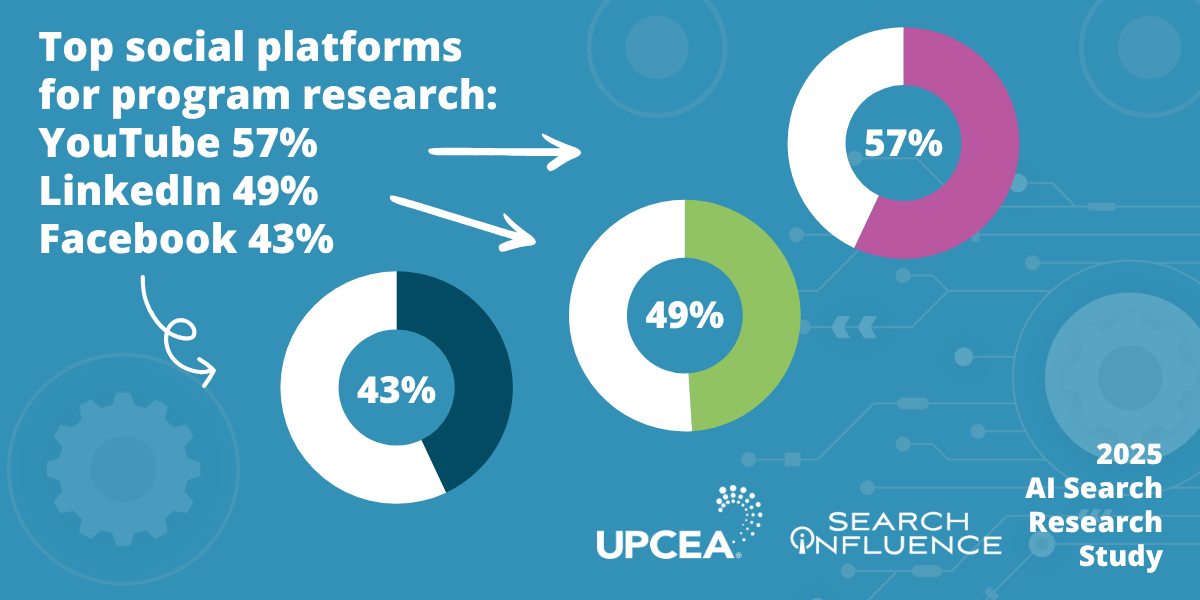
    top social platforms graphics

    Take Action: Be Visible in AI Search

    AI search is a core part of how students find and evaluate higher ed programs.

    The 2025 AI Search in Higher Education Research Study confirms what many institutions are beginning to notice: if you’re not visible in AI search, you’re not in the consideration set.

    The good news? Acting now puts you ahead.

    Download the full 2025 AI Search in Higher Education Research Study to explore the data and recommendations.

  • Will Scott to Lead Generative Engine Optimization Master Class on October 7

    Search is no longer limited to ten blue organic links. Today, platforms like Google AI Overviews, ChatGPT, and Perplexity generate direct answers that change how people discover information.

    If your content isn’t optimized for these generative engines, you risk being left out of the results entirely.

    On October 7, 2025 (11:00 am – 4:45 pm ET), Search Influence CEO and Co-Founder Will Scott will lead a live, online Generative Engine Optimization (GEO) Master Class with Search Engine Land. This intensive session will show SEO professionals and content strategists how to align with AI-driven search while continuing to perform in traditional results.

    Why AI SEO Can’t Wait

    AI-powered search surfaces content differently than Google’s organic results. Instead of ranking pages, these engines parse entities, measure authority, and pull contextual answers.

    For marketers, that means adapting keyword strategy, strengthening trust signals, and structuring content so AI systems can cite it directly.

    Will Scott, who coined the term “barnacle SEO,” has long helped businesses prepare for shifts in digital visibility. His GEO Master Class is designed to provide a practical framework so marketers can maintain and expand reach across both AI-driven and traditional search environments.

    What the Master Class Covers

    Fundamentals of GEO

    Learn how generative engines interpret relevance, authority, and citations, and what that means for your content.

    Content Structuring for AI

    Explore formatting and entity optimization techniques that improve your chances of being cited in AI-generated responses.

    Keyword Strategy for AI Queries

    Move beyond static keywords and into conversational phrasing, questions, and modifiers that trigger AI responses without losing organic visibility.

    Competitive Analysis for AI Visibility

    See how competitors perform in generative results, where opportunities exist, and how to adapt their wins to your own strategy.

    Authority and Trust Signals

    Understand how AI systems assess brand authority and what steps you can take to strengthen recognition.

    Measurement and Iteration

    Gain tools and frameworks for tracking appearances in AI answers and adjusting content accordingly.

    Future Outlook

    Get an informed view of what’s next in AI search and how to prepare your strategy today.

    Who Should Attend

    This training is built for content strategists, SEO specialists, and digital marketers with 2–5 years of experience who need actionable techniques for AI SEO. Whether you manage in-house content or work with multiple clients, the session will equip you with skills to keep visibility strong in a generative-first world.

    Agenda at a Glance (ET)

    • 11:00–12:15 — GEO fundamentals: entities, citations, and semantic relevance
    • 12:30–1:45 — Keyword and entity optimization, with a schema deep dive
    • 2:00–3:15 — AI-ready content strategies and hands-on competitive analysis
    • 3:30–4:45 — Measurement, tools, and a forward look at AI search

    About Will Scott

    With decades of experience in SEO and digital marketing, Will Scott has been at the forefront of shifts in search behavior. Beyond leading Search Influence, he has presented at SMX, Pubcon, and LocalU, sharing strategies on AI-driven search and optimization.

    Earlier this year, he led a two-day AI for SEO Master Class with SMX and presented at LocalU Global on using AI for local search. His upcoming session with Search Engine Land builds on that momentum, offering professionals practical frameworks they can apply immediately.

    “Marketers don’t need to abandon SEO. They need to evolve it,” Scott explains. “Generative Engine Optimization is about ensuring your content is both discoverable by AI systems and valuable to human readers.”

    Register Now

    The Generative Engine Optimization Master Class will be held live online on October 7, 2025, from 11:00 a.m. to 4:45 p.m. ET. Registration is $249 and includes on-demand access.

    Don’t miss your chance to learn directly from Will Scott and gain practical skills for AI SEO.

    Register now to secure your spot.


    Images:
    Unsplash Image 1
    Unsplash Image 2

  • Webinar Recap: How AI Is Changing Search and SEO

    Webinar Recap: How AI Is Changing Search and SEO

    Webinar Recap: How AI Is Changing Search and SEO

    Key Insights

    • AI search is changing the rules but not the game. Foundational SEO fundamentals still matter, but success now depends on adapting them to how AI understands, cites, and delivers information.
    • Visibility comes from trust, context, and structure. Entity-rich content, credible citations, and clear organization make it easier for AI and traditional search engines to surface your brand.
    • Optimizing for Google means optimizing for AI search everywhere. Google’s AI Overviews influence visibility across multiple platforms, making Google-centric AI SEO the highest-impact starting point.

    SEO is not becoming obsolete but is undergoing a significant transformation in an AI-powered search world, requiring adaptation of fundamental strategies rather than a complete overhaul.

    In our recent client webinar, “SEO for AI Search: Stay Visible in the Age of Generative Answers,” we discussed the overall AI shift and the necessary changes to SEO strategy.

    Watch the replay to learn more, or read on for a high-level recap.

    Evolution, Not Replacement

    While the search landscape is changing with the rise of AI, traditional search (dominated by Google) still holds the majority of market share. AI-powered search tools like ChatGPT are a growing segment that needs our attention now to stay ahead.

    AI Search Defined

    AI search uses artificial intelligence to comprehend complex queries, generate concise summaries, and provide direct answers, moving beyond just a list of links. Key features include conversational input, AI-generated overviews, context awareness, entity recognition, and citations.

    Shift in SEO Focus

    The fundamental pillars of SEO are adapting…

    From keywords to entities

    The focus is shifting from exact keyword matching to understanding and optimizing for entities (named people, places, things, ideas). AI tools use entities to understand context rather than literal search terms. A significant finding is that ~87% of the time, the exact search query does not appear in the AI Overview (AIO) summary, emphasizing the importance of context and the decline in exact-match keyword optimization importance.

    From content volume to semantic relevance

    Content optimization moves from mere text volume and keyword use to semantic relevance, meaning content that demonstrates depth, is structured for natural search, and reflects how people genuinely ask questions and connect topics. Content needs to be structured in the same way, be clear, and be concise to be chosen by AI as a trusted source.

    From links to citations

    While links are still important, the emphasis shifts to citations, which involve building trust through mentions and references from authoritative sources. Being present in Google’s top 10 organic results is highly correlated with being cited in AIOs (~41% of citations come from Google’s top 10).

    Google’s Continued Importance

    Optimizing for Google Search and its AIOs is the most impactful strategy for immediate and long-term results. Google’s AIOs are a hybrid model that pulls real-time data from its index, uses a language model to generate answers, and blends various search results and structured data. Moreover, optimizations made for Google AIOs also positively impact visibility in other AI search platforms like ChatGPT.

    Brand Impression in Zero-Click Searches

    With the rise of “zero-click searches” (where users get answers directly from AIOs without visiting a website), being cited in an Overview can still create a crucial brand impression and even encourage later brand-specific searches.

    Actionable AI SEO Strategies

    Search Influence is actively taking concrete, AI search-optimized steps for our clients where applicable:

    • Content Design: Writing entity-rich, specific, direct, “chunked,” organized, and authoritative content, incorporating clear citations and external references.
    • Semantic Triple: Structuring content using a subject-predicate-object format to help AI extract facts easily.
    • Internal Linking: Linking to and from entities rather than using generic call-to-action anchor text.
    • Schema Markup: Utilizing web code like schema to reinforce entities and structure content, which AI-powered search reads and benefits from.
    • Citation Building: Actively building citations through online directories, media mentions, thought leadership, speaker bios, and professional associations, reinforcing the desired association between your brand and its offerings.
    • Tracking and Analytics: While data for AI search tracking is rapidly developing, current tools like Google Analytics 4 can provide referral traffic from AI, and Google Search Console can identify conversational queries. Newer AI SEO tracking tools are emerging to monitor presence and sentiment in AI results.

    We recommend a proactive and adaptive SEO approach that understands and leverages how AI processes information, prioritizing:

    • Contextual understanding
    • Structured content
    • Credible external validation over traditional keyword-focused content and link quantity

    Stay Ahead in the AI Search Era

    We’re in the middle of one of the biggest shifts in search since Google was founded, but the fundamentals of SEO still matter. How you apply them just looks different in an AI-driven world. The brands that adapt now will be the ones that stay visible tomorrow.

    Watch the full webinar recording for practical examples and strategies you can start using right away.

    Wondering what this all means for your brand? Contact us, and let’s talk about how to position your brand for success in both traditional and AI search.

    Image

    Unsplash

  • The Future of SEO Is AI: Will Scott on What’s Changing and What’s Next

    The Future of SEO Is AI: Will Scott on What's Changing and What's Next

    You’ve probably noticed search isn’t what it used to be. The “10 blue links” are buried under AI-generated answers, featured snippets, and who-knows-what pulled from who-knows-where.

    So if you’re in SEO, the obvious question is: what now?

    That’s the focus of a recent conversation between Will Scott, CEO of Search Influence, and Will Brooks on the Partnerships for Profit podcast. They didn’t talk theory. They talked about real-world shifts in how AI is reshaping search and what marketers can do to stay relevant.

    🎧 Watch the full episode on YouTube

    The Big Shift: From Keywords to Context

    One of Will’s most important points is that SEO isn’t going away. It’s just evolving.

    “It’s not about chasing rankings anymore,” he says. “It’s about making sure the machine understands that you are the best result.”

    That means writing for both humans and machines. Google’s AI Overviews, ChatGPT, and Gemini all rely on systems that prioritize context, relationships, and structure — a big change from the days of exact-match optimization.

    What This Looks Like in Practice

    If you’re thinking, “Okay, so what should I actually be doing differently?” here’s what came out of the episode:

    • Structure matters more than ever. Use schema, clear headings, and answer-based formatting. Will explained how internal linking and semantic cues are essential to showing up in AI results.
    • RAG is real. That’s Retrieval-Augmented Generation — how AI pulls from sources like your website to answer a question. If your content isn’t clear and accessible, it won’t be pulled. Tools like the Web Content Chunker can help structure content for better AI processing.
    • AI tools can help, but don’t replace strategy. Will talked about using AI SEO tracking tools to speed up workflows, but emphasized they’re only effective when used by people who know what they’re doing.

    “The AI’s not going to save you,” Will joked. “But it might save you time if you use it right.”

    One example he shared: A healthcare client where AI-assisted content helped speed up landing page creation by 40%, but only after a strategist built a proper outline and prompt structure first. Without that, the outputs were generic and flat.

    So, What Should You Do Now?

    Here’s the short version:

    • Audit your content. If it’s full of fluff, unclear, or hard to navigate, it’s probably invisible to AI systems. Comprehensive site audits can help identify these gaps.
    • Write with structure. Think FAQs, summaries, and natural language, not walls of text.
    • Understand your entities. Your brand, products, and topics need to be clearly defined so search engines know how they connect. Technical SEO expertise plays a big role here.
    • Experiment with AI, but don’t blindly trust it. Use it to brainstorm, draft, and revise, but always edit with human judgment.

    Why This Conversation Matters

    This episode is worth your time not because it has “hot takes” but because it grounds big ideas in practical reality. Will doesn’t hype the tech. He talks about what’s working (and not) across real campaigns, including insights from the latest SEO trends and challenges his team is navigating.

    If you’re trying to figure out how to keep your content visible in an AI-powered search environment, this is a solid place to start.

    🎙️Here’s the full episode if you want to dig deeper.

    One Last Thought

    SEO isn’t dead. It’s just growing up. And like any maturing system, it rewards clarity, credibility, and consistency over gimmicks.

    If you’re willing to adapt, there’s a real opportunity to stand out, not just in search results, but in the answers users actually see. Want to see how AI-ready your website is? Check out our AI Website Grader for a comprehensive assessment.

    👤Follow Will Scott on LinkedIn 🏢Learn more about Search Influence

  • Digital Advertising Strategy Checklist: What to Do Before You Spend $1

    Digital Advertising Strategy Checklist: What to Do Before You Spend $1

    Key Insights

    • A paid ad campaign is only as effective as the strategy behind it. Even great creative will underperform without a defined goal, audience, and conversion path.
    • Digital ads can increase brand awareness by up to 80%, but only if execution is precise. Relevance, targeting, and optimization unlock that potential.
    • Success happens before launch. From audience research to tracking setup, what you do before you spend determines whether your budget drives impact or disappears.
    • Landing pages, follow-up, and lead handling are make-or-break moments. Campaigns don’t just need clicks. They need infrastructure that turns attention into results.
    • Partnering with the right agency brings structure, expertise, and performance insight. Like a choreographer guiding a performance, an agency keeps every element moving in sync.

    A paid ad campaign isn’t just a collection of assets. It’s a well-orchestrated system. Each part, from targeting to tracking, must function in sync to drive measurable outcomes.

    Before your campaign ever goes live, your digital advertising strategy should already be working behind the scenes: identifying the right audience, crafting the right message, selecting the right platforms, and preparing your brand to handle the response.

    Unsure where to start? This step-by-step digital ad campaign checklist outlines everything you need to lay the groundwork.

    What Is a Digital Ad Campaign Plan?

    A digital ad campaign plan is a tactical blueprint that maps every part of your campaign to a specific business goal.

    It connects your audience targeting, messaging, platforms, and creative assets to a single, measurable outcome, whether that’s generating leads, increasing sales, or raising brand awareness.

    Without a campaign plan, brands often end up with scattered targeting, mismatched creative, and disappointing results.

    Think of it like entering a dance competition without rehearsing a routine. You might have great moves, but without choreography, you’ll lose the rhythm, the audience, and the scorecard.

    Ad campaign planning gives your strategy structure and flow.

    Digital Ad Campaign Checklist

    Digital Ad Campaign Checklist

    Step 1: Define the goal and conversion action

    Every campaign should start with one question: What action do you want your audience to take?

    Whether you’re aiming to generate leads, drive purchases, or boost brand visibility, choose one primary goal. Then define the conversion that reflects success. This could be a form submission, a phone call, a sale, or a demo request. Make sure your analytics tools are set up to track this action from day one.

    Without a clear goal and measurement in place, you’ll have no way to judge success.

    Step 2: Conduct market and audience research

    Knowing your audience is the foundation of any effective digital strategy.

    Collect demographic data like age, location, income, and education, but also go further. Explore psychographics such as values, interests, and buying behaviors. Analyze your competitors to find gaps in their targeting or messaging. Build detailed buyer personas so you can create ads that resonate.

    The more you understand your audience, the more relevant and persuasive your campaign will be.

    Step 3: Choose the right paid digital channels

    Each digital platform offers different strengths. Choose the channels that match your audience and campaign goal.

    If your audience is actively searching for your product, Google Ads may be the best choice. If you’re building awareness or retargeting existing prospects, social media platforms like Facebook, Instagram, or LinkedIn offer valuable reach and targeting tools. Consider where your audience spends time, how they consume content, and how different digital marketing channels handle tracking, budget, and creative.

    A successful campaign starts by meeting people where they are.

    Step 4: Build a targeted keyword strategy (for search campaigns)

    For search campaigns, your keyword strategy controls who sees your ads and when.

    Group keywords based on user intent, separating awareness-stage searches from ready-to-buy queries. Prioritize keywords with strong search volume and an acceptable cost-per-click (CPC). Use long-tail variations to attract higher-quality traffic. And build a negative keyword list to prevent your ads from showing up in irrelevant searches.

    The right keyword strategy filters out noise and brings in people ready to act.

    Step 5: Define audience segments (for social and interest-based campaigns)

    When targeting users on platforms like Meta or LinkedIn, segmentation matters.

    Break your target audience into clear, testable segments based on behaviors, interests, demographics, or past site activity. Create custom audiences from your CRM or website traffic. Use lookalike audiences to expand reach while maintaining relevance. Plan to test multiple segments to see what performs best.

    The more precisely you segment, the more efficiently you’ll spend and the more likely you’ll convert.

    Step 6: Develop landing pages built to convert

    Your ad’s job is to spark interest. Your landing page’s job is to close the loop.

    Avoid sending paid traffic to your generic homepage. Instead, create campaign-specific landing pages that reflect the ad message and guide users toward your CTA. Keep it simple: fast load time, mobile optimization, and one clear call to action.

    For one of our clients, launching dedicated landing pages (without changing the ad creative or increasing spend) resulted in 42% more qualified leads and a significantly lower cost per lead. The only campaign difference was the destination.

    Step 7: Set up tracking and conversion measurement

    Before you launch, your tracking setup needs to be airtight.

    Install all necessary tags and pixels, such as Google Tag Manager, Meta Pixel, LinkedIn Insight Tag, and others. Define conversion goals inside your analytics platform. Use consistent UTM parameters to trace traffic sources and campaign performance. Test your tracking setup thoroughly before launch.

    If the campaign data is wrong, your decisions will be, too.

    Step 8: Write clear, compelling ad copy

    Your copy should hook attention, communicate value, and prompt action, all in just a few lines.

    Write with your audience’s mindset in mind. What do they want? What do they need? Use plain language that reflects their voice and avoids fluff. Your content strategy should always prioritize strong CTAs and include testing multiple versions for performance.

    The best ad copy doesn’t just sound good. It earns clicks and drives conversions.

    Step 9: Design ads that match your audience and platform

    Your ad creative should feel native to the platform while standing out in the feed.

    Use the right format (carousel, static image, or video) and ensure consistency between your ad visuals and landing page. Adapt your aesthetic to meet audience expectations, but always stay true to your brand.

    Excellent design reinforces your message and keeps users engaged all the way through the funnel.

    Step 10: Plan A/B tests from the beginning

    Testing isn’t something you tack on later. It’s part of the plan.

    Decide what to test (copy, creative, CTA, landing page, or audience) and establish the metrics and sample sizes needed for valid results. Run structured tests and analyze outcomes at regular intervals. Then use what you learn to refine the campaign mid-flight.

    A/B testing turns good campaigns into great ones.

    Step 11: Align internal lead handling processes

    What happens after a lead converts is just as important as getting the click.

    Make sure leads are routed to the right place, like your CRM, inbox, or sales team, immediately. Train staff to follow up quickly and consistently. If you’re qualifying leads, define scoring criteria so your team knows who to prioritize.

    A well-oiled lead handling process ensures your marketing efforts turn into measurable pipeline growth.

    What Happens After Campaign Launch?

    Going live is not the finish line. It’s the start of real optimization.

    Once your campaign is in motion, ongoing performance monitoring is critical. Data from your ads, landing pages, and audience segments will show what’s working and what’s not. Use those insights to adapt early and often.

    Post-launch digital advertising tips include:

    • Monitoring keyword and audience engagement regularly
    • Reviewing click-through and conversion rates on each
    • Adjusting bids and budgets based on cost-per-result
    • Promoting high-performing variants, pausing underperformers
    • Iterating landing pages to improve conversion efficiency

    Your goal now is to reduce waste and improve return. Campaigns that are actively managed outperform set-it-and-forget-it approaches every time. Keep refining based on performance data, and your digital advertising strategy will only get stronger.

    Why Partner With a Digital Advertising Agency?

    Even with the best intentions, many brands and their marketing teams stumble after launch. Maybe your ads are generating clicks, but they aren’t converting. Or you’re spending money across multiple platforms without a clear sense of what’s actually driving results.

    Sometimes, despite having all the right tools in place, performance plateaus, and no one knows why.

    That’s because executing a successful digital marketing strategy requires more than checklists and best practices. It takes coordination and expertise.

    An experienced agency helps you:

    • Align your campaign tactics with business objectives from the start
    • Develop a competitive content marketing and creative strategy
    • Identify and eliminate inefficiencies in targeting and bidding
    • Access certified experts across platforms like Google, Meta, and LinkedIn
    • Make data-driven adjustments in real time, not weeks later
    • Build a scalable, repeatable strategy that evolves with your goals

    Think back to the dance competition example. You can have the right stage, the right costume, and even the right audience, but without a choreographer, the performance lacks direction. A digital ad agency acts as that choreographer, bringing coordination, timing, and strategic vision to ensure every part of your campaign moves in harmony.

    And when everything clicks, that’s when the real performance begins.

    Digital Advertising Strategy FAQs

    Digital Advertising Strategy FAQs

    How effective are online advertising campaigns?

    When planned and managed properly, online advertising campaigns are highly effective. Paid media allows for precise targeting, measurable results, and scalable performance across different goals, from lead generation to sales to brand awareness. Overall strategy success depends on aligning platform, messaging, and audience with a clearly defined conversion goal.

    What’s the difference between paid search and paid social advertising?

    Paid search targets users based on their intent, making it ideal for capturing active demand. Paid social reaches users based on demographics, interests, and behaviors, even when they’re not actively searching. Depending on your audience and overall campaign objectives, both can play a role in an effective digital marketing strategy.

    How do you optimize ad spending?

    Ad spend is optimized through ongoing analysis and adjustment. This includes refining audience or keyword targeting, rotating creatives, adjusting bids based on performance, and improving landing pages to increase conversion rates. Optimization is not a one-time task. It requires continuous testing, measurement, and iteration.

    What are the best practices for digital ad tracking setup?

    Well-executed tracking is a strong foundation for any digital marketing campaign. Set clear conversion goals, implement tags and pixels correctly, and use UTM parameters for clean reporting. Accurate tracking ensures your ad efforts are evaluated based on reliable data, allowing for better optimization.

    What does ad campaign success look like?

    Ad campaign success means achieving measurable outcomes tied to your strategy, whether that’s clicks, conversions, or revenue. High click-through rates, low cost per acquisition, and positive ROI all point to a well-executed digital marketing plan. Ongoing performance analysis helps refine your strategy and improve future campaign effectiveness.

    Build Smarter Campaigns From the Start

    Digital ads have the power to increase brand awareness by up to 80%, but only when they’re built on a solid strategy. Too often, businesses invest in paid advertising without the structure or support to turn clicks into real outcomes.

    That’s where execution matters.

    Since 2006, Search Influence has helped organizations do digital advertising the right way. As a Google Premier Partner, we combine platform expertise with performance-driven thinking to deliver campaigns that convert, scale, and adapt.

    If you’re ready to stop wasting budget and start building a smarter, more efficient digital advertising strategy, we’re ready to help. Let’s start the conversation today.

    Images:
    Pexels
    Pexels