Category: Industry Insights

  • Ads Are Coming to ChatGPT. Here’s What It Means for Your Marketing Strategy.

    Ads Are Coming to ChatGPT. Here’s What It Means for Your Marketing Strategy.

    Ads Are Coming to ChatGPT

    Key Insights

    • OpenAI will begin testing ads in ChatGPT for free and Go ($8/month) tier users in the U.S. — Plus, Pro, Business, and Enterprise subscribers won’t see ads
    • Ads appear at the bottom of ChatGPT answers, clearly labeled and separated from organic responses
    • OpenAI states ads will not influence ChatGPT’s answers and won’t appear near sensitive topics like health, mental health, or politics
    • This signals AI chat is becoming a primary discovery channel where customers form intent before ever reaching Google
    • Businesses should audit their AI presence now by asking ChatGPT the real questions customers ask
    • Messaging must shift from keyword-optimized copy to conversational, outcome-focused language that works inside AI chat experiences

    On January 16, 2026, OpenAI announced they’ll begin testing advertisements inside ChatGPT “in the coming weeks.” If you’re thinking “oh good, another ad platform to manage” — that’s missing the bigger picture.

    This is the clearest signal yet that AI chat is becoming a primary discovery channel. Not a novelty. Not a productivity toy. A place where your potential customers are forming intent, comparing options, and making decisions before they ever touch Google.

    What OpenAI Actually Announced

    From OpenAI’s official announcement:

    Where ads will appear:

    • At the bottom of ChatGPT’s answer, clearly labeled and separated from the organic response
    • Only when there’s a relevant sponsored product or service based on the current conversation

    Who will see them:

    • Logged-in adult users in the U.S. on the free and Go ($8/month) tiers
    • No ads for Plus, Pro, Business, or Enterprise subscriptions

    The guardrails OpenAI committed to:

    • Ads will not influence ChatGPT’s answers — “Answers are optimized based on what’s most helpful to you”
    • No ads in accounts where the user is under 18 or predicted to be under 18
    • Ads won’t appear near sensitive or regulated topics, including health, mental health, or politics
    • OpenAI says it will not sell user data to advertisers

    So ChatGPT remains an assistant first. But beneath some of the highest-intent questions a user can ask, there’s now a new entry point for advertisers.

    Why This Matters Right Now

    We’ve been talking about the importance of showing up where your prospects are for a while now. Your customers don’t just “Google it” anymore. They ask TikTok. They ask Reddit. They ask ChatGPT. And increasingly, that last one is where complex, nuanced questions get asked.

    Three shifts make this especially urgent:

    1. Paid Search Is Getting More Expensive and Less Reliable

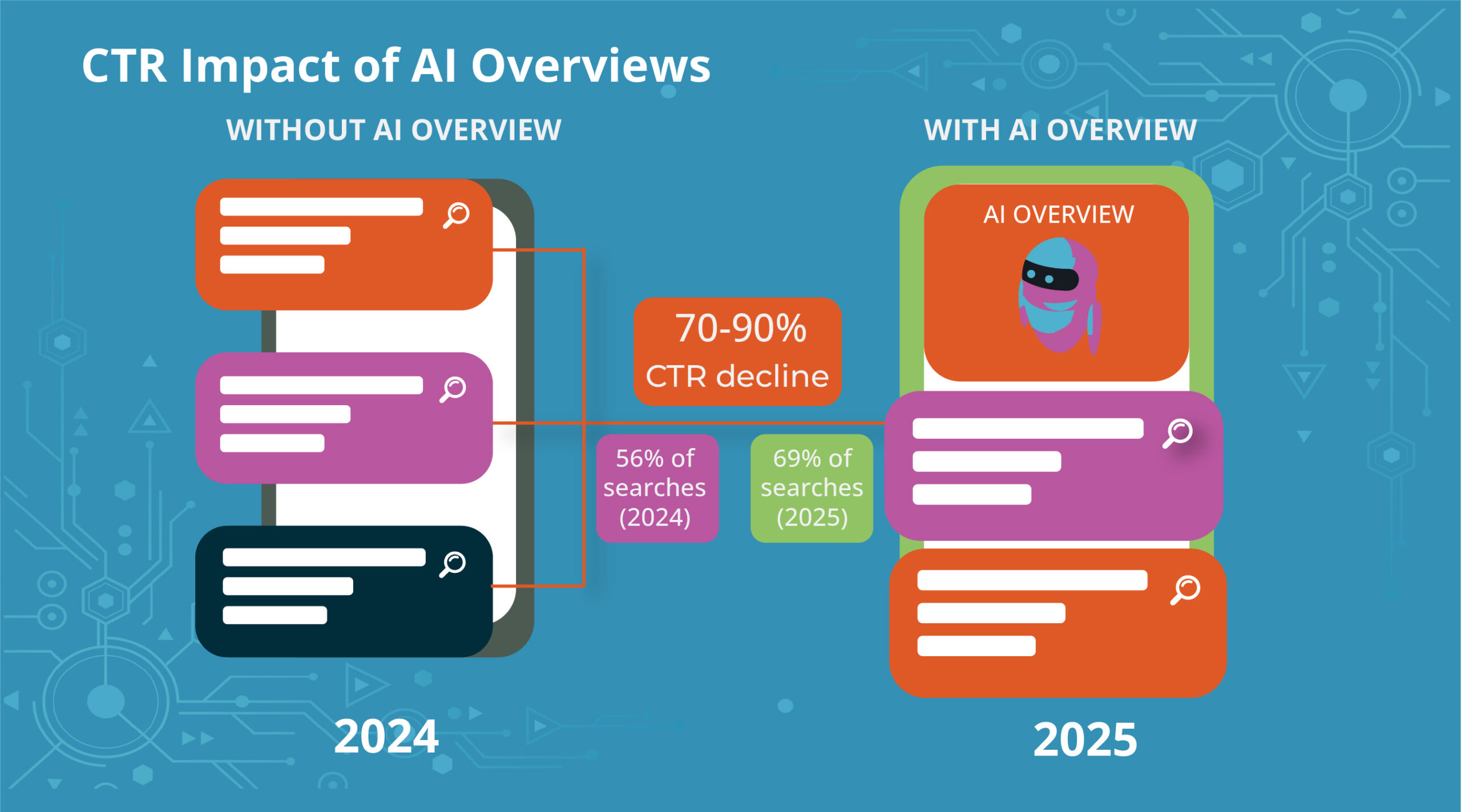
    CPCs keep climbing. AI Overviews are appearing on a growing percentage of searches, resolving questions before anyone clicks. The predictable visibility that paid search used to offer? It’s eroding. Every new high-intent surface matters more now.

    2. Search Is Multi-Platform Now

    OpenAI reports hundreds of millions of weekly users globally. When someone asks, “What’s the best way to find a good contractor in my area?” or “What should I look for in a digital marketing agency?” — that’s not a keyword. That’s a conversation. And ChatGPT is increasingly where those conversations happen.

    3. Users Are Question-First, Not Keyword-First

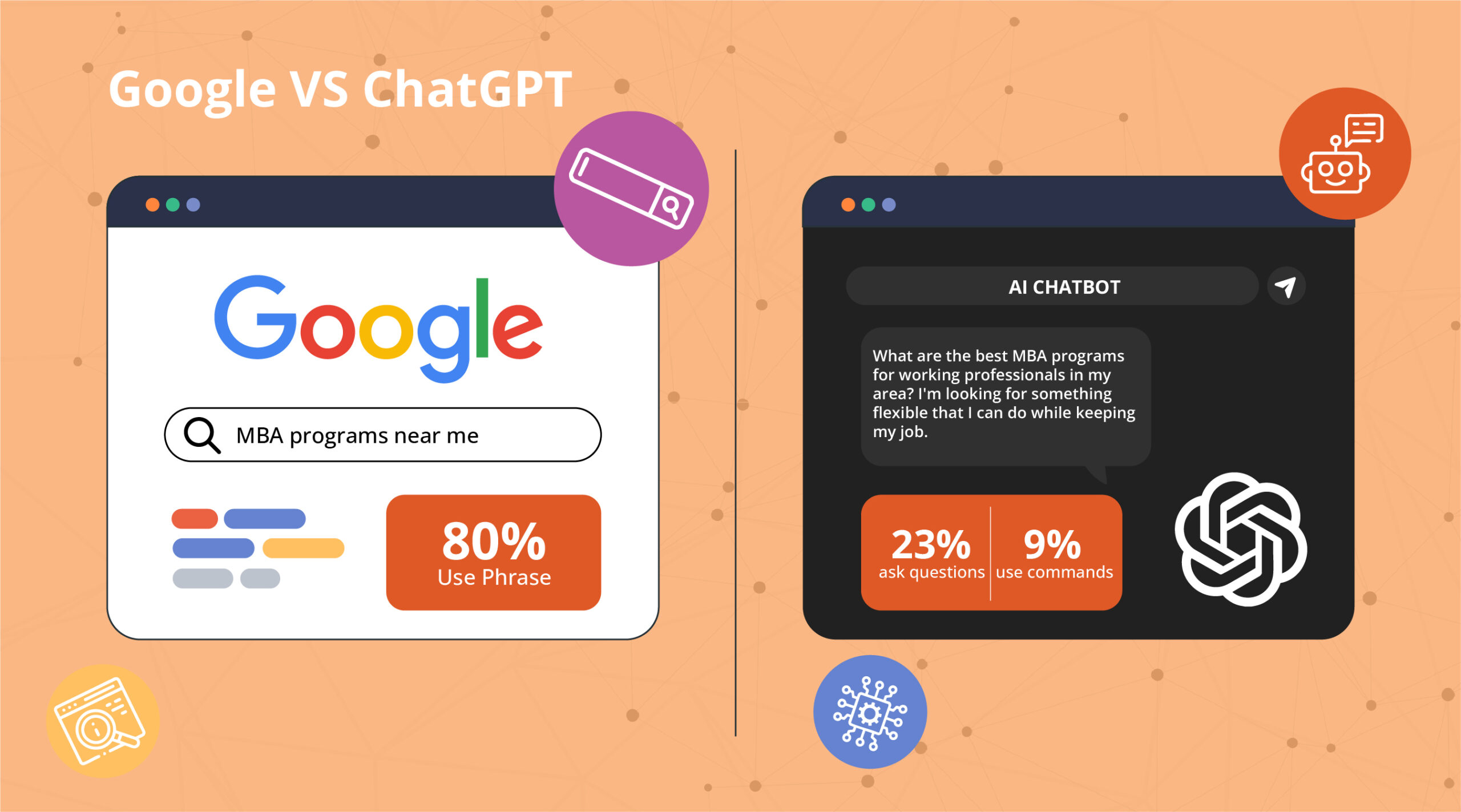
    People aren’t typing keyword strings anymore. They’re asking nuanced questions like “What’s the fastest way to get more reviews for my business without it feeling spammy?”

    That’s a perfect ChatGPT prompt. Ads in ChatGPT give businesses a way to show up at the exact moment that intent is expressed — not with a blue link in a crowded SERP, but inside the experience that’s already guiding their thinking.

    So What Does This Mean for Your Strategy?

    Diversification Isn’t Optional Anymore

    Being absent from AI-driven discovery is the new invisibility. If you’re putting all your eggs in the Google basket, paid or organic, you’re building on increasingly shaky ground.

    Your Messaging Has to Work in Conversations

    Sponsored content in ChatGPT won’t look like a banner ad. It’ll feel like part of the advice stream. That means:

    • Clear value propositions (not vague brand statements)
    • Customer-first language (not industry jargon)
    • Outcome-focused messaging (what do they actually get?)

    Trust Matters More Than Ever

    AI chat feels personal. One-to-one. When your brand shows up in that context, you’re entering what feels like a private conversation, not interrupting a crowded feed. A tone-deaf ad doesn’t just feel off. It actively hurts trust.

    (Sound familiar? It’s the same reason we’ve always said reviews and reputation matter. The trust signals just moved to a new surface.)

    What You Can Do Now

    You don’t need pilot access to start preparing:

    1. Audit your AI presence. Ask ChatGPT the real questions your customers ask, not the ones you hope they ask. What shows up? Are you visible? Are you accurately represented? Are competitors taking your ground?

    👉 Try our free AI Website Grader to see how your business appears in AI search results.

    2. Map where AI chat fits in the customer journey. It’s probably influencing early exploration, comparisons, and “will this actually help me?” decisions. These are high-leverage moments.

    3. Rewrite your value proposition in customer language. Pressure-test your messaging: Does a busy business owner see how you solve their actual problem? Strip it down to the clearest promise, in the clearest language.

    4. Get your team aligned now. Whoever touches messaging needs to understand how AI discovery works and where you will and won’t show up.

    The Bottom Line

    ChatGPT ads aren’t a side experiment. They’re an early glimpse of how discovery will work across the next decade.

    The businesses that win will be the ones that:

    • Treat AI chat as a real channel, not a curiosity
    • Use advertising to amplify genuinely helpful guidance, not just push promotions
    • Build diversified strategies that don’t rely on any single platform

    We’re still at the beginning here. As OpenAI releases more details on formats, targeting, and access, we’ll translate that into specific recommendations. But the time to start thinking about this is now, not when the ads roll out to everyone.

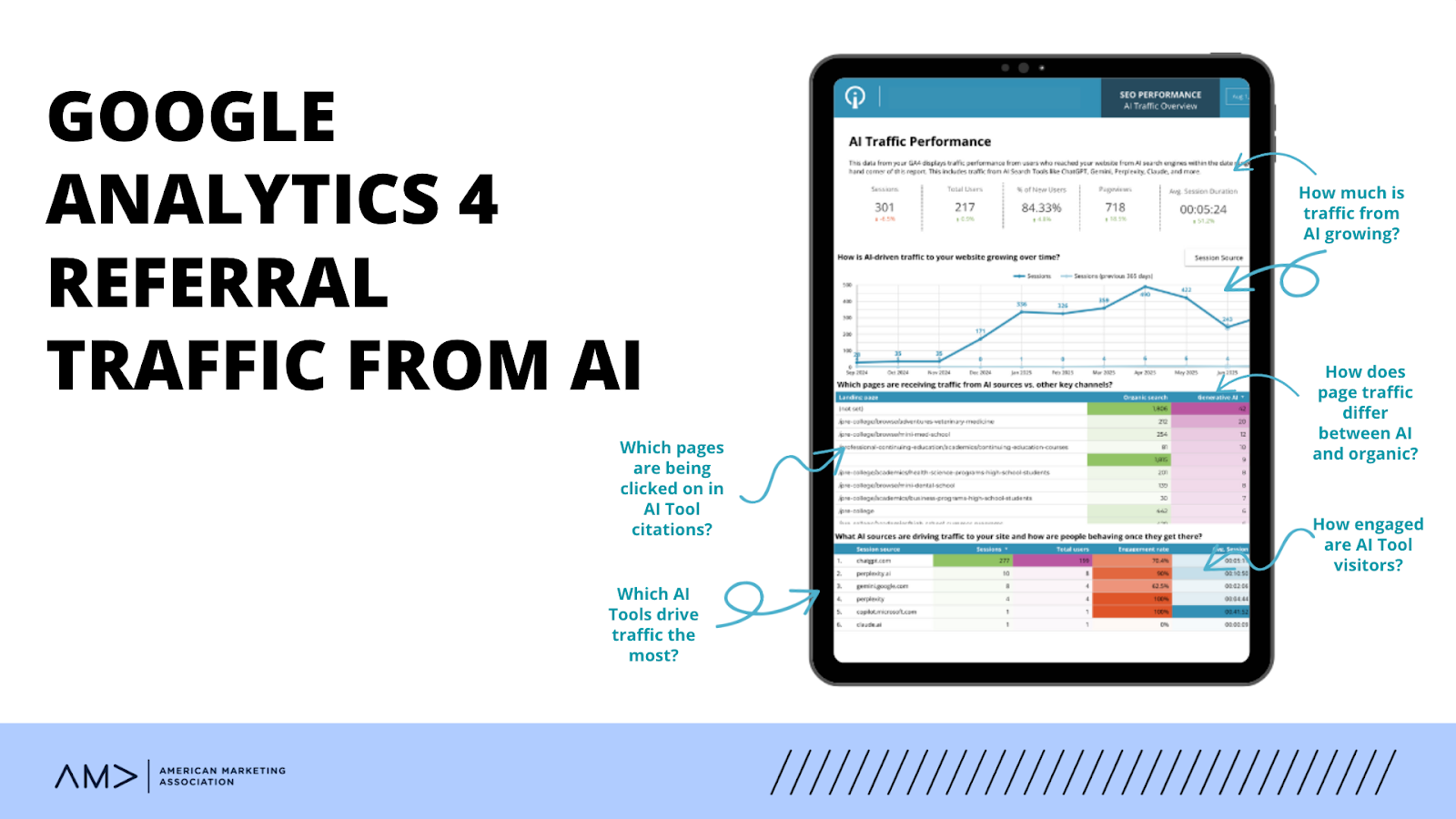
  • How to Set Up AI Traffic Tracking in GA4

    Key Insights

    • AI platforms are regularly sending real users to websites. This traffic exists today, even if it hasn’t been tracked or discussed widely yet.
    • GA4 doesn’t clearly identify AI-driven visits on its own. Without proper setup, those sessions get grouped with other referrals and are easy to overlook.
    • Visits from AI tools don’t behave the same way as traditional search traffic. They often come from users researching, comparing, or trying to solve a specific problem.
    • Channel-based tracking makes AI traffic easier to find and analyze. Custom channel groups help isolate these visits and keep reporting consistent as AI tools evolve.
    • AI measurement works best when you focus on trends, not perfection. Directional insight is enough to evaluate performance and make smarter decisions.

    Traffic from AI tools is already reaching your website. It’s happening now, and it’s measurable, even if it has never appeared clearly in your reporting. Google’s AI Overviews, ChatGPT, Perplexity, Claude (and so on) are sending users to third-party sites every day.

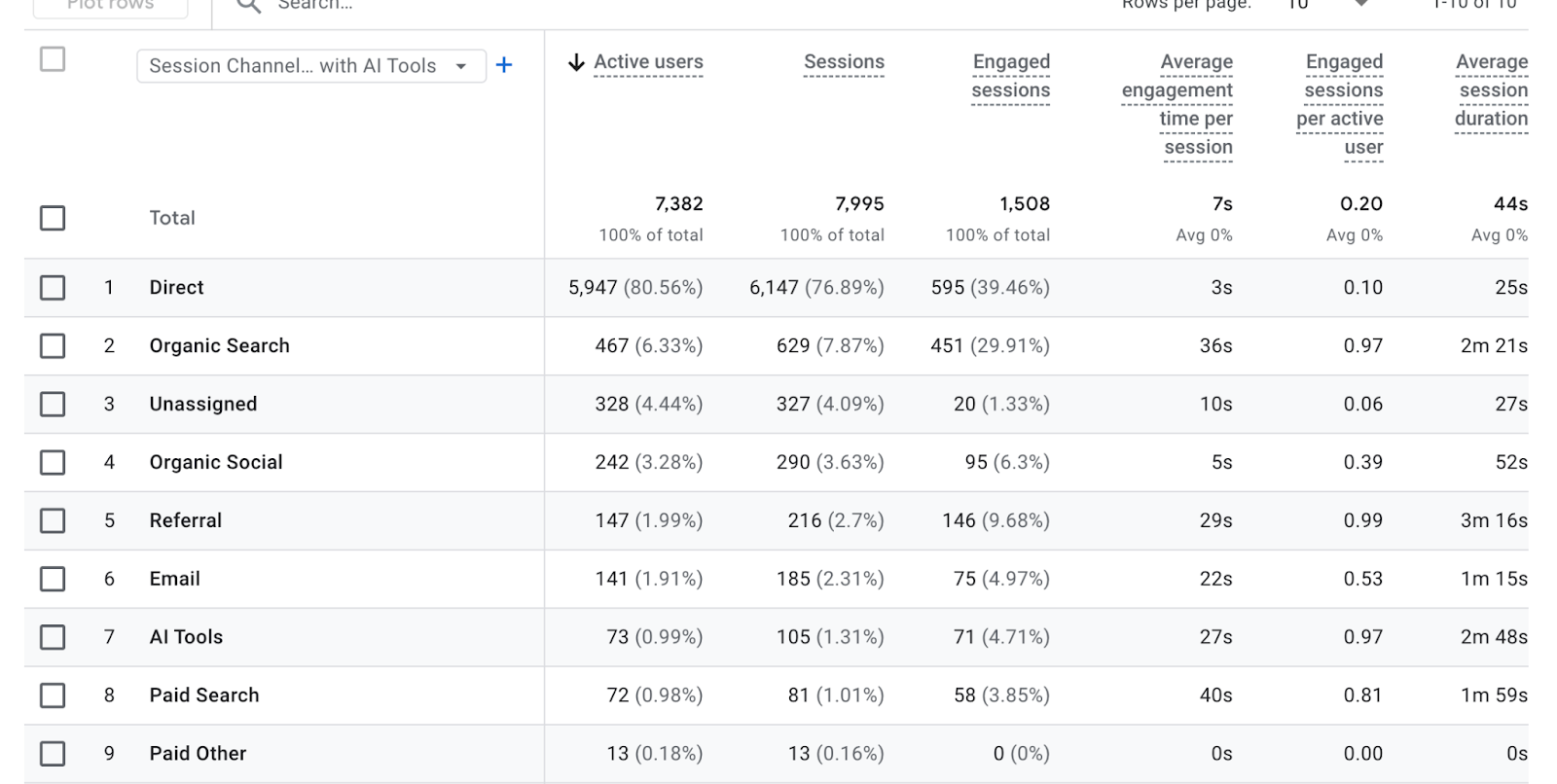
    The issue isn’t whether AI traffic exists. It’s whether you can see it at all. In Google Analytics 4 (GA4), AI-driven visits are typically classified as Referral traffic, which strips away context and minimizes impact.

    Seeing AI traffic clearly changes how performance is evaluated. Let’s break down how AI traffic shows up in GA4, how to surface it deliberately, and how Search Influence turns those signals into dashboard-level insights that teams can use to make confident decisions.

    What Counts as “AI Traffic” in GA4?

    Before you can track AI referral traffic, you need to be precise about what qualifies. AI traffic isn’t a vague concept or a future trend. It refers to a specific type of visit with a distinct source and intent.

    How AI traffic is defined

    AI traffic includes sessions that originate from AI-powered tools when those tools link users to third-party websites as part of an answer, recommendation, or explanation. These visits happen when a user chooses to leave an AI interface and click through for deeper context, validation, or next steps.
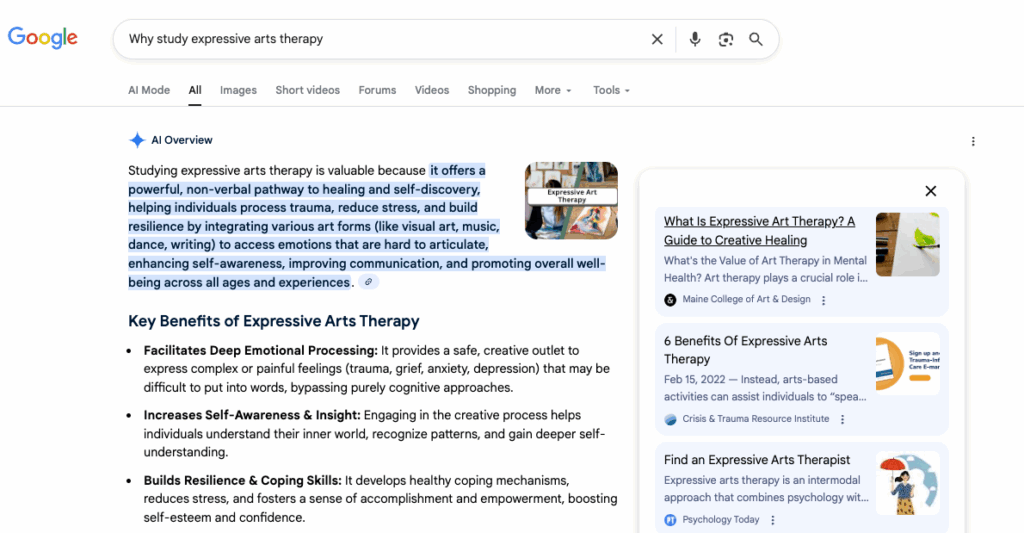
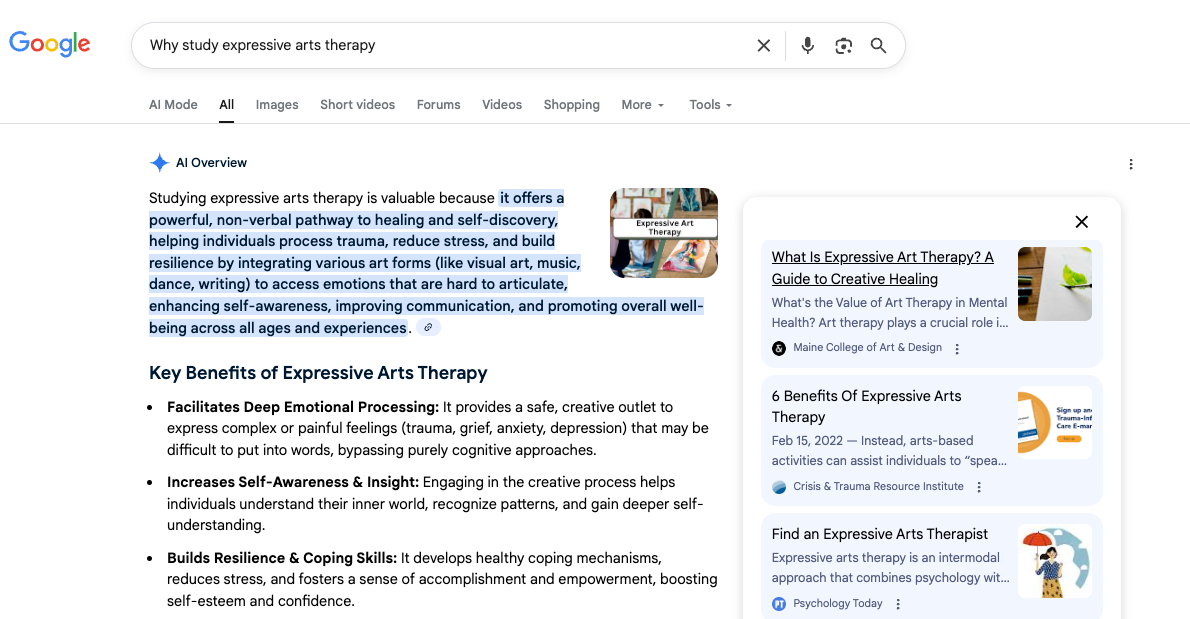
    Pictured: An AI Overview in Google Search showing cited sources alongside the generated response. When a user clicks one of these linked citations to learn more, that visit is sent from the AI interface to the publisher’s website. In GA4, that click-through is classified as AI traffic.

    This type of traffic is already present across many websites. In a 2025 Ahrefs analysis of 3,000 anonymized sites, 63% recorded at least one visit from an AI source.

    Common AI tools that send traffic today include:

    • Google’s AI Overviews
    • ChatGPT
    • Perplexity
    • Claude
    • Gemini
    • Copilot

    If a user clicks a link from one of these platforms and lands on your site, that session counts as AI traffic.

    What AI traffic is not

    AI traffic is often confused with other acquisition channels, which leads to inaccurate assumptions about its role.

    AI traffic is not:

    • Organic search traffic from Google or Bing
    • Paid search or display traffic
    • Standard referrals from publishers, directories, or partners

    Even when AI tools surface content that originally ranked in search, the visit itself does not come from a search engine. The source is the AI platform, not the SERP.

    Why AI-driven visits behave differently

    Users arriving from AI tools typically have a different mindset than traditional search users. In many cases, they are:

    • Researching a specific question or comparison
    • Looking to confirm information they’ve already seen
    • Narrowing options rather than browsing broadly

    As a result, AI-driven sessions often enter deeper into content, focus on fewer pages, and show engagement patterns that don’t always align neatly with organic search benchmarks.

    Why this definition matters

    Without a clear definition of AI traffic, reporting becomes inconsistent fast. Teams end up blending unlike sessions together, misreading intent, or minimizing AI’s contribution altogether.

    Agreeing on what counts as AI traffic makes it possible to:

    • Track it consistently over time
    • Compare it meaningfully against other channels
    • Analyze behavior without muddy attribution

    Once AI traffic is clearly defined, the next challenge becomes visibility (specifically, where this traffic actually shows up inside GA4).

    Where AI Traffic Lives in GA4 by Default

    When AI traffic reaches your site, GA4 has to decide where to put it. That decision happens automatically, based on how GA4 assigns sessions to its Default Channel Groupings.

    GA4 groups traffic by matching source and medium patterns. When a visit doesn’t meet the criteria for search, paid, social, or email, it’s typically assigned to the Referral channel. This is where most AI-driven visits end up.

    Why AI traffic gets classified as Referral

    AI tools send users to websites using standard web links. From GA4’s perspective, there’s nothing about these visits that signals a unique acquisition channel. As a result, traffic from AI platforms is treated the same way as any other external link click.

    That means AI traffic is not labeled, flagged, or separated by default. It’s folded into Referral alongside a wide range of unrelated sources.

    What this looks like in reporting

    In practice, AI traffic blends in with referral sources such as:

    • Software platforms
    • Documentation sites
    • Blogs and media outlets
    • Partner or vendor domains

    Without deliberate segmentation, there’s no clear way to distinguish an AI-driven session from any other referral visit.

    Why this makes AI traffic hard to analyze

    Referral traffic is often reviewed at a high level, if at all. It’s rarely trended with the same attention as organic or paid channels, which makes emerging patterns easy to miss.

    As a result:

    • AI traffic is difficult to isolate over time
    • Growth from AI platforms can go unnoticed
    • AI’s contribution to acquisition and engagement is underrepresented

    AI traffic isn’t invisible in GA4. It’s simply buried, and understanding where it lives by default is the first step toward surfacing it intentionally.

    How AI Traffic Tracking Works in GA4

    Once you know AI traffic is folded into Referral reports by default, the next question is how to surface it consistently. In GA4, that starts with custom AI traffic channel groups.

    Why channel groups work

    Channel groups operate at the acquisition layer in GA4. When AI traffic is defined as its own channel, it becomes visible across standard reports, comparisons, and dashboards without relying on one-off views or manual analysis.

    This approach:

    • Applies consistently to past and future data
    • Integrates cleanly into existing reporting workflows
    • Makes AI traffic comparable to other acquisition channels

    Why filters and ad hoc reports aren’t enough

    Temporary filters and explorations can surface AI traffic, but they don’t scale. They require constant upkeep, fragment reporting, and make trend analysis harder over time.

    Channel groups solve the problem structurally by establishing AI traffic as a distinct acquisition category.

    How AI traffic is identified

    AI traffic is grouped using session source values, not behavior or content signals. When a known AI platform appears as the source, GA4 can assign that session to the appropriate channel.

    This keeps attribution clean and allows rules to evolve as new AI tools emerge.

    A scalable, industry-aligned approach

    Custom channel groups are already a best practice for managing complex acquisition sources in GA4. Applying that same framework to AI traffic creates visibility without overengineering and keeps reporting aligned as AI-driven discovery continues to change.

    High-Level Steps: Setting Up an AI Traffic Channel in GA4

    AI traffic doesn’t need to be created or inferred. It already exists in GA4. The goal of setup is to surface it in a way that’s consistent, durable, and usable across reports.

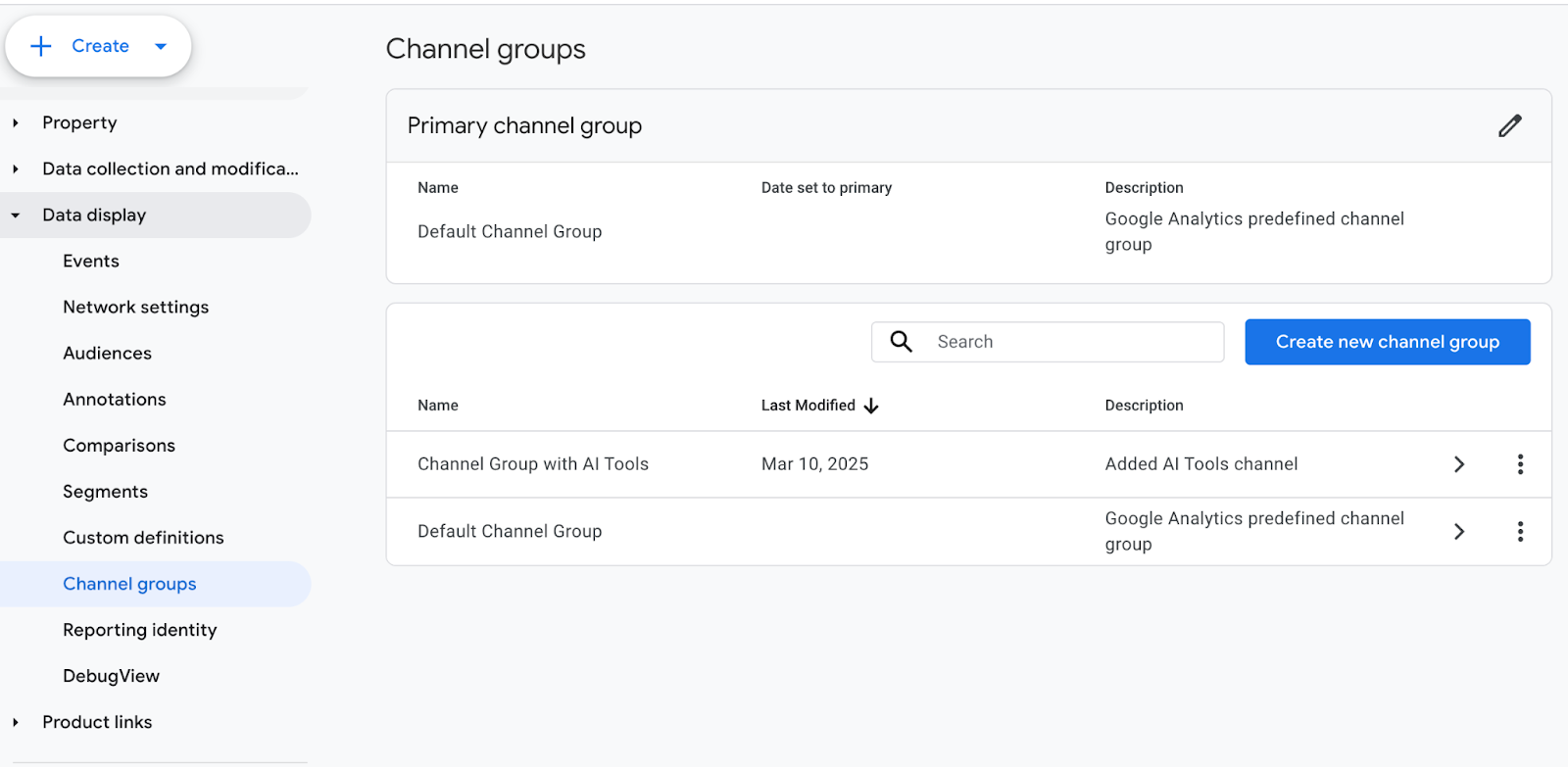
    1. Create a custom channel group for acquisition analysis
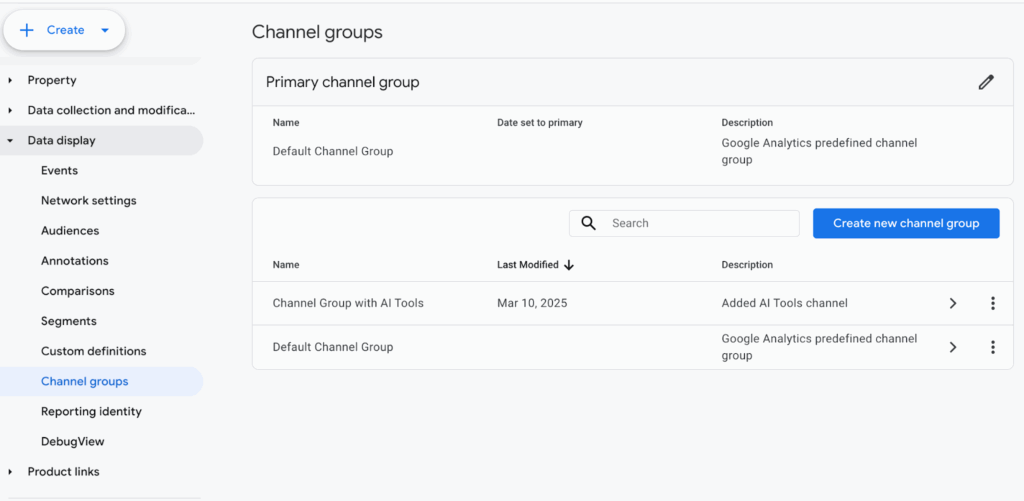
    AI traffic tracking starts with a custom channel group. Channel groups determine how sessions are categorized throughout GA4’s acquisition reporting, which makes them the right layer for isolating AI-driven visits.

    This establishes AI traffic as a first-class acquisition channel.

    2. Add a dedicated channel labeled “AI Tools”

    Within the new channel group, a dedicated channel is defined specifically for AI-driven sessions. A clear label like “AI Tools” keeps reporting readable and reduces ambiguity when data is shared across teams.

    At this stage, simplicity matters more than over-segmentation.

    3. Identify AI traffic using session source values

    As stated above, AI traffic is identified using session source values rather than behavioral or page-level signals. When a session originates from a known AI platform, GA4 can assign it to the AI Tools channel.

    This keeps attribution consistent and avoids guessing user intent.

    4. Apply regex logic to group known AI platforms under one channel

    Known AI platforms are grouped together using pattern-based logic. This allows multiple tools to roll up into a single channel while keeping the structure flexible as AI-driven discovery continues to evolve.

    As new AI tools are released or gain adoption, this regex can be updated to include additional referrers without changing the overall reporting framework. This keeps AI traffic consolidated, prevents fragmentation across referral sources, and ensures visibility keeps pace with the expanding AI ecosystem.

    The channel evolves through periodic refinement, not constant reconfiguration, which makes it sustainable over time.

    5. Reorder channels so AI traffic is evaluated before Referral

    Channel order determines how GA4 assigns sessions. Placing the AI Tools channel above Referral ensures AI-driven visits are captured intentionally rather than falling into the default referral bucket.

    This step prevents AI traffic from being hidden again.

    6. Validate AI traffic visibility in GA4 acquisition reports

    After setup, AI traffic should appear clearly across standard acquisition reports. At that point, teams can begin trending performance, comparing AI traffic against other channels, and incorporating it into regular reporting.
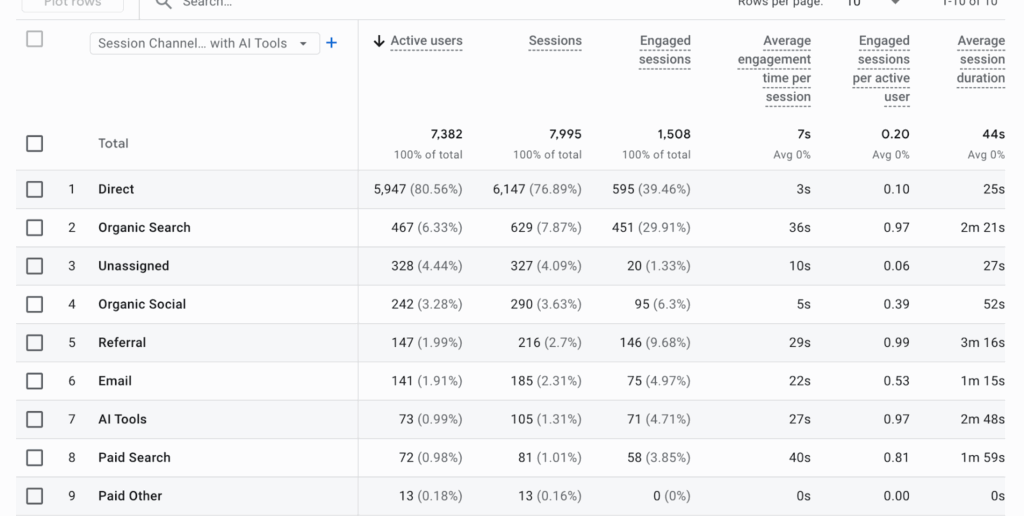
    This setup doesn’t change how GA4 captures data. It simply surfaces AI-driven sessions that were already there, pulling them out of the referral background and into a form that teams can actually use.

    For a more detailed, step-by-step walkthrough of this setup, see Dana DiTomaso’s “How to Track and Report on Traffic from AI Tools (ChatGPT, Perplexity) in GA4.”

    Separating ChatGPT From Other AI Tools

    After AI traffic is surfaced as a channel, some teams notice that one source tends to stand out. In many cases, that source is ChatGPT.

    Why ChatGPT often dominates AI traffic

    ChatGPT often represents a larger share of AI-driven sessions due to its broad adoption (it became the fastest-growing app in history, reaching 100 million active users within two months of launch) and frequent use for explanations, comparisons, and next steps. As a result, it’s often the first AI signal teams notice once tracking is in place.

    How ChatGPT traffic can behave differently

    Not all AI traffic behaves the same. ChatGPT-driven sessions may show different patterns than traffic from tools like Perplexity, Claude, or Gemini.

    Common differences include:

    • Deeper entry points into content
    • Longer engagement on explanatory pages
    • Strong alignment with informational or evaluative intent

    These differences reflect how users interact with various AI tools, rather than their performance quality.

    When separating ChatGPT adds value

    Separating ChatGPT into its own channel can improve clarity when it accounts for a meaningful share of AI traffic or when teams want platform-specific insight. In these cases, segmentation supports analysis rather than adding noise.

    When it’s better to keep AI traffic sources grouped

    For many teams, especially early on, grouping all AI tools under a single channel keeps reporting simpler and trends easier to interpret. Segmentation should be introduced only when it helps answer real questions.

    AI Tool Referrals vs AI-Generated Search Clicks

    AI tools vs AI search features

    AI-driven traffic doesn’t follow a single pattern. One of the most common points of confusion is the difference between AI tool referrals and AI-generated search features.

    AI tools send traffic directly from their own interfaces. When a user clicks a link inside a tool like ChatGPT or Perplexity, that visit arrives as a standard referral session.
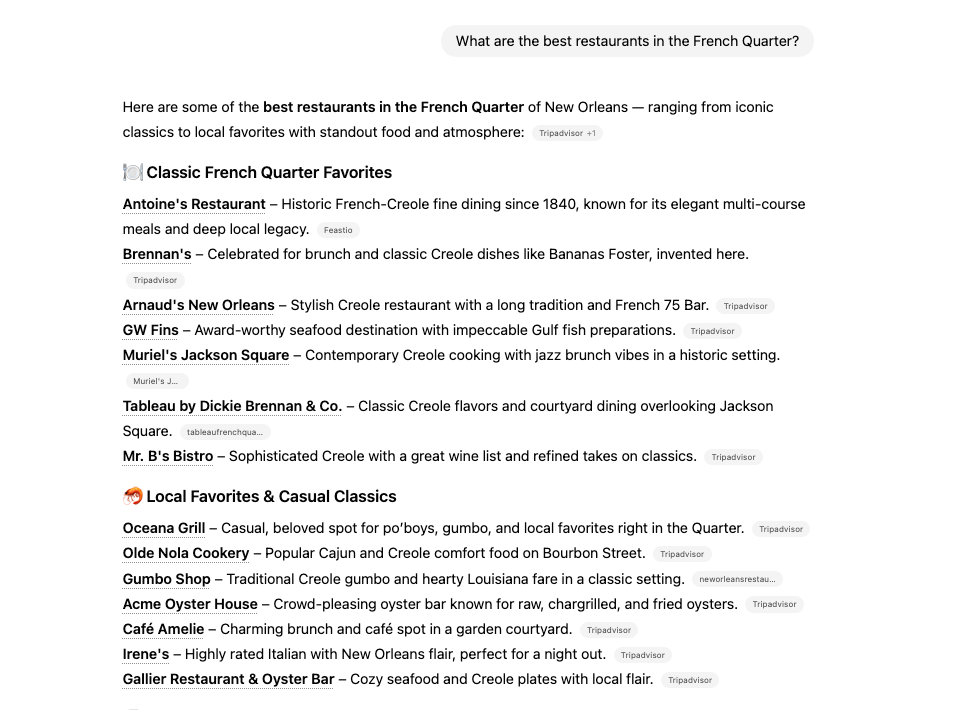
    Pictured: A recommendation list generated inside ChatGPT, where each item includes a clickable external source. When a user selects one of these links and lands on a website, the visit is recorded as a referral from ChatGPT, distinguishing it from clicks that originate within a search engine results page.

    AI-generated search features work differently. These include:

    • AI Overviews
    • Featured Snippets
    • People Also Ask

    In these cases, the user is still on a search engine results page. The click originates from a Google-owned surface, not from an external AI tool.

    Why this distinction matters in GA4

    Because AI tools and AI search features generate different types of URLs, they behave differently in analytics. Channel groups can reliably capture traffic from AI tools because those visits have identifiable external sources.

    AI-generated search clicks, however, often share source and medium values with traditional organic search. As a result, they can’t be isolated cleanly using channel group rules alone.

    Understanding this distinction prevents misreporting. AI tool referrals and AI-generated search features both influence discovery, but they require different tracking approaches inside GA4.

    When Event-Based Tracking Is Needed for AI-Generated Search Links

    Channel-based tracking captures traffic from AI tools, not from AI-generated search features.

    When discovery happens inside AI Overviews, Featured Snippets, or People Also Ask, a different measurement approach is required.

    How event-based tracking fills the gap

    Event-based tracking provides a way to measure clicks from AI-generated search features by identifying specific URL patterns and triggering custom events. This approach typically requires Google Tag Manager and a deeper understanding of how search feature URLs are structured.

    Rather than reclassifying traffic into a new channel, this method captures interactions as events that can be analyzed separately inside GA4.

    What to expect from this approach

    Event-based tracking adds useful context, but it comes with limitations. Teams should go into this with the right expectations:

    • Tracking is partial, not comprehensive
    • URL structures change, which can break rules over time
    • Visibility is directional, not exhaustive

    Because of that, event-based tracking works best as a complement to channel-based AI traffic reporting, not a replacement for it.

    When it’s worth implementing

    This approach is most useful for teams that:

    • Want deeper insight into AI Overviews and other SERP features
    • Have the technical resources to maintain tracking rules
    • Are already comfortable working beyond standard GA4 reports

    For teams looking to explore this layer in more detail, Dana DiTomaso offers a technical deep dive in “How to Track Traffic from AI Overviews, Featured Snippets, or People Also Ask Results in Google Analytics 4”.

    Using GA4 Audiences to Analyze AI Traffic

    Channels show where traffic comes from. Audiences show what users do after they arrive. Once AI traffic is visible as an acquisition channel, audiences become the primary way to understand its quality, intent, and impact.

    How audiences extend AI traffic analysis

    GA4 audiences enable teams to categorize users based on their entry points and subsequent actions. When AI-driven sessions are used as audience criteria, behavior can be analyzed across engagement, conversion, and retention metrics.

    This shifts AI reporting from volume-focused to outcome-focused.

    Common AI-focused audience examples

    Teams often create audiences such as:

    • Users who arrived via AI tools
    • Users who engaged after an AI-driven session
    • Users who converted following AI traffic
    • Returning users whose first session came from an AI source

    Each audience answers a different question about how AI-driven discovery influences performance.

    What audiences reveal that channels can’t

    Channels make AI traffic visible. Audiences make it interpretable.

    With AI-based audiences, teams can evaluate:

    • Engagement depth compared to organic or paid users
    • Conversion rates tied specifically to AI discovery
    • Whether AI traffic introduces net-new users or supports return behavior

    This helps separate curiosity clicks from meaningful acquisition.

    Using audiences to guide reporting and decisions

    AI audiences can be applied across standard GA4 reports, comparisons, and dashboards. Over time, they help teams identify patterns that inform content strategy, UX decisions, and measurement priorities.

    Rather than asking whether AI traffic exists, audiences help answer the more useful question: what that traffic actually contributes.

    What Search Influence Tracks for AI Traffic

    Surfacing AI traffic is only the first step. The real value comes from understanding how that traffic performs, how it changes over time, and how it contributes to broader acquisition and conversion goals.

    Search Influence focuses on a focused set of metrics that balance visibility, behavior, and impact.

    Core AI traffic metrics

    At the foundation, we track AI traffic volume and growth trends over time. This establishes whether AI-driven discovery is increasing, stabilizing, or declining.

    Key metrics include:

    • Total AI sessions and month-over-month change
    • AI traffic share relative to organic search
    • Engagement indicators, such as pages per session and engagement time
    • Conversion performance tied to AI-driven sessions

    These metrics provide directional clarity without overfitting analysis to short-term fluctuations.

    Understanding performance by AI tool

    Beyond aggregate volume, we break AI traffic down by platform to understand how different tools contribute to discovery and engagement.

    This includes:

    • Traffic distribution by AI channel
    • Engagement and conversion behavior by tool
    • Early identification of new or emerging AI referrers

    Comparing tools side by side helps teams spot meaningful differences without assuming all AI traffic behaves the same way.

    Visualizing AI Traffic With Custom Dashboards

    Why GA4 alone isn’t enough

    GA4 can store the data, but it’s not built for fast, repeatable AI reporting across a team. Most AI questions require clicking through multiple reports, changing dimensions, and rebuilding the same views every time.

    Common friction points include:

    • AI traffic gets buried unless you know exactly where to look
    • Views are hard to standardize across stakeholders
    • Trend checks take too long to repeat weekly or monthly
    • Non-analysts struggle to pull the same story consistently

    If AI visibility matters, reporting has to be easy to access, easy to trust, and easy to repeat.

    How Search Influence dashboards surface AI insights

    Dashboards translate AI tracking into a shared, repeatable view that teams can rely on. Instead of rebuilding reports, AI performance is surfaced alongside organic and paid channels in a consistent format.

    Our custom-built dashboards typically show:

    • AI session volume and trend movement over time
    • AI traffic share relative to organic and paid
    • Engagement and conversion behavior from AI-driven sessions
    • Platform-level detail when it supports analysis (e.g., ChatGPT vs other tools)

    This shifts AI reporting from exploration to execution, making it part of an ongoing performance review rather than a one-off analysis.
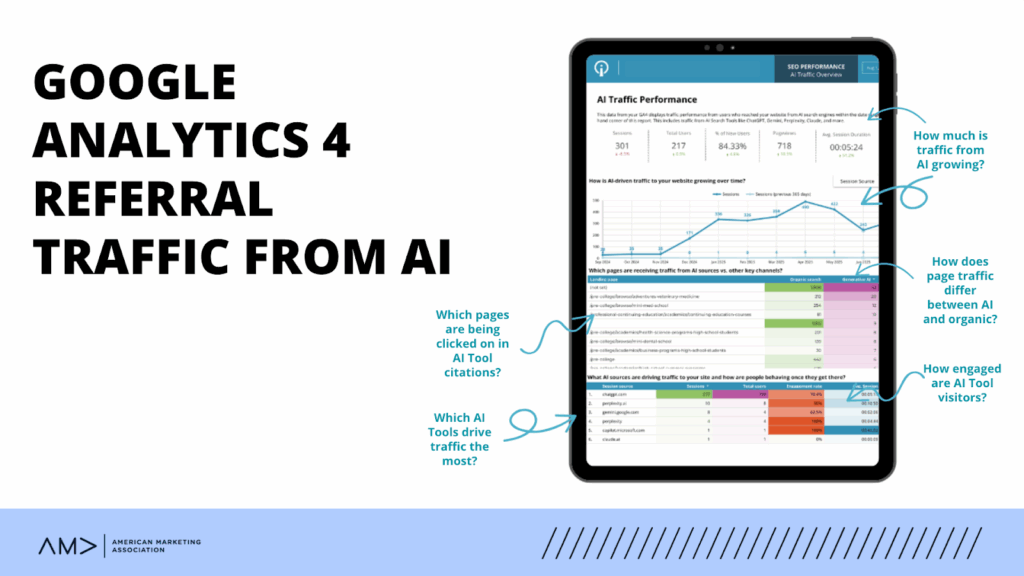
    AI Tracking Tools Beyond GA4

    While GA4 remains the foundation for measuring what happens on your site, other platforms are beginning to surface how brands appear across AI-driven experiences.

    Today, these tools generally fall into three roles:

    • AI visibility tracking tools (such as Scrunch)
      Help teams understand where and how a brand shows up inside generative AI tools, including citation patterns and brand presence.
    • SEO platforms expanding into AI signals (including SEMrush and Ahrefs)
      Provide early indicators around AI citations, content reuse, and discovery, often alongside traditional search performance.
    • GA4 as the system of record
      Confirms what AI-driven discovery actually produces once users arrive, including engagement, conversion behavior, and downstream impact.

    Together, these tools answer different questions. Visibility platforms show where discovery happens. SEO tools reveal how content is reused or cited. GA4 validates what that traffic does next.

    The Reality of AI Traffic Tracking Today

    AI traffic tracking is not static. Referrers change, AI interfaces evolve, and attribution rules shift over time. Precision at the session level will never be perfect.

    What matters is consistency.

    When AI traffic is tracked the same way over time in GA4, patterns become visible. Teams can evaluate momentum, engagement quality, and contribution alongside other channels, even as the ecosystem changes.

    The goal is a usable signal, not a flawless measurement.

    FAQs

    1. Can GA4 automatically identify AI traffic without configuration?

    No. GA4 does not currently recognize AI-driven visits as a distinct channel on its own. By default, traffic from AI tools is classified as Referral, which makes it difficult to identify or analyze without additional setup. Custom channel groups are required to surface AI traffic consistently.

    2. Is AI traffic replacing or supplementing organic search traffic?

    At this stage, AI traffic is best understood as a supplement, not a replacement. Most AI-driven visits reflect users researching, validating, or comparing information before taking action. These behaviors often overlap with search intent, but they represent a different discovery path rather than a direct substitute for organic search.

    3. How accurate is AI traffic tracking in GA4 today?

    AI traffic tracking in GA4 is directional rather than exact. Known AI referrers can be reliably grouped using session source values, but attribution is not perfect and will evolve as AI tools change. The goal is consistent trend visibility over time, not precise session-level certainty.

    4. When should AI traffic be reported separately from organic traffic?

    AI traffic should be reported separately once it reaches a volume or strategic relevance that affects analysis or decision-making. Separating it too early can add noise, but grouping it indefinitely can hide meaningful patterns. The right timing depends on scale, stakeholder questions, and reporting needs.

    5. How often should AI tracking rules and definitions be reviewed?

    AI tracking rules should be reviewed periodically, typically quarterly or when major AI platforms introduce changes. New tools, referrer behaviors, and interface updates can affect how traffic appears in GA4. Regular review helps ensure definitions stay accurate without requiring constant adjustment.

    Turning AI Visibility Into Actionable Insight

    AI-driven discovery is already shaping how users find, evaluate, and engage with content. When tracked intentionally, it provides clear signals that strengthen SEO strategies, content decisions, and performance reporting.

    Search Influence brings structure to this complexity through proven tracking frameworks, executive-ready dashboards, and analytics that teams can act on with confidence.

    To gain clear visibility into how AI traffic is impacting your site, get in touch to explore our SEO, reporting, and analytics support.

    This post is informed by analytics frameworks and methodologies shared publicly by Dana DiTomaso. Our approach builds on those foundational concepts, adapted to how Search Influence configures reporting, analyzes performance, and delivers AI traffic insights through custom dashboards for our clients.

  • The Future of Search Marketing as AI Search Optimization Expands Beyond Google

    Key Insights

    • Search no longer lives in one place. Today’s search behavior spans Google, Reddit, YouTube, social platforms, and AI tools.
    • AI is now the connective tissue of search. AI systems increasingly synthesize answers from multiple platforms, meaning visibility depends on where your content exists, not just how your website ranks.
    • The user journey is shorter and less linear. Many users get the information they need directly from AI-generated answers, videos, or community discussions before ever clicking through to a website.
    • Platforms like Reddit and YouTube now influence search visibility. Community-driven content and video are being indexed, cited, and surfaced in AI Overviews and search results alongside traditional web pages.
    • Winning the future of search requires an omnichannel mindset. Brands that align content, messaging, and authority across platforms are better positioned to earn trust, citations, and long-term visibility in an AI-driven search landscape.

    The future of search marketing is being reshaped by how people discover information, and Search Influence helps brands adapt to that shift.

    People no longer rely on Google alone to find answers.

    That’s not a prediction, it’s observable user behavior.

    Search now happens across Reddit threads, YouTube videos, Instagram posts, TikTok clips, private communities, and increasingly, AI tools that generate answers directly. Traditional search engines still matter, but they’re no longer the sole gateway to information.

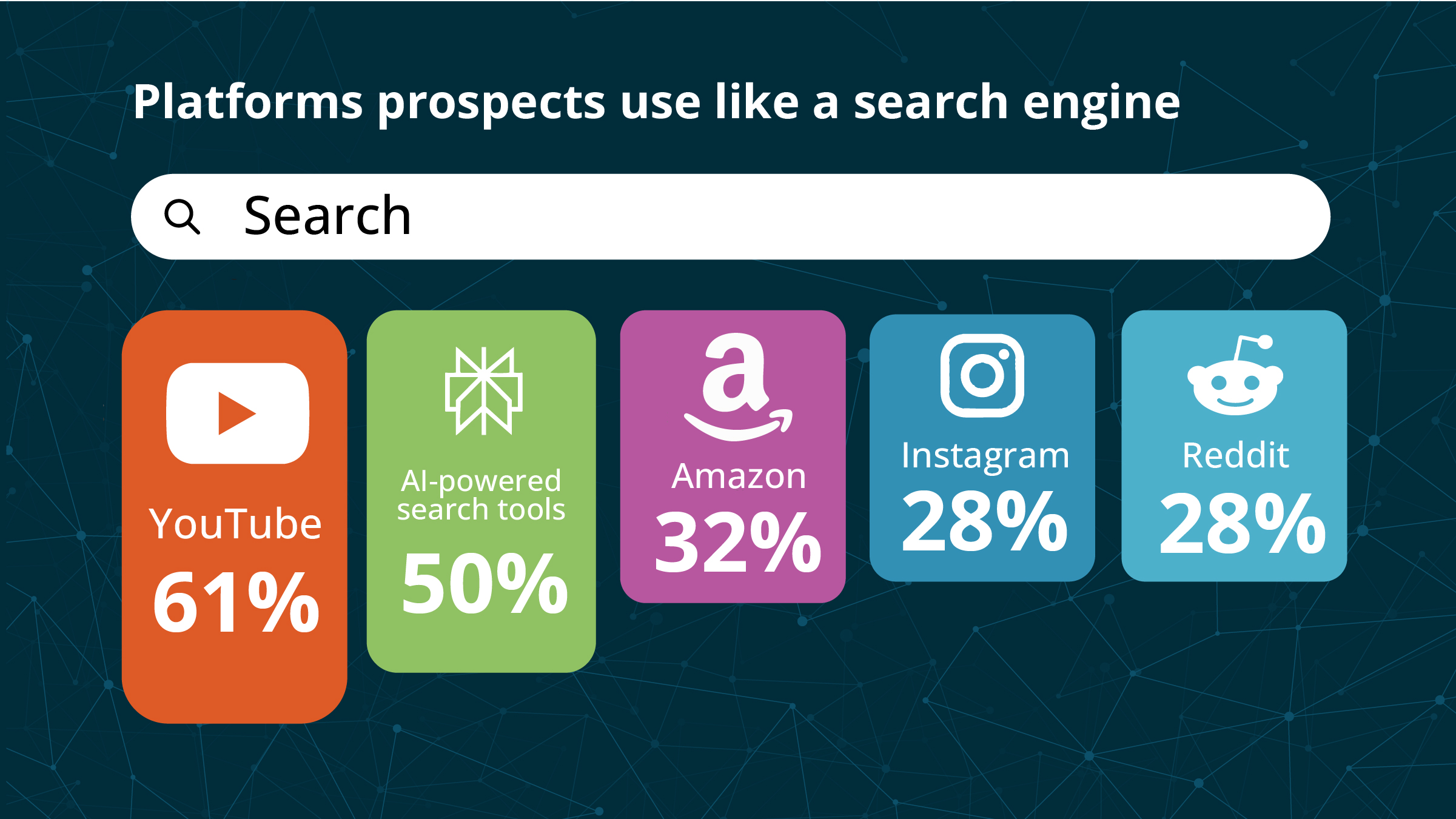
    According to the AI Search in Higher Education Research Study conducted by UPCEA in partnership with Search Influence, search behavior is becoming increasingly diversified. Among prospective students surveyed, 84% use search engines, 61% use YouTube, and 50% use AI tools during their research process. While this study focuses on prospective students, it illustrates a broader shift occurring across industries: users are increasingly moving between multiple search platforms before ever visiting a website.

    This creates a new tension in the search landscape. As search behavior fragments, Google Search, AI Overviews, and large language models are doing the opposite — indexing, synthesizing, and summarizing content from all of these platforms into direct answers.

    The user journey is no longer linear or heavily reliant on traditional SERPs. Many users get the rational context they need before clicking anywhere at all. In many cases, the answer replaces the click.

    That shift may feel threatening to organic search traffic, but it also creates opportunity. Brands that understand how the search engine landscape is expanding can earn visibility far beyond traditional rankings.

    Search Influence helps brands optimize their visibility across websites, platforms, and AI-driven search engines.

    This explainer breaks down how search works across platforms today, why Reddit and YouTube matter most right now, and what an omnichannel search strategy really means in an AI-driven world.

    What the Future of Search Marketing Looks Like Today

    The future of search marketing is distributed, platform-native, and behavior-led.

    Search engine optimization and search engine marketing have evolved. Where success once meant ranking webpages on search engine results pages, it now means earning visibility across an ecosystem of platforms, answer engines, and AI-generated summaries. The goal is no longer just organic links. It’s search visibility wherever users express intent.

    AI search optimization acts as the connective layer. It determines which content is surfaced, cited, and trusted across traditional search engines, AI platforms, and conversational search interfaces. This shift affects every industry, from higher education and healthcare to e-commerce and B2B services. The future of search isn’t about abandoning traditional SEO; it’s about expanding beyond it.

    How AI Search Optimization Is Expanding Search Beyond Google

    AI tools like AI Overviews, AI chatbots, and conversational search interfaces generate answers using content pulled from multiple sources. These include websites, forums, videos, social media platforms, and structured data.

    At a high level, AI search optimization works by aligning content with how AI models evaluate relevance, authority, and context. Platforms that provide clear answers, strong community signals, and high-quality content are favored. Instead of ranking ten blue links, AI systems synthesize information into direct answers that often eliminate the need to click.

    This is why search marketing beyond Google is now required to maintain search visibility. If your content only exists on your website, you’re limiting your presence in a search generative experience that increasingly pulls from everywhere else.

    Social Platforms and the Rise of Social Search

    Social search continues to reshape how users discover information. Google now includes a native “Short Videos” filter directly within search engine results pages, signaling how tightly visual search and social content are integrated into the search landscape.

    Brands can leverage short videos by addressing popular FAQs and informational queries, increasing coverage for zero-click search and query fan-out opportunities. Social discovery is driven by visual cues, community signals, and algorithmic recommendations rather than keyword matching alone.

    Instagram supports inspiration and brand validation. TikTok delivers quick demos and direct answers. These platforms are increasingly influencing where users search, rather than Google, especially for lifestyle, education, and product discovery. Social media platforms now firmly sit within the search engine landscape.

    Reddit has become a primary search engine

    Reddit’s role in search has accelerated rapidly. In early 2024, Reddit entered into a data licensing agreement with Google, underscoring its significance in the search engine landscape.

    Users have long added “reddit” to their Google queries to find unfiltered, experience-based answers. They’re seeking peer validation, nuance, and real-world context that traditional organic results often lack. Reddit threads perform well in search results because they deliver long-form, contextual answers supported by community engagement.

    Those same qualities explain why Reddit content frequently surfaces in AI Overviews. Threads frequently answer nuanced informational queries directly, using natural language and lived experience. AI systems favor this conversational format because it aligns with user intent and demonstrates deep understanding.

    From an SEO strategy standpoint, Reddit influences both traditional SERPs and AI-generated summaries. It deserves outsized attention in modern search marketing strategy. Not as a replacement for traditional SEO, but as a powerful signal within the broader search ecosystem.

    YouTube is a search engine, not just a video platform

    YouTube has always been a search platform, but its role in AI-driven search visibility is growing. Videos are increasingly featured, embedded, and cited within Google AI Overviews and other AI summaries.

    Users search YouTube for how-tos, walkthroughs, comparisons, and explanations. Unlike Google search, where users expect links, YouTube search is visual and instructional. The expectation is an answer, not a destination.

    Video search optimization supports AI search because transcripts, titles, descriptions, and engagement signals provide machine-readable context. AI tools can parse video content at scale, reference it as a citation, and surface it alongside traditional organic results. In the new era of search, YouTube SEO is no longer optional; it’s foundational.

    What the AI Search in Higher Education Research Reveals

    The AI Search in Higher Education Research Study, conducted by UPCEA in partnership with Search Influence, surveyed 760 adult learners ages 18–60 interested in professional and continuing education. While the focus is on higher education, the findings reflect broader user behavior across digital marketing.

    The research shows that prospects use multiple platforms to research programs. AI tools and social platforms are increasingly influencing decision-making, and community-driven content plays a significant role in shaping trust.

    Key findings illustrate how search is expanding beyond traditional search engines:

    • 68% of respondents said they are more likely to consider a product or service mentioned or recommended on social media
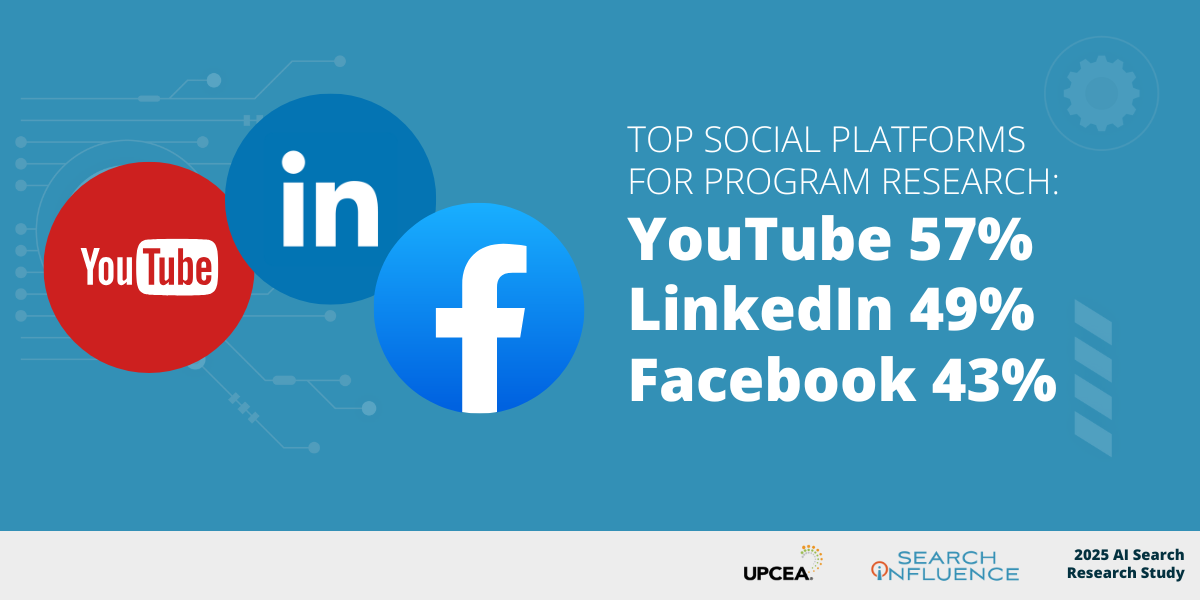
    • Respondents’ top platforms for program search were: YouTube 57%, LinkedIn 49%, Facebook 43%
    • 1 in 3 prospects trust AI tools for program research

    Higher education often acts as a leading indicator. The developments here reflect broader shifts in search behavior across industries, from healthcare to B2B marketing strategies.

    Omnichannel Search Strategy in an AI-Driven World

    An omnichannel search strategy focuses on visibility across websites, platforms, and AI-generated answers. Optimization can no longer be siloed into traditional SEO, paid search, or social media alone.

    AI systems ingest information from multiple platforms, publications, and outlets. When a brand is consistently present in places where AI is crawling and learning, it sends corroborating signals about topical authority and relevance. This co-occurrence of brand and topic/entity strengthens AI visibility and citation potential.

    AI search optimization rewards brands that appear consistently across aligned signals, including high-quality content, structured data, schema markup, and consistent messaging, throughout their digital footprint.

    What This Shift Means for Marketers

    Rankings alone are no longer enough.

    Visibility is now earned through presence, trust, and relevance across the entire search landscape. Early adoption of AI optimization creates long-term advantage, helping brands stay ahead as user behavior and AI platforms evolve.

    Search Influence helps brands navigate this new era, blending traditional SEO, AI search optimization, and digital marketing strategy to future-proof search visibility before competitors catch up.

    FAQs About the Expanding World of Search

    What is the future of search marketing?

    The future of search marketing is defined by visibility across platforms, communities, and AI-generated answers.

    Search marketing no longer focuses only on ranking webpages in Google. Discovery now happens on Reddit, YouTube, social platforms, and AI tools. AI systems synthesize information from multiple sources instead of directing users to a single link. Effective strategies prioritize presence, authority, and clarity across the full digital ecosystem.

    How is AI changing search marketing?

    AI is changing search marketing by determining how results are selected, summarized, and delivered to users.

    AI-powered search emphasizes answers over lists of links. Content is evaluated based on relevance, context, and trustworthiness. Users receive information without always clicking through to websites. Search marketing now requires content that works for both humans and machines.

    Why does Reddit appear so often in Google and AI results?

    Reddit appears frequently in Google and AI results because it offers experience-based, community-validated answers.

    Reddit threads often address highly specific, real-world questions. Strong engagement signals indicate authenticity and usefulness. Google indexes Reddit prominently for informational and long-tail queries. AI systems reference Reddit due to its conversational language and lived experience.

    How does YouTube function as a search engine?

    YouTube functions as a search engine by matching video content to user intent through metadata and engagement signals.

    Users search YouTube for tutorials, explanations, and demonstrations. Search intent on YouTube is visual and instructional. Video transcripts and descriptions make content discoverable to AI systems. YouTube results frequently influence Google search and AI-generated summaries.

    Where are people searching instead of Google?

    People are searching instead of Google on platforms like Reddit, YouTube, social networks, and AI tools.

    Reddit supports peer-to-peer research and detailed explanations. YouTube enables visual learning and step-by-step guidance. Social platforms like Instagram and TikTok support discovery-driven search. AI tools provide synthesized answers without requiring multiple searches.

    How does AI search optimization work across platforms?

    AI search optimization works by increasing content visibility across websites, platforms, and AI-generated answers.

    AI evaluates content from multiple sources, not just traditional webpages. Clear structure and consistent messaging improve retrievability. Platforms such as Reddit and YouTube influence AI responses alongside websites. Optimization focuses on being referenced, trusted, and cited across the digital footprint.

    Turn Search Behavior Shifts Into Strategic Advantage

    Search has expanded, and AI connects it all.

    The future of search marketing requires optimizing for where people actually search, not just where marketers are comfortable. Brands that adapt now will earn visibility across platforms, AI summaries, and evolving search experiences.

    To explore the full data and strategic recommendations behind this shift, download the AI Search in Higher Education Research Study.

    Search Influence serves as a guide for brands navigating the future of search marketing, helping them stay visible, credible, and ahead in an increasingly AI-driven search landscape. Contact us to future-proof your search engine marketing strategy.

    Images:
    Unsplash
    Unsplash

  • 30+ AI Search in Higher Education Stats [2026]

    30+ AI Search in Higher Education Stats [2026]

    Higher education discovery is becoming increasingly more distributed, more automated, and more competitive.

    Students now rely on a mix of AI tools, traditional search engines, and social platforms as they evaluate programs. Institutional strategies, however, do not always reflect how these new search elements work together.

    Below, we’ve compiled over 30 statistics that show how student search behavior has shifted and how institutions are responding (or aren’t). Use them to identify your visibility gaps, validate your priorities, and guide your strategic updates for 2026 and beyond.

    How Students Search for Higher Education Programs Today

    AI tool usage and trust in the research process

    • 50% of prospective students use AI tools at least once a week.
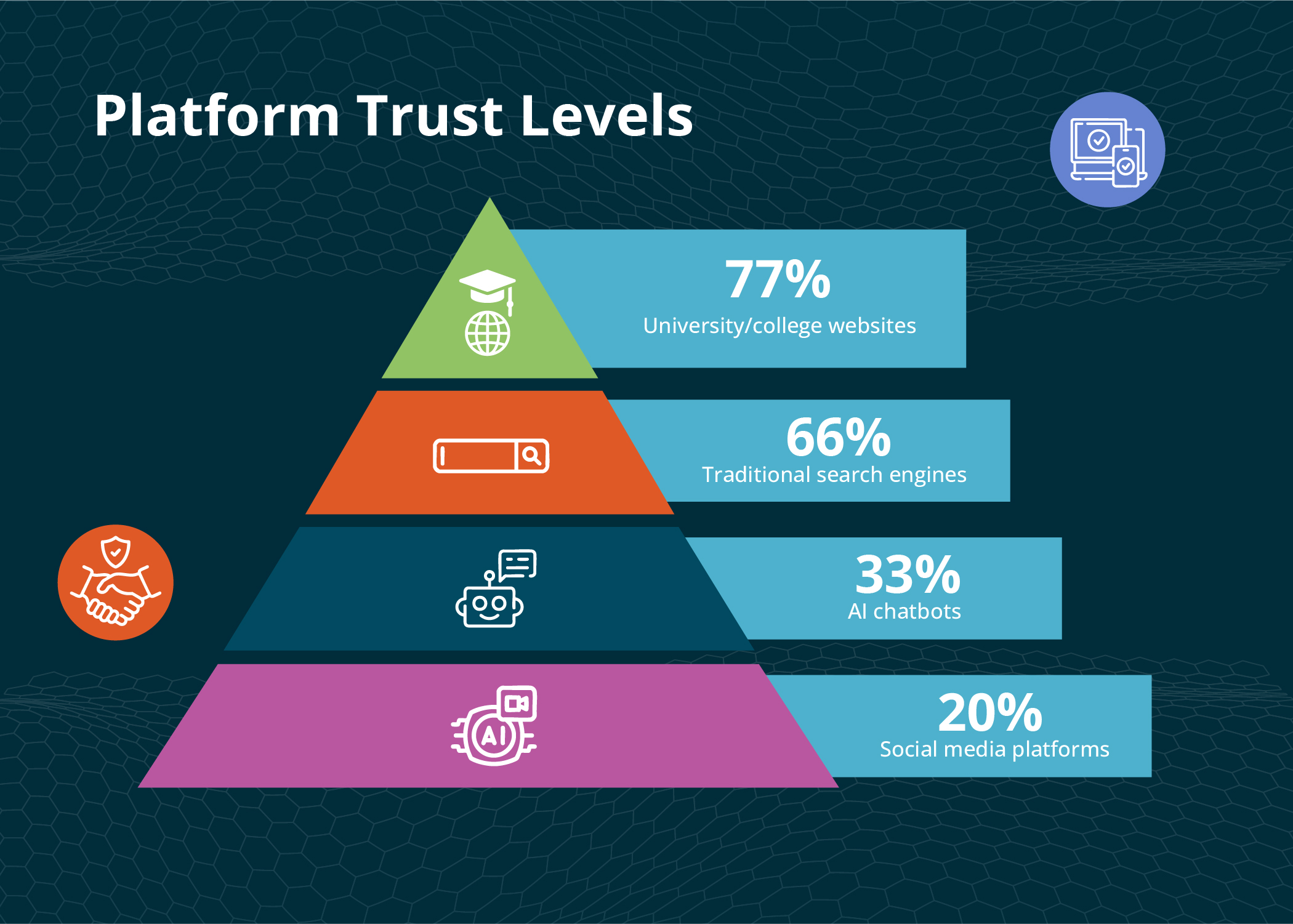
    • 1 in 3 prospects trust AI tools as a source for program research.
    • 79% of prospects read Google’s AI-generated overviews when they appear in search results.
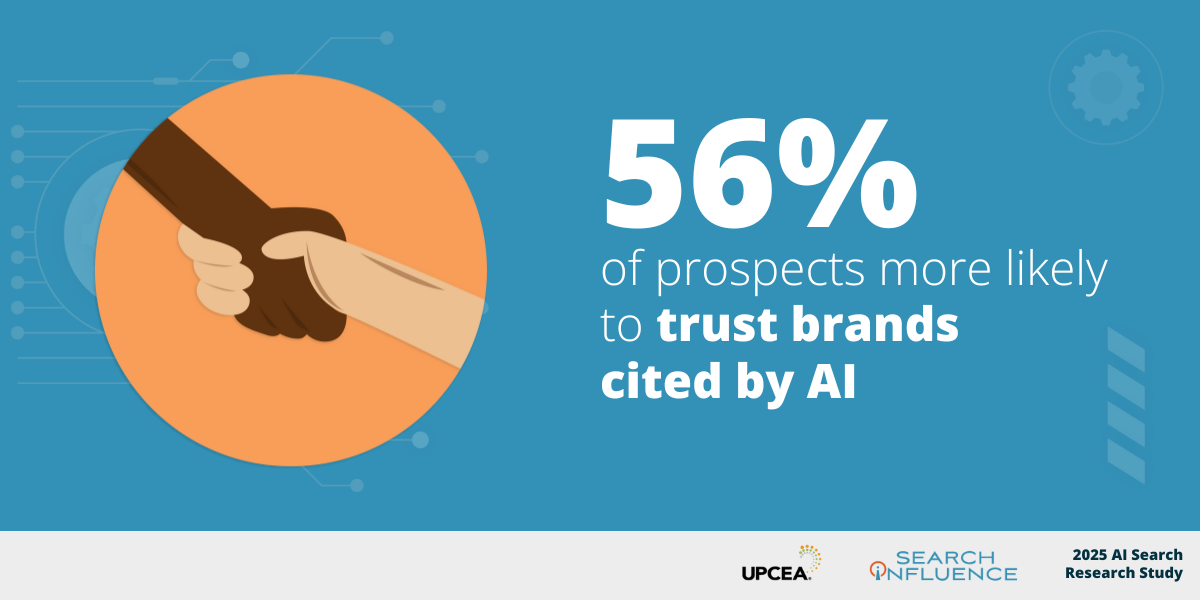
    • 56% of students are more likely to trust a brand that is cited by AI.

    Search engines and university websites remain core discovery channels

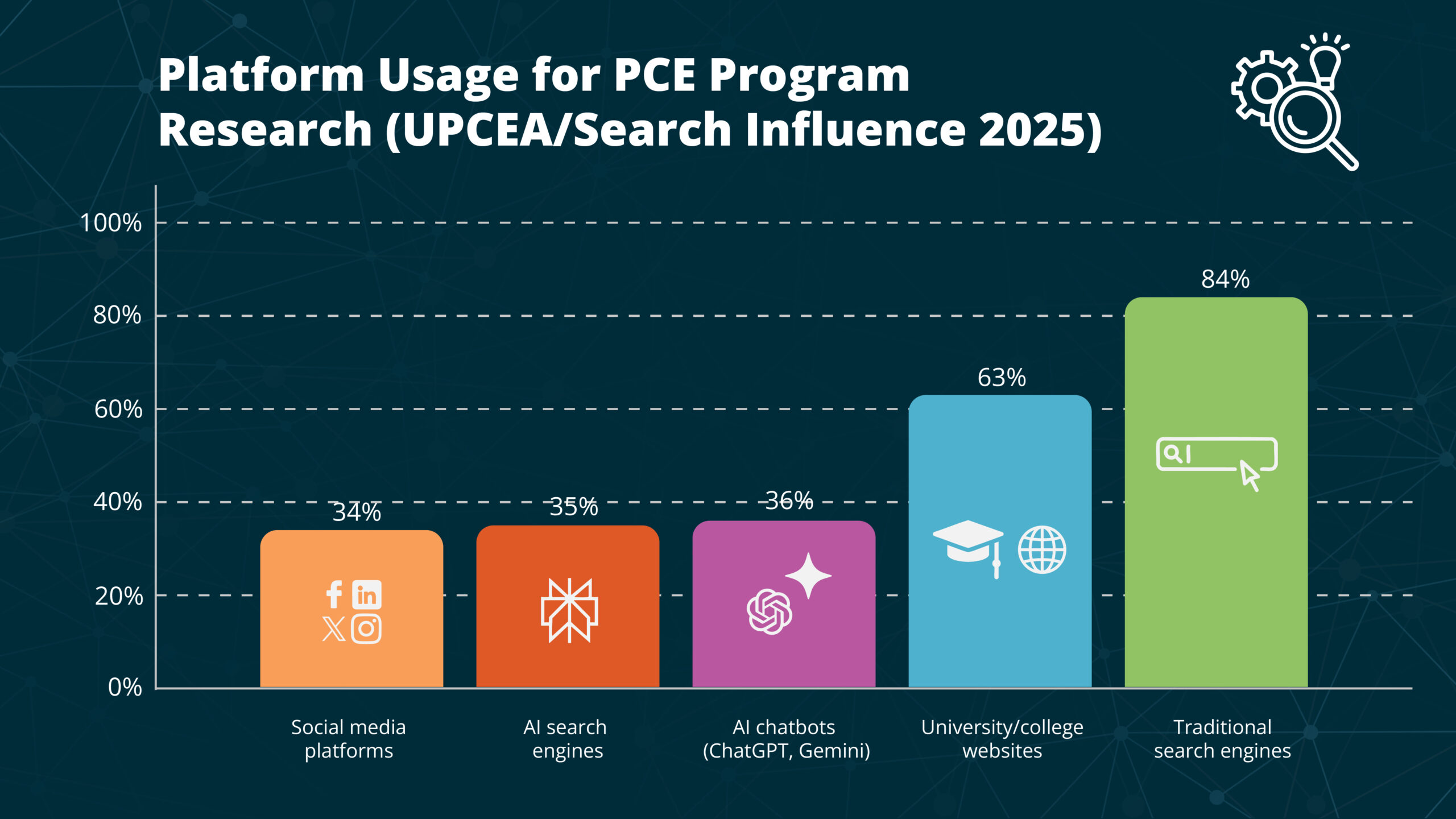
    • 84% of prospects use traditional search engines to explore professional and continuing education programs.
    • 63% of prospects rely on university websites during their research process.
    • 77% of prospects trust university-owned websites over other sources.
    • 82% of prospects are more likely to consider programs that appear on the first page of search results.

    Search behavior is expanding across multiple platforms

    • 84% of prospects use search engines to research professional education opportunities.
    • 61% of prospects use YouTube.
    • 50% of prospects use AI tools.

    Social platforms still influence consideration

    • Nearly 70% of prospects say frequent recommendations on social media increase their likelihood of considering a product or service.
    • YouTube (57%), LinkedIn (49%), and Facebook (43%) are the top social media platforms for program research.
    How prospects search and what content they want

    • Multi-word search phrases dominate how prospects search for programs.
    • Prospects under age 35 show nearly twice the interest in professional and continuing education compared to older audiences.
    • 65% of prospects want clear program summaries in social content.
    • 54% of prospects look for career guidance and outcomes.
    • 50% of prospects want testimonials and real student perspectives.

    This data is drawn from AI Search in Higher Education: How Prospects Search in 2025, a research study conducted by Search Influence in partnership with UPCEA in March 2025. The study is based on survey responses from 760 prospective adult learners and examines where students search for programs, how they use AI tools and alternative platforms, and which sources they trust most during the decision-making process.

    Institutional Readiness for AI Search in Higher Education

    AI search strategy adoption across institutions

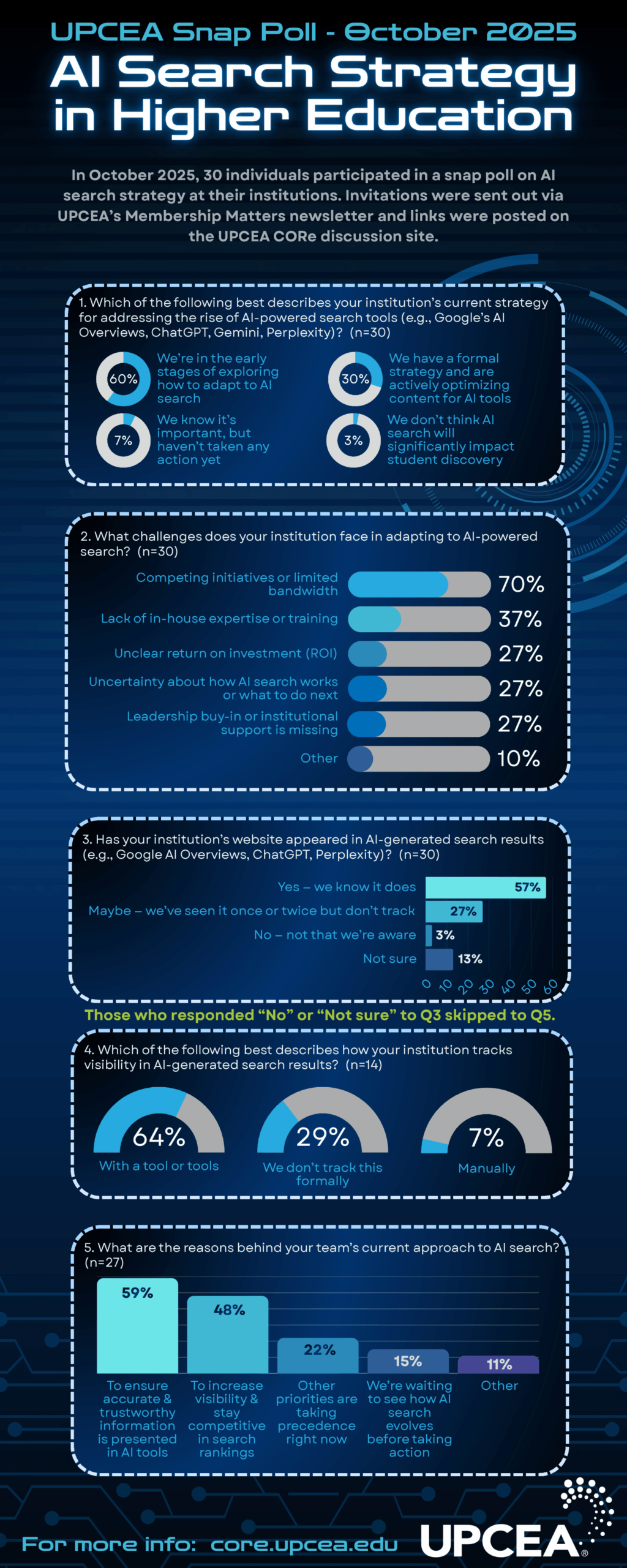
    • 60% of institutions say they are in the early stages of exploring AI search.
    • 30% of institutions report having a formal AI search strategy in place.
    • 10% of institutions have not started or do not believe AI search will significantly impact student discovery.

    Challenges slowing AI search adoption

    • 70% of institutions cite limited bandwidth or competing priorities as their biggest barrier.
    • 36.67% of institutions report a lack of in-house expertise or training.
    • 26.67% of institutions cite unclear ROI, lack of leadership buy-in/institutional support, or uncertainty about how AI search works as slowing progress.

    What institutions are prioritizing in AI search strategy

    • 59.26% of institutions prioritize the accuracy of AI-generated information about their programs.
    • 48.15% of institutions focus on improving visibility and competitive positioning in AI-driven results.
    • 22.22% of institutions say other initiatives currently take priority.
    • 14.81% of institutions are waiting to see how AI search evolves before acting.

    Tracking and Measuring Visibility in AI-Generated Search Results

    Awareness and monitoring of AI search visibility

    • 56.7% of institutions know their institution appears in AI-generated answers.
    • 26.7% of institutions have seen their institution referenced once or twice, but do not actively track it.
    • 13.3% of institutions are unsure whether they appear in AI-generated responses.
    • 64.29% of institutions that track AI visibility use dedicated tools or formal tracking methods.
    • 28.57% of institutions do not formally track their AI visibility.

    The above insights are based on the AI Search in Higher Education Snap Poll, conducted by UPCEA in October 2025. The poll surveyed 30 UPCEA member institutions to understand how colleges and universities are responding to AI-driven changes in student search behavior.

    Frequently Asked Questions About AI Search in Higher Education

    What is AI search, and how is it changing higher education discovery?

    AI search describes how people use AI-powered tools and summaries to find and compare information across many sources at once. Rather than navigating page by page, users increasingly rely on AI to surface key context and options early. In higher education, this behavior is already widely adopted, with 50% of prospective students using AI tools at least weekly and 79% reading AI-generated overviews when they appear. As a result, early impressions of programs are often formed before a student reaches a university website.

    Does AI search optimization replace traditional SEO for higher education marketing?

    No, AI search optimizations do not replace traditional SEO strategies. Rather, they build on them. AI-powered tools still rely on well-organized, relevant, and authoritative content to generate accurate summaries and recommendations. For higher education, that means strong technical foundations, clear program pages, and credible signals remain essential. AI search adds a new layer of visibility, but it only works effectively when the underlying SEO structure is sound.

    What risks do institutions face if they ignore AI search?

    Ignoring AI search increases the risk of being invisible or misrepresented during early research. Because AI-generated summaries often guide program awareness, institutions that do not appear may never enter a prospect’s consideration set. Research shows that while 56.7% of institutions believe they appear in AI-generated answers, many do not actively track that visibility, creating blind spots that can quietly undermine recruitment efforts. Awareness without measurement leaves exposure gaps.

    Can institutions influence what AI tools say about their programs?

    Yes, organizations can influence AI outputs by improving the clarity and consistency of the information AI systems reference. AI tools commonly draw from authoritative, well-structured content when generating summaries. For higher education institutions, this means program pages, admissions information, and outcome-based content play a direct role in how programs are described. Influence comes from strong content foundations rather than direct control.

    How should marketing teams prepare for continued changes in AI search?

    Marketing teams should approach AI search as an extension of modern discovery, not a separate channel. Preparation includes understanding how information is summarized, ensuring content is accurate and extractable, and monitoring visibility across AI-driven environments. Higher education teams that align content strategy with student research behavior are better positioned to adapt as AI search continues to evolve. The goal is sustained visibility, not one-time optimization.

    What This Means for Higher Education Marketing Teams

    Student behavior has moved faster than institutional strategy, creating visibility gaps at the earliest stages of discovery.

    AI-generated answers now play a meaningful role in which programs make it into a prospect’s consideration set, raising the stakes for how institutions appear in those environments. As this shift accelerates, accuracy, clarity, and consistency across owned content directly influence how programs are represented and trusted.

    To explore the full state of AI search in higher education, download AI Search in Higher Education: How Prospects Search in 2025 today

  • 90+ Higher Education Marketing Stats [2026]

    90+ Higher Education Marketing Stats [2026]

    This post was updated by Paula French on 12/23/2025 to reflect current best practices. It was originally published on 1/9/2025.

    Higher education marketers face more pressure to compete than ever before. From the demographic cliff and evolving modern learner to the rise of AI-driven program discovery, institutions must pay close attention to how they measure up to the industry to stay ahead.

    These 90+ stats, drawn primarily from our continuing and online education research with UPCEA, reveal how institutions approach digital marketing, AI visibility, performance tracking, and student reach. See what’s working, what’s missing, and where to focus your next efforts for greater success.

    Must-Know Higher Education Marketing Stats for 2026

    Prospect Behavior & Outlook Statistics

    AI search usage & adoption stats

    • 50% of prospects use AI tools at least weekly.
    • The majority of prospects use AI search (50%) the same way they use a traditional search engine.
    • 79% of prospects read Google’s AI Overviews.
    • 1 in 3 prospects trust AI tools for program research.
    • 56% of prospects are more likely to trust brands cited by AI-generated answers.

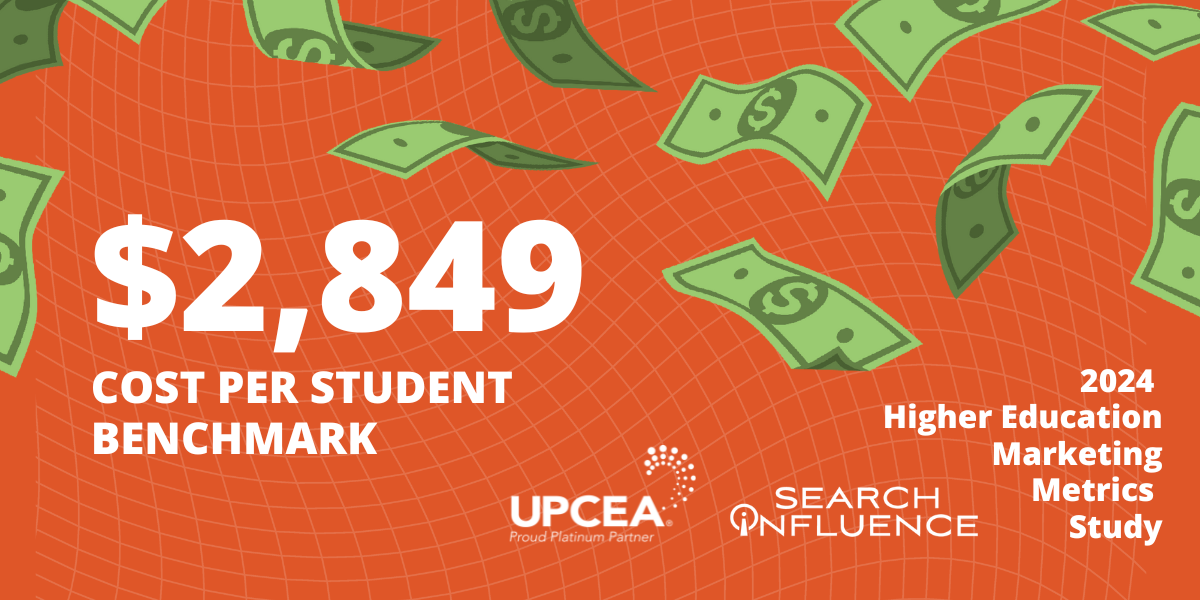
    2024 higher education marketing metric graphic

    Multi-channel program discovery stats

    • 84% of prospects use search engines for program research.
    • 61% of prospects use YouTube.
    • 50% of prospects use AI tools.

    Organic search visibility & consideration stats

    • 82% of prospects are more likely to consider programs on page one of search results.
    • Prospects are most likely to rely on search engines (84%) and university websites (63%) to explore programs.
    • 77% of prospects trust university websites over other sources.

    Social & video discovery stats

    • Nearly 7 in 10 prospects say frequent social media recommendations make them more likely to consider a product or program.
    • YouTube (57%), LinkedIn (49%), and Facebook (43%) are the top social media platforms used for program research.
    • Prospects want program summaries (65%), career advice (54%), and testimonials (50%) in social content.

    Online learner stats

    • 73% of online learners are pursuing degrees.
    • 27% of online learners are pursuing credit-bearing certificates or licensure programs.
    • 58% of online learners are employed full-time.
    • 21% of online learners are employed part-time.
    • 26% of online learners choose a school based on how well its programs align with their career goals.
    • 32% of online learners cite time to completion as a key enrollment factor.

    Adult learner stats

    • Prospects under 35 are nearly twice as interested in professional and continuing education than older adults (41+).
    • Adult learners account for 42% of higher education revenue.
    • The total addressable market of adult learner candidates is estimated to be 242+ million.
    • Gen Z is predicted to comprise 60% of all adult learners by 2031.

    Sources: Search Influence x UPCEA, Education Dynamics, EAB, UPCEA

    Cost Metric & Benchmark Statistics

    Digital advertising cost per inquiry benchmarks

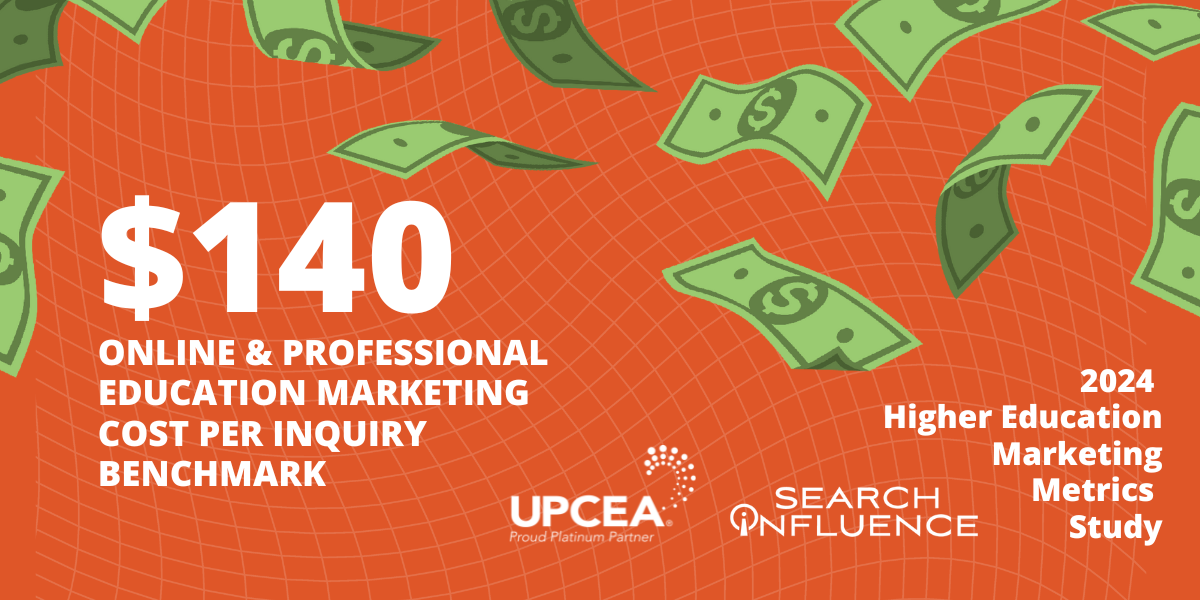
    • $140: Average cost per inquiry in higher ed (online and continuing education)
    • $157: Average cost per inquiry for graduate programs
    • $128: Average cost per inquiry for undergraduate programs
    • $51: Average cost per inquiry for non-credit courses

    Cost per enrolled student benchmarks

    • $2,849: Average cost per student in higher ed (online and continuing education)
    • $3,804: Average cost per student for graduate programs
    • $1,505: Average cost per student for undergraduate programs
    • $599: Average cost per student for non-credit courses

    Marketer spend & satisfaction stats

    • The average annual digital ad spend is $800,970, accounting for 3.6% of total revenue.
    • 47% of higher ed marketers are satisfied with their marketing campaign performance.
    • 38% of higher ed marketers are satisfied with their cost per inquiry.
    • 27% of higher ed marketers are uncertain about their satisfaction with their cost per inquiry.
    • 29% of higher ed marketers are satisfied with their ability to track their campaign success.
    • 92% of those satisfied with their tracking capabilities also report satisfaction with their marketing campaign performance.

    Source: Search Influence x UCPEA

    Marketers’ SEO/AI SEO Capability & Strategy Statistics

    SEO prioritization & awareness stats

    • 82% of higher ed marketers view digital marketing as a core part of their marketing strategy.
    • 84% of higher ed marketers view SEO as a core part of their marketing efforts.
    • 51% of higher ed marketers do not have an established SEO strategy.
    • 52% of higher ed marketers are highly aware of their continuing and online education unit’s SEO capabilities, processes, and strategies.

    SEO execution & resourcing stats

    • 91% of higher ed marketers implement paid search into their SEO strategy.
    • 27% of higher ed marketers integrate keyword optimization and link-building into their SEO strategy.
    • 55% of higher ed marketers allocate marketing spend to every graduate program in their portfolio.
    • 15% of higher ed marketers allocate funds equally across programs.

    SEO ownership model stats

    • 36% of higher ed marketers say SEO for their online and continuing education programs is handled entirely by the marketing or continuing ed unit.
    • 23% of higher ed marketers say their SEO is split evenly between in-house teams and outsourcing.
    • 18% of higher ed marketers say their SEO is mostly handled in-house, with some outsourcing support.
    • 18% of higher ed marketers say their SEO is mostly outsourced, with some help from in-house teams.

    SEO strategy leadership stats

    • 36% of higher ed marketers say their SEO strategy is mostly led by the continuing and online education unit, with some input from the college or university.
    • 27% of higher ed marketers say their SEO strategy is exclusively led by the continuing and online education unit.
    • 18% of higher ed marketers say their SEO strategy is mostly led by the college or university, with some input from the continuing and online education unit.
    • 18% of higher ed marketers say their SEO strategy is evenly led by the college or university and the continuing and online education unit.

    SEO web content & collaboration stats

    • 36% of higher ed marketers say their marketing team doesn’t involve faculty or staff in SEO keyword selection.
    • 92% of institutions strategically highlight degree, program, and/or course information in their website design.
    • 78% of institutions strategically use title tags and meta descriptions in their website design.
    • 70% of institutions strategically use images and image optimizations in their website design.
    • 20% of higher ed marketers don’t have a plan for developing and updating their website content.

    SEO strategy review cadence stats

    • 50% of higher ed marketers say their unit revisits their SEO strategy every quarter.
    • 18% of higher ed marketers say their unit revisits their SEO strategy once every six months.
    • 14% of higher ed marketers say their unit revisits their SEO strategy once a year.
    • 5% of higher ed marketers say their unit revisits their SEO strategy once every few years.

    AI search strategy adoption stats

    • 60% of institutions are in the early stages of exploring AI search.
    • 30% have a formal AI search strategy.
    • 10% have not started or do not believe AI will impact student discovery.

    AI search adoption challenge stats

    • 70% of institutions cite limited bandwidth or competing priorities.
    • 36.67% cite lack of in-house expertise or training.
    • 26.67% cite unclear ROI or uncertainty about AI mechanics.

    AI search strategy priority stats

    • 59.26% of institutions prioritize ensuring the accuracy of AI-generated information.
    • 48.15% focus on gaining visibility and competitive positioning.
    • 22.22% say other priorities rank higher.
    • 14.81% say they are waiting to see how AI search evolves.

    Marketing Tracking & Reporting Statistics

    AI visibility tracking stats

    • 56.7% of institutions say their institution appears in AI-generated answers.
    • 26.7% say they’ve seen their institution appear in AI-generated answers once or twice, but they do not track it.
    • 13.3% are uncertain.
    • 64.29% of institutions use tools to track visibility in AI-generated answers.

    Lead tracking & attribution stats

    • Less than 60% of higher ed marketers have insight into how leads perform after moving from marketing to enrollment efforts.
    • 31% of marketing departments struggle to correlate their marketing success with enrollment numbers.

    Cost tracking stats

    • 46% of higher ed marketers track cost per inquiry.
    • 43% of higher ed marketers track cost per enrolled student.

    Website performance & traffic tracking stats

    • 93% of higher ed marketers track their programs’ web traffic.
    • 89% of higher ed marketers track their programs’ source of traffic.
    • 85% of higher ed marketers track their programs’ organic visits.
    • 70% of higher ed marketers track time spent on pages.
    • 69% of higher ed marketers track bounce rates.

    SEO reporting expectations & gaps stats

    • 62% of university leaders want consistent reporting on SEO.
    • 31% of university leaders receive the regular SEO reports they want.

    Reporting frequency stats

    • 33% of higher ed marketers report on metrics once a month.
    • 24% of higher ed marketers report on metrics once a quarter.
    • 8% of higher ed marketers report on metrics once every six months.
    • 10% of higher ed marketers report on metrics once a year.

    Sources: UPCEA, Search Influence x UPCEA, Ruffalo Noel Levitz, Search Influence x UCPEA

    Higher Education Marketing Statistics and Benchmarks FAQs

    How is the traditional higher education student evolving in 2026?

    The higher education sector is facing a “demographic cliff,” with a sharp decline in traditional 18-22-year-old students expected over the next two decades. This anticipated decline presents an opportunity to market to a growing population of adult learners, aged 25+. Recent data estimates the total addressable market of adult learner candidates at 242+ million.

    These “modern learners” may be entering college for the first time or returning to school to finish a degree. Because they are often employed part or full-time, they tend to value flexibility and distance-learning programs to accommodate a busier schedule.

    How are prospective students using AI tools to research higher education programs?

    AI tools are becoming a regular part of today’s prospect search process. 50% of prospects use AI tools at least weekly, and 79% read Google’s AI Overviews. While search engines and university websites remain central, 1 in 3 prospects say they trust AI tools for program research, signaling a shift in how discovery and evaluation happen.

    How do AI-generated answers influence trust and program consideration?

    AI visibility is increasingly tied to credibility. 56% of prospects say they are more likely to trust brands cited by AI Overviews. Even as AI tools gain traction, 77% of prospects still trust university websites over other sources, reinforcing the importance of accurate, authoritative institutional content.

    How prepared are higher education institutions for AI-driven search and discovery?

    Institutional readiness varies widely. 60% of institutions are still in the early stages of exploring AI search, while 30% report having a formal AI search strategy. Despite growing adoption, only about 64% of institutions use tools to track visibility in AI-generated answers, highlighting a gap between changing prospect behavior and current measurement practices.

    How centralized are marketing decisions across different departments and the greater institution?

    36% of higher ed marketers report that their continuing and online education unit leads the SEO strategy, with some input from the college or university. Another 27% say their continuing and online education unit manages it entirely. Meanwhile, 18% report that the college or university leads the strategy with some input from the continuing and online education unit, and another 18% say both share the responsibility equally.

    What percentage of higher education marketers have an established SEO strategy?

    Although 84% of higher ed marketers view SEO as a core part of their marketing strategy, only 47% have an established SEO strategy. Higher education SEO marketing statistics reveal that the other 2% are unsure.

    What are the most common SEO metrics universities track?

    Online and continuing education marketers primarily track web traffic (93%) for their programs, followed by traffic sources (89%), organic visits (85%), page time (70%), and bounce rates (69%).

    How important is SEO reporting to higher education leaders/administrators?

    While 62% of university leaders want consistent reporting on SEO, only 31% receive regular updates. 33% of higher ed marketers report on metrics monthly, 24% quarterly, 8% every six months, and 10% annually.

    How often do higher education marketers reassess their SEO strategies?

    50% of higher ed marketers say their unit reviews the SEO strategy and execution for their continuing and online education programs quarterly. 18% reassess their strategy every six months, 14% annually, and 5% every few years.

    How many universities track cost per inquiry and cost per enrolled student?

    Despite being a key indicator of advertising efficiency, less than half of higher ed marketers track cost per inquiry (46%) and cost per enrolled student (43%).

    What is the benchmark for higher education cost per inquiry and cost per enrolled student?

    On average, higher education marketers for online and continuing education programs spend $140 to generate each inquiry and $2,849 to enroll each student.

    2024 higher education marketing metric graphic

    How many higher education marketers are satisfied with the performance of their marketing campaigns?

    47% of higher ed marketers express satisfaction with their marketing campaign performance.

    How does campaign tracking satisfaction correlate with performance satisfaction?

    92% of higher ed marketers who are satisfied with their analytic tracking capabilities also express satisfaction with the performance of their marketing campaigns.

    See More Digital Marketing and SEO Data for Higher Education

    These higher education marketing benchmarks and data figures help you temperature-check the state of your own marketing strategies. Use them to gauge your performance, inform your core focuses, and ultimately set the stage for enrollment success.

    Higher Ed Marketing Metrics Research Study 

    For deeper insights into the data from our Search Influence x UPCEA research, download:

  • Search Influence SEO: Powering Your Visibility in AI and Your Enrollment Growth

    Search Influence SEO: Powering Your Visibility in AI and Your Enrollment Growth

    Search Influence SEO Powering Your Visibility in AI and Your Enrollment Growth graphic

    Key Insights

    • Student discovery now happens across multiple channels and moments, not a single search engine. Prospects move fluidly between platforms, which means visibility must extend across every place they form early impressions.
    • AI summaries are becoming the new first impression for many learners. With 79% reading AI Overviews, institutions must ensure AI tools surface accurate, compelling information about their programs.
    • Most institutions recognize AI’s impact but lack the structure to act on it. Bandwidth, expertise, and unclear ownership are keeping teams from implementing consistent, repeatable AI search strategies.
    • Foundational SEO directly fuels AI visibility, accuracy, and trust. Structured content, semantic clarity, and authoritative signals shape how search engines and generative tools interpret and cite your institution.
    • Search Influence’s SEO framework is built for the intersection of rankings, AI summaries, and enrollment outcomes. Our approach unifies semantic SEO, AI visibility tracking, and full-funnel analytics to help institutions stay competitive across every modern discovery surface.

    Prospects aren’t following a straight line to your programs anymore. They’re bouncing between Google, AI, YouTube, and university websites depending on what they need in the moment.

    Some want quick clarity. 

    Some want more depth. 

    All expect quick answers to their questions, wherever they look.

    That’s why SEO now operates as the connective tissue across every discovery channel. It strengthens the signals that help Google rank you, AI tools describe you, and students recognize you early on.

    Search Influence’s SEO approach is built for this reality, where traditional search, AI-driven discovery, and enrollment outcomes converge. Here’s a closer look at the new search playing field, plus how our team keeps your programs at the forefront of the conversation.

    How Prospective Students Search Today

    After years of predictable search behavior (primarily with Google), student discovery has become far more multi-channel.

    To understand how prospects search today, UPCEA and Search Influence conducted AI Search in Higher Education: How Prospects Search in 2025, a study surveying 760 adults exploring professional and continuing education (PCE) programs. The responses provide a clear view of the platforms learners rely on as they compare options and develop early awareness.

    When searching specifically for information about programs and degrees:

    • 84% use search engines
    • 61% use YouTube
    • 50% use AI tools

    Instead of following one path, students build context from multiple places (i.e, search results, videos, AI answers, and university pages), depending on what helps them understand the basics, compare details, or evaluate a brand’s presence.

    AI search now shapes first impressions

    As prospects move between channels, AI often becomes the place where they check their understanding or look for a quick comparison. The AI Search Research Study found that:

    • 79% read Google’s AI Overviews
    • 56% trust the brands cited by AI

    Those two behaviors matter even more in the broader context of student decision-making. Industry research shows that 67% of learners start with a consideration set of three schools or fewer. That means most prospects narrow their options early, and AI-generated summaries increasingly influence who earns a spot in that small set.

    If AI tools cite your institution in response to user queries, you stay visible in those early moments of interest. If your presence is weak or inconsistent, competitors fill the gap, often before a prospect reaches your website.

    Most Institutions Have Opportunity With AI Search

    Even as AI becomes a bigger part of how prospects form early impressions, many colleges and universities are still figuring out how to respond. To understand where teams stand today, UPCEA conducted the AI Search Strategy in Higher Education Snap Poll in October 2025, surveying 30 members about their readiness and efforts.

    The results show a clear opportunity: Most institutions recognize the importance of AI search, but few have the structure or processes to act on it consistently.

    Awareness is high, execution is thin

    Across the surveyed members, interest in AI search was largely widespread, but most teams have not yet fully implemented it. Many are still figuring out how AI fits alongside SEO, online advertising, email marketing, analytics, and their broader digital marketing mix.

    According to the poll:

    • 60% are exploring AI search but haven’t implemented tactics
    • 30% have a formal AI search strategy
    • 10% haven’t begun planning or don’t believe AI will influence program discovery

    This gap between awareness and activation is where many institutions are feeling the pressure. AI is evolving quickly, but internal processes and resources haven’t caught up.

    The barriers are structural

    For the institutions that haven’t formalized an AI search strategy, the obstacles are operational. Surveyed members cited the following limitations:

    • Bandwidth: Competing priorities leave little time to evaluate AI search needs.
    • Expertise: Many teams aren’t yet confident in how AI intersects with SEO, content, or analytics.
    • Capacity: Even with interest, there often isn’t enough staff to take on new frameworks or governance models.
    • Uncertainty about ROI: Leaders want clearer evidence of impact before committing resources.

    The challenge isn’t a lack of intent. It’s the internal constraints that make it difficult to build something consistent, repeatable, and owned across teams.

    Many institutions don’t know if they show up in AI

    Another challenge highlighted in the poll is the uncertainty around AI visibility itself. Many teams simply aren’t sure how their institution appears (or if it appears) in AI-generated responses.

    When respondents were asked whether their institution shows up in AI answers:

    • 56.7% said yes
    • 26.7% said maybe
    • 13.3% were unsure

    Even among those who track their presence, only 64.29% use structured or formal methods. Most rely on manual spot checks or individual queries, which makes it difficult to understand accuracy, consistency, or how visibility changes over time.

    This ambiguity makes it harder to know whether AI tools are surfacing the right details about your programs, faculty, tuition, or modality.

    A white robot with a google logo

    Foundational SEO Fuels AI Visibility and Enrollment Growth

    With student discovery spreading across more surfaces, one truth becomes clear: Your programs can’t earn consideration if they aren’t visible when and where prospects look.

    This is where strong foundational SEO becomes your strategic advantage. It strengthens the signals that influence both your traditional rankings and your presence in AI-generated summaries, the same summaries prospects increasingly use to form their first impressions.

    Visibility won’t close an inquiry on its own, but it gives your programs a seat at the table.

    Traditional SEO + AI SEO work together

    A common misconception is that AI search exists outside the world of SEO. In reality, AI systems depend on the same structured, authoritative content that drives strong organic rankings.

    AI tools pull from the information available in the Google index and other trusted sources. If your pages lack clarity, structure, or credibility signals, AI systems have less to retrieve and summarize.

    • Weak SEO leads to missing citations, outdated or incomplete details, and entity signals that are too thin for AI tools to interpret confidently.
    • Strong SEO increases the likelihood that your programs appear accurately in both search results and AI-generated answers, which boosts trust early in a learner’s process.

    When marketers think about SEO and AI visibility as intertwined rather than separate tracks, the work becomes more streamlined and more impactful.

    The three forces that make or break AI visibility

    Our Co-Founder and CEO, Will Scott, often summarizes what AI-ready SEO requires with a simple, three-part framework:

    • Structure it.
    • Chunk it.
    • Distribute it.

    This framework is what turns your website into content AI can reliably read, segment, and reuse.

    Structure: Semantic SEO and the Knowledge Graph

    AI systems and search engines rely on semantic clarity to understand how your institution, programs, faculty, and credentials relate to one another. Structuring your content strengthens the signals that feed the Knowledge Graph, the database of entities and relationships that both Google and AI models use to interpret meaning.

    To structure your content, focus on:

    • Entity clarity: making program names, modalities, credentials, costs, and outcomes explicit and consistent across your site.
    • Schema markup: providing machine-readable context that reinforces those details and anchors them to recognized entity types.
    • Semantic triples: defining “who you are,” “what you offer,” and “who you serve” in a format AI systems can parse, store, and reuse.

    When your content is structured this way, AI tools are far better equipped to retrieve accurate information about your institution and surface it in Overviews, summaries, and comparison answers.

    Chunking: AI-readable content architecture

    AI models don’t scan a page top-to-bottom the way a human does. They break content into discrete “chunks,” or self-contained sections that they can classify, interpret, and reuse. The clearer those chunks are, the more reliably AI systems can surface accurate information about your programs.

    To chunk your content, focus on:

    • Short, intentional sections: focused paragraphs that keep each idea or task confined to one area.
    • Intent-aligned headers: descriptive headings that signal exactly what the section explains or answers.
    • FAQ-style responses: direct, self-contained answers to common queries that AI models can retrieve cleanly.
    • Scannable program pages: layouts that separate outcomes, costs, modality, and requirements into distinct, easy-to-parse segments.

    Done right, chunked content helps AI models lift and reuse the right information without guessing at context. It also improves the human experience, making pages easier to navigate, helping prospects stay longer, and supporting the engagement metrics that strengthen organic visibility.

    Distribution: Expanding your entity footprint across the web

    Even with strong on-page structure and clear content chunks, AI models still look for validation beyond your website. The more your institution appears across credible sources, the easier it is for AI systems to “trust” you and surface you in summaries and comparisons.

    To distribute your content, focus on:

    • Links: trusted sites pointing to your pages, strengthening authority signals that both search engines and AI models rely on.
    • Citations: brand mentions across third-party platforms (even without a link) that reinforce relevance within your field or topic area.
    • Barnacle SEO: placing your programs on high-authority sites that already rank for the terms your audience searches for. By “attaching” to these strong surfaces, you benefit from their visibility.
    • Faculty and program presence: profiles, publications, and features that broaden the network of entities connected to your institution.

    While university domains are generally strong, individual programs or schools often lack the external authority signals needed for AI visibility, which is why building these signals remains an essential part of the work.

    How Search Influence’s SEO Solves the AI Visibility Challenge

    Higher ed teams need visibility that performs across the full funnel: in rankings, AI summaries, paid surfaces, and every point where prospects compare programs.

    That’s the environment we build for.

    Search Influence combines long-standing SEO expertise with modern AI-driven search strategies, digital advertising, website optimization, and lead tracking. As a New Orleans–based digital marketing agency serving institutions nationwide, we focus on ROI-driven execution: reaching the right audience, developing strategies that scale, and using the right metrics to show what’s working.

    Recognized leaders in SEO, AI search, and higher education strategy

    We pair two decades of SEO leadership with a leading role in AI search innovation. As an UPCEA Platinum Partner and early mover in AI SEO/GEO (generative engine optimization), we help institutions stay visible as search behavior evolves.

    What differentiates our team:

    • Nearly 20 years of SEO success across higher education, healthcare, tourism, and beyond.
    • First-mover expertise in AI search, including entity optimization and AI-ready content modeling.
    • Industry research leadership, through the AI Search in Higher Education Study, Marketing Metrics Research Study, and the SEO Readiness Research Study.
    • National thought leadership, with frequent speaking roles on SEO, GEO, AI visibility, and enrollment strategy.
    • Deep technical and content strength, from semantic SEO to website optimization and competitive analysis.
    • A full-funnel, ROI-focused digital approach that integrates SEO, paid ads, analytics, and targeted advertising to support both discovery and conversion.

    This combination helps institutions strengthen their presence, outpace competitors, and achieve visibility where decisions begin.

    Full-service, hybrid, or consulting: three ways to work with us

    Every institution’s structure is different. Some need a full agency partnership. Others want a hybrid model that supports their in-house marketing team. Others prefer consulting to level up staff and refine direction.

    We offer all three:

    • Full-service visibility strategy: We manage SEO/AI SEO strategy, execution, and evaluation. That means we plan, write, and implement content on your site. We also identify and secure citations, and we write content for social media that supports your AI search visibility.
    • Hybrid execution: Our team collaborates with yours, sharing responsibilities while keeping strategy, priorities, and performance tightly aligned. We handle strategy and performance evaluation. The execution is shared between your team and ours, depending on your strengths and capacity. We hold you and your team accountable for the completion of SEO projects to deliver results.
    • SEO & marketing consulting: We deliver expert, actionable guidance for institutions that want a clear roadmap for what to do and how to do it. Your team receives training and coaching. You get a partner for questions to help your team execute and learn first-class AI SEO.

    Each model gives you flexibility, strategic alignment, and transparency around performance. And if you’re unsure which option fits your structure, our Higher Ed SEO In-House vs. Outsource Quiz helps you assess your needs and internal bandwidth.

    Comprehensive AI visibility tracking

    Most institutions don’t have a reliable way to measure how they appear in AI-generated answers or how that visibility affects traffic and inquiries. Our tracking framework closes that gap by giving teams a clear view of performance across AI search, Google, and the full enrollment funnel.

    • AI Traffic Report (GA4): Connects AI-influenced behavior to site traffic and engagement so you can see how visibility supports inquiry movement using the right metrics.
    • AI Visibility Tracker (Scrunch-powered): Monitors where and how your institution appears in AI summaries, citations, and comparisons.

    This gives higher ed marketers the clarity they need to understand how AI contributes to discovery and where opportunities exist to drive visibility across the funnel.

    A push pin getting put into a map

    Strengthen Your AI Search Visibility With Search Influence’s SEO Roadmap

    Institutions often know they need stronger visibility across Google and AI search, but they aren’t sure where to start, or how to make progress without adding new workload to an already stretched team. Our SEO Roadmap gives you a clear, actionable plan built for today’s discovery environment, one where rankings, AI summaries, and enrollment outcomes all influence one another.

    It’s a quick, low-risk way to evaluate your current position, identify the highest-impact opportunities, and show leadership what’s possible with the right strategy. (P.S. You can purchase through an online checkout – no contracts to run through legal!!)

    What the SEO Roadmap helps you uncover

    Keyword strategy

    A clear view of what prospects search, where you appear today, and the opportunities you’re missing.

    Content strategy

    Specific updates to strengthen existing pages, gaps to fill with new content, and formats that perform well in both rankings and AI-generated summaries.

    Technical SEO improvements

    Site limitations, experience blockers, and structural fixes that influence visibility, crawlability, and AI interpretation.

    Authority & link building

    The external signals that matter most: profiles, directories, citations, and placements across trusted surfaces that boost credibility with search engines and AI tools.

    When an SEO Roadmap is right for you

    • You’re concerned about how AI impacts visibility and early consideration.
    • Your team lacks bandwidth or dedicated SEO expertise.
    • New programs are launching and need fast, authoritative visibility.
    • Leadership wants clearer proof points before expanding investment.
    • Organic performance is stagnating or declining.
    • You’re paying for SEO tools but don’t have capacity to fully use them.

    The Roadmap is designed to give higher ed marketers clarity, direction, and momentum, especially when internal teams are balancing competing priorities and evolving expectations.

    Case Study: AI-First SEO Fuels Enrollment in a Crowded Market

    Maine College of Art & Design (MECA&D) came to us with a challenge many institutions recognize: launching new online programs in a competitive market where larger universities already dominate visibility. They needed search and AI recognition quickly, both to build awareness and to compete for early consideration.

    The strategy

    We focused on building the authority, clarity, and structure that AI tools and search engines rely on:

    Visibility & authority signals

    • Restructured academic content
    • Strengthened semantic and entity signals
    • Prepared high-value pages for AI citation

    Conversion & user pathway improvements

    • Updated on-page messaging
    • Added program videos
    • Improved research and navigation pathways

    Content development

    • Keyword-driven blogs
    • Instructor spotlights
    • High-salience academic pages

    Together, these updates created a strong ecosystem of signals that both humans and AI systems could interpret consistently.

    The results

    MECA&D saw rapid, measurable growth in visibility and enrollment outcomes:

    • 77% above enrollment goal
    • 3,894% increase in ranking keywords
    • 171% increase in website sessions
    • Programs now appearing in AI search
    • Named a US Agency Awards 2025 Finalist for Best SEO Campaign

    Frequently Asked Questions

    What makes Search Influence’s SEO effective in AI search?

    Search Influence’s SEO is effective in AI search because it is grounded in continuous testing, applied expertise, and real performance data across evolving AI systems.

    Rather than chasing isolated tactics, we study how large language models and generative search engines interpret, summarize, and cite institutional content. Our team validates SEO decisions through structured experimentation, longitudinal analysis, and AI visibility tracking, allowing us to refine strategies based on what consistently improves authority, clarity, and citation likelihood.

    The result is SEO built on evidence, not assumptions, that helps institutions earn stronger visibility in rankings, AI summaries, and early-stage discovery.

    How does AI SEO differ from traditional SEO for higher education?

    AI SEO builds on the foundation of traditional SEO by optimizing your content for how generative tools interpret, segment, and reuse information.

    Traditional SEO focuses on rankings, keywords, backlinks, and on-page experience. AI SEO adds layers of semantic clarity, entity relationships, structured data, and chunked content that allow AI tools to retrieve accurate details about your programs. Institutions that strengthen both are better positioned across the full discovery journey.

    Can generative AI tools replace SEO work?

    Generative AI tools like ChatGPT, Claude, and Gemini can support tasks such as keyword research, content ideation, and early drafting, but they cannot replace the strategic work of an SEO specialist.

    SEO requires technical expertise, structured content planning, competitive analysis, governance, and ongoing optimization, all areas where AI still cannot make informed decisions or evaluate impact. AI accelerates parts of the workflow, but the strategy, accuracy, and prioritization must come from an experienced SEO team.

    How does Search Influence track visibility across AI platforms?

    Search Influence tracks AI visibility using a combination of GA4-based traffic analysis and Scrunch-powered citation monitoring to capture how your institution appears in summaries, answers, and comparisons.

    We measure prompt-level behavior, accuracy of surfaced program details, competitive presence, and shifts over time. Together, these tools demonstrate how AI impacts discovery, how students encounter your information, and where further optimization can enhance your visibility.

    Why does SEO directly impact enrollment growth in an AI-driven search journey?

    Search behavior has changed. Prospective students increasingly rely on search engines, AI summaries, and comparison tools to shape their first impressions, and institutions that are not visible in these environments are simply excluded from consideration.

    SEO directly impacts enrollment growth because it determines whether your programs appear during these early decision moments. When your information is structured, authoritative, and accessible to AI systems, you enter the consideration set sooner. Strong SEO strengthens visibility, reinforces credibility signals, attracts qualified prospects, and supports the full enrollment funnel from discovery through inquiry.

    Secure Your Competitive Edge Across Search and AI

    Visibility gaps in search and AI don’t fix themselves. They widen over time, especially as students rely more heavily on AI summaries and comparison tools.

    Our SEO Roadmap shows you how to close those gaps with targeted updates to content, structure, authority, and tracking. It’s built for teams who need clarity, quick wins, and a strategy that leadership can confidently support.

    Take the next step toward stronger rankings, stronger AI performance, and stronger enrollment outcomes. Reserve your SEO Roadmap today.


    Images:

    Unsplash
    Unsplash

  • AI Search Optimization for Graduate Education Marketing in 2026

    What 2025 Research Tells Us About AI Visibility, Zero-Click Search, and Enrollment Strategy

    Executive Summary

    Here’s the reality: the way prospective graduate students find and evaluate programs has changed faster than most of us anticipated. Research from across 2025 — including original survey data from UPCEA and Search Influence (n=705) — shows that half of all prospects now use AI tools weekly, while 82% are more likely to consider programs appearing on page one of search results. Zero-click searches have climbed to 69% of all Google queries. AI Overviews now appear on nearly half of search results.

    And this is just where we are today. The trajectory for 2026 is clear.

    Key Findings at a Glance

    Metric 2025 Finding Implication for 2026 Source
    AI tool usage (weekly+) 50% of prospects Expect 60%+ as tools improve UPCEA/Search Influence
    Page one consideration 82% more likely AI citations become equally critical UPCEA/Search Influence
    Zero-click searches 69% of queries Will exceed 75% for informational Similarweb/SparkToro
    AI Overview reach 1.5B monthly users Expanding to 80%+ of queries Google Q1 2025
    ChatGPT weekly users 800 million Continued exponential growth OpenAI September 2025
    AI in college search 23% (6x from 2023) 35-40% projected Carnegie 2025

    So what does this mean for 2026? Traditional higher education SEO and paid search remain foundational—that hasn’t changed. But they’re no longer sufficient on their own. Institutions that fail to invest in AI search optimization and AI visibility strategy risk disappearing from the consideration set entirely, before prospects ever visit a website.

    The institutions that act now on GEO for higher education will have a 12-month head start on those still debating whether this matters.

    The State of AI Search: Where We Are and Where We’re Headed

    The Adoption Curve Has Been Steeper Than Anyone Expected

    I’ll be honest: when we started tracking AI adoption in college search two years ago, I didn’t expect to see numbers like these so quickly.

    According to Carnegie’s 2025 Summer Research Series, AI usage in the college search process jumped from 4% in 2023 to 10% in 2024 to 23% in 2025—nearly 6x in two years. Rising students show even higher adoption at 25%, while parents trail slightly at 21%.

    If this trajectory holds—and there’s no indication it won’t—we’re looking at 35-40% AI usage in college search by the end of 2026. For graduate and professional programs, where prospects skew older and more research-oriented, adoption may be even higher.

    The UPCEA/Search Influence study of 705 qualified respondents (March 2025) digs deeper into professional and continuing education prospects specifically:

    • 24% use AI-powered tools daily
    • 26% use them weekly
    • 18% use them a few times per month
    • 17% never use AI tools for search

    Younger prospects show higher daily and weekly usage, which isn’t surprising. But here’s what caught my attention: even among older demographics, the “never use” category is a minority. This isn’t a Gen Z phenomenon anymore. By 2026, the “never use” segment will likely shrink to single digits.

    Search Engines Still Dominate—But the Picture Is Getting More Complicated

    When researching professional and continuing education programs, prospects use multiple platforms, often in the same search session:

    Platform Usage for PCE Program Research (UPCEA/Search Influence 2025)

    Platform Extremely/Very Likely to Use
    Traditional search engines 84%
    University/college websites 63%
    AI chatbots (ChatGPT, Gemini) 36%
    AI search engines 35%
    Social media platforms 34%

    Here’s the number that should get your attention: AI-assisted tools now warrant the same strategic investment as social media, where institutions spend an average of $166,303 annually on advertising, according to UPCEA’s 2024 Marketing Survey. Are you spending proportionally on AI visibility for your university? Most graduate enrollment marketing teams aren’t—yet. By 2026, that gap will separate the visible from the invisible.

    The Lines Between “Search” and “Browse” Have Blurred Permanently

    We asked respondents which platforms they use “in a way similar to how you would use a traditional search engine.” The results tell us something important about how prospects actually behave:

    • YouTube: 61%
    • AI-powered search tools: 50%
    • Amazon: 32%
    • Instagram: 28%
    • Reddit: 28%

    Prospects don’t distinguish between “search” and “browsing” the way we do in marketing meetings. YouTube is a search engine to them. ChatGPT is a search engine. Instagram is a search engine. Your content has to work across all of them, or you’re only reaching part of your audience.

    For 2026 planning, this means content strategy can’t be siloed by platform. The same information needs to exist in formats optimized for each discovery channel.

    The Zero-Click Search Reality: Planning for a Post-Click World

    Most Searches Don’t Result in Clicks Anymore

    Zero-click searches—queries where users get answers directly from search results without visiting a website—have reached a tipping point:

    • 69% of Google searches ended without a click (May 2025), up from 56% in May 2024
    • 60-63% of all Google searches result in zero clicks according to SparkToro/Similarweb
    • 70-90% click-through rate decline when AI Overviews appear

    Google’s AI Overviews now reach 1.5 billion monthly users as of Q1 2025. The feature appears on 47% of searches today, with Google’s internal testing suggesting this will exceed 80% for informational queries in the near future.

    For 2026 planning: Assume zero-click will exceed 75% for the informational queries that drive graduate program research. Questions like “What are the admission requirements for [Program X]?” or “How much does an MBA cost?”—exactly the queries your prospects are typing—will increasingly be answered without a click.

    What Zero-Click Search Means for 2026 Graduate Enrollment Marketing

    The implications for university marketing teams are significant, and I don’t think we should sugarcoat them:

    1. Traditional funnel metrics are becoming less reliable.

    If prospects get answers about tuition, deadlines, and program details from AI summaries, they may form opinions about your institution without ever reaching your website. Your analytics won’t capture that interaction. You’ll have incomplete data on what’s actually influencing enrollment decisions.

    2026 action: Build brand visibility metrics alongside click metrics. Track AI citations, brand mentions, and sentiment—not just traffic. This requires a different approach to higher education analytics.

    1. You’re paying more for declining performance.

    Everspring reports that the average cost-per-click for higher education terms has increased 45% year-over-year, while performance has declined. That’s a rough combination that will only intensify.

    2026 action: Rebalance paid media budgets. The ROI calculus on traditional higher education PPC is shifting. Organic AI visibility may deliver better long-term value.

    1. This is already disrupting adjacent industries.

    Learning platform Chegg reported a 49% decline in non-subscriber traffic between January 2024 and January 2025, coinciding with AI Overviews answering homework and study questions that previously drove site visits. Graduate enrollment marketing isn’t immune to the same dynamics.

    2026 action: Don’t wait for disruption to hit your specific program category. Invest in zero-click search strategy now.

    The Trust Signal Hidden in AI Overviews

    Here’s where the data gets interesting. The UPCEA/Search Influence study shows how prospects actually interact with AI Overviews:

    • 79% read the AI-generated overview when it appears
    • 51% click on sources most of the time or always
    • 43% click occasionally
    • 56% are more likely to trust brands/websites cited in AI Overviews

    That last number matters enormously for 2026 strategy. Being cited in AI Overviews isn’t just about visibility—it’s a credibility signal. When prospects see your institution referenced in AI-generated content, they’re more likely to view you as trustworthy. Absence from those results may communicate the opposite.

    Rethinking Optimization: From Higher Education SEO to GEO

    SEO vs. GEO for Universities: A Different Kind of Target

    Here’s a useful way to think about the shift we’re navigating:

    Traditional SEO feels like optimizing for an algorithm—a system that scores and ranks based on signals (keywords, links, technical factors). It’s mechanical, pattern-matching. You’re essentially optimizing for a librarian: cataloging, indexing, and retrieval.

    GEO (Generative Engine Optimization) feels fundamentally different. It feels like optimizing for a reader who happens to have perfect memory and infinite patience—an entity that’s actually trying to understand what you do, synthesize it, and explain it to someone else. You’re optimizing for a research assistant: understanding, synthesizing, recommending.

    Put more directly: with GEO, you’re writing content that helps an AI form an accurate opinion about your institution—because that’s what it’s going to share with prospects.

    The practical difference:

    • SEO rewards structure and signals
    • GEO rewards clarity, accuracy, and citable claims

    You’re not just trying to rank anymore. You’re trying to be the source an AI would quote if it were writing an article about your program category.

    What This Means for University Content Strategy in 2026

    For 2026, your higher education content strategy needs to serve two masters simultaneously:

    1. Traditional search engines that still drive significant traffic and still reward keyword optimization, technical SEO, and backlink profiles
    2. AI systems that are reading your content to form an understanding of who you are, what you offer, and whether you’re worth recommending

    The good news: these aren’t entirely at odds. Clear, factual, well-structured content performs well for both. But the emphasis shifts. AI systems don’t care about keyword density—they care about whether they can extract accurate, citable information. This is the core of AI-ready website optimization for higher education.

    What Prospects Trust—and Don’t Trust

    The Trust Hierarchy Is Clear (and Stable)

    When searching for professional and continuing education programs, prospect trust varies dramatically by source:

    Trust Levels by Platform (UPCEA/Search Influence 2025)

    Source Extremely/Very Trustworthy
    University/college websites 77%
    Traditional search engines 66%
    AI chatbots 33%
    Social media platforms 20%

    University websites are still the most trusted source by a wide margin. That’s actually good news for 2026. While AI tools are gaining usage, the destination of trust remains institutional websites. The challenge is making sure AI tools surface and cite your content accurately—so prospects who trust AI still end up trusting you.

    Think of it this way: AI is becoming the intermediary, but your website is still the authority. You need AI to accurately represent what’s on your site.

    Not Everyone Is Worried About AI Accuracy

    This surprised me a bit: nearly a third (32%) of respondents have no concerns whatsoever about using AI search tools for researching professional and continuing education programs.

    Among those who do have concerns:

    • 28% worry about validity, reliability, or accuracy
    • 7% cite privacy or security concerns
    • The remainder mention environmental impact, bias, and relevance

    So while accuracy concerns exist, a substantial portion of your prospect pool is comfortable taking AI recommendations at face value. That makes your AI presence even more critical—if AI gets your information wrong, a third of prospects won’t question it.

    What Would Build More Trust?

    When asked what features would be most valuable in AI-generated search results:

    1. Transparent sources for AI-generated recommendations: 51%
    2. AI-generated side-by-side comparisons of programs: 50%
    3. Emphasis on accredited institutions: 39%
    4. AI personalization based on interests: (favored by younger prospects)

    Prospects want AI to show its work. Transparent sourcing and comparison tools matter more than fancy personalization for most age groups.

    2026 implication: Structure your content with clear, citable claims. Include specific data points, credentials, and outcomes that AI can reference. Make it easy for AI to cite you accurately.

    Search Query Patterns: How Behavior Differs by Platform

    People Talk to AI Differently Than They Talk to Google

    This is one of the more actionable findings from the research. The UPCEA/Search Influence study asked respondents what they would type when searching for an MBA program across different platforms. The patterns are distinct:

    Query Type by Platform

    Query Type Traditional Search AI Search Engine AI Chatbot Social Media
    Phrase 80% 64% 55% 71%
    Question 12% 16% 23% 8%
    Command 1% 8% 9% 2%
    One-word 6% 6% 7% 9%
    Wouldn’t use 1% 5% 6% 10%

    On traditional search, 80% of prospects type phrases like “MBA programs near me.” On AI chatbots, that drops to 55%, while questions jump to 23% and commands to 9%.

    What this means for 2026 content: If you’re only optimizing for keyword phrases, you’re missing the conversational queries that dominate AI interactions. Content that answers questions directly—”What is the best MBA program for working professionals?” “Compare online vs. in-person MBA programs”—will perform better in AI contexts.

    The Core Keywords Still Matter

    Across all platforms, the most common search approaches for MBA programs included:

    • “MBA programs/degrees/courses/education” (27-31%)
    • “Best MBA programs/schools” (8-11%)
    • “MBA programs near me” (8-12%)

    The consistency across platforms tells us that core keyword targeting still matters. People are looking for the same information—they’re just asking for it differently depending on where they’re searching. Your content needs to address both the keyword and the question.

    Platform-Specific Behaviors: What to Prioritize for 2026

    ChatGPT Is the Default, But Don’t Ignore the Others

    Among prospects likely to use AI platforms for program research:

    AI Platform Would Use
    ChatGPT 78%
    Gemini 56%
    Perplexity 20%

    Here’s an interesting wrinkle: older age groups were more likely to use Gemini and Perplexity than younger prospects. My guess is this reflects different adoption pathways—Gemini through the Google ecosystem that older users are more embedded in, Perplexity through professional and research applications.

    2026 consideration: Your AI visibility strategy can’t focus on ChatGPT alone. Gemini is integrated into Google’s ecosystem (where 84% of your prospects still search), and Perplexity is growing fast among research-oriented users—exactly your graduate prospect demographic.

    The Scale of ChatGPT Is Hard to Overstate

    As of late 2025, ChatGPT’s numbers are staggering:

    • 800 million weekly active users (September 2025)
    • 190 million daily active users
    • 5.72 billion monthly visits
    • 77.2 million monthly active users in the US alone
    • 46.7% of users are aged 18-24

    For context, Perplexity AI processes 780 million monthly queries with 22 million monthly active users—substantial and growing fast, but still an order of magnitude smaller than ChatGPT.

    Social Media Platform Preferences Vary by Age

    Among prospects likely to use social media for program research:

    Platform Would Use
    YouTube 57%
    LinkedIn 49%
    Facebook 43%
    Instagram 35%
    Reddit 31%

    The age patterns are predictable:

    • YouTube, Instagram, TikTok: Skew younger
    • LinkedIn, Facebook: Skew older
    • Reddit: Relatively consistent across age groups

    What Actually Works on Social

    When using social media to research programs, prospects find these content types most helpful:

    1. Program summaries or descriptions: 65%
    2. Career advice related to education choices: 54%
    3. Student testimonials: 50%

    One exception worth noting: for 18-22-year-olds, university/college advertisements ranked as the most helpful content type. Traditional advertising still resonates with the youngest prospects in ways it doesn’t with older demographics.

    The AI Tools Landscape: A Quick Reference

    Major AI Platforms by the Numbers (Late 2025)

    Platform Monthly Active Users Monthly Queries Key Demographics
    ChatGPT 800M weekly / 190M daily 5.72B visits 46.7% aged 18-24
    Google Gemini 284M monthly visits 18% education sector
    Perplexity AI 22M MAU 780M queries 57% aged 18-34
    Claude ~3.2% US market share Professional/technical skew

    US Market Share Context

    • ChatGPT: 59.5%
    • Microsoft Copilot: 14%
    • Google Gemini: 13.4%
    • Perplexity: 6.2%
    • Claude: 3.2%

    Strategic Roadmap: AI Search Optimization for Higher Education in 2026

    The Shift Is Structural, Not Tactical

    Let me be direct about what the data is telling us about graduate enrollment marketing:

    1. Search behavior has diversified permanently.

    Prospects use 5+ platforms interchangeably for program research. If you’re only optimizing for Google, you’re reaching a shrinking portion of your audience. Single-platform strategies are increasingly risky.

    1. AI is compressing your funnel.

    Generative AI tools deliver answers about your institution—and your competitors—before prospects visit any website. The traditional “awareness → consideration → decision” funnel is collapsing. Prospects may move from “never heard of you” to “crossed you off the list” without a single website visit.

    1. Citation is the new ranking.

    Being referenced in AI Overviews and AI tool responses builds credibility. Absence from these results may signal irrelevance. For a generation that trusts AI to give them straight answers, not appearing in those answers is a problem.

    1. Your metrics are incomplete.

    Website traffic and click-through rates don’t capture AI-mediated discovery. Brand visibility and AI citation frequency matter, but most institutions aren’t tracking them yet.

    Your 2026 Action Plan for Graduate Enrollment Marketing

    Q1 2026: Foundation—AI Visibility Audit and Technical SEO

    1. Conduct an AI visibility audit. Query ChatGPT, Perplexity, and Google AI Overviews with the exact phrases your prospects use. Screenshot what appears. Document what’s missing or inaccurate. This is your baseline for AI search optimization.
    2. Review your website’s structure for AI readiness. AI tools favor content with clear headings, factual statements, and authoritative data that they can easily extract and cite. Does your program content deliver that, or is it buried in marketing language? An AI-ready website audit should be your first step.
    3. Check your technical SEO fundamentals. Crawlability and site speed matter more than ever for higher education SEO. AI engines are less patient than traditional crawlers. If they can’t see your content, they can’t cite it.

    Q2 2026: Content Development—GEO and Multi-Platform Strategy

    1. Develop a YouTube strategy if you don’t have one. 61% of prospects use YouTube like a search engine. Program overviews, student testimonials, and career outcome videos aren’t optional anymore for graduate enrollment marketing.
    2. Create content in multiple formats for AI optimization. AI chatbots favor Q&A formats. Traditional search favors keyword phrases. Social favors summaries and testimonials. The same information needs to exist in multiple expressions optimized for each platform.
    3. Build FAQ and comparison content. These formats are highly citable by AI systems and directly address how prospects query AI tools. This is core GEO for universities.

    Q3-Q4 2026: Infrastructure and Measurement Evolution

    1. Implement structured data and schema markup. Help AI tools understand your programs, faculty, outcomes, and accreditations through proper technical implementation. This is table stakes for AI visibility in higher education.
    2. Distribute content through authoritative channels. AI tools favor citations from recognized sources. Publishing through professional associations, research outlets, and established media increases the likelihood of AI citation—a key component of any higher education SEO strategy.
    3. Evolve your measurement approach. Start tracking brand mentions, AI citations, and sentiment alongside traditional metrics. The full picture of enrollment marketing visibility now extends well beyond clickable results.

    Methodology

    UPCEA/Search Influence Study (2025)

    Survey period: March 11-13, 2025

    Sample:

    • Total participants: 1,061 individuals
    • Qualified respondents: 760 (met all criteria)
    • Completed surveys: 705

    Qualification criteria:

    • Adults aged 18-60
    • Minimum high school diploma
    • Not currently enrolled in a PCE program
    • Interested in advancing skills through professional/continuing education

    Respondent demographics:

    • 55% female, 45% male
    • 68% employed full-time
    • Education: 32% bachelor’s degree, 19% some college, 18% master’s degree
    • Age: 25% ages 46-54, 19% ages 55-60, 17% ages 35-40

    Distribution: Internet panel

    Conducted by: UPCEA and Search Influence

    Carnegie Summer Research Series (2025)

    Sample: 3,400+ prospective students and parents

    Focus: College choice trends, AI usage in admissions, personality-driven communication

    Key longitudinal finding: AI usage in college search: 4% (2023) → 10% (2024) → 23% (2025)

    Additional Data Sources

    Platform statistics compiled from company announcements, third-party tracking services (Similarweb, SparkToro, Semrush), and industry research reports. All figures represent the most recent publicly available data as of November 2025.

    Glossary of Key Terms

    AI Overview: Google Search feature providing an AI-generated summary at the top of results, synthesizing information from multiple sources. Previously called Search Generative Experience (SGE).

    Zero-click search: A query where users find their answer directly in search results (featured snippets, AI Overviews, knowledge panels) without clicking to any website.

    Generative Engine Optimization (GEO): Optimizing content and digital presence to appear in AI-generated responses from tools like ChatGPT, Perplexity, and Google’s AI Overviews. Unlike traditional SEO (optimizing for algorithms), GEO focuses on helping AI systems accurately understand and represent your institution.

    Professional and Continuing Education (PCE): Post-secondary programs for working adults seeking to advance skills, change careers, or earn credentials—including graduate degrees, certificates, professional development, and continuing education.

    AI chatbot: Conversational AI interface (ChatGPT, Gemini) responding to queries in natural language, often synthesizing information from training data and/or real-time web search.

    AI search engine: Search tool (Perplexity, SearchGPT) providing direct answers by searching the web and synthesizing results, rather than returning a list of links.

    Frequently Asked Questions

    How are prospective students using AI tools in their program search?

    Half of prospects (50%) use AI-powered tools at least weekly for general information search. For program research specifically, 36% are extremely or very likely to use AI chatbots, and 35% likely to use AI search engines. ChatGPT dominates (78% of AI users would use it), followed by Gemini (56%) and Perplexity (20%).

    Do prospects trust AI-generated information about educational programs?

    It’s complicated. Only 33% rate AI chatbots as extremely or very trustworthy for program research, compared to 77% for university websites. But 32% have no concerns whatsoever about using AI for this purpose, and 56% say they’re more likely to trust brands cited in Google’s AI Overviews. Trust in AI is lower than traditional sources, but AI citations boost trust in the sources cited.

    What percentage of searches result in zero clicks?

    As of May 2025, roughly 69% of Google searches end without a click to any website, up from 56% a year earlier. When AI Overviews appear, click-through rates to top-ranking websites decline by 70-90%.

    Which platforms do prospects use to research graduate programs?

    Search engines dominate (84% extremely/very likely), followed by university websites (63%), AI chatbots (36%), AI search engines (35%), and social media (34%). But 61% also use YouTube “like a search engine,” and 50% use AI tools the same way. Platform diversification is the new normal.

    How do search queries differ between traditional search and AI tools?

    On traditional search, 80% use phrase-based queries. On AI chatbots, only 55% use phrases while 23% ask questions and 9% use commands. AI-optimized content should address conversational queries and direct questions—not just keyword phrases.

    What content types work best on social media for program discovery?

    Program summaries and descriptions (65%), career advice (54%), and student testimonials (50%) rate highest. Exception: for 18-22 year-olds, university advertisements were actually rated most helpful.

    What’s the difference between SEO and GEO?

    Traditional SEO optimizes for search algorithms—systems that score and rank based on signals like keywords and links. GEO (Generative Engine Optimization) optimizes for AI understanding—helping AI systems accurately comprehend and represent your institution so they can recommend you to prospects. SEO is like optimizing for a librarian; GEO is like optimizing for a research assistant who needs to explain you to someone else.

    About This Report

    This analysis synthesizes original research from the UPCEA/Search Influence study with data from Carnegie Higher Education, Everspring, EAB, and platform-specific metrics to provide a forward-looking view of how AI search optimization is reshaping program discovery in graduate education.

    The report is designed to help enrollment marketing leaders, higher education SEO professionals, and university marketing teams understand the AI visibility landscape and develop effective GEO strategies for 2026.

    Primary research sponsor: Search Influence

    Research partner: UPCEA (University Professional and Continuing Education Association)

    Report date: November 2025

    Sources and Citations

    Primary Research

    1. UPCEA and Search Influence. “AI Search in Higher Education: How Prospects Search in 2025.” Survey conducted March 11-13, 2025. n=705 qualified respondents.
    1. Carnegie Higher Education. “2025 Summer Research Series: AI Use in the College Search.” Survey of 3,400+ prospective students and parents.

    Industry Reports

    1. Everspring. “AI and the Collapse of Student Search: 2025 Higher Ed Trend Report.” May 2025.
    1. EAB. “Is Your College Website AI-Ready and Built to Drive Enrollment?” July 2025.
    1. EAB. “How Graduate Enrollment Leaders—and Prospective Students—Are Using AI.”
    1. Semrush. “AI Overviews Study: What 2025 SEO Data Tells Us About Google’s Search Shift.” May 2025.
    1. SparkToro and Similarweb. Zero-click search analysis, May 2025.
    2. EducationDynamics. “Engaging the Modern Learner: 2025 Report on the Preferences & Behaviors Shaping Higher Ed.”

    Platform Statistics

    1. OpenAI. ChatGPT usage statistics, August-September 2025.
    1. DemandSage. “ChatGPT Statistics” (November 2025).
    1. DemandSage. “Perplexity AI Statistics” (November 2025).
    1. Business of Apps. “ChatGPT Revenue and Usage Statistics” (2025).
    1. Business of Apps. “Perplexity Revenue and Usage Statistics” (2025).

    Additional Sources

    1. ICEF Monitor. “Students are switching to AI for search. Are you ready?” August 2025.
    1. EdTech Innovation Hub. “Universities face digital visibility crisis as students shift to AI search tools.”
    1. Search Engine Journal. “Google AI Overviews Impact On Publishers & How To Adapt Into 2026.”
    1. Bruce Clay. “How Google’s AI Overviews Are Changing Click Behavior and SEO Metrics.”
    1. Pew Research Center. AI usage survey, 2024-2025.
    1. McKinsey & Company. “The State of AI.”
    1. UPCEA. “2024 Marketing Survey Results.” (Social media advertising spend data—available to UPCEA members)
    2. Statista. “Share of Adults Who Would Switch to an AI-Powered Search Engine by Generation.”

    The landscape described here is evolving quickly. The 2025 data establishes clear trajectories, and the institutions that invest in AI search optimization and GEO for higher education now will have a meaningful advantage heading into 2026. AI-mediated discovery is becoming the norm, not the exception. The question for graduate enrollment marketing isn’t whether to adapt—it’s how quickly you can move.

  • UPCEA MEMS 2025 Recap: 11 Higher Ed Marketing Presentations That Show Where We’re Heading

    This review was created with AI assistance and human guidance from Will Scott, AI SEO Expert and CEO of Search Influence.

    TL;DR: The UPCEA MEMS 2025 conference made one thing clear: AI isn’t coming to higher education marketing. It’s here. And institutions that aren’t actively optimizing for AI search, building integrated marketing systems, and using data to drive decisions are already falling behind.

    Here’s what we learned from 11 presentations that are reshaping how institutions connect with students.

    The Big Picture

    So, we just got back from MEMS 2025, UPCEA’s Marketing and Enrollment Management Summit, and the theme was impossible to miss.

    AI is fundamentally changing how students discover and evaluate educational programs.

    Not “might change.” Not “will change eventually.”

    It’s happening now.

    The conference brought together marketing and enrollment professionals from institutions across higher education, and what struck us was how many presenters were sharing real implementations, not theoretical frameworks. We’re past the “what if” stage. We’re in the “here’s what works” stage.

    Throughout 11 presentations, three themes kept coming up:

    1. AI search visibility is the new SEO — and most institutions are missing it
    2. Integration beats silos — successful strategies span channels and touchpoints
    3. Data only matters if it drives action — too many institutions collect without implementing

    Let’s break down what we learned from each session.

    1. How to Optimize for AI Search: What Students Trust & What Marketers Must Do

    Presenters:

    Emily West and Paula French opened with research that cuts through the speculation.

    The Data:

    • 1,061 individuals surveyed
    • 760 met the qualification criteria
    • One of the largest datasets on student search behavior in the AI era

    What This Means:

    The presentation revealed which search platforms students actually trust and how they perceive AI-driven results. The answer isn’t what most institutions assume.

    The Finding That Stopped Everyone:

    During the Insights & Innovation session (UPCEA’s industry insights presentation), a statistic was mentioned that should prompt every higher education marketer to pause: University websites appear in only 3% of AI Overviews.

    Let that sink in.

    Students are using AI search. AI is generating answers. And institutional websites are barely showing up.

    Students use different platforms for different purposes. They place varying levels of trust in AI-generated results versus traditional search. And they’re developing new research patterns that institutions need to understand.

    The Actionable Part:

    West and French didn’t just present data. They shared strategies for:

    • Creating content that AI systems actually cite
    • Building authority that makes AI search engines trust your institution
    • Understanding the nuanced ways students use AI tools, search engines, and university websites

    The Bottom Line:

    If you’re not thinking about AI search visibility, you’re already behind. The opportunity gap is massive, and it’s only getting wider.

    2. AI from Ad to Grad: Enhancing the Student Journey with Connected Agents

    Presenters:

    This session changed how we think about AI in higher education.

    Most institutions treat AI as a point solution — maybe for chatbots, maybe for content generation. But GWU and Noodle showed something different.

    The Concept: Connected Agents

    Rather than isolated AI tools, they’re building AI systems that work together across the entire student journey, from first advertisement to graduation.

    Consider this: An AI agent that assists with initial inquiries shares context with the enrollment agent, which in turn shares context with the student success agent. Each interaction builds on the last.

    Why This Matters:

    The session’s title, “AI from Ad to Grad,” captures the scope. This isn’t about optimizing one touchpoint. It’s about creating a seamless, intelligent experience that follows students throughout their entire journey.

    The Practical Applications:

    The presentation explored how institutions can:

    • Create AI systems that anticipate student needs rather than just respond
    • Build integrated ecosystems instead of point solutions
    • Develop partnerships that enable comprehensive AI implementation

    The Takeaway:

    AI works better when it’s connected. Isolated tools create isolated experiences. Connected agents create momentum.

    3. From Leaky Funnel to Flywheel: Reimagining the Online Enrollment Journey

    Presenters:

    This might have been the most conceptually transformative session of the conference.

    The Problem With Funnels:

    The University of Michigan team made a compelling case: The traditional funnel model is fundamentally flawed for modern enrollment.

    Funnels are leaky. They’re one-way. They require constant input of new marketing dollars.

    The Flywheel Alternative:

    Instead, they proposed a self-reinforcing system:

    • Satisfied students create success stories
    • Success stories attract more students
    • More students create more success stories
    • The momentum builds on itself

    This isn’t semantics. It’s a complete reimagining of how institutions approach enrollment.

    The Real-World Proof:

    What made this session powerful: U-M has actually implemented this. They shared real examples of how the flywheel model works in practice.

    The Framework:

    1. Build systems where student success creates marketing momentum
    2. Reduce dependency on constant new marketing spend
    3. Create self-sustaining enrollment cycles

    Why It Works:

    Instead of constantly chasing new prospects, institutions can build systems that naturally attract and convert students while improving the experience for current students.

    The flywheel compounds. The funnel just leaks.

    4. DIY Digital: In-House Strategies That Scale — From Startup to Powerhouse

    Presenters:

    One of the most practical sessions came from two powerhouse institutions sharing their journeys.

    The Question Every Institution Faces:

    When do you outsource marketing? When do you build in-house?

    Purdue and Florida provided frameworks for making that decision, and more importantly, guidance on transitioning between models.

    The Honest Assessment:

    Both teams spoke from experience about the benefits of in-house operations. But they were refreshingly honest about the challenges and trade-offs.

    This wasn’t a sales pitch. It was a balanced exploration of how to scale from startup-level operations to powerhouse marketing teams.

    The Decision Framework:

    1. Assess your institutional needs
    2. Evaluate vendor vs. in-house capabilities
    3. Plan transitions that don’t disrupt operations
    4. Build internal capabilities while maintaining quality

    The Key Insight:

    There’s no one-size-fits-all answer. However, there are frameworks available to help you make the right choice for your institution’s unique situation.

    5. From Click-Chasing to Trust-Building: The AI Marketing Shift

    Presenters:

    This session addressed one of the most fundamental shifts in marketing today.

    The Old Playbook:

    Optimize for clicks. Maximize conversions. Track immediate ROI.

    The New Reality:

    In an AI-driven landscape, that playbook doesn’t work the same way.

    AI systems prioritize authoritative, trustworthy content. They recognize long-term value over quick conversions. They build on relationships, not transactions.

    The Shift:

    The title says it all: “From Click-Chasing to Trust-Building.”

    Success isn’t measured just in clicks and conversions. It’s measured in how institutions are perceived by:

    • AI systems
    • Search engines
    • Prospective students (who are increasingly sophisticated about evaluating marketing messages)

    The Strategy:

    Build long-term trust, authority, and value. Create content that AI systems recognize as reliable. Focus on relationships that extend beyond the initial inquiry.

    The Bottom Line:

    Click-chasing is a short-term game. Trust-building is how you win in the AI era.

    6. Insights & Innovation: Strategic Perspectives from UPCEA’s Trusted Corporate Partners

    Presenters:

    • Will Scott, Search Influence
    • Tracy Kreikemeier
    • Shauna Cox
    • Jennifer Blassingame

    (Full disclosure: This is our group session, so we’re recapping what we presented.)

    Session Focus: Are You Showing Up? How to Track Visibility in AI Search

    The Problem:

    Most institutions have a critical gap in their analytics: Traditional SEO tracking doesn’t capture AI Overviews, AI-generated answers, or how institutions appear in AI-powered search experiences.

    The Question:

    How do you know if your institution is actually appearing in AI search results?

    The Challenge:

    You can’t optimize for what you can’t measure. And traditional analytics tools weren’t built for the AI search landscape.

    The Solution:

    We shared tools and strategies specifically designed for monitoring AI search presence. The goal isn’t just knowing whether you’re showing up — it’s understanding how you’re appearing and in what contexts.

    The Framework:

    1. Track visibility in AI search results (tools that traditional analytics miss)
    2. Understand AI Overviews and their impact
    3. Monitor AI search presence across platforms
    4. Position your institution to appear in AI-generated results

    The Actionable Part:

    This isn’t just about SEO in the traditional sense. It’s about understanding how AI systems evaluate and surface content, and how institutions can position themselves to be included.

    The Tools:

    Several AI SEO tracking platforms are available now. The tracking piece is becoming a commodity — the value is in what platforms do with that data.

    The Takeaway:

    If you’re not tracking AI search visibility, you’re flying blind. And you can’t optimize what you can’t see.

    7. Designing with Data: Using Surveys and Stories to Shape Online UX + ROI

    Presenters:

    • Auris Calvino, Associate Director of Online Marketing and Communications
    • Lindi Ragsdale, Associate Director of Online Data, Technology, and Operations

    This session addressed one of the most common problems in higher ed marketing.

    The Gap:

    Institutions collect student feedback. But do they actually act on it?

    The session opened with a provocative question: “How confident are you that your institution is acting on student feedback and not just collecting it?”

    The Problem:

    Survey fatigue. Data that sits unused. Feedback that doesn’t drive change.

    The Solution:

    Combine quantitative survey data with qualitative stories. Use data to inform UX decisions that actually improve outcomes.

    The Framework:

    1. Collect both quantitative and qualitative data
    2. Bridge the gap between collection and implementation
    3. Create systems where feedback drives continuous improvement
    4. Measure ROI through data-driven design

    The Key Insight:

    Measuring and improving ROI requires both:

    • Quantitative rigor (Ragsdale’s data and technology background)
    • Qualitative insights (Calvino’s marketing and communications role)

    The Takeaway:

    Data is only valuable if it drives action. Too many institutions collect without implementing.

    8. In Marketing, Evolution isn’t Optional: Getting Ahead in an AI-driven World

    Presenters:

    West and Gonzalez presented findings from their 2025 research study.

    The Data:

    • 99 marketing and enrollment professionals surveyed
    • 62 met the qualification criteria
    • Insights into how institutions are responding to the AI revolution

    The Finding:

    61% of respondents say their institution is receptive to emerging technologies.

    That’s up from just 40% in 2024.

    What This Tells Us:

    Institutions are recognizing the need to evolve. The question is whether they’re actually implementing change or just acknowledging the need.

    The Trends:

    The research revealed emerging trends in higher education marketing and enrollment management, showing how institutions are adapting (or struggling to adapt) to new technologies.

    The Gap:

    There’s a difference between recognizing the need to evolve and actually implementing change. The study explored that gap.

    The Actionable Insights:

    The presentation translated findings into actionable insights for institutions looking to get ahead rather than just keep up.

    The Bottom Line:

    Evolution isn’t optional. But recognition without implementation doesn’t count.

    9. From Search to Success: Integrating SEO and Email Marketing to Drive Enrollment

    Presenters:

    • Tim Grenda, SEO and Content Manager
    • Caitlin Dimalanta, Marketing Communications Specialist

    This session addressed one of the most common problems in digital marketing: silos.

    The Problem:

    SEO and email marketing are often managed separately. They operate in isolation. They don’t work together.

    The Solution:

    Integrate SEO and email marketing strategies into cohesive campaigns.

    The Framework:

    1. Break down channel silos
    2. Create campaigns that span search and email
    3. Repurpose search-optimized content through email
    4. Use email engagement data to inform SEO strategy

    The Synergy:

    Content optimized for search can be extended through email. Email engagement data can inform SEO strategy. The channels work better together than apart.

    The Takeaway:

    Integration beats isolation. Every time.

    10. Boosting SEO & Engagement Through Testimonial-Driven Web Content

    Presenters:

    This session addressed one of the most effective but underutilized content strategies.

    The Strategy:

    Leverage student and alumni testimonials for both SEO and engagement.

    The Balance:

    Many institutions struggle with this: How do you optimize for search while maintaining authenticity?

    The Answer:

    Authenticity and search optimization aren’t mutually exclusive. In fact, authentic student stories often perform better because they naturally include the language and questions that prospective students are searching for.

    The Multi-Purpose Approach:

    Testimonials can serve multiple purposes:

    • Improve SEO through natural language and long-tail keywords
    • Build trust with prospective students through authentic voices
    • Create engaging content that keeps visitors on site longer

    The Framework:

    1. Collect testimonials strategically
    2. Optimize for search while maintaining authenticity
    3. Deploy across multiple touchpoints
    4. Measure impact on both SEO and engagement

    The Takeaway:

    Maximize content value. One piece of content can serve multiple purposes if you think strategically.

    11. Education is a Business: Using ROI Data to Have Hard Conversations

    Presenters:

    This might have been the most candid session of the conference.

    The Reality:

    Institutions need to make data-driven decisions about where to invest marketing dollars. Those conversations aren’t always easy.

    The Challenge:

    Using ROI data to make strategic decisions isn’t just about numbers. It’s about:

    • Having the right data
    • Presenting it effectively
    • Navigating the political and cultural challenges that come with data-driven decision-making in higher education

    The Framework:

    1. Measure ROI accurately
    2. Communicate insights clearly
    3. Navigate institutional politics
    4. Make decisions that balance educational mission with financial reality

    The Honesty:

    The presenters were refreshingly honest about what works, what doesn’t, and how to handle difficult situations when data suggests changes that institutions may be reluctant to make.

    The Takeaway:

    Hard conversations are easier when you have the right data, presented the right way, with the right frameworks.

    Common Themes: What This All Means

    So, what do these 11 presentations tell us about where higher education marketing is heading?

    Three themes kept coming up:

    1. AI Search Visibility Is the New SEO

    Multiple presentations highlighted the critical need for institutions to adapt to AI-driven search environments.

    The reality: AI isn’t just another tool. It’s fundamentally changing how students discover, evaluate, and engage with institutions.

    The challenge: Success in AI search requires a different approach than traditional SEO. It’s about building authority, creating content that AI systems trust and cite, and understanding how AI Overviews are reshaping the discovery process.

    The opportunity: Institutions that aren’t thinking about AI search visibility are already falling behind. The gap will only widen.

    2. Integration Beats Silos

    Many sessions focused on integrating marketing channels and strategies rather than operating in isolation.

    The reality: Isolated tactics don’t work in the modern marketing landscape.

    The solution: Successful institutions think holistically about the student experience, creating integrated systems where different channels and touchpoints work together.

    The framework: Think systems, not silos.

    3. Data Only Matters If It Drives Action

    Several presentations addressed the gap between collecting data and actually using it.

    The problem: Too many institutions collect data that sits unused.

    The solution: Institutions need frameworks for interpreting data, communicating insights, and using information to drive decisions.

    The framework: Data → Interpretation → Communication → Action

    The Bottom Line: What Institutions Need to Do Now

    Based on what we learned at MEMS 2025, here’s what institutions should prioritize:

    1. Start Tracking AI Search Visibility

    If you’re not measuring how you appear in AI Overviews and AI-generated answers, you’re flying blind. Traditional SEO analytics don’t capture this.

    2. Build Integrated Systems

    Stop thinking in silos. Start thinking about how channels work together. Whether it’s SEO and email, or AI agents throughout the student journey, integration beats isolation.

    3. Close the Data-to-Action Gap

    Collecting data isn’t enough. You need frameworks for interpreting, communicating, and acting on insights.

    4. Focus on Trust and Authority

    In an AI-driven landscape, trust and authority matter more than clicks. Build long-term value, not short-term conversions.

    5. Think Flywheel, Not Funnel

    Build systems that create momentum. Student success should attract more students. That’s how you reduce dependency on constant new marketing spend.

    Resources and Next Steps

    Presentation Slides: Links to presentation slides will be made available through UPCEA’s member portal and conference resources.

    Presenter Contact Information: Many presenters are available for follow-up questions. Contact information can be found through UPCEA’s member directory or through the presenters’ institutions.

    Tools and Frameworks: Several sessions mentioned specific tools, frameworks, and resources. We’ll be sharing more on these in upcoming posts.

    The Conversation Continues:

    The question isn’t whether higher education marketing will continue to evolve. It’s whether individual institutions will evolve with it.

    What strategies are you implementing? What questions do you have? Let’s keep the conversation going.

    This recap is based on presentations from MEMS 2025, UPCEA’s Marketing and Enrollment Management Summit. For questions or to share your own insights, connect with us on LinkedIn or reach out through Search Influence.

    This recap reflects what we heard on stage.

    To understand how these trends are already showing up in real student behavior, explore Search Influence’s AI Search in Higher Education: How Prospects Search in 2025 research, conducted in partnership with UPCEA.

    The study reveals how prospective students utilize AI tools, search engines, and university websites in conjunction and what higher education marketers need to do now to remain visible in AI-driven enrollment decisions.

  • Instagram SEO Playbook: How to Win Over Google and AI Search

    Instagram SEO Playbook How to Win Over Google and AI Search

    This post was updated by Rebecca Michelet on 12/15/25 to reflect current best practices. It was originally published on 11/13/25.

    Key Insights

    • Instagram is now part of the search landscape. Google’s indexing update means public Instagram content can appear alongside websites, articles, and videos, expanding what visibility means for every brand.
    • Discovery depends on relevance, not reach. Algorithms now reward clear, consistent context that helps users find relevant content faster on both Instagram’s Explore page and in Google search.
    • Social and search now shape each other. The lines between platforms are disappearing, and visibility depends on how well your strategy connects storytelling with search intent.
    • Authority is earned through clarity and consistency. Profiles, captions, and visuals that reinforce who you are (and what you’re known for) help algorithms and audiences recognize your expertise.
    • AI is redefining what it means to be found. As generative tools reference social content in answers, brands that post with intention will lead the next wave of discoverability across search and AI.

    Search engines are getting extra social lately.

    Google’s been busy expanding its reach, and it’s now pulling public Instagram posts and profiles directly into search results.

    Your feed just became part of the search universe. For brands and creators, that means every post has the potential to rank, not just resonate. The problem? Most treat Instagram strategy like an art project, not a search tactic.

    That gap decides who shows up first and who never shows up at all.

    It’s time to post with purpose. This playbook teaches you how to treat your Instagram like SEO, built to rank, not just scroll.

    What Is Instagram SEO?

    Instagram SEO is the strategy behind making your content findable, both inside the app and beyond it. It’s how you craft profiles, captions, hashtags, and visuals so that they not only attract followers but also earn visibility in search results.

    The goal is simple: help people (and algorithms) understand what your content is about and why it matters.

    Instagram SEO has entered a new era

    Traditionally, Instagram SEO focused on the platform’s own search function, optimizing for in-app discovery through relevant keywords, hashtags, and engagement. But that world just got much, much bigger.

    In July 2025, Google began indexing public profiles, posts, and Reels, giving your content a direct line to the world’s largest search engine.

    And it doesn’t stop there. AI tools like ChatGPT, Gemini, and Google’s AI Overviews are beginning to pull Instagram content into their own generated answers, referencing social posts alongside articles and web pages.

    That means your captions, keywords, and hashtags now have a dual job:

    • Engage your audience (the scroll-worthy part)
    • Signal context to search and AI systems that decide what to surface (the rank-worthy part)

    Why Search and Social Can’t Be Separate Anymore

    Every post now speaks two languages: one for people and one for algorithms. The more those messages align, the easier it is for both to recognize your brand as relevant and trustworthy.

    Search and social are no longer parallel strategies. They’re parts of the same visibility engine. What earns engagement on Instagram can reinforce authority in search, and the clarity of your SEO can help social content reach new audiences.

    Together, they create a loop of discoverability that rewards consistency, clarity, and intent.

    image of an instagram logo

    How to Optimize Instagram for Search and AI Visibility

    Now that Instagram feeds into Google and AI results, optimization isn’t optional. Every detail on your profile and in your posts shapes how algorithms understand your brand and where you show up.

    Here’s how to make your Instagram work smarter for search.

    Optimize your profile for search context

    Your profile is where discoverability starts. It’s both a visual first impression and a key data point that search engines and AI tools use to understand your brand’s relevance and authority. A strong profile bridges your social identity with your search presence, giving users and algorithms the context they need to trust what they’re seeing.

    What to do:

    • Use a keyword-rich bio that includes your brand, industry, and (if relevant) your location. Write naturally, but make sure the words you’d want to rank for appear early.
    • Keep your name, handle, and profile image consistent across Meta platforms (and anywhere else your brand appears). Consistency builds recognition and reinforces entity alignment.
    • Add a link in bio that leads to a meaningful destination. Link to key internal pages such as services, program listings, or resource hubs that reinforce what you want to be known for.
    • Complete every profile field, including your category, contact details, and business information. These small details help confirm legitimacy and topical authority for both users and search crawlers.
    • Treat your highlights and pinned posts as secondary signals. Label them clearly with relevant keywords or phrases that reflect your expertise.

    An optimized profile becomes the anchor of your Instagram SEO strategy and the foundation for everything else to build upon.

    Write captions that reflect search and AI language

    Instagram captions carry their weight and more. They tell both your audience and search engines what your content means and why it matters. The right phrasing can help your post resonate with people while signaling relevance to AI tools that decide what to surface.

    What to do:

    • Speak like your audience. Use plain, direct phrasing that mirrors how people search. A caption like “what to do during a weekend in New Orleans” performs better than one filled with stiff, bleak terminology.
    • Use long-tail keywords with intent. People search in phrases, not single words. Using specific, natural keywords helps your posts surface in both Google and AI-driven results.
    • Add clarity through structure. Algorithms read relationships the way people do (who’s doing what, and for whom). Think in patterns like subject, action, object: “Search Influence helps universities improve SEO visibility.”
    • Answer real questions. Captions that solve problems or explain value are easier for both users and algorithms to understand: (ex, “what to do after a car accident”)
    • Match your on-screen text. Keep phrasing consistent across Reels, carousels, and captions so both people and machines connect the dots.
    • Lean on proven formats that teach or explain. AI tools favor content that answers questions directly, and people tend to share it more, too. Think FAQ or Q&A Reels, “how-to” carousels, and tip-based lists.

    Captions written with intention earn visibility in both the feed and search results, helping your audience find you faster and engage for longer.

    Use hashtags, alt text, and structure to reinforce meaning

    Relevant hashtags and alt text help algorithms understand the context behind your visuals. They give search engines, AI tools, and even screen readers clearer cues about what your content represents, which improves both accessibility and visibility.

    What to do:

    • Focus on relevance. Use up to three highly relevant hashtags that accurately describe your content and the community you want to reach.
    • Avoid hashtag stuffing. The practice of adding long lists of tags for reach is no longer effective. Instagram’s new hashtag limit signals the end of that trend. Hashtags will still help categorize content, but they won’t meaningfully drive reach. Precision and clarity now matter more than volume.
    • Prioritize a solid keyword strategy. Strengthen discovery by using clear, descriptive keywords in your captions, on-screen text, audio, and bio.
    • Write natural alt text that describes what’s on screen while subtly reinforcing your topic or entities. Think of it as another way to teach search engines what your post is about.
    • Keep a logical post structure. Use line breaks, spacing, and clear formatting so both users and algorithms can quickly identify key ideas. Clean captions signal clarity, which AI-powered search engines reward.

    Each of these small details adds up to stronger discoverability. When your visual, written, and structural cues all point in the same direction, search engines and AI tools know exactly how to classify your content and who should see it.

    Strengthen interlinking between platforms

    Search engines and AI tools use connections between your website and social profiles to verify identity and relevance. When your Instagram activity points back to your site (and your site points back to Instagram), it helps algorithms confirm that both belong to the same trusted entity. Those links also give users clear paths to learn, engage, and convert.

    What to do:

    • Link with purpose. Use bio links, Stories, and post CTAs to direct users to pages that expand on your content, such as articles, services, or case studies.
    • Embed with intent. Add Reels or posts to your website where they strengthen context, such as testimonials or event highlights.
    • Stay consistent. Keep the same handle, URLs, and naming conventions across platforms to help algorithms and users connect the dots.
    • Reference across channels. Mention your website in captions or Stories when relevant, and link to Instagram posts from your site when they add visual context.

    When those signals align, both users and search engines can follow a clear trail of relevance, one that reinforces authority across every platform.

    Monitor and test your visibility across search and AI tools

    Visibility is always shifting. Regular testing helps you see where your Instagram content appears across Explore pages, Google search results, and AI tools — plus, how those systems interpret it.

    What to do:

    • Search for yourself. Each month, test branded and topic-based prompts in Google. Note when your posts or profile appear.
    • Watch for mentions and citations. Check if AI summaries reference your brand, posts, or captions. These signals show your content is being recognized as a trusted source.
    • Identify what works. Look for patterns in visibility to see which formats, keywords, or topics consistently surface.
    • Refine and repeat. Use your findings to adjust your captions and hashtags.

    Treat this step as ongoing maintenance. The more you measure, the faster you can fine-tune what helps your content rank and resonate.

    Advanced Instagram SEO Strategies

    Once your Instagram profile and posts are optimized, the next phase is strengthening how your brand connects across the web. These advanced Instagram SEO tips focus on off-page and contextual signals, which act as the cues that help Google and AI systems verify your identity, recognize your authority, and include your content in richer search experiences.

    Use schema and structured data to strengthen Instagram visibility

    Schema markup doesn’t live inside Instagram, but it works behind the scenes to connect your social presence to your website’s authority. By adding structured data to your site, you’re giving Google and AI platforms the proof they need to confirm your Instagram account belongs to the same verified brand.

    What to do:

    Start with foundational schema types like Organization, Person, and Event to define who you are and what you do. Within that markup, use the sameAs property to list your verified social URLs, like Instagram, Facebook, LinkedIn, and others.

    Example:

    "sameAs": [
    
      "https://www.instagram.com/searchinfluence",
    
      "https://www.facebook.com/searchinfluence",
    
      "https://www.linkedin.com/company/search-influence/"
    
    ]
    

    This creates a direct line between your website and your social profiles, reinforcing brand trust and helping algorithms understand how your content fits into larger entity networks. It also supports accurate attribution in AI-generated search results, where structured data helps your content surface and be cited correctly.

    Build authority through mentions and tagging

    Mentions and tags strengthen your network of credibility. Every time you connect with another verified account, you’re giving algorithms extra context about your brand’s relevance and relationships.

    What to do:

    • Tag collaborators, partners, and organizations in posts, Reels, and Stories to build visible connections that reinforce trust and expertise.
    • Encourage reciprocal mentions through joint campaigns, shared content, or reposts to show consistent engagement between verified entities.
    • Focus on relevant tagging. Partner with accounts that reflect your niche, values, or audience to expand visibility in meaningful ways.

    These authentic connections give search engines and AI tools clearer signals of authority, helping your brand appear alongside other trusted names in search.

    Align content calendars with search trends

    Search and social trends shift fast. Aligning your Instagram schedule with real-time search demand helps your content stay visible when audiences are actively exploring related topics.

    What to do:

    • Study what’s trending. Use tools like Google Trends and TikTok Creative Center (TikTok and Instagram trends often go hand-in-hand) to identify keywords, questions, and topics gaining traction in your space.
    • Spot crossover moments. When a topic starts spiking in Google or TikTok, create a Reel or carousel that adds your brand’s take. This timing boosts your chance of appearing in both social feeds and search results.
    • Plan for peaks. Build posts around predictable cycles (seasonal interest, product launches, or industry events) to meet audience curiosity right as it grows.
    • Revisit quarterly. Review analytics and search trends every few months to refine your calendar and ensure content reflects current interest signals.

    By syncing your posts with how people search and engage, your Instagram feed becomes part of the larger discovery landscape, showing up where curiosity, relevance, and visibility meet.

    Applying Instagram SEO in Higher Education

    The same strategies that help brands stand out now shape how universities are discovered online. As Google and AI tools begin indexing Instagram content, higher education marketers have a new opportunity to influence visibility across both search and social.

    Findings from AI Search in Higher Education: How Prospects Search in 2025 by UPCEA and Search Influence show how search behavior is evolving:

    • Social media plays an expanding role in program discovery.
    • Nearly 7 in 10 respondents said regular social recommendations influence what they explore/purchase.
    • Among learners using social media to research continuing education, 35% said they would use Instagram.

    For colleges and universities, that means Instagram content now supports both storytelling and search visibility. Optimized posts can appear in Google results and AI-generated summaries, helping prospective students encounter your institution at the moment curiosity begins.

    Higher education applications

    To turn visibility into value, higher education marketers need to bring SEO precision to Instagram strategy. Applying search principles to social content helps universities connect what they share to how prospects search.

    Here’s how to put that strategy into action:

    • Showcase programs through Reels. Use short-form video to highlight classroom experiences, alumni achievements, and student life moments that illustrate your institution’s impact.
    • Tag with purpose. Include degree names, job titles, and institutional accounts to help search engines and AI tools recognize relationships between people, programs, and career paths.
    • Share faculty insights. Turn research, thought leadership, or current-event commentary into accessible posts written with context that supports search visibility.
    • Guide discovery with links. Direct users to program details, faculty bios, or admissions pages to capture intent and move prospective students toward the next step.

    Institutional benefits

    When used strategically, Instagram becomes part of the enrollment pipeline. Optimized content strengthens visibility at the awareness stage and builds the kind of credibility that influences applications and conversions.

    The impact shows up in three key ways:

    • Wider reach. Optimized Instagram content can surface in Google results and AI-generated summaries, expanding where prospective students encounter your institution.
    • Greater credibility. Consistent tagging, structured profiles, and cross-platform links help search engines recognize your university as a trusted source.
    • Quality engagement. Posts written with SEO awareness attract prospects already interested in your programs and lead them toward inquiry and enrollment.

    Common Mistakes to Avoid

    You’ve mastered the do’s. Time for the don’ts.

    Even small missteps can make your Instagram content harder to find. These are the habits that quietly weaken your visibility on and off the platform:

    • Keyword and hashtag overload. Overstuffing captions signals spam and makes it harder for algorithms to identify what matters. Keep hashtags intentional and tied to context.
    • Unclear or incomplete bios. Leaving out details like your industry, location (if relevant), or brand focus prevents search engines from understanding who you are.
    • Vague or missing alt text. Alt text helps algorithms interpret your visuals. Use it to describe what’s on screen in clear, specific language.
    • Trend chasing without strategy. Jumping on every viral sound or topic dilutes your relevance and confuses your audience.
    • No visibility tracking. Skipping regular tests in Instagram search bars, Google, and AI tools means missing out on what’s actually helping you rank.

    Attention to detail beats post volume every time. Keep your structure clean, your context strong, and your brand voice consistent across every update.

    someone using the instagram app on their phone

    FAQs About Instagram SEO

    Does Google index all Instagram posts?

    No, Google only indexes public Instagram profiles, posts, and Reels. Private accounts and Stories remain inaccessible to search engines. Indexing is determined by visibility settings and engagement signals, so consistent public activity increases your chances of appearing in search results.

    How long does it take for Instagram content to appear in Google results?

    Indexing can take anywhere from a few days to several weeks. Timing depends on how often Google crawls your account and the authority of your connected website or entity. Keeping your profile active, public, and properly linked through structured data can speed up discovery.

    What’s the difference between Instagram SEO and social media marketing?

    Instagram SEO sits at the intersection of social media marketing and search engine optimization. It focuses on improving visibility and discoverability within both the Instagram app and external search engines. In contrast, social media marketing encompasses broader goals like engagement, audience growth, and storytelling across social channels.

    How can I tell if my Instagram content appears in AI Overviews or ChatGPT responses?

    Search your brand or topic-related prompts directly in Google, ChatGPT, and Gemini. If your Instagram content or handle appears in summaries, citations, or linked examples, it’s being referenced. Regularly track visibility to identify which posts or keywords are driving the most inclusion.

    Can Search Influence assist with social media marketing?

    Yes. Search Influence advises on strategies to help you apply SEO principles to your social media presence. Our team provides recommendations that enhance visibility and connect what you post to how your target audience searches.

    Let’s Talk Your Instagram SEO Strategy

    Visibility is shifting fast. As Google indexes Instagram content, every post influences what people see, when, and where.

    Search Influence helps you stay ahead of the social search shift. Our experienced team advises on strategies that position your brand to capitalize on trends and lead in search, not lag behind it.

    Now’s the time to align your social strategy with search. Let’s chat about what proper Instagram SEO can do for you.

    Images:
    Unsplash
    Unsplash

  • Higher Education AI Search Strategy: What Students Expect vs. How Institutions Must Adapt

    Higher Education AI Search Strategy: What Students Expect vs. How Institutions Must Adapt graphic

    Key Insights

    • Students have shifted how they search.
      Prospective learners now use AI tools alongside traditional search, making structured, consistent program information essential for visibility.
    • Institutional readiness lags student behavior.
      Many colleges recognize the influence of AI search but still lack the systems and processes to monitor and improve their presence in generative results.
    • An AI search strategy requires core operational alignment.
      Institutions must unify program data, structure pages for AI readability, reinforce entity signals, and maintain ongoing data hygiene to stay competitive.

    Half of prospective students use AI tools weekly. Nearly 80% read Google’s AI Overviews before clicking a single search result. 

    For most higher education institutions, that means students are forming opinions about your programs before they ever reach your website. If your information isn’t structured for AI retrieval, you’re invisible during the moment that matters most.

    The UPCEA x Search Influence AI Search in Higher Education Research Study tracked how students search for programs in 2025. A parallel Snap Poll of 30 UPCEA members measured institutional readiness. Together, they reveal a sector-wide gap: students have moved to AI-assisted search faster than colleges have adapted their content strategies.

    This guide breaks down how students search today and outlines the four operational components institutions need to compete for visibility in AI search.

    The New Student Discovery Model and Its Impact on AI Search Visibility

    Higher ed has spent decades optimizing solely for traditional search engines. The challenge now is optimizing for how students actually gather information. That behavior looks much different today than it did even two years ago.

    Students want direct answers, quick comparisons, and credible signals, and they toggle between tools to get them. Generative AI fits naturally into that pattern because it delivers instant interpretation without requiring students to click through multiple pages or sift through fluffy marketing copy.

    AI tools have become routine

    What once felt like experimental search is now embedded in the routine research process.

    • 50% of prospective students use AI tools weekly
    • 79% read AI Overviews before clicking a single blue link

    AI compresses the “orientation” phase of search, the stage where students try to understand what a program involves and which institutions align with their goals. Historically, that moment used to happen on your website. Now it happens in a summary box before a student decides whether your program is worth investigating further.

    If that summary box is inconsistent or simply missing your institution entirely, you’ve lost visibility at a moment that shapes early impressions.

    Students layer Google, YouTube, & AI together

    Even with all the AI buzz, students aren’t abandoning traditional search engines in their search for professional and continuing education (PCE) programs. They’re simply supplementing them.

    • 84% still use traditional search for core information
    • 61% use YouTube to explore programs visually
    • 50% use AI tools for context and comparison

    This creates a layered research journey where each channel serves a specific function:

    1. AI platforms provide the first pass of understanding — condensing program details and requirements, and fitting them into digestible summaries
    2. Google (and other search engines) expand the options — surfacing alternative programs, comparison articles, and third-party reviews
    3. YouTube shapes expectations and emotional resonance — showing campus life, faculty interviews, and student testimonials
    4. Institution websites verify credibility — confirming details, checking accreditation, and exploring outcomes data

    Consistency in presence and messaging across each channel is the new baseline for visibility.

    Universities still hold trust, but AI sets the stage

    Despite the rise of new tools, institutions remain the source students trust most. 77% rely on university websites to verify program information.

    But in many cases, students don’t start with you. They end with you.

    A very typical sequence now looks like this:

    1. AI-generated overview or citation → Initial understanding and shortlist formation
    2. Verification on .edu pages → Credibility check and detail confirmation
    3. Shortlist decisions → Final comparison and enrollment consideration

    AI shapes the expectation. Your website proves (or disproves) the details. Accuracy and clarity must exist in both places for a student to move forward. (Example: If the AI search results say your MBA is 18 months and your program page says 24 months, the friction kills momentum.)

    This reversed discovery model has profound implications for content strategy. You can no longer afford to treat your website as the sole first impression. It’s now the verification step. And if AI has already set the wrong expectation, your website becomes a correction tool instead of a conversion tool.

    Source: UPCEA x Search Influence — AI Search in Higher Education: How Prospects Search in 2025

    Institutional Readiness: Where Colleges Stand in 2025

    If student search trends are moving quickly, institutional readiness is moving much slower. Conducted with 30 UPCEA members, the UPCEA x Search Influence Snap Poll reveals a sector that understands the importance of AI search but lacks operational capacity to support it.

    Most institutions know AI matters. The question is whether they have the bandwidth, expertise, and internal alignment to respond.

    Awareness is high, execution is thin

    The majority of institutions recognize that AI is reshaping the discovery process. But knowing and acting are two very different things.

    • 60% are in the early stages of “exploring” AI search
    • 30% have a formal AI search strategy
    • 10% haven’t started or don’t believe AI will impact program discovery

    “Exploring” signals curiosity, but not implementation. A formal strategy requires solid infrastructure (ownership, processes, consistency), and that’s where many institutions are falling behind.

    Without clear ownership, AI search becomes everyone’s concern and no one’s responsibility. Marketing assumes IT will handle technical implementation. IT assumes marketing will define content standards. Enrollment assumes someone else is tracking whether programs appear accurately in AI summaries. Meanwhile, competitor institutions with defined workflows are reinforcing their visibility signals daily.

    The barriers are structural, not philosophical

    No one is debating whether AI-driven search matters. The bottlenecks are operational:

    • 70% cite limited bandwidth or competing priorities
    • 36.67% cite lack of in-house expertise or training
    • 26.67% cite unclear ROI or uncertainty about AI mechanics

    AI systems evolve monthly. Waiting six months to decide “what to do” means falling behind institutions that have already begun reinforcing their information. Every month your program data remains inconsistent is another month AI models learn to trust competitor sources instead of yours.

    Visibility tracking is still inconsistent

    When asked whether their institution appears in AI-generated answers:

    • 56.7% said “yes”
    • 26.7% said “maybe”
    • 13.3% said “uncertain”

    Only 64.29% of those tracking use structured methods, like formal AI SEO tracking tools.

    If institutions don’t know when or how they’re appearing, they also can’t know:

    • Whether AI summaries are accurate
    • Whether competitors appear more frequently
    • Whether certain programs are misrepresented

    Guessing is not a visibility strategy. Without structured monitoring, institutions can’t identify which programs underperform in AI search, can’t track whether content updates improve citation frequency, and can’t benchmark their visibility against regional competitors.

    Early movers are motivated by accuracy & competition

    Among the institutions already adopting an AI search strategy:

    • 59.26% want to ensure the accuracy of AI-generated information
    • 48.15% are focused on visibility and competitive positioning

    Meanwhile:

    • 22.22% say other priorities rank higher
    • 14.81% are “waiting to see what happens”

    The difference between these groups is trajectory. Early adopters move ahead while others accumulate visibility debt, the long-term disadvantage that forms when AI systems learn from competitors instead of from you.

    Institutions waiting for clearer ROI data or more mature tracking tools are making a strategic bet that the cost of delay is lower than the cost of early action. For some, that bet may prove correct. For most, it won’t.

    Source: AI Search Strategy in Higher Education — Snap Poll, October 2025

    AI Search in Higher Ed infographic

    Core Components of a Modern Higher Education AI Search Strategy

    Generative search engines don’t reward creativity. They reward clarity. Winning page one and the AI Overview depends on whether a program’s information is consistent, structured, and reinforced everywhere a student or AI tool might encounter it.

    1. Establish program data consistency as the institutional source of truth

    AI models may “misstep” when foundational information is inconsistent. If your academic catalog lists a different cost than the program page, or if PDFs still reference old admissions cycles, AI defaults to whichever source appears most stable, and that isn’t always your institution.

    Your information cleanup has to start with the facts:

    • Cost — tuition, fees, financial aid opportunities, and total program investment
    • Duration — credit hours, typical completion time, and pace options
    • Modality — online, hybrid, in-person, or flexible formats
    • Requirements — prerequisites, application materials, and admission standards
    • Outcomes — employment rates, salary data, and career paths

    When these details are aligned across catalogs, PDFs, program pages, and third-party listings, AI no longer has to choose between conflicting answers. Consistent facts increase trust, and trust improves visibility.

    Program pages can’t be accurate until the underlying data is

    Data consistency isn’t a content problem. It’s a governance problem. Most institutions store program information in multiple systems: student information systems, content management systems, PDF repositories, third-party directories, and marketing automation platforms. Each system may reflect different update cycles, approval processes, and data owners.

    The solution isn’t consolidating all systems into one platform. It’s establishing a single source of truth for core program attributes and building workflows that propagate updates across all systems simultaneously. When tuition changes, that change should flow to every digital property within hours, not weeks.

    2. Build an AI-readable content architecture on program pages

    Even perfectly aligned information can underperform if the page structure makes it hard for AI to interpret. Generative tools scan for clarity, hierarchy, and explicit answers to common user queries.

    Pages are strongest when the essentials sit in predictable, machine-readable patterns:

    • Clean headings that signal structure and topic boundaries
    • Modular sections focused on single topics without mixing concerns
    • Concise explanations that answer specific questions directly
    • Scannable details formatted for quick extraction (tables, lists, definition blocks)

    Students prefer this structure, too. Clear sections for cost, schedule, outcomes, and requirements shorten the time between interest and understanding. AI prefers the same format because it speaks its “language” and reduces ambiguity.

    When program pages feel like reference material rather than brochure copy, visibility improves

    AI-readable architecture doesn’t mean stripping personality from your content. It means organizing information so both humans and machines can extract what they need quickly. You can still include testimonials, brand messaging, and storytelling, but those elements should supplement structured information, not replace it.

    Consider how AI extracts content. It doesn’t read your page top to bottom like a human. It scans for semantic patterns, identifies chunks that answer specific queries, and evaluates whether those chunks are self-contained and coherent. A program page that buries cost information in the middle of a narrative paragraph underperforms compared to one that lists cost in a clearly labeled section with supporting context.

    3. Strengthen program entities through cross-site signals

    AI search isn’t keyword-based. It’s entity-based.

    Models build their understanding of a program by connecting signals across your entire ecosystem. If terminology shifts from page to page, if key details appear in one place but not another, or if older content contradicts newer versions, entity confidence drops.

    Cross-site reinforcement matters:

    • Consistent terminology across all digital properties
    • Internal linking that clarifies relationships between programs, departments, and requirements
    • Schema markup that defines program attributes in a machine-readable format
    • Repetition of essential facts across relevant pages to reinforce entity stability

    The more stable and coherent the entity, the more likely AI is to cite it.

    This is how institutions move from “we sometimes appear” to “AI consistently references us”

    When a student asks an AI tool, “What are the prerequisites for the MBA program at [your institution]?”, the AI doesn’t just check your MBA page. It checks every page where those prerequisites might be mentioned: department pages, catalog entries, PDF documents, and FAQ sections. If those sources conflict, AI either omits your institution or presents the information with lower confidence.

    Schema markup amplifies entity strength by explicitly defining relationships. When you mark up your MBA program with structured data that identifies its parent department, associated faculty, duration, and cost, you help AI understand not just what the program is but how it fits into your institutional structure.

    4. Implement ongoing AI visibility monitoring & data hygiene

    AI visibility is not a one-time project. Models update frequently, and each update reshapes which programs they surface, how they phrase details, and which institutions they trust.

    Monitoring needs to be ongoing and structured around:

    • Citation frequency — how often your programs appear in AI responses
    • Accuracy of summaries — whether AI-generated descriptions match your current information
    • Sentiment and positioning — how your programs are characterized relative to competitors
    • Competitor visibility — which institutions are appearing when yours aren’t

    This level of tracking enables institutions to identify patterns early, correct inaccuracies quickly, and establish authority over time. 

    About Search Influence’s support with AI visibility tracking

    Unsure where to start? Our team provides structured AI traffic reporting that shows how your programs appear across generative platforms and where inconsistencies may be affecting trust. As your tracking partner, we can help your institution gain clear visibility into patterns, changes, and gaps, helping you prioritize the data and content updates that strengthen your position in AI search engines.

    Get the research shaping modern AI search. → 

    FAQs About Higher Education AI Search Strategy

    How does AI decide which programs to cite?

    AI looks for information that is consistent, structured, and verifiable across multiple pages and sources. Programs with aligned facts and clear architecture are more likely to appear.

    How can leadership be convinced to prioritize AI search visibility?

    Show the connection between visibility and enrollment. Students are forming opinions before they reach institutional websites, and institutions that don’t appear in AI-generated search results lose those early moments of influence.

    How often should institutions audit program pages for AI readiness?

    Quarterly, if not more. AI models update rapidly, and audits ensure that key information remains up to date, content structure remains clean, and external listings don’t drift out of alignment.

    What KPIs indicate improvement in AI discoverability or trust?

    Citation frequency, accuracy, sentiment, and competitor comparisons. These KPIs signal whether AI considers your institution a stable source of truth.

    Students Have Shifted Their Discovery Habits. Your AI Search Strategy Must Catch Up.

    AI isn’t a future threat. It’s an active influence in how prospective students search for programs and decide which institutions to trust. 

    Your student search guide

    Based on survey data from 760 prospective adult learners, the UPCEA x Search Influence AI Search in Higher Education Study offers the most comprehensive view of how prospects utilize AI for program research.

    Use the data to:

    • Align leadership around AI search priorities
    • Identify priority programs for content optimization
    • Plan FY26 content investments with confidence
    • Benchmark readiness against peer institutions
    • Strengthen your visibility signals across search engines and AI tools

    AI search is already shaping enrollment. Institutions that build their strategy now will lead the next phase of visibility.

    Download the full study to get the complete data set and a clearer view of how to modernize your AI search strategy.