Category: Industry Insights

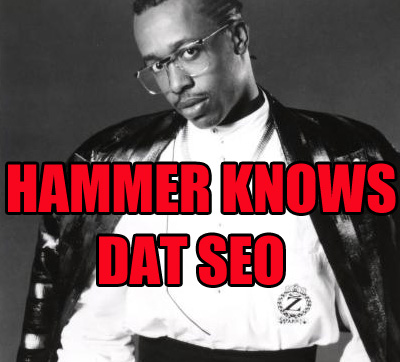
  • Can’t Touch These Metrics: MC Hammer Announces His Own Search Engine

    When it comes to the world of SEO and general web technology, some of us are so jaded we think we’ve heard of everything. Phones we talk to? Check. Virtual reality? Won’t be long until we’re standing on the holodeck. And as far as SEO, everyone and their mom is on deck calling themselves “social media experts” and promising they can make your business blast to the top of the search results.

    No matter how out-there the current trends are, I feel quite sure that nothing compares to the hard, cold fact that MC Hammer has just announced he will be launching his own web browser, which will be focused on “Deep Search.” No disrespect, Hammer, but before you get busy on that search engine you might want to hire someone to make your blog look less like a Blogspot nightmare. Just sayin’.

    Anyway, I’ll keep the dissin to a minimum, since it’s clear that Hammer’s too legit to stop at ministries and lifestyle clothing lines, so why stop at SEO? The search engine will be called WireDoo (I’ll leave that there for you to make cracks your own) and is about “finding the relationship beyond just the keywords,” as Hammer put it on stage at his presentation at the recent Web 2.0 Summit in San Francisco. He also claims that Google and other big-name search engines are not as skilled at connecting keywords to related topics. So is this the magic that WireDoo claims it will be able to perform?

    That’s all we know for now — that and that Hammer’s team has been working on the engine for the past two years. It can’t be denied that the rapper has come up with some ingenious ideas in the past — not to mention those cool 50 million albums he sold. But, you have to wonder what he’s got up his sleeve at this point. Taking on a beast like Google takes some serious balls, but as Hammer has repeatedly proven in the past, he’s got the cajones to try anything. And hey, he has well over 2 million Twitter followers.  He’s got to know something about how to make people listen to him … right?


  • Naughty, naughty: Google Places turns up risqué photos for cosmetic surgery businesses


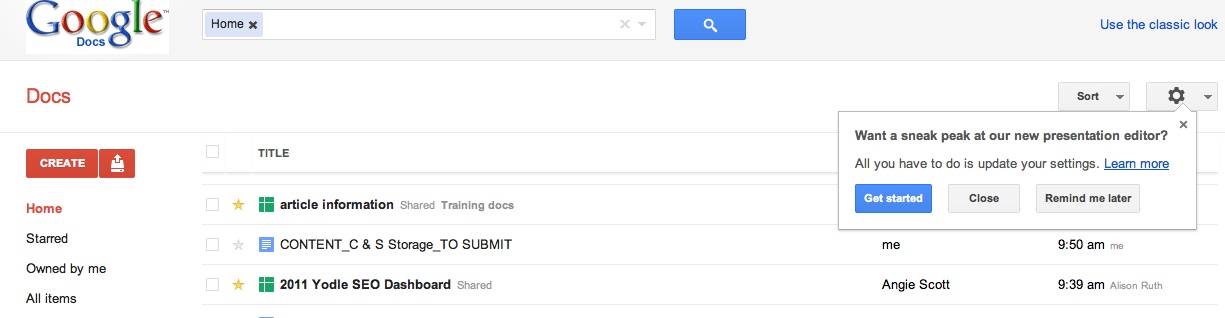
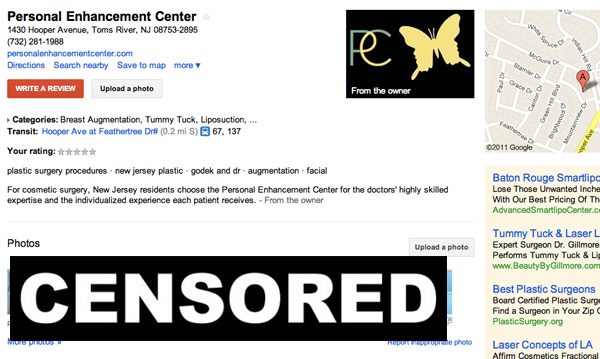
    Google has a crackerjack team of people helping to make their products bigger and better all the time, or at least, that’s the impression we get from them. I just might have caught an embarrassing typo in Google Docs last week, but otherwise, they seem to be pretty much on the ball. That is, unless you visit their Places page, which apparently is hot to show you photos of women’s bare breasts and much more — if the place you’re looking for happens to be a cosmetic surgeon’s office.

    Of course, the websites for most cosmetic surgeons feature a before and after page, but traditionally it takes some clicks to get to and obviously are not plastered all over the landing page. I’m sure some people would be impressed if they went to a doctor’s site and the first thing they saw was a pair of surgically-perfected double D’s, but most medical professionals prefer a subtler approach. And who can blame them?

    Speaking of class, Google, where’s yours? SafeSearch protects what images we see (although, admittedly, even Moderate can be a bit racy at times), but surely businesses will be less than pleased to see that they are being represented by a wall of women without their tops. Not that the images themselves are shameful, mind, but that’s the type of thing that should be taking place behind several layers of clickthrough. On the other hand, surely cosmetic surgeons will feel compromised if they have to pull their before and after galleries from their websites, as potential clients will want to see what the final products of their work looks like.

    It’s a little faux-pax … but nothing Google can’t remedy. Still, will they fix it? Since the images are clinical and not sexual in nature, they may have slipped through SafeSearch’s protocols. If Places automatically pulls the most viewed images, as intelligent as Google may seem, this still proves it to be a modern machine — not quite capable of thinking for itself just yet. We may have to wait a few more years until our networks can provide the same thoughtful attention to detail that humans do. Maybe we’ll be useful for a while longer after all!

  • INFOGRAPHIC: Why Content Marketing Matters

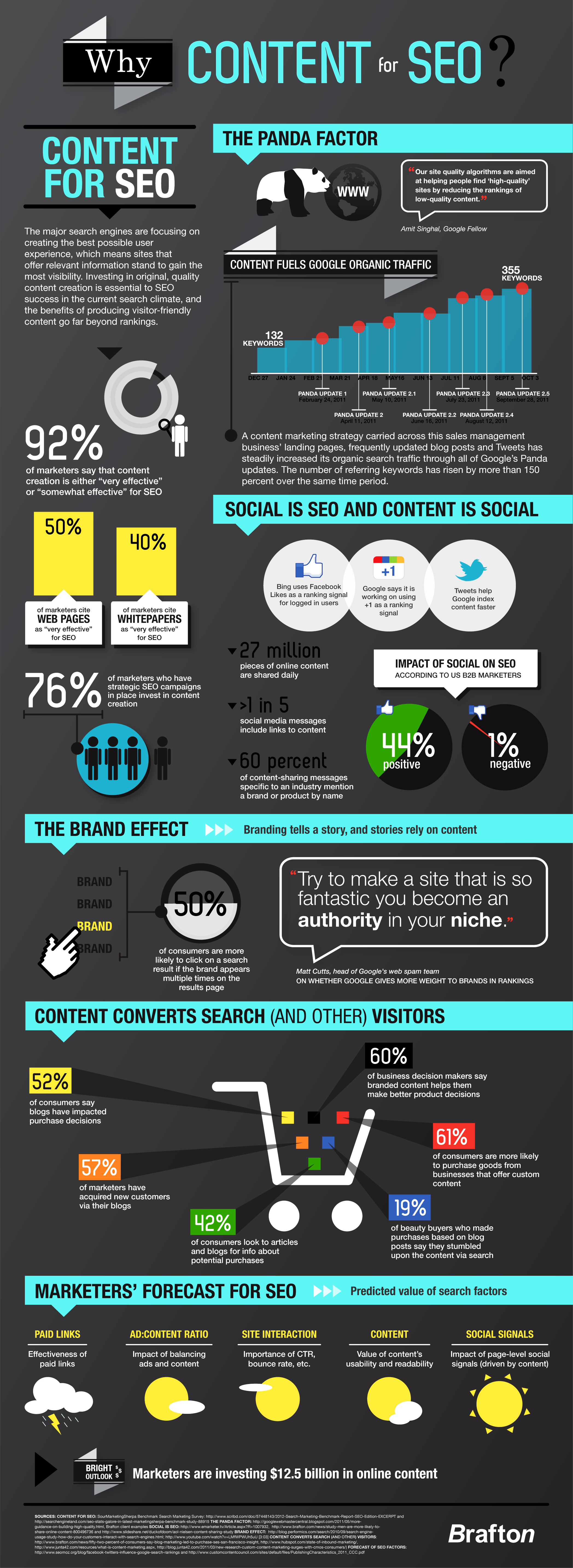
    Our friends at BraftoN have put together a great infographic on the importance of content in the world of SEO. It’s an established fact that search engines give preferential ranking to sites with the freshest and most pertinent content, but it’s eye-opening to really dig into how important content really is.

    As Google Fellow Amit Singhal is quoted as saying, “Our site quality algorithms are aimed at helping people find the ‘high-quality’ sites by reducing the rankings of low-quality content.” That quote alone should make everyone with any kind of Internet presence at all scramble for fresh, high quality content.

    Here are some other incredibly interesting facts from the infographic that deserve some consideration:

    • Ninety two percent of marketers say that content creation is either “very effective” or “somewhat effective” for SEO. The same percentage of Americans believe in God. Correlation, or causation?
    • Twenty seven million pieces of online content are shared daily. The same number of people eat at McDonald’s every day.
    • Sixty percent of content-sharing messages specific to an industry mention a brand or product by name. Sixty percent of adults can’t digest milk.
    • Fifty two percent of consumers say blogs have impacted purchase decisions. The same percentage of Americans don’t know who Pippa Middleton is. They obviously don’t read the blogs.
    • Marketers are investing $12.5 billion in online content. We could have just bought Motorola Mobility for the same price.

    So take a detailed look at the content you are offering on your website. Will it make Google jump for joy, or bump you 20 spots down the rankings? The quality of your online content is simply too important to ignore.

    Not sure what to do about your content? Contact us. We’re here to help.

  • There Will Be Blood – Competitors Can Now Destroy Your Google Listing

    The Villain

    Google is feeding local business owners to the wolves with their latest Places update. Lior Ron, Google Places Product Manger, announced yesterday evening that Google will be “helping” business owners keep their business listings updated by now allowing anyone, mischievous competitors included, to edit your entire Places listing for you. Yes, even if it is verified.

    How… thoughtful of Google.

    Google was already heading down this path. Earlier this year they started allowing verified business listings to be marked as closed by anyone and everyone. With this update, someone with ill-intent can now make changes to your business listing that can have detrimental effects on local search traffic.

    Yes, Google will be sending an email updating you about the recent changes to your Places listing. But, here’s the catch. Instead of giving the person that manages the listing the option to decline the edits, Google is “streamlining” the process by automatically updating the listing and basically saying, “well, if you don’t like it, go change it back and, after an unreasonable amount of time in which there is real potential for losing customers, we’’ll update it only for it to possibly happen again.”

    The most laughable part of this update announcement is Mr. Ron trying to spin these new features as something that Google hopes will “make it even easier for business owners to manage their online presence.” Yeah, maybe if we lived in a world where all of your competitors have scruples, and enough money to go around, but we don’t. The competition can be cut-throat in some industries and Google just gave them a knife.


  • Netflix Pulls Plug on Qwikster


    You may recall that we were mulling over the whole Netflix situation only a few weeks ago, which has seemed to be getting more ridiculous ever since the company announced pricing changes in July that made users choke on their dinners. Twice the price for what they were getting before? Streaming-only services? People were just starting to recover, but Netflix had clearly spent a lot of time sitting alone in the dark listening to sad music; they knew they hadn’t pleased their audience. And so they decided to try to make it better (which as, many men can attest to, never works).

    I guess the Qwikster debacle was more than they could handle, what with people getting more upset than ever (not to mention the stoner squatting on the Qwikster Twitter account and all that jazz). Netflix has updated their blog yet again and emailed all their users to let us know that Qwikster is not going forward after all, which looks about as professional as taking off your shirt at an office party. There was also no word about the aforementioned video game rental plan that Qwikster was going to include, so I suppose we can assume that has been scrapped as well. Oh, the hoopla.

    What does this mean for Netflix now? Well, their stock has suffered dramatically since the original price change announcement. As of today their shares are still down 4.4%, which means this whole Qwikster cancellation thing has not eased anyone’s mind yet. Maybe Netflix didn’t go ahead with the crazy plan, but they announced the crazy plan and then reneged on it, which kind of makes them look even more nutty and unstable even if it was the right thing to do. It’s no surprise that investors don’t feel comfortable. It is commendable that Netflix has paid attention to the social media buzz surrounding the unpopular decision and realized that they’ve made a dumb move, but it also signifies that they aren’t thinking through major decisions enough — which is not a great sign for a company their size.

    What do you think — are you relieved there will be no Qwikster, or are you disappointed in the parent company for caving to the negative social media hubbub?


  • Netflix splits into two companies, says they ‘messed up’


    It’s safe to say that Netflix pissed off a lot of people when they announced major changes to their pricing structure this past July. The new setup went something like this: $7.99 a month for unlimited streaming and $7.99 a month for one DVD out at a time. However, if subscribers didn’t actively go in and select a new plan, they would be automatically subscribed to both. The price increase, which was 60% higher than the previous prices, did not go over well. Netflix stocks plummeted, and the company found themselves with several million less subscribers than they bargained for, not to mention the massive internet backlash that followed.

    What to do? Well, desperate times call for desperate measures, and any good business owner knows it. In a major move, Netflix CEO Reed Hastings sent an email to every Netflix subscriber (which is also now posted on their blog) announcing that Netflix would separate into two businesses: One called Qwikster, which would handle physical DVDs and will also add video games, and Netflix would remain as an all-streaming service. But here’s the catch — If you want to use both, you need a separate account at both websites. Inconvenient? Just a bit.

    However, there are some advantages to the situation, as each business will have its own dedicated team, and Hastings promises that improvements for each service are on the drawing board. I’m sure that many users appreciate a forthcoming apology from a business of this size, and perhaps people will find this system works better for them. What is notable is that so much of the results of Netflix’s downfall in the eyes of the public was geared by social media: Within minutes of the price change announcements, people were in an uproar all over Facebook and Twitter, swearing they would drop their Netflix accounts and move to Hulu. Those people told their friends, and so on and so forth, and the chain continued. Whether businesses like it or not, they know that social media is powerful enough to literally cause a mass exodus, so they must consider carefully when it comes to making major decisions such as this.

    Speaking of Twitter, you may want to hold off on going to follow the @qwikster Twitter account for now, should you be interested to do so. Why? Well, apparently it’s being squatted on by a guy who is not exactly the epitome of class. He does have over 11,000 followers, however, who are probably getting just the show they bargained for. And he’s enjoying the attention, because he won’t give up the account. Hopefully Quikster has a gameplan to fix that messy little issue….


  • Google Absorbs Zagat in Their Quest for World Domination

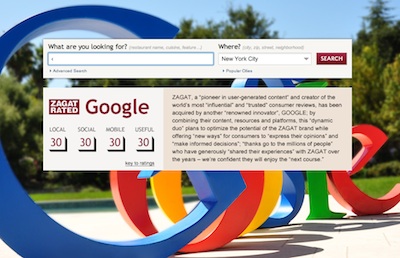
    Google has had a busy year. The launch of “Facebook killer” Google+ surely had many of their available hands busy, but apparently not too busy to keep working on acquisitions: It was announced today that Google has purchased Zagat, the well-known publisher of restaurant and business ratings.

    Marissa Mayer, Vice President of Local, Maps and Location Services for Google, shared in a Google blog post that she was “thrilled” to announce the acquisition. She says: “Moving forward, Zagat will be a cornerstone of our local offering—delighting people with their impressive array of reviews, ratings and insights, while enabling people everywhere to find extraordinary (and ordinary) experiences around the corner and around the world.”

    Mayer also mentions that Google search and Google Maps will now be integrated into Zagat, making it an even more powerful tool.

    Google clearly hopes to capitalize on the expertise of Zagat, which has been in the business of gathering and processing user-generated content for 32 years, long before Yelp! (and even the internet itself). Google has already tried to purchase Yelp! in the past, but this seems like a better bet by far, as Zagat carries the reputation of their name and pedigree and seem like a better match for what Google wants to achieve.

    If Google was to consider the same route OpenTable is promoting and combine it with Zagat, they could be looking at one of the most powerful user generated tools out there — and one sure to elicit a powerful reaction from users. Yelp! allows me to look up user ratings and find an address on a restaurant, but what if I could also make a reservation from my phone, without having to wait on hold on a busy Friday night? It’s genius, and not only that, it’s what tech-savvy users are coming to expect.

    What do you expect from Google’s latest acquisition? Do you think that Zagat will become bigger and better thanks to this buyout?


  • Savvy Online Business Builders: The New Snake Oil Salesmen

    A Look at the Growing Trend of Internet Marketing Con-men

    We’ve all seen these people at conferences, pimping out their extra shiny business cards and talking like late-night infomercials – the online business strategists and social media experts. They claim to have the secrets to creating a successful online brand and promise “more profitable business now” if only you are willing to hear the pitch. They use buzz words like “online reputation score” and “viral marketing” to excite business owners into trusting their expertise and ultimately signing up for expensive year long contracts but never promise actual results.

    I hate these type of people.

    They prey on ignorance, offering fly-by-night schemes which promise efficient ways to generate more revenue at a low-cost for small businesses. Of course that low-cost is for the online expert’s one-size fits all advice.

    Advice that seems to always involve action plans centered around mediums that have no measurable results *cough* Twitter *cough*. These experts rarely provide their clients’ with monthly performance reports – just monthly invoices. And clients would be hard pressed to get details on how that “low-cost” investment has translated into online business.

    Who should you trust with your web presence? I’ve got a few questions you should ask before you sign on the dotted line.

    Top 5 Questions To Ask An Online Expert To Avoid A Scam*

    1. What makes you an expert?
    2. Do you have experience in my industry?
    3. Can I see some examples of your success stories?
    4. What should I expect in terms of results? In what timeframe?
    5. How do you measure your success?

    Be sure to remember question #5 – online business experts who fail to measure qualified results, such as # of leads, improved rankings, or increase in traffic, are to be avoided.

    If they can’t prove their worth with data, they aren’t worth hiring.

    In the end, someone who promises to rapidly grow your business with inspirational coaching and Twitter spamming is probably not an expert. So when you are looking for help with your web presence, find someone who sets quantifiable goals to measure success. An Internet expert should not be determined by how convincing his words are, but rather how his contribution to your business generated revenue and results.

    *Adapted from Google‘s useful questions to ask an SEO

  • $500 million Google Pharmacy Ad Probe Settlement Should Have Little Effect

    Google Pharmacy Ad Probe
    Shutting down the ability for these sites to advertise online…

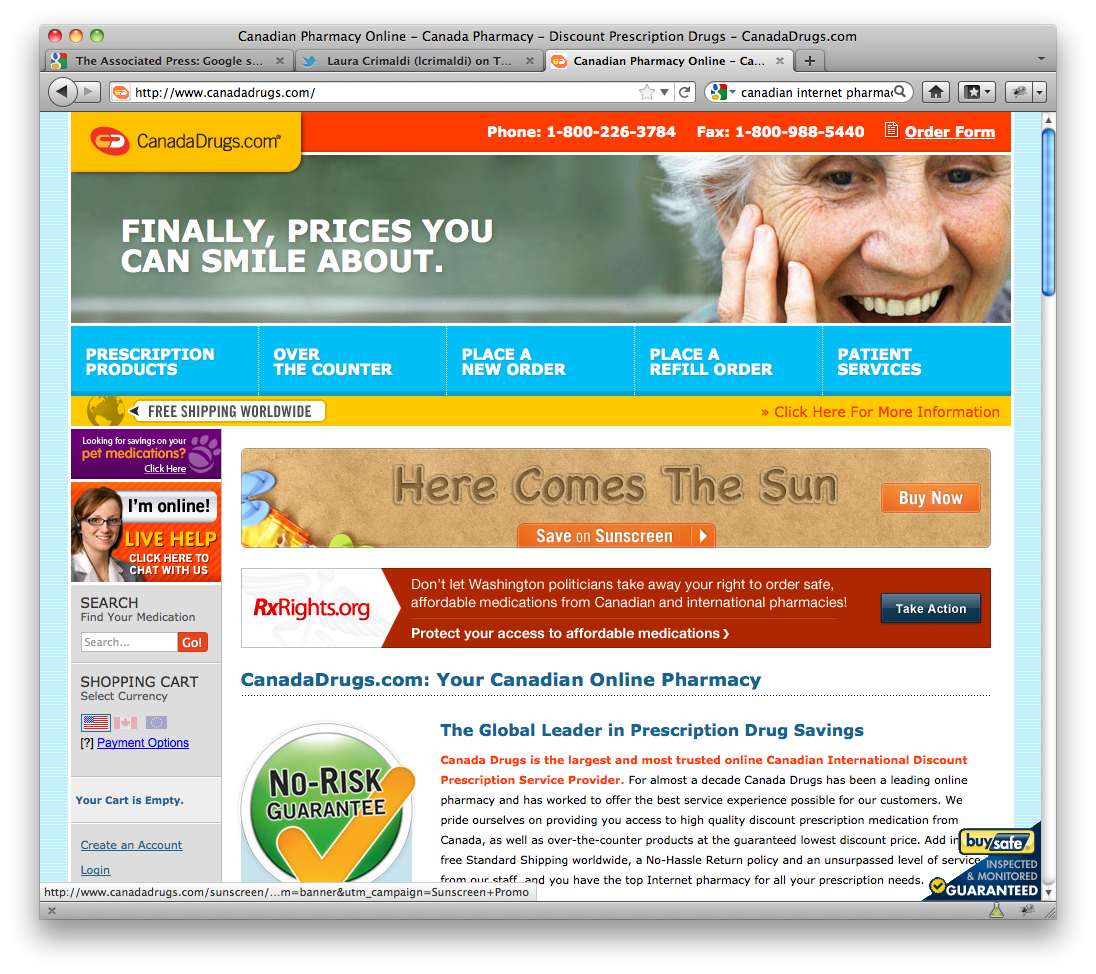
    As expected from page 21 of the May 10 quarterly report to the SEC, Google will pay for a Department of Justice investigation into the use of American ad space for illegal Canadian pharmaceuticals. Finding that from 2003 to 2009, Google “both allowed and helped” Canadian pharmacies that tried to sell to US patients, this DOJ settlement avoids criminal prosecution. It’s also one of the largest forfeitures in US history, according to Rhode Island U.S. Attorney Peter F. Neronha. Crimaldi argues that Google may see long-term reputation damage from the case, which butts heads with the mantra of “Don’t be Evil.”

    But is this backlash really going on? Google’s stock price was up $4.47 (.86%) on the day, despite Crimaldi’s piece coming out at 8am yesterday. Crimaldi predicted this by mentioning its miniscule amount compared to Google’s cash on hand; but not only this, the money has been paid for already. Google already mentioned it almost a year ago. The fallout for this may have already rippled the zeitgeist — May 10 began a 6-day slump, though not the nadir of a 3-month losing streak starting in April. Making comparisons even harder is the 5-day selloff that was likely a direct commentary on Standard and Poor’s downgrade of the company’s shares to “Sell.” S&P rated the stock a “Hold” yesterday, basically saying “the price is right.” Similarly, Robert W. Baird & Co. sees verticals like YouTube as undervalued, and sees the stock outperforming the market, even growing to $650 a share.

    Three salient points arise from this story. First, there is a lot of trust in Google. The business world sees one of the main thrusts of European antitrust investigation as a boon to the company: the vertical integration Google has enacted. Secondly, Google isn’t the Dad and Dad store it was, even as recently as last decade. Google’s revenue has exploded by 33% over the past fiscal year, in no small part due to the Adsense/Admeld deal. Finally, Google has often toed the line of what is or isn’t legal — for a less objectionable example, look at Google’s reticence to Chinese censorship laws.

    Google Pharmacy Ad Probe Lawyer
    Peter F. Neronha, sending "a clear message to… Google and to others that contribute to America's pill problem that they will be held to account."

    Most importantly is that this has already been planned for and dealt with. The submitted Form 10-Q says:

    In May 2011, in connection with a potential resolution of an investigation by the United States Department of Justice into the use of Google advertising by certain advertisers, we accrued $500 million for the three month period ended March 31, 2011. Although we cannot predict the ultimate outcome of this matter, we believe it will not have a material adverse effect on our business, consolidated financial position, results of operations, or cash flows.”


    Google still allows American pharmacies and pharmaceutical companies to advertise on Adwords and Adsense, though under much stricter rules. Clearly, neither Google nor its handlers are concerned about this, and neither should anyone with a vested interest in the company.