Category: Industry Insights

  • Web Augmentation: 9 Tips to Get Your Plastic Surgery Practice Trending

    Web Augmentation for Medical Practice Marketing Image - Search Influence

    Every second, there are almost 50,000 unique searches on Google. With that much traffic, it’s crucial to establish your plastic surgery practice as an online authority. By using social media, search engine optimization, and paid search strategies, you’ll be able to climb to the top of Google’s rankings in short order.

    Tips for Social Media

    Utilize “Audience Insight” on Facebook

    As of March 31, 2015, there are 1.44 billion monthly active users on Facebook, making it the platform with the largest audience for your advertisements. With Audience Insight, Facebook helps you sort through your targeted demographics in order to understand the kind of content that is popular among them.

    Use targeted Facebook ads

    If you use targeted Facebook ads, you can choose what kind of Facebook users will see your microdermabrasion advertisements. Not only can you sort your audience by age, location, and gender, but you can also target them according to their relationship status, whether they have children, and their personal interests. Facebook fan-building campaigns are also effective in making patients and customers into fans.

    Tag and post about local events and businesses 

    If you want to maximize your visibility, you’ll have to post outside of your practice. By sharing posts about local events and businesses, you’ll increase your presence in the community. Your potential clients will start to follow and share your content if your page is a reliable source for interesting information. 

    Tips for Search Engine Optimization

    Research Longer Keywords

    A short keyword like “chemical peels” is a competitive keyword, which means a lot of practices will be using it. Try to find a longer keyword that your audience will search for, like “chemical peel for rough skin in NJ.”

    Host Webinars

    Live Internet events boost your SEO rankings because they keep your audience on your website for a long time. Set up some demonstrative or informational webinars that prove your expertise while optimizing your search results.

    Make Your Site Mobile-Friendly

    More and more people use their phones and tablets, rather than a computer, to browse the Internet. A mobile-friendly website will ensure that the information on your website is accessible to everyone. In fact, mobile website traffic for our plastic surgery clients’ websites averaged 48.6 percent. And that doesn’t include tablet traffic; it is purely mobile.

    Another way to pump up your plastic surgery website is to use natural content on your practice’s website. Find out about how medical marketing is making the switch to natural content.

    Tips for Paid Search

    Post Lots of Information on Your Landing Page

    By having a wealth of information on your landing page about topics that are relevant to your practice—such as eyelid surgery—you ensure that your potential client gets the knowledge they desire. When this happens, they’ll stay on your page longer, and their trust in your expertise will grow.

    Invest in High-Quality Video Production

    Potential clients will seek out videos demonstrating a procedure before they schedule an appointment for one. If your practice has a high-quality video demonstration of laser hair removal, 79 percent of the potential clients who watch it will visit your website. In addition to videos, other types of content can help attract patients searching online for your practice. Find out the four ways to drive conversions in the medical industry.

    Have Your Contact Information Readily Available

    The content you make available on your website is meant to inspire more people to come to your practice. Having your contact information readily available increases the chance that potential clients will call your site, visit it, or save it for later.

    Implementing these tips will get your plastic surgery practice trending in no time!
     

  • This National Small Business Week, Step up Your Online Marketing

    It’s National Small Business Week—time to celebrate the successes and the insane amount of work small business owners put in. The struggle is real.

    You know you’re a small business owner when…

    …Your nightmares are about getting bad Yelp reviews.

    …Your social media “strategy” consists of bribing your college-aged daughter to handle your Facebook and Twitter accounts.

    …Your holiday hours did not quite make it to the Internet, and customers actually showed up only to find your business closed.

    To cure these and other headaches, start with a little TLC for your website and your online marketing strategy—after all, both of these play a huge role in bringing you customers, but they may unfortunately also be keeping you up at night. Follow these top three online marketing tips for small businesses.

    If You Can’t Beat ‘Em, Join ‘Em

    It may sound upsetting that Yelp listings are front and center in a Google search for your business while your own website is far down the list of search results. But savvy small business owners know that Yelp and other large online directories can win over customers with minimal effort. So if you can’t beat the Yelps of the world, join ‘em!

    This strategy is also known as Barnacle SEO. Basically, your business needs to attach itself to large, fixed objects and then wait for customers to float by in the powerful current. Identify the large, high-ranking online directories that matter to you most, such as Yelp, and add your information there in the hopes of “borrowing” some of the page one rankings. There are many trusted online directories like Yelp out there you can barnacle up to: Angie’s List, Foursquare, Google+, Avvo (for lawyers), Healthgrades (for doctors), and even TripAdvisor.

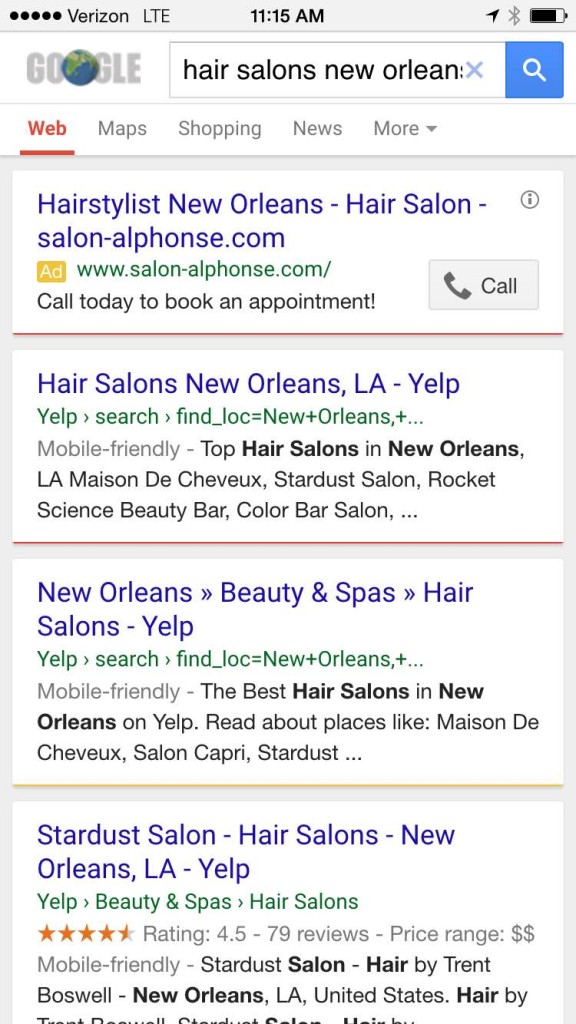
    And this tip comes with a bonus: this strategy also works well for customers searching on smartphones because these websites are optimized for the mobile experience—providing the targeted information that local customers searching on their smartphones really need. When you perform a Google search for “hair stylists New Orleans,” for example, the top results are mostly from Yelp:

    Yelp Mobile Screenshot Image - Search Influence

    Target Your Social Media Efforts

    Another thing that keeps you as a small business owner up at night? Social media—or more specifically, finding the time for it. For starters, why is social media worth your time? The latest statistics from the Pew Research Center paint a pretty compelling picture that customers are on social media: 74 percent of online adults use social networking sites.

    As a time-starved small business owner, you must get the most for your social media time. This requires targeting your social media efforts. Start by channeling your ideal customer. What is your typical customer’s age, marital status, and family status? Where is your customer physically located? Do your customers fall into a certain income bracket?

    Once you know who your target customer is, find the social media channel that appeals to them. For example, Facebook still skews significantly female and is the top-used social network for U.S. teens, making it ideal for fast-moving consumer goods, according to Business Insider. Instagram is also popular among females ages 18 to 44, so clothing, accessories, and those types of brands tend to perform well on this network. While LinkedIn is most popular for adults, Twitter is primarily a news source and attracts mostly male users. YouTube reaches more adults ages 18-34 than any single TV network. Pinterest is the place for food and drink-related information as well as parenting tips.

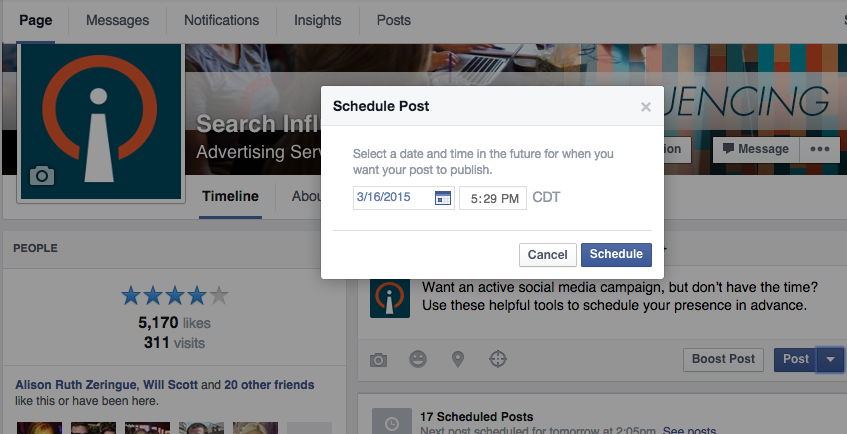
    But remember, whichever social networks you decide to focus on, automate your posts with these quick tips.

    Facebook Scheduled Post Image - Search Influence

    Avoid Customers Crying in Your Parking Lot

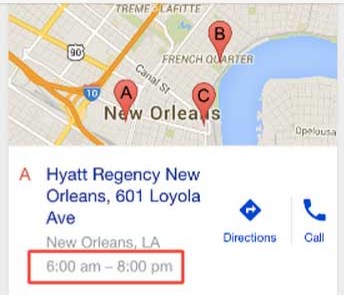
    If you’ve ever done a Google search for your business, you’ve likely seen this kind of result:

    MapsTimeViewImage

    But what happens when you have special holiday hours? Will customers see your normal hours in a Google search and show up in your parking lot over the holidays? Currently, Google My Business has not built out the functionality for saving holiday-specific hours ahead of time. As the profile setup currently stands, you’ll need to manually edit the hours of operation on a given day when your business is open (or closed) outside your standard hours of operation. See Google’s steps on how to update your business’ hours.

    Also, remember to let folks know when you are, in fact, open on the holidays. For instance, let everyone know your restaurant is open on Independence Day and post your holiday-specific menu for the day or highlight any patriotic specials. Is your medical practice open for limited hours on Memorial Day this year? Post a piece to your blog or social media profiles highlighting the top summertime health hazards from boating accidents to severe sunburns.

  • Google Goes InZayn: How Malik’s Different Direction Broke the Internet

    Unless you’ve been living under a rock, you probably know by now that Zayn Malik has left One Direction. This was news that affected not only fangirls like myself and some coworkers, but also the world. On March 25, 2015, the news broke, and the Internet went into a frenzy.

    According to Google’s trending searches on March 25, more than 1 million searches were made related to his departure.

    Zayne Google Trends Image - Search Influence

    Between the desperate tweets of devastated fans, tearful Tumblr reactions and tributes, dads completely trolling their daughters, and millions of Google searches, it’s clear that Zayn dominated the search engines and the Internet that day.

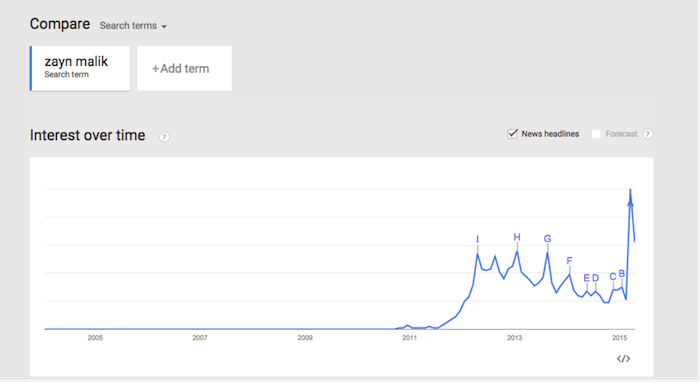
    Using Google Trends, we are able to see how his searches progressed over time throughout his 1D career:

    Google Trends Zayn Malik Chart Image - Search Influence

    Google Trends is a great tool to find out what people are searching for at a given moment in time. You don’t have to be a complete fangirl to check it out, either. Businesses and marketers alike can use this tool to research and leverage relevant search topics for ideas on content, videos, infographics, etc.

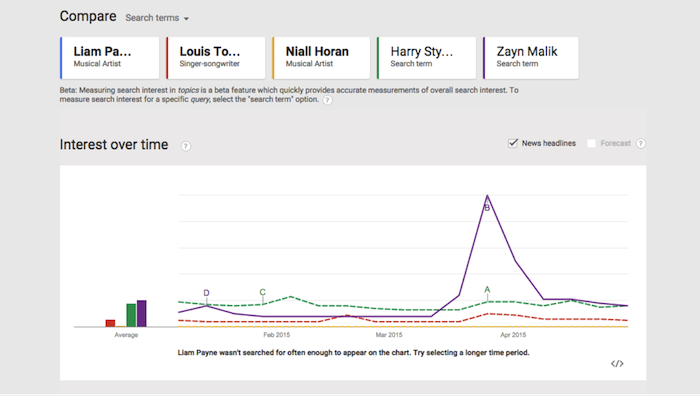
    Or, if you’re a fangirl like me, feel free to use the tool for things of utmost importance, like figuring out which One Direction member gets searched most often. Let’s be clear about one thing: Harry is steadily searched more than Zayn, minus the spike during his attempt to abandon his fellow band members and launch a solo career in March. It’s an outrage.

    One Direction Google Trends Image - Search Influence

    Please comment on how Google Trends helps your day-to-day life and/or if you were one of those who were affected by Zayn leaving One Direction.

    Image sources:

    Ahhhh gif

  • Survive Google’s ‘Mopocalypse’ with these Tips for Your Mobile Strategy

    Survive Google’s ‘Mopocalypse’ with these Tips for Your Mobile Strategy

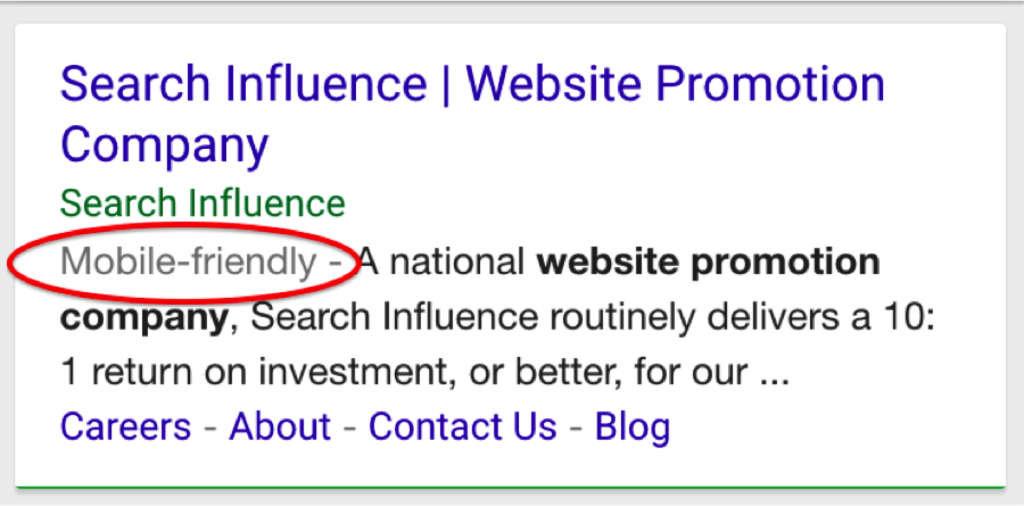
    Mobile Friendly Image Search Influence

    Google’s new mobile-friendly update, which I originally discussed in my Search Engine Land column, is rolling out this month, and it’s time to put the focus on mobile. But with all this buzz about mobile websites, you may be thinking, “My website looks fine on my smartphone when I pinch and zoom, so what’s the big deal?”

    Well, there’s much more to it than that.

    Step 1: Get a Mobile Website

    Just because your Web developer tells you your site is mobile doesn’t necessarily make it true. Make sure you’ve used Google’s handy mobile-friendly testing tool to check your website. In Google’s eyes, businesses have three main options for becoming mobile-friendly: responsive website design, dynamic serving, and separate URLs.

    So what option is right for your business? The bottom line is this: for businesses with growing mobile traffic that has not yet reached a critical percent of site traffic, a purely mobile version on a separate URL is a viable option. But for businesses with mobile website traffic pushing 50 percent or more of all site traffic, it is time to invest in a responsive website. While a responsive website typically requires a complete overhaul, your customers will probably thank you when your website can display differently based on the screen size.

    Step 2: Use ‘Barnacle SEO’

    Even before your mobile website is in action, your business needs to attach itself to large, fixed objects, and then wait for mobile customers to float by in the powerful current. I like to call this Barnacle SEO, also known as the “If you can’t beat ‘em, join ‘em” strategy. Basically, this means identifying large, high-ranking online directories such as Yelp, for example, and adding your information there in the hopes of “borrowing” some of their page one rankings. And there are many trusted online directories like Yelp out there you can barnacle up to: Angie’s List, Foursquare, Google+, Avvo (for lawyers), HealthGrades (for doctors), even TripAdvisor.

    This strategy works well in mobile because these websites are optimized for the mobile experience—providing the targeted information that local customers searching on their smartphones really need. When you perform a Google search for “hair stylists New Orleans,” for example, the top results are mostly from Yelp:

    Yelp Mobile Screenshot Image - Search Influence

    Step 3: Focus on Location, Location, Location

    Let’s face it: when mobile matters, location matters. Consider this: 50 percent of consumers who performed a local search on a smartphone visited a store within a day, according to a recent study from Google. So that’s good news for brick-and-mortar businesses with a mobile-friendly website. Those businesses will enjoy the additional ranking factors from the upcoming mobile-friendly algorithm, getting these small businesses in front of their target market at the time and place searchers are looking.

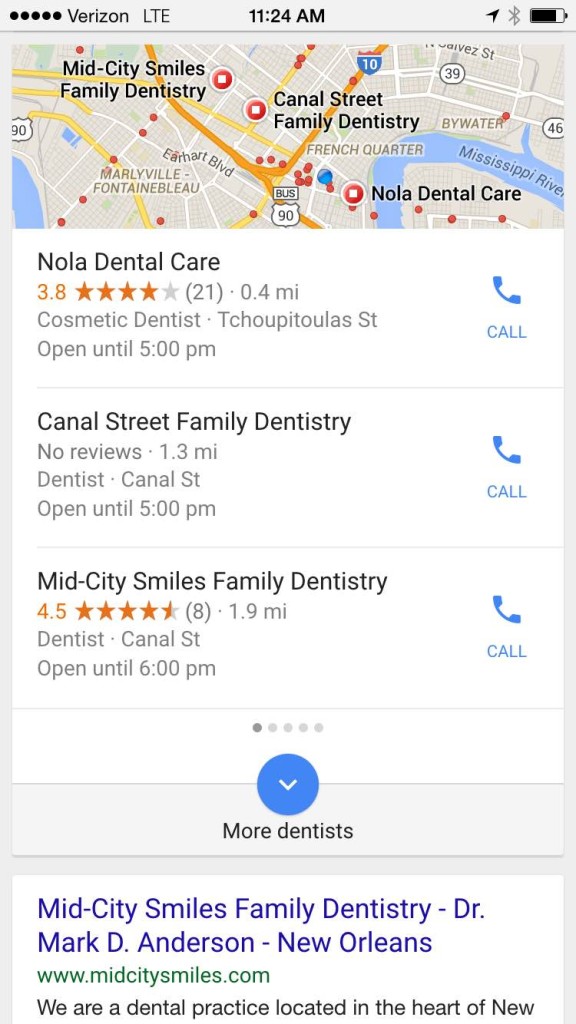
    The challenge? Local businesses must break into the top three local results—the ones typically seen on your smartphone. For example, if I search for “dentists,” Google is going to give me dentists near me … and I see only the first three results:

    Dentists Near Me Search Image - Search Influence

    To wrap it up, these are three steps you can get started on now. But remember, as with all Google algorithm updates, stay calm and give it time. April 21 was not the end-all-be-all date. This rollout will likely be a period of rollouts rather than a single-day launch. We usually recommend giving an update 60 days to see the full impact. And even then, there are revisions and updates and you just don’t know.

    So what’s your next move? Keep an eye on your website traffic to see if the update is impacting your mobile traffic. If you need help, give us a call at 504-208-3900. We’re here to help ease your “Mopocalypse” fears.

  • YourCompany.Sucks – Dealing with the Future of Domains

    When I first read that .sucks domains would be launching in 2015, I chatted with a friend of mine about it. This friend is not in the search engine optimization industry, but he does have a website for his established local business. The whole .sucks conversation boiled down to this: it is a big money grab, he told me. How is he supposed to build his local brand and defend it online when really, he has to focus his marketing budget on offense, not defense?

    I can imagine a lot of small businesses having similar reactions, and I assured Angry Friend that this is not a priority for him as a small, locally owned business. If he buys the .sucks of his domain, then he has to invest in domain-squatting for all negative versions of his domain, and he has better things to do with his limited marketing dollars.

    Who are “They?”

    After repeating a few different variations of “they are just creating a money grab,” Angry Friend asked “and who the hell are ‘they?!’

    The mysterious “they” are the Internet Corporation for Assigned Names and Numbers, or ICANN. It is responsible for the domain name system, among other things. This means ICANN establishes policies for the domain system and for introducing new top-level domains (TLDs) like .com, .net, .info, .org, .sucks, etc.

    Management of most top-level domains is assigned to specific organizations by ICANN. In the .sucks controversy, Vox Populi Registry Ltd. is the manager and registry of the .sucks domains. It set .sucks domains at prices that are being denounced as exorbitant and predatory. It is a subsidiary of Momentous based in Canada.

    .Sucks Domains are Rolling out Now

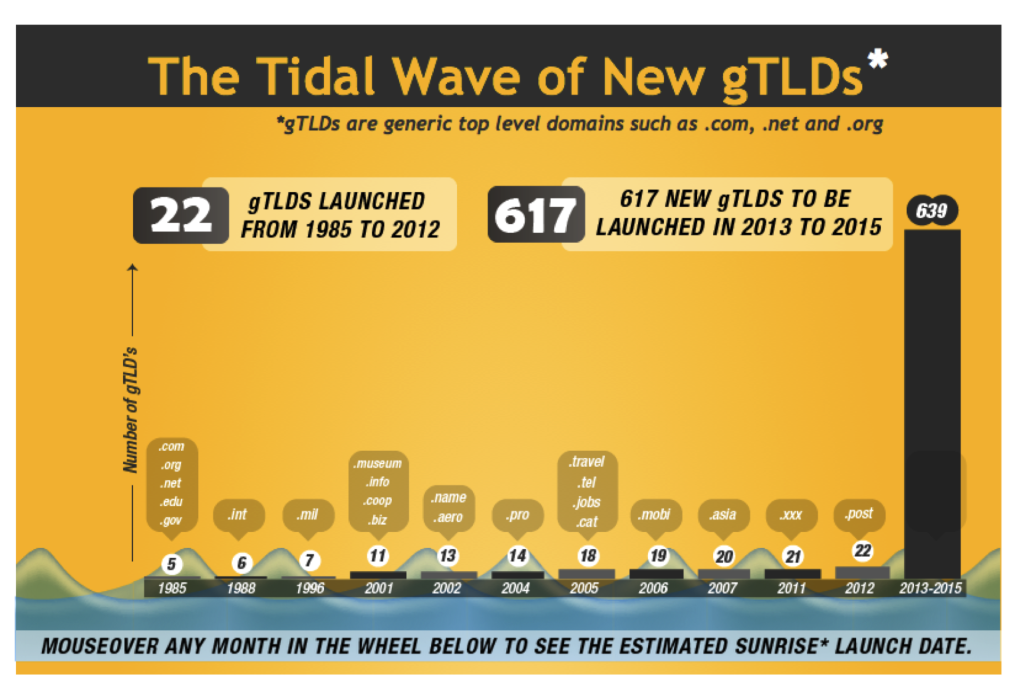
    New Domain Tidal Wave Image - Search Influence

     ICANN will have introduced 600+ new TLDs slowly, a few each month, starting in 2013 and going through 2015. This is a pretty cool interactive infographic that allows you to see which TLDs have rolled out/will roll out each month.

    Some of the more controversial TLDs are .porn and .adult and .xxx. And .fail and .wtf. You can imagine the scramble by brands and celebrities to grab their names with these extensions as a defensive measure against slam sites.

    Per Vox Populi Registry (nic.sucks), these domains are already registered:

    • burberry.sucks
    • tommybahama.sucks
    • eharmony.sucks
    • urbanoutfitters.sucks
    • beats.sucks
    • hersheys.sucks
    • tupperware.sucks
    • hyatt.sucks
    • mac.sucks
    • internetexplorer.sucks

    According to CBS, these .sucks domains have also been claimed:

    • Youtube.sucks
    • Bing.sucks
    • Visa.sucks
    • Yahoo.sucks

    Obviously, these corporations and brands have deep pockets and a significant advantage in controlling these domains themselves.

    Getting Your .Sucks Domain Is Expensive

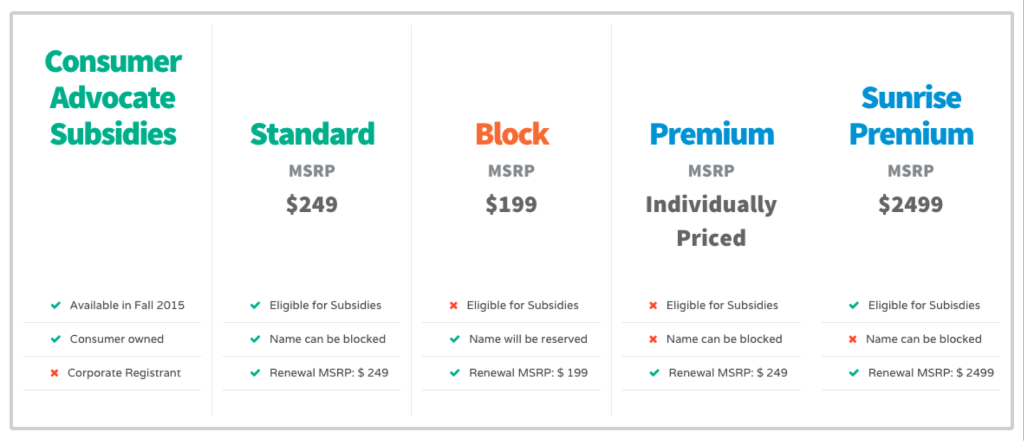
    A “Sunrise Claim” is an early registration of any new TLD by holders of registered trademarks. Sunrise Claims are usually a few hundred dollars; however, the money grab is afoot with .sucks. Some would say the shakedown has started. The .sucks TLD starts at $2,499—that’s right, starts at.

    If a trademark brand opts to not claim anything in the Sunrise period, it may still have to pay the $2,499 or more. Vox Populi has created a “premium” list for trademark brands, and those will have to pay the premium even during the general availability period. For “premium” brands, Vox Populi has ensured the .sucks price will be $2,499 or more no matter when the registration is made, and domain renewals will cost the same as the Sunrise prices.

    Consumer Advocate Subsidies Image - Search Influence

    The .sucks Sunrise period is March 30, 2015 – May 29, 2015. General availability (or the land rush), which is on a first-come, first-served basis, starts June 1, 2015.

    Then, when the land rush starts, an average business .sucks domain will cost $249/year. You can get a blocked domain for $199/year, which means it won’t resolve, you can squat on the domain, and no one else can register it either. EasyDNS says, “It is quite the controversy and our advice to anybody on the verge of getting caught up in all this is quite simply not to play. ”

    Really, anybody who wants to complain about a brand or a business has plenty of opportunity to do so already with the variety of legitimate ratings and reviews sites, complaint sites such as ripoffreport.com, the ability to create sucks domains such as yelp-sucks.com, and the availability of .fail and .wtf. If you really felt passionate about defending your brand, you would need deep pockets to defend on the domain front. Those dollars would be a much better investment if used for quality online presence strategies.

    Fighting Back

    ICANN approved .sucks when it announced the plan to introduce the 600+ TLDs from 2013 through 2015. Big brands such as Verizon and eBay make up an advisory panel that has recently complained about the .sucks availability. Trademark lawyers for Intellectual Property Constituency sent ICANN a forceful letter describing the .sucks scenario as “predatory” and requested a halt to the rollout.

    The IPC letter calls into question Vox Populi’s plans to (this is quoting from the letter):

    (1) categorize TMCH-registered marks as “premium names,”

    (2) charge exorbitant sums to brand owners who seek to secure a registration in .sucks, and

    (3) conspire with an (alleged) third party to “subsidize” a complaint site should brand owners fail to cooperate in Vox Populi’s shakedown scheme.

    Under pressure, ICANN has now asked the U.S. Federal Trade Commission and Canada’s Office of Consumer Affairs to comment on the legality of the high-priced process used by Vox Populi. If the Vox Populi pricing strategy is found to be illegal, ICANN will be able to declare them in breach of contract, request changes to its policies, and breathe a sigh of relief with the public eye turned to Vox Populi as the bad guy.

  • Getting Vocal About Buying Local: How Small Businesses Give the Big Easy its Charm

    Some of Search Influence’s online marketing clients are small, local businesses that serve a neighborhood, town or region. To find out how small, local businesses impact a city as well as more about the trendy “buy local” movement, we talked to Mark Strella of StayLocal!.

    Power to the SMBs

    The real impact of locally owned, independent businesses in New Orleans became known just days after Hurricane Katrina struck the city. While Wal-Mart and Starbucks waited for New Orleans to recover, local bars, venues, and hardware stores reopened without hesitation.

    Ten years later, the predominance of small, local businesses can be seen on nearly every street in the Greater New Orleans area. And the biggest advocate for preserving New Orleans’ cultural singularity is StayLocal!.

    StayLocal! is the Greater New Orleans’ Independent Business Alliance, a non-profit, member-supported organization that connects local New Orleans business to customers, resources, and each other. StayLocal! works to foster the culture of the city by helping local businesses—and subsequently, New Orleans—thrive.

    Project Manager Mark Strella tells us more about StayLocal! and its efforts to support locally owned, independent businesses in New Orleans:

    So what exactly does “locally owned, independent business” mean?

    To us, it means a business in which majority ownership resides within the five-parish New Orleans region. That means the business is owned by New Orleans residents, and decisions about the business are made here, by locals. Or in plain English: not a chain.

    Who are some of the locally owned independent businesses you work with?

    We work with local businesses of all types around the New Orleans area. We work with a lot of retail businesses, from smaller guys who sell around town at markets and pop-up shops, up to bigger local businesses who have numerous locations, and ones in between. We also work with service businesses and folks in the food industry. Our goal is to be these businesses’ ally: we’re here to provide them with the resources they need to thrive and be around for years.

    As a New Orleans resident, how can I benefit from buying locally?

    There are a bunch of reasons, and everyone has a reason that is particularly dear to them. For me, it’s that one of the reasons I love New Orleans is that it looks like nowhere else. And so much of that is because of how strong our local business presence is. Most cities in the country don’t come remotely close to being so heavily populated by businesses that are locally owned, rather than the standard menu of chain stores. So when you buy local, you’re supporting that part of our culture and identity and actively doing your part to ensure it stays a part of what you love about New Orleans.

    It’s also better for our economy when you spend at a local business versus a chain. That local then takes your money and re-spends it locally, whether it’s on supplies, or accountants, graphic designers, marketers, etc. So that money stays here in New Orleans, whereas money spent at a chain or online leaves New Orleans and benefits some other city. Studies show that spending locally has two or three times a local economic benefit than shopping at a non-local business.

    I’ve seen quite a few television shows poke fun at the buy-local movement, specifically Broad City and Unbreakable Kimmy Schmidt, so it must be a pretty big trend. Where does New Orleans stand in the push for staying local?

    Ha, I have too, and that’s a testament to the buy-local movement’s success. It’s cool now. I think its success is a reaction to the rise over the past years and decades of chain businesses and now even online giants. People see these faceless businesses everywhere they go and they start to crave authenticity. They gain a greater appreciation for the local business down the street that’s owned and run night and day by their neighbor.

    I think New Orleans is way out in front. We’ve always had a thriving local business scene. One study a few years ago showed we had one of the best local business to non-local business ratios of any city in the country. And we have such great appreciation for it as a culture. Our entrepreneurship and start-up scene is huge, thanks in large part to a number of great organizations that are fostering entrepreneurship like Idea Village and Propeller. And when we have this buy-local culture deeply imbued in our behavior as residents— that supporting all things local is simply what we do as New Orleanians—those new businesses have a huge audience to serve.

    What events does StayLocal! host or promote throughout the year to encourage New Orleanians to buy local?

    We do a ton of stuff. We recently put out the second of our Neighborhood Guide series, which points residents towards local businesses in a specific neighborhood. The neighborhood we did was Central City. Last year, we did Mid-City. And up next is Algiers Point. We have a constant stream of good information on our social media channels, so we definitely encourage folks to like us on Facebook, follow us on Twitter, yada yada, so that we can turn them on to new local businesses. We also are very active in the fall and holiday season pointing New Orleanians towards local shopping options, through our shop local for the holidays campaign, as well as Small Business Saturday.

    And then in general, we spend the rest of our time working with the businesses in our network, helping them run a better business. We do workshops and run all kinds of initiatives and promotions to help our members better connect with one another and access tools that will boost their biz.

    Last question: what should I tell my co-workers before they buy their next cup of coffee at Starbucks?

    … it’s just important to say “everything in moderation,” and to think of the big picture and what matters to you. If you care about the economic health of the city, think about how local coffee shops re-spend their revenues locally and use local service providers and local firms, creating more jobs and opportunities for New Orleanians. If you care about living in a unique place, think about what New Orleans would be like without its local businesses. If you care about innovation here in New Orleans, we have so many coffee shops doing amazing things with coffee. Mojo. French Truck has its new spot in the Lower Garden District. Spitfire is incredible. So often, local is simply better. But if Starbucks is your thing and that’s not changing, try taking that mindset and applying it to anything else you buy and see what’s out there locally instead.

    For more information and to find your new favorite local business, visit Stay Local! at StayLocal.org. Be sure to also follow them on Twitter and Facebook.

    Image source:

    StayLocal!

    Proudly NOLA Owned

  • How Your Online Presence Wins and Loses Cosmetic Patients [Download Free Guide]

    Online Medical Presence Guide Image - Search Influence

    Download the Free Guide

    Want tips, stats, and strategies about how to take charge of your practice’s online presence? Fill out the form below to download the free guide, “Attracting Patients by Proactively Managing Your Online Reputation.”

    Consider this: one person wrote a negative online review for a plastic surgeon. In the next few months, the practice’s online leads and Internet referrals mysteriously plummeted by 28 percent. Coincidence? Don’t bet on it. Even if that single negative online review only contributed to the decrease, that drop in leads translated to the loss of literally hundreds of potential customers.

    If you think your practice’s online presence doesn’t have the power to attract—or repel—patients, think again. For physicians in the cosmetic medicine industry—whether plastic surgery, dermatology, or even cosmetic dentistry—a practice’s online presence is a powerful tool. And if it is left uncultivated, it can be dangerous.

    Search Influence details this pressing issue and its real-world implications for your cosmetic medical practice in a new guide, “Attracting Patients by Proactively Managing Your Online Reputation,” available to download for free by filling out the form below. The guide was produced with input from Richard M. Escoffery, an attorney with the law firm Elarbee, Thompson, Sapp & Wilson, LLP.

    Patient Reviews … Haunting or Rewarding?

    In the digital era of online marketing, even when a cosmetic surgeon is heavily recommended by a friend, coworker, or family member, 94 percent of people still take to the Internet to perform secondary online research before making a commitment, according to our free online guide. What’s even more astounding is that 72 percent of all consumers give an online review the same weight and credibility as a personal recommendation, the guide reports.

    For example, here’s a general view of how customers typically find many plastic surgery practices online by using organic (or free) search methods:

    1. Potential patients research the procedure they want.
    2. They research the cosmetic and plastic surgeons in their area, usually looking through numerous review sites.
    3. They start searching for their surgeon of interest by name, which is often termed a “branded organic search” in the online world.

    Paging Dr. Google

    Yes, this means patients are “googling” the cosmetic procedures you offer and your practice. How high a practice’s site ranks on search engines has a lot to do with the amount of website traffic the practice receives. And the very first search result in a Google search typically receives a third of the traffic share. Having your practice show up as a top search result for targeted keywords ranging from “breast augmentation” to “tummy tuck” takes not only cultivation, but also online marketing expertise.

    In the free “Attracting Patients by Proactively Managing Your Online Reputation” guide, you’ll find more important takeaways. For example, Google and other search engines give higher ranking to such sites as Angie’s List, Yelp, RateMDs, and the like. These sites not only perch atop search engine rankings due to Google’s algorithm updates, but they also often feature regularly updated content, which, in search engine terms, is an important indication of reliability.

    In other words, patient or customer review sites have all the makings of a search-engine friendly site. So, negative online comments and an uncultivated online presence can literally tank a practice’s website traffic.

    Get a FREE guide & take charge of your online presence

  • Google & Twitter Rekindle Old Flame with New Deal

    Today, I’m going to tell you a love story between two Internet powerhouses. There’s drama, there’s intrigue, and there’s a rekindling of romances. Is it for the money? Is it for the power? That’s for you to decide.

    You may have heard that in February, Twitter CEO Dick Costolo announced that Twitter and Google have rekindled a former partnership. Apparently, the two companies have agreed to a deal that would put a real-time feed of tweets from Twitter back into Google’s search result pages at some point in the first half of this year.

    In this post, I’ll lay out what we do know about these star-crossed lovers: a little bit of background on the duo’s previous tryst, how this new partnership benefits Google and Twitter individually, and what this means for you (especially if you’re a business owner).

    The Skeletons in the Closet

    Back in 2009 (or centuries ago in Internet time), when Twitter was a mere three years old, the two companies formed a similar agreement. As that young relationship took off, Google unleashed something it called Real-Time Search, which featured current tweets and other instant information appearing right alongside your searches. Real-Time Search was well on its way to becoming pretty awesome when, suddenly, in 2011, that feature and the relationship met a tumultuous end. Twitter decided not to renew partially due to growing pains and partially because the COO at the time, Ali Rowghani, was into keeping Twitter’s content proprietary to its users. As a result, Google was left to crawl Twitter’s site in order to index tweets, which is clearly a recipe for failure, and thus, the two were left to go their separate ways. Until now.

    What’s in it for Google?

    When Google was a young, nascent startup, the founders formed a list of the 10 things that comprise the company philosophy. Topping this (pretty tender) list is, “Focus on the user and all else will follow.” If you keep reading, you’ll find that numbers three and four respectively are, “Fast is better than slow,” and “Democracy on the Web works.” The list also includes several items oriented towards the power of and need for information.

    With Twitter, Google gets fast, user-focused information. And as that old adage goes, information is power. Or is it knowledge? Regardless, you get the idea. Twitter is powerful: it has facilitated uprisings, coordinated revolutions, encouraged dialogue on important issues, revolutionized protests, and most of all, it’s user-generated. That kind of authority and relevancy is pretty invaluable.

    Search Influence Twitter Firehose Image

    So, in this partnership, Google gains access to what’s known as the “fire hose” of tweets, which basically means it gets a stream of 9,000 tweets per second, giving it immediate access to whatever is going on in the Twitter-sphere at the time. This kind of power allows Google to provide even more relevant, reliable information to its users.

    At this time, it is unclear whether or not Google will be paying for these tweets, though it did last time. If it does pay this time, however, there’s a good chance it won’t be very much, given that Twitter came to Google asking to rekindle this flame. So, who can really blame Google for wanting to try this whole partnership thing again?

    What’s in it for Twitter?

    In case this wasn’t already clear, I’ll give you a short answer: GLOBAL EXPOSURE. Google is a socialite with connections to everyone, everywhere, and Twitter is just trying to get in on a piece of that sweet pie. If you’re anything like me, you may be thinking, “Well, isn’t Twitter doing just fine on its own? Can’t it be successful without returning to its almighty ex?”

    The answer to that, apparently, is…not so much. In 2013, 46 percent of Twitter users visited the site daily. In 2014, that stat dropped down to 36 percent. On top of losing grip on what was once seen as a stalwart user base, Twitter has the smallest market share out of the top five social media sites. Finally, only 19 percent of the U.S. adult population uses Twitter, which seems fine, but that is the lowest amount of all the top five social media platforms. Who knew Twitter was the runt of the social media litter?!

    They did. And this is their effort to remedy that. By partnering up with Google again, Twitter gets a marketing cachet like never before. They’ll likely see more signups, more engagement, and higher ad revenue. As Costolo so eloquently put it in a recent earnings call, it’s all about the eyeballs:

    “We’ve got the opportunity now to drive a lot of attention to and aggregate eyeballs, if you will, to these logged-out experiences, topics, and events that we plan on delivering on the front page of Twitter. And that’s one of the reasons this makes a lot more sense for us now.”

    Though this almost certainly does not mean tweets will magically get favor from the Google gods and outrank other types of content, it does promise lots of rewards for Twitter.

    What does this mean for YOU?

    Basically, it means you should use Twitter. If you’re a business that works online in any capacity, this will likely be a positive development. Through this agreement, you can expect better, localized SEO results and new advertising benefits every time Google picks up your tweet.

    However, it’s important to keep in mind that this also means tweets have a bit more longevity now. There’s a chance that Google will archive relevant tweets, which means they could show up on a search results page six months down the road.

    In the same vein, any negative tweets from disgruntled customers have the potential to leave a more enduring imprint on a related Google search. It could be best practice to invest in some kind of social media/Google monitoring service so you can stay up to date on what’s being said. If you opt to respond to a negative Tweet, make sure you remain professional and work to mitigate the issue.

    On the other hand, positive feedback from clients on Twitter will also show up on those results pages, meaning the invaluable customer testimonial is making a mean comeback.

    What happens now?

    Now, we wait. As tweets enter the public domain, it’s hard to say what will happen to the importance of Twitter followers and Google+. If you’re wondering where exactly the tweets will appear, Bloomberg theorizes that they “will start to be visible in Google’s search results as soon as they’re posted.” This leads us to believe they’ll probably show up in a section like the existing Knowledge Graph; however, it’s also possible that they’ll position the feed to the right of the current search results.

    Who’s to say where this Internet powerhouse duo will take us next? Share your thoughts, predictions, and questions in the comments section below. We’d love to hear from you!

    Image source:

    Hashtag Burn

  • Avoid Customers Crying In Your Parking Lot: A Cautionary Tale

    If you’ve ever done a Google search for a business, you’ve likely seen this kind of result.

    MapsTimeViewImage

    And I’m sure at least once, you’ve seen this result, driven to the location, and found it to be closed.

    CatDrivingImage

    In that crushing moment, did you hear your heart beating in your ears? Did you see black spots? Did you curl up into a fetal position?

    Google lied to you. It clearly said the business was “open.” You had a full 8 hours before they closed! Rapidly stalking the business’ multiple social media platforms, you finally find one tiny post that says “Closed for the holidays.”

    If this has happened to you, you definitely are not alone. Rest assured that I have cried in a coffee shop parking lot due to this very scenario.

    QuoteImage

    With Great Power Comes Great Responsibility

    Know this, my comrades: it is not the fault of Google—nay! This falls on the responsibility of business owners as part of properly managing and maintaining a Google My Business profile.

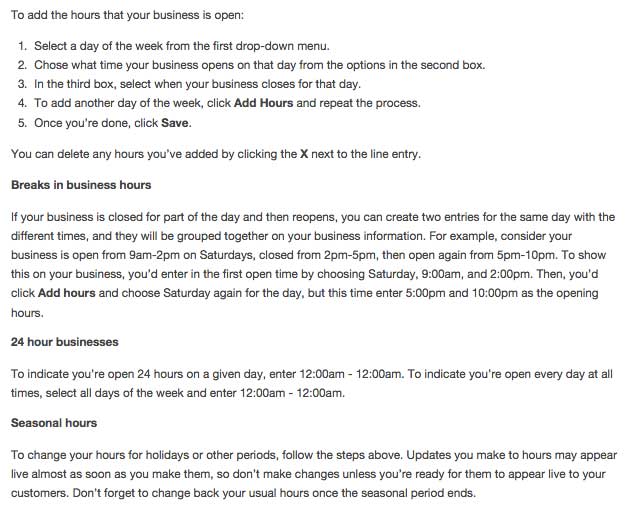
    Currently, Google has not built out the functionality for saving holiday-specific hours ahead of time. As the profile setup currently stands, you’ll need to manually edit the hours of operation on a given day when your business is open (or closed) outside your standard hours of operation.

    See Google’s steps on how to update your business’ hours.

    InstructionsOnAddingHoursImage

    After scouring Google’s forum for topics related to holiday-specific hours, it doesn’t seem like they’ll be adding the ability to set such hours ahead of time. Many of you may grumble and say that this is the last thing you’d think about during the holidays and, man, I get it, but know this:

    If customers have just one instance where they very much look forward to coming to your establishment and are discouraged by misleading information, they have less of a chance of coming back. How can they know if you’ll be open?

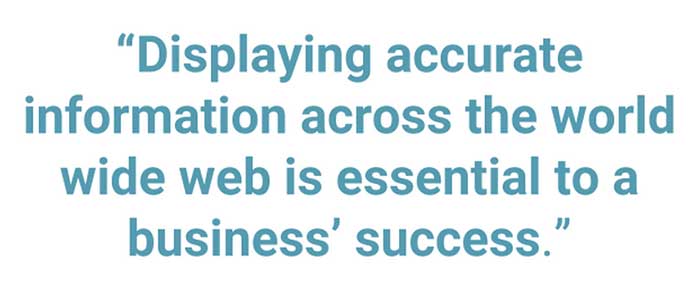
    This issue, however, is not specific to the holidays. It’s also applicable to businesses that have season-specific hours, and … really, all businesses! Companies with out-of-date or incorrect hours will quickly lose favor with customers. Really, take this as a larger lesson for why displaying accurate information across the World Wide Web is essential to a business’ success.

    As Google’s search engine becomes increasingly more sophisticated, results will become increasingly more accurate. Online users already rely on the Internet to supply the most up-to-date information on any given topic, so why should your business be immune to this demand? The point is, it isn’t.

    Google Time Stops For No Man

    Set a calendar reminder the day before to update your hours. Set an alarm on your phone! Put post-it notes all over the place. Tie a ribbon to your finger. Pay your tech-savvy kid to do it. Or hire an Internet marketing company to manage your profile for you. Whatever method you choose, just know that you are doing a great service to your customers—and to the world!

    In addition to managing an accurate and up-to-date Google My Business profile, it’s a good idea to update your social profiles as well. Facebook has easy-to-manage settings on your business’ page. Additionally, if your website has a built-out blog, it might be a good idea to have a holiday-specific post. In addition to alerting your customers about abnormal hours, a holiday-specific blog post opens the door to great time-sensitive content marketing opportunities.

    Opportunistic Marketing

    For instance, let everyone know your restaurant is open on St. Patrick’s Day and post your holiday-specific menu for the day, highlighting any specials you may have on account of the holidays.

    Contracting company closed for Christmas? Make a blog post about being unavailable on certain days, but highlight necessary winter-related structural checks or services that you will be offering when you return to normal business hours. Share the blog post across your social media platforms.

    Medical practice open for limited hours over Easter? Post a piece highlighting choking hazards for Easter-related paraphernalia, common food dye allergy reactions, or the importance of a dental check-up after candy-centric holidays.

    CatBunnyHatImage

    Clothing boutique open on the Fourth of July? Embellish a blog post with photos of your cutest red, white, and blue outfits. Have a friendly contest amongst shoppers and get them to post the Fourth of July outfits they purchased at your store. Who wore it best?

    Sno-ball stand closed for the winter? Write up a cute post about how you’ve gone north to collect more “snow” for the next coming season and when your customers can expect you to return! Also, post new flavors that they can anticipate for next season (or new combinations of old flavors). Or have a contest over the winter to see who can come up with the best flavor!

    CatAbeLincolnImage

    Go Forth And Update

    So, let this be a warning to you. Every time a search result for your business shows inaccurate information, you may just be losing a customer. Don’t think of maintaining accurate information as a chore but as an opportunity to engage and educate your customers.

    Have questions about maintaining other aspects of your Google My Business profile or opportunistic content marketing? Have an incorrect-business-info experience you’d like to share? Let us know in the comments below!

    Image Sources:

    Grumpy cat

    Easter cat

    Bearded cat

  • Started From The Bottom Now You’re Hired: Tips For The Tech Job Interview

    In the ever-growing tech industry, more and more jobs are becoming available. Sadly, this also means a lot of positions aren’t being filled due to bad interviews. Having interviewed hundreds of prospective employees in the past few months, I’ve learned that many people seem to struggle when considering what employers are looking for in candidates. You practice and prepare for interviews in advance thinking, “How can I show them how great I am?” when you really should be practicing to fulfill the question, “How can I show them I’m what they want?”

    So here are some tips for acing the interview! A lot of these can apply to more than the tech world, so read on and take mental notes for your future!

    Search Influence - New Orleans Tech Industry Interview DOs and DON'Ts

    Do: Talk About What You Have To Offer A Company
    If you’re applying for a position that requires any sort of client-facing or largely communicative capacities, talk about ways in which you’ve exhibited those abilities in the past. If you’re applying to work in a fast-paced, growing industry, talk about how you’ve been adaptive and proactive with change in your past experiences. Also, make it clear that the industry they’re in is the industry you want to work for. You should ALWAYS research what a company does before you attend an interview with them. Being completely clueless about the work they do shows a lack of sincere interest in the job.

    Basically, find any way to show your interviewer that you have what they need and want to be there.

    Don’t: Talk About What A Company Has To Offer You
    One of the biggest mistakes you can make in an interview is saying something like, “I want to work here because I don’t know about insert industry here and want to learn everything I can from working here.” You’d be surprised how often we hear that people want to start their own online marketing companies and just want to work for us to learn how to do what we do. That kind of response is a huge red flag for companies.

    Talking about your capacity and willingness to learn is a GREAT idea, but it needs to be done tastefully. A better way to express that would be something like, “I’d enjoy working in an environment where I’m constantly learning something new and improving.”

     Search Influence Spacer

    Do: Talk About Any Relevant Online / Tech Experience
    If you’re applying for a job in the tech industry, talk about any and all tech experience you have. Even if the job you’re applying for doesn’t require HTML experience, letting your interviewer know that you’ve got that experience shows that you’re well rounded and will be able to communicate effectively in that subject area if you need to (which can be helpful for interdepartmental work within a company). If you’ve got a professional website or blog for yourself, don’t be afraid to share it!

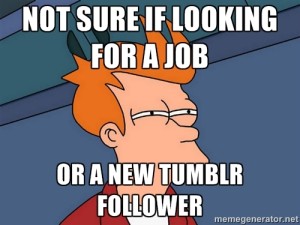
    search influence new orleans - interview meme fry futurama tumblr

    Don’t: Talk About Your Tumblr
    Unless you’ve got a blog or website suitable for the eyes of an employer, refrain from specifics when talking about any blogging, HTML experience, or other relevant experience. Most people who know what Tumblr is know that it is rarely used in a professional capacity, and the last thing you want to do in an interview is to get your employer imagining your possibly-emotional, probably-personal presence. You can still talk about how having a Tumblr or any other non-professional online experience plays into your abilities, but approach it carefully. Instead of “I use Tumblr a lot, so I get HTML,” say something like “Through a few blogging platforms, I’ve had some experience with basic HTML.”

     Search Influence Spacer

    Do: Talk About Your Interests Outside Of Work
    Usually, mentioning that you’ve balanced side projects in life while still working or going to school full time is an indication to future employers that you’re capable of balancing multiple tasks and prioritizing what needs to be done. It also helps to show you’re well-rounded and provides something unique that could make you stand out in the interviewer’s memory. If an employer is trying to weed out top candidates from a recent round of interviews, the good interviewee who played guitar in some band might stand out more than just the good interviewee.

    Don’t: Talk About Starting Your Own Business, Going Back To School, Or Trying To Become An Actor
    Unless you’re applying for a temporary position, most companies are looking for someone who’s in it for the long haul and wants to grow with the company. If you’re indicating to your interviewer that your main interests don’t align with being dedicated to your job, they might not consider you to be an ideal candidate for the position.

     Search Influence Spacer

    Do: Elaborate And Give Examples
    Even when given a general question, never give a general answer. Often, employers ask something about discussing a time when you exhibited a certain characteristic. For example, an employer might ask, “Can you tell us about a time when you had to deliver great customer service?” If you’ve had any service industry experience (which so many of us have), your initial thought is probably, “ALL. THE. TIME.” While it’s great that you’ve got a lot of experience with this, you want to give clear examples that exhibit it. So saying something more explicit gives the employer a clearer picture of what you define as “good customer service.”

    Don’t: EVER Give A Yes Or No Answer
    Along the lines of the suggestion above, even when you’re asked a “yes or no” or “either/or” question, make sure to explain the reasoning behind your answer and never ride the fence. The most common example of this that I see is when candidates are asked if they prefer working individually or on a team, as people often respond that they’re comfortable doing both. While this is seemingly an admirable trait, realistically everyone has a preference, and neither answer is wrong. If an employer chooses to hire you, they’ll want to know if you’re predisposed to work in the type of environment that their company has and be ready to work with you on it if you aren’t.

     Search Influence Spacer

    Do: Prepare Your Online Presence Accordingly
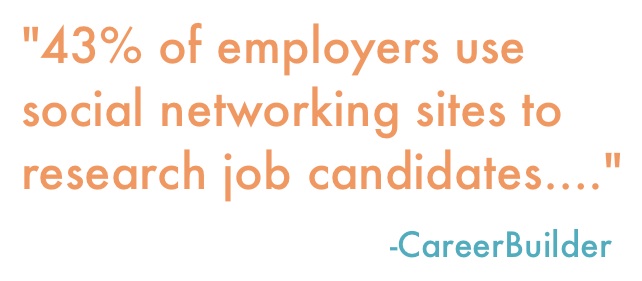
    According to a June 2014 study by CareerBuilder, 43 percent of employers use social networking sites to research job candidates, and 51 percent of employers researching candidates online found content that caused them to not hire the candidate. Even at a laid-back, young office like ours, a profile picture of you doing a shirtless keg stand is probably not going to get you invited to an interview. One safe move you should probably make is to switch your Facebook profile features to private when applying for jobs.

    You should also have a well-built-out LinkedIn profile with references. Though most employers will do reference checks as you move along in the later stages of the hiring process, having good, easy-to-access references from the get-go could improve your chances of moving forward.

    Search Influence New Orleans - Employers Use Social Media Career Builder Quote

    Don’t: Delete Your Entire Online Presence
    Having profiles online, whether it’s Facebook, Twitter, LinkedIn, or your own site, puts you in control of what future employers see when they look for you. Also, if you’re trying to remove incriminating photos of yourself, deleting your profiles will only delete pictures you posted (not ones your friends posted of you). So you’re better off changing your privacy settings and managing your online presence. There are also sites like SimpleWash that connect to your Facebook and Twitter accounts in order to help you identify possibly inappropriate statuses, likes, and pictures.

    Another reason why you should be keeping your social profiles around is that, in the tech industry in particular, employers are typically looking for people with a proclivity for all things techy, and having an online presence is another opportunity to exhibit that inclination.

    Search Influence Spacer

    Use these tips, and good luck in your job searching! Feel free to share your interview experiences below. We’re often looking to fill positions here at Search Influence, so if you’re interested in working with a hard-working, fun bunch, check out our various tech industry job postings.