Category: Healthcare Marketing

  • Oh No! Where Did Medical Schema Go?

    Schema 3.0 Explained

    While working on implementing some schema markup for a medical clinic last week, I went to schema.org to see my available property choices, but when I went to the same page I’ve visited a hundred times before, https://schema.org/MedicalClinic, instead of the list of properties and their definitions I was expecting, I got this perplexing message:

    Medical Schema Change

    After doing a little poking around on schema.org, I noticed their release notes mentioned the implementation of a new version of schema, Schema 3.0.

    What does that mean for those of us who use schema on our websites? Well, not too much for most industries. Some new schema properties have been added here and there. You can see the release notes for a full list of schema updates. However, if you manage a medical industry website, then you should be aware of a fairly significant change. Schema has re-organized their site and created a new “extension” for Medical schemas. Medical schemas like “MedicalClinic,” “MedicalProcedure,” “Physician,” and even “Dentist” have been migrated to a new subdomain, https://health-lifesci.schema.org/. Most but not all pages on schema.org that used to contain properties available for medical schema types now show the same core vocabulary message. Some pages, like https://schema.org/Physician, still display their property types. ​There are new pages on the health-lifesci subdomain for medical schema types, so we can still mark up these schema types using the new URLs for these pages:

    Currently, Google has not followed suit—their structured data testing tool has not been updated. If you replace https://www.schema.org/MedicalProcedure with https://health-lifesci.schema.org/MedicalProcedure, Google doesn’t throw up an error; it just completely ignores the schema. This update raises some pretty big questions. Will Google update their schema validation, and will the old schema URLs be deprecated and invalid?

    Another variable that makes updating your schema iffy is the information on the new schema extension page, “The terms defined in this extension may be considered moderately stable, but some changes are still likely (including renaming and restructuring) through ongoing community collaboration.” I also think that this may indicate that the restructuring may not be limited to just these schema types, and schema.org may start creating more extensions for specific schemas, rather than including them in the core schema language.

    Right now all we can do is watch and wait. So long as Google is only validating the old schema URLs, we recommend continuing to use those, but stay on the lookout for some big changes yet to come.

    Edited on 5-16-2016 at 3:24 pm:

    “As of this afternoon, Google has already made updates to their validation tool so the new health-lifesci extension will now validate. The old URL for these schema types continues to work as well and does not produce a warning or error. Hopefully this is a sign that those of us with medical schema already implemented on our sites will not have to update the schema to the new format any time soon. Kudos to Google for the swift update.” 

    Feature image credit.

  • The Diagnosis Is In: Your Medical Practice Needs Reviews

    Reviews
    Yelp, Healthgrades, Google My Business, RateMDs, Vitals—the list goes on and on. More than three quarters of patients are browsing review sites, using the online reviews to decide on a new healthcare practitioner. It is now more important than ever for your practice to have a strong online presence with positive reviews on your own site as well as external review sites. If you need help generating more online reviews, here are five tips to encourage your patients to share.

    1. Use Word-of-Mouth to Ask Patients to Post Reviews

    Your source for positive reviews is from your frequent and satisfied patients. Never resort to review stuffing by asking office staff, friends, or family members to write a positive review. Fake reviews, usually long on descriptions and short on facts, are easy to spot. You need your happy patients to share the truth about their experience, and you should be encouraging them to post reviews. At the check-out desk, have a sign or a handout ready with your website or other review site URLs you use. Include words of appreciation and encouragement, and request—don’t pressure—patients to rate their experience.

    2. Make It User-Friendly With a QR Code

    Do your patients use smartphones? Statistics suggest that they most likely do. Even if you have a “no cellphone” policy in your waiting room, many patients may be checking their emails or Facebook newsfeed while waiting. Why not give your mobile-enabled customers immediate access to your business information with a QR code?

    A QR code is a mobile-friendly barcode that brings users to a specific mobile landing page, such as your Google My Business page or Google Places business listing. You can print a QR code on business cards, mailings, and brochures, and your patients can leave a review with the click of a button. Even if patients choose not to scan the QR code, they may be impressed with how tech-savvy your practice is.

    3. Reach Out on Social Media

    If you already have a Google+, Facebook, or Twitter page, post links to your review sites and encourage patients to post reviews. Not everyone you ask in the office will write reviews, so you need to offer patients constant feedback opportunities. By maximizing review opportunities, you also maximize your feedback and develop a strong online reputation.

    LM 1

    4. Be Open to Negative Feedback

    The more open and welcoming your practice appears to be, the more comfortable patients will be coming to you instead of airing complaints on the internet. Encourage patients to contact your practice directly to voice concerns, and consider creating a paper or email survey to ask for feedback. You should try to hear from complainers before they make their grievances public.

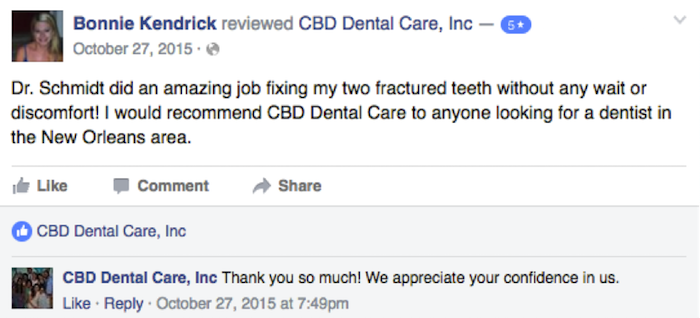
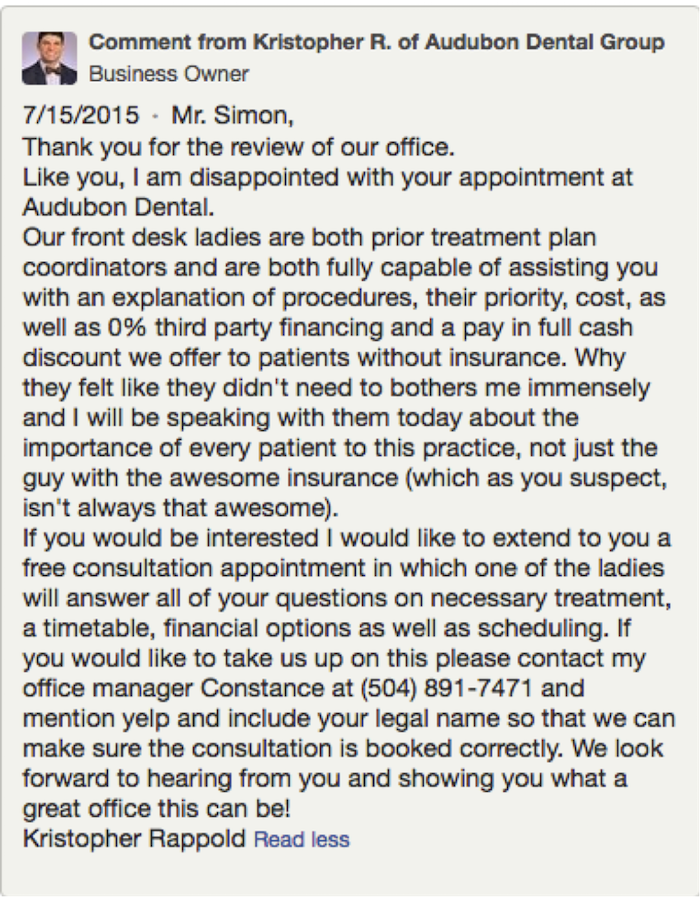
    If negative feedback does show up on a review site, respond to the criticism in a non-defensive manner. This will signal to potential patients that you listen and care about customer service. Remember to never discuss personal medical information, but focus on broader policies. And remember, always ask the patient to contact you to discuss his or her dissatisfaction. This shows others that your practice takes responsibility for patient satisfaction.

    LM 2

    5. Deliver Your Best Service

    The more satisfied your patients are, the more likely they are to write positive online reviews. Patients have high customer service expectations, so train everyone, including receptionists and the billing department, to treat them with kindness and respect. Always look for ways to improve your patient’s experience. Practices with the best service get the best online reviews.

    Screenshot Credits:

    Facebook Screenshot Image
    Yelp Screenshot Image

  • Google My Business for Doctors: Visibility, Authority, & SEO

    One of the first steps in improving your searchability with Google is to claim or create a Google My Business listing. With Google My Business, you can manage your information in Google Maps and Google Plus. Since My Business is owned by Google itself, the links gained from these profiles are highly valuable and authoritative.

    However, if you’ve ever tried to claim your Google My Business listing, you may have seen how complex it can be, especially for businesses like medical practices. You may have had questions like: “How do I represent multiple locations for my practice” or “What if I want patients to be able to find their doctors in addition to my practice?” Well, today we’ll go through how to establish your Google My Business presence with exactly those questions in mind, and more!

    1603-SI-KierstensBlog-KG-A-01

    First, let’s dive a little deeper into the world of Google My Business. Google My Business is essentially the dashboard in which you can maintain your information with Google directly. This means that by creating a listing in Google My Business, you’re also creating a Google Plus page and, if establishing a local presence, a Google Maps listing as well. By doing so, you’re telling and verifying with Google, “Hey, I’m a real business, and here’s my real information!” By maintaining that information and posting to your Plus page, you’re proving to Google that you’re the authority on your business and that your business is a valuable resource for users to find.

    Sounds great, right? Who doesn’t want an in with Google? For many businesses, this can be as simple as claiming and verifying a single business listing. But for medical practices, it can get pretty complicated.

    Claiming Your Google My Business Local Listing(s)

    To begin, claim and verify your practice’s primary local business listing. If you are a multi-location business, go ahead and claim the local listings for each of your addresses. Each local listing will need to be verified by either phone or postcard, and no edits can be made until then. Once that’s done, check out these tips and guidelines for building your practice’s Google My Business presence:

    1603-SI-KierstensBlog-KG-B-01

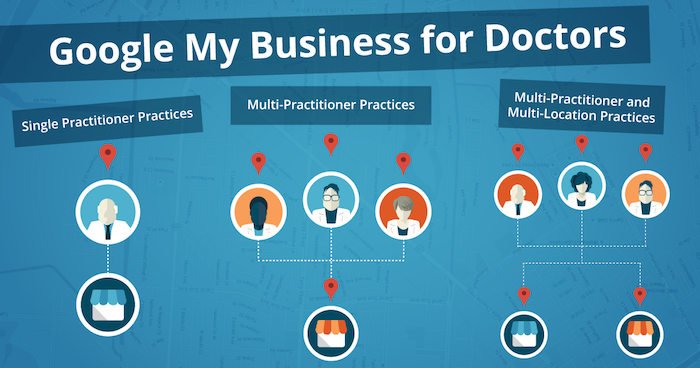
    1. Single Practitioner Practices
      For practices with just one public-facing doctor, you’ll need to decide whether or not to use that doctor’s name instead of the business name. This is wholly a personal decision, but do not create Google My Business pages for both.
    2. Multi-Practitioner Practices
      For practices with multiple public-facing doctors, it is acceptable to create local pages for each doctor, in addition to the practice’s local page. If this is the case, do not include your business name in the name of the practitioners’ pages. And try to differentiate between these pages with either a different phone number or suite number for each doctor, when possible.
    3. Multi-Practitioner and Multi-Location Practices
      For doctors who work at multiple locations, it is acceptable to create separate local pages for each doctor for each location, according to Google’s guidelines. However, it’s even more important that you’re able to differentiate between these pages with separate phone numbers and/or suite numbers. The practical likelihood that Google will flag these as duplicates is higher so proceed with caution! If your goal is to make sure clients can find their doctor’s contact information for each of their locations, then this is a solid practice. Otherwise, if you’re trying to get all of your doctor’s to rank for general searches you’ll need to do more than just add them to Google My Business.

    Brand Pages

    As mentioned before, Google My Business is two pronged; it lets you manage both your local presence via Google Maps and your social presence via Google Plus. If you’re a multi-location practice, consider creating a Google Plus Brand page in addition to your local pages to consolidate your social presence. Brand pages are not linked to Google Maps in any way. Instead, they are purely social platforms for you to manage…you guessed it, your brand! So rather than doing so on each of your local pages, you can post to your one Brand page and gather the same clout with Google.

    That wasn’t so bad, right? Remember to keep these pages updated and treat your primary Google Plus page as a social media profile, like Facebook or Twitter. By doing so, Google will be able to better recognize you as a trustworthy and authoritative source.

    Now that all your pages are claimed, verified, and updated, you’re one step closer to a solid SEO presence!

  • 10 SEO Best Practices To Resuscitate Your Medical Practice’s Website

    Your 2017 Website Checklist Image - Search Influence

    What exactly is SEO, and why should your medical practice be applying it to your website? SEO, or search engine optimization, is a means for building a successful website. It is an on-going strategy for increasing your site’s visibility in the search engine results and helping prospective patients find you and the services and treatments you provide. A well-rounded SEO campaign employs both on-site and off-site work to gain new patients, excel in search engine rankings, and bring in high-quality traffic to your site. The focus of this post is specifically on-site optimizations, which are part and parcel to a successful Healthcare SEO campaign.

    With Google, Yelp, and Bing taking nearly 90% of the market share, your ranking in those search results is essential to the online success of your medical practice. In this post, I give an overview of the 10 SEO tactics that are crucial for not only building a strong and healthy website, but also growing your client base.

    1. Title Tags and Meta Data

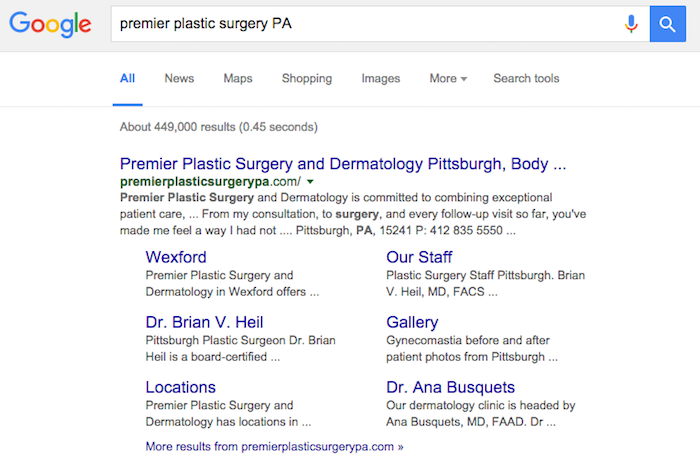
    Title tags and meta data are implemented on the backend of your website. They are short and informative, acting as the title of a page of content on your site. Title tags are read by search engine bots as well as users. These title tags are visible at the top of a browser window and appear in search results as a bold blue link title. An optimized title tag includes branding information, your location, and what that specific page of content is about. This allows both search engines and potential patients to know who you are, where you are, and what services you can provide for them.

    There are four types of meta data: meta keywords, meta language, meta robots, and meta description. Most effort is applied to meta descriptions (or meta tags), which act as a summary or description of that page of content. In search results, this information appears in two lines of gray text under the title tag. Every page of your site should have a unique meta description. It is best practice to remain in Google’s 160-character limit while including information on what that page is about as well as a call to action. You want your patients to know not only that you offer tummy tucks, but also that they can easily learn more about the procedure on your website!

    Here’s an example of an optimized title tag and meta description:

    Optimized Meta Data

    2. Call to Action

    Your website should have a clear and bold call to action as soon as a patient arrives on your site. What do you want existing and prospective patients to do once they have found your site online? Do you want them to call for an appointment, or do you have online scheduling? Do you offer a weekly newsletter with tips for healthy habits, or maybe an email list with monthly specials on cosmetic procedures? Make sure your site tells patients what the next step is in learning more about your business or coming in for appointment.

    Here’s an example of a call to action and two types of forms:
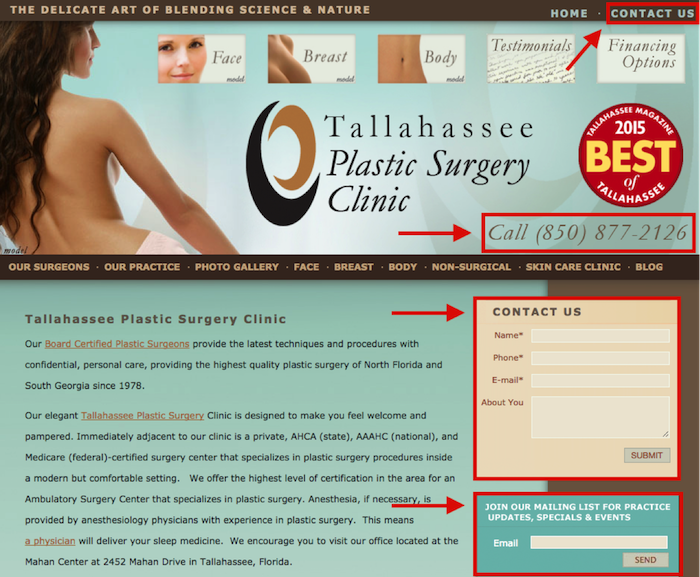
    Optimized Forms

    3. No Broken Links

    Just one broken link can gravely impact your ranking in the search engine results, create a poor user experience, and result in the loss of a customer. If a potential patient clicks on something in their search results and it 404s, they may never return to your site. 404s can be caused by the removal of content (PDF documents, videos, etc.), external links that are changed or moved, and the renaming or moving of pages within your own site. When possible, fix the problem at the source (update internal links on your site to reflect new URLs). You can also redirect any old URLs that have moved to a new URL. Careful: too many redirects can slow down the speed of your site. And remember, some pages are meant to 404, such as files that are not images or pages, or files that a normal site visitor should not have access to, such as an admin or login area.

    4. Topics and Keywords

    Topics are the more general themes assigned to pages on your site. Keywords are those phrases in your content that help people find your website through search engines. The pages of content on your site should include topics and keywords with the services that your practice offers. Keep in mind that these need to be terms that your patients would type into search engines. For example, there are on average over 40,000 monthly searches for “rhinoplasty,” but you don’t want to miss out on those 12,500 monthly users who are searching for “nose job.”

    The topics and keywords you choose for each individual page of your site should appear in the title tags, meta descriptions, on-page headings, alt tags of images, and on-site content. I will go more into content later, but keep in mind that you should be including one keyword for every 100 words appearing on the page. Google rewards those sites full of unique and fresh content.
    Google will reward you if all on-site content is unique and high quality.

    5. Mobile Friendly

    Your site must be mobile friendly! According to a study by Mobile Behavior Report, 27% of users will leave your site if it’s not optimized for mobile use. That’s a lot of business to miss out on! Many patients are calling for information or scheduling appointments on the go. You want to make sure they can easily access your site from their smartphone, and Google can help you with that! They offer a free tool to check how mobile-friendly your website is.

    6. Quick to Load

    If your site is slow, patients are likely to leave and visit another site in hopes of finding the information they are looking for. You want to create the best user experience by presenting an easily accessible and speedy site! Again, Google is here to save the day with their PageSpeed Insights tool. This tool measures both your desktop and mobile speed, gives it a score ranging from 0 to 100, and makes recommendations on how you can make your site speedier.

    7. Schema

    Schema is a piece of code that is placed on your site to help search engines provide richer and more informative results for your patients. It’s a way of “labeling” important information on pages of your site so that search engines can better read it and produce better search results for users. There are many types of schema that can be applied to your site. For a medical practice, one the most effective types of markup is ratings/reviews schema.

    8. Content

    Implementing optimized content on your site is one of the most important aspects of an SEO campaign. This is the actual text on your site where you describe your practice and the individual services that you offer. Google rewards sites with original, high-quality content. It needs to be unique to your site, natural, and fresh! A list of the services your practice provides may seem sufficient, but your site is an opportunity to show your new and existing patients that you are a knowledgeable expert in your field. Don’t just list that you provide rhinoplasty and breast augmentation; demonstrate that you are well versed in these procedures and their recovery process. Make your patients feel at ease and increase their confidence in choosing you as their physician.

    Unique and fresh content also reinforces your site authority with Google bots. New content implemented on your site brings those bots back to crawl the information on your site. Content should typically be about 500 words per page, but as the medical field is more technical, twice that length is usually appropriate. Use content as a means to stand out to patients and search engines as an authoritative and relevant source in your field!

    9. Blog

    Blogs are another way to place rich content on your site! Like on-site content, they boost your site’s authority, but they also allow you to relate to your patients. Regularly posting on your blog engages readers with valuable and useable information. Your website may have a page on melanoma, but a blog post on skin tips for summer is a friendlier way to attract patients to your site. Here are some helpful tips on choosing the length of your blog posts.

    10. Google Analytics

    Last but certainly not least on the list of must-haves for your website in 2016 is Google Analytics! With all of the items above, you’ll want to track the progress of your newly optimized site. With greater insight comes greater control. Google Analytics allows you to analyze your traffic data to better understand your audience. It also helps you understand which of your marketing strategies are working best for your practice. If you can hone in on your audience and which tools are most effective in reaching them, you can lower your marketing costs and bring in more business!

    These 10 best practices are an inexpensive way to boost awareness of your practice and bring in new, revenue-generating patients. With a little strategy and effort, you can have a comprehensive SEO campaign that brings your practice’s website up to speed!

    Image Credit:

    Nurse Phoebe Image

  • Successful Physicians Do This to Quickly Increase Their Online Presence

    Doctor greeting patient

    Gone are the days when Americans simply used the Internet to merely research symptoms they or their loved ones were experiencing. Instead, they are now going online to determine which doctors to see, what treatment to get, and what services a hospital might provide — and using that information to drive their choices.

    According to Manhattan Research, which surveyed 5,210 adults who use the Internet as a health resource, 54% of respondents said they did online research to decide what services they might need and who should provide them. Other surveys like this one from Pew Research have said that roughly 75% of American adults search for health information online.

    No doubt, one thing is certain: people are becoming more comfortable with using the Internet for health-related decisions. And this upward trend isn’t likely to stop anytime soon. One out of every five patients uses online health information to choose a primary care physician, according to Manhattan Research.

    What’s that mean to health care professionals? It’s time to put more effort into beefing up your online presence. Communicate who you are and what you do. The quickest way to increase your visibility is to advertise on the Google Display Network. Watch this SlideShare or read this blog to learn more.

    Image Credit:

    Doctor Shaking Hands With Patient Image

  • These 5 Easy Ideas Can Help Your Site Reach 80% of Your Patients

    4-14-2016-BlogImage5

    Your patients might not be able to read your handwriting, but there should be no confusion with your website. According to a Pew Research Center survey, 80 percent of respondents look for health information online, and 44 percent actually search for physicians and healthcare professionals. As more and more people turn to the Internet to search for medical service providers, these tips will help you launch a website that connects new patients to your practice or clinic.

    1. Patient Forms

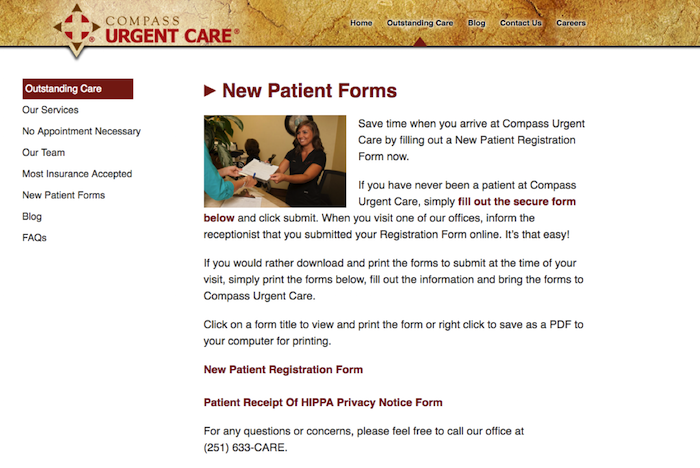
    Your website should make it easy for new or returning patients to access patient intake forms, schedule appointments, and update records. Registration forms can even be placed under their own tab, which will make it easier for website visitors to become registered patients. In general, always make things easy to find.

    New Patient Forms

    2. Mobile Responsiveness

    In the United States, there are more mobile searchers than desktop searchers, and this trend is expected to increase. There are two reasons your medical website needs mobile-responsive capabilities. Patients searching on a tablet or smartphone are likely to spend more time on your website if it is easy to navigate. A non-mobile-friendly website can be confusing, creating incentive for the searcher to move on to a different website, possibly that of your competitor.

    Furthermore, next month Google will start the roll out of a mobile-specific algorithm. Google is continually striving to improve the user experience, and if your website does not make the cut, it could be completely excluded from mobile search results.

    3. Patient-Centric and Informative Content

    Going to the doctor’s office can make some people feel anxious, but your website can provide comfort and instill confidence even before a patient walks through your door. All content should be patient-centric and make website visitors feel like they will be in safe hands. You can even give your website some personality by including bios for yourself and your staff. In an “About Us” or “Our Staff” section, you can not only show off impressive credentials but also demonstrate that you can engage with patients.

    A strong medical website also includes news, information, and updates. This platform should be a marketing tool and resource for patients. Refreshing your site with blog posts, medical news, and alerts will show patients that you follow current issues and are an attentive professional. A website with a regularly updated blog will also rank higher in the search engine results.

    4. Services and Insurance

    Again, all information should be easy to read and find, especially services and insurance information. Give detailed explanations of your services, and note if there are any special considerations. There should never be any confusion about payment, so clearly state whether you accept cash or if other arrangements are acceptable. Discussing insurance plans and payment methods creates an opportunity to include a call to action. Ask website visitors to contact your office with any further questions about services or insurance.

    5. SEO

    “If you build it, they will come”—this adage does not apply to websites. It can take a little time for your new website to get noticed by search engines. An SEO campaign can improve your website’s search engine rankings and drive more traffic to your website. On- and off-page optimization, social media management, title tags, meta data, image optimizations, NAP consistency, professional listings, and many other factors play a role in boosting your Google ranking. Search Influence can create a SEO campaign that will promote your website, connecting you with patients who are more digital than ever before.

    Image Credits:

    Doctor Meme Image

  • 5 Things Healthcare Professionals Should Never Post on Social Media

    Over the past decade, social media has become a major part of nearly all aspects of life, including the business world. With the ever-growing importance of social media marketing, more and more businesses—including doctors, dentists, and others in the medical field—are using social media sites such as Facebook, Twitter, LinkedIn, etc. to connect with current and potential future customers.

    Thanks to the expansive, direct, and often personal nature of social media, with all those benefits also come numerous pitfalls that must be avoided to ensure that you get the most out of social media. Here are five things to never post on social media if you are a doctor or work in the medical field.

    1. Inaccurate Medical Information

    We have all seen it on social media before. Somebody shares an article claiming a miracle cure or the shocking results of some unbelievable new study. Unfortunately, very few of these attention-grabbing headlines are actually backed up by truthful scientific research in the article itself.

    As a trusted medical professional, it is your responsibility to avoid sharing or liking these bogus news stories about medical treatments unless you have thoroughly read the story and have verified its accuracy. Sharing something like this can reflect very poorly upon you and your practice. Be wary of satirical articles as well, because some people may not be able to distinguish the difference at first glance.

    2. Misleading Information or Images

    An offshoot of the previous category, misleading information or images can be just as detrimental as false info. This can include anything that could be considered deceptive or ambiguous to patients. Photoshopped images, exaggerated guarantees, and more can fall into this category.

    A perfect example of this can be seen with the American Society of Plastic Surgeons’ rules and regulations specifying that any images that are not real patients must be identified with “Model” on the image itself.

    3. Anything Violating Patient Confidentiality

    Similarly, The American College of Physicians cautions doctors to be particularly aware and respectful of patient confidentiality when using social media. This is a slippery slope in today’s over-sharing society—even a faceless image of a skin rash can be a breach of patient confidentiality.

    Remember to always obtain written permission from the patient if you want to use an image of them or any body part. It is best to avoid talking about specific patients at all on social media unless you have clear permission to do so. And be careful when taking pictures around your office to post so that no patients or medical records can be seen in the background.

    4. Opinions on Controversial Issues

    Today, many people use social media to express their opinions and speak their mind without realizing that there are consequences for what you say in the digital world, just like in the real world.

    It is best to avoid any controversial topic or “hot button” issue at all cost. This includes divisive subjects including anything to do with religion, politics, racism, and abortion.

    5. Complaints or Rants

    It is equally as important not to use social media as a platform to blow off steam. Using social media to complain about your day or a patient or to rant about a particular situation will always come across as unprofessional. Everything you write on social media has the potential to come back and haunt you.

    In the end, it is best to remember that when using social media as a physician, only post information that your patients and community will find useful. Be professional and remember that social media posts still have real world outcomes that can negatively affect you and your practice.

    Image Credits:

    The Simpsons
    Scrubs

  • The Prescription for Better Online Reviews for Your Practice

    Just last month, Forbes ran an article titled “Why Doctors Must Market Themselves in 2016.” Much as customers at a restaurant can get on Yelp to write about their experience, patients can review their physicians on Yelp and other sites as well. RateMDs.com, Healthgrades.com, and Vitals.com are just a few examples of sites that host online reviews for physicians, dentists, and hospitals. ZocDoc.com even includes an app that allows you to search for nearby physicians in your insurance network. These websites had around 6.4 million hits last year, and in 2014, more than half of patients reported that they used physician-rating websites to select a doctor. Even if your practice hasn’t decided to take a look at your online reviews, many of your patients already have.

    Part of the Broader Trend

    According to a BrightLocal survey, 88 percent of consumers trust online reviews as much as they trust a personal recommendation. Patients who scour the Internet for reviews on cars and restaurants will naturally use similar resources when looking for a dermatologist or other medical practice. Even when patients are referred by a friend or another physician, many will search for directions through Google, which will reveal reviews entered on Google+. In effect, online reviews are ubiquitous to the point of being unavoidable, and addressing online reviews has become an equally unavoidable part of healthcare marketing.

    1602-SI-TheInfluencer-KL-A-04-lg

    The Danger of Online Reviews

    Not everything on the Internet is true, but negative reviews can have a very real effect on the reputation and success of your practice. As with any business, it’s unfortunately the least satisfied patients who seem most motivated to leave reviews, and they counterbalance the handful who would take time to write about a positive experience. In the same study where 61 percent of participants used online reviews to find doctors, only about one in five took the time to write reviews themselves. A major key of online reputation management is encouraging the satisfied majority of your patients to leave reviews. Learn how here.

    Use the Feedback

    The University of Utah Madsen Health Center decided to start sharing survey data with their physicians in 2008, and the hospital jumped in patient satisfaction from the 34th percentile up to the 80th over the course of six years. What’s more, safety, mortality, and efficiency scores improved while malpractice premiums and costs went down for the hospital. While some online criticism may be groundless, trends and insights can also be useful as feedback to improve your practice and the quality of service provided.

    Search Influence Google Maps Location Image

    Plan Your Strategy

    Because negative reviews have cumulative and long-term effects on your practice, a long-term outlook is needed to address the problem.

    • Claim Your Listing – Your practice may already exist on Google+ and other review sites. Claiming the listing allows you to monitor reviews and respond to negative ones.
    • Update Your Information – Entering your hours, contact information, and services makes your practice more accessible.
    • Check Out Competitors – How do your ratings compare to other practices in your area? Do you have listings on the same review sites?
    • Reply to New Negative Reviews – Do not delete negative feedback, but feel free to reply as appropriate.

    How to Handle Negative Feedback

    Reviewers who are upset sometimes make outrageous claims, but deleting the review only fuels a bigger reaction. When publicly responding to negative reviews, it is important to express sympathy for the person’s negative experience and move the conversation out of the public eye. People looking at the reviews should see that you have addressed the complaints, but they don’t need to read a long exchange that distracts from positive reviews.

    Screen Shot 2016-02-10 at 11.13.02 AM

    Screen Shot 2016-02-10 at 11.13.15 AM Consider Calling in the Professionals
    While claiming your practice on current listings does not take much time or expertise, managing the online presence across several sites can be a job that warrants a little professional help. The team at Search Influence can get results, especially when it comes to strategies that get your satisfied patients writing reviews. Ultimately, online reviews should just be one component of a comprehensive online marketing strategy. Increased visibility in the search rankings can help generate leads and reviews, which becomes a cycle for growth.

    Image Credit:

    Doctors at Work Image

  • A Spoonful of SEO to Nurse Your Rankings Back to Health

    1601-SI-Newsletter-0112-Big-KG-A-01

    The Internet isn’t just where people go to find out whether they can self-diagnose a brain tumor. Increasingly, the Internet is where potential patients shop around for the best local clinics and medical services. Fortunately, there are a few SEO principles that can help make your website easier to find. Before you work on drawing traffic to your site, however, it’s important to make sure that your website provides high-quality, unique information. At the most basic level, you need original content, or text that hasn’t been copied from somewhere else.

    Original Content

    It may seem like your list of services should be self-explanatory, but a website is an opportunity to demonstrate your knowledge by explaining different medical procedures and conditions. Having a page dedicated to a certain condition can help draw patients looking for treatment. What’s more, the search engines will recognize you as more of an authority if you have more content about the subject being searched.

    SI Blog Jan 4 Procedures

    It’s important that each page of your website have original content, which means text that hasn’t been copied from other websites or duplicated across several pages. If your website already offers original content about your key products and services, then you may consider starting a blog. A regularly updated blog keeps your business relevant and allows you to target more search terms.

    On-Site Optimizations

    While the quality of your original content will be visible to anyone who reads your page, it’s only one factor in the on-site optimizations that affect your rankings.

    SI Blog Jan 4 Tag Search

    After content, title tags are the second most important thing to optimize on a given page. Title tags are visible as headers among search results and act as the label for the browser tab. Title tags are easy to overlook when first making a website, not unlike image optimizations.

    SI Blog Jan 4 Tag Tabs

    The URL should also indicate the content of the page and its place within the website. Rather than just using a string of letters and numbers, a clear URL indicates the content of the page and often gives an idea of where the page fits into the organization of the overall website.

    www.oakridgeplasticsurgeons.com/tt09874425
    www.oakridgeplasticsurgeons.com/procedures/liposuction

    As you can see, the second URL makes it clear what kind of content to expect on a page. A clear URL also makes the page more linkable across your website and for external links. The pages on your website should link to each other, but you also want links from outside websites.

    Off-Site Link Building

    Your website looks more important when it is referenced on other sites. Of course, not all references carry the same weight: a reference in a medical journal or newspaper carries a lot more weight than a link buried in an anonymous blog. To boost your website’s visibility, it’s good to have a lot of links, but the quality of those links also matter.

    While distinct from link-building, you’ll also want to establish an active presence on social media. Regularly posting to Facebook and Twitter will give you opportunities to generate more leads and draw traffic. Your Facebook business page can be optimized for Graph Search, and Google+ Local will also help you show up as a local resource.

    Local Search Optimization

    Depending on the nature of your business, targeting the area you serve can make a big difference. Instead of competing with offices across the state, focus on becoming the leader in your city or county. Web analytics and Google AdWords can help you determine which search terms are most powerful in your area. Make sure your name, address, and phone number are consistent throughout your website, and get your business listed on local directories. If you have multiple locations, make landing pages for each one without duplicating content.

    Encouraging patients to write online reviews can also improve your visibility. Since you already provide great service, the challenge is just getting satisfied customers to share their experience. Ultimately, most of the changes that impact SEO should also provide a better service to your potential patients, whether they make your website easier to navigate or more informative. Find out whether Search Influence may be able to help your business with our SEO services, or sign up to attend an upcoming free webinar to learn how you can enhance your search engine rankings.

  • Health Care on the Home Front: Recruit Mommy Bloggers

    Mommy Bloggers For Health Care Image - Search Influence

    When it comes to online influence, mommy bloggers are a huge force in social media and the blogosphere—something many major brands have noted in the past. Names like Pepsi, Wal-Mart, Home Depot, and Coach have all made space for these influential bloggers in their content marketing strategy, adding a dose of authenticity to their campaigns.

    Information exchange has always been a big part of raising children, whether parents are looking for advice on dealing with a behavior problem or trying to find new food options. You can call your friends or your own parents, but there’s always the network of experienced parents ready to give advice online—and with roughly 4.2 million mommy bloggers on the Web, 60 percent of whom say that they blog about brands they love, these influential resources can be a crucial part of a campaign. The bloggers with good advice and entertaining updates rise to become Internet celebrities. Not unlike professional athletes with sponsorship deals, an endorsement from popular mommy bloggers can boost your medical Internet marketing campaign to the next level.

    To tap into the reservoir of parental advice-givers online, keep these four tips in mind.

    Know Your Mommy

    Different bloggers have very different backgrounds and attitudes, and a look at the list of the top U.S. mom bloggers shows the diversity of their backgrounds, attitudes, and writing styles. Many have posted a lot of information about themselves, and you should be able to determine which bloggers would be more interested in your products or services. If you’re looking to raise awareness about new vaccination services at your hospital or practice, you might expect less enthusiastic support from a blogger who has been vocal against immunization in the past. On the other hand, a PTA leader active in community projects might be able to help with your next awareness campaign.

    Participate in the Conversation

    Once you see the kinds of subjects that capture the attention of online parents, look out for topics relevant to your industry. For medical Internet marketing, establish yourself as an authority by posting informative updates about subjects that matter to parents. When it comes to important issues like vaccinations, there will always be rumors and hearsay online, but presenting an informed medical perspective can give mommy bloggers a resource to reference or link in the discussion. However, because of legal complications, you’ll want to avoid offering specific medical advice online, especially in response to individual questions. The American Medical Association’s Code of Medical Ethics is a great resource for anyone who is uncertain about treading into the waters of ethical online content.

    Make Your Health Care Message Viral

    When you have an announcement that’s less interesting, consider the kinds of clever images and videos that get circulated online. To advertise a touchless flush system, KOHLER worked with WhatsUpMOMS, a YouTube channel and video blog produced by a trio of mothers, to create a video titled “How to Potty Train Your Kid in 5 Seconds!” You may not have the budget for a clever commercial as part of your medical Internet marketing, but you can show that you understand the stresses and concerns of parenthood.

    Kohler Potty Train Mommy Blog Image - Search Influence

    Stay Professional

    Ultimately, the parents in your area have a vested interest in health care for the sake of their children. The first priority is to make your website informative and then to improve your search result rankings to make your website more visible. Once the public is able to find your site, you can work on turning satisfied customers into positive reviews. If your practice is more focused on cosmetic services, then you may want to take a more active approach by advertising on social media.

    In the past, companies selling breast pumps or minivans have offered mommy bloggers free samples or test-drives in exchange for reviews, but free samples are less applicable in the arena of medical Internet marketing, and some women might take offense at being personally offered cosmetic procedures. The best approach is simply to make your business visible and available.

    Image source:

    How to Potty Train Your Kid in 5 Seconds!