Category: Healthcare Marketing

  • Growing Your Practice on Facebook, Part 5: Patient Confidentiality Considerations

    In our last blog, you learned how to capture your audience with engaging content and analyze the results. Now that you understand what it takes to connect with your patients, we’ll take a look at common obstacles medical practices face when posting on Facebook.

    Social media and the healthcare industry can seem in opposition at times. One is about sharing and transparency, while the other hinges on patient confidentiality and privacy. But the irony is that the medical industry is not immune from the benefits and trends of platforms like Facebook.

    Facebook is a wonderful resource for any industry looking to grow their business. Potential clients and patients desire access to the goings-on of a medical facility or hospital, and similar to peeking in on the page of a friend or associate, patients expect to see their doctor’s office online, too. Uploading staff happenings or posting about a new procedure is invaluable to the cause. But what happens when patient confidentiality is violated? In the era of “clicks,” the two opposing parties of health care and social media must become friends. Although there’s a fine line to walk when working within HIPAA rules, here are some helpful tips to consider when using Facebook for your medical office.

    Image of doctor using a tablet - Search Influence

    Get Written Permission Before Posting

    Nothing can replace the power of pictures on your Facebook page. According to a Hubspot survey, Facebook posts with images receive 53% more Likes than those without. Images serve as testimony to what your practice can do and how you can help other patients achieve their desired results. They are also a way for your patients to discuss and identify symptoms that may need a doctor’s immediate attention. However, posting photos without explicit consent from all parties can lead down a very hairy path—even if the image isn’t of someone’s face.

    According to Privacy Rule requirements, physicians must obtain a signature from the patient that specifically spells out the what, when, and where of the shared item. Some medical facilities have recently opted to send out a blanket consent statement, but this is not best practice. Be sure the statement includes details such as a full description of your purpose in using the image, an expiration date on the image consent, as well as a note describing the patient’s right to revoke consent. Send a copy of the signed document to the individual and keep one for your records as well. Working this into your protocol prior to posting photos will keep a clear line of communication between your practice and patients, and it will also create a streamlined process for your social media marketing needs.

    Avoid Talking About Specific Patients

    Posting about patients can be helpful to your practice. You can highlight testimonials, success stories, and interesting procedures that can be used to engage new and current patients alike. However, when posting on Facebook, even if given permission to use a patient’s medical situation, you’ll want to be explicit in not identifying the individual.

    Confidentiality and privacy are two sides of the same coin. Confidentiality limits the details of a patient’s health exclusively to the medical team unless given informed consent. Privacy, on the other hand, relates to the patient’s right to be treated with respect and dignity. HIPAA goes even further, stating that information given about a patient in a public forum should not disclose individually identifiable information. This information includes anything that could be used to hone in on a specific person, such as past, present, or future physical or mental health details. Understanding the difference between the two, and how they relate to the language and images used in Facebook posts, will help you and your staff to find that happy medium.

    Image of doctor's stethoscope on top of patient's records - Search Influence

    Don’t Take Pictures Around Sensitive Materials

    Where you take the picture can matter just as much as the picture you take. When capturing images to share with your patients, be aware of any medical records or other confidential materials laying around. With zoom features on devices, potentially threatening information can become more decipherable when viewed from apps on a cell, tablet, or another mobile device. Avoid this mistake by thoroughly surveying the area before snapping a shot around the office. Put away any files or paperwork containing information that is private or for medical office use only. It may also be a good idea to only take more candid photos in certain areas of the facility where sensitive items are least likely to be an issue. Also, be sure to avoid taking pictures that may have a patient in the background. Having a designated spot for photo ops can minimize the chances of mistakenly exposing information that would break patient confidentiality and put your office in a compromising position.

    Facebook doesn’t have to be a no man’s land for physicians and medical practices. Healthcare and social media can play on the same team. Building your brand online and strengthening relationships with your patient base is invaluable, especially with Facebook’s almost 2 billion monthly users. Don’t be intimidated by HIPAA; instead, embrace the rules, implement best practices for your staff, and walk the line to marketing and confidentiality success. The exposure you’ll get will be well worth it.

    Check back next week for the final installment of our medical industry blog series, which will walk you through one of our case studies and show you how to put everything together!

    If you are ready to chat about your digital marketing opportunities today, contact one of our experts.


    Images:
    Tablet

    Patient Records

  • Growing Your Practice on Facebook, Part 4: Reach Your Audience

    Now that you’ve gained valuable insights on the many uses of Facebook paid ads, the importance of engaging with your followers, and why all of this matters in the first place (spoiler alert: yes, social media is worth your time), we’re going to get into the specifics of understanding and capturing your audience. After all, if you don’t understand your users, how are you ever going to reach them?

    We’ll share how to use the Audience Insights tool on Facebook to analyze when your users are active and what’s catching their attention. Then, we’ll share some surprisingly easy ways to update your Facebook page and grow your followers—as well as your actual patients.

    Ready for the PhD-level course on using Facebook to grow your medical practice? Download our free e-book today.

    How Can You Use Audience Insights to Grow Your Reach on Facebook?

    With nearly 2 billion monthly users on Facebook, it’s important to narrow the scope and understand who is engaging with your practice, as well as what they are looking for from your page. That’s where the Audience Insights tool plays a vital role. Audience Insights allows page administrators to understand their users and target their reach according to demographics, purchase behaviors, geography, and activity on Facebook.

    By creating a custom audience using this tool, you can target your ads to a specific group of users on Facebook. Say you know that your typical patient is a female in greater New Orleans with an average household income of $150-250K and a bachelor’s degree or higher. You can create a new custom audience using these demographics and build an ad campaign on Facebook to target that audience. While that’s a pretty narrow scope for a medical practice that isn’t quite so sure of their ideal patient, experimenting with a few different test audiences to gather data on successes and misses is a great first step.

    On the other end of the spectrum, you can also use Facebook insights to gain more knowledge about your active users and cater your posts and ads to the types of demographics that are most engaged with your page. You can even learn the best times of the day and week to post and the type of content that achieves the highest engagement. Perhaps you see a spike in engagement when you post patient testimonial videos on your page and dedicate more marketing spend on creating videos. Or, maybe your analytics show that users are more engaged in the mornings, so you schedule your posts in advance for time slots between 8 a.m. and 11 a.m. to capitalize on your users’ behaviors.

    These insights can all inform your future social media marketing strategy to focus on what works and build on your successes.

    Picture Of A Medical Doctor's Desk - Search Influence

    How Can You Connect Your In-Person Audience With Your Social Presence?

    While tools like Audience Insights allow you to understand your online audience, it’s just as important to understand and connect to the people visiting your office and living in your community. The more you can bridge these two segments, the better your chances of building a loyal fan base and creating meaningful social media content.

    Events are a great option for bridging these two audiences. If you’re hosting an event at your office, like a drive for flu shots or a fundraiser for a local nonprofit, be sure to create a Facebook event so guests can RSVP, invite friends, and receive reminders as the date approaches. If your event is public on Facebook, the platform will also suggest it to other users based on friends who are attending. Now your online users also have a reason to visit your office and speak with you in person about a subject they are already interested in.

    Community events that focus on the values of your practice are also important for building trust and humanizing your online presence. By showcasing the causes that are important to your industry, work, or community, users can connect with your page through those similar interests. For example, if your company is participating in a community event like March of Dimes or you have a team participating in a local 5K, share updates on your fundraising efforts, highlight photos from the event, and link to informational articles about the cause. All of these strategies help create dynamic social media content while also connecting you to the broader community of users with shared interests and passions.

    How Can Fan-Building Campaigns Help Engage & Grow Your Audience?

    Now that you have a better understanding of who your target audience is and how to build a bridge between your online and IRL communities, it’s time to increase the number of actual fans connected with your page. The first step may seem obvious, but it can’t be overlooked. You have to have an active, established page with helpful content and consistent posts. Make sure you’re dedicating time to posting new content as well as responding to inquiries to build engagement.

    Image Of Stethoscope With Breast Cancer Ribbon At Medical Practice - Search Influence

    Another great tactic to generate new followers is through a fan-building initiative such as a “Like for Lives” campaign. Remember when we said that connecting your social media content to your values and industry is important? “Likes for Lives” does just that. The basic premise is that for each additional Like that your page receives for a set period of time, your medical practice will make a donation or take an action to help save a life. This could be a monetary donation to a charity, a volunteer commitment, or any other creative action your practice can take to help others.

    The goal is to generate excitement on your page and in your office, giving you plenty to post about in order to raise awareness about your campaign and encouraging your fans to share your initiative with their friends in support of a good cause. Be sure your staff is informed of the campaign, and encourage or incentivize them to share the information within their own networks on Facebook. If you work with a nonprofit to raise money, they may also want to share the content, further increasing your reach.

    With a combination of tactics like these and consistent posts on your Facebook page, you’ll start seeing your audience steadily grow. By targeting the right demographics, you can also see this growing audience translate to more patients. Remember, social media is here to stay, and leveraging its power and reach can have a big impact on your medical practice.

    Stay posted for the next update in our series where we’ll discuss the importance of patient confidentiality on Facebook.

    Eager for more tips and tricks to grow your social media IQ, or ready to get started with digital marketing campaigns for your business? Contact an expert from our team.

  • Growing Your Practice on Facebook, Part 3: Advertising

    In our previous blogs, you’ve learned that Facebook is crucial for promoting your medical practice and that shareable content is the number one component of your social media strategy.

    As the next step in your journey to increase your social presence, Facebook ads are another highly effective way to promote your practice online. In this blog post, we’ll answer your questions about the importance of paid promotions on Facebook, the difference between promoted posts and ads, the primary advantages of Facebook ads, and whether your ad copy complies with HIPAA and other guidelines.

    Why Not Just Use Free Posts?

    With so many opportunities to post for free on Facebook, it might seem like paid promotions aren’t necessary. However, due to recent Facebook algorithm updates, overtly promotional posts are receiving less organic distribution on the platform. This is due to a Facebook survey in which users named highly promotional posts as the number one thing they would like to see less of in their news feeds. As a result, your followers will be unlikely to see any of your posts that push products, urge people to enter contests, or reuse advertising content. Below are some examples of highly promotional posts.

    Image of a highly promotional Facebook post - Search Influence

    Image of an overtly promotional post on Facebook - Search Influence

    However, in the same survey, Facebook users reported that they aren’t bothered by promotional content when it has been identified as advertising. This means that paid promotions are not only ways to get around Facebook’s algorithm updates and reach your target audience, but also ways to engage your followers without coming across as annoying or spammy.

    What’s the Difference Between Promoted Posts and Ads?

    The two main types of paid promotions on Facebook are promoted posts and advertisements. Understanding the difference can help you determine where each best fits into your social media strategy.

    Promoted posts are formatted like traditional free posts, but they are marked as sponsored content and appear higher in your followers’ news feeds. The main advantage of promoted posts is that you can test them out as free posts before investing in them. If one of your free posts is performing especially well, Facebook will often prompt you to “boost” or promote it. Promoted posts can also be easier to use because they follow the traditional Facebook post format.

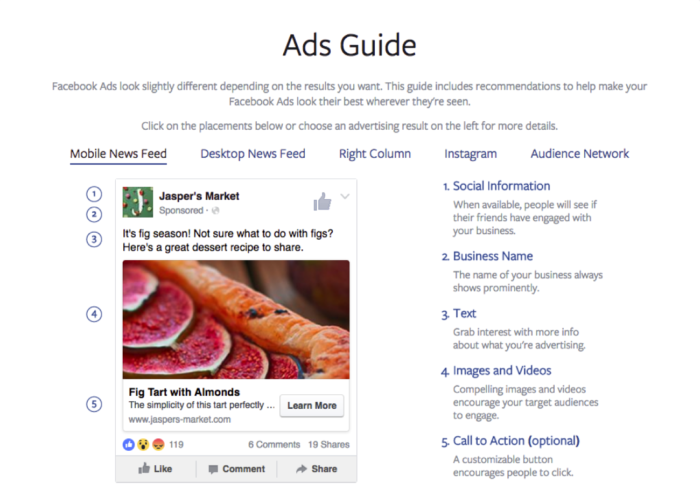
    Advertisements, on the other hand, can follow a wide range of formats. Facebook’s Ads Guide allows you to customize based on your campaign’s objective, be it brand awareness, lead generation, website traffic, or one of many others. The guide can also walk you through the different ad placements, focusing on which fields will be included in which type of ad. As shown in the images below, mobile and desktop news feed ads have space for social information, business name, text, images or videos, and a call to action.

    Image of Facebook's Ads Guide for mobile feeds - Search Influence

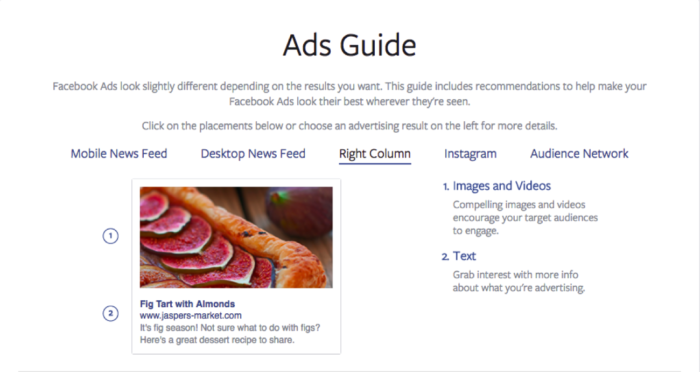
    Right column ads, on the other hand, only have space for text and images or videos:

    Image of Facebook's Ads Guide for right column information - Search Influence

    While all of these options make advertisements a bit more challenging than promoted posts, they also allow ads to achieve more diverse objectives. Promoted posts are great for growing brand awareness and driving engagement, but if you have goals outside of social media—for example, getting potential patients to fill out a consultation form on your website—then Facebook ads are the better way to go.

    What Are the Main Benefits of Facebook Ads?

    The reason why ads are more effective than promoted posts for driving off-Facebook conversions is the call to action (CTA) button. While exact numbers vary based on the industry, type of content, and action the reader is being called to do, statistics show that conversion rates increase dramatically when a CTA is present. While CTAs can be included in the text of a promoted post, the CTA button in ads allows your message to stand out even more. More importantly, it explicitly tells readers what action you want them to take, and allows them to accomplish it with just one simple click. Facebook also provides an easy drop down menu of popular CTAs for you to choose from, ranging from “Contact Us” to “Download” to “Watch More.”

    The second major benefit of Facebook ads is the platform’s detailed targeting options. These are available for promoted posts as well, and they can be set or altered within Facebook’s Ads Manager. While traditional advertising channels, like billboards or newspaper ads, can’t guarantee that your message reaches your goal demographic, Facebook ads can be carefully targeted to the people you want them to reach. For example, if you run a geriatrics practice in New Orleans, you can ensure that Facebook shows your ads to users aged 65+ in the Greater New Orleans area. Using Facebook’s targeting feature allows you to run a more efficient ad campaign. You can direct your time and money only toward the demographics that are most likely to become your patients, without wasting advertising resources on anyone else.

    What Legal and Ethical Guidelines Govern Medical Facebook Ads?

    As you’re certainly aware, the medical industry is heavily regulated. Everyone from the American College of Physicians to the Health Insurance Portability and Accountability Act (HIPAA) to Facebook itself has rules for medical advertisements. If you break them, your ads will likely be taken down, and in some cases, legal action may even ensue. While Facebook’s Advertising Policies provide a detailed list of prohibited and restricted content, the two biggest red flags for physicians are misleading content and patient confidentiality violations.

    Misleading content includes anything that could be considered deceptive or ambiguous to patients. The most obvious examples are photoshopped images or exaggerated guarantees; however, even subtle wording variations can lead to misleading content violations. For example, it’s generally okay for a physician to claim that Botox can contribute to a more youthful appearance. Yet, it could be considered misleading to claim that Botox will make patients look ten years younger or eliminate signs of aging. Although these statements are quite similar, only the first one is acceptable because it does not make any specific promises about the product’s outcomes. Some of the best precautions against misleading content include citing studies or journal articles whenever claims are made, and labeling all non-patient photos with the word “model.”

    While misleading content might get your practice in trouble with Facebook, violating HIPAA rules about patient confidentiality can get your practice in trouble with the law. As with misleading content, some precautions are obvious. For example, you should never post any identifying information about patients, such as names or faces. However, many HIPAA violations are less apparent. For example, it is prohibited to post images that do not clearly identify a patient, such as a rash on someone’s foot, unless you have clear legal permission to do so. Similarly, be careful that no pictures of the office have patients or medical records in the background. To avoid any issues, require patients to sign a consent form before using their images, or stick to model-labeled images and stock photos.

    Interested in learning more? Don’t forget to check back for the next post in our medical industry blog series, which will help you reach your target audience.

    For more information about getting started with Facebook Advertising for your hospital or practice, contact us here.

    Images:

    Ads Guide Mobile Feed

    Ads Guide Right Column

  • Growing Your Practice on Facebook, Part 2: Shareable Content

    Now that you’ve learned why Facebook is such a crucial tool for your practice, it’s time to master one of the most important aspects of Facebook: engagement. Facebook is all about conversation and interaction. If you aren’t creating compelling content and engaging with your followers on a regular basis, your social media campaign will fall flat—making the next steps in this series much harder for you. Here’s how to polish up your content and keep your followers invested on Facebook.

    1. Create Shareable Content

    At one point or another, we’ve all come across a Facebook post that just speaks to us; one we couldn’t help but share with a friend or add to our timeline. The act of sharing a Facebook post seems simple enough, but for your business, these shares are crucial to your social media campaign.

    According to Kissmetrics, more than 30 billion pieces of content are shared on Facebook each month. Facebook shares are powerful stuff for business because they help your message to grow exponentially. Friends share content with Facebook friends in a way you couldn’t have managed organically on your own. So, how do you help make this happen?

    Well, if your practice wants to be included in those 30 billion pieces of shared content, it’s essential that you start writing interesting and relevant posts your fans will really want to read. If you’ve followed our blog for a while, you’ve probably heard us quote the great Bill Gates saying “Content is king.” This saying holds true across websites and platforms, and Facebook is no exception. Compelling, authentic, and viral content is what earns you those valuable shares, which in turn means more fans and more social influence.

    Just one thing to clarify: we’re not saying Likes aren’t valuable in their own way. They can be a sign of popularity, a mark of agreement, or a note that “I agree,” or “I’m with you.” However, if your goal is to get your content in front of more potential patients, you should always be on the hunt for the ever-elusive Share. Got it? Let’s get started.

    How to Create Shareable Content

    The tricky thing for medical practices is that you’re busy, and your staff might not always have the time or expertise to sit down and brainstorm ideas for compelling content. But don’t worry—here’s a list of tips to get you on the road to those shareable posts.

    • Keep it short and sweet. The ideal length for Facebook is around 40 characters.
    • Don’t use too much industry jargon. The medical industry is notorious for its jargon. Just don’t forget to consider your audience when posting. Complex terms can be off-putting, and your busy readers will appreciate your effort to break things down.
    • Don’t make every post promotional. Patients will find it helpful to know your biggest and most relevant updates, including new staff members, upcoming events, and special deals. But keep in mind that no one wants to read a revolving door of the same products and services your practice offers. This type of repetitive content is unlikely to be shared.
    • Know when to post for best results.
    • Use images whenever possible. According to Hubspot, Facebook posts with images get 2.3x more engagement than those without images. Consider adding more personal images as well, such as photos of your office, your team, or your patients. This lets readers get a glimpse at the faces behind the computer, and it adds a personal, familiar touch to your posts that can’t be gained with stock images alone.
    • Consider creating a weekly themed post. This gives your fans something unique and interesting to look forward to on a regular basis. Maybe you want to highlight a recent article you read, inspirational images, or products your practice recommends.
    • Share or repost interesting updates from other businesses. Give your readers a range of information by sharing relevant information posted by other practices, industry leaders, or medical associations. This can also be a good way to help build a referral network.
    • Share something silly every now and then. It’s true that the medical industry has a reputation for being serious, but adding silly content to your page just for the sake of sharing the joy can make you more relatable. Funny yet relevant comics, relatable e-cards, cute videos, and even animated reaction GIFs might seem off-topic, but these types of posts are often widely liked and shared. These can be great for extending your reach if your practice’s name is attached to the content.
    • Come up with interesting topics. Don’t be afraid to change things up! If you need help with this, try one of our favorite tools, Answer The Public, which can help you get an idea of what your patients might be searching for or interested in.

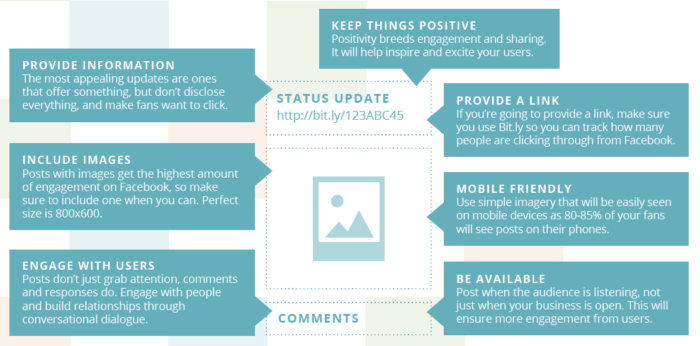
    Image Of The Ins And Outs Of Shareable Content - Search Influence

    These tips can go a long way in shaping your existing Facebook posts into something your fans will naturally be interested in. It can take time to master all of this, but even small steps can help increase your content’s shareability—and don’t forget that we’re always here to help!

    2. Engage With Your Audience

    Now that you’ve created your shareable posts, it’s time to sit back, relax, and watch the Shares and Likes roll in. Just kidding! The hidden “Part 2” to your shareable content journey is the engagement factor. Your audience will react and respond to your content, and they’ll also voice their own questions, comments, and concerns. Everyone wants to feel like they’re being heard, and responding to these inquiries shows your patients and potential patients that you’re invested in the discussion.

    One thing to keep in mind with Facebook is that if you’re in the habit of responding quickly, users will see your estimated response time right on the page. This estimate shows your attentiveness, which can be a great signal for potential patients on Facebook. So, don’t forget that taking even a few minutes to respond to your followers can go a long way.

    With the skills you’ve learned in this post, you’re already on your way to growing your medical practice on Facebook. Next time in our blog series, we’ll teach you how to enhance your Facebook campaign with promoted posts!

  • Growing Your Practice on Facebook, Part 1: Why Facebook Matters

    It’s no secret that Facebook isn’t going away anytime soon. Even with predictions a couple of years ago that the social media giant would lose a significant portion of its users to other contenders like Instagram, Twitter, WhatsApp, and Snapchat, they’ve managed to see steady growth. Since that prediction in 2015, they’ve gone from 1.2 billion monthly users to nearly 2 billion.

    So, let’s address the elephant in the digital room here. Is your practice on Facebook?

    In this series, we’ll break down the ins and outs of the best ways to reach your patients through Facebook, going over everything from advertising and shareable content to privacy rights and how to find the right images.

    Before we get into details of using Facebook to bring in more patients, let’s break down a broader question: Why is Facebook so important for your practice?

    Social Media Humanizes Medical Practices

    When’s the last time you talked with your patients outside of the office? In a report from the Health Research Institute, Ed Bennett, who oversees social media efforts at the University of Maryland Medical Center, notes, “If you want to connect with people and be part of their community, you need to go where the community is.”

    By using Facebook to interact with patients, physicians can create a dialogue that builds trust. Some patients may feel uncomfortable scheduling an appointment when all they wanted was to ask a personal medical question. Sometimes questions are just easier to ask through a direct message or comment rather than over the phone or in person.

    Medical Patient Sitting On Treatment Couch - Search Influence

    By commenting on, responding to, and answering questions directly through Facebook, unforeseen walls begin to break down. The best part? That starts to become what your practice is known for. Your medical office gets a reputation for being the place to go where people won’t feel afraid to ask about a diagnosis or procedure, how it affects them, or what their options are. It becomes the ideal venue for open communication. You’re no longer just a resource for patients when they come to your practice; you’re there for them at any time.

    Think about it this way. The average user checks their Facebook account daily. Will your practice be there to start a conversation when they log on?

    Expertise, Industry Experience, Specializations—Go Ahead and Tout It

    To go along the philosophical questioning of whether the falling tree in the forest makes any sound, are a physician’s best certifications and qualifications of value to patients if nobody knows about them?

    According to Search Engine Watch, nearly 90% of respondents aged 18–24 said they would trust medical information shared by others on their social media networks. This is also coming from a demographic that is more likely to share this information. Facebook gives physicians the tools to share their specific knowledge and expertise. Got a recent press release or blog post about a new technique offered exclusively at your practice? Put it on Facebook. It will demonstrate your expertise in your field while providing a great avenue for your patients to engage with and share this information.

    Also, in a time where anyone can share information and claim it as fact or scientifically true, physicians have the capability and responsibility to make sure accurate, helpful information is reaching their current and potential patients.

    Medical Patients Waiting In The Physician's Office On Facebook - Search Influence

    It’s All About Relevance

    Just as you shouldn’t make updating your Myspace page or LiveJournal your top priority anymore, you should be posting and staying up-to-date on Facebook to make your medical practice more relevant to what’s going on in your patients’ lives. It shows you’re a part of the online community, and ideally, it garners more traffic to your website and office.

    Ultimately, Facebook is more than just a place to share family pictures, an exciting recipe, or an awkward political conversation with an uncle. It’s a powerful resource for medical practices to reach their patients on a more personal level. Your patients are already there. We can show you how to utilize social media to find them and make them advocates for your practice. Reach out to us to learn how to implement a social media plan for your practice.

    For more information, stay tuned for our next blog post, which will teach you how to create and share content that moves your audience.

  • NEW ORLEANS, May 24, 2017 — The Plastic Surgeon’s Guide to Press Releases

    Search Influence has done a little blogging about press releases in the past, but now it’s time to kick things up a notch—or 16 billion notches. According to the American Society of Plastic Surgeons, Americans spent roughly $16 billion on plastic surgery in 2016, which is an all-time high. With thousands of plastic surgeons vying for a place in this lucrative industry, your practice should be using every tool at its disposal to keep up with the competition. One such tool is the press release.

    All About Press Releases

    The press release is THE classic public relations tool. It’s over 110 years old, but don’t worry—it’s still very relevant. The modern press release is published online and distributed through networks like PRWeb. A press release can inform media outlets about a newsworthy event related to your practice. Not only is this great for publicity, but it also helps with SEO. When reputable news sites run your press release or write a story about it, they provide authoritative backlinks to your website, which makes your website more authoritative in turn.

    Now, if you’re low-key panicking about what PRWeb, SEO, and backlinks even are, stop. Take a deep breath. Then, contact Search Influence to get all your questions answered.

    Image of a woman trying to decipher the workings of the internet - Search Influence

    If you’re already an SEO pro, great! Let’s move on to exactly what you should talk about in your practice’s press releases.

    Good, Newsworthy Topics

    Step one of writing a good a press release is choosing a newsworthy topic to write about. You should think of it as an announcement, not an advertisement. Press releases are not intended to hype your friendly customer service, compassionate care, or other unique selling propositions. They should not include a personal point of view, like “we” or “you,” and they should not include any promotional language. You probably are an exceptional surgeon who provides stunning, natural results, but PRWeb will probably reject your press release if you say as much. Instead, focus your press release on important recent events or developments.

    Here are some great ideas for topics to write about, courtesy of InboundMD:

    • Celebrating Milestones or Anniversaries
    • Participating in Community Events
    • Hiring New People
    • Acquiring New Equipment
    • Offering New Services or Treatments
    • Opening a New Location
    • Winning Awards or Honors
    • Speaking at a Conference
    • Publishing a Study

    All of these topics let you announce a new event or development that might capture readers’ attention. They also all provide the opportunity to frame your business as an objective leader in your field. A lot of practices could run ads claiming top-of-the-line equipment, but fewer practices could back up their claim with an objective and authoritative news story about acquiring new equipment. Press releases are a factual way to set yourself apart from other practices and stand out to potential patients.

    Sections of a Press Release

    Now that you have an idea of what to write about, let’s move on to some practical how-tos. Press releases follow a very specific format, and the sections are as follows:

    • Title
    • Summary
    • Body
    • Boilerplate

    The title should concisely announce your newsworthy topic. It should include your company name and an action verb.

    The summary should build on your announcement with engaging details to draw in the reader. For example, if the title announces that you published a study, the summary can explain how that study might impact surgical procedures or medical treatments in your field.

    The body is where the majority of the writing takes place. It should begin with a dateline, formatted like the image below:

    Image of a standard press release dateline example - Search Influence

    The dateline should be followed by a strong hook or lead to capture the reader’s attention. Then, the rest of the introduction paragraph should provide the reader with all the key details they need to know about your announcement. The following paragraphs should build upon these core details, until the final paragraph, which should briefly include your contact information.

    The body should be written in the third person, and language should remain objective, rather than promotional. However, you can include one or more quotations, from yourself or another knowledgeable figure, that can bend these rules a bit. A quotation can say, “I am proud of my practice’s dedication to technological advancements.” The rest of the body cannot. This is because the quotation is clearly attributed to an individual and framed as an opinion.

    The final section is the boilerplate, which is a brief, objective description of your practice.

    Pitfalls to Avoid

    Unfortunately, no list of things to do is complete without a list of things NOT to do. Press releases have fairly strict editorial guidelines, and as you know, the medical industry is heavily regulated. The following are some common mistakes made in plastic surgery press releases and how you can avoid them.

    It’s been mentioned several times already, but do not use promotional language or treat your press release like an ad. Objective language will not only get your press release accepted by PRWeb and news outlets, but it will also lead to more compelling writing. Again, tons of doctors claim that their practice offers experienced, well-trained care. You can prove that your practice offers such care by running a press release about the impressive experience and credentials a new hire brings to your practice.

    Don’t include general business information, except for your contact information and the boilerplate. It isn’t news that your practice offers Juvederm, Radiesse, and other injectable fillers. A lot of practices offer that. It is news, however, that your practice is the first in your area to offer a brand new line of injectable fillers. If you find yourself filling space with general business information, it might be a sign that you should choose a more in-depth topic.

    Don’t make any promises unless they are backed up by studies and statistics. This is not only because such promises can be too promotional for a press release, but also because everyone from Google to the American Medical Association has strict rules against misleading patients. Even seemingly innocuous claims about natural-looking or proportionate results can be flagged as misleading, as results can vary based on a large number of genetic and situational factors. To be safe, include reputable citations for all claims, and it doesn’t hurt to follow up with a disclaimer like “results may vary.”

    Ready to Start?

    This information should put you well on your way to writing the perfect press release for your plastic surgery practice. If you still have questions, or would rather leave the writing work to us, contact Search Influence! We’re happy to help.

    Images:

    Deciphering the Internet

  • Put a Ring on It: Turning Inquiries Into Lasting Patient Relationships

    Let’s envision an ideal scenario. Your private practice has a dynamic social media campaign, your website is optimized for all the right keywords, your blog showcases helpful and engaging posts, and maybe you’re even showing up on page one of Google’s search results. Basically, you’re an online marketing all-star. Well, to be honest, the real payoff relies on what you do next.

    Image Of Character Ron Burgundy - Search Influence

    How do you respond when all of this great marketing generates a lead? After all, you put a lot of hard work into building new patient relationships. But while all of this marketing could be seen as the courtship, handling the inquiry is the proposal. You better time it right and create an experience worth remembering.

    At this point, the prospective patient is taking the initiative to make contact, which means they are serious about taking action—they’re ready for a commitment. Even if you’re just posting your first Facebook status or still need some SEO guidance, every inquiry is the potential for a new patient to make the jump from interested to committed.

    Responding to inquiries is your first real engagement with a prospective client. They responded to your presence online, but how does it stack up to your presence IRL? In the healthcare industry, competition is high, and patients may be willing to travel great distances for the right provider—but that prospective patient may just move on to the next option if they don’t hear from you quickly or get the right answer.

    So, what’s the best way to ensure a “yes” to your proposal? Here are three tips to turn inquiries into actual patients.

    Image of Beyonce - Search Influence

    Respond Quickly

    Quickly can’t be overemphasized. In fact, according to The Lead Response Management Study conducted by Dr. James Oldroyd of MIT, the odds of qualifying a lead are 21 times less likely when comparing a response rate of 5 minutes vs. 30 minutes. Similarly, according to research from Harvard Business Review, companies that follow up on leads within an hour are 7 times more likely to have a meaningful conversation with the decision maker. This isn’t all that surprising when you consider our fast-paced culture of instant gratification. That same person who reaches out to your practice is likely contacting your competition, scouring through Google results and online directories to weigh the best healthcare options. They may already have their appointment scheduled at the office next door if you don’t respond quickly.

    You can increase your response speed by creating a short cheat sheet or script for answers to common questions, especially pertaining to pricing. This will empower an administrative team to handle inquiries confidently and quickly without consulting with the doctor or dentist before every response. Don’t forget that inquiries on social media, like questions through Facebook messaging, should be treated with the same level of professionalism and timeliness. Other features like online chat and online appointment scheduling make the conversion happen even more quickly. Many users are opting for digital communication, and it’s important to talk to your prospective patients in the format that they prefer.

    Track Your Leads…and Your Successes

    So how do you know what your patients prefer? You can start by collecting valuable information about the behaviors of your current and prospective patients to meet their needs better and make communication as seamless as possible. Online and call lead tracking will allow you not only to understand which communication methods work best, but also what led interested parties to your practice in the first place. Are they interested in a specific treatment page? Are they looking for plastic surgeons close to a particular location? Tracking this behavior can help tailor your response and deliver the right information.

    A tracking system also allows you to keep a detailed record of your correspondences and successful conversions. Use these metrics to determine what’s working and where to focus your energy. Maybe you see the biggest conversions through your online appointment scheduling feature, or maybe most of your new patients are searching on mobile and calling the office—use the data to build on your successes. For example, if you see a lot of phone call conversions, you can tailor your online marketing campaign to feature your phone number more prominently in your ads and website copy. Either way, you can’t make improvements if you don’t have the data. Learn more about the value of lead tracking and analytics.

    Listen to Their Needs and Make It Personal

    Now that you have systems in place for generating prompt replies and tracking your successes, you can focus on the actual response. This part might seem obvious, but it’s the most important aspect—especially in the healthcare industry where your customers are trusting you with, well, their health. Make sure your response includes questions, and spend more time listening to the inquiry than dishing out information. While phone scripts or automated email responses are great timesavers, be sure you consider multiple lead types and create responses that can fit different common inquiries like procedure costs or consultation requests.

    Remember that your response should show that your office is competent, knowledgeable, and compassionate. This extends beyond the healthcare professionals to the caring and attentive administrative staff answering the phones and making the appointments. Each employee is a representative of your brand and can create a memorable first interaction—whether it’s a phone call, email, or social media post. Your staff or a marketing agency should be equipped and ready to handle responses appropriately through multiple channels.

    Essentially, your response should be crafted to potential patients’ needs from the very start. While it may seem simple, ensuring that these steps are built into your systems and training will result in consistent and successful conversions. When it comes to healthcare, patients are looking for the gold standard in quality. So if you’re popping the question (you know, the “do you want to schedule an appointment?” question), be sure to time it right and execute a thoughtful, personalized message. Of course, if you’re still working on your online marketing all-star status, we’re always here to help.

    Images:

    Ron Burgundy

    Beyonce

  • Follow the Numbers: Trends to Guide Your 2017 Plastic Surgery Marketing Plan

    With 17.1 million surgical and minimally invasive cosmetic procedures performed in the United States in 2016, a few key trends stand out as opportunities. According to a report released by the American Society of Plastic Surgeons, patients are trending toward fat grafting, non-invasive fat reduction, and facial enhancements. These trends present areas of potential growth for plastic surgeons by focusing their annual marketing plans on the procedures that patients are most interested in learning about. After all, the first step to any great marketing campaign is to understand how to appeal to your target demographic.

    What Do the Numbers Show?

    The first and most notable pattern is that patients are using their fat to enhance other areas of their body. Using liposuction, plastic surgeons remove unwanted fat from the abdomen and inject it into other areas, including the face, buttock, and breasts, to enhance and sculpt the desired look. This process of fat grafting showed a 26 percent increase for the use of buttock augmentation and a 72 percent increase for use in breast augmentation in 2016.

    Patients love the longevity of the results achieved using this method, and that’s certainly a potential benefit to highlight in a marketing campaign. Plus, patients often mention the added benefit of two surgeries in one, as they are especially happy to remove unwanted fat while also enhancing desired body parts. In addition to the cosmetic benefits, this surgery is also a popular option for breast reconstruction patients for many of the same reasons.

    Do Patients Know All Their Options?

    Audrey Hepburn getting a closer look - Search Influence

    While these innovative procedures are gaining popularity, doctors might not realize that many potential clients don’t even realize that this is an option for them. In fact, recent studies show that only 23 percent of women understand the full range of breast reconstruction options available. This indicates that marketing campaigns targeting new customers should focus on disseminating the facts and shining a spotlight on industry advances. By presenting the full range of innovative options available, like fat grafting, patients are more inclined to take the first step to schedule a consultation.

    Paid search and Facebook advertising campaigns may be especially effective in this instance, as both are often great avenues for reaching highly specific demographics. For example, Facebook’s targeting options include new people who have moved into your office’s geographic area or even specifications like salary, industry, and age. You probably already have an idea of the ideal customer for your medical practice, and using these targeting features, you are not only more able to reach them, but you can also present them with the information that they actually want to learn about.

    The same applies to Google searches. After all, if someone is searching on Google to learn about new augmentation options available, don’t you want your practice to show up in the top results as a trusted source for their desired information? Your campaigns should focus on the keywords that match the data trends, and your content should focus on informative, highly-curated landing pages that prove you’re a reputable source. All of these elements combined can lead to big conversion results.

    What About Non-Invasive Trends?

    Another major trend shown in the data from 2016 indicates a move toward non-invasive techniques for skin tightening, rejuvenation, and fat reduction. Injection procedures, like Kybella, that target areas of fat in areas under the chin or along the bra line increased 18 percent in 2016. Additionally, procedures like cryolipolysis (to “freeze” away fat cells) also showed an upward trend with a 5 percent increase. Other non-invasive skin tightening procedures saw a similar 5 percent increase.

    Broadband light and laser treatments are among these popular options for non-invasive skin tightening and offer versatile results with little to no downtime for the patient. While these procedures do not require surgery, patients still want to know that they are receiving services from a reputable, board-certified physician. This is a major area of opportunity for plastic surgeons to focus on in marketing campaigns. An emphasis on innovative technology to achieve long-lasting results shows patients that your office is ahead of the curve and committed to new advances in the field.

    How Do Trends Look Year Over Year?

    Looking at the changes and trends from 2015 to 2016, we can also note which types of procedures show an increase or decrease in popularity. With nearly 1.8 million cosmetic surgical procedures performed, liposuction showed a noticeable jump, up 6 percent from 2015, which may reflect our earlier trend toward fat grafting. Additionally, breast augmentation remained a popular choice for patients, filling the top slot and showing a 4 percent rise from 2015. Finally, as a fairly new procedure to gain in popularity over the last few years, the labiaplasty procedure increased by 36 percent in 2016.

    Another notable movement is the focus on the face, with an increase in facelifts by 4 percent from 2015. In conjunction with the surgical focus on face enhancements, non-invasive procedures, among the 15.5 million performed in 2016, showed a similar trend. Filling the number one slot, Botox procedures increase by 4 percent, with a total of 7 million procedures performed annually. Soft tissue fillers and chemical peels also showed steady inclines in usage from 2015 to 2016.

    How Do You Build Relationships with Patients?

    One possible pattern indicated in these trends is the frequency in which patients are meeting with their plastic surgeons. Patients feel more comfortable discussing all areas of their body with their surgeon, and a long-term relationship can develop between patient and physician. This indicates that a person may be interested in learning about multiple procedures, including both non-invasive and surgical options. A dynamic marketing campaign should reach new target demographics while also building on the loyalty of current patients.

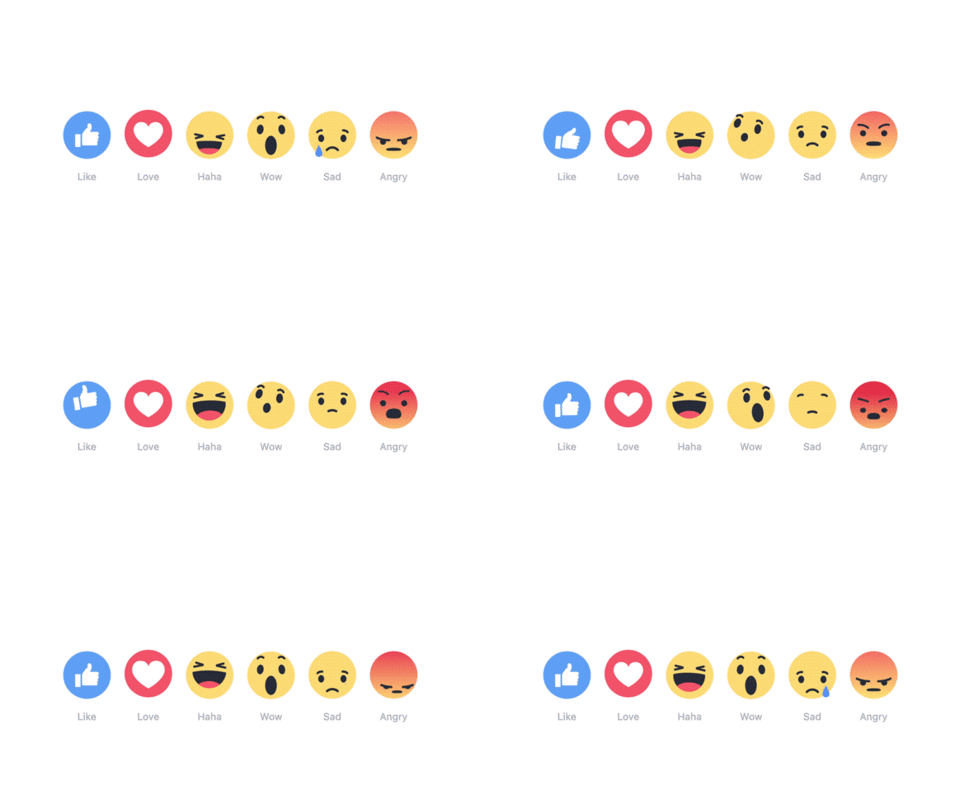
    Emoji Gif - Search Influence

    Email newsletters and Facebook campaigns are great ways to stay in contact with your audience and keep them engaged in your services. Share patient testimonials, highlight employee profiles, and add personal elements that showcase the people-centric side of your business. Encourage happy customers to share their results with Facebook reviews and always make time to answer questions and comments that arise from your posted content. By creating multiple platforms for engagement online, you’re opening a line of communication with clients that can build trust, keep them informed, and ultimately create long-term success for your medical practice.

    If you’re ready to create a dynamic marketing campaign that draws on current trends and builds your plastic surgery practice as an industry leader, the first step might be less invasive than you think. Focus on your audience, deliver relevant information, and stay true to your brand.

  • 5 Rookie Mistakes That Will Ruin Your New Website’s SEO

    SEO Mistakes to Avoid

    Here at Search Influence, we take pride in providing valuable SEO information and tips for our clients, from the nitty gritty of Google’s algorithms to the basics of designing a great website. Our recently published white paper covers 5 SEO mistakes that could be lurking in your web design. Here’s a rundown of the rookie mistakes you may not know you’re making.

    Your Site Is Too Slow to Load

    Large, unoptimized images on the landing page can significantly decrease site speed. Not only does this lead to poor user experience, it affect how Google ranks your site in searches.

    You’re Not Allowing the Site to Be Crawled

    Web crawlers are how search engines know pages of your site exist and what the pages are about, so restricting their ability to crawl and index essentially renders your site invisible in search results.

    Your Site Isn’t Mobile Friendly

    Mobile Phone

    More and more people use phones and tablets to access the internet. You can miss a large percentage of your target audience if you do have have a mobile friendly site.

    It’s the Wrong Kind of Flashy

    Relying too much on Flash elements can slow down your site and causes complications for mobile users. And while single page sites can be visually appealing, you can miss many optimization and analytical opportunities.

    The Content Is Weak

    When it comes to Google’s algorithms, text is more important than visuals. Good content gives a better understanding of what the page is about, for crawlers as well as human readers. And old fashioned SEO techniques, such as keyword stuffing, can do more harm than good.

    If you’re concerned that your site may be suffering from any of these problems, fear not. Check out our white paper for more detailed information on each of these concerns. Once you have a better understanding of the issues at hand, you can reach out to your web developer or one of our SEO specialists to begin addressing your concerns.

    Image 1 Credit

  • 5 Medical Practices Effectively Using Instagram

    Instagram’s visual language is a great way to tell your brand and practice’s story. The layout is both straightforward and engaging. The platform is on the rise, and Instagram users are nearly 60 times more likely to share an image than those on Facebook. In a field that can be rather clinical, pun intended, Instagram provides medical professionals a means of showing their personality and building trust with their patients. Images spark engagement through follows, likes, and comments. A medical practice’s Instagram feed allows it connect with patients and customers through conversation, questions, and concerns. With the use of hashtags, you can find new audiences and grow your following.

    In this post, I highlight five medical practices that are effectively using Instagram to promote their practice.

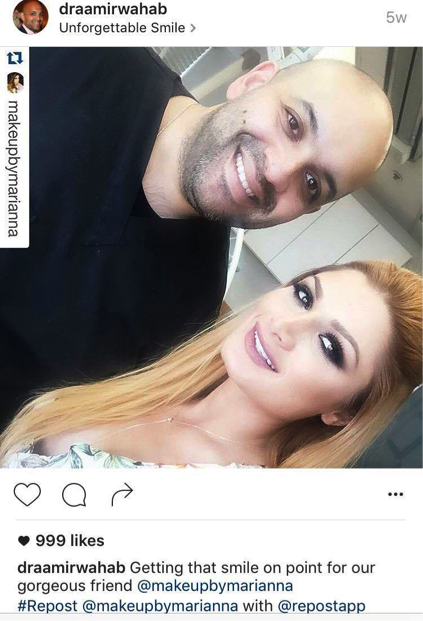
    #1: Dr. Aamir A Wahab – @draamirwahab

    Dr. Wahab’s dental practice Unforgettable Smile is located in Beverly Hills. He uses Instagram to promote the diverse dental and oral health care services he provides. Dr. Wahab counterbalances those more technical images, such as x rays, molds, and dental tools, with photos of himself with clients, both celebrity and unknown. Before and after images, with patient permission of course, are a great way to show client results. Not only do they demonstrate your skill, but it allows potential patients to see what’s possible. It’s also an ideal time to employ a hashtag like #transformationtuesday. Overall, Dr. Aamir’s Instagram is successful because it’s diverse in its content and constantly engaging—and it doesn’t hurt that he’s a “celebrity dentist.”

    Medical Practice Instagram Example #1

    #2: Dr. Chris Balgobin aka Dr. BBL – @ddr.bbl

    Dr. Balgobin is a cosmetic surgeon specializing in liposuction and Brazilian butt lifts, or bbl. He’s also a franchisee of Dr. Miami, also known as Dr. Salzhauer, whose Instagram is a little more eccentric than most medical practices. Dr. BBL’s Instagram feed is almost entirely before-and-after photos, and the majority of those are butt lifts. While some doctors on social media are more clinical and matter-of-fact, Dr. BBL’s Instagram takes very graphic results and portrays them lightheartedly. His use of emojis, selfies, and memes bring a more playful side to his medical practice. He’s done an expert job of displaying his niche in the larger field of cosmetic surgery while keeping his content engaging and tailored the platform on which it appears.

    #3: St. Charles Vision – @stcharlesvision

    St. Charles Vision is a doctor-owned facility providing comprehensive care. They have six locations serving the Greater New Orleans area. Their approach to Instagram is just as comprehensive. Their feed features new trends in eyewear, client portraits, celebrity spottings, and more! St. Charles Vision is also very active in the community, and their feed shows views around town. In a field all about the visual, it’s obvious that optometrists should be promoting themselves in graphic terms. Their feed features a lot of original images. Though they occasionally throw in an advertisement for a certain brand of glasses, the majority of the photos are unique to the business. They also connect their followers and encourage engagement with the hashtag #raiseyourglasses. St. Charles Vision’s new Distinctive series with artist Zack Smith features striking images of clients in fashionable glasses. This is a great way to promote your products and services, while also highlighting your wonderful customers!Medical Practice Instagram Example #2

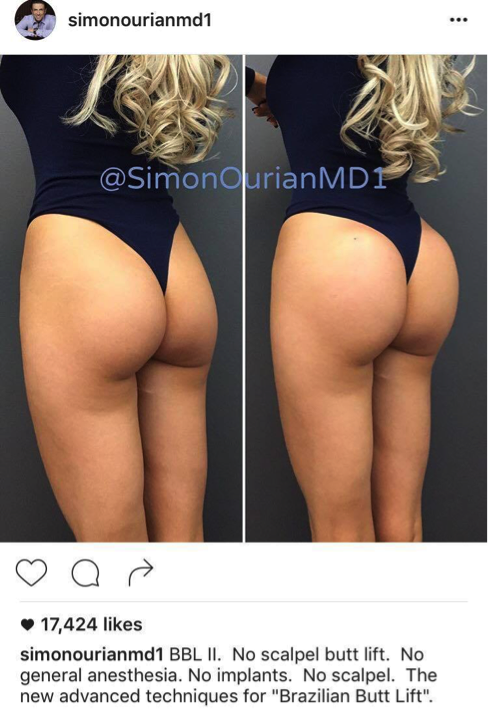
    #4: Dr. Simon Ourian – @simonourianmd1

    Dr. Simon Ourian is a cosmetic dermatologist based in Beverly Hills. He uses Instagram to establish his expertise in his field. Dr. Ourian’s posts educate his clients about the causes of different cosmetic concerns, the various treatments, and even describe his consultation process and pricing. The classic before and after images of non-surgical butt lifts, laser treatments, and botox injections are visual testimonies of his work. These images foster both interest in the practice and trust in the doctor’s results. Dr. Ourian posts nearly every day and features a variety of images, as well as videos. This ensures his feed is diverse. He’s active on the platform but does not overwhelm his followers with multiple posts a day or anything overly promotional.

    Medical Practice Instagram Example #3

    #5: Dr. Sandra Lee aka Dr. Pimple Popper – @drpimplepopper

    Dr. Sandra Lee is another dermatologist that’s keeping it “poppin” on Insta, but definitely in a different way from Dr. Ourian. Dr. Pimple Popper has become an internet sensation, and this account is the perfect example of a medical practice using Instagram successfully. Be warned—her account is not for the faint of heart! Before Instagram, Dr. Lee’s YouTube channel had few followers, but now her Instagram account boasts 1.3 million followers! You can watch short clips of cyst removals, popped pimples, never ending blackheads, and literally everything in between. Want more? Almost every Instagram video on her account prompts users to visit her YouTube channel for longer clips.

    Dr. Lee posts photos and videos daily. She’s consistently engaged with users, even building anticipation for full videos with sneak-peek clips and teaser images. Fans come together under her hashtags #DrPimplePopper and #popaholicsunite. Instagram users comment with their delight and disgust, and share these videos with friends and families for amusement and shock value. Dr. Lee has built a loyal fan base that keeps coming back. The Dr. Pimple Popper Instagram account has been featured in the Huffington Post, BuzzFeed, and more!