Author: Will Scott

  • Website Cookies: Should You Be Concerned?

    Website Cookies: Should You Be Concerned?

    You’ve probably noticed that many sites notify you that they use cookies and ask you to save them. You may have also noticed that these notifications are more frequently appearing on sites. Why have cookies become so prevalent, and should you be worried?

    What Is a Cookie?

    A cookie is a small text file that stores a unique ID placed on your computer by an advertiser or publisher to help them keep track of your usage and behavior.

    Why Am I Suddenly Hearing so Much About Cookies?

    Recently, there has been a lot of legislation around privacy on the internet. The first example of this is the European Union General Data Protection Regulation (GDPR).

    More recently, California has gotten into the act with the California Consumer Privacy Act (CCPA).

    The impact of the CCPA is not as widely known, but the GDPR calls for disclosure and consumer control of tracking information placed on a user’s computer.

    In essence, a website owner or publisher has to give the user an opportunity to review and/or opt-out of tracking cookies.Expect this trend to grow as more governments express concern over the use of user data.

    What Are Cookies Used For?

    Cookies are used to keep track of your usage of websites and your interaction with advertising.

    Most people are familiar with the phenomenon where they look at a pair of shoes in an online store and then those shoes follow them around the internet. This is called “retargeting” or “remarketing.”

    Cookies are also used to store usernames, passwords, and other information for websites you visit frequently.

    And, cookies allow website managers to understand the way you are using their website so they can better tailor their content to you and future users. An example of this is the cookie that gets set by Google Analytics, the most popular analytics package on the internet.

    So, cookies are potentially really useful if you like to see ads tailored to your interests, or if you don’t like having to re-enter all your information on websites.

    Beyond targeted advertising, cookies can start to tell a lot about you as an internet user. Do you prefer Nike or Adidas; Ford or Volvo; Gucci or the Gap?

    Should I Be Worried About My Privacy?

    First, you should accept that privacy in this day and age is a comforting illusion. Just kidding. No really, I’m not kidding—there is no privacy on the internet.

    Most cookie usage is completely benign and, in many cases, helpful. Like any technology, cookies can be used for good and evil. And, most cookies are used in aggregate form such that your personally identifiable information is not available.

    Examples of negative cookie usage:

    • Excluding certain demographic groups from finance and housing offers—which is illegal.
    • Showing hateful political ads to groups known for a propensity to violence—which should be illegal if it’s not already.

    By your interactions with various websites and advertisers, you are sharing a lot of information. If used legally, it is not necessarily personally identifiable.

    If you are the type to take online surveys or play online sweepstakes, or even give up your email address for a 20% off coupon, you are now connecting the real you to the virtual you. You are giving up your privacy in exchange for some value.

    But you got cookie, so share it maybe Cookie Monster quote

    Websites with access to particularly sensitive data, like doctors and hospitals, have very strict rules about personally identifiable information and its use, dictated by HIPAA (Health Insurance Portability and Accountability Act of 1996).

    With enough distinct data points, it’s possible to get pretty close to identifying you individually. And you can easily imagine how once credit card data gets into the mix, you can tie humans out in the world, driving around and buying stuff to website visitors.

    Credit card companies are already selling your data. One of the biggest data aggregators, Acxiom, maintains a website where you can see all they know about you. It’s currently down for revision, but when it’s back up you can go to https://aboutthedata.com to see all the details.

    They know what cars you drive, what you paid for your house, and how much debt you have. It’s a lot of potentially scary information.

    So if you’re prone to worrying about your privacy, yes, you should worry. In the general case, however, you don’t have much to fear.

    How Can I Keep Myself Safe?

    If you are supplying private information like health or financial information, make sure the site you are using is secure. You can tell a website is secure because it will have a small lock in the address bar next to the website address.
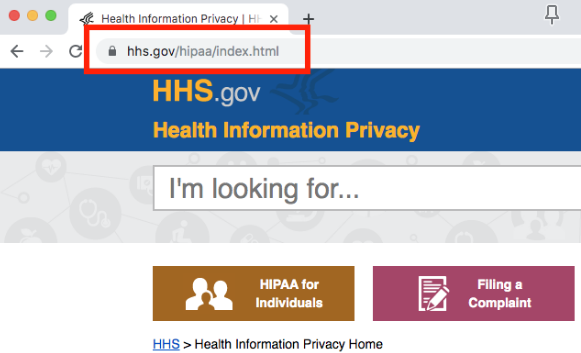
    Example of an HTTPS secure site helping protect users data

    If you’re really browsing where you don’t want to be tracked, you can use the private browsing mode enabled by your web browser.

    In Google Chrome, this is called “incognito mode.” In the Safari browser from Apple, it’s called a “private window.”

    These modes are intended to not store any cookies beyond your current session and should provide a firewall between your existing cookies and the sites you visit.

    The Future of Online Tracking

    Today, an advertiser can buy ads that connect with you on computer, mobile phone, or even a billboard you drive by.

    The personalized billboards of the Tom Cruise movie “Minority Report” are not far off.

    Fortunately, governments the world over are starting to legislate data use. It is hard for governments to move as quickly as technology entrepreneurs, but GDPR and other similar regulations will keep the good actors in line.

    But listen, be smart! Just like you wouldn’t want to leave your wallet on a park bench, you don’t want to go giving up all sorts of private information to anyone who asks for it online.

    If you don’t trust a site or it is not secure, don’t give it personal or financial information. Think twice about whether that 20% discount is worth the information you have to give up.

    Advertisers and website publishers will continue to innovate to get closer to you as a customer This is a good thing if done appropriately.

    Some simple steps on your part can keep you as safe online as you are in the comfort of your own home.

    If you own a website and are concerned about the legality of cookies, the digital marketing experts at Search Influence can help. Start a conversation today.

    Images
    Cookie Monster

  • Map Spam, Review Stars and Google Winning: Learnings from Local U Advanced 2019

    Map Spam, Review Stars and Google Winning: Learnings from Local U Advanced 2019

    Local U Advanced, in Denver on September 19, 2019, was a great event. It was the biggest Local U Advanced yet and jam-packed with great learnings for the assembled marketers.

    Local U has a few different formats for conferences. There are industry-specific conferences on demand, locally focused SMB conferences under the Local U banner and the flagship, Local U Advanced where the Local U faculty share advanced knowledge with in-house and agency marketers.

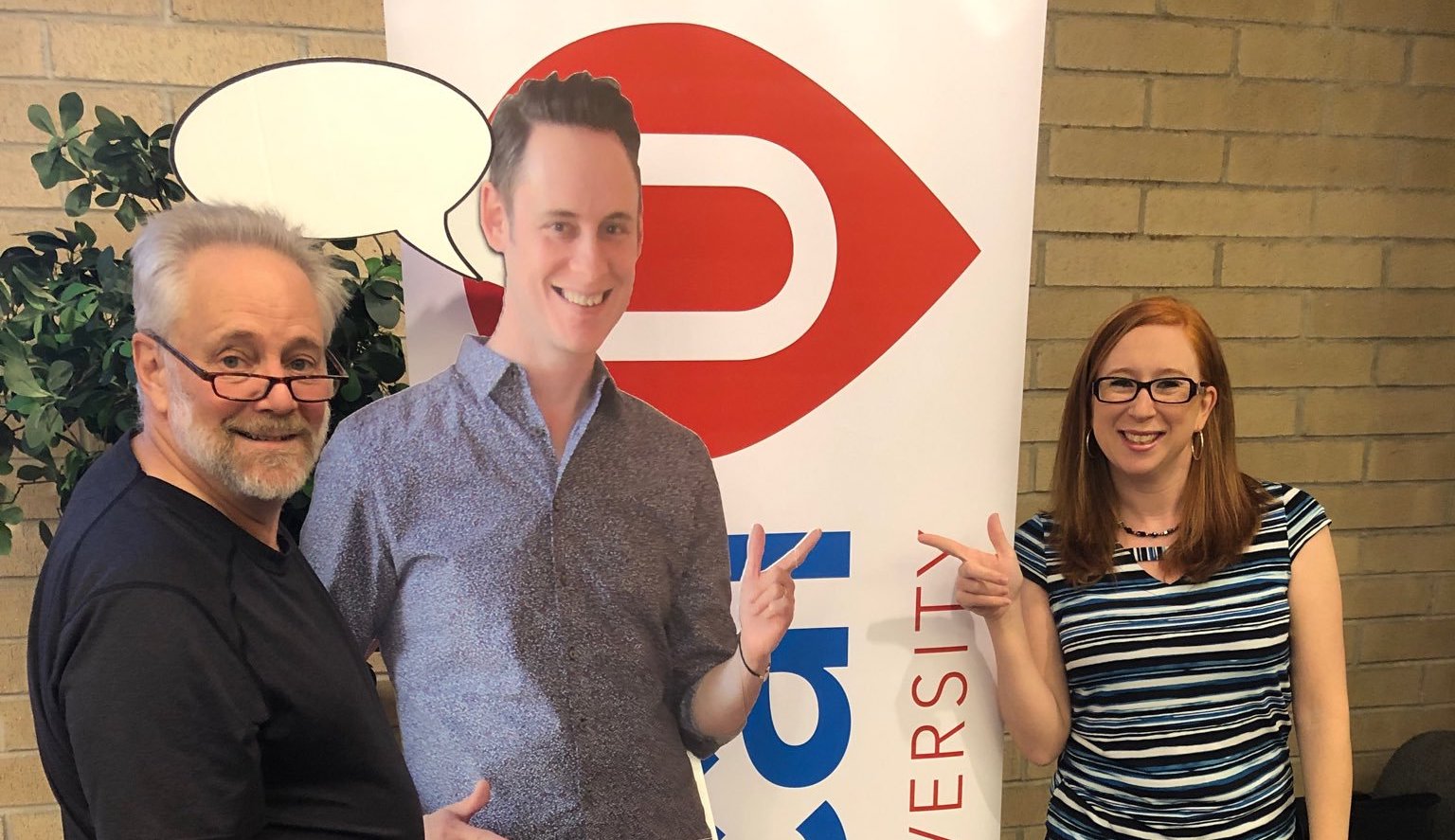
    Mike , Joy Hawkins and D'Ron at Local U Advanced 2019 confrence

    I would be remiss if I didn’t start this post with the biggest bombshell of the day:

    Sterling Sky is buying Local U.

    For those that don’t know, Local U is a collaborative started around a decade ago.

    At formation, the ownership group included Mike Blumenthal, David Mihm, Mary Bowling, Ed Reese, Matt McGee, Aaron Weiche, Mike Ramsey, and myself (Will Scott). In the time since, we’ve had a number of guest faculty and a good number of steady contributors, including Joel Headley, Joy Hawkins, Darren Shaw, Cindy Krum, Carrie Hill, and Greg Gifford.

    With personal priorities and conflicts, the full-time faculty (a.k.a. owners) have had varying levels of commitment but have always brought knowledge from their respective professional areas.

    Special recognition is due to Carrie Hill for her more recent role as chief cat herder.

    There was too much knowledge dropped to share it all, but I’ll share a few of the takeaways I found most actionable.

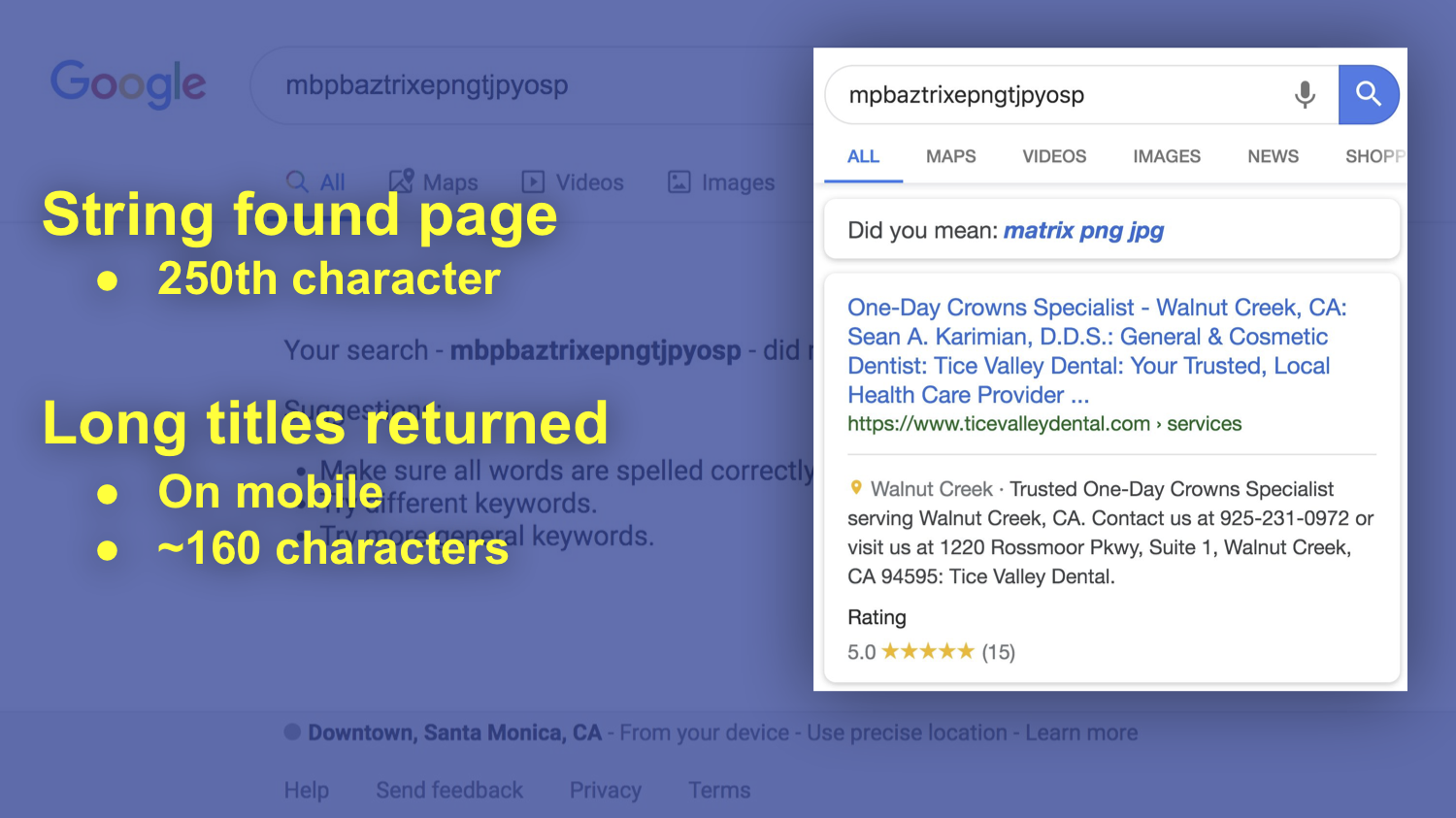
    We Have Been Wrong All This Time about < Title > Length

    Joel Headley, a former Googler, now works with PatientPop, an online marketing platform for physicians. At PatientPop, Joel has access to thousands of websites on which he can test theories about ranking.

    Let’s stipulate that the HTML title tag is one of the most important pieces of text on any web page. Feel free to disagree, but you’re wrong. For the longest time, SEOs have believed that to include any more text than is displayed in Google’s blue links was redundant and potentially harmful to ranking.

    Through his testing, Joel shows unequivocally that this thinking is incorrect.

    Google search result showing high character count titles

    In his presentation, Joel demonstrates that it is absolutely possible to appear in searches for terms that are not displayed in Google’s desktop SERP (search engine results page). Additionally, and perhaps more interesting in the coming “mobile first” world, Joel shows us that including more information can be extremely helpful in mobile where more characters from the title tag are shown.

    Why does the mobile thing matter? There is less real estate available on screen, so any additional space you can grab increases your prominence.

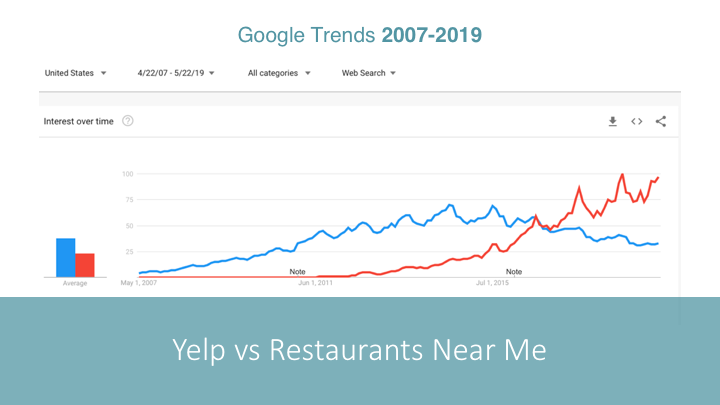
    Google Is Eating Yelp’s Lunch (and Dinner and … ) in Review Volume

    Mike’s presentation showed us that our wish is finally coming true. Yelp is becoming irrelevant.

    Google Trends chart showing Yelp vs. Restaurants Near Me

    Given Yelp’s historical reputation with small businesses I’m sure this will be well received. Yes, Google is often too big to care, but at least they’re not perceived as predatory and capricious in their application of their own rules. Mike shares in his presentation a number of interesting facts about reviews then and now:

    • Consumer trust in reviews is leveling off over the last few years.
    • After increasing from 2014-17, the number of people who leave reviews appears to be leveling off as well.
    • Consumers don’t believe in perfection. A 5 star business is less trusted.
    • The magic number appears to be 4 – 4.5 stars for highest trust (and revenue).
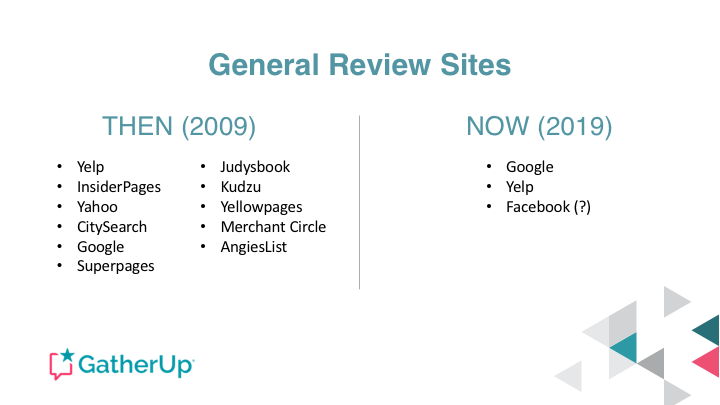
    • There are a lot fewer review sites being used today.

    List of General Review sites 2009 vs. 2019

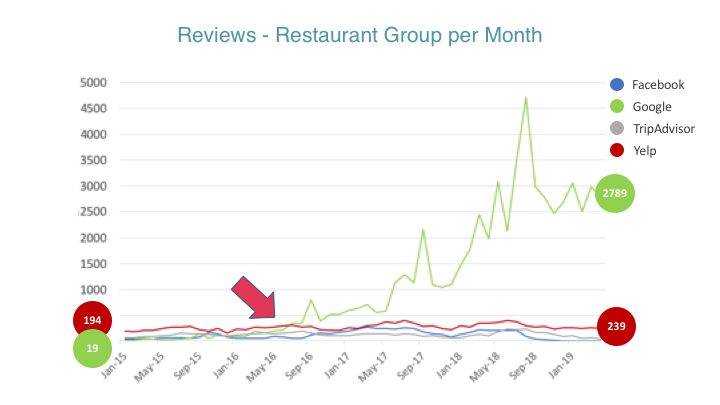
    Yelp has historically had the greatest depth in restaurants and hospitality. Even in this area of historical strength, it appears Google is not just winning but crushing Yelp.

    Growth of Reviews over time chart

    Mike recently wrote about Yelp’s real-world impact on the GatherUp blog.

    You Probably Aren’t Taking Full Advantage of GMB (Google My Business)

    David presents some pretty amazing data. The team at ThriveHive created a GMB grader that provides them with great insight into a variety of businesses and their adoption of GMB services.

    David presents so much data it’s hard to pull highlights, but I’ll try.

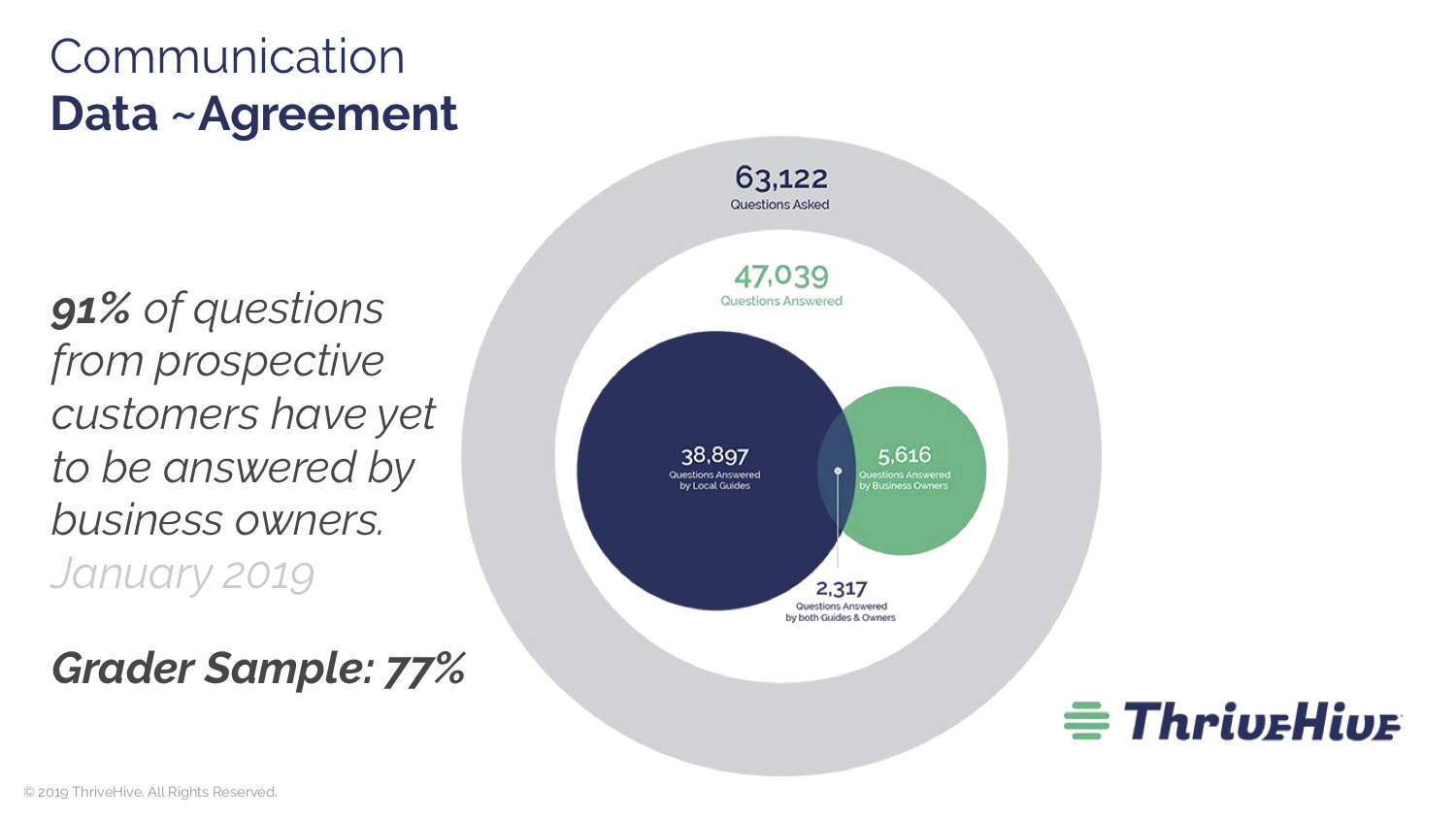
    It appears that Q&A is not getting significant traction with business managers.

    Chart of percentage of unanswered questions from prospective customers to business owners

    As you can see, 91% of questions are going unanswered. Imagine if the proprietor of a business you were standing in just ignored your questions. It is absolutely critical for businesses to discover and engage with this feature.

    A great strategy that’s often talked about is seeding your Q&A. As a business manager, if you know there are common customer questions, you really ought to take advantage of your knowledge and have some friendly users ask a few of them so that you can provide an answer.

    There is a bunch of junk in Q&A from folks who want to answer but can’t quite add value.

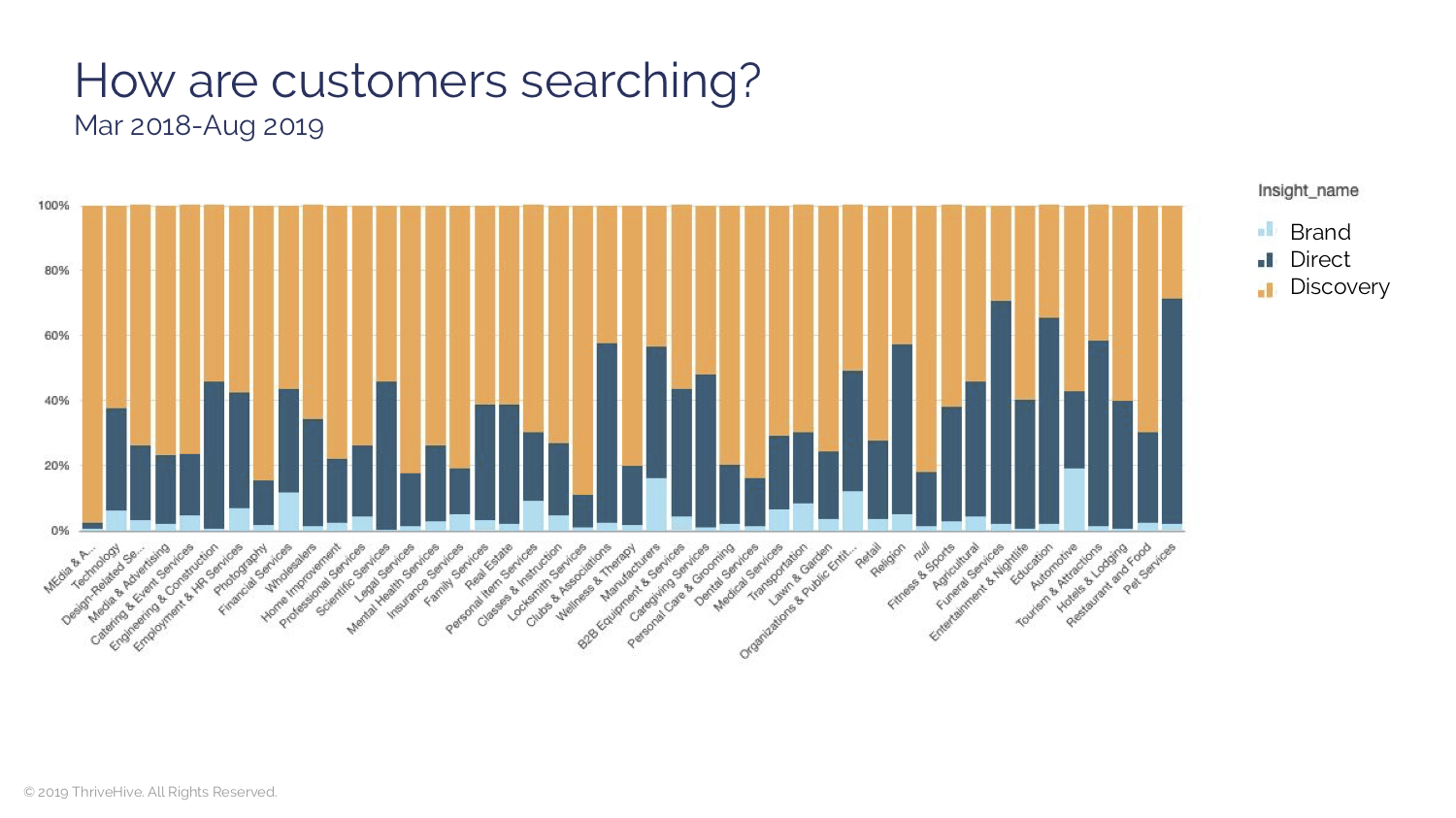
    David’s data also shows us that for many of the searches where GMB data is prominent, the searcher doesn’t necessarily have a business in mind. In other words, GMB is where discover searches are happening.

    how are customers searching chart

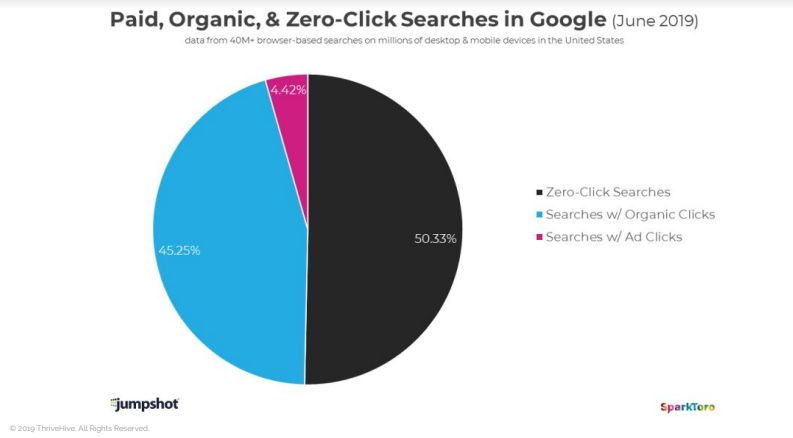
    And finally, reinforcing the importance of GMB as discovery search, David shares data from Rand Fishkin’s SparkToro which demonstrates the scarily high number of no-click searches. If searches are getting their final answer from the Google SERP it is critical that data reflects your business accurately.

    paid organic zero click google search pie chart

    It’s time, folks. No more hoping it’s just a fad, we’ll need to integrate GMB into our marketing plans.

    Yes, Reviews Schema Is Dead, but It Probably Doesn’t Matter

    Marketers get really excited over small advantages—incremental gains. And historically, the data shows that those schema driven review stars in the SERPs do drive a higher click-through-rate.

    But guess what. They’re gone. Say goodbye. Will they come back? Who knows. If Google determines that users are suffering without them, perhaps. But, given they take attention away from the Google owned features, they’re probably not coming back.

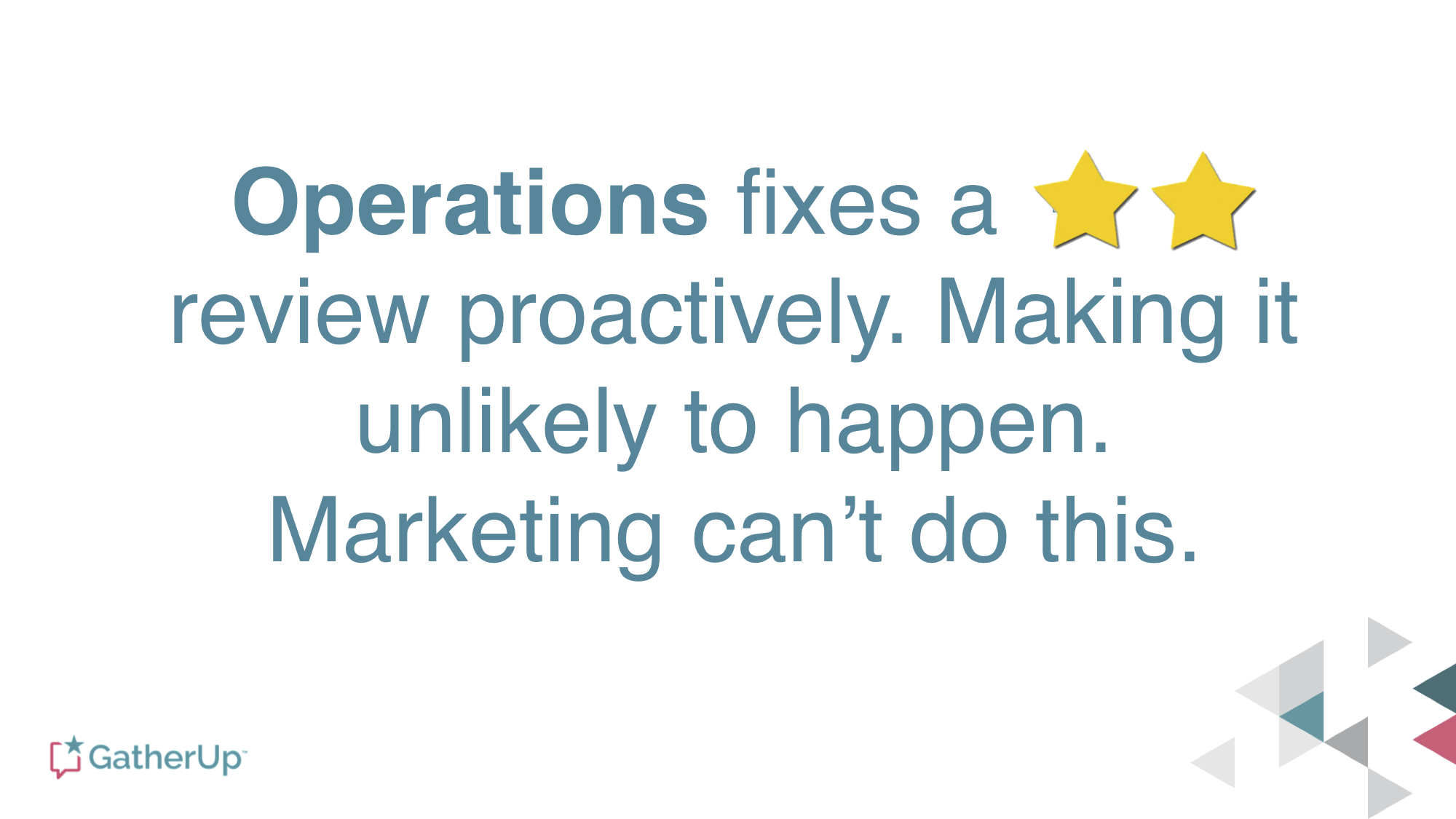
    Mike B. says it best. If you want to have great reviews, don’t suck. Sucking is not a marketing issue. It’s an operations issue.

    Aaron points out that the best reason for making it easier for clients to give you reviews is to hear from them. If you are only asking for reviews to get five stars, you’re doing it wrong.

    Listening is Greater Than Reviews grandma meme

    And, in regard to Schema, they’re the sprinkles on the donut. They’re a perk at best and perhaps even a distraction from what really matters—hearing the voice of your customers.

    Donut with sprinkles and pink icing

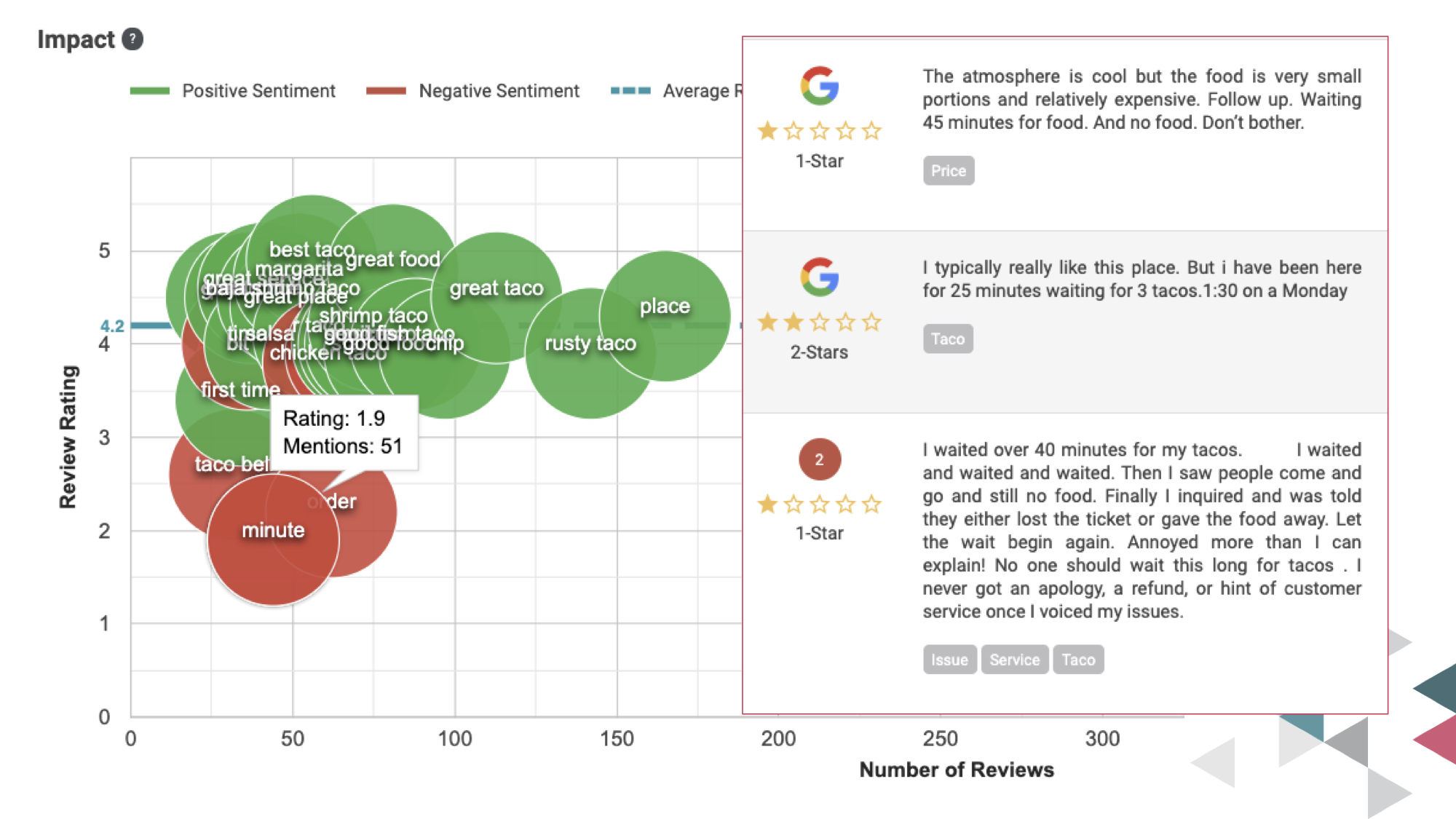
    In line with hearing the voice of your customers, GatherUp has recently added a feature that allows you to see the words used alongside sentiment analysis. So you can view the difference between the words happy and unhappy clients use.

    It’s a feature that’s early in its development, but you can see how it enables a bunch of good stuff. You get to know your customer even better, and you have an opportunity to sculpt the way you talk about your product. What if your team, your marketing, and everything else only used words that were associated with happy customers?

    GatherUp Sentiment Analysis chart

    One of Aaron’s really important points is that reviews don’t fix anything. They give guidance to operations on how to fix things.

    Operations Fixes Reviews Report quote

    Cleaning Up Maps Spam Will Improve Your Ranking

    I’ve heard Joy talk about this a few times, but what made this session really stick for me was her examples of how to really get rid of spam and junk listings.

    As I’ve often said about duplicate content on the web, it’s not that you’re being penalized, per se, it’s that Google is confused. If you want good rankings, confusing Google is bad. It’s the same with junk and spam listings. Giving Google more data to choose from makes it more likely that the machines will choose the wrong data.

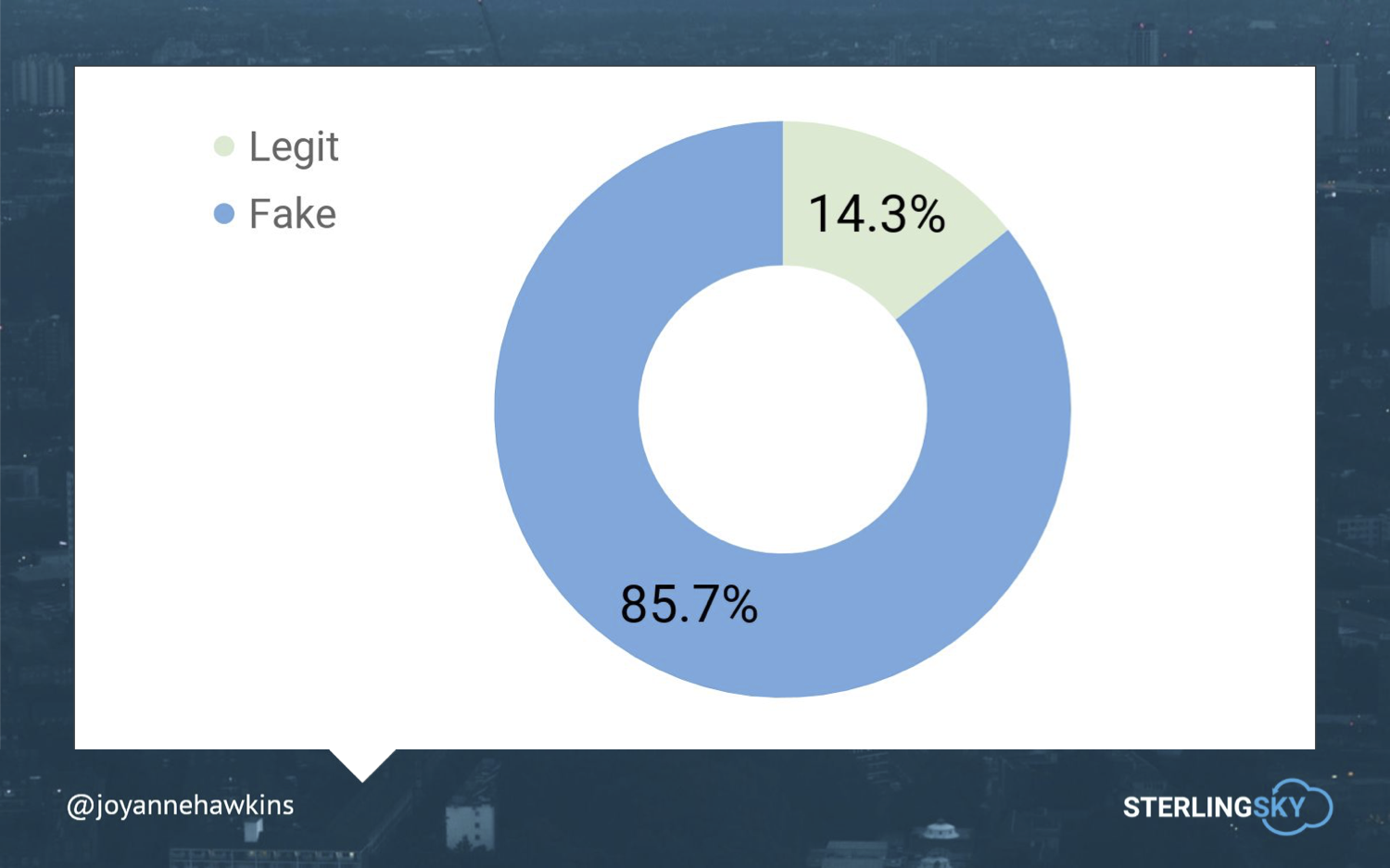
    And, there’s a crapton of “fake” listings in maps.

    Chart of fake vs legit listings

    A couple of really useful pieces of knowledge are:

    • Google doesn’t want to show a residential address on maps. If you identify these as residential listings, they’ll be removed.
    • Because of the way Google ingests data, there are lots of unverified listings with no address. Report that these businesses don’t exist, and they’ll be removed.
    • If it’s really spam, like a lead-gen listing, report it, and it will be removed.

    Imagine how much better your listings will look when 8 out of their 10 competitors for rankings are gone.

    Want more info? Check out Joy’s Ultimate Guide to Fighting Spam.

    Looking Forward to Local U, The Next Generation

    Working with this team has been one of the highlights of my career, and I’m a little melancholy thinking about the end of an era. The Local U faculty are among my best friends in Local Search, as well as being great educators and business partners.

    Joy is one of the smartest, hardest working folks in Local Search. She and her team at Sterling Sky are well respected and have a history of doing the right thing.

    I’m excited to see how Local U evolves, and I look forward to my continued involvement, in whatever form it takes.

    Do you have any thoughts on the Local U sale or the ideas presented above? Please share in the comments below.

    Edited 10/7 to correct omission of Mike Ramsey from initial founders list.

  • 7 Qualities of an Effective Marketing Agency (and How to Test for Them)

    7 Qualities of an Effective Marketing Agency (and How to Test for Them)

    I often joke that, in digital marketing, you’re an expert if you know more than the person you’re selling to. This was recently brought home to me while attending a startup conference: a member of the photography team, who was still an undergraduate in college, said he hoped to open a marketing agency upon graduation.

    This may seem like shocking hubris to anyone who’s been in the industry for any length of time, but many customers, especially smaller businesses, don’t understand the value of experience. They presume instead that since the marketing is digital, youth is a qualification in and of itself.

    We know, however, that regardless of the industry, experience improves effectiveness. I’m sure we’d all rather have an experienced mechanic, doctor, or plumber, and that experience—i.e. a bigger pool of knowledge on which to draw—helps assure they’re not misdiagnosing or reinventing a perfectly good wheel.

    When thinking about which agency to choose, we thought it would be helpful to break down the decision-making into a number of key areas.

    We’ve also put together a printable checklist for you when you do get into the decision-making process.

    Fit

    Company Culture

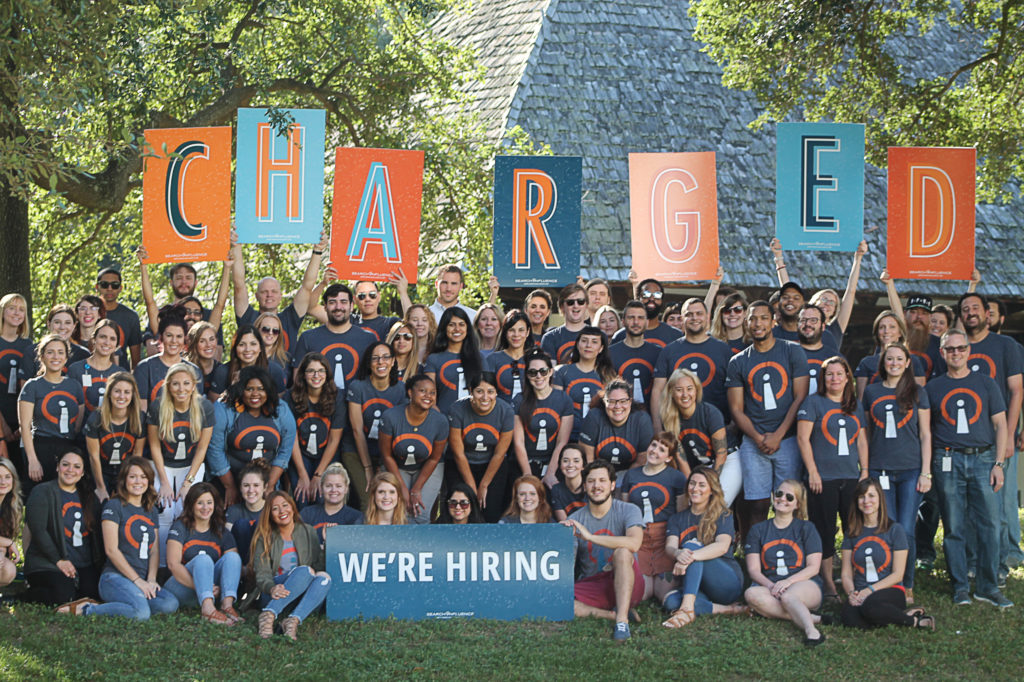
    At Search Influence, we use the acronym “CHARGED” to define our values. We live these values every day, and they are reinforced in our office, our incentives, and our hiring. In fact, even our employee assessments are based, to some extent, on how CHARGED the employee is. You can read more about our CHARGED values and how we came to them.

    Team

    Whether they are executives empowered with maintaining this strategic relationship or line employees executing the deliverables, it’s important you have confidence in your team.

    Because Search Influence started at a time when there were few available educational resources, we’ve developed extensive training internally. We also take advantage of best-of-breed third-party resources—mostly from our vendors, like Google, HubSpot, and Facebook.

    And finally, for the team which will be working on your account, who are they? What’s their experience level? Who are they supported by?

    Contacts

    On a day-to-day basis, who will be managing your account, and how are they supported?  Do you know who their manager is? Do you have access to leadership in the company?

    We make a point of having our Team Leads and our Director of Account Management reach out to new clients to assure they know whom they can go to if they need more support.

    Qualifications

    Areas of Specialty

    One of the challenges of smaller agencies is that they either have to be a Jack & Jill of all trades or they have to outsource specialized skills. It’s easy enough to claim to be an expert in content marketing or paid search, but these fields are richly nuanced and oftentimes require years of study to execute well.

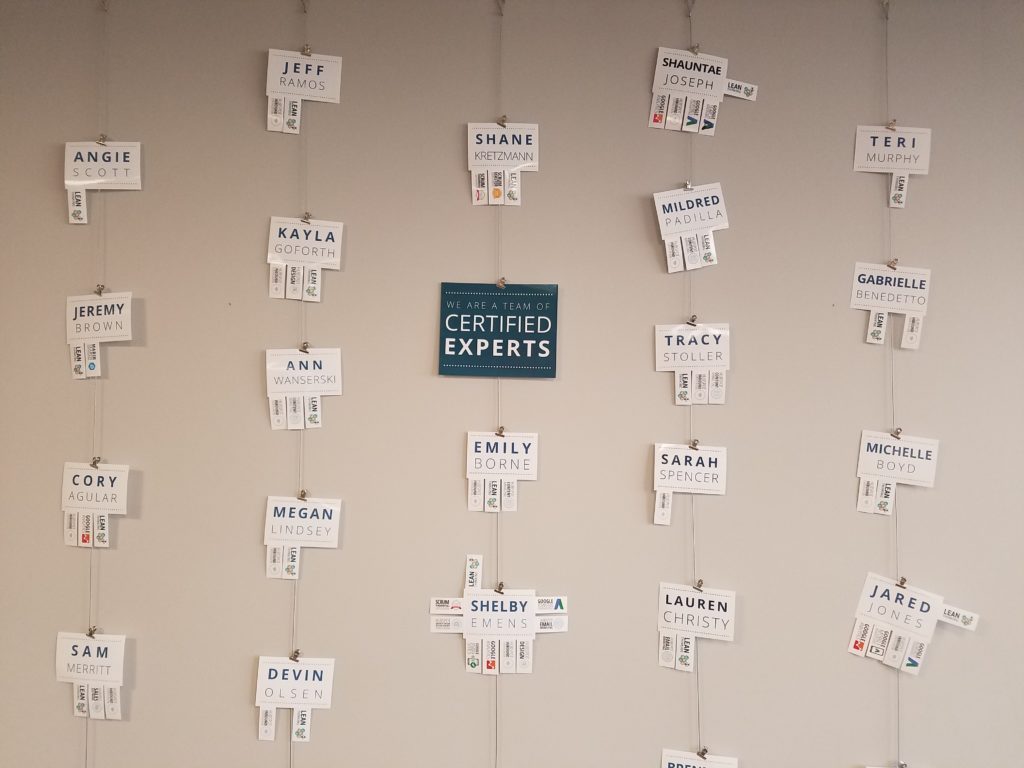
    Certifications

    On the topic of specialization, certifications are a great way to prove knowledge in a given area. When the bar is so low to call oneself an expert or even an agency, it’s important to have evidentiary proof. Certifications are a great tool for that proof.

    Speaking and Publishing

    There’s no greater proof than the peer review required for both speaking and publishing. Our team members speak regularly to audiences in both digital marketing and in the industries of the clients that we serve.

    We are complimented when asked to share our knowledge from both the podium and in other media. Equally instructive as the thought leadership of an agency are their publications, whether written or via interview, in educational resources like blogs and podcasts.

    Process

    Processes

    Every account and engagement requires a unique approach. Within those unique strategies, there are naturally a number of repeated tasks. If an agency doesn’t have processes for common practices, there is a lot of wasted effort.

    Search Influence’s early years included supporting very large partners like Yodle and Advance Digital. We had to think about how we execute more than most agencies. When you are called upon to produce tens of thousands of pieces of content per month, you need a process. Our clients, even the most creative, benefit from our process-focused approach.

    Internal Communication

    We’ve heard the horror stories of traditional agencies and their “Job Jacket”—in essence, a folder that moves from department to department. While multitasking may not be all it’s cracked up to be, there are plenty of times when teams have to work in parallel to deliver work.

    As a nearly 13-year-old agency, we’ve had a lot of time to develop both processes and software systems to support the many stakeholders in delivery. Some of our systems are custom and some use modified open-source software. At any time, we can see both where a project is in the process and what’s left to be delivered.
    31 questions to ask a marketing agency

    External Communication

    “What have you done for me lately?” is a common refrain in the service industry. As an agency, we are most responsible for answering that question to our clients.

    Nearly a decade ago, we realized there was too much data to manually report, and we built a platform that pulls analytics, leads, and advertising effectiveness into one seamless interface. Our platform and our processes have ingrained a practice of monthly review and report that helps both our internal team and our client teams focus on the metrics that matter.

    The Challenger Agency

    Can You Learn From Them?

    In The Challenger Sale, Matthew Dixon and Brent Adamson show us that the best salespeople know as much, or more, than their prospects about their target industry.

    One of the benefits we can bring to our clients is to educate them about their own industry from our perspective, working with a number of their peers. Face it, when you’re head-down in your business, it is not always easy to keep on top of trends and industry news.

    Do They Push You?

    It’s OK. We all get comfortable doing the same old thing.

    A great marketing agency should push you. Sometimes the ideas we bring make our clients a little uncomfortable. Especially in traditional, conservative industries, or in those where there’s been a recent leadership transition, it can be hard to take on initiatives that feel risky or out of character.

    Einstein is often attributed with the saying, “The definition of insanity is doing the same thing over and over and expecting different results.” But you may know it more accurately as, “Do the same things, and expect the same results.”

    Are They Experts?

    Google says an expert is “a person who has a comprehensive and authoritative knowledge of or skill in a particular area.”

    This is hard to test for. How do you know it’s comprehensive? How do you know it’s authoritative? Ultimately, unless one is also an expert in a particular area, one must look to third-party endorsements and results.

    We are fortunate at Search Influence to have a number of industry authorities who refer us business and will vouch for the quality of our work. We also have a number of clients who credit us with their business success. Hopefully, any agency you’re thinking of hiring can say the same.

    Industry Variety

    Broad Experience

    Entrenchment in an industry is not necessarily the same as specialization. And specialization may not equal expertise.
    31 Questions Checklist square image
    In order to have the broadest view of our craft, we need to see how it is executed in multiple industries. Pioneers make discoveries and are often on the fringe. As such, it benefits all of our clients that some of them are in niche industries that call for new, creative tactics.

    Adjacent Industries

    Medicine offers great examples of the value of adjacency. Historically, some areas of medicine have been less likely to be eligible for insurance reimbursement. These “cash” specialties have had a greater incentive to be pioneering in marketing as a whole.

    Examples of leading-edge specialties in the medical industry include plastic surgery and weight loss surgery. The medical industry has changed, and we now know that most practitioners need to consider the impact of marketing—most especially ratings and reviews.

    Your Industry

    It’s great if the agency you’re vetting knows your industry directly. You will likely save some time educating them.

    That said, people are people and marketing is about people first. We don’t need to have worked in your exact industry to be able to drive customers through your doors.

    Confidentiality

    Contractual Confidentiality

    Even if your industry doesn’t mandate confidentiality, you certainly don’t want your business on the streets.

    With over a decade in highly regulated industries, not to mention being responsible for thousands of OPCs (other people’s clients), we take confidentiality very seriously and even include it in our contracts. Even with our contracts, we’re sometimes asked to sign a non-disclosure agreement, and we’re happy to do so.

    Data Security

    Nobody is immune to a data breach. Some of the biggest names in industry, including Target, Macy’s, and many more, have been affected.

    What most don’t know is that some of these cases are the result of sloppy data management by vendors. In the case of Target, the breach occurred when hackers used a third-party HVAC provider’s stolen credentials to break through from a “billing, contract submission, and project management” platform.

    Employee Confidentiality

    Many misunderstand the intent of employment agreements. A key component of the agreement every Search Influence employee signs is client confidentiality. We have access to sensitive business details of our clients and it is critical our employees understand their role in that.

    In many cases, especially in law and medicine, we have a legal responsibility to protect not just our client’s information, but their clients’ and patients’ as well.

    Results

    Tracking/Reporting

    John Wanamaker (1838-1922) is credited with the now-famous phrase, “Half the money I spend on advertising is wasted; the trouble is I don’t know which half.”

    The sad part is that many agencies still survive on the wrong half of that equation. It’s understandable. Quantifying the impact of ad spending on- or offline is hard. There are many factors that affect a customer along their path to purchase.

    We see it as our job to identify which half is wasted and to stop it!

    And to put our money where our mouth is, we invest in assuring that our team members are experts in a number of analytics packages through third-party training, as well as on the job. If you want proof, ask about our certifications.

    Metrics That Matter

    Reports suck. The main reason reports suck is that most of them don’t tell you what you really want to know. We find that, for each campaign, there are usually only a few metrics that matter and the rest is noise.

    We try to work closely with our clients to understand their goals, and from those goals, to understand what metrics will show we’re on track.

    ROI

    It’s hard to believe, but some agencies don’t understand that marketing is an investment. A defining characteristic of an investment is that one should expect a return.

    In other words, how does a dollar spent lead to many dollars earned? We believe marketing has to earn its place in the budget. The way we do that is by making marketing accountable to dollars earned.

    If your prospective agency isn’t comfortable talking about how they will make you money, walk away.

    And call us.

    Search Influence takes pride in exhibiting our CHARGED values. Start a conversation today by calling (504) 881-1597.

    Images:

    Teamwork

    Do Something Great

  • Pubcon Florida 2018: Chatbots Are Cool, But We Gotta Keep Marketing Human

    Pubcon Florida 2018: Chatbots Are Cool, But We Gotta Keep Marketing Human

    I am sorry to say that until last week, the only Pubcon events I’d attended were in Las Vegas, and of course, when after Katrina the show came to New Orleans in 2013 (wow, seems like only yesterday).

    So, last week I went to Ft. Lauderdale for Pubcon Florida. It was a really enjoyable show.

    To give a little context, Pubcon Las Vegas is like the CES, SEMA, or ComicCon. There is way too much going on to feel like you’re seeing it all. Kind of like Las Vegas itself.

    But this show, the South Florida show, co-produced with the South Florida Internet Marketing Association (SFIMA) is much more manageable.

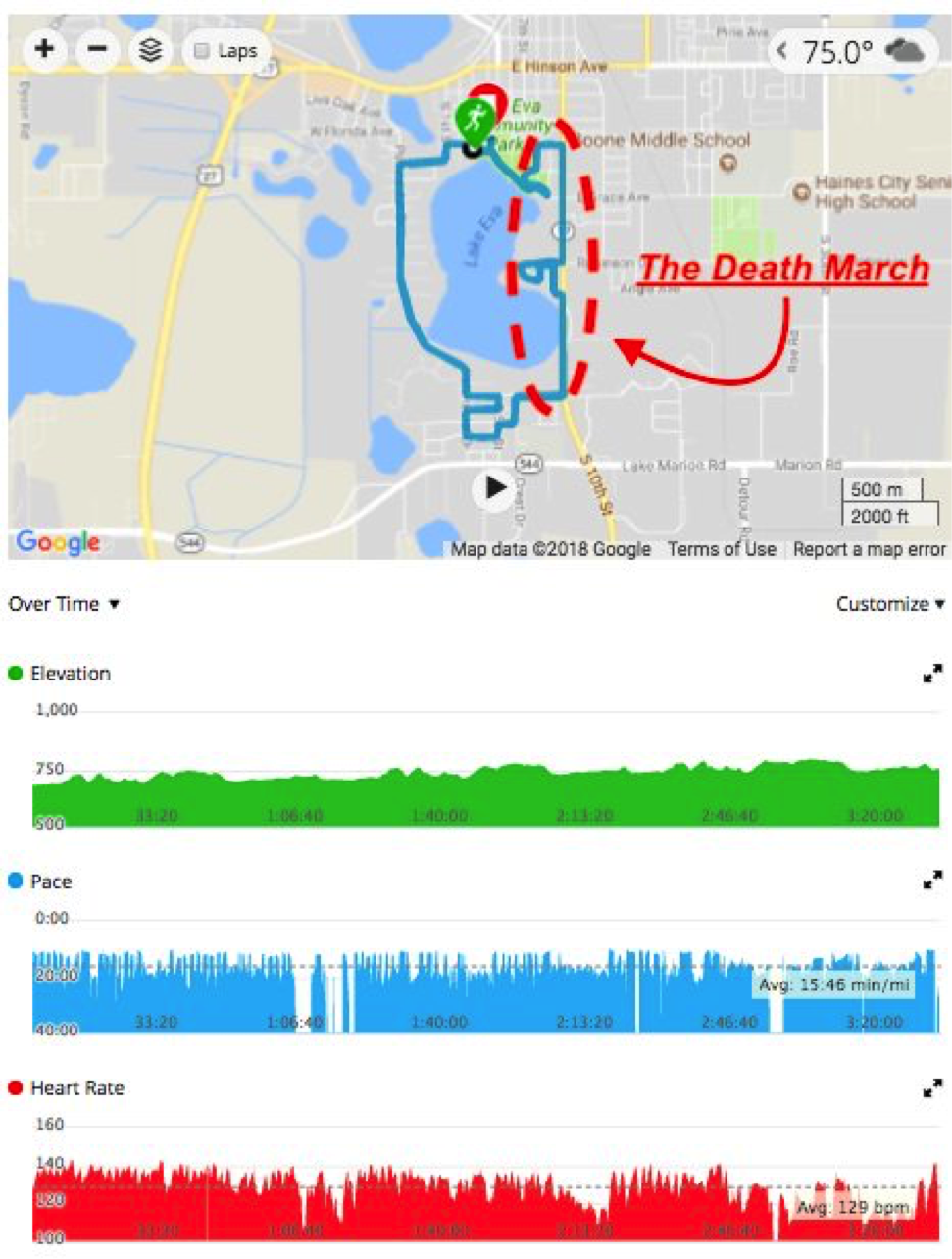
    I was able to bundle a little fun with this trip, stopping over in Haines City, FL (my hotel was in Lakeland, FL), to take part in Ironman 70.3 Florida.

    Feel free to read my account of it if you’re interested in the exploits of a mediocre, middle-aged athlete.

    We Need to Stop Chasing Google

    Every keynote speaker at Pubcon were people I would gladly watch any time. I was sad to miss the closing keynote with Purna Virji of Microsoft but glad I caught both Wil Reynolds and Lee Odden. I have seen Purna speak many times and as I tweeted at SEMPDX Engage, I could listen to her read the phone book.

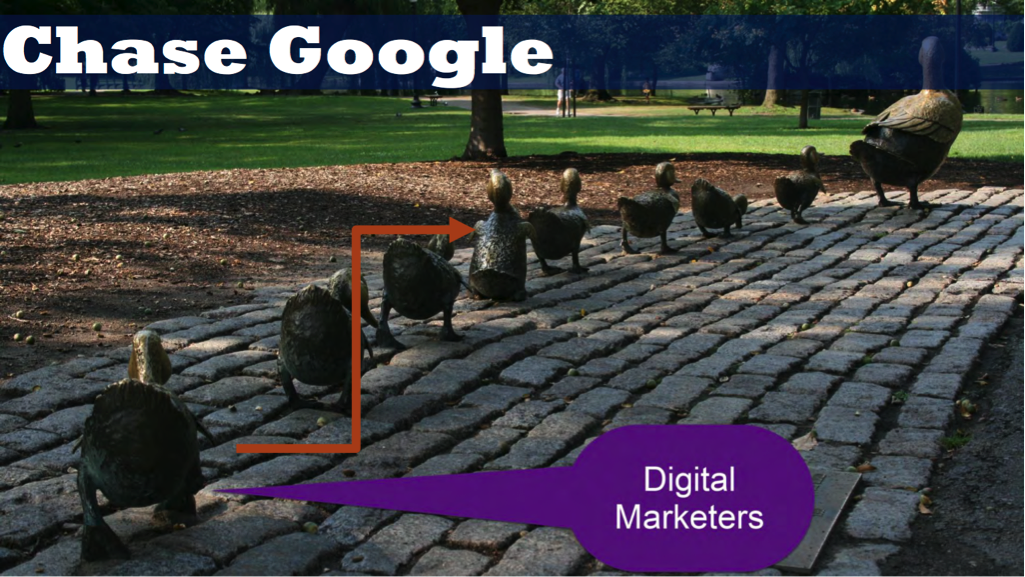
    Wil made some really excellent points about how we as marketing companies need to be thinking about our relationship with the search engines and ad platforms, including a great metaphor about the follow of chasing Google when Google is itself chasing the user (searchers, humans, whatever).

    It is really easy for us marketers, especially those like me who grew up in an SEO world, to get enamored of the technology and forget that at the end of the day it’s about humans. Or as they use to say in the Yellow Pages, putting buyers and sellers together.

    I like Wil. He’s a northeasterner who has been doing this for a while. Our cultural references are similar and clearly our penchant for a well-placed profanity.

    Lee Odden was talking about the intersection of PR and Content Marketing. Lee has been preaching the value of content since the early days—perhaps even before The Content Marketing Institute.

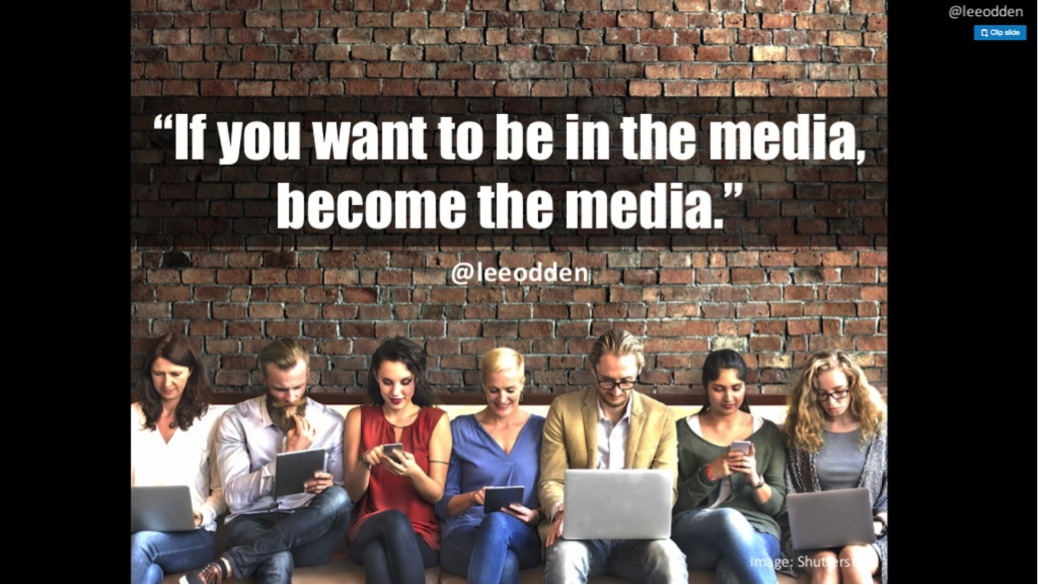
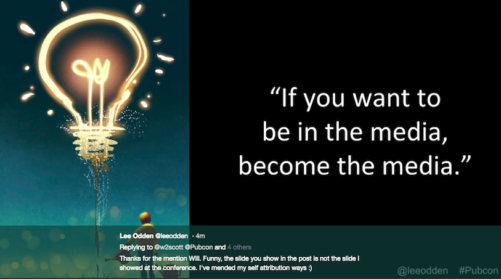
    According to Lee, “If you want to be in the media, become the media” – I always enjoy when presenters attribute themselves to quotes in their presentations.

    UPDATED: Lee Odden was nice enough to give me the right image. I included here a screenshot from Twitter so you can see his message as well.

    My interest in these two presentations is a little self-serving. Both were arguing for a more holistic view of both the user (browser, searcher, customer) than that of the typical digital marketer.

    Trust Building for Brands

    My presentation, entitled “Brands Win Online” was a further expression of a theme that we’ve been presenting on for years.

    In essence, brands get traffic because they’re brands. Even when, in a Google search, a brand is lower down the list they’ll get the click because of brand recognition. We see this all the time at a tactical level where we are able to influence search results by doing branding focused advertising.

    The first iteration of this idea, done this way, was in a presentation to the BIA/Kelsey show called: Presence + Authority + Trust = Winning

    Paula has also banged this drum a few times with her presentations on local branding including her MozCon presentation: Fake it till you make it: Brand Building for Local Businesses

    There were, of course, other great sessions. Mat Siltala was his usual brilliant self, and I learned quite a lot from Tony Wright whose presentation I had the pleasure of moderating.

    Here’s a link to Mat’s presentation on SlideShare: Creating Content for Social Media

    Did you know, Tony studied Opera?!

    The Benefits of Going to a Growing Conference

    One of the great things about this smaller conference is that there were no must-miss presentations. I could have spent all day in sessions and felt like I was learning a ton. And, of course, there are a number of takeaways for me to bring home to the team. Including a Barnacle SEO reference by Steve Shackelford of DealerOn.

    Brett, Joe and the team put on a great show and have been doing so for the past 17 years. If you’re interested in a more manageable show than the big Las Vegas extravaganza, do check out Pubcon Florida next year.

    Maybe, this one will get on autopilot and we can hope to see Pubcon back in New Orleans someday!

  • “Today in” Facebook feed highlights local news and events

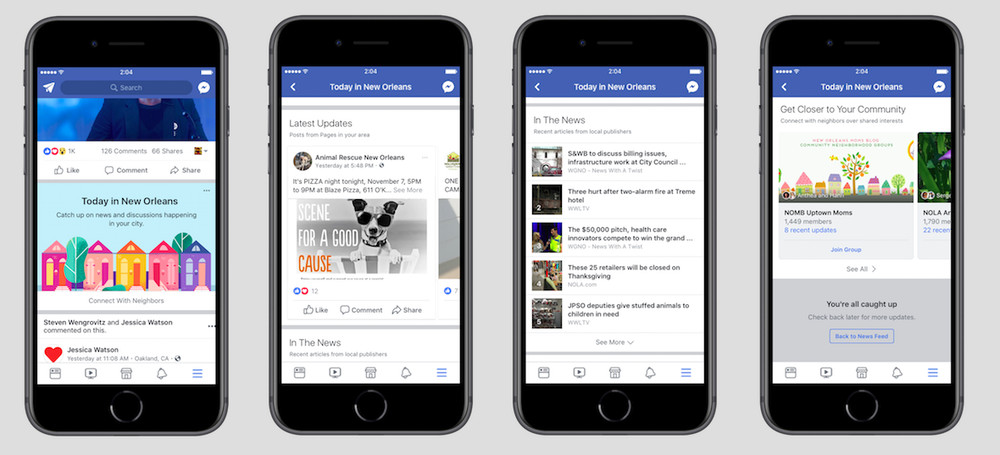
    An image of the new Today In feature that is being tested by Facebook
    Facebook has launched, in a small number of locations, a new “Today in [location]” feed.

    “Today in” will algorithmically identify news and events from the users specified location. For now, the feature is only available in: New Orleans, La.; Little Rock, Ark.; Billings, Mont.; Peoria, Ill.; Olympia, Wash.; and Binghamton, N.Y. It is expected Facebook will roll it out further on successful test of the features.

    Check out a roundup of the major articles I wrote on the LocalU blog.

  • Search Influence Makes Inc. 5000 List for 7th Straight Year

    Search Influence Makes Inc. 5000 List for 7th Straight Year

    Inc. magazine has recognized Search Influence on its 36th annual Inc. 5000 list, making this our seventh straight year achieving this coveted recognition! It’s important to note that the Inc. 5000 list includes an exclusive ranking of the nation’s fastest-growing private companies and represents the most comprehensive look at the most esteemed segment of the economy—America’s independent entrepreneurs. The distinguished ranking started in 1982 and has since become the hallmark of entrepreneurial success.

    Recognized as one of 47 Louisiana firms included in the 5,000 fastest-growing companies, we remain amongst the ranks of groups such as Yelp, Pandora, Timberland, Dell, Domino’s Pizza, LinkedIn, and Zillow, as well as many other industry leaders who gained early exposure as members of the Inc. 5000.

    A Company Built From Search Discovers Its Niche

    Our company founded on the basis of search engine marketing began its journey in 2006 when Angie and I obtained our first client in need of SEO services. Three years later, we began delivering Google, Bing, and Facebook paid ads, becoming a Google Partner in 2011 and a Premier Partner in 2016. Having handled paid media budgets from as little as a few hundred dollars to hundreds of thousands per month, we were able to achieve direct and sustainable results for our clients. Our successes span the nation and even bolster the initiatives of major-league companies like ALCC American Language with their international goals. It has been milestones like these that have fueled our expansion and ultimately become the cornerstone of our agency’s mission in helping our customers to successfully market themselves online by developing tools, technology, and the knowledge of experts who support them.

    By 2010, we had begun redirecting our focus on the homefront and started our first enterprise work in the local community with Audubon Nature Institute, thus establishing our dexterity in the areas of tourism, non-profit, and event marketing. Other current and past local clients of note include industries of expertise, like New Orleans Tourism Marketing Corporation, Center for Restorative Breast Surgery, The National World War II Museum, and Tulane School of Professional Advancement.

    Recognition as a Result of Innovation

    We’re certainly excited to celebrate this recent accomplishment, especially on the heels of our newest announcement which details notable advancements to our employee experience. Our dedicated team consists of 50+ in-house employees and dozens of contractors. Our team includes specialists in content marketing, online advertising, technical SEO, local SEO, social media marketing, advertising, and online PR.

    Our ability to sustain long-term growth can be attributed to the dedication of many key employees, like Gabrielle Benedetto, who joined our ranks in January 2012 and has spent 5 years deep in technical challenges & strategies for digital marketing.
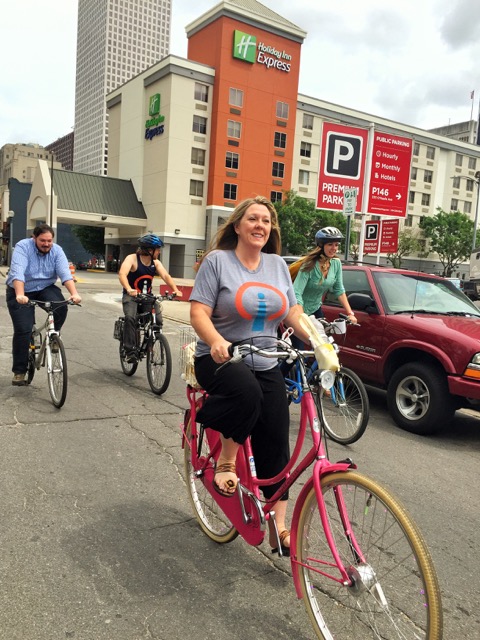
    Gabrielle notes, “Search Influence is known for crafting a team of collaborative, enthusiastic, and dedicated employees.  Around the office, you see tenure flags covered with stars representing the number of years Influencers have spent with Search Influence. It’s our long-standing employees who drive this company forward. We’re encouraged to be leaders and pledged to do what’s best for our clients. When you empower a team to put the client first, the company will always move forward. I’m so excited to be part of this growth, and can’t wait to see what we tackle next!”
    It is precisely this kind of dedication that has been the basis for the restructuring of our compensation philosophy. Our recently updated perks and pay reflect a leading-edge approach to talent management reflecting our belief that only with happy employees can we have successful clients.

    We recognize our employees are our greatest investment and we’re hopeful that with the recent changes, prospective employees and current team members will see Search Influence as a progressive employer when it comes to pay, benefits, and paid time off, providing the ability to work hard, do great work, and take advantage of all of the great things that life in New Orleans has to offer.

    Interested in Learning What Sets Us Apart?

    Our drive to help clients find more customers online has enabled us to become the largest digital marketing agency on the Gulf Coast. It has been our ability to achieve reliable results and our desire to teach what we’ve learned that has made us a recognized national leader in digital marketing.

    If you’re interested in learning more about how we help businesses grow, please get in touch. To learn more about our approach to talent management, read about our recently updated compensation philosophy and please visit our current openings to learn how to join our team of dedicated professionals.

  • Search Influence Compensation Philosophy, New and Improved for 2017

    Search Influence Compensation Strategy

    We’ve made some big changes for the Search Influence team in 2017, and the year is only half over.

    Whether you’re an employee (current or future) or a client, these changes will have a direct impact on you. Our goal is to improve the employee experience so that our employees continue to produce great work for our clients.

    We know that an investment in our employees is an investment in growing our capabilities as a business. It benefits us all—employees, Search Influence, and the clients we serve. That’s why we’re excited to share with the world what we’ve been working on.

    Read on for a discussion with Angie Scott, COO of Search Influence and my co-founder in all things since around 2002, on how all of this came about. A detailed explanation of what we changed and what you can expect from our team moving forward will follow the Q&A below, so read to the end!

    Will: So Angie, why after 11 years a shift in pay and benefits? Isn’t this a big change?

    Angie: The idea of checking in on our compensation isn’t really a new thing.

    We did a pay analysis a couple of years ago and there was another done prior to that. So the team who’s been with us throughout all of those has seen this happen before. As the New Orleans tech community grows, we have to be agile in our approach to comp. This time, though, we wanted to be more transparent with the team on the process and decisions that were made.

    This analysis also resulted in some broader, more sweeping changes than our analyses did in prior years. And, we touched more perks and benefits than just base compensation, too.

    It was clear to us (and the market was reinforcing) that comp is not just about the salary you make for the job you do. Compensation can and should be a total package including base pay, monetary benefits like 401k and health insurance, as well as perks and flexibility.

    Will: So you’re saying it’s not a new thing. That, in fact, we’ve gone through and looked at pay and benefits before, and in each case come back with what seems to be better opportunities for the team that stays with us, right?

    Angie: Right.

    Will: So tell me a bit about the process which got us here?

    Angie: We made a game plan, which included a survey by a third-party HR consultant, reaching out to our talent competitors throughout New Orleans, including tech companies, marketing companies, a bunch of different industries around New Orleans. The goal was to figure out what their pay structures look like and try to compare them to our team.

    That wasn’t as fruitful as we had hoped, but it still helped us frame some of our perks discussions. And then we looked at PayScale.com which provides employee reported compensation, and we looked at Salary.com for employer reported pay structure.

    Will: So what are some of the things that changed in this analysis? As you already said, what started with just pay turned into a pretty big review of comp and perks overall, right?

    Angie: Right. In addition to base compensation, we also analyzed our paid time off, health insurance that the company covers, and working remotely. We reviewed our core hours to see if we could change so that we could allow for more flexibility for the team. And we looked at doing a transportation stipend.

    Will: So we got the information we could from New Orleans companies, which wasn’t much. We got aggregated information from these big websites. And in the process, some of our team reached out to friends and family who were in markets that might be more advanced in the employment market, including New York and some on the West Coast, to see what some of perks they have access to involved. What came back from that was actually this idea of core hours.

    When we started the process, we weren’t even thinking about core hours, were we? It was about “summer Fridays,” which was kind of a hot button for some folks. But then, we live in New Orleans, we’ve got summer, pretty much, year round. So we decided instead to create what we’re calling “core hours” where our team can decide the length of their day as long as their day includes being in office during those times that we specify as must-haves.

    Our new core hours are:

    Monday through Thursday: 9 a.m. – 2 p.m.

    Friday: 9 a.m. – 12 p.m.

    Now, this is not to say that they only have to come to work six hours a day. If they want to work 2 10-hour days and take a half day off on Friday, then they can do that.

    Angie: Right! Because our core hours on Friday are 9 – noon.

    Will: We were hopeful that the team will balance out with different people having different desired times off, and we’ll keep an eye on it. It seems like a great way to accommodate the desire for more control over time off and to be really flexible.

    There was something else, too. We’ve gotten, historically, a lot of requests for working remotely. So why don’t we set the stage for that?

    Angie: We decided that the team could work from wherever they want two days per month, as long as they have internet access. So anybody on the team, after you’ve worked with us for six months, can go and work from a coffee shop, or from your house, or from a friend’s house, whatever it is.

    Will: This is one of those which was interesting to us because we’ve always been very accommodating with people that have a special need to be somewhere else. The feedback we got was that some employees felt like they were taking advantage when they asked for a slightly different treatment. This way, we can accommodate the desire or need to work remotely and employees don’t feel like they’re asking for special treatment or getting away with something.

    Angie: Two of the biggest perks that we’ve heard the most excitement around were actually paid time off getting increased (we went up quite a few days for each tier, based on how long you’ve been with the company), and the transportation stipend.

    Will: Oh, and Lundi Gras.

    Angie: Lundi Gras, that’s right.

    Will: Such a challenge.

    Angie: I knew there was something else.

    Will: Yeah, a challenge that our non-New Orleans colleagues might not be aware of is that Mardi Gras is not just a holiday. The entire city shuts down for Mardi Gras. And in the weeks leading up to it, there are parades many evenings. And Lundi Gras, Lundi being French for Monday, is the day immediately prior to Mardi Gras day, the culmination of a big party leading into the observance of Lent. And many of our team members didn’t understand why they had to work while their other, local friends had Lundi Gras off.

    In the past, we believed that we needed to be available to our clients since we have customers all over the United States, and, throughout the North American continent.

    But still, it was a pain point for our team. We’re hopeful that in support of a great team dynamic, and hopefully the kind of work that they’re looking to us to provide, that our clients will understand why on one Monday and Tuesday in February or March, our team is not there.

    Will: So, Angie, what’s your favorite of the perks?

    Angie: Hmm… my favorite is the core hours, because they’ll allow the whole team to have more flexibility. When I think of people who are like me, I think of our working moms. I hope the new core hours will enable them to pull a couple of longer days, and then go pick up the kids early from daycare or school. I’m proud that we can offer them the opportunity to be more flexible with their hours so that they can be there for their team at work but also be there for their family at home.


    Will: I think that’s a great one. The idea that as long as you’re getting your work done, you can do it on your time is the most important thing. And I’m glad that through the inclusion of core hours, and the remote work benefit, that we are going to start living this belief as well.

    Angie: So what’s your favorite perk?

    Will: It’s a tough one. Honestly, my favorite perk is the transportation stipend. Because we’re in a downtown location, and I know that transportation costs have been a challenge for some folks. But the real reason why I like this one is that we didn’t just say, “We’re gonna cover parking.” We said, “It’s for whatever transportation looks like for you.”

    Because we’re in New Orleans, it’s a great environment to ride bikes, and we’ve got public transportation. The way that we’re doing it is through a stipend. We don’t need to see receipts. It’s not a reimbursement, but it is specifically for transportation. And therefore, if your version of transportation is two new tires for your bike and a couple of Po-Boys, then you can do that and nobody’s going to give you a hard time about it. So that’s my favorite. Do you have any last thoughts, Angie, on these changes we’ve made?


    Angie: I’m really excited to see how it plays out with the team, and to actually get all of the perks into action so that we can have a lot of happy faces around the office.

    Will: Yeah, I’m with you. I think that the key here, and you’ll see this in greater detail when you read the actual, outline of the new philosophy, is that we want to be able to expect the best of our team. We want to work like professionals, with professionals, in the kind of professional environment which I think is becoming more the norm in other parts of the country, but to which New Orleans has not yet caught up. I’m hopeful that with these changes, prospective employees and our current team members, will see Search Influence as a very progressive employer when it comes to pay, benefits, paid time off, and the ability to work hard, do great work, and also have a life and take advantage of all of the great things that the New Orleans area has to offer.

    Search Influence Compensation Philosophy

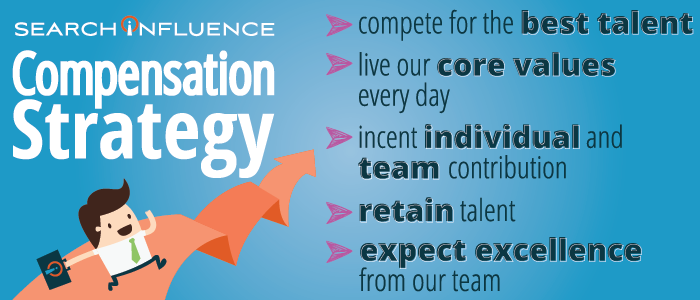
    The Search Influence Compensation Strategy is designed to:

    …compete for the best talent

    Our employees are our greatest investment and we’re selective about whom we hire. We will conduct regular market analyses and make adjustments to compete for the best talent in the most relevant labor market(s).

    …live our core values every day

    To enable employees to “live CHARGED” at every level, we offer a progressive total compensation strategy including abundant benefits and flexible perks that support a healthy balance and encourage productivity and creativity.

    …incent individual & team contribution & retain talent

    We encourage dedication by rewarding individuals who contribute above and beyond their job descriptions, deliver excellent client results, and support colleagues in their pursuit to do the same.

    …expect excellence from our team

    We won’t settle for less than excellence for our clients or in our employees’ work.

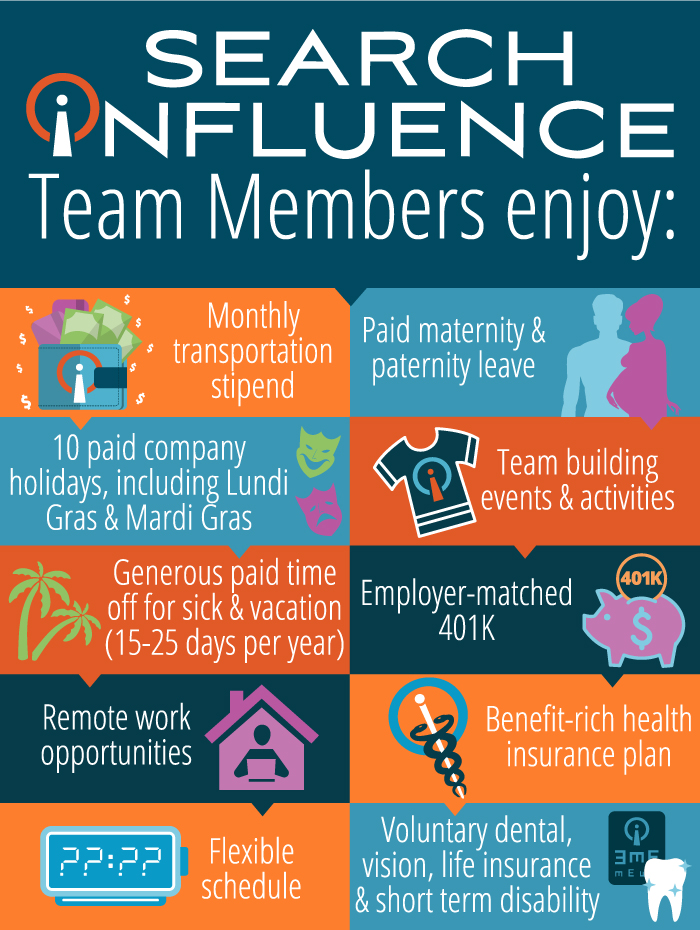
    Search Influence team members enjoy these benefits

    Outline of Perks

    • Monthly transportation stipend for each employee
      • No need for reimbursements or submitting receipts
    • Total of 10 paid company holidays annually
      • Including the addition of Lundi Gras beginning in 2018
    • Generous and progressive Paid Time Off accrual rates, for employees to use as they choose whether sick or vacation (no doctors’ notes needed!)
      • Employees with the company less than 2 years = 15 days annually
      • Employees with the company 2 – 5 years = 20 days annually
      • Employees with the company 5+ years = 25 days annually
    • Remote work opportunities
      • Employees with the company for 6+ months are allowed 2 remote working days per month, no questions asked
    • Core hours and flex time allowing employees to design their own work week around 24 core in-office hours
      • Core hours:
        • Monday through Thursday: 9 a.m. – 2 p.m.
        • Friday: 9 a.m. – 12 p.m.

    In addition to other benefits, which include:

    • Benefit-rich health insurance plan
    • Voluntary Dental, Vision, Life Insurance and Short Term Disability
    • Employer-Matched 401(k)
    • Team Building events and activities
    • Paid maternity and paternity leave
  • Why Do Digital Agencies Have Setup Fees for Online Ads?

    Why Do Digital Agencies Have Setup Fees for Online Ads?

    We often get the question from prospective clients of why we have setup costs for our online advertising programs. They ask this question because some of the companies that they speak with either don’t seem to have setup costs or don’t communicate a setup cost as such. Even those who say they don’t have setup fees have some costs associated with building campaigns, but the extent to which they are or are not thinking strategically on behalf of their customers is a big factor in whether or not they will indeed charge for it.

    How Can a Media Company Not Charge a Setup Fee?

    Often, media companies choose not to charge setup costs. Sometimes this is because they use a third party that automates the process for them, eliminating some of the complexity and control of digital media buying.

    In other cases, a media company (TV, Radio, Newspaper or Cable outlet) may choose not to charge a setup cost because the difference between what they’re spending on advertising and what you’re paying is sufficient—they know they will make up whatever their actual costs are in a very short period. In other words, they may be keeping excessively high margins for what is, in essence, a commodity.

    The challenges of these perspectives are not very different

    In short, the advertiser—the merchant, the customer, the office—who is buying advertising services or other digital offerings doesn’t realize that in order to have those setup costs, the actual money spent on advertising has to, by definition, be lower. And, if the amount spent on advertising is lower, unless there are significant efficiencies in automation—which there seldom are—one will have a less effective advertising program.

    So, there really is no such thing as a “free lunch”

    When deciding how to advertise online, the most important thing to consider is whether or not your ads are going to be seen by your targeted prospects. With less money to spend on advertising, you have a choice of either targeting less precisely or displaying fewer ad impressions over time. With those two options, it’s easy to see how your campaign is less effective when a greater amount of the dollars are going to fat margins rather than the management of the campaign.

    Automation can be good

    In fact, we use automation to assure we don’t overspend and to do some interesting things like changing ads in the case of weather changes and special circumstances. But, there’s a dark side as well. For all the good automation does, it can also lead to irrelevant traffic, i.e. people who will never become customers but are still targeted by the automated ad buys. And, if not managed well, automation can lead to overspending the budget.

    To allow automation to work efficiently, the companies that use automated platforms for management of online advertising must, in the main, set and forget the campaigns. They are hopeful they will be able to deliver results through automation, not through active management.

    How Is Search Influence Different?

    We typically don’t think of ourselves as competition to traditional media companies who’ve decided to launch a digital agency arm. When we think of competitors, it’s typically the traditional agencies— traditional marketing agencies and pure-play digital marketing agencies. The reason that we identify these as the potential competitors is that within their advertising programs, there’s typically a focus placed on strategy.

    Strategy requires people. Digital and traditional agencies have grown over time based on the expertise of their team members. They are therefore able to deliver strategic plans rather than just automated processes. We have the people in place to deliver. Every one of our online advertising team members goes through a rigorous training process and must be certified in multiple areas of expertise before they get to own campaigns.

    As traditional media companies have come to realize that people are buying much less television, radio, newspaper, and Yellow Pages advertising, they need a replacement product. They have seen the value of digital advertising as an item of sale. As an item of sale, it’s not something in which they have invested significant strategic knowledge and development. The agencies with whom Search Influence competes have invested in at least some strategic development in their teams, whether it be through continuing education, certification, or years of experience.

    We are always looking for ways to optimize the potential of our clients and our team members, and that’s why we review automation systems with some frequency. We have yet to find one that delivers the results we can achieve with our human intervention. Of those we’ve tested, they may hit target budgets and costs per click (CPC), but they don’t deliver the same results. Again, what we’re after is not just traffic, not just customers, but the right traffic and the right customers. That said, we’ll always keep looking and exploring.

    As such, while we often find ourselves selling against traditional media “agencies,” we do not think that, when it comes to digital, they represent real competition or the value we know we can deliver.

    How Search Influence Helps Digital Advertising Clients

    Our core purpose at Search Influence is to Optimize Potential.

    So before anything, we engage in a thorough review of your existing assets, both digital and traditional analog media. We also engage in an equally comprehensive business review to assure we understand your goals for your possible future campaigns. This way, we can strategically map all of the relevant information to an effective digital campaign to deliver the best results.

    When thinking about what goes into the business decisions around advertising, we know that it’s much more than clicks or even calls. It’s about the right click and the right call at the right time. The goal is to deliver that refined prospect to your business with the expectation that they will move from prospect to customer. Before we spend one dollar on Google or Facebook, we will have investigated all of the facets of your needs and how they might impact our execution of your campaign.

    Charged Employees of Search Influence

    Why You Should Care How About How We Get It Done

    You may think to yourself, “It doesn’t really matter how it gets done, as long as I get more traffic to my website, more calls, and more inquiries coming through.” The unfortunate truth is this: the wrong kind of contacts can cost you time and money.

    As the Pareto Principle implies, 20% of the prospects who might get in touch with you are going to be responsible for 80% of the business you will ultimately do.

    If you could tailor your marketing and advertising so that you only spoke to the 20% of customers who were going to drive the greatest value to your business, wouldn’t you have a much more successful business? Wouldn’t your team be more engaged if they knew that each client engagement, or patient interaction, was putting them with the right customers?

    We know it’s a lot of work to get this right, and only when you work with a strategic partner can you have an expectation that you will get what you need as early in the process as possible. When we work with clients, whether they’re spending $1,000 or $100,000, we work strategically to assure them we’re delivering the greatest value possible for their advertising dollars.

    Wouldn’t you rather spend your money on the most valuable customers? We think you should, and that’s why we believe that we are not competing with the mass-market automated systems that don’t deliver the kind of value you need. With a fundamental understanding of technology-enabled marketing and the expertise and know-how to back it up, we can be true partners to our clients regardless of their budget.

    If you’d like to learn more about the why and the how, we’d love to hear from you. Please fill out our contact form or give us a call. We’ll be glad to review your current situation and come up with some strategic recommendations.

  • Nothing More Local Than My Pocket #pubcon 2016

    Today I’m presenting at Pubcon on Mobile PPC. We all know mobile phones are ubiquitous, but there are a bunch of great stats which show how important they’ve become to us.

    • 33% of Americans would rather give up sex for a week rather than their cell phones.
    • 70% of Americans would rather give up alcohol for a week than their cell phones.

    Clearly this poll was not in New Orleans.

    And now the presentation.

  • Why Social Media Is Critical for the Growth of Your Business

    Why Social Media Is Critical for the Growth of Your Business

    If your business is not already harnessing the power of social media to build and retain its customer base, then you may be missing out. According to Pew Research Center, almost two-thirds of Americans regularly use social media sites for their personal and commercial needs.

    The Ultimate Social Media Cheat Sheet

    But how exactly do you successfully market your business with social media to find more potential customers?
    The key to leveraging the power of social media, when it comes to your business, is to focus on those attributes that make your business unique and to focus on prospective customers who look like your best customers. When I say “look like,” I mean demographically and psychographically. So if your best customers are poodle-loving, Jaguar-driving, octogenarians than that’s who you should try to target first. By focusing on prospects like the customers who already know and love you, your chances are much better of making a connection.

    Your Customers Are Using Social Media

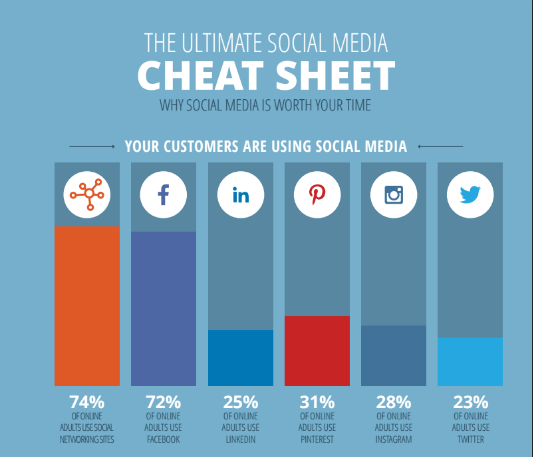
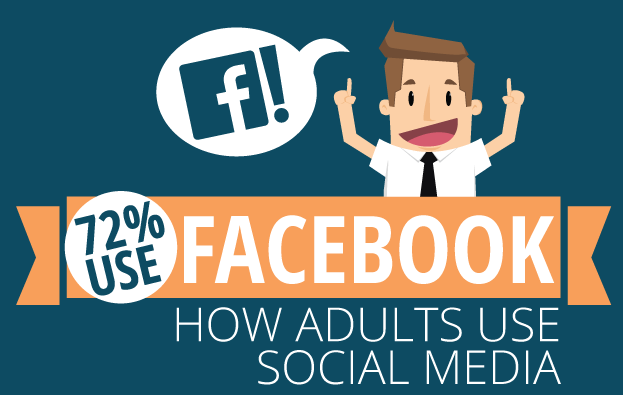
    1605-TheInfluencer-BlogImage1-EK-A-01When it comes to social media, your customers are already savvy, regular users. Among adults who are online, 76% use social networking sites. You’re likely now wondering exactly which social media sites your customers are using. By an overwhelming amount, it’s probably not a surprise to learn that Facebook is, by and large, the most popular with 72% of online adults as regular users. Following up the lead are LinkedIn with 25%, Pinterest with 31%, Instagram with 28%, and Twitter with 23%. In one of our client’s compelling success stories, a non-profit group wanting to promote its annual fundraising event used Facebook to reach its goal of selling more event and raffle tickets. By using a branded Facebook landing page and targeted Facebook ads focused exclusively on tickets, the group met its goals and generated over $70,000 in online ticket sales.

    The Social Media Tipping Point

    To understand even more clearly how critical social media use can be for businesses, let’s take a look at what your competitors are doing. According to a recent survey on how small businesses are using social media, 53% are active users. In addition, more small businesses are investing in social media strategies with 25% of marketing budgets expected to be channeled to social media over the next five years. Meanwhile, your customers are increasingly influenced by what they see online with 57% saying they judge a business by the positive (or lack thereof) reviews that they see online.

    Where and When You Should Post

    Now that you understand the changing landscape of social media and how integral it is to a successful marketing strategy, it’s important to know what sites to focus on and when you should post. Facebook remains the clear winner in terms of the number of users. To break it down further and look at the gender and age preferences of that 72% of online adults who use Facebook, 77% of women online use Facebook versus 66% of men. In addition, 87% of 18 to 29-year-olds use Facebook versus 73% of 30 to 49-year-olds. Knowing who to target and when can be useful. It’s important to know that certain days of the week and certain times of the day can make a big difference. Posting on Facebook on Saturdays and Sundays from 12–1 p.m. can result in 32% higher engagement, with Thursdays and Fridays from 1–4 p.m. resulting in 18% higher engagement. The times to avoid posting are weekends before 8 a.m. and after 8 p.m.

    8539503475_9b2e586988_k

    It may seem overwhelming at first glance, but taking the first step and getting your business engaged in social media is not only worth your time; it can also create a ton of new customer opportunities. To help you make the most of this opportunity, and to learn more, check out this handy Social Media “Cheat Sheet.”

    Image Credits:

    Social Media Flowers Image – HTSABO
    Facebook Graduation Image