Author: Will Scott

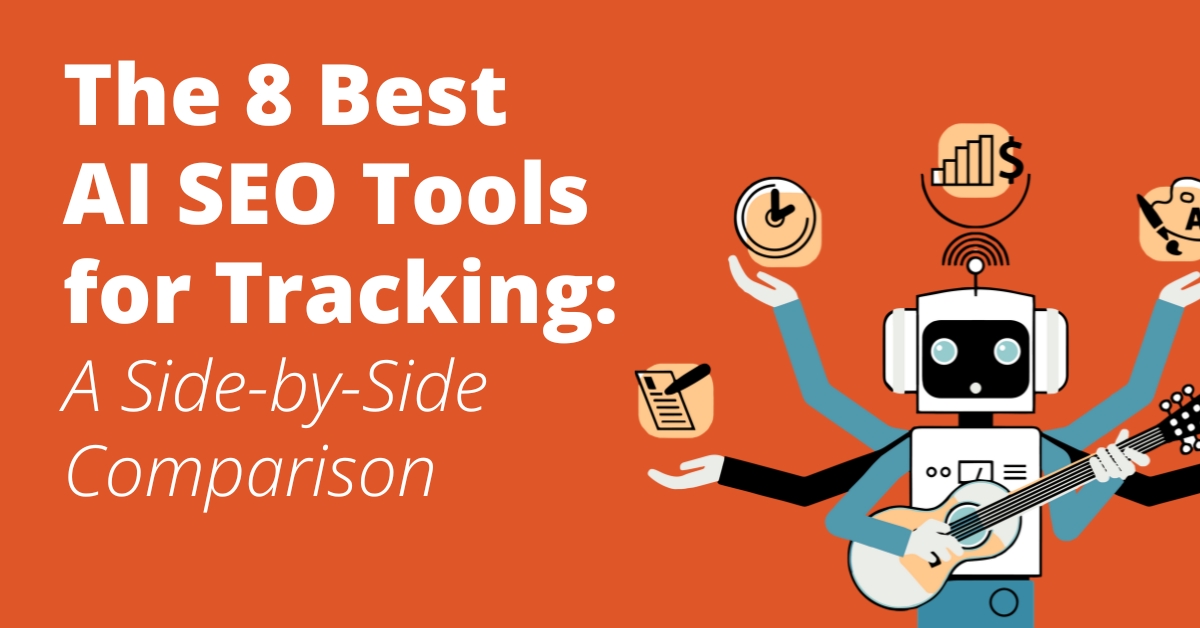
  • The 8 Best AI SEO Tracking Tools: A Side-by-Side Comparison

    The 8 Best AI SEO Tracking Tools: A Side-by-Side Comparison

    SI Essential AI SEO Tracking Tools

    Key Insights

    • AI search is already reshaping the way users discover content, and using the right tools for SEO is essential to track visibility across AI search platforms.
    • Accuracy matters. Because AI search results are dynamic and context-driven, SEO professionals must continually test and compare tools to ensure their targeted keywords are truly making an impact.
    • Not all AI SEO tools are created equal. Each platform offers unique strengths depending on your goals, budget, and reporting needs.
    • An experienced SEO expert will help you get the most out of these tools, turning raw data into strategic decisions that improve rankings, visibility, and performance.
    • SEO content must now work for both humans and AI. Tools that help identify citations, brand mentions, and gaps in AI visibility can guide more effective SEO content creation and optimization strategies.

    Updated October 13, 2025 at 10:36 AM Central by Will Scott, AI SEO Expert, and CEO of Search Influence.

    New & Improved: The Ultimate Guide to AI SEO Tracking Tools in 2025

    I created an updated post based on our testing and deep research with Claude. Check out the comprehensive review of AI SEO Tracking Tools, with side by side comparison tables and more.

    Table of Contents

    As AI-driven search evolves, marketers need more than instincts and old-school metrics.

    They need reliable AI SEO tracking tools to measure their visibility across platforms such as Google’s AI Overviews, ChatGPT search, Perplexity, and Microsoft Copilot. These search engines synthesize answers, prioritize trusted sources, and favor structured, entity-rich content.

    You still need solid technical SEO and consistent SEO tasks driving your campaigns. The real difference maker today is how you track and adjust your content creation strategy for artificial intelligence-driven results.

    That’s where the new generation of tracking tools comes in.

    And here’s the truth: It’s not just about which tool you’re using.

    It’s about how well you understand the insights those tools deliver and how quickly you can adapt your strategy based on what you find.

    Used effectively, these tools help you fine-tune your approach, improve rankings, and drive better results from Google Search and beyond.

    At Search Influence, we bridge the gap between tool and strategy. We don’t just run reports. We turn data into action.

    In this blog post, we’ll break down eight of the best AI SEO tracking tools available today.

    You’ll see how they compare in usability, insights, and pricing, and get our recommendations on which tools deliver the most strategic value.

    What Are the Best AI SEO Tracking Tools?

    What are the Best AI SEO Tracking Tools?

    1. Scrunch AI

    If you’re managing multiple brands or juggling several sites, Scrunch AI is quickly becoming one of the most versatile and agency-friendly platforms in the space. It’s one of the latest AI SEO tools I’ve tested, and so far, it’s my favorite.

    What sets it apart isn’t just its ability to track AI visibility across platforms, but how seamlessly it adapts to different client needs. Whether you’re running a site audit, optimizing top-ranking pages, or tracking brand mentions in AI-generated responses, Scrunch AI gives you the control and clarity you need to scale your strategy.

    Pros:

    • Offers both SMB/agency and enterprise pricing plans, making it flexible for teams of all sizes
    • Concierge onboarding helps you get up and running quickly, with expert support
    • API access for enterprise accounts enables deeper integrations with your existing SEO software and reporting workflows

    Cons:

    • Limited export capabilities may be a drawback for data-heavy teams

    Best for:

    Agencies managing multiple brands that need a single AI tool to monitor and compare performance across clients. It’s also a great option for marketers who need actionable insights across various search engine rankings.

    2. Advanced Web Ranking (AWR)

    Advanced Web Ranking (AWR) is a long-standing player in the SEO software space, now evolving to support the realities of AI search engines. Known for reliable rank tracking, AWR has introduced filters for SERP features — including Google’s AI Overviews — to help marketers monitor where and how their content appears in AI-generated results.

    While AWR doesn’t yet track visibility in platforms like ChatGPT search, or Microsoft Copilot, it gives SEO professionals a head start in understanding their footprint in Google’s AI ecosystem and Perplexity.

    Pros:

    • Already widely used by SEO experts and marketing agencies for standard SEO tasks
    • Lets users filter for AI Overview visibility, providing insight into performance in AI-enhanced search engine results
    • Helps assess how effectively your content satisfies search intent in AI-modified Google results

    Cons:

    • AI visibility insights are still surface-level — enough for awareness, but not enough to drive high-level strategy
    • Refers to AI Overviews as “SGE,” an outdated term that can muddy reporting
    • Doesn’t track presence on ChatGPT or CoPilot

    Best for:

    Marketers who want to begin tracking their presence in AI-generated Google results using a tool they already know. AWR offers a light lift for those testing the waters of AI search tracking while maintaining focus on core rank tracking and search intent metrics.

    3. Semrush (AI Analytics Tool)

    Semrush added an AI analytics tool to its already expansive suite, giving marketers early insights into how their brand and content are interpreted by AI search engines. While still in its early stages, this feature helps teams gauge high-level presence and sentiment across emerging AI-driven platforms.

    This isn’t a tool for granular AI visibility tracking yet, but it does offer signals that show whether your content is resonating within AI-generated content and across AI SEO surfaces.

    Pros:

    • Provides domain-level indicators such as sentiment, engagement, and visibility that can correlate to AI search engine performance
    • Offers limited but growing AI-specific reporting that aligns with AI SEO tools
    • Easy add-on for existing Semrush users — no steep learning curve required

    Cons:

    • Data is not yet comprehensive
    • Misclassifies some brand names
    • Insights are still surface-level compared to specialized AI SEO tools

    Best for:

    Teams already using Semrush who want a low-effort way to monitor their early visibility in AI-powered search environments. It’s especially useful for validating whether your SEO content and keyword research strategies are beginning to register across AI-generated results.

    4. xƒunnel

    xƒunnel is a newer entry on this list, but one that’s making waves by tracking user journeys through AI search engines, not just traditional SEO. Rather than stopping at keyword performance, xƒunnel maps how users refine their queries. It also surfaces where your brand is being cited within AI answers across platforms.

    Pros:

    • Tracks query refinement, giving deeper insight into how users evolve their questions
    • Persona-based breakdowns show how different demographics interact with AI search engines
    • Enables citation tracking across trusted sources like Reddit, YouTube, and more — places that influence AI-generated answers

    Cons:

    • Currently in limited release, so availability may be restricted
    • User interface is not as polished as more mature SEO AI tools
    • Requires manual inputs for some features, limiting scalability for large teams

    Best for:

    Brands and digital marketers who want to understand how they’re appearing (or not appearing) across the full AI search landscape. xƒunnel is especially valuable for teams interested in optimizing not just for search engine results pages, but for the emerging, conversational search behaviors reshaping how users engage with information.

    5. Rankscale

    Rankscale is one of the first purpose-built tools designed to monitor visibility in AI search engines. Rather than just tracking rankings on traditional SERPs, this SEO tool evaluates how often your brand or content is cited or surfaced within AI-generated responses — an increasingly important metric as organic traffic shifts toward conversational search.
    Its standout feature, the AI Search Rising Score, gives marketers a directional look at their SEO performance within the AI ecosystem. Rankscale also delivers strong entity-based insights, which help fine-tune your SEO strategy around how large language models interpret your brand.

    If you’re serious about preparing your SEO efforts for the future of search, this is one tool to watch closely.

    Pros:

    • Measures visibility in AI-generated search with a proprietary AI Search Rising Score
    • Tracks citation sources, showing which pages, platforms, or mentions contribute to AI visibility
    • Helps identify what entities AI search engines associate with your brand, supporting deeper search engine optimization
    • Provides high-level reporting ideal for informing strategic SEO efforts

    Cons:

    • Requires manual selection of each target keyword, which can be time-consuming at scale
    • Pricing is still TBD — uncertainty may limit accessibility for smaller teams or early adopters

    Best for:

    SEO strategists and marketing teams focused on refining their SEO software stack to support the artificial intelligence era optimization. Rankscale is ideal for tracking how your content performs in AI-generated search and understanding which citations and entities drive results.

    6. Otterly

    Otterly is a rising contender among the best SEO tools designed specifically for tracking brand performance in AI search engines. Unlike tools that rely solely on traditional keyword rankings, Otterly focuses on search prompt visibility. This makes it especially useful in an era where users interact with AI search platforms in more conversational ways.

    Pros:

    • Tracks visibility based on full prompts rather than just keywords
    • Works across multiple AI search platforms, including ChatGPT, Perplexity, and Google AI Overviews
    • Clearly displays brand mentions, citations, and links returned in response to each search

    Cons:

    • Requires manual entry of each prompt, which can be time-intensive
    • Doesn’t offer automatic topic clustering or entity suggestions
    • The interface is less intuitive than tools that use AI to surface insights automatically

    Best for:

    Teams that want highly structured, prompt-specific tracking across AI platforms. Otterly is a great choice if your strategy depends on SEO content optimization and refining title tags or other metadata to improve how your brand appears in conversational search responses. It’s especially useful for marketers who want more control over tracking defined topics rather than relying on automated discovery.

    7. Profound

    Profound is a powerhouse in the SEO AI tool landscape, designed specifically for large organizations that need deep, enterprise-grade insights into how they appear in AI-generated search results. With the most robust dataset currently available for AI search tracking, Profound gives SEO teams a clear view into their presence across platforms like Google AI Overviews, ChatGPT search, Microsoft Copilot, and Perplexity.

    Unlike other tools, Profound automates both topic clustering and citation tracking, offering rich, actionable insights with minimal manual lift. It’s one of the few SEO tool solutions that not only shows your brand’s visibility but also reveals where competitors are gaining traction and which essential SEO elements you may be missing.

    Pros:

    • Offers the deepest dataset available for tracking search results across multiple AI search engines
    • Auto-generates topic clusters and citation analysis, speeding up SEO processes
    • Highlights competitor visibility and entity optimization opportunities
    • Supports CSV exports for SEO experts who want to dig into custom reporting and secondary data layers

    Cons:

    • Enterprise-level pricing (starting at $3,000/month) limits accessibility for smaller teams
    • It’s not always clear whether topic groupings are AI-driven or manually curated, which may affect strategy interpretation

    Best for:

    Large SEO teams or enterprise brands that need a bird’s-eye view of their performance across AI search ecosystems for multiple websites. If you’re looking for SEO AI insights that go beyond basic rank checking and want to benchmark against competitors while automating much of the discovery process, Profound offers a powerful, though premium, solution.

    8. Peec AI

    Peec AI is a newer AI SEO tool on the market that’s gaining traction. It offers a straightforward way to track visibility across major AI search platforms, with the added benefit of location-specific tracking.

    Its pricing model is accessible for teams that don’t need enterprise-scale insights but still want to understand how their target keywords are performing in AI-driven search. While it doesn’t have the depth of some other tools, it’s a solid starting point for smaller SEO audit projects or those managing multiple client websites with limited resources.

    Pros:

    • Offers location-specific tracking, which is ideal for regional visibility (local SEO)
    • Covers a good range of AI search platforms
    • Entry-level pricing makes it a low-risk investment for AI tracking

    Cons:

    • Limited by the number of tracked queries — may not scale well for larger sites

    Best for:

    Budget-conscious marketers, freelancers, or agencies managing smaller client websites who want to begin tracking AI visibility and validating their target keywords in AI search. Peec AI is also a great complement to a traditional SEO audit, helping surface new optimization opportunities as AI search evolves.

    Which AI SEO Tracking Tool Offers the Most Accurate Data?

    AI-generated search results are dynamic and interactive, making data accuracy even more critical. They change based on user prompts, intent, and evolving models. Inaccurate reporting can lead to a flawed SEO strategy, ineffective content creation, and underperformance in what may soon become the dominant form of search.

    To stay ahead, marketers must monitor:

    • How keyword research efforts translate into mentions and visibility within AI search platforms
    • Whether tools are detecting citations embedded in AI responses versus just traditional blue links
    • How well tools can differentiate between AI Overviews, standard SERP features, and deep content citations

    What impacts data accuracy in AI SEO software?

    Several factors influence how trustworthy a tool’s output is:

    • Update frequency: Tools that update in real-time or daily provide more relevant insights. Weekly data may already be stale in AI-driven search.
    • Citation recognition: Look for tools that identify both direct links and entity-based mentions — a crucial distinction when optimizing for search engine optimization in the AI era.
    • Context parsing: Accurate tools must be able to separate brand mentions in citations from general topic references. This is especially important for tracking internal linking performance and content attribution.

    Keep testing. Keep learning.

    Because no AI SEO tracking tool is fully mature, the best approach right now is to test multiple platforms, validate their findings, and refine your SEO processes accordingly. Use these tools to supplement your broader SEO strategy, not define it outright. As the tools improve, so will the reliability of the actionable insights they provide.

    How Do I Choose the Right AI SEO Tracking Software?

    With so many new AI SEO tools entering the market, choosing the right one can feel overwhelming. But it all comes down to your goals, budget, tech stack, and where your audience is searching.

    1. Assess your goals

    Start by asking the big questions:

    • Are you trying to track brand visibility in AI search platforms like Google AI Overviews or Microsoft Copilot?
    • Do you want to optimize content for more citations in AI-generated search results?
    • Are you aiming to improve entity SEO and dominate specific topics or concepts?

    Knowing your objectives will help you choose between a simple keyword rankings tool and a full-scale platform built for AI visibility.

    2. Consider your budget and resources

    Some tools, like Profound, offer incredible insights but come with enterprise-level pricing. Others, like AWR, are more accessible but require more manual setup. Consider:

    • Enterprise vs. mid-market vs. small business needs
    • Your team’s bandwidth for manual input versus your desire for automated reporting

    3. Evaluate your current SEO stack

    Already using Semrush or another mainstream keyword research tool? Adding an AI component like Semrush’s AI Analytics can be a frictionless first step. If your team is already comfortable with keyword research tools and technical SEO platforms, an integrated solution may be ideal.

    • Already running local SEO or Google Business Profile campaigns? Look for AI tracking tools that complement those efforts.
    • Need deep customer journey data? Tools like xƒunnel can show how people interact with your brand across AI search engines.

    4. Think about the search engines you prioritize

    If you’re focused exclusively on Google Search, tools that specialize in AI Overviews might be enough. But if you’re looking for multi-platform coverage, choose tools that track across ChatGPT search, Microsoft Copilot, and Perplexity, too.

    5. Consider ease of use and reporting needs

    • Do you need easy-to-understand dashboards for client reporting?
    • Or do you prefer detailed CSV exports for deeper internal data analysis?

    The right AI SEO tool should match your workflow, not disrupt it.

    6. Plan for scalability

    As AI search ecosystems grow, so should your tracking capabilities. Make sure your chosen AI SEO tool:

    • Is updated frequently and keeps pace with AI developments
    • Has a roadmap to evolve with platforms like Google Search, Perplexity, and beyond

    A Real-World AI SEO Tracking Tool Example

    AI GPU Chip on motherboard

    To show how AI SEO tools can drive real results, let’s look at a hypothetical, but realistic, use case featuring Riverstone University, a mid-sized institution launching a new online Master’s in Environmental Policy program.

    Quick setup

    Riverstone’s marketing team wanted to increase the visibility of the new degree across AI-powered platforms like Google’s AI Overviews and ChatGPT search. Traditional SEO tools were no longer enough — they needed a way to monitor how the program was appearing in AI-generated search results.

    Tool selection

    After evaluating several tools for SEO, the team selected Rankscale. It offered the ability to track entity mentions, analyze citations, and identify how well the university was being represented across emerging AI search engines.

    Process

    With Rankscale in place, the Riverstone team got to work. They:

    • Tracked target keywords related to environmental policy degrees, sustainability education, and public policy programs
    • Used Rankscale to monitor search rankings and citation frequency across AI platforms
    • Analyzed where and how Riverstone was being mentioned, or missed, within AI-generated answers
    • Noted which meta descriptions and page content were being pulled into responses and where gaps in entity strength existed
    • Used these insights to create optimized content, strengthen internal linking, and improve schema markup in Google Search Console
    • Applied ongoing content optimization tactics to refine page copy, headings, and citations

    Potential outcomes

    With consistent use of AI SEO tracking tools, Riverstone’s team could:

    • Increase brand recognition and authority in environmental education topics
    • Earn more citations across AI search engines, driving AI-informed traffic to their program pages
    • Improve their search rankings in both traditional SERPs and AI Overviews
    • Track results over time and prove value to stakeholders using visual dashboards and exportable reports

    From higher education marketing to e-commerce, the best AI SEO tools can help you proactively shape how your brand is represented in AI-driven search.

    Whether it’s refining meta tags, optimizing for local search, or expanding SEO content creation, AI SEO tracking gives your team the power to act with intent, not guesswork.

    If you’re a marketer, an SEO expert, or just someone trying to future-proof your strategy, now is the time to start integrating AI SEO tools into your stack.

    My Final Recommendations

    Choosing the right AI SEO tools depends on your goals, team size, and budget. Here’s a quick breakdown:

    • Already using Semrush? The Semrush AI analytics add-on is an easy way to begin tracking AI Overviews without overhauling your stack.
    • Focused on citation visibility? Rankscale delivers strong insights into where and how your brand is mentioned in AI-generated content.
    • Have enterprise-level needs and budget? Profound provides the most comprehensive view of AI visibility and brand relevance.
    • Want to track the full customer journey in AI search? xƒunnel is a forward-thinking choice for journey-based visibility.
    • Need flexibility from SMB to Enterprise? Scrunch is a great choice.

    The great news is that all of these tool providers are iterating like crazy. If you find a feature in one you like, chances are it will be in all of them within weeks.

    Regardless of which tool you choose, an experienced AI SEO agency can help you unlock its full potential.

    At Search Influence, we don’t just track performance — we help you optimize content, interpret the results, and build strategies that drive organic traffic, support SEO-optimized content, and even improve your Google Business Profile management.

    The tools gather the data. We help you act on it.

    Learn More About the Best AI SEO Tools With Search Influence

    If you caught my recent sessions at the Zenith Digital Marketing Conference or our most recent UPCEA webinar on SEO for AI search, you heard my thoughts on how AI is reshaping the search landscape.

    When I look into my SEO crystal ball, one vision is clear: AI is leading the way.

    At Search Influence, we’re not just watching this shift happen. We’re actively helping our clients evolve with it.

    We believe insight is only useful if it drives action. That’s why we go beyond reporting to help you make smart, data-backed decisions — whether it’s refining SEO content, fixing broken links, improving internal links, or updating meta descriptions.

    Our work with clients includes everything from SEO content creation and keyword suggestions to SEO audits and digital advertising campaigns, all rooted in best practices that align with the realities of AI-powered search.

    If this blog post sparked ideas or gave you a clearer view of where SEO is headed, let’s talk.

    We’ll help you put the right AI tools and strategies in place to create optimized content, boost your organic traffic, and get measurable results from your AI SEO efforts.
    Images:
    Unsplash
    Unsplash

  • The AI SEO Guide: From Concepts to Application

    The AI SEO Guide: From Concepts to Application

    The AI SEO Guide: From Concepts to Application blog post

    Key Insights

    • AI SEO means creating content that resonates with humans and is easily interpreted by AI systems.
    • Search engines prioritize semantic relevance, so depth and clarity now matter more than exact keywords.
    • AI models pull from trusted sources, making content accuracy and accessibility essential.
    • Content should align with user intent and be structured in self-contained chunks that AI can retrieve.
    • Winning at AI SEO requires ongoing effort, fresh content, and the right tools to track AI visibility.

    AI SEO is the strategic optimization of digital content to perform well with both human visitors and artificial intelligence systems like search engines, voice assistants, and chatbots. As we enter an era where content is increasingly filtered through AI tools like ChatGPT and Google’s AI Overviews, and voice assistants are answering user questions directly, your content must now serve two audiences:

    1. Your human customers
    2. The AI models deciding what content to surface in search results

    To improve your organic traffic and win in this environment, you need to understand how AI works, how search engines are changing, and how to optimize content so it’s both discoverable and compelling. This guide walks through the essential concepts of AI SEO, from AI fundamentals to successful content optimization.

    Part 1: Foundations — What Powers AI SEO

    Artificial intelligence (AI)

    Think of AI as your super-smart digital teammate who learns from data to make decisions, generate content, or answer questions. It’s like having a research assistant who’s read the entire internet and never sleeps.

    In your website’s world, AI helps with:

    • Answering customer questions automatically
    • Suggesting content your visitors might like based on their behavior
    • Improving your SEO by understanding what your content means, not just what keywords it contains

    Try This: Ask ChatGPT to analyze one of your web pages and suggest improvements. You’ll get a taste of how AI “sees” your content.

    Large language models (LLMs)

    LLMs, like GPT-4, Claude, or Gemini, are a type of AI software powering tools like ChatGPT that your team can use for content creation and optimization. These sophisticated platforms process and generate human language based on vast amounts of text data they’ve analyzed.

    For AI SEO specifically, your marketing team can use LLMs to:

    • Create search-optimized content that addresses search intent.
    • Generate blog ideas based on trending topics and search volume.
    • Analyze top-performing search results to identify content gaps.
    • Draft meta descriptions and title tags that improve click-through rates.
    • Develop FAQ sections that address common user queries and help with featured snippets.

    Embeddings in search engines

    Embeddings transform text into numerical vectors that capture meaning. For AI SEO, this is crucial because modern search engines use embeddings to understand the topics in your content.

    For example:

    • “Buy running shoes” and “purchase athletic footwear” would have similar embeddings despite using different words.
    • This allows search engines to match your content with user queries based on meaning, not just exact keyword matches.

    Content creation strategies should focus on comprehensive topic coverage rather than exact keyword density.

    The best AI SEO software tools now use embeddings to analyze how search engines will interpret your content, helping you optimize for semantic relevance.

    Vectors and AI-driven search results

    Vectors are the actual mathematical representations of your content that search engines use to match with search queries. When optimizing content for AI SEO:

    • Each piece of content has a unique vector “signature” based on its topics and meaning.
    • Search algorithms compare query vectors with content vectors to determine relevance.
    • The closer these vectors align, the higher your content may rank in search results.
    • Recent changes in search engine algorithms prioritize semantic relevance over exact keyword matching.

    Try This: Use AI SEO tools to analyze your highest-performing organic content and identify the semantic topics that may be driving its success in search results.

    Part 2: Making AI Smarter — Grounding and RAG

    Grounding

    Ever had a conversation with someone who confidently states something completely wrong? AI can do that too. It’s called “hallucination.” Grounding is like giving AI a fact-checker before it speaks.

    In practical terms, grounding means connecting AI to reliable sources of truth, such as:

    • Your website content
    • Product catalogs
    • Knowledge bases
    • Customer support archives

    This matters because it ensures that when someone asks a question about your business, the AI answers with accurate information, not what it thinks might be true.

    RAG: Retrieval-augmented generation

    RAG is the framework that makes grounding possible. Think of it as a three-step process:

    1. Retrieve: The AI searches for relevant content in your database (using those vector coordinates we talked about).
    2. Augment: It adds this information to its “working memory.”
    3. Generate: It crafts a helpful, accurate response using this fresh information.

    It’s like the difference between asking someone to recall a movie plot from memory versus letting them look up details while they tell you about it. The second approach is always more accurate.

    This is what powers:

    • Custom GPTs with access to your content
    • Site search that gives conversational answers
    • Google’s AI Overviews that summarize search results
    • Enterprise chatbots that know your specific business

    Try This: Test an RAG system yourself by creating a custom GPT in ChatGPT with your website content, then see how it answers questions about your business.

    Part 3: Structuring Content — Relevance, Salience, and Granularity

    Topical relevance

    Topical relevance means your content matches what people are looking for. It’s not just about keyword matching. It’s about addressing the concepts behind the keywords.

    To boost relevance:

    • Focus each page on one clear topic (avoid the “everything bagel” approach).
    • Use natural language that covers related terms and concepts.
    • Match the underlying intent, not just the exact search terms.

    Salience

    Salience is about prominence and focus. Is your core topic front-and-center, or just mentioned in passing?

    Think of it this way: If your page were a movie, is your key topic the star, or just an extra in the background?

    To win at AI SEO, know that:

    • Salient content gets retrieved more often.
    • It ranks better in traditional search, too.
    • It delivers what real users are looking for.

    Chunks (Passages): The unit of retrieval

    Modern search engines and AI don’t read your content like humans do. They break it into bite-sized pieces called “passages” or “chunks.”

    Think of each chunk as a mini-document focused on one subtopic. When someone asks a question, AI might pull just that relevant chunk, not your entire page.

    To optimize your chunks:

    • Use clear subheadings that state the main idea.
    • Make each section answer a specific question.
    • Keep related information together.
    • Aim for self-contained sections that make sense on their own.

    Try This: Look at your top-performing page. Can you identify distinct chunks? Would they make sense if read in isolation?

    Good vs. great: What high-salience content looks like

    Low-salience example: “We offer a range of services, including SEO, PPC, email, social media, and more.”

    High-salience example: “Our SEO strategy begins with a technical audit, followed by keyword mapping and targeted content updates to drive organic rankings.”

    Why this matters: The first mentions SEO, and the second is focused on it. That focus is what makes content salient and retrievable.

    Part 4: Aligning Content With Intent and the Customer Journey

    Understanding user intent

    User intent is the “why” behind a search. It’s the difference between someone researching a topic and someone ready to buy.

    • Informational: “What is university SEO?” (They want to learn.)
    • Navigational: “Search Influence SEO services” (They’re looking for a specific site.)
    • Transactional: “Hire higher ed SEO agency” (They’re ready to act.)
    • Investigative: “Best SEO firm for colleges” (They’re comparing options.)

    Matching content to intent

    Remember those AI concepts we discussed earlier? Here’s where they come together:

    • Use topical relevance to ensure you’re covering the right concepts.
    • Apply salience to focus your content on what matters most.
    • Structure your content in chunks that answer specific questions.

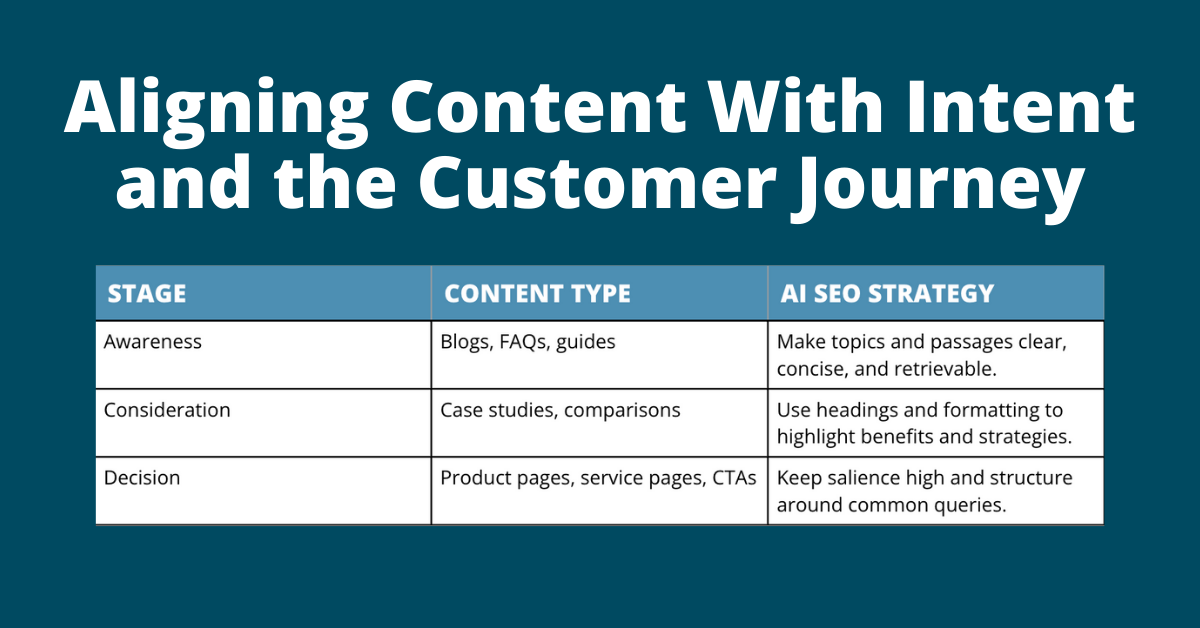
    Mapping to the customer journey

    Your website isn’t just a collection of pages — it’s a journey you’re guiding users through:

    Aligning Content With Intent and the Customer Journey graphic

    Try This: Audit your content by journey stage. Do you have gaps? Are you heavy on awareness but light on decision content?

    Keep It fresh: Why content age matters in AI retrieval

    Both search engines and AI systems prefer fresh content. It’s not just about having a recent publication date but about having current information.

    Picture this: If two pages have similar relevance, but one was updated last week and one two years ago, which would you trust? AI feels the same way.

    Best practices:

    • Set a calendar reminder to review key pages quarterly.
    • Update statistics, examples, and trends regularly.
    • Add “Last Updated” dates to show content freshness.
    • Consider a content refresh strategy as part of your regular marketing calendar.

    Invisible SEO: Metadata, markup, and machine signals

    AI doesn’t just see what humans see. It reads the code behind your pages, too. These behind-the-scenes signals help machines understand your content:

    • Semantic HTML: Using proper heading tags (H1, H2) instead of just making text bigger
    • Schema markup: Adding code that explicitly tells search engines “this is a product” or “this is an FAQ”
    • Meta information: Writing compelling, keyword-relevant titles and descriptions
    • Image alt text: Describing images for both accessibility and context

    Try This: Use either Schema Markup Validator or Google’s Rich Results Test and see what structured data your site currently has. Look for opportunities to add FAQ, HowTo, or other relevant schema types.

    Your content in vector indexes and AI repos

    Your content doesn’t just rank in traditional search. It gets embedded, chunked, and compared in massive vector databases:

    • For content to be found, it must be crawlable (unless in a private system).
    • It needs semantic richness — context and meaning, not just keywords.
    • Strong internal linking helps establish relationships between concepts.
    • Clear structure signals what’s important and how ideas relate.

    Testing and tuning: How to track your AI SEO performance

    AI SEO isn’t “set it and forget it.” It’s an ongoing process:

    • Track your presence in AI Overviews using monitoring tools like SEMRush or Advanced Web Ranking.
    • Test common customer questions in ChatGPT to see if it references your content.
    • Identify gaps by comparing what questions you want to rank for versus what AI actually retrieves.
    • Consider one of the emerging AI tracking tools like Scrunch, RankScale, or Profound.
    • Use these insights to continuously improve your content strategy.

    Part 5: The Future of AI SEO — Preparing for What’s Next

    Search engine diversity: Beyond Google

    While Google dominates the conversation around search, different search engines and AI platforms approach content evaluation in unique ways:

    • Bing/Microsoft: Often emphasizes freshness and social signals differently than Google
    • DuckDuckGo: Focuses on privacy and may value different content signals
    • Niche Search Engines: Vertical-specific engines like Amazon or YouTube have their own unique ranking factors

    Content optimized for multiple AI systems should:

    • Focus on universal quality factors like clarity and comprehensiveness.
    • Avoid over-optimization for any single algorithm.
    • Test performance across multiple platforms.

    Try This: Compare how your top content performs in Google versus Bing or other search engines to identify potential optimization gaps.

    Knowledge graphs: Entities and relationships

    Search engines use knowledge graphs to understand entities (people, places, things) and how they relate to each other. This structured understanding helps AI comprehend context and meaning beyond just keywords.

    For example, a knowledge graph understands that:

    • “Apple” could be a fruit, a technology company, or a record label.
    • Tim Cook is the CEO of Apple Inc.
    • iPhones are products made by Apple Inc.

    To optimize for knowledge graphs:

    • Use schema markup to clearly identify entities.
    • Build content that reinforces entity relationships.
    • Create content clusters that thoroughly cover related topics.

    Try This: Research how your brand and key products appear in Google’s Knowledge Panel to understand how search engines currently interpret your entity.

    Agentic search: When AI acts on your behalf

    We’re moving from an era where users search for information to one where AI assistants search on their behalf. Think of it as the difference between looking up a restaurant yourself versus telling your assistant: “Book me a table at a good Italian place nearby.”

    This shift has profound implications:

    • Users may interact less directly with your website.
    • First impressions will happen through AI interpretations of your content.
    • Content needs to be both human-friendly AND machine-actionable.

    Try This: Ask an AI assistant like ChatGPT to recommend a product in your category and see what sources it draws from. What made those sources retrievable?

    Agent-to-agent communication

    The next frontier is machines talking to machines on our behalf. Imagine your customer’s AI assistant negotiating with your business’s AI system to book an appointment or customize a product.

    To prepare for this:

    • Structure data in machine-readable formats.
    • Develop clear API documentation.
    • Ensure your content can be easily parsed into actionable items.
    • Consider what permissions and capabilities you’ll grant to external AI systems.

    E-E-A-T: Building trust with both users and AI

    To describe quality content, Google coined the term: E-E-A-T principles (Experience, Expertise, Authoritativeness, Trustworthiness). While not explicitly related to AI search, the factors are increasingly important for AI evaluation:

    • Experience: Show first-hand knowledge and practical application.
    • Expertise: Demonstrate a deep understanding of your field.
    • Authoritativeness: Build recognition from others in your industry.
    • Trustworthiness: Provide accurate, current information with transparency.

    AI systems are getting better at evaluating these signals to determine which content to trust and recommend.

    Try This: Audit your key pages for E-E-A-T signals. Do you clearly communicate credentials? Do you reference authoritative sources? Do you show real expertise?

    Multimodal AI SEO: Optimizing beyond text

    AI systems are increasingly “multimodal,” i.e., able to understand text, images, audio, and video together. This trend has significant implications for comprehensive content optimization:

    • Image Source Optimization: Use descriptive filenames and alt text that help AI understand image content.
    • Video SEO: Include transcripts and structured markup that make video content discoverable.
    • Podcast Optimization: Provide detailed show notes and timestamps that AI can index.
    • Social Media Integration: Coordinate messaging across platforms for consistent brand signals.

    The best AI SEO strategies now incorporate multiple content formats to create comprehensive digital experiences that rank well across all search platforms.

    The evolving link landscape in AI SEO

    While internal linking remains crucial for establishing content relationships, the role of external links is also evolving in an AI-driven search environment:

    • Quality over quantity becomes even more important.
    • Contextual relevance of linking domains matters more than domain authority alone.
    • Links from diverse but topically relevant sources create a more natural signal.
    • Citations and mentions may gain importance alongside traditional links.

    To adapt your link-building strategy:

    • Focus on genuine relationships with relevant content creators.
    • Seek opportunities to be cited as an information source, not just linked to.
    • Create link-worthy resources that AI systems would recognize as authoritative.

    Part 6: AI SEO Tools and Implementation

    Essential AI SEO software and platforms

    To effectively implement AI SEO strategies, your team will need the right tools:

    • AI Content Creation Tools: Platforms like ChatGPT, Jasper, ContentBot, or CopyAI help generate search-optimized content
    • SEO Analysis Software: Tools like SEMrush, Ahrefs, or Moz now include AI-powered content suggestions
    • Search Intent Analysis: Specialized tools that analyze user queries and suggest content angles
    • AI-Powered Keyword Research: Software that identifies semantic keyword clusters and topic opportunities
    • Content Optimization Platforms: Tools that evaluate your content against top-performing competitors
    • Dedicated AI Tracking Tools: Tools like Scrunch, RankScale, or Profound can explicitly track your placement in AI search results

    These tools work best when used by skilled marketers who understand both SEO fundamentals and AI capabilities.

    AI SEO implementation timeline

    For teams looking to adopt AI SEO practices, consider this phased approach:

    1. Audit Current Performance (1-2 weeks)
      • Analyze organic traffic trends.
      • Identify content performing well/poorly with AI systems.
      • Benchmark against competitors.
    2. Tool Selection and Training (2-4 weeks)
      • Choose appropriate AI SEO software.
      • Train your team on new platforms.
      • Develop internal best practices.
    3. Content Optimization (Ongoing)
      • Prioritize high-value pages for updates.
      • Create new content using AI SEO principles.
      • Monitor performance and adjust strategies.
    4. Advanced Implementation (3-6 months)
      • Develop custom AI applications for your website.
      • Create specialized datasets for content creation.
      • Build automated optimization workflows.

    The most successful brands view AI SEO as an ongoing process rather than a one-time project.

    Measuring AI SEO success

    Track these key metrics to evaluate your AI SEO efforts:

    • Featured Snippet Appearances: How often your content appears in position zero
    • SERP Feature Presence: Inclusion in knowledge panels, FAQs, and other enhanced results
    • AI Overview Mentions: References to your content in Google’s AI Overviews
    • Voice Search Results: How often your content is selected for voice assistant responses
    • Click-Through Rate Changes: Shifts in user behavior based on SERP changes
    • Page-Level Engagement: Time on page, bounce rate, and conversion metrics
    • Organic Traffic Quality: Not just more visitors, but more qualified prospects
    • Referrals from AI Engines: It is possible to create filters in GA4 and other Analytics packages to track AI referrals
    • AI Presence: If you invest in an AI tracking tool, you can track your presence in snippets and citations over time

    Set up custom dashboards in your analytics platform to monitor these metrics by page type and content category.

    The AI SEO Opportunity

    AI SEO represents the future of search engine optimization, blending traditional SEO best practices with new approaches designed for AI-powered search. As these trends continue to reshape how people find information online, brands that adapt will gain significant advantages in organic traffic and digital visibility.

    Success in AI SEO requires:

    • Understanding how AI systems evaluate and retrieve content
    • Creating comprehensive resources that address search intent at every stage
    • Optimizing for both traditional search results and AI-generated answers
    • Building content that establishes your brand as an authoritative source
    • Staying current with the latest AI search engine trends and changes

    The most effective teams will use AI tools to enhance their content creation process while maintaining the human expertise and brand voice that connects with their audience.

    Your Next Steps:

    1. Conduct an AI SEO audit on your highest-traffic pages to identify optimization opportunities.
    2. Explore how AI tools can help your team create more comprehensive, relevant content.
    3. Develop a content plan that addresses each stage of your customer journey.
    4. Build internal expertise on how AI is changing search behavior in your industry.

    The brands that embrace these changes now will build sustainable advantages in organic search that will serve them well as AI continues to transform how people find and consume information online.

    Need help navigating the shift to AI SEO? Contact Search Influence to develop a strategy that keeps your content visible, valuable, and ahead of the curve.

  • Accelerate Your Higher Ed Program Enrollment With Our SEO Roadmap

    Accelerate Your Higher Ed Program Enrollment With Our SEO Roadmap

    Get your SEO Roadmap for Universities by Search Influence

    Imagine this: You’re part of a university marketing team tasked with boosting visibility for a new program. You know SEO is critical, but with so many options and resources to consider, figuring out where to begin feels overwhelming. 

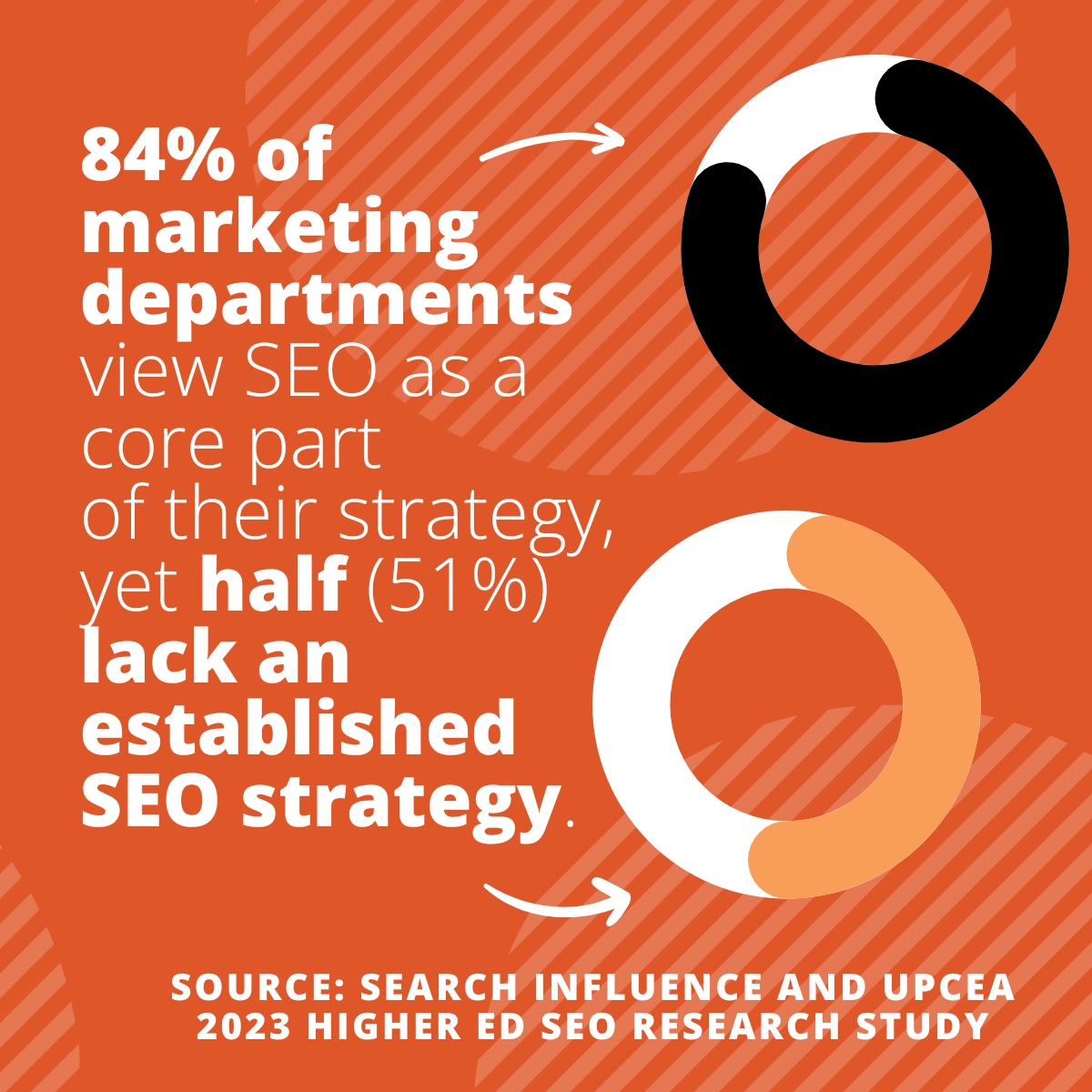
    You’re not alone — according to our higher ed research study we conducted with UPCEA, 51% of higher ed marketers report not having an SEO strategy in place.

    Here’s where Search Influence’s SEO Roadmap will help. Designed to provide a clear, actionable plan for your institution, our SEO Roadmap focuses on one top program or degree, delivering custom recommendations you can implement immediately.  

    The value of implementing an expertly developed SEO strategy cannot be understated. Consistent online visibility is the key to maintaining and growing enrollment for your programs. An SEO Roadmap gives you the tools you need to build that online presence while exploring the value of agency support without a long-term commitment.

    Our higher education SEO Roadmap is ideal for launching a new program or refreshing an existing one, providing a budget-friendly entry point that gives your institution a strategic edge in the crowded higher ed landscape. 

    Read on to discover how our SEO Roadmap will drive meaningful results for your program. 

    What Is an SEO Roadmap for Higher Education?

    Educational websites are large, complex entities, often involving many voices — from marketing teams to IT, communications, and even department heads. 

    Each team has its own ideas about how to increase enrollment and make an impact, leading to a multitude of directions without a unified strategy. 

    This is why a detailed, custom SEO roadmap is essential. You need an action plan tailored to the unique strengths and opportunities of your program, rather than a generalized report from a basic SEO tool. 

    Backed by a deep understanding of higher ed audiences and how they search, the SEO Roadmap from Search Influence provides actionable insights specifically designed to help you reach and connect with more prospective students.

    Stats about higher education marketing - Search Influence

    SEO Roadmap vs. Audit: Which Is Right for Me?

    An SEO roadmap may be right for you if…

    • You want to understand the SEO opportunities for a specific program, degree, or credential 
    • You recognize the need for external SEO support
    • You want to understand what expertise you are missing in your SEO strategy 
    • You want to make a case for SEO to your team or boss 
    • You want to see what it’s like to work with Search Influence 
    • You want to try working with an SEO agency without a long-term commitment

    Search Influence’s SEO Roadmap is ideal for higher ed marketers who recognize the need for dedicated SEO support but need a little extra help developing their strategy. 

    An SEO audit may be right for you if…

    • You have a strong in-house SEO team and want an expert opinion on your performance 
    • You want dedicated external SEO support and are ready to dive deep into improving your website as a whole as well as focus on program-specific enrollment
    • You have worked hard on your SEO, but the rankings and traffic aren’t improving 
    • You have concerns about the navigation and user experience on your site 
    • You believe your website setup may be holding you back 

    Search Influence’s SEO Audit is perfect for…

    • Experienced in-house marketers looking to refine their strategies and tackle challenges that limit their website’s SEO effectiveness
    • Marketers who want dedicated external SEO help to dive deep into improving their entire website as well as focus on program-specific enrollment

    A breakdown of what you get with Search Influence's SEO Roadmap

    Search Influence’s SEO Roadmap

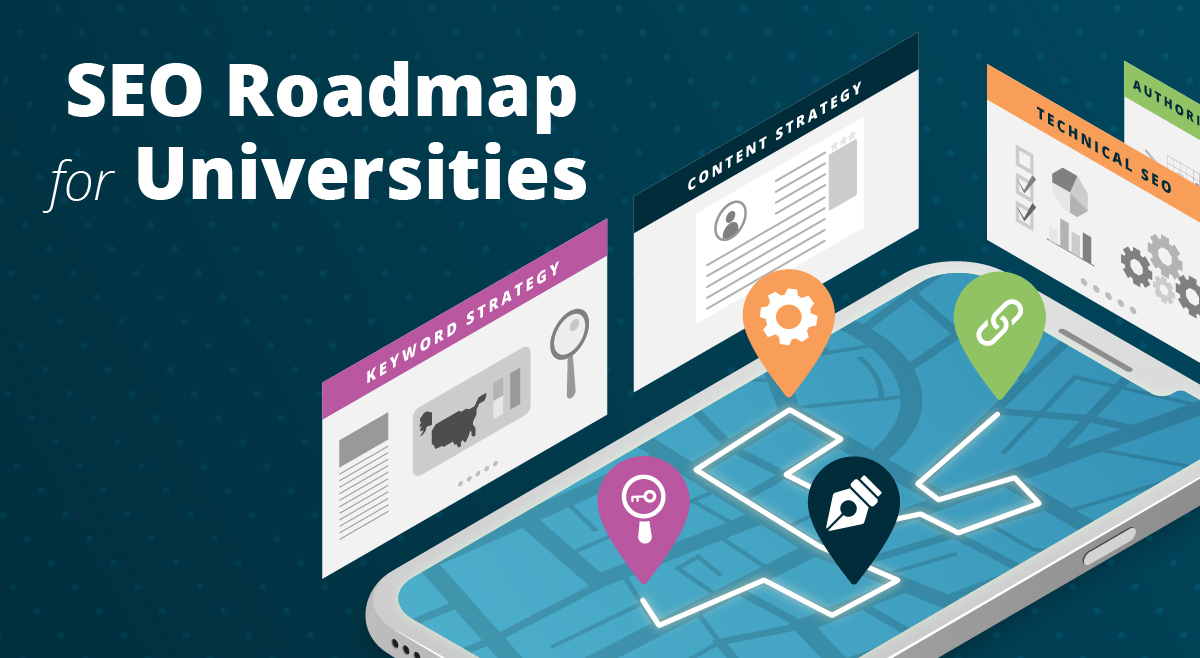
    Experience the value of working with Search Influence through our SEO Roadmap — a targeted, customized strategy designed to elevate one of your institution’s top programs or degrees. This Roadmap provides a firsthand look at our proven SEO approach and delivers expert recommendations you can implement right away that will make a real impact on visibility and enrollment.

    Our SEO Roadmap covers the essential pillars of an effective SEO strategy, giving you a comprehensive taste of the results we will achieve together:

    • Keyword Research: Discover what prospective students are searching for and uncover the key terms that position your program front and center.
    • Content Strategy: Receive tailored insights to optimize your existing content, create engaging new pieces, and reach students on and off your website.
    • Technical SEO: Understand the technical steps needed to enhance your site’s performance, ensuring a smooth user experience that search engines reward.
    • Authority & Link Building: Build credibility through targeted link-building strategies and connections to trusted sources that strengthen your program’s authority online.

    This Roadmap is more than a one-off solution — it’s a glimpse into the level of expertise and dedication our team brings to every partnership. Powered by 20 years of SEO success, your Roadmap reflects our deep commitment to helping institutions like yours thrive in the digital arena.

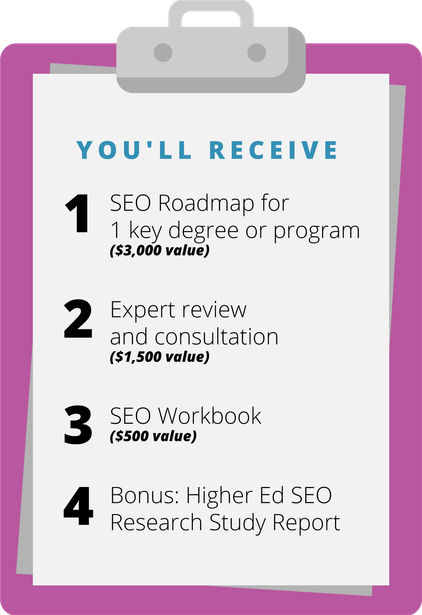
    For only $1,497, you’ll get:

    • SEO Roadmap for 1 Key Degree or Program – A $3,000 value
    • Expert Review and Consultation – A $1,500 value
    • SEO Workbook – A $500 value
    • Bonus: Higher Ed SEO Research Study Report

    We’ll also schedule a one-on-one review meeting, to guide you through each recommendation and ensure you feel confident in implementing each step. 

    This Roadmap is an opportunity to see what’s possible when Search Influence is in your corner. Get started today, and together we’ll build a path to long-term success.

    Learn More About Our SEO Roadmap

    Search Influence has helped countless higher education institutions boost their online presence and attract more students.

    This includes longtime client, Tulane SoPA, who saw a 569% increase in keywords ranking in Google’s top spots and a 445% rise in organic traffic after working with us. 

    Our SEO Roadmap gives you an actionable plan to achieve top search rankings and greater visibility — just as we’ve done for Tulane SoPA and countless other higher ed institutions.

    We continue to research and adapt to the latest search trends, including the impact of AI-generated search and social search on student behavior. Watch our joint webinar with UPCEA for expert insights and recommendations on these subjects.  

    Get started on the Higher Ed SEO Roadmap with our easy online checkout, or reach out to schedule a call with our team to explore how we will support your goals.

  • Social Search: How Gen Z & Millennial Search Habits Are Changing

    Social Search: How Gen Z & Millennial Search Habits Are Changing

    Key Insights

    • Gen Z and Millennials increasingly favor social search over traditional search engines like Google.
    • As social search becomes more prominent, brands need to optimize their presence on social media platforms to capture the attention of younger, tech-savvy audiences.
    • Social search engines prioritize visual content, which resonates more with younger audiences. Platforms like Instagram and TikTok emphasize images and videos, making it crucial for brands to invest in high-quality visual media to capture attention and drive engagement.

    As has been true for countless generations, young people find their own unique way of doing things.

    From turning rhythm and blues into rock and roll to developing new ways to dress, youth always finds a way to adapt the norm.

    You can see this same trend in how this new generation searches the web.

    Gen Z and Millennials are moving away from traditional search engines like Google in favor of what they consider a more authentic experience — social search.

    Understanding and adapting to these changes is crucial for digital marketers trying to reach this ever-elusive demographic.

    As social SEO becomes increasingly important, brands need to optimize their presence on social media platforms to capture the attention of these younger, tech-savvy audiences.

    At Search Influence, we are committed to staying ahead of these trends and ensuring our strategies evolve to reach all audiences. Whether it’s optimizing for traditional search engines or harnessing the power of social media platforms, we dedicate ourselves to continual learning and adaptation.

    Just as previous generations adapted to Elvis and high-waisted jeans, today’s businesses must evolve with social search.

    What Is Social Search?

    A cloud of social media icons depicting popular platforms

    Social search refers to using social media channels to find information, discover products, and learn about services. This approach leverages social media platforms’ dynamic and interactive nature, where users can tap into a wealth of real-time, user-generated content (UGC).

    Traditional search engines like Google and Bing operate by crawling the web, indexing pages, and ranking them based on factors such as backlinks, page speed, keywords, and domain authority.

    Users input relevant keywords, and the search engine returns a list of websites and pages that best match the query while also considering the above ranking factors.

    Issues arise because the best answer to a searcher’s query can get overshadowed by big, trusted (by Google), websites’ desire to capitalize on the searches regardless of their relevance.

    And for generations obsessed with authenticity, it feels particularly shady that a search for “best hiking gear” yields results from The New York Times, CNN, and Forbes.

    These websites have the online authority and know-how to satisfy Google’s ranking factors, not necessarily the user’s query.

    In contrast, social search harnesses the power of social media channels and engagement to surface content that is often more current and contextually relevant.

    Reddit, for instance, enables users to find information through community discussions and “upvoted” posts, often providing more nuanced and diverse perspectives. Platforms like Instagram and TikTok allow users to search for content using hashtags, user profiles, and trending topics, providing results that are influenced by real-time interactions and community interests.

    Let’s contextualize this with a real-world example.

    Say you’ve had a long day at work and are on the hunt for an easy recipe.

    A simple search on TikTok for #quickrecipes will produce a bounty of popular, easy-to-follow, short-form videos based on past content you’ve interacted with, all from authentic sources in your community.

    This makes the search for dinner simple and satisfying.

    TikTok’s powerful algorithm has led to countless viral recipes, like Feel Good Foodie’s Baked Feta Pasta.

    @feelgoodfoodie If you love my Baked Feta Pasta recipe, you can now order it for pickup or delivery from the Creators Kitchen As Seen On TikTok! It’s a new brand that features my viral #bakedfetapasta ♬ original sound – Feel Good Foodie

    In contrast, a search for “quick recipes” on Google opens a floodgate of 3,000-word blogs from the likes of Food Network and Taste.

    While some might not mind this result, for many Gen Z and Millennials, all they see is hard-to-digest content from their parents’ favorite brands.

    Social media platforms show results based on what users engage with in their online communities, leading to a more personalized and trusted experience.

    This is an experience that Gen Z and Millennials can’t get enough of.

    Gen Z and Millennials Are Driving the Social Search Revolution

    There has been a significant cultural shift in how younger generations seek information. The phrase “Google it” is gradually being replaced with “Search it up” on social media.

    This change in language reflects a broader trend: Traditional search engines are no longer the default for discovering new products, services, and information for young people.

    Instead, Gen Z and Millennials are turning to social media search for visual content, peer reviews, and influencer recommendations.

    According to Persuasion Nation, 97.5% of Gen Z use social media as their primary source of shopping ideas, underscoring the dominance of these platforms in influencing purchasing decisions.

    Reasons behind the preference for social search

    • Visual content and peer reviews: Social media platforms offer rich visual content that resonates with Gen Z and Millennials. From Instagram stories to TikTok videos, visual media captures attention and conveys information quickly and effectively. Peer reviews and influencer recommendations add an extra layer of authenticity and trust, making it easier for users to make informed decisions based on real experiences.
    • Direct interaction and community engagement: Social media enables direct interaction with brands, influencers, and peers. Comment sections, likes, and shares facilitate community engagement and discussion, creating a sense of belonging and active participation. This interactive element is something traditional search engines cannot replicate, making social media search more appealing to younger users.
    • “Junk” in traditional search results: There is growing dissatisfaction with the commercialization and spam often found in traditional search results. Users are increasingly wary of ads and sponsored content that can clutter their search experience. While similar ads can be found on social media, they are often delivered by influencers users trust — not a pop-up while scrolling through a blog.

    Concerns about social media search

    While Hubspot reports that 29% of Gen Z and Millennials prefer to use social search engines, it’s not all sunshine and rainbows.

    There is an erosion of trust in social media platforms due to concerns about privacy, misinformation, and the authenticity of content.

    This duality highlights the complex relationship younger users have with social media as both a valuable resource and a potential source of mistrust.

    Impact of Social Search on Traditional SEO

    Traditional SEO involves optimizing a website’s content to improve its ranking on search engines. This includes:

    • Keyword research
    • On-page optimization
    • Building backlinks
    • Ensuring technical elements like site speed and mobile-friendliness are up to par

    The primary goal is to enhance visibility in search engine results pages and drive organic traffic to the website.

    On the other hand, social search SEO focuses on optimizing content for discovery on social media platforms. This involves creating engaging, shareable content that resonates with the target audience. Keywords still play a role, but the emphasis is more on user engagement, video content, and social sharing.

    A phone being held on a brick wall under a painting of a "Like" bubble commonly associated with Instagram

    The success of social search SEO is measured by the level of interaction and community engagement a post receives rather than just its ranking position. And, where those social posts might rank in Google and Bing.

    How social search is influencing changes in SEO strategies

    Social search is driving changes in SEO strategies by emphasizing the importance of creating content that is not only relevant but also highly engaging and shareable. Traditional SEO strategies are increasingly incorporating elements of social SEO, such as focusing on video content and community authenticity. This hybrid approach aims to enhance both search engine rankings and social media visibility.

    Brands now recognize that creating compelling visual content and leveraging influencers isn’t just for social media — it’s an integral part of SEO strategy as well.

    By mixing the powers of social media’s community-driven, user-generated content with the strengths of SEO, marketers can now grasp what has long eluded them… authenticity that ranks across all platforms.

    These strategies help increase brand identity and drive traffic from social platforms back to the website, enhancing overall SEO performance.

    Potential challenges and opportunities presented by social search

    The rise of social search presents several challenges for traditional SEO, particularly in adapting to the preferences of younger audiences.

    One significant challenge is creating content that Gen Z and Millennials trust and want to interact with.

    These generations prefer easily digestible, straightforward content that quickly satisfies their search queries.

    For example, short, informative videos or visually appealing infographics are more likely to engage these users compared to lengthy, text-heavy articles.

    Additionally, traditional SEOs must develop strategies for platforms outside of Google. While Google remains a dominant player, platforms like Instagram, TikTok, and Reddit are increasingly important for reaching younger audiences.

    This requires a shift in content marketing strategy to include the creation of shareable, engaging content tailored to these social media platforms.

    How to Adapt to This New Era of Search

    Optimize for social search

    To increase discoverability on social media sites, it is essential to conduct thorough research on relevant keywords and hashtags to include in your post captions and your profile bio.

    See? Some things never change.

    Utilizing keywords and hashtags can significantly enhance your social SEO performance.

    Ensure that your content descriptions and hashtags align with the latest search trends on social platforms.

    This strategic approach will help your brand appear in more search results on social media sites.

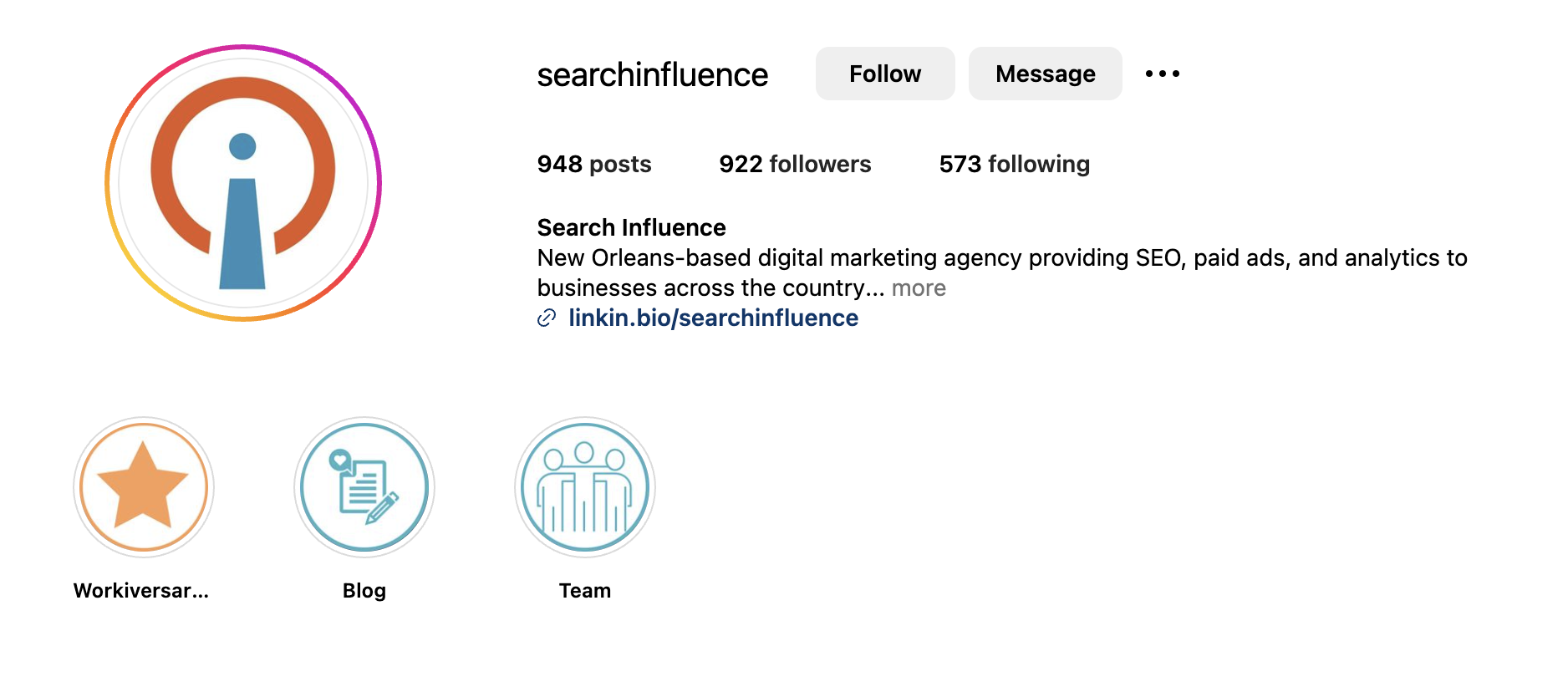
    Optimizing your social media profiles is crucial for strengthening your brand identity and enhancing your social media efforts. Use relevant keywords in your profile descriptions, and include clear, concise information about your brand.

    A screenshot of Search Influence's Instagram profile header, showing the importance of proper optimization

    Make sure to link back to your website from your social media pages to drive traffic and improve your overall SEO strategy. Consistency across all social media accounts is key to creating a cohesive and recognizable brand presence.

    Understand the platform

    Each social media platform has unique features and algorithms, requiring tailored strategies to maximize your reach and engagement.

    For example, Instagram and TikTok both rely heavily on visual content, such as short-form videos, while Reddit relies on community interaction and conversation engagement.

    Developing specific strategies for each platform will allow you to leverage their strengths and connect with your target audience effectively.

    Social media algorithms and features are constantly evolving.

    To keep your strategies relevant, stay informed about these changes by following digital marketing news and updates. Regularly updating your knowledge ensures that your social media efforts remain effective and aligned with the latest trends and best practices.

    Create engaging visuals

    Investing in high-quality images, videos, and graphics is crucial for capturing attention on social media.

    Professional and visually appealing content stands out and attracts more engagement. Platforms like TikTok and Instagram Reels have popularized short-form video content, making it a powerful tool for social discovery. Create short, engaging videos that are informative, entertaining, and easily shareable.


    View this post on Instagram


    A post shared by Search Influence (@searchinfluence)

    Keeping your feed active with fresh content, even if it seems repetitive, helps maintain visibility and keeps your audience engaged.

    Leverage influencers and user-generated content

    Collaborating with influencers who align with your brand values and target audience can significantly boost your social media interactions with Gen Z and Millenials.

    Influencers can create authentic content that resonates with their followers, enhancing your brand’s reach and credibility. Influencer partnerships can also drive more brand mentions and improve your social media signals, ultimately benefiting your SEO strategy.

    Promoting user-generated content is an effective way to increase engagement and build community around your brand.

    Encourage customers to share their experiences using branded hashtags, making it easier for others to discover and engage with your content. UGC not only provides authentic, relatable content but also boosts your brand’s visibility and trustworthiness.

    Trust the Search Engine Experts at Search Influence

    No matter the year or the platform, marketers will always have to adapt their sails to the winds of young people.

    Before SEO and digital marketing, brands spent millions on 30-second spots between music videos on MTV.

    Before that, the mad men of ad agencies bought entire pages in Rolling Stone, trying to grab the ever-fleeting attention of youth.

    Allow Search Influence to be your first mate as you navigate the seas of social search.

    Our knowledgeable team has years of experience getting results for brands just like yours.

    As SEO thought leaders, we take pride in leveraging the latest industry trends to build result-driven campaigns for our clients.

    Get in touch with us today to learn more about all the services we offer.

    Image Credits

    Group of Social Media Logos, Credit to Alexander Shatov

    Phone on Brick Wall, Credit to Karsten Wingeart

  • Google officially launches AI Overviews for search

    Google officially launches AI Overviews for search

    Google announces AI Overviews are available for all US searchers

    Google is trying to steal your searches, what can you do about it?

    At yesterday’s Google I/O, Google announced it is rolling out “AI overviews” for all US searchers.

    Without getting too geeky, the AI Overviews are “retrieval augmented generation,” where essentially Google looks into its large language model (i.e. big ol’ database of knowledge) and compares what’s there to search data to build a better answer.

    If you’d like more information, Barry Schwartz has a good review on Search Engine Land.

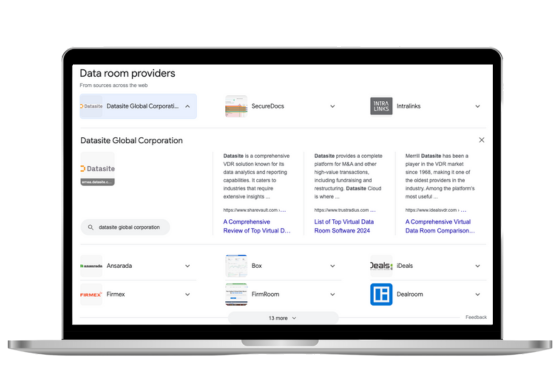
    Google Screenshot AI Overview Example - Datasite - Dataroom Providers

    If you’ve been watching what Google is doing with SGE (Search Generative Experience) during its beta, you may have seen that the Google “answers” are sometimes incorrect and potentially distract searchers away from the valid results below.

    What this means is that the “10 blue links” and the maps we were used to are pushed even further down the page.

    AI Overviews are only part of the problem, though. Google is also putting more ads at the top of the page, meaning your winning map or organic search is lower still.

    This is not the time to freak out, though. We are very early in this rollout, and at Search Influence we’ve been testing how to keep you on top even with these changes.

    If you’re a Search Influence client, look forward to some interesting new tactics in your SEO strategies.

    For the past decade, when we’ve said “search,” we’ve meant Google. In the coming decade, we may be talking about searches on any number of engines, apps, and devices.

    At Google, as in life, change is the only constant. Look forward to updates as we get further in our testing.

  • Higher Education Digital Marketing – Your Key to Growth In 2024

    Higher Education Digital Marketing – Your Key to Growth In 2024

    Imagine you’re a ship captain embarking on a voyage in uncharted waters. That’s what it’s like navigating the ever-changing currents of Higher Education Digital Marketing.

    Higher education digital marketing in 2024

    As the deck shifts beneath you, you are steering your institution’s ship through the waves of change – hopefully toward improved enrollment and a better return on investment (ROI.)

    Mobile devices, social media, and the need to show value with data analytics are critical in your marketing efforts to attract, engage, and retain students.

    As we go deeper, you’ll learn to master the art of marketing in higher education, turning challenges into opportunities and ensuring your ship doesn’t just stay afloat but sails triumphantly toward the horizon of success.

    [ez-toc]

    Digital Marketing Strategy – What’s Working?

    For a more comprehensive look at what other schools and their agencies are thinking about for lead generation. Have a look at our blog roundup: 10 Winning Higher Education Marketing Strategies.

    Top 10 Higher Education Digital Marketing Strategies

    • SEO (Search Engine Optimization)
    • Paid Advertising (PPC, Pay-Per-Click, Display and More)
    • Content Marketing
    • Email Marketing
    • Social Media Marketing
    • Video Content
    • Personalization
    • Branding
    • Chatbots and Conversational Marketing
    • Data-Driven Strategy

    SEO: The Key to Visibility

    SEO is essential in your institution’s visibility online, bringing high-quality content to the forefront and establishing your authority. It’s a cornerstone of higher education marketing, offering a way to increase search engine rankings and maximize organic traffic.

    Good SEO is simple, not easy.

    In short, SEO is about relevance and authority. Or, another way, keywords, content, and links.

    An academic research paper is judged over time by the number of citations it receives, and your website is judged by the number of links, references, and citations, too.

    In Higher Ed, SEO basics can go a long way.

    Keyword Research Is Changing

    As Internet search engines move from “lexical” to “semantic” search, it is that much more important to create connections in a semantically relevant way. Keywords (or search terms) are still important, but equally important are the entities they represent.

    Hint: look for bolded text in this article. Most are entities – either Wikipedia or Google NLP. Some are just for emphasis.

    Consider the humble Hoagie. You don’t know what a hoagie is? It’s what people in Philly call a Sub or Hero. In New Orleans, we call it a Po-Boy.

    To Wikipedia, however, Sub, Hoagie, Grinder, and others are the semantic equivalent of “Submarine sandwich.”

    Constructivist learning theory suggests learners construct knowledge by integrating new information with existing knowledge and experiences. Search is like that.

    There are far too many “keywords” for search engines to catalog them all, and they must, therefore, index those keywords to known entities.

    A fun aside: Po’ boy gets its own Wikipedia page.

    Link Building Is Hard

    The good news for you, if you’re marketing higher ed institutions, is that most of your websites are very authoritative. They already have a lot of external links, and they get a lot of organic usage.

    Image of an interconnected web of laser-like lights intended to represent the importance of links in higher education SEO.

    In the SEO community, we’ve long believed that user signals, i.e., the way a visitor interacts with your website, are important. With students and other community members using your website as a resource, you can be assured that your user signals demonstrate engagement.

    But is it easy for them to find what they need? And if you were a search engine crawling your own website, would it be easy to navigate among related topics?

    When the World Wide Web first launched, hyperlinks were a radical departure. The idea we could jump from one document or passage to another was revolutionary.

    Site visitors want to move seamlessly from one idea to the next and from one page to another, as well. Search engines do, too.

    Chances are you don’t have enough internal links within the content of your website. If you want the search engines to really understand the relationship between areas of your site, you need to demonstrate those connections with links.

    Hopefully, your content management system supports easy internal linking. If you use WordPress, we’ve been enjoying the plugin LinkWhisper which automates much of the internal linking process.

    Does this mean you don’t need external links? Not at all, but you get to be more selective.

    Are you launching a new program? Highlighting a student or faculty story? These may need external links to get found, and those can be in the form of PR, social media, and other organic behaviors.

    Embrace Your Technical Side

    If your website doesn’t function properly, users and search engines will not be able to find what you want them to.

    Image of a robot head in a field of technology to represent the importance of technical SEO for higher ed.

    A broken website is obvious, but there are less obvious technical implementations that can add tremendous value:

    • Website load speed
    • Readability (important for accessibility as well)
    • Image size and format (relates to load speed)
    • Structured data

    A typical “SEO Audit” will highlight a number of irrelevant issues, like HTML code compliance, for instance. Today, however, having a fast, easy-to-read site that loads well on mobile devices and feeds the engine semantically relevant information is the starting point.

    Technical SEO doesn’t have to be scary if you focus on the handful of things that really matter.

    Paid Advertising: Extend Your University Marketing

    Search engines are attacking your organic search efforts on multiple fronts which makes online advertising that much more critical.

    The integration of AI results means your organic content is further down the search engine results page (SERP.)

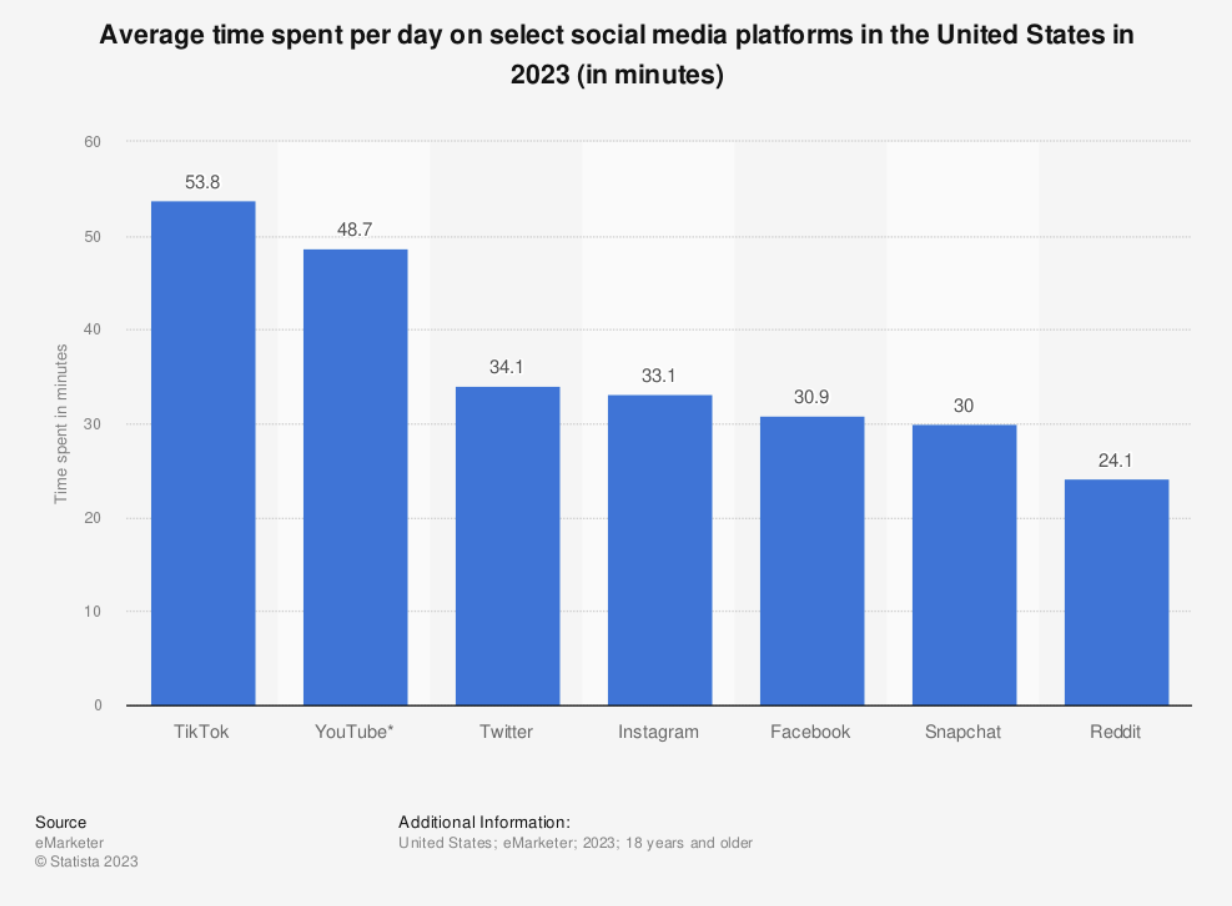
    New social channels, like TikTok, Instagram, and Snapchat, are being used by the coming generations in place of search engines.

    Image of a laptop with a graduation cap (mortarboard) surrounded by a swarm of logos to indicate the importance of digital advertising channels for higher ed.

    PPC, Pay-Per-Click, and Search Ads

    You are likely familiar with paid search ads. They are one of the oldest forms of Internet advertising, dating back to the last century.

    They have come a long way. In the beginning, they matched ads to what a user searched for. Now, they can include multiple layers of targeting.

    In addition to the searched words, we can now layer demographics, searcher intent, and even retargeting. The humble search ad started as a sledgehammer and is now a laser-guided surgical instrument.

    With pay-per-click, you only pay when someone clicks your ad, making it a good way to manage budget and ROI.

    Digital Display Advertising

    Closely related to search advertising and often available in the same systems are digital display ads.

    Many channels have options for display advertising, including the Google Display Network and Meta (parent of Facebook and Instagram).

    There are also specialized advertising platforms that allow digital ads to be targeted based on third-party data. These can be subscribers to various services, demographics, or affinity, and in-market data.

    Social Media Advertising for Higher Ed

    Group of young people taking a selfie in front of an institution of higher learning with books and graduation caps floating in the background.

    Each platform has paid ads available. In addition to PPC and Display, there are platform specific options such as InMail on LinkedIn.

    When these advertisements are native to the platform, they often provide a better response rate.

    Television and Connected Devices DTV/CTV/OTT

    As in-home entertainment moves more asynchronous and digital, you can now reach prospects with digital advertising during leisure activities.

    These platforms share the audience targeting capabilities of digital display.

    Retargeting and Remarketing

    Each time a web searcher is exposed to messaging online, whether news sites, entertainment, or in the social media space, they become an opportunity for retargeting.

    You can target visitors to your website, those who’ve seen other ads or a specific landing page, and even by email and phone number. These technologies are available in most paid campaigns, even your existing Google ads.

    Whether you like it or not, if you want to reach your target market, you will sometimes need to pay for it.

    Content Marketing Drives Engagement

    At its best, content marketing is a storytelling opportunity. Regardless of the medium, you have an opportunity to engage your audience in entertaining and informative ways.

    Image of a group of students studying with electronic devices to indicate the importance of content marketing.

    Showcase your institution’s unique values, tell your story, and present your offerings in a way that appeals to your prospective students.

    Current students, campus life, and your degree program are all great topics. Your blog and video content allows for student-centered content with an integrated call to action for relevant leads.

    As higher education marketers, we have to wear a number of hats. Yes, we need to increase search engine visibility. And lead generation has to be a major focus of any marketing campaign focused on new students. But we also have to serve our faculty and administrators.

    The great news is our faculty are prolific content creators in their own right.

    This frees us from having to build brand awareness with new content. We can optimize existing content from our college website and degree programs to reach the prospective student.

    Content comes in many forms. Just as we can leverage the university website to get in front of prospects, we can take advantage of admissions materials like video campus tours to increase our university’s brand visibility.

    The smart marketer is making more with less. Any existing content that is supportive of your school’s brand is ripe for reuse.

    With new AI tools, we can even take a web page and turn it into a short-form video, social media posts, or pretty much anything we can dream up.

    Video content is particularly powerful in higher ed marketing, as it offers an engaging, dynamic way to showcase your institution and its offerings.

    But there are nearly endless ways to get your university noticed with content. Here’s a list to get you thinking:

    Written Content

    1. Blogs
    2. Articles
    3. E-books
    4. White Papers
    5. Case Studies
    6. Newsletters
    7. Infographics
    8. Press Releases
    9. Guides and How-To’s
    10. Checklists and Cheat Sheets

    Visual Content

    1. Images
    2. Videos
    3. Webinars
    4. Slideshows and Presentations
    5. Live Streaming
    6. Virtual Reality (VR) and Augmented Reality (AR)

    Audio Content

    1. Podcasts
    2. Audiobooks

    Social Media

    1. Facebook
    2. Instagram
    3. Twitter
    4. LinkedIn
    5. Pinterest
    6. Snapchat
    7. TikTok
    8. Reddit

    Interactive Content

    1. Quizzes and Polls
    2. Interactive Infographics
    3. Online Courses and Workshops
    4. Games and Interactive Experiences

    Hopefully, this shows that there are tons of ways to get in front of your audience, and in many cases, adapt existing material to new channels to do so.

    Effective Email Marketing

    There are three distinct types of email marketing every school or business unit should be engaged in.

    Image of diverse group of students at university with mobile devices and email icons.

    • Outbound or cold email
    • Nurture sequences (including email, SMS, social media)
    • Newsletter

    Outbound Email Marketing For Higher Ed

    The biggest challenge in lead generation is getting your school’s brand in front of a ready audience.

    Done well, outbound email opens up new audiences for your degree programs you might not reach otherwise.

    There are platforms focused on college students in various stages of decision-making.

    And, with email lists, you can access demographic data that is no longer available on traditional advertising platforms.

    Just like direct mail of old, email is a great way to test messaging and calls to action and to get a quick response.

    Nurture And Followup Email

    What a shame it would be for you to spend time, money, or both getting interested students to your web pages or landing page and then not following up. And if they’re getting there and not taking action you may want to consider conversion optimization.

    We help our clients build nurture sequences in HubSpot, Slate, and other customer relationship management systems (CRM), which include email, SMS, and social media contacts as well.

    The higher education buying cycle can be long, and it pays to stay in front of your prospects throughout that time.

    You can use nurture sequences to stay in front of your target audience, share valuable information, answer questions, and share the perspectives of current students.

    And email nurture is good customer service, too.

    Newsletters

    Newsletters are a great way to stay in front of your audience and communicate important news and events, even when they’re not actively engaged in a marketing campaign.

    For effective email:

    • Personalize: Use the recipient’s name and tailor content to their interests or actions.
    • Segment: Target groups based on course of interest, geography, and more.
    • Make Them Compelling: These are your first impressions. Make them count.

    Invest time in crafting thoughtful, relevant emails. Your prospective students deserve it, and your enrollment numbers will thank you.

    Social Media for Brand Awareness

    Harnessing the power of social media boosting brand awareness

    Harnessing the power of social media can significantly boost your institution’s brand awareness and forge stronger connections with potential students.
    By using popular social media platforms like TikTok, Instagram, LinkedIn, and Facebook, higher education institutions can effectively reach and engage their target audience.

    Sharing engaging content such as videos, experiences, and university events on these platforms can elevate your brand and increase its visibility. You’re not just marketing your institution; you’re building a community where students feel heard, seen, and valued.

    Consider platforms like YouTube and TikTok for sharing engaging video content. These platforms can significantly improve your reach and brand awareness.

    Influencer marketing can significantly increase brand visibility and foster trust with potential students. Consider your own students, some may be micro-influencers in your community.

    In addition to organic engagement, social media sites offer significant advertising opportunities.

    Video Marketing: A Powerful Tool

    Video content resulting in user engagement

    YouTube is the second most used search engine.

    TikTok and Youtube — video sites — earn around 50 minutes/day of users time and attention.

    This is significantly more than any other platform.

    Time spent on social media platforms in the US in 2023

    And, in each case, the platform algorithms are tuned toward engagement.

    Platforms like YouTube and TikTok are perfect for sharing short videos that showcase your university’s programs and lifestyle. These bite-sized pieces of content often result in better engagement and can be easily shared across various social media platforms.

    Consider crafting virtual tours of your campus facilities. Prospective students can experience your institution from the comfort of their homes, making it a unique selling point in your higher education marketing strategy.

    Additionally, you can link these short videos to longer, more detailed ones for additional information and engagement.

    Analytics & Reporting: Show Me The Money

    higher education analytics and reporting

    Analytics and reporting are an absolute must if you want to demonstrate your value.

    In our practice, we talk about analysis, tracking, and reporting ATR for short. We use that language for a couple of reasons. First, analytics is the brand of Google’s tracking system. More importantly, we believe that without analysis, the data is meaningless.

    For many of our clients, lead generation and cost per lead (or cost per inquiry/CPI) are the most important metrics.

    With every report, we’re making a case for our continued employment. In a recent UPCEA research study the data indicates that 62% of higher education institutional leaders want reporting on SEO metrics, but just 31% receive regular updates.

    There are many ways to view Google search data and other metrics relevant to your higher education website.
    Some of our favorites are:

    • Google Analytics
    • Google Search Console
    • Google Business Profile
    • Bing Webmaster Tools
    • Advance Web Ranking

    We bring all this, plus advertising and task data, together in custom reports built-in Google Looker Studio.

    If you’re trying to decide if a topic is worth pursuing, you can also look at Google search trends.

    It’s important to remember that any of these tools are directional, not exact. The numbers are always an estimate, and the best you can do is follow the trends.

    Prospective Students Aren’t The Only Target Audience

    Often, when we think of university marketing efforts, we think Generation Z enrollment. But there are many more constituencies to consider.

    When we focus on high school students and the younger generation, we may overlook some channels that are more appropriate to some of these other audiences. Just because those high school students aren’t on Facebook doesn’t mean they’re not influenced and financed by someone who is.

    diverse group of people smiling and showing thumbs up gestures and visible five-star review symbolizing positive feedback

    Parents

    At the undergraduate level, college marketing needs to consider parents in lead generation efforts.
    Whether they are paying, guaranteeing a loan, or simply supporting their student, you want to think about parents. They will approach information differently than their students.

    Community

    It’s unlikely that your school is on an island. The community in which you live and work is an important target for your marketing campaigns.

    Whether you are recruiting staff or simply trying to maintain a good reputation, your local community needs to know what is going on at your school.

    Peer Organizations

    Whether down the block or around the world, peer schools and organizations can be an important part of your efforts.
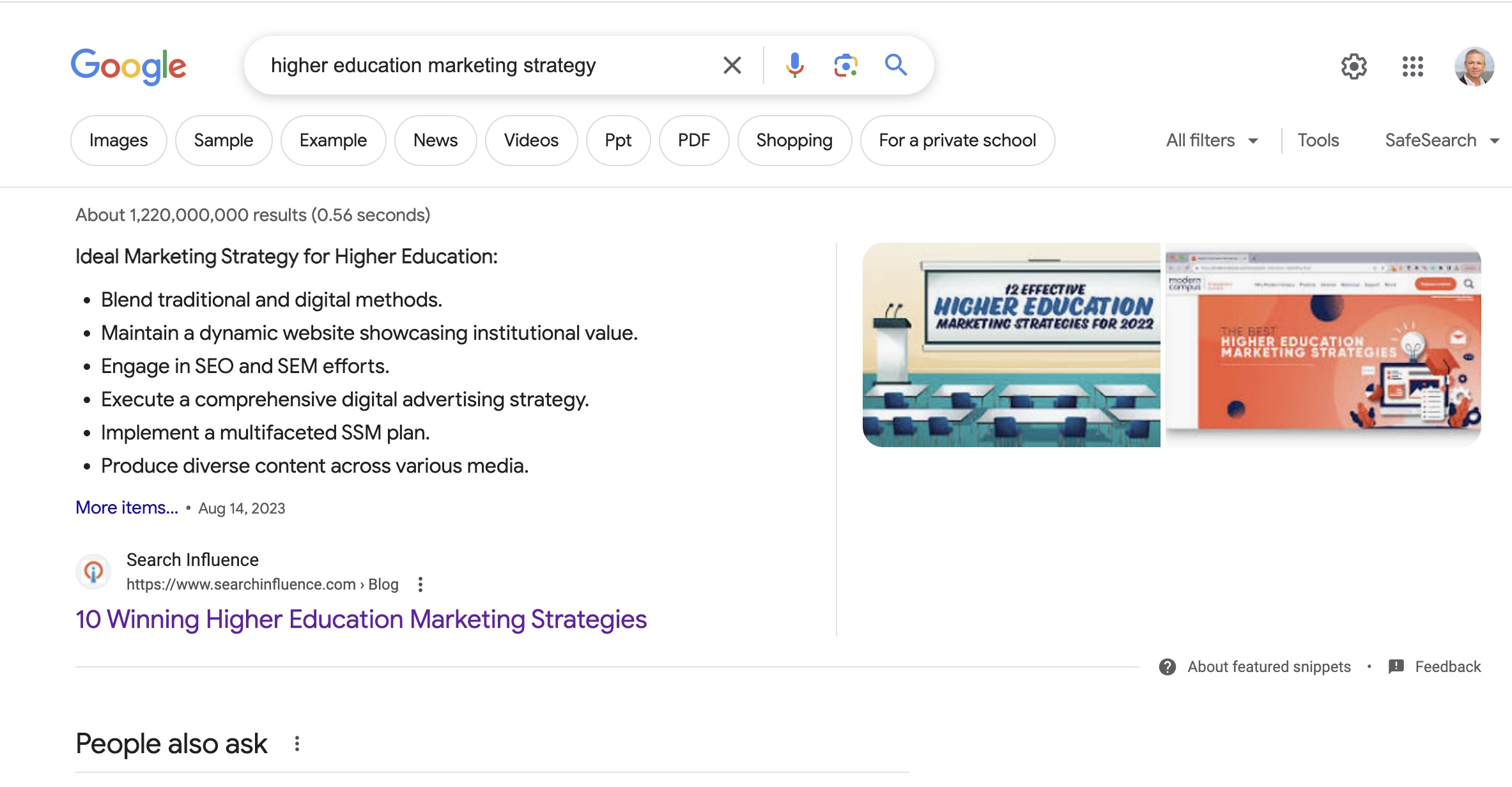
    You may not be trying to fill a faculty position today, but you will.

    Consider how you find “product” information. You ask someone who knows, and likely, your peers will be asked about you.

    Existing Students

    Our best prospect is a customer who’s already connected with us. Your existing students know who you are and, in many cases, are a captive audience on your campus.

    One of our client schools has even used yard signs to reach prospective students for summer graduate programs on campus.

    Your students are also uniquely qualified to create user-generated content that will be sure to resonate with prospects.

    Faculty And Staff

    Like some of these other examples, your employees can be some of your best ambassadors.

    You may have the opportunity to double your return on effort if your marketing campaigns also support your internal communications.

    Frequently Asked Questions

    Students and parents using digital media platforms

    What Is the Role of Digital Marketing in Higher Education?

    The role of digital marketing in higher education is growing. Prospective students and their influencers are turning to digital media first. Traditional media: publications, television, and radio are being overtaken by digital advertising.

    Can You Do Digital Marketing to High School Students?

    There are a number of platforms (TikTok, Snapchat, etc.) that are popular with high school students. You can also use programmatic advertising and email to target households likely to have high school students. You can also use professional sites like LinkedIn to target educators and counselors.

    Which Type of Digital Marketing Is Best for Students?

    The type of digital marketing that is best for student recruitment will depend on a number of factors. Are you targeting undergraduate, graduate, non-credit, community college, or something else?

    There is no one-size-fits-all.

    Who Does Marketing for Universities?

    Marketing for universities is typically a combination of the internal marketing team, external agencies — specialized firms who bring expertise in areas like digital targeting, enrollment campaigns, branding, and faculty and students. Faculty, staff, student achievements, and campus life stories enable compelling content.

    What Are the Functions of Marketing?

    The functions of marketing are understanding customer needs and creating value. Research, develop, price, promote, deliver, nurture, and measure success. It’s all about connecting products with happy customers.

    A computer rendering of an institution of higher learning with images of digital marketing related icons in the foreground.

    Conclusion

    There are countless ways to approach higher education digital marketing. After 18 years in business, we understand the value of focus.

    We specialize in search engine optimization and paid digital advertising because they’re the most reliable way to drive qualified inquiries and deliver a provable ROI.

    By implementing a comprehensive Higher Education Marketing Strategy, you can effectively reach and engage your target audience, nurture leads, and ultimately attract new students.

    By focusing on these key areas and tailoring your approach to your specific audience and goals, you can create Higher Education Digital Marketing Strategies that drive meaningful results.

    The key is to focus on a student-centric approach, utilize a variety of digital marketing tools, and continuously measure and optimize your efforts for maximum ROI.

    We hope this overview was useful. Some other areas you may want to spend time learning about are:

    • Optimizing landing pages for paid search campaigns.
    • Utilizing short-form video content for social media platforms like TikTok.
    • Implementing conversational marketing strategies to engage with prospective students directly.
    • Collaborating with student ambassadors to promote the university brand.
    • Integrating voice search optimization into your content strategy.

    We know it’s a lot. Search Influence has worked with higher education institutions for over a decade to attract prospective students. Get in touch and let’s see if we can help you, too.

    This article was mostly written by Will Scott, CEO of Search Influence with a little help from the robots.

  • #1 Organic & No Clicks? Google Ads 2023 SERP Smackdown!

    #1 Organic & No Clicks? Google Ads 2023 SERP Smackdown!

    High Ranking Keywords and Low Traffic?

    google ads 2023

    Are algorithm updates and AI just a red herring for more Google Ads in 2023?

    It’s not just a #1 position. It’s a rich snippet. And a full-feature rich snippet with images, a bulleted list, and everything.

    But the CTR (click-through rate) is a measly 3%.

    We searched for the cause. Was it not a real ranking? Were we seeing a personalized search?

    higher ed marketing

    Screenshot of “Higher Education Marketing Strategy” query on Google

    No. It was Google!

    Google Ads, to be specific.

    And for some searches, Google SGE, the new Search Generative Experience.

    We discovered that there was now a big fat pack of ads over the top of organic results. Where there used to be a couple of small ads, there are now four, with site links and lots of white space.

    Depending on the search, you have to scroll once, and sometimes twice, to get to the organic results.

    google ads 2023

    Screenshot of “Higher Education Marketing Strategy” query on Google from a non-SI account.

    Why would Google want to suppress organic search results? Let’s look at some examples and see what we find.

    While the SEO community has been worrying about Google Algorithm updates and the impact of AI, Google has quietly expanded the real estate devoted to Google Ads in 2023.

    Perhaps the talk of algorithm updates and AI was a red herring.

    Google SERP (Search Engine Results Page) 2023

    2023 was a busy year for Google. In addition to several algorithm updates, Google had to contend with AI, both in its index and in its user interface.

    AI, specifically the use of Large Language Models, exploded in early 2023. Tools for AI-enabled content creation, previously on the fringe, became mainstream.

    In addition to a flood of new content clogging up its index, Google — already an AI-powered platform — brought some of that intelligence to the search interface in the form of SGE (Search Generative Experience).

    Bing was the first to market with an AI-powered search experience. But, since it required the Microsoft Edge web browser, it only got a little play outside the Windows world.

    google ads 2023

    That little box on the right is the OpenAI-powered chat module.

    When BingGPT first launched, it was much more like the current Google interface, where the AI-powered elements were above the fold. This version is still accessible in “Chat” mode on Bing, but it’s not the default.

    google ads 2023

    Depending on the search query, Google has gone all in. Some see a slimming of the SGE box, but for our example search “Higher Education Marketing Strategy,” SGE is even more impactful than the ads.

    google ads 2023

    The good news is our content is good enough to be included in (scraped for) the SGE-generated result, but as you can see, even on my 27-inch monitor, I have to scroll to get past the ads and SGE to the rich snippet.

    Not to mention how far you would have to go to reach the traditional 10 blue links.

    More good news is that for many very local (hyperlocal, as Greg Sterling would say) searches, the map still prevails.

    google ads 2023

    Digital marketers and Google still have much to learn about user behavior on the SGE results page.

    It’s safe to say that, presented with the above and the typical attention span of the search engine user, the organic results will not get the clicks. And the ads may seem like the most useful part of the page.

    The Rise of Google’s Ad Empire

    Back in the early 2000s, Google ad placements were a speck on the vast landscape of organic search results. Today, as we see above, they’re monolithic.

    The History of Google Ads

    When I first ventured online in the late ’90s, online ads were the equivalent of newspaper ads. They were giant banners with obvious messaging that as much as screamed, “I’m an ad!”

    Google, starting with “Premium Sponsorship,” over the years made their ads more and more subtle, ultimately looking like native content.

    This graphic from Ginny Marvin in her Search Engine Land article A visual history of Google ad labeling in search results tells a pretty good story of how what was originally an obvious ad has become increasingly subtle over time.

    google ads 2023

    It’s compelling to remember back to a time when ads were so obvious they were highlighted. It’s almost as if the original user interface engineers wanted to make sure you knew it was an ad.

    The graphic is a couple of years old and doesn’t account for the more visual ad types like product ads. In the case of product ads and some local service ads, they’re indiscernible from organic content.

    Follow the Money

    As this chart from Doofinder, an e-commerce site search provider, shows, ads are the most significant part of Google’s revenue.

    google ads 2023

    Yes, Facebook, Amazon, and TikTok all take their share of the digital advertising market, but Google is still far and wide the leader with the most to lose.

    Why Is Google Doing This? Is This Ethical?

    On socials, there’s argument over whether Google should be regulated or if they’re entitled to do whatever they want.

    The argument goes, “They’re a public for-profit corporation, they can do as they please.” But can they? As the monopoly provider of access to business information, they have become a de-facto public utility.

    In the 1990s, the telephone companies were forced to give up their listing data to competitive phone books, and in the early 2000s, Microsoft was sued for antitrust violations and made two separate parts of their business.

    Is it crazy to think that when Google becomes self-serving (sometimes through aggressive — perhaps “unfair” competition), they should be regulated?

    What are some reasons Google would be taking this approach?

    1. Greed: It’s their search engine, and they can do what they want. The free listings aren’t paying anything, and they’re seeing benefits from inclusion.
    2. Spam: AI content is flooding the internet (not throwing stones, by the way.) Google has recently had issues indexing all the content.
    3. Resources: Indexing is hard. Even excluding spam, the rate of content production from “reputable” publishers is accelerating.
    4. Reality: The search engine results pages are getting pretty crappy. For most searches, authority sites dominate, whether or not they are niche-relevant. Some at Google might argue they at least have validation, by payment, of the trustworthiness of their advertisers.

    The European Union has started to regulate big tech, but the U.S. is not there yet. Arguably, the effect of regulation in the EU is a drop in the bucket compared to the valuations of Google, Facebook, and Amazon.

    We May Be on Our Way to a Pay-to-Play Google

    Until and unless Google reverts the SERP, we may have to buy back our hard-earned ranking for non-local searches.

    As an agency and a business owner, this is frustrating. We will have to watch the evolving SERP to understand the ratio between paid and organic search needs to maintain and grow the number of leads we’ve been accustomed to.

    I know that organic SEO will continue to deliver leads and value. While we wait to see the final form of the Google SERP, we should be focused on two strategies:

    1. Suck it up and buy our previously high-converting keywords.
    2. Continue developing content.
      • Long-tail content where there are fewer ads.
      • Alternative channels: YouTube, Social Media, etc. — the good news on this front is it doesn’t have to be new and unique but just repackaged for the medium.

    We would love to hear your thoughts. Are you seeing the same thing? Is it time to break up Alphabet? What else should we be looking for?

    Postscript – Google Ads 2023 Before & After Pics

    I was asked to provide some screenshots of the new fat ads pack by our marketing associate and had surprisingly few SERP screenshots. The two below show the extreme nature of the Google Ads 2023 SERP smackdown.

    Gold IRA Today

    google ads 2023

    Gold IRA April 2023

    google ads 2023

    Online Bachelor’s Degree in Human Resources Today

    google ads 2023

    Online Bachelor’s Degree in Human Resources March 2023

    google ads 2023

    Additional References

    Everything wrong with Google in one competitive result – Cyrus Shepard
    How Search Generative Experience works and why retrieval-augmented generation is our future – Mike King

  • SEO Skyscraper Method + ChatGPT Data Mining = Winning the SERP

    SEO Skyscraper Method + ChatGPT Data Mining = Winning the SERP

    I can’t believe I’m sharing this, but after doing it a few times, I realized that the Skyscraper Technique, when paired with ChatGPT data mining, is too good to keep to myself.

    But look, don’t tell anyone else, alright?

    SEO Skyscraper Method as imagined by Midjourney.

    [ez-toc]

    Everybody’s afraid of the impact of derivative content. I say, if you can’t beat ’em, join ’em.

    [bctt tweet=”Everybody’s afraid of derivative content. I say, if you can’t beat ’em, join ’em.” username=”w2scott”]

    Lean into the power of derivative content and take a lesson from Brian Dean in the Backlinko heyday.

    A Little Background

    In March 2023, I wrote “ChatGPT: Data Mining and SEO With OpenAI and Bing.” Since then, a lot has changed with machine learning, AI, OpenAI, ChatGPT, and content.

    At the time, I was getting back from Pubcon, having presented on AI content (as much as we understood at the time), and was super pumped about the opportunity.

    I started experimenting with sampling existing content to build personas for voice and tone, but it was nothing like we’re able to do now. With updates to the core OpenAI GPT, both in the underlying technology and in the size and scope of content one can process, we can go both deep and wide on topics.

    Image of ChatGPT Data Miners at work - https://www.searchinfluence.com/blog/chatgpt-data-mining-seo/

    The more recent ability to execute a web search with plugins and the expanded data exploration enable summarization and understanding of exceptionally long and complex topics.

    The machine learning models and artificial intelligence technology are amazing in and of themselves. The killer app, in my experience, is the ability to analyze the aggregated content of those articles you’re summarizing and glean really useful information.

    ChatGPT As a Data Analysis Engine

    In a recent experiment, I had ChatGPT summarize the top ten articles on a topic, including highlighting unique positions. This use of natural language processing makes ChatGPT a much more valuable tool to perform tasks where the data collection and correlation analysis are themselves a competitive edge.

    It’s simple to get started — search Google for your target keyword. The answer will give you a ton of new ideas and more links than you know what to do with.

    Then, use ChatGPT data mining to extract common elements. In this case, we’re talking about the most commonly cited higher education marketing strategies.

    [bctt tweet=”Search Google for your target keyword. You will get a ton of ideas and more links than you know what to do with. Then, use ChatGPT data mining to extract common elements.” username=”w2scott”]

    Conceptual image from Midjourney of a Higher Education Marketer navigating Higher Education Marketing Strategies - https://www.searchinfluence.com/blog/winning-higher-education-marketing-strategies/

    It’s these kinds of classification tasks where I think ChatGPT really shines.

    I’m looking forward to the very near future, where AI image tools like Midjourney and Dall-E can take the language model output and turn it into data visualization. Obviously, getting accurate responses from the code can lead to a better piece of content.

    This is just one of many factors that must be addressed before data scientists can rely on this powerful tool.

    Will this work for every subject? Maybe not, but for any topic with abundant informational content available, it should be effective.

    What Is the SEO Skyscraper Technique?

    The Skyscraper Technique was popularized by Brian Dean at Backlinko. As you would imagine, it’s been imitated, misquoted, and SEO’d beyond belief.

    • Step 1: Find link-worthy content.
    • Step 2: Make something even better.
    • Step 3: Reach out to the right people.

    [bctt tweet=”The Skyscraper Technique was popularized by @brianedean at @backlinko. As you would imagine, like most tactics that work, it’s been imitated, misquoted, and SEO’d beyond belief” username=”w2scott”]

    Note that the first filter is about links. Links are great and a strong signal of authority, but since Dean’s original article, Google has moved much further down the road toward a semantic, entity-based web.

    Links are still critical to ranking, but it’s widely acknowledged they are also very manipulable.

    This means that the page’s content and its relationship to already recognized entities can be as important as the links pointing to it.

    In fact, if you believe Kyle Roof or Koray Tuğberk Gübür, you might think you can own the SERP without links at all.

    So, the difference in this approach is that, instead of looking at a single piece or a small set of content, we look at all the content to which Google is giving the love.

    [bctt tweet=”Instead of looking at a single piece or a small set of content, we look at all the content to which Google is giving the love.” username=”w2scott”]

    Another difference is the respect we show the other ranked articles we’re referencing. We’re not just trying to one-up them — we’re giving them their dues with a summary and a link.

    And yes, by including the summary, we’re assuring we include all those juicy semantic entities and keywords in our article, too. We’re, therefore, also relieved of the challenge of keyword research because we know these articles rank. Look at a great number of sources and build the tallest skyscraper, and you win.

    Midjourney rendering: making keyword research easy conceptual image with references to a network

    And finally, by syndicating the content we’ve created, with derivative content enabled by AI, we’re presenting a 360-degree view of both the content and the link universe.

    And we’re setting ourselves up so that the first links pointing back are both super authoritative and, potentially, linkable assets in their own right.

    How Do You Use ChatGPT for Data Mining?

    In the last six months, ChatGPT has become a fantastic tool for data mining. With the addition of web crawling and integrations to third-party data sources like Google Sheets, what was previously just a content regurgitator is now a proper data analysis tool.

    In my original article on ChatGPT data mining, ChatGPT didn’t have live web crawling ability and was still giving out a lot of information it shouldn’t have been. In fact, it was giving me email addresses — accurate or not — for Pubcon speakers, past and present.

    But, as that article showed, you can’t trust ChatGPT to tell the truth, and there’s a fair likelihood that some of those addresses are made up.

    [bctt tweet=”You can’t trust ChatGPT to tell the truth, and there’s a fair likelihood that some of the information is made up.” username=”w2scott”]

    And just like that, it went away.

    From the earliest days of ChatGPT, you could ask it to identify frequency, relationships, and even format information in tabular form. But you still couldn’t trust it.

    In an example I’ve shared in the past, I asked ChatGPT for neighborhoods arranged by city within the greater New Orleans area. And it gave me a well-organized response. It looked accurate to me, but I’m sure it wasn’t entirely comprehensive.

    Now, with ChatGPT ingesting data from web crawling and Google Sheets, for instance, it’s the content that gets ingested one has to worry about, not ChatGPT’s famous hallucinations.

    I even made ChatGPT use the “F” word once 😀

    [bctt tweet=”I’m human, I’m helpful, some of this is AI, and that’s OK.” username=”w2scott”]

    Header image from LinkedIn article Uh oh, I Made ChatGPT Say The "F"​ Word

    The Prompt I Used to Summarize the Articles

    As anyone familiar with the ChatGPT language patterns knows, you must ask follow-up questions to produce great content:

    Please write a synopsis for each of the articles at the following URLs.

    Please use the article’s HTML title as the heading and include enough detail that I don’t need to actually read the article.

    If an article references multiple strategies, please list them.

    Please identify any unique or noteworthy positions taken by the author.

    Please include the URL immediately below the HTML title.

    I used the Access Link plugin and pasted the URLs of Google’s top 10 ranking entries.

    In prior iterations of this idea, pre-ChatGPT plugins, I have copied and pasted the whole article or used BingGPT — pour one out for BingGPT, y’all.

    Now, I know some of you prompt engineering pros will find ways to improve this. If so, please share.

    Keep in mind that I wasn’t trying to have ChatGPT write my whole article. I needed it to extract and present information from other articles that I could review and comment on.

    The Prompt I Used to Extract the Top 10 List

    As often happens with prompt engineering, I had to iterate my way to the final, golden output.

    I started with:

    Please identify the most common strategies cited in the articles synopsized below:

    [Text of ALL of the synopses from the prior exercise]

    [bctt tweet=”Please identify the most common strategies cited in the articles synopsized below – and then copy in the text of all the synopses” username=”w2scott”]

    This gave me a long list that didn’t seem to have any prioritization, so I asked for the top three, then the top five, and finally:

    Top 10 in order of frequency?

    And that was the money. From that, I got a great list with brief descriptions of the top 10 higher education marketing strategies. Given the iteration and the clarification in the prompt, I was also more inclined to believe the output.

    If you are going to use this technique for something more serious than SEO, please be sure to fact-check both the source articles and ChatGPT’s interpretation of them.

    Some Examples of ChatGPT Data Analysis for the SEO Skyscraper Technique

    For this exercise, I used the following prompt:

    Please write a synopsis for each of the articles at the following URLs.

    Please use the article’s HTML title as the heading.

    Please include enough detail that I don’t need to actually read the article.

    Please include any background resources cited in the article, the actual strategies used, and the steps in order.

    Please also identify ways in which they may disagree with the original article: https://backlinko.com/skyscraper-technique.

    Please identify any unique or noteworthy positions taken by the author.

    Please include the URL immediately below the HTML title.

    Articles:

    [List of articles to analyze]

    Once all the articles were summarized, I asked ChatGPT to help identify some recurring themes.

    Most Cited Methods for Keyword Research in an SEO Skyscraper Link Building Strategy

    [bctt tweet=”Most Cited Methods for Keyword Research in an SEO Skyscraper Link Building Strategy” username=”w2scott”]

    Based on the articles reviewed, the most frequently cited methods for keyword research, in order of frequency, are:

    1. Use SEO Tools: Most articles emphasized the importance of using specialized SEO tools to identify high-performing content and relevant keywords. The most frequently mentioned tools were:
      • Ahrefs: Especially its “Content Explorer” and “Keywords Explorer” features.
      • Semrush: Known for its keyword research and domain overview capabilities.
    2. Analyze Competitor Content: Many articles recommend examining content from competitors or top-performing content in the niche. This method helps identify what topics or keywords are already successful and where there might be gaps or areas for improvement.
    3. High vs. Low Competition Keywords: There was a notable emphasis on the strategy of choosing between high and low-competition keywords. While traditional approaches often focus on low-competition keywords, some methods, like the Shotgun Skyscraper, suggest targeting high-competition keywords due to their potential for more backlinks.
    4. Google’s “Searches Related to” Section: A significant number of articles pointed to the utility of Google’s own search results. The “Searches Related to” section at the bottom of search results can provide insights into related keywords and topics that users search for.
    5. Long-Tail Keywords: Several articles highlighted the importance of targeting long-tail keywords. These are longer, more specific keyword phrases that might have lower search volumes but can be easier to rank for and attract a more targeted audience.

    While these methods were the most frequently cited, it’s worth noting that the effectiveness of each method can vary based on the specific goals of the content and the niche in which one is operating.

    Most Cited Methods of Outreach for SEO Skyscraper Link Building

    [bctt tweet=”Most Cited Methods of Outreach for SEO Skyscraper Link Building” username=”w2scott”]

    Based on the articles reviewed, the most frequently cited methods for link outreach, in order of frequency, are:

    1. Personalized Email Outreach: Almost all articles emphasized the importance of personalizing outreach emails. This involves:
      • Addressing the recipient by name.
      • Mentioning specific details about their content or website.
      • Explaining why your content would be valuable to their audience.
    2. Use of Outreach Tools: Many articles mentioned the use of specialized outreach tools to streamline and automate the process. Some of the most frequently cited tools include:
      • Hunter.io: For finding email addresses associated with a particular domain.
      • Mailshake: For automating and tracking outreach campaigns.
      • Respona: For acting as an all-in-one PR and link-building tool.
      • Snov.io: For finding email addresses and conducting email outreach.
    3. Follow-Up Emails: Several articles highlighted the importance of sending follow-up emails if there’s no response to the initial outreach. This can increase the chances of getting a reply, but it’s crucial to strike a balance to avoid being too pushy.
    4. Offering Value: Many articles emphasized the need to offer value in the outreach email. This could be in the form of:
      • Sharing your superior content as a resource.
      • Suggesting specific improvements or updates to their existing content.
      • Offering to share their content on your platforms in return.
    5. Segmentation and Targeting: It’s essential to segment your list of prospects and tailor your outreach accordingly. This involves:
      • Identifying websites or blogs that are relevant to your niche.
      • Targeting sites that have linked to similar content in the past.
      • Avoiding sites that are unlikely to link back due to competitive reasons or misalignment in content themes.

    In addition to these methods, building genuine relationships and networking in your industry was a recurring theme. Gaining trust and rapport can significantly increase the chances of securing backlinks.

    So, You Want to See the Synopses?

    Since this is more of an explanatory article, I’m only going to include a handful, rather than the full top 10.

    Ahrefs: The Skyscraper Technique: How to Build High-Quality Backlinks to Your Content

    [bctt tweet=”Synopsis: Ahrefs: The Skyscraper Technique: How to Build High-Quality Backlinks to Your Content” username=”w2scott”]

    Screenshot of article: Ahrefs: The Skyscraper Technique: How to Build High-Quality Backlinks to Your Content

    https://ahrefs.com/blog/skyscraper-technique/

    Synopsis: The article begins by referencing Brian Dean’s introduction of the Skyscraper Technique in 2015, which quickly gained popularity. The technique works by improving upon existing popular content and replicating its backlinks.

    Steps to Implement the Skyscraper Technique:

    1. Find Relevant Content With Lots of Backlinks:
      • Use Ahrefs’ Site Explorer to identify pages with a high number of referring domains.
      • Use Ahrefs’ Content Explorer to search for content on a broad topic related to your niche.
      • Use Ahrefs’ Keywords Explorer to identify high KD score keywords and the top-ranking pages for them.
    2. Make it Better:
      • Improve the content’s length, freshness, design, and depth.
    3. Reach Out to the Right People:
      • Use email outreach to contact those who have linked to the original content you’ve improved upon. Find these people using Ahrefs’ Site Explorer.

    Does the Skyscraper Technique Still Work? While the technique has been oversaturated over the years, many SEOs and marketers still believe in its effectiveness. However, only 18% of SEOs still use it, as per Aira’s Annual State of Link Building report.

    Reasons the Skyscraper Technique Might Fail & How to Improve:

    1. Sending Only Brian’s Email Template: Many SEOs used Brian’s original email template verbatim, leading to its overuse and decreased effectiveness.
    2. Not Segmenting Your Prospects: Tailor outreach emails based on the context in which prospects linked to the original content.
    3. Not Reaching Out to Enough People: A link building strategy is a numbers game. Expand the list of link prospects by also considering backlinks from other top-ranking pages on the same topic.
    4. Thinking Bigger Equals Better: Simply increasing the length or number of items in content doesn’t necessarily add value. Curation and quality are key.
    5. Not Considering Brand: Content quality isn’t the only factor; the reputation of the content creator or brand also plays a role.

    Final Thoughts: The Skyscraper Technique can be effective if executed correctly. It’s essential to focus on quality, value, and consistent content creation.

    Comparison With the Original Article by Backlinko:

    • Both articles emphasize the importance of improving existing content and reaching out for backlinks.
    • Ahrefs provides specific tools and methods to find and analyze potential content for the Skyscraper Technique.
    • Ahrefs highlights the potential pitfalls and oversaturation of the technique, suggesting that its effectiveness might be limited in the current landscape.
    • The Ahrefs article emphasizes the importance of brand reputation in the success of the Skyscraper Technique, which is not heavily discussed in the original Backlinko article.

    Unique or Noteworthy Positions:

    • The article suggests that the Skyscraper Technique’s popularity might have decreased because SEOs are now focusing more on content than links.
    • The emphasis on the importance of brand reputation and the potential pitfalls of the Skyscraper Technique provides a more nuanced perspective on its effectiveness.

    HubSpot: How to Use the Skyscraper Technique to Drive Traffic

    [bctt tweet=”Synopsis: HubSpot: How to Use the Skyscraper Technique to Drive Traffic” username=”w2scott”]

    Screenshot of article: HubSpot: How to Use the Skyscraper Technique to Drive Traffic

    https://blog.hubspot.com/marketing/skyscraper-technique-drive-traffic

    Synopsis: The article discusses the increasing difficulty of capturing audience attention in the current marketing landscape. It introduces the Skyscraper Technique as a solution, detailing its creation by Brian Dean of Backlinko. The technique involves improving existing popular content and then reaching out for backlinks.

    What’s the Skyscraper Technique?

    • It’s a method for turning content into high-quality backlinks.
    • The process involves researching popular content, creating a better version, and then reaching out to those who linked to the original content.
    • Reasons for its effectiveness include:
      • Proven demand for the content topic.
      • Engaging an already primed audience.
      • Potential for high search rankings.

    How HubSpot Used the Skyscraper Technique:

    • The author shares a personal experience where they saw a similar article from Fast Company about a freelance hourly rate calculator.
    • They created a visually appealing infographic on the same topic and promoted it.
    • The result was over 8,200 shares, 72,000+ page views, and 3,648 new email subscribers.

    6-Step Checklist for Using the Skyscraper Technique:

    1. Research and Uncover Opportunities: Use tools like Google Alerts, BuzzSumo, HubSpot’s Keyword App, and Google’s Keyword Planner.
    2. Build a List of Potential Distribution Partners: Start with known contacts and expand using BuzzSumo.
    3. Create Better Content: Consider different content mediums and focus on delivering more value.
    4. Promote to Your Audience: Share on social channels, email lists, and internally.
    5. Reach Out to the Right People: Contact influencers, brands, and bloggers who share related content.
    6. Stay Current: Update content to ensure it remains relevant over time.

    Comparison With the Original Article by Backlinko:

    • Both articles emphasize the importance of improving upon existing content and reaching out for backlinks.
    • HubSpot provides a personal case study to showcase the effectiveness of the technique.
    • HubSpot offers a step-by-step checklist, making the process more actionable for readers.

    Unique or Noteworthy Positions:

    • The article emphasizes the importance of staying current and updating content over time.
    • HubSpot’s personal case study provides a tangible example of the Skyscraper Technique’s success, highlighting the potential benefits when executed correctly.

    Content Marketing Institute: Skyscraper Content the Right Way: How to Truly Help Your Readers

    [bctt tweet=”Synopsis: Content Marketing Institute: Skyscraper Content the Right Way: How to Truly Help Your Readers” username=”w2scott”]

    Screenshot of article: Content Marketing Institute: Skyscraper Content the Right Way: How to Truly Help Your Readers

    https://contentmarketinginstitute.com/articles/skyscraper-content-readers/

    Synopsis: The article critiques the overuse and misuse of the Skyscraper Technique in content marketing. While acknowledging the original brilliance of the concept, the author argues that many content creators equate the technique with producing longer content, rather than more valuable content.

    What Is Skyscraper Content?

    • It involves finding successful content, reverse-engineering its success, creating a better version, and replicating its distribution strategy.
    • The author encourages readers to refer to Brian Dean’s post on Backlinko for a good example of the methodology.

    What’s Wrong With Skyscraper Content?

    • Many content creators mistakenly believe that longer content equates to more value.
    • The focus on length can lead to padding posts with unnecessary information, making it difficult for readers to find valuable insights.
    • Skyscraper content can become inaccessible if it’s always lengthy and doesn’t consider the reader’s experience.
    • Google’s algorithm prioritizes content that meets readers’ needs, so skyscraper content that doesn’t prioritize readers may not rank well.

    Unoriginal Content:

    • Skyscraper content can lead to unoriginality, as creators model their content after existing successful pieces.
    • The challenge is to find a unique angle and add value to the original topic.
    • Merely adding more words without offering a fresh perspective can make the content redundant.

    How to Make Skyscraper Content Work:

    1. Genuine Need: Update content that’s outdated or full of broken links.
    2. Unique Angle: Offer a new perspective or personal account on a familiar topic.
    3. Focus on Value, Not Text: The goal is to create content that’s more valuable, not necessarily longer. For instance, transform a long article into a video or an interactive tool.

    Conclusion: While the Skyscraper Technique can be powerful, it’s essential to use it correctly. Content creators should prioritize value over length and ensure they’re genuinely helping their readers. If the content doesn’t add value, it’s better to create something original that delights the audience.

    Comparison With the Original Article by Backlinko:

    • Both articles discuss the Skyscraper Technique’s methodology.
    • The Content Marketing Institute article critiques the overuse and misuse of the technique, emphasizing the importance of value over length.
    • The article suggests that many content creators misunderstand the Skyscraper Technique, leading to redundant and unoriginal content.

    Unique or Noteworthy Positions:

    • The article offers a critical perspective on the Skyscraper Technique, highlighting its potential pitfalls.
    • It emphasizes the importance of originality and value in content creation, rather than merely replicating successful content.

    CoSchedule: The Skyscraper Technique: Why You Should Use It

    [bctt tweet=”Synopsis: CoSchedule: The Skyscraper Technique: Why You Should Use It” username=”w2scott”]

    Screenshot of article: CoSchedule: The Skyscraper Technique: Why You Should Use It

    https://coschedule.com/blog/skyscraper-technique

    Synopsis: The article introduces the Skyscraper Technique, a three-step SEO method that involves finding top-performing content, creating better content, and then promoting it to gain backlinks. The author emphasizes that while the technique is rooted in SEO, it’s beneficial for all content marketers, not just SEO experts.

    Understanding the Skyscraper Technique:

    • It’s not exclusively an SEO strategy.
    • It’s not a license to steal or replicate someone else’s content without adding value.

    How to Use the Skyscraper Technique:

    1. Find Top-Performing Content:
      • Use tools like BuzzSumo to identify popular content based on keywords.
      • Analyze the top content to understand its themes, content length, number of images, and overall quality.
      • Use tools like the Moz Toolbar to gather backlink information and understand the authority of the content.
    2. Create Better Content Than Current Top Performers:
      • Make content longer and more in-depth.
      • Incorporate rich content like images, videos, and infographics.
      • Delve deeper into the topic to provide more value.
      • Think strategically about SEO and keyword usage.
    3. Get People to Link to Your Content:
      • While promoting with social media marketing is a start, the key is to earn backlinks by producing superior content.
      • The focus should be on generating better content ideas and improving content quality.

    Conclusion: The Skyscraper Technique provides insights into what content is performing well and what’s being shared the most. It’s a valuable method for generating new content ideas and improving content marketing strategies. The ultimate goal isn’t to replicate but to innovate and produce better content.

    Comparison With the Original Article by Backlinko:

    • Both articles describe the Skyscraper Technique’s methodology.
    • CoSchedule emphasizes the technique’s applicability beyond just SEO experts and highlights its broader benefits for content marketing.
    • The article provides specific tools and methods to implement the technique effectively.

    Unique or Noteworthy Positions:

    • The article stresses that the Skyscraper Technique is not just for SEO experts but is a valuable strategy for all content marketers.
    • It underscores the importance of adding value and not merely replicating existing content.

    Semrush: What Is the Skyscraper Technique?

    [bctt tweet=”Synopsis: Semrush: What Is the Skyscraper Technique?” username=”w2scott”]

    Screenshot of article: Semrush: What Is the Skyscraper Technique?

    https://www.semrush.com/blog/skyscraper-technique/

    Synopsis: Semrush provides a comprehensive guide on the Skyscraper Technique, emphasizing its role in SEO link building. The article breaks down the technique’s definition, its benefits for SEO, and a step-by-step guide on its execution. It also discusses the importance of skyscraper content and the factors that make it stand out.

    Key Points:

    1. Definition of the Skyscraper Technique: A method that involves identifying competitive content with many backlinks, improving it, and then encouraging sites to link to the superior content.
    2. Skyscraper Content: Content crafted as part of the Skyscraper Technique, designed to be a superior version of a widely linked resource. It should be more comprehensive, up-to-date, credible, and presented effectively.
    3. Benefits of the Skyscraper Technique for SEO:
      • Inheriting links that previously pointed to competitors.
      • Earning backlinks on pages with established traffic and authority.
      • Encouraging the creation of quality content.
      • Scalability.
    4. Implementation Steps:
      • Find Competitive Content: Identify content types suitable for the Skyscraper Technique, such as how-to guides, comparison guides, listicles, and more.
      • Analyze Competitors’ Content: Use tools like Semrush’s Backlink Analytics to find competitors’ most linked pages.
      • Review Backlink Opportunities: Determine the potential and value of inheriting specific backlinks.
      • Create Skyscraper Content: Outdo the competition by being more comprehensive, adding unique insights, improving user experience, establishing credibility, and incorporating images and videos.
      • Optimize Content for Search: Ensure the content is optimized for relevant keywords and follows on-page SEO techniques.
      • Conduct Email Outreach: Identify link building prospects and send personalized pitches to encourage them to link to your content.

    Conclusion: The Skyscraper Technique is a targeted approach to link building that can yield significant SEO benefits when executed correctly.

    Unique or Noteworthy Positions:

    • Semrush provides a detailed breakdown of the types of content suitable for the Skyscraper Technique, offering clarity on content selection.
    • The article introduces tools and resources available within the Semrush platform, guiding readers on how to optimize their skyscraper content and conduct effective outreach.
    • It emphasizes the importance of personalizing email outreach and provides a sample skyscraper email pitch to inspire readers.

    Brian Dean Didn’t Have Today’s Software

    Yes, machine learning and natural language processing are making the collection and production of website content more approachable. Data analysis is also helping with optimization. With tools like SurferSEO, Frase, and others, you can ensure your content isn’t just longer and more comprehensive, but also better optimized.

    Link builders know that one of the best ways to get new links is for your site to be the answer to what people are searching for.

    There is an explosion in data exploration products for on-site optimization. The challenge isn’t finding one — it’s limiting yourself to just one.

    [bctt tweet=”There is an explosion in data exploration products for on-site optimization. The challenge isn’t finding one — it’s limiting yourself to just one.” username=”w2scott”]

    No lie, I currently actively use at least five machine learning-enabled SaaS products.

    Concluding Thoughts: No, It’s Not Data Science

    Hopefully, you see how incredibly powerful this technique can be.

    Like many users of AI content — consistent with human nature, you may be tempted to take shortcuts.

    SEO tactics, when abused, lose effectiveness. So, please don’t abuse this.

    The SEO Skyscraper Technique with ChatGPT Data Mining will be most useful when a human, knowledgeable in the topic, is making a good AI Sandwich. If you copy and paste and perfunctorily add the non-AI bits, you won’t be adding value to the internet and will eventually see any rankings you did gain disappear.

    Image of an AI Sandwich as imagined by Midjourney

    Something noteworthy in this example is that I’m seeing more sites that aren’t accessible to ChatGPT. I wonder if this is due to those webmasters blocking the OpenAI crawler.

    [bctt tweet=”I’m seeing more sites that aren’t accessible to ChatGPT. I wonder if this is due to those webmasters blocking the OpenAI crawler.” username=”w2scott”]

    Also, ChatGPT has some words that show up again and again. You should be on the lookout for these so you can edit them where appropriate. “Delve” and “boost,” particularly in the context of SEO, come up again and again.

    You’ll notice I tend to be polite when I’m making requests of ChatGPT. This is for two reasons. First, I’m generally a polite person. Politeness counts. Second, when the robots take over, I want every advantage I can get. I would rather they see me as a collaborator 🙂

    Finally, as the list of articles to analyze gets longer, you may need to prompt ChatGPT to “continue.”

    If you’ve already been using this technique, please hit me up on Twitter and show me some examples, @w2scott.

    If you’re just getting started, I hope you find it as useful as I have.

    [bctt tweet=”SEO Skyscraper Method + ChatGPT Data Mining = Winning the SERP” username=”searchinfluence”]

    Sources:

    https://ahrefs.com/blog/skyscraper-technique/

    https://backlinko.com/skyscraper-technique

    https://blog.hubspot.com/marketing/skyscraper-technique-drive-traffic

    https://contentmarketinginstitute.com/articles/skyscraper-content-readers/

    https://coschedule.com/blog/skyscraper-technique

    https://learn.g2.com/skyscraper-technique

    https://leavingworkbehind.com/skyscraper-writing-method/

    https://marketingartfully.com/how-to-write-long-skyscraper-blog-posts/

    https://marketinginsidergroup.com/content-marketing/does-the-skyscraper-technique-work-anymore/

    https://respona.com/blog/skyscraper-technique/

    https://snov.io/blog/skyscraper-technique/

    https://wpmudev.com/blog/skyscraper-seo-link-building-technique/

    https://www.authorityhacker.com/link-building-techniques/

    https://www.clearvoice.com/resources/how-to-build-backlinks-with-the-skyscraper-content-technique/

    https://www.elegantthemes.com/blog/wordpress/how-to-use-the-skyscraper-technique-to-boost-seo

    https://www.lean-labs.com/blog/how-to-write-a-skyscraper-post-blog-post-template

    https://www.livingthedreamrtw.com/skyscraper-posts-in-travel-writing

    https://www.redefineyourmarketing.com/blog/the-skyscraper-link-building-technique

    https://www.semrush.com/blog/skyscraper-technique/

  • 10 Winning Higher Education Marketing Strategies

    10 Winning Higher Education Marketing Strategies

    [ez-toc]

    Research shows that 93% of Americans think they are better drivers than average, 90% of teachers think they are more skilled than their peers, and this overestimation is pervasive across many skills — including logic tests.

    For the typical higher education institution, effective marketing strategies are like that.

    Mathematically speaking, it’s not possible for a majority to be “above average.”

    We analyzed the top 10 results in Google for “Higher Education Marketing Strategies” and extracted some really useful learnings. First, I’ll share the most commonly cited strategies, and then give you a skimmable summary of each article.

    Top 10 Higher Education Marketing Strategies

    These strategies are the most frequently cited in the following articles, in order of prominence.

    • SEO (Search Engine Optimization): Emphasized across multiple articles. Ensuring high visibility on search engines is critical for Higher Education SEO.
    • Social Media Marketing: Highlighted in almost all articles for engaging authentically on each social media platform preferred by younger generations.
    • Email Marketing: A recurring theme emphasizing personalization, automation, and AI-powered programs.
    • Video Content: Both short-form and long-form videos, including live streaming and platforms like TikTok and YouTube, are great ways to educate prospective students.
    • Personalization: Tailoring content and communication to individual preferences, including personalized messaging and content.
    • PPC (Pay-Per-Click) and Digital Advertising: Discussed in multiple articles for targeted advertising on platforms like Facebook Ads and Google Ads.
    • Content Marketing: The importance of creating engaging and informative content, such as blogs, podcasts, and videos.
    • Branding: Consistent branding across all marketing channels, including a recognizable voice and image.
    • Chatbots and Conversational Marketing: Highlighted in several articles for real-time, one-to-one connections and instant answers.
    • Data-Driven Strategies: Using data to inform marketing decisions, track KPIs, and understand the audience.

    Digital Marketing and Marketing Strategy Opportunities

    What we learned in the UPCEA SEO research study was that there are some big gaps in the university marketing strategy and the typical higher education website for attracting prospective students.


    When we got deeper into the data, we saw that the higher education industry is overly reliant on certain digital marketing channels. A good marketing campaign addresses the full funnel. To attract students, you must increase search engine visibility, maintain a strong social media presence, and ensure you’re doing all you can to target prospective students.

    So, with all the great tactics and technologies to attract prospective students (virtual campus tours, student ambassadors, and taking advantage of digital technology to highlight student activities), one has to wonder why other higher ed institutions seem to be attracting more new students.

    As I’m sure you’re aware, Google and the other search engines know everything, right? So, I thought, why not let Google guide me? I wanted to see how other higher ed marketers were thinking about the strategy to build brand awareness and get in front of prospective students.

    I think it’s important to take content created by marketers talking about a marketing strategy with a grain of salt. We can, however, learn a lot when we analyze the frequency with which these articles cite specific tactics, platforms, or strategies to get in front of prospective students for educational institutions.

    Effective Higher Education Marketing Strategies

    Effective Higher Education Marketing Strategies -www.theseventhsense.com-blog-effective-higher-education-marketing-strategies

    https://www.theseventhsense.com/blog/effective-higher-education-marketing-strategies

    My perspective: It’s surprising to see this continued focus on the pandemic. From what we’ve seen, things are different — the pandemic is done in most people’s minds, and we’re now in the “new normal.”

    The article discusses the challenges faced by university marketers due to the pandemic and the downturn in undergraduate student enrollment. It provides 12 strategies for higher education marketing:

    1. Centralize Strategy and Reporting: Emphasizes the importance of centralizing marketing expenditures and standardizing KPIs.
    2. Track the Right KPIs: Highlights the importance of tracking call-to-action conversion rates, traffic sources, social media engagement, and cost of acquisition.
    3. Use Marketing Automation: Discusses the benefits of tracking digital interactions with prospective students.
    4. Optimize Your Email Program With AI: Offers email deliverability and engagement solutions.
    5. Improve SEO: Stresses the importance of using relevant keywords and answering prospective students’ queries.
    6. Build a Digital-Friendly Brand: Talks about updating branding to be more digital-friendly.
    7. Live Streaming: Suggests using live streams as an authentic way to connect with potential students.
    8. Personalized Communication: Emphasizes the importance of segmenting audiences and tailoring communication.
    9. Higher Education Marketing on Social Media: Provides various strategies to maximize social media efforts.
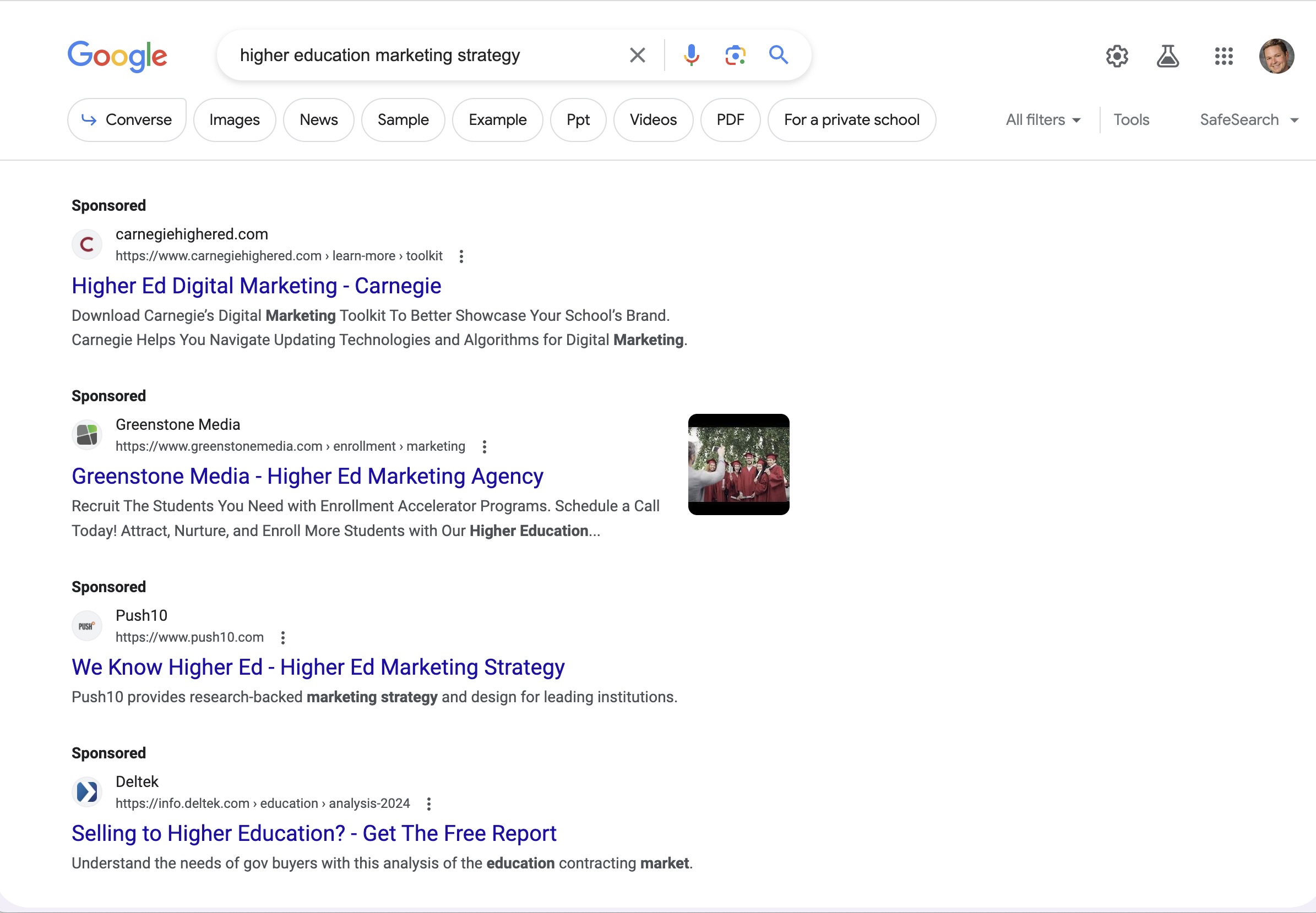
    10. Personalized Mobile-Friendly Website: Highlights the importance of a responsive and personalized website.
    11. Chatbots for Higher Education Marketing: Discusses the benefits of using chatbots for immediate responses.
    12. Don’t Forget Visuals and Aesthetics: Emphasizes the importance of appealing visuals for the Gen Z audience.

    Unique Positions:

    • The article emphasizes the importance of data-driven strategies, especially in the context of the challenges posed by the pandemic.
    • It highlights the significance of understanding and catering to the preferences of Gen Z, who are the next in line for higher education.

    Conclusion: The article concludes by emphasizing that marketing shouldn’t be stagnant but should evolve with the university’s overall goals.

    Higher Education Marketing: Strategies and Trends to Know

    Higher Education Marketing - Strategies and Trends to Know-moderncampus.com-blog-higher-education-marketing

    https://moderncampus.com/blog/higher-education-marketing.html

    My perspective: It’s interesting to see a focus on the rise of Instagram. TikTok is more timely and clearly the place where Gen Z and beyond are starting their product experiences.

    The article emphasizes the importance of refining marketing strategies for higher education institutions, especially in light of decreasing college enrollments.

    It provides insights into current higher ed trends and offers strategies to enhance student recruitment.

    Key Questions for Your Higher Education Marketing Plan:

    • Identifying target audience and personas.
    • Determining KPIs for engagement.
    • Establishing the cornerstone of the marketing plan.
    • Differentiating from other institutions.

    Platforms to Market Your Educational Offerings:

    • Text messages, especially during the student enrollment process.
    • Social media platforms like Twitter, Facebook, LinkedIn, Instagram, and Snapchat.
    • Email, direct mail, phone calls, and websites.

    Higher Education Marketing Strategies:

    1. Use a CMS Built for Higher Education: Implement a quality web content management system (CMS) tailored for educational institutions to address challenges like outdated content, complicated coding, inconsistent branding, and low search rankings.
    2. Get Current Students Involved: Engage existing students to provide authentic insights into campus life.
    3. Choose a CMS With an Email Module: Emphasizes personalized and targeted email marketing.
    4. Focus on Video Content: Highlights the importance of integrating video content into marketing strategies.
    5. Keep Track of Your Brand: Monitor the digital image and reputation of the institution.
    6. Use the Power of Social Media: Utilize a mix of social media platforms for effective messaging.
    7. Use Videos and Images on Social Media: Emphasizes the growing preference for visual content on platforms like Instagram, YouTube, and TikTok.
    8. Personalize at Scale: Deliver personalized content across various platforms.
    9. Include SEO and Conversion in Your Program Pages: Optimize program pages for search engines and conversions.
    10. Target Parents: Recognize the influential role of parents in students’ college decisions.

    Unique Positions:

    • The article underscores the importance of authenticity, especially when involving current students in marketing efforts.
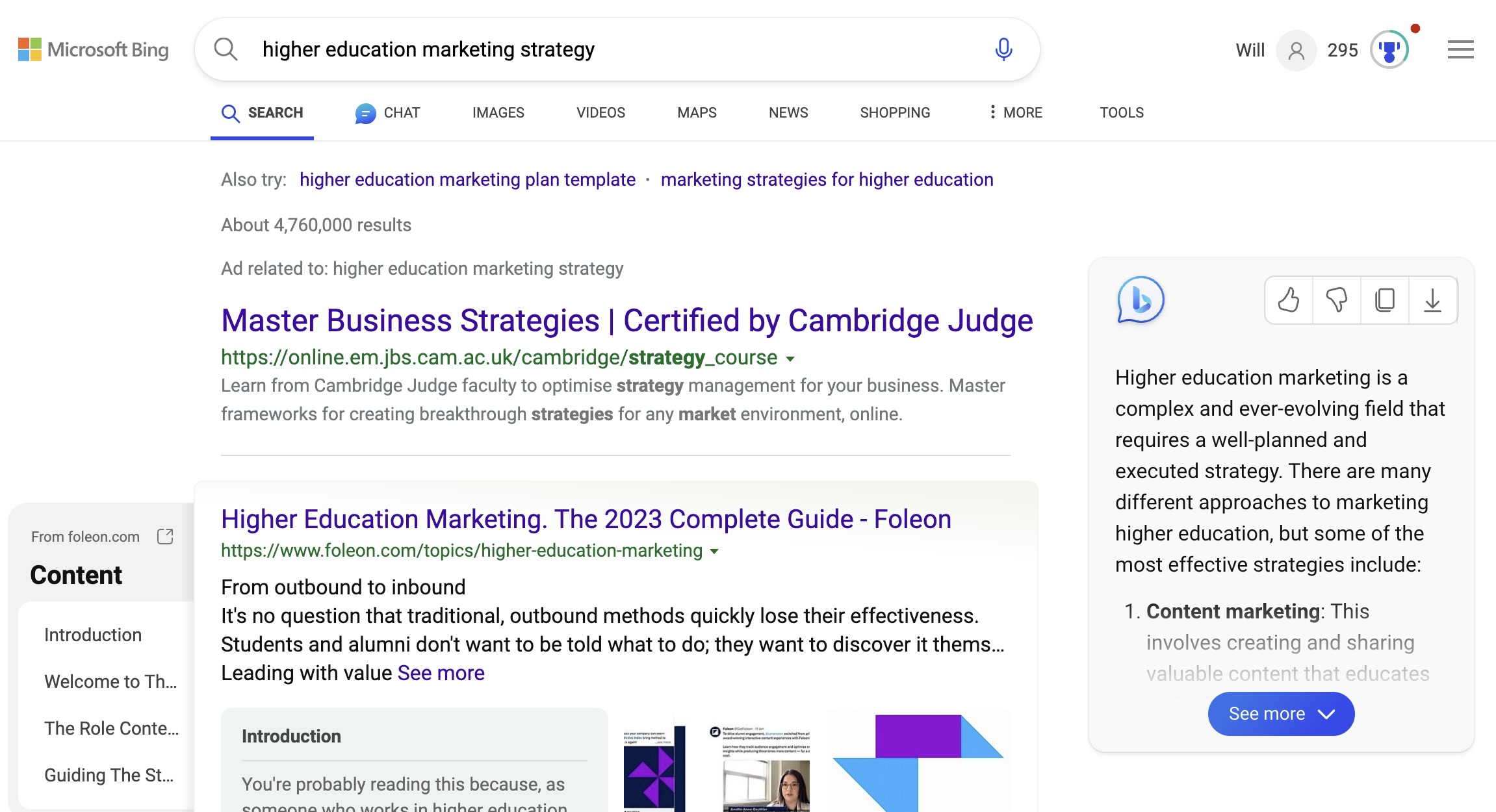
    • It highlights the shift in the relevance of different social media platforms, noting the rise of Instagram and the decline of Facebook in the context of college planning.

    Conclusion: The article concludes by emphasizing the significance of a quality website and the potential of a CMS to fine-tune a college or university’s marketing strategy.


    Analyzing Effective Higher Education Marketing Strategies

    Analyzing Effective Higher Education Marketing Strategies-www.ama.org-analyzing-effective-higher-education-marketing-strategies

    https://www.ama.org/analyzing-effective-higher-education-marketing-strategies/

    My perspective: I wonder if the author’s suggestion of the value of traditional marketing is pandering to the old guard. Sure, brochures, commercials, etc., may appeal to the parents, but the students are on social media and search.

    The article delves into the unique challenges of marketing in the higher education sector, emphasizing the need for institutions to create a superior academic environment while facing intense competition.

    It underscores the importance of an effective marketing strategy blending traditional and digital methods to achieve institutional goals.

    Why Is it Important to Prioritize Marketing?

    • Higher education institutions need to maximize enrollment and diversify their student and faculty demographics.
    • They must cater to various stakeholders: students, parents, faculty, and donors.

    Traditional Marketing in Higher Education:

    • Print: Newspaper or magazine ads, billboards, and stationery.
    • Mail: Targeted ads, imagery, and product samples.
    • Radio: Over-the-air ads, jingles, and testimonials.
    • Television: Video ads, customer reviews, and product demonstrations.
    • Unique Assets: Campus tours and visits, research and development, arts, music, and sports.
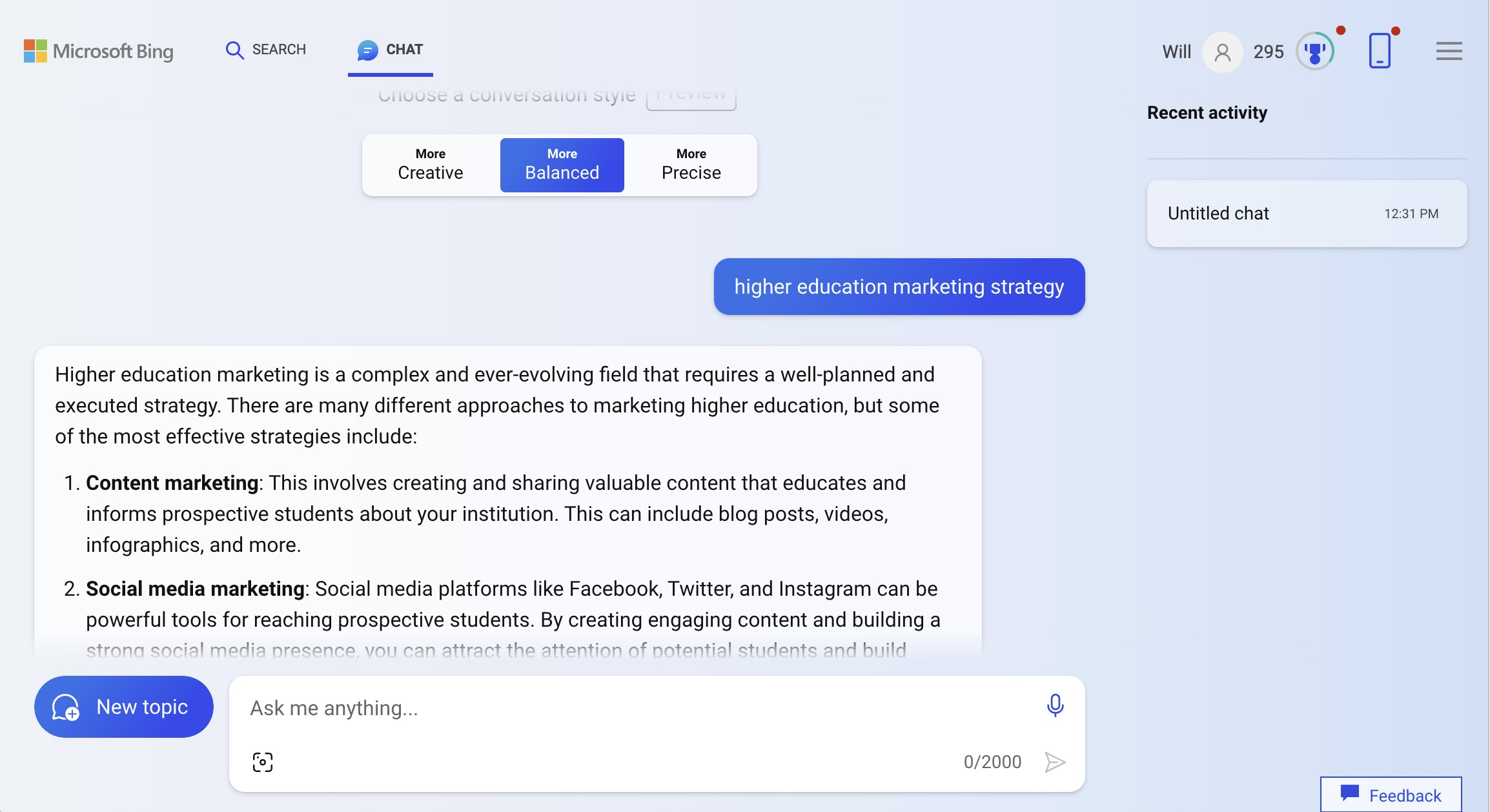
    Digital Marketing Strategies:

    1. Email Marketing: Deliver branded messages, newsletters, and offers.
    2. Social Media Marketing (SMM): Disseminate content across channels and engage with influencers.
    3. Content Marketing: Use blogs, podcasts, videos, etc., to enhance branding.
    4. Search Engine Optimization (SEO): Enhance online presence and search engine ranking.
    5. Search Engine Marketing (SEM): Utilize paid placement and digital ads.
    6. Pay-Per-Click (PPC): Cost-effective advertising where payment is made only when the ad is clicked.

    Ideal Marketing Strategy for Higher Education:

    • Blend traditional and digital methods.
    • Maintain a dynamic website showcasing institutional value.
    • Engage in SEO and SEM efforts.
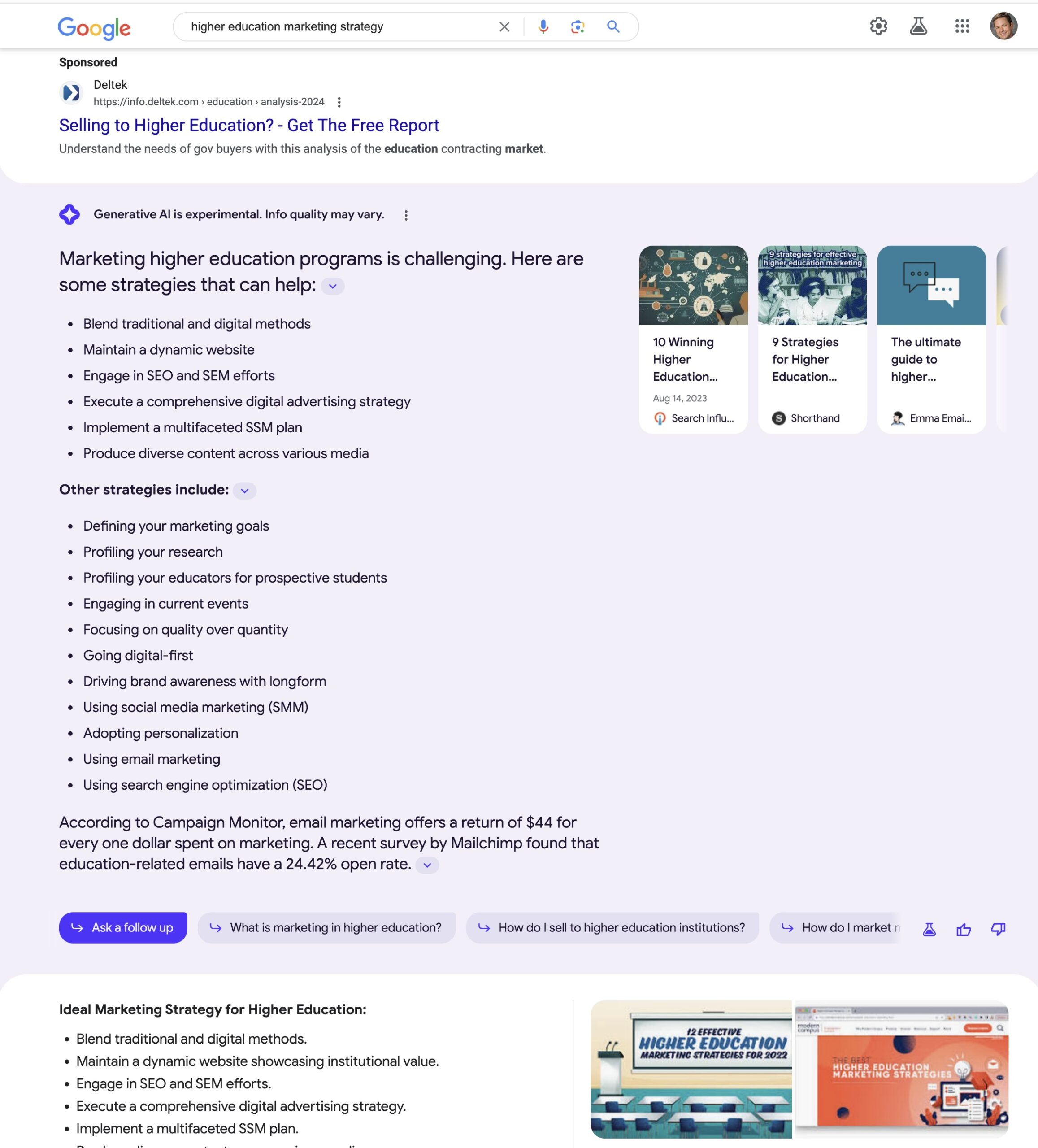
    • Execute a comprehensive digital advertising strategy.
    • Implement a multifaceted SSM plan.
    • Produce diverse content across various media.
    • Secure advertising spots in local, regional, and national media.
    • Leverage unique assets like research, campus visits, arts, music, and sports.
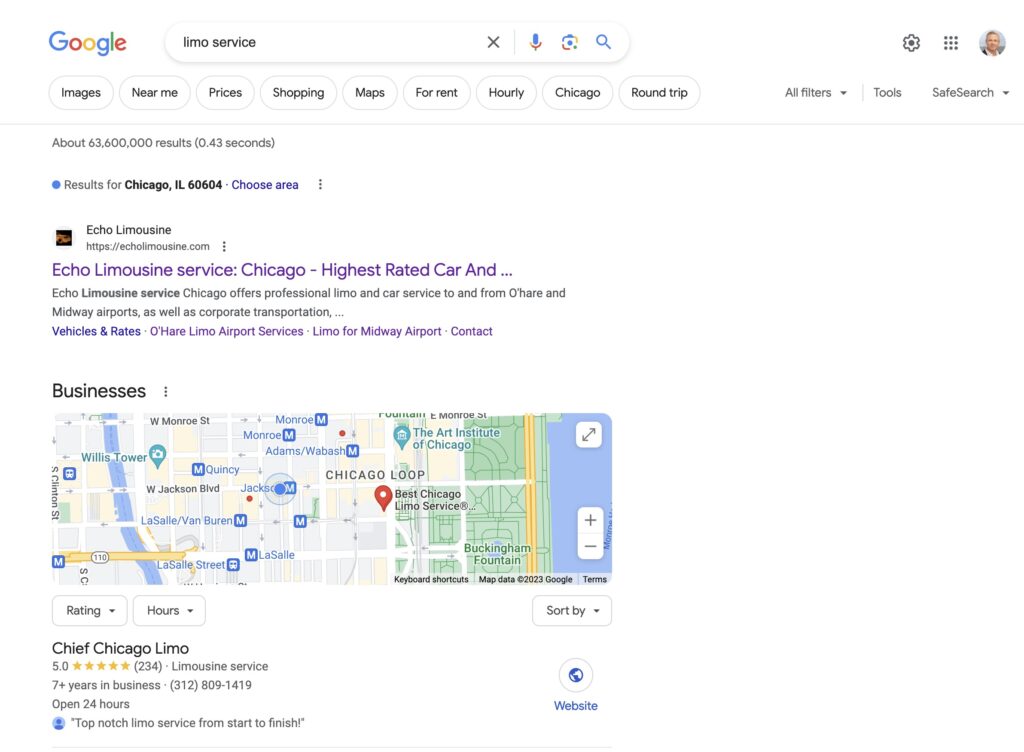
    • Highlight notable faculty and alumni.
    Unique Positions:

    • The article emphasizes the two-way nature of digital marketing, allowing institutions to have meaningful conversations with interested parties.
    • It suggests that, while traditional marketing methods remain relevant, digital marketing has taken precedence in the modern age.

    Conclusion: The article concludes by promoting the benefits of joining the American Marketing Association (AMA) for institutions looking to elevate their marketing strategies.


    The Ultimate Guide to Higher Education Marketing Strategies

    The Ultimate Guide to Higher Education Marketing Strategies-myemma.com-blog-the-ultimate-guide-to-higher-education-marketing-strategies

    https://myemma.com/blog/the-ultimate-guide-to-higher-education-marketing-strategies/

    My perspective: Ultimate is a bit of a stretch, but I do appreciate the view on good copy and the needs of various university stakeholders, like advancement, athletics, and current students.

    The article addresses the challenges higher education marketers face in today’s digital age. It emphasizes the shift from traditional mass marketing methods, like glossy brochures, to more personalized strategies that resonate with modern students.

    Defining the Goals of Your Higher Education Marketing Strategies:

    1. Marketing for Enrollment: With declining enrollments, targeting prospective students and their parents using digital channels is crucial. Strategies include:
      • Publishing informational blog posts and podcasts.
      • Engaging authentically on social media.
      • Collaborating with micro-influencers.
      • Creating video content, including live streams.
      • Adopting a mobile-first marketing approach.
    2. Marketing for Advancement: This focuses on building relationships with alumni and friends of the institution, often for fundraising purposes.
    3. Marketing for Athletics: Promoting athletic programs to boost interest, spirit, and revenue.
    4. Marketing for Student Involvement: Inform enrolled students about on-campus activities and opportunities.

    The Role of Email in Higher Education Marketing Strategies:

    • Email marketing offers a high return on investment (ROI) across various aspects of higher education marketing.
    • Effective email strategies include automation, mobile-friendliness, relevant content, inclusion of images and videos, and personalization.

    Using Segmentation and Personalization for Prospective Students:

    • Personalized email subject lines are more likely to be opened.
    • Segmentation ensures content relevance, further increasing open rates.

    Consistent Branding:

    • Emails should maintain consistent branding, using recognizable colors, fonts, and logos.

    Killer Subject Lines and Captivating Content:

    • Subject lines should be personable, actionable, and unique.
    • Content should be relevant and valuable to the reader.

    The Importance of Testing:

    • A/B testing or split testing is crucial to determine the effectiveness of email campaigns.
    • Testing provides data to refine campaigns for optimal results.

    Conclusion: Higher education marketing strategies are essential for institutions to overcome challenges and achieve their goals. Email marketing, in particular, is a powerful tool that can be tailored for various purposes, from boosting enrollment to promoting athletic programs. The article emphasizes the importance of personalization, segmentation, and consistent branding in email campaigns to engage and convert recipients effectively.


    12 Higher Education Marketing Strategies for 2022

    12 Higher Education Marketing Strategies for 2022-comboapp.com-higher-education-marketing-agency-higher-education-marketing-strategies

    https://comboapp.com/higher-education-marketing-agency/higher-education-marketing-strategies

    My perspective: I find the idea of marketing “Higher Education” as a concept compelling. I recently had a conversation with one of our summer interns in which he asked, “Do I even need a degree?”

    There are definitely fields, like computer science, for instance, where we’re learning that degrees don’t necessarily separate the wheat from the chaff.

    The article emphasizes the long-term changes in higher education institutions due to the pandemic, highlighting the importance of distance learning programs, local student outreach, and improved campus safety. It presents 12 techniques for an effective higher education marketing strategy:

    1. Branding: Focuses on crafting an identity that represents both the school and its student body. Authenticity is key.
    2. Search Engine Optimization (SEO): Highlights the importance of high rankings on search engines and lists several SEO techniques.
    3. A Great Website Experience: Stresses the importance of mobile-first design, speed, and ease of use.
    4. Social Media Marketing: Discusses the significance of authentic engagement on social media platforms, especially for Gen Z and millennials.
    5. Live Streaming: Emphasizes the use of platforms like Facebook Live, Instagram Live, and YouTube for events, Q&A sessions, and classes.
    6. Email Marketing: Highlights the preference of students for email communication and the importance of personalization and segmentation.
    7. Interactive Advertising: Describes the potential of interactive ads, such as games and story-based video ads.
    8. Leveraging Alumni and Students: Discusses the power of word-of-mouth marketing and the importance of reviews and testimonials from current and former students.
    9. Distance Learning: Highlights the increasing demand for distance learning options post-pandemic and the opportunities it presents for institutions.
    10. Pay Per Click Advertising: Discusses the benefits of targeted advertising on platforms like Facebook, Google Ads, and Bing Ads.
    11. Short-Form Video Content: Emphasizes the importance of platforms like TikTok, Instagram Reels, and YouTube Shorts in engaging potential students.
    12. Focus on Positive Career Outcomes: Addresses the ongoing discussions about the value of higher education and the importance of showcasing the tangible benefits of a college education, such as high-paying jobs after graduation.

    Unique Positions:

    • The article stresses the need for institutions to market themselves and the very idea of higher education in light of recent discussions questioning its value.
    • It highlights the blend of traditional and modern marketing strategies, emphasizing the importance of authenticity in all communications.

    Conclusion: The article concludes by promoting ComboApp as a full-cycle higher education marketing agency that can assist institutions in crafting a comprehensive digital marketing strategy.


    8 Higher Ed Digital Marketing Tactics & Trends for 2023

    8 Higher Ed Digital Marketing Tactics & Trends for 2023-www.oho.com-blog-8-higher-ed-digital-marketing-tactics-trends-2023

    https://www.oho.com/blog/8-higher-ed-digital-marketing-tactics-trends-2023

    My perspective: Social will continue to be a tremendous way to get in front of future university students. Even though we’re no longer talking about the “Zero moment of truth” (thank goodness), students will continue to be exposed to our schools and programs before they even know they’re looking.

    The article sheds light on the evolving landscape of higher education marketing in 2022, emphasizing the need for institutions to adapt to the digital age and the unique preferences of Gen Z.

    1. Understanding the Crowdsourcing Habits of Gen Z: Gen Z’s decision-making is described as “crowdsourcing,” where they seek opinions from peers, influencers, and reviewers. Institutions should involve them in conversations and connect with their sense of humor, especially on platforms like TikTok.
    2. Reaching Gen Z With Conversational Marketing: The trend of “conversational marketing” is growing, emphasizing real-time, one-to-one connections to answer questions and assist consumers. University websites should incorporate a human voice and chat opportunities.
    3. Data Insights Shedding More Light on Higher Ed Audiences: Research indicates that understanding the audience leads to better marketing outcomes. Universities are using CRM systems and other software to analyze the student journey and understand their motivations.
    4. Growing Emphasis on Personalized Messaging: Digital content engages young people, but they are wary of overt marketing. Personalized, targeted messaging helps universities connect with students and boost conversions.
    5. Growing Preferences for Short-Form Video: Universities should incorporate short-form videos (around 90 seconds) into their marketing strategies. Examples include video campus tours, answers to FAQs, and student-guided mini-tours.

    Unique Positions:

    • The article emphasizes the importance of understanding and connecting with Gen Z’s unique preferences, especially their reliance on crowdsourcing for decision-making.
    • It highlights the significance of conversational marketing and the need for human interaction, even in the digital age.

    Conclusion: The article concludes by promoting Unibuddy, a platform designed for students that offers tools to enhance higher education marketing strategies in line with current trends.

    15 Best Marketing Strategies for Universities

    15 Best Marketing Strategies for Universities- penji.co-marketing-strategies-for-universities

    https://penji.co/marketing-strategies-for-universities/

    My perspective: It’s not surprising Penji would focus on social and ad creative since they are a marketplace for creative work. I’m not familiar with Penji, but it looks like a new-style iteration of a “99 Designs” concept.

    The article underscores the importance of marketing in universities, especially given the competitive nature of higher education marketing. It provides a comprehensive list of strategies to enhance university branding and appeal to a younger audience.

    1. Social Media: Emphasizes the shift from traditional mail to social media platforms to engage with prospective students. Universities should be present where students are active and ensure their content aligns with the platform’s audience.
    2. User-Generated Posts: Encourages universities to monitor and engage with content created by students about the institution. This provides insights into the university’s perception and offers opportunities for authentic engagement.
    3. Define Your Brand Image: Universities should have a consistent voice and image across all marketing channels. This helps in creating a recognizable and trustworthy brand.
    4. Focus on the Students: Marketing strategies should prioritize the needs and interests of students, both current and prospective. This includes promoting events, assistance, and showcasing the university’s supportive environment.
    5. Video Marketing on All Platforms: Highlights the increasing importance of short-form video content on platforms like YouTube. Videos offer a dynamic way to showcase campus life, events, and more.
    6. Statistics: Using data to showcase the university’s achievements, such as high graduation rates, can be a compelling marketing tool.
    7. Promote Sitting in Classes Before Enrolling: Offering prospective students the chance to experience lectures can help in their decision-making process.
    8. SEO (Search Engine Optimization): Ensuring the university’s website ranks high on search engines is crucial for visibility.
    9. Showcase Success: Highlighting the achievements of alumni can serve as a testament to the quality of education provided.
    10. Embrace Diversity: Marketing campaigns should reflect the diverse student body and cater to non-traditional students as well.
    11. Use Infographics: Visual representations of data can be more engaging and easier to digest than text-heavy content.
    12. Paid Traffic: Utilizing paid ads, especially on platforms like Instagram, can help in reaching a wider audience.
    13. Interactive Webinars: Hosting webinars can provide valuable information to prospective students and give them a taste of the university’s teaching style.
    14. Downloadable Guides: Offering resources to help students prepare for college can be a valuable tool in the decision-making process.
    15. Email Marketing: Automated email series tailored to the student’s application process stage can provide personalized guidance.

    Unique Positions:

    • The article emphasizes the importance of understanding the younger generation’s preferences and adjusting marketing strategies accordingly.
    • It highlights graphic design’s role in enhancing marketing campaigns’ effectiveness.

    Conclusion: The article concludes by promoting Penji, a graphic design service, as a valuable tool for universities looking to enhance their marketing strategies with quality designs.

    16 Effective Digital Marketing Strategies for Higher Education in 2023

    https://www.thinkorion.com/blog/digital-marketing-for-universities

    My perspective: I appreciate the focus on real-time and alumni engagement. We’ve been spoiled by instant responses and always on media.
    And, students want to know what’s out there after attainment of that degree or certificate. Alumni can help tell this story much better than administrators or (gasp) marketers.

    The article delves into the competitive landscape of higher education marketing, emphasizing the importance of standing out to attract the best students. It provides a comprehensive list of strategies to enhance university visibility and appeal:

    1. Maximize Organic Traffic through Optimized SEO Techniques: Emphasizes the importance of SEO for attracting the right students. It covers aspects like keyword research, internal linking, backlinking, technical audits, and on-page optimization.
    2. Accelerate Your Sales With Proven PPC Techniques: Discusses the benefits of pay-per-click advertising for promoting university programs and increasing web traffic.
    3. Attract, Engage, and Retain Students With a Winning Content Marketing Strategy: Highlights the importance of creating engaging and informative content to resonate with potential students.
    4. Elevate Your Brand Visibility With Google Display Advertising: Discusses the effectiveness of digital display ads over traditional billboard ads, especially on Google’s Display Network.
    5. Unlock the Power of Social Media: Explores the role of social media platforms like Twitter, Instagram, LinkedIn, and Facebook in connecting with potential students.
    6. Use Exclusive Email Marketing Campaigns to Promote: Emphasizes the continued relevance of email marketing, stressing the importance of personalization and using AI-powered email programs.
    7. Make Informed Decisions With Advanced Analysis and Tracking: Discusses the importance of setting specific tracking goals beyond what Google Analytics provides.
    8. Utilize Video Marketing to its Fullest Potential: Highlights the engagement potential of video content, both in long and short formats.
    9. Inspire Student Success With Real-Life Stories: Advocates for sharing student success stories to showcase the value of the university’s programs.
    10. Maximize Your Reach With Influencer Marketing: Discusses the power of influencer marketing, especially leveraging successful alumni.
    11. Boost Engagement With Short and Snappy Video Content: Emphasizes the importance of short video content, especially in the wake of reduced on-campus visits due to COVID-19.
    12. Optimize for Featured Snippets: Discusses the importance of ranking in Google’s featured snippet for increased visibility.
    13. Reach Your Ideal Customers With Lookalike Audience Targeting: Highlights the benefits of using lookalike audience models to improve brand reach.
    14. Improve Customer Service With Chatbots Integration: Discusses the rise of conversational marketing and the effectiveness of chatbots in providing instant answers.
    15. Build Connections With Live Streaming: Emphasizes the engagement potential of live streaming over traditional content.
    16. Hire a Professional Higher Education Digital Marketing Agency: Advocates for seeking professional assistance if universities lack the resources or expertise for effective digital marketing.

    Unique Positions:

    • The article emphasizes the blend of traditional and modern marketing strategies, highlighting the importance of adapting to the evolving digital landscape.
    • It underscores the importance of personalization, real-time engagement, and leveraging alumni for effective marketing.

    Conclusion: The article concludes by emphasizing the importance of current marketing strategies for universities to attract future leaders. It also suggests hiring a higher-ed marketing agency for those lacking the time or resources to run effective campaigns.


    Effective Higher Education Marketing Strategies

    Effective Higher Education Marketing Strategies-shorthand.com-the-craft-effective-higher-education-marketing-index.html

    https://shorthand.com/the-craft/effective-higher-education-marketing/index.html

    My perspective: OK, I know it’s shallow, but I like the look and feel of this site. It’s got a very medium-esque vibe.

    On a more serious note, the authors point out one of my constant refrains: The decentralized nature of a higher education marketing strategy is costing universities dearly. Very few schools have central oversight and are therefore cannibalizing their own messaging and budgets.

    The article delves into the complexities of marketing in higher education, highlighting the unique challenges faced by universities. One of the primary challenges is the siloed nature of marketing in universities. While universities typically have a central marketing team focused on boosting student enrollment and driving donations, there are also numerous smaller teams across various academic departments and schools, each with slightly different target audiences.

    These smaller teams often work independently on their marketing strategies, employing a wide range of tactics such as social media, SEO, email marketing automation, PPC campaigns, live streaming video content, direct mail, in-person events, and even chatbot scripts. This decentralized approach can lead to several issues:

    • Dilution of the Brand: Inconsistent application of messaging and brand guidelines can weaken the overall brand identity.
    • Missed Opportunities: Due to weak communication channels, potential marketing opportunities might be overlooked or not fully capitalized upon.
    • Decreased Morale: Teams or individuals working in isolation can experience reduced morale.

    Despite these challenges, the article offers hope by suggesting nine strategies to promote more cohesive and effective higher education marketing. While the specific strategies aren’t detailed in the provided excerpt, the article emphasizes the importance of cohesive marketing efforts across the institution.

    Unique Positions:

    • The article highlights the unique challenges higher education institutions face due to the decentralized nature of their marketing efforts.
    • It underscores the importance of a unified approach to marketing to ensure consistent branding and messaging.

    Noteworthy Mentions:

    • The article references recent engagement examples related to the pandemic, suggesting that universities have proactively created content around COVID-19.
    • The University of Queensland is highlighted for its digital publication, “Contact,” which offers an engaging and interactive user experience while catering to those who prefer traditional print magazines.

    Final Thoughts

    As you can see, there are a number of ways to get in front of students for your school.

    The consensus seems to be that SEO, social media marketing and advertising, email, and PPC are great ways to invest your marketing dollars.

    It’s surprising to see how little attention is paid in the articles to analysis, tracking, and reporting, given how many of the UPCEA Higher Education SEO Study respondents indicate this is lacking.

    As management icon Peter Drucker is famously quoted, “What gets measured gets managed.” All the landing pages, tactics, and strategies in the world won’t make us successful if we don’t know what’s working.

    For more tips to create a winning higher education marketing strategy, check out our Higher Education Marketing Resources & Guides. For more information about higher education marketing – and to learn more about services like our SEO Roadmap for universities, contact our team at Search Influence today.


  • Improving SEO In Higher Education Must Be a Priority: Insights From UPCEA Webinar

    Improving SEO In Higher Education Must Be a Priority: Insights From UPCEA Webinar

    Priority: Improving SEO in Higher Education

    Search Influence joined the UPCEA team, Jim Fong and Bruce Etter, as they unveiled the highly anticipated UPCEA Higher Education SEO Research Study in a lively and informative webinar.

    We’re grateful for the engaged audience, who brought us compelling questions. It was obvious from what they asked that we had some tech-savvy folks attending.

    UPCEA Higher Ed SEO research study webinar: top takeaways to grow your enrollment

    For those who have yet to dive into the study, we’ve got you covered with a summary of the key takeaways:

    • Marketing and institutional leaders see SEO as foundational but admit their PCO units lack SEO strategy.
    • Institutional leadership often lacks reporting.
    • UPCEA members performed poorly in an SEO audit.

    In fact, in the SEO readiness audit of 100 random UPCEA member institutions, only 19% had an excelling score.

    And to pre-answer a question some may ask, this is an UPCEA metric. Search Influence collaborated on the factors, but the grades came from the research itself.

    Why Is SEO Important in Higher Education?

    From our discussions with higher ed marketing leaders, individual PCO units spend significant dollars on paid online advertising and next to nothing on SEO.

    The ROI of SEO is obvious to anyone paying for paid search. Keywords in search can inform your SEO strategy. If you’re paying for it and you don’t rank #1, that’s an opportunity.

    Any department that has in-house web management, social media, or content creation staff has the makings of an SEO team already in place.

    In short, SEO is foundational — most know it, and few are doing it.

    Higher Education SEO Questions From the Audience

    The following questions came directly from the audience in the webinar Q&A section. We clearly had a smart audience and appreciated all the great questions.

    Q: Which other tools do you use for keywords?

    In the webinar, we talked about how we used Semrush data for part of the SEO audit done by the UPCEA team, hence the “other tools.”

    A: One of the best “keyword” tools any organization can use — especially resource-strapped higher ed marketers — is Google Search Console. GSC gives you the ability to see page-by-page and query-by-query where your opportunity is.

    It also shows you what Google thinks you’re relevant for already, which can identify a shorter path to execution.

    In addition to GSC, at Search Influence, we rely on a few tools depending on the use case:

    • Ahrefs – Great overall tool, with an especially good view of page and subdomain level authority
    • Semrush – Another great tool overall, with reporting and site auditing capabilities
    • Surfer SEO – This one is newer in our toolbox. It’s not a pure “Keyword” tool. It’s actually an optimization tool that can help identify content clusters for building topical authority, as well as auditing and outlining SEO optimization of individual pages.

    Q: How do you navigate building backlinks without buying backlinks in a way that Google “disapproves” of?

    Google says, “Any links that are intended to manipulate rankings in Google Search results may be considered link spam.”

    That doesn’t mean that all “backlinks” are bad. It just means you should look for good links. What is a good backlink? A good backlink is one that is relevant, directional, and on a site likely to drive real users.

    Just because you ask for it doesn’t make it bad. It’s about intent.

    Some easy opportunities:

    • Local citations, such as directory listings
    • Other schools within your parent university or college
    • Institutions you collaborate with in real life
    • Local organizations with which you support or partner

    Q: Are internal links counted as backlinks?

    No. They’re internal links, which are awesome, too.

    There are a bunch of great things about internal links:

    • You get to control the anchor text used.
    • They can help to reinforce topical authority, e.g.:
      • You have portfolio pages
        • Which have program pages
          • Who have individual courses and
          • Instructors and
          • Resources and
          • Etc.
    • They’re navigational — in other words, they support the student journey, moving prospects down the funnel toward their eventual application.

    Photo of colorful books stacked on top of one another

    Q: Advice on structuring some complete revision of websites? Would you recommend program by program, or another way?

    This is a classic “it depends” kind of situation. From a business and organizational perspective, what matters most?

    Is it most important to categorize by type, e.g., on-campus, hybrid, certificate, non-degree, etc.?

    Or by program, e.g., homeland security, human resources, organizational management, etc.?

    Once you make that decision, stick to it, build your silos — but not too deep — and think about reasonable interlinking between them.

    Q: From the user side, have you noticed any impact on CTR with truncated title tags?

    Not really, but it’s not something we’ve studied.

    Q: Any concern with title tags and truncating on Google?

    No. In our opinion, this is an opportunity. It’s Google telling you what great looks like. What we’ve seen is that these are most often picked up from some on-site content.

    If you find it happening, consider recrafting your title tag and your leading H1 to match. That should give the machine what it wants.

    Q: Any advice on how to shift the narrative that SEO is free or should be very low cost and doesn’t need as much investment?

    Echoing what I said above:
    The ROI of SEO is obvious to anyone paying for paid search. Keywords in search can inform your SEO strategy. If you’re paying for it and you don’t rank #1, that’s an opportunity.

    The keyword ranking tool we use just came out with a new “forecasting” feature. It allows you to build a keyword group, assign dollar value and conversion rate, and see the business impact of moving from position X to position Y over time.

    We looked at paid search accounts, grabbed keywords we know to convert, and built forecasts. The impact, in many cases, is staggeringly obvious.

    Reach out and we can run a limited version for you.

    Conclusion

    The UPCEA Higher Education SEO Research Study shed light on the critical need for SEO in PCO marketing and beyond. Many, perhaps most, institutions have a lot of room for growth and optimization.

    It’s crucial for universities to recognize the value that SEO can bring to their marketing and seize the opportunity to be present for all their prospective students.

    The webinar showcased that, while leaders acknowledge SEO as a foundational element, there’s a gap in implementing effective strategies within PCO units. Additionally, the need for improved reporting for institutional decision-making and better SEO performance among UPCEA members was clear.

    It’s time for universities to embrace SEO and reap the benefits of higher visibility, engagement, and growth.

    We encourage you to join the conversation, share your own experiences, and learn from others. Feel free to comment below to keep the conversation going.

    If you’re looking for expert guidance to help you navigate the world of SEO, don’t hesitate to get in touch with Search Influence.

    We’re here to support you in optimizing the potential of your organization.

    Images

    Books