Author: Will Scott

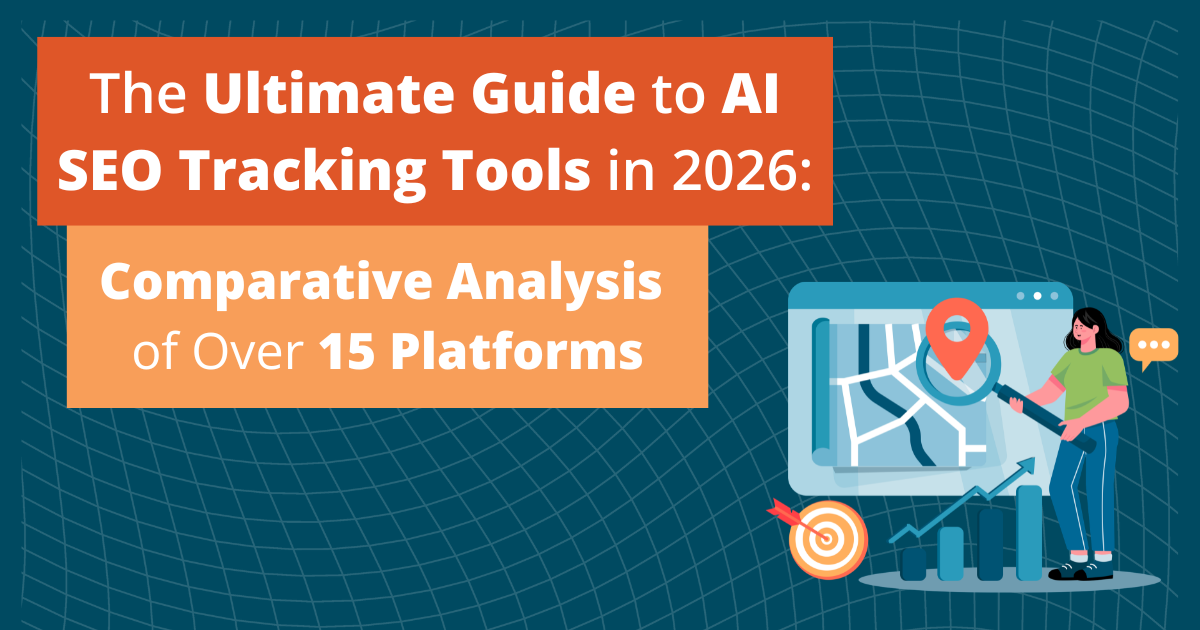
  • AI SEO Tracking Tools 2026: Comparative Analysis of Over 15 Platforms

    AI SEO Tracking Tools 2026: Comparative Analysis of Over 15 Platforms

    Co-Author: Collin Guedon
    This post was updated by Will Scott & Collin Guedon on 2/13/26 to reflect current best practices. It was originally published on 8/20/25.

    Key Insights:

    • AI search adoption is surging: With AI search nearing 1 billion users and tools like ChatGPT becoming mainstream, tracking brand visibility in AI-generated answers is now essential for SEO success.
    • Generative Engine Optimization (GEO) is the new frontier: The shift from ranking pages to providing “best answers” across platforms like Google AI Overviews, ChatGPT, Perplexity, and Gemini requires a different optimization approach.
    • AI SEO tracking tools vary widely in capabilities: From enterprise-focused solutions like Scrunch AI and Profound to budget-friendly options like RankScale and WriteSonic, pricing, platform coverage, and refresh rates differ significantly.
    • Early adoption offers a competitive edge: Brands that start monitoring AI search performance now can secure AI visibility before the market becomes oversaturated.
    • Selecting the right tool depends on business size and goals: Enterprises need robust compliance and integration features, while SMBs and agencies may prioritize affordability, speed, and content creation integration.

    The AI revolution has fundamentally changed how brands appear in search results.

    With AI search approaching 1 billion users and an estimated 27% of consumers using AI for roughly half of their internet searches, tracking AI visibility has become a core element of modern SEO strategy rather than an experimental add-on.

    As Google commits $75 billion to AI integration and ChatGPT becomes one of the most visited websites globally, organizations need a clear, trustworthy source to compare AI SEO tracking platforms.

    This guide is designed as a living resource, updated regularly with new pricing, user ratings, case studies, and product changes so readers can make decisions based on current information rather than outdated launch-era reviews.

    This analysis builds upon a September 2024 evaluation of AI SEO tracking tools presented at the SMX GEO Master Class. The current version incorporates updated data through December 2025, including findings from extended research using Claude and Gemini’s deep research capabilities.

    If you would like weekly updates on the state of AI SEO and tracking tools, subscribe to The Visibility Report, an AI-enabled newsletter from Search Influence CEO and AI SEO Expert, Will Scott.

    Methodology & Industry Context

    This guide synthesizes information from platform documentation, public pricing pages, case studies, and independent industry analyses focused specifically on AI search visibility tracking (not just AI content creation).

    Primary Research Inputs

    • Review of 25+ AI SEO tracking and monitoring tools active as of late 2025
    • Direct reference to official case studies and customer stories from tools such as Scrunch AI, Peec AI, Profound, Otterly AI, and WriteSonic
    • Publicly available funding information and usage metrics shared in company announcements and investor updates
    • Pricing verification from each tool’s published pricing page (Starter and entry-level plans where available)

    Most Notable Recent Updates as of 2/13/26

    • AirOps closed a $40M Series B round, marking a major expansion milestone for the platform and signaling growing investment momentum in AI-powered content engineering.
    • AI visibility consistency under scrutiny. New research from SparkToro highlights significant variability in AI-generated brand recommendations, even when identical prompts are used. The findings suggest that point-in-time AI visibility measurements may reflect volatility rather than durable performance signals. For teams investing heavily in AI tracking, the takeaway is to prioritize trend analysis over isolated snapshots when evaluating AI search visibility.
    • Google tests AI opt-out controls. Google is experimenting with opt-out mechanisms for AI Overviews as Gemini 3 becomes the underlying model.
    • OpenAI retires older models. OpenAI has begun deprecating GPT-4o, signaling faster iteration cycles across models.
    • OpenAI shared details on how internal agents collect, analyze, and act on data. The architecture offers early insight into how agentic search systems may evolve, with implications for how brands are discovered and evaluated beyond traditional query-response patterns.
    • AI agent link safety emerges as a concern. OpenAI outlined security considerations as AI agents increasingly browse and act on behalf of users.

    Emerging Tools Worth Noting

    • KIME is a newer platform focused on analyzing how domains appear across LLM-generated outputs. Its feature set includes domain citation tracking, competitor comparisons, and dashboards that surface how different AI models reference brand information. I’m flagging it here as part of the growing ecosystem of tools in the AI visibility space. More to come as I spend additional time looking into it.
    • LLMrefs takes a different approach to AI visibility tracking by focusing on keywords rather than individual prompts. Instead of monitoring how a brand appears for specific user-style questions, the platform tracks broader keyword-level patterns across multiple AI responses. The idea is that keyword-based monitoring may make it easier to identify general visibility trends across many related prompts, rather than analyzing each prompt individually.
    • Sembit Corp is developing an AI Search Optimization product called ZeroChannel.ai that takes a task-driven approach rather than operating as a traditional monitoring platform. Instead of focusing primarily on dashboards, ZeroChannel.ai analyzes AI search results and citations across systems such as ChatGPT and Google AI Mode/Gemini, then generates playbooks of recommended actions to improve AI visibility. The platform is currently used by roughly 20 brands, with early feedback focused on its emphasis on execution and outcomes — specifically, achieving first-mention visibility for unbranded prompts.
    • Promptwatch is an AI visibility platform focused on tracking how brands appear across prompt-level responses in systems like ChatGPT, Gemini, Claude, Perplexity, and related AI search experiences. The platform emphasizes real prompt data, citation analysis, and crawler logs to show which pages AI systems are reading and citing, alongside visibility metrics and competitor comparisons. Promptwatch also layers in optimization insights to help teams identify content gaps and prioritize where to publish to improve AI visibility. It’s positioned as a data-driven option for marketing and SEO teams that want to connect AI mentions, citations, and crawl behavior to tangible traffic and visibility trends.

    Comprehensive Comparison Matrix

    Tool Starting Price* Platforms Covered (High Level) Typical Refresh Rate G2 Rating & Reviews** Key Differentiator Best For
    Scrunch AI $250/month ChatGPT, Perplexity, Claude, Meta AI, Gemini, Google AI Overviews, Google AI Mode ~Every 3 days 4.7/5 (≈38 reviews) Agent Experience Platform (AXP) for machine-readable “answer-ready” content Enterprises needing compliance, governance, and multi-platform coverage
    RankScale $20/month 7+ AI search platforms, including DeepSeek and Mistral Flexible (hourly–weekly) Listed on G2, currently no public reviews Credit-based “full drill-down” analytics with persona and sentiment insights Data-driven SEOs and analysts testing AI visibility at low cost
    WriteSonic GEO $49/month Multiple major AI platforms via tracking and analytics (plus integrations across 2,500+ apps) Near real-time via Cloudflare and integrations 4.7/5 (≈5,901 reviews) Combines AI search tracking with AI content creation and SEO workflows SMBs, agencies, and teams wanting an all-in-one AI content + tracking stack
    Otterly AI $29/month Google AI Overviews, ChatGPT, Perplexity (with additional platforms like Google AI Mode, Gemini, and Microsoft Copilot planned) Weekly (with more frequent updates planned) 4.9/5 (≈37 reviews) GEO auditing and Semrush App Center integration Semrush users and agencies wanting GEO within existing workflows
    Peec AI €89/month 7+ AI search platforms with multi-language tracking Near real-time 5.0/5 (1 review) Strong European focus, GDPR alignment, and rapid feature iteration European marketing teams and global brands needing multi-language AI visibility
    xFunnel $197/month Custom AI search engine coverage based on client strategy Custom per engagement Listed on G2, currently no public reviews Full-service GEO: strategy, content, optimization, and experimentation Brands wanting a hands-on services partner rather than a self-serve tool
    Profound $99/month AI answer engines across 18+ countries, with multi-language coverage Typically daily 4.6/5 (≈142 reviews) Conversation Explorer for AI search “share of voice” and answer analysis Enterprise and upper mid-market brands focused on AI answer share-of-voice
    Waikay.io $69.95/month ChatGPT, Google Gemini, Claude, Perplexity On-demand, report-based Listed on G2, currently no public reviews Entity-based, knowledge-graph-driven AI Brand Score and hallucination detection Brand perception monitoring and entity-level AI analysis
    Advanced Web Ranking $99/month Google AI Overviews plus 4 additional LLMs via AI Brand Visibility features Weekly trends 4.3/5 (≈21 reviews) Deep SERP history plus AI Overviews research (e.g., pixel depth, source overlap) Teams already using AWR for traditional SEO ranking who need AI Overviews data
    SE Ranking $52/month Google AI Overviews, Google AI Mode, ChatGPT (additional platforms in development) Daily for tracked keywords 4.8/5 (≈1,401 reviews) Integrated SEO suite with AI search tracking and automated fixes (OTTO) All-in-one SEO + AI tracking for SMBs, agencies, and mid-market teams
    RankZero $89/month ChatGPT, Gemini, Perplexity, Claude (on request), DeepSeek (on request), Mistral (on request), xAI Grok (on request) Daily (instant fetch for new prompts) Not publicly listed on G2 Revenue-first GEO with direct AI visibility → revenue attribution and deep GA4/GSC integrations Agencies and e-commerce teams focused on revenue impact
    Rank Prompt $49/month ChatGPT, Gemini, Perplexity, Google AI Overviews Scheduled prompt runs (usage-based) 4.3/5 (early reviews) Prompt-based, multi-location AI visibility tracking with built-in content execution Franchises, multi-location brands, and agencies
    Rankshift €49/month Selectable AI models (configurable per account) Flexible (daily, weekly, or monthly) Listed on G2, currently with limited public reviews Cost-efficient, flexible prompt scheduling with unlimited users and projects Agencies and teams managing large prompt libraries
    LLM Scout $39.99/month ChatGPT, Claude, Gemini, Perplexity, Google AI Overviews Weekly reports (standard) Not publicly listed on G2; 5/5 rating (425 reviews, per company site) Buyer-intent prompt tracking with auto-generated prompts and citation-level visibility Marketing teams, SEO teams, and agencies focused on buyer-intent AI discovery and competitive visibility

    The AI SEO Tracking Market Is Exploding, and For Good Reason

    The global AI SEO software market is projected to reach $4.97 billion by 2033, up from $1.99 billion in 2024. This explosive growth reflects a fundamental shift in search behavior that demands new tracking capabilities.

    Key market drivers:

    • 75% of marketers now leverage AI to optimize their SEO workflows (WriteSonic research)
    • 82% of enterprise SEO specialists plan to increase their AI tool investments (Industry surveys)
    • 88.1% of AI Overview queries are informational, requiring answer-focused optimization (Semrush AI Overviews Study)
    • 60% of consumers now start product research with AI assistants (Profound research, 2025)
    • 47% of marketers have already implemented AI SEO tools for competitive advantage (Industry data)
    • Google’s AI Mode launched for all US users on May 20, 2025, accelerating AI adoption

    What’s driving this surge?

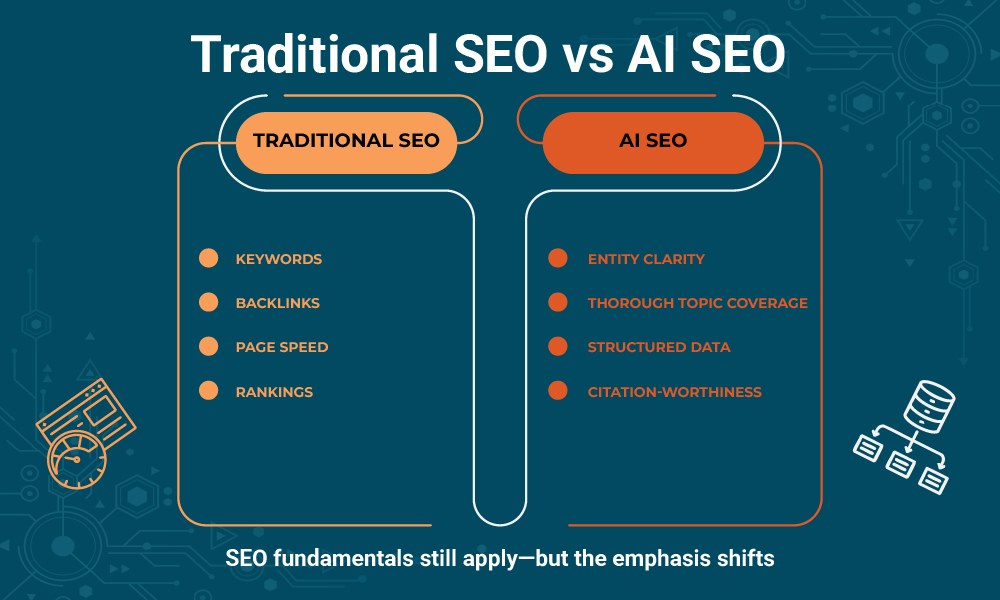
    Traditional SEO focused on ranking pages; AI SEO requires optimizing for direct answers across multiple AI platforms. When consumers “outsource browsing to AI,” as Scrunch AI CEO Chris Andrew puts it, brands must adapt their strategies from targeting “best pages” to providing “best answers.”

    The emergence of Generative Engine Optimization (GEO)

    This paradigm shift has created Generative Engine Optimization (GEO), a new discipline focused on optimizing content for AI systems rather than traditional search engines. Modern AI SEO tools monitor brand visibility across:

    • ChatGPT and SearchGPT
    • Google AI Overviews and AI Mode
    • Perplexity AI
    • Claude and Meta AI
    • Gemini and other emerging platforms

    A Comprehensive Look at Today’s AI SEO Tracking Landscape

    Our research identified 25+ AI SEO tracking tools currently available, ranging from purpose-built startups to established SEO platforms adding AI capabilities. The sector attracted substantial investment throughout 2024-2025, with over $77 million in collective funding during the May-August 2025 period alone, validating the market opportunity:

    • Profound: $23.5M total funding ($3.5M seed in August 2024, $20M Series A in June 2025)
    • Scrunch AI: $19M total funding ($4M seed in March 2024, $15M Series A in July 2025)
    • AirOps: $15.5M Series A (October 2024)
    • Peec AI: €7M raised in just 5 months (April-July 2025)
    • BrandLight: $5.75M Series A (April 2025)

    Each tool approaches the challenge in a different way, creating a diverse ecosystem of solutions tailored to various organizational needs.

    Tool-by-Tool Analysis: The Ten Market Leaders

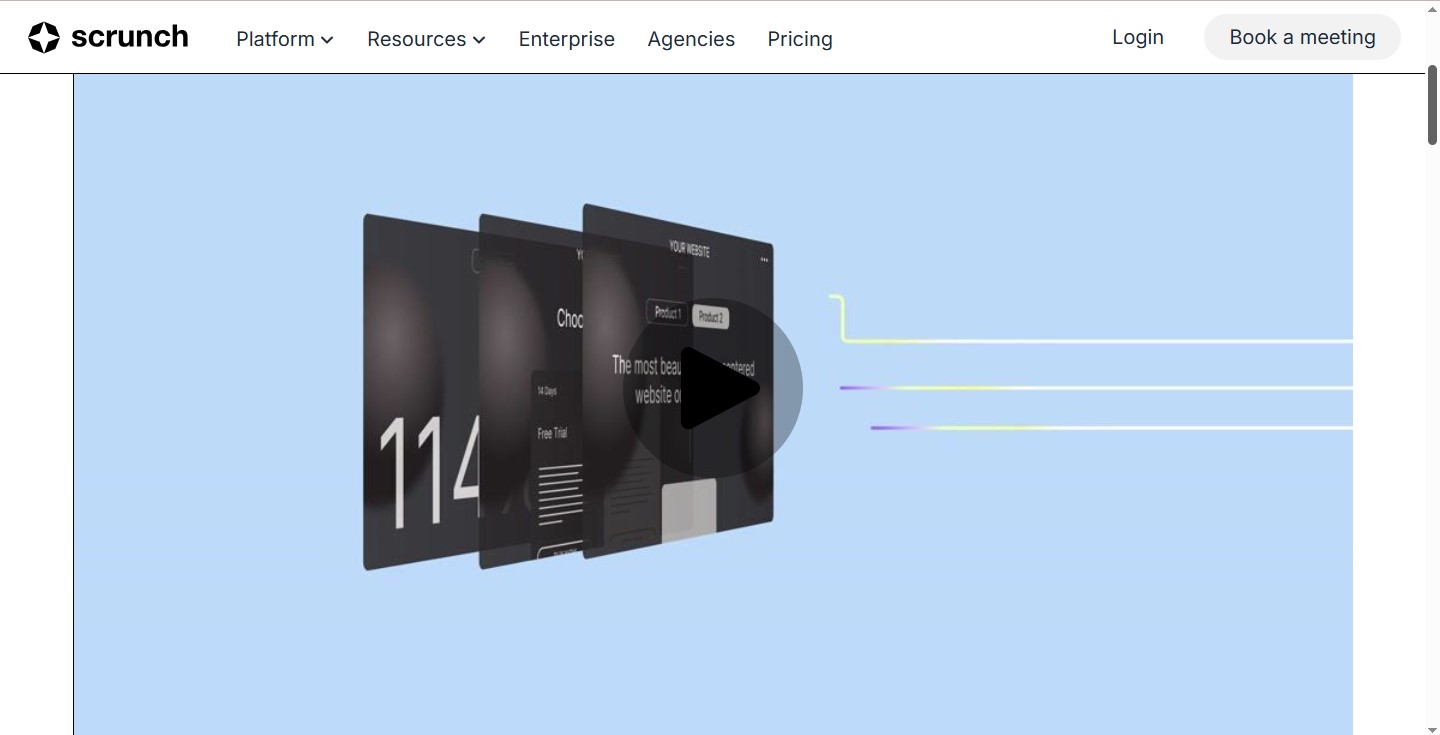
    Scrunch AI: The enterprise powerhouse setting the standard

    Launched in November 2024, Scrunch AI focuses on large organizations that need structured, repeatable control over how their brands appear across AI search experiences. With $19M in total funding and a customer base of 500+ brands (including organizations such as Lenovo and Penn State University), Scrunch AI is positioned as an enterprise-oriented platform for AI search visibility.

    Key Capabilities

    • Pricing: Plans reportedly start around $250/month (Starter) and scale up for larger deployments and enterprise contracts.
    • Platform coverage: ChatGPT (including Shopping surfaces), Perplexity, Claude, Meta AI, Gemini, Google AI Overviews, Google AI Mode (as of July 2025).
    • Data refresh: Approximately every 3 days.
    • Security: SOC 2 Type II compliance with SAML/OAuth SSO support.

    Scrunch AI’s approach centers on an Agent Experience Platform (AXP) that creates machine-readable versions of content designed specifically for AI agents. Customers have reported significant improvements in AI visibility when this layer is implemented at scale.

    Additional features include:

    • Configurable personas for understanding how different audience types see the brand in AI conversations
    • Risk management dashboards that turn unknown AI behavior into managed risks
    • Bot traffic analysis through Cloudflare integrations to monitor AI crawler activity
    • Dedicated account management for enterprise clients

    User Reviews & Social Proof

    • G2 Rating: Approximately 4.7/5 based on around 38 reviews (Scrunch AI profile on G2).
    • Representative sentiment reflects ease of setup (“setup took under an hour”) and appreciation for real-time or near-real-time tracking that changes how teams monitor AI mentions.

    Recognition & Credentials

    • SOC 2 Type II–compliant infrastructure.
    • Trusted by 500+ companies, including well-known technology and education brands publicly listed on its website.

    Case Studies & Results

    A Scrunch AI case study published in July 2025 describes how Runpod used the platform to achieve roughly 4× growth in new paying customers per month within about 90 days. The case study reports metrics such as 40 new customers per day and an approximate 8% conversion rate (2,100 conversions from 28,000 visitors), illustrating how AI visibility data can be tied directly to acquisition outcomes.

    CEO Chris Andrew’s vision is clear: “90% of human traffic will go away as consumers outsource browsing to AI agents. Brands must adapt from targeting ‘best pages’ to providing ‘best answers.’”
    RankScale: Deep analytics for data-driven marketers

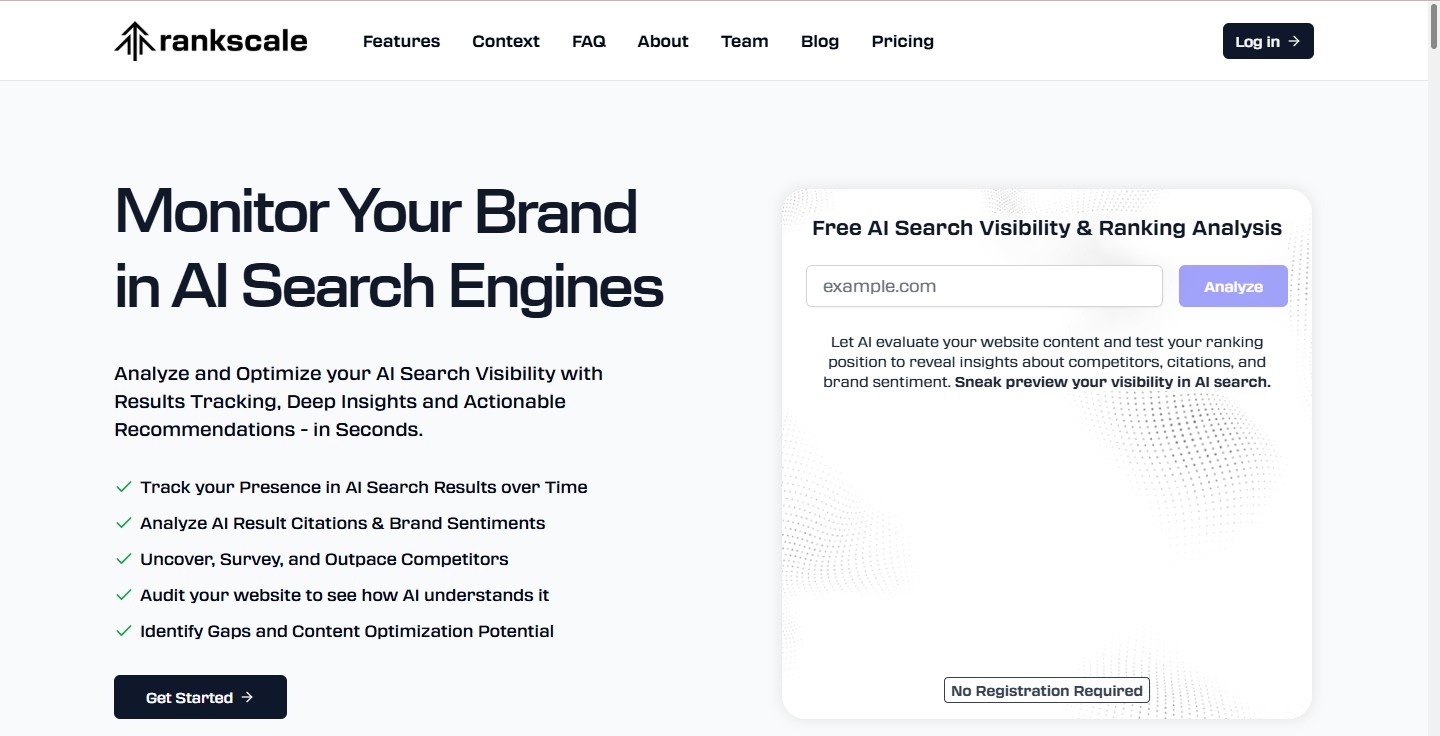
    RankScale positions itself as an analytical tool for “geeky minds,” using a flexible credit-based system that starts at about $20/month for 120 credits. This model allows teams of any size to experiment with AI search visibility while controlling costs.

    Technical Specifications

    • Platform coverage: Tracking across 7+ AI platforms, including DeepSeek and Mistral.
    • Tracking intervals: Flexible scheduling with hourly, daily, or weekly runs.
    • Key features: AI search engine simulation, citation analysis, sentiment tracking, and trend summaries.
    • Support: 24/7 live assistance for users who need configuration or interpretation support.

    The platform emphasizes simplicity and data-driven insights, providing recommendations for improvement and highlighting signals that correlate with AI visibility changes.

    User Reviews & Social Proof

    • G2 presence: RankScale is listed on G2, but as of late 2025, it shows no public reviews and therefore no aggregated star rating.
    • External technical reviews, such as coverage from Whatagraph, have noted a clean interface and robust feature set while calling for more extensive documentation around newer analysis features.

    Recognition & Credentials

    • Marketing materials describe RankScale as being built for “1000+ leading brands and agencies”, though detailed public client lists are limited and should be treated as company claims.

    Founded by Mathias Ptacek, RankScale boasts a solid feature set and is continually developing additional functionality, with a specific focus on simplicity and data-driven insights, including recommendations for improvement, trends, and signals. The platform has earned positive reviews from Whatagraph, which praised its simple interface while noting that some analysis features need better documentation.
    WriteSonic GEO: Democratizing AI SEO with integrated content creation

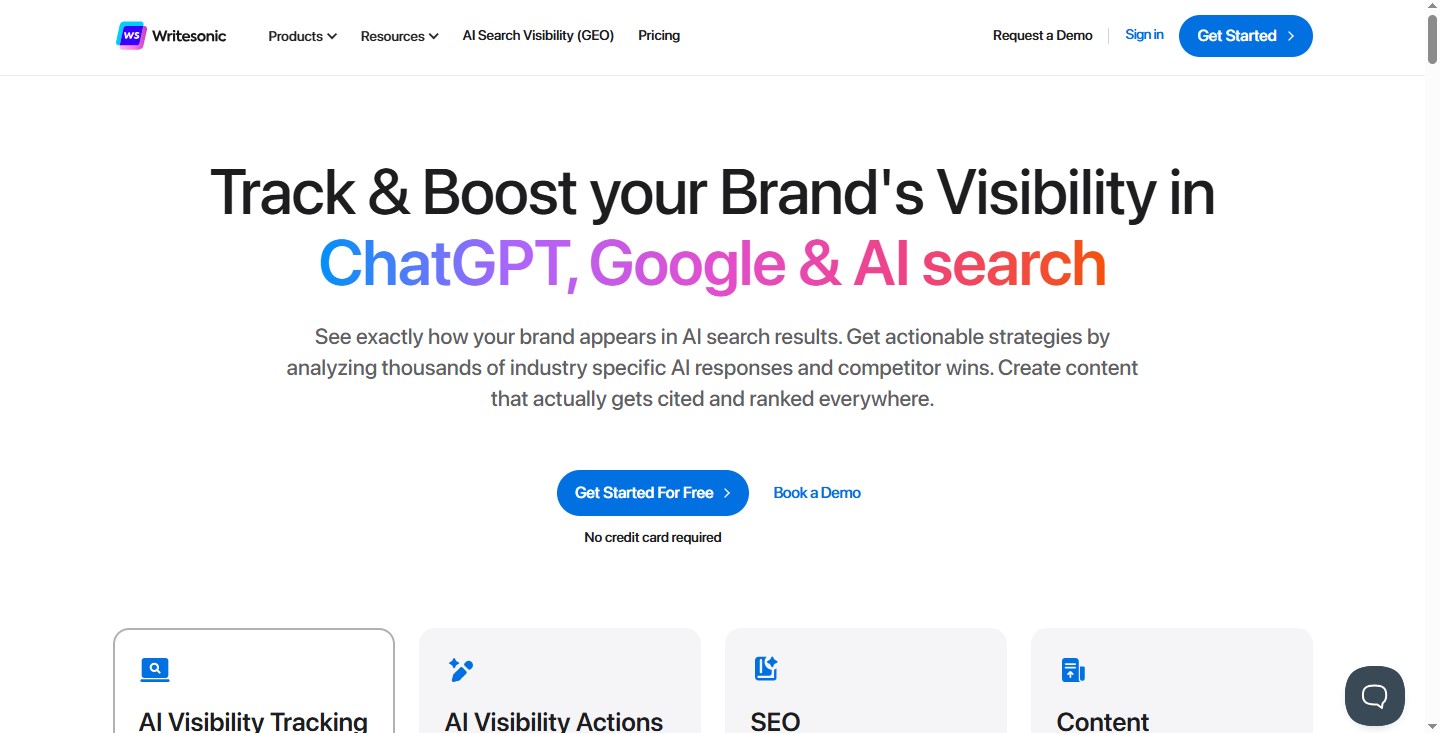
    WriteSonic GEO combines AI search visibility tracking with a mature AI content creation ecosystem. While earlier pricing referenced very low entry points, current plans show Lite tiers around $49/month, with higher-tier pricing scaling to more advanced usage and collaboration features.

    Platform Highlights

    • User base: More than 10 million users globally, according to company materials.
    • Real-time tracking: Cloudflare integration surfaces AI crawler interactions that standard analytics often miss.
    • API capabilities: Access to 2,500+ app integrations via platforms like Pipedream.
    • SEO AI Agent: Public beta launched in February 2025, designed to assist with SEO tasks across both traditional and AI search.

    The GEO layer sits inside a broader toolset the company often describes as “the Ahrefs for AI Search,” with:

    • AI Traffic Analytics to reveal AI-originated visits
    • Brand Presence Explorer tracking how frequently a brand appears in AI answers across major platforms
    • Integrated workflows for traditional SEO and AI search optimization
    • One-click publishing to WordPress and social platforms

    User Reviews & Social Proof

    • G2 Rating: Around 4.7/5 based on approximately 5,901 reviews, reflecting broad usage across marketing and content teams.
    • Representative feedback notes that the platform helps “track, benchmark, and optimize brand visibility across AI search engines,” with users citing the combined value of content creation and tracking.

    Recognition & Credentials

    • SOC 2 Type II, GDPR, and HIPAA compliance statements on the company’s materials.
    • A partnership with Microsoft focused on GenAI innovation for enterprises.
    • Website messaging indicates adoption across a broad range of companies “from Series A to Fortune 500.”

    Case Studies & Results

    A published case study describes how Biosynth scaled to roughly 5,000 weekly product descriptions using WriteSonic’s AI content generator. According to the case study, the platform became an integral part of Biosynth’s marketing toolkit for scaling scientific product descriptions.
    Otterly AI: Rapid growth through strategic integrations

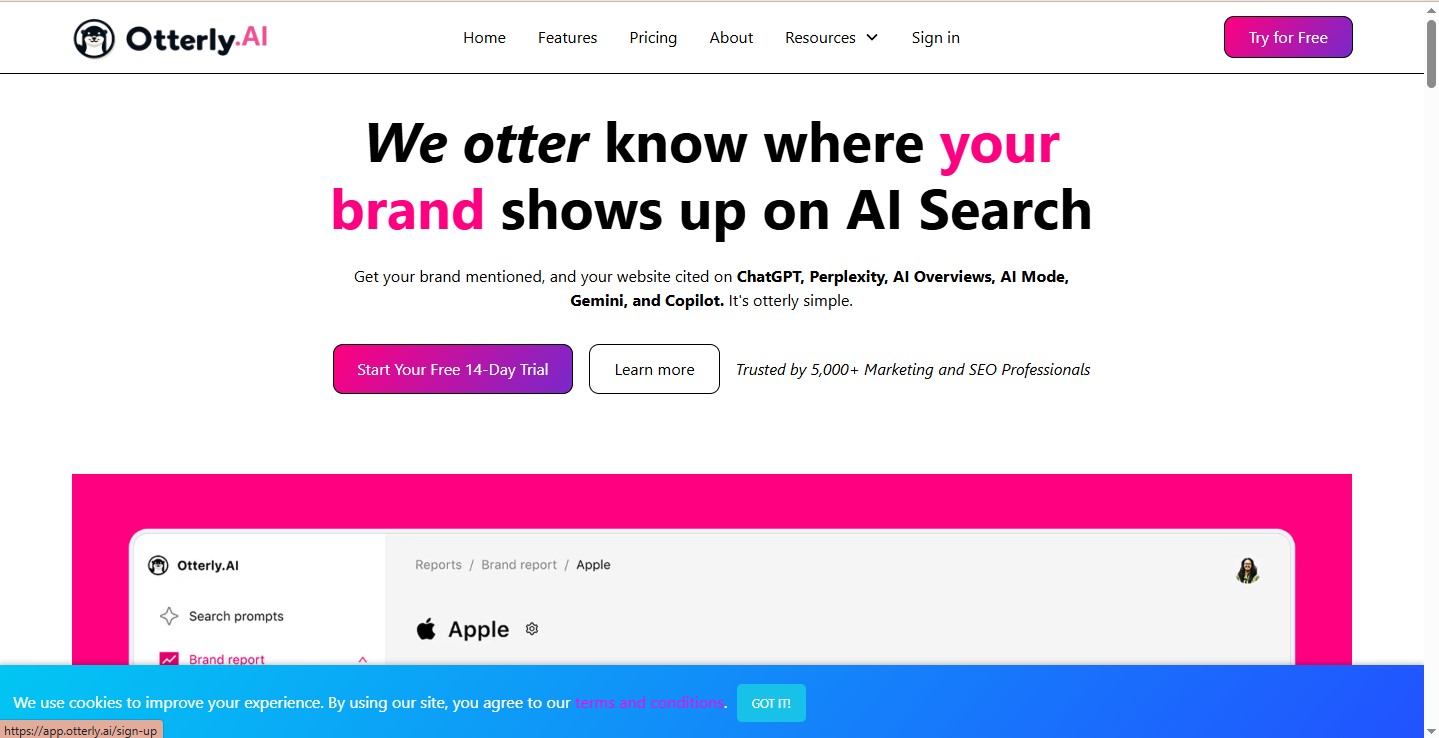
    Otterly AI emerged from stealth in December 2024 with around 1,000+ customers and has since reported growth to more than 5,000 users. Its strategy centers on integrating GEO capabilities into existing SEO workflows, particularly through the Semrush App Center.

    Key Characteristics

    • Pricing: Approximately $29–$489/month, depending on feature access and scale.
    • Differentiator: GEO Audit tool with deep integration into Semrush, enabling AI search visibility analysis alongside traditional SEO metrics.
    • Data updates: Weekly refresh cycles, with more frequent updates on the roadmap.
    • Platform coverage: Google AI Overviews, ChatGPT, Perplexity, with Google AI Mode, Gemini, and Microsoft Copilot planned.

    This bootstrapped Austrian startup plans to become “the Semrush of AI search” without external funding. As covered by TechCrunch, their integration strategy provides:

    • Familiar workflows for Semrush users
    • Single sign-on convenience
    • Real-time visibility alerts
    • Sentiment analysis capabilities

    User Reviews & Social Proof

    • G2 Rating: Around 4.9/5 based on roughly 37 reviews, suggesting strong satisfaction among early adopters.
    • Representative sentiment emphasizes the value of “knowing where your brand shows up on AI search” and the speed at which meaningful insights can be obtained.

    Recognition & Credentials

    • The company notes compliance with SOC 1, SOC 2/SSAE 16/ISAE 3402, and ISO 27001, reflecting a security posture aimed at professional and enterprise use.
    • Marketing materials indicate that 10,000+ marketing and SEO professionals rely on Otterly AI (treated as a company claim unless independently verified).

    Case Studies & Results

    An AI search experience case study describes how Bacula Enterprise achieved a #1 ranking in ChatGPT responses for “best HPC backup software” using Otterly AI’s GEO capabilities (June 2025). This example illustrates how targeted GEO work can reshape answer rankings for highly specific B2B queries.
    Peec AI: Real-time tracking with proven results

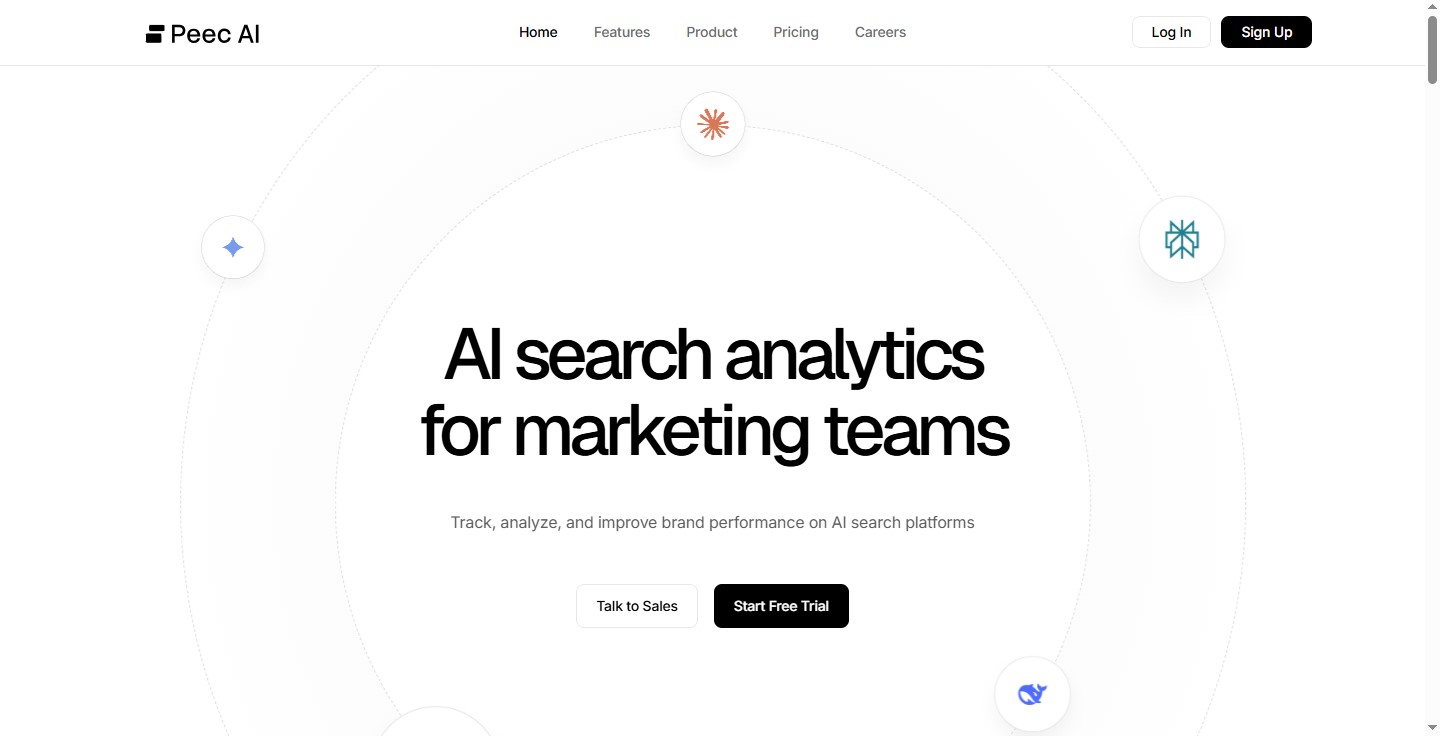
    Based in Germany, Peec AI has grown quickly, raising approximately €7M in funding within five months (€1.8M pre-seed in April 2025 and €5.2M seed in July 2025). The platform focuses on real-time AI visibility and multi-language support, making it particularly attractive for European and global brands.

    Growth Trajectory & Capabilities

    • Revenue: Reached around €650K ARR within four months of launch, with reported €80K weekly growth and a target of €4M ARR by year-end.
    • Pricing: Ranges from about €89–€499/month.
    • Clients: Trusted by 1000+ marketing teams, including brands such as idealo and Wix, which provide testimonials on its site.
    • Platform coverage: Tracks AI visibility across 7+ platforms.
    • Compliance: Focus on GDPR alignment and multi-language reporting.

    Peec AI emphasizes actionable, AI-powered recommendations rather than raw dashboards, with rapid feature shipping, such as adding AI Overviews tracking within weeks based on user feedback.

    User Reviews & Social Proof

    • G2 Rating: Approximately 5.0/5 (with a small but positive early review base).
    • Representative feedback highlights its positioning as “AI search analytics for marketing teams,” with an emphasis on clarity and speed.

    Recognition & Credentials

    • The platform’s messaging emphasizes GDPR-conscious architecture and multi-language capabilities tailored for European markets.

    Case Studies & Results

    A case study on Peec AI’s blog reports that Momentum achieved roughly a 10× improvement in AI search visibility using the platform by July 2025. The story illustrates how real-time insights and iterative optimization can quickly shift a brand’s standing in AI-generated results.
    xFunnel: End-to-end AI search engine optimization

    xFunnel operates as a service-driven GEO partner rather than a purely self-serve SaaS platform. Founded by Neri Bluman and Beeri Amiel, who together have raised more than $150M across prior ventures, xFunnel focuses on turning AI search into a revenue channel for established brands.

    Unique Positioning

    • Pricing: Around $197/month as an indicator of entry-level service, with custom pricing for full-scale engagements.
    • Clients: Publicly listed brands include HubSpot, Monday.com, Wix, Fiverr, Check Point, and Next Insurance.
    • Focus: Full-cycle AI search engine optimization, from strategy and experimentation to content and optimization.

    xFunnel Delivers

    • Experiment-driven strategy development to understand what drives AI answer inclusion and conversions
    • Tailored optimization playbooks executed by xFunnel’s team
    • Dedicated analyst support and an AI-friendly affiliate network
    • Content development and user-generated content (UGC) strategies for AI visibility
    • Published AI search behavior studies that feed back into client playbooks

    User Reviews & Social Proof

    Recognition & Credentials

    • xFunnel has announced that it is “joining the HubSpot family,” signaling closer integration into a widely adopted marketing ecosystem.
    • Customer pages highlight several recognizable technology clients; however, detailed metrics are often shared only within private case studies.
    Profound: Premium enterprise solution with major backing

    Profound is positioned for upper mid-market and enterprise organizations seeking detailed AI answer share-of-voice insights across multiple countries and languages.

    Enterprise Credentials

    • Funding: Approximately $23.5M total funding ($3.5M from Khosla Ventures in August 2024 and $20M Series A led by Kleiner Perkins, with NVIDIA participation, in June 2025).
    • Starting price: A published entry point around $99/month, with higher enterprise tiers running significantly more. Earlier coverage referenced enterprise-only access at higher price points, underscoring that many deployments are large-scale.
    • Compliance: SOC 2 Type II certified.
    • Scale: Processing about 100+ million AI search queries monthly across 18 countries.

    Key Capabilities

    • Conversation Explorer: Real-time insight into AI answer engine search volumes and answer patterns.
    • Multi-language support: Coverage across 20+ languages, supporting global brands.
    • Agency “God View”: Multi-client management suited to agencies and large consultancies.

    Profound notes that clients often see 25–40% lifts in AI answer share-of-voice within roughly 60 days of implementation.

    User Reviews & Social Proof

    • G2 Rating: Around 4.6/5 based on approximately 142 reviews, indicating strong enterprise satisfaction.
    • TechCrunch and Adweek confirm enterprise sophistication
    • As noted by iPullRank CEO Michael King: “Profound has the strongest reporting, and they are rapidly adding additional features like their conversation explorer and bot tracker that help you understand what’s going on.”

    Recognition & Credentials

    • SOC 2 Type II security certification.
    • A partnership with G2 focused on powering AEO and AI search marketing strategies.
    • Public customer lists referencing brands such as U.S. Bank, Plaid, and MongoDB.

    Case Studies & Results

    A case study on Profound’s site describes how Ramp increased AI brand visibility from 3.2% to 22.2% in roughly one month — a 7× improvement. The case study emphasizes that Profound’s insights helped Ramp understand which aspects of its narrative AI answer engines prioritize.
    RankZero: The agency-first & e-commerce platform favorite

    RankZero has positioned itself as a revenue-first solution in the GEO space, recognized as a key player in Dawn Capital’s E-Commerce Market Study. Trusted by over 260 brands, the platform moves beyond vanity metrics to deliver concrete traffic attribution and technical optimization, built specifically for agencies and e-commerce teams.

    Key Capabilities

    • Pricing: Plans start at $89/month with unlimited scalability for agencies.
    • Platform coverage: ChatGPT, Gemini, Perplexity, Claude (on request), DeepSeek (on request), Mistral (on request), xAI Grok (on request)
    • Daily updates with instant data fetch (no 24-hour wait when adding new prompts)
    • Deep integrations with Google Search Console and GA4. Also, other integrations such as Shopify, Looker, Make, Zapier, and Google Sheets (on request).
    • Direct correlation of AI visibility with actual revenue performance

    Validated as one of the leaders in the European e-commerce and search landscape, RankZero prioritizes actionable intelligence and ecosystem connectivity. The platform includes a robust suite of free technical tools and integrations, enabling:

    • Automated, client-ready white-label reporting
    • Instant audits for live client pitches
    • Sentiment analysis and product positioning for e-commerce
    • AI Health Checker, LLMs.txt Generator, Structured Data Generator

    User Reviews & Social Proof

    Adoption: 260+ brands, with strong uptake among marketing agencies and e-commerce companies.

    Recognition & Credentials

    • Spotlighted by Dawn Capital as a leader in the e-commerce and search sector
    • Enterprise-grade, verified integrations with Google Search Console and Google Analytics.
    Rank Prompt: The region-focused platform

    Rank Prompt is an AI visibility and Answer Engine Optimization (AEO) platform designed to help brands understand how they appear inside AI-generated answers across tools like ChatGPT, Gemini, Perplexity, and Google AI Overviews. Instead of relying on traditional keyword rankings, Rank Prompt evaluates real, user-style prompts to determine whether a brand is mentioned, how prominently it appears, which competitors are cited, and which sources influence those responses.

    The platform combines prompt-level visibility tracking with analytics, citation analysis, technical SEO, and content execution, allowing teams to not only diagnose why they do — or do not — surface in AI answers, but also act on those insights directly. Rank Prompt supports one-click multi-location tracking, making it particularly well-suited for franchises and businesses with multiple locations that need consistent AI visibility across regions.

    Key Capabilities

    • Pricing: Tiered pricing based on usage credits and feature access, with plans starting at approximately $49/month. Higher-tier Pro and Agency plans include additional credits, multi-brand management, collaboration features, and white-label reporting.
    • Platform coverage: Tracks brand visibility across ChatGPT, Gemini, Perplexity, and other AI-driven search and assistant experiences.
    • Prompt-based reporting: Measures brand mentions, competitive presence, and visibility trends across scheduled and historical prompt runs.
    • One-click multi-location tracking: Designed for franchises and multi-location businesses, Rank Prompt allows teams to track AI visibility across multiple regions or countries with a single configuration. The same prompt set is automatically applied to each location, enabling fast, side-by-side comparisons of how different branches appear in AI-generated answers.
    • Content generation & publishing: Includes a trained content generation agent that converts AI visibility gaps and missed prompts into publish-ready articles. Rank Prompt integrates directly with WordPress, allowing teams to draft, edit, and publish content based on real AI prompt data without leaving the platform.
    • White-label exports: Generates branded PDF reports combining AI visibility, SEO data, analytics, and citation insights for client-facing use.
    • Analytics & SEO integrations: Connects with Google Analytics and Google Search Console, and includes technical SEO audits, content analysis, and on-page diagnostics.
    • Citation intelligence: Enriched citation data surfaces the sources influencing AI answers, including metadata and preview details for referenced pages.
    • Collaboration & reporting: Supports collaborators, dashboards, quick reports, and scheduled monitoring for ongoing visibility tracking.

    Rank Prompt is also developing a citation automation workflow that enables brands to identify AI-influencing listicles and articles and automatically reach out to authors and publishers to secure brand inclusions — bridging the gap between AI visibility insights and citation acquisition.

    User Reviews & Social Proof

    Rank Prompt is listed on G2, where it currently holds a 4.3 out of 5 rating based on early user reviews. Reviewers highlight the platform’s prompt-based tracking approach, clarity into why brands do or do not appear in AI answers, and the ability to connect AI visibility insights directly to content and citation strategy.

    Rankshift: Flexible prompt monitoring built for efficiency

    Rankshift is designed around flexibility and cost control, offering a monitoring model that adapts to how teams actually work. The platform enables users to select which AI models to track and how frequently prompts are run — daily, weekly, or monthly — enabling them to scale prompt coverage without unnecessary usage or cost. This scheduling approach is positioned as both budget-conscious and resource-efficient, particularly for teams managing large prompt libraries.

    Key Capabilities

    • Pricing: Plans start at €49/month, scaling up to €639/month depending on usage
    • Free trial: 30-day free trial available
    • User access: Unlimited users included with every subscription
    • Projects: Unlimited projects per account
    • Prompt scheduling: Flexible cadence (daily, weekly, or monthly) with the ability to deactivate prompts at any time
    • Agency support: Unlimited pitch seats for agencies at no additional cost
    • Analytics: Deep citation analytics and crawler analytics module
    • PR workflows: Dedicated workspace for tracking citations and collaborating on follow-ups
    • Research tools: Prompt research and suggestion module to identify new monitoring opportunities

    By adjusting monitoring frequency, organizations can track a high volume of prompts while maintaining predictable costs — an approach well-suited for agencies and teams managing multiple brands or clients.

    User Reviews & Social Proof

    • Adoption model: Bootstrapped platform with growing use among agencies and teams prioritizing flexible AI visibility tracking
    • Funding: No external funding; fully bootstrapped

    Recognition & Credentials

    • Founders: Pieter Verschueren & Denis Debacker
    • Positioning: Emphasis on sustainable monitoring practices and operational flexibility rather than fixed usage tiers

    LLM Scout: Buyer-intent AI visibility tracking

    LLM Scout positions itself as a buyer-intent-focused AI visibility tracking platform, designed for marketing, SEO, and agency teams who need clear insights into how AI models perceive and surface their brands across conversational search queries.

    Key Characteristics

    • Pricing:
      • Standard: $39.99/month (ChatGPT only, 1 brand, 25 prompts)
      • Advanced: $99.99/month (Most popular – all LLM models, 100 prompts, AI Analytics)
      • Agency: Custom pricing (unlimited clients, prompts, and seats)
      • 7-day free trial included on all plans
    • Platform coverage: ChatGPT, Claude, Gemini, Perplexity, and AI Overviews
    • Data refresh: Weekly reports as standard
    • Setup: 2-minute onboarding process with auto-generated buyer prompts
    • Auto prompt discovery: Platform automatically generates high-intent buyer questions relevant to your category, eliminating the manual work of identifying which prompts to track
    • Citation-level tracking: Shows not just brand mentions but which URLs and sources AI models cite when recommending brands
    • Prompt-level transparency: See exactly which questions include or exclude your brand with full AI response context
    • Competitive positioning analysis: Compare visibility against competitors across different prompt types and AI models
    • AI readiness reports: One-time audit option available for brands wanting a comprehensive assessment before committing to ongoing tracking
    • LLM Scout serves three primary audiences:
      • Marketing & growth teams: Track how AI models surface brands and identify visibility gaps in AI-driven discovery
      • SEO & content teams: Understand which content, citations, and prompts drive AI recommendations
      • Agencies & consultants: Multi-client dashboards with white-label reporting capabilities

    User Reviews & Social Proof

    • Rating: 5.0 stars based on 425 reviews (per company website)
    • Notable customers: Platform tracking data shows usage by brands including Accenture, SAP, Salesforce, Notion, Airtable, ClickUp, Miro, Intercom, and Zapier (public brand pages available on their site)
    • Testimonials: Users report seeing brand visibility improvements in AI answers within weeks of implementing recommendations

    Recognition & Credentials

    • Active affiliate program for agencies and consultants
    • Additional services include AIO (AI Optimization) consulting and standalone AI Readiness Report purchases
    • Regular webinar series focused on AI search optimization strategies

    Traditional SEO Platforms Adapt to AI Reality

    Established SEO platforms are rapidly adding AI capabilities to maintain relevance:

    Advanced Web Ranking

    Advanced Web Ranking (AWR) has expanded from traditional rank tracking to cover AI Overviews and AI brand visibility:

    • AI features: Google AI Overview tracking for desktop and mobile, with AI Brand Visibility leveraging four popular LLMs.
    • Starting price: $99 a month.
    • AI Overview Study Tool: A free resource tracking weekly AI Overview trends and measuring how often AI Overviews appear.
    • Key Finding: 57% of searches now include AI Overviews (June 2025).
    • Unique Insight: Only 47.7% of AI Overview sources come from top 10 organic results.
    • Pixel depth: Research shows AI Overviews can push organic results down an average of 1,686 pixels when expanded, requiring substantial scrolling to reach traditional listings.
    • G2 Rating: 4.3/5 based on over 20 reviews.

    AI Overview tracking is enabled by default across all plans using Google Universal search engines, giving existing AWR users a direct way to monitor AI features without leaving their current stack.

    Semrush AI Toolkit

    Semrush has introduced an AI Toolkit to extend its reach into AI search:

    • Pricing: Core plans start around $139.95/month, with an AI Toolkit available as an additional $99/month add-on.
    • Platform coverage: ChatGPT, SearchGPT, Google’s AI Mode, Gemini, Perplexity, and related AI surfaces.
    • Features: Brand performance reports, sentiment analysis, and competitive perception metrics, plus integrations with ContentShake AI and Copilot.
    • Data cadence: Weekly updates.
    • 2025 restructure: Semrush reorganized its offerings into seven focused toolkits, each containing dedicated AI capabilities.

    For existing Semrush customers, the AI Toolkit provides a low-friction path to begin tracking AI search visibility alongside keyword rankings and backlinks.

    SE Ranking

    SE Ranking combines a comprehensive SEO platform with AI search tracking capabilities used by more than 1M+ SEO professionals.

    • Pricing: Core subscriptions start around $52/month (Essential). AI search tracking features are often used within plans in the $119–$259/month range (with approximately 20% discounts for annual billing), and free trials are available.
    • Platform coverage: Google AI Overviews, Google AI Mode, and ChatGPT, with Perplexity, Gemini, and additional AI platforms on the roadmap.
    • Data refresh: Daily for tracked keywords.
    • Security: GDPR-aligned infrastructure and secure servers.
    • G2 Rating: 4.8/5 based on over 1,400 reviews.

    SE Ranking focuses on translating AI data into clear business metrics, including:

    • Monitoring brand mentions, links, and positions in AI-generated answers
    • Identifying prompts that most frequently surface the brand
    • Comparing AI answer visibility against competitors
    • Tracking changes in visibility over time

    Automation via OTTO enables teams to address issues identified in AI search results with minimal manual intervention.

    Research from August 2025 analyzing 10,000 keywords found only 9.2% URL consistency in Google AI Mode across repeat queries, highlighting the variability and volatility of AI-generated results.
    Ahrefs AI Content Helper

    Ahrefs has added an AI Content Helper that, while not a dedicated AI search visibility tracker, supports AI-aligned content creation:

    • Launch: Initial release in September 2024, with enhancements in February 2025.
    • Features: Chat-style interactions supporting 174+ languages, content drafting, and optimization suggestions.
    • Philosophy: Emphasis on topical coverage and authority rather than strict keyword density metrics.
    • Reported outcomes: Users have reported average traffic increases of around 72% after aligning content with Ahrefs’ recommendations.

    Ahrefs’ AI-first content tooling can complement AI tracking tools by ensuring that content is structured in ways more likely to be surfaced in AI answers.

    Emerging Players and Specialized Solutions

    The market continues to evolve with new entrants addressing specific niches:

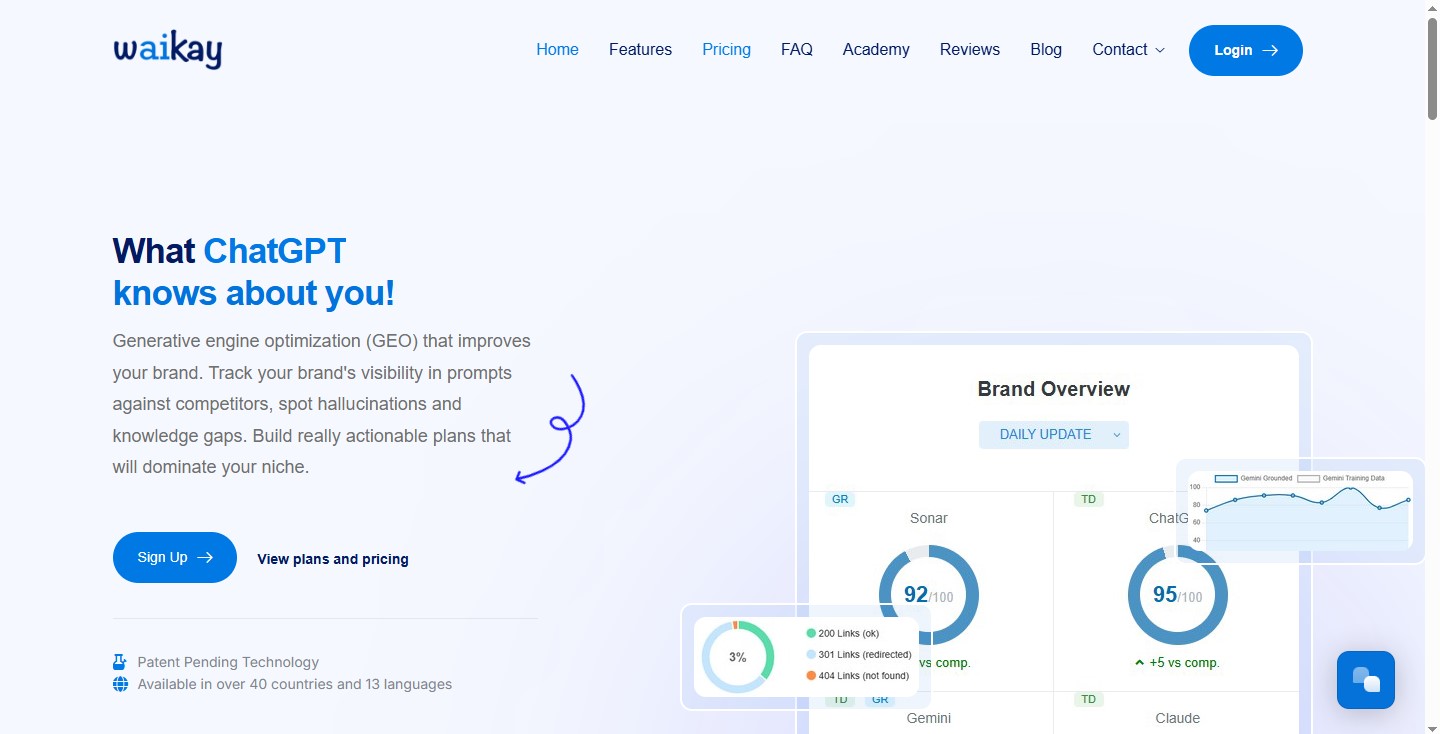
    Waikay.io: AI brand perception monitoring

    Launched on March 19, 2025, Waikay.io represents a pure-play approach to AI brand monitoring. Created by SEO veteran Dixon Jones and InLinks Optimization Ltd, the platform addresses the critical shift from traditional SEO to AI optimization with patent-pending technology for interrogating large language models.

    Waikay.io’s core innovation lies in its entity-based analysis using knowledge graphs rather than simple keyword approaches. The platform provides a comprehensive AI Brand Score out of 100, showing how ChatGPT, Google Gemini, Claude, and Perplexity perceive brands across key topics. Unique features include:

    • Hallucination detection: Flags misinformation about your brand
    • Broken link alerts: Notifies when AI cites incorrect brand URLs
    • “Check, flag, or delete” workflow: Manage AI-generated claims
    • 13 language support: Global brand monitoring
    • Bidirectional topic analysis: See how topics relate to your brand and vice versa

    Pricing remains highly accessible, with a free tier followed by plans at $19.95 (8 reports), $69.95 (30 reports), and $199.95 (90 reports) per month. Early case studies show impressive results, with some brands achieving a 350% AI visibility surge using the platform’s actionable intelligence and optimization recommendations.
    AirOps: Content operations platform (not SEO tracking)

    AirOps is fundamentally different from other tools listed here. It’s an AI-powered content operations platform that includes SEO optimization features rather than a dedicated tracking tool. Founded in 2021 and securing $15.5 million in Series A funding (October 2024), AirOps focuses on workflow automation for content creation and optimization at scale.

    The platform integrates over 30 AI models, including GPT-4, Claude, and Gemini, offering:

    • Drag-and-drop workflow building: No code required
    • Human-in-the-loop approach: Quality control built in
    • Direct CMS integration: Seamless publishing
    • SEO integration: Through Semrush and DataForSEO

    Notable clients like Webflow report 5x faster content refresh and 40% traffic increases, while Toys “R” Us achieved a 90% reduction in product launch time. AirOps targets experienced content teams needing workflow automation rather than dedicated SEO tracking, with enterprise pricing requiring direct sales contact.

    SE Ranking: AI visibility tracking with accurate data

    SE Ranking brings together a powerful SEO platform and specialized AI search tracking tools used by 1M+ SEO professionals.

    • Pricing: $119-$259/month (20% off annual subscription, free trial available)
    • Platform coverage: Google AI Overviews, AI Mode, ChatGPT (Perplexity, Gemini, and others coming soon)
    • Data refresh: Daily for tracked keywords
    • Security: GDPR-compliant, secure servers

    SE Ranking differentiates by converting complex AI data into clear business metrics:

    • Monitor brand mentions, links, and positions in AI search tools
    • Learn which prompts trigger visibility in AI-generated answers
    • See how your AI search visibility stacks up against competitors
    • Track how your presence in AI answers changes over time
    • Intuitive interface with full-scale SEO suite integration
    • Agency-specific features for multi-client management

    Their June 2025 research analyzing Google’s AI Mode behavior across 10,000 keywords revealed only 9.2% URL consistency across repeat queries, highlighting the volatility of AI search results.

    Purpose-built tools:

    • Surfer AI Tracker: Add-on for Surfer users (June 2025), $95-495/month
    • BrandLight: Premium reputation management ($4,000-$15,000/month), emerged in April 2025 with $5.75M funding
    • GrowthBar: AI content optimization ($79/month)
    • Frase: AI brief generation ($15-$115/month)

    Technical Capabilities Comparison

    API and integration excellence

    Leaders in technical integration:

    WriteSonic:

    • Comprehensive REST API documentation
    • 2,500+ app integrations
    • Native Zapier support

    Scrunch AI:

    • Enterprise-grade APIs
    • Custom integration support
    • Cloudflare bot tracking

    Integration gaps:

    • Most tools lack data warehouse connections
    • Only seoClarity offers direct BigQuery/Snowflake integration
    • Custom development often required for enterprise needs

    Security and compliance landscape

    Enterprise-ready platforms:

    • SOC 2 Type II: Scrunch AI, WriteSonic, Profound
    • HIPAA compliant: WriteSonic only
    • GDPR certified: Peec AI, WriteSonic

    Data update frequency

    Refresh rates significantly impact use cases:

    Update Frequency Platforms Best For
    Real-time/Daily WriteSonic, Peec AI, RankScale Crisis management, rapid response
    Every 3 days Scrunch AI Enterprise accuracy requirements
    Weekly Otterly AI, Surfer AI Tracker Strategic planning, reporting
    Custom RankScale Flexible needs

    Review Authenticity: Separating Hands-On Experience From Desk Research

    Our research revealed that most published reviews appear to be desk research rather than hands-on testing, creating evaluation challenges.

    Reliable sources with verified usage:

    Red flags for surface-level reviews:

    • Lack of specific pricing details
    • No mention of implementation challenges
    • Missing discussion of limitations
    • Generic “Top X Tools” format without depth

    Strategic Recommendations by Organization Type

    For large enterprises (1000+ employees)

    Primary recommendation: Scrunch AI

    • Budget $300-$1,000/month for comprehensive features
    • SOC 2 compliance meets security requirements
    • Dedicated account management
    • Cloudflare integration for bot traffic insights

    Alternative: Profound (if you can gain access)

    • Premium features for Fortune 500 needs
    • Conversation Explorer for search volume data
    • Multi-language support

    For mid-market companies (100-1000 employees)

    Best balance: Peec AI

    • Rapid ARR growth validates effectiveness
    • €89-499/month pricing scales with needs
    • Multi-language capabilities for expansion
    • Strong client testimonials

    Integration play: Otterly AI

    • Semrush integration leverages existing tools
    • $29-489/month flexible pricing
    • 3,000+ customers validate approach

    For small businesses and agencies

    Maximum value: WriteSonic

    • $49/month entry point
    • Combines tracking with content creation
    • 10+ million users prove accessibility
    • End-to-end workflow optimization

    Budget option: RankScale

    • $20/month lowest price point
    • Professional features at starter pricing
    • Good for testing AI SEO capabilities

    For specific use cases

    Use Case Recommended Tool Why
    Brand reputation BrandLight Comprehensive monitoring at enterprise scale
    Content teams Surfer AI Tracker Integrates with existing workflows
    European companies Peec AI GDPR compliance, EU focus
    Technical analysis RankScale Granular data, citation tracking
    Conversion focus xFunnel Buying journey optimization

    Additional Resources and Industry Analysis

    Essential reading:

    Market analysis:

    Newsletter:

    Frequently Asked Questions

    What is the most affordable AI SEO tracking option?

    Among purpose-built tools, RankScale stands out for affordability, with plans starting around $20/month on a credit-based model. This structure allows teams to control costs while experimenting with AI visibility tracking. Entry-level tiers from platforms like WriteSonic GEO and Waikay.io also offer relatively low monthly commitments.

    Which AI SEO tools are best for enterprises?

    For enterprises, Scrunch AI and Profound are strong options. Scrunch AI offers features such as SOC 2 Type II compliance, SSO integration, and an Agent Experience Platform (AXP) aimed at large organizations. Profound focuses on multi-country, multi-language AI visibility and offers Conversation Explorer for AI answer share-of-voice, along with enterprise-grade reporting and security.

    How often do AI SEO tracking tools update their data?

    Refresh rates vary significantly. Tools like WriteSonic GEO and Peec AI emphasize near real-time tracking, Scrunch AI typically refreshes data every three days, and platforms such as Otterly AI and Advanced Web Ranking often update on weekly cycles. SE Ranking offers daily updates for tracked keywords.

    Do I need a separate tool for AI SEO tracking if I already use an SEO platform?

    Not necessarily, but it often helps. Traditional SEO platforms such as Semrush, Advanced Web Ranking, and SE Ranking have introduced AI search tracking features. However, purpose-built GEO tools like Scrunch AI, Peec AI, and Otterly AI generally offer more detailed AI-specific metrics, platform coverage, and workflows. Many organizations use a combination: traditional SEO suite + dedicated AI visibility tracker.

    Which AI platforms should my brand be monitoring?

    At a minimum, most brands should monitor visibility in ChatGPT, Google AI Overviews, and Perplexity, as these represent large portions of current AI search activity. Depending on geography and audience, it is also prudent to track Google AI Mode, Claude, Gemini, Meta AI, and other emerging answer engines.

    How much does AI SEO tracking typically cost?

    Pricing ranges from around $20/month for entry-level tools like RankScale to $1,000+/month for enterprise GEO platforms such as Scrunch AI or high-touch service offerings like BrandLight. Many mid-market solutions cluster in the $89–$499/month range, with higher tiers for advanced features, higher volumes, or multi-brand usage.

    The Path Forward: Evolution, Not Revolution

    The AI SEO tracking market represents a fundamental shift in search visibility strategy. Key takeaways for success:

    Market momentum is undeniable:

    • $4.97 billion market by 2033 (CAGR of 10.7%)
    • 1 billion AI search users approaching rapidly
    • 25% drop in traditional search predicted by Gartner (2026)
    • 84% of marketers use AI tools for trend identification

    Investment validates the opportunity:

    The substantial funding rounds throughout 2024-2025 demonstrate investor confidence:

    • Profound: $23.5M total ($3.5M seed August 2024 + $20M Series A June 2025)
    • Scrunch AI: $19M total ($4M seed March 2024 + $15M Series A July 2025)
    • AirOps: $15.5M Series A (October 2024)
    • Peec AI: €7M (€1.8M pre-seed April 2025 + €5.2M seed July 2025, led by 20VC)
    • BrandLight: $5.75M Series A (April 2025)
    • WriteSonic: Bootstrapped to 10M+ users

    Tool diversity ensures options for everyone:

    From RankScale’s accessible $20/month entry point to Scrunch AI’s enterprise sophistication at $1,000/month, the market offers solutions for every organization size and need.

    Early adoption provides a competitive advantage:

    Organizations that recognize AI SEO tracking as an essential evolution, not a separate discipline, will maintain visibility as AI-powered search becomes dominant. The window for early-mover advantage is closing rapidly.

    Success requires selecting tools that enhance rather than replace human expertise. By matching platforms to specific needs, technical capabilities, and strategic objectives, brands can navigate the expanding universe of AI-powered search while preparing for whatever comes next in this rapidly evolving landscape.

    Ready to start tracking your AI search visibility? Explore the tools mentioned in this guide and request demos to find your perfect fit. The future of search is AI-powered. Make sure your brand is part of the conversation.

    Need help executing on your GEO/AI SEO strategy? Get in touch. We’re deep in the “cause and effect” and have a tested roadmap for AI search success.

    Acknowledgments: Special thanks to the tool providers who contributed direct insights to this analysis: Chris Andrew (Scrunch AI), Mathias Ptacek (RankScale), Klaus-M. Schremser (Otterly AI), Malte Landwehr (Peec AI), Neri Bluman (xFunnel), Shaun Davidson (ZeroChannel.ai), Frank Vitetta (LLM Scout), Johannes Notheis (RankZero), Trevor Anderson (Rank Prompt), James Berry (LLMrefs), and Pieter Verschueren (Rankshift). Their feedback ensured accuracy and provided a valuable perspective on the rapidly evolving AI SEO tracking landscape.

  • Inside Bing’s New AI Performance Report: What 20,000 Copilot Citations Taught Us

    Inside Bing’s New AI Performance Report: What 20,000 Copilot Citations Taught Us

    Bing launched an AI Performance report inside Webmaster Tools earlier this month. We pulled our data the same day.

    91 days of Copilot citation data. 19,717 total citations across 86 pages. One page accounting for 69% of all of them.

    We’ve been tracking AI search visibility for clients using Scrunch and our AI Grader for months. But this is different. This is Microsoft showing us exactly how often — and why — Copilot pulls our content as a source when generating answers.

    The data is early, imperfect, and worth looking at closely. You can explore the full interactive dashboard or read on for the highlights.

    Summary statistics: 19,717 total Copilot citations, 86 unique pages cited, 5,804 peak citations in a single day, 400+ unique grounding queries

    What the AI Performance Report Shows

    Microsoft released this as a public preview in February 2026. Anyone with a verified site in Bing Webmaster Tools can access it.

    You get three data exports:

    • Daily overview — total citations and number of unique pages cited, by day
    • Page-level stats — which URLs get cited and how often
    • Grounding queries — the retrieval queries that triggered citations

    No API access yet. Fabrice Canel from Microsoft confirmed on X that API support is on their backlog but didn’t give a timeline. For now, it’s CSV exports from the dashboard.

    Our Numbers

    We pulled 91 days of data for searchinfluence.com, covering November 12, 2025 through February 10, 2026.

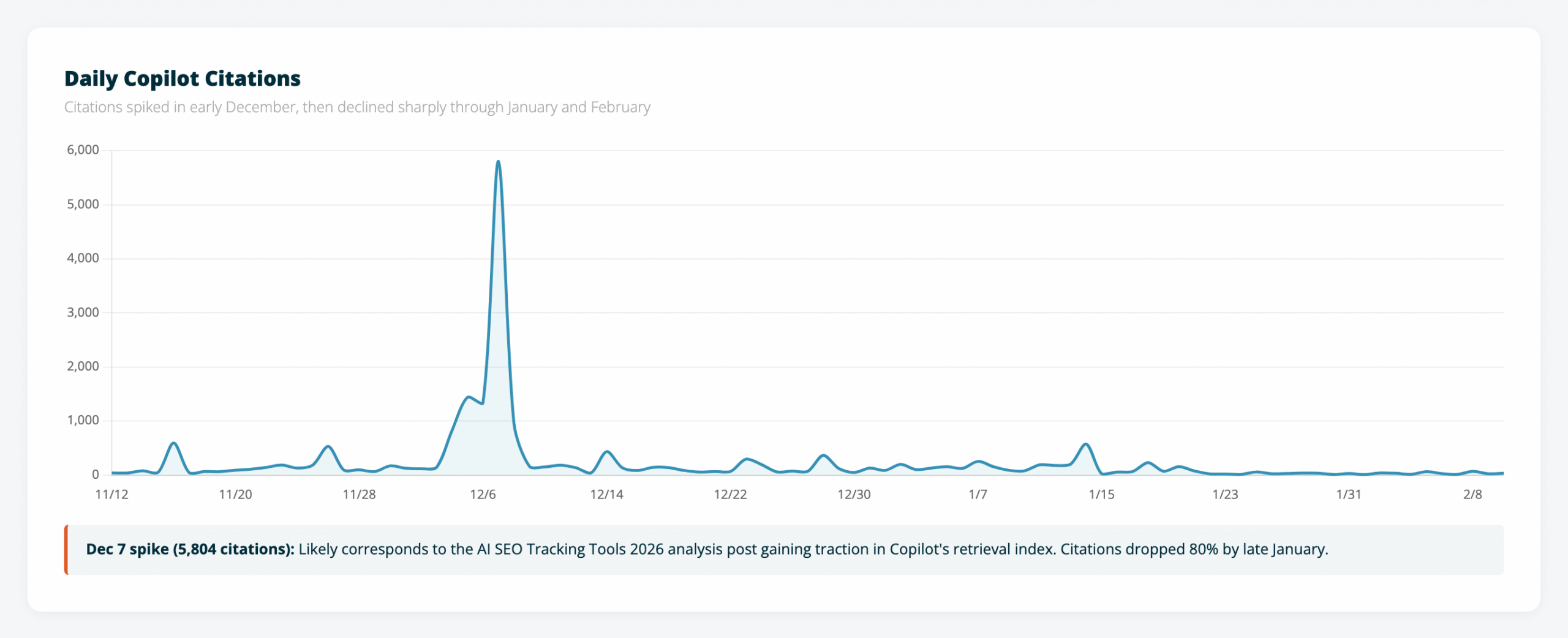
    The timeline tells a simple story: citations spiked hard in early December, then fell off.

    Daily Copilot citations line chart showing a massive spike on December 7 reaching 5,804 citations, with a steady decline through January and February

    December 7 hit 5,804 citations in a single day. That spike almost certainly corresponds to our AI SEO Tracking Tools 2026 analysis gaining traction in Copilot’s retrieval index. By late January, daily citations had dropped below 50.

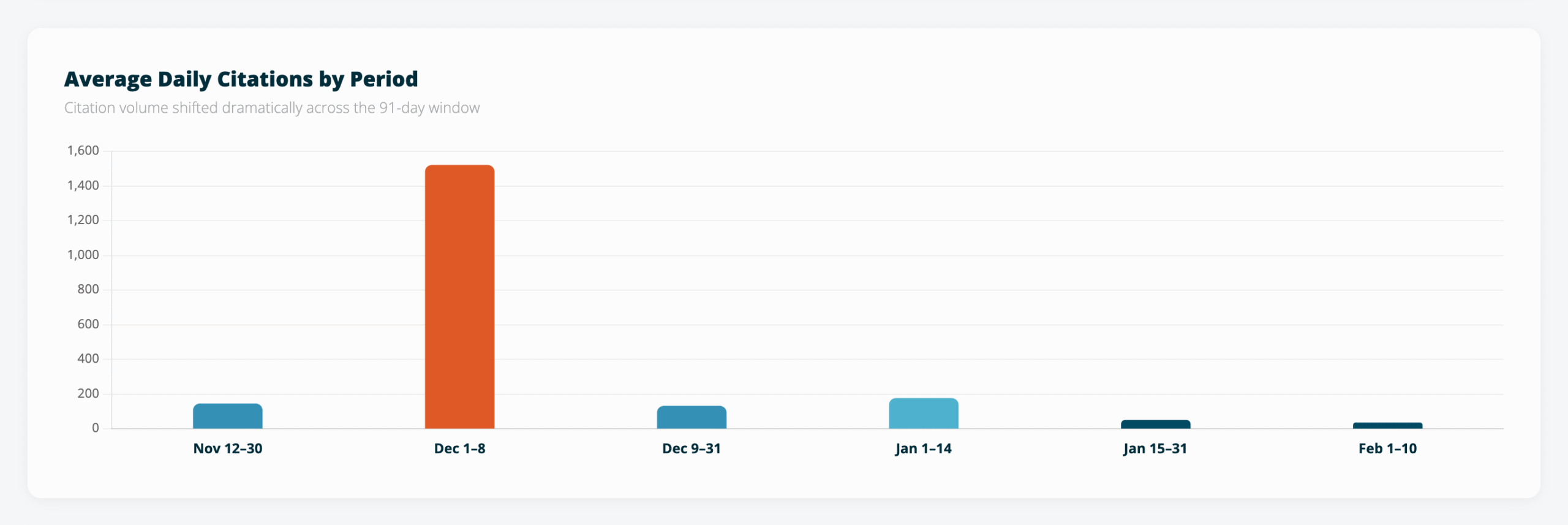
    Average daily citations by period showing Dec 1-8 averaged 1,520, February averaged 34

    The period breakdown makes the decline even clearer. Dec 1-8 averaged 1,520 citations per day. February: 34. That’s a 97% drop in two months.

    A few possible explanations: the analysis was written for a specific moment in time and may be aging out of Copilot’s freshness window, new competing content entered Bing’s index, or Microsoft changed how Copilot’s retrieval weights sources. We’re still looking into it.

    One Page Captures Almost Everything

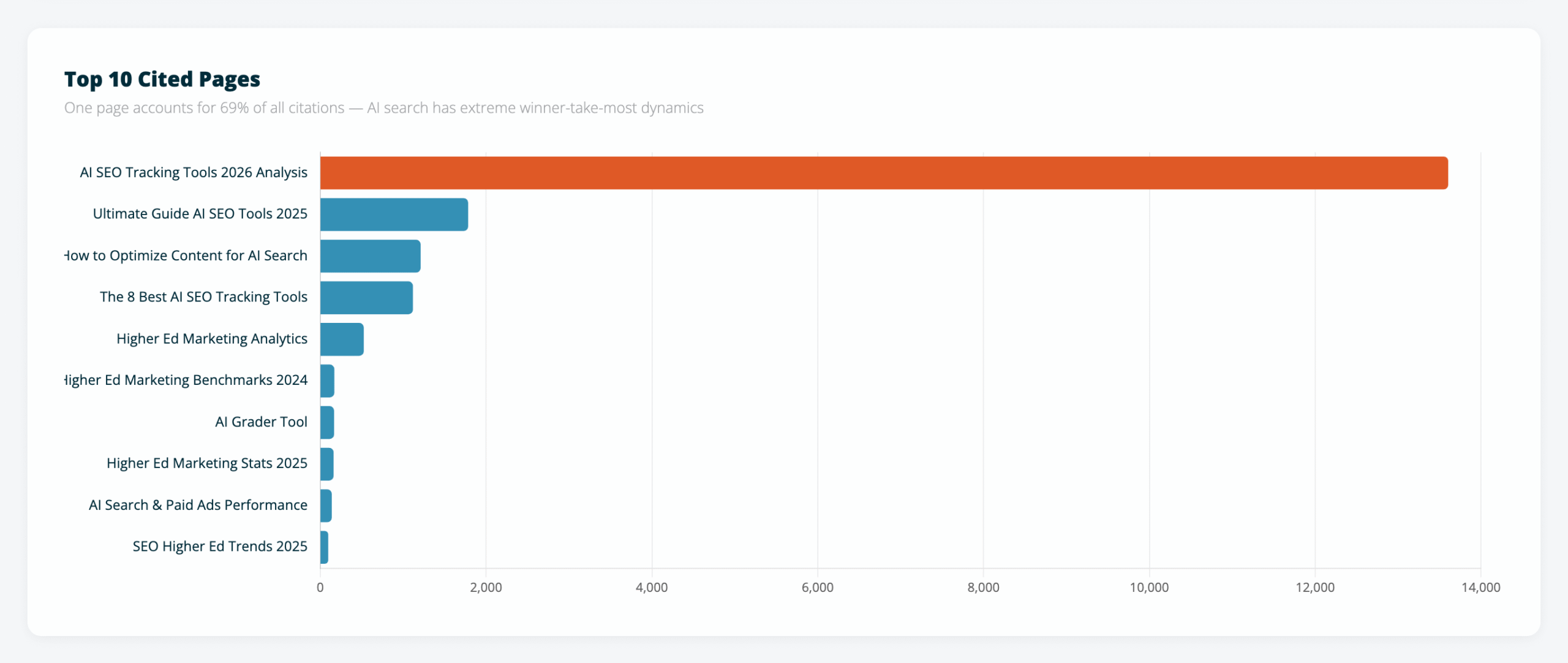
    Of the 86 pages Copilot cited across the full period, one captured 69% of all citations.

    Top 10 cited pages bar chart. AI SEO Tracking Tools 2026 Analysis leads with 13,599 citations

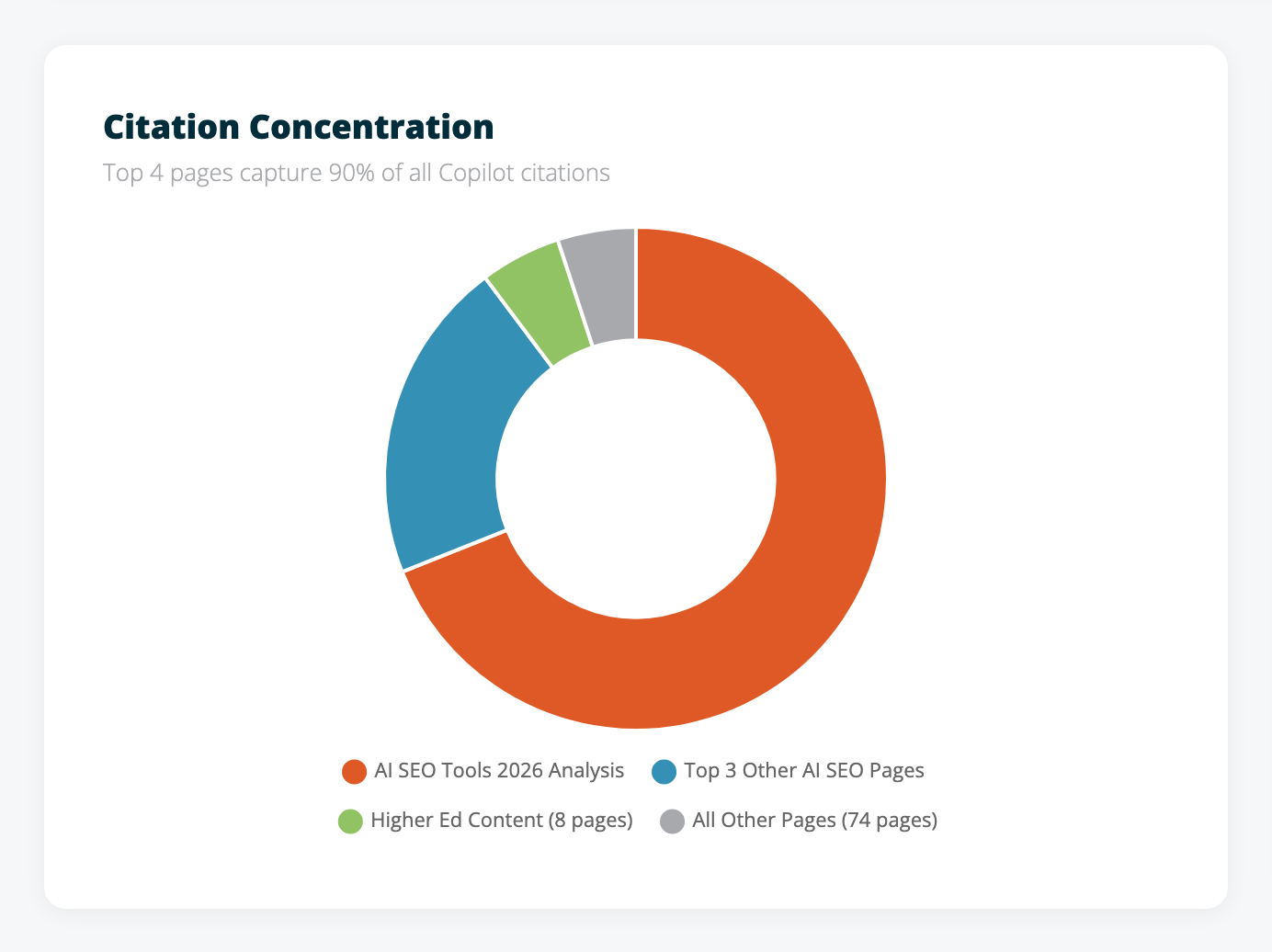
    The top four pages — all AI SEO content — accounted for 90% of total citations. Everything else on the site combined makes up the remaining 10%.

    Citation concentration donut chart showing AI SEO Tools 2026 Analysis at 69%

    That concentration is more extreme than what we see in traditional search. Google distributes traffic across many pages because users click through a list of results. AI search works differently — it picks one or two sources to ground its answer, and those sources absorb almost everything.

    Building deep authority on your strongest topics matters more than spreading thin across many. In AI search, being the second-best resource on a topic might mean getting zero citations.

    The Grounding Queries Are the Most Useful Part

    The third export — grounding queries — is where we found the most actionable data. It also revealed something about how Copilot’s retrieval system works under the hood.

    These queries aren’t what users typed into Copilot. They’re what Copilot’s retrieval system searched for internally when it needed a source to ground its answer.

    Look at these examples. Nobody types queries like this into a search box:

    • “accuracy of AI SEO GEO platforms tracking position in AI shopping guides”
    • “AI search optimization GEO platforms competitor tracking pricing features positioning”
    • “push data to analytics platforms or tag managers from AI search optimization GEO platforms”

    Those read like machine-generated retrieval queries — Copilot decomposing a user’s conversational question into keyword-dense search queries optimized for Bing’s index.

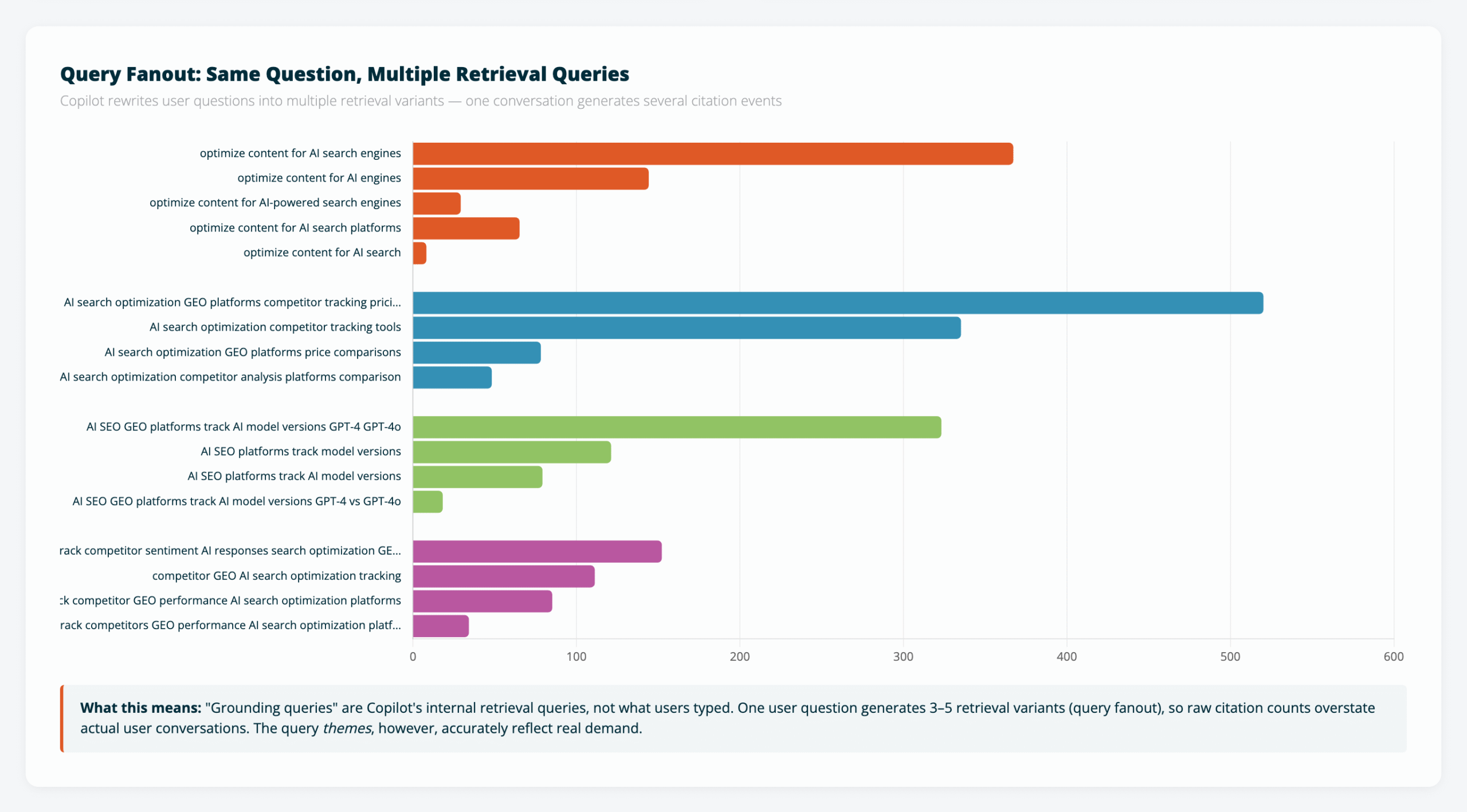
    Then there’s query fanout. Same user question, multiple retrieval variants:

    Query fanout chart showing four clusters of the same question rephrased different ways

    The “optimize content for AI search” cluster shows five variations of the same query. “Track AI model versions” shows four. Same intent, rephrased to catch different documents in the index.

    This matters for interpreting the numbers. One user conversation likely generates 3-5 citation events through this fanout process. So our “19,717 citations” probably represents closer to 4,000-6,000 actual user conversations. The raw numbers are inflated by the retrieval architecture itself.

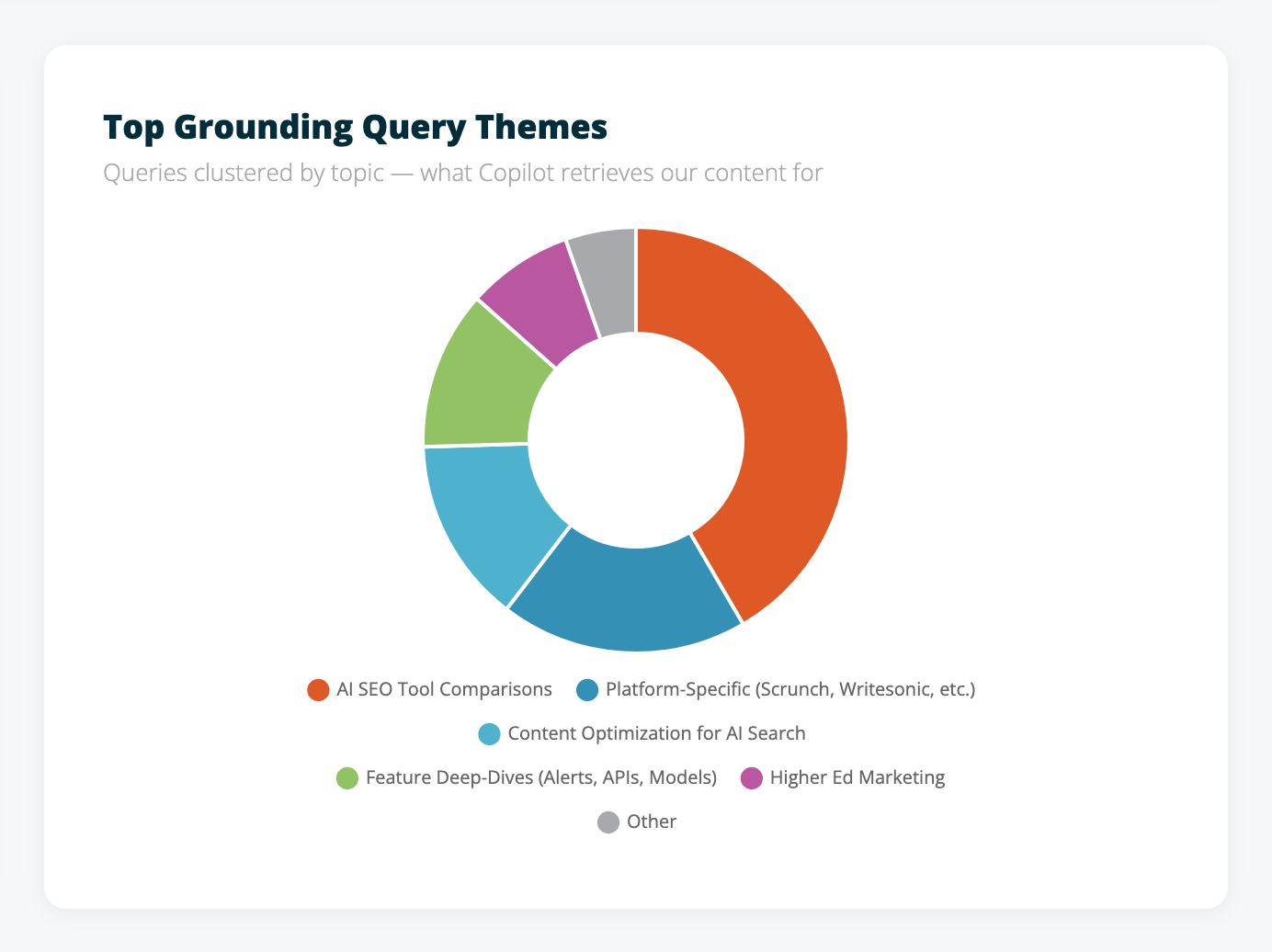
    But the query themes are accurate. Over 400 unique grounding queries, clustered into clear topic areas:

    Grounding query themes donut chart

    AI SEO tool comparisons dominate — pricing, features, platform coverage, specific vendor evaluations. Higher ed marketing shows up as a secondary cluster. Both line up exactly with the content areas where we’ve invested the most over the past year.

    What This Means for Content Strategy

    Four things stood out from the data.

    Structured comparison content earns citations. The page capturing 69% of all citations is a detailed tool-by-tool comparison with pricing, features, trade-offs, and named vendors. AI retrieval systems need specific, structured data to ground their answers. High-level overviews without specifics don’t get pulled in.

    Grounding queries are a new form of keyword research. These aren’t the same queries that show up in Google Search Console. They represent what AI retrieval systems search for when answering user questions — a different target than traditional SEO keywords. If you have access to this data, use it to find content gaps and understand exactly what people are asking AI about your topic areas.

    AI systems cite a narrow set of pages. Even on days with 5,000+ citations, only 15-18 unique pages got referenced. Copilot picks a small number of authoritative sources rather than pulling from a wide set. Depth beats breadth.

    Citation decay is real and fast. Our 97% decline from December to February suggests either content freshness matters in AI retrieval, competitive content displaced us, or both. Publish-and-forget doesn’t work for AI visibility, just like it doesn’t work for traditional SEO. Probably more so.

    What We Can’t See Yet

    An honest look at the gaps, because there are several.

    This is Copilot only. No equivalent data exists yet from ChatGPT, Perplexity, Gemini, or Google AI Overviews. The query themes likely transfer across platforms — people ask similar questions regardless of which AI they use — but citation volumes could look very different elsewhere.

    No click-through data. Citations don’t equal traffic. We don’t know how many users clicked through from a Copilot answer to our site versus just reading the AI-generated response. Microsoft may add this metric later, but right now we can measure AI visibility without measuring engagement.

    No competitive view. We can see our own citations but not what other sites Copilot cited alongside ours for the same queries. Knowing who else gets cited — and for which queries — would make this data significantly more useful.

    The data is still in preview. Microsoft has said more data is coming throughout 2026. What we have now is a starting point.

    What We’re Doing With This

    We’re using the grounding queries to map content gaps. 400+ queries show us exactly what Copilot users are asking about our topic areas. Where our existing content doesn’t fully answer those queries, that’s where we’re focusing next.

    For clients, we’re adding Copilot citation metrics to monthly reports. “Your site was cited X times in AI search this month across Y pages” is a concrete number. Most of the industry is still guessing about AI visibility. This is actual measurement, even if it’s limited to one platform.

    And we’re layering this data alongside what we already track through Scrunch (AI visibility across ChatGPT, Perplexity, and other platforms) and our AI Grader (content readiness scores). Three data sources covering three layers: content quality, AI visibility, and actual citations. Together, they give us the closest thing to a full picture of AI search performance that exists right now.

    Check Your Own Data

    If you want to see your Copilot citation numbers, verify your site in Bing Webmaster Tools and look for the AI Performance section. The report is available for all verified sites.

    Want to see how your content scores for AI search readiness right now? Try the AI Grader — it takes about 30 seconds.

  • Your AI Traffic Has Plateaued. Now What?

    Your AI Traffic Has Plateaued. Now What?

    Key Insights

    • The AI traffic plateau is real and expected. The experimental growth phase is over; we’ve entered an optimization and efficiency phase.
    • AI-referred traffic is smaller but higher quality. Engagement time and intent consistently outperform traditional organic sessions.
    • Visibility ≠ measurability. AI Overviews and AI Mode remain partial black boxes, making citation trends more meaningful than raw rankings.
    • On-site optimization alone isn’t enough anymore. Third-party comparison and aggregator content increasingly shape AI understanding.
    • Winning brands build citation networks, not just pages. Presence across AI-trusted domains now drives long-term visibility.
    • Success metrics must evolve. Citation momentum, brand sentiment in AI responses, and AI-assisted conversions matter more than impressions.

    If you’ve been tracking AI-driven traffic, you’ve probably noticed something: the growth curve is flattening.

    That’s not a bug. It’s a feature.

    The Inflection Point Is Here

    Here’s my working theory: We’ve hit the point where AI presence in search has largely stabilized. The industry has shifted from rapid, experimental rollout to deep infrastructure integration. AI Overviews aren’t new anymore — they’re baked in. The dramatic expansion phase is behind us.

    Unless there are global increases in total search traffic or dramatic expansion of AI features, we should expect:

    • Organic traffic stops declining
    • AI-referred traffic stops growing
    • Everything settles into a new equilibrium

    This isn’t necessarily bad news. It’s just… news. The land grab phase is ending. Now comes the optimization phase.

    The Visibility Gap We Can’t Ignore

    Here’s the piece we don’t have visibility on: AI Overviews and AI Mode as traffic drivers.

    We’re still relying on tracking URL parameters — UTM sources, page anchors, the little breadcrumbs platforms leave behind. But that’s incomplete. Google’s AI Overviews, in particular, represent a black box of citation-driven traffic we can’t fully measure yet.

    What we can see: citations are increasing even as AI Overview rankings plateau. That’s encouraging. It suggests presence is building even when ranking positions stay flat.

    Google Is Refining the AI Overview Experience

    One thing that explains the plateau: Google is getting smarter about when to show AI Overviews.

    According to recent reports, Google is now stripping AI Overviews from searches where users aren’t interacting with them. They’re figuring out what people actually engage with and putting AI Overviews there.

    What this means: You’re not ranking for random, low-intent searches anymore. The pie has shrunk, but it’s a more qualified pie.

    Less visibility in aggregate, but potentially more valuable visibility where it matters.

    The data backs this up. Looking at recent numbers across several higher ed clients, AI-referred traffic consistently shows stronger engagement than traditional organic:

    SEO Engagement Time AI Engagement Time SEO Engagement Rate AI Engagement Rate
    Client A 1:05 3:14 32% 71%
    Client B 2:07 3:17 65% 45%
    Client C 2:27 6:03 67% 46%

    AI traffic isn’t just smaller — it’s more qualified. These users are arriving with higher intent and spending more time with the content.

    What’s Actually Working: Lessons from the Field

    Looking at clients who’ve maintained or grown their AI presence during this plateau period, a few on-site tactics stand out:

    1. Semantic Header Optimization

    Not just “put keywords in H2s” — but structuring headers to reflect how AI models organize information. Think entity relationships, not keyword density.

    2. AI-Friendly Language

    Shift from salesy, marketing-speak to fact-based, outcome-based content. LLMs are trained on informational content. They don’t respond well to “Schedule your free consultation today!”

    What they do respond to: clear statements of fact, specific outcomes, data points.

    3. Structured Data with Linked Entities

    Schema markup matters more than ever, but it’s not just about having schema. It’s about connecting your entities to the broader knowledge graph. Make sure your Course, Organization, and Person entities reference established identifiers.

    4. FAQ Optimization

    Still a consistent win. LLMs love well-structured Q&A content. It’s easy to parse, easy to cite.

    The Comparison Content Problem

    On-site optimization only gets you so far. AI models give weight to what other authoritative sources say about you. If you’re only optimizing your own site, you’re playing with one hand tied behind your back.

    Here’s an uncomfortable truth: AI Overviews are increasingly citing off-site aggregator and list-style content.

    “Top 10 medical billing programs,” “Best car service providers in Chicago,” “Construction management software comparison.”

    This content format is showing up everywhere in AI responses. And for many clients, it’s content they can’t or won’t create.

    Brand compliance teams get nervous about comparing themselves to competitors. Legal wants to vet every claim. By the time approvals come through, the opportunity has moved on.

    The workaround? Third-party placements.

    We’ve had success getting comparison content placed on external sites — parenting blogs, industry directories, and niche publications. It’s not scalable, but it works.

    One example: A comparison article we placed on a regional parenting site now ranks 7th organically for a competitive local service query. Not in the Map Pack, not in the AI Overview, but it’s in the ecosystem. That content is feeding the AI’s understanding of the market.

    The Path Forward: Building Your Citation Network

    So where do we go from here?

    I’m working on building a list of 50-100 article placement opportunities. Sites that:

    1. Accept guest content
    2. Are indexed by Google
    3. Are cited by AI (both Google AI and ChatGPT)

    That third point is key. Being in Google News isn’t enough. The question is: are these domains showing up in AI responses?

    How to verify:

    • DataForSEO has metrics for Google AI and ChatGPT indexing
    • Ahrefs shows indexed pages and citations in their main view
    • Or build your own tool using SERP APIs and LLM APIs (I’m working on this now)

    The hypothesis: if a domain is already cited by AI platforms, content you publish there has a higher chance of feeding those same AI responses.

    Tracking the Right Metrics

    Given the plateau, what should you actually be measuring?

    Stop obsessing over:

    • Prompt-by-prompt rankings (too volatile)
    • Total AI impression counts (too noisy)

    Start focusing on:

    • Citation trends over time (up and to the right)
    • Brand sentiment in AI responses (does the model understand what you do?)
    • Conversion attribution from AI-referred traffic (when trackable)
    • Third-party mentions in AI responses

    All the data is wrong. The question is: how wrong is it? Pick your metrics, track consistently, and look for directional movement.

    What This Means for Your Strategy

    If AI traffic has plateaued, the response isn’t to panic — it’s to shift from growth tactics to optimization tactics.

    Priority 1: Technical Foundation

    AI engines are less patient about crawl than traditional search. If they can’t see your content quickly and cleanly, they won’t cite it.

    • Fix crawlability issues
    • Improve site speed
    • Verify AI bot access in robots.txt

    Priority 2: Content Format

    Structure content for AI ingestion:

    • Clear heading hierarchy
    • FAQ sections
    • Definition lists for key terms
    • Schema markup that connects entities

    Priority 3: Third-Party Footprint

    Build presence on sites that AI already trusts:

    • Industry publications
    • Authoritative directories
    • Comparison content (even if you’re not creating it yourself)

    Priority 4: Measurement Infrastructure

    Set up tracking for AI-referred traffic now, before you need it:

    • Monitor URL parameters (UTM sources, anchors)
    • Track citation trends in AI monitoring tools
    • Document brand mentions in AI responses

    The Monetization Wildcard

    There’s one variable we can’t predict yet: how will future monetization of AI answers affect referral behavior?

    Google hasn’t fully figured out how to make money from AI Overviews. Neither has OpenAI, Perplexity, or anyone else. When they do, the incentive structures will shift.

    A few scenarios to watch:

    Scenario 1: Ads in AI responses. If Google inserts sponsored content into AI Overviews (they’re already testing this), organic citations become less prominent. Your content might still inform the answer, but the click goes to an advertiser.

    Scenario 2: Premium AI tiers. Paid AI modes could behave differently than free ones — deeper research, more citations, different source preferences. Optimization strategies might need to account for which tier your audience uses.

    Scenario 3: Publisher revenue sharing. If platforms start compensating publishers for citations (the way some news partnerships work), the economics of content creation change. Sites that currently can’t justify AI-focused content might suddenly have a business case.

    None of this is certain. But the fact that AI monetization is still being figured out means the referral dynamics we’re seeing today aren’t permanent.

    Build for the current reality, but stay flexible.

    The Bottom Line

    The AI traffic plateau isn’t the end of growth — it’s the end of easy growth.

    The early adopters who were showing up everywhere just by existing have hit their ceiling. What comes next is more intentional: optimizing for how AI models understand and cite your content, building presence on the sites that feed those models, and measuring what actually matters.

    Traditional search isn’t going anywhere. AI is additive, not a replacement. The brands that win are the ones that show up in both.

    What are you seeing with your AI traffic trends? I’m curious whether this plateau is showing up across industries or if it’s specific to certain verticals.

    This post was based on a conversation among the Search Influence SEO team, Will, Cory, and Chuck, with input from Jess, the account manager for a couple of the cited clients.

    The question we were tasked to discuss was how to explain the plateau in AI traffic.

    Ready to learn more about traditional SEO and AI SEO? Contact us to speak with our team of experts.

    Images:
    Unsplash
    Unsplash

  • AI SEO for Higher Education: How to Get Your Institution Recommended by ChatGPT, Perplexity, and AI Search

    AI SEO for Higher Education: How to Get Your Institution Recommended by ChatGPT, Perplexity, and AI Search

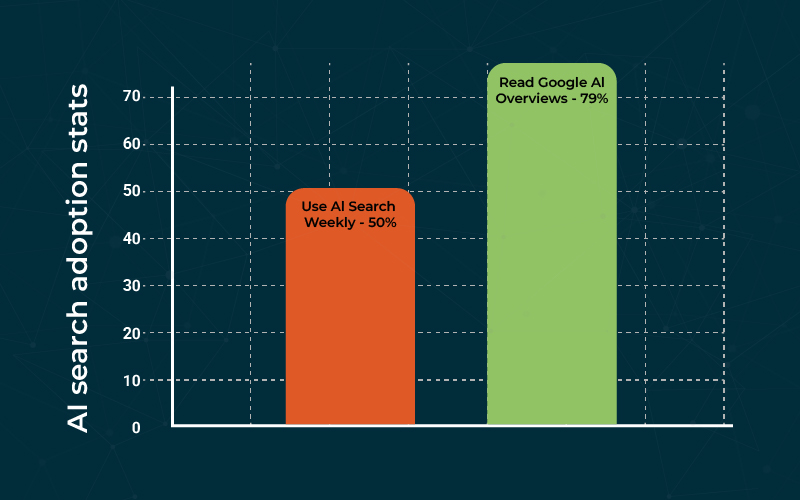
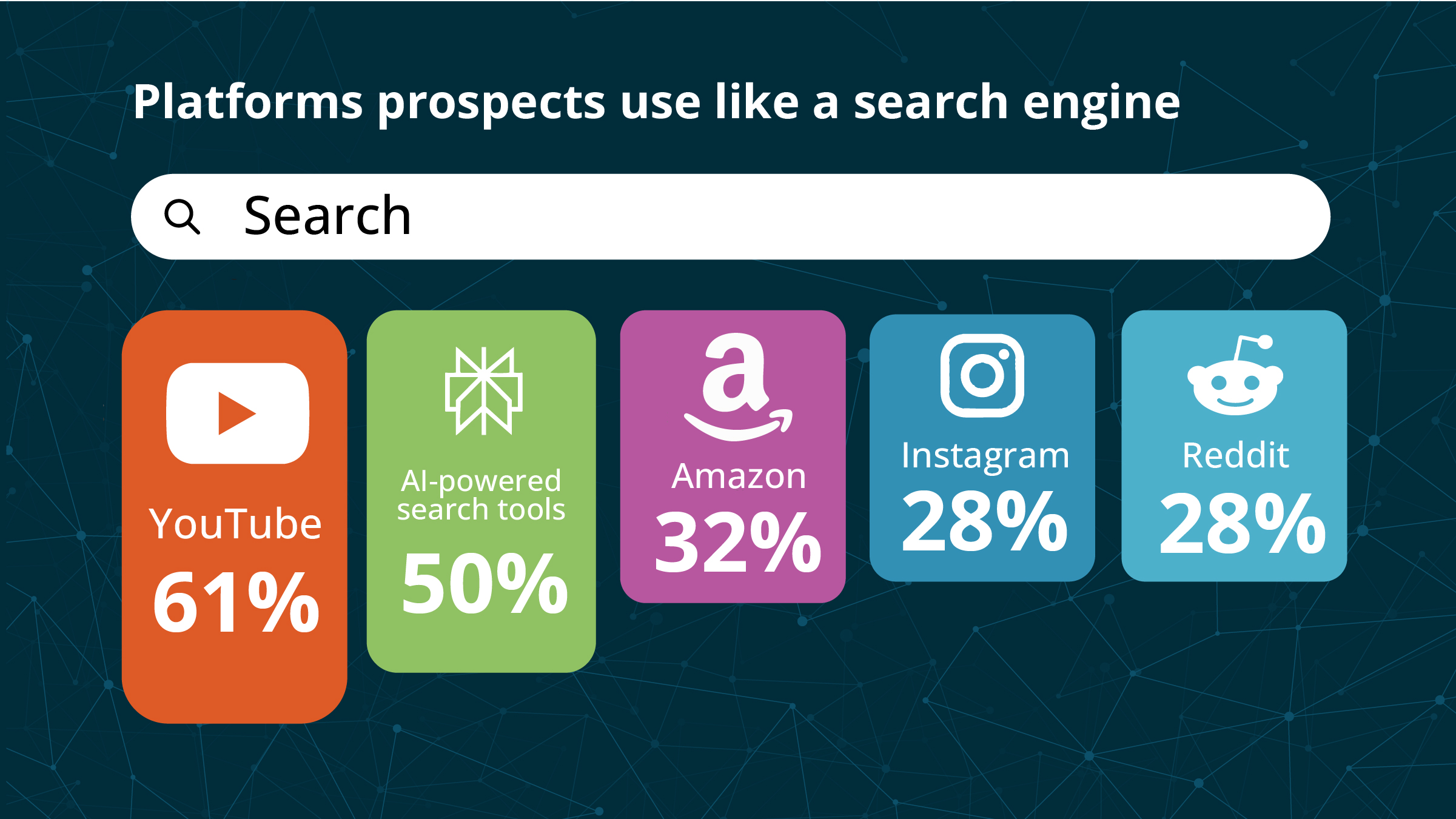
    Half of prospective students now use AI search tools weekly to research programs. If your institution isn’t showing up in ChatGPT, Claude, Perplexity, or Google AI Overviews, you’re invisible to half your audience. In 2026, success is measured by AI citations and brand mentions within generative summaries, not just clicks. This guide covers what actually works for AI search visibility, based on testing, not theory. (Data source: UPCEA/Search Influence 2025 AI Search in Higher Education study)

    The Shift in Student Search You Can’t Ignore

    Half of prospective students now use AI-powered search tools at least weekly, and 79% read Google’s AI Overviews before clicking any result. That’s according to the 2025 AI Search in Higher Education study by UPCEA and Search Influence, which surveyed 760 adults actively researching programs.

    Source: UPCEA/Search Influence AI Search in Higher Education Study, 2025

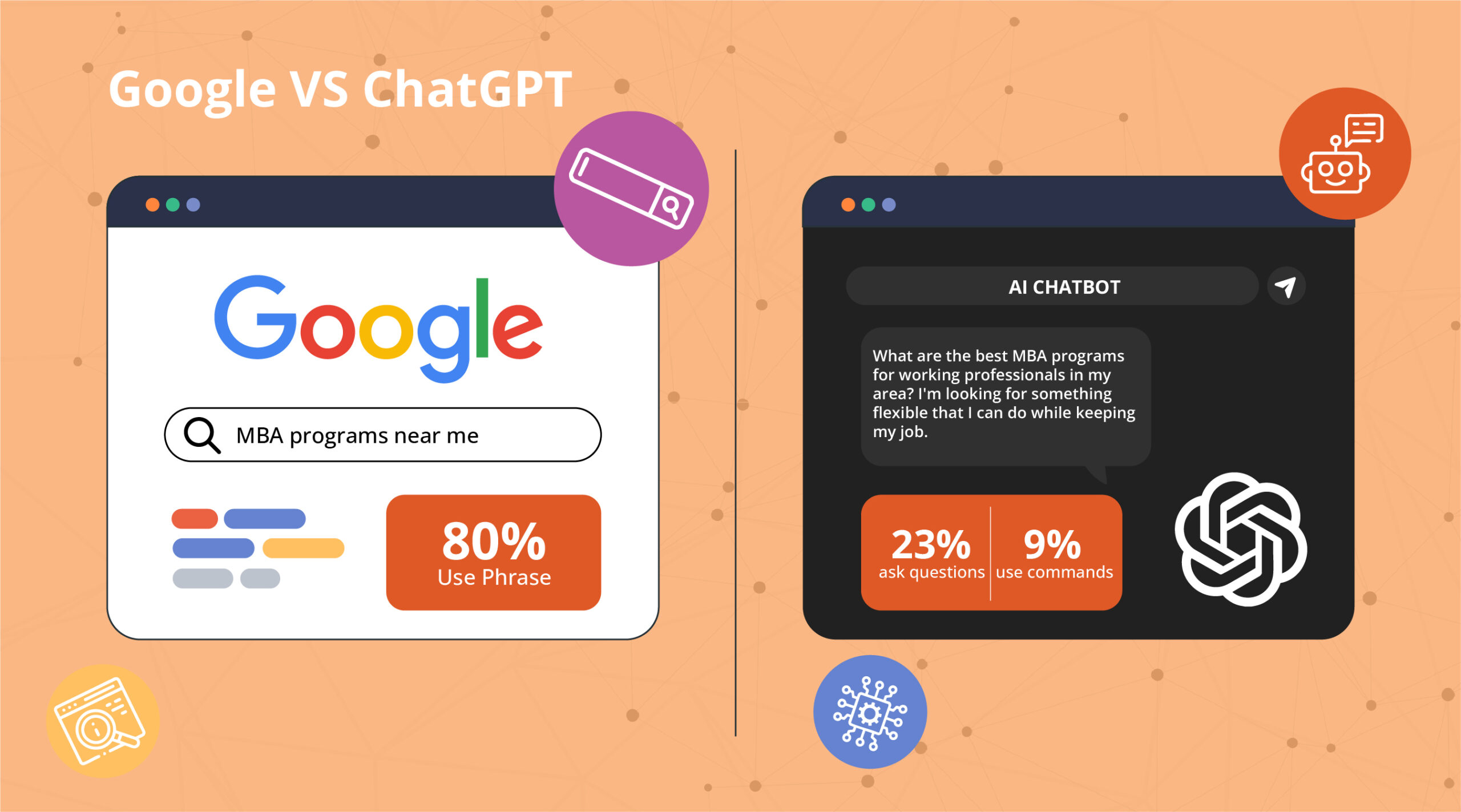
    While your team optimizes for Google rankings, half of your prospective students are also asking ChatGPT:

    • “What are the best nursing programs near me?”
    • “Which universities have strong data science programs?”
    • “Should I go to [Your University] or [Competitor]?”

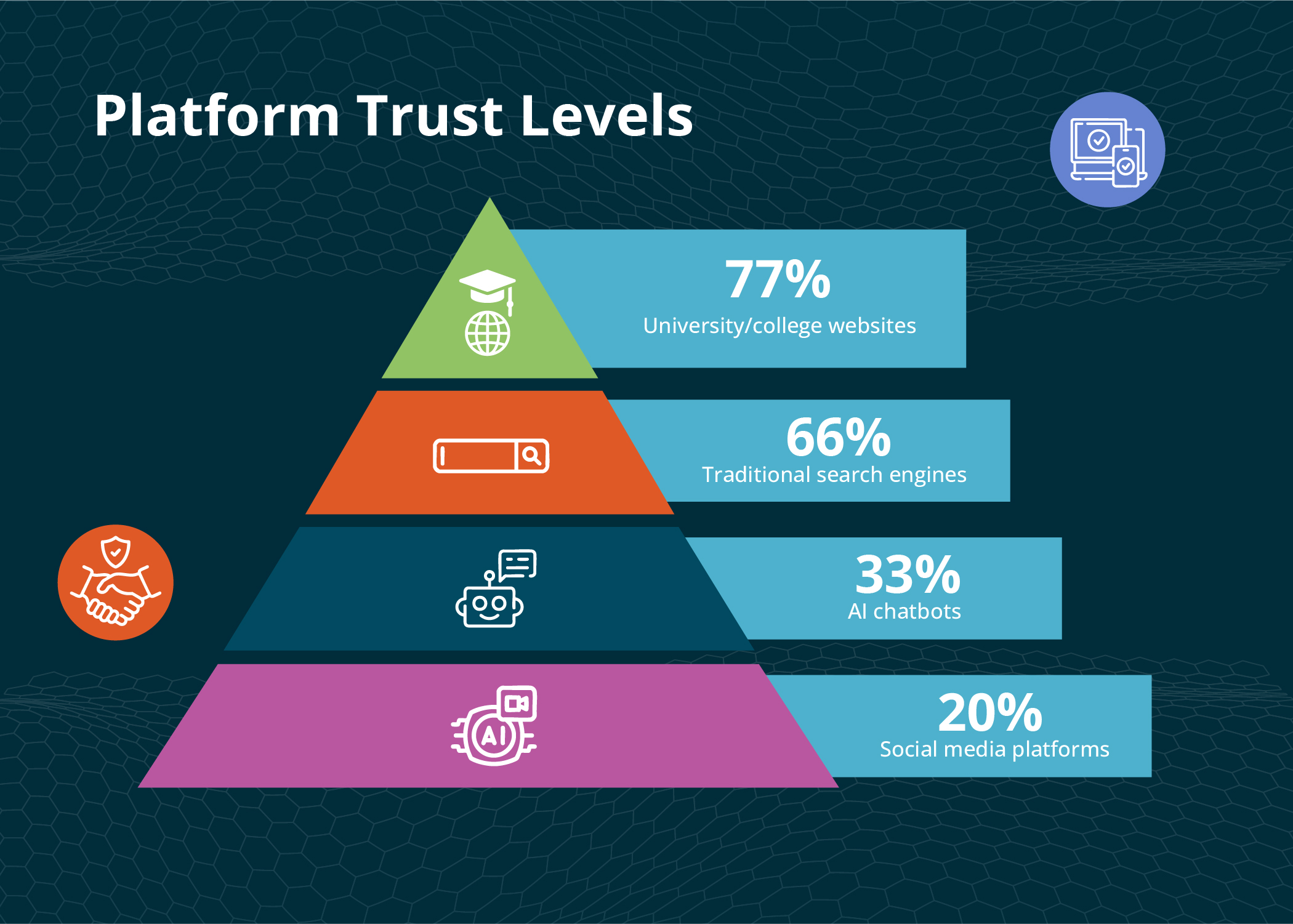
    The uncomfortable truth: traditional SEO rankings don’t automatically translate to AI search results. Your brand is no longer just what you say about yourself, or even what others say about you. It’s what AI believes about you and shares with millions of prospective students.

    I’ve been tracking this space since late 2022. Higher education institutions with strong Google rankings often get completely left out of AI-driven search results. While smaller schools with better-structured content show up consistently.

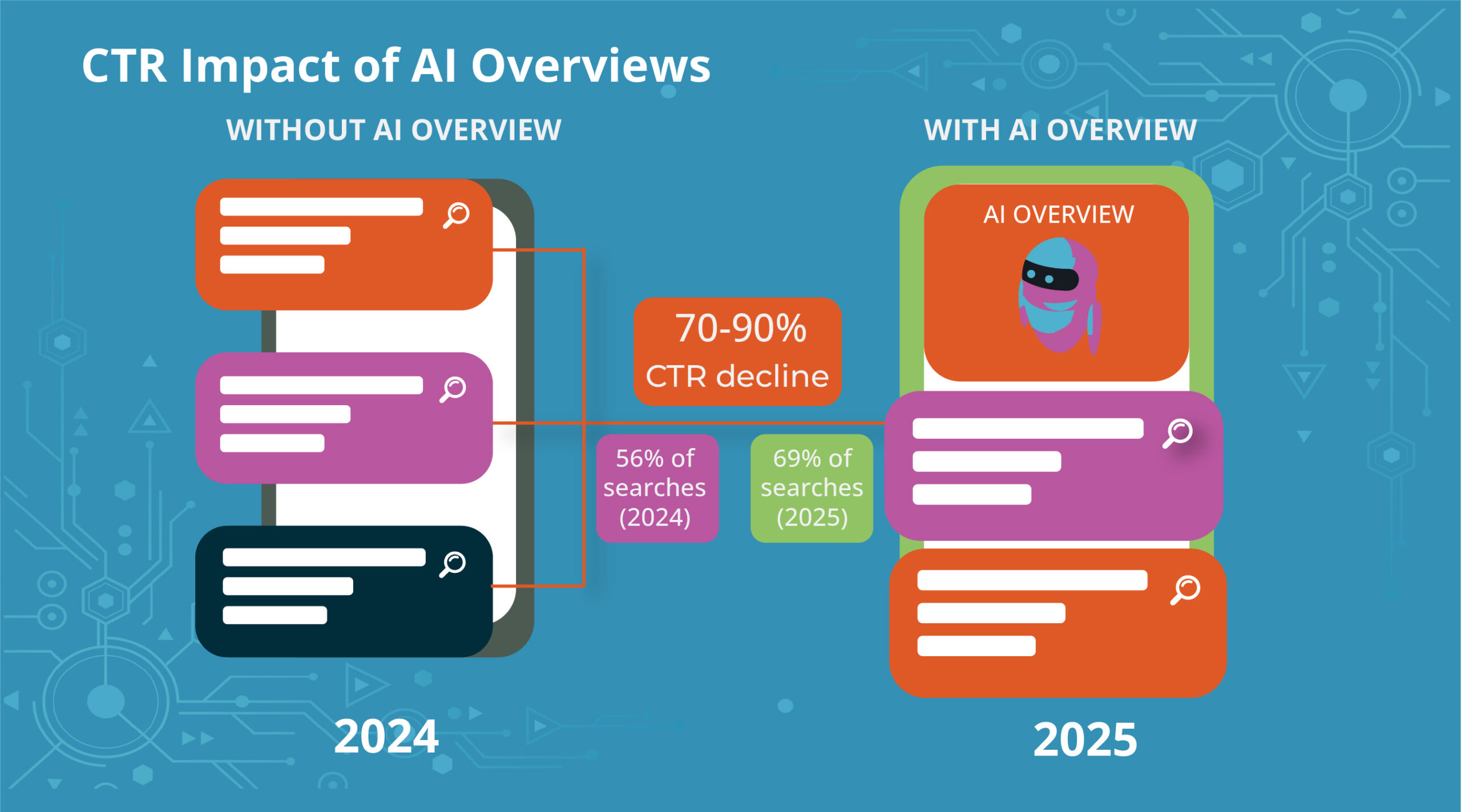
    Traditional search engines still drive most organic traffic. That’s not changing soon. But AI search is a new channel growing fast, and it’s where a third of your prospective students are already researching. The catch: AI-generated search results often summarize information without requiring users to click through, which means even sites with strong search engine optimization can see declining traffic from AI-driven queries.

    The universities that appear in AI-driven search results now will have a head start that the rest can’t easily catch up to.

    What actually works?

    How AI “Decides” What to Recommend

    To make these SEO strategies work, you need to understand how these systems operate. It’s different from traditional search engines.

    Large language models like ChatGPT, Claude, and Perplexity don’t crawl your site in real-time and rank web pages. They operate on different principles:

    1. They draw from training data

    Content that existed when the model was trained becomes part of its “knowledge.” This is why outdated information persists. The model learned it months or years ago.

    1. They reference recent web crawls

    Some models (like Perplexity and ChatGPT with browsing enabled) pull fresh content. But the freshness varies by platform and query type.

    1. They cite authoritative sources

    AI systems prefer content that appears to know what it’s talking about. They’re pattern-matching on what “good sources” look like — structure, depth, and credibility signals.

    1. They match search intent, not just keywords

    AI understands concepts and entities through natural language processing, not keyword matching. You don’t need “best MBA program for working professionals near Chicago” repeated verbatim. You need content that actually covers the topic in depth and with specificity. Traditional search engines match keywords; AI systems match user intent and search intent. This is why traditional keyword research alone isn’t enough anymore. You need to understand what prospective students actually want to know, not just what phrases they type.

    1. They prioritize E-E-A-T signals

    AI systems, like traditional search engines, favor content that demonstrates Expertise, Experience, Authoritativeness, and Trustworthiness. Faculty credentials, institutional accreditation, specific outcomes data, and cited sources all signal that your content is worth recommending. Generic marketing copy doesn’t cut it.

    What this means for you:

    Your content needs to be structured so AI can understand it, not just index it. With Google, you’re trying to rank. With AI, you’re trying to be the source that gets cited when AI generates its response. Different goal, different tactics.

    SEO fundamentals still apply—but the emphasis shifts.

    SEO fundamentals still apply. Sites that rank well in Google tend to get cited more by AI, but it’s not automatic. Backlinks from authoritative sites signal to search engines that your website is trustworthy and valuable, and AI systems pick up on these same credibility signals. You need to optimize for both traditional search and AI platforms.

    One principle remains constant: creating exceptional, high-quality content is the best way to boost SEO performance and satisfy prospective students. Content should prioritize people over bots. If it genuinely helps your target audience, it will perform well with AI systems too.

    Learn how to optimize content for AI search engines with Search Influence.

    Getting Your University Into AI Search Results

    Start with the audit. You can’t fix what you can’t see.

    Step 1: Find Out What AI Currently Says About You

    This takes about 30 minutes, and it’s the most important 30 minutes you’ll spend on AI SEO.

    Open ChatGPT, Claude, and Perplexity. Ask questions like:

    • “Tell me about [Your University]”
    • “What are the best [your program] programs in [your region]?”
    • “Should I attend [Your University]?”
    • “What is [Your University] known for?”
    • “Compare [Your University] to [Competitor]”
    • “What are the admission requirements for [Your University]?”
    • “How much does it cost to attend [Your University]?”

    Document everything in a spreadsheet. For each question, note:

    • What’s accurate?
    • What’s outdated?
    • What’s completely missing?
    • Are competitors mentioned instead of you?
    • Is the information compelling or generic?

    I’ve done this audit for dozens of higher education clients. What I find most often:

    Competitor dominance

    When students ask about programs you offer, competitors show up, and you don’t. This is the most painful finding, but it’s the most actionable.

    Missing differentiators

    AI can describe your university in generic terms, but doesn’t mention what makes you unique. Your $50M new engineering building? Your unique co-op program? Your 95% nursing board pass rate? If AI doesn’t know about it, AI can’t recommend you for it.

    Outdated information

    Programs that no longer exist, old leadership names, incorrect tuition figures, former campus locations. AI models don’t always have up-to-date information, and even when they do, they may have ingested outdated pages from your site.

    Generic descriptions

    AI says you’re “a comprehensive university offering undergraduate and graduate programs in a variety of fields.” That’s true. It’s also useless. Nobody chooses a university based on that description.

    Step 2: Create Content That AI Wants to Cite

    AI systems prefer citing website content that appears authoritative and thorough. They’re trained on high-quality content, so they pattern-match on what those sources look like. Your content creation strategy needs to account for this.

    Create content that answers the specific questions students ask during their research process. That means your content needs to:

    Be structurally parseable

    AI reads differently from humans. Clear heading hierarchies (H2, H3, H4) help AI understand the relationship between concepts. Dense paragraphs of text are harder to parse than structured lists.

    Formats that work well:

    • FAQ sections that mirror natural language questions
    • Definition lists for key terms
    • Comparison tables
    • Bulleted lists with specific data points
    • Step-by-step numbered processes

    Include specific, citable data

    Vague claims get ignored. Specific data gets cited.

    Include:

    • Enrollment numbers (total, by program, by format)
    • Graduation and retention rates
    • Employment outcomes (percentage employed, average salary, top employers)
    • Program rankings and accreditations
    • Tuition costs (total and per credit hour)
    • Financial aid statistics (percentage receiving aid, average package)
    • Student-to-faculty ratios
    • Research funding and grants

    Answer the questions prospective students actually ask

    Look at your website chat logs. Look at your admissions email inbox. Look at your campus visit Q&A sessions. What do prospective students actually want to know? This is better than any keyword research tool for identifying relevant keywords and topics.

    Create structured content that directly answers those questions, and format it so AI can find and cite those answers.

    Create multimedia content

    Creating multimedia content (videos, infographics, virtual tours) enhances engagement and helps students envision themselves on campus. Video testimonials, program overviews, and campus walk-throughs give AI systems additional content to index. YouTube content especially matters; it’s owned by Google and feeds directly into AI training data.

    Same content, restructured for AI visibility.

    Step 3: Make Your Brand “Like Fluoride in the Water”

    You want your brand to be so present across the web that AI just… knows you.

    Think about Kleenex. Or Xerox. Or Google (as a verb). Nobody has to explain what these brands are. AI models have seen so many references across so many contexts that the brand is baked into their understanding.

    Obviously, you can’t become Kleenex overnight. That takes decades. But you can systematically increase your brand’s presence in the sources AI learns from:

    Get mentioned on authoritative sites

    Higher ed publications (Inside Higher Ed, Chronicle of Higher Education, Higher Ed Dive), local and regional news outlets, and industry-specific publications in your strong program areas.

    When journalists write about trends in nursing education, they quote someone. Why not your nursing dean? When publications list “top programs for X,” they source from somewhere. Why not your outcomes data?

    Publish research that others cite

    Original research gets cited. Surveys, studies, white papers, data analyses. Your institutional research office has data that would be valuable to others. Package it and publish it.

    Maintain active, consistent social presence

    AI models train on social media content. LinkedIn, Twitter/X, YouTube. Your consistent presence builds brand recognition in the training data. Video SEO matters here too; YouTube is owned by Google and feeds into AI training data. Optimizing content for YouTube (with strong titles, descriptions, and transcripts) improves visibility across both traditional search and AI platforms.

    Show up in industry rankings and lists

    Rankings aren’t just for prospective students. They’re for AI training data. When AI learns “best X programs,” it learns from published lists.

    Create content that other institutions reference

    Thought leadership content that other universities link to and cite. Best practices guides. Innovative program design. This creates a citation network that AI follows.

    AI learns about your brand from everywhere—not just your website.

    The goal isn’t any single mention. The goal is to be so present across the web that when AI thinks about your program area, your institution naturally comes to mind. Like fluoride in the water, invisible but everywhere.

    Step 4: Don’t Neglect Local SEO for Regional Student Search

    Local SEO is critical for attracting regional students, especially for institutions with multiple campus locations. For higher education institutions serving regional markets, local SEO directly impacts AI search results and recommendations.

    When a prospective student asks, “What are the best nursing programs near me?” or uses voice search for “colleges in [city],” AI pulls from local signals. These natural language queries are increasingly common as generative AI tools encourage students to ask more conversational questions.

    What to do:

    • Claim and optimize Google Business Profile for each campus location
    • Ensure NAP (name, address, phone) consistency across all web pages
    • Create location-specific content for each campus
    • Incorporate keywords naturally for regional search intent (“nursing program in [city],” “[state] MBA programs”)
    • Encourage and respond to Google reviews. They’re credibility signals for both traditional search engines and AI
    • Build citations in local directories and regional publications

    Local SEO isn’t separate from AI SEO; it feeds it. AI systems learn about your regional presence from these same signals. Higher ed marketers often overlook local SEO because they’re focused on national rankings, but for most higher education institutions, regional search visibility is where enrollment actually happens.

    Optimizing Academic Program Pages for AI-Driven Search Results

    Program pages are where enrollment happens, or doesn’t. When a student asks ChatGPT, “What are the best MBA programs for working professionals?”, AI scans the web, evaluates sources, and generates an answer. Your program page either contains everything AI needs to recommend you, or it doesn’t. There’s no second impression.

    Institutions should create dedicated landing pages for each academic program with detailed information. Most university program pages fail this test. They’re designed for humans who already know about the institution and are browsing to learn more. AI doesn’t browse. It extracts, evaluates, and cites, or moves on.

    Students now expect instant, personalized answers to their questions during their college search. Your program pages need to deliver.

    The Anatomy of an AI-Optimized Program Page

    1. Clear Program Identity (Above the Fold)

    Start with unambiguous program identification:

    • Exact degree name and type (BS, BA, MS, MBA, MEd, PhD, etc.)
    • Program format (on-campus, fully online, hybrid, evening/weekend)
    • Duration (credit hours required, typical time to completion)
    • Accreditation status and accrediting bodies
    • Department and college affiliation

    Why this matters: AI needs to correctly categorize your program. If your page title says “Business Administration” but doesn’t specify MBA vs. undergraduate, AI may miscategorize you.

    2. Outcomes Data (Make It Prominent)

    Universities are often reluctant to publish employment data — worried about liability, or not confident in the numbers. But students make decisions based on outcomes, and AI cites specifics.

    Include:

    • Employment rate within 6 months and 1 year of graduation
    • Average and median starting salary
    • Salary range (10th to 90th percentile)
    • Top employers hiring your graduates (named companies)
    • Job titles graduates hold
    • Career paths and advancement trajectories
    • Professional licensure/certification pass rates (nursing boards, CPA exam, bar exam, etc.)
    • Graduate school acceptance rates (for undergrad programs)

    If you have strong outcomes, show them. If you don’t have this data, start collecting it.

    3. Curriculum Overview (Structured for Scannability)

    Don’t just link to a PDF catalog. Present curriculum information directly on the page:

    • Core/required courses with brief descriptions
    • Elective options and specialization tracks
    • Unique program features (capstone projects, internship requirements, study abroad, lab experiences)
    • Sample course sequence or suggested schedule
    • Total credit hours and breakdown by category

    Format this as a table or structured list, not paragraphs.

    4. Admission Requirements (Be Specific)

    Prospective students ask AI-specific questions: “What GPA do I need for X program?” Make sure AI can find the answer on your page.

    Include:

    • Minimum GPA requirements (and competitive/average admitted GPA)
    • Test score requirements or policies (GRE, GMAT, test-optional status)
    • Prerequisite courses
    • Required application materials
    • Application deadlines (early, regular, rolling)
    • International student requirements

    5. Cost and Financial Information (Don’t Hide It)

    Tuition is one of the top questions students ask. AI will answer it. The question is whether AI gets the answer from your site or somewhere else.

    Include:

    • Total program cost
    • Per-credit-hour rate
    • Fee breakdowns
    • Scholarship opportunities specific to this program
    • Graduate assistantship availability
    • Employer tuition reimbursement partnerships
    • Financial aid statistics for this program
    • ROI calculations, if available

    6. FAQ Section (Mirror How Students Ask)

    FAQ sections structured as question-and-answer pairs are exactly what AI systems are looking for. Easy to implement, high impact.

    Address questions students actually ask:

    • “Can I complete this program while working full-time?”
    • “What’s the difference between the online and on-campus versions?”
    • “Is this program accredited?”
    • “What kind of support services are available for online students?”
    • “Can I transfer credits into this program?”
    • “What technology/software will I need?”
    • “Are there networking or career services?”

    Use the exact phrasing students use. That’s what they’ll type into ChatGPT.

    7. Student Testimonials and Success Stories

    Real stories from real students are citation gold. AI systems recognize authentic student testimonials as credibility signals, and prospective students find them compelling. Student testimonials provide the social proof that influences user behavior during the decision-making process.

    Include named testimonials (with permission), specific outcomes, and career trajectories. “Sarah graduated in 2023 and now works as a data analyst at IBM” is more citable than “Our graduates go on to great careers.”

    Video testimonials work even better. They’re harder to fake and more engaging. If you have them, embed them on the page with transcripts for AI to parse. This combines video SEO with powerful conversion content.

    Common Mistakes I See

    Mistake 1: Content buried in PDFs

    AI can’t easily parse PDF content. If your program details live in a downloadable brochure or catalog PDF, they might as well not exist for AI purposes. Extract that content and put it on the page.

    Mistake 2: Fragmented information across multiple pages

    If students (or AI) have to click through five pages to understand your program (overview, curriculum, admissions, financial aid, outcomes), AI won’t piece it together. Consolidate essential information into a single page, with links to deep dives.

    Mistake 3: Missing or hidden outcomes data

    If you have good outcomes, show them prominently. If you have mediocre outcomes, at least show the data you’re proud of. Something specific beats nothing every time.

    Mistake 4: Generic marketing copy

    “Prepare for success in a dynamic global economy” means nothing. Literally nothing. It’s filler text that adds no information.

    Compared to: “92% of graduates employed in their field within 6 months, with an average starting salary of $68,000. Top employers include Mayo Clinic, Cleveland Clinic, and Johns Hopkins.”

    Which one would you cite? Which one would AI cite?

    Mistake 5: No FAQ section

    If your program page doesn’t have an FAQ section, you’re leaving AI citations on the table. This is the easiest win. Just add it.

    Structured Data and Schema for Higher Education

    This section gets technical. Schema markup is how you explicitly tell AI what your content means — metadata that machines read. It’s becoming increasingly valuable for AI visibility.

    Why Schema Matters for AI

    When AI systems encounter structured data, they don’t have to guess what your content means. You’re telling them directly:

    • This is an educational organization
    • This is a course/program
    • This is an FAQ
    • This is an event
    • These are the properties (name, cost, duration, requirements)

    Think of it as the difference between handing someone a box of puzzle pieces versus handing them the completed puzzle. Same information, wildly different usability.

    AI systems can extract information from unstructured text. But structured data is unambiguous. It removes interpretation. It’s machine-readable by design.

    Schema removes ambiguity

    Schema Types That Matter for Higher Ed

    If you’re not technical, share this section with your developer. If you are technical, here are the four schema types to prioritize:

    EducationalOrganization Schema

    Your foundation tells AI who you are at the institutional level.

    This is especially important for entity disambiguation. If your institution shares a name with another (e.g., multiple “Trinity” universities, multiple “State” schools), schema helps AI understand which one you are. The same applies to Google’s Knowledge Graph. That information panel that appears when someone searches your name. Claim and optimize your Knowledge Panel through Google’s verification process. When AI systems reference knowledge graphs, they’re pulling from that same entity data.

    {

    “@type”: “EducationalOrganization”,

    “name”: “University Name”,

    “alternateName”: “Common Abbreviation”,

    “description”: “Full description of the institution”,

    “url”: “https://www.university.edu”,

    “logo”: “https://www.university.edu/logo.png”,

    “address”: {

    “@type”: “PostalAddress”,

    “streetAddress”: “123 Campus Drive”,

    “addressLocality”: “City”,

    “addressRegion”: “State”,

    “postalCode”: “12345”

    },

    “telephone”: “+1-555-123-4567”,

    “foundingDate”: “1890”,

    “accreditedBy”: [

    {

    “@type”: “Organization”,

    “name”: “Higher Learning Commission”

    }

    ]

    }

    Course Schema

    For each academic program. This is where the detail matters.

    {

    “@type”: “Course”,

    “name”: “Bachelor of Science in Nursing”,

    “description”: “Four-year nursing program preparing students for RN licensure”,

    “provider”: {

    “@type”: “EducationalOrganization”,

    “name”: “University Name”

    },

    “hasCourseInstance”: [

    {

    “@type”: “CourseInstance”,

    “courseMode”: “onsite”,

    “courseWorkload”: “PT120H”

    },

    {

    “@type”: “CourseInstance”,

    “courseMode”: “online”

    }

    ],

    “occupationalCredentialAwarded”: “BSN”,

    “numberOfCredits”: 120,

    “educationalLevel”: “Bachelor’s Degree”,

    “timeRequired”: “P4Y”

    }

    FAQPage Schema

    For those FAQ sections. This makes your Q&A pairs directly extractable.

    {

    “@type”: “FAQPage”,

    “mainEntity”: [

    {

    “@type”: “Question”,

    “name”: “Can I complete this program while working full-time?”,

    “acceptedAnswer”: {

    “@type”: “Answer”,

    “text”: “Yes, our evening and weekend format is designed for working professionals…”

    }

    }

    ]

    }

    Event Schema

    For open houses, information sessions, and application deadlines.

    {

    “@type”: “Event”,

    “name”: “MBA Information Session”,

    “startDate”: “2025-03-15T18:00”,

    “endDate”: “2025-03-15T19:30”,

    “location”: {

    “@type”: “Place”,

    “name”: “Business School Building, Room 100”

    },

    “eventAttendanceMode”: “https://schema.org/MixedEventAttendanceMode”,

    “organizer”: {

    “@type”: “EducationalOrganization”,

    “name”: “University Name”

    }

    }

    Implementation Priority

    If you’re starting from zero, here’s the order:

    1. EducationalOrganization schema on your homepage — Define who you are
    2. FAQPage schema on key program and admission pages — Quick win, high impact
    3. Course schema on each academic program page — The biggest lift, but most valuable
    4. Event schema on recruitment event pages — Good for search and AI

    Full disclosure: implementing this well usually requires developer resources. Your marketing team can specify what needs to be marked up, but implementation typically needs IT involvement. It’s not a quick win, but it compounds over time. Once it’s in place, it keeps working.

    Technical Foundations for AI Visibility

    Technical SEO and Site Performance Still Matter

    Technical SEO is essential for maintaining a website’s backend health and ensuring it can be identified by search engines. Site speed, mobile responsiveness, crawlability, and security (HTTPS) still matter. AI systems may not rank web pages the way traditional search engines do, but they do learn from sites that meet basic technical standards. Search engine optimization fundamentals haven’t gone away; they’re table stakes for any higher education SEO strategy.

    If your higher ed website is slow, broken on mobile, or has crawl errors, fix that first. No amount of schema markup or AI-friendly content will overcome a site that doesn’t load. Run technical SEO audits before diving into the AI-specific optimizations. AI tools can automate tasks like competitor analysis, backlink monitoring, and technical SEO audits. Tools like Screaming Frog, Sitebulb, or AI-powered platforms like Semrush can streamline this analysis.

    Managing AI Crawlers

    AI systems like ChatGPT, Claude, and Perplexity use their own crawlers (GPTBot, ClaudeBot, PerplexityBot) to index content. You can control their access through robots.txt. Same as traditional search engines.

    Most universities should allow these crawlers. If AI can’t access your content, AI can’t recommend you. But if you have gated content or specific sections you want to exclude, you can block specific bots:

    User-agent: GPTBot

    Disallow: /internal-documents/

    User-agent: ClaudeBot

    Disallow: /internal-documents/

    There’s also a newer standard emerging: llms.txt. This file (placed at your domain root, like robots.txt) tells AI systems how to interpret your site—what’s most important, how content relates, and what context matters. It’s not universally adopted yet, but worth watching as AI crawling matures.

    Using AI to Support Student Recruitment

    Everything above is about getting *found* by AI. But AI can also be a tool you use directly in recruitment. This section is optional reading (the core work is in the previous sections), but worth considering if you’re building out your digital strategy.

    AI Chatbots for Enrollment

    A lot of colleges and universities are implementing AI chatbots now. Some are doing it well. Most are not.

    My take:

    Do:

    • Use chatbots for high-volume, repetitive questions (office hours, application deadlines, document requirements, program listings)
    • Train them on your actual FAQ data — real questions from real students
    • Have clear handoff protocols to human staff for complex questions
    • Track what questions come up most often — this is gold for content strategy
    • Set appropriate expectations (tell users they’re talking to a bot)
    • Test extensively before deployment

    Don’t:

    • Let chatbots handle sensitive conversations (financial hardship, disability accommodations, academic concerns, mental health)
    • Deploy without thorough testing across edge cases
    • Expect them to replace human connection — they augment, not replace
    • Use generic chatbot responses — customize for your institution
    • Forget to update the knowledge base as information changes

    An important distinction: The 50% of students using AI search tools weekly? They’re not looking to talk to a bot on your website. They’re using ChatGPT and Google AI Overviews because they perceive these as unbiased, aggregated answers.

    Your institutional chatbot serves a different purpose. Convenience and availability, not research.

    A student at 11 pm who wants to know if their transcript was received?

    Chatbot territory.

    A student trying to decide between your program and a competitor?

    That needs a human.

    AI-Powered Personalization

    Some colleges and universities are using AI tools to create more personalized digital experiences:

    Homepage personalization

    Showing different content based on visitor signals — location, referral source, previous visits, stated interests. A visitor from Texas sees Texas-specific information and regional alumni. A visitor who previously looked at nursing programs sees nursing content prominently.

    Program recommendations

    “Based on your interests, you might also consider…” recommendations powered by AI analysis of similar student paths.

    Dynamic financial aid estimates

    AI-powered calculators that provide personalized estimates based on student-provided information.

    Email campaign personalization

    Content customization within email campaigns based on recipient behavior and preferences.

    AI personalization in action.

    The caveat: privacy matters. FERPA applies to student records. GDPR may apply to international visitors. State privacy laws are evolving. Be thoughtful about what data you collect, how you use it, and how you communicate that to visitors.

    The line between “helpful personalization” and “creepy surveillance” is real. Stay on the right side of it.

    Measuring AI SEO and Search Engine Optimization Performance

    You’ve audited, optimized, and implemented. How do you know if any of this is working?

    Measuring AI visibility is nothing like measuring traditional SEO. It’s messier, less precise, and still evolving. And the metrics that matter are different. You’re not just tracking organic traffic, website traffic, and keyword rankings anymore. AI-driven search features are changing how students discover information, and AI-generated search results often summarize information without requiring users to click through to your website. You need new metrics for a new search strategy.

    What You Can Track

    Brand mentions across LLMs

    AI SEO tracking tools like Scrunch, Profound, RankScale, and others now track how often your brand appears in AI responses across ChatGPT, Claude, Perplexity, and Google AI Overviews.

    Full disclosure, we use Scrunch at my agency, and I think it’s the most thorough option for agencies and enterprises. But there are others at different price points:

    • Scrunch: Enterprise-focused, full-stack tracking, API access
    • Profound: Enterprise-focused, detailed insights across 10+ AI engines, custom pricing
    • RankScale: Budget-friendly, credit-based pricing

    The tracking piece is becoming a commodity. Most tools can tell you if you’re showing up. The differentiation is in what they do with that data.

    Example AI visibility dashboard—showing metrics that matter.

    Position in AI-generated lists

    When someone asks “best X programs,” where do you show up? First? Fifth? Not at all? This is trackable and meaningful.

    Citation rate

    How often does AI cite your content as a source? This is particularly important for Perplexity and Google AI Overviews, which show their sources. Being cited is different from being mentioned; it’s a stronger signal.

    Sentiment and accuracy

    What does AI say about you? Is it positive, neutral, or negative? More importantly, is it accurate? Inaccuracies need to be addressed.

    Competitor share of voice

    How do you compare to competitors in AI recommendations? If students ask about your program category, who gets mentioned most?

    What You Can’t (Easily) Track

    • Individual user conversations with AI (privacy and access limitations)
    • Exactly how AI weighs different factors (black box)
    • Real-time changes to AI recommendations (there’s always a lag)
    • Causal attribution (did they enroll because AI recommended you?)
    • Direct impact on website traffic from AI-driven search results (unlike Google Analytics for traditional search)

    The “Windsock” Approach

    I’ve said this before, and I’ll say it again: all AI tracking data is imperfect. Analytics aren’t an absolute truth. They’re opinions with decimal points.

    AI tracking tools are a windsock, not a GPS. They tell you direction, not precise position.

    You’re looking for directional trends:

    • Are mentions increasing over time?
    • Is share of voice improving vs. competitors?
    • Are inaccuracies getting corrected after you update content?
    • Is sentiment trending positive?

    Don’t obsess over precision. Don’t argue about whether you’re mentioned in 47% or 52% of relevant queries. Pick your tool, track consistently, and look for trends up and to the right over time.

    Example AI visibility dashboard—showing metrics that matter.

    What This Means for Higher Ed Marketers and Marketing Teams

    Where do you actually start? These higher education SEO strategies need to fit into your broader web strategy. My recommendations, scaled to your marketing teams and resources:

    If You Have Limited Resources (Marketing Team of 1-3)

    Start here:

    1. Audit what AI currently says about your institution. This takes 30 minutes and costs nothing. Open ChatGPT, Claude, and Perplexity. Ask the questions we covered. Document what’s wrong.
    2. Fix factual inaccuracies on your website. If AI is saying something wrong, it probably learned it from your site (or from outdated information). Update your site.
    3. Restructure your top 3-5 program pages. Pick your highest-priority programs. Add clear headings, FAQ sections, and outcomes data. This is manual work, but high impact.
    4. Add FAQ sections to key pages. If you do nothing else, do this. FAQs are the easiest content for AI to cite.

    If You Have Moderate Resources (Marketing Team of 4-10)

    Add:

    1. Implement basic schema markup. Start with EducationalOrganization on your homepage and FAQPage schema on key pages. This requires developer time but pays dividends.
    2. Create a thorough “About” page optimized for AI. A single page that fully answers “What is [University Name]?” with specific data points, history, differentiators, and programs.
    3. Set up tracking with an AI visibility tool. Pick one, commit to it, and track monthly. RankScale is affordable for smaller teams.
    4. Train your content team on AI-friendly formatting. Share this guide. Make it part of your content standards.

    If You’re Ready to Go Deep (Dedicated Digital Team)

    Then:

    1. Full schema implementation across all program pages. This is a project. Scope it, resource it, execute it systematically.
    2. Competitive analysis based on AI presence. What are competitors doing that you’re not? Where are they getting cited and you’re not?
    3. Ongoing optimization and monitoring program. Monthly reviews of AI visibility data. Quarterly content updates based on findings.
    4. Integration with broader GEO strategy. AI SEO doesn’t exist in isolation. Connect it to your overall search strategy, content creation strategy, and brand strategy. Your SEO strategies should address both traditional search engines and AI platforms.
    5. PR and content strategy aligned with AI visibility. Proactive outreach to get mentioned in publications AI learns from.

    The Bottom Line: Adapting Higher Education SEO Strategies for AI

    What this all comes down to:

    Brand used to be what you said about yourself. You controlled the message.

    Then it became what others said about you. Reviews, social media, word of mouth.

    Now it’s what AI understands and believes about you. AI synthesizes everything (your content, others’ content, structured data, citations) and forms a representation of your institution that it shares with millions of users.

    Universities that move early get the edge. The rest play catch-up.

    The tactics here work. I’ve tested them. I’ve seen universities go from invisible in generative search results to consistently recommended. But tactics change. AI changes fast. What won’t change is the need to help AI systems understand who you are, what you offer, and why you matter.

    Ultimately, that’s not so different from what we’ve always done in higher ed marketing. We’re just speaking to a new kind of audience. One that never sleeps, has perfect memory, and is advising a third of your prospective students.

    The question isn’t whether to adapt. It’s how fast.

    What’s Next

    Ready to see where you stand?

    Start with our free AI Website Grader at ai-grader.searchinfluence.com. It analyzes your site’s AI visibility and gives you a baseline to work from. Then schedule a conversation with our team to walk through the results and identify your highest-impact opportunities.

    Try the AI Website Grader | Schedule a Consultation

    Resources

    AI Visibility Tracking Tools:

    • Scrunch (enterprise, full-stack tracking)
    • RankScale (budget-friendly, credit-based)
    • Profound (enterprise, custom pricing)

    Schema Implementation:

    • Schema.org/EducationalOrganization documentation
    • Google’s Rich Results Test
    • Schema markup generators (free tools available)

    Further Reading:

    • UPCEA/Search Influence: “AI Search in Higher Education” (2025 research study)
    • SparkToro/Datos: AI Search Usage Data reports
    • Google Search Central: AI Overviews documentation

    Tools Mentioned:

    • ChatGPT
    • Claude
    • Perplexity
    • Google AI Overviews (in Google Search)

    *Will Scott is cofounder of Search Influence, a digital marketing agency specializing in higher education. He teaches the SMX Masterclass on Generative Engine Optimization (GEO) and has been tracking the AI search space since late 2022. Connect with him on LinkedIn.*

  • Ads Are Coming to ChatGPT. Here’s What It Means for Your Marketing Strategy.

    Ads Are Coming to ChatGPT. Here’s What It Means for Your Marketing Strategy.

    Ads Are Coming to ChatGPT

    Key Insights

    • OpenAI will begin testing ads in ChatGPT for free and Go ($8/month) tier users in the U.S. — Plus, Pro, Business, and Enterprise subscribers won’t see ads
    • Ads appear at the bottom of ChatGPT answers, clearly labeled and separated from organic responses
    • OpenAI states ads will not influence ChatGPT’s answers and won’t appear near sensitive topics like health, mental health, or politics
    • This signals AI chat is becoming a primary discovery channel where customers form intent before ever reaching Google
    • Businesses should audit their AI presence now by asking ChatGPT the real questions customers ask
    • Messaging must shift from keyword-optimized copy to conversational, outcome-focused language that works inside AI chat experiences

    On January 16, 2026, OpenAI announced they’ll begin testing advertisements inside ChatGPT “in the coming weeks.” If you’re thinking “oh good, another ad platform to manage” — that’s missing the bigger picture.

    This is the clearest signal yet that AI chat is becoming a primary discovery channel. Not a novelty. Not a productivity toy. A place where your potential customers are forming intent, comparing options, and making decisions before they ever touch Google.

    What OpenAI Actually Announced

    From OpenAI’s official announcement:

    Where ads will appear:

    • At the bottom of ChatGPT’s answer, clearly labeled and separated from the organic response
    • Only when there’s a relevant sponsored product or service based on the current conversation

    Who will see them:

    • Logged-in adult users in the U.S. on the free and Go ($8/month) tiers
    • No ads for Plus, Pro, Business, or Enterprise subscriptions

    The guardrails OpenAI committed to:

    • Ads will not influence ChatGPT’s answers — “Answers are optimized based on what’s most helpful to you”
    • No ads in accounts where the user is under 18 or predicted to be under 18
    • Ads won’t appear near sensitive or regulated topics, including health, mental health, or politics
    • OpenAI says it will not sell user data to advertisers

    So ChatGPT remains an assistant first. But beneath some of the highest-intent questions a user can ask, there’s now a new entry point for advertisers.

    Why This Matters Right Now

    We’ve been talking about the importance of showing up where your prospects are for a while now. Your customers don’t just “Google it” anymore. They ask TikTok. They ask Reddit. They ask ChatGPT. And increasingly, that last one is where complex, nuanced questions get asked.

    Three shifts make this especially urgent:

    1. Paid Search Is Getting More Expensive and Less Reliable

    CPCs keep climbing. AI Overviews are appearing on a growing percentage of searches, resolving questions before anyone clicks. The predictable visibility that paid search used to offer? It’s eroding. Every new high-intent surface matters more now.

    2. Search Is Multi-Platform Now

    OpenAI reports hundreds of millions of weekly users globally. When someone asks, “What’s the best way to find a good contractor in my area?” or “What should I look for in a digital marketing agency?” — that’s not a keyword. That’s a conversation. And ChatGPT is increasingly where those conversations happen.

    3. Users Are Question-First, Not Keyword-First

    People aren’t typing keyword strings anymore. They’re asking nuanced questions like “What’s the fastest way to get more reviews for my business without it feeling spammy?”

    That’s a perfect ChatGPT prompt. Ads in ChatGPT give businesses a way to show up at the exact moment that intent is expressed — not with a blue link in a crowded SERP, but inside the experience that’s already guiding their thinking.

    So What Does This Mean for Your Strategy?

    Diversification Isn’t Optional Anymore

    Being absent from AI-driven discovery is the new invisibility. If you’re putting all your eggs in the Google basket, paid or organic, you’re building on increasingly shaky ground.

    Your Messaging Has to Work in Conversations

    Sponsored content in ChatGPT won’t look like a banner ad. It’ll feel like part of the advice stream. That means:

    • Clear value propositions (not vague brand statements)
    • Customer-first language (not industry jargon)
    • Outcome-focused messaging (what do they actually get?)

    Trust Matters More Than Ever

    AI chat feels personal. One-to-one. When your brand shows up in that context, you’re entering what feels like a private conversation, not interrupting a crowded feed. A tone-deaf ad doesn’t just feel off. It actively hurts trust.

    (Sound familiar? It’s the same reason we’ve always said reviews and reputation matter. The trust signals just moved to a new surface.)

    What You Can Do Now

    You don’t need pilot access to start preparing:

    1. Audit your AI presence. Ask ChatGPT the real questions your customers ask, not the ones you hope they ask. What shows up? Are you visible? Are you accurately represented? Are competitors taking your ground?

    👉 Try our free AI Website Grader to see how your business appears in AI search results.

    2. Map where AI chat fits in the customer journey. It’s probably influencing early exploration, comparisons, and “will this actually help me?” decisions. These are high-leverage moments.

    3. Rewrite your value proposition in customer language. Pressure-test your messaging: Does a busy business owner see how you solve their actual problem? Strip it down to the clearest promise, in the clearest language.

    4. Get your team aligned now. Whoever touches messaging needs to understand how AI discovery works and where you will and won’t show up.

    The Bottom Line

    ChatGPT ads aren’t a side experiment. They’re an early glimpse of how discovery will work across the next decade.

    The businesses that win will be the ones that:

    • Treat AI chat as a real channel, not a curiosity
    • Use advertising to amplify genuinely helpful guidance, not just push promotions
    • Build diversified strategies that don’t rely on any single platform

    We’re still at the beginning here. As OpenAI releases more details on formats, targeting, and access, we’ll translate that into specific recommendations. But the time to start thinking about this is now, not when the ads roll out to everyone.

  • AI Search Optimization for Graduate Education Marketing in 2026

    What 2025 Research Tells Us About AI Visibility, Zero-Click Search, and Enrollment Strategy

    Executive Summary

    Here’s the reality: the way prospective graduate students find and evaluate programs has changed faster than most of us anticipated. Research from across 2025 — including original survey data from UPCEA and Search Influence (n=705) — shows that half of all prospects now use AI tools weekly, while 82% are more likely to consider programs appearing on page one of search results. Zero-click searches have climbed to 69% of all Google queries. AI Overviews now appear on nearly half of search results.

    And this is just where we are today. The trajectory for 2026 is clear.

    Key Findings at a Glance

    Metric 2025 Finding Implication for 2026 Source
    AI tool usage (weekly+) 50% of prospects Expect 60%+ as tools improve UPCEA/Search Influence
    Page one consideration 82% more likely AI citations become equally critical UPCEA/Search Influence
    Zero-click searches 69% of queries Will exceed 75% for informational Similarweb/SparkToro
    AI Overview reach 1.5B monthly users Expanding to 80%+ of queries Google Q1 2025
    ChatGPT weekly users 800 million Continued exponential growth OpenAI September 2025
    AI in college search 23% (6x from 2023) 35-40% projected Carnegie 2025

    So what does this mean for 2026? Traditional higher education SEO and paid search remain foundational—that hasn’t changed. But they’re no longer sufficient on their own. Institutions that fail to invest in AI search optimization and AI visibility strategy risk disappearing from the consideration set entirely, before prospects ever visit a website.

    The institutions that act now on GEO for higher education will have a 12-month head start on those still debating whether this matters.

    The State of AI Search: Where We Are and Where We’re Headed

    The Adoption Curve Has Been Steeper Than Anyone Expected

    I’ll be honest: when we started tracking AI adoption in college search two years ago, I didn’t expect to see numbers like these so quickly.

    According to Carnegie’s 2025 Summer Research Series, AI usage in the college search process jumped from 4% in 2023 to 10% in 2024 to 23% in 2025—nearly 6x in two years. Rising students show even higher adoption at 25%, while parents trail slightly at 21%.

    If this trajectory holds—and there’s no indication it won’t—we’re looking at 35-40% AI usage in college search by the end of 2026. For graduate and professional programs, where prospects skew older and more research-oriented, adoption may be even higher.

    The UPCEA/Search Influence study of 705 qualified respondents (March 2025) digs deeper into professional and continuing education prospects specifically:

    • 24% use AI-powered tools daily
    • 26% use them weekly
    • 18% use them a few times per month
    • 17% never use AI tools for search

    Younger prospects show higher daily and weekly usage, which isn’t surprising. But here’s what caught my attention: even among older demographics, the “never use” category is a minority. This isn’t a Gen Z phenomenon anymore. By 2026, the “never use” segment will likely shrink to single digits.

    Search Engines Still Dominate—But the Picture Is Getting More Complicated

    When researching professional and continuing education programs, prospects use multiple platforms, often in the same search session:

    Platform Usage for PCE Program Research (UPCEA/Search Influence 2025)

    Platform Extremely/Very Likely to Use
    Traditional search engines 84%
    University/college websites 63%
    AI chatbots (ChatGPT, Gemini) 36%
    AI search engines 35%
    Social media platforms 34%

    Here’s the number that should get your attention: AI-assisted tools now warrant the same strategic investment as social media, where institutions spend an average of $166,303 annually on advertising, according to UPCEA’s 2024 Marketing Survey. Are you spending proportionally on AI visibility for your university? Most graduate enrollment marketing teams aren’t—yet. By 2026, that gap will separate the visible from the invisible.

    The Lines Between “Search” and “Browse” Have Blurred Permanently

    We asked respondents which platforms they use “in a way similar to how you would use a traditional search engine.” The results tell us something important about how prospects actually behave:

    • YouTube: 61%
    • AI-powered search tools: 50%
    • Amazon: 32%
    • Instagram: 28%
    • Reddit: 28%

    Prospects don’t distinguish between “search” and “browsing” the way we do in marketing meetings. YouTube is a search engine to them. ChatGPT is a search engine. Instagram is a search engine. Your content has to work across all of them, or you’re only reaching part of your audience.

    For 2026 planning, this means content strategy can’t be siloed by platform. The same information needs to exist in formats optimized for each discovery channel.

    The Zero-Click Search Reality: Planning for a Post-Click World

    Most Searches Don’t Result in Clicks Anymore

    Zero-click searches—queries where users get answers directly from search results without visiting a website—have reached a tipping point:

    • 69% of Google searches ended without a click (May 2025), up from 56% in May 2024
    • 60-63% of all Google searches result in zero clicks according to SparkToro/Similarweb
    • 70-90% click-through rate decline when AI Overviews appear

    Google’s AI Overviews now reach 1.5 billion monthly users as of Q1 2025. The feature appears on 47% of searches today, with Google’s internal testing suggesting this will exceed 80% for informational queries in the near future.

    For 2026 planning: Assume zero-click will exceed 75% for the informational queries that drive graduate program research. Questions like “What are the admission requirements for [Program X]?” or “How much does an MBA cost?”—exactly the queries your prospects are typing—will increasingly be answered without a click.

    What Zero-Click Search Means for 2026 Graduate Enrollment Marketing

    The implications for university marketing teams are significant, and I don’t think we should sugarcoat them:

    1. Traditional funnel metrics are becoming less reliable.

    If prospects get answers about tuition, deadlines, and program details from AI summaries, they may form opinions about your institution without ever reaching your website. Your analytics won’t capture that interaction. You’ll have incomplete data on what’s actually influencing enrollment decisions.

    2026 action: Build brand visibility metrics alongside click metrics. Track AI citations, brand mentions, and sentiment—not just traffic. This requires a different approach to higher education analytics.

    1. You’re paying more for declining performance.

    Everspring reports that the average cost-per-click for higher education terms has increased 45% year-over-year, while performance has declined. That’s a rough combination that will only intensify.

    2026 action: Rebalance paid media budgets. The ROI calculus on traditional higher education PPC is shifting. Organic AI visibility may deliver better long-term value.

    1. This is already disrupting adjacent industries.

    Learning platform Chegg reported a 49% decline in non-subscriber traffic between January 2024 and January 2025, coinciding with AI Overviews answering homework and study questions that previously drove site visits. Graduate enrollment marketing isn’t immune to the same dynamics.

    2026 action: Don’t wait for disruption to hit your specific program category. Invest in zero-click search strategy now.

    The Trust Signal Hidden in AI Overviews

    Here’s where the data gets interesting. The UPCEA/Search Influence study shows how prospects actually interact with AI Overviews:

    • 79% read the AI-generated overview when it appears
    • 51% click on sources most of the time or always
    • 43% click occasionally
    • 56% are more likely to trust brands/websites cited in AI Overviews

    That last number matters enormously for 2026 strategy. Being cited in AI Overviews isn’t just about visibility—it’s a credibility signal. When prospects see your institution referenced in AI-generated content, they’re more likely to view you as trustworthy. Absence from those results may communicate the opposite.

    Rethinking Optimization: From Higher Education SEO to GEO

    SEO vs. GEO for Universities: A Different Kind of Target

    Here’s a useful way to think about the shift we’re navigating:

    Traditional SEO feels like optimizing for an algorithm—a system that scores and ranks based on signals (keywords, links, technical factors). It’s mechanical, pattern-matching. You’re essentially optimizing for a librarian: cataloging, indexing, and retrieval.

    GEO (Generative Engine Optimization) feels fundamentally different. It feels like optimizing for a reader who happens to have perfect memory and infinite patience—an entity that’s actually trying to understand what you do, synthesize it, and explain it to someone else. You’re optimizing for a research assistant: understanding, synthesizing, recommending.

    Put more directly: with GEO, you’re writing content that helps an AI form an accurate opinion about your institution—because that’s what it’s going to share with prospects.

    The practical difference:

    • SEO rewards structure and signals
    • GEO rewards clarity, accuracy, and citable claims

    You’re not just trying to rank anymore. You’re trying to be the source an AI would quote if it were writing an article about your program category.

    What This Means for University Content Strategy in 2026

    For 2026, your higher education content strategy needs to serve two masters simultaneously:

    1. Traditional search engines that still drive significant traffic and still reward keyword optimization, technical SEO, and backlink profiles
    2. AI systems that are reading your content to form an understanding of who you are, what you offer, and whether you’re worth recommending

    The good news: these aren’t entirely at odds. Clear, factual, well-structured content performs well for both. But the emphasis shifts. AI systems don’t care about keyword density—they care about whether they can extract accurate, citable information. This is the core of AI-ready website optimization for higher education.

    What Prospects Trust—and Don’t Trust

    The Trust Hierarchy Is Clear (and Stable)

    When searching for professional and continuing education programs, prospect trust varies dramatically by source:

    Trust Levels by Platform (UPCEA/Search Influence 2025)

    Source Extremely/Very Trustworthy
    University/college websites 77%
    Traditional search engines 66%
    AI chatbots 33%
    Social media platforms 20%

    University websites are still the most trusted source by a wide margin. That’s actually good news for 2026. While AI tools are gaining usage, the destination of trust remains institutional websites. The challenge is making sure AI tools surface and cite your content accurately—so prospects who trust AI still end up trusting you.

    Think of it this way: AI is becoming the intermediary, but your website is still the authority. You need AI to accurately represent what’s on your site.

    Not Everyone Is Worried About AI Accuracy

    This surprised me a bit: nearly a third (32%) of respondents have no concerns whatsoever about using AI search tools for researching professional and continuing education programs.

    Among those who do have concerns:

    • 28% worry about validity, reliability, or accuracy
    • 7% cite privacy or security concerns
    • The remainder mention environmental impact, bias, and relevance

    So while accuracy concerns exist, a substantial portion of your prospect pool is comfortable taking AI recommendations at face value. That makes your AI presence even more critical—if AI gets your information wrong, a third of prospects won’t question it.

    What Would Build More Trust?

    When asked what features would be most valuable in AI-generated search results:

    1. Transparent sources for AI-generated recommendations: 51%
    2. AI-generated side-by-side comparisons of programs: 50%
    3. Emphasis on accredited institutions: 39%
    4. AI personalization based on interests: (favored by younger prospects)

    Prospects want AI to show its work. Transparent sourcing and comparison tools matter more than fancy personalization for most age groups.

    2026 implication: Structure your content with clear, citable claims. Include specific data points, credentials, and outcomes that AI can reference. Make it easy for AI to cite you accurately.

    Search Query Patterns: How Behavior Differs by Platform

    People Talk to AI Differently Than They Talk to Google

    This is one of the more actionable findings from the research. The UPCEA/Search Influence study asked respondents what they would type when searching for an MBA program across different platforms. The patterns are distinct:

    Query Type by Platform

    Query Type Traditional Search AI Search Engine AI Chatbot Social Media
    Phrase 80% 64% 55% 71%
    Question 12% 16% 23% 8%
    Command 1% 8% 9% 2%
    One-word 6% 6% 7% 9%
    Wouldn’t use 1% 5% 6% 10%

    On traditional search, 80% of prospects type phrases like “MBA programs near me.” On AI chatbots, that drops to 55%, while questions jump to 23% and commands to 9%.

    What this means for 2026 content: If you’re only optimizing for keyword phrases, you’re missing the conversational queries that dominate AI interactions. Content that answers questions directly—”What is the best MBA program for working professionals?” “Compare online vs. in-person MBA programs”—will perform better in AI contexts.

    The Core Keywords Still Matter

    Across all platforms, the most common search approaches for MBA programs included:

    • “MBA programs/degrees/courses/education” (27-31%)
    • “Best MBA programs/schools” (8-11%)
    • “MBA programs near me” (8-12%)

    The consistency across platforms tells us that core keyword targeting still matters. People are looking for the same information—they’re just asking for it differently depending on where they’re searching. Your content needs to address both the keyword and the question.

    Platform-Specific Behaviors: What to Prioritize for 2026

    ChatGPT Is the Default, But Don’t Ignore the Others

    Among prospects likely to use AI platforms for program research:

    AI Platform Would Use
    ChatGPT 78%
    Gemini 56%
    Perplexity 20%

    Here’s an interesting wrinkle: older age groups were more likely to use Gemini and Perplexity than younger prospects. My guess is this reflects different adoption pathways—Gemini through the Google ecosystem that older users are more embedded in, Perplexity through professional and research applications.

    2026 consideration: Your AI visibility strategy can’t focus on ChatGPT alone. Gemini is integrated into Google’s ecosystem (where 84% of your prospects still search), and Perplexity is growing fast among research-oriented users—exactly your graduate prospect demographic.

    The Scale of ChatGPT Is Hard to Overstate

    As of late 2025, ChatGPT’s numbers are staggering:

    • 800 million weekly active users (September 2025)
    • 190 million daily active users
    • 5.72 billion monthly visits
    • 77.2 million monthly active users in the US alone
    • 46.7% of users are aged 18-24

    For context, Perplexity AI processes 780 million monthly queries with 22 million monthly active users—substantial and growing fast, but still an order of magnitude smaller than ChatGPT.

    Social Media Platform Preferences Vary by Age

    Among prospects likely to use social media for program research:

    Platform Would Use
    YouTube 57%
    LinkedIn 49%
    Facebook 43%
    Instagram 35%
    Reddit 31%

    The age patterns are predictable:

    • YouTube, Instagram, TikTok: Skew younger
    • LinkedIn, Facebook: Skew older
    • Reddit: Relatively consistent across age groups

    What Actually Works on Social

    When using social media to research programs, prospects find these content types most helpful:

    1. Program summaries or descriptions: 65%
    2. Career advice related to education choices: 54%
    3. Student testimonials: 50%

    One exception worth noting: for 18-22-year-olds, university/college advertisements ranked as the most helpful content type. Traditional advertising still resonates with the youngest prospects in ways it doesn’t with older demographics.

    The AI Tools Landscape: A Quick Reference

    Major AI Platforms by the Numbers (Late 2025)

    Platform Monthly Active Users Monthly Queries Key Demographics
    ChatGPT 800M weekly / 190M daily 5.72B visits 46.7% aged 18-24
    Google Gemini 284M monthly visits 18% education sector
    Perplexity AI 22M MAU 780M queries 57% aged 18-34
    Claude ~3.2% US market share Professional/technical skew

    US Market Share Context

    • ChatGPT: 59.5%
    • Microsoft Copilot: 14%
    • Google Gemini: 13.4%
    • Perplexity: 6.2%
    • Claude: 3.2%

    Strategic Roadmap: AI Search Optimization for Higher Education in 2026

    The Shift Is Structural, Not Tactical

    Let me be direct about what the data is telling us about graduate enrollment marketing:

    1. Search behavior has diversified permanently.

    Prospects use 5+ platforms interchangeably for program research. If you’re only optimizing for Google, you’re reaching a shrinking portion of your audience. Single-platform strategies are increasingly risky.

    1. AI is compressing your funnel.

    Generative AI tools deliver answers about your institution—and your competitors—before prospects visit any website. The traditional “awareness → consideration → decision” funnel is collapsing. Prospects may move from “never heard of you” to “crossed you off the list” without a single website visit.

    1. Citation is the new ranking.

    Being referenced in AI Overviews and AI tool responses builds credibility. Absence from these results may signal irrelevance. For a generation that trusts AI to give them straight answers, not appearing in those answers is a problem.

    1. Your metrics are incomplete.

    Website traffic and click-through rates don’t capture AI-mediated discovery. Brand visibility and AI citation frequency matter, but most institutions aren’t tracking them yet.

    Your 2026 Action Plan for Graduate Enrollment Marketing

    Q1 2026: Foundation—AI Visibility Audit and Technical SEO

    1. Conduct an AI visibility audit. Query ChatGPT, Perplexity, and Google AI Overviews with the exact phrases your prospects use. Screenshot what appears. Document what’s missing or inaccurate. This is your baseline for AI search optimization.
    2. Review your website’s structure for AI readiness. AI tools favor content with clear headings, factual statements, and authoritative data that they can easily extract and cite. Does your program content deliver that, or is it buried in marketing language? An AI-ready website audit should be your first step.
    3. Check your technical SEO fundamentals. Crawlability and site speed matter more than ever for higher education SEO. AI engines are less patient than traditional crawlers. If they can’t see your content, they can’t cite it.

    Q2 2026: Content Development—GEO and Multi-Platform Strategy

    1. Develop a YouTube strategy if you don’t have one. 61% of prospects use YouTube like a search engine. Program overviews, student testimonials, and career outcome videos aren’t optional anymore for graduate enrollment marketing.
    2. Create content in multiple formats for AI optimization. AI chatbots favor Q&A formats. Traditional search favors keyword phrases. Social favors summaries and testimonials. The same information needs to exist in multiple expressions optimized for each platform.
    3. Build FAQ and comparison content. These formats are highly citable by AI systems and directly address how prospects query AI tools. This is core GEO for universities.

    Q3-Q4 2026: Infrastructure and Measurement Evolution

    1. Implement structured data and schema markup. Help AI tools understand your programs, faculty, outcomes, and accreditations through proper technical implementation. This is table stakes for AI visibility in higher education.
    2. Distribute content through authoritative channels. AI tools favor citations from recognized sources. Publishing through professional associations, research outlets, and established media increases the likelihood of AI citation—a key component of any higher education SEO strategy.
    3. Evolve your measurement approach. Start tracking brand mentions, AI citations, and sentiment alongside traditional metrics. The full picture of enrollment marketing visibility now extends well beyond clickable results.

    Methodology

    UPCEA/Search Influence Study (2025)

    Survey period: March 11-13, 2025

    Sample:

    • Total participants: 1,061 individuals
    • Qualified respondents: 760 (met all criteria)
    • Completed surveys: 705

    Qualification criteria:

    • Adults aged 18-60
    • Minimum high school diploma
    • Not currently enrolled in a PCE program
    • Interested in advancing skills through professional/continuing education

    Respondent demographics:

    • 55% female, 45% male
    • 68% employed full-time
    • Education: 32% bachelor’s degree, 19% some college, 18% master’s degree
    • Age: 25% ages 46-54, 19% ages 55-60, 17% ages 35-40

    Distribution: Internet panel

    Conducted by: UPCEA and Search Influence

    Carnegie Summer Research Series (2025)

    Sample: 3,400+ prospective students and parents

    Focus: College choice trends, AI usage in admissions, personality-driven communication

    Key longitudinal finding: AI usage in college search: 4% (2023) → 10% (2024) → 23% (2025)

    Additional Data Sources

    Platform statistics compiled from company announcements, third-party tracking services (Similarweb, SparkToro, Semrush), and industry research reports. All figures represent the most recent publicly available data as of November 2025.

    Glossary of Key Terms

    AI Overview: Google Search feature providing an AI-generated summary at the top of results, synthesizing information from multiple sources. Previously called Search Generative Experience (SGE).

    Zero-click search: A query where users find their answer directly in search results (featured snippets, AI Overviews, knowledge panels) without clicking to any website.

    Generative Engine Optimization (GEO): Optimizing content and digital presence to appear in AI-generated responses from tools like ChatGPT, Perplexity, and Google’s AI Overviews. Unlike traditional SEO (optimizing for algorithms), GEO focuses on helping AI systems accurately understand and represent your institution.

    Professional and Continuing Education (PCE): Post-secondary programs for working adults seeking to advance skills, change careers, or earn credentials—including graduate degrees, certificates, professional development, and continuing education.

    AI chatbot: Conversational AI interface (ChatGPT, Gemini) responding to queries in natural language, often synthesizing information from training data and/or real-time web search.

    AI search engine: Search tool (Perplexity, SearchGPT) providing direct answers by searching the web and synthesizing results, rather than returning a list of links.

    Frequently Asked Questions

    How are prospective students using AI tools in their program search?

    Half of prospects (50%) use AI-powered tools at least weekly for general information search. For program research specifically, 36% are extremely or very likely to use AI chatbots, and 35% likely to use AI search engines. ChatGPT dominates (78% of AI users would use it), followed by Gemini (56%) and Perplexity (20%).

    Do prospects trust AI-generated information about educational programs?

    It’s complicated. Only 33% rate AI chatbots as extremely or very trustworthy for program research, compared to 77% for university websites. But 32% have no concerns whatsoever about using AI for this purpose, and 56% say they’re more likely to trust brands cited in Google’s AI Overviews. Trust in AI is lower than traditional sources, but AI citations boost trust in the sources cited.

    What percentage of searches result in zero clicks?

    As of May 2025, roughly 69% of Google searches end without a click to any website, up from 56% a year earlier. When AI Overviews appear, click-through rates to top-ranking websites decline by 70-90%.

    Which platforms do prospects use to research graduate programs?

    Search engines dominate (84% extremely/very likely), followed by university websites (63%), AI chatbots (36%), AI search engines (35%), and social media (34%). But 61% also use YouTube “like a search engine,” and 50% use AI tools the same way. Platform diversification is the new normal.

    How do search queries differ between traditional search and AI tools?

    On traditional search, 80% use phrase-based queries. On AI chatbots, only 55% use phrases while 23% ask questions and 9% use commands. AI-optimized content should address conversational queries and direct questions—not just keyword phrases.

    What content types work best on social media for program discovery?

    Program summaries and descriptions (65%), career advice (54%), and student testimonials (50%) rate highest. Exception: for 18-22 year-olds, university advertisements were actually rated most helpful.

    What’s the difference between SEO and GEO?

    Traditional SEO optimizes for search algorithms—systems that score and rank based on signals like keywords and links. GEO (Generative Engine Optimization) optimizes for AI understanding—helping AI systems accurately comprehend and represent your institution so they can recommend you to prospects. SEO is like optimizing for a librarian; GEO is like optimizing for a research assistant who needs to explain you to someone else.

    About This Report

    This analysis synthesizes original research from the UPCEA/Search Influence study with data from Carnegie Higher Education, Everspring, EAB, and platform-specific metrics to provide a forward-looking view of how AI search optimization is reshaping program discovery in graduate education.

    The report is designed to help enrollment marketing leaders, higher education SEO professionals, and university marketing teams understand the AI visibility landscape and develop effective GEO strategies for 2026.

    Primary research sponsor: Search Influence

    Research partner: UPCEA (University Professional and Continuing Education Association)

    Report date: November 2025

    Sources and Citations

    Primary Research

    1. UPCEA and Search Influence. “AI Search in Higher Education: How Prospects Search in 2025.” Survey conducted March 11-13, 2025. n=705 qualified respondents.
    1. Carnegie Higher Education. “2025 Summer Research Series: AI Use in the College Search.” Survey of 3,400+ prospective students and parents.

    Industry Reports

    1. Everspring. “AI and the Collapse of Student Search: 2025 Higher Ed Trend Report.” May 2025.
    1. EAB. “Is Your College Website AI-Ready and Built to Drive Enrollment?” July 2025.
    1. EAB. “How Graduate Enrollment Leaders—and Prospective Students—Are Using AI.”
    1. Semrush. “AI Overviews Study: What 2025 SEO Data Tells Us About Google’s Search Shift.” May 2025.
    1. SparkToro and Similarweb. Zero-click search analysis, May 2025.
    2. EducationDynamics. “Engaging the Modern Learner: 2025 Report on the Preferences & Behaviors Shaping Higher Ed.”

    Platform Statistics

    1. OpenAI. ChatGPT usage statistics, August-September 2025.
    1. DemandSage. “ChatGPT Statistics” (November 2025).
    1. DemandSage. “Perplexity AI Statistics” (November 2025).
    1. Business of Apps. “ChatGPT Revenue and Usage Statistics” (2025).
    1. Business of Apps. “Perplexity Revenue and Usage Statistics” (2025).

    Additional Sources

    1. ICEF Monitor. “Students are switching to AI for search. Are you ready?” August 2025.
    1. EdTech Innovation Hub. “Universities face digital visibility crisis as students shift to AI search tools.”
    1. Search Engine Journal. “Google AI Overviews Impact On Publishers & How To Adapt Into 2026.”
    1. Bruce Clay. “How Google’s AI Overviews Are Changing Click Behavior and SEO Metrics.”
    1. Pew Research Center. AI usage survey, 2024-2025.
    1. McKinsey & Company. “The State of AI.”
    1. UPCEA. “2024 Marketing Survey Results.” (Social media advertising spend data—available to UPCEA members)
    2. Statista. “Share of Adults Who Would Switch to an AI-Powered Search Engine by Generation.”

    The landscape described here is evolving quickly. The 2025 data establishes clear trajectories, and the institutions that invest in AI search optimization and GEO for higher education now will have a meaningful advantage heading into 2026. AI-mediated discovery is becoming the norm, not the exception. The question for graduate enrollment marketing isn’t whether to adapt—it’s how quickly you can move.

  • UPCEA MEMS 2025 Recap: 11 Higher Ed Marketing Presentations That Show Where We’re Heading

    This review was created with AI assistance and human guidance from Will Scott, AI SEO Expert and CEO of Search Influence.

    TL;DR: The UPCEA MEMS 2025 conference made one thing clear: AI isn’t coming to higher education marketing. It’s here. And institutions that aren’t actively optimizing for AI search, building integrated marketing systems, and using data to drive decisions are already falling behind.

    Here’s what we learned from 11 presentations that are reshaping how institutions connect with students.

    The Big Picture

    So, we just got back from MEMS 2025, UPCEA’s Marketing and Enrollment Management Summit, and the theme was impossible to miss.

    AI is fundamentally changing how students discover and evaluate educational programs.

    Not “might change.” Not “will change eventually.”

    It’s happening now.

    The conference brought together marketing and enrollment professionals from institutions across higher education, and what struck us was how many presenters were sharing real implementations, not theoretical frameworks. We’re past the “what if” stage. We’re in the “here’s what works” stage.

    Throughout 11 presentations, three themes kept coming up:

    1. AI search visibility is the new SEO — and most institutions are missing it
    2. Integration beats silos — successful strategies span channels and touchpoints
    3. Data only matters if it drives action — too many institutions collect without implementing

    Let’s break down what we learned from each session.

    1. How to Optimize for AI Search: What Students Trust & What Marketers Must Do

    Presenters:

    Emily West and Paula French opened with research that cuts through the speculation.

    The Data:

    • 1,061 individuals surveyed
    • 760 met the qualification criteria
    • One of the largest datasets on student search behavior in the AI era

    What This Means:

    The presentation revealed which search platforms students actually trust and how they perceive AI-driven results. The answer isn’t what most institutions assume.

    The Finding That Stopped Everyone:

    During the Insights & Innovation session (UPCEA’s industry insights presentation), a statistic was mentioned that should prompt every higher education marketer to pause: University websites appear in only 3% of AI Overviews.

    Let that sink in.

    Students are using AI search. AI is generating answers. And institutional websites are barely showing up.

    Students use different platforms for different purposes. They place varying levels of trust in AI-generated results versus traditional search. And they’re developing new research patterns that institutions need to understand.

    The Actionable Part:

    West and French didn’t just present data. They shared strategies for:

    • Creating content that AI systems actually cite
    • Building authority that makes AI search engines trust your institution
    • Understanding the nuanced ways students use AI tools, search engines, and university websites

    The Bottom Line:

    If you’re not thinking about AI search visibility, you’re already behind. The opportunity gap is massive, and it’s only getting wider.

    2. AI from Ad to Grad: Enhancing the Student Journey with Connected Agents

    Presenters:

    This session changed how we think about AI in higher education.

    Most institutions treat AI as a point solution — maybe for chatbots, maybe for content generation. But GWU and Noodle showed something different.

    The Concept: Connected Agents

    Rather than isolated AI tools, they’re building AI systems that work together across the entire student journey, from first advertisement to graduation.

    Consider this: An AI agent that assists with initial inquiries shares context with the enrollment agent, which in turn shares context with the student success agent. Each interaction builds on the last.

    Why This Matters:

    The session’s title, “AI from Ad to Grad,” captures the scope. This isn’t about optimizing one touchpoint. It’s about creating a seamless, intelligent experience that follows students throughout their entire journey.

    The Practical Applications:

    The presentation explored how institutions can:

    • Create AI systems that anticipate student needs rather than just respond
    • Build integrated ecosystems instead of point solutions
    • Develop partnerships that enable comprehensive AI implementation

    The Takeaway:

    AI works better when it’s connected. Isolated tools create isolated experiences. Connected agents create momentum.

    3. From Leaky Funnel to Flywheel: Reimagining the Online Enrollment Journey

    Presenters:

    This might have been the most conceptually transformative session of the conference.

    The Problem With Funnels:

    The University of Michigan team made a compelling case: The traditional funnel model is fundamentally flawed for modern enrollment.

    Funnels are leaky. They’re one-way. They require constant input of new marketing dollars.

    The Flywheel Alternative:

    Instead, they proposed a self-reinforcing system:

    • Satisfied students create success stories
    • Success stories attract more students
    • More students create more success stories
    • The momentum builds on itself

    This isn’t semantics. It’s a complete reimagining of how institutions approach enrollment.

    The Real-World Proof:

    What made this session powerful: U-M has actually implemented this. They shared real examples of how the flywheel model works in practice.

    The Framework:

    1. Build systems where student success creates marketing momentum
    2. Reduce dependency on constant new marketing spend
    3. Create self-sustaining enrollment cycles

    Why It Works:

    Instead of constantly chasing new prospects, institutions can build systems that naturally attract and convert students while improving the experience for current students.

    The flywheel compounds. The funnel just leaks.

    4. DIY Digital: In-House Strategies That Scale — From Startup to Powerhouse

    Presenters:

    One of the most practical sessions came from two powerhouse institutions sharing their journeys.

    The Question Every Institution Faces:

    When do you outsource marketing? When do you build in-house?

    Purdue and Florida provided frameworks for making that decision, and more importantly, guidance on transitioning between models.

    The Honest Assessment:

    Both teams spoke from experience about the benefits of in-house operations. But they were refreshingly honest about the challenges and trade-offs.

    This wasn’t a sales pitch. It was a balanced exploration of how to scale from startup-level operations to powerhouse marketing teams.

    The Decision Framework:

    1. Assess your institutional needs
    2. Evaluate vendor vs. in-house capabilities
    3. Plan transitions that don’t disrupt operations
    4. Build internal capabilities while maintaining quality

    The Key Insight:

    There’s no one-size-fits-all answer. However, there are frameworks available to help you make the right choice for your institution’s unique situation.

    5. From Click-Chasing to Trust-Building: The AI Marketing Shift

    Presenters:

    This session addressed one of the most fundamental shifts in marketing today.

    The Old Playbook:

    Optimize for clicks. Maximize conversions. Track immediate ROI.

    The New Reality:

    In an AI-driven landscape, that playbook doesn’t work the same way.

    AI systems prioritize authoritative, trustworthy content. They recognize long-term value over quick conversions. They build on relationships, not transactions.

    The Shift:

    The title says it all: “From Click-Chasing to Trust-Building.”

    Success isn’t measured just in clicks and conversions. It’s measured in how institutions are perceived by:

    • AI systems
    • Search engines
    • Prospective students (who are increasingly sophisticated about evaluating marketing messages)

    The Strategy:

    Build long-term trust, authority, and value. Create content that AI systems recognize as reliable. Focus on relationships that extend beyond the initial inquiry.

    The Bottom Line:

    Click-chasing is a short-term game. Trust-building is how you win in the AI era.

    6. Insights & Innovation: Strategic Perspectives from UPCEA’s Trusted Corporate Partners

    Presenters:

    • Will Scott, Search Influence
    • Tracy Kreikemeier
    • Shauna Cox
    • Jennifer Blassingame

    (Full disclosure: This is our group session, so we’re recapping what we presented.)

    Session Focus: Are You Showing Up? How to Track Visibility in AI Search

    The Problem:

    Most institutions have a critical gap in their analytics: Traditional SEO tracking doesn’t capture AI Overviews, AI-generated answers, or how institutions appear in AI-powered search experiences.

    The Question:

    How do you know if your institution is actually appearing in AI search results?

    The Challenge:

    You can’t optimize for what you can’t measure. And traditional analytics tools weren’t built for the AI search landscape.

    The Solution:

    We shared tools and strategies specifically designed for monitoring AI search presence. The goal isn’t just knowing whether you’re showing up — it’s understanding how you’re appearing and in what contexts.

    The Framework:

    1. Track visibility in AI search results (tools that traditional analytics miss)
    2. Understand AI Overviews and their impact
    3. Monitor AI search presence across platforms
    4. Position your institution to appear in AI-generated results

    The Actionable Part:

    This isn’t just about SEO in the traditional sense. It’s about understanding how AI systems evaluate and surface content, and how institutions can position themselves to be included.

    The Tools:

    Several AI SEO tracking platforms are available now. The tracking piece is becoming a commodity — the value is in what platforms do with that data.

    The Takeaway:

    If you’re not tracking AI search visibility, you’re flying blind. And you can’t optimize what you can’t see.

    7. Designing with Data: Using Surveys and Stories to Shape Online UX + ROI

    Presenters:

    • Auris Calvino, Associate Director of Online Marketing and Communications
    • Lindi Ragsdale, Associate Director of Online Data, Technology, and Operations

    This session addressed one of the most common problems in higher ed marketing.

    The Gap:

    Institutions collect student feedback. But do they actually act on it?

    The session opened with a provocative question: “How confident are you that your institution is acting on student feedback and not just collecting it?”

    The Problem:

    Survey fatigue. Data that sits unused. Feedback that doesn’t drive change.

    The Solution:

    Combine quantitative survey data with qualitative stories. Use data to inform UX decisions that actually improve outcomes.

    The Framework:

    1. Collect both quantitative and qualitative data
    2. Bridge the gap between collection and implementation
    3. Create systems where feedback drives continuous improvement
    4. Measure ROI through data-driven design

    The Key Insight:

    Measuring and improving ROI requires both:

    • Quantitative rigor (Ragsdale’s data and technology background)
    • Qualitative insights (Calvino’s marketing and communications role)

    The Takeaway:

    Data is only valuable if it drives action. Too many institutions collect without implementing.

    8. In Marketing, Evolution isn’t Optional: Getting Ahead in an AI-driven World

    Presenters:

    West and Gonzalez presented findings from their 2025 research study.

    The Data:

    • 99 marketing and enrollment professionals surveyed
    • 62 met the qualification criteria
    • Insights into how institutions are responding to the AI revolution

    The Finding:

    61% of respondents say their institution is receptive to emerging technologies.

    That’s up from just 40% in 2024.

    What This Tells Us:

    Institutions are recognizing the need to evolve. The question is whether they’re actually implementing change or just acknowledging the need.

    The Trends:

    The research revealed emerging trends in higher education marketing and enrollment management, showing how institutions are adapting (or struggling to adapt) to new technologies.

    The Gap:

    There’s a difference between recognizing the need to evolve and actually implementing change. The study explored that gap.

    The Actionable Insights:

    The presentation translated findings into actionable insights for institutions looking to get ahead rather than just keep up.

    The Bottom Line:

    Evolution isn’t optional. But recognition without implementation doesn’t count.

    9. From Search to Success: Integrating SEO and Email Marketing to Drive Enrollment

    Presenters:

    • Tim Grenda, SEO and Content Manager
    • Caitlin Dimalanta, Marketing Communications Specialist

    This session addressed one of the most common problems in digital marketing: silos.

    The Problem:

    SEO and email marketing are often managed separately. They operate in isolation. They don’t work together.

    The Solution:

    Integrate SEO and email marketing strategies into cohesive campaigns.

    The Framework:

    1. Break down channel silos
    2. Create campaigns that span search and email
    3. Repurpose search-optimized content through email
    4. Use email engagement data to inform SEO strategy

    The Synergy:

    Content optimized for search can be extended through email. Email engagement data can inform SEO strategy. The channels work better together than apart.

    The Takeaway:

    Integration beats isolation. Every time.

    10. Boosting SEO & Engagement Through Testimonial-Driven Web Content

    Presenters:

    This session addressed one of the most effective but underutilized content strategies.

    The Strategy:

    Leverage student and alumni testimonials for both SEO and engagement.

    The Balance:

    Many institutions struggle with this: How do you optimize for search while maintaining authenticity?

    The Answer:

    Authenticity and search optimization aren’t mutually exclusive. In fact, authentic student stories often perform better because they naturally include the language and questions that prospective students are searching for.

    The Multi-Purpose Approach:

    Testimonials can serve multiple purposes:

    • Improve SEO through natural language and long-tail keywords
    • Build trust with prospective students through authentic voices
    • Create engaging content that keeps visitors on site longer

    The Framework:

    1. Collect testimonials strategically
    2. Optimize for search while maintaining authenticity
    3. Deploy across multiple touchpoints
    4. Measure impact on both SEO and engagement

    The Takeaway:

    Maximize content value. One piece of content can serve multiple purposes if you think strategically.

    11. Education is a Business: Using ROI Data to Have Hard Conversations

    Presenters:

    This might have been the most candid session of the conference.

    The Reality:

    Institutions need to make data-driven decisions about where to invest marketing dollars. Those conversations aren’t always easy.

    The Challenge:

    Using ROI data to make strategic decisions isn’t just about numbers. It’s about:

    • Having the right data
    • Presenting it effectively
    • Navigating the political and cultural challenges that come with data-driven decision-making in higher education

    The Framework:

    1. Measure ROI accurately
    2. Communicate insights clearly
    3. Navigate institutional politics
    4. Make decisions that balance educational mission with financial reality

    The Honesty:

    The presenters were refreshingly honest about what works, what doesn’t, and how to handle difficult situations when data suggests changes that institutions may be reluctant to make.

    The Takeaway:

    Hard conversations are easier when you have the right data, presented the right way, with the right frameworks.

    Common Themes: What This All Means

    So, what do these 11 presentations tell us about where higher education marketing is heading?

    Three themes kept coming up:

    1. AI Search Visibility Is the New SEO

    Multiple presentations highlighted the critical need for institutions to adapt to AI-driven search environments.

    The reality: AI isn’t just another tool. It’s fundamentally changing how students discover, evaluate, and engage with institutions.

    The challenge: Success in AI search requires a different approach than traditional SEO. It’s about building authority, creating content that AI systems trust and cite, and understanding how AI Overviews are reshaping the discovery process.

    The opportunity: Institutions that aren’t thinking about AI search visibility are already falling behind. The gap will only widen.

    2. Integration Beats Silos

    Many sessions focused on integrating marketing channels and strategies rather than operating in isolation.

    The reality: Isolated tactics don’t work in the modern marketing landscape.
    The solution: Successful institutions think holistically about the student experience, creating integrated systems where different channels and touchpoints work together.

    The framework: Think systems, not silos.

    3. Data Only Matters If It Drives Action

    Several presentations addressed the gap between collecting data and actually using it.

    The problem: Too many institutions collect data that sits unused.

    The solution: Institutions need frameworks for interpreting data, communicating insights, and using information to drive decisions.

    The framework: Data → Interpretation → Communication → Action

    The Bottom Line: What Institutions Need to Do Now

    Based on what we learned at MEMS 2025, here’s what institutions should prioritize:

    1. Start Tracking AI Search Visibility

    If you’re not measuring how you appear in AI Overviews and AI-generated answers, you’re flying blind. Traditional SEO analytics don’t capture this.

    2. Build Integrated Systems

    Stop thinking in silos. Start thinking about how channels work together. Whether it’s SEO and email, or AI agents throughout the student journey, integration beats isolation.

    3. Close the Data-to-Action Gap

    Collecting data isn’t enough. You need frameworks for interpreting, communicating, and acting on insights.

    4. Focus on Trust and Authority

    In an AI-driven landscape, trust and authority matter more than clicks. Build long-term value, not short-term conversions.

    5. Think Flywheel, Not Funnel

    Build systems that create momentum. Student success should attract more students. That’s how you reduce dependency on constant new marketing spend.

    Resources and Next Steps

    Presentation Slides: Links to presentation slides will be made available through UPCEA’s member portal and conference resources.

    Presenter Contact Information: Many presenters are available for follow-up questions. Contact information can be found through UPCEA’s member directory or through the presenters’ institutions.

    Tools and Frameworks: Several sessions mentioned specific tools, frameworks, and resources. We’ll be sharing more on these in upcoming posts.

    The Conversation Continues:

    The question isn’t whether higher education marketing will continue to evolve. It’s whether individual institutions will evolve with it.
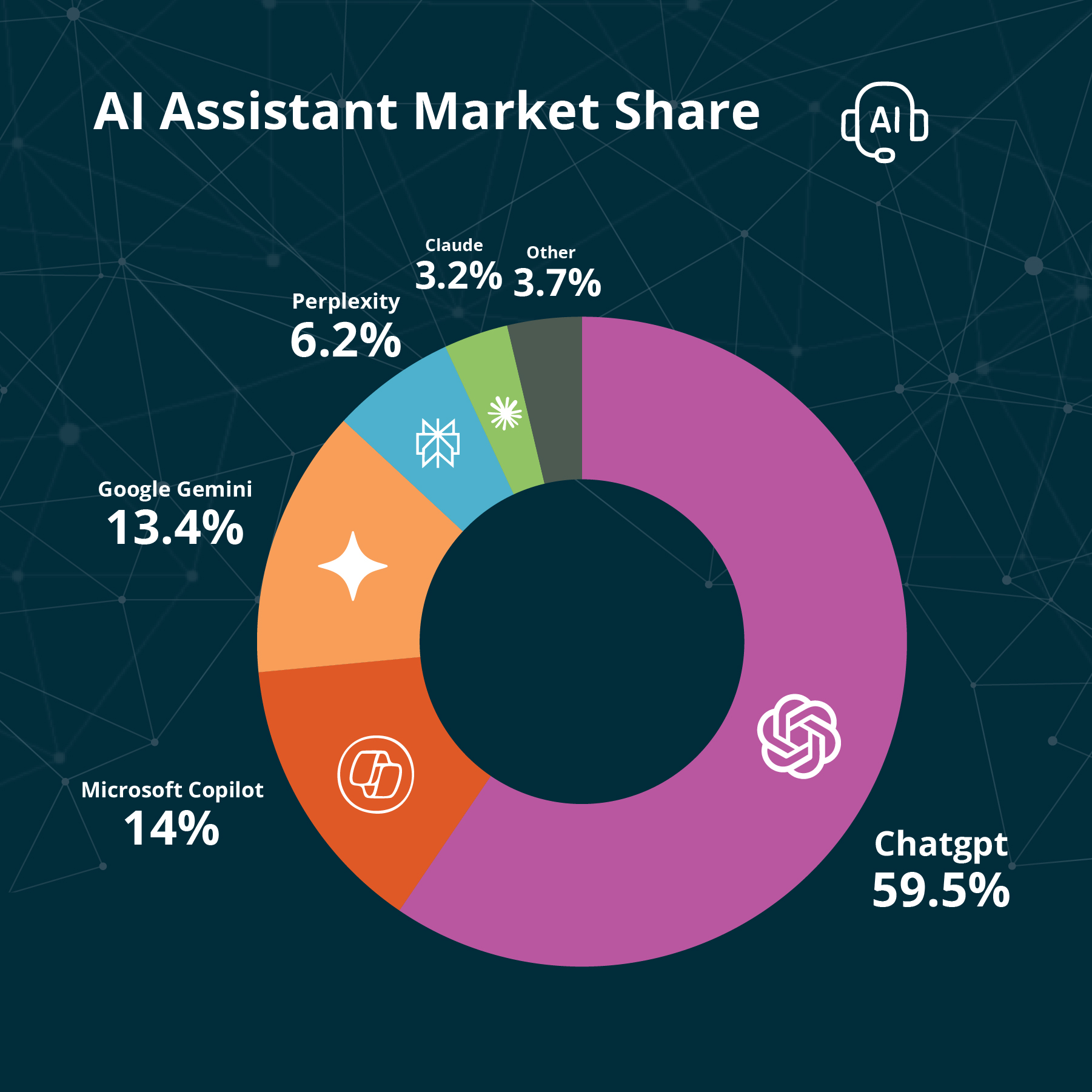
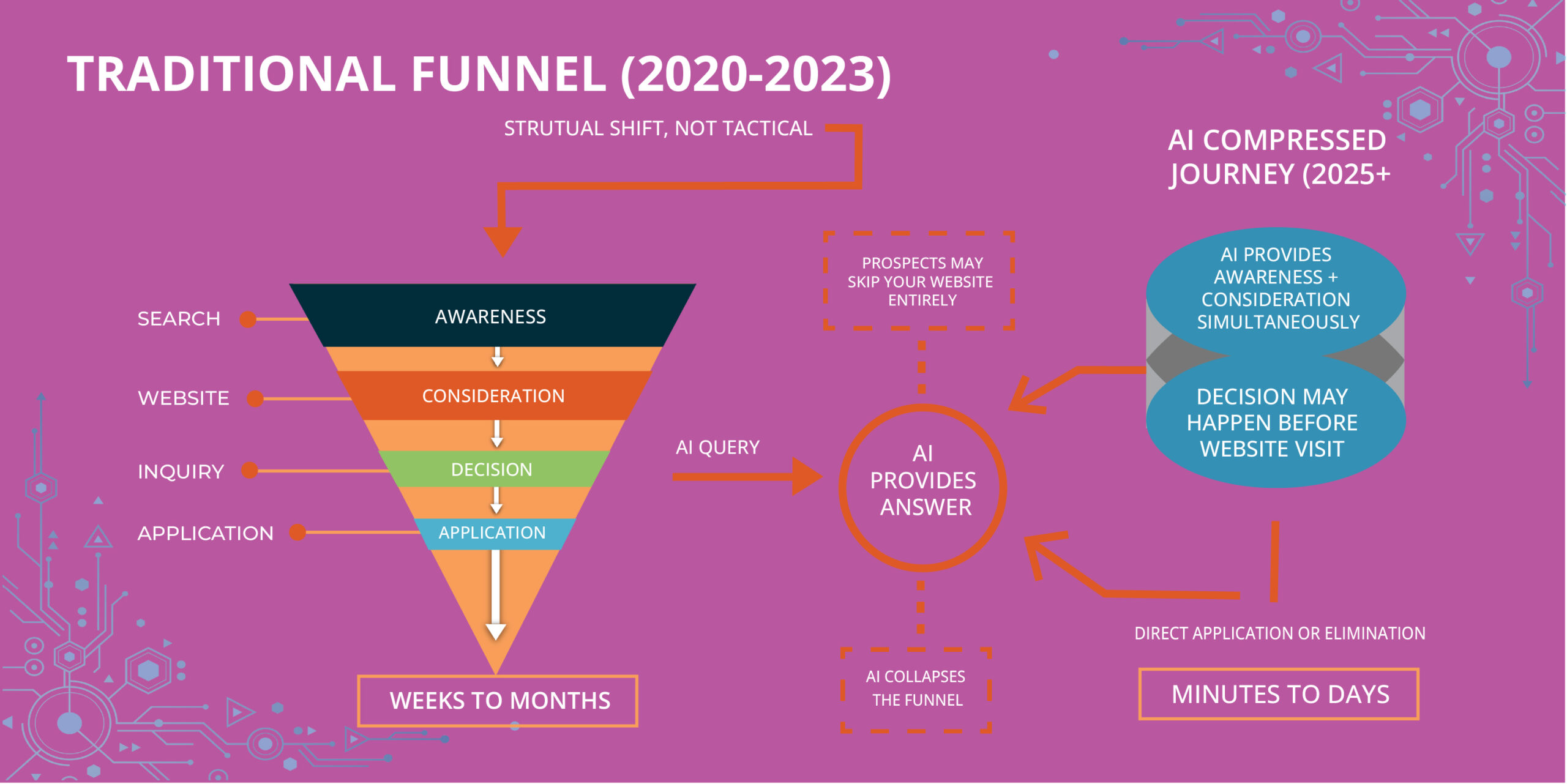
    What strategies are you implementing? What questions do you have? Let’s keep the conversation going.

    This recap is based on presentations from MEMS 2025, UPCEA’s Marketing and Enrollment Management Summit. For questions or to share your own insights, connect with us on LinkedIn or reach out through Search Influence.

    This recap reflects what we heard on stage.

    To understand how these trends are already showing up in real student behavior, explore Search Influence’s AI Search in Higher Education: How Prospects Search in 2025 research, conducted in partnership with UPCEA.

    The study reveals how prospective students utilize AI tools, search engines, and university websites in conjunction and what higher education marketers need to do now to remain visible in AI-driven enrollment decisions.

  • Celebrating Women in Leadership: Search Influence Earns 2025 CityBusiness Recognition

    Celebrating Women in Leadership: Search Influence Earns 2025 CityBusiness Recognition

    Search Influence is honored to be named an honoree in the 2025 New Orleans CityBusiness Empowering Women Awards. This recognition highlights companies across the region that are creating meaningful opportunities for women in business and leadership.

    Why This Award Matters

    Each year, CityBusiness recognizes 50 companies that demonstrate a real commitment to supporting women in the workplace and community. Honorees are evaluated on how they recruit, promote, and mentor women; create inclusive workplaces; and contribute to advancing equality in New Orleans.

    This year, we were especially surprised to be included since we didn’t submit a nomination. This makes the recognition feel all the more meaningful. It reflects not just what we say about ourselves, but what our peers and community see in us.

    A Workplace Where Women Lead

    At Search Influence, women aren’t just represented, they lead.

    Women make up nearly 80% of our team and hold 75% of our leadership positions. These numbers reflect intentional decisions about how we hire, promote, and create opportunity.

    It also reflects the kind of workplace we’ve built together. Flexible schedules, parental leave, mentorship programs, and professional development stipends aren’t perks; they’re tools that help every team member grow and succeed.

    Meet the Leaders Behind the Recognition

    Our recognition in the Empowering Women Awards is a testament to the women who shape our agency every day:

    These leaders, along with many others, have created an environment where women at every level can thrive.

    Beyond the Office

    Our commitment to women extends outside our organization. Through partnerships with groups like YouthForce NOLA, we’ve mentored high school students and opened doors to careers in digital marketing. Our employee-led IDEA Committee continues to foster inclusion, diversity, equity, and awareness inside and outside the workplace.

    These initiatives are part of a larger belief: that empowering women strengthens our community as a whole.

    Looking Ahead

    This recognition is not just a moment of pride, it’s a reminder to keep going. The needs of our team evolve, and so must we. By listening to our employees, staying agile, and learning from the community around us, we’ll continue to define what it means to support women in the workplace.

    “We believe empowerment happens in the day-to-day choices that shape our culture,” said Co-founder and COO Angie Scott. “This recognition from CityBusiness inspires us to keep building a workplace where women can succeed and lead.”

    Join the Conversation

    We’re proud to celebrate alongside the other 2025 honorees recognized by CityBusiness. Together, we’re shaping a business community that reflects the best of New Orleans: resilient, diverse, and forward-looking.

    Read more about the company culture of Search Influence on our website: Search Influence Company Culture

  • Search Influence Earns Ninth Spot on the Inc. 5000 List in 2025

    Search Influence Earns Ninth Spot on the Inc. 5000 List in 2025

    Search Influence Earns Ninth Spot on the Inc. 5000 List in 2025

    I’m proud to share that Search Influence has been named to the 2025 Inc. 5000 list of America’s fastest-growing private companies. This marks our ninth appearance since first earning a place in 2011, a milestone that reflects the steady, sustained growth we’ve built over the years.

    Why This Recognition Matters

    The Inc. 5000 list celebrates independent businesses that have achieved significant growth over a three-year period. For us, it’s more than a number. It’s proof that our approach works in an industry where change is constant. Many marketing agencies have faced consolidation or downsizing in recent years, but our team has kept moving forward.

    One reason is our early focus on AI SEO. Search is evolving, and appearing in AI-generated results is now part of competing for visibility online. We’ve adapted our strategies to help clients perform in both traditional rankings and these emerging formats, ensuring they’re discoverable wherever their audience is looking.

    Practical Application for Our Clients

    For a higher ed SEO client, that can mean making sure a search for “what jobs can you get with a homeland security certificate” surfaces their school in the main results and in the AI summary above them. For a local service business, it could mean showing up when AI-driven search tools compile their “top choices” list.

    We started testing as soon as AI Overviews appeared, refining how we target featured snippets, structured data, and other factors that feed into those summaries.

    Nine Years on the List

    Making the Inc. 5000 once is an accomplishment. Doing it nine times over 14 years means we’ve built something durable. Many of our clients and staff have been with us for six years or more, which says as much about our stability as any ranking.

    We’ve reached this point by:

    • Adapting quickly to changes in search technology
    • Making decisions grounded in data
    • Maintaining long-term client relationships

    Looking Ahead

    Search will keep changing, and so will we. Our goal is to make sure clients stay visible, competitive, and connected with their audiences no matter what the next shift brings.

    Recognition like the Inc. 5000 is an honor, but the real reward is the results we deliver for the organizations we serve.

    If you’d like to talk about how AI SEO can strengthen your visibility, especially in competitive spaces like higher education, get in touch.

  • SEO Automation: How I Built an AI-Powered Question Discovery System with Make.com

    SEO Automation: How I Built an AI-Powered Question Discovery System with Make.com

    SEO Automation: How I Built an AI-Powered Question Discovery System with Make.com

    I recently automated an SEO process that used to take our team hours of manual work. 

    It now runs in 5 minutes. This isn’t about replacing experts. It’s about getting them out of spreadsheets so they can actually solve strategic problems and get creative with content. 

    Here’s how I built it using Make.com, Google Search Console, Semrush, and People Also Ask data from AlsoAsked, and why every SEO team should be doing this.

    SEO Automation: How I Built an AI-Powered Question Discovery System with Make.com

    The Manual Question Discovery Process We Had to Kill

    Here’s what our question discovery automation process looked like before implementing SEO automation with Make.com:

    1. Google Search Console Export: Pull search queries for specific URLs and domains
    2. Semrush Research: Cross-reference GSC data with broader keyword opportunities
    3. People Also Ask Research: Manually collect AlsoAsked questions for FAQ optimization
    4. AI Search Analysis: Hunt through competitor frequently asked questions for AI Overviews
    5. Related Topic Research: Expand into connected topics for broader search visibility
    6. Relevance Assessment: Manually score questions for content fit and business value

    This took 2-3 hours per analysis. Multiply across clients, pages, and team members, and you’re wasting 15-20 hours weekly on work that doesn’t require strategic thinking.

    The turning point came when I realized our senior strategists were spending more time pulling data than actually optimizing for the things that matter – like getting featured in Google’s AI Overviews and other search features that are reshaping SEO.

    How to Build Your Own SEO Automation with Make.com

    I built the SEO automation in Make.com to actually analyze, not just move data around. The workflow connects Google Search Console, Semrush, and People Also Ask into one system. If a URL has enough data in GSC, it pulls questions from there. If not, it automatically looks at the whole domain for context. Then it grabs related questions from People Also Ask, pulls keyword data from Semrush, and uses AI to score every question based on what you’re actually trying to accomplish with that page.

    High-Traffic Pages: Get laser-focused questions with direct GSC processing, plus related questions from People Also Ask for thorough FAQ development.

    Newer Content: Enhanced with domain-wide context and AI question discovery to find content gaps and optimization opportunities.

    Strategic Analysis: Semrush integration helps us spot competitive keyword opportunities and find gaps in the market.

    AI Search Optimization Through Automated Question Discovery

    Raw question data from Google Search Console and Semrush tells you what people search for. AI-powered analysis tells you what’s relevant for AI search optimization and FAQ schema implementation.

    The automation looks at two things most tools completely ignore:

    Page Context: What’s this page actually trying to accomplish? Is it a service page, blog post, product page? What’s already covered in FAQs? What could work better for AI search?

    Business Context: What industry you’re in, who you’re targeting, and what actually matters for your goals.

    Then it scores each question on several factors: how relevant it is to your page topic, whether the search intent matches what your page does, how likely it is to show up in AI Overviews, whether it’s good for FAQ sections, and how much business value it could drive.

    This isn’t search volume analysis—it’s contextual intelligence that considers what you’re actually trying to accomplish with AI search optimization and semantic SEO.

    Benefits of SEO Automation for AI Search Optimization

    The real value of question discovery automation isn’t the 20 hours we save weekly. It’s consistency in AI search optimization. Automation doesn’t cut corners or make mistakes when deadlines are tight. It looks at opportunities with the same care every time, and it’s specifically built to work with AI Overviews, People Also Ask boxes, and FAQ schema markup.

    More importantly, the Make.com automation handles all the grunt work so the team can focus on what actually requires human expertise: figuring out why competitors are winning, developing content strategies that align with business goals, and solving complex technical SEO problems.

    As Google’s AI Overviews and other AI search features change how people find content, having good answers to specific questions matters more than ever. The teams that will win are those using automation for data collection while putting human expertise toward strategy and execution.

    Here’s something important: Google’s AI search features literally pull answers from web content to populate results. If your content answers the questions people are actually searching for, you show up. If it doesn’t, you don’t. The automation helps identify exactly which questions your content should answer to get maximum visibility in these new search features.

    Implementing SEO Automation: Make.com Blueprint for Question Discovery

    I made the complete blueprint open source because everyone should be doing this instead of manual data collection. Everything you need—the Make.com workflow, Google Search Console setup, Semrush integration, and People Also Ask automation—is at https://github.com/willscott-v2/get-questions.

    What took us months to build, you can set up in an afternoon. The blueprint has everything: smart routing logic, AI scoring for relevance, People Also Ask automation, Semrush workflows, plus optimization features for AI search.

    The automation can also help with FAQ schema markup, How-To schema, and other structured data that search engines love.

    Strategic Advantage: Human Creativity Unlocked Through SEO Automation

    If your team is still spending time manually sourcing questions for FAQ optimization and AI search, you’re losing strategic ground in AI-driven SEO.

    As AI search and Google’s AI Overviews continue to change search, the choice is simple: let your best people do work that Make.com automation can do better, or free them to do the strategic work that actually wins in AI search optimization.

    SEO automation isn’t about doing less work—it’s about doing different work. The kind that requires creativity, strategic thinking, and industry knowledge that machines can help with but can’t replace.

    Every hour spent manually pulling questions is an hour not spent on competitive analysis, content strategy, or optimizing for AI search features. The tools exist to fix this trade-off.

    The complete SEO Automation blueprint is available on GitHub, including setup guides, People Also Ask integration, Semrush workflows, Google Search Console automation, and FAQ optimization features.

    You like it? Link to it. Link to this post, please: SEO Automation, or AI Search Optimization.