Author: Search Influence Alumni

  • Found: Yelp Reviews Copied and Published as Google Reviews

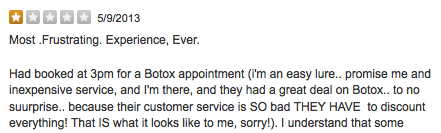
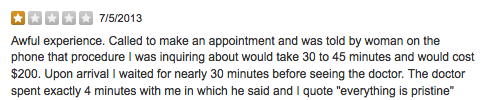
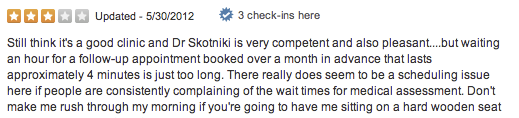
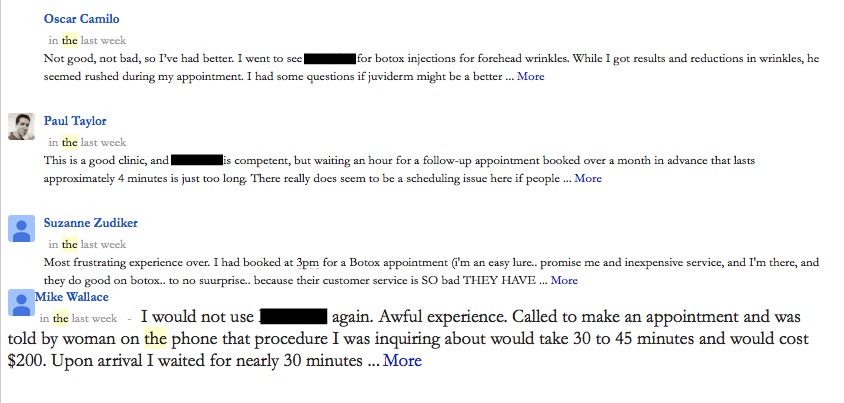
    In the last week, one very alert client saw saw some very recent reviews on his Google Plus Local listing that looked pretty suspicious.  All 4 of these reviews were published within the week:

    Google reviews are copies of Yelp reviews

    The client immediately flagged “Oscar” as a spam review on Friday, November 29th.  By Tuesday, December 3rd, we saw that the review was gone.  Removed from the client’s G+ Local.  That was super fast response by Google, which was a pleasant surprise.

    When we looked at the Google+ profiles for Paul, Suzanne, and Mike,

    • none of the 3 had information on their G+ Profiles except where they lived.  No posts.  No videos.
    • none of the 3 lived within 1,200 miles of our client.
    • 2 of the 3 had 100-200 people in their Circle, despite having no account activity.

    With the fast success of the first spam review removal, we immediately flagged the other 3 as spam reviews. Within 1 day, 2 of the 3 remaining spam reviews were removed.   The only one that’s left is “Paul.”  We’re watching Paul, and hopefully, that one will come down fast too.

    Plagiarizing Yelp Reviews

    These Google reviewers were pretty easy to mark as spam based on their Google+ profiles being so bare and their slim reviews profiles — only 1 review each — but I think the real reason they were taken down was because they are not original review text. They are all copy and pasted from Yelp reviews.

    And stating the obvious, the copied reviews are for different businesses and from different reviewers, so there is nothing legitimate about the Google reviews published on our client’s Google listing.

    Suzanne’s Google review…

    Yelp review copied for Google review

    appears to be a close copy of “Cecile Mighty Mouse M.” May 2013 review on Yelp.

    Plagiarized Yelp review used on Google

    Mike’s Google review:

    Google eview copied from Yelp review

    appears to be a close copy of “Ben S.” July 2013 review on Yelp.

    Yelp review plagiarized for use by Google reviewer

    Paul whose review is still on our client’s G+ Local as of this moment,

    Google review copied and used by Google reviewer

    is a close copy of  “Grainne sounds like Grawn-ya…not Grainy M” May 2012 review on Yelp

    plagiarized reviews on Google

    If you’re curious to see if a review is spam, try dropping a chunk of it into Google to see if a Yelp review shows up as a close copy. If so, then definitely flag as spam to Google. Has this happened to you? Share your tips and stories of spam comments below.

  • A Few Tips for Balancing School and Work

    iStock_000000748325XSmallHere at Search Influence, we have several employees who are still in school in addition to working here part-time or full-time. Some are in grad school and some are in undergrad at schools in the area like Tulane and UNO. Since I am not one of these ambitious employees, I thought we could all gain some insight from them in time management and life skills. I asked a few of my co-workers questions like “Why are you doing this?” and “How do you do it?” I got some thoughtful responses with a few common themes.

    1) Know Your Priorities
    Zachary has only been here for a month, but he already knows to be careful not to “load too many responsibilities on yourself, or you will crash and burn and fail at all of them.” If you intend to be an active member of several school clubs on top of working 20 hours a week, you will probably end up overwhelmed. Work, school, and a couple other activities will be plenty enough to fill your time.

    samantha blog

    2) Figure Out Your Interests
    Mary says that working at a place like Search Influence where what we do is meaningful has made the stress level of balancing school and work a lot more manageable. If you like what you are doing (whether that’s your class subjects, job description, or extracurricular activity), you will be more likely to thrive since you are interested in all your daily activities.

    3) Get You Some “ME” Time
    A common theme for all the employees I interviewed was that you must set aside some time each week to unwind from the chaos of balancing school and work. Figure out something that makes you feel relaxed like reading, exercising, or hanging out with friends. If you can set aside a whole day to de-stress, that’s the best case scenario, but even an afternoon should do the trick!

    Search Influence is constantly hiring for new positions, so if you think you can handle the time management challenge of school and work, be sure to check out our employment opportunities page!

  • Google Introduces Helpouts

    Haven’t heard of Google Helpouts yet? Don’t worry, you’re not alone. Until recently, Google’s newest venture has been fairly hush-hush, so here’s a brief overview of the product and how to become a part of it.

    What Is Google Helpouts?

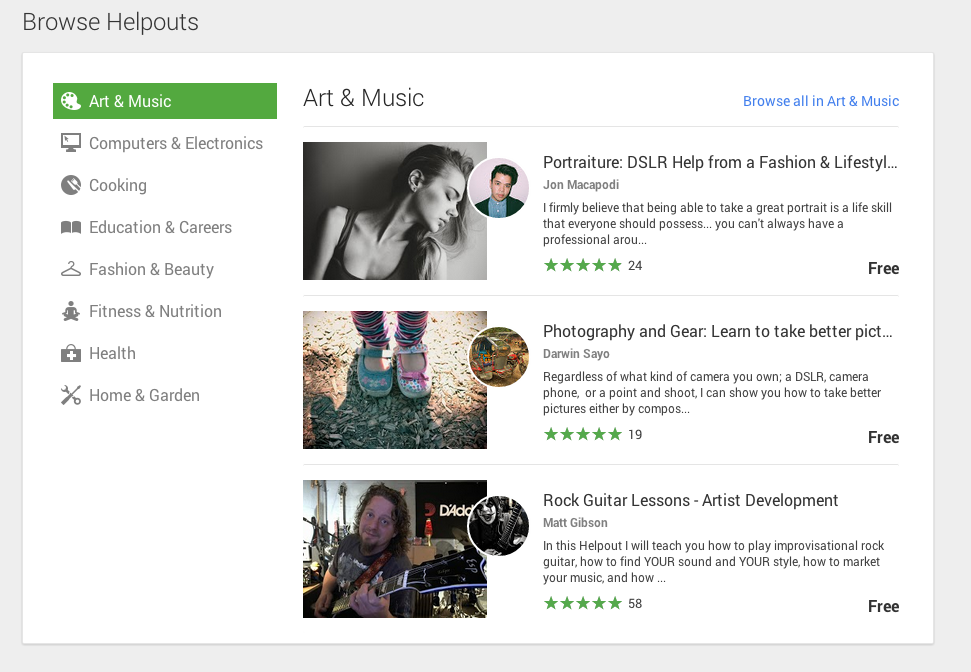
    Google Helpouts - Search Influence

    Helpouts seems to be Google’s attempt to branch out into ecommerce by directly connecting businesses to people via video chat and offering advice, information, or services. The types of information available on Helpouts range from computer diagnostics, to medical advice, to cooking tips, to yoga classes. In speaking with a Google Helpouts rep about this new product, he described it as a search engine that people can use to browse for certain professionals or knowledgeable individuals on a variety of topics and connect with them. Individuals willing to provide their expertise via this new Google product can charge by the minute, offer a flat fee, or, if they feel so generous, can simply do it for free.

    How to Join

    As of now, Google Helpouts is on an invitation-only basis for businesses or professionals looking to share their knowledge for free or for a fee. There is an option to schedule a demonstration of this product with a member of the Google Helpouts team via screen share and chat. There, the reps will give you a preview of the features and answer any of your questions. Presumably they will offer you an invitation code to join if you express interest in offering your business expertise via this platform. Google also offers a link to request an invitation code. However, if you’re just looking to get help or learn more about a topic, you are able to join now and start searching for professionals. The only requirement is that you create a public Google+ profile.

    How successful will this product be? It’s hard to tell at this point. With the increasing number of people more willing to go on Yahoo Answers than ask a friend a question, perhaps Google sees Helpouts as an alternative, providing qualified answers to those curious souls. Or perhaps those people asking ridiculous questions on Yahoo Answers will want to maintain a certain level of anonymity. However, for the sake of not wasting time, let’s hope that those questions no one should’ve ever asked remain on Yahoo Answers.


  • 5 Content Marketing Myths You Need to Unlearn

    The popular SEO strategy of content marketing has always been effective. Now, with recent changes to Google with its Hummingbird update and the increasing importance of social media, good content marketing is more important than ever for boosting your online visibility and search engine ranking.

    While content marketing isn’t exactly rocket science, it’s still important to understand the strategies and methods that really work—as opposed to all the myths out there that won’t get you any further ahead. Here are the top five content marketing misconceptions you may believe, and what you need to do to adjust your approach.

    Myth #1: It’s Like Printing Your Own Money (Or: Content Marketing is About Making Sales)

    The myth: The main goal of content marketing is to generate leads and increase sales for your business. If this isn’t happening for you, then you’re wasting your time with content marketing.

    The truth: Content marketing does lead to more leads and more sales—but it’s a gradual process, and it’s hard to measure the impact on sales directly. You’re only wasting time if you’re focused on making your content sell (a point that’s explored further in the next myth).

    The true goal of content marketing is to strengthen your brand. Done effectively, your content will serve to build familiarity through increased visibility, and improve likability and trust for your business through more shares and greater authority in your industry.

    Myth #2: It’s All About Me (Or: Content Marketing Should Focus on Your Business)

    The myth: All of your content should be about your products or services. You need urgent language, lots of promotions, and prominent calls to action in every piece of content you publish.

    The truth: Brochures and billboards are not content marketing—they’re advertising. Keep in mind that your goal is to increase visibility and build your brand. If all your content does is push your products or services, you’re going to be viewed as spamming people, no matter how tastefully worded your advertisements are.

    Your content should provide consumers with value that will benefit them even if they don’t buy from you. That’s how you strengthen your authority and help your content get passed around, so you’re seen by more people.

    Myth #3: If You Write It, They Will Come (Or: Content Marketing is Easy)

    The myth: All you need to do is churn out a lot of content and post it online. The more content you have, the higher you’ll rank in search engines. It doesn’t matter what the content says—just how much there is.

    The truth: Google, the biggest search engine on the planet, has always favored quality over quantity when it comes to content. With the recent changes to their search algorithms and the way keywords and links are weighted, quality content is even more vital. Once again—you need to offer consumers something of value.

    Content marketing does take work, but the returns are worth the time and effort you’ll put in.

    Myth #4: Set It and Forget It (Or: Content Marketing Can Be Automated)

    The myth: You can cheat when it comes to content marketing. Just use some of the many automated tools that are out there to keep content coming, and it will look like you’re active—which in turn will elevate your SEO, because search engines love fresh content.

    The truth: While there is something to the idea that fresh content attracts search engines, it’s more important to satisfy your visitors, subscribers, and customers. And it’s easy to tell when your content feeds are automated.

    The biggest advantage of content marketing is the ability to give your business a “personality” through branding. If your brand is “we only care enough to have this software program talk to you,” no one will engage with your content—and your efforts, such as they are, will be wasted.

    Myth #5: No One Reads This Stuff Anyway (Or: Content Marketing is Just What’s on Your Website)

    The myth: Content marketing is useless. Posting all this stuff to the website doesn’t bring any more visitors, so we might as well concentrate on different strategies to increase traffic, like pay-per-click campaigns.

    The truth: There’s more to the world of content marketing than your website pages. Small business blogs, social media feeds, guest blogs and articles, whitepapers, even commenting on other industry blogs—all of these things are content marketing and all of them feed into your brand and your online footprint.

    What’s your content marketing strategy for 2014?

    Megan Totka is the Chief Editor for ChamberofCommerce.com. She specializes on the topic of small business tips and resources. ChamberofCommerce.com helps small businesses grow their business on the web and facilitates connectivity between local businesses and more than 7,000 Chambers of Commerce worldwide.

  • What is this SEO Thing Anyway??

    SEO is not a shortened nickname for CeeLo Green. It’s not a secret government agency either. SEO, or Search Engine Optimization, is the process of improving a website’s visibility by making its function clear to Google and other search engines. Whether you realize it or not, SEO is a big part of every search you make online.

    To understand why you need SEO, you need to understand what SEO is. Search engines like Google and Bing use magical mathematical formulas—also known as algorithms—to scour the Internet and provide websites that are relevant to user searches. Each search engine considers a number of factors before deciding which website gets ranked where and who ultimately ends up on the first page of your search results:

    Not SEO

    Content

    Good content is the key to a high-performing website. Make sure your site’s content properly reflects your business and features the products and services you offer. Optimizing your content for relevant search terms will make sure you’re showing up for the right users. Think about it—you don’t want to rank on the results page  for “ponies” if you sell motorcycles (unless you are selling Iron Pony Motorcycles, that is). Plus, having good content keeps your bounce rate down and increases the amount of time users spend on your site, which are both good things in Google’s eyes. Search engines also look to see if your content is fresh and up-to-date. So if you want to stay at the top of the charts, keep fresh with the times, yo.

    Metadata

    Located somewhere in all that code that may or may not closely resemble the Matrix is metadata that tells search engines exactly what your website is there for. One important piece of metadata is the title tag. Each individual page has a title tag, and it’s one of the first tags the search engine looks at. There’s also  a meta description, which you might recognize as the sentence or two listed under a website’s name on the search engine results page. Properly optimizing this data will help search engines understand what your site is about.

    Authority

    Links are important. Having other sites link to your page proves your site is authoritative enough that other people are willing to reference it as a source. It’s kind of like in high school when you had a crush on Tim because all the girls talked about how amazing his cover of “Don’t Stop Believing” was and that song was totally your jam. But just like in high school, the trustworthy information has to come from the cool kids or else no one will believe it. In our case, “the cool kids” are the websites that Google already trusts. In other words, links aren’t worth much if they’re from sites that Google hasn’t heard of.

    And if you need a little help getting a hang of this SEO thing, you can always count on the experts to give you a hand. Give Search Influence a call today to get started.

  • Search Influence Goes to Digital Agency Conference

    Search Influence had the opportunity to send our VP of Sales & Marketing Kelly Benish to Local Media Association (LMA) and BIA Kelsey’s Digital Agency Summit, which was held in Chicago on November 6th and 7th. The Digital Agency Summit is described as “two days dedicated to the best case studies and practices being employed by digital agencies owned or partnering with local media companies.” SI is a member of both the LMA and BIA Kelsey, and we are always strategizing ways to better serve our clients and partners by speaking at, sponsoring and attending these Association conferences.

    (L-R) Jed Williams, BIA/Kelsey; Aswini Anburajan, BuzzFeed; Peter Newton, GateHouse Media; Lindsay Jacaman, Dallas Morning News/Speakeasy; Kelly Benish, Search Influence
    (L-R) Jed Williams, BIA/Kelsey; Aswini Anburajan, BuzzFeed; Peter Newton, GateHouse Media; Lindsay Jacaman, Dallas Morning News/Speakeasy; Kelly Benish, Search Influence

    Kelly was selected to be a conference panelist on a session entitled, “Native Advertising/Sponsored Content – A New Revenue Opportunity” and was honored to share the stage with some very well known representatives in the digital space including Aswini Anburajan, Director of Partner Development, BuzzFeed; Lindsey Jacaman, GM, Digital Services, Dallas Morning News/Speakeasy; and Peter Newtown, President, GateHouse Ventures/GateHouse Media.

    The session was moderated by Jed Williams, VP Consulting and Senior Analyst, BIA Kelsey, and panelists shared with attendees how native advertising has been a valuable revenue opportunity that media companies and online marketers have adopted.

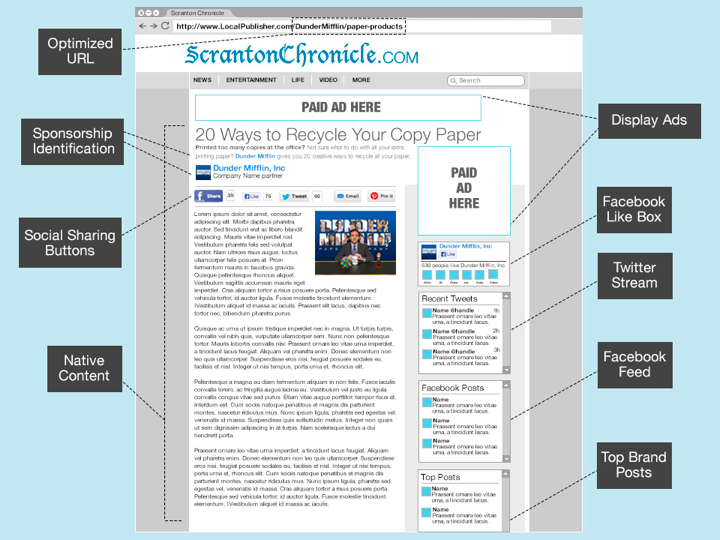
    Anatomy of Native Advertising Placement
    Anatomy of Native Advertising Placement

    Kelly highlighted the differences between advertorial, native ads and content marketing, as well as ways to implement native advertising into digital agencies’ product menu through sponsored blog posts, sponsored Facebook stories, infographics and white papers. With 20% of all web traffic coming from shared content, Search Influence offers these online strategies for both our direct clients and partners.  Many publishers do not have the dedicated content teams to create native advertising pieces and properly market them to targeted audiences.

    Search Influence has a process in which we work on behalf of the publisher with their advertisers to make the dream of offering native content pieces a reality. This cutting edge new revenue stream was the main initiative presented in the session.

    Contact us to learn how native advertising can help your newspaper property or business!

  • New Influencer Faces: Fall 2013

    We are excited to welcome nine new employees to the growing Search Influence team!

    Account Management Team

    JordanJordan Polhemus has joined Search Influence as a Junior Account Associate. She graduated Cum Laude from Georgia Southern University with a degree in entrepreneurship and a minor in marketing. While in college, she was in the University’s Honors Program and was an active member of Kappa Delta sorority. Before Search Influence, she was an asset manager for Keller Williams Realty.

    kristyKristy Roldan is SI’s new Senior Account Manager. She is a recent transplant from Los Angeles, CA. Before joining Search Influence, Kristy was as a Senior Account Executive at advertising agency RPA in Santa Monica, where she worked on the Honda account amongst other projects. Kristy graduated from California State University with a degree in business marketing.

    Sarah LustbergSarah Lustberg has been hired as a Junior Account Associate. Originally from New Orleans, Sarah attended American University in Washington, DC, where she received her bachelor’s degree in public communication. Prior to joining Search Influence, she worked as a Public Relations Assistant for the Time Inc. Lifestyle Group in New York.


    Production Team

    ian

    Ian Adams has been hired as an Internet Marketing Associate. Originally from Portland, OR, Ian attended Loyola University in New Orleans where he received bachelor’s degree in economics. He previously worked for The World Trade Center of New Orleans as a Multimedia Production Intern.

    Devin Olsen

    Devin Olsen recently relocated to New Orleans from Tallahassee, FL and has joined SI as an Internet Marketing Associate. Devin has a marketing and web design background, having worked in the industry for Homes Media Solutions and Expedia.com.

    Screen Shot 2013-11-05 at 10.28.47 AM

    Shaye Anderson has been hired as an Internet Marketing Associate. Having lived in eight different states, it is difficult to determine exactly where she is from. However, after attending Tulane and LSU, she is proud to call Louisiana home. Shaye previously worked as a teaching assistant in LSU’s philosophy department and served as a one of Delta Literary Journal’s editor-in-chiefs.

    Screen Shot 2013-11-05 at 10.34.06 AM

    A New Orleans native, Caroline Robinson graduated from Tulane University with a bachelor’s degree in communications and psychology. Before becoming a Search Influence Internet Marketing Associate, Caroline worked as a Marketing and Administrative Assistant for Besh Restaurant Group and freelance writer for Rouses Magazine.

    Juese Wang

    Juese Wang has joined Search Infuence as an Internet Marketing Associate. She was born in China and raised in New Orleans. Juese is a student at Tulane University studying marketing and business law and plans on graduating in May 2014.

    Screen Shot 2013-11-11 at 9.11.08 AM

    Zachary Goldrich has been hired as an Internet Marketing Associate. Originally from Los Angeles, CA, he is studying marketing and public relations at Tulane University. Before joining Search Influence, Zach worked as a photographer and as a licensing intern at Amygdala Music.

  • Team Building In the Workplace

    Sometime during the spring, I was invited to join the newly formed Team Building Committee for Search Influence. At first I had no idea why I was chosen and what we would be doing. I assumed we would just be planning office parties. Little did I know the activities we planned would be much more than simple get-togethers after office hours.

    Our ice cream party was a hit!
    Our ice cream party was a hit!

    Whether it’s been big events, like a crawfish boil or laser tag, or smaller gatherings, like an ice cream social or movie night, it’s been somewhat surprising (in a good way) to see how receptive an office can be to these ideas. One of the biggest keys I’ve noticed to making sure these events are successful is to ensure everyone feels like they are involved and they have a say in what types of things the office does.

    Additionally, not everyone is going to like the same thing, so finding the proper medium is important to having everyone enjoy the event. It’s also important to keep in mind that while some activities are fun, they might not be conducive to the team building incentive you’ve set. Every team building experience should be designed with goals in mind, such as improving employee morale or having everyone in the office get to know each other better.

    If you feel your office could use a boost, consider starting up a team building squad and get some ideas flowing. Be sure keep an eye on the Search Influence blog to see what we come up with in the future and to see examples of activities you could be doing!

  • 4 Tips to Writing Attention-Grabbing Social Media Posts

    CONTENT CONTENT CONTENT

    We are bombarded by content and information everyday. The average person reads a couple thousand words and sees about 247 images each day. Something interesting from a marketing standpoint: we see anywhere from 3,000-20,000 marketing messages every day! All of these words and images are pieces of informative content that we have to internally process.

    I mean seriously think about it…

    TEXTS                                                      PHONE CALLS
    EMAILS                                                   RADIO
    WEBSITES                                             TELEVISION
    TWEETS                                                  MENUS
    FACEBOOK POSTS                          BLOGS
    SEARCH RESULTS                              STREET SIGNS
    INFOGRAPHICS                                  BOOKS
    GOOGLE+ POSTS                              MAGAZINES
    PINS ON PINTEREST                         NEWSPAPERS
    PRESENTATIONS                                FOOD LABELS
    BILLBOARDS                                         MAIL

    Whew—it’s exhausting just thinking about it! And I guarantee there is more than what I listed! Most of it probably goes in one ear and out the other, so, as marketers, we only have a split second to catch the attention of someone who is already being bombarded by information. Here’s a list of 4 types of social media posts that are guaranteed to catch the eye of your clients’ audience.

    1. Anything that drives interaction
    Any post that encourages a user to interact with a page usually works well with social media marketing. By interact I mean liking a post, sharing it, commenting, retweeting, +1, pinning on Pinterest, etc. If you can do this organically (without forcing it), then it’s even better!

    Tri County Equipment Facebook Post

    2. Anything with eye-appeal
    We are a very visual culture (why do you think the iPhone took off like it did?)! If you can integrate words into a visual image that presents the information is a well-designed way, then you’re golden! I’m talking about the infographic, people. There are good and bad infographics out there. But a good rule of thumb is don’t over load it with information, and make sure what you are presenting is relevant to your client’s industry. This example below was pinned 508 times and liked 76 times on Pinterest.

    Infographic About Zimbabwe

    3. Anything That Links the Brand to Current Events
    If you can find a way to tie the brand into something that is relevant to current events in the news and/or pop-culture world, you need to post about it! People often try too hard with this one, so please don’t force it! The brand needs to truly be relevant for this to happen organically.

    Volkswagen Google+ Post for Shark Week 2013

    4. Anything That Stirs An Emotional Connection
    We are an emotional species, and significant life events can really change our lives. If you can stir an emotional feeling in someone, they are likely to be more drawn to the brand. Note: This doesn’t always have to be the warm and fuzzy feelings! If you want to touch on the controversial subjects, there is an audience for that as well!

    Susan G Komen Facebook Post

     Now get out there and create some engaging content!

  • The BIG PROJECT To Get Your B2B Content Marketing Strategy Going In A BIG Way

    Content Marketing Strategy - ebook image
    Don’t worry. Unless you’re selling whaling vessels, you don’t need to write like Melville.

    Are you an expert in your field? Do you want potential customers to know that? Give them proof by literally writing the book. Now, don’t go anywhere just yet. Yes, I did just say that you should write a book, but we’re not talking about the next Great American Novel or even the next Mildly Interesting American Novel. We’re talking about writing an ebook.

    Here’s what you need to do: write 20-50 pages. Actually, write however much you can. Only got 15 pages in you? Fine. Want to crank out 100? Go for it. As long as it’s high quality, relevant information with supported claims and research aimed at providing readers with solutions, you’re good. One of the easiest ways to do this is to start with your FAQs and expand from there because: 1) You know all these answers. 2) You know that your customers are asking these questions.

    Alternatively, you could start by publishing a series of blog posts that you then put together in a collection with an introduction to pull it all together. Boom! You’ve got an ebook. Have you written articles for industry insiders? Bam! Ebook!

    Here’s why you need to do this: people like to get information before they spend money. It’s that simple.

    1) Give the People What They Want to Establish Your Company as a Leader

    Decision makers want all the information they can get from the best, most credible source it can come from. Make that source is you. Before you can start selling your products or services, you need to sell your brand and your business as a leader in the industry—and not just as a leader in terms of size or profit. You need your potential customers to view you as a thought leader in your industry, an authority, an innovator. You’ll look like you know what you’re doing, and that builds confidence in your customers.

    2) Get Many Miles Out of the Info

    One of the greatest benefits of writing an ebook is that once it’s done, you’ve got all the research and content that you’ll need to power your content marketing for months. You’ll publish your ebook, release a mobile version, get a few blogs out of it, stick it on SlideShare, put it on YouTube, publish a press release about it, post about it on all the social media sites, promote those posts, turn it into an infographic (bonus points for a series of infographics), do some guest blogging on the topic, and on and on forever and ever… or at least until your audience has already consumed it in those various forms. Except isn’t your audience always growing and changing (if you are doing it right)? Update everything in a year or two and do it all again. Repurpose that content so that your audience is getting relevant information in just about any form they want it and you are getting backlinks, social signals, and other valuable SEO stuff.

    3) Get There Before Your Competitors

    The Content Marketing Institute and MarketingProfs found that 16% of B2B marketers used ebooks as part of their content marketing strategies in 2012, up from 9% in 2011. Utilizing this tactic while it is still relatively rare will make you stand out among your competitors and establish yourself as an authority in the field (see number 1 above).