Author: Search Influence Alumni

  • Why is Google Doing That?

    nest

    Techcrunch announced yesterday that Google acquired the connected device company Nest for approximately $3.2 billion dollars USD. [1] While this may seem like a large investment to us laymen (laywomen? laypeople…), it is understood that Google’s disposable capital cannot be quantified by the finite numbers we are used to using. So this investment may not mean as much for the company as the tech-blogosphere would suggest. But what will happen if the people at Wired and Techcrunch are right, and Google keeps doing more Google-y things like buying every robot ever along with the firms that produce them? Well for one thing, SEO will probably work a little differently.

    Prediction 1:

    In the Future Google/Future SEO Realm/Matrix, display space will be even more precious and SEM will get more expensive.

    A lot of SEO bloggers have been beating this drum for a while now. It’s obvious to most that if the screen space is smaller, the amount of results consumers are willing to investigate will reduce as well. The Google Glass has approximately 90% less surface space than traditional smartphone platforms.[2] Intuitively, this kind of face streaming will probably devalue the real estate of any ranking positioned outside of the top three. As the displays get smaller and smaller, SEM will gain more and more popularity as companies like Bing and Google are likely to price gouge for the precious paid display space on these next generation platforms.

    Prediction 2:

    In the forthcoming Future Google Realm, it will be simply irresistible – if not physically irresistible – to share everything.

    With the iphone, consumers were given the opportunity to commodify everything they experienced in their lives.[3] As we begin to wear microphones and cameras on our faces[4] and while the most mundane of our home appliances become members of the global village,[5] there will be more and more opportunities and incentives to share everything. As we begin to create more devices and metrics to record social media, sticking out in the endless void of user created content will become even more challenging, and social currency will become even more invaluable. With the creation of these new outlets, we should expect to see SEO become even more dependent on social media rankings, while performing well in these arenas will be crucial for any successful business.

    In conclusion, now is the perfect time to start honing your SEO and social media chops. Now I’ll leave you with a gif of a stock photo model using different technology.

     output_dAJDKN
    [1]To put this in context, Instagram sold to Facebook for $1 billion in 2012. 

    [2]Made this up.

    [3]A recent study showed that users are three times more likely to share content via their Iphone versus their desktop. http://bit.ly/1d3DAAw

    [4]Shout-out to Google Glass.

    [5]Google’s Nest acquisition will likely lead to the existence of a consumer experience where home appliances – fridge, oven, stove, coffee maker etc. – will all be connected to the internet and synced up to your smart phone.

  • SEO vs. PPC: What’s The Difference Anyway?

    A while back, SEO guru David McBee wrote a post in his awesome blog about how he differentiates SEO tactics from PPC strategies. In David’s mind, it can all be related to the difference between dieting and plastic surgery. SEO is a diet, and PPC is plastic surgery.

    To illustrate his point, David created this awesome infographic which I think spells things out pretty well. In many ways, this categorization really gets to the root of the differences between what you would do to increase your site’s profile online using SEO tactics versus the much more immediate PPC strategies we all employ.

    The SEO Diet

    It is very true that SEO is like a diet for your online presence. You need to be in it for the long haul, and you really need to establish clearly defined goals before you start. In exactly the same way that a crash diet will not yield the long term results you are looking for, link baiting or deploying tons of spammy content will not help you reach your idea SEO weight.

    I really like the comparison of PPC to plastic surgery because I feel like you should be putting the same kind of thought to the planning stages of a PPC campaign that you would before a procedure like a face lift or tummy tuck.

    The PPC Procedure

    You need to figure out exactly what you want to focus on and a lot of thought has to go into what you want to look like on the other side. Nothing is worse than not being prepared for an onslaught of traffic hitting your site on the heels of a successful PPC campaign.

    What do you think of David McBee’s comparison? What would you say the SEO/PPC dichotomy resembles in your experience? Let us know in the comments! We would love to hear from you, even if you are on a juice cleanse SEO diet.

    Link for infographic: http://davidmcbee.com/seo-is-a-diet-ppc-is-plastic-surgery-infographic/

  • Make Your Infographics Count

    Infographics have been around for years. We have seen them in cave paintings and hieroglyphics. William Playfair was credited with the first area chart and pie chart in his 1790 book, The Commercial and Political Atlas. Over the years, we have pushed forward the design of learning concepts with the aid of images. This work has lead us to what we refer today as infographics.

    If you haven’t been on Pinterest or read any major newspaper, you may be unfamiliar with the concept. An infographic is the process of using visual data to represent a complex idea in an easier to digest medium for the masses. You can’t get your PhD through an infographic, but they are handy at teaching you a quick synopsis of a subject.

    The strength in infographics is found by following a few basic concepts:

    Bring Multiple Ideas Together

    The magic of an infographic is its ability to take a wide amount of information and consolidate it into a story that flows and ebbs. The beauty is in the point where all these ideas join to create a new message or way of looking at all those ideas together.

    Be Understandable

    When presenting new ideas and concepts, it is important that the viewer understands what the message is. Try not to get the viewer confused or use terminology that is way above their knowledge based. It is good to use this jargon, but remember to explain it in a way that your 80-year old grand pap may comprehend.

    Less is More

    When designing or writing for an infographic, it is important to remember not to bombard the viewer with copious amounts of data and figures. The idea is to keep the content flowing in a smooth way that is easy to understand and recall. Designers do this by narrowing the focus of an infographic into one main concept or story to gently guide the viewer into learning the message.

    Be Welcoming

    It is important to never be intimidating when designing an infographic. The message should never appear overbearing or intimidating. The overall goal of infographics is to be read and spread.

    Eye Catching

    The overall design of the infographic needs to be alluring for the viewer to want to read it. There is no sense in spending all that time researching, writing, and designing only to have viewers not be interested in what you have to say. It is important to make sure there is a visual hook that will pique the interest of any viewer.

    All images in this post of the original work of Search Influence. Please give attribution if you should decide to share.


  • Influencer Profile-Erica Rench

    As Search Influence continues to grow, so do the departments! Erica Rench joined the Search Influence team in December to fill the newly created Operations Associate position, working under Operations Director Jeremy Brown. Erica comes to Search Influence after living and working in New Orleans for several years as an undergraduate student at Tulane, and as an Associate Director for Tulane’s Undergraduate Office of Admission. While working for Tulane, Erica also received her MBA.



    As part of the Operations Department, Erica works to analyze and implement processes that support the Influencers in producing high quality work. Erica told me she loves getting to know everyone at Search Influence and seeing what she learned at Tulane being “put into action.” She is excited to see the company continue to grow at a rapid pace and loves how the variety of departments at Search Influence allow employees to discover what they’re really passionate about.

    In her free time, Erica makes custom wedding headpieces for Wedding Belles bridal boutique on Magazine Street. She first became interested in wedding headpieces when planning her own wedding and realizing that there wasn’t a place in New Orleans where brides could hand pick headpieces, rather than ordering online. Erica also enjoys running, cooking, and exploring the local restaurant scene.


  • New Influencer Faces: January 2014

    New Influencer Faces: January 2014

    We are excited to welcome 12 new employees to the growing Search Influence team!

    Account Management Team

    Screen Shot 2014-01-02 at 9.52.30 AM

    Amanda Ball has been hired as an Accounts Coordinator. Born and raised in New Orleans, Amanda graduated from Delgado Community College with an associate’s degree in applied science with a concentration in Computer Applications. Prior to Search Influence, she worked for Ochsner Health Systems and recently did an internship at Delgado as an administrative office and technology marketing intern.

    Chris Dopper

    Chris Dopper has been hired as an Account Associate. She is originally from The Netherlands and moved from Amsterdam to New Orleans six months ago. Before joining Search Influence, Chris has worked for five years in Amsterdam and Brussels for Sanoma Media, one of the biggest publishers in Western Europe. Here she worked as an Online Marketer and Lifestyle Editor for brands like Cosmopolitan and Marie-Claire. Chris graduated from Rijksuniversiteit Groningen with a Master Degree in Communication and Information Science.

    Screen Shot 2014-01-02 at 9.54.57 AM

    Cory Badeaux has been hired as a Junior Account Associate. Though born and raised in New Orleans, Cory has also lived in Connecticut, New York, and California.  She attended Pepperdine University in Malibu, CA, where she earned a bachelor’s degree in Integrated Marketing Communications.  Before joining Search Influence, Cory worked in events and promotional marketing in Malibu as well as in New Orleans.

    Screen Shot 2014-01-02 at 9.56.38 AM

    Kimberly Dominguez has joined Search Influence as an Account Associate. She graduated from Loyola University New Orleans with a degree in Mass Communication and a minor in marketing. A New Orleans native, Kimberly has a social media background working for local businesses such as ACCENT on Arrangements, a DMC Company, FestiGals, Gulf Coast Bank and Trust, and The Son of a Saint Foundation.

    Screen Shot 2014-01-02 at 10.01.03 AM

    Lily Chen has been hired as an Account Associate. A New Orleans native, Lily received her bachelor’s from Vanderbilt University and recently her masters in marketing from New York University. Before returning to her home town, Lily has worked for various other companies executing both offline and online marketing campaigns.

    Mallory Logan

    Mallory Logan has been hired as an Account Associate. Mallory is excited to specialize in the fast growing industry of online marketing. Formerly, she worked on nation-wide political campaigns as a political account coordinator and the Louisiana International Film Festival as Social Media Manager. She enjoys being part of the unique culture in her hometown of New Orleans and cheering on her alma mater, the LSU Tigers.

    PicsArt_1389107034899

    Maureen Morphy has been hired as a Junior Account Associate. She was born and raised in New Orleans, and graduated from Louisiana State University with a degree in General Studies. Prior to joining Search Influence, she worked as a Public Relations Intern for BCBG Maxazria Corporate in their New York showroom, and as a Sales Associate for Saks Fifth Avenue.

    Screen Shot 2014-01-03 at 4.44.22 PM

    Presley Brouillette has been hired as a Junior Account AssociateOriginally from Baton Rouge, Presley graduated from LSU with a bachelor’s degree in mass communication with a concentration in public relations. Prior to graduating and working for Search Influence, Presley interned at SophistOccasions and Pelican House, both located in Baton Rouge, where she learned valuable marketing experience.

    Online Advertising Team

    Anne Rucker

    Anne Rucker has been hired as an Online Advertising Associate. Originally from Texas, she received her bachelor’s degree in communications from Texas Tech University. Before moving to New Orleans from Austin, Anne worked as a project manager in the political sector.


    Operations Team

    Erica Rench

    Erica Salm Rench has been hired as an Operations Associate. Originally from the Greater Chicago Area, Erica came to New Orleans in 2004 to start her undergraduate years at Tulane University, where she earned both her Bachelor’s degree and her MBA. Before joining Search Influence, Erica worked as an Associate Director in Tulane’s Office of Undergraduate Admission.

  • Kickstarter For Advertising and Funding


    159396590Crowdfunding has been around for a while now, from major sites like Kickstarter to more niche spots, like Indiegogo. Crowd funding is a process in which a project finds its funding from a vast pool of minor investors as opposed to the traditional approach of loans, private partners, and venture capitalists. Proper utilization of this funding option has lead to product launches across a variety of fields, from independent films to music to video games.

    Recently, major artists and established companies have turned to crowdfunding to act as both an additional revenue stream as well as viral marketing. By allowing fans and potential customers to feel included in the creative process, you can increase loyalty to the brand and to the project itself. Most projects have rewards associated with different levels of fund contribution, from early copies of products to names appearing in the credits of films and albums.

    Small businesses can even capitalize on this process by starting projects to fund future store or service expansions, and future product lines. A great example of a potential user would be a clothing boutique that sells a mixture a vintage clothing and modern, locally sourced products. The boutique could start a crowdfunding project to expand the production of an in-house jewelry line, setting a funding goal of slightly higher than the cost of an item. This essentially results in pre sales of these items, as well as viral advertising amongst current and potential customers.

    Avoid potential pitfalls, the major one being over promising. Make sure you understand the entire cost and potential extra expense associated with any new line or expansion and set your funding goal for above that amount. This way you will have all the capital you need to deliver the final product to your numerous investor/customers. And if you don’t meet your fundraising goal, sites like Kickstarter refund the money to the investors so you don’t have any unmet obligations among your existing customers.

  • 3 Ways To Make Your Website More Skim-able

    Bill Gates once said, “If your business is not on the Internet, then your business will be out of business.” I think we can expand on this and say that if your business doesn’t use the Internet to its advantage, it will not compete with those that do. This includes things like good SEO and a smart social media strategy, among other marketing tactics. Since all of these things are aimed at directing people to your website with the goal of converting a user into a customer, that site better be up to the task.

    There’s some bad news, though: most people don’t really want to read your website. They don’t have the time or the interest. But fret not! Your web copy can still be effective if you write it with this in mind. The key here is that you allow your readers to get the info they need quickly and without much effort. Let them skim!

    Mobile Search Content

    1. Visually Appealing Content

    Your copy should never look intimidating. Large chunks of text are out. Small paragraphs labeled with subheadings are the way to go. Bulleted or numbered lists are even better. Remember, a lot of your readers are likely using mobile devices. It doesn’t take much text to fill the screen of a phone, which might turn off someone  looking for a specific answer.

    2. Give Them What They Want

    Think about why someone would visit your site. What info are they looking for? That info should be the star of the site. If you own a tire shop, people are probably visiting your site for a few details: location, hours, services, products. If you own a dental practice, they’ll want to know what types of insurance you take, what services you offer, and your location. You can have more than the basics on your site, but make sure that you at least cover the most important details in a way that is easy to read.

    3. Put It Where It Belongs

    Make sure that your site is easy to navigate and all pages are clearly labeled with a logical title. “What We Do” is ok, but “Services” is better. Don’t put your hours on the “About Us” page. Put them on a page labeled “Hours of Operation.” You want your readers to scan the homepage and be able to quickly find the information they want or quickly figure out how to navigate to that information.

  • Best of the Search Influence Blog in 2013

    Si-i-180pxWe’re proud to have our team members contribute to the Search Influence blog regularly, providing online marketing news, tips and tricks, as well as updates on SI. There’s been a lot going on in our industry in 2013, so we would like to share our most popular blog posts from this year. Based on traffic and pageviews, we present to you the “Best of the SI Blog in 2013:”

    #1    12 Worst Social Media Mistakes of 2012 (And How to Avoid Them) 

               by Laura Manning (Account Associate)

    #2    6 Ways Your Surgery Practice Can Market the New Gummy Bear Breast Implants 

               by Tina Hua (Account Manager)

    #3    Surprise Oscar Winner: JCPenney’s #YoursTruly Real-Time Marketing Campaign 

               by Paula Keller (Director of Account Management)

    #4    Switching to Trello from Pivotal Tracker 

     by Luke Ledet (Lead Developer)

    #5    Why Call Tracking Numbers in Local SEO Make Me Angry

               by Will Scott (Founder and CEO)

    #6    How To De-Personalize Your Search Results

               by Jeanne Gaudet (Senior Online Advertising Manager)

    #7    5 Tips for Proper Hashtag Usage  

               by Marisa Michell (Account Associate)

    #8    Don’t Be ‘That Guy’…Top 5 Networking Faux Pas

               by Scott Holstein (Business Development Associate)

    #9    Proprietary CMS vs Open Source: It’s a Little Like Renting vs Buying

               by Amy Arnold (Director of Research & Development)

    #10   Found: Yelp Reviews Copied and Published as Google Reviews

               by Amy Arnold (Director of Research & Development)

  • Tips for Optimizing Pinterest boards for Small Businesses

    pinterest logoEver since the launch of Pinterest in March 2010, marketers and small businesses are leveraging the site to drive traffic and sales. There are some old school business leaders who are still anti-social media, but they are missing out on a big opportunity if they ignore Pinterest and other platforms. The great thing about using Pinterest for your business is the potential for your posts to rank in the search results. Check out one of our previous blog posts for more details. Below are some simple tips to optimize your Pinterest boards.
    1. Be creative with your board.

    Don’t be too self-promotional. Not only do you want to showcase the goods and services you provide, you want to make sure you are showing the inspiration behind it and promoting the lifestyle of your brand. Users will be turned off if you are only trying to get them to buy your products. Pinterest and any social media are about creating a conversation with your users and getting them engaged with what you do. If you are a fashion designer, post images of fabrics, places, and objects that inspire you. You can always reach out to a fan of your product that has a lot of clout and get them to be a guest pinner. The more creative you are the more you will gain engaged followers.

    2. Check the linking of your images and provide a good description for it.

    The most frustrating thing about Pinterest is when the pins are linked to a homepage or non-existent page on a website. Nothing is worse than having a missed transaction because your customer could not directly find the product on your site. If you pin something from the site, make sure it goes directly to the page where they can buy the product. Descriptions for your pins should be informative and interesting, but not too long or too short. You could probably do a little keyword research with the free Google keyword tool to find high value phrases for your image.

    3. Utilize the location-based pins.

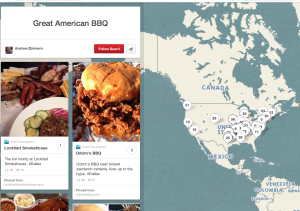
    With the recent launch of Pinterest’s location-based pins, your board can include a map of where your products are and also allow you to collaborate with other businesses. The location-based pins allow you to input your name, address, and phone number. If your product is available at several retailers, this would be a perfect opportunity to use this feature. For example, Lululemon created this Om Finder app that allows you to look for yoga studios in your area and to also get tips. This board would be perfect for location-based pins so users can physically find a specific location. Below is an example of Andrew Zimmerman’s board utilizing the place pins for best BBQ places in the US.

    location-based-pins


    Start applying these tips today to get the most out of your Pinterest page. Happy Pinning!


  • Paying By Email with Google Wallet

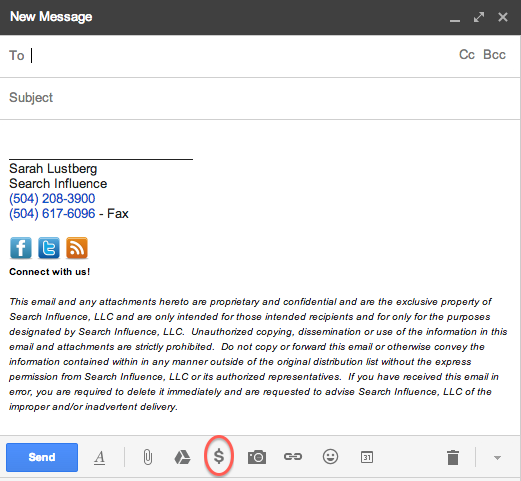
    If you use Gmail (and let’s be real, who doesn’t?), chances are you may have noticed a new feature pop up recently.

    Google Wallet

    Unfortunately, clicking the $ doesn’t mean you magically receive money.

    Similar to Venmo, the newly implemented Google Wallet allows you to quickly and securely send money within Gmail.

    When you set up your account, you’ll be prompted to verify your identity. Once that’s done, simply enter the amount you want to send, choose your source and attach. Easy as pie!

    As usual, there’s a catch. While sending money via your Google Wallet balance or linked bank account is free, using your credit/debit card is not — there’s a flat fee of 2.9% per transaction.

    If you’re like me and worried that your money could end up in the wrong hands, Google Wallet Purchase Protection covers you 100% against eligible unauthorized payments. I won’t bore you with the details — you can read more about that here.

    Weirdly enough, no one volunteered to send me money to test this out, but all you have to do to receive money is open the message with attached money and click “Claim Money.” (At this point, if you haven’t already signed up, you’ll be prompted to do so.) All funds are automatically added to your Google Wallet Balance.

    Google Wallet LogoYou can use your Google Wallet Card (which you can request on wallet.google.com or via the Google Wallet app) to make in-store and online purchases anywhere that accepts MasterCard® Debit, as well as to make cash withdrawals at ATMs and banks.

    So what does this mean for us?

    The next time you’re at dinner with a big group of friends and don’t want the hassle of trying to divvy up the check, one person can foot the bill and have their friends pay them back on the spot using Google Wallet. No cash necessary!

    Google Wallet also makes it easier for your parents to give you money. I’m just sayin’…