Author: Search Influence Alumni

  • Eggs & Beacon – Facebook Place Tips Help Businesses Digitally Advertise

    Imagine walking into your favorite local bar. One of the first things you’ll probably do is pull out your phone while you’re waiting for a drink or a friend. Now, imagine that as you open the Facebook app, you receive a notification that, unfortunately for your liver, there’s a great special on tequila shots tonight!

    That’s pretty much what Facebook is envisioning as it rolls out the Place Tips program, made possible by the Bluetooth beacon introduced earlier this year. After testing over the past few months, Facebook is bringing this service to more businesses in the U.S., and also making the beacon units available for free to businesses who are interested in using them in their stores.

    So before we get ahead of ourselves, let’s get a breakdown of exactly what this means.

    What is a Facebook Bluetooth Beacon?
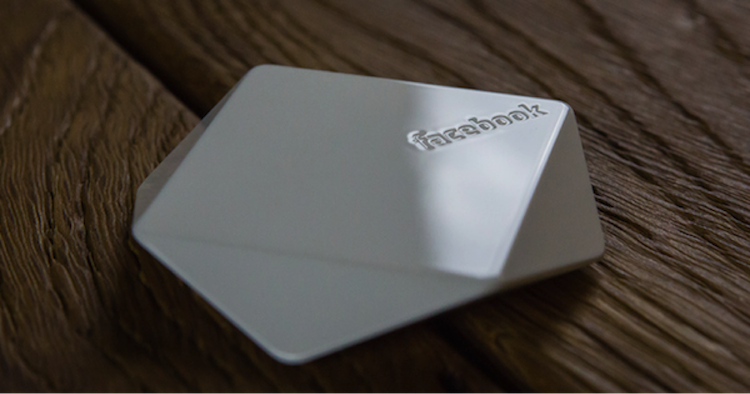
    Facebook Bluetooth Beacon Image - SearchIn fluence

    Simply put, the beacons themselves are nifty little devices (about the size of a hockey puck) that are given to businesses from Facebook. Currently, you must request a beacon from Facebook in order to receive one (more on that later!). These devices use Bluetooth technology to send a signal to the Facebook app on a visitor’s phone to help show them “Place Tips.”

    OK, So What About Place Tips? How Do They Work?

    Place Tips show a visitor useful and relevant information about their location, which is determined using cellular networks, Wi-Fi, GPS, and Facebook Bluetooth beacons. They can include friends’ photos, experiences, and moments from that place, as well as prompts to like the business’s page, check-in reminders, and posts or recommendations from the business.

    Everyone’s Place Tips are unique: at a restaurant, they can show a menu, reviews, and frequently mentioned information like a signature cocktail; at a retail store, they can help customers find business hours, learn about upcoming events, or see pictures of items currently for sale. Businesses are also encouraged to write a customizable welcome note that appears at the top of the Place Tips feed and use it to promote items or share facts and tips about their establishment.
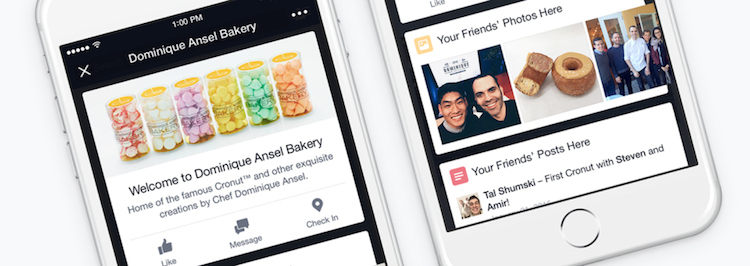
    Facebook Place Tips Image - Search Influence

    For those who are worried about their privacy–don’t! Place Tips will not post anything to your profile, collect any information from you or your phone, or show people where you are (unless, of course, you upload a picture of yourself at this location), and they can be turned on or off within the Facebook iPhone app settings.

    How Has it Been Working? What are the Next Steps?

    Earlier this year, Facebook did a test run of the service at various New York City locations. According to Facebook, since it started piloting the service there, local businesses that have tried Place Tips have seen a “steady uptick in page traffic from in-store visitors.”

    After seeing the New York City program prove successful, Facebook is offering business pages across the U.S. a chance to participate, although quantities of the free beacons will be limited.

    In a statement put out earlier this week, Facebook announced: “We’re now providing free beacons to more businesses in the U.S. Because Place Tips are meant to offer people useful and interesting information about the places they visit, we’re prioritizing beacons for businesses with active Pages full of content—such as photos, check-ins, and status updates—from both the business and its customers. To help ensure your customers see Place Tips at your business, request a beacon today.”

    Has this piqued your interest? Then get to requesting your beacon! If you’re an administrator of your business’s Facebook page, you’ll receive a post frozen atop the business’s news feed encouraging you to enter their shipping info to get one of the beacons:
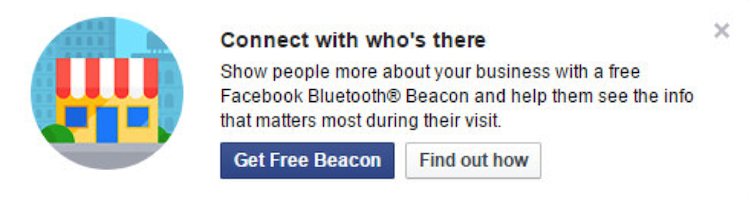
    Facebook Get Free Beacon Image - Search Influence

    If that’s not showing up for you and you’re interested in setting up Place Tips and receiving a beacon for your business, you can request one from Facebook here.

    If you have any questions about the Facebook beacon, Place Tips, or how they could benefit your business, we’re here to help!

    Image sources:

    Facebook bluetooth beacon image

    Place Tips image

  • Five for Friday: Facebook Aims to Please, Amazon Goes the Way of Uber, & More!

    1. Facebook Update Takes Into Account Time Spent Reading Stories – Search Engine Journal  

    Facebook looks to be taking the next step forward in studying user behavior. The social networking giant is now directly measuring user activity and engagement, even when the user isn’t interacting with content. How important to us are news stories that we just want to skim? The next time you stop scrolling to look over a story, you are casting a silent vote for that type of content in comparison to other stories in your feed. Facebook has already rolled this update out, which means you no longer have to comment on or like a story for your feed to be modified. If you feel like you’ve been seeing more of what you want to see, well, you probably are. 

    2. Twitter Makes Your Conversations Easier to Follow – Mashable

    Having trouble following that long chain of tweets and retweets? Good news! Reading Twitter discussions will no longer test your mental sorting abilities. Dialogues are now conveniently grouped for maximum readability. If you have frequently wondered who is talking to whom, fret no more! Talks are joined by a single solid line.

    Following Tiwtter Conversations Image - Search Influence

    3. Google Uses Sitelinks Based on Significance – SEO by the Sea

    Google, acting as the undisputed market leader in search, is continually looking to improve the way their search performs. In a patent granted earlier last week, Google now seeks to identify the most “visually and/or functionally significant hyperlinks within the document.” This means that the location a link points to isn’t the only attribute considered when Google thinks about links, but where a link visually is on a page matters as well. 

    4. Amazon Debates Paying People for Deliveries – The Wall Street Journal

    Amazon Deliveries Image - Search Influence

    A big part of Amazon’s costs come from shipping, so it seems only natural they should be seeking to cut costs. Only, this time it isn’t drones: Amazon would like to turn every potential income-seeking individual into an Uber-like delivery driver.

    5. European Sites Are Declared Liable for User Comments – Techdirt

    On Tuesday, the European Court of Human Rights ruled that sites can be declared liable for what any random user posts on them. This has massive implications for sites that allow users to regularly post content. What lies in the future of censorship?

    Image sources:

    Cell phone image

    Delivery image


  • Unlike Your Dad, These Guys Know How To Use The Internet

    internet dads father's day image - search influence

    The other day, I was trying to remember why I had posted a curious image on my friend’s Facebook wall in 2010. In a stroke of brilliance, my friend suggested we do a “reverse Google search” to see where the picture originated from, all while we were using Google Chromecast to watch this search unveil on my TV screen.

    In the middle of this (pretty standard) activity, I thought to myself about how incredibly bizarre this whole process would sound to someone just 10 years ago. Facebook walls? Reverse Google search? CHROMECASTING? We’ve all grown so blasé about these daily—yet bewildering—Internet tactics that we’ve lost sight of the magic and brilliance behind them.

    So this Father’s Day, I’m here to remind you about the extraordinary minds behind all this wizardry. The men whose ideas have allowed me (and probably you, too) to stream Game of Thrones while Facetiming friends across oceans and also maybe simultaneously perusing Instagram (because what are we if not all impressive “multitaskers” these days). I present to you the fathers of the Internet:

    Leonard Kleinrock

    Kleinrock Image - Search Influence

    Before the Internet, people had to gain an understanding of how computers could communicate (or network) with each other. That’s where Leonard Kleinrock, an American engineer hailing from Harlem, came into play. Kleinrock pioneered the mathematical theory of packet networks, which, essentially, is the technological backbone of the Internet. By figuring out how to send “packets” of information across networks, Kleinrock was able to develop the ARPANET, which is the bare bones seedling that grew into the Internet we all know and love today. In fact, on a historical day in early September 1969, a team at Kleinrock’s Network Measurement Center connected one of their computers to an “Interface Message Processor,” thereby becoming the very first node on the ARPANET, and, perhaps more importantly, the first computer ever on the Internet.

    Tim Berners-Lee

    Berners-LeeImageSearchInfluence

    These days, it seems like there’s a browser for every kind of taste or personality. Are you over the age of 50? Internet Explorer. Do you enjoy plain bagels and go with the flow? Safari’s got your name all over it. Back in the day, though, there was only one browser, and it was created by Tim Berners-Lee in 1989. The World Wide Web (sound familiar?) was the first web server and also marked the advent of HTML. Through the World Wide Web, Berners-Lee was able to bring together the concept of the Internet and hypertext, which now establishes web pages as you know them. Today, Berners-Lee remains the Director of the World Wide Web Consortium, a Web standards organization he founded in 1994.

    Steve Case

    Case Image - Search Influence

    You may not have heard of Steve Case, but you (and just about anyone living in the 1990s) most likely became acquainted with the Internet thanks to his brainchild: America Online. In February 1991, after a few trial and error test runs, AOL was launched, and with it came online games, chat rooms, AIM, and a whole new way for people everywhere to interact online. Its goal was to focus on making the Internet a part of everyday life. To say he succeeded would probably be a huge understatement.

    Mark Zuckerberg

    Zuckerberg Image - Search Influence

    Perhaps the first name you immediately knew on this list, Mark Zuckerberg is one of the most recognizable Internet names, surpassing even the infamous Tom of Myspace. Just in case you somehow have yet to hear, Zuckerberg and his college friends founded what was then known as The Facebook in June 2004. By the end of the year, the site had 1 million users. Today, the site has more than 1 billion monthly active users. You can thank Zuckerberg for turning social media into the cultural phenomenon and world changer that it is today.

    Larry Page

    Larry Page Image - Search Influence

    You’ve likely learned more from Larry Page’s creation than your own father. This guy revolutionized the way we use the Internet, and even our brains! In 1996, Page and his friend Sergrey Brin began collaborations on a search engine called BackRub. Fortunately, that name didn’t stick, and instead they decided to name their website Google, which they officially launched in 1998. Since then, the company has become the world’s most popular search engine, an everyday verb, and an overall technology powerhouse. In fact, today, Page is the CEO of Google, which now processes more than 40,000 searches every second (!) on average, more than 3.5 billion searches per day, and 1.2 trillion searches per year worldwide. Thanks, Larry Page, for giving us access to more information than we can even fathom.

    So this Father’s Day, take time to thank these men for all the ways they’ve made your life easier. No more flipping through encyclopedias to understand what the plural form of “beef” is, significantly fewer phone conversations, the beauty of Netflix?! Thank you, all you great fatherly geniuses. Without you, I wouldn’t even have a job.

    Image sources:

    Leonard Kleinrock

    Steve Case

    Mark Zuckerberg

    Larry Page


  • A Dream Job is Still Within Reach! Here Are 3 Ways to Find it

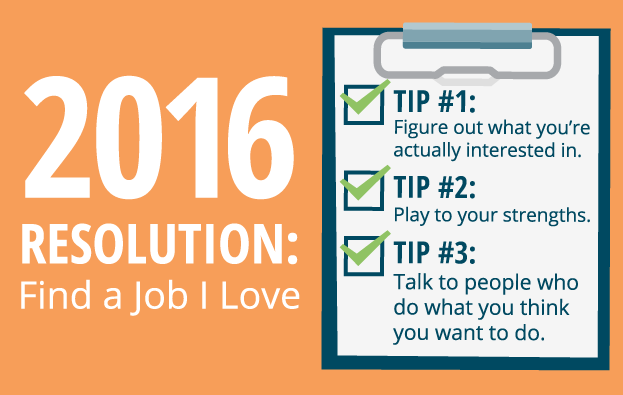
    2016 New Year's Resolution - Find A Job I Love Graphic Image

    We’ve all been asked at one time in our young lives: What do you want to be when you grow up? For most of us, the dream of being a cowboy or an astronaut (or for me, a taxi driver) are long gone, but the essence of the question still applies and is an important one. It’s also empowering. It implies that the decision is up to you, and all you need to do is pick something and go after it.

    Although it might not be as simple as that, you do have this kind of power when choosing the company that is right for you.

    As a new college graduate or a young adult looking for a job change, there are a lot of possibilities, and the job search might even seem overwhelming. Where do you begin? I am neither a young adult looking for a job change nor a new college graduate, but there are a lot of things I wish someone had told me when I was one. Primarily, that if you break down your interests and work habits, you’ll be much more equipped to recognize your dream job when you see the description.

    Hopefully you’ll find these tips helpful during your job search.

    Tip #1: Figure out what you’re actually interested in.

    You have probably thought about what you should do or the most popular jobs for your major or even what your family thinks you should do, but have you really thought about what you want to spend your time doing?

    For me, I’ve always been interested in tech. My favorite college class was “Communication in Technology.” I love being online and reading updates about best practices for online marketing, and I can set up a complex entertainment system like nobody’s business. When I was fresh out of college, I didn’t realize jobs existed where I could indulge these interests.

    So ask yourself: What classes did you enjoy in college? What articles attract you when you’re browsing the news? What online newsletters do you subscribe to? What kind of catalogs do you look forward to browsing? What magazines do you read?

    Let’s say you’re crazy about travel. You save all of your money for your next adventure, you have Wandertab installed on Chrome, your DVR is packed with Travel Channel shows, and your inbox is full of flight deals. You might want to start your job hunt with industries that incorporate travel, like a cruise line, travel agency, or tourism board.

    Tip #2: Play to your strengths.

    Now that you have an idea of the kind of work you want to do, it’s also important to consider the work environment and your own strengths. Think about previous projects where you’ve had success and were proud of the end product. Were you working in a group? Which skills were key to the result—organization, creativity, subject knowledge? By digging into your own skill set, you can be more particular about the types of jobs for which you apply.

    Company culture is important as well. You spend a lot of time at work, and by extension, with your coworkers. How you feel at the company and in the presence of your coworkers will affect your job satisfaction and ultimately your performance. Consider guidelines like dress code, benefits, time off, and willingness to train new employees. Would you mind being the youngest amongst future coworkers, or is it important that you work with peers? The answers to these questions can play a big role in shaping your job search.

    Search Influence Company Culture Image

    Personally, I loathe pantsuits. In previous positions, I was the youngest person in the room, and I prefer working with peers. I’m proud of my organizational skills, and I thrive in a collaborative, busy environment where there’s always something more to do; boredom is not my friend. When I started working at Search Influence, something just clicked. I loved learning from my intelligent, peer coworkers, and account management suits my skill set.

    You don’t always hit the jackpot while starting your career, but taking a critical look at your fit with a potential employer is a very important step to take before sending in your resume.

    Tip #3: Talk to people who do what you think you want to do.

    This was hands-down one of the biggest missed opportunities for me when I was looking for my first job. I was so nervous! I didn’t want to bother anyone, and I thought everyone would flat-out deny me if I asked to talk to them. Being on the other side of this now, it is so incredibly not true. It’s even the exact opposite—I love telling people about my job at Search Influence. Especially younger people who think they might want to work in my field of online marketing.

    Search Influence Company Culture Tech Jobs Image

    A current employee of a company you’re interested in or someone who holds a job title you aspire to hold one day is an invaluable resource if you’re willing to ask. They can tell you so much more than a job description: day-to-day tasks, work environment, team structure, key skills, and even tips for getting hired.

    If you don’t know someone who works in your field of interest, use your alumni group and/or any connections you might have. You’d be surprised who knows someone you might want to speak with. And when you do find the person to talk to, come to the meeting prepared with questions to discover information that would be most valuable to you.

    By taking the time to think about your interests and strengths, and by taking proactive steps to talk to someone in the field, you’ll be much better equipped for your job hunt. You’ll likely send out fewer resumes, but they’ll be for positions that are a home run for you instead of hoping something sticks, making them much more beneficial in the long term.

    If you’re like me and enjoy tech, search engine optimization, and online marketing, find out more information about open positions at Search Influence on our Careers page.

  • How to Win Followers and Influence People: Build Your G+ Following in 3 Steps

    We’ve cracked the code to successfully increasing the Google+ following for a small business (or at least we know we’re on to something). Our little experiment shows that if you follow three simple steps, you can gain more followers on Google+.

    Now, before you equate the importance of Google+ (colloquially referred to as “The Plus”—it’s a thing, I promise) to that of utensils at a pizza shop or a certain search engine that rhymes with “wing,” it is important to note that although Google has consistently denied any causal relationship between what shows up in a Google search and activity on “The Plus,” evidence shows there may be reason to listen up. Besides, even if you don’t drink the Kool-Aid and immediately become a Google+ fanatic, I think we can all agree that vying to be in Google’s good graces is always a smart idea. I mean, come on, you wouldn’t skip your boss in line at the movie theatre or punch Ryan Seacrest in the face after winning a trip to Hollywood (OK, I can’t make any promises on that one), but you get the point. Don’t bite the hand that feeds.

    Follow and Compliment

    Now that we have established that Google+ matters, let me clue you in on a little G+ secret. People on social networks are like that hyper-masculine guy on your road trip: all they want is to be followed and complimented. Following, and subsequently +1’ing a person on Google+, is like referencing your buddy’s cheese blog in the bar you are currently patronizing with a group of friends. Not only have you discovered him on an incredibly remote platform, but you’ve even followed up with a compliment! Go you, Stanley, you’re relevant, and people appreciate your knowledge of cheese.

    In all seriousness, though, over the past few months our experimentation shows that you will receive at best a 40 percent return rate in followers. For every 100 people followed and +1’ed, we received approximately 40 follows in return. It is important to note that the client happened to be a particularly interesting and popular business. That’s not to say the inherent love of HVAC nuances isn’t bountiful across the land, but it’s just something to keep in mind.

    Given the fairly low rate of return, you can see how this may prove to be quite taxing if your goal of followers is in the hundreds, especially considering Google+’s limit of 50 follows per day. So what shall we do as small businesses owners armed with this knowledge? Luckily, as your in-house guinea pig, I am here to break it down into three simple, effective steps.

    3 Steps to Building Your G+ Following

    1) Start by following larger, established pages in your geographic area. Think The Wizarding World of Harry Potter if you are located in Orlando. If you need help getting to the Google+ page for The Wizarding World of Harry Potter, I can’t help you. If you have to ask, you’ll never know. If you know, you need only ask.

    2) Once you have lost yourself in a voracious “following” spree, now it is time for flattery. The people who occupy the comment threads of your newly acquired network are relevant to you in a few ways. Not only do they most likely engage with local businesses, but they are also active on “The Plus” ← there it is again! See, I told you it’s a thing. Start following and +1’ing posts in your stream you deem relevant to your business’s interests.

    3) Be sure to watch out for exceeding Google’s “follow” limitation on a larger scale. After you exceed 1,000 people/pages followed on Google+, we’ve noticed that the social network gets a little buggy. If you begin “maxing out” of follows well before your promised allotment of 50, simply take a break for a week, binge on some Netflix, and live to fight another day.

    That’s all for now, folks! If my team discovers any new, innovative ways to garner your Google+ following, we will be sure to let you know. If you hear nothing, that means Skynet, ahem, I mean Google has discontinued “The Plus.”

    Image sources:

    Kool-Aid GIF

    Guinea pig GIF


  • Reconstruct the SEO Strategy of Your Medical Practice

    Medical SEO Image - Search Influence

    A referral by a physician used to be the most common way people chose health care specialists. However, now patients are turning to Google and other search engines for health information and to select a physician. In fact, 62 percent of smartphone owners used their phone to search for information about a health condition, according to the latest statistics from the Pew Research Center. Among those who look for online reviews to shop for doctors, roughly one-third reported choosing a physician based on good ratings, according to a national survey on the use of online physician rating sites published just last year in the Journal of the American Medical Association.

    To make the most of this trend, your practice must show up in Google search results prominently. If your practice is getting lost in a sea of search results, implement some of these medical search engine optimization tips to attract more patients.

    Create Great Content

    As demonstrated by the Pew Research Center’s facts on Internet use and health care, consumers today are hungry for health information. Your practice can benefit by providing the information consumers are looking for, but there’s a strategy to this. The days of simply putting the most common medical keyword strings all over your web pages are over. With Google’s new algorithm updates, websites that have consistent, quality content are the ones that will get the bump in the rankings.

    For a medical SEO campaign, create distinct web pages for related topics that prove your practice is  an authority on the subject. For example, an orthopedic practice that wishes to bolster its search engine rankings, should create separate web pages for a diverse range of topics such as  pediatric orthopedics and sports medicine. To offer more detail about specific treatments or procedures, these pages can then be broken down further into subtopics. On the sports medicine page, for example, include a subtopic about ACL reconstruction surgery or muscle tear prevention tips. Unsure what topics and procedures potential patients are interested in? With a personalized SEO package, Search Influence can help determine what topics your target consumers are searching for the most.

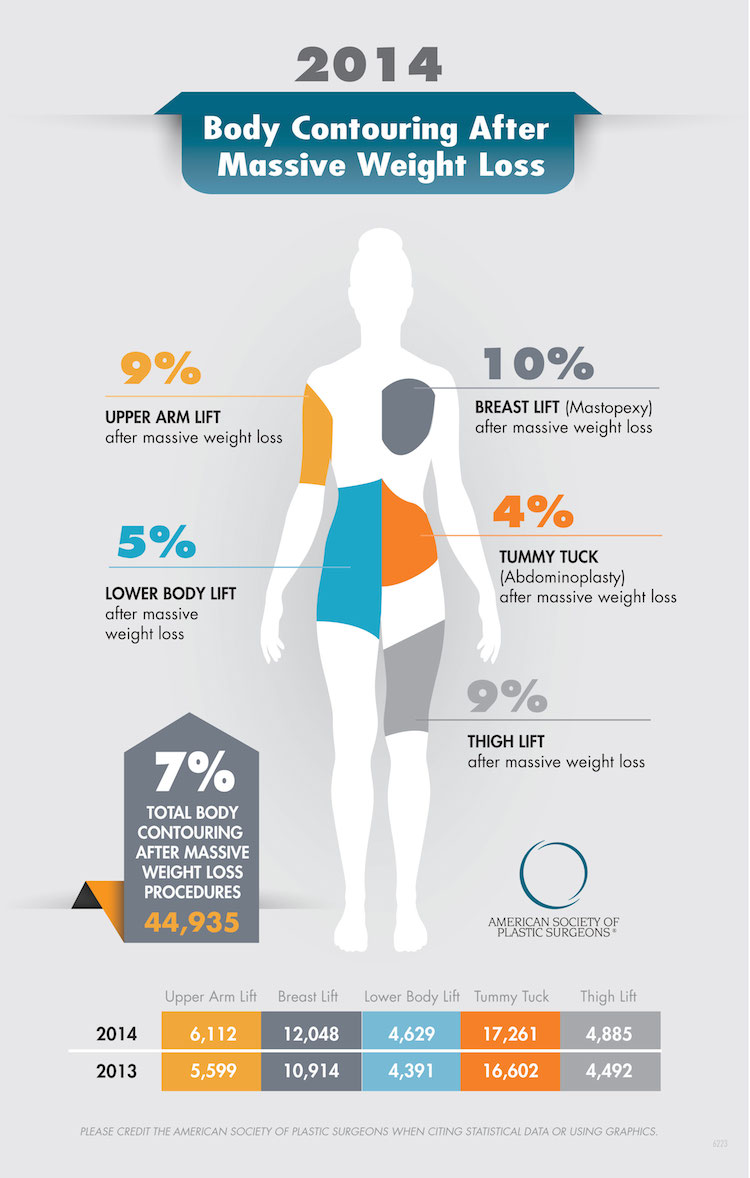
    Infographics are also great content to invest in for medical SEO because infographics can help grow website traffic. Research by AnsonAlex, a tech company focusing on tutorials, found that publishers who use infographics grow website traffic 12 percent faster than those with no infographics. In fact, the popularity of infographics has surged in recent years—increasing by 800 percent from 2010 to 2012, according to research from Web company Unbounce.

    Plastic surgery infographic image - Search Influence

    Image Optimization

    Along with infographics, you will want to include other images on your website as well. As we’ve said before, Google rewards websites that have interesting and relevant images displayed. Images keep people looking at your site longer, which gives you website more authority in the eyes of the algorithm.

    Help people find your pictures by optimizing them to include alternative text. For example,  say your practice has a diagram of what happens when a person suffers from a pulmonary embolism. If you optimize your diagram, it will likely appear when people perform a Google Image Search for pulmonary embolisms—possibly appearing as one of the first images they see. When they click on this image, they are giving a hit to your site and increasing your overall medical SEO ranking.

    Mobile Websites

    As evidenced by the whopping 62 percent of smartphone owners who use their mobile devices to look up health information, a mobile SEO strategy is  crucial. Google’s recent “Mobilegeddon,” or mobile-friendly update, was a move to further demonstrate just how important mobile websites are for SEO. It is imperative your medical practice has  a mobile-friendly design users can easily access on the go.

    But, be warned. Just because your Web developer tells you your site is mobile-friendly does not make it so. To see if your medical website passes the mobile-friendly test, use Google’s testing tool.

    Where has your medical practice seen the most success with Healthcare SEO and content marketing? Let us know in the comments.

    Image source:

    Infographic from the American Society of Plastic Surgeons


  • The Infectious Spread of New gTLDs: Good For Your .Business?

    Over the last year and a half, the Internet Corporation for Assigned Names and Numbers, or ICANN, has been releasing more than 1,300 new gTLDs, or generic top-level domains. During this time, there has been a growing conversation amongst business owners as to whether or not they should make the switch to an industry-relevant TLD or stick with their current .com.

    Remind me again … what exactly is a TLD?

    Though you may not realize it, every time you type in a URL in your browser, you are using a TLD. It is everything that follows the dot in a website address. The macdaddy of TLDs is, of course, .com (used by 51.6 percent of all websites), with a few hundred others taking up the rest of the market share. These little identifiers help give a piece of information about the website itself, such as its purpose or geographical area. Because of TLDs, we know that websites that end in .gov are government related and websites that end in .edu are education related.

    So why are they rolling out new TLDs?

    Before June 20, 2011, there were only 22 gTLDs available. But on that day, the board of directors at ICANN almost unanimously voted to stop restricting generic top-level domain names. The chairman of the board, Peter Dengate Thrush, explained it like this in The Guardian: “Today’s decision will usher in a new Internet age. We have provided a platform for the next generation of creativity and inspiration. Unless there is a good reason to restrain it, innovation should be allowed to run free.”

    icann-image-searchinfluence

    Alright, I understand now … but should I get one for my business?

    More than likely, no. In almost all cases, it is completely unnecessary, and switching over to one of these new top-level domains may actually hurt your company’s website more than help it. When the announcement of the rollout came in 2012, Matt Cutts, head of the Web spam team at Google, said on his Google+ page that, “Google has a lot of experience in returning relevant web pages, regardless of the top-level domain (TLD). Google will attempt to rank new TLDs appropriately, but I don’t expect a new TLD to get any kind of initial preference over .com, and I wouldn’t bet on that happening in the long-term either. If you want to register an entirely new TLD for other reasons, that’s your choice, but you shouldn’t register a TLD in the mistaken belief that you’ll get some sort of boost in search engine rankings.”

    So if you are a bank and think that registering for a .bank TLD will benefit your search engine optimization strategy, think again. As Cutts stated, a website will rank because of its relevancy for a search, not because of the letters after the “.” in its URL. In fact, because the age of your domain is an important ranking factor in Google’s algorithm, switching to that new .bank domain may actually hurt your website’s relevancy in the eyes of Google and other search engines.

    I have a new business and am just getting a website. What about me?

    In the case of new websites, it is totally up to your preference. One important thing to remember is that these new domains are extremely new, and most people are not used to seeing them. Because of this, you will want to consider registering for the more common versions (.com, .net, .org, etc.) of your domain in addition to the new gTLD before redirecting customers to your .bank website, for example. This way, if a consumer ever types in your website but makes the assumption that it is .com, they will be redirected to your actual site.

    Image sources:

    ICANN image

  • Social Giving Success: An Intro to Online Marketing for P2P Fundraisers

    P2P-Fundraising-Search-Influence

    Which do you trust more: an ad or a friend?

    The answer is pretty clear, right? At least that’s what many nonprofits think, and that’s why the face of fundraising has changed significantly over the past decade. Instead of just soliciting direct donations, we’re seeing more and more peer-to-peer, or P2P, fundraising campaigns.

    Peer-to-peer fundraising enlists a nonprofit’s supporters to fundraise on their behalf, rather than or in addition to soliciting direct donations.

    Having your supporters fundraise for you offers that extra level of trust and intimacy that ads can’t provide. P2P engages supporters so they feel more connected to a cause, resulting in greater long-term support. And with today’s technology, it’s easier than ever to connect with huge networks of people and resources.

    So let’s talk about ways to make an online P2P fundraising campaign successful. From search engine optimization and social media to website development, here are some important tips:

    Make Donating Easy

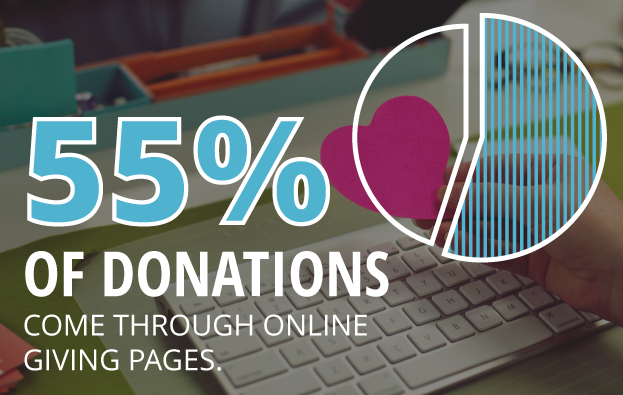
    First things first: You need a way to collect and differentiate donations. According to Network for Good’s annual Digital Giving Index, 55 percent of donations come through nonprofit, online giving pages, especially branded and personalized ones.

    A successful campaign has a user-friendly and effective system for making and processing donations that participants can share through social, mobile, email and every-which-way. This means also investing in either a mobile app or a responsive website. On DonorDrive’s platform, for example, donations have nearly doubled using responsive sites on mobile and tablets.

    The options out there are endless. Make sure your fundraisers have a link to share and trust your platform’s security and usability enough to want to share it.

    1511-SI-Newsletter-KG-D-02

    Engage your Followers

    More than half of those who engage on social media with a nonprofit take further action like donating or participating, according to Waggener-Edstrom’s Digital Persuasion Report.

    Fundraising as a whole is dependent on engaging and recruiting supporters. P2P requires not only engaging current followers to donate, but also inspiring them to fundraise and recruit for you. This means sharable content! Branded images, infographics and participant stories are just a few examples. Followers need to be able to see and share the effects of their donations, along with the whole experience along the way.

    Follow Basic SEO Guidelines

    SEO principles are universally applicable. Do some extra research on optimizing your website without stipulating that you’re a nonprofit or P2P campaign.

    That said, (1) make sure you’ve got relevant and easily accessible content on your website. Search engines are all about good content that naturally bridges the gap between what your organization does and what people are searching for. It’s no longer about stuffing exact-phrase keywords into every page of your site. (2) Submit and maintain consistent information for your organization to location- and industry-specific directories (and calendars if it’s an event). This way, you’re creating more links going to your website as well as solidifying your contact information with Google Maps and other mapping services. And (3) see if you qualify for a Google Ads Grant. Google gives out varying amounts of money each month to use for nonprofit AdWords campaigns, so take advantage of it! An AdWords campaign offers the opportunity to reach those who you might not be reaching with organic rankings alone.

    These are just a few tips to get you started. Even if you don’t have the budget to implement an intensive campaign, it’s important to cover your bases and make sure you’re tailoring your website and social media to work with P2P principles. The Internet is already THE social hub; use it to mobilize your followers for a successful campaign!

  • Five for Friday: Google’s Phantom Update Revealed, Remembering Sally Ride & More!

    1. Google’s “Phantom Update” Is a “Quality Update” – Search Engine Land

    In early May, many people noticed significant ranking changes, which led to the rumor that Google had run a Panda update or a spam-related update. However, Google denied this, leaving many stumped by what could have mysteriously caused these rankings changes. Now, Google has finally confirmed that the “Phantom Update” actually included changes to how content quality is ranked, leading some to call it the “Quality Update.” However, exactly what changes were made and how quality is now assessed by Google is still being kept top secret.

    2. New Cortana App Will Sync iPhones to Windows 10 “Very Soon” – Marketing Land

    Microsoft announced its plans to make Windows 10 cross-device friendly with a new Cortana “Phone Companion” application that will connect your Windows PC to mobile devices, including iPhones. This app will take Apple’s “Continuity” feature to the next level by not only syncing across devices, but by syncing across devices regardless of your operating system. Stay tuned for the Android version of Cortana at the end of June; iPhone users will be on hold for the app until “later this year.”

    3. Google Webmaster Tools Becomes Google Search Console – Google Webmaster Central Blog

    Say goodbye to the name Google Webmaster Tools and start becoming familiar with the term Google Search Console in its place. After 10 years of offering the beloved Webmaster Tools, Google announced the rebranding change last week. The company stated that there were many types of Google fans using the tool, from small business owners to marketers to true webmasters, and the goal is to make sure that the “product includes everyone who cares about Search.” No drastic changes to the tool’s functions were announced with the new name. Contrary to speculation, Bing says that renaming its Webmaster Tools is “not on the radar.”

    4. Twitter Helps Reinforce Your Mobile Local Branding In Search Results – Blumenthals

    Google mobile search results can now display Twitter content for branded searches, which provides a great place for local businesses to increase their visibility and positive brand message while also pushing competitors further down on the search engine results page. This also gives local businesses another platform for sharing content, which can easily be synced to a Facebook page, and more ways to control front-page content for reputation management.

    5. Google Doodle Celebrates Sally Ride’s 64th Birthday – Search Engine Roundtable

    Tuesday, May 26 would have marked the late Sally Ride’s 64th birthday. Google remembered the birthday of the first American female astronaut in space with a series of Google Doodles inspired by her life’s many accomplishments. On June 18, 1983, Sally became the first American female in space—and the youngest still to date! After another successful mission, Sally founded Sally Ride Science, where she focused on educating young people, especially girls, about careers in science, technology, math and engineering. As a woman in the technology field, I would like to say “thank you” to Sally Ride for all she has done to pave the way for those who have come after her.

    Image sources:

    It’s classified GIF

    Goodbye elephant GIF

    Sally Ride GIF

  • Give Your Facebook a Facelift: Social Media for Dermatologists and Plastic Surgeons

    Facebook Facelift Image - Search Influence

    Time Magazine recently posed the question, “Can Plastic Surgery Make You More Likeable?” Certainly, there are many benefits to cosmetic procedures for the patients, but it is also time for plastic surgeons and other physicians to think about how to make their practices more “likeable.” Facebook and social media can be used to attract new patients and shape the local perception of a business. For example, Search Influence helped one plastic surgery practice attract nearly 70,000 new fans on Facebook. Search Influence can help create and manage the online presence of your business through social media, but if you want to get started on your own, follow these five steps:

    1. Make a Facebook Page

    Most Internet users visit social media sites daily, and social media can be a cost-effective place to advertise. Facebook accounts are free to create and maintain, and AdWeek reported last year that advertising on Facebook is 70 percent cheaper than the industry average. While using it effectively will take a significant amount of work, creating a Facebook page for your practice takes only a few minutes. With pictures and information about the procedures you offer, a Facebook page allows potential clients to learn about your practice without following an external link. This can be a great place for a list of services and a few testimonials from past patients. It’s a streamlined version of the most relevant information, and you can direct people to call your office or visit your website to learn more.

    2. Get More “Likes”

    It’s easier said than done, but awareness about your practice will grow as users “like” your page. To draw their attention, it helps to have compelling pictures and interesting information. Showing a little personality can encourage people to identify with your practice, which helps set you apart from the competition. As more people interact with your page, Facebook will give you demographic information about their ages, where they live and other details that can help you better know the local market.

    Struggling to get potential patients and customers to follow you on Facebook? One way to get more likes on Facebook is through Facebook fan-building campaigns, which have been effective for Search Influence plastic surgery clients.

    3. Get People Involved

    Ask questions, and post updates that encourage people to interact with your page. When fans “like” an image you’ve posted, it makes it more likely that their friends will also see your page. If you post about local events and holidays, it will help connect you with your community.

    4. Update Your Page Regularly

    While it’s inadvisable to offer medical advice over social media, your page or a separate blog can be a great place to explain procedures or post updates about your practice. If you explain medical terminology and correct common misunderstandings, then potential patients will see you as more qualified and trustworthy.

    5. Pay to Play

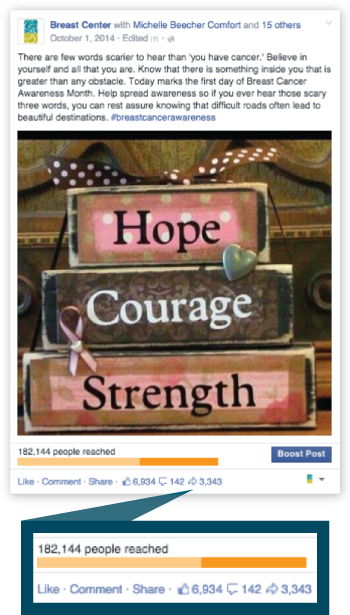
    Advertising your page on Facebook involves a lot of choices. Do you want help accumulating “likes,” or is it more important that people visit your website from your Facebook posts? While pay-per-click (PPC) advertising assures that people are viewing your page, your name will show up on more news feeds if you pay for exposure. For example, a promoted Facebook post for a Search Influence plastic surgery client reached more than 182,000 people.

    First Promoted Facebook Post - Success Study - Search Influence

    Because of the variety of choices involved, streamline your social media strategy and achieve successful results with the team at Search Influence managing your advertising plan. Search Influence can advertise on several sites and measure results in the ways that matter most to your practice, including new patients and calls to your office.

    If you want to give your whole business image a facelift, then injecting social media into your marketing plan is the most cost-effective option. Our team at Search Influence can help you create and manage your online image, and we can advertise on a variety of platforms including Facebook, Google+, Youtube, Pinterest and Twitter. Continuously providing updates can be a lot of extra work for your busy staff, and some employees may already spend too many work hours on their social media accounts. Let Search Influence manage your online image to make sure everything is handled professionally. Find out more about our services by browsing our website.