Tag: social media marketing

  • Google-Groupon Faceoff: Google Daily Deals Enter The Arena As Other Social Media Backs Off

    Just four months after jumping into the daily deals pool, Facebook abandoned its efforts with regard to small business space (at least those not related to check-in services). Given that the business in question had to have a Facebook profile and only about 15% of the average business’ fans are located in the same city as the business itself, it makes sense that the social media giant would turn its focus toward more profitable venues — eliminating its Groupon competitor while reducing its lame-duck Foursquare competitor to a sideline project. Hot on the heels of this news, however, comes the announcement from local-focused entity Yelp that their daily deal program will be severely scaled back, and that “we’ll continue to email out any amazing Deals we find; rest assured when it comes to quality vs quantity, we’ll choose quality every time.”

    Well, there are worse places to get your deals.
    Well, there are worse places to get your deals.

    While Yelp isn’t on the same scale as the ‘book as far as user base or diversification of services, it is by nature a very local presence, making the small-biz deal model a seemingly natural fit. However, Yelp CEO Jeremy Stoppelman has stated concerns with the “deep discount” approach that has provided an extremely negative experience for many small-scale businesses, leaving nobody happy in the end via use of an unsustainable model — albeit one with considerable consumer response. However, despite the reputational backlash growing from the business end, Groupon has reported record profits and its name has even been bandied about as the fastest-growing company ever. While long-term results are as of yet unproven and more merchant-friendly policies seem inevitably necessary to keep the brand afloat, it’s certainly hard to argue with the numbers at the moment.

    So why, with other social web presences getting washed out of the pool by Groupon’s leviathan-scale belly flop, is Google dipping a toe in? The search behemoth has established a deals program in Portland, OR and seems to be looking to expand, given its recent display of a New York-based deal on admission to the Museum of Natural History. I guess the saying goes that if you can’t beat ’em, attempt to acquire them for $6 billion and if that doesn’t work, well, go back to trying to beat them.

    Part of this is almost certainly to do with timing, as Groupon recently filed for an IPO that could happen as soon as next month, launching it as a publicly-traded company and opening up an entire new world of earning potential. Its unprecedented fast-track growth also offers significant incentive to mount a counter-campaign and nip the competition in the bud before it grows to Death Star-like proportions. El Goog is facing an uphill battle, given that it’s moving against some pretty entrenched competitors — but at the company’s current scale it wouldn’t have much trouble deploying a nuclear bomb to swat a fly. There’s no clear path to adoption for users (certainly nothing as convenient and reliable as an email plunking into one’s mailbox every morning) and no real incentive to sign on when faced with the plethora of other, more popular options, at least for the moment. However, the sheer number of eyeballs (particularly if location-targeted deals are to be featured on Google’s famously minimalist home page) is a force to be reckoned with in and of itself. (In fact, a Piper Jaffray analyst estimated the Nexus One placement on the Google home page to be worth between $4 and $5 million if it were a bought-and-paid-for ad.)

    The Google brand, for better or for worse, has a lot of leverage with consumers and products that gain popularity tend to stick around for the long haul. The company also seems to have wider ambitions with its deal models, tying the Offers brand up with Google Wallet and check-ins, as well as developing Google Offer ads and coupons that can be displayed along regular PPC content. While Groupon is currently mobile-accessible, the all-in-one convenience of Google Wallet could be a strong selling point to those who want all their resources and grabs in one place. It’s clear that with the resources at their fingertips the success of Google’s deals platform isn’t contingent simply upon the “daily deals” Groupon-like aspect; however, it remains to be seen whether the attempt at diversification will pay off or Groupon’s 115 million users will stay true to the service that’s provided staggering discounts for its duration as an entity.
  • Starting Out on Facebook: Small Business Marketing Solutions or Useless Sales Pitch?

    facebook small business marketing
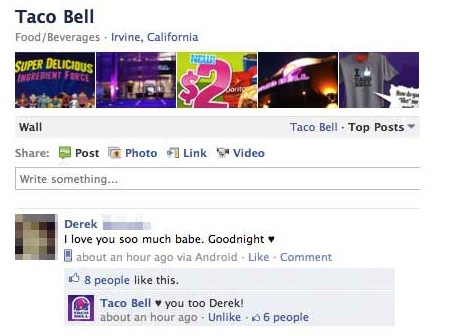
    That’s some brand love.

    A few weeks ago, Facebook Marketing Solutions, the advertising side of the social media giant, released its new education portal for small businesses just starting out online, titled Facebook for Business.

    The Facebook page for the group is nothing more than a simple sales pitch for businesses becoming involved on the site. It’s tips for publishing, appeals to outmoded user statistics, and overall tone is clearly directed at the first-time Facebook advertisers. Promoting Sponsored Stories seems to be the main goal, though the ability for a small business to achieve such a close relationship with the company behind the site is not clear at first glance: Nike, American Express, and a page that can get 100 answers to the question “Blue or purple?” are featured, but no one just starting out with limited brand awareness. However, as you delve deeper into the videos, a number of case studies can be heard by the part-time Internet marketer to help understand the basics of the varied services Facebook offers, explained in a way that focuses on what makes social media advertising different from traditional venues.

    But July 27th brought a new arena for the first-time marketer. The Facebook for Business site offers a set of introductory slides more like what one would expect on the Facebook page. The Best Practice Guide and other tips take the unedited rambling of the taped live webinars from the Facebook page and put them into clear slideshows (though inexplicably as unsharable and minimally-graphable PDFs). Discussing Pages, Ads, Sponsored Stories, and the “Platform,” Facebook lays out its basic services in an all-too-simple way.

    The site is clearly for someone who doesn’t muck with websites, as just one tab describing the Open Graph protocol for a new marketer would show a whole new world, integrating on-site tagging with a need to contact a Preferred Developer to best take advantage of the depth of information one can provide, shape, and offer to their clients.

    It’s easy, at least for the somewhat experienced marketer, to come up with counterexamples, glossed-over topics that are the core of Facebook advertising such as effective demographic targeting, and the just-seething disdain for squares who just haven’t gotten how cool Social Media is. But I applaud Facebook for their efforts; the only other major social media outlet for business is Twitter, which starts its Promoted links at $5,000 per month and provides little information for its non-paid business partners. Google+ recently purged business accounts, asking creators of those accounts to “hold off,” and have been “focusing on the consumer experience” — words that are hardly music to marketers’ ears.

    What the shortcomings of the Facebook for Business and Facebook Marketing Solutions pages really show off is that a business needs dedicated social media management, whether through an SEO firm or internally. The waters are murky and best handled by someone who knows not just the sales pitch for getting involved, but also the mechanics of the process and what little stuff can greatly improve the social footprint of the small business. It’s too hard to sum up everything that should and could be done to optimally advertise using social media just on a few webpages or through a few taped webinars — the best thing is to call Ghostbusters and let Peter and Ray and Egon worry about the ghosts so business owners can get back to directly helping their customers.

  • Kenneth Cole/Cairo Twitter Debacle: Businesses Learn A Valuable Social Media Lesson

    Last month, the world saw their attention turned to Egypt and watched media coverage unfold as its citizens protested in an effort to force long-term President Hosni Mubarak out of office. Subsequently, and like most hot button topics, the issue carried over to both Facebook and Twitter and lingered on them for several weeks.

    Retailer and clothing designer Kenneth Cole found himself joining in on the social media coverage of the issue by posting a tweet that read: “Millions are in uproar in #Cairo. Rumor is they heard our new spring collection is now available online at http://bit.ly/KCairo-KC”. Almost immediately Kenneth Cole found himself in a firestorm of controversy, with those criticizing him for his tasteless tweet in an effort to promote his business and attaching it to a controversial issue. Just a few hours after the tweet, he issued an apology, admitting that it was inappropriate and insensitive.      


    Businesses are increasingly finding it more challenging to promote their products and services in social media, all while catching the consumer’s attention within a barrage of other competing businesses with Twitter handles and the same, if not better promotion tactics. With trending topics and hashtags changing every few hours, particularly on Twitter it is tempting for a business to attach themselves to a “topic of the moment” in order to gain consumers’ attention. Not to mention, the message has to be in 140 characters or less.

    While businesses use social media tools even more to increase their business and platform, it’s important to keep a fine line of staying away from controversial topics that might offend potential customers.

    Social media is a powerful tool that one can use for good or bad. Since its inception I’ve seen several celebrities “killed off” on Twitter more than I care to admit. I have also seen plenty of hashtags that made its way to trending topics that one might find very off-putting and offensive.

    Still, with these challenges that businesses might face to “keep up,” it forces them to become even more creative with their tweets to consumers and keep them engaged with future sales and upcoming events.

    Another byproduct of a business or individuals receiving negative feedback from a tweet is the creation of mock accounts, which usually spoofs the original account and its owner. Of course, Kenneth Cole wasn’t an exception. An account named @FakeKennethCole. was created and sent out a series of tweets which poked fun at the situation. Surely, businesses would not want to see themselves being made fun of. They probably would also not want consumers to get confused about a mock account being one that was part of the actual business.        

     Fake Kenneth Cole account that was spawned out of the controversy.

    Overall, businesses learned an important lesson using social media and the actions and words that should be carefully reviewed before clicking the post button.

  • Radiohead and Social Media: The Twitterized Release of “The King of Limbs”

    The members of Radiohead are a private bunch, often very selective with their interviews and keeping low-profile lives in their hometown of Oxford, England. As such, the press scrambles over every utterance that the band might put forth, which isn’t much. But their online presence, long established, is staggering. Their website, entitled “Dead Air Space,” has gone through countless incarnations, including wormholes of old information about their previous art and music. It primarily serves as the band’s blog, strewn with “office charts” of the music they’re listening to and links to new music or websites of political and social issues. Some of the members keep more-or-less active Twitter accounts, including one for the band itself, and the people they follow seem to form some of their inner circle, like the artist Stanley Donwood, amongst others.

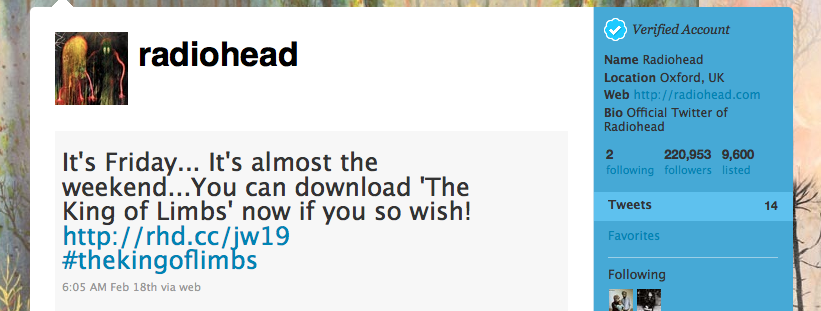
    These twitter accounts, along with those of their fans, were an epicenter of activity last week. On Monday, February 14th, Radiohead posted via Twitter: “Thank you for waiting…”, which was followed by a link to www.thekingoflimbs.com, a website designed for the release of “The King of Limbs,” their new album slated to become available for download the following Saturday. Four days later, on Friday the 18th, Radiohead tweeted again: “It’s Friday…It’s almost the weekend…You can download ‘The King of Limbs’ now if you so wish!”

    Fond of doing things differently, Radiohead are known for their innovative and genre-bending music. While the quintet could be cited as one of the most influential bands in modern music, it’s also clear that they are also exploring the marketing of their music in a way that no other mainstream band has attempted before.

    Anyone who followed the most recent album releases by Radiohead already knows that they’re changing the way music can be released to the public, especially by a major artist. After completing “Hail to the Thief” in 2003, they had fulfilled their recording contract with EMI, and they chose to remain independent rather than signing with another label. They recorded 2007’s “In Rainbows” on their own and released it on their website as a direct download with the asking price of “pay what you want.”

    This alone posed numerous questions to musicians, music lovers, and music industry professionals, causing a minor existential crisis in the recording industry. It called into question the value of music, especially considering the widespread piracy of music. It questioned whether musicians really need major record labels to market their work. But most importantly, it bridged the gap between the band and their fans. Radiohead offered an immediate and direct transaction, so one would know that the money they paid for the music (if they chose to pay at all) was going directly to the artists and producers responsible for creating it.

    By default, Radiohead relied on their previous successes, fan base, and name to market their new music, so their achievements with “In Rainbows” cannot be applied to unknown artists. However, the way “The King of Limbs” was released last Friday redefines the relationship between musicians and their fans. The band chose to use Twitter as the medium for announcing the album, and they again utilized their own web servers to facilitate the release. While the “pay what you want” aspect was ditched for a $9 price tag on a set of eight mp3s, fans could still remain happy knowing that their money was going directly to the artists that they want to support.

    Already on very short notice, the instantaneous “early” release of “The King of Limbs” caused Twitter and other social media sites to flood with reactions to the album, and it nearly caused Radiohead’s download site to crash. Music critics, eager to get the official first review, listened to the album hastily on their laptops that morning and posted track-by-track assessments merely an hour or two after the album was released–to much criticism by fans, claiming that new music cannot be properly reviewed so quickly. Regardless, the social media world was rocked by this new release, providing an open channel of communication between the band, their critics, and their fans. Whether you like the new music or not, it doesn’t take much to think that Radiohead might be up to something.

    Six days prior to the announcement of “The King of Limbs,” Ed O’Brien, guitarist and back-up vocalist, posted a blog entry on the band’s web site entitled “The Dignity Revolution.” (Also coupled with a tweet–they’ve connected their blog and Twitter account, a sign that they’re aware if the importance of social media.) It reads as follows:

    What have twitter and facebook ever done for us?

    Obviously, keeping in touch with everyone but I have to say I have become increasingly excited over the last 3 months about the possibilities of this form of communication.Yes I am very slow out of the blocks. It’s in the arena of public protest that it seems twitter and facebook are increasingly the means by which popular movements throughout the world are able to come together and mobilise.

    In some ways, one could argue that Radiohead are leading a popular movement, and Mr. O’Brien has an extremely valid point. Their use of social media, like Twitter, allowed for a direct and instantaneous connection between the artists and their audience, just as the release of “In Rainbows” allowed for a direct and open transaction. Thom Yorke, lead singer, once remarked in an interview: “If people want to play it for themselves, why don’t we just give it to them to listen to?”

    Aware of their massive fan base, the band decided that they can conduct business as they so please, using the high-speed connectivity of social media to do so. And while lesser-known artists may not have the audience that Radiohead has, thus being more vulnerable to reviews, it’s also clear that those musicians also use social networks as a way to market themselves on their own terms. That trend can only increase in the future, and that is what I believe Yorke and Co. are trying to prove.

    Is Radiohead leading a music industry revolution? It’s hard to say. With highly successful performers such as Justin Bieber and Taylor Swift, who are promoted and made famous through the marketing strategies of major recording labels, Radiohead’s business model might not be for everyone. Either way, social media provides an effective channel to promote their music, and Radiohead have become a successful example of a group of artists marketing and releasing their own work, instantly and directly, as they see fit.

  • Are Facebook Ads for All Businesses?

    Facebook Ads Image
    Facebook Ads. Are You Doing it Right?

    Recently a slew of articles have been popping up about the ineffectiveness of Facebook advertising. While we recently touched on this subject in a previous blog post, I thought I would explain why this statement has little credence when Facebook ads are done properly. If you’ve read any of our previous FB blog posts, you are aware that for Search Influence, Facebook yields a low cost per lead making it one of our most effective ways to drive leads to clients’ sites. With that being stated, I can proceed to explain (in a Clarissa-esque manner) why Facebook is effective and ineffective for some online marketers and industries.

    Are You a Facebook Friendly Business?
    I’ve mentioned this before but Facebook ads follow the same methodology that magazine and television ads follow.  While choosing images for your ads is important, determining whether your business is right for Facebook is the key to success. You would never hire a fertility specialist, carpal tunnel expert, or babysitter from a 30 second TV spot (well maybe you would. I would never trust my semen, wrist, or subsequent children in the hands of a stranger on TV, but I was raised right). I think that is the fundamental problem some advertisers have with Facebook. They’ve read a few cleverly written articles on online advertising on Facebook and they think they can create those successes for all their clients. However industries such as elective surgery, social causes, and the entertainment service industry fair considerably well for local businesses.

    Facebook Ads Image
    Facebook Ad Demographic

    Is the Facebook Demographic Right for You?
    Why do these previous mentioned industries succeed? Before I address that let me just get this out of the way – Facebook is not for everybody. If your business is a retirement home and a certified social media specialist tells you he can increase you fan base and leads from Facebook by some unthinkable number, he’s lying. Certain demographics just do not exist on Facebook, blame social media and technological darwinism. The largest demographic using Facebook are between ages of 18 – 34. They are the beauty obsessed, socially aware, fun-loving Youth of America. This is the age group your business must pander to in order to be truly effective.  From an ROI perspective, the subgroup of the young professionals between the ages of 25 – 34 are where the disposable income is the ripest. By targeting this age group with the correct interests and properly crafted ads you can increase your leads stream significantly.

    Are Facebook Ads Ineffective Because of Bad Advertising?
    We have all seen these ads. The married man being shown dating site ads despite his status being “married”, the teenage boy being shown breast augmentation ads because he has “breast” as a interest.  And my personal favorite, the work from home search marketing ads (as seen in the image below). I see these ads and I am filled with laughter, sorrow, and disdain. Is it such a surprise that Facebook is deemed ineffective with such a large percentage of ads misspelled, using irrelevant images, and just down right offensive ads running? I mean, get high on Jesus? Really?

    Facebook Ads Image
    Bad Facebook Ads are BAD

    At the end of the day, the performance of Facebook advertising is directly tied to your business, the demographic you are targeting, and how well you compose your ads.  People assume this is an ad space issue marketers and industries have dealt with since commercialization of goods. So instead of questioning whether Facebook is effective, social media marketers should be questioning whether Facebook fits their clients business model.

    Thanks to Salvo Vaccarella for the image.

  • Foursquare Survey Contest Winner Announced

    We’d like to congratulate the winner, chosen at random, from our respondents to the first-ever Foursquare advertiser study.

    Urban Ecology Center Header Image
    Environmental Education Programs – The Urban Ecology Center

    In order to be completely fair, we picked the entry at the halfway point (#65 of 130 respondents). And the lucky winner was Jeff McAvoy of the Urban Ecology Center.

    Urban Ecology Center Social Media Widget Picture
    Social Media Widget

    The Urban Ecology Center offers Environmental Education Programs for Milwaukee residents in two Milwaukee County parks. These guys are clearly very social media savvy with a presence on Twitter, Facebook, Foursquare, LinkedIn and an email list.

    As we speak, a $200.00 gift card is speeding to Mr. McAvoy just for taking part in our survey.

    We’d like to thank all the survey participants for helping out!

    But wait, there’s more! As it turns out, we have very little time to refresh the data for comparison for next week’s SMX East. Please, please, please, if you get our email, TAKE THE SURVEY!

    Thanks again to Jeff, everyone who took the last survey and those of you about to take the revised survey!

    (x1st10)

  • Matt McGee’s 7 Questions – How does Hall Piano stack up?

    I posted a link to Matt McGee‘s 7 Questions Small Businesses Should Be Asking and got this question from one of our customers, Steve Kinchen at Hall Piano Company.

    It was a great excuse to do a little impromptu analysis. We may do a brief series of these.

    Hall Piano Company Local Search Analysis using Matt McGee's 7 Questions Businesses should be asking.
    Hall Piano Company Local Search Analysis using Matt McGee's 7 Questions Businesses should be asking.

    Steve Kinchen: Read the article… How does HPC stack up?

    Will Scott: Pretty darn good, I’d say.

    By @mattmcgee‘s standards you’re pretty well covered

    1. How do the search results look for my company name?

    – http://www.google.com/search?q=hall+piano – you have the top 1/2 of the page with no negatives.

    2. Have I put all my marketing eggs in one basket?

    – Definitely not. You do TV / Radio, print, PR and Web / Social thanks to Dee Clubb

    3. Have I claimed my local business listings?

    – If not, they’re in progress (I know Bing is in the works):

    – http://maps.google.com/places/us/la/metairie/david-dr/901/-hall-piano-company?gl=us
    – http://local.yahoo.com/info-18122605-hall-piano-company-metairie
    – http://www.bing.com/local/details.aspx?lid=YN365x6567331
    – and more, of course 🙂

    4. How do my reviews look on Google Maps? Yahoo? Bing? Yelp?

    – We could always use more reviews but those we have are looking great.

    5. Am I using social media wisely?

    – I would say yes. And in your case that means using it conservatively. You’ve got great presence on Video and are developing on Facebook. You’ve got a nice twitter following. There’s always room for more but, yes, wisely for sure.

    6. Am I focusing on metrics that matter?

    – Definitely – Brand + Conversions are where one with a product so niche as yours needs to be.

    7. Am I earning trust with everything I do online?

    – For sure. Online, you and your team represent @hallpiano with the class and professionalism due your product and customers.

    http://www.facebook.com/HallPiano
    http://twitter.com/hallpiano
    http://www.hallpiano.com/

  • Foursquare Advertiser Survey

    Search Influence is proud to be taking part in the first ever Foursquare Advertiser Survey with 3 other companies focused on local search and social media.

    Foursquare Screenshot

    Over the next 2 weeks, leading up to SMX Advanced, we will be polling businesses using Foursquares promotions tools to get the word out about their businesses.

    If you are one of the advertisers we’ve contacted, please be assured we are very interested in your feedback and are excited to share the data we compile.

    Foursquare is an exciting new media type bringing together local search, couponing and loyalty / retention programs around a game -based location-centric service.

    Our partners in this project are:

    Dream Systems Media

    Dream Systems Media LogoDream Systems Media, “DSM”, is a trend setting, full service Internet marketing firm, with locations in Utah and Arizona, and was born when three successful Internet business entrepreneurs decided to join forces to do for others what they had previously done only for themselves.


    Links:

    • A Nickel’s Worth of Free Online Marketing Advice
    • Local Business + Yelp App + iPhone = Money
    • Free Local Marketing Options That Brings Real Traffic

    rYnoweb

    rYnoweb Logo

    Chuck Reynolds of rYnowebrYnoweb provides business website services, specializing in WordPress


    development and implementation, local search marketing, and on-site
    search engine optimization (SEO). rYnoweb serves clients nationwide
    and is run by freelance Web Strategist, Chuck Reynolds out of Phoenix,
    Arizona.

    Read about: Local Search Marketing using Foursquare

    Sterling Market Intelligence

    Sterling Marketing Intelligence LogoGreg Sterling is the founding principal of Sterling Market Intelligence, a consulting and research firm focused on the Internet’s influence on offline consumer purchase behavior. He also is a Senior Analyst for Internet2Go, an advisory service from Opus Research tracking the evolution of the mobile Internet.

    http://screenwerk.com/

    We were surprised to learn, in our investigation, how few in our industry were aware of this great free (for now) advertising medium.

    We’re excited to begin collecting data so we may learn better how effectively this medium is being used.

    Once done, we will be publishing these data on the rYnoweb blog and presenting our findings at SMX Advanced (sure to be the must see session of the show).

    Some related posts from the Search Influence Blog:

  • You Can Buy Brand Love on Twitter?

    Need Twitter Followers for Your Client’s Brand? Buy Quality Twitter Followers Now!

    This is a Twitter Post If this statement appealed to you, you want to read what I have to say. If you read this statement and wondering what’s Twitter, stop reading right now. I’m serious – Go! This post isn’t for you. This post if for the Twitter marketing elite – the Twitterati.

    This post will reveal the TRUTH about buying Twitter followers. The TRUTH is…

    (more…)

  • Google “My Social Circle” Invading The SERPs

    Google Buzz with its “Connected Sites”option is deeper, and perhaps more insidious, than we thought. It appears, that in addition to insinuating itself into Gmail, Gchat and Google’s mobile services, through Google My Social Circle Google Buzz is picking up information from sites listed in your Google Profile and including “Social Content” in the actual search results, blended as they might News or Video content.

    My Mumbai Social Circle
    My Mumbai Social Circle

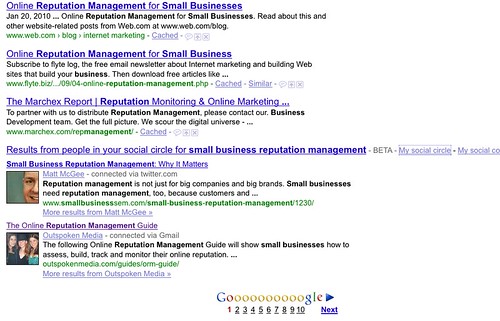
    I was reading a blog post from Small Business SEM’s Matt McGee this morning in which he referenced a search result for “small business reputation management“. So I clicked the link and got the following results set:

    Results for Small Business Reputation managerment
    Results for Small Business Reputation managerment

    In case it’s not obvious, you can see in the image above two referenced blog posts from sites I frequent run by industry friends Matt McGee and Outspoken Media (Lisa Barone).

    My first thought was “Wow, that’s kind of cool. I wonder why Mat Siltala’s not there” ;).

    And then I drilled down to see what was driving this particular social graph. It’s interesting to see where Google draws data regardless and in this case, more so because assumptions are being made about my likes and dislikes in this Google, My Social Circle by inference from other sites I frequent.

    My Social Circle - Reminiscent of LinkedIns Degrees of separation
    My Social Circle – Reminiscent of LinkedIn's Degrees of separation

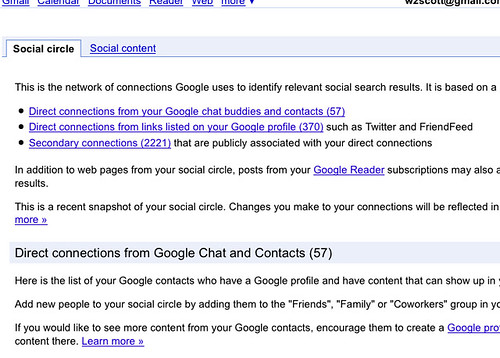
    As you can see My Social Circle includes:

    • Direct connections from Google Chat buddies,
    • Direct connections from sites such as Twitter and FriendFeed (that’s a lot of data)
    • Secondary Connections linked by inference to my direct connections

    So basically, Google has digested all of the data from those accounts I have listed on my personal Google Profile page and used them to assemble this My Social Circle idea. And, with my social circle defined, my search results are further personalized.

    This is a good thing right? Google’s trying to help out and give me what I’m looking for, right?

    Maybe.

    At this point the implementation is pretty mild. It’s a nice leverage of the data available thanks to the Google Personal Profile page – personal profile pages which are all the more prominent thanks to buzz. And, my position that the implementation is mild is based on my usage.

    I’m a business user and I keep it clean. I may be occasionally smart-alecky but other than that I don’t have anthing online I don’t want my mother to see.

    If this isn’t you if you might have something to hide, and particularly if you browse on a public or work computer, you may want to reconsider whether Buzz is for you. While the idea of my industry friends who blog showing up in search results is OK for me, it might not be OK for you. And, even if you’re squeaky clean, Google sometimes gets it wrong.

    Have you seen any examples of this? What searches? I’d love to see screen shots.