Tag: social media marketing

  • Where Do We Get Our News — the Source of Social Media or Social Media as Source?

    It’s always up for debate on what’s “newsworthy.” In the time before computers, newspaper and newscasts were the ones that dictated what was important in the world.  What they considered “news” and a “must-know” became what was published and what we did know.

    But now things are different — very different.  With social media sites like Facebook, and Twitter, we are seeing more and more that the applications of social media as news source are quickly growing. 

    Let’s take the recent death of singer Whitney Houston, for example. Within the first hour of her death, over two and a half million people tweeted about the tragic story, averaging about 1,000 tweets per second.  The traditional news outlet will not go live about such a story without proper verification, which takes precious time. By the time those outlets did go public, the story was “old news” to these two and a half million viewers: an entire 42 minutes late, in fact. Twitter was indisputably the first one to the finish line.

    This is a prime example of the growing collective consciousness caused by these sites. Think about how many followers each person may have, then think about how rapidly a story as gripping as a long-beloved singer’s tragic death can spread from person to person. While this system has its advantages in quickly disseminating stories, though, its speed can be a double-edged sword; Twitter rumor-mongering can spread like wildfire, with false reports of celebrity deaths and other incidents gaining legs where traditional journalism’s insistence fact-checking would have prevented the publication of such a story.

    Other “newsworthy” incidents that spread like fire at a gas station include the death of Michael Jackson, which averaged at about 493 tweets per second in 2009.  The announcement of Grammy-winning chanteuse Beyoncé’s pregnancy had one of the highest ever with 8,868 tweets per second. Now let’s take something like the death of Osama Bin Laden, who is obviously not in the entertainment industry. This incident let to an average of about 5,000 tweets per second. The list can go on.

    Can you imagine if another war would to start?  How quickly the world would know.  If Twitter was around in the 60’s, how fast would people Tweet about the death of JFK?  The landing on the moon?  The fall of the Berlin Wall? Single-source outlets and the “gatekeeping” of which stories are publicized are obsolete: all people need is a computer or a cell phone to have the entire web, with its intricacies and viewpoints and thousands upon thousands of stories at their fingertips.

    These sites are not only used for the quick spread of breaking news, but for event gathering as well. For instance, the Occupy Wall Street movement seems to have popped up overnight across America.  How did they do it?  It wasn’t thousands of dollars of advertising: Occupy Wall Street was a completely Internet-based movement.

    Using a great tagline, “We are the 99%,” Occupy Wall Street used tweets, Facebook events, and Youtube videos to get its message across.  The effect of such a movement will definitely go down in future generation’s history books.

    So let’s look at this from a business point of view: with the way that social media is evolving, how can marketers get themselves into the mix?  The answer is that they must find a way to get people to tweet, Facebook share and interact with their product, service, or brand the same way the social media consciousness does for events and topics it finds important.

    This is the future of getting your news heard and many successful businesses are already on top of this.  They’re using these social media networks to get themselves talked about.  Letting the consumer be the advertiser.  The more a business’s product or service is shared and spoken about via these networks, the more brand targeting and awareness they get.

    For example, on October 4th, 2011, millions tweeted and posted about the iPhone 4S.  Over seven thousand people alone posted something about Siri, the new voice assistant application.  Yes, Apple spent millions on advertising its obvious success — but a good chunk of the advertising work was being done for them by the social network community.

    So where can this go?  A stronger bond between companies and customers or celebrities and fans?  A greater union between the citizens of Planet Earth?  Time will tell, but the most important thing is to keep sharing, keep tweeting, keep posting, keep your place in social media — and the social web will evolve on its own.

    Right now, we are in a crucial time in human communications, when the entire world is more connected than ever before and information spreads at the blink of an eye.  Click like, share this post, or leave a comment — you’ll never know who you’ll connect with!

  • Internet Privacy in 2012: It’s Not Easy Being Anon

    internet privacy isn't easy
    A True Anon

    Now that we’re all settled into 2012, we still find ourselves catapulting forward through the Information Age. Some have even classified our current place in time as the Personalization Era [sic]. This is a time wherein the information collected about you online can and does tailor your experience on the Internet to your interests and/or demographic.  Your searches, data collected through your online presence (Facebook and other social networking sites), tweets, and other bits and pieces come together to serve as a pool of data that allows search engines and various sites to do a variety of things to assist or appeal to you. Advertising, personalized search results, product recommendations, etc. are chosen specifically for you! This era, in my experience, has found many divided into two larger groups: the Embracer and the Anon.

    Embracers either know how the system functions and reap the benefits of this custom online experience, or they are completely unaware and simply enjoy their online life with great abandon. Embracers also house the Oversharers.These are the people whose Internet lives can overshadow “IRL” and they thrive on divulging minutia.

    Conversely, Anons are those whose Twitter feeds are penned by pseudonyms that require follow requests to view, their Facebook profiles are well-protected, and you’re not going to find many, if any, lamentable pictures of them from their freshman year of college even if you’re “in” with them online. These are the people who comb through privacy settings, making sure they’re in full control of what is accessible and to whom. Generally, if they have the option, they also opt out of anything that shares their information or uses it for commercial purposes. Included here is also the ultra-paranoid who will usually be on the other end of emails where the subject begins with “FW:Fwd:FW:” and who legitimately believe much of the fear-mongering myths dispelled on Snopes.com.

    internet privacy isn't easy
    Fwd:fwd:FWD:fwd

    So who’s better off in the current era: the Embracer or the Anon?

    The Embracers are certainly going to have plenty to work with for their memoirs. They’re often extremely up-to-date on Internet trends and make online friends far and wide. They often appreciate that their online experience has been tailored to them and utilize this when shopping or discovering new websites, products, or services. On the other hand, over-sharing
    or being unaware of the implications of sharing certain personal data on the web, besides possibly annoying an Anon or two on their friend list, can be risky and lead to dangerous pitfalls like identity theft. Stalking people in the “Personalization Era” certainly seems easier, though! Avid Foursquare users beware: try not to make too many enemies.

    The Anons can and do enjoy their chosen level of privacy. Future employers or those undesirable lurkers will have a hard time pinning any dirt on the Anons based on their online presence. They can even be fully present at and enjoy a party
    without live-tweeting it. Life is getting harder for the Anon, however, thanks to changes in Google’s privacy policy and the trend of moving away from anonymity in many forums.

    The case for and against Internet anonymity has been a subject of discourse more and more recently and, no matter which group you find yourself in, chances are that if you’re reading this, you’ve got an opinion on it. Whether you’re an Embracer, an Anon, or somewhere in between, knowing what you’re sharing and with who is always a good idea.

  • Interview with Cracked Columnist John Cheese

    Cracked Columnist John Cheese
    John Cheese talks SEO

    Cracked columnist and longtime internet comedy writer John Cheese put out a call for interviews recently, and I jumped at the chance to talk to him. Out of all the writers on Cracked, a site I have been fairly addicted to since about 2007, John Cheese has probably spent the most time eloquently weaving his own life experiences into his always funny and often moving columns.

    John ended up really driving home a rather simple yet all-encompassing idea that we have adopted as a mantra at Search Influence: fresh content is king. It really doesn’t matter whether you are advertising a novel, a list-based comedy site, or a small business anywhere in the world – if you can produce quality content that people find interesting on a regular basis, everything else will fall into place. It doesn’t hurt if you are as insightful, funny, and talented as John is either.

    Take a look at the results of my email interview with John Cheese:

    (more…)

  • Google’s “Search Plus Your World” Combines Social, Personal, and Personalized Algorithms

    Google's Search Plus Your World ExampleGoogle search results have been getting more and more personalized since the introduction of personal results in 2005, but the search engine giant’s newest feature takes on your entire world.

    The new “Search Plus Your World” feature effectively erases the lines between standard search results, hits from social sites like Google+, search results that have been shaped by your personal search history, and results that are targeted at you personally.

    Sound to you like Google is tightening its grip on your online life? You may not be entirely wrong. This update, while ostensibly making strides to personalize your entire interaction with what is still essentially a massive online question and answer service, collapses most of the walls that have always existed between social media and the wilds of the internet.

    But only for you, apparently.

    The Google You See

    Search Plus Your World draws from not only the internet in general, but also from the pool of private online information that you or your friends have shared. So if someone in one of your Google+ Circles shares a picture of you, say, wearing an oversized sombrero, that image is likely to pop up in your search results the next time you search for “Cinco de Mayo.”

    Why? Because that picture is tied to you on Google+. It doesn’t even matter if that picture is only shared on a limited basis to five members of your circle – it may still show up in your search and the search results of anyone else you are connected to online.

    But here’s the really important part that may or may not help Google skirt what appear to be serious issues with sharing personal data: just because you and the people you have connections with see that picture doesn’t mean that it has been shared globally online.

    Now, that may come as cold comfort to someone whose boss is in one of their Google+ Circles if the boss just found out that the sombrero wearing employee wasn’t really sick with the flu on May 5th  and 6th, but the fact is that the picture will remain shared on a limited basis, as its settings on Google+ stipulate.

    So you may end up sharing more than you wanted to, but only to people you are connected to online. And none of us have Google+ or Facebook friends we’ve never met, right? We certainly all know every one of our Twitter followers, right? Right?

    But SEO Personalization is still a Good Thing

    Potential party related privacy issues aside, this update still represents a leap forward in personalizing your Internet experience. When you asked Jeeves for the name of a bicycle shop in 1998, he didn’t know or care that you were in New Orleans and not New York, at least not to the extent that Google does now.

    I’d argue that most of the advances Google has made in the realm of personalized searching have faded into the background rather than sparking outrage in the average user. Seriously, when is the last time you have given up a Google search in exasperation because 30 minutes of searching resulted in exactly zero relevant results? Five years ago? Ten?

    So while things that you have shared with friends may start popping up in what promises to be the next generation of ultra-personalized search results from Google, you are also more likely than ever before to find relevant information from every search.

    Just don’t take pictures while wearing silly hats and drinking tequila. And if you do, don’t post them online. You never know who in your circle may be looking.

  • New Kid on the Social Media Block – How to Generate Brand Awareness and Valuable Links using Pinterest

    As an admittedly addicted Pinterest user, I’d like to clear up a few things about the relatively young social media site and its potential use for marketing and SEO linkbuilding.Definition of Pinterest With Pinterest quickly rising in popularity, I’m constantly hearing it referred to as a social bookmarking tool for sharing images.  Pinterest is in fact a social bookmarking tool, but it is not only about the images. The site allows users to “pin” or save links to external sites in an organized way, with few limits to what type of site or image can be pinned.  Users can save anything from a favorite blog post to products they love, from recipes to tutorials. Each and every pin not only pulls in an image, but also a do-follow link back to the source site! Can you smell the SEO potential yet? The brilliance of Pinterest is that it combines some of the most compelling features of social media in general: visually stimulating content and the opportunity to share your ideas, interests and inspiration. Upon signing up, users are provided with fully customizable “pin boards” and can easily find friends to follow using the Facebook and Twitter connected features.
    I escape to Pinterest to avoid all the drama and bad grammar on Facebook.
    As a marketing tool, Pinterest has great potential for small retail businesses that may have a hard time competing in search results. For example, a local boutique clothing store may find it incredibly difficult to outrank Macy’s and Saks in the SERPs for a keyword like “New Orleans shopping.” When users find something they like (usually pinned by someone they follow and are influenced by), chances are they will, at the very least, click the source link. Everyday I’m introduced to new brands and products on Pinterest, and more than once I’ve used what my friends are pinning as inspiration for making purchases. There are currently few brands using Pinterest, but with its popularity and the site’s high (and still growing) domain authority, all signs are pointing to increased use by brands and businesses in the near future.

    A few tips for putting Pinterest to work for your brand:Pin It Button

    • Add the “Pin It” button to your product pages or blog posts. It’s easy to do and you can add the button along with your other social media sharing buttons.
    • Create a Pinterest account for the brand itself and reach out to “visual influencers” on Pinterest for help getting your images re-pinned. Pinterest allows any user to follow any other user without requiring a follow-back. You may also tag other users in your pins, comment on pins and re-pin (the Pinterest version of a retweet) others’ content.
    • Create boards beyond your own products and brand, but relevant to your location and industry.
    • Utilize the description fields when creating Pins by adding keywords and geo-modifiers. Not only is this SEO 101, but Pinterest addicts often use the search feature to find relevant pins.
    • Keep pinning!  The search results and Pin feeds change up-to-the-minute, much like the Twitter feed and Facebook Ticker. Maintain a steady flow of Pins to ensure your products are staying top-of-mind.

    For SEO linkbuilding purposes, the benefits of Pinterest are pretty self-evident. Some basic info on Pinterest links:

    • Each and every Pin links back to the original source site or the file location (depending on where it was originally pinned from). Unless you’re purposely optimizing for image seach, a product page or site link is probably better.

      Pin Link Locations
      Standard pins provide links to the source site in two locations.
    • A Pin provides do-follow links in multiple places. The image itself acts as a link in addition to the “From:” link in the top right-hand-corner.
    • A pin comes with embed code for syndication to other sites like Facebook and Twitter, helping to develop backlinks to the Pin itself.
    • Pins are editable! You can edit your own Pins with updated URLs or reach out to Pinners who may have pinned your images from an unfavorable source site. Pins are easy to edit and the new URL you provide does not need to host the image, though I don’t recommend you use a link without the original image.
    • Because of the visual nature of Pinterest, it is a great way to promote infographics. Make sure they are Pinned to appropriate boards and contain relevant descriptions to ensure they are shared.
    • You can even add a Pin It button to your company’s blog pages by using the WordPress plug-in.

    Thanks to the intuitive nature of Pinterest’s interface, I think the best way to get going is to request an invite and just dive in. Remember, sign-up is currently via invitation-only, so ask a friend to invite you or request one from the site (it doesn’t take long). Let me know what you think about these tips in the comments, and if my screenshots piqued your interest, follow me on Pinterest!

  • Google+ Opens For Businesses — Potential And How To Get Your Face In The SERPs

    Google+ for Apps One Bar

    Google+ for Business
    Are we not men?

    The new kid on the block has opened itself to businesses in two principal ways. Unlike Facebook, which focuses on admin-managed pages, and Twitter, which couldn’t care less if a person, place, or animal is represented in a feed, Google initially maintained its focus on people in its business-level implementation of its social network, not announcing any kind of branded pages. Then Monday’s announcement of Facebook-style business pages opened a new avenue for marketers, if only those in selected niches. Both new tools allow for the implementation of the “authority” metrics hinted at in numerous Google quality documents.

    But should a business even have a Google+ presence? Facebook of course is ubiquitous, and Twitter has proven itself to be a direct customer relations tool. Google+, however, has languished as Robert Scoble’s main soapbox and Android users’ photo repository. Google+ isn’t a lead generator, lacking the customization of Facebook tabs, and it isn’t a customer service tool, lacking the plurality userbase (8% of the US) Twitter enjoys.

    Applications of Google+ for Business

    But it’s not just those on the social network who will benefit from business applications of Google+. Integration with search and the use of the network as an authority metric seem to be major advantages of Google+ for businesses. Once set up correctly, a robust Google+ profile can give authority to local ranking and regular integrated SERP rank depending on page type. Unsurprisingly, this leaves the active maintenance lacking; however, even that aspect can be worthwhile in the right niches.

    Internally, Hangouts combined with Google Docs allows decentralized businesses a face-to-face online collaboration tool. Users can avoid the loss of communication from short text comments in edits, enriching group writing and design. This use of Docs can help a variety of businesses, both for internal meetings and for work with clients. The possibilities previously hinted at are relatively endless, and make Google+ a must-have for remote businesses, some design firms, and any company needing to build something in front of a customer or each other without being in the same room.

    But most companies don’t need that kind of ability for real-time document editing. For them, Hangouts provide a simple way to start webinars, live shows, and other almost TV-styled content. Something like SEOmoz’s Whiteboard Friday could be live broadcast with question-and-answer, recorded locally, and quickly uploaded to YouTube or another video site, then added to a website for further life out of the content. If live videos would take too much effort, even a simple video exclusive to Google+ can help drive uses both to your Plus Page and create user interaction. This kind of direct, personal, and instant communication with users and the ease of creating something for all visitors is nearly unprecedented in social media.

    rel=author SERP Display
    How Your Employees

    Keeping with the focus on both users and non-users of the network, Google+ offers ways to interact with customers outside of the realm of the social network — being the only outlet for rel=”author” and introducing rel=”publisher”, the best way to get your personal face and name ad your company’s image in the SERPs. Reinforcing the authority metrics hinted at in Panda and the related effects, Google+ is the gatekeeper for bridging the gap between semantic and visible authorship in the SERPs, and the exposure and connection of a face and name to a business can humanize and connect with customers in a way that couldn’t be done for someone who isn’t just signed into Facebook. “The face in the SERPs” is perfect for any company with a regularly maintained blog or article section. Similarly, a company might see its logo next to its web site when rel=”publisher” is implemented.

    Using Google+ to Put Your Face in the SERPs

    Happily, WordPress sites have a relatively simple solution for implementing a multi-person rel=”author”. It does the first step for you, linking to the author page with rel=”author”. Then, add your canonical Plus account url to the Website field in Your Profile under Users:

    Wordpress Website Field for rel=author
    Place your canonical Google+ url in this field under User > Your profile

    Then, you need to edit the theme, adding this to the body of either your main template, or the author template, author.php, omitting the if-statement:

    <?php if (is_author()) {
    $curauth = (isset($_GET['author_name'])) ? get_user_by('slug', $author_name) :
    get_userdata(intval($author));
    ?>
    <a rel="me" href="<?php echo $curauth->user_url; ?>">
    Visit me on Google+
    </a>
    <?php } ?>

    This will get the author name if it’s set, then get all of the user data, then display the url from that author in a link with the all-important rel=”me”.

    rel=publisher fair
    Oops! Not what you'd like to see…

    Similarly, to set up rel=”publisher”, just a link tag on all pages without rel=”author” on it will connect your site with your company Google+ Page. Why only on those pages? Because as Search Engine Land’s rich snippet test shows, Google will prioritize author over publisher.

    <?php if (!is_single()) { ?>
    <link href="https://plus.google.com/113323125805722144061/" rel="publisher" />
    <?php } ?>

    Once it’s all set up, check your url in that same Rich Snippet Tester tool, making sure it shows your face and name. The wait time on recognition from Google is inconsistent, but such connections are key to establishing authority.

    Google+ Establishes Thought Leaders

    A secondary effect of individual commercial Google+ profiles is that giving a face to a URL can create a sense of thought leadership, pulling in longer-term researchers with high quality informative articles and blogs. Having one author connected to your name will heavily associate the one person with the site; having multiple writers will strengthen the authority of each writer as an individual source of quality knowledge. A logo, if well-chosen, transforms the SERPs into display ads. Through either, one positions their employees as experts and their company as prominent: certainly an admirable position.

    Google+ might not be for every business, even businesses that rely on their current Apps as the underpinning for their online productivity. However, for businesses with the specific needs for which Google+ provides killer apps, Google+ is a perfect addition to the social media profile of your business. Furthermore, it’s ease of setup provides deep support beyond social interaction, leaving much utility even for more straightforward businesses.

    …And hey, maybe one of your employees can criticize you while still garnering support for the company in a precarious time…

    Image Courtesy Cambodia4KidsOrg.

  • Take A Breath Before You Tweet, OR: Internet ADD Wrecks the Good Ship Netflix

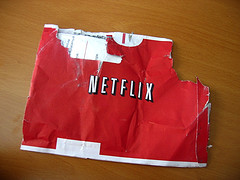
    Netflix ChaosJeez, it’s been practically seven minutes since I checked for new notifications on Facebook. Refresh, nothing. Ohhh, there’s a picture of a kid I vaguely knew from high school and now he’s linking his tweets into the Facebook feed, let me click over there. Do I follow Kim Kardashian or just Khloe? Any new tweets from the Biebs?

    It’s obvious that my attention span on the Internet can be severely limited at times. And why not? There’s barely any reason for one to even type in words, just a lot of pretty pictures to click on. Heaven forbid I forgot the name of some obscure reality television star, but if I do the answer is instantaneously at my fingertips. The Internet experience of today is different than it’s ever been before. Websites create a far more intimate and immersive experience than just 2 years ago, and are in a completely different arena than 10 years ago. Pictures are worth a thousand words, and they need to be when one only has 140 characters to elaborate on major personal news and global current events.

    While many years of information are archived in cyberspace, much of its utility is focused on the right now. Breaking news happens and a network of millions set to debate, coming to instantaneous conclusions. The people unite and use their freedom of speech to make a stand, but is this a good thing? Can the immediate evaluations made by web junkies actually be harmful?

    In the case of Netflix, popular web opinions have been shown to have a powerful influence over the productivity of the company. In July, the California-based company raised the prices for their various streaming and DVD rental plans. Since the price increase went into effect, July 13th, Netflix’s stock (NFLX) has decreased 36% and has lost 800,000 of their nearly 24 million customers. Aside from the tangible effects, Netflix has suffered far worse in the court of public opinion. Users across the net threw their arms up in a rage when Netflix announced that it would be dividing its business into two entities, one specifically for streaming and the other, Qwickster, for DVD’s by mail. The plan to split the company has since been scrapped due to the public outcry.

    Crumbling NetflixIs what has happened to Netflix in the last four months a good thing? Netflix is a tech company and should rightfully be judged by its tech savvy clientele, but technological Darwinism is a shaky field to venture into as a for-profit company. Is the customer always right? Sorry America, but the answer is no. While the almighty dollar may empower individuals to sway decisions of major companies, it does not mean that consumer pressure always leads to the right outcome. In the case of Netflix it is entirely possible that a month from now the once-glorified media company could be trading for pennies on the dollar and begging Hulu or Amazon to buy them, and everyone could dub Netflix a failure. This is all possible, but it would not necessarily make the actions of Netflix wrong. The immediate conclusions of the Internet-savvy can severely hinder companies’ ability to make improvements to their product, because one or two of those alterations rubs consumers the wrong way. My advice to consumers: take a breath, don’t jump to conclusions, quit sweating the technique and just give products wiggle room to evolve. Who knows — you might even like it.

  • How Do I Keep My Facebook Fans Happy and Engaged? — 3 Easy Ways To Get Likes And Keep Them

    Business Cat approves.
    Business Cat approves of your online conduct.

    Let’s face it: social media marketing jargon can sound like a different language, especially if you’re wrestling with the eternal question of “What do my Facebook fans want to see? How do I keep them happy?” You know your brand inside and out, so it can be helpful to think of your social media content in the same way you think about your business. Unless you’re a professional trapeze artist, chances are the day-to-day grind of your job can sometimes leave you bored to tears. The same applies to online communities in terms of marketing and promotion. For many of the 800+ million active Facebook users, logging on is habitual and something they’re doing multiple times per day. Facebookers who follow your page don’t want to see the same type of content over and over. That’s the fastest way to turn them off from interacting with your page in a positive way, or at all. The most successful Facebook pages have a give-and-take relationship with their fans. Three things to remember for growing and motivating your online communities:

    • Show them you care, you really care! Ensure your newest followers feel valued, appreciated and motivated to interact with your page. Welcome new fans personally, like you would a new co-worker, by tagging them in a welcome message or sending a quick and friendly (non-spammy, of course) direct message.
    • Beware of the disgruntled fan. When considering a Facebook contest as a way to gain likes, it’s important to keep in mind the resulting new “Fans” can easily turn on you should they be promised something that is not delivered. These are not the fans you want to attract to your page, as the wreckage they often leave can be detrimental to your brand’s reputation. Many a Facebook page has suffered when the competition gets ugly due to misunderstood rules. Fans can become aggressively competitive, rallying other fans around them. Remember, any competition on Facebook should comply with Facebook’s Promotion Guidelines, or you run the risk of having your page removed entirely. Don’t get me wrong, free stuff is awesome. Offering ‘added value’ as a way to gain more followers has proven successful in the past, but the lines between friendly competition and cut-throat rivalry can be blurred very quickly. There are tons of alternative ways to engage with people, and getting creative with your content doesn’t have to cost money but can work wonders for motivating your online community.
    Image macro rewards such as this "Cyber High-5!" seem simple, but can be a great way to motivate interaction and connect with your audience.
    • Creative content is king. Organically grow your fan base my keeping existing fans engaged with your page. Think about how you might get your co-workers motivated in the office and apply the same tactics to your Facebook fans. In terms of contests, sometimes the big ticket prize items will only spark jealousy and animosity among the group. Often a much smaller scale pat on the back will do the trick. Consider running a weekly trivia contest with a funny, motivating and free (for you) prize like a “cyber high-5” or an original Internet meme. Instead of gaining a bunch of superficial ‘Likes,’ your fans will engage, comment and even share your content with their own friends.

    Lighthearted, fun content will ensure you and your Facebook fans’ interactions are positive and mutually beneficial. Keep the fans you have engaged and your number of ‘Likes’ is bound to keep climbing.

    The SI Blog sends a special thanks to Lauren Litwinka for her insight and contribution to this post. Lauren is an Account Manager at aimClear where she’s pretty awesome at online community management.
  • Netflix Pulls Plug on Qwikster


    You may recall that we were mulling over the whole Netflix situation only a few weeks ago, which has seemed to be getting more ridiculous ever since the company announced pricing changes in July that made users choke on their dinners. Twice the price for what they were getting before? Streaming-only services? People were just starting to recover, but Netflix had clearly spent a lot of time sitting alone in the dark listening to sad music; they knew they hadn’t pleased their audience. And so they decided to try to make it better (which as, many men can attest to, never works).

    I guess the Qwikster debacle was more than they could handle, what with people getting more upset than ever (not to mention the stoner squatting on the Qwikster Twitter account and all that jazz). Netflix has updated their blog yet again and emailed all their users to let us know that Qwikster is not going forward after all, which looks about as professional as taking off your shirt at an office party. There was also no word about the aforementioned video game rental plan that Qwikster was going to include, so I suppose we can assume that has been scrapped as well. Oh, the hoopla.

    What does this mean for Netflix now? Well, their stock has suffered dramatically since the original price change announcement. As of today their shares are still down 4.4%, which means this whole Qwikster cancellation thing has not eased anyone’s mind yet. Maybe Netflix didn’t go ahead with the crazy plan, but they announced the crazy plan and then reneged on it, which kind of makes them look even more nutty and unstable even if it was the right thing to do. It’s no surprise that investors don’t feel comfortable. It is commendable that Netflix has paid attention to the social media buzz surrounding the unpopular decision and realized that they’ve made a dumb move, but it also signifies that they aren’t thinking through major decisions enough — which is not a great sign for a company their size.

    What do you think — are you relieved there will be no Qwikster, or are you disappointed in the parent company for caving to the negative social media hubbub?


  • Social Media For Readers and Writers: Cursor Takes the Publishing Industry To The Next Level

    Is the traditional trade paperback and remainder-bin production model of books doomed? With new devices for the digitization of books appearing every day, from the freshly-announced Kindle Fire to slick iPad e-reader apps, the conclusion that the publishing industry will soon go the way of the dodo is easy to come to. After all, literacy rates are plummeting, book sales are down and one of the original giants of big-box retail bookstores has recently crashed and burned in a spectacular fashion. Despite the failing numbers of traditional methods of publication, there are more novels and poems and stories and essays being written and consumed now than ever before. In the face of the instant-gratification model the Internet provides, where does the written word go from here? Richard Nash, former editor of Soft Skull Press, has an idea.

    The traditional delivery of a book from author’s pen to reader’s hand is long, complex and prone to errors in translation. The author-agent-publisher-printer-wholesaler-retailer-reader chain has failed in a significant way because it by its very nature promotes isolation between the reader and the writer. With that in mind, Nash and his business partner Mark Warholak have launched a new project called Cursor, designed to apply the concepts of social media and successful crowdsourcing to the creative writing world. In his Publisher’s Weekly article, Nash elucidates many of his problems with the industry as it stands today and how the diversification of Cursor’s services are key to promoting success both financial and artistic. Its first imprint Red Lemonade is just one of the many “self-organizing, self-selected, self-perpetuating communities [created] around a reading-writing platform” that are to come. Red Lemonade is “pop-lit-alt-cult” operation with charmQuark, a science fiction-fantasy genre community, soon to follow.

    Each of these subgroups will publish approximately one or two books a month using the Cursor software platform in both digital and trade paperback format, staggering the release dates in order to maximize profits. Importantly, though, Cursor’s source of revenue isn’t just from pure sales of its product. There are paid membership options available to widen the availability of tools and services, for example peer-to-peer writing groups, recommendation engines, access to established authors from within the Cursor system and beyond, and professional editing and marketing assistance. Other sources of income are available via advertising (this is social media, after all), connecting writers with providers of publishing services, agent fees and more. All of this will be balanced with the social component that allows writers and readers to interact and comment on each others’ works and postings. With the ability of the Internet to disseminate quality material and enable discussion thereof from commentators all over the world, this network hopes to create a thriving series of sensitive feedback loops that allow the showrunners to quickly identify and implement the features writers want, not to mention publishing the works that have gained the most reader support. “Book publishing doesn’t work with top down advertising,” says Nash. “It’s always done its best when one person says to another person: ‘You should read this book.’” The sharing and viral campaign potential for this kind of system seems self-evident, as the community, not the marketing department, is responsible for deciding what is ultimately rewarded with publication.

    Perhaps the most daring move that Cursor is taking is the eschewing of the traditional author copyright agreements. Contracts are limited to three-year terms with an option to renew as opposed to the old “seventy years after author’s death” chestnut. This is such a significant move because the latter type of agreement was largely what kept traditional publishing houses in business — the acquisition of intellectual property rights for, say, a movie adaptation or the backlist of a previously-obscure author who’s now selling like hotcakes because a prestigious award. With Cursor, authors will have the option to simply walk or renegotiate at the end of their three-year period. The philosophy of simple business tends toward the “maximize the profit from the property” mode. Nash’s viewpoint that authors deserve the benefit of renegotiation if and when the underlying value of their contribution increases. Quid pro quo, however; in exchange for this freedom to walk or adjust the terms of the deal, Cursor-owned properties will be licensed under “a fairly broad basket” of rights, including audio, English-language foreign publication, translation, and magazine republication, among others. It’s a bold move, and one that’s very indicative of the hyper-flexible approach Cursor is taking to publication instead of the narrow but powerful beam of traditional retail book-selling and marketing.

    In 2008, more than 275,000 new titles were published through a variety of sources. Data suggests that more recent numbers will be even higher. The music industry has gone almost completely digital, and sociality is being emphasized even further with Facebook’s recent seamless inclusion of Spotify plays into home page feeds. With the ubiquity of high-speed Internet becoming more and more a fact of daily life and the communication and sharing potential of the social web continuing to evolve, books still have a long way to go to catch up with their other media counterparts — but Cursor promises big things in the way of making up for lost time. As Nash himself says, “technology has emphasized a simple truth at the heart of my new enterprise: we are what we read, we are what we write, and we organize ourselves around and connect with one another through what we read and write.” Red Lemonade already has a number of titles in its store in both paperback and ebook format, and the word of mouth around them has been ebullient. Broadening the way readers and writers interface, Cursor isn’t designed to “save publishing” — it’s designed to bring it into its new form.