Tag: reviews

  • Growing Your Practice on Facebook, Part 6: A Facebook Success Story

    Part 6 of The Ultimate Guide for Growing Your Medical Practice Using Facebook

    Welcome to the final installment of our series on using Facebook to promote your medical practice. Now that we’ve covered best practices, we’ll show you how we put them in action using one of our own clients as a case study—Donaldson Plastic Surgery.

    Remember, if you want more information about using Facebook for your medical practice, make sure you download our e-book.

    But First, Let’s Recap

    Before we show you how to put everything together, here’s what we’ve learned so far:

    Part 1: Why Facebook Matters – The introduction to our blog series showed how Facebook can be used for medical practices in particular, and why it’s an important tool for engaging with patients and creating a personal connection with them.

    Part 2: Shareable Content – We gave easy-to-follow tips for creating shareable content as well as advice on the often forgotten second step of Facebook: engaging with your followers in response to their interest in you.

    Part 3: Advertising – Taking a slightly different approach, we went into detail about paid promotions, discussing the difference between promoted posts and ads, and laying out Facebook’s restrictions that govern medical advertising.

    Part 4: Reaching Your Audience – We explained how to leverage Audience Insights to target your ads to your ideal patient, making them more effective, and how to bridge the gap between your online audience and the real patients who walk through your door.

    Part 5: Patient Confidentiality Concerns – This blog brought it all home with clear examples of how to stay HIPAA-compliant while posting on social media.

    Now, it’s time to see how all of these elements work together with a real medical practice.

    Facebook Campaign in Action: Donaldson Plastic Surgery

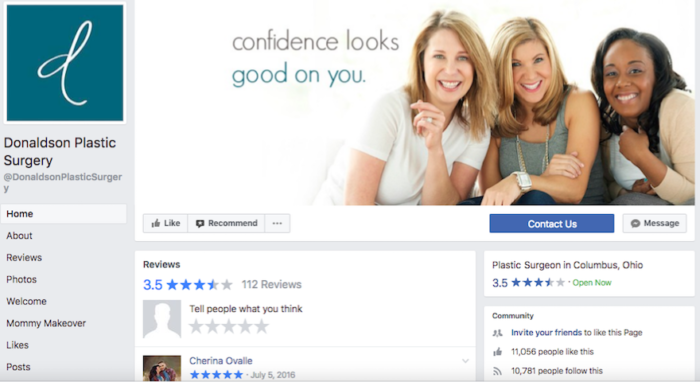
    Dr. Donaldson has been our client since 2009, the year he opened his practice. Since he was just starting out, there was a lot of work that needed to be done in terms of digital marketing, including a new Facebook page that had a grand total of zero Likes. Since launching his Facebook campaign in 2011, Dr. Donaldson’s page Likes have increased to over 11,000. This was accomplished through a comprehensive Facebook marketing campaign.

    This campaign was comprised of Facebook management, fan building, and Facebook display ads. We created posts that established Dr. Donaldson’s professional brand and consistently published engaging, informational, and promotional posts that appealed to current and potential patients throughout the area. We also created ads that increased brand awareness, brought Dr. Donaldson’s practice to those who didn’t know him already, and promoted the full range of his services, all utilizing Facebook’s targeting abilities.

    Image Of Facebook Page Likes For Donaldson Plastic Surgery - Search Influence

    Combining paid ads with an increased frequency of organic posts expanded the practice’s fan base. A large chunk of Dr. Donaldson’s Facebook fans, totaling 11,000+ Likes, have come from annual fan building campaigns (over 6,400 of the Likes, in fact). Campaigns such as Likes for Lives encourage Facebook users to Like your page in exchange for a donation to a charity organization. These campaigns increase followers while also giving insight into your practice’s values and the importance of giving back to your community.

    Dr. Donaldson is proof that a well-managed Facebook page, full of engaging posts and targeted ads, can work to create a campaign strategy that gets patients through the door and establishes your practice as the medical resource in your area.

    Armed with the best practices we’ve covered in our blog series, you can accomplish results like this for your medical practice as well! If you have any strategic questions or need help growing your practice on Facebook, contact one of our experts here.

  • Put a Ring on It: Turning Inquiries Into Lasting Patient Relationships

    Let’s envision an ideal scenario. Your private practice has a dynamic social media campaign, your website is optimized for all the right keywords, your blog showcases helpful and engaging posts, and maybe you’re even showing up on page one of Google’s search results. Basically, you’re an online marketing all-star. Well, to be honest, the real payoff relies on what you do next.

    Image Of Character Ron Burgundy - Search Influence

    How do you respond when all of this great marketing generates a lead? After all, you put a lot of hard work into building new patient relationships. But while all of this marketing could be seen as the courtship, handling the inquiry is the proposal. You better time it right and create an experience worth remembering.

    At this point, the prospective patient is taking the initiative to make contact, which means they are serious about taking action—they’re ready for a commitment. Even if you’re just posting your first Facebook status or still need some SEO guidance, every inquiry is the potential for a new patient to make the jump from interested to committed.

    Responding to inquiries is your first real engagement with a prospective client. They responded to your presence online, but how does it stack up to your presence IRL? In the healthcare industry, competition is high, and patients may be willing to travel great distances for the right provider—but that prospective patient may just move on to the next option if they don’t hear from you quickly or get the right answer.

    So, what’s the best way to ensure a “yes” to your proposal? Here are three tips to turn inquiries into actual patients.

    Image of Beyonce - Search Influence

    Respond Quickly

    Quickly can’t be overemphasized. In fact, according to The Lead Response Management Study conducted by Dr. James Oldroyd of MIT, the odds of qualifying a lead are 21 times less likely when comparing a response rate of 5 minutes vs. 30 minutes. Similarly, according to research from Harvard Business Review, companies that follow up on leads within an hour are 7 times more likely to have a meaningful conversation with the decision maker. This isn’t all that surprising when you consider our fast-paced culture of instant gratification. That same person who reaches out to your practice is likely contacting your competition, scouring through Google results and online directories to weigh the best healthcare options. They may already have their appointment scheduled at the office next door if you don’t respond quickly.

    You can increase your response speed by creating a short cheat sheet or script for answers to common questions, especially pertaining to pricing. This will empower an administrative team to handle inquiries confidently and quickly without consulting with the doctor or dentist before every response. Don’t forget that inquiries on social media, like questions through Facebook messaging, should be treated with the same level of professionalism and timeliness. Other features like online chat and online appointment scheduling make the conversion happen even more quickly. Many users are opting for digital communication, and it’s important to talk to your prospective patients in the format that they prefer.

    Track Your Leads…and Your Successes

    So how do you know what your patients prefer? You can start by collecting valuable information about the behaviors of your current and prospective patients to meet their needs better and make communication as seamless as possible. Online and call lead tracking will allow you not only to understand which communication methods work best, but also what led interested parties to your practice in the first place. Are they interested in a specific treatment page? Are they looking for plastic surgeons close to a particular location? Tracking this behavior can help tailor your response and deliver the right information.

    A tracking system also allows you to keep a detailed record of your correspondences and successful conversions. Use these metrics to determine what’s working and where to focus your energy. Maybe you see the biggest conversions through your online appointment scheduling feature, or maybe most of your new patients are searching on mobile and calling the office—use the data to build on your successes. For example, if you see a lot of phone call conversions, you can tailor your online marketing campaign to feature your phone number more prominently in your ads and website copy. Either way, you can’t make improvements if you don’t have the data. Learn more about the value of lead tracking and analytics.

    Listen to Their Needs and Make It Personal

    Now that you have systems in place for generating prompt replies and tracking your successes, you can focus on the actual response. This part might seem obvious, but it’s the most important aspect—especially in the healthcare industry where your customers are trusting you with, well, their health. Make sure your response includes questions, and spend more time listening to the inquiry than dishing out information. While phone scripts or automated email responses are great timesavers, be sure you consider multiple lead types and create responses that can fit different common inquiries like procedure costs or consultation requests.

    Remember that your response should show that your office is competent, knowledgeable, and compassionate. This extends beyond the healthcare professionals to the caring and attentive administrative staff answering the phones and making the appointments. Each employee is a representative of your brand and can create a memorable first interaction—whether it’s a phone call, email, or social media post. Your staff or a marketing agency should be equipped and ready to handle responses appropriately through multiple channels.

    Essentially, your response should be crafted to potential patients’ needs from the very start. While it may seem simple, ensuring that these steps are built into your systems and training will result in consistent and successful conversions. When it comes to healthcare, patients are looking for the gold standard in quality. So if you’re popping the question (you know, the “do you want to schedule an appointment?” question), be sure to time it right and execute a thoughtful, personalized message. Of course, if you’re still working on your online marketing all-star status, we’re always here to help.

    Images:

    Ron Burgundy

    Beyonce

  • How a Debate About Onions Showed Google Might Not Be Infallible

    A couple of weeks ago, I was driving to meet a friend for dinner when I heard a segment on NPR’s Marketplace that featured Tom Scocca talking about his article on Gizmodo about caramelized onions. At first, it seemed like many a segment on NPR we’ve come to expect—interesting and mildly entertaining. It wasn’t until the segment got to the point of the matter that I was hooked. When people were searching on Google for “how long does it take to caramelize onions?” they were getting misinformation. How could such a simple question turn up a false response from the world’s largest, and arguably smartest, search engine? I wondered, are there other moments like this that have happened between users and Google?

    How Did Google Misinterpret What Is Common Knowledge to Most Chefs?

    To be fair to Google, this wasn’t entirely their fault. The initial blame goes back to the thousands of recipes that live on the internet telling readers how to caramelize onions, from an at-home amateur cook’s blog to the New York Times. For whatever reason, instead of telling home cooks to patiently take their time to cook the onions on a low to medium heat for upwards of 30-45 minutes, a lot of recipes listed the expected cooking time as 5-10 minutes. If you’ve ever attempted to caramelize onions in this amount of time, I’ll go ahead and break it to you—it’s impossible. To save you from a bunch of food chemistry, I’ll just say that it has to do with the sugar content in onions.

    Purple Onion Cut In Half - Search Influence

    So, why is there so much content online that gives users, and in turn Google, misinformation? The simplest answer is that writers of recipes were trying to simplify a process that would turn an ordinarily easy recipe for a weeknight meal, like French Onion Soup, into a 1 ½ –2-hour ordeal. In Scocca’s Slate article written in 2012, he gave many different examples of well-known chef’s attempts and failures at trying to achieve caramelization in less than 20 minutes. The article is littered with keywords Google would love and came from a highly reputable source. At its beginning, he references the 5-10 minute myth, and for a while, this had a positive response—The New York Times changed their language when talking about caramelization in their recipes, and even the Wikipedia page was updated as a result.

    But, when people typed “how long does it take to caramelize onions” into Google, they continued to see the false expected cooking times appear in Google’s search result box that is supposed to give users “one true answer,” a term coined by Danny Sullivan, founder of SearchEngineLand.
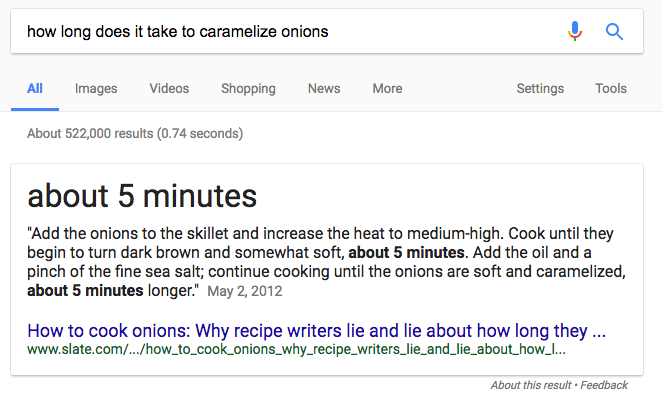
    How Long Does It Take To Caramelize Onions Google Search - Search Influence

    It turns out, Google was looking at Scocca’s Slate article, with all of its high word count and keyword-laden, well-written text, as the authoritative source. The only problem was that its algorithm focused on and crawled the first paragraph that referenced the 5-minute cooking time. The myth Scocca was trying to debunk ended up getting “bunking,” to use his inverse take on the word.

    Users Push for Quick Answers

    Google hasn’t always answered questions. Users typed in what they were looking for, and they got a list of web pages that may help them find it. But Google realized people wanted short, quick answers to questions, so they developed the short answer box. It’s virtually set apart from the search results and has a slight drop shadow.

    This also isn’t the first time Google has had issues with its short answer box. About a month ago, if you were to ask “Is Obama planning a coup d’etat against the U.S. government?” the response was that he indeed was planning a communist coup at the end of his term. Ask why a fire truck is red and you got a Monty Python joke. While the latter could lead to some harmless John Cleese quotes passed around the office, the former could actually misinform the public in a harmful way.

    Why Are Firetrucks Red Google Search - Search Influence

    Google’s Response and Their Plan to Fight False Information and Fake News

    Google has been dealing with this for a couple of years now. In 2015, they announced that they were using RankBrain, an artificial intelligence algorithm, in combination with Knowledge Graph, which pulls information for short queries from sources like Freebase, Wikipedia, and the CIA World Factbook—very reputable sources. It currently contains 3.5 billion facts. And, with all of these instances of inaccurate snippet responses, Google was quick to fix the issues. Searching for the cooking time for caramelizing onions now brings up the correct answer. Also, along with Facebook, Google also upped their fight against fake news by using fact check systems in their searches and feeds. So the big question is, how does all of this relate to your small business, practice, firm, bakery, brewery, insurance agency, etc.?

    The Importance of Rich, Accurate Content

    Whether you’re working on new content or need on-site or local search optimization, the importance of producing educational, on-point, authoritative content is key. The Knowledge Graph’s “panels” pull information from your “about us” page, including contact information. These show up in the sidebar of searches and can include photos from your Google+ page as well as any reviews of your business. So, it should be a no-brainer that your Google+ page should be up to date and any reviews of your company are responded to promptly. Above all, make absolutely sure that your NAPs are consistent and current; an incorrect address showing up in a panel is not the quick answer that potential customers want.
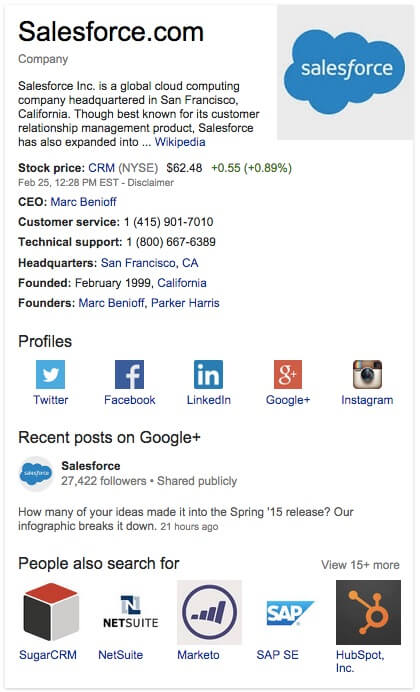
    Salesforce Google Plus Account Screenshot - Search Influence

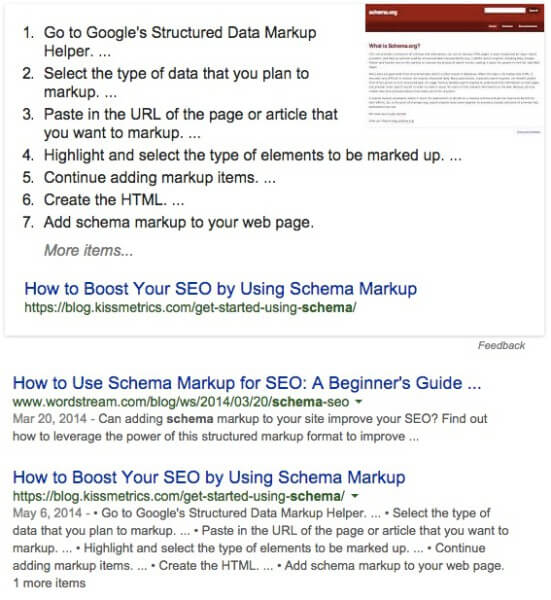
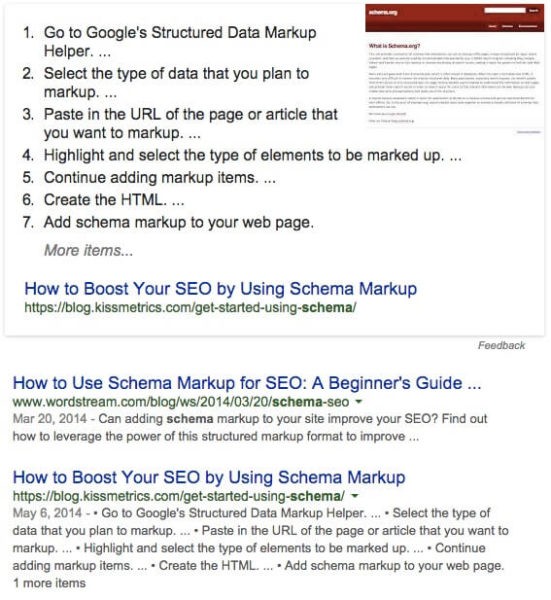
    There’s also the chance that your longer content could be pulled into a short answer box. At first, Google’s Knowledge Graph was pulling just short answers to questions, but it has since gotten smarter at pulling answers from longer content, like how-to guides with 20-point checklists or in-depth, 1,000+ word content that gives users lots of useful information to peruse. As always, make certain your content is not only accurate but also engaging enough to pull viewers deeper into your site and actually convert.

    Does This Completely Change SEO?

    In short, no. As this article from SearchEngineLand points out, in most cases, “the source getting pulled into the Knowledge Graph is already in the first few organic search results anyway.”
    How To Boost Your SEO Using Schema Markup Screenshot - Search Influence

    Good SEO will improve your ranking regardless and will, in turn, improve your chances of showing up in a short answer box. But even if your business never shows up there, your target audience is still searching for more than just a quick answer. They’ll want to dive into your site for in-depth, relative information. Similar to previous algorithm updates with Hummingbird and Panda, there may be some minor ups and downs in organic search numbers. But if your content is consumer-focused, educational, expertly written, and optimized, then your SEO plan will help out Google’s Knowledge Graph as well.

    If anything, these inaccuracies in Google’s AI have taught us that the search begins and ends (ideally in conversion) with the user. Keep in mind the unique relationship between your business and your potential client.

    Make It Easier for Google

    So, what are some additional steps you can take to make sure your site is up to current SEO best practices? Check out our recent white paper on things to avoid when building or optimizing your website. It includes valuable information, like configuring your URLs and making sure you’re mobile-friendly. Have any more questions on how to increase website traffic? Reach out to us at any time.

    Images

    Onions

    Short Answer Box via Gizmodo

    Fire Truck via TheOutline.com

    Knowledge Graph Panel via SearchEngineLand

    Short Answer Box via SearchEngineLand
  • Search Influence Reviews the 8 MOST Fun Jobs in New Orleans!

    Search-influence-jobs image

    We all know it’s great to work at Search Influence, but some NOLA professionals are headed a little farther off the beaten path. Check out the eight most interesting jobs in the Crescent City.

    1: Ghost Tour Guide

    ghost tour guide job in New Orleans
    Source: www.flickr.com/photos/the-o/

    New Orleans is one of America’s most haunted cities—if not THE most haunted. With moss-draped oak trees and cobblestone alleys providing ambiance and a history including pirate battles, voodoo queens, and over 27 yellow fever epidemics, the city is perfect for supernatural lore. Ghost tour guides love sharing their knowledge with travelers from all over the world, and who knows—they might just spot a few ghosts of their own! (Try New Orleans Ghost Tours, Haunted History Tours or Ghost City Tours.)

    2: Roman Candy Man

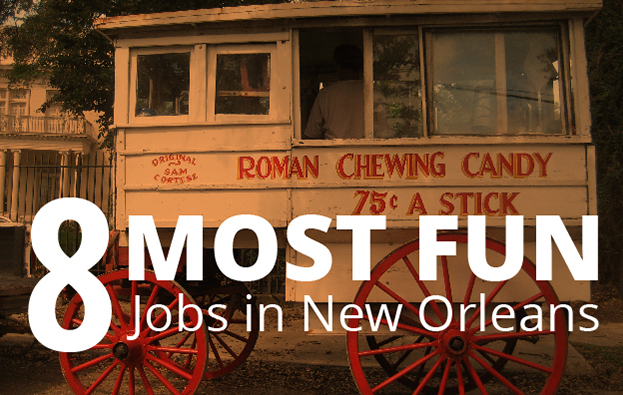
    Roman Candy, sold from a hand-painted, mule-drawn wagon, has been a New Orleans tradition since 1915. The Italian taffy is made fresh in the wagon each week, and the recipe has been passed down through the same family for generations. The best part of the job? “It’s fun!” said current owner Ron Kotteman in an interview with Thrillist. “I love making the kids happy—that’s why I got into the business in the first place.”

    3: Mardi Gras Parade Designer

    Most people participate in Mardi Gras for fun, but a few lucky New Orleanians have made Carnival into a career. The most coveted positions are at Kern Studios, the self-proclaimed “world’s best float builders.” These include niche jobs like parade float lettering specialists. However, another option is to start your own krewe! A prime example is Ryan S. Ballard, who turned a realization about Mardi Gras’ lack of sci-fi cosplay into a career as the designer/creator of the Intergalactic Krewe of Chewbacchus.

    4: Craft Brewer

    Craft breweries are taking off! According to Brewer’s Association, 2015 saw the most craft breweries in US history, and “one of the fastest growing regions was the South.” New Orleans boasts five breweries within the city, including NOLA Brewing Company, and the acclaimed Abita Brewery on the Northshore. The job’s main perk is obviously the delicious beer, but brewers also report loving the math and science involved, as well as the status of having a “cool” job.

    5: Calliope Player

    The age of steam gave New Orleans some of its most classic attractions: the steamboat and the calliope. The instrument is similar to a pipe organ, but powered by steam or compressed air. Debbie Fagnano plays the calliope three times a day on the Steamboat Natchez, one of the last operational, fully steam-powered paddlewheel boats in America. In an interview with New Orleans Magazine, she said her favorite part of the job is “watching passengers from all over the world thoroughly enjoy what they’re experiencing.”

    6: Penguin Breeder

    penguin breeder job in New Orleans
    Source: www.flickr.com/photos/quinnanya/

    His official title is Aviculturist at Audubon Aquarium of the Americas’ Husbandry Department, but Darwin Long breeds penguins for a living. He also develops and runs the Backstage Penguin Pass program, raises penguin chicks, and cares for the aquarium’s other birds, like the free-flying Amazonian bird collection. According to New Orleans Magazine, Long’s favorite part of the job is “being able to share with and excite kids and adults about penguins and other birds, while educating them about penguin biology and their natural environment.”

    7: Jazz Fest Organizer

    If helping to run Jazz Fest is your dream job, you just might be in luck! Wikipedia lists over 65 positions on the Board of Directors alone. In case you need a reminder of why Jazz Fest is awesome, performers have ranged from Mahalia Jackson to the Red Hot Chili Peppers, and food vendors offer delicious Louisiana classics from fried green tomatoes to Crawfish Monica. Large spaces are also dedicated to celebrating cultural and historical practices, from Cajuns to Mardi Gras Indians. Who wouldn’t want to organize this great event?

    8: French Quarter Buggy Driver

    New Orleans buggy drivers love their job! As Jake Jones wrote for myNewOrleans.com, “How cool—to be in the middle of the French Quarter, where all the fun and action take place?” Similarly, Jim Farrell told Nola.com, “It is a lot of fun. You entertain people.” In addition to meeting visitors from around the world and serving as ambassadors for the city, drivers also mention bonding with their mules as a great part of the job. They’re a little jealous of the vacation time though—mules get three months off every year to unwind in green pastures.

    Of course, these are only eight of the many interesting jobs New Orleans has to offer. With a growing film industry, some of the nation’s best restaurants and bars, a thriving arts scene, and more, there’s an occupation for almost every form of creativity.

  • Search Influence Reviews: Here Are 4 NOLA Restaurants Where 2 Can Dine for Under $50

    With over 1,400 restaurants to choose from, deciding where to dine in New Orleans is no small feat. With tempting options from world-famous chefs like Alon Shaya, John Besh, and Emeril Lagasse, deciding where you can afford to dine in New Orleans can be a challenge as well. There are workarounds—you can stalk Groupon discounts, eat exclusively at happy hours, or skip the entree and only buy appetizers, drinks, and dessert. However, sometimes you just have to know where to go. Here are four great restaurants around the Crescent City where two people can dine for under $50—tax and tip included.

    #1: St. Roch Market

    Search Influence Reviews #1

    Located in the Bywater, St. Roch Market was originally built in 1875 as a neighborhood open-air market. In 2015, it was refurbished after destruction by Katrina and 10 years of abandonment. The new market features an airy, black and white interior, complete with stately columns and stalls for 13 local vendors. This bustling locale combines the convenience and variety of a food court with the atmosphere and quality food of fine dining.

    The wide array of dishes and vendors provides an endless combination of foods and prices, but a few favorites are the Dirty Mac ‘n Cheese from Dirty Dishes—creamy smoked gouda mac and cheese with crawfish tails and tasso—and Nola Trio from Fete Au Fete—a combo platter featuring Crawfish poutine, red beans and rice, and shrimp and grits. Together, these dishes come to $25.63, leaving the other half of your budget free for cocktails or craft beers at the Mayhaw Bar.

    #2: The Rum House

    In a restaurant-packed corner of the Garden District, The Rum House stands out from the competition with its laid-back Caribbean atmosphere. Its colorful, outdoor picnic tables are packed at any hour of the afternoon or evening, and it lives up to its name by offering varieties of rum from over 20 countries.

    While it can be tempting to split an enormous plate of Damn Good Nachos ($13.95) and spend the rest of your $50 on adorable margaritas served in mason jars, tacos are the true pride of The Rum House. Order several a la carte ($3.95–$4.25 each) or go for the Taco Trifecta, a combo platter featuring three tacos and a side. One great combination is the Brisket taco, the Lamb Vindaloo taco, and the vegetarian Rasta taco with a side of Coconut Mango Rice—$17.64 with tax and tip.

    #3: Parkway Bakery & Tavern

    Search Influence Reviews #2

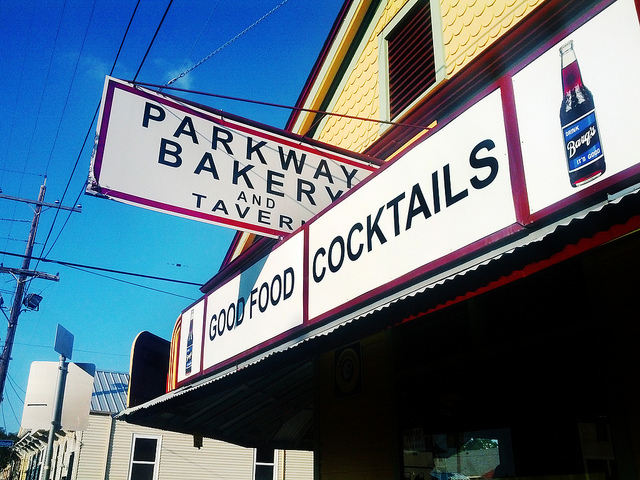
    Located in Mid City, overlooking Bayou St. John, Parkway Bakery & Tavern serves some of the best po’boys in the city—just ask President Obama! The restaurant opened in 1911 as Parkway Bakery and started making their signature dish in 1929 to feed factory workers at the American Can Company across the bayou. Now, the walls are decorated with almost 100 years of NOLA paraphernalia, including framed newspapers, local high school banners, and historic political signs.

    Parkway offers po’boys in two sizes: small ($3.65–$9.70) and large ($4.95–$13.55). While you can order the traditional lunchmeat options, seafood is the undeniable way to go. Keep it classic with fried shrimp or oysters dipped in remoulade sauce from the sauce bar. If you’re feeling ambitious, go all in for the Surf and Turf—slow cooked roast beef topped with golden fried shrimp and gravy. Either way, two can eat lunch or dinner for well under your $50 budget.

    #4: Cochon Butcher

    Next door to award-winning Cochon in the CBD is Cochon Butcher, a combination butcher shop, sandwich counter, and wine bar. This niche restaurant offers a less expensive, more casual, and equally delicious opportunity to enjoy Cochon’s culinary creations. Providing all the charm and freshness of the rapidly disappearing neighborhood butcher, it also offers house meats and sausages sold by the pound.

    All of Cochon Butcher’s sandwiches sell for $10–$12 before tax, but two delicious suggestions include Cochon Muffaletta—a twist on the classic Louisiana sandwich, featuring house meats—and the Pork Belly sandwich—complete with mint and cucumber on white bread. One sandwich each leaves plenty of your budget to use on local Louisiana beers, like the classic Abita Amber, Parish Brewing Envie Pale Ale, or Great Raft Reasonably Corrupt Black Lager.

    Of course, these are just a few of the delicious and affordable restaurants that New Orleans has to offer. For further eating, check out Cowbell in Carrollton, Casa Borrega in Central City, or just wander down your street and see what tasty locations you can find!

    Image 1 Credit | Image 2 Credit

  • Top 5 Search Influence Blogs from July 2016

    If you are like many of us at Search Influence, you took a few days off last month to enjoy the summertime. Now that August is here, you may have a few minutes to catch up on your reading. Here are our top five most read blogs from July.

    Top 5 Search Influence Blogs from July 2016 Image 1

    1: Search Influence Reviews: Here Are 5 of the Best Bars We Visit After a Long Day at Work

    Our team members enjoy grabbing a nice cold one after a long day at work! Check out our top five list of local bars—each with a wide selection of beers and delicious bar food in venues only New Orleans can provide.

    2: What Happened to Facebook’s 20% Text Grid Tool?

    Facebook officially rolled out this new update to the 20% text rule in June. Read about it and how it affects Facebook ads in this updated blog.

    3: Learn How to Create a Snapchat On-Demand Geofilter to Boost Your Next Event

    Snapchat launched the ability for users to create On-Demand Geofilters for birthday parties, weddings, business events, or just for fun! Learn how easy it is to submit the filter along with some key metrics to gauge your filter’s success.

    4: 12 Things You May Not Know About Online Marketing

    New to online marketing? Here are 12 things that surprised some of our team members when they started working at Search Influence.

    5: 10 SEO Blogs You Should Be Following

    Every day, we see traditional marketing grow more obsolete. Learn about 10 of the most informative and essential SEO blogs you should be following.

  • The Diagnosis Is In: Your Medical Practice Needs Reviews

    Reviews
    Yelp, Healthgrades, Google My Business, RateMDs, Vitals—the list goes on and on. More than three quarters of patients are browsing review sites, using the online reviews to decide on a new healthcare practitioner. It is now more important than ever for your practice to have a strong online presence with positive reviews on your own site as well as external review sites. If you need help generating more online reviews, here are five tips to encourage your patients to share.

    1. Use Word-of-Mouth to Ask Patients to Post Reviews

    Your source for positive reviews is from your frequent and satisfied patients. Never resort to review stuffing by asking office staff, friends, or family members to write a positive review. Fake reviews, usually long on descriptions and short on facts, are easy to spot. You need your happy patients to share the truth about their experience, and you should be encouraging them to post reviews. At the check-out desk, have a sign or a handout ready with your website or other review site URLs you use. Include words of appreciation and encouragement, and request—don’t pressure—patients to rate their experience.

    2. Make It User-Friendly With a QR Code

    Do your patients use smartphones? Statistics suggest that they most likely do. Even if you have a “no cellphone” policy in your waiting room, many patients may be checking their emails or Facebook newsfeed while waiting. Why not give your mobile-enabled customers immediate access to your business information with a QR code?

    A QR code is a mobile-friendly barcode that brings users to a specific mobile landing page, such as your Google My Business page or Google Places business listing. You can print a QR code on business cards, mailings, and brochures, and your patients can leave a review with the click of a button. Even if patients choose not to scan the QR code, they may be impressed with how tech-savvy your practice is.

    3. Reach Out on Social Media

    If you already have a Google+, Facebook, or Twitter page, post links to your review sites and encourage patients to post reviews. Not everyone you ask in the office will write reviews, so you need to offer patients constant feedback opportunities. By maximizing review opportunities, you also maximize your feedback and develop a strong online reputation.

    LM 1

    4. Be Open to Negative Feedback

    The more open and welcoming your practice appears to be, the more comfortable patients will be coming to you instead of airing complaints on the internet. Encourage patients to contact your practice directly to voice concerns, and consider creating a paper or email survey to ask for feedback. You should try to hear from complainers before they make their grievances public.

    If negative feedback does show up on a review site, respond to the criticism in a non-defensive manner. This will signal to potential patients that you listen and care about customer service. Remember to never discuss personal medical information, but focus on broader policies. And remember, always ask the patient to contact you to discuss his or her dissatisfaction. This shows others that your practice takes responsibility for patient satisfaction.

    LM 2

    5. Deliver Your Best Service

    The more satisfied your patients are, the more likely they are to write positive online reviews. Patients have high customer service expectations, so train everyone, including receptionists and the billing department, to treat them with kindness and respect. Always look for ways to improve your patient’s experience. Practices with the best service get the best online reviews.

    Screenshot Credits:

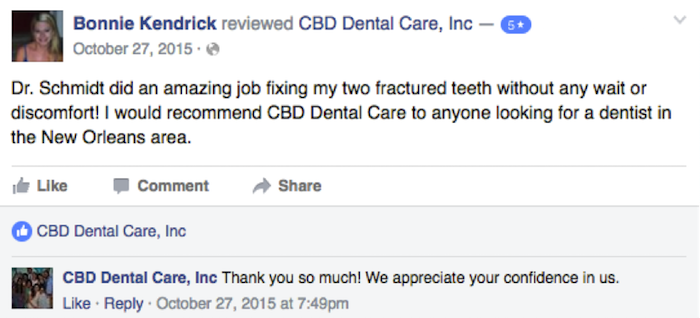
    Facebook Screenshot Image
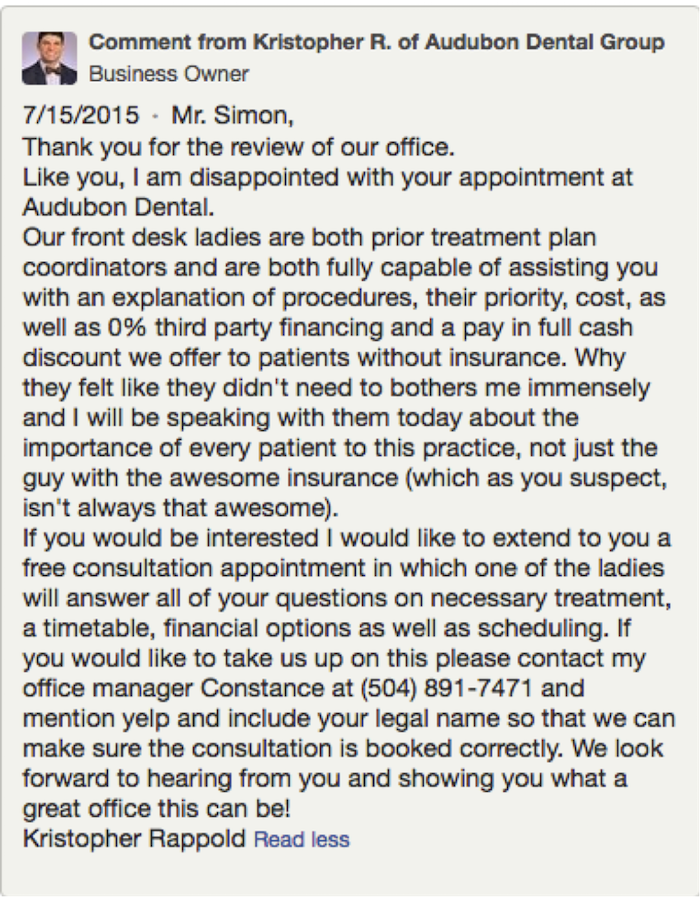
    Yelp Screenshot Image

  • How Should a Dentist Handle a Bad Review?

    1603-SI-Newsletter-0331-KG-E-02

    There’s a lot of chatter on the Internet about where to find a great dentist. You can give patients a bag of goodies and send out reminders about regular cleanings, but some will still forget to come back just as surely as they forget to floss. Retention is a challenge for any dental practice, but fortunately, there’s a whole pool of people searching for local dentists online. To tap into the online traffic and fill more exam chairs, one of the most important tools is online reviews.

    Claim Your Listings

    Even if you don’t have a top-of-the-line website, just claiming your existing online listings can make a big difference. Update your hours of operation and contact information on places like Google+ and Yelp. And claim the listing so that you can follow what the community is saying about your practice.

    Reviews Matter

    Reviews have a very real impact on the perception of your practice and whether people choose to contact your practice. One dentist estimates that “It takes at least five good reviews to counter one negative review.” And a negative review could come for seemingly no reason at all, such as a patient who came in once for a promotional offer and was upset about the final bill. The negative review that takes only a few minutes to write can impact your business’s average for months.

    Last year, the Minnesota dentist and hunter who killed a lion in Zimbabwe faced an influx of thousands of negative Yelp reviews for his practice. Fortunately, Yelp’s user support team helped to remove the negative reviews that did not describe a “first hand customer experience.” Still, it’s clear that many people are willing to use review sites as a means of inflicting damage on a business.

    Responding to Reviews

    Even if the review has been filed under the patient’s real name, HIPPA limits how much you can say in response, even if you simply want to refute false accusations. While responding to negative reviews is one of the best ways to minimize their impact, what you say makes a big difference. In general, an official response to a negative review should incorporate the following tips:

    • Apologize, even if the complaint is unreasonable.
    • Address their concerns, but don’t go into detail. This isn’t the place for an argument.
    • Move the conversation out of the public eye. Provide an official email contact.

    Keep the Audience in Mind

    The natural human response to a bad review is to argue and get defensive, especially when the negative rating seems unjustified. Unfortunately, winning the argument online wouldn’t necessarily impress future patients, and it could even make you look like a bully. Rather, try to address the situation and move the conversation to email so that it takes up as little real estate as possible. A back-and-forth exchange will just highlight this one negative review. Don’t make any public offers for compensation or refunds, or it may encourage more negative reviews.

    424274849_c4593205c9_o

    Get Help from the Professionals

    Claiming all the proper listings and inviting happy patients to fill out reviews can be a significant investment of time. To take the guesswork out of improving your online reputation, you can enlist the help of a company like Search Influence. We’ve had past success with helping our clients get more positive reviews, and it’s a process that dovetails neatly with other SEO services.

    Image Credits:

    Chattering Teeth GIF
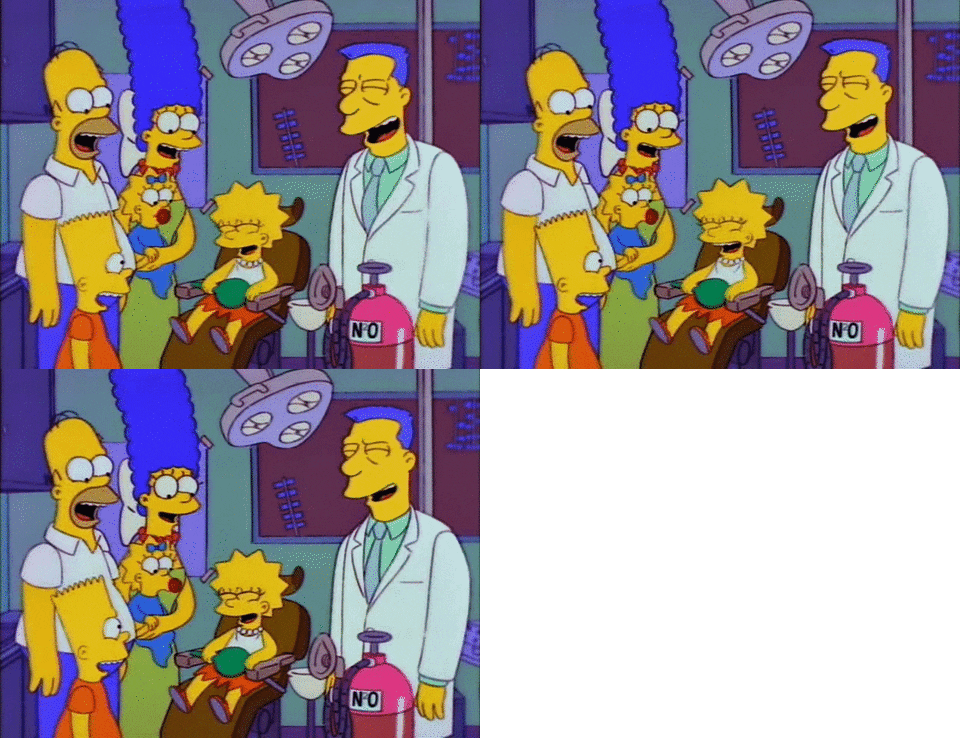
    Simpsons Laughing GIF
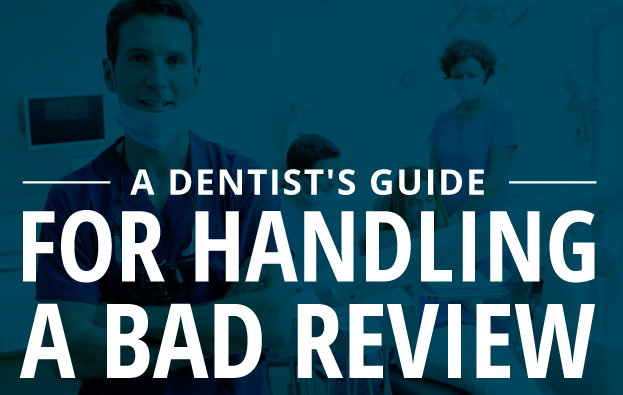
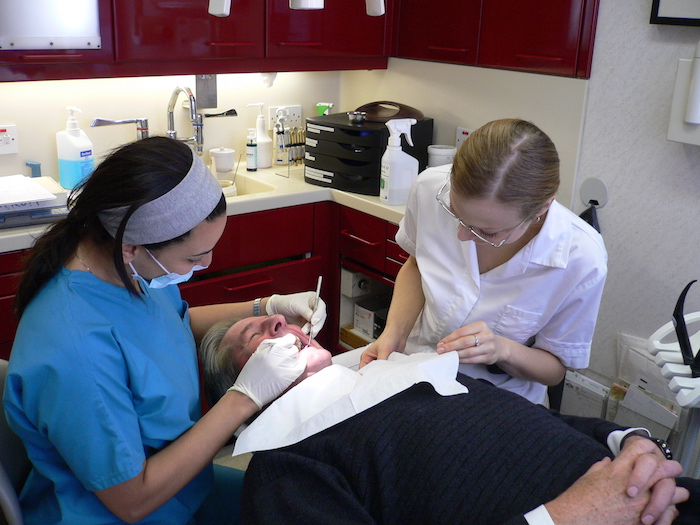
    Working Dental Professionals Image

  • A Review Of CODE: Debugging The Gender Gap

    Mary Silva Grace Hopper Code Gender Gap Featured Image

    I recently had the opportunity to attend a viewing of the documentary CODE: Debugging the Gender Gap. From their site, “CODE documentary exposes the dearth of American female and minority software engineers and explores the reasons for this gender gap.”

    In the early days of programming, women dominated the field. Building physical machines was the hard work for men, and programming was seen as the more trivial work for women.

    Women Programmers In History

    As far back as the 1800s, we saw women dominating in computer sciences. I recently learned of Ada Lovelace from one of our web developers, Mattie Kenny. Ada Lovelace was a mathematician and writer who wrote the first algorithm to be read by Charles Babbage’s computer, the Analytical Engine.

    In the first few decades of programming growth, we saw more and more women joining the computing field. Grace Hopper is a great example of women who paved the way early on in this field. She was a Navy admiral who invented the first compiler (a program that transforms source code into another computer language) for a computer programming language in the 1940s. By the mid-1980s, women made up more than 35% of computer science majors, which has consistently fallen over the past 25 years to the now 15%.

    Grace Hopper Portrait Code Press - Search Influence

    So what caused such a drastic decline in the number of female computer science majors? This is exactly the question that CODE: Debugging the Gender Gap hopes to explore.

    The film alludes to the introduction of the brilliant male hacker trope in 80s movies and pop culture being partly to blame. That, along with the targeting of video games to boys, started to really make the computer science field a “man’s world.”

    Even in games like Metroid, which was released in 1987, we found ourselves with our first female main character in video games, but she was only acknowledged as female when seen as a “reward” in the game. While in the mysterious head-to-toe power suit, the protagonist is referred to with male pronouns. The only time the character is seen as a woman is when the player finishes the game in under five hours and unlocks her as a reward.

    Metroid Manual Game Description Scan - Search Influence

    Women In Tech Now

    Moments in history like those referenced above, which could have provided an exciting role for females interested in computer sciences, instead failed by objectifying women rather than empowering them. The results of these events and how the gender gap in this field has grown are exemplified in CODE, which shows us the unwelcoming workplaces commonly found filled with “brogrammers” these days. “A lot of women call it death by a thousand cuts, or microaggressions,” Director / Producer Robin Hauser Reynolds says. “It’s going to work every day and (having) to prove over and over, beyond what a man has to do, that you belong in that place.” The primary tension that this film portrays is that women with an interest in programming face a lot of roadblocks and challenges if they hope to make it in the field. It can be alienating to work in a field surrounded by those who continually make efforts to keep you from succeeding.

    Where CODE succeeded, however, was in showing successful women like Yelp’s software engineer Jen Wang and Pinterest’s software engineer Tracy Chou. These women are powerful, positive role models who love their jobs and clearly believe that having more powerful women in leadership roles in computer science fields can help make the opportunities more approachable and increase the number of women drawn towards these fields.

    While the beginning of the film covers the negative results of previous events (the decline of women studying computer science and the hostility towards females in the tech workplace), the second half of the film provides a light at the end of the tunnel so to speak. Providing positive role models in STEM fields as well as opportunities to learn programming at a young age could surely do some good in reducing the gender gap in technology fields. Also, shedding light on positive workplaces in the tech field that employ a large number of women is a great way to open up the barriers to entry for women.

    Personal Takeaways

    Something I recently said in an interview for another blog post of ours is that it takes just one instance of a young girl seeing a woman in a STEM role to think to themselves, “Hey, I could do that, too.” I hope, by continuing to be a knowledge resource in the industry through blog posts like this on code-focused industry best practices and changes, that I can help positively influence views around women in tech. I am so honored to have had my hard work at Search Influence recognized through continued career growth, and I can only hope that companies like ours that support women in tech continue to pop up around the United States.

    Image Sources:
    Grace Hopper Portrait
    Metroid Game Insert Scan

  • The Prescription for Better Online Reviews for Your Practice

    Just last month, Forbes ran an article titled “Why Doctors Must Market Themselves in 2016.” Much as customers at a restaurant can get on Yelp to write about their experience, patients can review their physicians on Yelp and other sites as well. RateMDs.com, Healthgrades.com, and Vitals.com are just a few examples of sites that host online reviews for physicians, dentists, and hospitals. ZocDoc.com even includes an app that allows you to search for nearby physicians in your insurance network. These websites had around 6.4 million hits last year, and in 2014, more than half of patients reported that they used physician-rating websites to select a doctor. Even if your practice hasn’t decided to take a look at your online reviews, many of your patients already have.

    Part of the Broader Trend

    According to a BrightLocal survey, 88 percent of consumers trust online reviews as much as they trust a personal recommendation. Patients who scour the Internet for reviews on cars and restaurants will naturally use similar resources when looking for a dermatologist or other medical practice. Even when patients are referred by a friend or another physician, many will search for directions through Google, which will reveal reviews entered on Google+. In effect, online reviews are ubiquitous to the point of being unavoidable, and addressing online reviews has become an equally unavoidable part of healthcare marketing.

    1602-SI-TheInfluencer-KL-A-04-lg

    The Danger of Online Reviews

    Not everything on the Internet is true, but negative reviews can have a very real effect on the reputation and success of your practice. As with any business, it’s unfortunately the least satisfied patients who seem most motivated to leave reviews, and they counterbalance the handful who would take time to write about a positive experience. In the same study where 61 percent of participants used online reviews to find doctors, only about one in five took the time to write reviews themselves. A major key of online reputation management is encouraging the satisfied majority of your patients to leave reviews. Learn how here.

    Use the Feedback

    The University of Utah Madsen Health Center decided to start sharing survey data with their physicians in 2008, and the hospital jumped in patient satisfaction from the 34th percentile up to the 80th over the course of six years. What’s more, safety, mortality, and efficiency scores improved while malpractice premiums and costs went down for the hospital. While some online criticism may be groundless, trends and insights can also be useful as feedback to improve your practice and the quality of service provided.

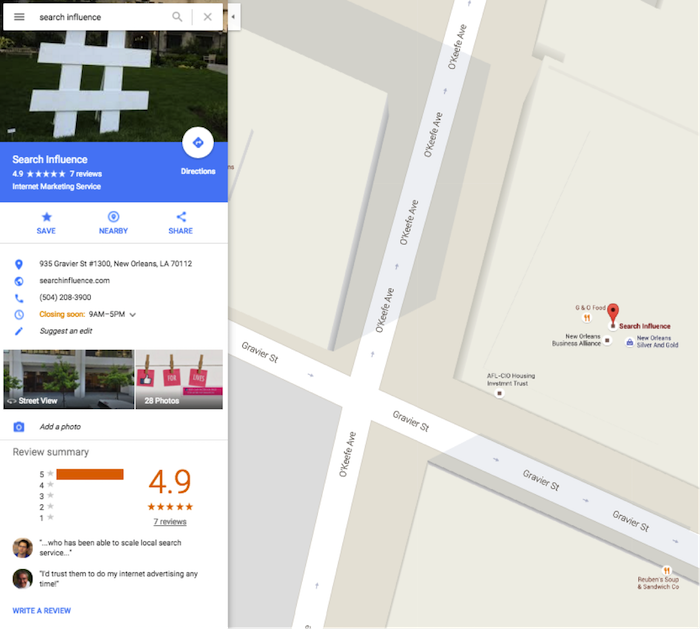
    Search Influence Google Maps Location Image

    Plan Your Strategy

    Because negative reviews have cumulative and long-term effects on your practice, a long-term outlook is needed to address the problem.

    • Claim Your Listing – Your practice may already exist on Google+ and other review sites. Claiming the listing allows you to monitor reviews and respond to negative ones.
    • Update Your Information – Entering your hours, contact information, and services makes your practice more accessible.
    • Check Out Competitors – How do your ratings compare to other practices in your area? Do you have listings on the same review sites?
    • Reply to New Negative Reviews – Do not delete negative feedback, but feel free to reply as appropriate.

    How to Handle Negative Feedback

    Reviewers who are upset sometimes make outrageous claims, but deleting the review only fuels a bigger reaction. When publicly responding to negative reviews, it is important to express sympathy for the person’s negative experience and move the conversation out of the public eye. People looking at the reviews should see that you have addressed the complaints, but they don’t need to read a long exchange that distracts from positive reviews.

    Screen Shot 2016-02-10 at 11.13.02 AM

    Screen Shot 2016-02-10 at 11.13.15 AM Consider Calling in the Professionals
    While claiming your practice on current listings does not take much time or expertise, managing the online presence across several sites can be a job that warrants a little professional help. The team at Search Influence can get results, especially when it comes to strategies that get your satisfied patients writing reviews. Ultimately, online reviews should just be one component of a comprehensive online marketing strategy. Increased visibility in the search rankings can help generate leads and reviews, which becomes a cycle for growth.

    Image Credit:

    Doctors at Work Image