Tag: reviews

  • In-House Marketing vs. Agency Teams: Build a Strong Strategy Together

    In-House Marketing vs. Agency Teams: Build a Strong Strategy Together

    This post was updated by Paula French on 2/28/25 to reflect recent trends and best practice. It was originally published on 12/6/2018.

    Working professionals giving each other a high five

    Key Insights

    • As brands grow, marketing demands increase, making it difficult for internal teams to execute strategy, create content, analyze performance, and keep up with industry shifts all at once.
    • Agencies provide specialized expertise and resources that complement in-house efforts, allowing internal teams to focus on core business priorities and guide overall strategy.
    • Combining internal marketing strengths with agency support creates a scalable, results-driven strategy that adapts to changing needs without overloading your team.

    Internal marketing teams are often expected to manage it all — strategy, execution, and analysis — on top of keeping up with regular day-to-day tasks. But as the workload grows, so does the risk of burnout, missed priorities and deadlines, and campaigns that don’t perform as expected. The faster the industry evolves, the harder it is for stretched-thin teams to keep up, leading to outdated strategies and missed opportunities.

    While outsourcing can help lighten the internal load, some in-house teams hesitate to seek out agency support, fearing they’ll lose control over their marketing strategy. In reality, internal teams and agencies don’t have to compete. They can leverage their respective strengths to create an agile, focused, and impactful marketing approach.

    If you’re deciding between keeping all of your marketing in-house or partnering with an agency, here’s why you don’t have to choose just one, plus how to balance both for the best results.

    How Can an Agency Help Me If I Am a…

    Single-person marketing team

    Instead of feeling like a one-person show, you’ll have a team to bounce ideas off, refine strategies, and make sure nothing slips through the cracks while improving your results.

    Single-person marketing “teams” can feel isolated and underappreciated. Your organization’s leaders expect you to handle it on your own, but as you’ve tried to run campaigns, manage vendors, write content, plan the strategy, update your website, and still get results, you find two challenges:

    1. There isn’t enough time to do it all yourself.
    2. One person rarely has the skills to be strategic, create graphics, update a website, monitor results, and evaluate and manage vendors.

    A marketing agency takes the weight off your shoulders by acting as an extension of your team. They bring the time, skills, and experience to tackle everything from strategy planning to execution and performance tracking, so you’re not stuck doing it alone.

    Business leader

    No more juggling ads, content, and campaigns on the fly. Partnering with an agency ensures your marketing is always working, even when you’re too busy to think about it.

    When you’re responsible for driving the business forward, marketing is just one of many things competing for your time. Whether you’re managing it all yourself or working with local media vendors, it can be difficult to stay strategic and aligned with your goals.

    You may often feel that:

    1. Marketing takes a back seat when business operations call for urgent attention.
    2. You got into your field to do what you love, not market what you love.
    3. You are reacting to promotional ideas as they cross your desk, with no real strategy about how to best reach your customers.

    Being a leader means wearing many hats, and marketing often ends up as an afterthought. An agency helps shift it from a scattered, reactionary task to a well-planned strategy that actually supports your growth.

    Medium-to-large marketing team

    Even with a well-staffed, in-house department, keeping up with every aspect of marketing can be a challenge. Between aligning team members, executing campaigns, and adapting to industry updates, it’s easy to get stuck in the weeds and lose valuable time for strategy. You may find that:

    1. Your internal marketing team needs support in strategy and direction.
    2. The time it takes to execute tactics gets in the way of strategically analyzing what is truly working (and what is not).
    3. You struggle to keep up with new and changing marketing technologies and ideas.

    Partnering with a marketing agency helps bridge these gaps by bringing fresh insights, specialized expertise, and extra hands where you need them most.  Whether it’s adjusting your strategy, handling time-consuming execution, or keeping your team ahead of evolving trends, they’ll keep your marketing in check and on track without overloading your internal resources.

    Higher education marketer

    Instead of constantly shifting from one urgent task to the next, an agency’s support helps you be more intentional with your marketing.

    Higher education marketing is a constant balancing act. One minute you’re fine-tuning messaging for a new degree program, the next you’re trying to boost student engagement — all while keeping an eye on enrollment goals. With so many priorities commanding your attention, it’s easy to feel like you’re always in reactive mode and that:

    1. Your marketing efforts are spread too thin. You’re trying to serve prospective students, current students, and alumni all at once while balancing multiple degrees and programs.
    2. Data analysis and performance reporting fall by the wayside due to time constraints.
    3. Meeting ambitious enrollment goals feels unattainable without additional resources or expertise.

    An agency will take on recruitment and retention efforts, ensuring you reach the right students at the right time. With deeper data insights, you’ll make informed strategic decisions, focusing your time and budget on what drives real results.

    Want to find out if partnering with an agency is right for your institution? Take our Higher Ed SEO Quiz to discover your best staffing approach based on your current resources, strategy, and performance.

    In-House Marketing vs. Agency Partnerships

    A person giving a presentation in a conference room

    Balancing in-house marketing with agency support lets you stay involved while tapping into advanced expertise. Your team knows your brand best, while an agency brings the skills, strategy, and execution power to amplify your efforts.

    At Search Influence, many of our clients handle routine tasks internally while relying on us for more strategic, high-impact initiatives. The key is knowing which responsibilities are best handled by your in-house team and which most benefit from external support.

    What work should my in-house marketing team handle?

    Identifying unique stories that can be included in marketing

    Great marketing starts with great stories, but you can’t share what you don’t know.

    As part of your internal tasks, build relationships with departments and stakeholders across your organization. This ensures you stay informed of exciting news and developments that bring your marketing to life.

    For example, let’s say you are marketing for a university, and one of your instructors learns that one of her students won a research award. Would your marketing team hear about it?

    If you educate your staff on your marketing goals and build vital relationships, you’ll be less likely to miss valuable stories that strengthen your outreach.

    Serving as spokespeople for public relations and media opportunities

    Having the right people represent your organization in the media bolsters your brand’s credibility and reach. Instead of scrambling when a press opportunity arises, establish a roster of internal experts who can confidently speak on key topics.

    Identifying multiple spokespeople prevents over-reliance on a single person, speeds up media responses, and ensures you always have a knowledgeable representative prepared to engage with the public.

    By designating these spokespeople internally, you streamline the process and create a sense of ownership within your team. When staff members are prepared and empowered to speak on behalf of the organization, it fosters consistent messaging and a proactive approach to media inquiries.

    Creating day-to-day organic social posts

    Social media is where you build a genuine connection with your audience, and staying consistent is what’s key to maintaining that bond. Hubspot reports that social media is the preferred means for product discovery among consumers aged 18 to 44, making routine posting all the more important.

    For businesses with the right in-house resources, managing daily posts can be straightforward. But when time or expertise is limited, outsourcing certain aspects to an agency — like content scheduling, caption writing, or hashtag strategy — can help maintain consistency without adding to your team’s workload.

    You may find that capturing photos or videos in-house and passing them along to an agency for posting works best. This ensures fresh, timely content without the hassle of managing every detail.

    When should I hire a digital marketing agency?

    To improve your website’s SEO and increase organic traffic

    If your in-house team can’t keep up with the nuances of SEO, it’s time to bring in the experts.

    SEO is fundamental to getting your site seen, but it’s far from a one-size-fits-all solution. It takes ongoing attention, work, and a deep understanding of both on and off-site SEO tactics to rank high and stay ranked high.

    An agency will create a comprehensive SEO strategy that aligns with your specific goals, covering key areas like:

    • Deep keyword research to target the right audience
    • On-page optimization to improve visibility, from meta descriptions to header tags
    • Content creation that considers what your audience is actually searching for
    • Site performance improvements, from navigation to mobile optimization
    • Building valuable backlinks to boost your site’s authority
    • Performance tracking to refine strategies and stay ahead of the curve

    When an agency handles these technical details, you free up your team to focus on bigger-picture goals, knowing that your SEO is in the best hands.

    To manage and optimize your digital advertising campaigns

    With an agency managing your digital ads, you’ll rest easy knowing your budget is being spent efficiently, your ads are reaching the right people, and your strategy is always evolving to stay competitive.

    Digital advertising is one of the fastest ways to get your brand in front of the right audience. However, making the most of it is no easy feat. If you’re struggling to create effective campaigns, manage budgets, or keep up with performance tracking, an agency will give your campaigns the focus they need.

    Applying their specialized expertise, an agency positions your brand for paid advertising success by:

    • Crafting targeted campaigns on platforms like Google Ads and Meta
    • Selecting and optimizing keywords for maximum visibility
    • Writing engaging ad copy and designing eye-catching visuals
    • Leveraging advanced targeting to refine audience demographics and interests
    • Setting and managing budgets to ensure your ads reach the right people without overspending
    • Testing different ad variations to identify the most effective strategy
    • Monitoring and adjusting campaigns to keep things running smoothly

    To monitor campaign success through advanced analytics tracking and reporting

    Let an agency take the guesswork out of ad management, using data to refine and enhance your campaigns for maximum performance.

    Analytics and lead tracking require more than just simple data collection. It takes advanced know-how to make sense of your metrics, assess your performance, and use the insights as fuel for your future strategy. If you’re feeling lost in a sea of metrics, an agency will interpret the numbers and guide you toward smarter decisions.

    Trust your advanced tracking and reporting to an agency when you need support with:

    • Tracking leads from forms, calls, and other inquiries
    • Identifying the top-performing marketing channels to allocate resources effectively
    • Analyzing lead quality to improve conversion rates and maximize ROI
    • Conversion tracking set-up to measure sales, sign-ups, and other key outcomes
    • Making sense of your data with customized reports and KPI dashboards 
    • Conducting an ROI analysis to showcase the effectiveness of your efforts
    • Optimizing your campaigns based on performance data

    To craft and execute customized email marketing strategies

    With an agency’s guidance, your email marketing will be a well-oiled machine that consistently delivers high-quality, results-driven campaigns.

    Email marketing often gets treated as an internal “check the box” task without much thought beyond getting the message sent. But when the average cold email open rate is only 27.7%, it’s clear that every detail matters to help your emails stand out in a cluttered inbox.

    From timing to content, getting it right from the start is how you improve opens, reads, and conversions. An agency helps support your email strategy by:

    • Developing the right mix, whether that’s newsletters, nurture campaigns, or frequent email reminders
    • Curating relevant, targeted content that aligns with recipients’ interests and needs
    • Crafting compelling subject lines designed to increase open rates
    • Designing visually appealing emails that work across all types and prompt clicks
    • Segmenting your audience to send the right emails to the right people at the right time
    • Timing emails to ensure they land in inboxes at peak engagement times

    But I Don’t Want to Give Up Control! How Do I Balance In-House and Outsourced Marketing?

    Still debating between in-house vs. agency marketing, or a hybrid approach?

    For the aspects you are currently handling internally, take a moment and ask yourself if it’s the right responsibility for your business. As you go through each item, think…

    Yes, you CAN do it, but…

    1. Are you doing it well?
    2. Are you doing consistently?
    3. Are you monitoring results and making adjustments?
    4. If you were not spending time on this, what else could you be doing?

    If you’re worried about losing control over your marketing when you outsource, rest assured. While your agency will take the heavy lifting off your plate, you’ll still have the head seat at the dinner table. The best agency for you will integrate themselves as part of your team and include you in the strategy and reporting of results, at a minimum.

    Find Your Right Approach to Working With a Marketing Agency

    Are you feeling stretched thin in your marketing approach?

    When your in-house team partners with an agency, you create a dream duo that distributes the workload, increases your day-to-day efficiency, and grants you the extra bandwidth to achieve sustainable success.

    If you’re a higher education marketer interested in further assessing your ideal marketing approach, check out our Higher Ed SEO Quiz. This 5-question quiz will help you determine whether to outsource your work, keep it internal, or take on a hybrid strategy. In just minutes, you’ll have personalized insights to make informed staffing choices.

    See how Search Influence can help you develop a marketing plan that works for your team today!

  • How to Prompt Customers to Leave High-Quality Reviews That Influence SEO

    Key Insights

    • Businesses can prompt reviews and testimonials that include beneficial keywords to support ranking in the Search Engine Results Pages (SERPS).
    • Three benefits to providing review prompts:
      • Encourages high-quality, specific reviews
      • Influences more people to find you when searching for degrees, products, services, and experiences you offer
      • Themes in reviews help those who skim search results understand your value
    • Creating a list of prompts your customers can use when crafting their review helps make sure their reviews benefit both prospective customers and your search rankings!

    Customer reviews and testimonials are crucial to your business. They provide you with feedback on your products and services and help potential customers gain insights from your current ones. Additionally, reviews and testimonials that include beneficial keywords can support ranking in the Search Engine Results Pages (SERPS).

    Graphic of a hand using a tablet to read online reviews of a business

    When your business has reviews on important sites, like Google My Business (GMB), Google sees your business as authoritative and is likely to reward you for this. Greg Gifford, an experienced SEO consultant, created a video for LinkedIn with a suggestion that inspired this post: provide prompts so customers leave reviews with keywords that benefit your rankings.

    In this post, we’ll walk through the steps you should take to prompt your customers (without specifically asking them) to leave beneficial keywords in their reviews and testimonials. Not only can you prompt them to leave a review, but you can also give them some questions they can use to get started. This helps customers leave high-quality reviews with details that will benefit your rankings and also gives them a baseline to get started in writing their review.

    Benefits to Providing Review Prompts

    #1 – Encourages high-quality, specific reviews

    • When you request a review after a customer has experienced your services, it can be intimidating for them to start off with a blank screen. When you prompt your customers with questions about their experience, it helps them feel more comfortable and helps you earn more detailed reviews.

    #2 – Influences more people to find you when they search for the degrees, products, services, and experiences you offer

    • Reviews help influence rankings in the SERPs. If you use prompts that include the keywords you’re targeting, your customers are more likely to use those terms in their reviews, which makes you more likely to rank for them.

    #3 – Themes in reviews help those who skim search results understand your value

    •  Google aggregates common themes in reviews. This helps if someone searches for something in the immediate area of your business.
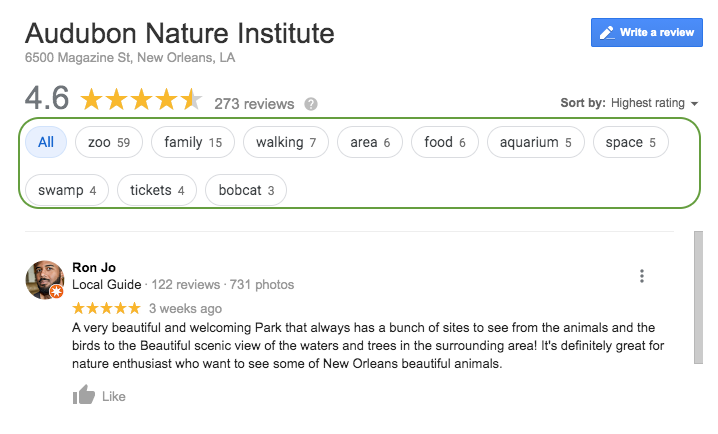
      • Example: Here you can see that Google has aggregated keywords and phrases throughout the reviews to make it easier for a potential customer to see reviews that include venues they may want to visit. If a consumer wanted to see all the reviews that included the keyword “zoo,” they could select it and read up on the experiences others have had.

    Screenshot of reviews from Google My Busiess for Audubon Nature Institute in New Orleans, LA

    • Also, when searchers see the themes of your reviews called out, they can more quickly understand what your business offers. In the example above, it’s helpful to know that the business has a zoo, aquarium, and swamp attraction they could visit while in town.

    Questions to Prompt Reviews

    Sample questions you can use to foster specific, high-quality reviews:

    Medical / Healthcare Questions to Prompt Detailed Customer Reviews

    • Which treatment did you receive?
    • What brought you into the practice?
    • Why did you choose our practice or a specific doctor?
    • Which location did you visit?

    Tourism & Attractions: Questions to Prompt Detailed Customer Reviews

    • Which attractions did you visit?
    • How were your interactions with the staff?
    • What were the amenities like?
    • What did you enjoy most about your experience?

    Restaurants: Questions to Prompt Detailed Customer Reviews

    • Which food and drink items did you have?
    • Which restaurant location did you visit?
    • How do we compare to other restaurants you’ve been to in the past?
    • How were your interactions with the staff?
    • How was the ambiance?

    Education: Questions to Prompt Detailed Customer Reviews

    • Which campus did you visit/attend?
    • Which degree or program are/were you interested in?
    • Do you have any tips for future prospects?
    • How did this experience prepare you for life after graduation?

    Bonus Tip for Bringing Reviews Into Other Marketing Efforts:

    • Feature the most called out benefits of your business in your website copy, imagery, and social media posts and ads

    How Can You Get Started?

    • Gather any email addresses you have of past and present customers.
    • Write an email that prompts them to leave a review for your business.
    • Within the email, include prompting questions that will get them thinking about their experience and ultimately help them produce a thoughtful review that will benefit everyone!

    Now that you’ve got a leg up on your reviews and testimonials, it’s time to start thinking about improving other aspects of your SEO. If you’re not sure where to start, ask for a digital marketing analysis of your website from our team of experts at Search Influence.

    Images

    Tablet

  • 10/10 Would Recommend: Leveraging Reviews and Testimonials in the Digital Age

    This post was updated by Anita Shah. It was originally written by a Search Influence alum on January 12th, 2016.

    Customer review comment boxes

    Before you book a room at a hotel or make a reservation at a new restaurant, do you read the online reviews? According to a study conducted by BrightLocal, “86% of consumers read reviews for local businesses (including 95% of people aged 18-34).” But don’t worry, this statistic is not limited just to businesses like restaurants and hotels; these numbers apply to businesses across industries.

    How You Can Use Feedback for Brand Awareness

    Reviews and testimonials have traditionally provided insights into how a business can better serve its customers. With the evolution of digital marketing, the role of reviews and testimonials has also evolved. Feedback about customer experiences is now critical for gaining new clients. With so many consumers turning to the internet before opening their wallets, reviews and testimonials are user-generated content that drives consumer decisions. A review and testimonial webpage showcases real customer experiences and creates a new, powerful platform for interaction between businesses and customers.

    Having a regularly updated review or testimonial page on a website is a great way to communicate the quality of your services and to get the individuality of your business across to potential customers. Authentic reviews throughout social media and review sites like Yelp or BBB will also promote your brand. In the digital age, consumer interaction via these platforms is an affordable and necessary method of gaining new leads.

    How Reviews and Testimonials Impact SEO

    SEO rankings are not just based on what you have to say about your business. As Google continually alters its algorithm for increased transparency, consumer content—or what other people have to say about your company—is impacting SEO.

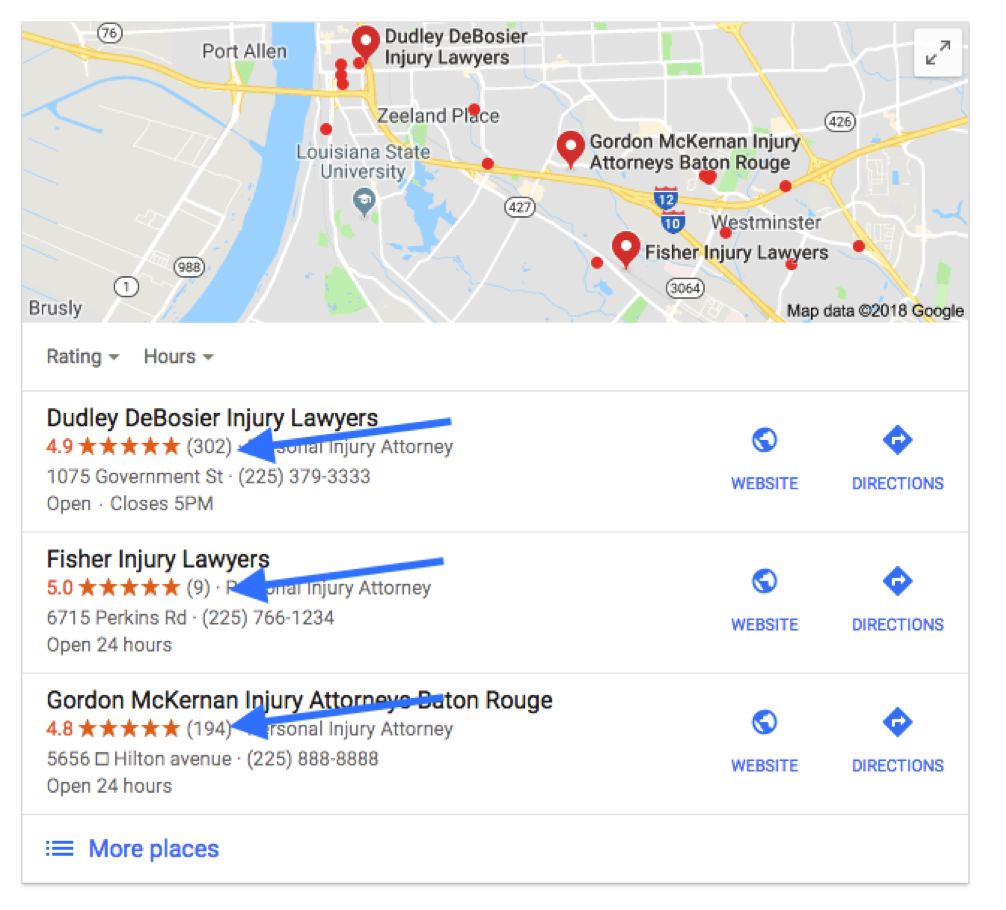
    In fact, the 2018 Local Search Ranking Factors study by Moz states review signals are the third most important maps pack ranking factor. Some other examples of review signals include the following:

    • Review quantity
    • Review velocity
    • Review diversity

    Keyword-rich onsite content is one of Google’s most important ranking factors when it comes to organic search. Customer reviews are likely packed with those high-yield keywords for which you want to be ranking. Utilizing these reviews on your website allows you to put customers to work for you, so you can secretly shape your SEO structure without lifting a finger.

    The Importance of Authenticity

    Remember that reviews and testimonials are real-life recommendations. There may be some negative ones, and that’s okay. Econsultancy reports that 68% of consumers actually trust online reviews more when they can see a mixture of both positive and negative feedback. As long as the negative reviews make up a minority of the input, a business should expect beneficial outcomes.

    Since a review and testimonial page should be a space that helps reduce the risk of duplicate content, a quality review would not be a simple, bland statement. Comments such as “Great service!” or “Quick response time” may not help with an SEO campaign. These reviews also fail to highlight what makes your business unique, superior, and reliable. An effective review or testimonial does not necessarily have to be lengthy, but it should showcase what makes your business stand apart from the competition. Particularly good reviews can be placed in a spot of prominence on a website or even repurposed as a social media post.

    How to Garner Positive, Effective Reviews

    The idea of positive reviews is great, but what about those inevitable few detractors? To minimize negative input, there are three things to consider when asking for a review. You must ask for the review at the right time, with the right messaging, and through the right platform.

    If that sounds like a lot to think about, then let Search Influence take care of it for you. Our specialists can help put you a click ahead of the competition. Reach out today.

    Images:

    Comment Boxes
    Cartoon Customer

  • Why You Should Reply to Your Reviews—Especially The Negative Ones

    Whether we’re using social media to keep up with friends, watching videos on YouTube, or even searching the Web to find a doctor, most of our daily activities involve our phones and other devices with access to the internet. Many of us will turn to reviews, along with recommendations from our friends, to find restaurants to eat dinner at or even when choosing an apartment community to live in. Having positive reviews on your online listings as a business owner is important, but responding to them is even more important. Especially when it comes to negative reviews.

    Why Are Customer Reviews Important?

    Your reviews are a representation of your business. They usually say a lot about the company long before you’re able to speak for it yourself and tell your brand’s story. Potential customers or clients will use reviews to gauge if your products or services are worth the money. According to Vendasta:

    • 92% of consumers will read reviews to determine the quality of a local business
    • 72% of consumers say that positive reviews make them trust local businesses more
    • 80% of customers say they trust an online review or recommendation just as much as a personal recommendation from a friend

    Having enough positive reviews to prove your value is important for garnering new customers. Negative reviews are also important and have an impact on your brand perception. About 86% of people will hesitate to purchase from a business that has negative reviews. 

    The good news is, outside of providing exemplary products and services to your customers, there are ways to reach out before a customer leaves a negative review and thereby get more positive reviews over time. For our client, K. Mathew Warnock, we were able to get him 100 positive reviews in about five months.

    Why Is Responding to Reviews Important?

    You should absolutely be responding to every review you receive. Not only is there the benefit of building relationships with your customer base and having social proof for future customers, but there is also an SEO benefit as well. Responding to reviews shows prospective clients, as well as search engines, that you are committed to satisfying customers and maintaining an active presence on your listings. Google has confirmed via one of the Google My Business Help pages that responding to reviews shows them you value your customers and that high-quality, positive results can improve your business’s visibility in the Search Engine Results page.

    Experts in our field have long believed that in terms of local SEO, review signals were an important factor in Google’s ranking factors. In fact, in 2018 as a part of Moz’s yearly Local Search Ranking Factors, they listed Review Signals as 15.44% of the algorithm when your business is shown in the Maps pack, following closely behind having a well-optimized Google My Business profile with accurate categories, keywords, and being in proximity to your potential customers.

    Person using their smartphone to access local business information

    Google isn’t the only place your customers should be leaving reviews. Depending on your industry, you’ll also want them to leave reviews on other local directories like Yelp, social sites like Facebook, and niche sites like HealthGrades or Home Advisor. 

    How Do I Respond to My Reviews?

    There are some general rules of thumb for responding to reviews that should be followed, regardless of whether they’re good or bad:

    • Respond On Time
      • Some things, like negative reviews, may require you talk offline with your team to craft a response, and that’s okay. But you don’t want to leave reviews sitting for weeks without some sort of response.
    • Customize Your Response
      • Having templates or drafts of responses you use to respond to customers can save administrative time, but you don’t want your customers to feel like you’re giving them a cookie-cutter response.
    • Always Thank Your Customer
      • Good or bad, the reviewer did business with your company and took time out of their day to leave you a review. Reassure them that you are dedicated to providing the best customer service experience possible.

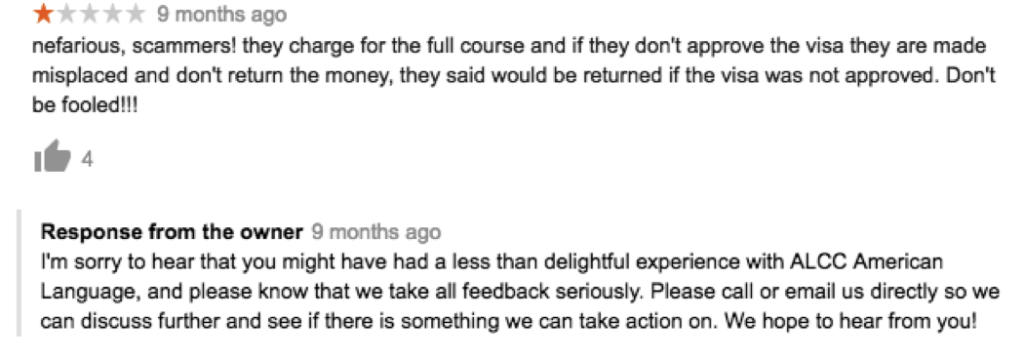
    How to Respond to Negative Reviews

    Bad reviews happen. Don’t fret and don’t overreact. There are some simple ways to make responding to negative reviews as breezy as possible. 

    • Apologize
      • This can be a hard one, but do it and keep it professional and not defensive. Apologize if the reviewer has expressed dissatisfaction with your product or service. Sympathize with them and show them that you can understand their frustration or disappointment. Don’t blame the customer or shift blame on to your staff. Accusing the customer of lying or exaggerating can be offensive as well. 
    • Connect
      • Offer the negative reviewer contact information, either yours as the business owner or a manager’s, so that you can ask more questions about their dissatisfaction. Keep it short and sweet. 
    • Offer Reassurance
      • If you know the customer and what their issue was with your product or service, offer a resolution like a refund or free products. If bad service was the issue, let the customer know that you are taking the necessary steps to ensure if they’d like to visit or purchase from you again, their experience will have improved.

    5 star review custom graphic for Search Influence blog

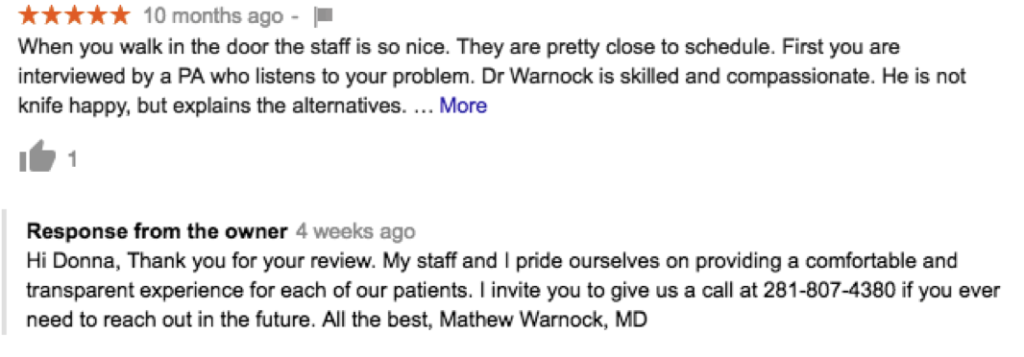
    How to Respond to Positive Reviews

    Responding to positive reviews is a bit easier, right? You’ve gotten a glowing review from a recent customer. They can’t help but gush about your service and the attention they received. They love your staff. They love your business. How do you respond to that?

    • Show Acknowledgement & Gratitude
      • Don’t forget to be polite and acknowledge the reviewer by their first name; this adds a bit of personalization over generic greetings. Thank them for patronizing your business. In the case of both positive and negative reviews, gratitude goes a long way.
    • Use Keywords 
      • Using keywords, your business name, and location specific information in your response can help improve the visibility of the positive review.
    • Market 
      • Invite the customer back to your business. A simple “we can’t wait to see you again” can work. You can also let them know about other products and services you offer. If a customer came to your restaurant and enjoyed your espresso, for example, maybe entice them to try it next time with your favorite pastry offering. 

    Coffee being served

    Do You Need Help Managing Your Online Reputation?

    Search Influence can help your local SEO efforts. We’re a digital marketing agency in the Gulf South dedicated to helping our clients optimize their potential through dynamic marketing strategies. Request your free marketing analysis to learn about how we can help drive qualified leads to your business.

    Images

    Smartphone

    Cappuccino

    5 stars

  • Client Spotlight & Campaign Success: Caluda’s King Cake

    If you are from or live around New Orleans you are VERY familiar with the delicious treat that is king cake. One of our client’s, Caluda’s King Cake, is a top king cake bakery in the New Orleans area and continues to see success year-round. Caluda’s King Cake is a local business with over 35 years of experience. We have been pleased to work with them for the last two years and love the knowledge and success our collaboration has brought.

    2018/2019 Digital Marketing Strategy and Success:

    During the 2018 Holiday and 2019 Mardi Gras season, Caluda’s King Cake saw a 2,393% return on investment (ROI) during their digital marketing campaign with Search Influence. With target advertising, smart branding, and relationship building, Caluda’s continues to bring high value to the market. Let’s take a look at some of the efforts Search Influence completed to support this ROI and success:

    Search Engine Optimization (SEO):

    When comparing 2019 to 2017 we saw a 158% increase in organic sessions. This means more than two times the amount of users were able to discover Caluda’s site from search results. When comparing 2019 to 2018 we saw a 45% increase in organic sessions. Efforts to support this were a new website build, content creation, and continual website optimizations throughout the campaign.

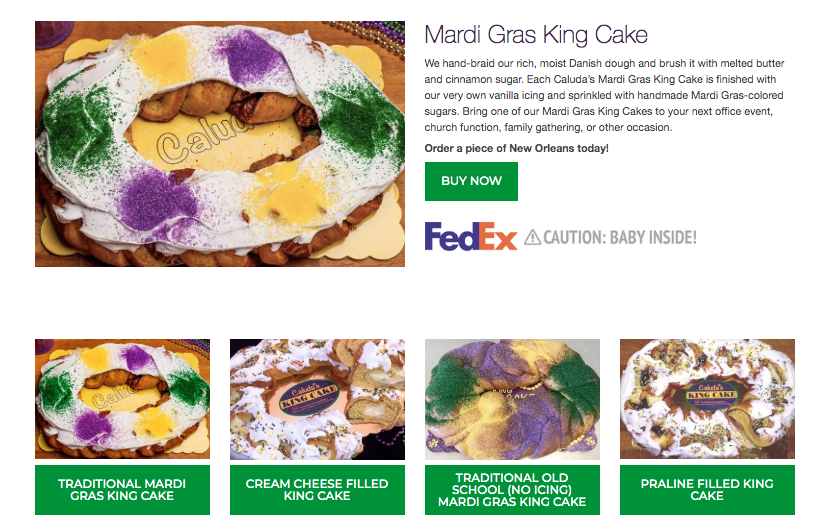
    Mardi Gras King Cake from Caluda's getting ready to be shipped via FedEx

    Social Media:

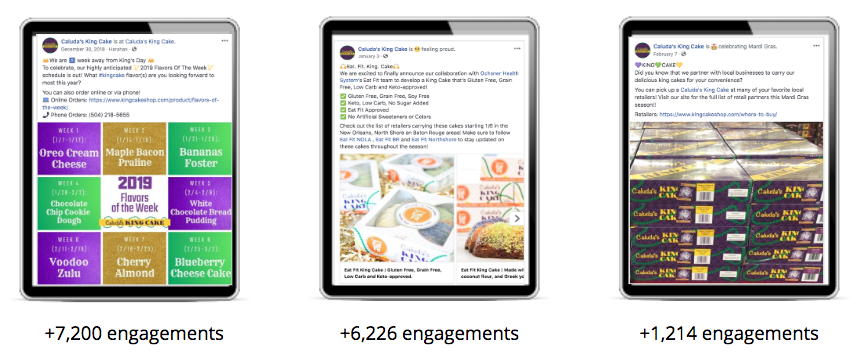
    Social following and post engagement have continued to be an important and successful strategy for Caluda’s. During their 2018/2019 social media campaign they gained over 3,000 NEW fans. They currently have over 10,400 fans on Facebook and 2,000 followers on Instagram. Their social posts continue to reach high audience engagement, ensuring that their brand is top notch with the community!

    Examples of social posts done by Search Influence for Caluda's King Cake

    Review and Testimonials:

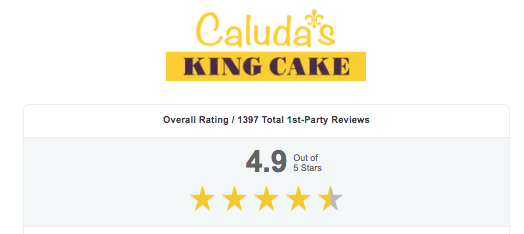
    Caluda’s King Cake gained over 580 new reviews during their campaign. They also gained over 1,000 page views on their onsite reviews page. With more than 80% of consumers admitting that they trust online reviews as much as they trust a personal recommendation, this gain in reviews is extremely beneficial to the brand!

    Accumulated reviews for Caluda's King Cake during Search Influence digital marketing campaign

    Caluda’s King Cake Unique Propositions

    Eat Fit King Cake

    In 2019, Caluda’s collaborated with Ochsner Health System’s Eat Fit team to develop a king cake that’s gluten-free, grain-free, low carb, and keto-friendly! Centered on an all-natural clean ingredient label, the Eat Fit King Cake is made with almond flour, coconut flour, and Greek yogurt. It’s sweetened with Swerve, a natural, plant-based sweetener based here in New Orleans, with no artificial sweeteners or food dyes. This collaboration was a HUGE success for both Caluda’s and Eat Fit. Caluda’s continuation of brand awareness and providing high-quality products continues to open doors for exciting new ventures.

    Low carb king cake from Caluda's King Cake in New Orleans

    King Cakes Year-Round

    Caluda’s King Cake offers king cakes year-round! You heard that right—you can get delicious king cakes any time! They offer specialty king cakes via online or phone orders. Whether you are a local or live in another state, Caluda’s offer you the opportunity to enjoy king cake 12 months a year. Bring a delicious treat to your next holiday event or party and be the hit of the event

    If you’re ready to grow your business like Caluda’s King Cake, start a conversation with one of Search Influence’s digital marketing experts. We’re ready for you to become one of our success stories!

  • Facebook Reviews: Increasing Reviews to Increase Credibility

    Facebook: the largest social media platform in the world. It’s used to keep up with family, friends, social trends, and marketing. It’s the second-most important review site, right between Google and Yelp. With 1.37 billion daily active users, there’s no avoiding Facebook when it comes to digital marketing.

    Gif counting Facebook likes

    The Benefits of Facebook Review

    You didn’t have to read this blog to know that building customer relationships are key. Online reviews are an instant way to gain trust with a potential customer. Did you know that 84 percent of people trust online reviews just as much as a personal recommendation? They’re more likely to trust the reviews since they’re experiences had by real customers.

    Along with reviews, customers leave star ratings as well. Customers can leave star ratings between 1 and 5, and the total average is used for your final rating. Since the star rating can be seen even without clicking through to the Facebook page, it’s easy to gain potential customers trust.

    Don’t Stress Over Bad Reviews

    As for reviews, I’ll be real with you. Bad reviews are going to happen, but only 14 percent of reviews are 3 stars or less. Truthfully, we don’t live in a world of perfect ratings, so if you have 5 stars that’s something to be proud of. However, studies show that 4.2 to 4.5 is the ideal average star rating. Furthermore, 68 percent of customers trust reviews more when they see both good and bad scores.

    When replying to reviews, always reply to both good and bad reviews.

    For bad reviews, do not delete reviews or argue with customers. Take time to reply to the unhappy customer with your contact information. From there, try to reach the customer by phone to listen to their complaint. Then you’ll be able to offer a solution outside of the review. Learn more tips in our previous blog post on managing reviews.

    How to Get More Facebook Reviews

    How do customers know to leave you reviews after a great experience? Ask them! Seven out of 10 customers are willing to leave a review if you ask. Here are some ideas on how to ask for reviews:

    1. Make sure there’s signage around the business reminding them to review.
    2. Reach out with personalized follow-up emails and/or text.
    3. Lastly, be direct and have a conversation about their experience.

    No matter the channel of communication, always make sure to thank the customer for their business and to ask for feedback on what could be improved. Being genuine is a way to receive genuine reviews.

    Another way to engage customers is by requesting them to check in to your business. Motivate customers by offering them something like a coupon code or free item. Checking in allows the customer to write something, post a photo, and tag others. Most importantly, Facebook will automatically send a notification to the person who created the check-in one to two days later and request them to leave a review.

    Creative Ways to Use Facebook Reviews

    Okay, you’ve collected all of these reviews, with some good and some bad. Now, what are you going to do with them?

    For good reviews, get creative! Create a Facebook post and put some ad spend behind it so a larger audience sees it. Print them and hang them around your business. Add them to your website. You and your employees are doing a great job, and it’s paying off. Make sure to tell people about the great experiences your customers are having!

    For bad reviews, analyze and compare to see if there are common trends. Maybe it’s an internal process, or maybe it’s because company-wide standards need to be implemented. Once you find a way to fix the repetitive issues, continue to monitor and adjust to solve problems as they arise. Always use feedback to continuously improve your business.

    Utilizing Facebook for Your Business = Brand Awareness

    Facebook is an easy way to gain brand awareness from previous and potential customers. Make sure your profile has as much information as possible, including a profile photo, background photo, and hours of operation.

    Keep followers updated on your latest projects or industry trends. Your posts should not all be product pushing. You’ll want them to be personal, relevant, and engaging. Create posts specifically for employee updates to announce promotions, work ethic, or any other relevant aspects of your business.

    If you’re just starting out on Facebook, your posts likely won’t be seen by many people organically. To increase the number of people who see your posts, try promoting some posts to reach more people. Get detailed by testing out targeting, including location and demographics.

    If you collect personal phone numbers and/or email addresses from current clients, you’ll want to look into lookalike audiences. This is Facebook’s way of finding people who have the same interests as your current customers, so when your brand is put in front of them, they’re more likely to convert.

    Whether you’re completely new to Facebook or just need to jumpstart your social media campaigns, Search Influence can help. Our social media experts can help you post, track leads, and manage reviews. Start a conversation today to learn how we can help your business grow.


    Images:

    Facebook Notification

    Review Icon

  • What Are The Most Important Review Sites? Start With These Three

    In order to remain competitive in the local search space, it is essential to encourage your customers to provide feedback about your business. Reviews and interaction with your digital properties help search engines and users learn more about your business; in today’s environment, if you are neglecting these review sites, then there is a chance you are missing conversion opportunities as well as losing ground to your competitors. With the number of review sites out there, it is important to prioritize their management in order to expose your business to the largest amount of potential customers without spending all day managing different profiles.

    What Are The Most Important Review Sites?

    While there are endless options out there, these are the most important review sites:

    1. Google My Business

    2. Facebook 

    3. Yelp 

    This should not be a huge surprise, even to casual internet searchers. These sites dominate a lot of the search space when it comes to search queries about businesses or services. Here are the basic reasons why these are the most trusted review sites:

    1. Traffic

    2. Reputation

    3. Authenticity

    According to Alexa, a widely accepted measure of websites’ ranking metrics, Google My Business, Facebook, and Yelp are the first, second, and fourth most visited websites in the United States for Consumer and Business Review websites. Amazon currently holds the third spot, but Amazon is not an option if you are in a service-based industry. All of these sites have millions of unique visits a month, meaning, people are undoubtedly coming to these sites for more information. Since these are free to manage, it would be like passing up an opportunity to have a free billboard on one of the most traveled roads in the country. Furthermore, reviews can now populate on organic search for Facebook, Google, and Yelp, so users may or may not click through to your site based on your review situation.

    One of the reasons these sites generate so much traffic is because of their reputation as a reliable source of business information. The amalgamation of traffic, number of reviews, and day-to-day use have made all of these sites integrated into our digital diet. Much like people reflexively would use the Yellow Pages or White Pages in a pre-internet world, people will reflexively use these sites to get more information about a business.

    Lastly, people trust these sites because the reviews are user-generated and moderated by a third party rather than the business itself. While it’s good practice to have reviews and testimonials on your main site, the obvious issue there from a user perspective is that you will probably only promote the positive reviews. These sites allow the opportunity for customers to express a range of thoughts or emotions, allowing potential customers to better discern the pros and cons.

    So, Why Should I Manage Business Review Sites?

    According to Vendasta, 88 percent of online shoppers utilize reviews to inform their purchase decision. Furthermore, the amount of people who do not research a business online prior to a purchase has decreased from 22 percent to 9 percent. The trends are obvious; more people are looking for your business online and more people are using reviews to make a judgment. Let’s take this even a step further—44 percent of users say they need reviews to be younger than a month old in order for them to consider it relevant. This highlights an important point—it is not enough to just let your reviews aggregate on these sites, you need to engage your audience.

    Screenshot of a typical yelp listing - Search Influence

    Screenshot of a facebook review listing - Search Influence

    One concern is that your business may aggregate a bunch of negative reviews. Without getting into the reasons for these negative reviews, it is important that you engage with customers who have had a negative experience. Other users looking at your business will see you engaging with customers who had a negative experience and see that you are making an effort to provide customer service.

    Screenshot of a typical negative business review with a response from an owner - Search Influence

    You should also respond to the positive reviews. It is a simple gesture to show that you appreciate their business and that they took time out to engage further with your business online.

    Screenshot of a positive business review with a response from the owner - Search Influence

    Beyond the simple client facing, customer service reasons, these reviews are increasingly important to search ranking. It follows that Google will appreciate you using their Google My Business platform to gather and respond to reviews. It improves their product while also helping your business get in front of more people. Being active on your listing can have a positive impact on your local search rankings. When users visit Yelp or Facebook, having a robust review profile with engagement from the business could help you stand out in the crowded marketplace. Managing reviews is now a major factor in the realm of local SEO management.

    How Do I Get More Reviews?

    The simplest way? Just ask! There are numerous ways to interact with your clients and customers, whether it is through an email marketing campaign, adding a request to their receipts or billing, or asking them face-to-face when they are visiting your business. If they are delighted with their service, they may be inclined to help you out by spreading the gospel via Facebook, Yelp, and Google.

    Since running a business is time-consuming on its own, it is important to dedicate some time each week to ensure your digital presence is working for you. By auditing your review situation on Google, Yelp, and Facebook, you will be ensuring that you are monitoring three of the four most visited platforms in the United States among consumer and business review sites. Just a little effort in this area could lead to a surprising amount of new business for your location with the only expense being a bit of your time.

    If you need help getting your online reputation management off the ground, our team at Search Influence can streamline your local SEO strategy to better fit your business goals. Because we are dedicated to the needs of small and mid-sized local businesses, we offer pricing transparency. Request your marketing analysis today to get started.

    Images:

    Thumbs Up

  • Your Referral-Based Business Still Needs Digital Marketing

    Most referral based businesses are pretty happy watching the dollars come in without having to invest in marketing. The business model usually looks a little something like this: company does good work → client is happy → client tells a friend they are happy with great work by company → friend works with company. Badabing.

    But wait, we missed a step! How’s the referral going to find you? Even if your name, number, address, and directions are written down, laminated, framed, and handed to a referral, they will still search online to find any business. According to Google, 97% of consumers use the web to search for local businesses.

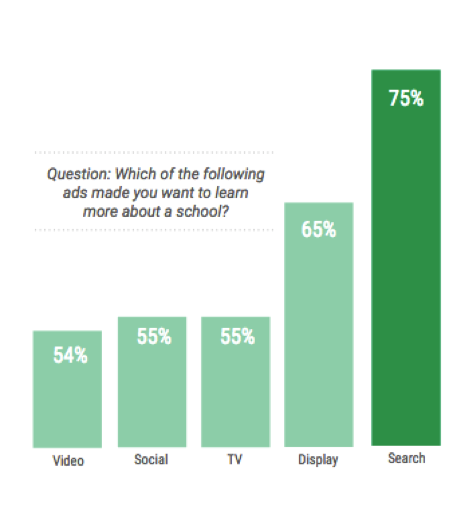
    • 96% of people seeking legal advice use a search engine
    • 56% of students turn to search when research programs/degrees
    • 78% of local-mobile searches result in offline purchases

    These stats prove search is the best opportunity to influence your audience buying decision and shape their perception of your company. If your business isn’t investing in digital marketing, which of your competitors will the referral contact once they can’t find you online?

    Who’s Representing Your Law Firm Online?

    Only 13% of people are referred to an attorney by a family or friend. If you don’t have a strong brand or search presence online when the referral or new lead is searching for you, what does this say about your reputation? Some may think, “How good can this guy be if I can’t even find him on Google!” Even if you have a compelling slogan, your law firm needs to be competitive in local search results.

    If your law firm generates cases based on client or attorney referrals, make sure to get that word-of-mouth online! Ask for and publish reviews and testimonials on your site. Don’t forget to spread the word and feature testimonials on avvo.com, lawyers.justia.com, findlaw.com, and other industry related platforms.

    72% of people searching for legal advice only contact one attorney. So let’s make sure they find and contact you first!

    Google’s Power in the Universities

    According to Fortune, Millennials spend 27 hours a week consuming media. Getting in front of and grabbing the attention of millennials is becoming more competitive for universities. With educational resources and easy access to student loans, students are no longer applying to universities simply based on legacy or location. According to a Google Ipsos Research study in 2017, 20% of students read 3rd party ratings and reviews to compare schools, but you can expect that a higher percentage of searchers are influenced by the overall online reputation of a school.

    Building Your Reputation Online

    Reviews aren’t promotional advertisements full of promises; they’re hard evidence that your company goes above and beyond for customers. Don’t just sit back and wait for reviews to appear. With 88% of people likely to trust a review from a stranger as they would a referral from a friend or family member, you need to encourage happy clients to leave reviews on your site and on 3rd party sites. Since Google reviews appear alongside search results, those reviews are particularly important for referral-based businesses.

    For 3rd party sites like Findlaw, Angie’s List, and Houzz, claim your profile and make sure all of your business information is accurate and updated. But don’t stop at conventional review sites! Video testimonials can be a great way to make online reviews more relatable. YouTube videos are easy to upload, and they can directly impact your search rankings. Before and after photos and videos for home renovations visually engage with an audience in ways content can’t. However you serve customers, look for a variety of ways to confirm that your services really set your company apart.

    The Market Is Wide Open

    Customers are searching for the products and services you provide, and they are influenced more by trusted and recognizable brands they engage with digitally. Google uses over 200 trust factors to rank websites and is constantly updating its algorithm. If you aren’t actively competing for searched products, services, and your audience’s attention, then you’re giving those undecided potential customers to the competition. So I’ll ask you again, if your business isn’t investing in digital marketing, which of your competitors will your referral contact once they can’t find you online?

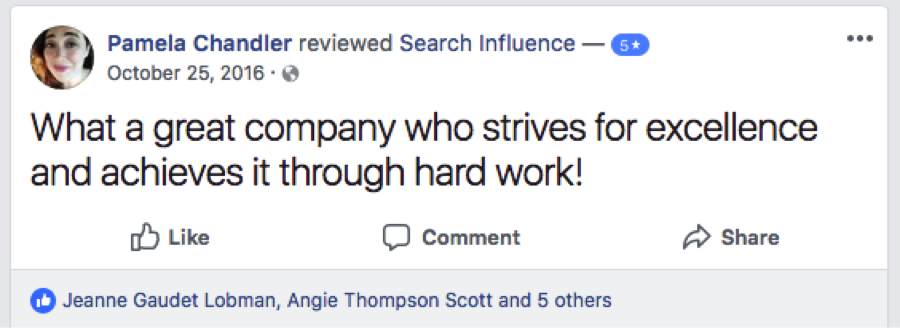
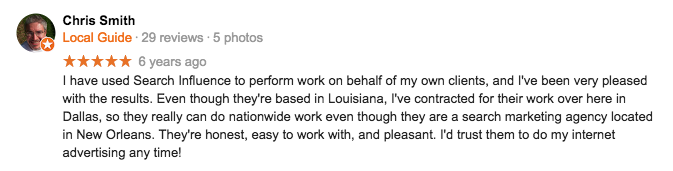
    Contact the team at Search Influence for a consultation, and learn how to shift your digital marketing strategy into high gear. Find out about our company’s reputation by reading reviews from other industry leaders in SEO and digital marketing. You know your industry, and we can help make your expertise more evident online. Request a marketing analysis, and we’ll find opportunities to amplify the visibility of your referral-based business.

    Images:

    Search for Universities

  • Five Tips for Creating Customer Advocates for your Tourist Attraction

    When your past customers talk to their friends and family about their vacation, are they likely to recommend your business? Word of mouth is critical for sustainable, long-term business growth, and social media has multiplied the number of connections between people sharing travel advice and reviews. In fact, a recent study from Nielsen found that 92 percent of consumers say they trust brand advocates, including recommendations from friends and family. Here are just a few of the ways to encourage customers to help promote your tourist attraction.

    Spongebob Sqaurepants laughing - Search Influence

    1. Attach Your Brand to a Real Person

    People naturally connect better with human beings, and it’s even better if customers interact with the same face repeatedly. Do you have a secretary or hostess who can orient new customers to your services and their options? Family-run and personality-driven businesses have an easier time identifying their brand with friendly owners and managers, but any business can make itself more relatable by avoiding shortcuts that result in impersonal service.

    Whenever possible, avoid using automated responses and impersonal emails. Over the phone, your business should be represented by a friendly voice. When electronic communication is necessary, try to use the same staff member so that customers have a chance to develop a rapport. By creating that dialogue, you’ll appeal to your audience’s emotional side, which neuroscientific research has linked directly to decision making in the brain. This genuine and friendly first impression is the first step toward creating a lasting customer who can, in turn, become an advocate for your brand among their peers.

    An excited man with a camcorder on a beach - Search Influence

    2. Create Photo-Ready Shareable Experiences

    If you know you’re creating a remarkable in-person experience for your guests, be sure you make it easy for them to translate that into photos, videos, and content online through their social channels. Tour guides and attraction managers know the best locations for group photos, and you can remind parties and couples of the optimal times to take out their cameras. Introverts may be reluctant to ask for someone else to take pictures, but waitresses and tour guides can start the conversation by suggesting a photo op. All of your customers’ friends will be curious to see where the picture was taken.

    Whether it’s a funky statue that’s perfect for a photo op or a contest through your social media platform to get guests to share their best photos in exchange for a gift certificate or branded swag, make sharing fun and interactive. You can even offer free Wi-Fi at your location and post signage with your branded hashtag or social media handles to make it as easy as possible for your guests to share right away and include you in their posts.

    3. Claim Your Online Presence & Stay in Touch Through Social Media

    Speaking of social, don’t forget to continue to foster that relationship with your guests online, even long after they’ve left. One of the most important steps of building customer advocacy is claiming your online presence. Brand your social media platforms with your company logo and beautiful photos of your attraction so that guests will know right away that you’re legitimate. Rather than just trying to promote your business on social media, be sure you also provide helpful information, fun events in the community, and posts that showcase your brand “personality.” When your fans find your posts helpful and relevant, they’re much more likely to share them with their fanbase.

    In addition to the usual social media platforms like Instagram and Facebook, you need to claim your Google My Business page. Since the Google ratings and reviews appear alongside search results, it’s important that your listing is accurate, detailed, and looks professional. This includes checking your hours of operation and adding photos of your attraction so that guests know they’re looking at the right listing.

    4. Collect Emails By Offering Promotions

    Every business is offering membership discounts and promotions these days, and an email signup is an easier alternative to the sometimes cumbersome memberships. When advertising on social media and your website, encourage customers to sign up for future promotions. Potential customers who are still planning their vacation will be interested to see whether special discounts or offers coincide with the time of their planned visit. In the meantime, your well-crafted emails will make sure your attraction isn’t forgotten as they get closer to finalizing plans.

    At the end of their visit, satisfied customers will be interested to see if you offer promotions they can share with friends. By giving email subscribers advanced notice about special events, you make them feel like they have inside information. When they feel like they have a special connection with your business, customers are more likely to advocate for your business. When their friends are visiting the same destination, they’re even more likely to recommend your business because you’ve continued to make a positive impression.

    Amy Poehler in Parks and Recreation saying Please - Search Influence

    5. Ask Nicely

    Just like Google My Business, it’s important to keep track of reviews on all social platforms. Depending on your industry, Yelp or TripAdvisor or another website may be more relevant. Many business owners forget to ask customers for reviews. Unfortunately, the customers who are self-motivated to write reviews are often the ones looking to vent about a negative experience. Happy and satisfied customers rarely feel the need to go through the necessary steps to write a review, but they’re more likely to take the time if someone at your company makes it clear how much their time would be appreciated.

    Whether you’re running a Ferris wheel or a hole-in-the-wall gourmet donut shop, you need customers to spread the word and advocate for your business. Once you’re confident in the quality of your services and products, it becomes a matter of encouraging customers to share their excitement online. The good news is that most of the things that help build advocacy also improve your connection with customers. When you leverage that connection to further improve your business, you can join in the success of tourist attractions that are winning on social media.

    Need help getting started? Learn more about our consulting services to help build a solid reputation for your attraction.

    Images:

    Spongebob

    Camcorder Dad

    Parks and Rec

  • Five Surefire Signs Your Online Reputation Needs Work

    A bad reputation is terrible for business, and yet online reputations are difficult for many business owners to fully understand—much less control. When a customer is upset in your restaurant or store, it’s relatively easy for a manager to handle the situation in person. Problems with online branding can be harder to detect than an angry patron. A negative online review might feel less urgent than a disgruntled customer screaming at your employees, but that review may be seen by countless potential customers in the future. An unpopular social media presence is a missed opportunity for cost-effective community engagement, and unpopular websites appear lower in search rankings. Learn how to identify the signs of a reputation problem online and protect the future of your brand.

    Thumbs down key on a keyboard - Search Influence

    1. Your Bounce Rate Is High

    We all do it. You visit a website, but it doesn’t have what you wanted, so you return to the search engine and try elsewhere. When your website has a high bounce rate, it means that people aren’t finding what they wanted. Bounce rate issues are insidious because they erode your online reputation with search engines, but they can be caused by a combination of overlapping factors. Low-quality content can drive up a bounce rate, but so can technical details about website formatting.

    Websites that aren’t responsive or mobile-friendly have a high bounce rate because mobile users are unable to access the content. On the other hand, some sites are difficult to navigate on any device because of unclear menu options and poor organization. The text on a page should be clear and helpful, relevant to the topic at hand. If a link about a specific product directs to a landing page with information about the general industry, then users may decide to search elsewhere. The easiest way to address a high bounce rate is to work with a web designer and content creator to improve the user experience.

    2. There’s an Increase in Negative Reviews

    It’s impossible to please everyone, and some customers always seem to find a reason to be disappointed. Nevertheless, a streak of negative reviews can undermine any online reputation. When negative reviews appear, it is important to address the reviewer’s concern within your company. Accept the feedback as an opportunity to prevent a repeat of the same disappointment.

    When the reviewer’s concerns are being addressed, it sometimes makes sense to reply to the review. Make it a brief and professional response to avoid getting entangled in an argument. As quickly as possible, move the discussion out of the public eye, preferably by providing an email address for further correspondence. Many people are more understanding and open to resolution in direct correspondence, but remember that anything you write in email can still be copied into a public forum. Ultimately, any response to negative reviews is an exercise in damage control. The best solution is prevention, providing such a high quality of service that the positive reviews outnumber negative ones.

    3. Your Social Media Engagement Is Lacking

    Social media marketing is a cost-effective way to interact with customers and build your brand awareness. An inactive Facebook page is a missed opportunity for advertising, and so is a mismanaged page. Excessively promotional posts don’t offer value to your audience and can give a negative impression. If none of your recent posts have any likes, shares, or comments, then your audience is not engaged with your message.

    Rather than only promoting your business, use social media to share other kinds of content as well. Share informational posts about recent news and updates relevant to your industry or community. Include frequent posts that aim primarily to elicit engagement, whether they share a cute animal picture or joke. Depending on what’s appropriate for your industry, you can also post a poll asking for people to voice their preference between popular techniques or theories.

    4. Your Website Is Not Authoritative

    Authoritative websites rank higher on Google, but building authority takes time. One of the most reliable methods for building authority is inbound links. When important, trustworthy websites link to your website, it shows search engines that your content is a trustworthy authority on those subjects. In the early days of search engine optimization, you could improve your ranking by posting links to your website in random blog comments and basically spreading the links as many places as possible. Now, algorithms are smart enough to sort out what is authentic, and will not reward those who take shortcuts to improve their ranking.

    To build authority, invest time into quality content that provides useful information to visitors. Accelerate the authority-building process by getting your business (and website) mentioned in newspapers and trade journals, resources that have already established themselves as reliable. Ultimately, a high quality and helpful website will be shared by people organically as a resource. Your authority will grow as visitors share your page with their friends.

    Rotating image of a person's identity - Search Influence

    5. Your Branding Is Inconsistent

    Inconsistent branding isn’t always as obvious as it sounds. Some companies might change their name while keeping the same website, and then it’s obviously important to go through and eliminate all appearances of the old name. On the other hand, many businesses use a shortened version of their full name in casual conversation. It can be tempting to use the shorter name in website content, making the tone friendly and hospitable, but search engines don’t appreciate that your company’s nickname isn’t an altogether different name. If a search engine thinks your business can’t keep its own name straight, then that’s a sign that the content may not be reliable. Avoid using shortened versions of your name, and make sure to proofread when you’re publishing content and adding your business to online directories.

    To protect and improve your online reputation, talk with a digital marketing consultant. The team at Search Influence has experience managing all the key aspects of your brand’s internet presence.

    Images:

    Changing Identity