The author here discusses the impacts YouTube can have for your product. YouTube is a great resource if you are looking to build your brand. It is important that you put up quality videos over the quantity of videos. Check out the article for some great information if you are looking to build a presence on YouTube.
This talks about the transition from Google Places to Google + Local. The post describes how this should make the process easier to use, faster updates, and integration with Adwords (Express) and G +.
Here the author talks about how rankings should not be the ultimate goal when it comes to SEO services. The author lists 4 steps you should take to produce stronger SEO results in the long run.
Are we too dependent on social media to make simple decisions we face on a daily basis? I sure hope not. This is an interesting article about different apps that can help you make decisions you are not comfortable making, or if you just want some help making a decision.
This post has an informative video on how developers can develop apps for Google Glass. In this article, it lists four key developer guidelines from the video to help you better understand the process.
Search Engine Optimization (SEO) is already complex enough—and with the many myths that have sprung up around it, it’s even harder to understand the ins and outs of page rank, keywords, and website optimization. Here are 7 myths that will help separate fact from fiction when it comes to SEO.
1. You must be in the top 3 results
Many believe that “successful” SEO means ranking in the top three or four spots on Google search results, but this is no longer true. On the second and third page of results, the top links still garner the most clicks—so that means, in some cases, being 11th might actually be better than being 9th. Additionally, author profiles and snippets with pictures draw reader’s attention, no matter where they are featured. Rank isn’t the only factor of success.
2. Your URL must have keywords
In the past, the words in the domain name (the URL) factored heavily into search results, so it was always smart to load domains with the keywords your potential customers were using. Google has wised up, however, and scaled back the importance of URLs in favor of a more balanced approach to finding the most relevant sites.
3. Meta tags are vital
Google used to also index metadata when calculating search results, but no more. However, they create the text that appears under your URL in a search listing, so they’re still an important marketing tool. Metadata is what displays your content in an attractive way, so, the more appealing your meta tags, the greater the likelihood that you’ll get clicks.
4. Quantity is better than quality
Inbound links once caused pages to jump up to the top of a results list; a multitude of links from other sites was seen as evidence of your credibility. That system could easily be gamed, however, and SEO now focuses on highly relevant links in the context of applicable text.
5. Your keywords need to match exactly
Keywords are the backbone of SEO, but they are more flexible than many people realize. It’s easy to tell when you’re reading a keyword-heavy piece: the awkward phrasing and repetition gives it away. Even if it makes you rank higher, which isn’t a given, your content will turn people off.
6. You can trick Google
Some people seem to think that SEO is just about tricking Google, pushing the right buttons for a magic formula that will catapult their sites to the top of the search results. The truth is, Google has advanced to accurately reward pages that are informative, relevant, and connected, which cannot be attained with a magic formula.
7. SEO doesn’t help users
While most web admins focus on SEO from the backside, it has also evolved into an exceptionally usable tool for readers and searchers. As the name implies, the strategy optimizes a website—but with all the advancements of the past few years, that optimization process actually leaves the user with a generally reliable search results list.
SEO: Simple, efficient organization
Search engine optimization is becoming simpler, though the rules can still be tricky. The general principle in making your business golden to Google is that if you create a content-filled website that dialogues with other relevant pages, you’re already off to a good start. Keywords and links are still vital, among many other pieces, but don’t get caught up in the tangle of myths relating to SEO.
Megan Totka is the Chief Editor for ChamberofCommerce.com. She specializes on the topic of small business tips and resources. ChamberofCommerce.com helps small businesses grow their business on the web and facilitates connectivity between local businesses and more than 7,000 Chambers of Commerce worldwide.
Don’t get lost in the mix! Take a broad look at your organization to make sure you’re producing top quality content, including social media, making your site mobile friendly, and understanding the knowledge graph.
Google has just announced that on July 1, 2013 Google Reader will retire. This is part of Google’s plan to remove irrelevant and no longer useful services. If most of your audience is using this to get your updates, now is the time to transition them to a new service.
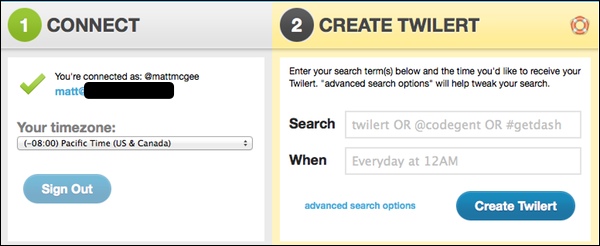
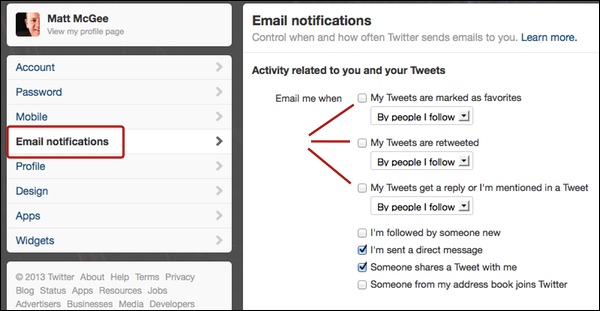
If being active on Twitter doesn’t seem to be producing the results that you’re looking for, then try being passive by listening first and then responding. Twilert allows you to create timed alerts for when certain phrases, handles, or hashtags are used. If that is too much, you can always go the traditional route by creating email notifications through Twitter itself.
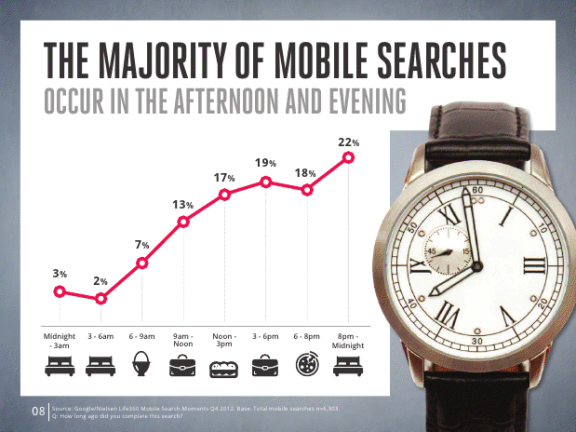
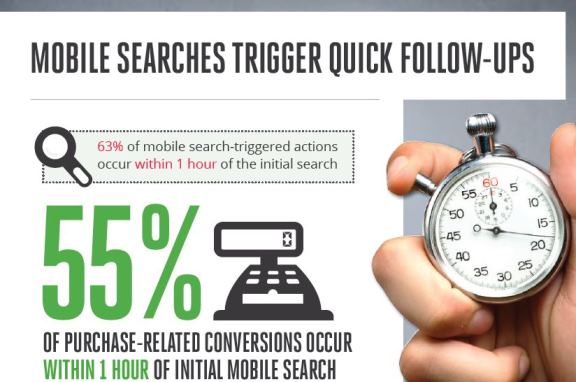
Google and Nielsen recently put together a new report using data from 6000+ mobile searches to discover how it drives conversions. Did you know that 77% opt to use their mobile over a PC? So it’s important to make sure that you’re showing up in the first few results of a search otherwise you’ll never even make it onto their mobile screen.
The better the research, the better the keywords…even if Google stopped providing all referring keywords in analytics for “privacy reasons.”
Key Relevance’s Christine Churchill provides some alternatives to gathering this information because as Avalaunch Media’s Matt Siltala stressed, “you can’t skip over keyword research. You can’t get annoyed with it. You HAVE to do it.” Read on for more about keyword intent and keyword research tools.
The Next Frontier For Google Maps Is Personalization — TechCrunch
Google has already personalized most of its search results and Maps personalized with user interests will be next up. There’s a lot to look forward to with Google, so stay tuned over the next few months for updates.
SEO Smackdown Round 2: Old Vs. New Search Engine Optimization — Search Engine Land
Has SEO really changed? Here are some tips about keywords, site design, links, and search behaviors to help you find out what big picture items you should keep in mind.
4 SEO Tasks Small Business Must Do Every Month — Search Engine Watch
Four simple ways to increase traffic to your small business website:
1. Identify Demand
2. Create Great Content
3. Tune Content
4. Track & Promote
Have you ever noticed two people to be arguing over the semantics of something? If so, they might make good SEOs! When it comes to search engine optimization, the meaning of the keywords being used in a search are as important as the well-optimized content you spend hours perfecting before rolling live.
A keyword is the word or group of words that a person types in to a search engine in hopes of finding a particular result. Someone searching “apple” may want to find a piece of fruit, but there may be different information that someone else hopes to find in their search results. This is where semantics comes into play.
Semantics is the study of words’ meaning or how we comprehend something. Until recently, this concept was irrelevant to search engine marketers. However, with the many changes we have been seeing from Google — Panda, Venice and Search Plus Your World, among others — it is not very surprising that our keywords are changing now, too.
Google has recently relayed the message that, while people worldwide search Google for answers to their every question, the search engine monster does not always understand what we are talking about. For years now, search engine users have thought that the better their keyword or keyword phrase, the better results they would receive. Unfortunately, that is not the case. Amit Singhal, a Senior VP of Engineering and Fellow of Google, explains that “We cross our fingers and hope someone on the web has written about these things or topics.” Google will provide you with search results, but they may not be exactly what you were hoping for. So what does this mean?
The Future of Search and Semantics
With time, searching online will not be what we know it as. It will be focused on semantic keywords, which will be processed via artificial intelligence to understand the meaning of the search query. This is called semantic search, and is currently one of Google’s focuses. It will become necessary to understand the relationship between the keywords typed into a search rather than just searching for those specific words.
For instance, what could someone mean when they search “apple?”
• Apple nutrition information
• Apple recipes
• Apple computers and products
• Different kinds of apples and their growing traits
• The “Big Apple,” as in New York City
As you can see, there is a limitless list of meanings to the search of just one word.
What Does This Mean For SEO?
It will be critical to detect accurate keywords based on the searchers intent for a real world application and then to create content around those words. The content must be created for the keywords that are answering particular questions that people are asking about that topic. Consider our “apple” example. If you chose to focus on the Apple Company, you would want to create content focused on Apple computers and products, and answering any specific questions searchers may have about those products. If you’re a food writer, you’ll want to create recipes and creative essays that are easily readable. If you’re a horticultural specialist, it’ll be necessary to make sure you have clean, precise information and are backed up by appropriate scientific sources, and so on.
With time, we will be able to thank Google for allowing us to search online and find exactly what it is we are looking for. In the mean time, start researching and preparing your keywords and content for the future!
Battle for the Planets? The Difference is more Power Rangers.
Organic and paid search are both, at the core, about the search queries. These queries are, of course, sought by optimizing for or bidding on certain keywords. These keywords, found using keyword research tools such as Google’s or Wordstream’s and then turned into a comprehensive list using your favorite keyword expansion tool.
Organic keyword research focuses on traffic, looking for quality descriptors for the products, service, or content offered to the visitor. These descriptors are filtered for the search phrases that are the best fitting and for “low-hanging fruit,” ones with low competition and high value to the business.
However, strategies for paid research must be different, because the mediums are used in a different way. In addition to search traffic, competition and metrics that might be overlooked or generalized, like average CPC, must be included in the research. Furthermore, these three additional discovery strategies can help create a more robust keyword profile.
Three Keyword Discovery Strategies
General
Unlike in organic search, general keywords play a central role. Organic keywords, especially for businesses, tend to be of the general pattern *geographic area* *keyword*. However, because a paid search campaign can geotarget its ads, any search using the non-geomodified keyword from the targeted area would also trigger the ad. Thus, someone in Montana searching {window cleaner} will see ads targeted to Montana Window Cleaner.
General keywords focusing on the domain name and business name are also useful for brand marketing. There is a bit of a debate over whether PPC clicks cannibalize organic clicks for this kind of keyword. A few theories and strategies have arisen, with of course the best answer being “What’s best for you,” though problems can arise with attribution.
Long-Tail
Long-tail keywords, searches like {cost of criminal lawyer} or {home security free installation}, while relatively low traffic, are specific searches that strengthen the depth of the research. This way, deep searches you wouldn’t optimize for organic search can be explored and taken advantage of. These deep searches are largely of two types, researching and buying. Phrases like {cost of …}, {buy …}, or client-specific long-tail terms like car models can be used to serve ads leveraging the search intent of the viewer.
Match Types
The three match types are Broad, [Exact], and “Phrase.” These three types are even more important to the research than for organic search, as it can affect CPC.
Broad keywords would trigger on longer-tail searches, synonyms, common misspellings, and word reversals. The broad keyword Criminal Lawyer would show ads on the queries {criminal law}, {attorney for criminal case}, or {criminal lawyer new orleans}.
To save on CPC, [Exact] keywords will run ads on the keywords only in that order, so [criminal lawyer] would trigger on the searches {cost of criminal lawyer} but not {lawyer for criminal case}.
“Phrase” Keywords display ads solely on the phrase entered. The keyword “criminal lawyer new orleans” would show solely on that term, and none others. This one is less necessary for PPC research.
Facebook and Display
The final addendum for any PPC keyword research is that you have to take into account for display ads, whether through Adsense or social media platforms. These ads, though not for paid search, are the bread and butter for retargeting and remarketing or brand awareness. Approaching this match types as keywords may not yield much, but treating broad keywords as categories or thinking laterally and approaching the keywords from demographics and related interests could solidify a bland targeting spectrum.
With the “reimagining” of Keyword Research strategies focused around these three concepts (and one quick point), your ROI will skyrocket from the CTR and quality score increases that come with a well-curated keyword list. What tricks have you used to get the most out of your keywords?
 1. The Marketing Value of YouTube – SEO MOZ
 1.
1.  2.
2.